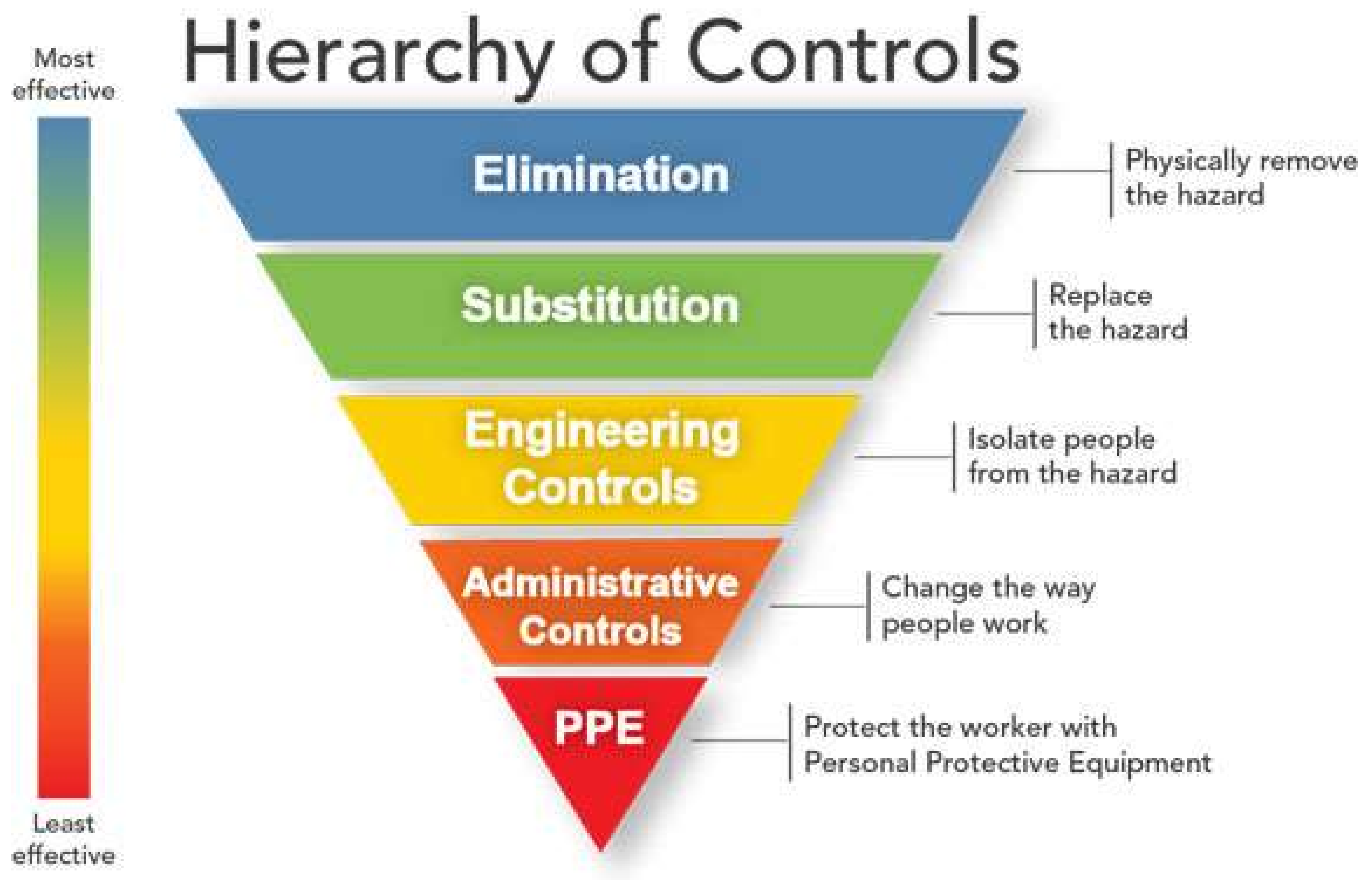
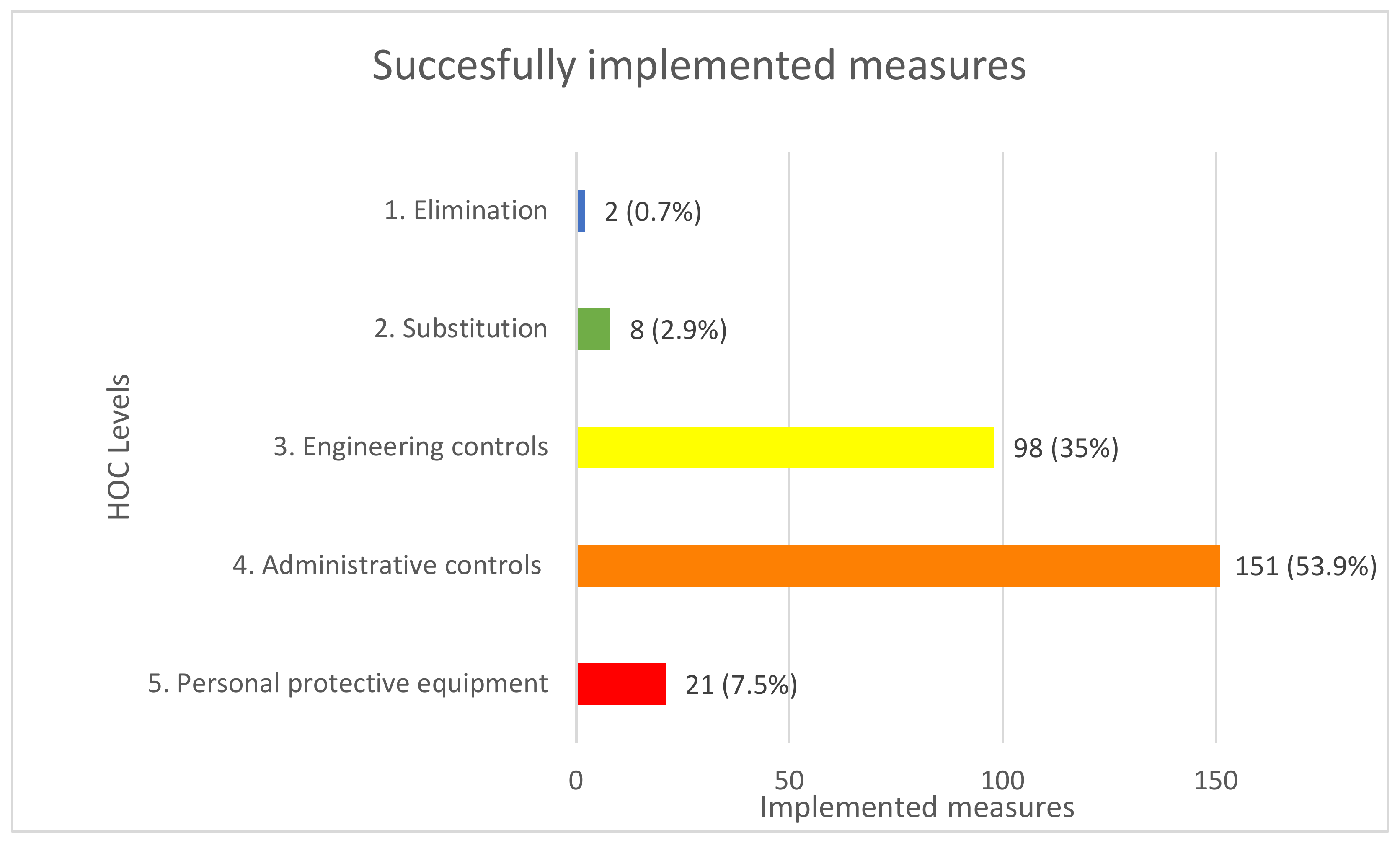
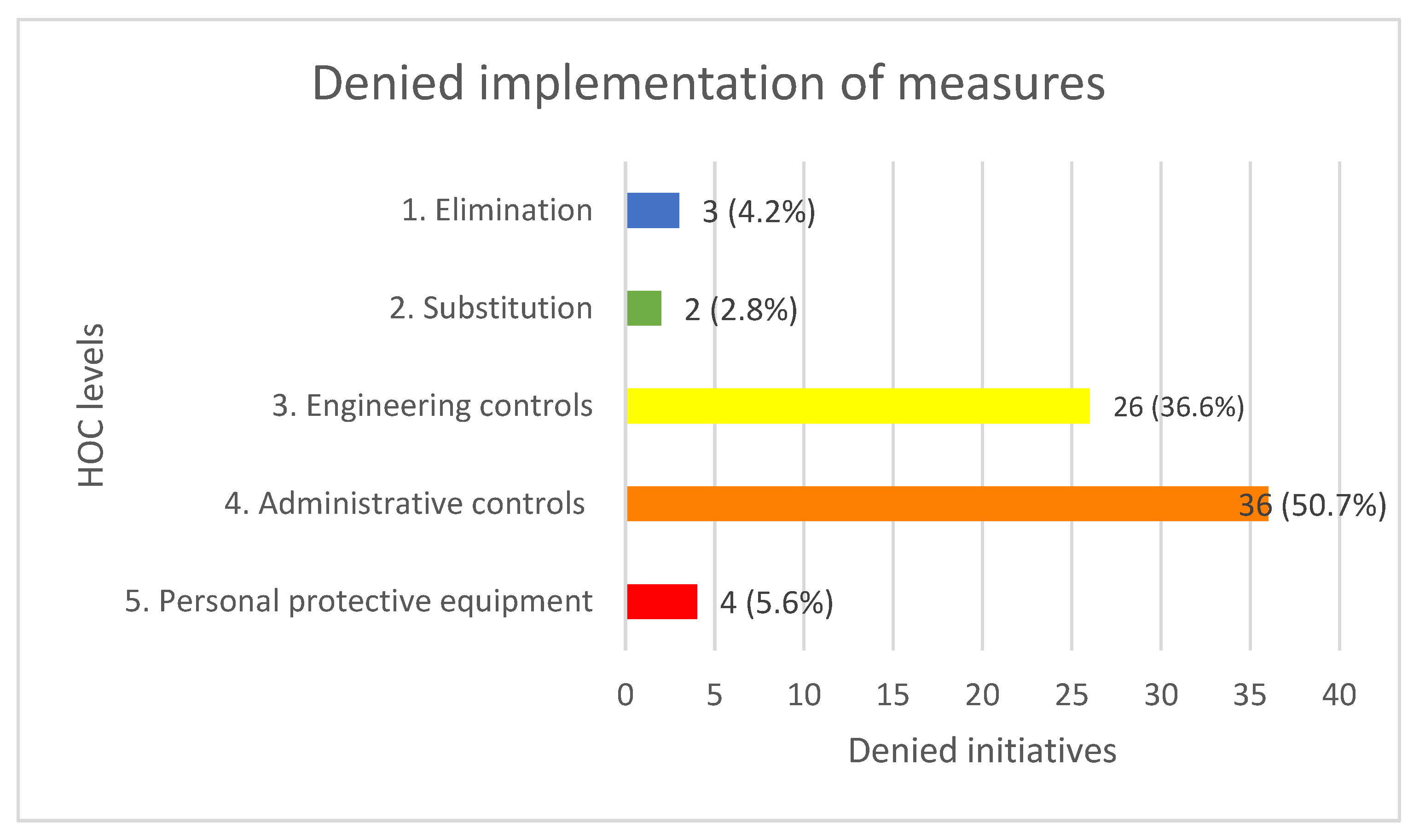
The Hierarchy of Controls as an Approach to Visualize the Impact of Occupational Safety and Health Coordination
 ,
, Abstract
Share and Cite
Ajslev, J.Z.N.; Møller, J.L.; Andersen, M.F.; Pirzadeh, P.; Lingard, H. The Hierarchy of Controls as an Approach to Visualize the Impact of Occupational Safety and Health Coordination. Int. J. Environ. Res. Public Health 2022, 19, 2731. https://doi.org/10.3390/ijerph19052731
Ajslev JZN, Møller JL, Andersen MF, Pirzadeh P, Lingard H. The Hierarchy of Controls as an Approach to Visualize the Impact of Occupational Safety and Health Coordination. International Journal of Environmental Research and Public Health. 2022; 19(5):2731. https://doi.org/10.3390/ijerph19052731
Chicago/Turabian StyleAjslev, Jeppe Z. N., Jeppe L. Møller, Malene F. Andersen, Payam Pirzadeh, and Helen Lingard. 2022. "The Hierarchy of Controls as an Approach to Visualize the Impact of Occupational Safety and Health Coordination" International Journal of Environmental Research and Public Health 19, no. 5: 2731. https://doi.org/10.3390/ijerph19052731
APA StyleAjslev, J. Z. N., Møller, J. L., Andersen, M. F., Pirzadeh, P., & Lingard, H. (2022). The Hierarchy of Controls as an Approach to Visualize the Impact of Occupational Safety and Health Coordination. International Journal of Environmental Research and Public Health, 19(5), 2731. https://doi.org/10.3390/ijerph19052731