Article

Exploring the Influencing Factors on Living Alone and Social Isolation among Older Adults in Rural Areas of Thailand


by
Pawinee Iamtrakul
* and
Sararad Chayphong
Center of Excellence in Urban Mobility Research and Innovation, Faculty of Architecture and Planning, Thammasat University, Paholyothin Street, Pathumthani 12120, Thailand
*
Author to whom correspondence should be addressed.
Int. J. Environ. Res. Public Health 2022, 19(21), 14572; https://doi.org/10.3390/ijerph192114572

Submission received: 25 September 2022 / Revised: 25 October 2022 / Accepted: 4 November 2022 / Published: 6 November 2022
(This article belongs to the Special Issue Rural and Remote Health)

Abstract

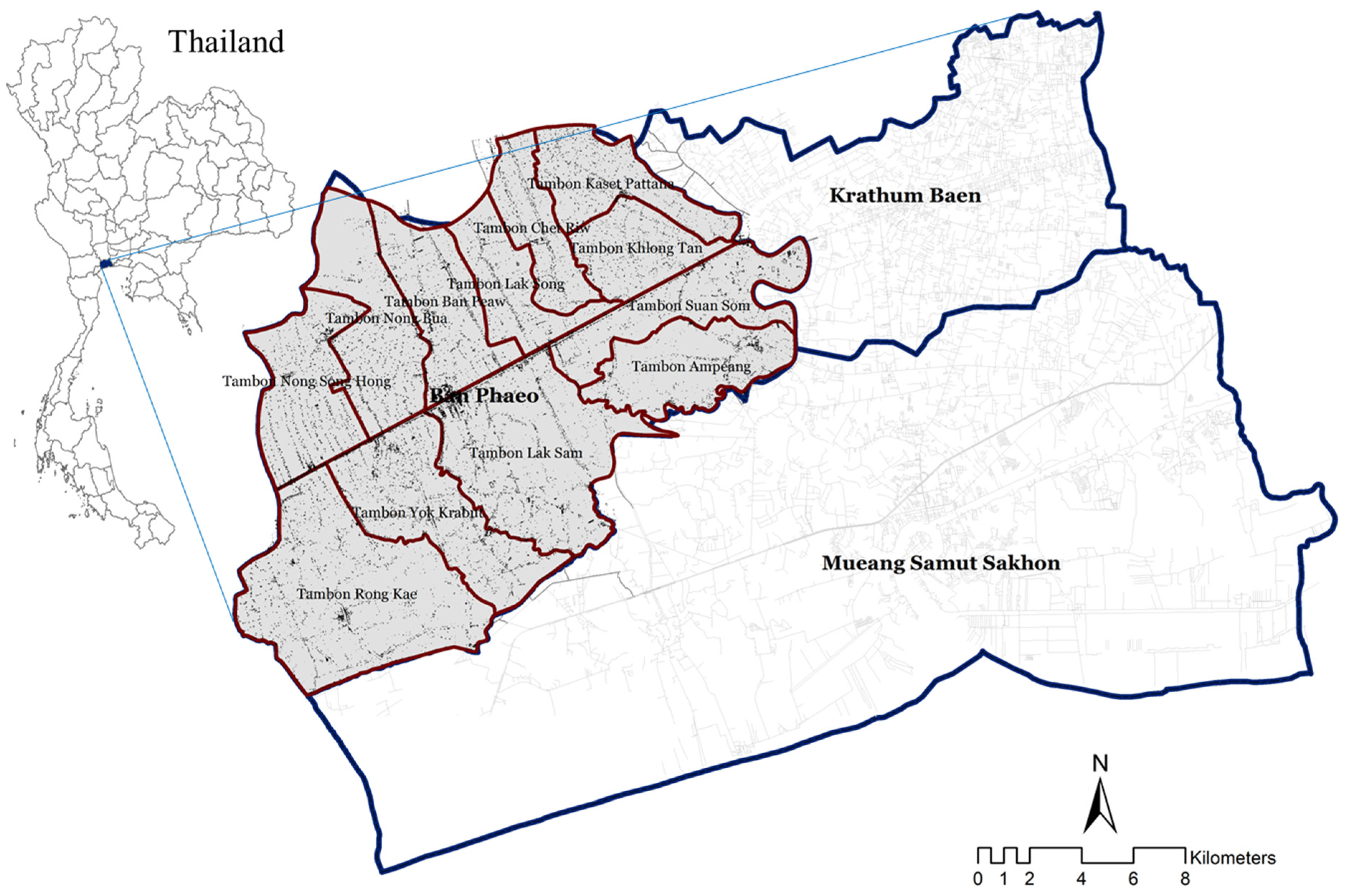
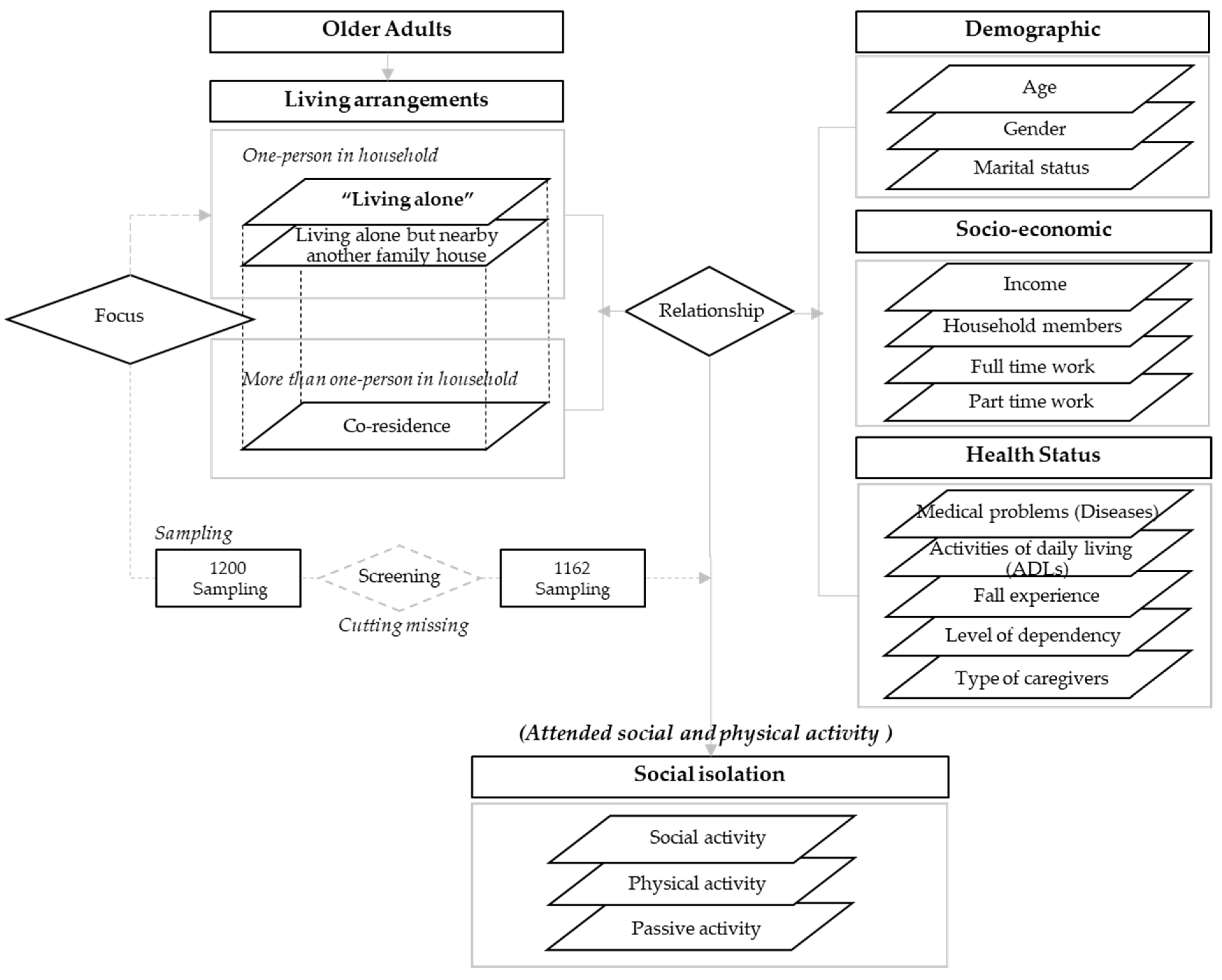
Older adults living alone present a vulnerable physical and mental health group with public health and service needs. This situation has risen and is therefore expected to increase calls for urgent attention from concerned authorities. This article focuses on the study of factors related to different living arrangements of older adults and also examines the extent to which baseline variables explained the association between living alone and social isolation characteristics. A questionnaire survey restricted to respondents aged 60 years and over, living in Ban Phaeo, Samutsakhon, Thailand, was scoped for data collection. Older adults living alone and in co-residence (living together) constitute a total of 1162 samples. The binary logistic regression model was applied to examine the association between living alone and social isolation characteristics. The result found that factors relating to older adults’ different living arrangements are marital status, household members numbers, level of dependency, and type of caregivers. An association was found between the characteristics of living alone and social isolation in three relative variables, which are age, activities of daily living (ADLs), and type of caregivers. In conclusion, household living arrangements have different related factors like marital status, where a single or divorced person is more likely to live alone. Furthermore, it is also influenced by the need for caregiving on the part of the older adult or family members; particularly, their children typically emerge as the unpaid assistance from families. When only a sample of older adults living alone with social isolation is considered, it was discovered that with the advancing age of older adults living alone, whether single or married, encountered problems with the activities of daily living (ADLs). This set of people rarely goes out to perform activities outside their home and seldom attend social and physical activities. This could lead to a risk of social isolation with a greater risk of physical and mental health problems, including the well-being of older adults living alone in later life. Thus, family caregivers play a key role as a primary source of support to prevent older adults from being socially isolated, which has become an integral part of our healthcare system in promoting physical, mental, and functional health among older adults in a positive way.
Keywords: activities of daily living; aging society; chronic diseases; socioeconomic status; urbanization activities of daily living; aging society; chronic diseases; socioeconomic status; urbanization