Evaluating Effects of Dynamic Interventions to Control COVID-19 Pandemic: A Case Study of Guangdong, China

Abstract
1. Introduction
2. Materials and Methodology
2.1. Study Area and Data
2.1.1. Study Area
2.1.2. Data
2.2. Methods
2.2.1. Construction of the Improved LSEIR (iLSEIR) Model
2.2.2. Parameter Estimation and Initialization of the iLSEIR Model
2.2.3. Evaluation of the Dynamic Intervention Efficiency
3. Results
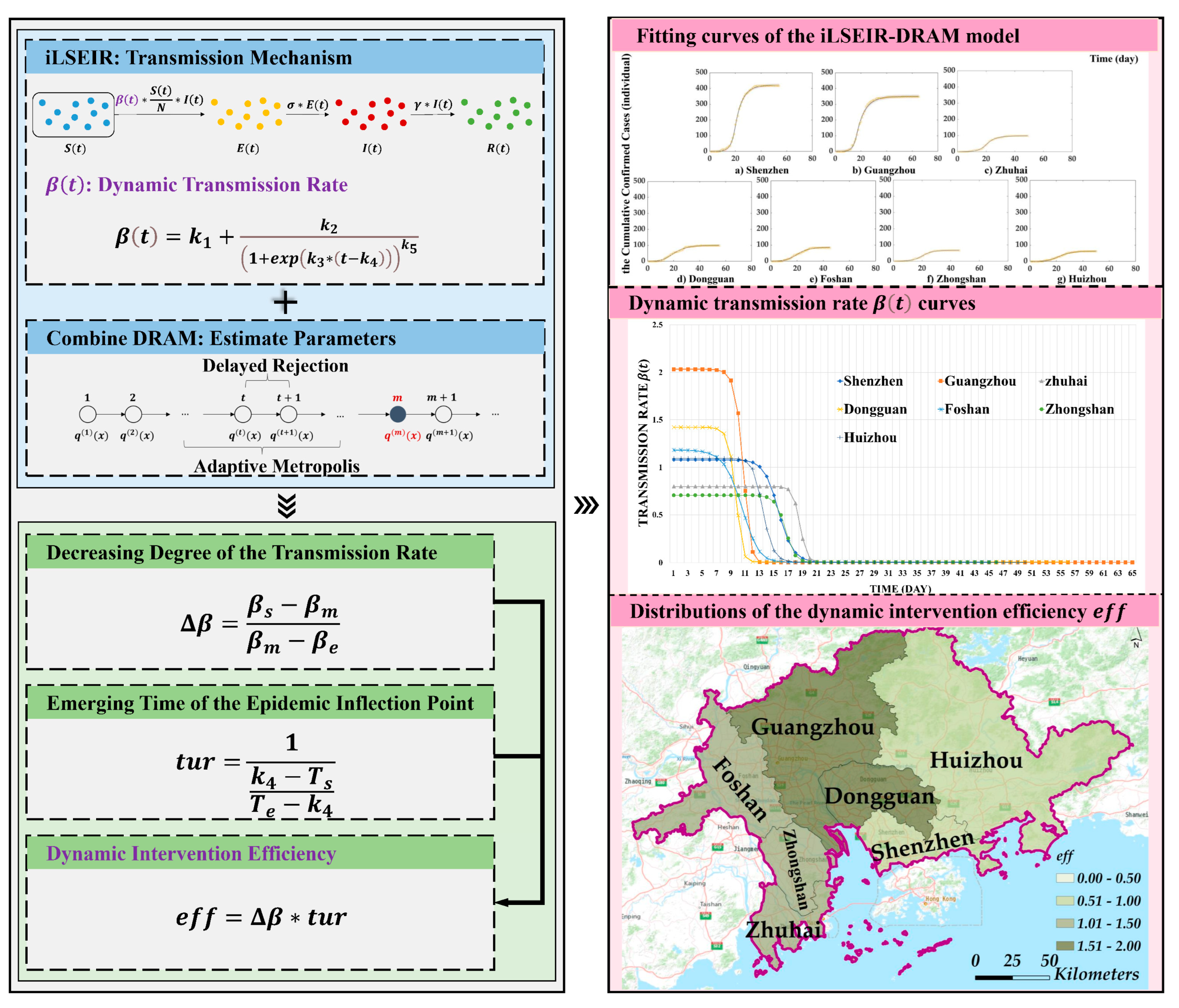
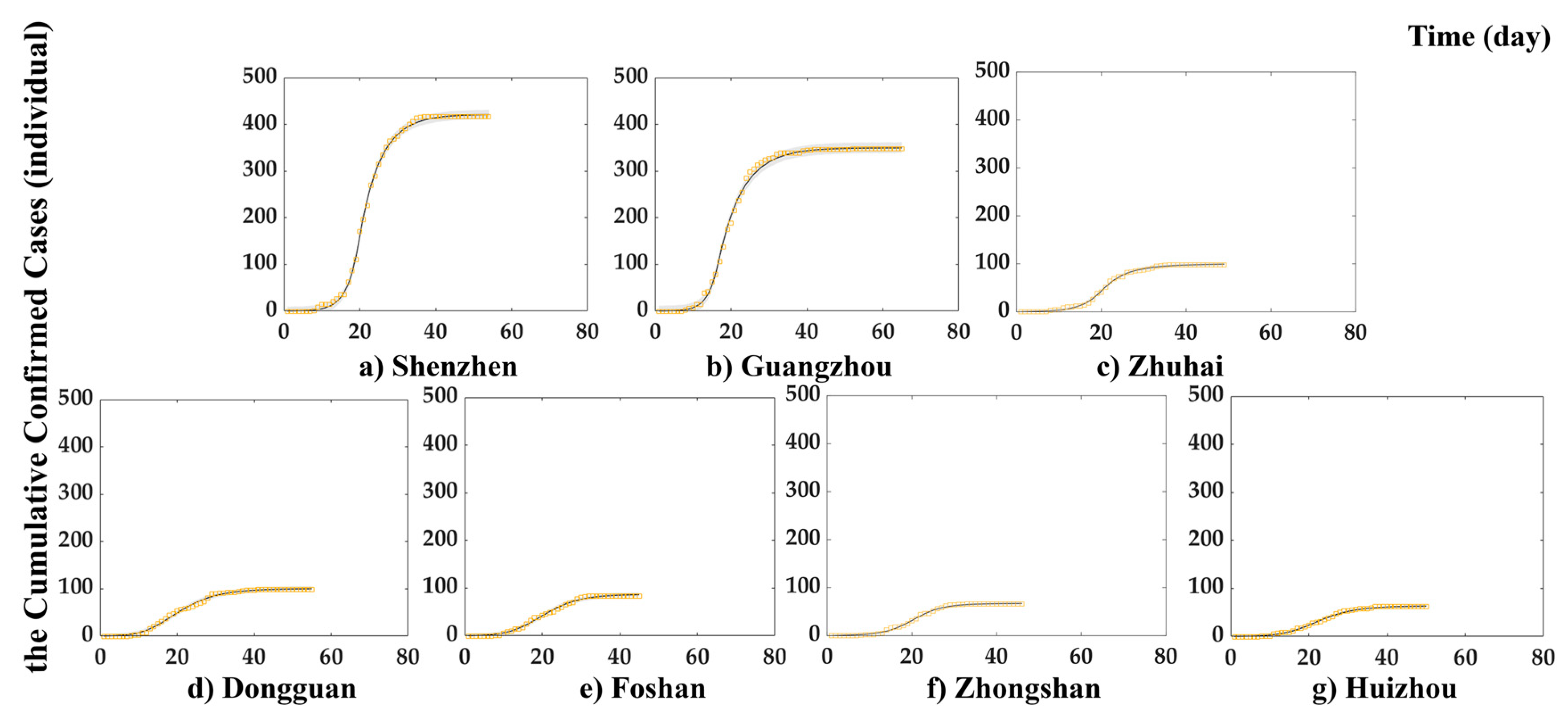
3.1. Simulation Results of the iLSEIR-DRAM
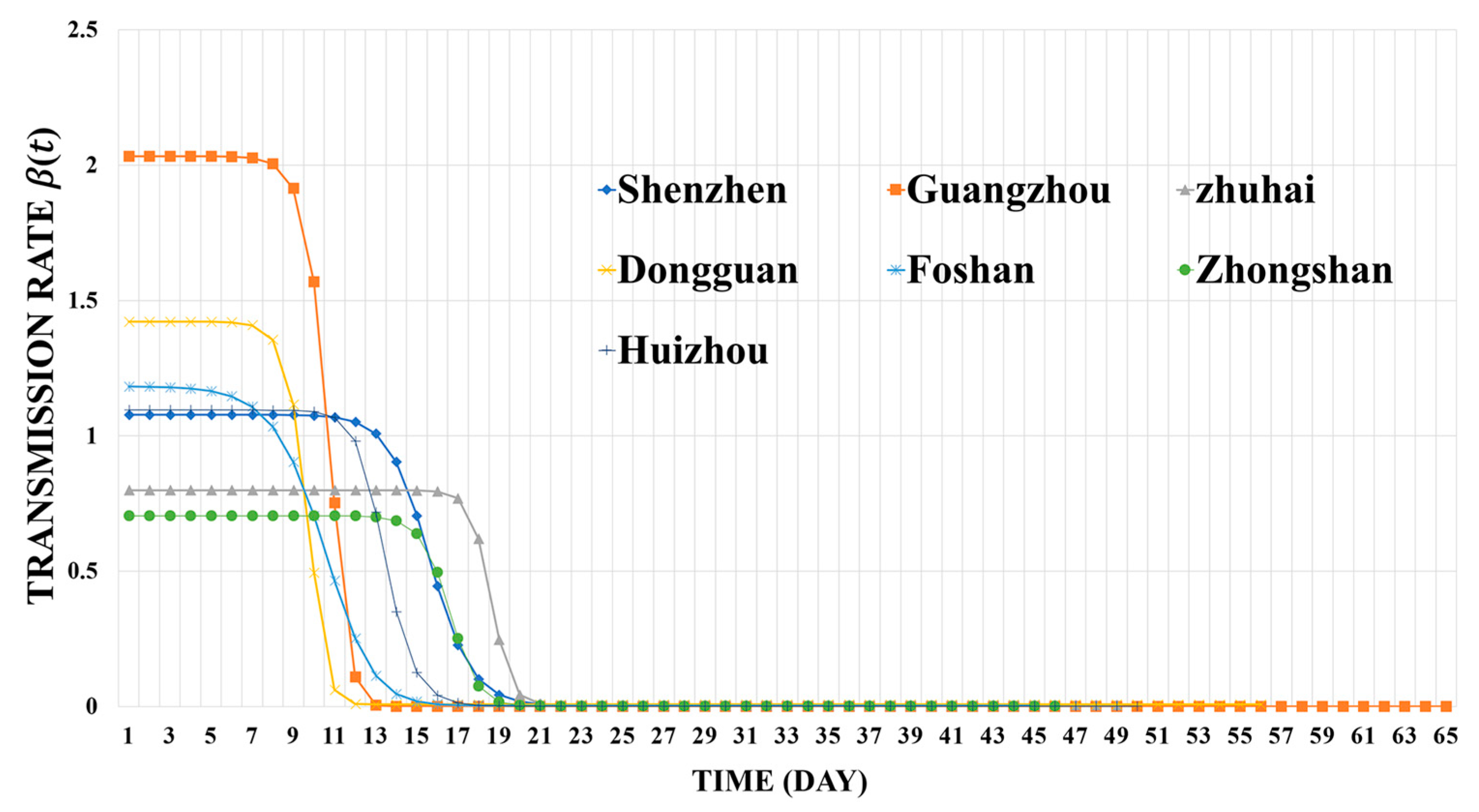
3.2. Dynamic Changes in Transmission Rate Curves
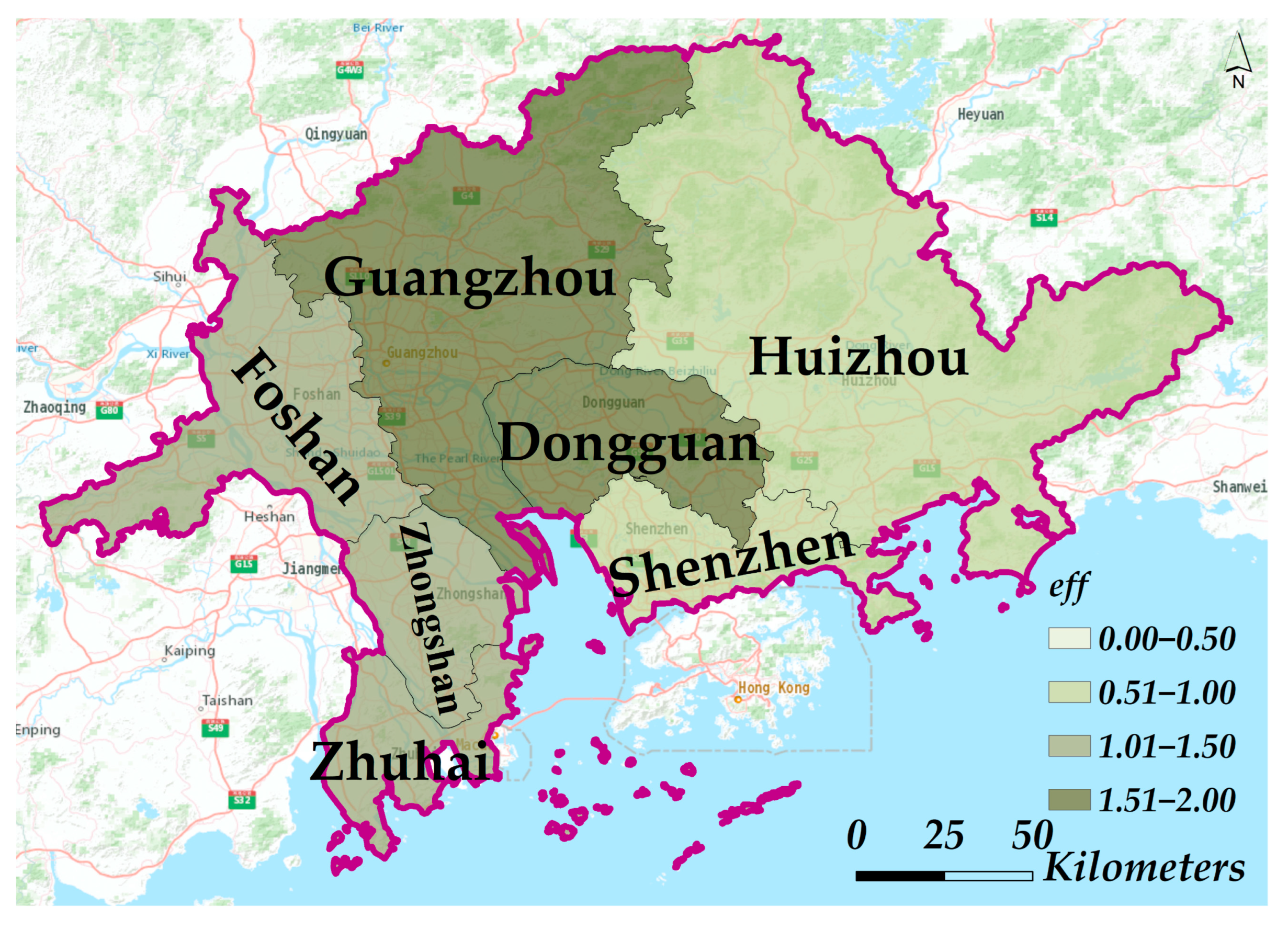
3.3. Results of the Dynamic Intervention Efficiency Evaluation

| Cities | Determination Coefficient | Transmission Rate Reduction | Inflection Point | Efficiency |
|---|---|---|---|---|
| Shenzhen | 0.9993 | 0.8464 | 1.1205 | 0.9484 |
| Guangzhou | 0.9968 | 5.1795 | 0.3742 | 1.9380 |
| Zhuhai | 0.9979 | 1.2223 | 0.8602 | 1.0514 |
| Dongguan | 0.9955 | 4.0595 | 0.4192 | 1.7019 |
| Foshan | 0.9910 | 1.8904 | 0.6479 | 1.2248 |
| Zhongshan | 0.9951 | 1.3863 | 0.7919 | 1.0978 |
| Huizhou | 0.9860 | 0.6809 | 1.3232 | 0.9010 |
4. Discussion
4.1. Analysis of Influencing Factors Related to Efficiency
4.2. Advantages and Limitations
5. Conclusions
Author Contributions
Funding
Institutional Review Board Statement
Informed Consent Statement
Data Availability Statement
Acknowledgments
Conflicts of Interest
References
- WHO. World Health Statistics 2021: Monitoring Health for the SDGs, Sustainable Development Goals; World Health Organization (WHO): Geneva, Switzerland, 2021; pp. 1–121. [Google Scholar]
- WHO. Overview of Public Health and Social Measures in the Context of COVID-19: Interim Guidance; World Health Organization (WHO): Geneva, Switzerland, 2020; pp. 1–8. [Google Scholar]
- Feng, Z.; Xiao, C.; Li, P.; You, Z.; Yin, X.; Zheng, F. Comparison of spatio-temporal transmission characteristics of COVID-19 and its mitigation strategies in China and the US. J. Geogr. Sci. 2020, 30, 1963–1984. [Google Scholar] [CrossRef] [Scilit]
- Hale, T.; Angrist, N.; Goldszmidt, R.; Kira, B.; Petherick, A.; Phillips, T.; Webster, S.; Cameron-Blake, E.; Hallas, L.; Majumdar, S.; et al. A global panel database of pandemic policies (Oxford COVID-19 Government Response Tracker). Nat. Hum. Behav. 2021, 5, 529–538. [Google Scholar] [CrossRef] [Scilit] [PubMed]
- Tregoning, J.S.; Flight, K.E.; Higham, S.L.; Wang, Z.; Pierce, B.F. Progress of the COVID-19 vaccine effort: Viruses, vaccines and variants versus efficacy, effectiveness and escape. Nat. Rev. Immunol. 2021, 21, 626–636. [Google Scholar] [CrossRef] [Scilit] [PubMed]
- Wang, C.; Zhang, H.; Gao, Y.; Deng, Q. Comparative Study of Government Response Measures and Epidemic Trends for COVID-19 Global Pandemic. Risk Anal. 2022, 42, 40–55. [Google Scholar] [CrossRef] [Scilit]
- Wu, F.; Liu, G.J.; Guo, N.L.; Li, Z.H.; Deng, X.Z. The impact of COVID-19 on China’s regional economies and industries. J. Geogr. Sci. 2021, 31, 565–583. [Google Scholar] [CrossRef] [Scilit]
- Ye, Y.Y.; Wang, C.J.; Zhang, H.O.; Yang, J.; Liu, Z.Q.; Wu, K.M.; Deng, Y.B. Spatiotemporal analysis of COVID-19 risk in Guangdong Province based on population migration. J. Geogr. Sci. 2020, 30, 1985–2001. [Google Scholar] [CrossRef] [Scilit]
- Holmdahl, I.; Buckee, C. Wrong but Useful—What COVID-19 Epidemiologic Models Can and Cannot Tell Us. N. Engl. J. Med. 2020, 383, 303–305. [Google Scholar] [CrossRef] [Scilit]
- Alenezi, M.N.; Al-Anzi, F.S.; Alabdulrazzaq, H.; Alhusaini, A.; Al-Anzi, A.F. A study on the efficiency of the estimation models of COVID-19. Results Phys. 2021, 26, 104370. [Google Scholar] [CrossRef] [Scilit]
- Chadsuthi, S.; Modchang, C. Modelling the effectiveness of intervention strategies to control COVID-19 outbreaks and estimating healthcare demand in Germany. Public Health Pract. 2021, 2, 100121. [Google Scholar] [CrossRef] [Scilit]
- Das, A.; Dhar, A.; Goyal, S.; Kundu, A.; Pandey, S. COVID-19: Analytic results for a modified SEIR model and comparison of different intervention strategies. Chaos Solitons Fractals 2021, 144, 110595. [Google Scholar] [CrossRef] [Scilit]
- Shou, M.H.; Wang, Z.X.; Lou, W.Q. Effect evaluation of non-pharmaceutical interventions taken in China to contain the COVID-19 epidemic based on the susceptible-exposed-infected-recovered model. Technol. Forecast. Soc. Chang. 2021, 171, 120987. [Google Scholar] [CrossRef] [Scilit] [PubMed]
- Liao, C.Y.; Chen, X.; Zhuo, L.; Liu, Y.; Tao, H.Y.; Burton, C.G. Reopen schools safely: Simulating COVID-19 transmission on campus with a contact network agent-based model. Int. J. Digit. Earth 2022, 15, 381–396. [Google Scholar] [CrossRef] [Scilit]
- Panovska-Griffiths, J.; Kerr, C.C.; Stuart, R.M.; Mistry, D.; Klein, D.J.; Viner, R.M.; Bonell, C. Determining the optimal strategy for reopening schools, the impact of test and trace interventions, and the risk of occurrence of a second COVID-19 epidemic wave in the UK: A modelling study. Lancet Child Adolesc. Health 2020, 4, 817–827. [Google Scholar] [CrossRef] [Scilit]
- Truelove, S.; Abrahim, O.; Altare, C.; Lauer, S.A.; Grantz, K.H.; Azman, A.S.; Spiegel, P. The potential impact of COVID-19 in refugee camps in Bangladesh and beyond: A modeling study. PLoS Med. 2020, 17, e1003144. [Google Scholar] [CrossRef] [Scilit]
- Vlachos, J.; Hertegard, E.; Svaleryd, H.B. The effects of school closures on SARS-CoV-2 among parents and teachers. Proc. Natl. Acad. Sci. USA 2021, 118, e2020834118. [Google Scholar] [CrossRef] [Scilit] [PubMed]
- Vyklyuk, Y.; Manylich, M.; Skoda, M.; Radovanovic, M.M.; Petrovic, M.D. Modeling and analysis of different scenarios for the spread of COVID-19 by using the modified multi-agent systems—Evidence from the selected countries. Results Phys. 2021, 20, 103662. [Google Scholar] [CrossRef] [Scilit] [PubMed]
- Treneman-Evans, G.; Ali, B.; Denison-Day, J.; Clegg, T.; Yardley, L.; Denford, S.; Essery, R. The Rapid Adaptation and Optimisation of a Digital Behaviour-Change Intervention to Reduce the Spread of COVID-19 in Schools. Int. J. Environ. Res. Public Health 2022, 19, 6731. [Google Scholar] [CrossRef] [Scilit]
- Raja, A.I.; van Veldhoven, K.; Ewuzie, A.; Frost, G.; Sandys, V.; Atkinson, B.; Nicholls, I.; Graham, A.; Higgins, H.; Coldwell, M.; et al. Investigation of a SARS-CoV-2 Outbreak at an Automotive Manufacturing Site in England. Int. J. Environ. Res. Public Health 2022, 19, 6400. [Google Scholar] [CrossRef] [Scilit]
- Kemp, F.; Proverbio, D.; Aalto, A.; Mombaerts, L.; Fouquier d’Herouel, A.; Husch, A.; Ley, C.; Goncalves, J.; Skupin, A.; Magni, S. Modelling COVID-19 dynamics and potential for herd immunity by vaccination in Austria, Luxembourg and Sweden. J. Theor. Biol. 2021, 530, 110874. [Google Scholar] [CrossRef] [Scilit]
- Worby, C.J.; Chang, H.H. Face mask use in the general population and optimal resource allocation during the COVID-19 pandemic. Nat. Commun. 2020, 11, 4049. [Google Scholar] [CrossRef] [Scilit]
- Zhao, J.; Jin, H.; Li, X.; Jia, J.; Zhang, C.; Zhao, H.; Ma, W.; Wang, Z.; He, Y.; Lee, J.; et al. Disease Burden Attributable to the First Wave of COVID-19 in China and the Effect of Timing on the Cost-Effectiveness of Movement Restriction Policies. Value Health 2021, 24, 615–624. [Google Scholar] [CrossRef] [Scilit] [PubMed]
- Fields, R.; Humphrey, L.; Flynn-Primrose, D.; Mohammadi, Z.; Nahirniak, M.; Thommes, E.W.; Cojocaru, M.G. Age-stratified transmission model of COVID-19 in Ontario with human mobility during pandemic’s first wave. Heliyon 2021, 7, e07905. [Google Scholar] [CrossRef] [Scilit]
- Gaeta, G. Social distancing versus early detection and contacts tracing in epidemic management. Chaos Solitons Fractals 2020, 140, 110074. [Google Scholar] [CrossRef] [Scilit]
- Huang, B.; Wang, J.; Cai, J.; Yao, S.; Chan, P.K.S.; Tam, T.H.; Hong, Y.Y.; Ruktanonchai, C.W.; Carioli, A.; Floyd, J.R.; et al. Integrated vaccination and physical distancing interventions to prevent future COVID-19 waves in Chinese cities. Nat. Hum. Behav. 2021, 5, 695–705. [Google Scholar] [CrossRef] [Scilit]
- Lin, T.Y.; Liao, S.H.; Lai, C.C.; Paci, E.; Chuang, S.Y. Effectiveness of non-pharmaceutical interventions and vaccine for containing the spread of COVID-19: Three illustrations before and after vaccination periods. J. Formos Med. Assoc. 2021, 120 (Suppl. S1), S46–S56. [Google Scholar] [CrossRef] [Scilit] [PubMed]
- Pan, Q.; Gao, T.; He, M. Influence of isolation measures for patients with mild symptoms on the spread of COVID-19. Chaos Solitons Fractals 2020, 139, 110022. [Google Scholar] [CrossRef] [Scilit] [PubMed]
- Zhang, N.; Jack Chan, P.T.; Jia, W.; Dung, C.H.; Zhao, P.; Lei, H.; Su, B.; Xue, P.; Zhang, W.; Xie, J.; et al. Analysis of efficacy of intervention strategies for COVID-19 transmission: A case study of Hong Kong. Environ. Int. 2021, 156, 106723. [Google Scholar] [CrossRef] [Scilit]
- Cao, Z.; Wang, J.; An, W.; Gao, Y.; Zeng, G. Mathematical Modeling of Infectious Disease and Quantitative Assessments of Control Measures: A Case Study of SARS Epidemic in Guangzhou, 2003. J. Fudan Univ. 2009, 48, 793–800. [Google Scholar] [CrossRef]
- Huang, Y.; Ding, L.; Feng, Y. A novel epidemic spreading model with decreasing infection rate based on infection times. Phys. A Stat. Mech. Its Appl. 2016, 444, 1041–1048. [Google Scholar] [CrossRef] [Scilit]
- Liu, W.-M.; Levin, S.A.; Iwasa, Y. Influence of nonlinear incidence rates upon the behavior of SIRS epidemiological models. J. Math. Biol. 1986, 23, 187–204. [Google Scholar] [CrossRef] [Scilit]
- Xiao, D.; Ruan, S. Global analysis of an epidemic model with nonmonotone incidence rate. Math. Biosci. 2007, 208, 419–429. [Google Scholar] [CrossRef] [Scilit] [PubMed]
- Wu, J.T.; Leung, K.; Leung, G.M. Nowcasting and forecasting the potential domestic and international spread of the 2019-nCoV outbreak originating in Wuhan, China: A modelling study. Lancet 2020, 395, 689–697. [Google Scholar] [CrossRef] [Scilit]
- Kermack, W.O.; McKendrick, A.G. A contribution to the mathematical theory of epidemics. Proc. R. Soc. Lond. Ser. A 1927, 115, 700–721. [Google Scholar] [CrossRef] [Scilit]
- Kermack, W.O.; McKendrick, A.G. Contributions to the mathematical theory of epidemics--II. The problem of endemicity 1932. Bull. Math. Biol. 1991, 53, 57–87. [Google Scholar] [CrossRef] [Scilit]
- Ma, Z.; Zhou, Y.; Wang, W.; Jin, Z. Mathematical Modeling and Research on the Mechanism of Infectious Diseases; Science Press: Beijing, China, 2004. [Google Scholar]
- Yang, Z.; Zeng, Z.; Wang, K.; Wong, S.S.; Liang, W.; Zanin, M.; Liu, P.; Cao, X.; Gao, Z.; Mai, Z.; et al. Modified SEIR and AI prediction of the epidemics trend of COVID-19 in China under public health interventions. J. Thorac. Dis. 2020, 12, 165–174. [Google Scholar] [CrossRef] [Scilit] [PubMed]
- Gottschalk, P.G.; Dunn, J.R. The five-parameter logistic: A characterization and comparison with the four-parameter logistic. Anal. Biochem. 2005, 343, 54–65. [Google Scholar] [CrossRef] [Scilit] [PubMed]
- Keshta, A.S.; Mallah, S.I.; Al Zubaidi, K.; Ghorab, O.K.; Keshta, M.S.; Alarabi, D.; Abousaleh, M.A.; Salman, M.T.; Taha, O.E.; Zeidan, A.A.; et al. COVID-19 versus SARS: A comparative review. J. Infect. Public Health 2021, 14, 967–977. [Google Scholar] [CrossRef] [Scilit]
- Al-Haddad, M.S.; Abdallah, Q.M.; Alhamyani, A.H.; Althomali, A.J.; Alshakhshir, S.M. General public knowledge and practices about the common cold. J. Taibah Univ. Med. Sci. 2016, 11, 104–109. [Google Scholar] [CrossRef] [Scilit]
- Dunn, W.L.; Shultis, J.K. Markov Chain Monte Carlo. In Exploring Monte Carlo Methods; Elsevier: Amsterdam, The Netherlands, 2012; pp. 133–169. [Google Scholar]
- Metropolis, N.; Rosenbluth, A.W.; Rosenbluth, M.N.; Teller, A.H.; Teller, E. Equation of State Calculations by Fast Computing Machines. J. Chem. Phys. 1953, 21, 1087–1092. [Google Scholar] [CrossRef] [Scilit]
- Haario, H.; Saksman, E.; Tamminen, J. An adaptive Metropolis algorithm. Bernoulli 2001, 7, 223–242. [Google Scholar] [CrossRef] [Scilit]
- Haario, H.; Laine, M.; Mira, A.; Saksman, E. DRAM: Efficient adaptive MCMC. Stat. Comput. 2006, 16, 339–354. [Google Scholar] [CrossRef] [Scilit]
- Brooks, S. Markov chain Monte Carlo method and its application. J. R. Stat. Soc. Ser. D Stat. 1998, 47, 69–100. [Google Scholar] [CrossRef] [Scilit]
- Lourenço, J.; Paton, R.; Thompson, C.; Klenerman, P.; Gupta, S. Fundamental principles of epidemic spread highlight the immediate need for large-scale serological surveys to assess the stage of the SARS-CoV-2 epidemic. medRxiv 2020. [Google Scholar] [CrossRef] [Scilit]
- Baak, M.; Koopman, R.; Snoek, H.; Klous, S. A new correlation coefficient between categorical, ordinal and interval variables with Pearson characteristics. Comput. Stat. Data Anal. 2020, 152, 107043. [Google Scholar] [CrossRef] [Scilit]
- Tao, Z.; Wang, Q. Facility or Transport Inequality? Decomposing Healthcare Accessibility Inequality in Shenzhen, China. Int. J. Environ. Res. Public Health 2022, 19, 6897. [Google Scholar] [CrossRef] [Scilit]
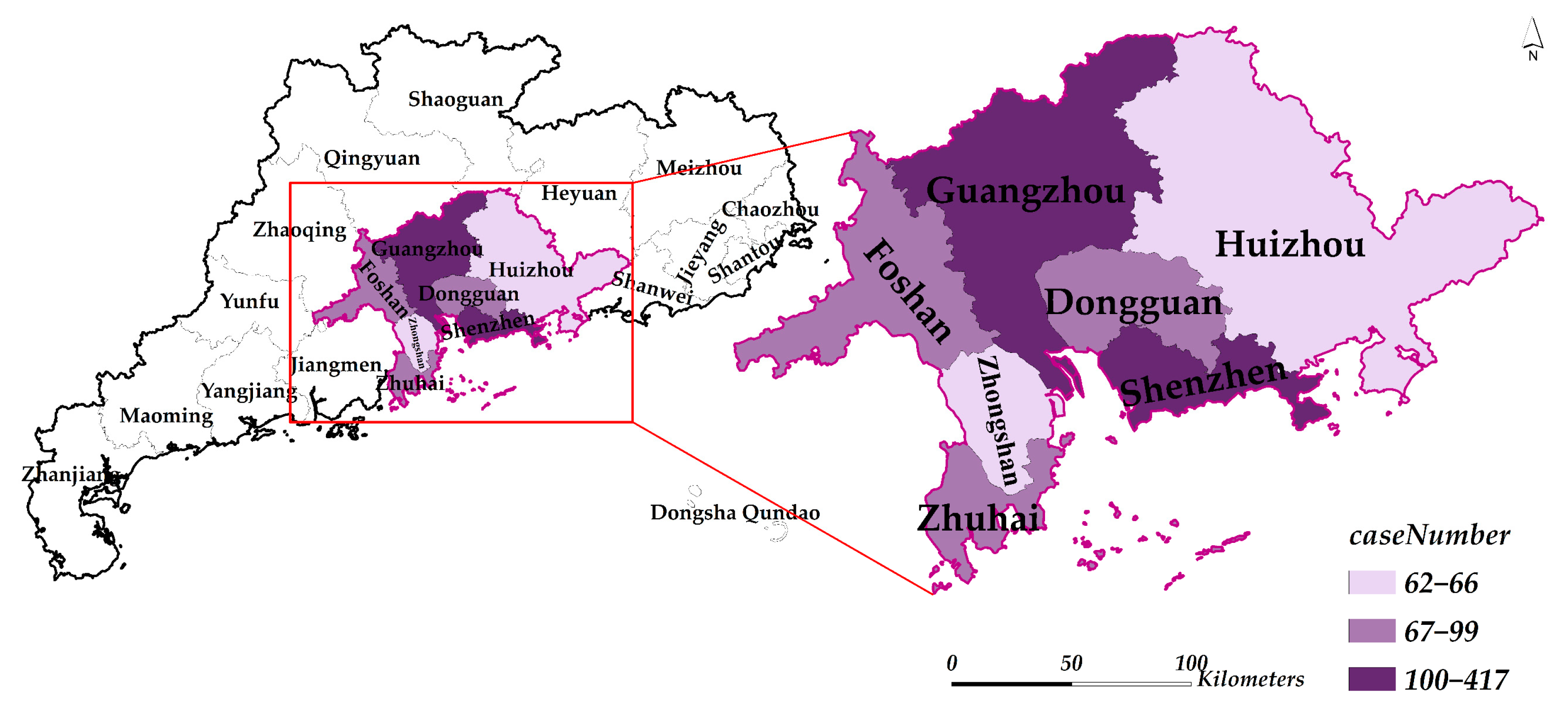
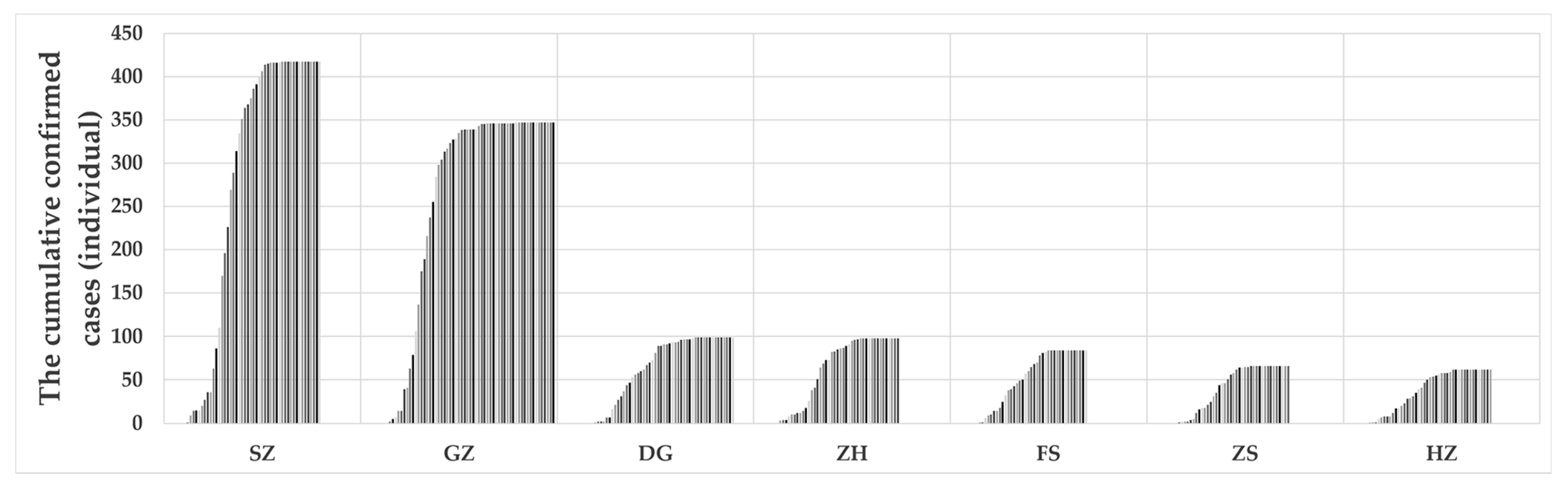


| Cities | Abbreviation | Beginning of the First Wave | End of the First Wave | Confirmed Cases Number |
|---|---|---|---|---|
| Shenzhen | SZ | 12 January 2020 | 5 March 2020 | 417 |
| Guangzhou | GZ | 14 January 2020 | 18 March 2020 | 347 |
| Dongguan | DG | 17 January 2020 | 12 March 2020 | 99 |
| Zhuhai | ZH | 13 January 2020 | 1 March 2020 | 98 |
| Foshan | FS | 14 January 2020 | 27 February 2020 | 84 |
| Zhongshan | ZS | 15 January 2020 | 29 February 2020 | 66 |
| Huizhou | HZ | 13 January 2020 | 2 March 2020 | 62 |
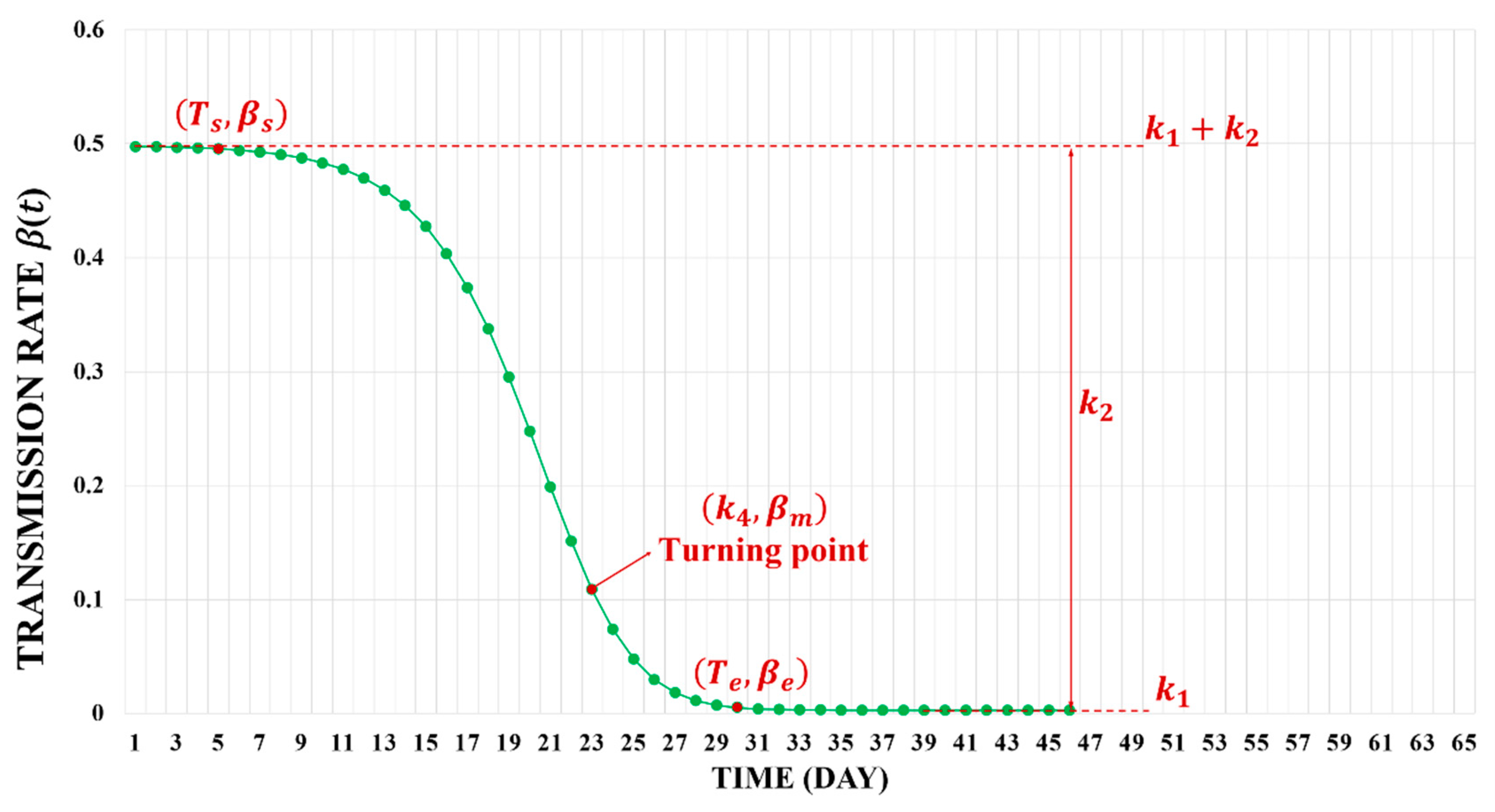
| Parameters | Ranges | Explanation |
|---|---|---|
| represents the final average transmission rate of infected individuals after implementing interventions. | ||
| represents the variation of the average transmission rate during the entire transmission process. Thus, means the initial transmission rate of the infected. | ||
| is the curvature at the inflection point, indicating the speed at which the policy will take effect. The larger is the faster the prevention and control effect will appear. | ||
| is the inflection point of the , showing the time lag of the human intervention effect and not exceeding the period to reach half of the maximum cumulative confirmed cases of the local epidemic (). At the , the transmission rate drops fastest. | ||
| controls the asymmetry degree of the curve. | ||
| represents the average positive rate during transmission, which is equal to the inverse of the incubation period. According to Ahmed S. Keshta et al., the COVID-19 incubation period is generally more than 2 days [40]. The range of parameter was, therefore, set as . | ||
| means the probability of removing from infection, which is equal to the reciprocal of the recovery period. For COVID-19 patients, the average treatment time is mostly longer than influenza patients. According to Mahmoud S. Al-Haddad et al., the average duration of illness for the common cold is one week (7 days) [41]; therefore, setting the parameter is no more than 1/7 (the reciprocal of 7). The range of parameter was, therefore, set as . |
| Indicators | Average Positive Rate | Average Incubation Period | Recovery Rate | Average Time Interval from Diagnosis to Discharge | Recovery Period | Basic Reproductive Number |
|---|---|---|---|---|---|---|
| Mean | 0.27 | 3.76 | 0.10 | 9.72 | 16.48 | 8.02 |
| Median | 0.28 | 3.63 | 0.10 | 9.53 | 16.29 | 7.40 |
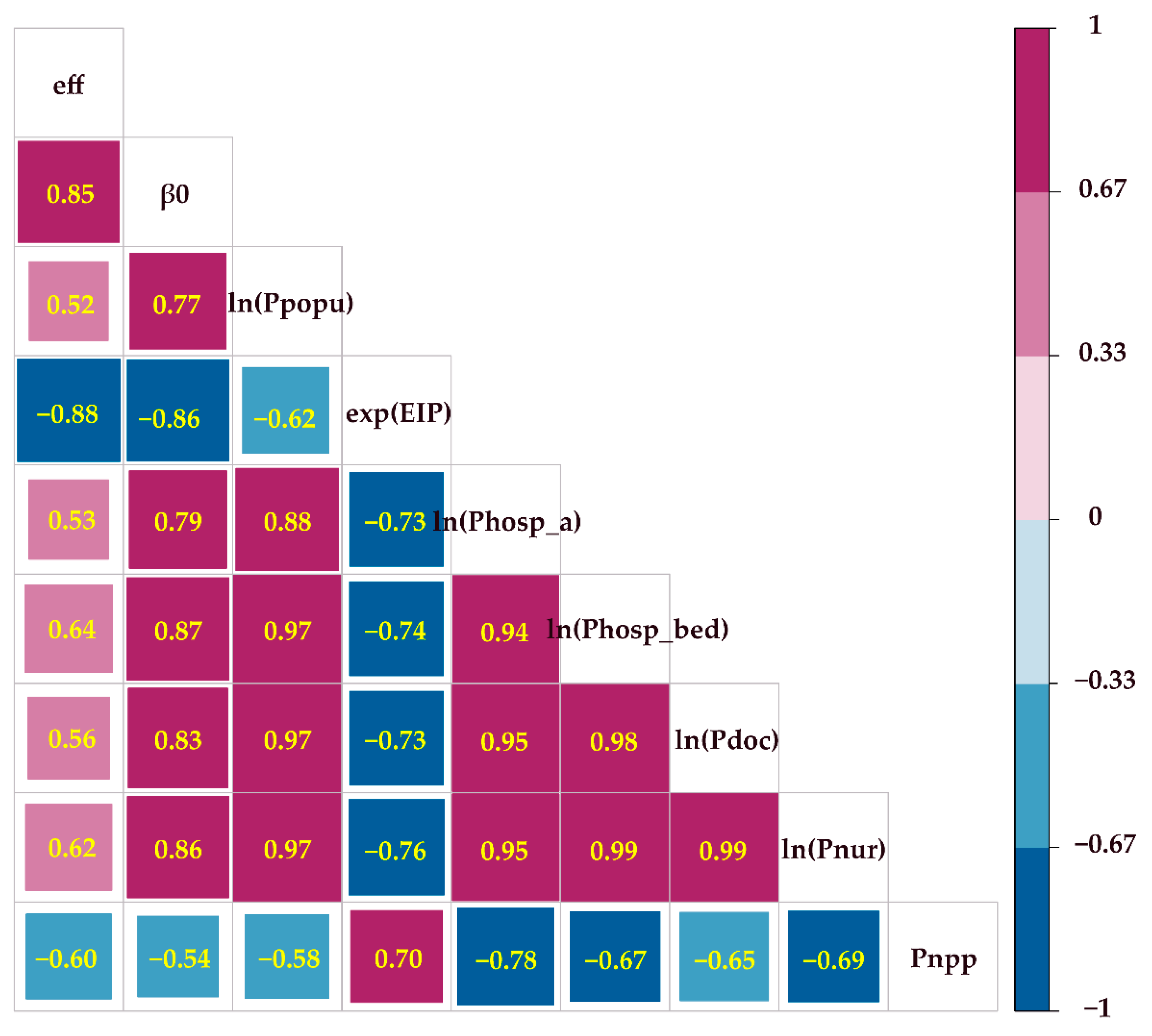
| Possible Influencing Factors | Explanations |
|---|---|
| initial transmission rate | : The initial transmission rate in each city, which is equal to . |
| population size | : The proportion of population size in a given city among these seven cities. |
| epidemic inflection point | : The ratio between the period to reach half of the maximum cumulative confirmed cases of the local epidemic (day) and the duration of the first wave epidemic. |
| number of medical resources | : The proportion of hospitals in a given city among these seven cities. |
| : The proportion of doctors in a given city among these seven cities. | |
| : The proportion of nurses in a given city among these seven cities. | |
| quality of medical resources | : The proportion of grade A hospitals in a given city among these seven cities. |
| economic dynamics and population mobility | : The growth rate of nighttime light values during February compared to January. |
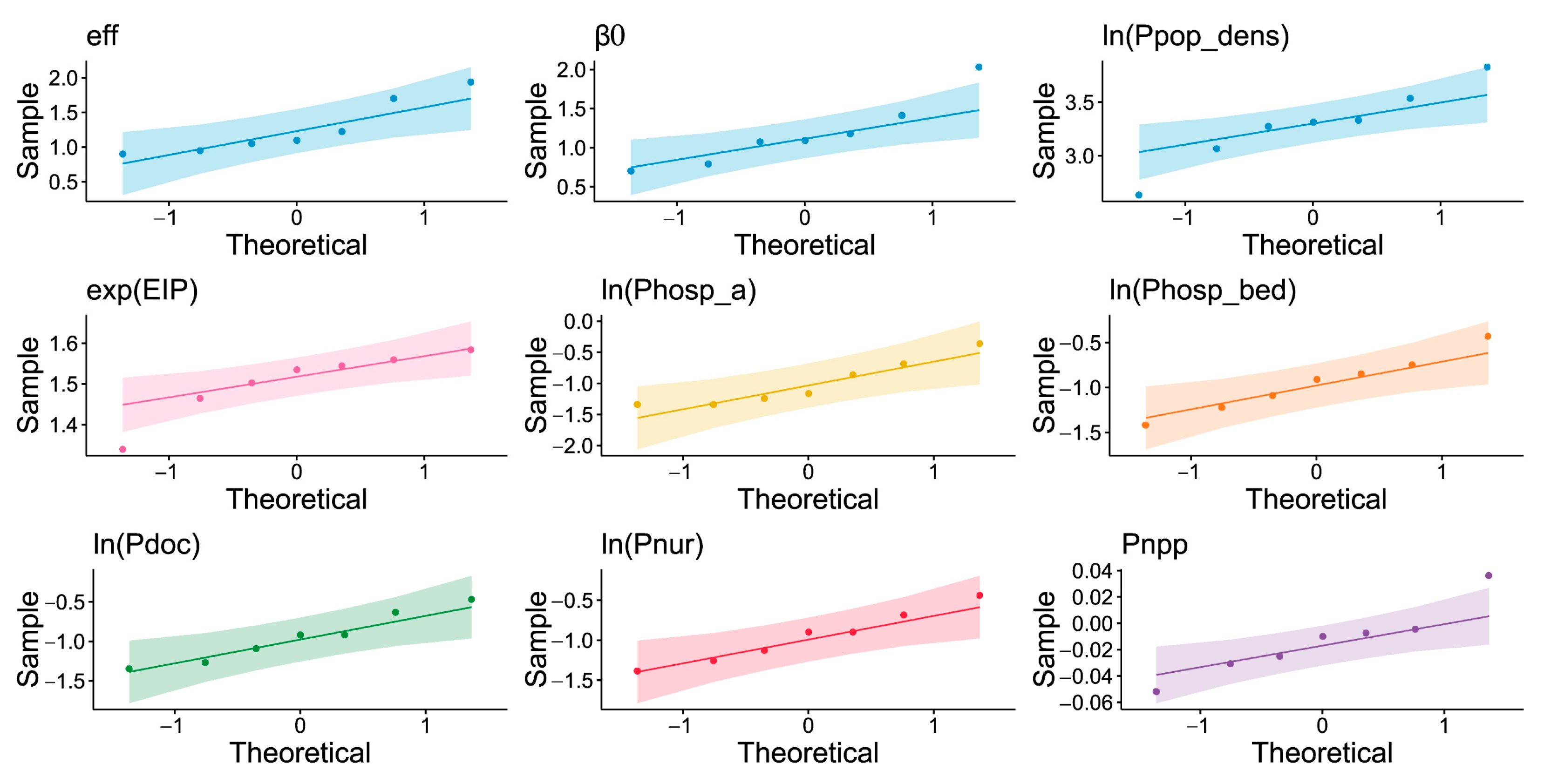
| Indicators | W | p-Value | Pass the Test or Not | Choose the Variable or Not |
|---|---|---|---|---|
| 0.8945 | 0.2989 | Yes | √ | |
| 0.7573 | 0.0151 | No | ||
| 0.8635 | 0.1627 | Yes | ||
| 0.8599 | 0.1511 | Yes | × | |
| - | - | - | × | |
| 0.9139 | 0.4233 | Yes | √ | |
| 0.8411 | 0.1017 | Yes | × | |
| 0.8606 | 0.1533 | Yes | √ | |
| 0.7816 | 0.0268 | No | × | |
| 0.7987 | 0.0398 | No | × | |
| 0.7768 | 0.0240 | No | × | |
| 0.9134 | 0.4202 | Yes | √ | |
| 0.8374 | 0.0940 | Yes | × | |
| 0.8223 | 0.0676 | Yes | × | |
| 0.9019 | 0.3425 | Yes | √ | |
| 0.8195 | 0.0636 | Yes | × | |
| 0.7972 | 0.0385 | No | × | |
| 0.9164 | 0.4419 | Yes | √ | |
| 0.7458 | 0.0115 | No | × | |
| 0.7230 | 0.0066 | No | × | |
| 0.8497 | 0.1220 | Yes | √ | |
| 0.9455 | 0.6885 | Yes | √ | |
| 0.9389 | 0.6287 | Yes | × | |
| - | - | - | × |
Publisher’s Note: MDPI stays neutral with regard to jurisdictional claims in published maps and institutional affiliations. |
© 2022 by the authors. Licensee MDPI, Basel, Switzerland. This article is an open access article distributed under the terms and conditions of the Creative Commons Attribution (CC BY) license (https://creativecommons.org/licenses/by/4.0/).
Share and Cite
Liu, Y.; Liao, C.; Zhuo, L.; Tao, H. Evaluating Effects of Dynamic Interventions to Control COVID-19 Pandemic: A Case Study of Guangdong, China. Int. J. Environ. Res. Public Health 2022, 19, 10154. https://doi.org/10.3390/ijerph191610154
Liu Y, Liao C, Zhuo L, Tao H. Evaluating Effects of Dynamic Interventions to Control COVID-19 Pandemic: A Case Study of Guangdong, China. International Journal of Environmental Research and Public Health. 2022; 19(16):10154. https://doi.org/10.3390/ijerph191610154
Chicago/Turabian StyleLiu, Yuan, Chuyao Liao, Li Zhuo, and Haiyan Tao. 2022. "Evaluating Effects of Dynamic Interventions to Control COVID-19 Pandemic: A Case Study of Guangdong, China" International Journal of Environmental Research and Public Health 19, no. 16: 10154. https://doi.org/10.3390/ijerph191610154
APA StyleLiu, Y., Liao, C., Zhuo, L., & Tao, H. (2022). Evaluating Effects of Dynamic Interventions to Control COVID-19 Pandemic: A Case Study of Guangdong, China. International Journal of Environmental Research and Public Health, 19(16), 10154. https://doi.org/10.3390/ijerph191610154