Article

Rasch Modeling and Differential Item Functioning of the Self-Stigma Scale-Short Version among People with Three Different Psychiatric Disorders


1
Department of Occupational Therapy, AdventHealth University, Orlando, FL 32803, USA
2
Department of General Psychiatry, Jianan Psychiatric Center, Ministry of Health and Welfare, Tainan 71742, Taiwan
3
Department of Child and Adolescent Psychiatry, Jianan Psychiatric Center, Ministry of Health and Welfare, Tainan 71742, Taiwan
4
Division of Hematology and Medical Oncology, Department of Internal Medicine, E-DA Hospital, Kaohsiung 82445, Taiwan
5
Faculty of School of Medicine, College of Medicine, I-Shou University, Kaohsiung 84001, Taiwan
6
Department of Nursing, School of Health and Welfare, Jönköping University, SE-551 11 Jönköping, Sweden
7
Department of Psychiatry, Yale School of Medicine, New Haven, CT 06510, USA
8
Connecticut Mental Health Center, New Haven, CT 06519, USA
9
Connecticut Council on Problem Gambling, Wethersfield, CT 06109, USA
10
Child Study Center, Yale School of Medicine, New Haven, CT 06510, USA
11
Department of Neuroscience, Yale University, New Haven, CT 06511, USA
12
Wu Tsai Institute, Yale University, New Haven, CT 06510, USA
13
Institute of Allied Health Sciences, College of Medicine, National Cheng Kung University, Tainan 70101, Taiwan
14
Biostatistics Consulting Center, National Cheng Kung University Hospital, College of Medicine, National Cheng Kung University, Tainan 70403, Taiwan
15
Department of Public Health, College of Medicine, National Cheng Kung University, Tainan 70101, Taiwan
16
Department of Occupational Therapy, College of Medicine, National Cheng Kung University, Tainan 70101, Taiwan
*
Authors to whom correspondence should be addressed.
These authors contributed equally to this work.
Int. J. Environ. Res. Public Health 2022, 19(14), 8843; https://doi.org/10.3390/ijerph19148843

Submission received: 10 June 2022 / Revised: 14 July 2022 / Accepted: 14 July 2022 / Published: 21 July 2022

Abstract

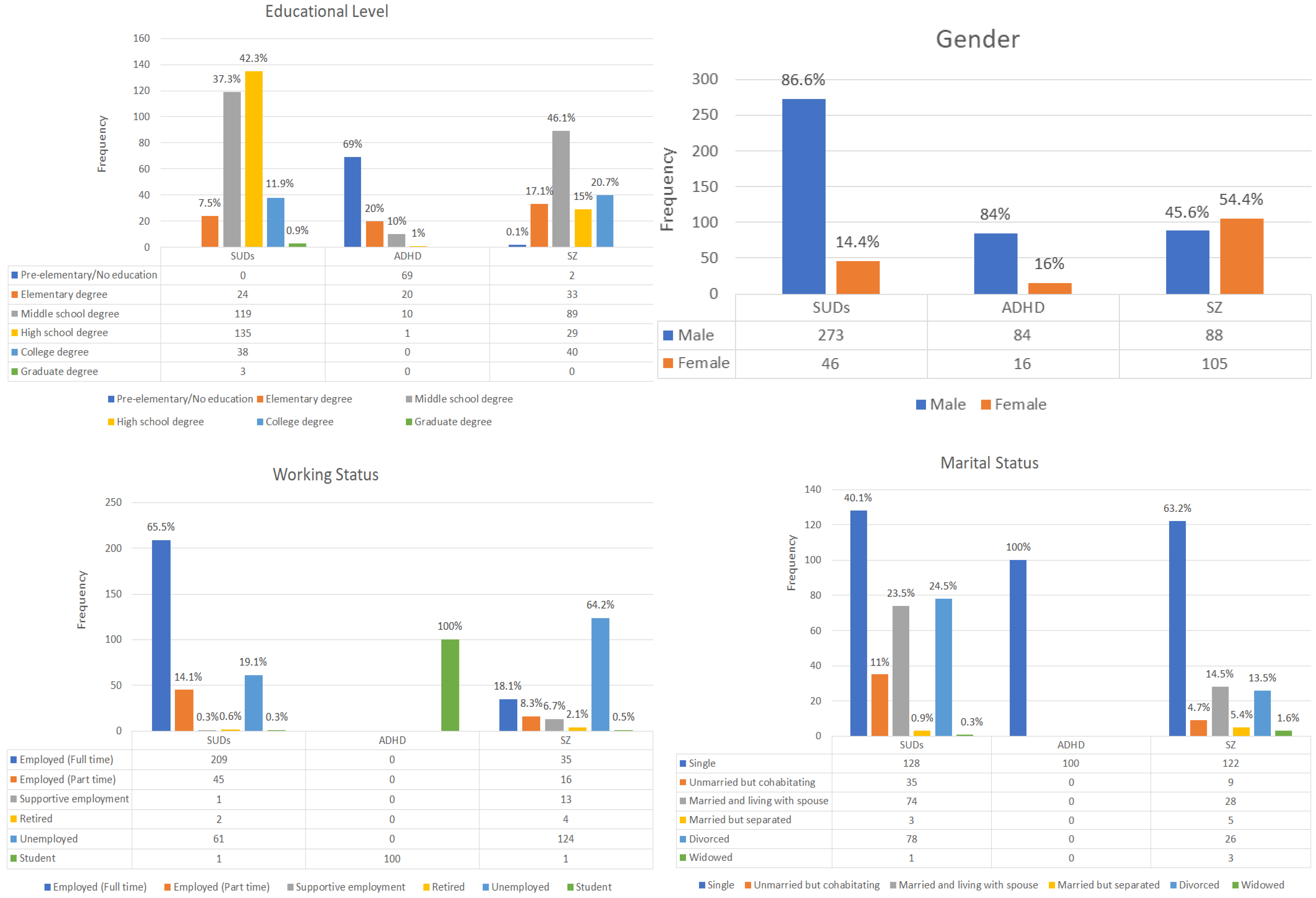
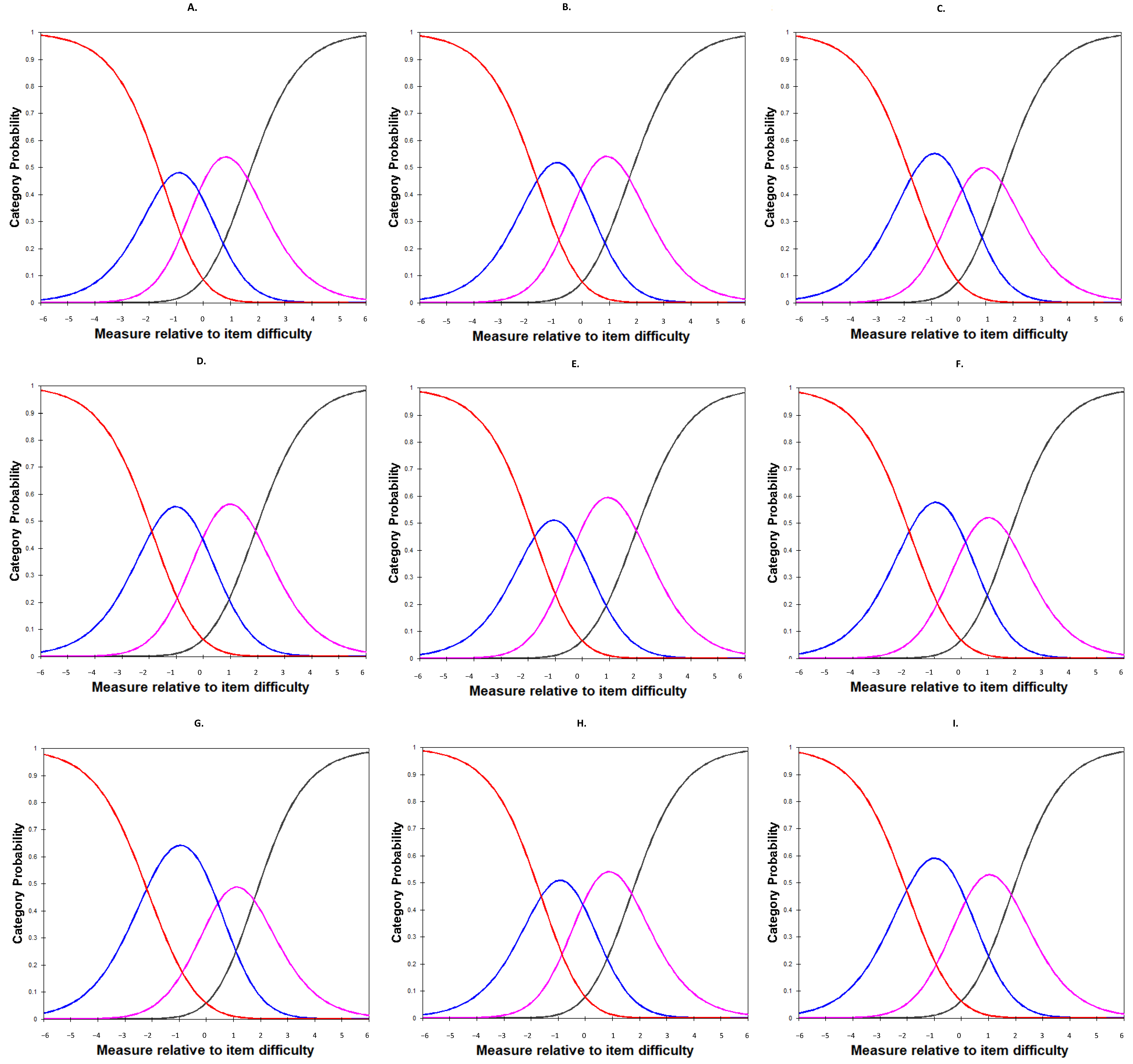
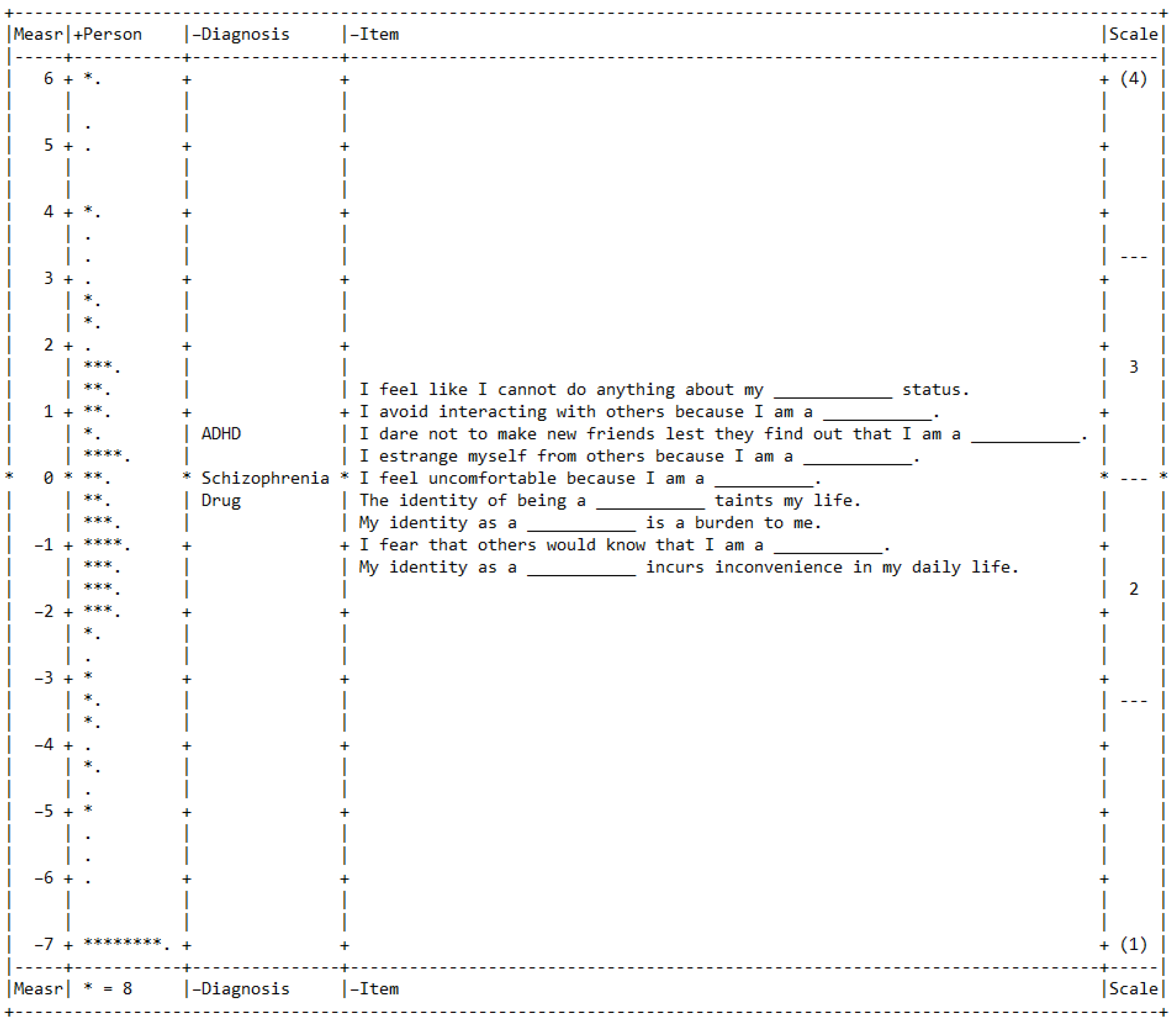
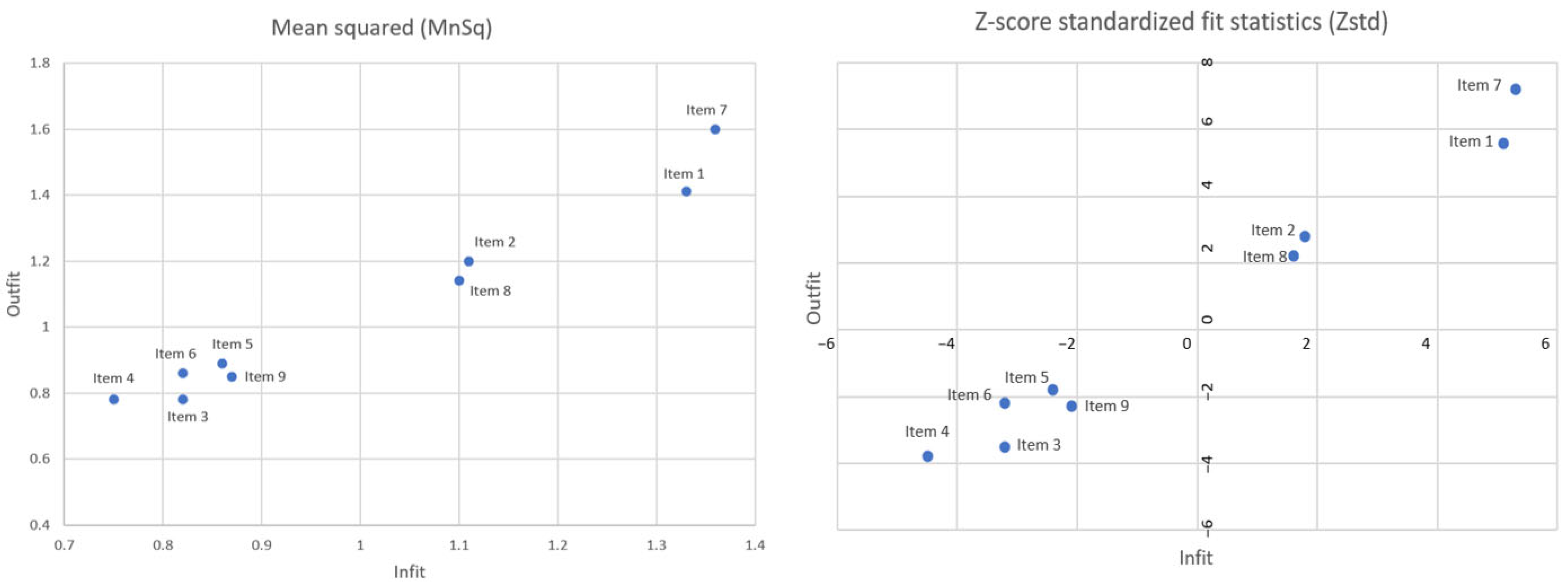
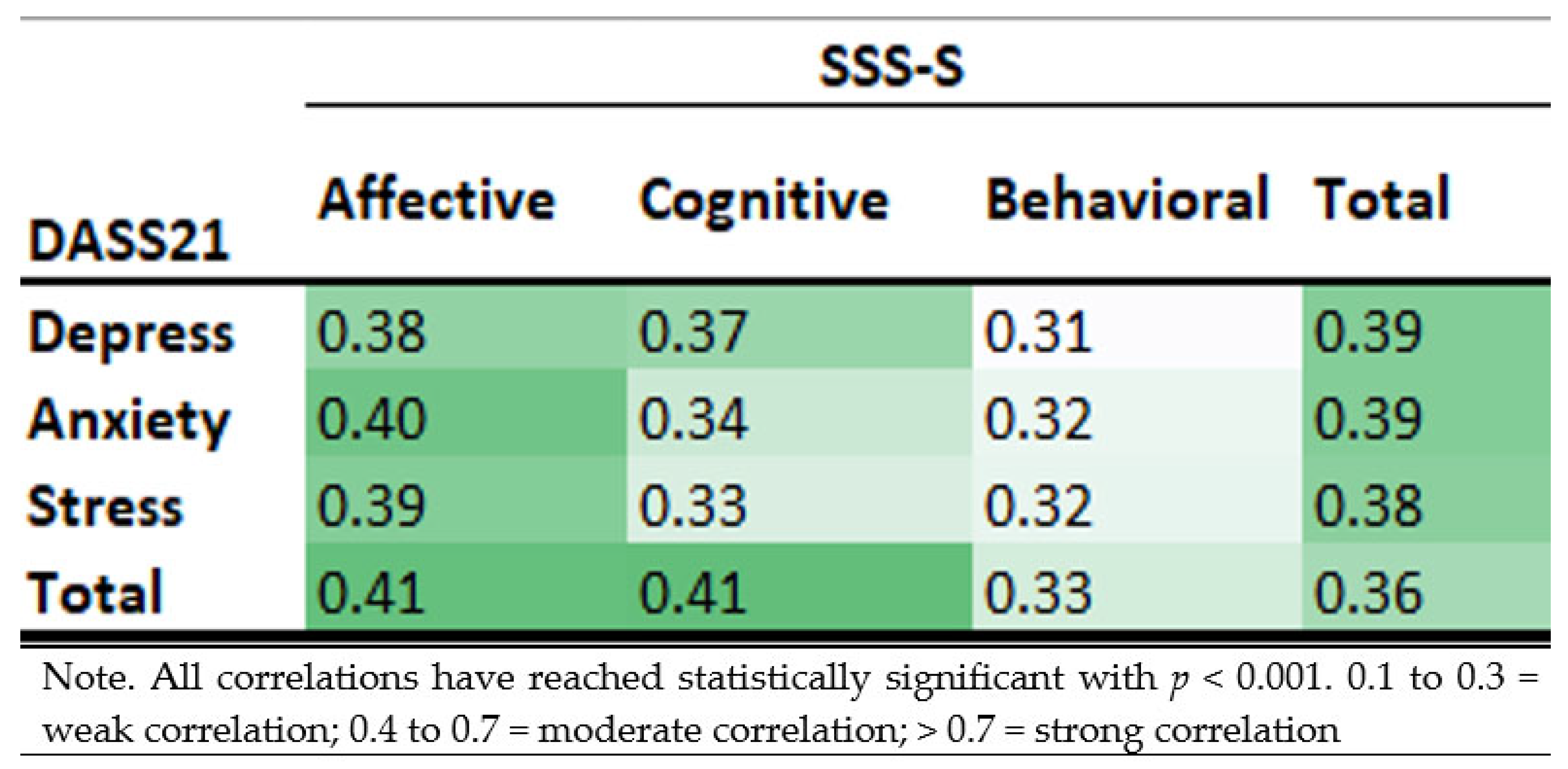
Self-stigma is prevalent in individuals with psychiatric disorders and can profoundly affect people. A unified assessment with sound psychometric properties is needed for evaluating self-stigma across psychiatric conditions. The aim of this study was to examine the psychometric properties of the Self-Stigma Scale-Short version (SSS-S) using Rasch modeling. Six-hundred and twelve participants with substance use disorders (n = 319), attention-deficit/hyperactivity disorder (n = 100), and schizophrenia (n = 193) completed the SSS-S. Rasch results confirmed the unidimensionality of the nine items of the SSS-S. The four-point Likert scale of the SSS-S reflected monotonical increases along the self-stigma continuum. No ceiling or floor effects were detected. Among the three subdomains of the SSS-S, cognitive items appeared to be the most robustly endorsed, and behavioral items were the least endorsed. Two items in the SSS-S displayed differential item functioning across the three diagnoses. Additionally, SSS-S scores showed weak to moderate correlation with depression, anxiety, and stress scale scores. The SSS-S had overall satisfactory psychometric properties. Healthcare professionals may use this assessment to assess self-stigma in multiple psychiatric groups, and information gained may facilitate improved care.
Keywords: self-stigma; substance-related disorders; addictive behaviors; impulsivity; psychotic disorders; Rasch; psychometric testing; validity; differential item functioning self-stigma; substance-related disorders; addictive behaviors; impulsivity; psychotic disorders; Rasch; psychometric testing; validity; differential item functioning