Systematic Review

Long-Term Consequences of COVID-19 at 6 Months and Above: A Systematic Review and Meta-Analysis
1
Department of Epidemiology and Biostatistics, School of Public Health, Peking University, Xueyuan Road No. 38, Haidian District, Beijing 100191, China
2
Institute for Global Health and Development, Peking University, Yiheyuan Road No. 5, Haidian District, Beijing 100871, China
*
Authors to whom correspondence should be addressed.
These authors contributed equally to this work.
Int. J. Environ. Res. Public Health 2022, 19(11), 6865; https://doi.org/10.3390/ijerph19116865

Submission received: 29 April 2022 / Revised: 30 May 2022 / Accepted: 1 June 2022 / Published: 3 June 2022

Abstract

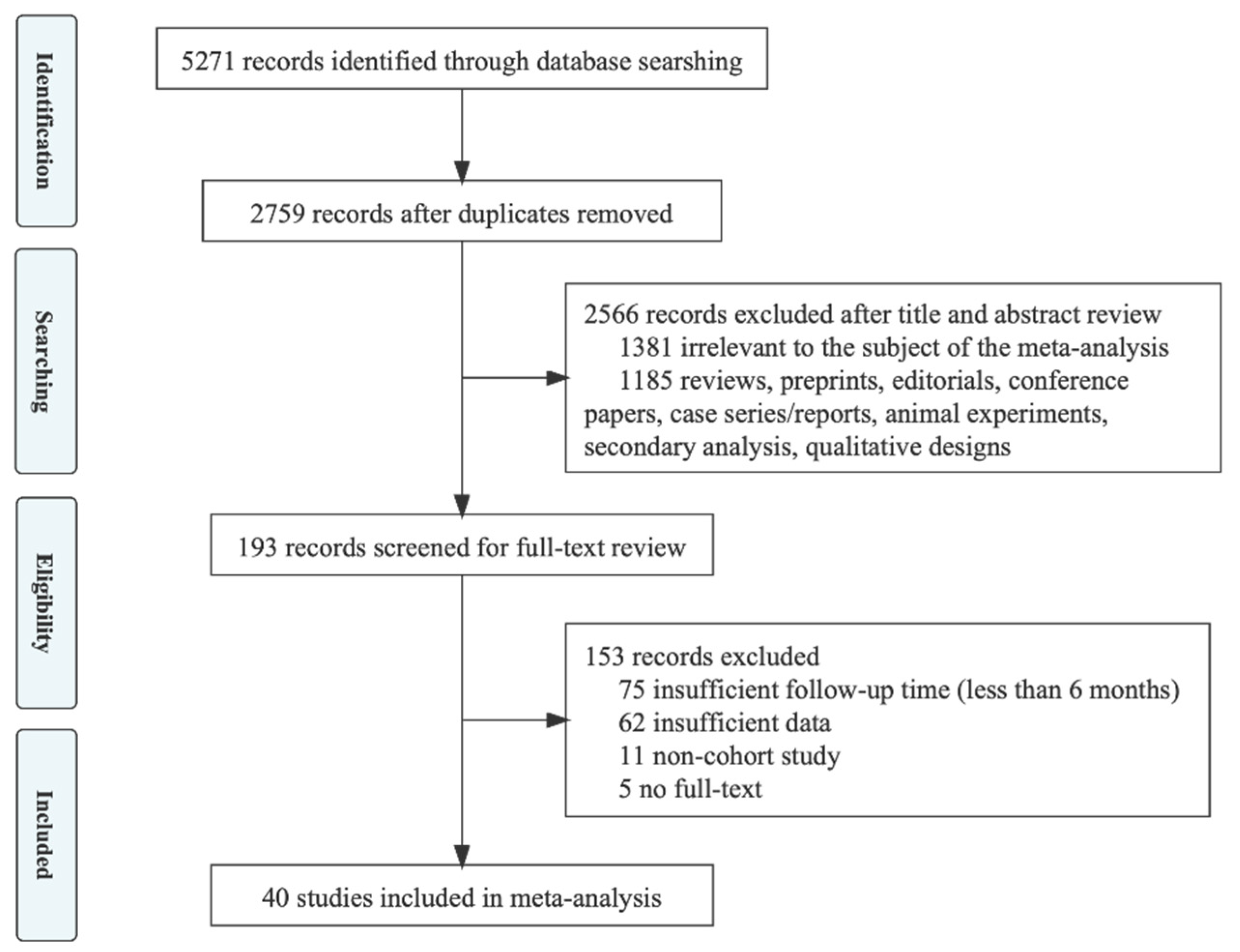
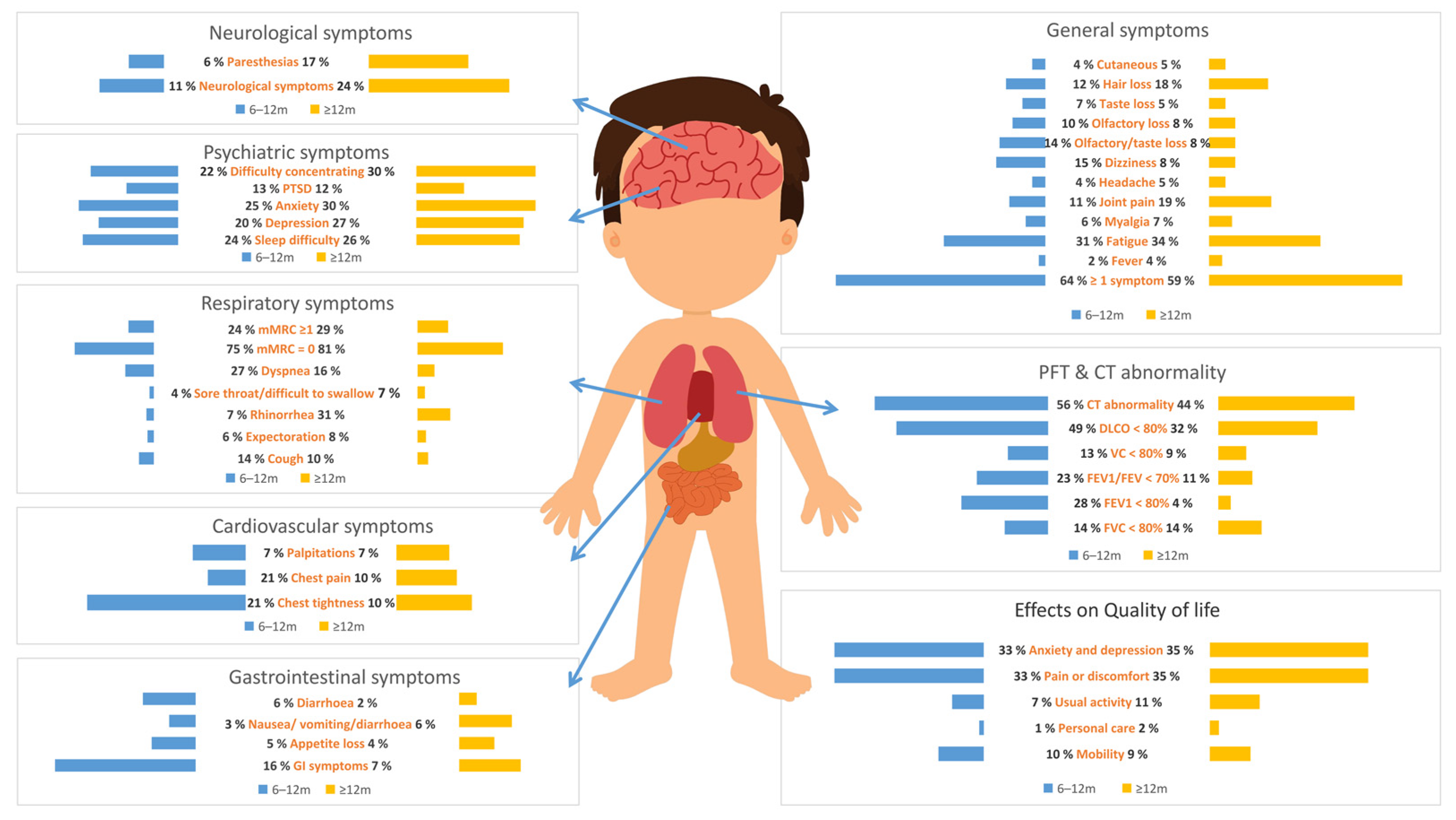
We aimed to review the data available to evaluate the long-term consequences of coronavirus disease 2019 (COVID-19) at 6 months and above. We searched relevant observational cohort studies up to 9 February 2022 in Pubmed, Embase, and Web of Science. Random-effects inverse-variance models were used to evaluate the Pooled Prevalence (PP) and its 95% confidence interval (CI) of long-term consequences. The Newcastle–Ottawa quality assessment scale was used to assess the quality of the included cohort studies. A total of 40 studies involving 10,945 cases of severe acute respiratory syndrome coronavirus-2 (SARS-CoV-2) infection were included. Of the patients, 63.87% had at least one consequence at the 6 month follow-up, which decreased to 58.89% at 12 months. The most common symptoms were fatigue or muscle weakness (PP 6–12 m = 54.21%, PP ≥ 12 m = 34.22%) and mild dyspnea (Modified Medical Research Council Dyspnea Scale, mMRC = 0, PP 6–12 m = 74.60%, PP ≥ 12 m = 80.64%). Abnormal computerized tomography (CT; PP 6–12 m = 55.68%, PP ≥ 12 m = 43.76%) and lung diffuse function impairment, i.e., a carbon monoxide diffusing capacity (DLCO) of < 80% were common (PP 6–12 m = 49.10%, PP ≥ 12 m = 31.80%). Anxiety and depression (PP 6–12 m = 33.49%, PP ≥ 12 m = 35.40%) and pain or discomfort (PP 6–12 m = 33.26%, PP ≥ 12 m = 35.31%) were the most common problems that affected patients’ quality of life. Our findings suggest a significant long-term impact on health and quality of life due to COVID-19, and as waves of ASRS-CoV-2 infections emerge, the long-term effects of COVID-19 will not only increase the difficulty of care for COVID-19 survivors and the setting of public health policy but also might lead to another public health crisis following the current pandemic, which would also increase the global long-term burden of disease.
Keywords: COVID-19; long-term consequence; systematic review; meta-analysis COVID-19; long-term consequence; systematic review; meta-analysis