


Abstract
In-home and shared meals have been hypothesized to have positive effects. This narrative review examines research on the influence of in-home eating on diet quality, health outcomes, and family relationships. A combination search approach included a search of PubMed, backward searches of previous published reviews, and studies the authors were familiar with. A search identified 118 publications; 54 original studies and 11 review studies were included in this review. Each study was reviewed and summarized. The diverse designs precluded quantitative data synthesis. Relatively strong evidence from cross-sectional research supports the association of shared family meals with favorable dietary patterns in children and adolescents, including consumption of fruits, vegetables, and healthful nutrients. Correlational evidence links shared meals with health and psychosocial outcomes in youth, including less obesity, decreased risk for eating disorders, and academic achievement. Most evidence is cross-sectional, thus, limiting attribution of causality. There is insufficient evidence to conclude that interventions improve the frequency of shared meals, improve diet, or prevent child obesity. Despite the “common wisdom”, the evidence that in-home, shared meals, per se, have positive effects on diet quality, health outcomes, psychosocial outcomes, and family relationships is limited due to weak research designs and single-item measurement of the independent variable. More research, with stronger designs, is warranted.
1. Introduction
Evidence suggests that there have been shifts in dietary practices over the past few decades, with less time devoted to food shopping, cooking, and in-home eating despite the potential benefits of in-home food preparation and eating [1]. Paralleling this decrease in time spent preparing food in the home and changes in diet is the worldwide increase in diet-related health concerns such as obesity and diabetes [2,3].
In light of these trends, health experts are seeking effective strategies to combat the obesity epidemic, including the possible role of in-home and family-shared meals. Some research suggests a potential protective effect of home meals on child health, psychosocial outcomes, and family relationships [4]. For example, dining together in the home has been proposed to foster self-esteem, promote academic achievement, and protect against substance abuse in adolescents [5,6,7]. To date, however, there is no available review of current evidence for benefits of in-home meals on diet quality and meal patterns, health outcomes, psychosocial factors, and family relationships.
The purpose of this narrative literature review is to examine the evidence regarding the effects of in-home eating and shared meals. Specifically, the review examines the scientific literature on: (1) factors associated with in-home eating (e.g., lifestyle habits, family demographics); (2) the impact of in-home eating on the nutritional quality of meals; (3) the relationship between in-home eating and child and adolescent health outcomes; and (4) the influence of in-home eating on family relationships.
2. Materials and Methods
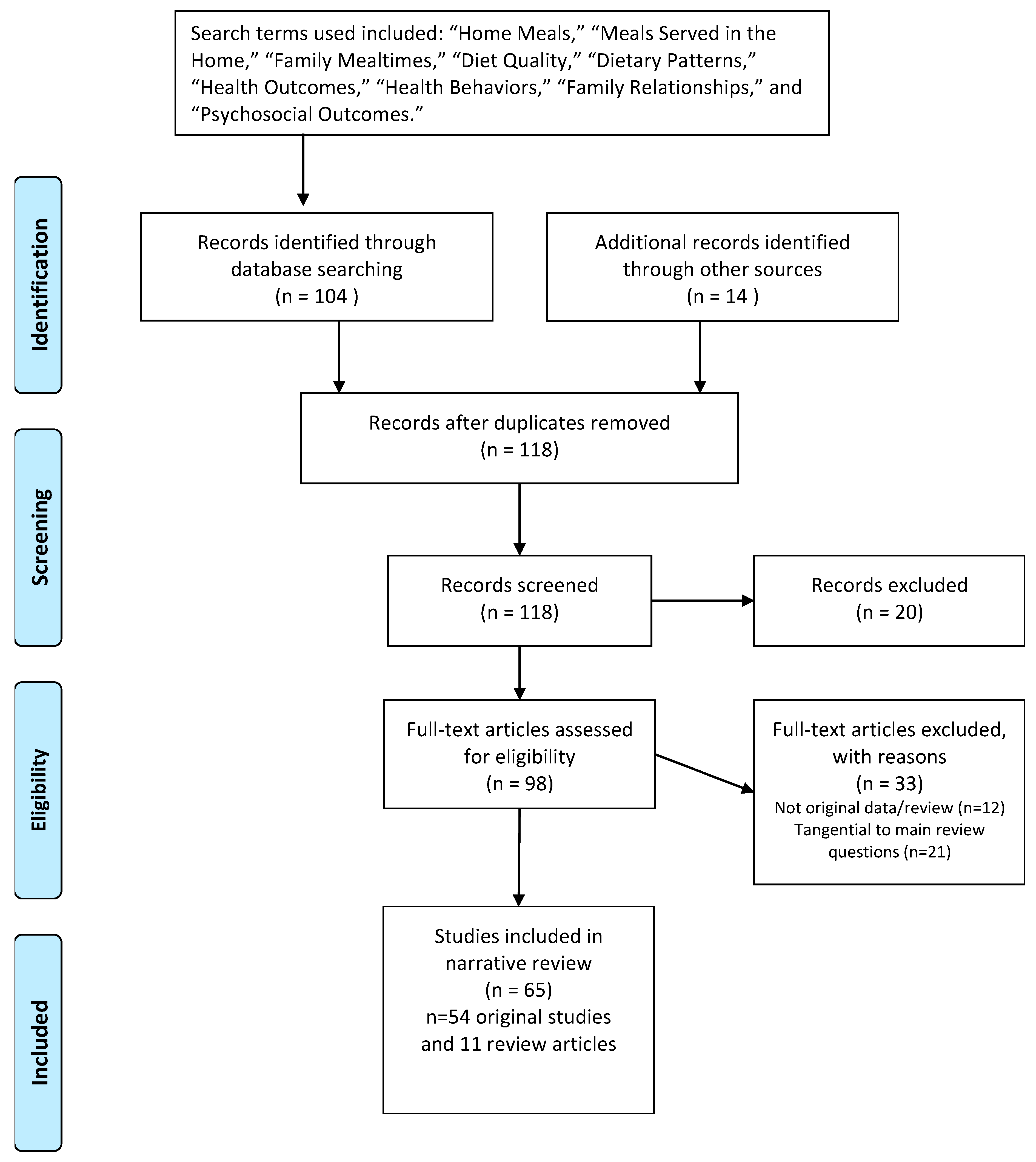
Primary data-based articles and review articles were included in this literature review, which was initially conducted between January and April 2016. Search terms used included: “Home Meals”, “Meals Served in the Home”, “Family Mealtimes”, “Diet Quality”, “Dietary Patterns”, “Health Outcomes”, “Health Behaviors”, “Family Relationships”, and “Psychosocial Outcomes”. A combination search approach was used that included a search of the PubMed database, backward searches of previous published reviews on the topic, and studies the authors were familiar with based on their combined 25 years of research in the area. In the initial literature search, 112 publications were identified and of these, 48 original studies and 11 additional review publications were considered suitable to include in this review. Publications were excluded if they did not report on original data or a systematic review on this topic, or if they were found to be tangential to the main review question. An updated search in May 2018 yielded six additional relevant primary research articles. Analysis of the literature was completed in 2018–2020 (See Figure 1).
Figure 1.
Flow Diagram.
Studies were organized into categories based on the review questions. Most of the studies were conducted in the U.S., but we have noted non-U.S. study locations in the Results tables where applicable. A preliminary scan revealed the literature is comprised of mostly cross-sectional studies, a variety of methods and measures, and few randomized controlled trials. This limited the ability to apply formal statistical comparisons to the body of literature, so a narrative review approach was chosen, whereby the review team members would each examine studies within outcome categories, summarize their observations, and discuss the findings with the team until consensus was reached. Narrative reviews are preferred when the body of research cannot be summarized quantitatively due to the heterogeneity of research methods and statistical analyses [8,9].
2.1. Terminology
2.1.1. Defining and Measuring In-Home Meals and Shared Meals at Home
Most of the research in this area focuses on in-home meals or shared meals at home. The concept of “in-home meals”, or in-home eating—without mention of shared meals or family meals—has often been studied in the context of comparing meals eaten at home versus meals eaten outside the home [10,11]. Shared meals at home, or frequency of family meals is the focus of a greater number of studies [4,12]. Most use a similar approach to measuring this construct, namely a single item with this wording or similar wording: “During the past week, how many times did all, or most, of the people living in your household eat a meal together?” [5,7,13,14,15,16,17,18,19,20,21,22,23,24] Some of these studies ask whether “the family typically eats together” for various meals [25], or “how often do you eat dinner with a parent or guardian?” [26]. The question is usually asked of parents and/or children and adolescents. Most of the measures focus on dinner or the evening meal. Response options are usually specified by the number of days per week (0 to 7) or using ordinal labels, such as ‘never/rarely’ to ‘always’ [26,27,28].
2.1.2. Other Behaviors and Circumstances Closely Related to In-Home Meals and Shared Meals at Home
The two most-often measured behaviors and circumstances, related to in-home meals and shared meals at home (but not measuring meals per se), are home food preparation/cooking and social interaction during meals at home. In their protocol for a systematic review of home cooked meals, Mills et al. [29] defined home cooking as “practices and skills for preparing hot or cold foods at home, including mixing, combining, and often heating ingredients.” The Project EAT cohort study included a question about “frequent food preparation in the home” [12] and other studies ask how many days per week the child “eats a dinner that was made at home” [21].
Assessments of social interaction during meals at home include items such as the presence of an adult at the meal, eating in the kitchen or dining room, and watching TV while eating [30,31]. Several studies have used videotaped interactions to assess social interactions, such as feeding styles, interaction, and communication during family meals [32,33,34,35].
3. Results
3.1. Diet Quality and Meal Patterns
We examined the available studies to summarize whether in-home eating and meal sharing are associated with energy intake, fruit and vegetable intake, nutrient intake, dietary patterns, and overall diet quality in children and adolescents. The majority of the studies to date have been cross-sectional (16), and a smaller number are longitudinal (4). In addition, four systematic reviews have been published. Overall findings suggest a positive association between the frequency of family meals and favorable dietary outcomes (Table 1).
Table 1.
Summary of Diet Quality and Meal Patterns.
Project EAT, a longitudinal study conducted in the U.S. Midwest, has contributed substantially to the literature regarding the influences of family meals on the dietary outcomes of adolescents [13,15,36,37]. In our review, five empirical research reports drew from the Project EAT dataset and all four systematic reviews included Project EAT findings. It is noteworthy that most studies used intakes of specific food groups, typically fruit and vegetable consumption, as a proxy for diet quality; and only one used a validated measure of overall diet quality (the Diet Quality Index–International) [38]. Additionally, while most of the research was conducted in the U.S., a portion of the literature is based on studies in Europe and other nations outside of the U.S. [10,38,39,40,41,42]. The conclusions mostly apply to the U.S. cultural context and food environment.
Family meal frequency is positively associated with fruit and vegetable and dairy intakes and breakfast eating; and negatively associated with fried foods, unhealthy snacks and cakes, and sugar-sweetened beverage intake [12,13,14,37,39,44,45,47,50,51,52,53,54]. The impact of family meals on specific foods may differ by age. In a cross-sectional study of 1992 children (age 0 to 19 years), five or more family meals per week was associated with lower sugar-sweetened beverage intake among both younger and older children, greater vegetable intake among older children and adolescents, and greater fruit intake among adolescents [18]. However, one U.K.-based study found that the frequency of family mealtimes was unrelated to vegetable consumption or liking among children ages 2 to 5 years old [41].
Family meal frequency has been shown to be positively associated with increased intakes of calcium, fiber, magnesium, potassium, iron, zinc, folate, thiamin, riboflavin, B12, B6, and vitamins A, C, and E [12,13,19,25,37,40,46,47,52]. The evidence regarding caloric intake is inconsistent. Neumark-Sztainer, Hannan et al. [13] found a positive association between frequency of home meals and energy intake in a study of 4746 adolescents. However, a longitudinal nationally representative sample of 29,217 children in the U.S. found that between 1977 and 2006, there was an overall increase in energy intakes and a corresponding decrease in frequency of eating at home [48].
The influence of family meals on dietary outcomes may also differ by sex. Burgess-Champoux, Larson et al. [15] found that regular family meals had a positive association with increased sodium intake for females, but not males. Finally, there may be different outcomes by race/ethnicity. A recent study found a positive association between an increase in family meal frequency over time and fruit and vegetable consumption in the eighth grade among white and black adolescents, but not among Hispanic or Asian adolescents [49].
3.2. Health Outcomes
The majority of studies that examine associations between sharing meals together and health focus on outcomes that are most closely tied to nutrition (Table 2). Using large nationally representative datasets, direct relationships between frequency of shared meals and reduced risk for childhood overweight and obesity are frequently reported [20,55,56,57]. These findings are confirmed in meta-analytic reviews of smaller studies [45]. However, when more sophisticated modeling techniques are used to include potential confounders or mediators, such as family cohesion and closeness, the direct link between mealtime frequency and child obesity often is minimized or becomes nonsignificant [50]. Further, when racial and ethnic differences are carefully examined, nonmonotonic differences are revealed [58] and some studies found no associations between meal frequency and risk of overweight for Hispanic families [58,59].
Eating disorders and restricted eating habits, such as extreme dieting, have also been examined in relation to sharing meals together. In general, a significant relationship between eating disorders and low levels of sharing meals together has been reported [60,61,62]; but these effects are often minimized when family factors such as stability are included in analyses [61].
Table 2.
Summary of Health Outcomes.
Beyond diet quality, it is possible that social interaction during meals may mediate or contribute to some of the health outcomes reported [64]. Direct observations of social interactions during in-home meals have found that positive communication, showing genuine concern about family daily activities, and length of meal is associated with reduced risk for overweight and obesity [32,33]. However, treatment-seeking families (e.g., those seeking to lose weight) do not show this pattern when compared to families of non-obese children [65]. Presence of an adult and eating in the kitchen or dining room has also been found to be associated with less risk for being overweight or obese [30,31].
A consistent criticism in this area of research is whether shared mealtime is a proxy for other factors such as good parenting and positive family climate. Some research controls for these factors and finds decreased effect sizes in predicting health outcomes [28]. Further, mealtime routines are often highly related to other family routines, such as sleep routines [20,63], which are known to affect health outcomes.
3.3. Psychosocial Outcomes
A number of studies have investigated the association between the frequency of shared family meals and specific psychosocial characteristics and risk behaviors (Table 3). Positive associations were found between the frequency of family meals and self-esteem, academic achievement, commitment to learning, positive perceptions of support and boundaries, positive values, social competencies, and overall psychological well-being [5,6]. Negative associations were found between the frequency of family meals and substance use (alcohol, tobacco, and illicit drugs), depressive symptoms, suicidal ideation, eating disorders, unhealthy and extreme weight-loss practices, and violence/delinquency [7,14,57].
Table 3.
Summary of Psychosocial Outcomes.
The benefits of family meals appear to vary somewhat by gender, especially for adolescents. Regular family meals during middle school were found to be associated with decreased odds of tobacco, alcohol, and drug use five years later, but only for females [7]. Sen [66] found that the frequency of family meals was related to decreased substance use and running away for females, and decreased incidence of drinking, physical violence, property destruction, stealing, and running away from home for males. Benefits of family meals in relation to healthy eating behaviors appear to be stronger for female adolescents; frequent family meals were associated with lower prevalence of “extreme weight control behaviors” in females, [60,62] decreased bulimic symptoms, and lower drive for thinness [28].
Most of the studies that included psychosocial variables were cross-sectional and focused on adolescents. Almost all of the data suggesting a relationship between family meals and psychosocial outcomes relates to the quantity or frequency of family meals, without assessing the quality of these eating experiences. One exception is a study by Neumark-Sztainer, Wall, and others [68], which found that more structured family meal environments and a positive atmosphere at family meals were associated with decreased odds of disordered eating. One study that used experience sampling methods found that meals eaten at home were followed by more positive emotions and less worry than meals eaten away from home [67].
Although most studies controlled for family demographic characteristics, only two [7,28] included measures of family functioning, such as family connectedness and cohesion. A review by Goldfarb and colleagues [6] concluded that associations between the frequency of family meals and deceased risk behaviors are less likely to be significant when factors like family connectedness are considered, indicating that family functioning may be more responsible for these associations than family meals themselves.
3.4. Family Relationships
Sharing meals together as a family has been proposed to promote relational closeness and to be a family routine that may promote health and wellbeing [32,69]. The mechanisms are believed to occur through repeated social interactions whereby emotions are well-regulated, positive parenting is demonstrated, and there is relatively little open conflict. Cross-sectional studies linking overall family functioning and the frequency of family mealtimes have generally found positive connections [24,28,54,70] (Table 4).
Table 4.
Summary of Family Relationships.
A recent longitudinal report [26] suggests that dining together may actually encourage better communication skills in adolescents. Over a 3 ½ year period, the investigators found that frequent family dinners during early adolescence predicted parent–child communication frequency over time. Those families who started out with higher mealtime frequencies had adolescents who reported less decline in parent–child communication during the early adolescent years. This is one of the few longitudinal studies that examined the predictive effects of mealtime frequency on family dynamics over time.
3.5. Correlates of In-Home Eating and Shared Meals
Sociodemographic characteristics, including gender, household income, race/ethnicity, and household size have been hypothesized to be correlates of in-home dining and potential influences on the effects of in-home eating on a variety of outcomes. Some studies [14,71] did not find any significant associations between the frequency of family meals and sociodemographic characteristics (e.g., gender, race/ethnicity, socioeconomic status, and family structure), but other research has found data that link these factors to in-home eating.
For example, both parent and child gender seem to be related to in-home eating and food preparation habits. Nearly four times as many women as men reported cooking every day (68 vs. 18 percent) [73]. One study found that the participation in family meals decreases as adolescents grow older [66], and another study found this to be true only for females [26].
Income has been found to inversely relate to home food consumption, as individuals with lower incomes consume more of their diets through home food sources [74]. Regarding shared family meals, there is evidence that families with high parental income and education are more likely to eat meals together as a family [63], while families who experienced financial strain may be less likely to eat together [21].
Two-parent biological families and families with two or more children have been found to be more likely to have frequent family meals [72,75]. These data support the idea that single parenting may be more important than income as an obstacle to shared family meals [76]. The evidence is mixed regarding the associations between race/ethnicity and family meal frequency [71]. One study found that Hispanic and White families eat dinner together more frequently than Black families [19], while another study found that minority (Hispanic and Black) children were less likely to eat lunch or dinner with their families than White children [43]. However, much of the research to date has focused on nonrepresentative convenience samples, so the generalizability of the findings are difficult to ascertain.
3.6. Interventions to Increase Shared Meals at Home
There are four published studies to date that report on evaluations of intervention strategies to increase shared meals at home. We used the GRADE tool [77] for assessing risk of bias to evaluate the certainty of estimated effects found in these studies. The first of these studies, by Johnson and others [78], evaluated a family meals module in Women, Infants, and Children (WIC) program clinics across Washington State, and compared it to a family activity module. The intervention module (or “package”) included background information, training for WIC staff, group sessions, print materials, and collateral materials (bookmarks, coloring sheets, etc.). The program was implemented in 59 clinics, and 7 to 82% of clients at each clinic received the program. The outcome evaluation involved randomization of clinics and compared cross-sectional surveys at program (intervention) and control clinics before and after the program was offered; however, the study could not track individual participants. There was a significant increase in meals eaten together in the program groups, but the impact was very small (less than ½ meal increase per week) because the baseline rate of shared meals at home was already quite high (5 to 6 days per week).
The second intervention study reported was the HOME Plus Study conducted by Fulkerson et al. [79]. This trial aimed to promote healthful family meals to prevent obesity and included 160 8 to 12 year-old children. The intervention was a 10-session program of nutrition education, meal and snack planning, food preparation, skill development, and screen-time reduction; plus five tailored, goal-related motivational phone calls. The main outcome was child BMI z-score. Results found no significant treatment group differences in child weight/obesity, although there was a modest decrease in excess weight gain due to the intervention. Most of the participants were not obese at baseline, and the study had a relatively small sample. The study found no significant effect of the program on frequency of family meals. Most participants (60 to 70%) ate five or more family meals together per week at baseline, so there was little room for change.
A pilot study [80] and, therefore, not included in this panel’s initial scan of the literature, tested the effects of a parent–child cooking program on decreasing meals eaten away from home. The evaluation, using a pre-post test design with no control group, found that the cooking intervention achieved a significant effect of decreasing eating-out. This finding has promise; however, the study included only six families and did not have a control group for comparison. Another pilot study, of the iCook 4-H program [81], found no significant increases in family meal frequency because the baseline rate of shared meals was already high, similar to the Johnson et al. [78] and Fulkerson et al. [79] studies described above.
Our findings using the GRADE tool for assessing risk of bias to these four studies reveal the limitations of this intervention literature. One study (Fulkerson et al., [76]) had moderate certainty (but found no significant effects on shared meal frequency or weight), two studies had low certainty [75,78], and one had very low certainty [77].
4. Discussion
Most of the published research on in-home meals focuses on the relationships between frequency of sharing meals together in the home and outcomes such as dietary patterns and psychosocial outcomes. There is relatively strong evidence from cross-sectional research suggesting that greater frequency of sharing meals together as a family is associated with favorable dietary patterns in children and adolescents, including consumption of fruits and vegetables and many nutrients. There is also a preponderance of correlational evidence linking shared meal frequency with health and psychosocial outcomes in children and adolescents including less obesity, decreased risk for eating disorders, and academic achievement. Most studies also found significant associations between socioeconomic status (SES), specifically household income and parental education and shared family meals. Paradoxically, those with lower incomes eat more of their food from home sources [69]. Moreover, two-parent biological families report more shared family meals. However, because most of the study designs are cross-sectional, they preclude causal inference. It is also not possible to disentangle the effects of race in this body of research, in part because race and SES may be intercorrelated. It also was not possible to apply formal statistical comparisons to this body of literature. A recurring question in the research is whether sharing meals together is a marker of positive parenting practices overall, or of family cohesion or structure.
There is insufficient evidence to conclude that intervention programs that include nutrition education, meal planning, and parent–child activities can improve the frequency of shared meals, improve diet, or prevent child obesity. Limitations in design and execution were substantial in three of the four available studies. A key limitation is that the few intervention studies in the literature enrolled participants with high family meal frequency at baseline.
A cross-cutting issue in the literature on family meal-sharing relates to how researchers measured the behavior of having shared meals at home. A key strength is that findings are relatively comparable across studies or publications. However, there are several limitations as well. First, the single item from self-report data is prone to social desirability bias and systematic error from memory limitations, and does not have the sensitivity to assess seasonal changes (e.g., school year versus summer) or changes over time. Second, there is a possible measurement effect of asking this question in the same cross-sectional surveys where respondents report on their food choices. Moreover, few studies ask about both meals eaten at home and meals eaten outside the home. Most studies asked this question of parents, while others asked children/adolescents; we found no available data about the concordance of parent vs child meal-sharing reports. This issue warrants future research. Finally, few studies have examined the (criterion) validity of this measure, with the exception of the study by Franko and colleagues [28], which found that girls’ responses to how often they ate with their families were validated by asking parents the same question.
5. Conclusions
Despite what is increasingly becoming “common wisdom,” the evidence that in-home, shared meals, per se, have direct positive effects on diet quality, health outcomes, psychosocial outcomes, and family relationships is greatly limited by research designs and measurement of the hypothesized independent variable. Measures should include how food is prepared and served in the home, not merely whether children and parents eat together, as well as the quality of meals. There is a need for more longitudinal studies that track changes in mealtime frequency and family dynamics over time to predict changes in diet quality, health outcomes, psychosocial outcomes, and family relationships; while incorporating appropriate controls for other factors that may predict key outcomes as well as meal-sharing. More adequately powered intervention studies and randomized trials are needed. Intervention studies that avoid “ceiling effects” by including mainly those who already share meals frequently are also needed. Further, there is a need to pay more attention to family diversity in terms of race/ethnicity, socioeconomic status, household composition, and parenting roles.
The emerging results suggest that shared meals and in-home eating may have protective effects against child and adolescent overweight/obesity. However, much more research, with stronger designs and more rigorous measurement of predictors, is warranted.
Author Contributions
Conceptualization, K.G., S.C.F. and B.F.; Data curation, K.G., J.J.M., S.C.F., A.B. and B.F.; Formal analysis, K.G., J.J.M., S.C.F., A.B. and B.F.; Funding acquisition, K.G., S.C.F. and B.F.; Investigation, K.G., J.J.M., S.C.F., A.B. and B.F.; Methodology, K.G., S.C.F. and B.F.; Project administration, K.G., S.C.F. and B.F.; Supervision, K.G., S.C.F. and B.F.; Validation, K.G.; Writing—original draft, K.G., S.C.F. and B.F.; Writing—review & editing, K.G., J.J.M., S.C.F., A.B. and B.F. All authors have read and agreed to the published version of the manuscript.
Funding
The American Association for the Advancement of Science (AAAS) and Mars Inc. provided funding for preparation of this review. The content is the sole responsibility of the authors and does not represent the opinions of the funding organizations.
Institutional Review Board Statement
Not applicable.
Informed Consent Statement
Not applicable.
Data Availability Statement
No new data were created or analyzed in this study. Data sharing is not applicable to this article.
Acknowledgments
The authors wish to thank Amber Cohen and Claudia Caponi for their support in preparing the manuscript.
Conflicts of Interest
The authors declare no conflict of interest.
References
- Ramey, V.A. Time Spent in Home Production in the Twentieth-Century United States: New Estimates from Old Data. J. Econ. Hist. 2009, 69, 1–47. [Google Scholar] [CrossRef] [Scilit]
- Ng, M.; Fleming, T.; Robinson, M.; Thomson, B.; Graetz, N.; Margono, C.; CMullany, E.; Biryukov, S.; Abbafati, C.; FeredeAbera, S.; et al. Global, regional, and national prevalence of overweight and obesity in children and adults during 1980–2013: A systematic analysis for the Global Burden of Disease Study 2013. Lancet 2014, 384, 766–781. [Google Scholar] [CrossRef] [Scilit]
- James, W.P.T. WHO recognition of the global obesity epidemic. Int. J. Obes. 2008, 32, S120–S126. [Google Scholar] [CrossRef] [Scilit] [PubMed]
- McCullough, M.B.; Robson, S.M.; Stark, L.J. A Review of the Structural Characteristics of Family Meals with Children in the United States. Adv. Nutr. 2016, 7, 627–640. [Google Scholar] [CrossRef] [Scilit] [PubMed]
- Eisenberg, M.E.; Olson, R.E.; Neumark-Sztainer, D.; Story, M.; Bearinger, L.H. Correlations Between Family Meals and Psychosocial Well-being Among Adolescents. Arch. Pediatr. Adolesc. Med. 2004, 158, 792–796. [Google Scholar] [CrossRef] [Scilit]
- Sen, B.P.; Goldfarb, S.; Tarver, W.L. Family structure and risk behaviors: The role of the family meal in assessing likelihood of adolescent risk behaviors. Psychol. Res. Behav. Manag. 2014, 7, 53–66. [Google Scholar] [CrossRef] [Scilit]
- Eisenberg, M.E.; Neumark-Sztainer, D.; A Fulkerson, J.; Story, M.T. Family Meals and Substance Use: Is There a Long-Term Protective Association? J. Adolesc. Health 2008, 43, 151–156. [Google Scholar] [CrossRef] [Scilit] [PubMed]
- Siddaway, A.P.; Wood, A.M.; Hedges, L.V. How to Do a Systematic Review: A Best Practice Guide for Conducting and Reporting Narrative Reviews, Meta-Analyses, and Meta-Syntheses. Annu. Rev. Psychol. 2019, 70, 747–770. [Google Scholar] [CrossRef] [Scilit] [PubMed]
- Baumeister, R.F.; Leary, M.R. Writing Narrative Literature Reviews. Rev. Gen. Psychol. 1997, 1, 311–320. [Google Scholar] [CrossRef]
- A O’Dwyer, N.; Gibney, M.J.; Burke, S.J.; McCarthy, S.N. The influence of eating location on nutrient intakes in Irish adults: Implications for developing food-based dietary guidelines. Public Health Nutr. 2005, 8, 258–265. [Google Scholar] [CrossRef] [Scilit]
- Couch, S.C.; Glanz, K.; Zhou, C.; Sallis, J.F.; Saelens, B.E. Home Food Environment in Relation to Children’s Diet Quality and Weight Status. J. Acad. Nutr. Diet. 2014, 114, 1569–1579.e1. [Google Scholar] [CrossRef] [Scilit]
- Fulkerson, J.A.; Larson, N.; Horning, M.; Neumark-Sztainer, D. A Review of Associations Between Family or Shared Meal Frequency and Dietary and Weight Status Outcomes Across the Lifespan. J. Nutr. Educ. Behav. 2014, 46, 2–19. [Google Scholar] [CrossRef] [Scilit] [PubMed]
- Neumark-Sztainer, D.; Hannan, P.J.; Story, M.; Croll, J.; Perry, C. Family meal patterns: Associations with sociodemographic characteristics and improved dietary intake among adolescents. J. Am. Diet. Assoc. 2003, 103, 317–322. [Google Scholar] [CrossRef] [Scilit] [PubMed]
- Fulkerson, J.A.; Kubik, M.Y.; Story, M.; Lytle, L.; Arcan, C. Are There Nutritional and Other Benefits Associated with Family Meals Among At-Risk Youth? J. Adolesc. Health 2009, 45, 389–395. [Google Scholar] [CrossRef] [Scilit]
- Burgess-Champoux, T.L.; Larson, N.; Neumark-Sztainer, D.; Hannan, P.J.; Story, M. Are Family Meal Patterns Associated with Overall Diet Quality during the Transition from Early to Middle Adolescence? J. Nutr. Educ. Behav. 2009, 41, 79–86. [Google Scholar] [CrossRef] [Scilit]
- Chan, J.C.; Sobal, J. Family meals and body weight. Analysis of multiple family members in family units. Appetite 2011, 57, 517–524. [Google Scholar] [CrossRef] [Scilit]
- Feldman, S.; Eisenberg, M.E.; Neumark-Sztainer, D.; Story, M.T. Associations between Watching TV during Family Meals and Dietary Intake Among Adolescents. J. Nutr. Educ. Behav. 2007, 39, 257–263. [Google Scholar] [CrossRef] [Scilit]
- Fink, S.K.; Racine, E.F.; Mueffelmann, R.E.; Dean, M.N.; Herman-Smith, R. Family Meals and Diet Quality Among Children and Adolescents in North Carolina. J. Nutr. Educ. Behav. 2014, 46, 418–422. [Google Scholar] [CrossRef] [Scilit]
- Fitzpatrick, E.; Edmunds, L.S.; Dennison, B.A. Positive Effects of Family Dinner Are Undone by Television Viewing. J. Am. Diet. Assoc. 2007, 107, 666–671. [Google Scholar] [CrossRef] [Scilit]
- Anderson, S.E.; Whitaker, R.C. Household Routines and Obesity in US Preschool-Aged Children. Pediatrics 2010, 125, 420–428. [Google Scholar] [CrossRef] [Scilit] [PubMed]
- Appelhans, B.M.; Waring, M.E.; Schneider, K.L.; Pagoto, S.L. Food preparation supplies predict children’s family meal and home-prepared dinner consumption in low-income households. Appetite 2014, 76, 1–8. [Google Scholar] [CrossRef] [Scilit]
- Bauer, K.W.; Hearst, M.O.; Escoto, K.H.; Berge, J.M.; Neumark-Sztainer, D. Parental employment and work-family stress: Associations with family food environments. Soc. Sci. Med. 2012, 75, 496–504. [Google Scholar] [CrossRef] [Scilit] [PubMed]
- Berge, J.M.; MacLehose, R.F.; Loth, K.A.; Eisenberg, M.E.; Fulkerson, J.A.; Neumark-Sztainer, D. Family meals. Associations with weight and eating behaviors among mothers and fathers. Appetite 2012, 58, 1128–1135. [Google Scholar] [CrossRef] [Scilit] [PubMed]
- Fulkerson, J.A.; Neumark-Sztainer, D.; Story, M.T. Adolescent and Parent Views of Family Meals. J. Am. Diet. Assoc. 2006, 106, 526–532. [Google Scholar] [CrossRef] [Scilit] [PubMed]
- Ayala, G.X.; Baquero, B.; Arredondo, E.M.; Campbell, N.; Larios, S.; Elder, J.P. Association Between Family Variables and Mexican American Children’s Dietary Behaviors. J. Nutr. Educ. Behav. 2007, 39, 62–69. [Google Scholar] [CrossRef] [Scilit]
- Fulkerson, J.A.; Pasch, K.E.; Stigler, M.H.; Farbakhsh, K.; Perry, C.L.; Komro, K.A. Longitudinal assoications between family dinner and adolescent perceptions of parent-child communicaiton among racially diverse urban youth. J. Fam. Psychol. 2010, 24, 261–270. [Google Scholar] [CrossRef] [Scilit]
- Crawford, D.; Ball, K.; Mishra, G.D.; Salmon, J.; Timperio, A. Which food-related behaviours are associated with healthier intakes of fruits and vegetables among women? Public Health Nutr. 2007, 10, 256–265. [Google Scholar] [CrossRef] [Scilit]
- Franko, D.L.; Thompson, U.; Affenito, S.G.; Barton, B.; Striegel-Moore, R.H.; Weissman, R.S. What mediates the relationship between family meals and adolescent health issues. Health Psychol. 2008, 27 (Suppl. S109), S109–S117. [Google Scholar] [CrossRef] [Scilit]
- Mills, S.; White, M.; Robalino, S.; Wrieden, W.; Brown, H.; Adams, J. Systematic review of the health and social determinants and outcomes of home cooking: Protocol. Syst. Rev. 2015, 4, 35. [Google Scholar] [CrossRef] [Scilit]
- Wansink, B.; van Kleef, E. Dinner rituals that correlate with child and adult. BMI Obes. 2014, 22, 91–95. [Google Scholar]
- McCurdy, K.; Gorman, K.S.; Kisler, T.; Metallinos-Katsaras, M.-K. Associations between family food behaviors, maternal depression, and child weight among low-income children. Appetite 2014, 79, 97–105. [Google Scholar] [CrossRef] [Scilit]
- Fiese, B.H.; Hammons, A.; Grigsby-Toussaint, D. Family mealtimes: A contextual approach to understanding childhood obesity. Econ. Hum. Biol. 2012, 10, 365–374. [Google Scholar] [CrossRef] [Scilit] [PubMed]
- Berge, J.M.; Rowley, S.; Trofholz, A.; Hanson, C.; Rueter, M.; MacLehose, R.F.; Neumark-Sztainer, D. Childhood obseity and interpersonal dynamics during family meals. Pediatrics 2014, 134, 923–932. [Google Scholar] [CrossRef] [Scilit] [PubMed]
- Bergmeier, H.; Skouteris, H.; Hetherington, M.M. Systematic research review of observational approaches used to evaluate mother-child mealtime interactions during preschool years. Am. J. Clin. Nutr. 2014, 101, 7–15. [Google Scholar] [CrossRef] [Scilit] [PubMed]
- Fiese, B.H.; Jones, B.L.; Jarick, J.M. Family Mealtime Dynamics and Food Consumption: An Experimental Approach to Understanding Distractions. Couple Fam. Psychol. Res. Pr. 2015, 4, 199–211. [Google Scholar] [CrossRef] [Scilit]
- Larson, N.I.; Perry, C.L.; Story, M.; Neumark-Sztainer, D. Food Preparation by Young Adults Is Associated with Better Diet Quality. J. Am. Diet. Assoc. 2006, 106, 2001–2007. [Google Scholar] [CrossRef] [Scilit]
- Larson, N.I.; Neumark-Sztainer, D.; Hannan, P.J.; Story, M. Family Meals during Adolescence Are Associated with Higher Diet Quality and Healthful Meal Patterns during Young Adulthood. J. Am. Diet. Assoc. 2007, 107, 1502–1510. [Google Scholar] [CrossRef] [Scilit]
- Chu, Y.L.; Storey, K.E.; Veugelers, P.J. Involvement in Meal Preparation at Home Is Associated with Better Diet Quality Among Canadian Children. J. Nutr. Educ. Behav. 2014, 46, 304–308. [Google Scholar] [CrossRef] [Scilit]
- Haapalahti, M.; Mykkanen, H.; Tikkanen, S.; Kokkonen, J. Meal patterns and food use in 10- to 11-year-old Finnish children. Public Health Nutr. 2003, 6, 365–370. [Google Scholar] [CrossRef] [Scilit]
- Burke, S.; McCarthy, S.; O’Neill, J.; Hannon, E.; Kiely, M.; Flynn, A.; Gibney, M. An examination of the influence of eating location on the diets of Irish children. Public Health Nutr. 2007, 10, 599–607. [Google Scholar] [CrossRef] [Scilit]
- Sweetman, C.; McGowan, L.; Croker, H.; Cooke, L. Characteristics of family mealtimes affecting children’s vegetable consumption and liking. J. Am. Diet. Assoc. 2011, 111, 269–273. [Google Scholar] [CrossRef] [Scilit]
- Naska, A.; Katsoulis, M.; Orfanos, P.; Lachat, C.; Gedrich, K.; Rodrigues, S.S.P.; Freisling, H.; Kolsteren, P.; Engeset, D.; Lopes, C.; et al. Eating out is different from eating at home among individuals who occasionally eat out. A cross-sectional study among middle-aged adults from eleven European countries. Br. J. Nutr. 2015, 113, 1951–1964. [Google Scholar] [CrossRef] [Scilit] [PubMed]
- Flores, G.; Tomany-Korman, S.C.; Olson, L. Does disadvantage start at home? Racial and ethnic disparities in health-related early childhood home routines and safety practices. Arch. Pediatr. Adolesc. Med. 2005, 159, 158–165. [Google Scholar] [CrossRef] [Scilit]
- Gillman, M.W.; Rifas-Shiman, S.L.; Frazier, A.L.; Rockett, H.R.; Camargo, C.A., Jr.; Field, A.E.; Berkey, C.S.; Colditz, G.A. Family dinner and diet quality among older children and adolescents. Arch. Fam. Med. 2000, 9, 235–240. [Google Scholar] [CrossRef] [Scilit]
- Hammons, A.; Fiese, B.H. Is frequency of shared family meals related to the nutritional health of children and adolescents? A meta-analysis. Pediatrics 2011, 127, 1565–1574. [Google Scholar] [CrossRef] [Scilit]
- Martin-Biggers, J.; Spaccarotella, K.; Berhaupt-Glickstein, A.; Hongu, N.; Worobey, J.; Byrd-Bredbenner, C. Come and Get It! A Discussion of Family Mealtime Literature and Factors Affecting Obesity Risk1–3. Adv. Nutr. 2014, 5, 235–247. [Google Scholar] [CrossRef] [Scilit]
- Patrick, H.; Nicklas, T.A. A Review of Family and Social Determinants of Children’s Eating Patterns and Diet Quality. J. Am. Coll. Nutr. 2005, 24, 83–92. [Google Scholar] [CrossRef] [Scilit] [PubMed]
- Poti, J.M.; Popkin, B.M. Trends in Energy Intake among US Children by Eating Location and Food Source, 1977–2006. J. Am. Diet. Assoc. 2011, 111, 1156–1164. [Google Scholar] [CrossRef] [Scilit] [PubMed]
- Surjadi, F.F.; Takeuchi, D.T.; Umoren, J. Racial and Ethnic Differences in Longitudinal Patterns of Family Mealtimes: Link to Adolescent Fruit and Vegetable Consumption. J. Nutr. Educ. Behav. 2017, 49, 244–249.e1. [Google Scholar] [CrossRef] [Scilit] [PubMed]
- Utter, J.; Scragg, R.; Schaaf, D.; Ni Mhurchu, C. Relationships between frequency of family meals, BMI and nutritional aspects of the home food environment among New Zealand adolescents. Int. J. Behav. Nutr. Phys. Act. 2008, 5, 50. [Google Scholar] [CrossRef] [Scilit]
- Videon, T.M.; Manning, C.K. Influences on adolescent eating patterns: The importance of family meals. J. Adolesc. Health 2003, 32, 365–373. [Google Scholar] [CrossRef] [Scilit]
- Woodruff, S.J.; Hanning, R.M. A Review of Family Meal Influence on Adolescents’ Dietary Intake. Can. J. Diet. Pr. Res. 2008, 69, 14–22. [Google Scholar] [CrossRef] [Scilit]
- Woodruff, S.J.; Hanning, R.M. Associations Between Family Dinner Frequency and Specific Food Behaviors Among Grade Six, Seven, and Eight Students from Ontario and Nova Scotia. J. Adolesc. Health 2009, 44, 431–436. [Google Scholar] [CrossRef] [Scilit] [PubMed]
- Welsh, E.M.; French, S.A.; Wall, M. Examining the Relationship Between Family Meal Frequency and Individual Dietary Intake: Does Family Cohesion Play a Role? J. Nutr. Educ. Behav. 2011, 43, 229–235. [Google Scholar] [CrossRef] [Scilit]
- Gable, S.; Chang, Y.; Krull, J.L. Television Watching and Frequency of Family Meals Are Predictive of Overweight Onset and Persistence in a National Sample of School-Aged Children. J. Am. Diet. Assoc. 2007, 107, 53–61. [Google Scholar] [CrossRef] [Scilit] [PubMed]
- Rollins, B.Y.; Belue, R.Z.; Francis, L.A. The beneficial effect of family meals on obesity differs by race, sex, and household education: The national survey on children’s health. J. Am. Diet. Assoc. 2010, 110, 1335–1339. [Google Scholar] [CrossRef] [Scilit] [PubMed]
- Skeer, M.R.; Ballard, E.L. Are family meals as good for youth as we think they are? A review of the literature on family meals as they pertain to adolescent risk protection. J. Youth Adolesc. 2013, 42, 943–963. [Google Scholar] [CrossRef] [Scilit] [PubMed]
- Sen, B.P. Frequency of Family Dinner and Adolescent Body Weight Status: Evidence from the National Longitudinal Survey of Youth, 1997. Obesity 2006, 14, 2266–2276. [Google Scholar] [CrossRef] [Scilit] [PubMed]
- Taveras, E.M.; Rifas-Shiman, S.L.; Berkey, C.S.; Rockett, H.R.; Field, A.E.; Frazier, A.L.; Colditz, G.A.; Gillman, M.W. Family Dinner and Adolescent Overweight. Obes. Res. 2005, 13, 900–906. [Google Scholar] [CrossRef] [Scilit]
- Neumark-Sztainer, D.; Eisenberg, M.E.; Fulkerson, J.A.; Story, M.; Larson, N.I. Family meals and disordered eating in adolescents: Longitudinal findings from project EAT. Arch. Pediatr. Adolesc. Med. 2008, 162, 17–22. [Google Scholar] [CrossRef] [Scilit]
- Munoz, D.J.; Israel, A.C.; Anderson, E.A. The Relationship of Family Stability and Family Mealtime Frequency with Bulimia Symptomatology. Eat. Disord. 2007, 15, 261–271. [Google Scholar] [CrossRef] [Scilit] [PubMed]
- Loth, K.; Wall, M.; Choi, C.-W.; Bucchianeri, M.M.; Quick, V.; Larson, N.; Neumark-Sztainer, D. Family meals and disordered eating in adolescents: Are the benefits the same for everyone? Int. J. Eat. Disord. 2015, 48, 100–110. [Google Scholar] [CrossRef] [Scilit] [PubMed]
- Jones, B.L.; Fiese, B.H. Parent routines, child routines, and family demogrpahics associated with obesity in parents and preschool-aged children. Front. Psychol. 2014, 5. [Google Scholar] [CrossRef] [Scilit]
- Kitzman-Ulrich, H.; Wilson, D.K.; George, S.M.S.; Lawman, H.; Segal, M.; Fairchild, A. The Integration of a Family Systems Approach for Understanding Youth Obesity, Physical Activity, and Dietary Programs. Clin. Child Fam. Psychol. Rev. 2010, 13, 231–253. [Google Scholar] [CrossRef] [Scilit]
- Piazza-Waggoner, C.; Modi, A.C.; Ingerski, L.M.; Wu, Y.P.; Zeller, M.H.; Zeller, C.P.-W.C.M.M.I.P.W.H. Distress at the Dinner Table? Observed Mealtime Interactions among Treatment-Seeking Families of Obese Children. Child. Obes. 2011, 7, 385–391. [Google Scholar] [CrossRef] [Scilit]
- Sen, B.P. The relationship between frequency of family dinner and adolescent problem behaviors after adjusting for other family characteristics. J. Adolesc. 2010, 33, 187–196. [Google Scholar] [CrossRef] [Scilit] [PubMed]
- Lu, J.; Huet, C.; Dubé, L. Emotional reinforcement as a protective factor for healthy eating in home settings. Am. J. Clin. Nutr. 2011, 94, 254–261. [Google Scholar] [CrossRef] [Scilit] [PubMed]
- Neumark-Sztainer, D.; Wall, M.; Story, M.; Fulkerson, J.A. Are family meal patterns associated with disordered eating behaviors among adolescents? J Adolesc Health. 2004, 35, 350–359. [Google Scholar] [CrossRef] [Scilit]
- Spagnola, M.; Fiese, B.H. Family Routines and Rituals. Infants Young Child 2007, 20, 284–299. [Google Scholar] [CrossRef] [Scilit]
- Czaja, J.; Hartmann, A.; Rief, W.; Hilbert, A. Mealtime family interactions in home environments of children with loss of control eating. Appetite 2011, 56, 587–593. [Google Scholar] [CrossRef] [Scilit]
- Skeer, M.R.; Yantsides, K.E.; Eliasziw, M.; Tracy, M.R.; Carlton-Smith, A.R.; Spirito, A. Sociodemographic characteristics associated with frequency and duration of eating family meals: A cross-sectional analysis. SpringerPlus 2016, 5, 1–8. [Google Scholar] [CrossRef] [Scilit]
- Fulkerson, J.A.; Story, M.T.; Mellin, A.; Leffert, N.; Neumark-Sztainer, D.; French, S.A. Family Dinner Meal Frequency and Adolescent Development: Relationships with Developmental Assets and High-Risk Behaviors. J. Adolesc. Health 2006, 39, 337–345. [Google Scholar] [CrossRef] [Scilit]
- Caraher, M.; Dixon, P.; Lang, T.; Carr-Hill, R. The state of cooking in England: The relationship of cooking skills to food choice. Br. Food J. 1999, 101, 590–609. [Google Scholar] [CrossRef] [Scilit]
- Smith, L.P.; Ng, S.W.; Popkin, B.M. Trends in US home food preparation and consumption: Analysis of national nutrition surveys and time use studies from 1965–1966 to 2007–2008. Nutr. J. 2013, 12, 45. [Google Scholar] [CrossRef] [Scilit] [PubMed]
- Sisson, S.B.; Sheffield-Morris, A.; Spicer, P.; Lora, K.; Latorre, C. Influence of family structure on obesogenic behaviors and placement of bedroom Tvs of American children: National survey of children’s health 2007. Prev. Med. 2014, 61, 48–53. [Google Scholar] [CrossRef] [Scilit] [PubMed]
- Mancino, L.; Newman, C. Who has time to cook? May 2007; Report No. 40. Available online: https://www.ers.usda.gov/webdocs/publications/45797/11722_err40_1_.pdf?v=41056. (accessed on 12 October 2020).
- Higgins, J.P.; Altman, D.G.; Gøtzsche, P.C. The Cochrane Collaboration’s tool for assessing risk of bias in randomised trials. BMJ 2011, 343, 5928. [Google Scholar] [CrossRef] [Scilit] [PubMed]
- Johnson, D.B.; Birkett, D.; Evens, C.; Pickering, S. Promoting Family Meals in WIC: Lessons Learned from a Statewide Initiative. J. Nutr. Educ. Behav. 2006, 38, 177–182. [Google Scholar] [CrossRef] [Scilit] [PubMed]
- Fulkerson, J.A.; Friend, S.; Flattum, C.; Horning, M.L.; Draxten, M.; Neumark-Sztainer, D.; Gurvich, O.; Story, M.T.; Garwick, A.; Kubik, M.Y. Promoting healthful family meals to prevent obesity: HOME Plus, a randomized controlled trial. Int. J. Behav. Nutr. Phys. Act. 2015, 12, 1–12. [Google Scholar] [CrossRef] [Scilit]
- Robson, S.M.; Stough, C.O.; Stark, L.J. The impact of a pilot cooking intervention for parent-child dyads on the consumption of foods prepared away from home. Appetite 2016, 99, 177–184. [Google Scholar] [CrossRef] [Scilit]
- Miller, A.; Franzen-Castle, L.; Trina, A.; Krehbiel, M.; Colby, S.; Kattelmann, K.; Olfert, M.D.; Mathews, D.; White, A.A. Food-related behavior and intake of adult main meal preparers of 9–10 year-old children participating in iCook 4-H: A five-state childhood obesity prevention pilot study. Appetite 2016, 101, 163–170. [Google Scholar] [CrossRef] [Scilit]

Publisher’s Note: MDPI stays neutral with regard to jurisdictional claims in published maps and institutional affiliations. |
© 2021 by the authors. Licensee MDPI, Basel, Switzerland. This article is an open access article distributed under the terms and conditions of the Creative Commons Attribution (CC BY) license (http://creativecommons.org/licenses/by/4.0/).