Batch and Fixed-Bed Column Studies on Palladium Recovery from Acidic Solution by Modified MgSiO3


 ,
,  ,
,  ,
, 
Abstract
1. Introduction
2. Materials and Methods
2.1. Adsorbent Synthesis and Characterization
2.2. Batch Adsorption Experiments
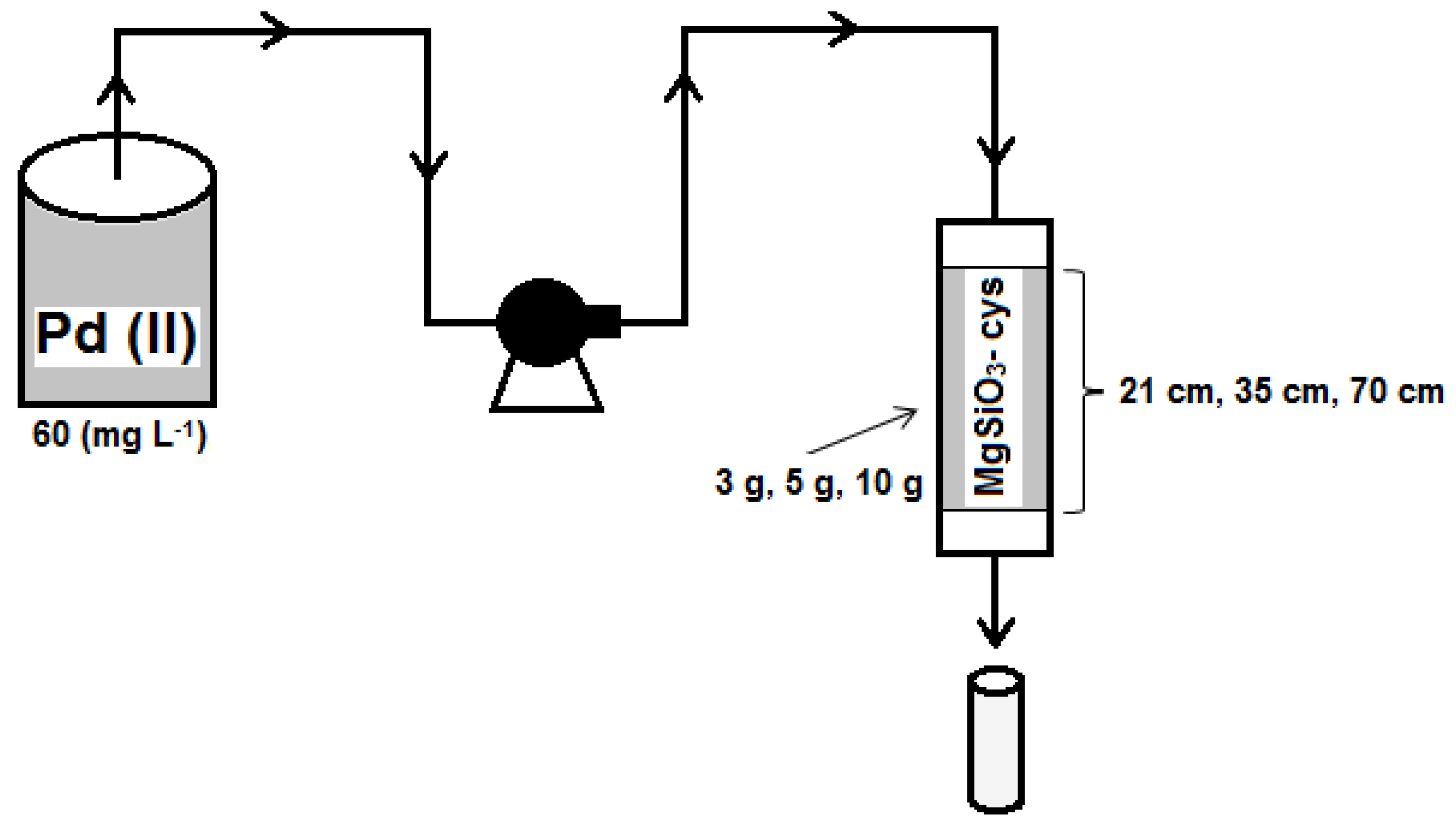
2.3. Column Adsorption Experiments
3. Results and Discussion
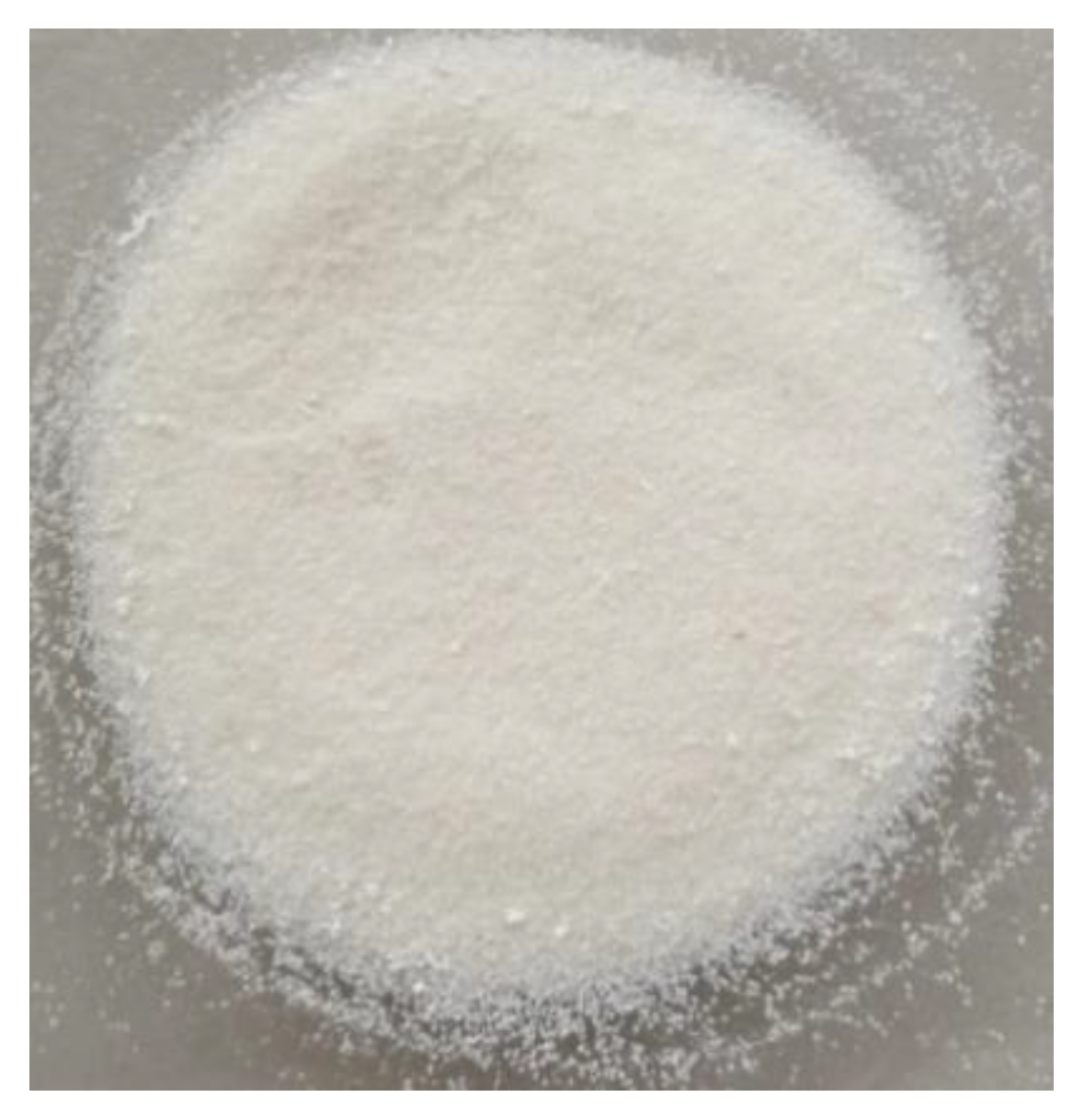
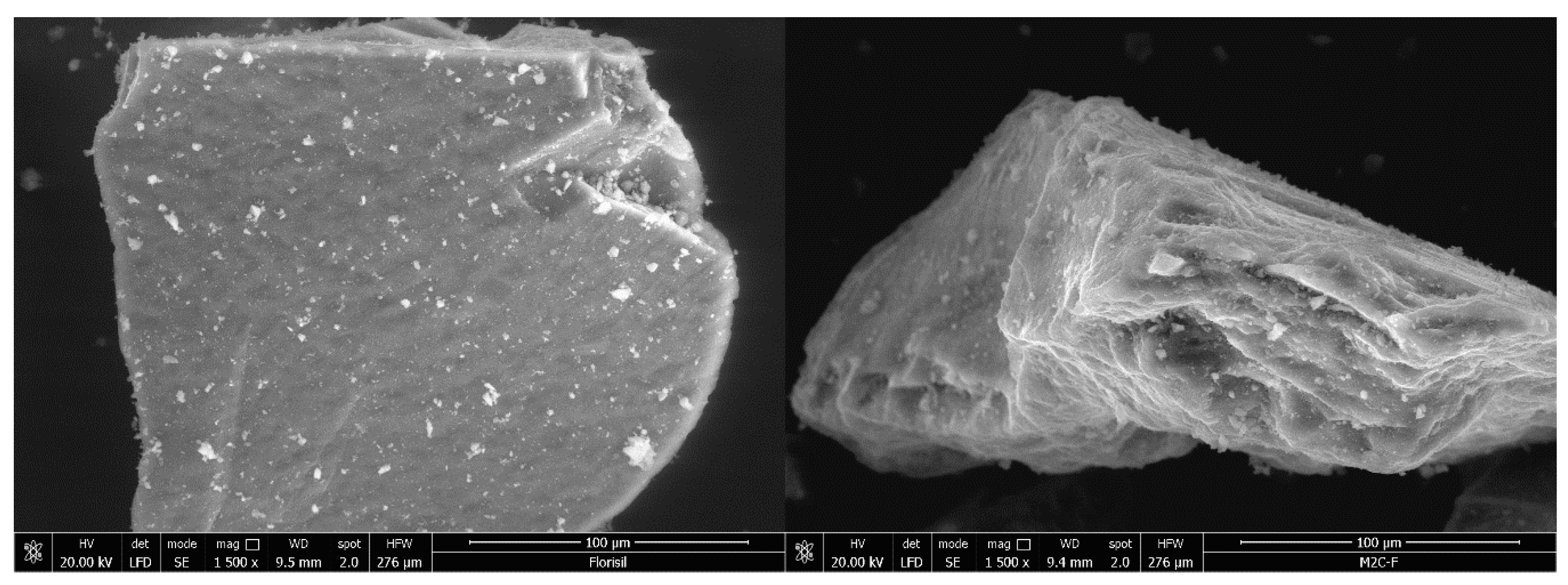
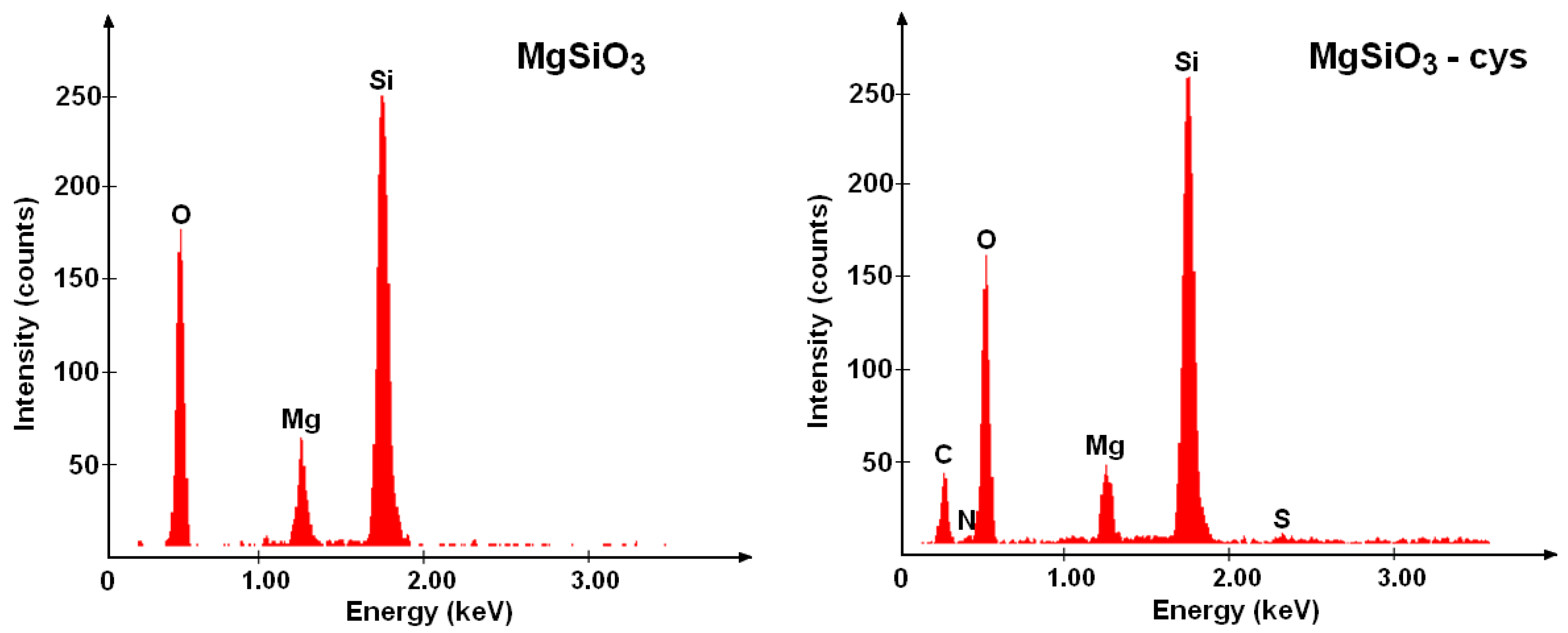
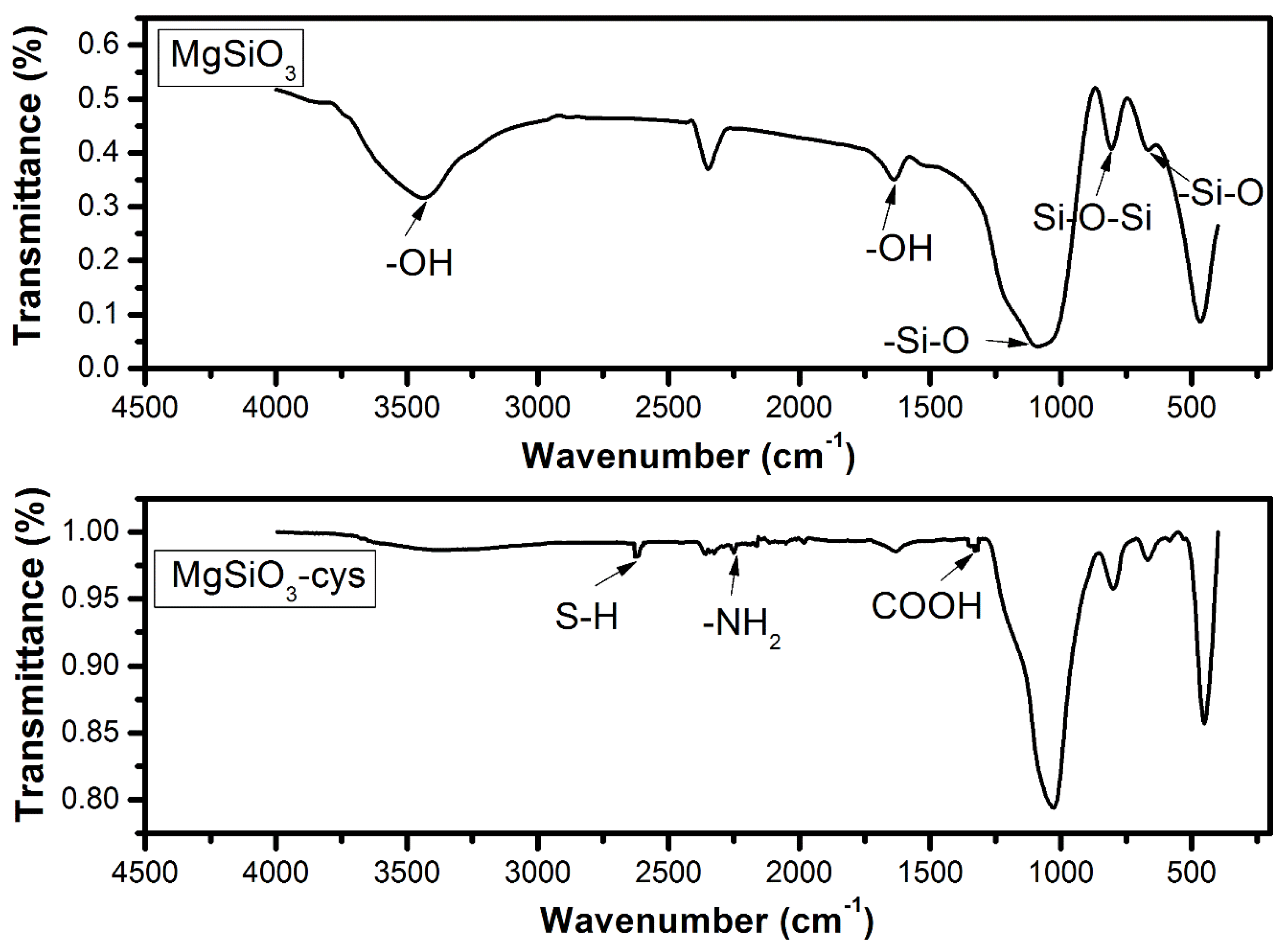
3.1. Characterization of the MgSiO3-Cys
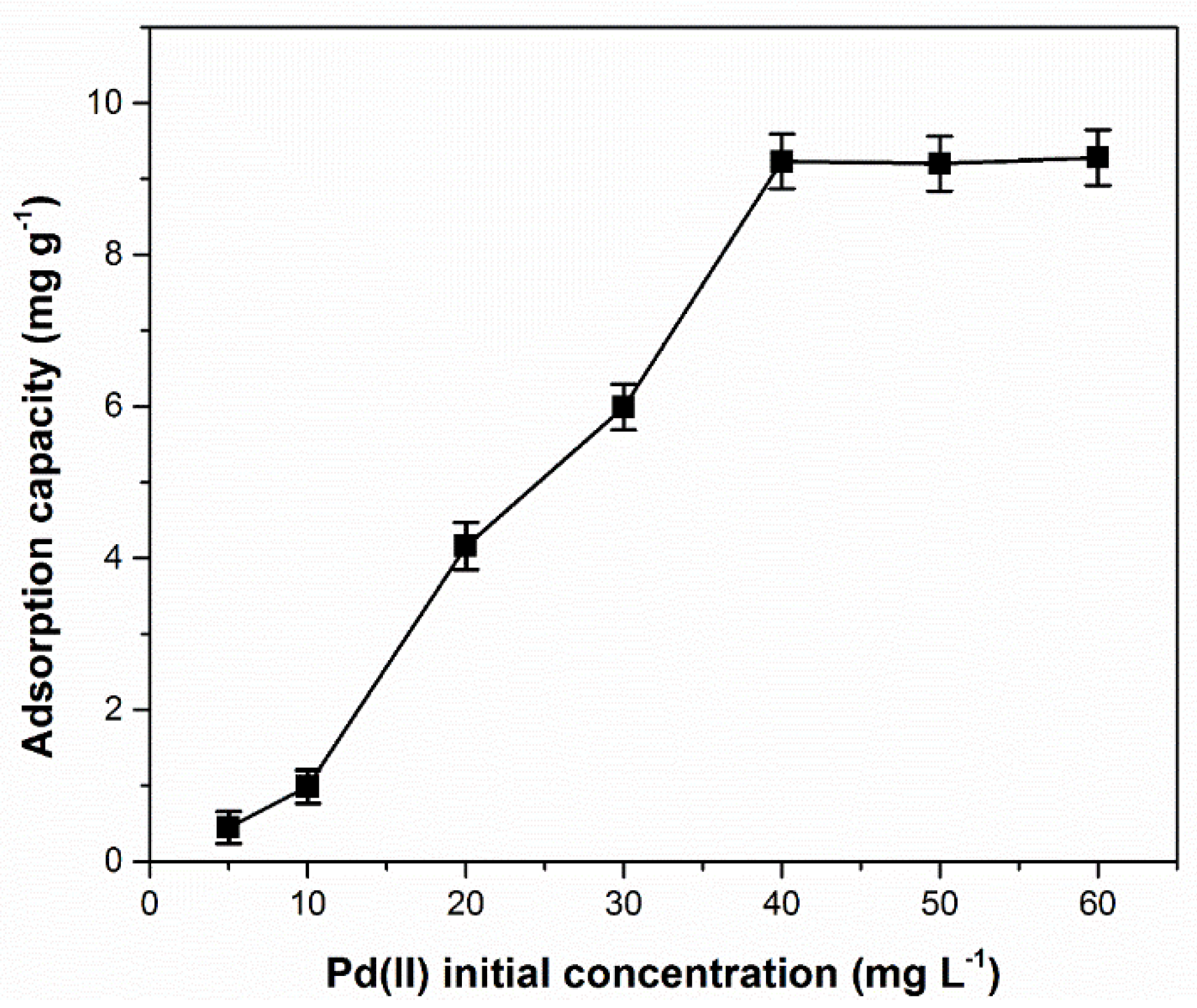
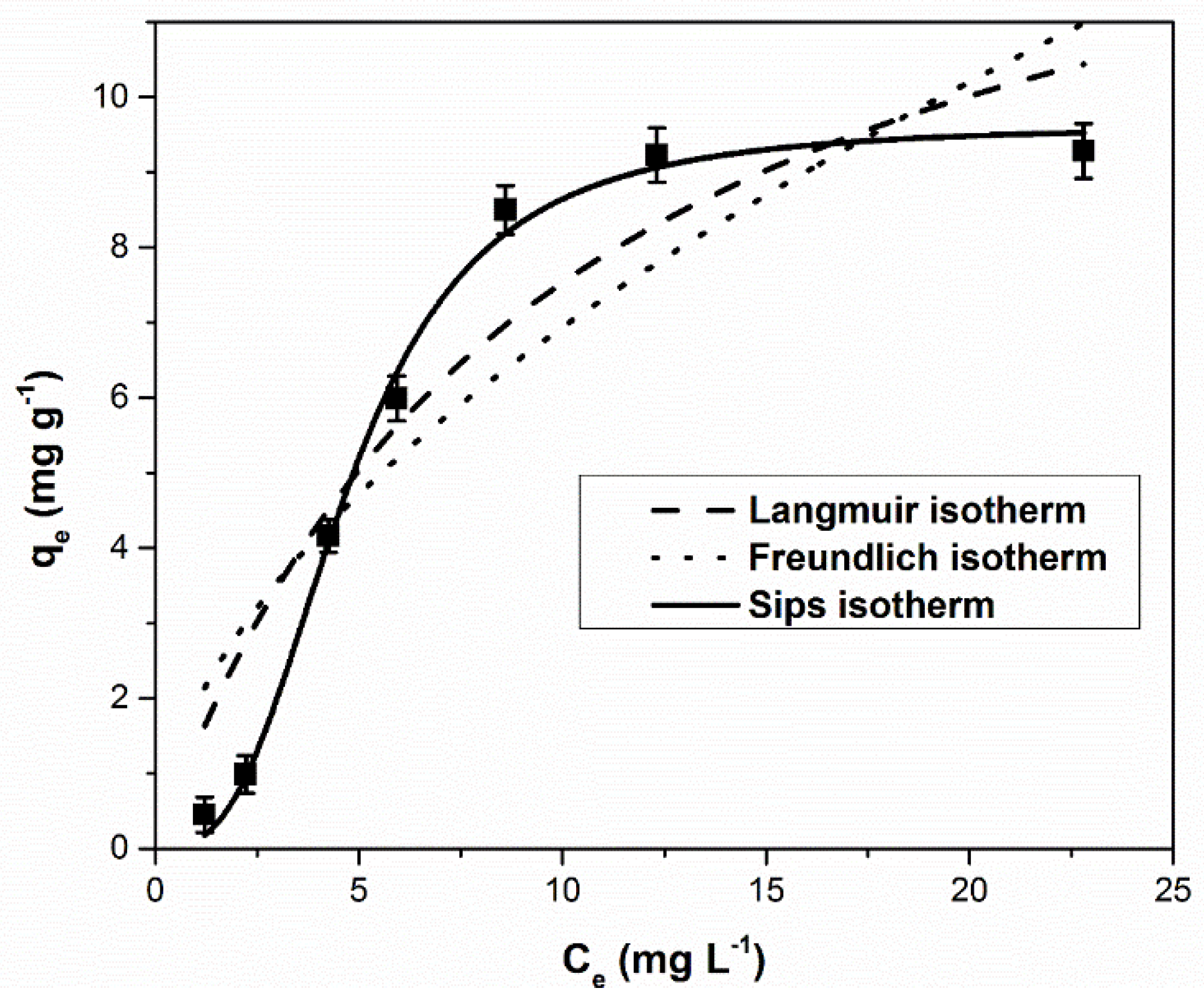
3.2. Equilibrium Adsorption Studies. Adsorption Isotherms
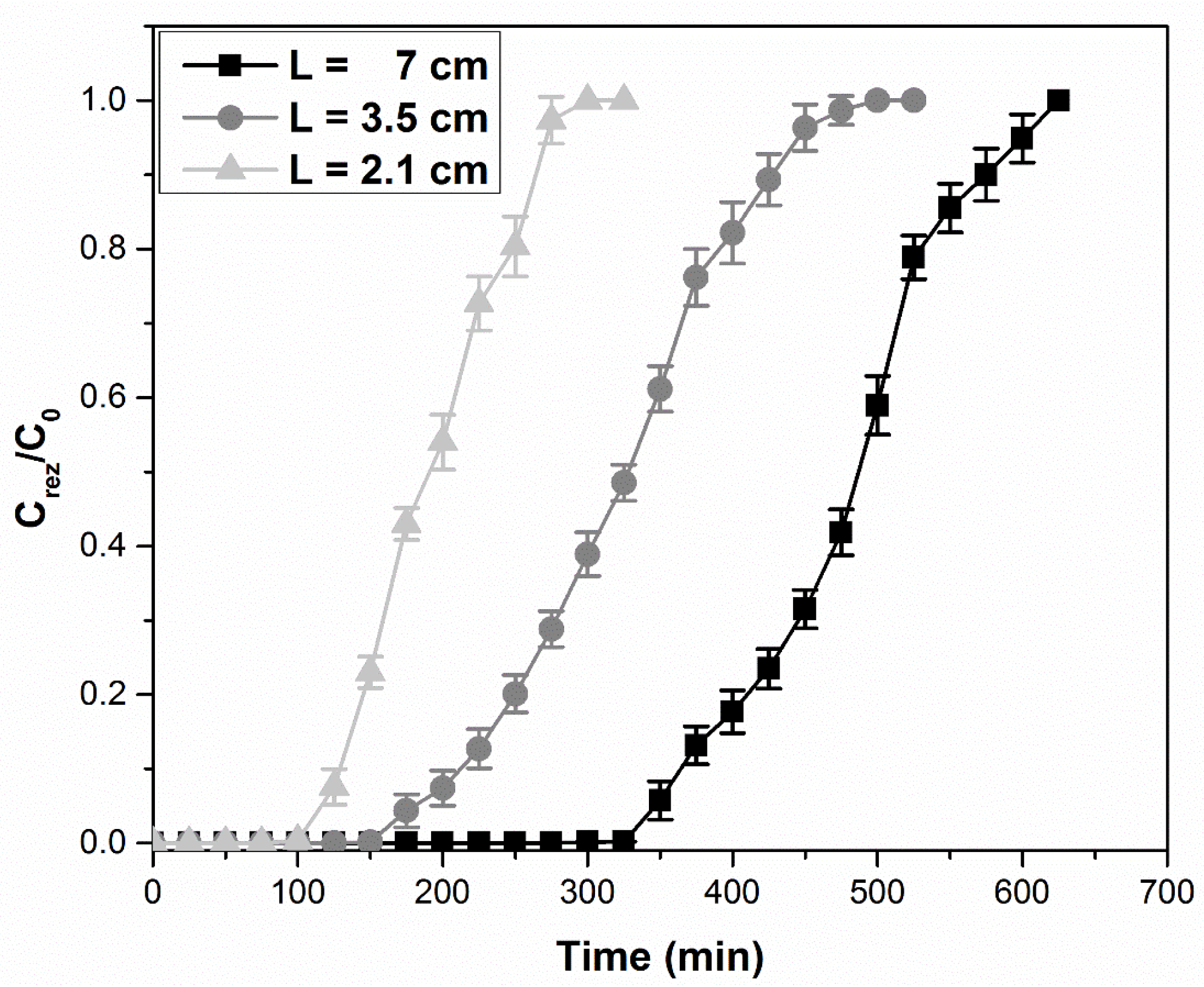
3.3. Bed Height Column (BHC) Influence on the Pd(II) Breakthrough Curves
3.4. Modeling for Adsorption Behaviors of Pd(II) on MgSiO3-Cys
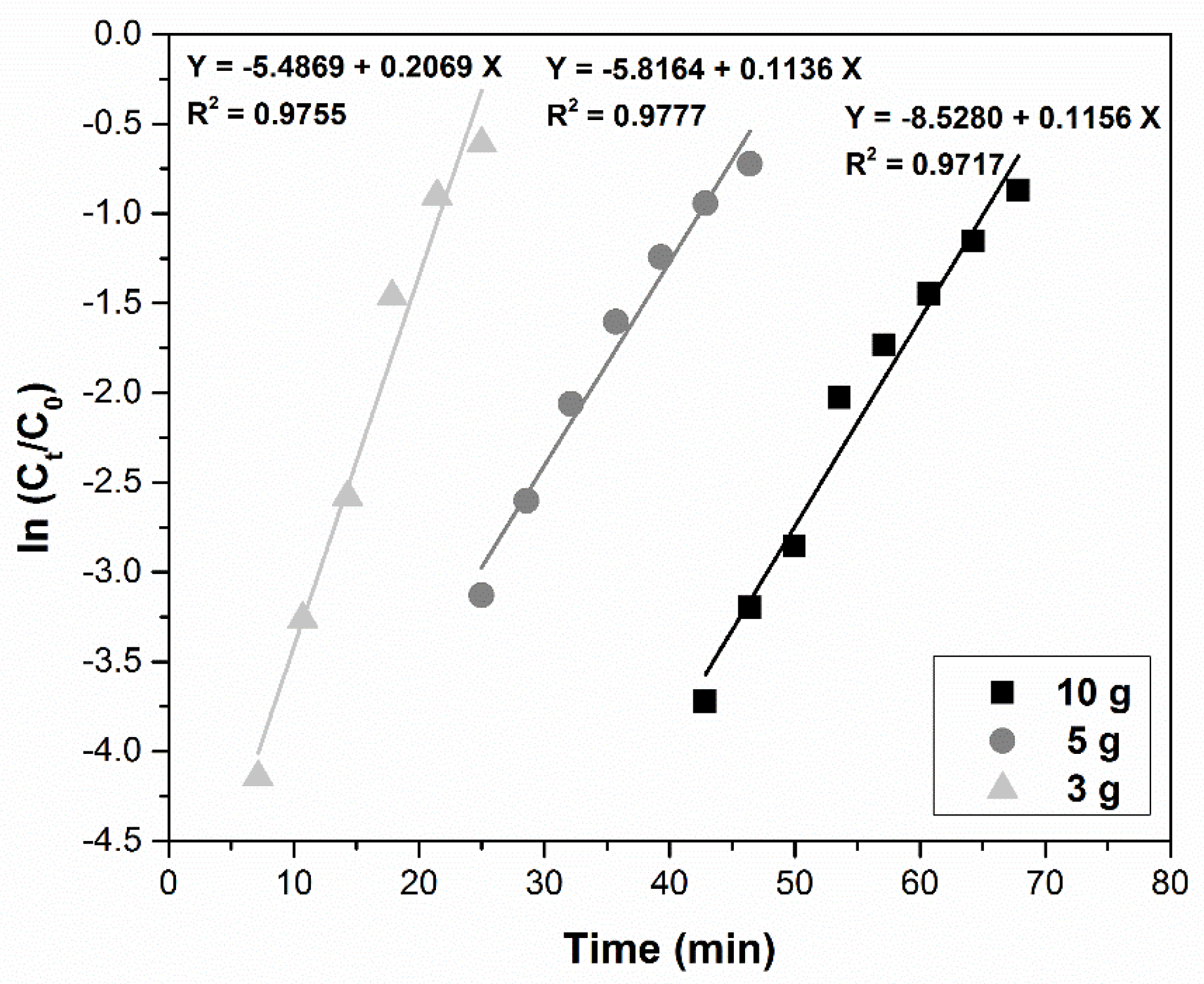
3.4.1. Bohart–Adams Model
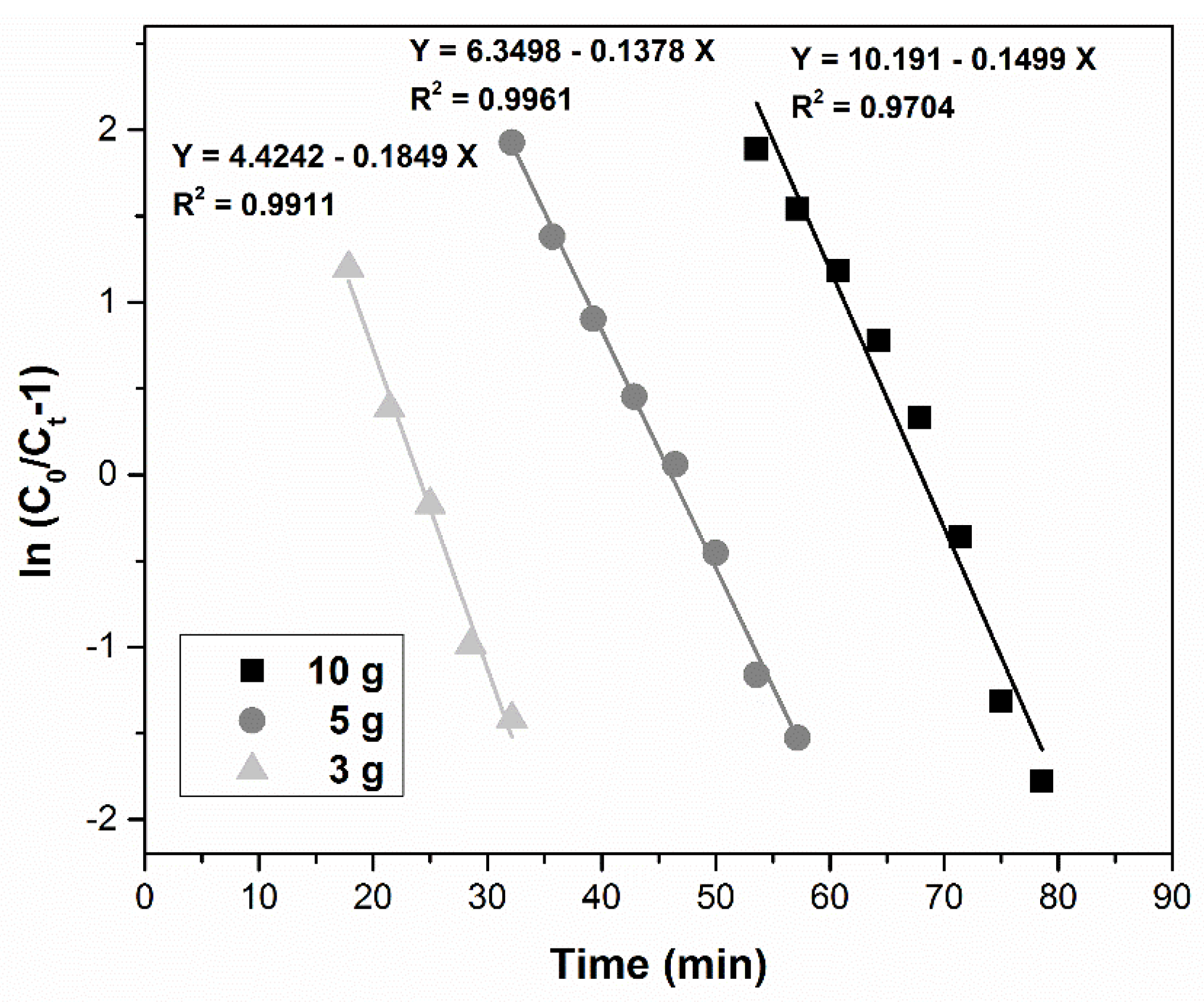
3.4.2. Thomas Model
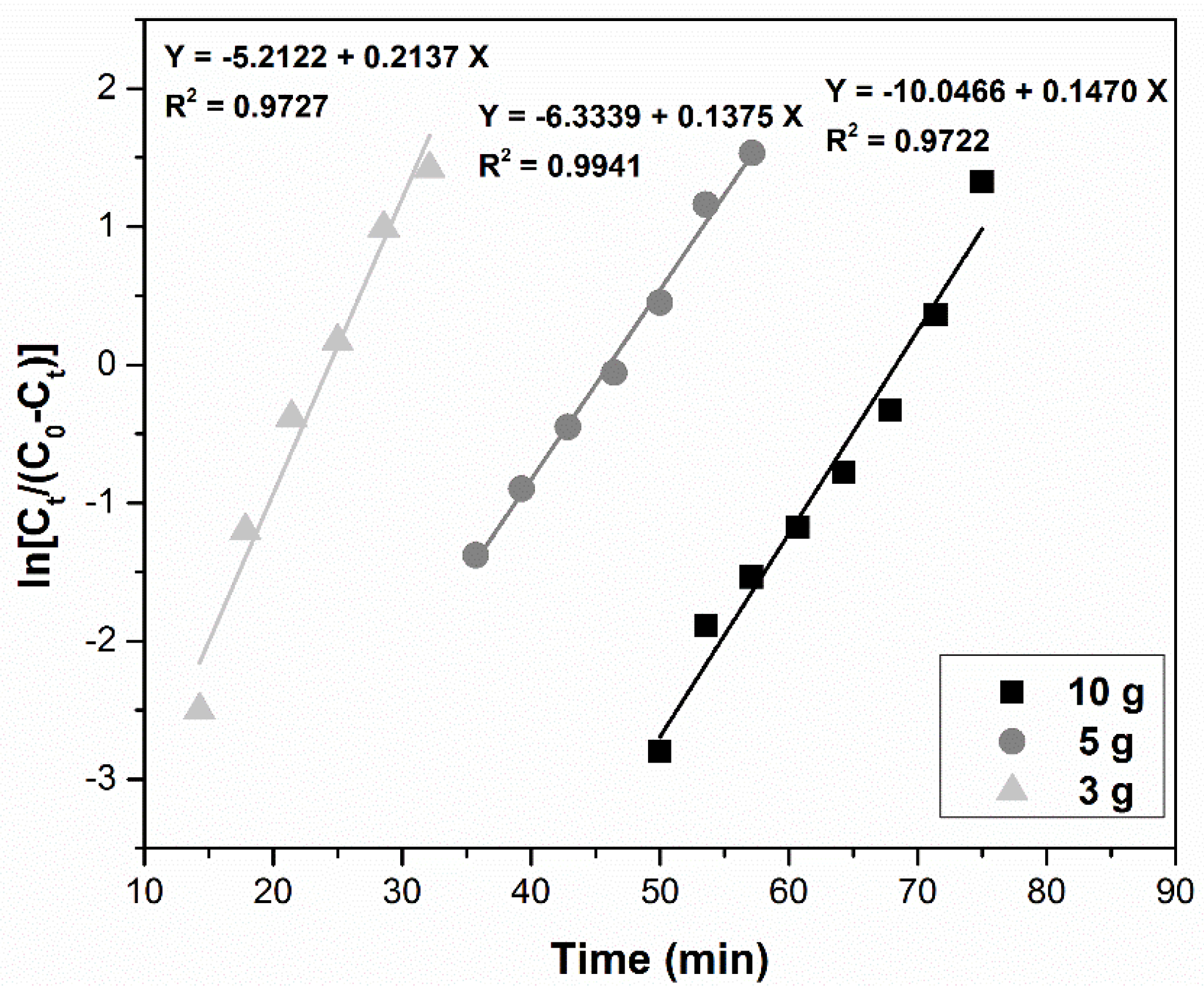
3.4.3. Yoon–Nelson Model
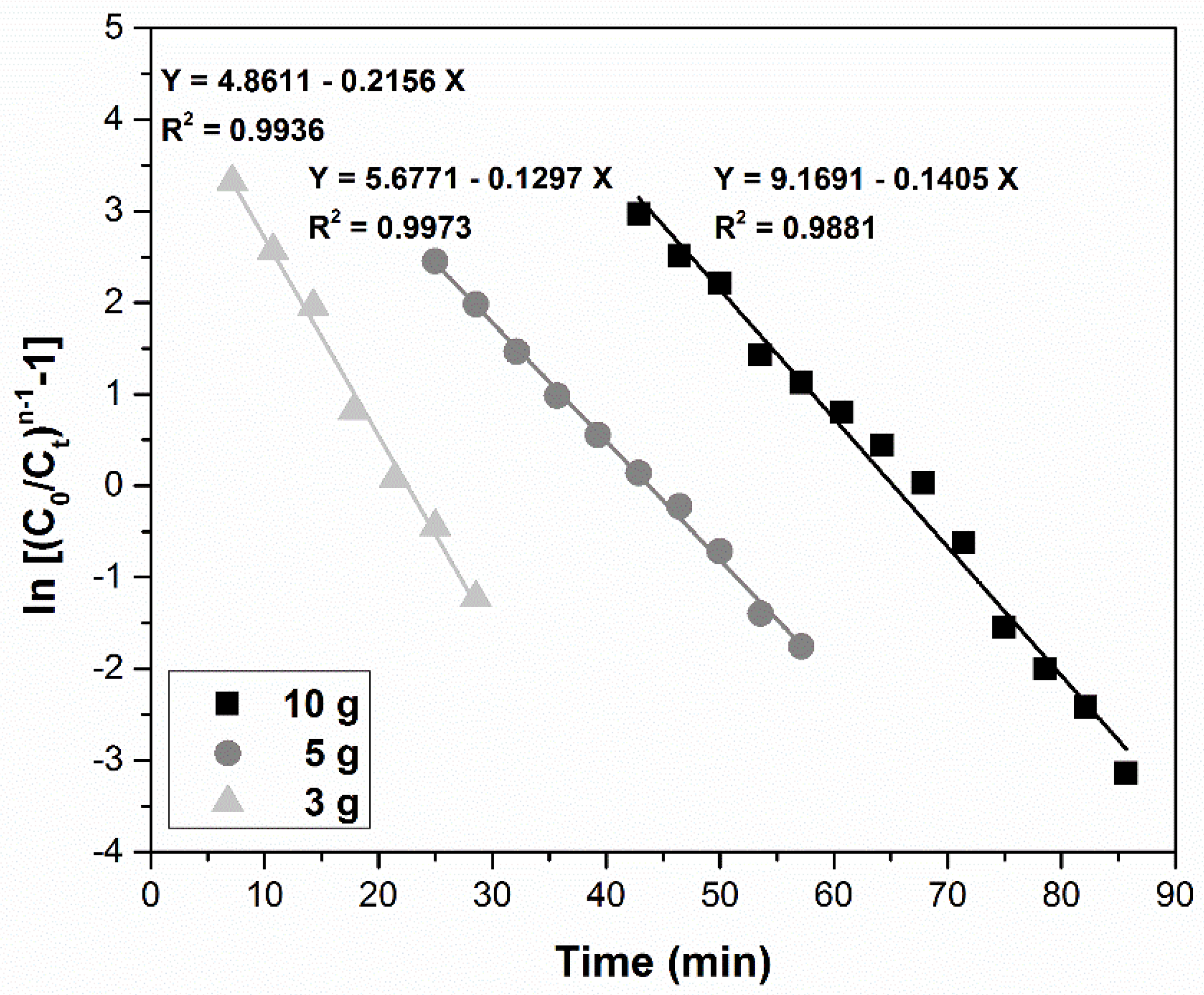
3.4.4. Clark Model
4. Conclusions
Author Contributions
Funding
Conflicts of Interest
References
- Bailar, J.C.; Emeleus, H.J.; Nyholm, S.R.; Trotman-Dickeson, A.F. Comprehensive Inorganic Chemistry; Pergamon: Oxford, UK, 1982. [Google Scholar]
- Kumar, A.S.K.; Sharma, S.; Reddy, R.S.; Barathi, M.; Rajesh, N. Comprehending the interaction between chitosan and ionic liquid for the adsorption of palladium. Int. J. Biol. Macromol. 2015, 72, 633–639. [Google Scholar] [CrossRef] [Scilit] [PubMed]
- Rao, C.R.M.; Reddi, G.S. Platinum group metals (PGM); occurrence, use and recent trends in their determination. Trend Anal. Chem. 2000, 19, 565–586. [Google Scholar] [CrossRef] [Scilit]
- Wataha, J.C.; Hanks, C.T. Biological effects of palladium and risk of using palladium in dental casting alloys. J. Oral. Rehabil. 1996, 23, 309–320. [Google Scholar] [CrossRef] [Scilit]
- Wolowicz, A.; Hubicki, Z. Comparison of strongly basic anion exchange resins applicability for the removal of palladium(II) ions from acidic solutions. Chem. Eng. J. 2011, 171, 206–215. [Google Scholar] [CrossRef] [Scilit]
- Butler, J. Platinum Interim Review 2010; Johnson Matthey: Royston, UK, 2010. [Google Scholar]
- Farrauto, R.J.; Heck, R.M. Catalytic converters: State of the art and perspectives. Catal. Today 1999, 51, 351–360. [Google Scholar] [CrossRef] [Scilit]
- Polshettiwar, V.; Len, C.; Fihri, A. Silica-supported palladium: Sustainable catalysts for cross-coupling reactions. Coord. Chem. Rev. 2009, 253, 2599–2626. [Google Scholar] [CrossRef] [Scilit]
- Sharma, R.K.; Pandey, A.; Gulati, S.; Adholeya, A. An optimized procedure for preconcentration, determination and on-line recovery of palladium using highly selective di-phenyl-di-ketone-mono-thio-semi-carbazone modified silica gel. J. Hazard. Mater. 2012, 209–210, 285–292. [Google Scholar] [CrossRef] [Scilit]
- Bernardis, F.L.; Grant, R.A.; Sherrington, D.C. A review of methods of separation of the platinum-group metals through their chloro-complexes. React. Funct. Polym. 2005, 65, 205–217. [Google Scholar] [CrossRef] [Scilit]
- Cui, J.; Zhang, L. Metallurgical recovery of metals from electronic waste: A review. J. Hazard. Mater. 2008, 158, 228–256. [Google Scholar] [CrossRef] [Scilit]
- Gaita, R.; Al-Bazi, S.J. An ion-exchange method for selective separation of palladium, platinum and rhodium from solutions obtained by leaching automotive catalytic converters. Talanta 1995, 2, 249–255. [Google Scholar] [CrossRef] [Scilit]
- Kononova, O.N.; Leyman, T.A.; Melnikov, A.M.; Kashirin, D.M.; Tselukovskaya, M.M. Ion exchange recovery of platinum from chloride solutions. Hydrometallurgy 2010, 100, 161–167. [Google Scholar] [CrossRef] [Scilit]
- Park, Y.J.; Fray, D.J. Recovery of high purity precious metals from printed circuit boards. J. Hazard. Mater. 2009, 164, 1152–1158. [Google Scholar] [CrossRef] [Scilit] [PubMed]
- Rao, S.R. Resource Recovery and Recycling from Metallurgical Wastes; Elsevier: Amsterdam, The Netherlands, 2006. [Google Scholar]
- Durosaro, O.; el-Azhary, R.A. A 10-year Retrospective Study on Palladium Sensitivity. Dermatitis 2009, 20, 208–213. [Google Scholar] [CrossRef] [Scilit] [PubMed]
- Shultz, M.D.; Lassig, J.P.; Gooch, M.G.; Evans, B.R.; Woodward, J. Palladium a new inhibitor of cellulase activities. Biochem. Biophys. Res. Commun. 1995, 209, 1046–1052. [Google Scholar] [CrossRef] [Scilit] [PubMed]
- Kielhorn, J.; Melber, C.; Keller, D.; Mangelsdorf, I. Palladium—A review of exposure and effects to human health. Int. J. Hyg. Environ. Health 2002, 205, 417–432. [Google Scholar] [CrossRef] [Scilit] [PubMed]
- Borges, D.L.G.; Veiga, M.A.M.S.D.; Frescura, V.L.A.; Welz, B.; Curtius, A.J. Cloudpoint extraction for the determination of Cd, Pb and Pd in blood by electrothermal atomic absorption spectrometry, using Ir or Ru as permanent modifiers. J. Anal. At. Spectrom. 2003, 18, 501–507. [Google Scholar] [CrossRef] [Scilit]
- Ghaedi, M.; Shokrollahi, A.; Niknam, K.; Niknam, E.; Najibi, A.; Soylak, M. Cloud point extraction and flame atomic absorption spectrometric determination of cadmium(II), lead(II), palladium(II) and silver(I) in environmental samples. J. Hazard. Mater. 2009, 168, 1022–1027. [Google Scholar] [CrossRef] [Scilit]
- Komarek, J.; Krasensky, P.; Balcar, J.; Rehulka, P. Determination of palladium and platinum by electrothermal atomic absorption spectroscopy after deposition on a graphite furnace. Spectrochim. Acta B 1999, 54, 739–743. [Google Scholar] [CrossRef] [Scilit]
- Lee, J.Y.; Raju, B.; Kumar, B.N.; Kumar, J.R.; Park, H.K.; Reddy, B.R. Solvent extraction separation and recovery of palladium and platinum from chloride leach liquors of spent automobile catalyst. Sep. Purif. Technol. 2010, 73, 213–218. [Google Scholar] [CrossRef] [Scilit]
- Pan, L.; Zhang, Z. Solvent extraction and separation of palladium (II) and platinum (IV) from hydrochloric acid medium with dibutyl sulfoxide. Miner. Eng. 2009, 22, 1271–1276. [Google Scholar] [CrossRef] [Scilit]
- Priya, B.K.; Subrahmanayam, P.; Suvardhan, K.; Kumar, K.S.; Rekha, D.; Rao, A.V.; Rao, G.C.; Chiranjeevi, P. Cloud point extraction of palladium in water samples and alloy mixtures using new synthesized reagent with flame atomic absorption spectrometry. J. Hazard. Mater. 2007, 144, 152–158. [Google Scholar] [CrossRef] [Scilit] [PubMed]
- Soylak, M.; Tuzen, M. Coprecipitation of gold(III), palladium(II) and lead(II) for their flame atomic absorption spectrometric determinations. J. Hazard. Mater. 2008, 152, 656–661. [Google Scholar] [CrossRef] [Scilit] [PubMed]
- Bulut, V.N.; Tufekci, M.; Duran, C.; Soylak, M.; Kantekin, H. Selective Solid Phase Extraction for Separation and Preconcentration of Palladium from Gold Ore and Anode Slime after Complexation with a N4O2 Mixed Donor Ligand Derivative. Clean 2010, 38, 678–683. [Google Scholar] [CrossRef] [Scilit]
- Elci, L.; Soylak, M.; Buyuksekerci, E.B. Separation of gold, palladium and platinum from metallurgical samples using an Amberlite XAD-7 resin column prior to their atomic absorption spectrometric determinations. Anal. Sci. 2003, 19, 1621–1624. [Google Scholar] [CrossRef] [Scilit] [PubMed]
- Sharma, R.K.; Mittal, S.; Koel, M. Analysis of trace amounts of metal ions using silica-based chelating resins: A green analytical method. Crit. Rev. Anal. Chem. 2003, 33, 183–197. [Google Scholar] [CrossRef] [Scilit]
- Soylak, M.; Elci, L. A sorbent extraction procedure for the preconcentration of gold, silver and palladium on an activated carbon column. Anal. Lett. 2000, 33, 513–525. [Google Scholar] [CrossRef] [Scilit]
- Ciopec, M.; Davidescu, C.M.; Negrea, A.; Muntean, C.; Popa, A.; Negrea, P.; Lupa, L. Equilibrium and Kinetic Studies of the Adsorption of Cr(III) ions onto Amberlite XAD8 impregnated with Di (2-ethylhexyl) phosphoric acid (DEHPA). Adsorp. Sci. Technol. 2011, 29, 989–1005. [Google Scholar] [CrossRef] [Scilit]
- Davidescu, C.M.; Ciopec, M.; Negrea, A.; Popa, A.; Lupa, L.; Dragan, E.S.; Ardelean, R.; Ilia, G. Synthesis, characterization and Ni(II) Ion separation properties of poly(styrene-co-divinylbenzene)-supported aminophosphonic acids. Polym. Bull. 2013, 70, 277–291. [Google Scholar] [CrossRef] [Scilit]
- Negrea, A.; Ciopec, M.; Lavinia, L.; Davidescu, C.M.; Popa, A.; Ilia, G.; Negrea, P. Removal of As(V) by Fe(III) loaded XAD7 impregnated resin containing di(2-ethylhexyl) phosphoric acid DEHPA): Equilibrium, Kinetic, and Thermodynamic modeling studies. J. Chem. Eng. Data 2011, 565, 3830–3838. [Google Scholar] [CrossRef] [Scilit]
- Kovacheva, P.; Djingova, R. Ion-exchange method for separation and concentration of platinum and palladium for analysis of environmental samples by inductively coupled plasma atomic emission spectrometry. Anal. Chim. Acta 2002, 464, 7–13. [Google Scholar] [CrossRef] [Scilit]
- Enzweiler, J.; Potts, P.J. The separation of platinum, palladium and gold from silicate rocks by the anion exchange separation of chloro complexes after a sodium peroxide fusion: An investigation of low recoveries. Talanta 1995, 42, 1411–1418. [Google Scholar] [CrossRef] [Scilit]
- Els, E.R.; Lorenzen, L.; Aldrich, C. The recovery of palladium with the use of ion exchange resins. Miner. Eng. 1997, 10, 1177–1181. [Google Scholar] [CrossRef] [Scilit]
- Kim, K.R.; Lee, M.S.; Ahn, D.H.; Yim, S.P.; Chung, H. Preparation of functional anion exchange resin and its selective adsorption of palladium in nitric acid medium. J. Ind. Eng. Chem. 2002, 8, 472–476. [Google Scholar]
- Lee, S.H.; Chung, H. Ion exchange characteristics of palladium and rhodium from a simulated radioactive liquid waste. J. Nucl. Sci. Technol. 2000, 37, 281–287. [Google Scholar] [CrossRef]
- Lee, S.H.; Chung, H. Ion exchange characteristics of palladium and ruthenium from a simulated radioactive liquid waste. Sep. Sci. Technol. 2003, 38, 3459–3472. [Google Scholar] [CrossRef] [Scilit]
- Lee, S.H.; Kim, K.R.; Jung, C.H.; Chung, H. Ion exchange characteristics of palladium from nitric acid solution by anion exchangers. Korean J. Chem. Eng. 1999, 16, 571–575. [Google Scholar] [CrossRef] [Scilit]
- Hubicki, Z.; Leszczynska, M. Sorption of palladium(II) chloride complexes on weakly, intermediate and strongly basic anion exchangers. Desalination 2005, 175, 227–236. [Google Scholar] [CrossRef] [Scilit]
- Hubicki, Z.; Leszczynska, M. Studies of sorption of Pd(II) micro quantities on strongly basic polyacrylate anion exchangers. Desalination 2005, 175, 289–295. [Google Scholar] [CrossRef] [Scilit]
- Negrea, A.; Gabor, A.; Davidescu, C.M.; Ciopec, M.; Muntean, C.; Negrea, P.; Duteanu, N.; Barbulescu, A. Rare Earth Elements Removal from Water Using Natural Polymers. Sci. Rep. 2018, 8, 316. [Google Scholar] [CrossRef] [Scilit]
- Gabor, A.; Davidescu, C.M.; Negrea, A.; Ciopec, M.; Lupa, L. Behaviour of silica and florisil as solid supports in the removal process of As(V) from aqueous solutions. J. Anal. Methods Chem. 2015, 2015, 562780. [Google Scholar] [CrossRef] [Scilit]
- Gabor, A.; Davidescu, C.M.; Popa, A.; Negrea, A.; Ciopec, M.; Motoc, M.; Lupa, L.; Negrea, P. Equilibrium studies for crown ether impregnated solid support used in the removal process of Nd(III), La(III), Sr(II), Tl(I), Eu(III). Rev. Chim. 2016, 67, 580–583. [Google Scholar]
- Gabor, A.; Davidescu, C.M.; Negrea, A.; Ciopec, M.; Muntean, C.; Negrea, P.; Ianasi, C.; Butnariu, M. Magnesium silicate doped with environmentally friendly extractants used for rare earth elements adsorption. Desalin. Water. Treat. 2017, 63, 124–134. [Google Scholar]
- Negrea, A.; Popa, A.; Ciopec, M.; Lupa, L.; Negrea, P.; Davidescu, C.M.; Motoc, M.; Minzatu, V. Phosphonium grafted styrene- divinylbenzene resins impregnated with iron(III) and crown ethers for arsenic removal. Pure Appl. Chem. 2014, 86, 1729–1740. [Google Scholar] [CrossRef] [Scilit]
- Ciopec, M.; Davidescu, C.M.; Negrea, A.; Grozav, I.; Lupa, L.; Muntean, C.; Negrea, P.; Popa, A. Statistical optimization of chromium ions adsorption on DEHPA-impregnated Amberlite XAD7. Environ. Eng. Manag. J. 2012, 11, 525–531. [Google Scholar] [CrossRef] [Scilit]
- Benamor, M.; Bouariche, Z.; Belaid, T.; Draa, M.T. Kinetic studies on cadmium ions by Amberlite XAD7 impregnated resin containing di(2-ethylhexyl) phosphoric acid as extractant. Sep. Purif. Technol. 2008, 59, 74–84. [Google Scholar] [CrossRef] [Scilit]
- Cortina, J.L.; Warshawsky, A. Developments in Solid-Liquid Extraction by Solvent-Impregnated Resins. In Ion Exchange and Solvent Extraction; Marinsky, J.A., Marcus, Y., Eds.; Marcel Dekker Inc.: New York, NY, USA, 1997; pp. 195–293. [Google Scholar]
- Davidescu, C.M.; Ciopec, M.; Negrea, A.; Popa, A.; Lupa, L.; Negrea, P.; Muntean, C.; Motoc, M. Use of di-(2-ethylhexyl)phosphoric acid (DEHPA) impregnated XAD7 copolymer resin for the removal of chromium (III) from water. Rev. Chim. 2011, 62, 712–717. [Google Scholar]
- Juang, R.S. Preparation, properties and sorption behaviour of impregnated resin containing acidic organo-phosphorus extractants. Proc. Natl. Sci. Counc. ROC(A) 1999, 23, 353–364. [Google Scholar]
- Mendoza, R.N.; Medina, I.S.; Vera, A.; Rodriguez, M.A. Study of the sorption of Cr(III) with XAD-2 resin impregnated with di-(2,4,4-trimethylpentyl) phosphinic acid (Cyanex 272). Solvent Extr. Ion Exch. 2000, 18, 319–343. [Google Scholar] [CrossRef] [Scilit]
- Muraviev, D.; Ghantous, L.; Valiente, M. Stabilization of solvent impregnated resin capacities by different techniques. React. Funct. Polym. 1998, 38, 259–268. [Google Scholar] [CrossRef] [Scilit]
- Disbudak, A.; Bektas, S.; Patir, S.; Genc, O.; Denizli, A. Cysteine-metal affinity chromatography: Determination of heavy metal adsorption properties. Sep. Purif. Technol. 2002, 26, 273–281. [Google Scholar] [CrossRef] [Scilit]
- Hisada, M.; Kawase, Y. Recovery of rare-earth metal neodymium from aqueous solutions by poly-g-glutamic acid and its sodium salt as biosorbents: Effects of solution pH on neodymium recovery mechanisms. J. Rare Earth 2018, 36, 528–536. [Google Scholar] [CrossRef] [Scilit]
- Langmuir, I. The adsorption of gases on plane surfaces of glass, mica and platinum. J. Am. Chem. Soc. 1918, 40, 1361–1403. [Google Scholar] [CrossRef] [Scilit]
- Kucuker, M.A.; Wieczorek, N.; Kuchta, K.; Copty, N.K. Biosorption of neodymium on Chlorella vulgaris in aqueous solution obtained from hard disk drive magnets. PLoS ONE 2017, 12, e0175255. [Google Scholar] [CrossRef] [Scilit]
- Freundlich, H.M.F. Over the adsorption in solution. J. Phys. Chem. 1906, 57, 385–470. [Google Scholar]
- Sips, R. On the Structure of a Catalyst Surface. J. Chem. Phys. 1948, 16, 490–495. [Google Scholar] [CrossRef] [Scilit]
- Bohart, G.S.; Adams, E.Q. Some aspects of the behaviour of charcoal with respect to chlorine, Behaviour of charcoal toward chlorine. Am. Chem. Soc. 1920, 42, 523–544. [Google Scholar] [CrossRef] [Scilit]
- Chu, K.H. Breakthrough curve analysis by simplistic models of fixed bed adsorption: In defense of the century-old Bohart-Adams model. Chem. Eng. J. 2020, 380, 122513. [Google Scholar] [CrossRef] [Scilit]
- Thomas, H.C. Heterogeneous ion exchange in a flowing system. J. Am. Chem. Soc. 1944, 66, 1664–1666. [Google Scholar] [CrossRef] [Scilit]
- Vilvanathan, S.; Shanthakumar, S. Removal from Aqueous Solution Using Native and Biochar Form of Tectona grandis. Environ. Prog. Sustain. Energy 2017, 36, 1030–1038. [Google Scholar] [CrossRef] [Scilit]
- Dlugosz, O.; Banach, M. Sorption of Ag+ and Cu2+ by Vermiculite in a Fixed-Bed Column: Design, Process Optimization and Dynamics Investigations. Appl. Sci. 2018, 8, 2221. [Google Scholar] [CrossRef] [Scilit]
- Madan, S.S.; De, B.S.; Wasewar, K.L. Adsorption performance of packed bed column for benzylformic acid removal using CaO2 nanoparticles. Chem. Data Collect. 2019, 23, 100267. [Google Scholar] [CrossRef] [Scilit]
- Sert, S.; Kutahyali, C.; Inan, S.; Talip, Z.; Cetinkaya, B.; Eral, M. Biosorption of lanthanum and cerium from aqueous solutions by Platanus orientalis leaf powder. Hydrometallurgy 2008, 90, 13–18. [Google Scholar] [CrossRef] [Scilit]
- Zhang, P.; Wang, Y.; Zhang, D.; Bai, H.; Tarasov, V.V. Calixarene-functionalized Graphene Oxide Composites for Adsorption of Neodymium Ions from aqueous phase. RSC Adv. 2016, 6, 30384–30394. [Google Scholar] [CrossRef] [Scilit]
- Dzieniszewska, A.; Kyziol-Komosinska, J.; Pajak, M. Adsorption and bonding strength of chromium species by ferrihydrite from acidic aqueous solutions. PeerJ 2020, 8, e9324. [Google Scholar] [CrossRef] [Scilit] [PubMed]
- Mohammed, N.; Grishkewich, N.; Waeijen, H.A.; Berry, R.M.; Tam, K.C. Continuous flow adsorption of methylene blue by cellulose nanocrystalalginate hydrogel beads in fixed bed columns. Carbohydr. Polym. 2016, 136, 1194–1202. [Google Scholar] [CrossRef] [Scilit] [PubMed]
- Chowdhury, Z.Z.; Zain, S.M.; Rashid, A.K.; Rafique, R.F.; Khalid, K. Breakthrough curve analysis for column dynamics sorption of Mn(II) ions from wastewater by using Mangostana garcinia peel-based granular-activated carbon. J. Chem. 2013, 2013, 959761. [Google Scholar] [CrossRef] [Scilit]
- Hasanzadeh, M.; Ansari, R.; Ostovar, F. Synthesis and application of CeO2/sawdust nanocomposite for removal of As(III) ions from aqueous solutions using a fixed bed column system. Glob. NEST J. 2016, 19, 7–16. [Google Scholar]
- Shafeeyan, M.S.; Daud, W.M.A.W.; Shamiri, A. A review of mathematical modeling of fixed-bed columns for carbon dioxide adsorption. Chem. Eng. Res. Des. 2014, 92, 961–988. [Google Scholar] [CrossRef] [Scilit]
- Netpradit, S.; Thiravetyan, P.; Towprayoon, S. Evaluation of metal hydroxide sludge for reactive dye adsorption in a fixed-bed column system. Water Res. 2004, 38, 71–78. [Google Scholar] [CrossRef] [Scilit]
- Patel, H. Fixed-bed column adsorption study: A comprehensive review. Appl. Water Sci. 2019, 9, 45. [Google Scholar] [CrossRef] [Scilit]
- Soto, M.L.; Moure, A.; Dominguez, H.; Parajo, J.C. Batch and fixed bed column studies on phenolic adsorption from wine vinasses by polymeric resins. J. Food Eng. 2017, 209, 52–60. [Google Scholar] [CrossRef] [Scilit]
- Han, R.P.; Wang, Y.; Zou, W.H.; Wang, Y.F.; Shi, J. Comparison of linear and nonlinear analysis in estimating the Thomas model parameters for methylene blue adsorption onto natural zeolite in fixed-bed column. J. Hazard. Mater. 2007, 145, 331–335. [Google Scholar] [CrossRef] [Scilit] [PubMed]
- Han, R.P.; Zhang, J.H.; Zou, W.H.; Xiao, H.J.; Shi, J.; Liu, H.M. Biosorption of copper(II) and lead(II) from aqueous solution by chaff in a fixed-bed column. J. Hazard. Mater. 2006, 133, 262–268. [Google Scholar] [CrossRef] [Scilit]
- Mondal, S.; Aikat, K.; Halder, G. Ranitidine hydrochloride sorption onto superheated steam activated biochar derived from mung bean husk in fixed bed column. Biochem. Pharmacol. 2016, 4, 488–497. [Google Scholar] [CrossRef] [Scilit]
- Wolowicz, A.; Hubicki, Z. Palladium(II) complexes adsorption from the chloride solutions with macrocomponent addition using strongly basic anion exchange resins, type 1. Hydrometallurgy 2009, 98, 206–212. [Google Scholar] [CrossRef] [Scilit]
- Uheida, A.; Iglesias, M.; Fontas, C.; Zhang, Y.; Muhammed, M. Adsorption Behaviour of Platinum Group Metals (Pd, Pt, Rh) on Nonylthiourea-Coated Fe3O4 Nanoparticles. Sep. Sci. Technol. 2006, 41, 909–923. [Google Scholar] [CrossRef] [Scilit]
- Mavhungu, A.; Mbaya, R.K.K.; Moropeng, M.L. Recovery of Platinum and Palladium Ions from Aqueous Solution Using Grape Stalk Waste. Int. J. Chem. Eng. Appl. 2013, 4, 354–358. [Google Scholar] [CrossRef] [Scilit]
- Morisada, S.; Kim, Y.H.; Yakuwa, S.; Ogata, T.; Nakano, Y. Improved adsorption and separation of palladium(II) and platinum(IV) in strong hydrochloric acid solutions using thiocyanate-retaining tannin gel. J. Appl. Polym. Sci. 2012, 126, E478–E483. [Google Scholar] [CrossRef] [Scilit]
- Wasikiewicz, J.M.; Mitomo, H.; Seko, N.; Tamada, M.; Yoshii, F. Platinum and Palladium Ions Adsorption at the Trace Amounts by Radiation Crosslinked Carboxymethylchitin and Carboxymethylchitosan Hydrogels. J. Appl. Polym. Sci. 2007, 104, 4015–4023. [Google Scholar] [CrossRef] [Scilit]
- Godlewska-Zylkiewicz, B.; Sawicka, S.; Karpinska, J. Removal of Platinum and Palladium from Wastewater by Means of Biosorption on Fungi Aspergillus sp. and Yeast Saccharomyces sp. Water 2019, 11, 1522. [Google Scholar] [CrossRef] [Scilit]




| qm,exp (mg g−1) | Freundlich Isotherm | Langmuir Isotherm | Sips Isotherm | |||||||
|---|---|---|---|---|---|---|---|---|---|---|
| KF (mg g−1) | 1/n | R2 | KL (L mg−1) | qm (mg g−1) | R2 | KS | qm (mg g−1) | 1/nS | R2 | |
| 9.23 | 1.92 | 0.55 | 0.7599 | 0.10 | 14.95 | 0.8688 | 0.01 | 9.62 | 0.34 | 0.9953 |
| Column Adsorption Parameters Specification | ||||
| Bohart–Adams model | MgSiO3-cys amounts (g) | kBA (L mg−1 min−1) | N0 (mg L−1) | R2 |
| 3 | 3.45 × 10⁻³ | 1688.8 | 0.9755 | |
| 5 | 1.89 × 10⁻³ | 1960.8 | 0.9777 | |
| 10 | 1.90 × 10⁻³ | 1407.7 | 0.9717 | |
| Thomas model | MgSiO3-cys amounts (g) | kTh (L mg−1 min−1) | qTh (mg g−1) | R2 |
| 3 | 2.50 × 10⁻³ | 3.33 | 0.9911 | |
| 5 | 2.29 × 10⁻³ | 3.88 | 0.9961 | |
| 10 | 2.99 × 10⁻³ | 2.85 | 0.9704 | |
| Yoon–Nelson model | MgSiO3-cys amounts (g) | kYN (min−1) | τ (min) | R2 |
| 3 | 0.2137 | 24.40 | 0.9727 | |
| 5 | 0.1376 | 46.05 | 0.9941 | |
| 10 | 0.1469 | 68.30 | 0.9722 | |
| Clark model | MgSiO3-cys amounts (g) | r (min−1) | A | R2 |
| 3 | 0.2156 | 9509 | 0.9936 | |
| 5 | 0.1297 | 290 | 0.9973 | |
| 10 | 0.1405 | 129 | 0.9881 | |
| Material | Adsorption Conditions | Adsorption Capacity, (mg g−1) | References |
|---|---|---|---|
| Lewatit MP-500 resin | Contact time = 2 h Temperature = 298 K Initial concentration of Pd(II) complex = 0.1 M | 8.45 | [79] |
| Nonylthiourea-coated Fe3O4 | Contact time = 30 min Temperature = 295 K pH = 2.5 Initial concentration of Pd(II) = 0.076 (mmol g−1) | 8.10 | [80] |
| Grape stalk impregnated with orthophosphoric acid | Contact time = 4 h Temperature = 295 K pH = 1.5 Initial concentration of Pd(II) = 60 (mg L−1) | 1.4 | [81] |
| Thiocyanate retaining tannin gel | Contact time = 2 h, Temperature = 298 K, Initial concentration of Pd(II) = 0.001 M | 0.065 | [82] |
| Crosslinked carboxymethyl chitosan hydrogels | Contact time = 2 h Temperature = 295 K pH = 4, Initial concentration of Pd(II) = 100 ppb | 2.6 | [83] |
| Fungi Aspergillus sp. | Contact time = 45 min, Temperature = 298 K pH = 2.5–3.5 Initial concentration of Pd(II) = 0.075 (mg L−1) | 4.28 | [84] |
| MgSiO3-cys | Contact time = 1 h Temperature = 298 K pH = 2 Initial concentration of Pd(II) = 40 (mg L−1) | 9.23 | This paper |
Publisher′s Note: MDPI stays neutral with regard to jurisdictional claims in published maps and institutional affiliations. |
© 2020 by the authors. Licensee MDPI, Basel, Switzerland. This article is an open access article distributed under the terms and conditions of the Creative Commons Attribution (CC BY) license (http://creativecommons.org/licenses/by/4.0/).
Share and Cite
Vancea, C.; Mihailescu, M.; Negrea, A.; Mosoarca, G.; Ciopec, M.; Duteanu, N.; Negrea, P.; Minzatu, V. Batch and Fixed-Bed Column Studies on Palladium Recovery from Acidic Solution by Modified MgSiO3. Int. J. Environ. Res. Public Health 2020, 17, 9500. https://doi.org/10.3390/ijerph17249500
Vancea C, Mihailescu M, Negrea A, Mosoarca G, Ciopec M, Duteanu N, Negrea P, Minzatu V. Batch and Fixed-Bed Column Studies on Palladium Recovery from Acidic Solution by Modified MgSiO3. International Journal of Environmental Research and Public Health. 2020; 17(24):9500. https://doi.org/10.3390/ijerph17249500
Chicago/Turabian StyleVancea, Cosmin, Maria Mihailescu, Adina Negrea, Giannin Mosoarca, Mihaela Ciopec, Narcis Duteanu, Petru Negrea, and Vasile Minzatu. 2020. "Batch and Fixed-Bed Column Studies on Palladium Recovery from Acidic Solution by Modified MgSiO3" International Journal of Environmental Research and Public Health 17, no. 24: 9500. https://doi.org/10.3390/ijerph17249500
APA StyleVancea, C., Mihailescu, M., Negrea, A., Mosoarca, G., Ciopec, M., Duteanu, N., Negrea, P., & Minzatu, V. (2020). Batch and Fixed-Bed Column Studies on Palladium Recovery from Acidic Solution by Modified MgSiO3. International Journal of Environmental Research and Public Health, 17(24), 9500. https://doi.org/10.3390/ijerph17249500