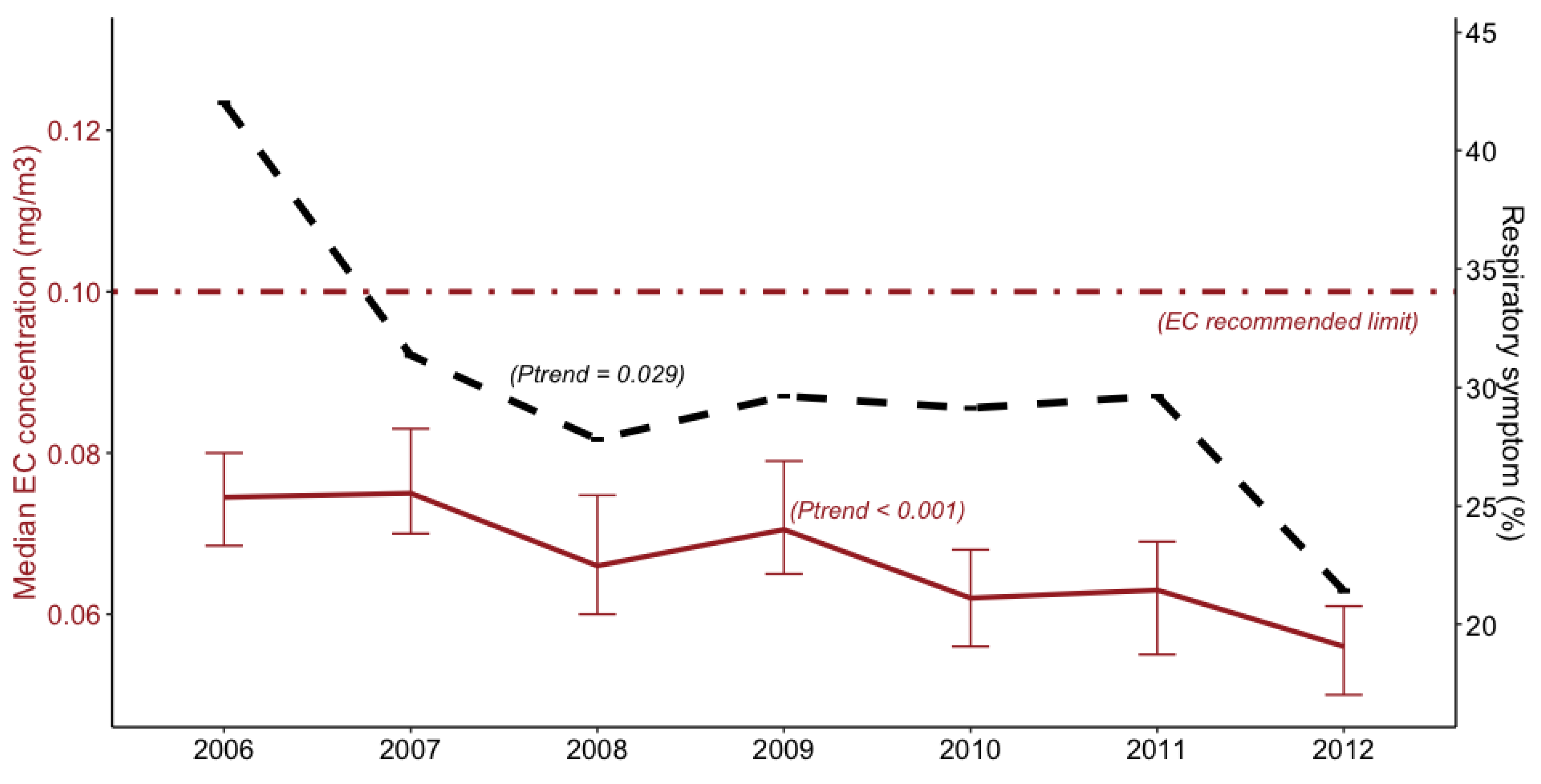
Trends in Exposure to Diesel Particulate Matter and Prevalence of Respiratory Symptoms in Western Australian Miners



Abstract
Share and Cite
Rumchev, K.; Hoang, D.V.; Lee, A. Trends in Exposure to Diesel Particulate Matter and Prevalence of Respiratory Symptoms in Western Australian Miners. Int. J. Environ. Res. Public Health 2020, 17, 8435. https://doi.org/10.3390/ijerph17228435
Rumchev K, Hoang DV, Lee A. Trends in Exposure to Diesel Particulate Matter and Prevalence of Respiratory Symptoms in Western Australian Miners. International Journal of Environmental Research and Public Health. 2020; 17(22):8435. https://doi.org/10.3390/ijerph17228435
Chicago/Turabian StyleRumchev, Krassi, Dong Van Hoang, and Andy Lee. 2020. "Trends in Exposure to Diesel Particulate Matter and Prevalence of Respiratory Symptoms in Western Australian Miners" International Journal of Environmental Research and Public Health 17, no. 22: 8435. https://doi.org/10.3390/ijerph17228435
APA StyleRumchev, K., Hoang, D. V., & Lee, A. (2020). Trends in Exposure to Diesel Particulate Matter and Prevalence of Respiratory Symptoms in Western Australian Miners. International Journal of Environmental Research and Public Health, 17(22), 8435. https://doi.org/10.3390/ijerph17228435