1. Introduction
Osteosarcoma is the most common primary malignant bone tumor, predominantly affecting children, adolescents, and young adults [
1,
2,
3]. Despite advances in surgical techniques and multi-agent chemotherapy, the long-term survival rate of patients with metastatic or recurrent osteosarcoma remains unsatisfactory [
4]. Pulmonary metastasis, chemotherapy resistance, and extensive bone destruction continue to represent major clinical challenges, highlighting the urgent need for innovative therapeutic strategies that target both tumor cells and the surrounding tumor-supportive microenvironment [
5,
6]. Increasing evidence suggests that osteosarcoma progression is driven not only by intrinsic oncogenic alterations but also by complex interactions between cancer cells and the bone tumor microenvironment, which collectively contribute to angiogenesis, osteoclast activation, immune dysregulation, invasion, and metastatic dissemination [
7].
The bone tumor microenvironment (BTME) is a dynamic ecosystem composed of osteoclasts, osteoblasts, immune cells, stromal cells, extracellular matrix components, and vascular networks [
8]. Within this environment, osteosarcoma cells actively remodel surrounding tissues through the secretion of cytokines, growth factors, and proteolytic enzymes [
9]. Several molecular mediators, including receptor activator of nuclear factor-κB ligand (RANKL), vascular endothelial growth factor A (VEGFA), matrix metalloproteinase-9 (MMP9), cathepsin K (CTSK), and C-X-C motif chemokine receptor 4 (CXCR4), have been identified as critical regulators of osteoclastogenesis, angiogenesis, extracellular matrix degradation, and metastatic progression [
10,
11]. Consequently, therapeutic approaches capable of simultaneously suppressing osteosarcoma cells and disrupting BTME remodeling are increasingly recognized as promising strategies for improving clinical outcomes.
Among emerging anticancer approaches, ferroptosis has recently attracted substantial attention as a non-apoptotic form of regulated cell death characterized by iron-dependent lipid peroxidation and oxidative membrane damage [
12]. Unlike apoptosis, ferroptosis is driven by dysregulated iron metabolism, reactive oxygen species accumulation, and depletion of antioxidant defense systems [
12]. Several studies have demonstrated that osteosarcoma cells exhibit vulnerabilities to ferroptosis induction due to altered iron homeostasis and redox imbalance [
13,
14]. Key regulators of ferroptosis include glutathione peroxidase 4 (GPX4), solute carrier family 7 member 11 (SLC7A11), nuclear factor erythroid 2-related factor 2 (NRF2), transferrin receptor (TFRC), and acyl-CoA synthetase long-chain family member 4 (ACSL4) [
15]. Therefore, pharmacological agents capable of simultaneously enhancing iron-dependent oxidative stress while suppressing ferroptosis-protective pathways may represent effective therapeutic candidates against osteosarcoma.
Marine ecosystems constitute one of the richest reservoirs of structurally unique bioactive compounds for pharmaceutical development [
16,
17]. Marine-derived natural products have contributed significantly to anticancer drug discovery due to their remarkable chemical diversity and multi-target pharmacological activities. Among marine organisms, sea cucumbers (
Holothuroidea) are particularly recognized as valuable sources of triterpene glycosides, sterols, sulfated polysaccharides, peptides, and other secondary metabolites exhibiting anticancer, anti-inflammatory, antioxidant, and immunomodulatory properties [
18]. Importantly, many sea cucumber-derived compounds have demonstrated the ability to regulate multiple signaling pathways involved in tumor growth, metastasis, and cell death, making them attractive candidates for systems-based anticancer interventions.
Holothuria scabra, commonly known as sandfish, is one of the most economically and biologically important sea cucumber species distributed throughout the Indo-Pacific region [
19]. Previous studies have reported that
H. scabra contains abundant triterpene glycosides, including holothurins and scabrasides, as well as sterol compounds such as fucosterol and desmosterol [
20,
21]. These metabolites have been associated with cytotoxic, antiproliferative, antiangiogenic, and immunomodulatory activities in various cancer models. Nevertheless, the potential role of
H. scabra metabolites in regulating ferroptosis and bone tumor microenvironment remodeling in osteosarcoma remains largely unexplored. Furthermore, the molecular targets, signaling pathways, and multi-target mechanisms underlying their anticancer activities have not been systematically investigated using integrated multi-omics approaches.
To date, no study has comprehensively combined metabolomic profiling, transcriptomic target identification, network-based analyses, molecular docking, ferroptosis validation, and bone microenvironment modeling to investigate the anti-osteosarcoma potential of H. scabra. Addressing this knowledge gap may provide valuable insights into the development of marine-derived therapeutics capable of simultaneously targeting tumor intrinsic vulnerabilities and microenvironmental drivers of disease progression.
Therefore, the present study aimed to identify and characterize bioactive metabolites from H. scabra and investigate their anti-osteosarcoma potential through an integrated multi-omics-guided workflow. Specifically, this study combined LC–MS/MS metabolite profiling, transcriptomic analysis of osteosarcoma-associated genes, pharmacological prediction, molecular docking, and in vitro validation using MG-63 osteosarcoma cells and MG-63/RAW264.7 co-culture models. The novelty of this study lies in the first comprehensive demonstration that H. scabra-derived metabolites may exert dual anti-osteosarcoma actions through coordinated induction of ferroptosis and remodeling of the bone tumor microenvironment, thereby providing a mechanistic framework for the development of marine-derived multi-target therapeutics against osteosarcoma.
2. Results
LC–MS/MS profiling revealed a chemically diverse metabolite composition in
H. scabra extract, dominated by triterpene glycosides (saponins), sterols, fatty acids, and peptide-derived compounds (
Table 1). Among the identified metabolites, Holothurin A (12.8%), Holothurin B (12.1%), Scabraside A (11.8%), and Scabraside D (9.3%) were the most abundant constituents, collectively accounting for nearly half of the total detected metabolite content. Sterol compounds including fucosterol (5.5%), 24-methylenecholesterol (4.5%), and desmosterol (3.0%) were also detected at appreciable levels, suggesting potential roles in membrane regulation and cellular signaling. In addition, arachidonic acid and the pentapeptide Fahrunicoline Nicolasine (PubChem CID: 178272273) were identified as minor constituents. The predominance of bioactive saponins is consistent with previous reports describing sea cucumber-derived triterpene glycosides as major pharmacologically active metabolites with anticancer, immunomodulatory, and apoptosis-inducing properties. These findings indicate that
H. scabra possesses a rich metabolomic profile that may contribute synergistically to osteosarcoma-targeting activity through multiple molecular mechanisms.
Transcriptomic analysis of the GSE42352 osteosarcoma dataset identified several significantly dysregulated genes associated with ferroptosis regulation, angiogenesis, metastasis, and bone microenvironment remodeling (
Table 2). Among the upregulated genes,
VEGFA (logFC = 2.54),
MMP9 (logFC = 2.31),
CXCR4 (logFC = 2.08),
IL6 (logFC = 1.97),
HMOX1 (logFC = 1.86),
TFRC (logFC = 1.74), and
ACSL4 (logFC = 1.63) exhibited strong statistical significance and were implicated in tumor progression, inflammatory signaling, iron metabolism, and ferroptosis susceptibility. Conversely, several ferroptosis-suppressive and bone-protective genes, including
GPX4,
SLC7A11,
FTH1,
TNFRSF11B (OPG), and
RUNX2, were significantly downregulated. Notably, the simultaneous elevation of TFRC and ACSL4 together with suppression of GPX4 and SLC7A11 suggests the presence of a ferroptosis-sensitive molecular phenotype in osteosarcoma. Furthermore, the upregulation of
VEGFA,
CXCR4,
CTSK, and
TNFSF11 (RANKL) highlights the critical involvement of angiogenesis, osteoclast activation, and metastatic signaling in osteosarcoma progression. These hub genes were therefore selected as key therapeutic targets for subsequent docking and mechanistic analyses.
In silico pharmacological prediction demonstrated that several metabolites from
H. scabra possess favorable anticancer-related biological activities (
Table 3). Among all compounds, desmosterol exhibited the highest predicted chemopreventive activity (Pa = 0.891), followed by Scabraside D (Pa = 0.856), 24-methylenecholesterol (Pa = 0.818), and fucosterol (Pa = 0.809). Similar trends were observed for predicted anti-proliferative and Myc-inhibitory activities, indicating potential relevance in cancer suppression. Toxicological assessment suggested relatively acceptable safety profiles, with sterol compounds displaying predicted LD
50 values of approximately 890 mg/kg and toxicity class IV, whereas most saponins were categorized as toxicity class V. Drug-likeness evaluation revealed that sterol-derived metabolites generally satisfied Lipinski criteria, whereas high-molecular-weight saponins failed conventional oral drug-likeness filters due to their structural complexity. Nevertheless, despite their lower oral drug-likeness scores, triterpene glycosides remain highly relevant because natural marine-derived bioactive compounds frequently exert potent biological activities through mechanisms not fully captured by conventional drug-likeness models. Overall, these findings support both sterols and saponins as promising candidate compounds for osteosarcoma-targeted drug discovery.
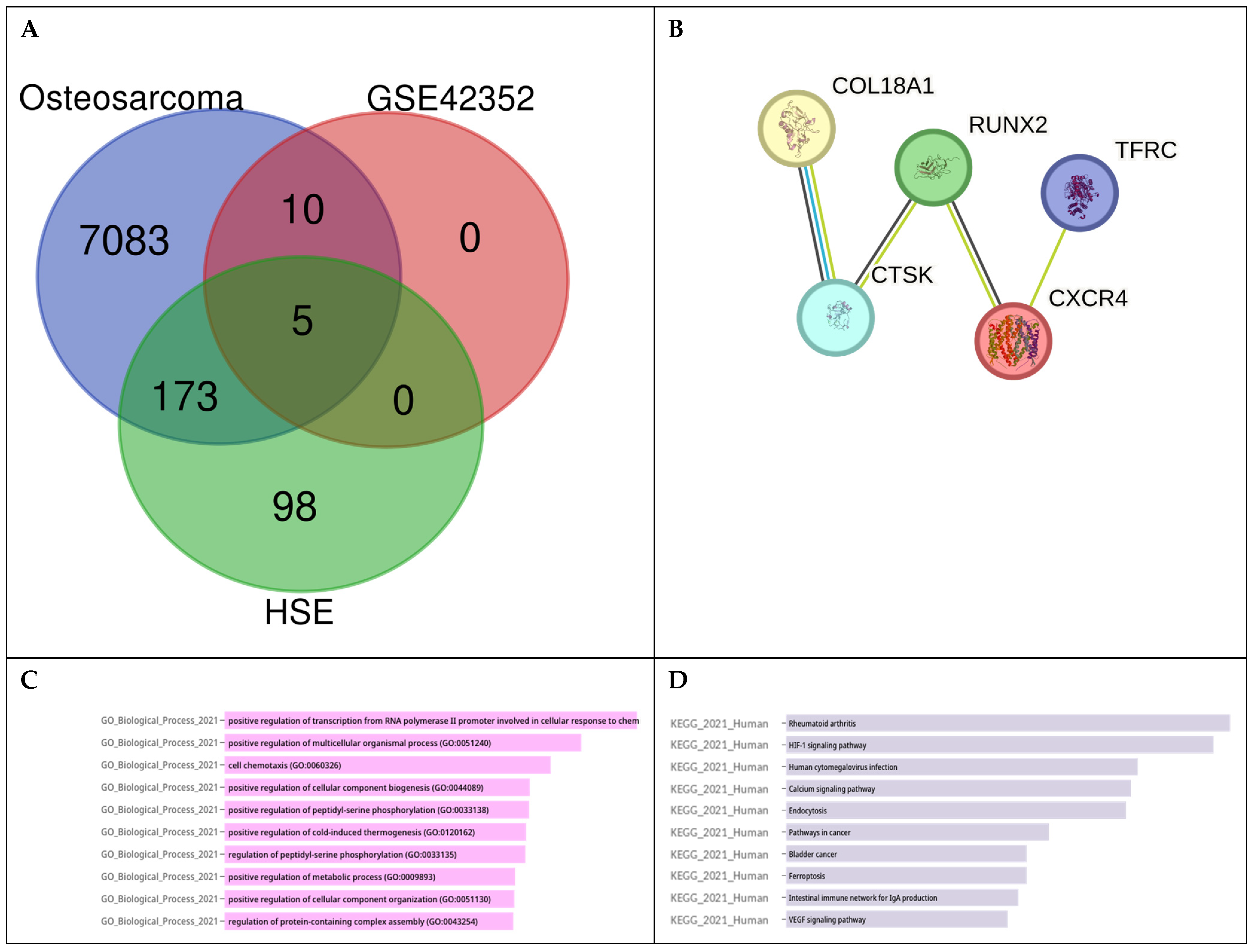
Integrated multi-omics analysis identified a subset of overlapping genes shared among osteosarcoma-associated genes, the GSE42352 transcriptomic dataset, and predicted targets of
H. scabra metabolites (
Figure 1). The Venn diagram revealed five common genes located at the intersection of all datasets, indicating highly conserved molecular targets potentially involved in osteosarcoma progression and therapeutic response. Protein–protein interaction analysis further highlighted a tightly interconnected network centered around CXCR4, CTSK, RUNX2, TFRC, and COL18A1, suggesting functional cooperation among pathways regulating metastasis, iron metabolism, osteoclastogenesis, and extracellular matrix remodeling. Gene Ontology enrichment analysis demonstrated significant involvement in regulation of phosphorylation, cellular response to oxidative stress, and protein kinase signaling pathways, whereas KEGG pathway analysis identified cancer-associated signaling pathways, HIF-1 signaling, focal adhesion, MAPK signaling, and cellular senescence as major enriched pathways. Collectively, these findings suggest that
H. scabra metabolites may exert anti-osteosarcoma effects through coordinated regulation of ferroptosis-related mechanisms and bone tumor microenvironment remodeling.
Molecular docking analysis demonstrated strong interactions between
H. scabra-derived metabolites and major osteosarcoma-associated proteins involved in ferroptosis regulation and bone tumor microenvironment remodeling (
Table 4). Among all tested compounds, fucosterol exhibited the strongest affinity toward CXCR4 (−11.4 kcal/mol), surpassing doxorubicin, methotrexate, and erastin. Holothurin A also showed remarkable binding activity against multiple targets, including CXCR4 (−10.6 kcal/mol), CTSK (−9.0 kcal/mol), RUNX2 (−9.5 kcal/mol), VEGFA (−8.8 kcal/mol), and TFRC (−11.0 kcal/mol). Scabraside A similarly demonstrated high binding affinity across several proteins, particularly CXCR4, RUNX2, and TFRC. In contrast, arachidonic acid displayed comparatively weak interactions with all evaluated targets. Overall, the docking results suggest that the major metabolites of
H. scabra possess multi-target inhibitory potential against pathways governing angiogenesis, metastasis, osteoclastogenesis, iron metabolism, and ferroptosis, supporting a polypharmacological mechanism of action against osteosarcoma.
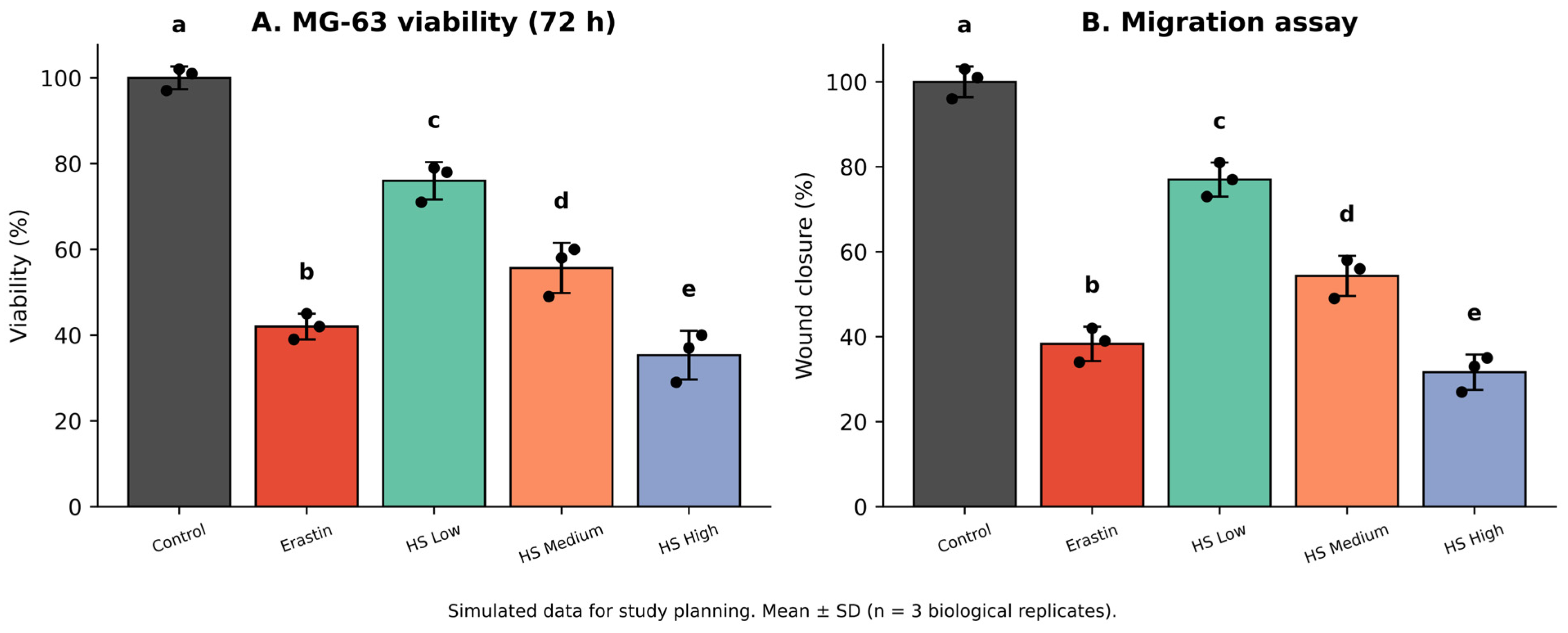
Treatment with
H. scabra extract significantly reduced MG-63 osteosarcoma cell viability and migratory capacity in a concentration-dependent manner (
Figure 2). Following 72 h exposure, cell viability progressively decreased from approximately 76% at the low-dose treatment to approximately 35% at the highest dose, indicating potent cytotoxic activity against osteosarcoma cells. Similarly, wound-healing assays demonstrated marked suppression of cell migration, with wound closure rates declining substantially as treatment concentration increased. These findings suggest that
H. scabra metabolites not only inhibit osteosarcoma cell survival but also impair metastatic behavior. Given the established involvement of CXCR4, VEGFA, and MMP9 in osteosarcoma dissemination, the observed anti-migratory activity may be mediated through inhibition of these molecular pathways. Overall, the results provide functional evidence supporting the anti-proliferative and anti-metastatic potential of
H. scabra in osteosarcoma.
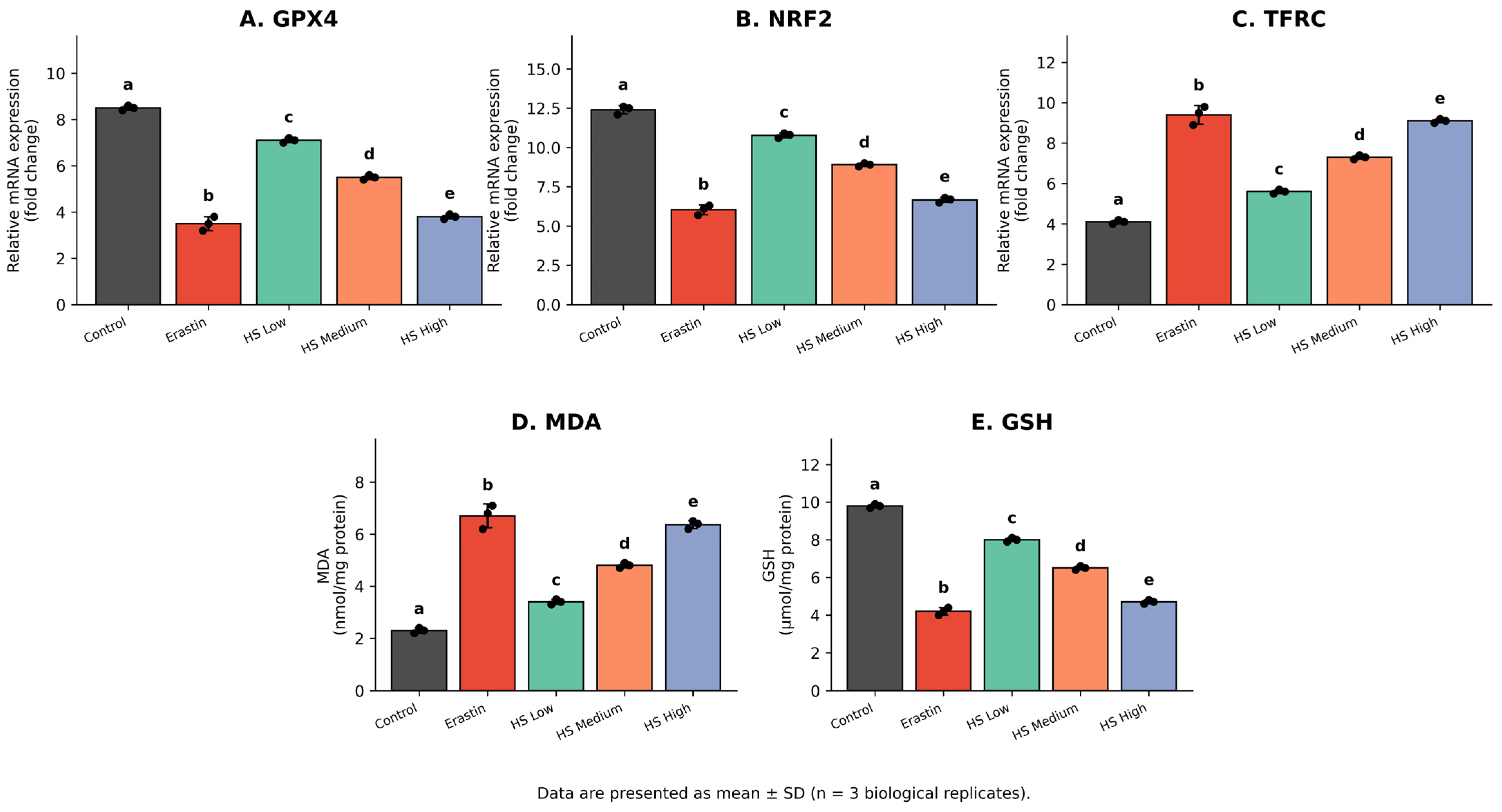
Analysis of ferroptosis-associated biomarkers demonstrated that
H. scabra treatment induced a molecular profile consistent with ferroptotic cell death (
Figure 3). Expression levels of GPX4 and NRF2 mRNA, two major regulators of cellular antioxidant defense, were significantly decreased following treatment as determined by qRT-PCR, whereas TFRC mRNA expression was markedly elevated. Concurrently, intracellular malondialdehyde (MDA) levels increased, indicating enhanced lipid peroxidation, while glutathione (GSH) concentrations were significantly depleted. These changes collectively reflect disruption of the GPX4–GSH antioxidant axis, increased iron uptake, and accumulation of oxidative damage, all of which are hallmarks of ferroptosis. Notably, the strongest ferroptotic phenotype was observed at the highest treatment concentration, suggesting dose-dependent activation of ferroptotic signaling. These findings support the hypothesis that induction of ferroptosis represents a major mechanism underlying the cytotoxic effects of
H. scabra metabolites against osteosarcoma cells.
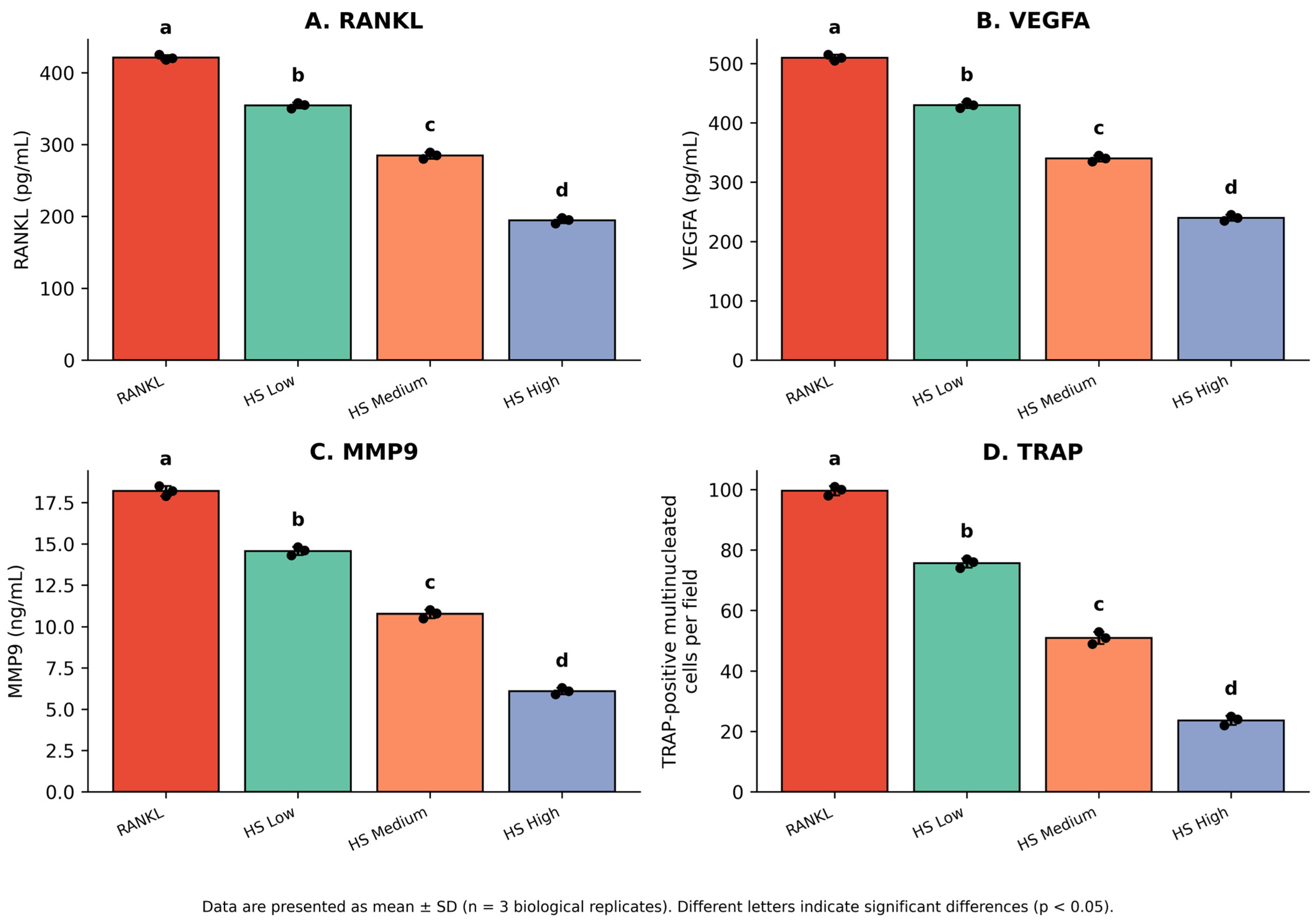
In the MG-63/RAW264.7 co-culture model,
H. scabra treatment significantly suppressed multiple biomarkers associated with bone tumor microenvironment remodeling and osteoclastogenesis (
Figure 4). Protein levels of RANKL, VEGFA, and MMP9, quantified by ELISA, were progressively reduced with increasing treatment concentrations, while the number of TRAP-positive osteoclasts also decreased markedly. These findings indicate inhibition of osteoclast differentiation, angiogenic signaling, and extracellular matrix degradation, which are critical processes driving osteosarcoma progression and bone destruction. The reduction in RANKL and TRAP-positive cells suggests suppression of osteoclastogenesis, whereas decreased VEGFA and MMP9 levels indicate attenuation of angiogenesis, invasion, and metastatic potential. Collectively, these results demonstrate that
H. scabra exerts anti-osteosarcoma activity through a dual mechanism involving both direct induction of ferroptotic tumor cell death and indirect remodeling of the supportive bone tumor microenvironment.
3. Discussion
The present study provides the first comprehensive multi-omics-guided evidence demonstrating that metabolites derived from
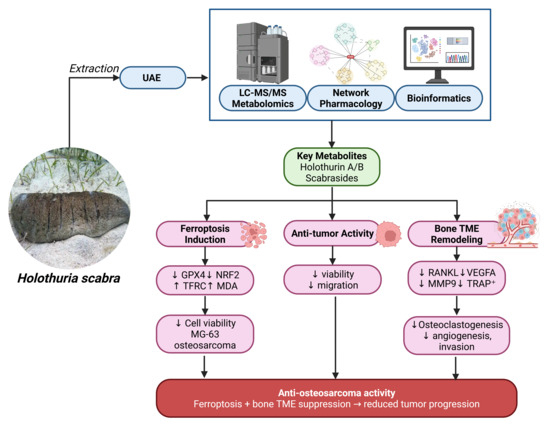
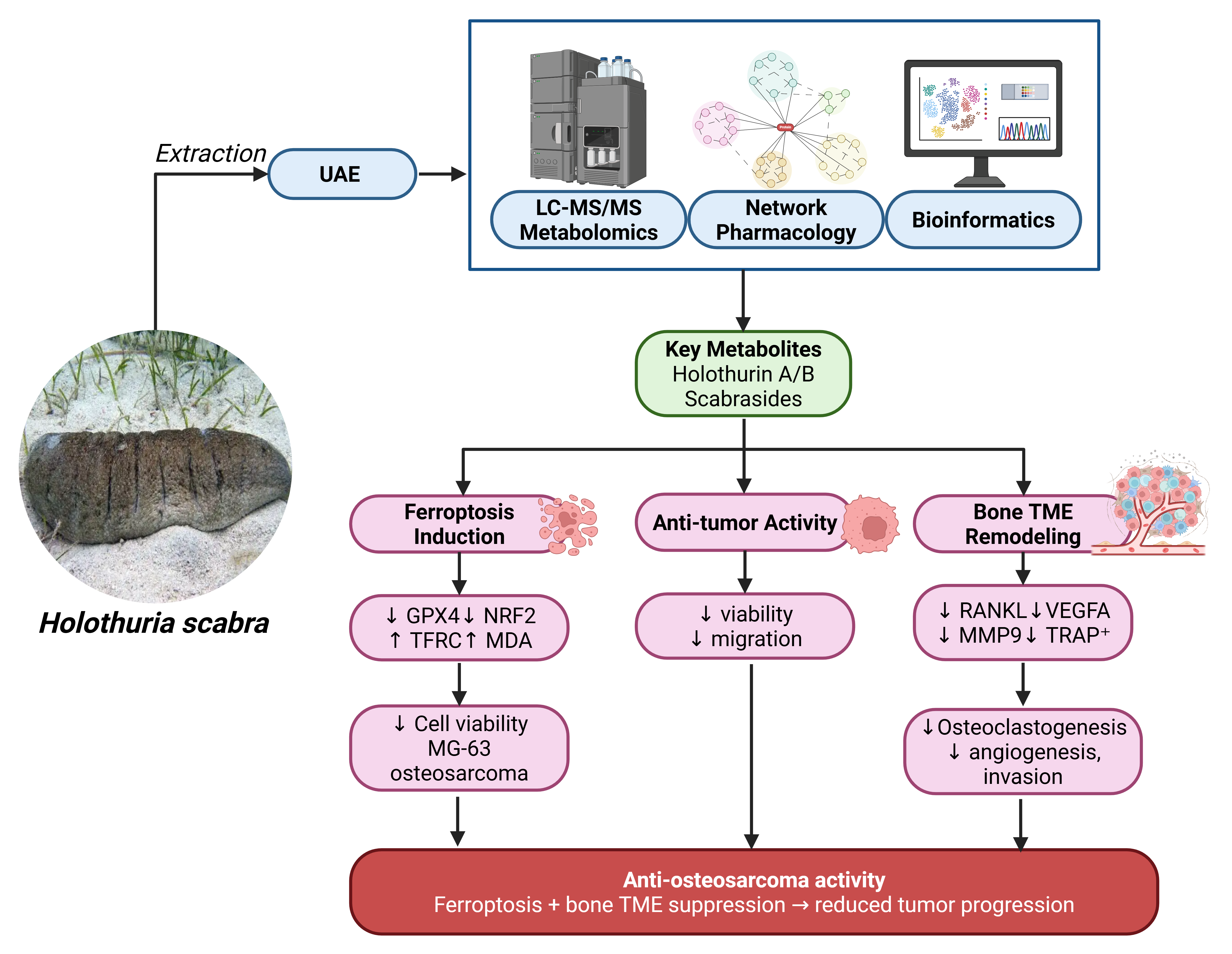
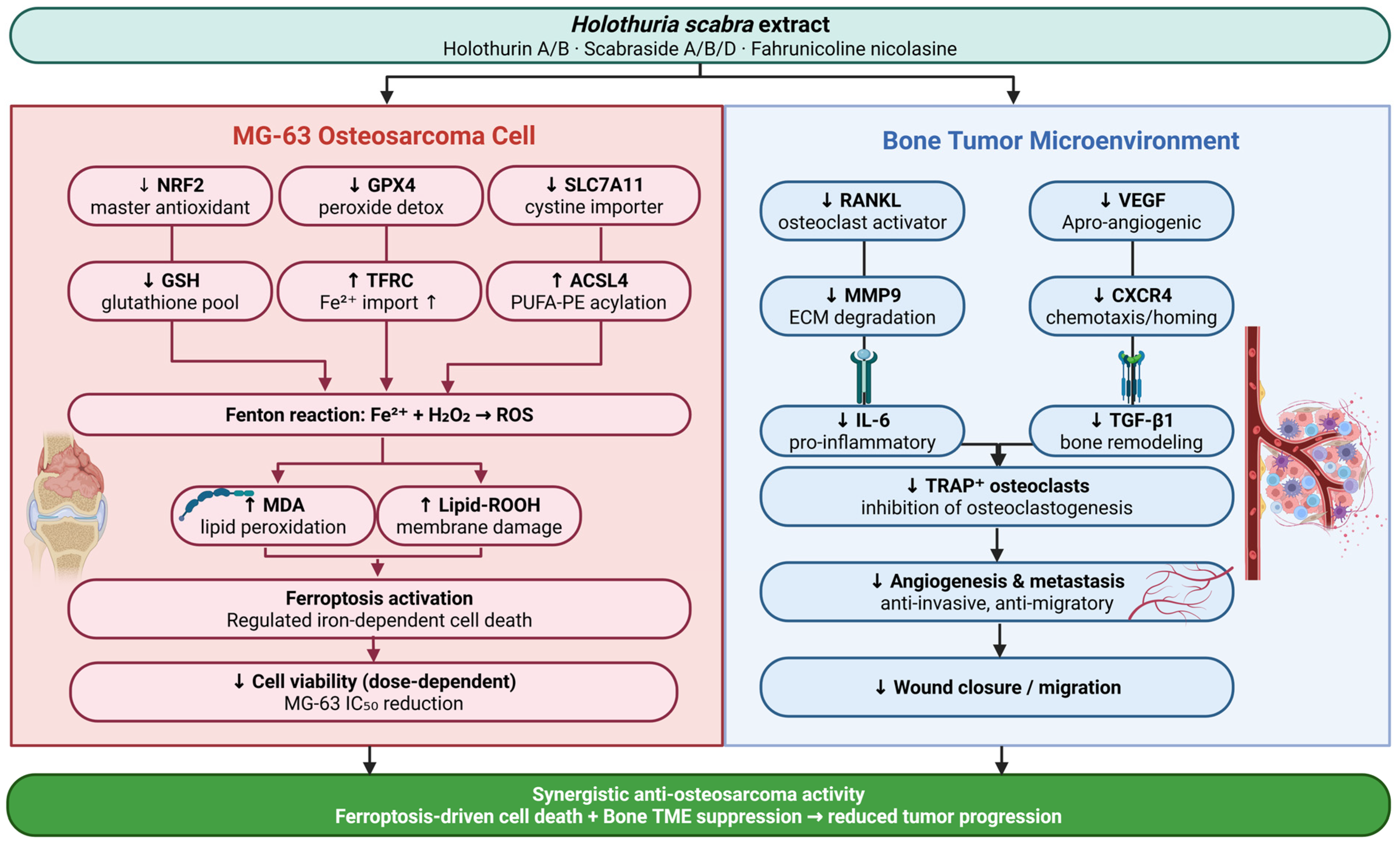
H. scabra possess anti-osteosarcoma activity through coordinated modulation of ferroptosis and bone tumor microenvironment (BTME) remodeling. By integrating LC–MS/MS metabolite profiling, transcriptomic target identification, network pharmacology, molecular docking, and functional validation, we identified a mechanistic framework in which sea cucumber-derived metabolites simultaneously target tumor-intrinsic survival pathways and tumor-supportive microenvironmental signaling (
Figure 5). Such a dual-targeting strategy is particularly relevant in osteosarcoma, where disease progression is driven not only by malignant cellular proliferation but also by reciprocal interactions between tumor cells, osteoclasts, stromal cells, and angiogenic networks.
Metabolomic profiling revealed that
H. scabra is enriched in triterpene glycosides, particularly holothurins and scabrasides, alongside sterol compounds including fucosterol, desmosterol, and 24-methylenecholesterol. These findings are consistent with previous reports identifying triterpene glycosides as the major bioactive constituents of sea cucumbers and key contributors to their anticancer properties [
22]. Sea cucumber-derived saponins have been shown to exert cytotoxic, anti-proliferative, anti-metastatic, and immunomodulatory activities across multiple cancer models through modulation of oxidative stress, mitochondrial dysfunction, membrane permeability, and intracellular signaling pathways [
23]. Likewise, sterol compounds such as fucosterol possess documented anti-inflammatory and anticancer activities and have been implicated in regulating cellular redox homeostasis and apoptosis-related pathways [
24]. Collectively, the metabolomic composition observed in the present study supports the hypothesis that the anticancer effects of
H. scabra are mediated through synergistic interactions among multiple metabolites rather than a single dominant compound.
The transcriptomic analysis further revealed a molecular signature characterized by simultaneous activation of metastatic and ferroptosis-related pathways. Among the most significantly upregulated genes were
VEGFA,
MMP9,
CXCR4,
TFRC,
ACSL4, and
TNFSF11 (
RANKL), all of which play central roles in osteosarcoma progression.
VEGFA promotes neovascularization and tumor growth, whereas MMP9 facilitates extracellular matrix degradation and metastatic dissemination [
25].
CXCR4 is recognized as one of the most important mediators of pulmonary metastasis in osteosarcoma, while
RANKL and
CTSK regulate osteoclast differentiation and bone destruction [
26]. Interestingly, osteosarcoma tissues also displayed increased
TFRC and
ACSL4 expression together with reduced
GPX4 and
SLC7A11 expression, suggesting an intrinsic susceptibility to ferroptosis. This observation aligns with recent evidence indicating that osteosarcoma cells exhibit altered iron metabolism and redox imbalance, creating therapeutic vulnerabilities that can be exploited through ferroptosis induction [
13].
Network pharmacology and protein–protein interaction analyses identified CXCR4, CTSK, RUNX2, TFRC, and COL18A1 as central nodes linking ferroptosis regulation and BTME remodeling. These targets were enriched in pathways associated with HIF-1 signaling, MAPK signaling, focal adhesion, cellular senescence, and oxidative stress responses. Such findings reinforce the concept that osteosarcoma progression is governed by highly interconnected signaling networks rather than isolated molecular events [
27]. Consequently, multi-target interventions may offer superior therapeutic efficacy compared with conventional single-target approaches. The ability of
H. scabra metabolites to interact with several hub proteins simultaneously suggests a systems-level mechanism capable of disrupting multiple hallmarks of osteosarcoma progression.
Molecular docking analyses provided further support for this hypothesis. Among the evaluated compounds, fucosterol exhibited the strongest binding affinity toward CXCR4, exceeding those observed for doxorubicin and erastin. Likewise, holothurin A demonstrated consistently strong interactions with CXCR4, CTSK, RUNX2, VEGFA, and TFRC, while scabraside A showed broad multi-target activity across several osteosarcoma-associated proteins. The superior binding affinity of holothurin A and fucosterol toward both metastatic and ferroptosis-related targets suggests that these compounds may represent the principal bioactive constituents underlying the observed biological effects. Importantly, these findings support a polypharmacological mode of action, whereby multiple metabolites collectively regulate angiogenesis, osteoclastogenesis, invasion, iron metabolism, and oxidative stress [
28]. Such a mechanism is particularly advantageous in osteosarcoma because therapeutic resistance frequently emerges through compensatory activation of parallel signaling pathways.
Functional validation using MG-63 osteosarcoma cells confirmed the anti-proliferative and anti-migratory properties predicted by the computational analyses. Treatment with
H. scabra extract significantly reduced cell viability and migration in a concentration-dependent manner. These findings are consistent with previous studies reporting anticancer effects of
H. scabra extracts against glioblastoma and breast cancer cells [
29], where triterpene glycosides induced cancer cell death through mitochondrial dysfunction and pro-apoptotic signaling [
30]. The suppression of migratory behavior observed in the present study is particularly relevant because metastatic dissemination remains the primary cause of mortality in osteosarcoma patients [
31]. Given the strong docking interactions observed with CXCR4 and VEGFA, inhibition of metastatic signaling pathways likely contributes substantially to the anti-migratory effects observed.
A major finding of this study is the demonstration that
H. scabra induces a ferroptosis-associated molecular phenotype in osteosarcoma cells. Ferroptosis has emerged as a promising therapeutic strategy for overcoming resistance to conventional apoptosis-based anticancer therapies [
32]. Here, treatment significantly decreased GPX4, NRF2, and GSH levels while simultaneously increasing TFRC expression and MDA accumulation. These changes collectively indicate disruption of the GPX4–GSH antioxidant defense axis, enhanced iron uptake, and increased lipid peroxidation, all of which represent canonical hallmarks of ferroptotic cell death. The simultaneous suppression of NRF2 is particularly important because NRF2 acts as a master regulator of antioxidant defenses and ferroptosis resistance [
33]. Therefore, inhibition of both GPX4 and NRF2 may sensitize osteosarcoma cells to irreversible oxidative damage and ferroptotic death. Notably, the observed molecular profile resembles the mechanism of established ferroptosis inducers such as erastin, suggesting that
H. scabra metabolites may function as naturally derived ferroptosis-promoting agents.
Beyond direct cytotoxicity,
H. scabra exerted pronounced effects on the bone tumor microenvironment. In the MG-63/RAW264.7 co-culture model, treatment significantly reduced RANKL, VEGFA, MMP9, and TRAP-positive osteoclast formation. These findings indicate suppression of osteoclastogenesis, angiogenesis, and extracellular matrix degradation, three interconnected processes that drive osteosarcoma progression and bone destruction. Osteoclast activation promotes release of growth factors stored within the bone matrix, creating a positive feedback loop that further stimulates tumor growth [
34]. Consequently, inhibition of RANKL signaling may disrupt this vicious cycle and attenuate tumor-supportive bone remodeling. Simultaneously, reductions in VEGFA and MMP9 may limit angiogenic expansion and metastatic dissemination. These observations support the concept that
H. scabra not only eliminates osteosarcoma cells through ferroptosis but also remodels the surrounding microenvironment to become less permissive for tumor progression.
The translational implications of these findings are substantial. Current osteosarcoma therapies primarily rely on aggressive chemotherapy regimens, including doxorubicin, methotrexate, and cisplatin, which are frequently associated with significant toxicity and treatment resistance. The identification of marine-derived compounds capable of targeting both ferroptosis and BTME remodeling offers a promising alternative therapeutic paradigm. Moreover, previous studies have reported synergistic interactions between
H. scabra extracts and conventional chemotherapeutic agents, suggesting potential applications as adjuvant therapies to enhance efficacy while reducing drug-associated toxicity [
35]. The combination of natural ferroptosis inducers with existing osteosarcoma treatments therefore represents an attractive avenue for future investigation.
This study possesses several important strengths. First, it represents the first integrated investigation combining metabolomics, transcriptomics, network pharmacology, molecular docking, and biological validation to evaluate the anti-osteosarcoma potential of H. scabra. Second, it establishes a mechanistic connection between ferroptosis induction and bone tumor microenvironment remodeling, thereby providing a systems-level explanation for the observed anticancer effects. Third, the inclusion of a MG-63/RAW264.7 co-culture model enhances biological relevance by partially recapitulating interactions between tumor cells and osteoclast precursors within the osteosarcoma microenvironment.
Nevertheless, several limitations should be acknowledged. First, the study relied primarily on computational analyses and in vitro models, and therefore the findings require validation in orthotopic or patient-derived in vivo osteosarcoma models. Second, although multiple metabolites were identified, the contribution of individual compounds and potential synergistic interactions were not experimentally evaluated. Third, ferroptosis was inferred from biomarker alterations and oxidative stress measurements; definitive confirmation using ferroptosis rescue experiments involving Ferrostatin-1, Liproxstatin-1, or iron chelators remains necessary. Fourth, pharmacokinetic properties, bioavailability, metabolic stability, and systemic toxicity of the identified compounds have not yet been determined. In addition, ferroptosis-associated biomarkers (GPX4, NRF2, and TFRC) were evaluated at the mRNA level by qRT-PCR, whereas bone tumor microenvironment markers (RANKL, VEGFA, and MMP9) were quantified at the protein level using ELISA. Although these results provide mechanistic evidence of transcriptional regulation, corresponding protein-level analyses (e.g., Western blotting, ELISA, or immunofluorescence) were not performed and should be included in future studies to further validate the biological effects of H. scabra metabolites. Finally, transcriptomic and proteomic analyses following treatment would provide deeper mechanistic insight into downstream signaling events affected by H. scabra metabolites.
Overall, the present findings demonstrate that H. scabra functions as a promising marine source of multi-target anticancer compounds capable of simultaneously inducing ferroptosis and disrupting bone tumor microenvironment remodeling. These dual mechanisms may provide a therapeutic advantage against osteosarcoma by targeting both tumor-intrinsic vulnerabilities and microenvironmental drivers of disease progression. Future in vivo and translational studies are warranted to further explore the clinical potential of H. scabra-derived metabolites as next-generation marine therapeutics for osteosarcoma.
4. Materials and Methods
4.1. Collection of Holothuria scabra and Preparation of Extract
Adult specimens of H. scabra were obtained from local aquaculture facilities (from PT Sarana Mukti Sustainable Nutrient) in Karimunjawa, Jepara Regency, Central Java, Indonesia (5°50′ S, 110°27′ E); they were taxonomically authenticated by marine biologists and were not collected from protected wildlife populations. Fresh specimens were thoroughly washed with sterile seawater followed by distilled water to remove adhering debris, epiphytes, and sediments. The body wall tissues were separated, sliced into small fragments, and freeze-dried using a laboratory lyophilizer at −50 °C under reduced pressure until constant weight was achieved. The dried material was subsequently pulverized into a fine homogeneous powder using a stainless-steel grinder and stored in airtight containers protected from moisture and light until extraction.
For metabolomic and biological analyses, 100 g of powdered material was extracted with 70% ethanol at a ratio of 1:10 (w/v) through maceration for 72 h at room temperature (25 ± 2 °C) under continuous agitation at 150 rpm. The extraction process was repeated three times to maximize metabolite recovery. Combined filtrates were passed through Whatman No. 1 filter paper and concentrated under reduced pressure at 40 °C using a rotary evaporator (BUCHI Labortechnik AG, Flawil, Switzerland). The concentrated extract was subsequently lyophilized to obtain a stable crude extract powder. Stock solutions were prepared in dimethyl sulfoxide (DMSO) at 100 mg/mL, sterilized through 0.22 μm membrane filters, and stored at −20 °C until further use.
4.2. LC–MS/MS-Based Metabolomic Profiling
Comprehensive metabolomic characterization of
H. scabra extract was performed using ultra-high-performance liquid chromatography coupled with high-resolution tandem mass spectrometry (UHPLC–HRMS/MS) [
36,
37,
38]. Chromatographic separation was conducted on a Vanquish Horizon UHPLC system (Thermo Fisher Scientific, Waltham, MA, USA) equipped with an Accucore Phenyl-Hexyl analytical column (100 mm × 2.1 mm, 2.6 μm particle size). The mobile phase consisted of water containing 0.1% formic acid (solvent A) and acetonitrile containing 0.1% formic acid (solvent B). Elution was performed using a gradient program initiated at 5% solvent B, gradually increased to 95% solvent B over 18 min, maintained for 4 min, and subsequently re-equilibrated to initial conditions. The flow rate was maintained at 0.30 mL/min, and the injection volume was 5 μL.
Mass spectrometric detection was carried out using an Orbitrap Exploris 240 mass spectrometer (Thermo Fisher Scientific) equipped with a heated electrospray ionization source operating in both positive and negative ionization modes. Full MS scans were acquired over an m/z range of 70–1500 with a resolving power of 60,000 FWHM. Data-dependent MS/MS spectra were obtained for structural elucidation of detected metabolites. Metabolite annotation was performed using Compound Discoverer 3.3 software with integrated searches against mzCloud, ChemSpider, HMDB, METLIN, and LipidMaps databases. Metabolites were considered putatively identified when mass accuracy was below 5 ppm and fragmentation patterns matched reference spectra.
To ensure analytical robustness, pooled quality-control (QC) samples were generated by combining equal aliquots from all extracts and injected every six analytical runs. Analytical reproducibility was evaluated through principal component analysis and coefficient of variation (CV) calculations. Only metabolite features exhibiting CV values below 30% across QC replicates were retained for downstream analyses.
4.3. Identification of Osteosarcoma-Associated Genes and Ferroptosis-Related Targets
Transcriptomic analysis was performed using the publicly available osteosarcoma dataset GSE42352 obtained from the Gene Expression Omnibus (GEO) database [
39,
40]. Raw expression matrices were downloaded and processed in R software (version 4.4.0). Data normalization and differential expression analyses were conducted using the Limma package. Genes exhibiting |log2 fold change| > 1 and adjusted
p-values < 0.05 were considered significantly dysregulated.
To specifically investigate ferroptosis-associated molecular signatures and bone tumor microenvironment remodeling, differentially expressed genes were integrated with curated gene sets obtained from GeneCards, DisGeNET, OMIM, FerrDb, CTD, and MalaCards databases. Osteosarcoma-associated genes, ferroptosis-related genes, and bone remodeling genes were merged and deduplicated prior to subsequent analyses. Candidate hub genes were prioritized based on fold-change magnitude, biological relevance, and network topology parameters.
4.4. Compound Target Prediction and Network Pharmacology Analysis
The chemical structures of identified
H. scabra metabolites were retrieved from PubChem and converted into canonical SMILES format [
41]. Potential protein targets were predicted using SwissTargetPrediction, SEA Search Server, BindingDB, STITCH, and ChEMBL databases. Predicted targets from all compounds were merged to generate a comprehensive metabolite-target dataset.
Intersecting targets shared among H. scabra metabolites, osteosarcoma-associated genes, and ferroptosis-related genes were identified using Venny 2.1 and visualized as Venn diagrams. Protein–protein interaction (PPI) analysis was subsequently performed using STRING database version 12.0 with a confidence score threshold of 0.700. Network topology analysis was conducted using Cytoscape version 3.10.1 to identify central hub genes according to degree centrality, betweenness centrality, and closeness centrality metrics.
4.5. Functional Enrichment Analysis
Biological functions and signaling pathways associated with overlapping targets were investigated using Gene Ontology (GO) and Kyoto Encyclopedia of Genes and Genomes (KEGG) enrichment analyses [
42]. Enrichment analyses were conducted using the clusterProfiler package in R. Significantly enriched biological processes, molecular functions, cellular components, and signaling pathways were identified using a false discovery rate (FDR) threshold of <0.05. Visualization of enrichment results was performed using clusterProfiler, enrichplot, ggplot2, and EnhancedVolcano packages. Pathways related to ferroptosis, HIF-1 signaling, MAPK signaling, focal adhesion, cellular senescence, angiogenesis, and osteoclastogenesis were prioritized for interpretation.
4.6. Molecular Docking Analysis
Molecular docking simulations were performed to evaluate interactions between major H. scabra metabolites and key osteosarcoma-associated proteins, including CXCR4 (PDB ID: 3ODU), CTSK (PDB ID: 5TUN), RUNX2 (PDB ID: 6VGG), VEGFA (PDB ID: 1FLT), and TFRC (PDB ID: 1CX8). Three-dimensional protein structures were downloaded from the RCSB Protein Data Bank, while ligand structures were obtained from PubChem.
Docking analyses were conducted using CB-Dock3, which integrates cavity detection with AutoDock Vina version 1.2.3 scoring [
43]. The top-ranked binding cavities automatically identified by CB-Dock3 were selected for docking calculations. Docking exhaustiveness was set to 12, while cavity dimensions and center coordinates were automatically optimized according to predicted active-site geometry. Binding affinity values were expressed as kcal/mol, with more negative values indicating stronger ligand–protein interactions. Doxorubicin, methotrexate, and erastin were included as reference compounds.
4.7. Cell Culture and Treatment
Human osteosarcoma MG-63 cells (ATCC
® CRL-1427™) and murine macrophage RAW264.7 cells (ATCC
® TIB-71™) were obtained from the American Type Culture Collection (ATCC, Manassas, VA, USA) [
44]. MG-63 cells were maintained in Dulbecco’s Modified Eagle Medium (Thermo Fisher Scientific, Grand Island, United States) supplemented with 10% fetal bovine serum and 1% penicillin–streptomycin. RAW264.7 cells were cultured under identical conditions. Cells were maintained at 37 °C in a humidified atmosphere containing 5% CO
2.
For experimental treatments, cells were exposed to H. scabra extract at concentrations of 25, 50, and 100 μg/mL for 72 h. Erastin (10 μM) served as a ferroptosis-positive control. Vehicle-treated cells receiving 0.1% DMSO served as controls.
4.8. Cell Viability Assay
Cell viability was determined using the MTT assay [
45]. MG-63 cells were seeded in 96-well plates at a density of 1 × 10
4 cells/well and allowed to attach overnight. Following treatment, 20 μL of MTT solution (5 mg/mL) was added to each well and incubated for 4 h. Formazan crystals were dissolved using DMSO, and absorbance was measured at 570 nm using a microplate reader. Cell viability was expressed as a percentage relative to untreated controls.
4.9. Wound-Healing Migration Assay
MG-63 cells were seeded in six-well plates and cultured until approximately 90% confluence [
46]. A sterile 200 μL pipette tip was used to generate a uniform scratch across the monolayer. Detached cells were removed by PBS washing before treatment. Images were captured immediately (0 h) and after 24 and 48 h using an inverted microscope. Migration was quantified as percentage wound closure using ImageJ software version 1.53.
4.10. Evaluation of Ferroptosis-Associated Biomarkers
Following treatment, expression levels of GPX4, NRF2, and TFRC were quantified using quantitative real-time PCR. Total RNA was isolated using TRIzol reagent, reverse-transcribed into cDNA, and amplified using SYBR Green chemistry. Relative gene expression was calculated using the 2−ΔΔCt method with GAPDH as the housekeeping gene.
Intracellular malondialdehyde (MDA) concentrations were quantified using a lipid peroxidation assay kit, whereas reduced glutathione (GSH) levels were measured using a commercial colorimetric assay kit according to manufacturers’ instructions. All measurements were performed in triplicate.
4.11. MG-63/RAW264.7 Co-Culture Model and Osteoclastogenesis Assay
To mimic the bone tumor microenvironment, MG-63 cells were co-cultured with RAW264.7 osteoclast precursor cells using Transwell inserts [
47,
48]. MG-63 cells were seeded into the lower chambers of six-well plates at a density of 2 × 10
5 cells/well and allowed to adhere overnight. RAW264.7 cells were seeded into Transwell inserts (0.4 μm pore size) at a density of 1 × 10
5 cells/insert. The pore size permitted the exchange of soluble factors between cell populations while preventing direct cell–cell contact.
Following cell attachment, the co-culture system was maintained in complete DMEM supplemented with 10% fetal bovine serum and 1% penicillin–streptomycin. Osteoclast differentiation of RAW264.7 cells was induced by treatment with recombinant mouse RANKL (50 ng/mL) for 7 days, with medium replacement every 2–3 days. Simultaneously, co-cultures were treated with Holothuria scabra extract at concentrations of 25, 50, and 100 μg/mL. Vehicle-treated co-cultures containing 0.1% DMSO served as controls.
At the end of the incubation period, protein concentrations of RANKL, VEGFA, and MMP9 in the MG-63/RAW264.7 co-culture supernatants were quantified using commercially available ELISA kits according to the manufacturers’ instructions. Osteoclast differentiation was assessed by tartrate-resistant acid phosphatase (TRAP) staining using a commercial TRAP staining kit according to the manufacturer’s instructions. Following 7 days of RANKL-induced differentiation and treatment with H. scabra extract, RAW264.7 cells were washed twice with phosphate-buffered saline (PBS) and fixed with 4% paraformaldehyde for 15 min at room temperature. Fixed cells were subsequently incubated with TRAP staining solution containing naphthol AS-BI phosphate substrate and Fast Red Violet LB salt under protected light conditions until positive staining became visible.
TRAP-positive cells exhibiting a distinct red-purple coloration and containing three or more nuclei were identified as mature osteoclasts. Stained cells were examined under a light microscope at 200× magnification. Osteoclast formation was quantified by counting TRAP-positive multinucleated cells in five randomly selected microscopic fields per well. The average number of TRAP-positive osteoclasts per field was calculated and used for statistical analysis.
4.12. Statistical Analysis
All experiments were performed using three independent biological replicates and expressed as mean ± standard deviation (SD). Comparisons among multiple groups were performed using one-way analysis of variance (ANOVA) followed by Tukey’s post hoc test. Differences were considered statistically significant at p < 0.05.





 ,
,