
Valorization of Chum Salmon (Oncorhynchus keta) Processing By-Products: High-Value Functional Food Ingredients for Skin Health

 , ,
, , 
Abstract
1. Introduction
2. Results
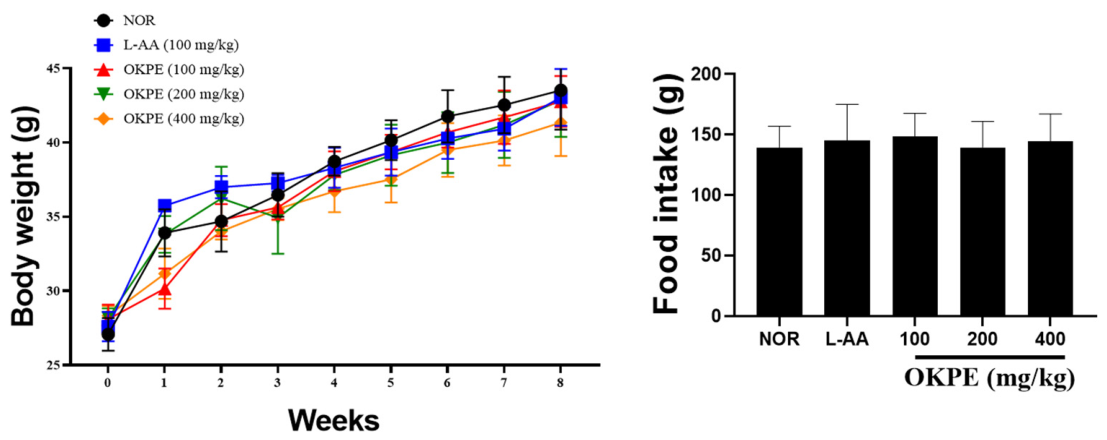
2.1. Effects of OKPE on Body Weight and Food Intake
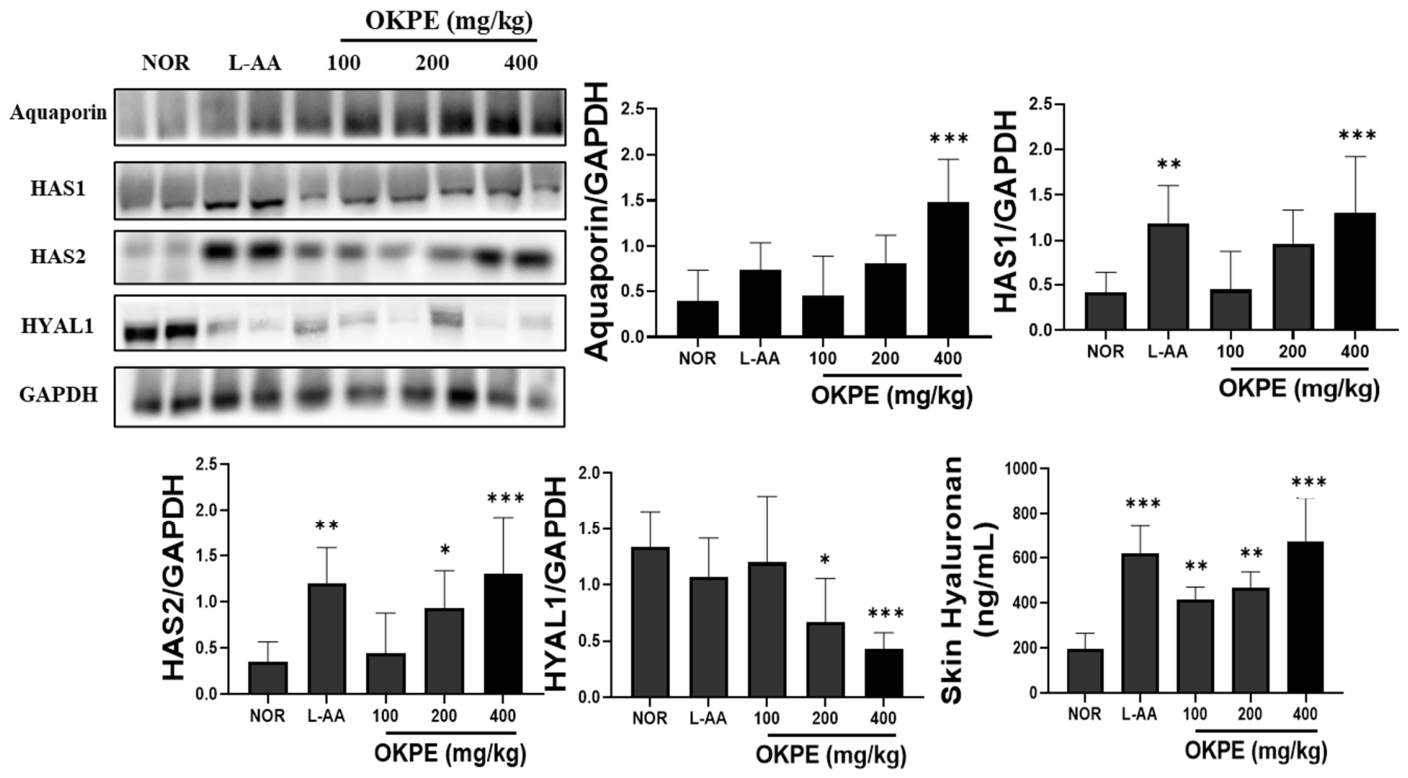
2.2. OKPE Improves Skin Hydration-Related Factors
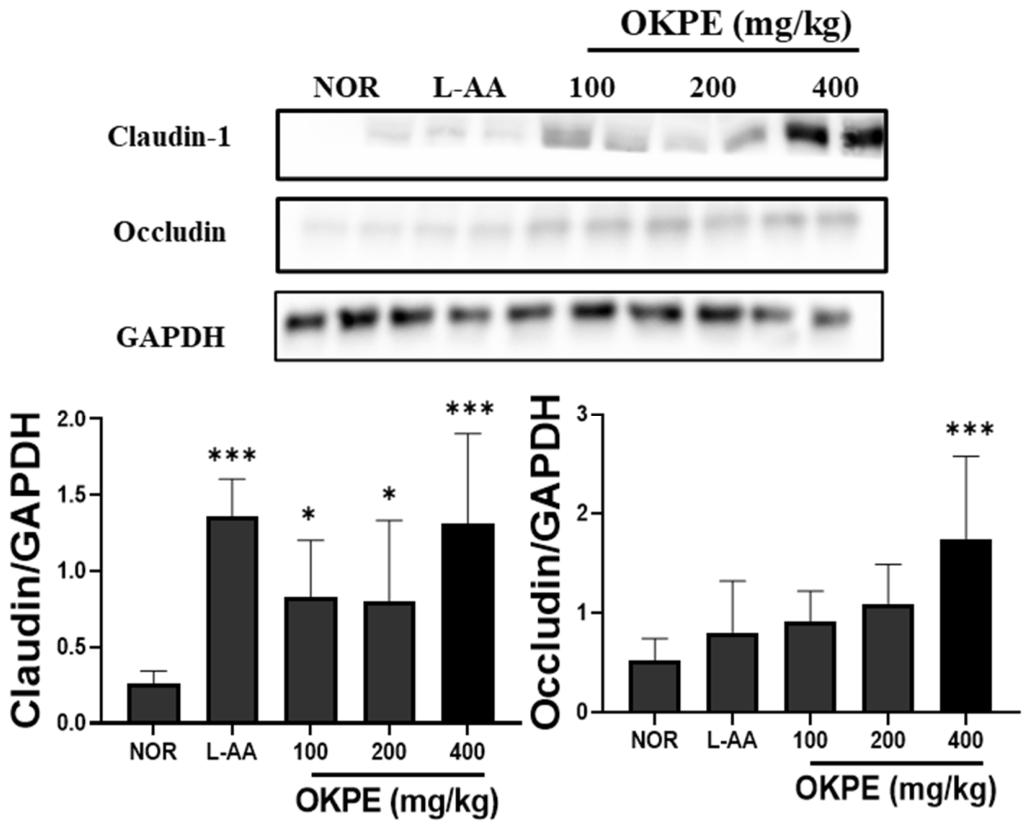
2.3. OKPE Enhances Tight Junction-Related Protein Expression in the Skin
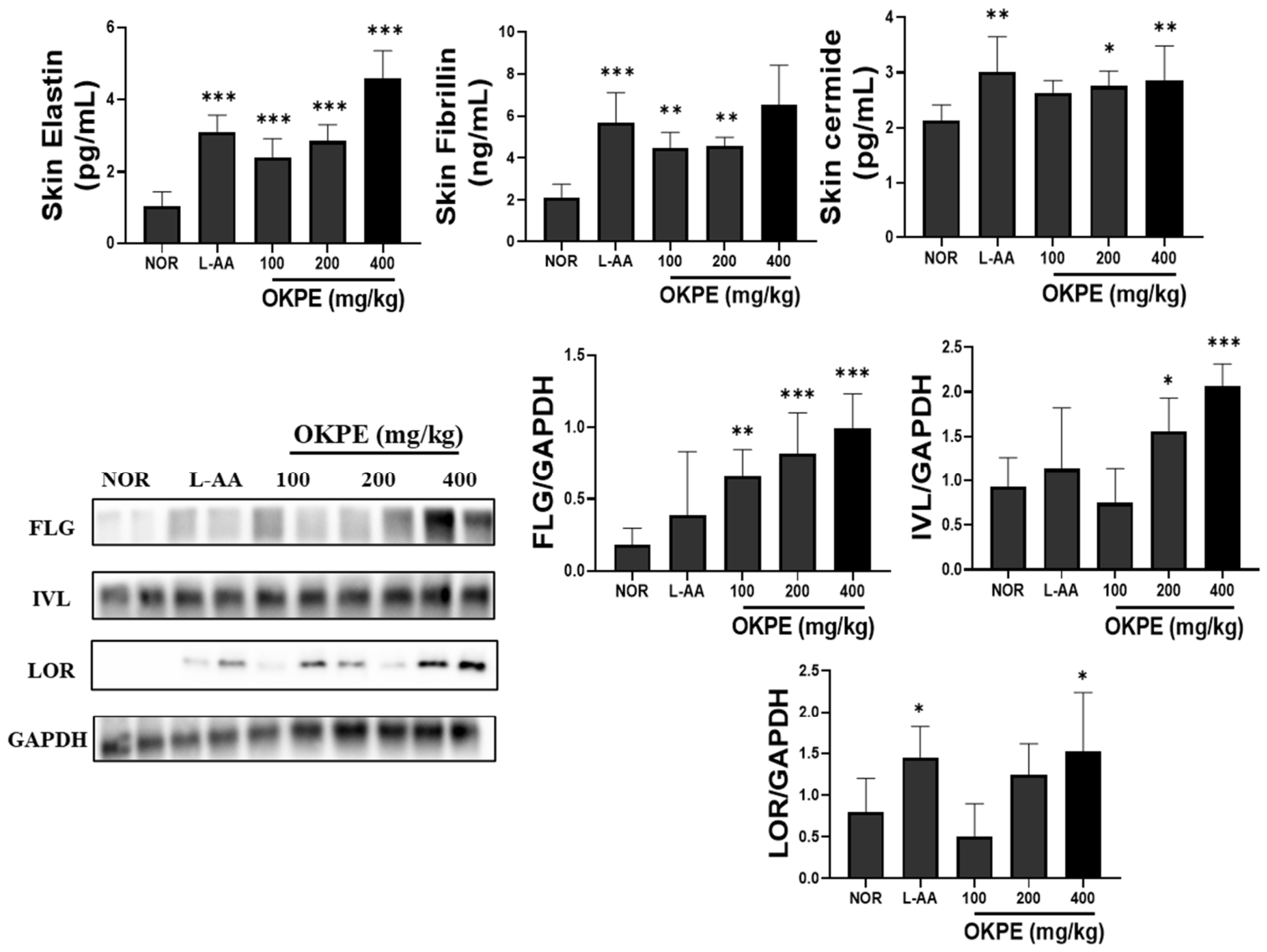
2.4. Effects of OKPE on Skin Components and Skin Barrier Function
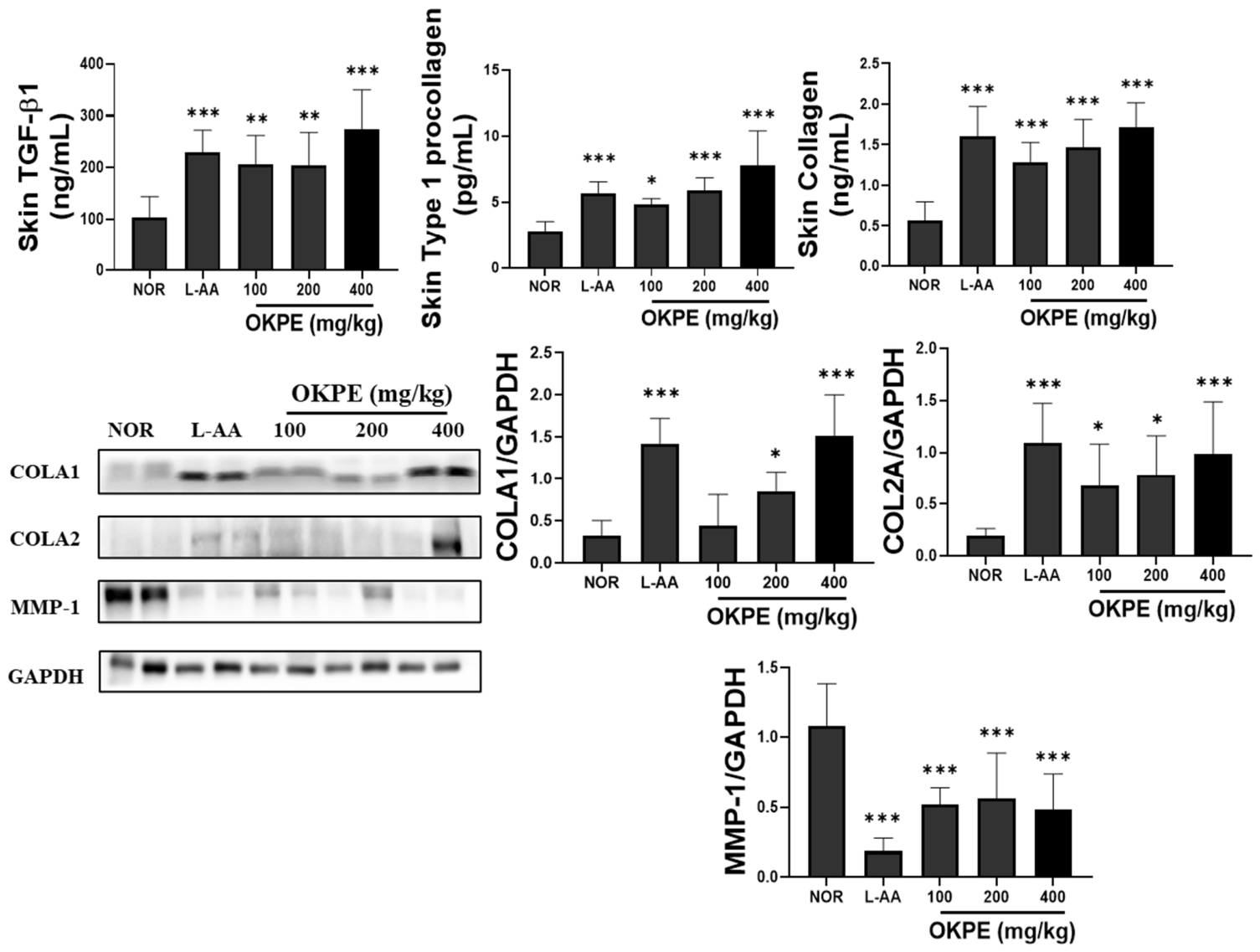
2.5. Effects of OKPE on Collagen Synthesis-Related Protein Expression
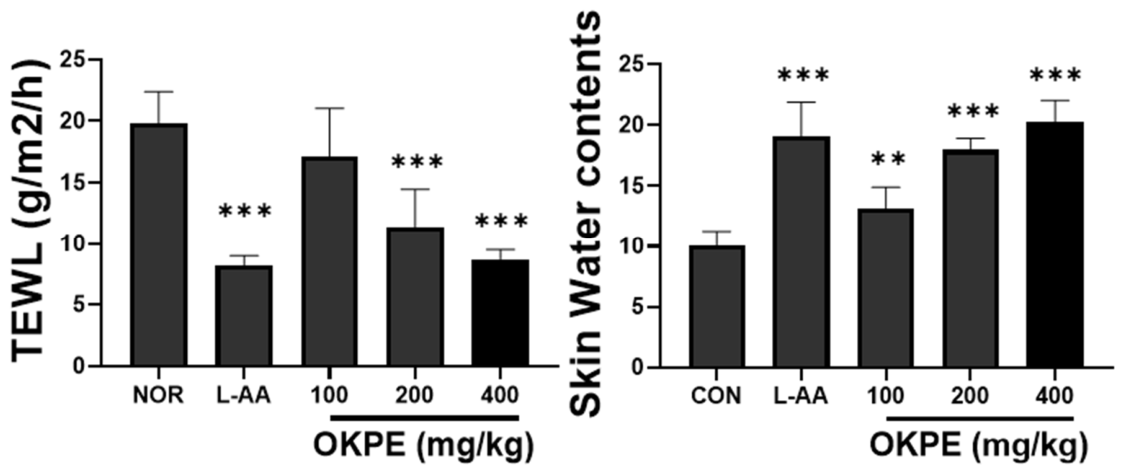
2.6. Effects of OKPE on Transepidermal Water Loss and Skin Water Content
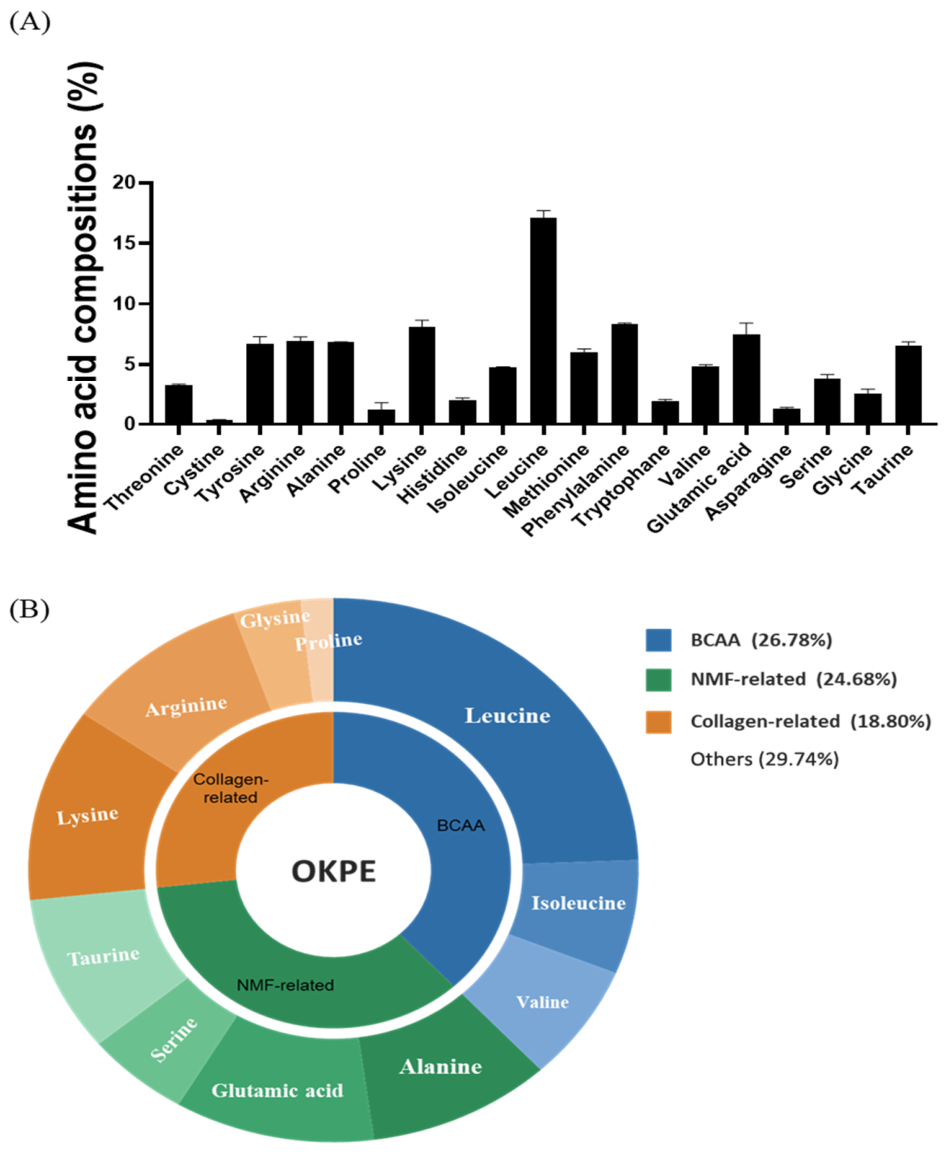
2.7. Amino Acid Composition of OKPE
3. Discussion
4. Materials and Methods
4.1. Materials and Reagents
4.2. Industrial-Scale Preparation of OKPE
4.3. Amino Acid Profiling of OKPE
4.4. Animal Experiments
4.5. Enzyme-Linked Immunosorbent Assay (ELISA)
4.6. Western Blotting
4.7. Measurement of Transepidermal Water Loss and Skin Water Content
4.8. Statistical Analysis
5. Conclusions
Author Contributions
Funding
Institutional Review Board Statement
Data Availability Statement
Conflicts of Interest
References
- Naylor, R.L.; Kishore, A.; Sumaila, U.R.; Issifu, I.; Hunter, B.P.; Belton, B.; Bush, S.R.; Cao, L.; Gelcich, S.; Gephart, J.A.; et al. Blue food demand across geographic and temporal scales. Nat. Commun. 2021, 12, 5413. [Google Scholar] [CrossRef]
- Prabhakar, P.K.; Vatsa, S.; Srivastav, P.P.; Pathak, S.S. A comprehensive review on freshness of fish and assessment: Analytical methods and recent innovations. Food Res. Int. 2020, 133, 109157. [Google Scholar] [CrossRef]
- Rustad, T.; Storrø, I.; Slizyte, R. Possibilities for the utilisation of marine by-products. Int. J. Food Sci. Technol. 2011, 46, 2001–2014. [Google Scholar] [CrossRef]
- Kim, D.Y.; Lee, J.S. Directions for eco-friendly utilization and industrialization of fishery by-products. J. Fish. Mar. Sci. Educ. 2015, 27, 566–575. [Google Scholar] [CrossRef]
- Atef, M.; Ojagh, S.M. Health benefits and food applications of bioactive compounds from fish byproducts: A review. J. Funct. Foods 2017, 35, 673–681. [Google Scholar] [CrossRef]
- Radziemska, M.; Vaverková, M.D.; Adamcová, D.; Brtnický, M.; Mazur, Z. Valorization of fish waste compost as a fertilizer for agricultural use. Waste Biomass Valor. 2019, 10, 2537–2545. [Google Scholar] [CrossRef]
- Coppola, D.; Lauritano, C.; Esposito, F.P.; Riccio, G.; Rizzo, C.; de Pascale, D. Fish waste: From problem to valuable resource. Mar. Drugs 2021, 19, 116. [Google Scholar] [CrossRef]
- Pandey, R.; Asche, F.; Misund, B.; Nygaard, R.; Adewumi, O.M.; Straume, H.M.; Zhang, D. Production growth, company size, and concentration: The case of salmon. Aquaculture 2023, 577, 739972. [Google Scholar] [CrossRef]
- Kandyliari, A.; Mallouchos, A.; Papandroulakis, N.; Golla, J.P.; Lam, T.T.; Sakellari, A.; Karavoltsos, S.; Vasiliou, V.; Kapsokefalou, M. Nutrient composition and fatty acid and protein profiles of selected fish by-products. Foods 2020, 9, 190. [Google Scholar] [CrossRef] [PubMed]
- Im, S.T.; Kim, W.-C.; Lee, S.-H. Photoprotective effect of taurine-rich Protamex extract from salmon (Oncorhynchus keta) byproduct against ultraviolet B-induced skin damage. Photodermatol. Photoimmunol. Photomed. 2025, 41, e13019. [Google Scholar] [CrossRef]
- Liang, J.; Pei, X.; Zhang, Z.; Wang, N.; Wang, J.; Li, Y. The protective effects of long-term oral administration of marine collagen hydrolysate from chum salmon on collagen matrix homeostasis in aged skin. J. Food Sci. 2010, 75, H230–H238. [Google Scholar] [CrossRef]
- Proksch, E.; Fölster-Holst, R.; Jensen, J.M. Skin barrier function, epidermal proliferation and differentiation in eczema. J. Dermatol. Sci. 2006, 43, 159–169. [Google Scholar] [CrossRef]
- Rawlings, A.V.; Harding, C.R. Moisturization and skin barrier function. Dermatol. Ther. 2004, 17, 43–48. [Google Scholar] [CrossRef]
- Elias, P.M. Epidermal lipids, barrier function, and desquamation. J. Investig. Dermatol. 1983, 80, 44S–49S. [Google Scholar] [CrossRef]
- Proksch, E.; Brandner, J.M.; Jensen, J.M. The skin: An indispensable barrier. Exp. Dermatol. 2008, 17, 1063–1072. [Google Scholar] [CrossRef] [PubMed]
- von Stülpnagel, C.C.; Augustin, M.; da Silva, N.; Schmidt, L.; Nippel, G.; Sommer, R. Exploring the burden of xerosis cutis and the impact of dermatological skin care from patient’s perspective. J. Dermatol. Treat. 2022, 33, 2482–2487. [Google Scholar] [CrossRef] [PubMed]
- Mishra, D.K.; Pandey, V.; Maheshwari, R.; Ghode, P. Cutaneous and transdermal drug delivery: Techniques and delivery systems. In Basic Fundamentals of Drug Delivery; Tekade, R.K., Ed.; Academic Press: Cambridge, MA, USA, 2019; pp. 595–650. [Google Scholar]
- Crowther, J.M.; Sieg, A.; Blenkiron, P.; Marcott, C.; Matts, P.J.; Kaczvinsky, J.R.; Rawlings, A.V. Measuring the effects of topical moisturizers on changes in stratum corneum thickness, water gradients and hydration in vivo. Br. J. Dermatol. 2008, 159, 567–577. [Google Scholar] [CrossRef] [PubMed]
- Park, M.-J.; Song, N.-E.; Song, H.-A.; Chung, K.-S.; An, H.-J.; Hong, H.-D.; Choi, S.Y.; Rhee, Y.K.; Lee, K.-T. Standardized hot water extract from the aerial parts of Cirsium setidens alleviates UVB-induced skin photoaging through inhibition of MMP-1/3 and MAPK/AP-1 pathways. J. Funct. Foods 2025, 129, 106890. [Google Scholar] [CrossRef]
- Hyun, J.; Rho, Y.; Nagahawatta, D.P.; Lee, G.; Lee, S.; Ryu, B.; Jeon, Y.-J. Upcycling fish byproducts for skin health: An enzymatic approach to sustainable nutricosmetics. Food Biosci. 2025, 66, 106205. [Google Scholar] [CrossRef]
- Yokouchi, M.; Kubo, A. Maintenance of tight junction barrier integrity in cell turnover and skin diseases. Exp. Dermatol. 2018, 27, 876–883. [Google Scholar] [CrossRef]
- Ishitsuka, Y.; Roop, D.R. Loricrin: Past, present, and future. Int. J. Mol. Sci. 2020, 21, 2271. [Google Scholar] [CrossRef]
- Schild, J.; Kalvodová, A.; Zbytovská, J.; Farwick, M.; Pyko, C. The role of ceramides in skin barrier function and the importance of their correct formulation for skincare applications. Int. J. Cosmet. Sci. 2024, 46, 526–543. [Google Scholar] [CrossRef]
- Lei, T.; Ye, L.; Pei, Y.; Sun, H.; Guo, C. Applications of elastin in cosmetics: Prospects and challenges. Cosmetics 2025, 12, 18. [Google Scholar] [CrossRef]
- Lawton, S. Skin 1: The structure and functions of the skin. Nurs. Times 2019, 115, 30–33. [Google Scholar]
- Alanen, E.; Nuutinen, J.; Nicklén, K.; Lahtinen, T.; Mönkkönen, J. Measurement of hydration in the stratum corneum with the MoistureMeter and comparison with the Corneometer. Skin Res. Technol. 2004, 10, 32–37. [Google Scholar] [CrossRef]
- Zhang, X.J.; Chinkes, D.L.; Wolfe, R.R. Leucine supplementation has an anabolic effect on proteins in rabbit skin wound and muscle. J. Nutr. 2004, 134, 3313–3318. [Google Scholar] [CrossRef] [PubMed]
- Dolivo, D.; Rodrigues, A.; Sun, L.; Galiano, R.; Mustoe, T.; Hong, S.J. Reduced hydration regulates pro-inflammatory cytokines via CD14 in barrier function-impaired skin. Biochim. Biophys. Acta Mol. Basis Dis. 2022, 1868, 166482. [Google Scholar] [CrossRef] [PubMed]
- Smith, M.M.; Melrose, J. Proteoglycans in normal and healing skin. Adv. Wound Care 2015, 4, 152–173. [Google Scholar] [CrossRef] [PubMed]
- Iaconisi, G.N.; Lunetti, P.; Gallo, N.; Cappello, A.R.; Fiermonte, G.; Dolce, V.; Capobianco, L. Hyaluronic acid: A powerful biomolecule with wide-ranging applications: A comprehensive review. Int. J. Mol. Sci. 2023, 24, 10296. [Google Scholar] [CrossRef]
- Fallacara, A.; Baldini, E.; Manfredini, S.; Vertuani, S. Hyaluronic acid in the third millennium. Polymers 2018, 10, 701. [Google Scholar] [CrossRef]
- Karimi, N.; Ahmadi, V. Aquaporin channels in skin physiology and aging pathophysiology. Biology 2024, 13, 862. [Google Scholar] [CrossRef] [PubMed]
- Lee, S.H.; Jeong, S.K.; Ahn, S.K. An update of the defensive barrier function of skin. Yonsei Med. J. 2006, 47, 293–306. [Google Scholar] [CrossRef]
- Barrett, J.G.; Scott, I.R. Pyrrolidone carboxylic acid synthesis in epidermis. J. Investig. Dermatol. 1983, 81, 122–124. [Google Scholar] [CrossRef]
- Verdier-Sévrain, S.; Bonté, F. Skin hydration: A review on its molecular mechanisms. J. Cosmet. Dermatol. 2007, 6, 75–82. [Google Scholar] [CrossRef]
- Bergmann, S.; von Buenau, B.; Vidal-y-Sy, S.; Haftek, M.; Wladykowski, E.; Houdek, P.; Lezius, S.; Duplan, H.; Bäsler, K.; Dähnhardt-Pfeiffer, S.; et al. Claudin-1 decrease impacts epidermal barrier function in atopic dermatitis lesions dose-dependently. Sci. Rep. 2020, 10, 2024. [Google Scholar] [CrossRef]
- Shin, J.-W.; Kwon, S.-H.; Choi, J.-Y.; Na, J.-I.; Huh, C.-H.; Choi, H.-R.; Park, K.-C. Molecular mechanisms of dermal aging and antiaging approaches. Int. J. Mol. Sci. 2019, 20, 2126. [Google Scholar] [CrossRef]
- Purohit, T.; He, T.; Qin, Z.; Li, T.; Fisher, G.J.; Yan, Y.; Quan, T. Smad3-dependent regulation of type I collagen in human dermal fibroblasts. J. Dermatol. Sci. 2016, 83, 80–83. [Google Scholar] [CrossRef]
- Collier, A.E.; Wek, R.C.; Spandau, D.F. Human keratinocyte differentiation requires translational control by the eIF2α kinase GCN2. J. Investig. Dermatol. 2017, 137, 1924–1934. [Google Scholar] [CrossRef] [PubMed]
- Luiking, Y.C.; Ten Have, G.A.M.; Wolfe, R.R.; Deutz, N.E.P. Arginine de novo and nitric oxide production in disease states. Am. J. Physiol. Endocrinol. Metab. 2012, 303, E1177–E1189. [Google Scholar] [CrossRef] [PubMed]
- Man, M.-Q.; Wakefield, J.S.; Mauro, T.M.; Elias, P.M. Role of nitric oxide in regulating epidermal permeability barrier function. Exp. Dermatol. 2022, 31, 290–298. [Google Scholar] [CrossRef]
- Lynch, C.J.; Adams, S.H. Branched-chain amino acids in metabolic signalling and insulin resistance. Nat. Rev. Endocrinol. 2014, 10, 723–736. [Google Scholar] [CrossRef] [PubMed]
- de Paz-Lugo, P.; Lupiáñez, J.A.; Sicilia, J.; Meléndez-Hevia, E. Control analysis of collagen synthesis by glycine, proline and lysine in bovine chondrocytes in vitro. Biosystems 2023, 232, 105004. [Google Scholar] [CrossRef] [PubMed]
- Ramakrishnan, V.; Ghaly, A.E.; Brooks, M.S.; Budge, S.M. Enzymatic extraction of amino acids from fish waste for possible use as a substrate for production of jadomycin. Enzyme Eng. 2013, 2, 112. [Google Scholar] [CrossRef]


Disclaimer/Publisher’s Note: The statements, opinions and data contained in all publications are solely those of the individual author(s) and contributor(s) and not of MDPI and/or the editor(s). MDPI and/or the editor(s) disclaim responsibility for any injury to people or property resulting from any ideas, methods, instructions or products referred to in the content. |
© 2026 by the authors. Licensee MDPI, Basel, Switzerland. This article is an open access article distributed under the terms and conditions of the Creative Commons Attribution (CC BY) license.
Share and Cite
Kim, W.-C.; Lee, Y.-S.; Jung, S.-R.; Park, S.Y.; Yun, H.J.; Oh, J.-Y.; Lee, S.-H. Valorization of Chum Salmon (Oncorhynchus keta) Processing By-Products: High-Value Functional Food Ingredients for Skin Health. Mar. Drugs 2026, 24, 178. https://doi.org/10.3390/md24050178
Kim W-C, Lee Y-S, Jung S-R, Park SY, Yun HJ, Oh J-Y, Lee S-H. Valorization of Chum Salmon (Oncorhynchus keta) Processing By-Products: High-Value Functional Food Ingredients for Skin Health. Marine Drugs. 2026; 24(5):178. https://doi.org/10.3390/md24050178
Chicago/Turabian StyleKim, Wook-Chul, Yun-Su Lee, Seo-Rin Jung, Sun Young Park, Hyun Jung Yun, Jae-Young Oh, and Seung-Hong Lee. 2026. "Valorization of Chum Salmon (Oncorhynchus keta) Processing By-Products: High-Value Functional Food Ingredients for Skin Health" Marine Drugs 24, no. 5: 178. https://doi.org/10.3390/md24050178
APA StyleKim, W.-C., Lee, Y.-S., Jung, S.-R., Park, S. Y., Yun, H. J., Oh, J.-Y., & Lee, S.-H. (2026). Valorization of Chum Salmon (Oncorhynchus keta) Processing By-Products: High-Value Functional Food Ingredients for Skin Health. Marine Drugs, 24(5), 178. https://doi.org/10.3390/md24050178