

Isaridin E Protects Against UVB-Induced Photoaging by Activating Wnt/β-Catenin Signaling Pathway and Alleviating Mitochondrial Dysfunction

Abstract
1. Introduction
2. Results
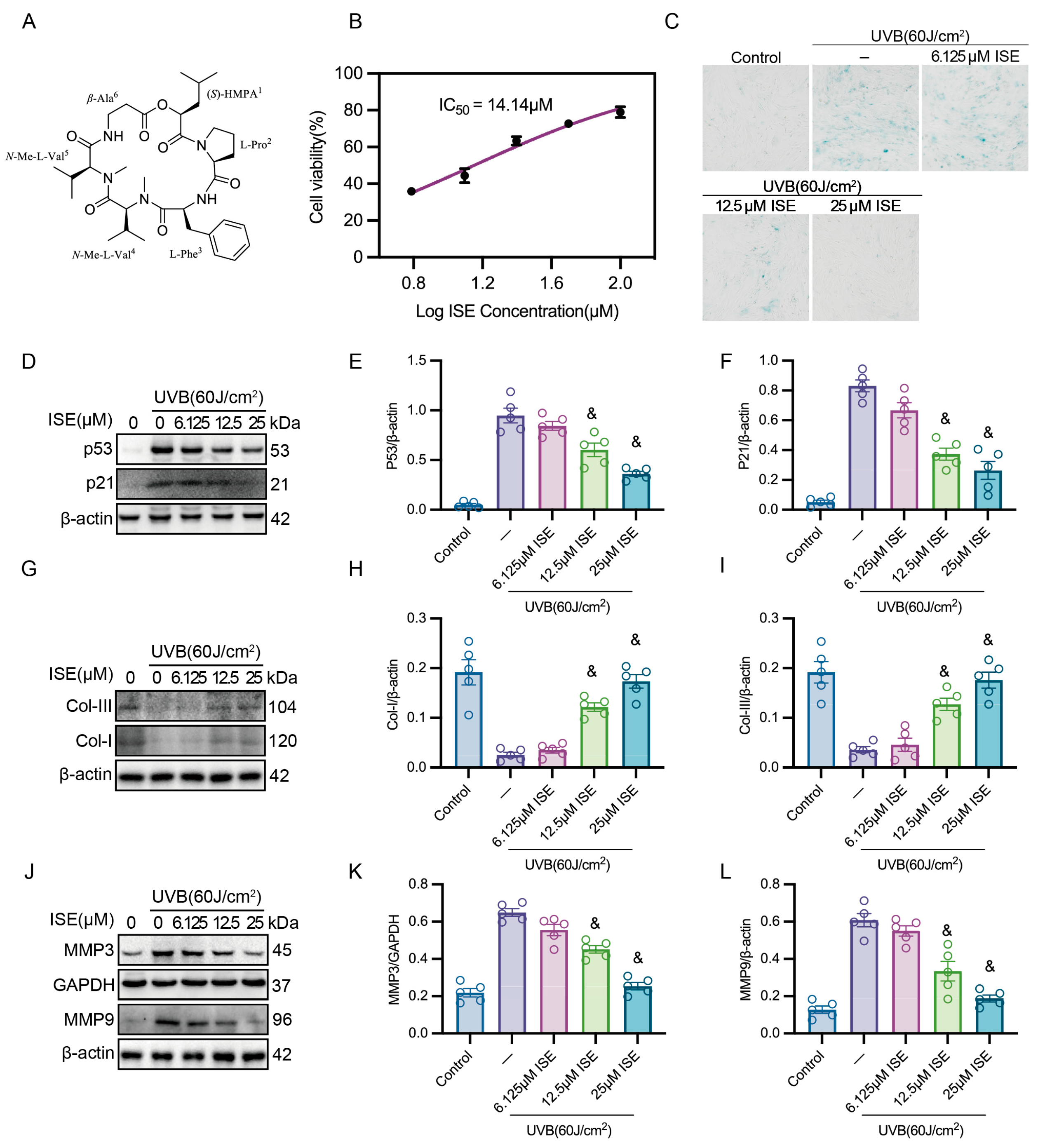
2.1. ISE Effectively Protected Fibroblasts Against UVB-Induced Photoaging In Vitro
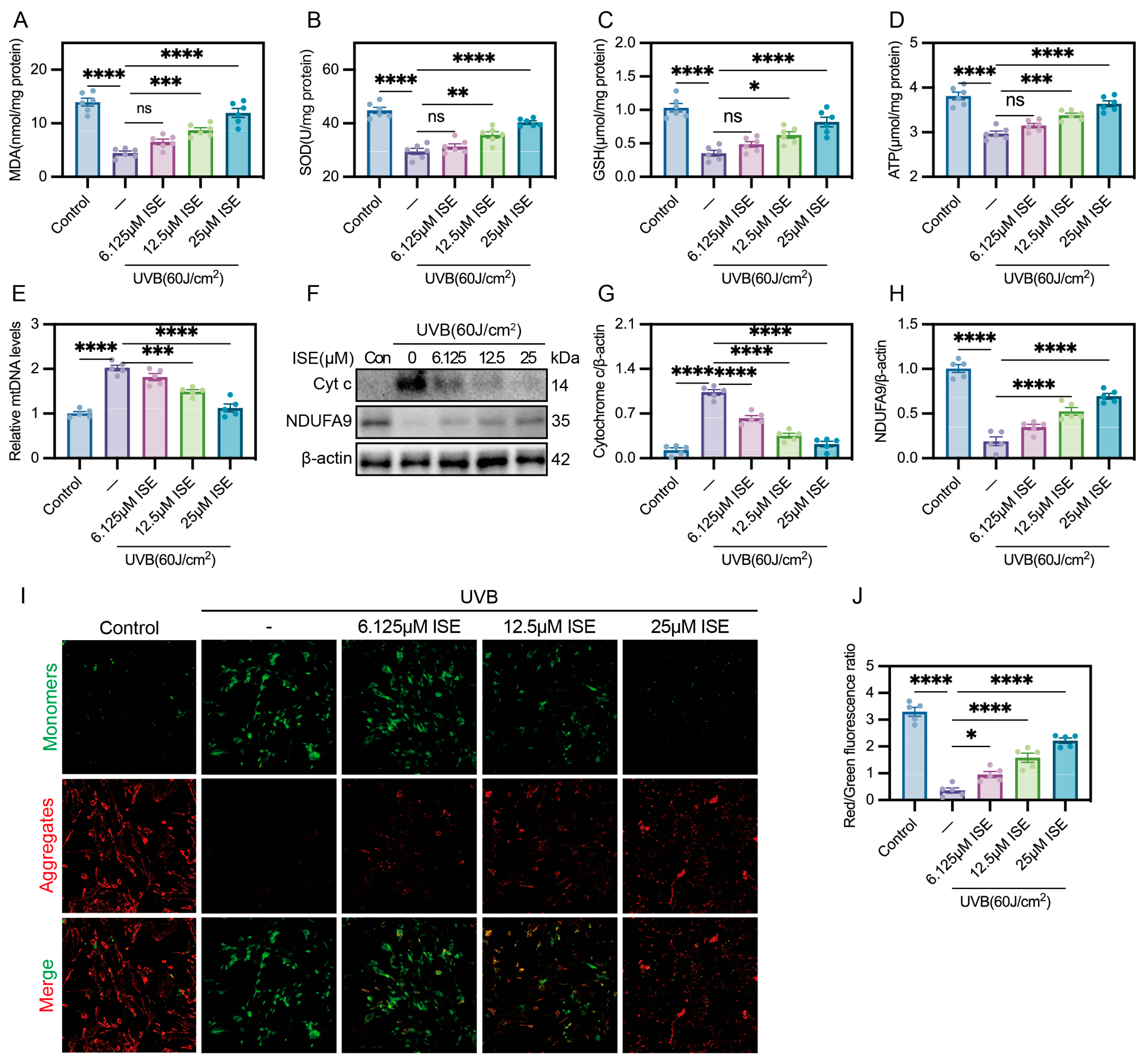
2.2. ISE Effectively Protected Fibroblasts Against UVB-Induced Mitochondrial Dysfunction In Vitro
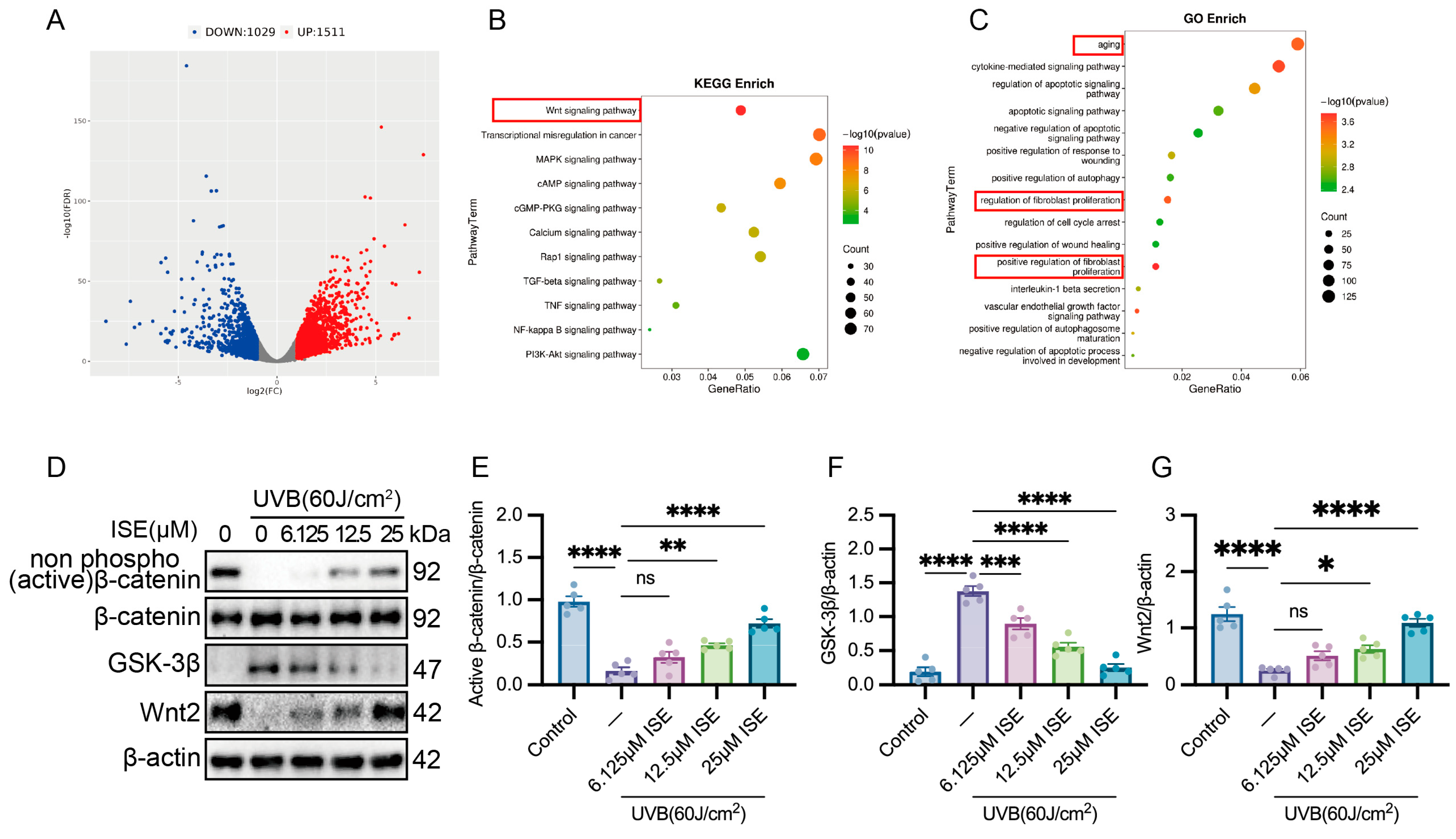
2.3. Wnt/β-Catenin Signaling Pathway Was Restored by ISE in Photoaged Fibroblasts
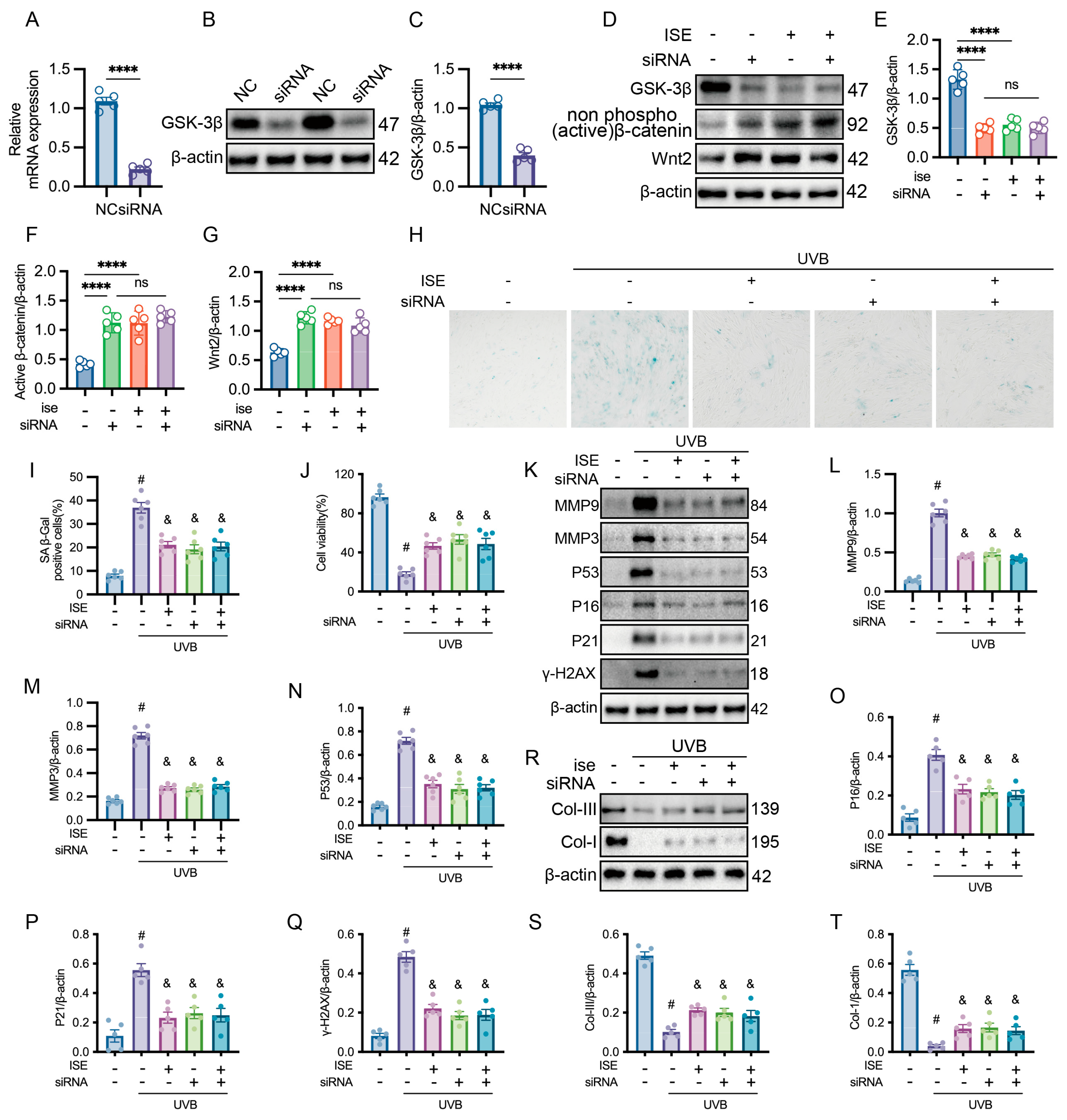
2.4. Anti-Photoaging Effect of ISE Depended on the Activation of Wnt/β-Catenin Signaling Pathway
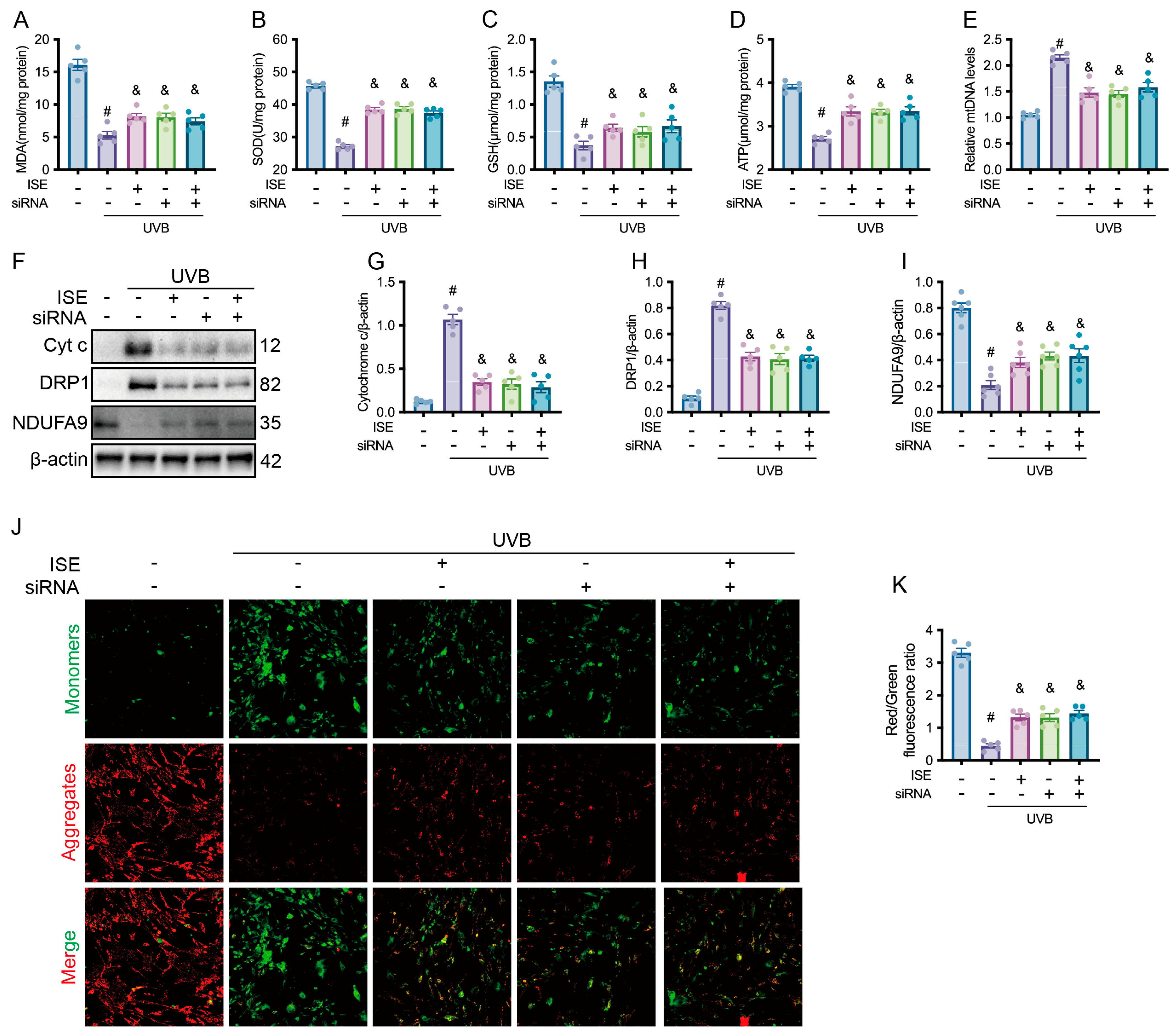
2.5. The Protective Effect of ISE Against UVB-Induced Mitochondrial Dysfunction Depended on Wnt/β-Catenin Signaling
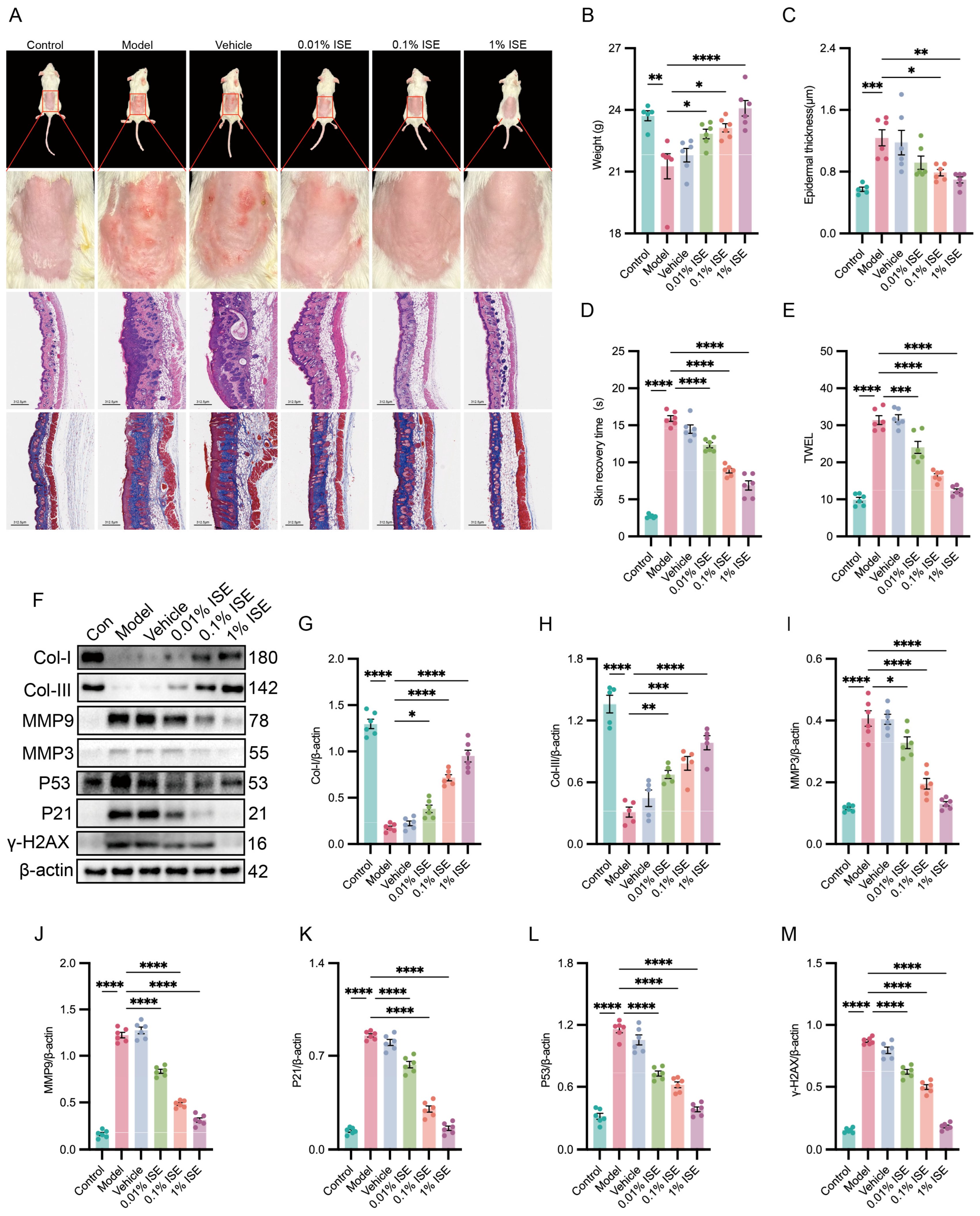
2.6. ISE Reduced UVB-Triggered Skin Photoaging In Vivo
3. Discussion
4. Materials and Methods
4.1. Chemical Structure of ISE
4.2. Preparations of ISE
4.3. Animals
4.4. UVB Irradiation and ISE Treatment
4.5. Histological Analaysis
4.6. Isolation and Culture of Mouse Dermal Fibroblasts
4.7. UVB-Induced Cellular Senescence Model
4.8. Detection of MDA, SOD and GSH
4.9. 3-(4,5-Dimethylthiazol-2-YL)-2,5-Diphenyltetrazolium Bromide (MTT) Assay
4.10. Synthesis of GSK-3β-siRNA
4.11. RT-PCR Assay
4.12. ATP Production Assay
4.13. JC-1 Staining
4.14. RNA-Seq
4.15. Western Blot
4.16. Statistical Analysis
5. Conclusions
Supplementary Materials
Author Contributions
Funding
Institutional Review Board Statement
Data Availability Statement
Conflicts of Interest
Abbreviations
| ISE | Isaridin E |
| ROS | Reactive oxygen species |
| GSH | Glutathione |
| SOD | Superoxide dismutase |
| mtDNA | Mitochondrial DNA |
| necrosis factor-alpha | TNF-α |
| HPLC | High-Performance Liquid Chromatography |
| GO | Gene Ontology |
References
- Salminen, A.; Kaarniranta, K.; Kauppinen, A. Photoaging: UV Radiation-Induced Inflammation and Immunosuppression Accelerate the Aging Process in the Skin. Inflamm. Res. 2022, 71, 817–831. [Google Scholar] [CrossRef]
- Plikus, M.V.; Wang, X.; Sinha, S.; Forte, E.; Thompson, S.M.; Herzog, E.L.; Driskell, R.R.; Rosenthal, N.; Biernaskie, J.; Horsley, V. Fibroblasts: Origins, Definitions, and Functions in Health and Disease. Cell 2021, 184, 3852–3872. [Google Scholar] [CrossRef] [PubMed]
- Wei, M.; He, X.; Liu, N.; Deng, H. Role of Reactive Oxygen Species in Ultraviolet-Induced Photodamage of the Skin. Cell Div. 2024, 19, 1. [Google Scholar] [CrossRef] [PubMed]
- Cadet, J.; Douki, T.; Ravanat, J.-L. Oxidatively Generated Damage to Cellular DNA by UVB and UVA Radiation. Photochem. Photobiol. 2015, 91, 140–155. [Google Scholar] [CrossRef] [PubMed]
- Mullenders, L.H.F. Solar UV Damage to Cellular DNA: From Mechanisms to Biological Effects. Photochem. Photobiol. Sci. 2018, 17, 1842–1852. [Google Scholar] [CrossRef]
- Marti, T.M.; Hefner, E.; Feeney, L.; Natale, V.; Cleaver, J.E. H2AX Phosphorylation within the G1 Phase after UV Irradiation Depends on Nucleotide Excision Repair and Not DNA Double-Strand Breaks. Proc. Natl. Acad. Sci. USA 2006, 103, 9891–9896. [Google Scholar] [CrossRef]
- Wang, B.; Han, J.; Elisseeff, J.H.; Demaria, M. The Senescence-Associated Secretory Phenotype and Its Physiological and Pathological Implications. Nat. Rev. Mol. Cell Biol. 2024, 25, 958–978. [Google Scholar] [CrossRef]
- Chin, T.; Lee, X.E.; Ng, P.Y.; Lee, Y.; Dreesen, O. The Role of Cellular Senescence in Skin Aging and Age-Related Skin Pathologies. Front. Physiol. 2023, 14, 1297637. [Google Scholar] [CrossRef]
- Li, X.; Li, C.; Zhang, W.; Wang, Y.; Qian, P.; Huang, H. Inflammation and Aging: Signaling Pathways and Intervention Therapies. Signal Transduct. Target. Ther. 2023, 8, 239. [Google Scholar] [CrossRef]
- Miwa, S.; Kashyap, S.; Chini, E.; von Zglinicki, T. Mitochondrial Dysfunction in Cell Senescence and Aging. J. Clin. Investig. 2022, 132, e158447. [Google Scholar] [CrossRef]
- Liu, J.; Xiao, Q.; Xiao, J.; Niu, C.; Li, Y.; Zhang, X.; Zhou, Z.; Shu, G.; Yin, G. Wnt/β-Catenin Signalling: Function, Biological Mechanisms, and Therapeutic Opportunities. Signal Transduct. Target. Ther. 2022, 7, 3. [Google Scholar] [CrossRef] [PubMed]
- Griffin, M.F.; Huber, J.; Evan, F.J.; Quarto, N.; Longaker, M.T. The Role of Wnt Signaling in Skin Fibrosis. Med. Res. Rev. 2022, 42, 615–628. [Google Scholar] [CrossRef] [PubMed]
- Jamieson, C.; Sharma, M.; Henderson, B.R. Regulation of β-Catenin Nuclear Dynamics by GSK-3β Involves a LEF-1 Positive Feedback Loop. Traffic 2011, 12, 983–999. [Google Scholar] [CrossRef] [PubMed]
- Quintanal-Villalonga, A.; Taniguchi, H.; Zhan, Y.A.; Hasan, M.M.; Chavan, S.S.; Meng, F.; Uddin, F.; Allaj, V.; Manoj, P.; Shah, N.S.; et al. Comprehensive Molecular Characterization of Lung Tumors Implicates AKT and MYC Signaling in Adenocarcinoma to Squamous Cell Transdifferentiation. J. Hematol. Oncol. 2021, 14, 170. [Google Scholar] [CrossRef]
- Jiang, M.; Wu, Z.; Wu, Q.; Yin, H.; Guo, H.; Yuan, S.; Liu, Z.; Chen, S.; Liu, L. Amphichoterpenoids A–C, Unprecedented Picoline-Derived Meroterpenoids from the Ascidian-Derived Fungus Amphichorda Felina SYSU-MS7908. Chin. Chem. Lett. 2021, 32, 1893–1896. [Google Scholar] [CrossRef]
- Pan, N.; Li, Z.-C.; Li, Z.-H.; Chen, S.-H.; Jiang, M.-H.; Yang, H.-Y.; Liu, Y.-S.; Hu, R.; Zeng, Y.-W.; Dai, L.-H.; et al. Antiplatelet and Antithrombotic Effects of Isaridin E Isolated from the Marine-Derived Fungus via Downregulating the PI3K/Akt Signaling Pathway. Mar. Drugs 2021, 20, 23. [Google Scholar] [CrossRef]
- Liu, Y.-S.; Chen, W.-L.; Zeng, Y.-W.; Li, Z.-H.; Zheng, H.-L.; Pan, N.; Zhao, L.-Y.; Wang, S.; Chen, S.-H.; Jiang, M.-H.; et al. Isaridin E Protects against Sepsis by Inhibiting Von Willebrand Factor-Induced Endothelial Hyperpermeability and Platelet-Endothelium Interaction. Mar. Drugs 2024, 22, 283. [Google Scholar] [CrossRef]
- Chung, Y.-M.; El-Shazly, M.; Chuang, D.-W.; Hwang, T.-L.; Asai, T.; Oshima, Y.; Ashour, M.L.; Wu, Y.-C.; Chang, F.-R. Suberoylanilide Hydroxamic Acid, a Histone Deacetylase Inhibitor, Induces the Production of Anti-Inflammatory Cyclodepsipeptides from Beauveria Felina. J. Nat. Prod. 2013, 76, 1260–1266. [Google Scholar] [CrossRef]
- Nalapareddy, K.; Nattamai, K.J.; Kumar, R.S.; Karns, R.; Wikenheiser-Brokamp, K.A.; Sampson, L.L.; Mahe, M.M.; Sundaram, N.; Yacyshyn, M.-B.; Yacyshyn, B.; et al. Canonical Wnt Signaling Ameliorates Aging of Intestinal Stem Cells. Cell Rep. 2017, 18, 2608–2621. [Google Scholar] [CrossRef]
- Nan, L.; Guo, P.; Hui, W.; Xia, F.; Yi, C. Recent Advances in Dermal Fibroblast Senescence and Skin Aging: Unraveling Mechanisms and Pioneering Therapeutic Strategies. Front. Pharmacol. 2025, 16, 1592596. [Google Scholar] [CrossRef]
- Casanova, A.; Wevers, A.; Navarro-Ledesma, S.; Pruimboom, L. Mitochondria: It Is All about Energy. Front. Physiol. 2023, 14, 1114231. [Google Scholar] [CrossRef] [PubMed]
- Xu, X.; Pang, Y.; Fan, X. Mitochondria in Oxidative Stress, Inflammation and Aging: From Mechanisms to Therapeutic Advances. Signal Transduct. Target. Ther. 2025, 10, 190. [Google Scholar] [CrossRef] [PubMed]
- Baure, J.; Izadi, A.; Suarez, V.; Giedzinski, E.; Cleaver, J.E.; Fike, J.R.; Limoli, C.L. Histone H2AX Phosphorylation in Response to Changes in Chromatin Structure Induced by Altered Osmolarity. Mutagenesis 2009, 24, 161–167. [Google Scholar] [CrossRef] [PubMed]
- Bruno, T.; Nicola, F.D.; Iezzi, S.; Lecis, D.; D’Angelo, C.; Padova, M.D.; Corbi, N.; Dimiziani, L.; Zannini, L.; Jekimovs, C.; et al. Che-1 Phosphorylation by ATM/ATR and Chk2 Kinases Activates P53 Transcription and the G2/M Checkpoint. Cancer Cell 2006, 10, 473–486. [Google Scholar] [CrossRef]
- Abuetabh, Y.; Wu, H.H.; Chai, C.; Al Yousef, H.; Persad, S.; Sergi, C.M.; Leng, R. DNA Damage Response Revisited: The P53 Family and Its Regulators Provide Endless Cancer Therapy Opportunities. Exp. Mol. Med. 2022, 54, 1658–1669. [Google Scholar] [CrossRef]
- Achanta, G.; Sasaki, R.; Feng, L.; Carew, J.S.; Lu, W.; Pelicano, H.; Keating, M.J.; Huang, P. Novel Role of P53 in Maintaining Mitochondrial Genetic Stability through Interaction with DNA Pol γ. EMBO J. 2005, 24, 3482–3492. [Google Scholar] [CrossRef]
- Hruby, A.J.; Higuchi-Sanabria, R. Mitochondrial Dysfunction in Cellular Senescence: A Bridge to Neurodegenerative Disease. npj Aging 2025, 11, 99. [Google Scholar] [CrossRef]
- Cantó, C.; Menzies, K.; Auwerx, J. NAD+ Metabolism and the Control of Energy Homeostasis—A Balancing Act between Mitochondria and the Nucleus. Cell Metab. 2015, 22, 31–53. [Google Scholar] [CrossRef]
- Croteau, D.L.; Fang, E.F.; Nilsen, H.; Bohr, V.A. NAD+ in DNA Repair and Mitochondrial Maintenance. Cell Cycle 2017, 16, 491–492. [Google Scholar] [CrossRef]
- Ye, X.; Zerlanko, B.; Kennedy, A.; Banumathy, G.; Zhang, R.; Adams, P.D. Downregulation of Wnt Signaling Is a Trigger for Formation of Facultative Heterochromatin and Onset of Cell Senescence in Primary Human Cells. Mol. Cell 2007, 27, 183–196. [Google Scholar] [CrossRef]
- Kostes, W.W.; Brafman, D.A. The Multifaceted Role of WNT Signaling in Alzheimer’s Disease Onset and Age-Related Progression. Cells 2023, 12, 1204. [Google Scholar] [CrossRef]
- Moon, N.R.; Kang, S.; Park, S. Consumption of Ellagic Acid and Dihydromyricetin Synergistically Protects against UV-B Induced Photoaging, Possibly by Activating Both TGF-Β1 and Wnt Signaling Pathways. J. Photochem. Photobiol. B 2018, 178, 92–100. [Google Scholar] [CrossRef]
- Hejazian, S.M.; Hejazian, S.S.; Mostafavi, S.M.; Hosseiniyan, S.M.; Montazersaheb, S.; Ardalan, M.; Zununi Vahed, S.; Barzegari, A. Targeting Cellular Senescence in Kidney Diseases and Aging: A Focus on Mesenchymal Stem Cells and Their Paracrine Factors. Cell Commun. Signal. 2024, 22, 609. [Google Scholar] [CrossRef]
- Xue, C.; Chu, Q.; Shi, Q.; Zeng, Y.; Lu, J.; Li, L. Wnt Signaling Pathways in Biology and Disease: Mechanisms and Therapeutic Advances. Signal Transduct. Target. Ther. 2025, 10, 106. [Google Scholar] [CrossRef]
- Zhang, M.; Tatar, M.; Gong, R. Glycogen Synthase Kinase 3β: A Key Player in Progressive Chronic Kidney Disease. Clin. Sci. 2025, 139, 605–625. [Google Scholar] [CrossRef]
- Hu, X.; Chen, M.; Tan, B.; Yang, H.; Li, S.; Li, R.; Zhang, X.; Long, F.; Huang, Y.; Duan, X. Vicenin-2 Reduces Inflammation and Apoptosis to Relieve Skin Photoaging via Suppressing GSK3β. J. Photochem. Photobiol. B 2025, 264, 113117. [Google Scholar] [CrossRef]
- Zhang, J.; Zhong, J.; Li, Y.; Zhou, Q.; Du, Z.; Lin, L.; Shu, P.; Jiang, L.; Zhou, W. A Marine-Derived Sterol, Ergosterol, Mitigates UVB-Induced Skin Photodamage via Dual Inhibition of NF-κB and MAPK Signaling. Mar. Drugs 2025, 23, 445. [Google Scholar] [CrossRef]



| Group | Strand Type | Sequence |
|---|---|---|
| GSK-3β | Sense | 5′-GGAGAGCCCAAUGUUUCAUTT-3′ |
| Antisense | 5′-AUGAAACAUUGGGCUCUCCTT-3′ | |
| Control | Sense | 5′-GCGCCAGUGGUACUUAAUATT-3′ |
| Antisense | 5′-UAUUAAGUACCACUGGCGCTT-3′ |
| Group | Strand Type | Sequence |
|---|---|---|
| GSK-3β | forward | 5′-AAAGCGGCTGTTAGTCACTGG-3′ |
| reverse | 5′-GACTTGGGAGGTATCCACATCC-3′ | |
| ND1 | forward | 5′-CTATGAATCCCCTTACCAATACCTC-3′ |
| reverse | 5′-AGGAGCCGCTTATTAGGAGGAC-3′ | |
| β-actin | forward | 5′-GAAATCGTGCGTGACATTA-3′ |
| reverse | 5′-ACTCATCGTACTCCTGCTTG-3′ |
| Primary Antibody | Manufacturer | Catalog | Dilution Ratio |
|---|---|---|---|
| Anti-P53 | ABclone (Woburn, MA, USA) | A25915 | 1:1000 |
| Anti-P21 | Servicebio | GB115313 | 1:500 |
| Anti-P16 | Abcam (Cambridge, UK) | ab211542 | 1:500 |
| Anti-γ-H2AX | ThermoFisher | A700053 | 1:1000 |
| Anti-Collagen III | Servicebio | GB111629 | 1:1000 |
| Anti-Collagen I | Servicebio | GB11022 | 1:1000 |
| Anti-MMP3 | Proteintech (Rosemont, IL, USA) | 66338-1-Ig | 1:1000 |
| Anti-MMP9 | ABclone | A26079 | 1:1000 |
| Anti-Cytochrome c | Proteintech | 10993-1-AP | 1:1000 |
| Anti-NDUFA9 | Proteintech | 20312-1-AP | 1:1000 |
| Anti-DRP1 | Proteintech | 12957-1-AP | 1:1000 |
| Anti-non phospho (active) β-catenin | CST (Danvers, MA, USA) | 4270S | 1:1000 |
| Anti-β-catenin | ABclone | A19657 | 1:1000 |
| Anti-GSK-3β | Servicebio | GB11099 | 1:1000 |
| Anti-Wnt2 | Proteintech | 27214-1-AP | 1:1000 |
| β-actin | Servicebio | GB15003 | 1:4000 |
Disclaimer/Publisher’s Note: The statements, opinions and data contained in all publications are solely those of the individual author(s) and contributor(s) and not of MDPI and/or the editor(s). MDPI and/or the editor(s) disclaim responsibility for any injury to people or property resulting from any ideas, methods, instructions or products referred to in the content. |
© 2026 by the authors. Licensee MDPI, Basel, Switzerland. This article is an open access article distributed under the terms and conditions of the Creative Commons Attribution (CC BY) license.
Share and Cite
Liu, Y.; Li, W.; Yang, Z.; Long, H.; Cai, S.; Sun, C.; Xiong, Y.; Zhang, Y.; Liu, Y.; Luo, G.; et al. Isaridin E Protects Against UVB-Induced Photoaging by Activating Wnt/β-Catenin Signaling Pathway and Alleviating Mitochondrial Dysfunction. Mar. Drugs 2026, 24, 112. https://doi.org/10.3390/md24030112
Liu Y, Li W, Yang Z, Long H, Cai S, Sun C, Xiong Y, Zhang Y, Liu Y, Luo G, et al. Isaridin E Protects Against UVB-Induced Photoaging by Activating Wnt/β-Catenin Signaling Pathway and Alleviating Mitochondrial Dysfunction. Marine Drugs. 2026; 24(3):112. https://doi.org/10.3390/md24030112
Chicago/Turabian StyleLiu, Yaosheng, Weizhen Li, Zeen Yang, Hui Long, Sufen Cai, Changjie Sun, Yu Xiong, Yunqi Zhang, Yumei Liu, Guangpu Luo, and et al. 2026. "Isaridin E Protects Against UVB-Induced Photoaging by Activating Wnt/β-Catenin Signaling Pathway and Alleviating Mitochondrial Dysfunction" Marine Drugs 24, no. 3: 112. https://doi.org/10.3390/md24030112
APA StyleLiu, Y., Li, W., Yang, Z., Long, H., Cai, S., Sun, C., Xiong, Y., Zhang, Y., Liu, Y., Luo, G., Chen, S., & Zhao, T. (2026). Isaridin E Protects Against UVB-Induced Photoaging by Activating Wnt/β-Catenin Signaling Pathway and Alleviating Mitochondrial Dysfunction. Marine Drugs, 24(3), 112. https://doi.org/10.3390/md24030112