
Astaxanthin from Haematococcus pluvialis and Chromochloris zofingiensis: Biosynthetic Pathways, Engineering Strategies, and Industrial Prospects


Abstract
1. Introduction
2. Astaxanthin: Structure, Functions, and Market Demand
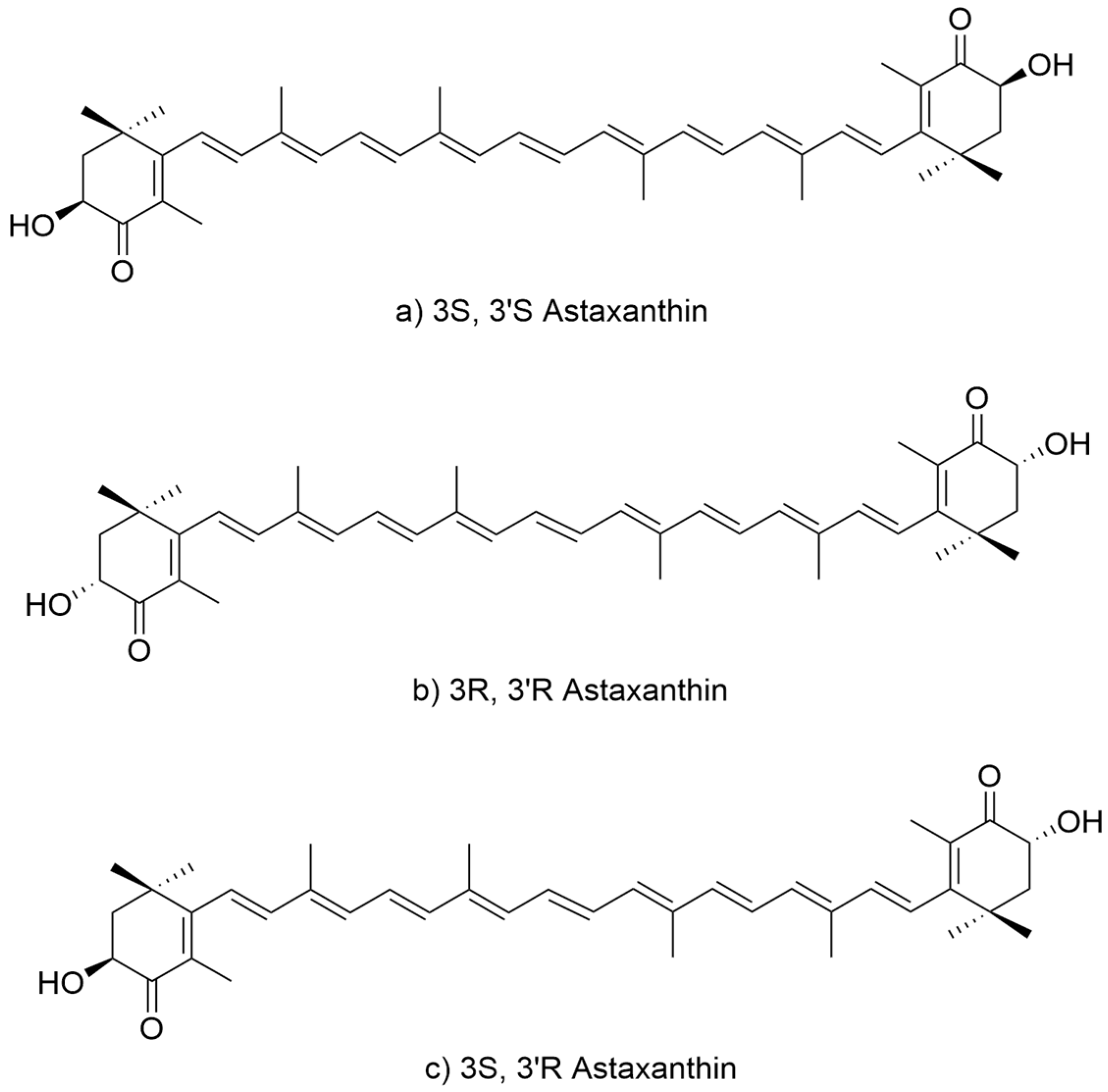
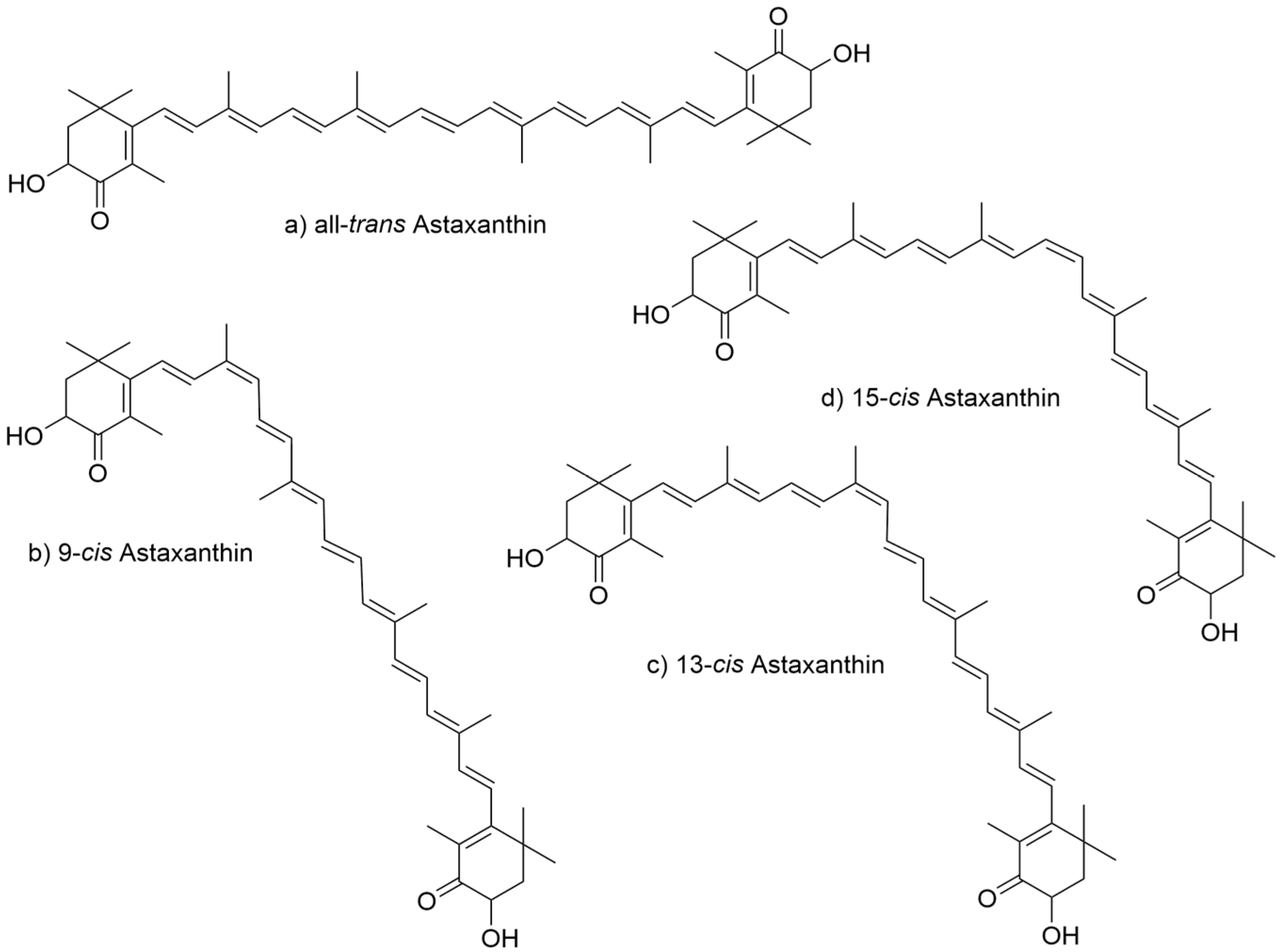
2.1. Chemical Structure and Stereoisomers
2.2. Bioactivity and Health Applications
2.3. Market Landscape and Production Technologies
3. Biosynthetic Pathways of Astaxanthin
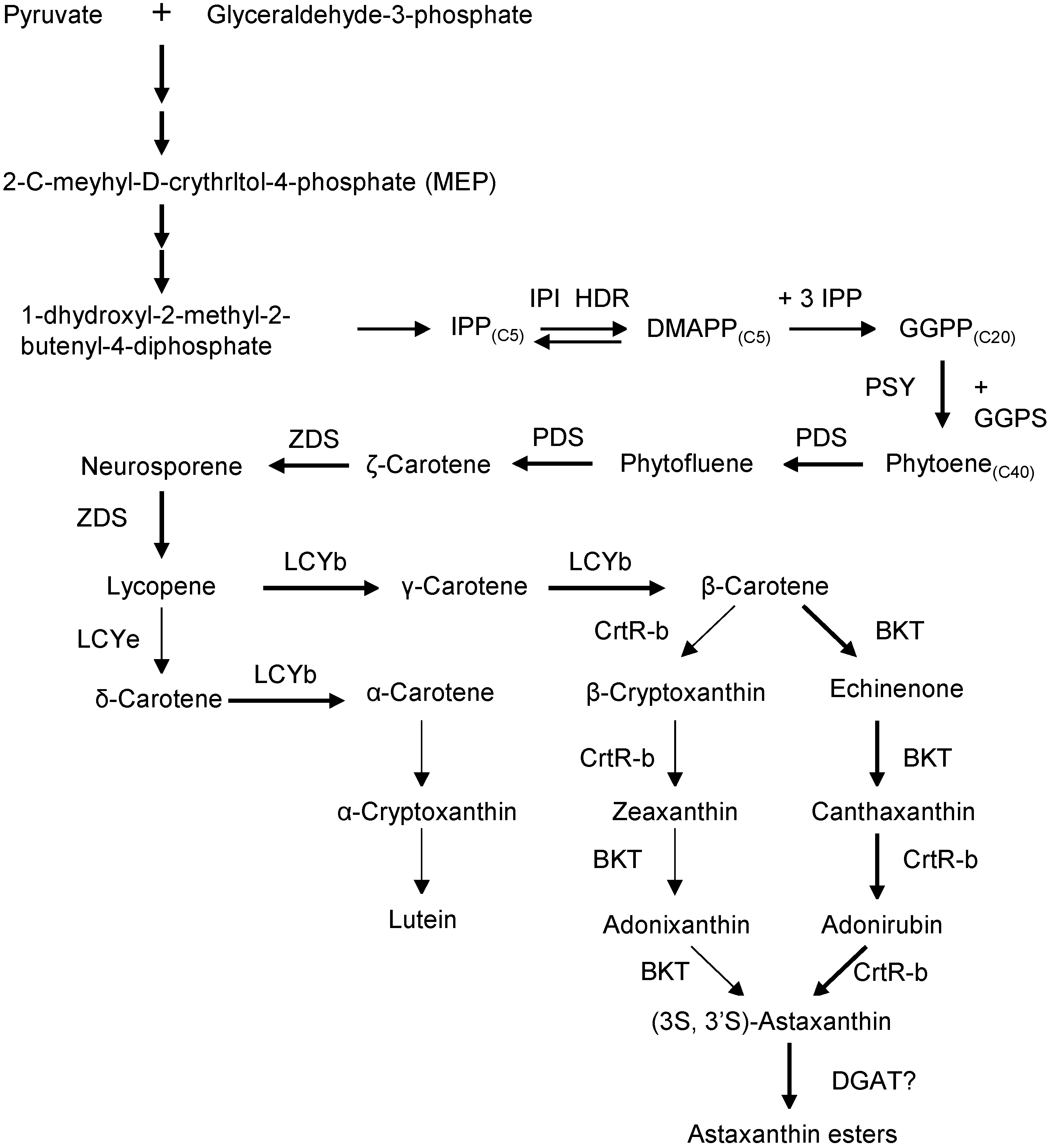
3.1. Haematococcus pluvialis
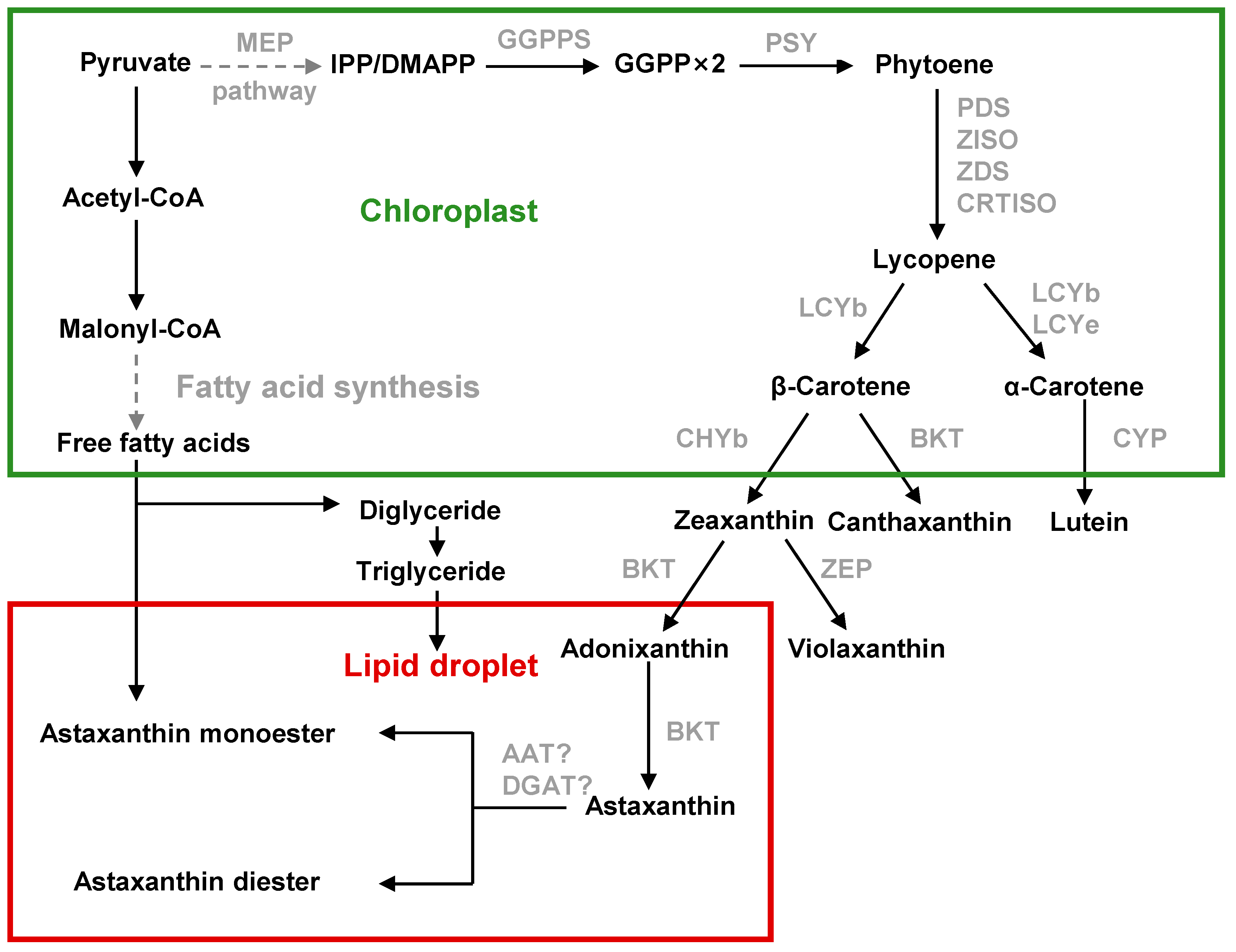
3.2. Chromochloris zofingiensis
3.3. Comparative Analysis
4. Factors Affecting Astaxanthin Accumulation
4.1. Light
4.2. Temperature
4.3. pH and Acidity/Alkalinity
4.4. Salinity and Osmotic Stress
4.5. Nutrient Availability and Starvation
5. Engineering and Bioprocess Strategies
5.1. Cultivation Systems
5.2. Cultivation Strategy

| Strategy Type | Specific Approach | Improvement | Reference |
|---|---|---|---|
| Cultivation optimization | Two-stage light + N-limitation (H. pluvialis) | 15.45 mg L−1 d−1 productivity; 3.9% DW astaxanthin | [68,69] |
| Light regime | Mixed blue:white (3:1) at 7000 lx | 91.8 mg L−1 astaxanthin yield | [6] |
| Two-stage heterotrophy–photoinduction | Glucose-fed fermentation → high-light induction (C. zofingiensis) | 6.26 mg g−1 cellular astaxanthin; 39 mg L−1 d−1 | [8] |
| Chemical stimulation | GA3 (2 mg L−1) + Fe2+ (0.5 g L−1) + corn steep liquor (0.1%) | 318 mg L−1 astaxanthin (4–5× increase) | [3] |
| Genetic engineering | Overexpression of PSY/BKT and down-regulation of LCYe | Enhanced carotenoid flux → higher astaxanthin biosynthesis | [31,72] |
| Lipid-droplet engineering | Co-expression of MLDP and DGAT1 | Improved esterification and storage capacity | [73,74] |
| Green extraction | Supercritical CO2 (+20% ethanol co-solvent) | >90% recovery, solvent-free product | [75,76] |
5.3. Metabolic and Genetic Engineering
5.4. Extraction and Downstream Processing
6. Industrial Potential and Techno-Economic Analysis
7. Technological Advancements and Patents in Astaxanthin Production
8. Conclusions
Author Contributions
Funding
Institutional Review Board Statement
Informed Consent Statement
Data Availability Statement
Acknowledgments
Conflicts of Interest
References
- Cao, Y.; Yang, L.; Qiao, X.; Xue, C.; Xu, J. Dietary astaxanthin: An excellent carotenoid with multiple health benefits. Crit. Rev. Food Sci. Nutr. 2023, 63, 3019–3045. [Google Scholar]
- Butler, T.O.; McDougall, G.J.; Campbell, R.; Stanley, M.S.; Day, J.G. Media Screening for Obtaining Haematococcus pluvialis Red Motile Macrozooids Rich in Astaxanthin and Fatty Acids. Biology 2018, 7, 2. [Google Scholar]
- Chen, Q.; Chen, Y.; Xu, Q.; Jin, H.; Hu, Q.; Han, D. Effective Two-Stage Heterotrophic Cultivation of the Unicellular Green Microalga Chromochloris zofingiensis Enabled Ultrahigh Biomass and Astaxanthin Production. Front. Bioeng. Biotech. 2022, 10, 834230. [Google Scholar] [CrossRef] [PubMed]
- Sun, L.; Li, Y.; Yang, A.; Xie, M.; Xiong, R.; Huang, C. Astaxanthin: A comprehensive review of synthesis, biological activities and applications. Food Chem. 2025, 488, 144847. [Google Scholar] [CrossRef]
- Ambati, R.R.; Phang, S.M.; Ravi, S.; Aswathanarayana, R.G. Astaxanthin: Sources, extraction, stability, biological activities and its commercial applications—A review. Mar. Drugs 2014, 12, 128–152. [Google Scholar] [CrossRef] [PubMed]
- Sun, H.; Kong, Q.; Geng, Z.; Duan, L.; Yang, M.; Guan, B. Enhancement of cell biomass and cell activity of astaxanthin-rich Haematococcus pluvialis. Bioresour. Technol. 2015, 186, 67–73. [Google Scholar] [CrossRef]
- Mutale-Joan, C.; El Arroussi, H. Biotechnological strategies overcoming limitations to H. pluvialis-derived astaxanthin production and Morocco’s potential. Crit. Rev. Food Sci. 2025, 65, 1404–1419. [Google Scholar]
- Wang, Y.; Zhao, W.; Wang, J.; Yang, S.; Liu, J.; Zheng, J.; Mou, H.; Sun, H. Enhancing astaxanthin production from Chromochloris zofingiensis via blue light and exogenous inducers in plate photobioreactors. Bioresour. Technol. 2025, 420, 132106. [Google Scholar] [CrossRef] [PubMed]
- Sun, H.; Ren, Y.; Lao, Y.; Li, X.; Chen, F. A novel fed-batch strategy enhances lipid and astaxanthin productivity without compromising biomass of Chromochloris zofingiensis. Bioresour. Technol. 2020, 308, 123306. [Google Scholar] [CrossRef]
- Zhang, Z.; Huang, J.J.; Sun, D.; Lee, Y.; Chen, F. Two-step cultivation for production of astaxanthin in Chlorella zofingiensis using a patented energy-free rotating floating photobioreactor (RFP). Bioresour. Technol. 2017, 224, 515–522. [Google Scholar]
- Zhou, D.; Fei, Z.; Liu, G.; Jiang, Y.; Jiang, W.; Lin, C.S.K.; Zhang, W.; Xin, F.; Jiang, M. The bioproduction of astaxanthin: A comprehensive review on the microbial synthesis and downstream extraction. Biotechnol. Adv. 2024, 74, 108392. [Google Scholar] [CrossRef]
- Jannel, S.; Caro, Y.; Bermudes, M.; Petit, T. Novel Insights into the Biotechnological Production of Haematococcus pluvialis-Derived Astaxanthin: Advances and Key Challenges to Allow Its Industrial Use as Novel Food Ingredient. J. Mar. Sci. Eng. 2020, 8, 789. [Google Scholar] [CrossRef]
- Bjorklund, G.; Gasmi, A.; Lenchyk, L.; Shanaida, M.; Zafar, S.; Mujawdiya, P.K.; Lysiuk, R.; Antonyak, H.; Noor, S.; Akram, M.; et al. The Role of Astaxanthin as a Nutraceutical in Health and Age-Related Conditions. Molecules 2022, 27, 7167. [Google Scholar] [CrossRef]
- Eren, B.; Tanriverdi, S.T.; Kose, F.A.; Ozer, O. Antioxidant properties evaluation of topical astaxanthin formulations as anti-aging products. J. Cosmet. Dermatol. 2019, 18, 242–250. [Google Scholar] [PubMed]
- Yan, Y.; Wu, Y.; Zhao, Y.; Yang, Y.; An, G.; Liu, Z.; Qi, D. A review on eye diseases induced by blue light: Pathology, model, active ingredients and mechanisms. Front. Pharmacol. 2025, 16, 1513406. [Google Scholar] [CrossRef] [PubMed]
- Ciaraldi, T.P.; Boeder, S.C.; Mudaliar, S.R.; Giovannetti, E.R.; Henry, R.R.; Pettus, J.H. Astaxanthin, a natural antioxidant, lowers cholesterol and markers of cardiovascular risk in individuals with prediabetes and dyslipidaemia. Diabetes Obes. Metab. 2023, 25, 1985–1994. [Google Scholar]
- Mohammadi, S.G.; Shafie, D.; Feizi, A.; Bagherniya, M.; Ahmadi, A.R.; Kafeshani, M. Impact of astaxanthin on oxidative markers, uric acid, and clinical symptoms in heart failure: A randomized clinical trial. BMC Cardiovasc. Disord. 2025, 25, 779. [Google Scholar] [CrossRef]
- Katagiri, M.; Satoh, A.; Tsuji, S.; Shirasawa, T. Effects of astaxanthin-rich Haematococcus pluvialis extract on cognitive function: A randomised, double-blind, placebo-controlled study. J. Clin. Biochem. Nutr. 2012, 51, 102–107. [Google Scholar]
- Cui, H.; Zhu, X.; Yu, X.; Li, S.; Wang, K.; Wei, L.; Li, R.; Qin, S. Advancements of astaxanthin production in Haematococcus pluvialis: Update insight and way forward. Biotechnol. Adv. 2025, 79, 108519. [Google Scholar] [CrossRef]
- Nair, A.; Ahirwar, A.; Singh, S.; Lodhi, R.; Lodhi, A.; Rai, A.; Jadhav, D.A.; Harish; Varjani, S.; Singh, G.; et al. Astaxanthin as a King of Ketocarotenoids: Structure, Synthesis, Accumulation, Bioavailability and Antioxidant Properties. Mar. Drugs 2023, 21, 176. [Google Scholar] [CrossRef]
- Panis, G.; Carreon, J.R. Commercial astaxanthin production derived by green alga Haematococcus pluvialis: A microalgae process model and a techno-economic assessment all through production line. Algal Res. 2016, 18, 175–190. [Google Scholar] [CrossRef]
- Ariyadasa, T.U.; Thevarajah, B.; Anthonio, R.A.D.P.; Nimarshana, P.; Wasath, W.A.J. From present to prosperity: Assessing the current status and envisioning opportunities in the industrial-scale cultivation of Haematococcus pluvialis for astaxanthin production. Phytochem. Rev. 2024, 23, 749–779. [Google Scholar] [CrossRef]
- Saikia, D.K.; Ahmed, R.; Chikkaputtaiah, C.; Velmurugan, N. Commercialization of Haematococcus-Based Products: Current Status and Future Forecast; Haematococcus; Springer: Berlin/Heidelberg, Germany, 2023; pp. 321–337. [Google Scholar]
- Ren, F.; Rao, C.; Xiang, Q.; Wen, J.; Dai, Q.; Li, H.; Liang, J.; Chen, Y.; Peng, C. Production Methods, Biological Activity and Potential Application Prospects of Astaxanthin. Foods 2025, 14, 2103. [Google Scholar] [CrossRef]
- Kayani, S.-I.; Rahman, S.-U.; Shen, Q.; Cui, Y.; Liu, W.; Hu, X.; Zhu, F.; Huo, S. Molecular approaches to enhance astaxanthin biosynthesis; future outlook: Engineering of transcription factors in Haematococcus pluvialis. Crit. Rev. Biotechnol. 2024, 44, 514–529. [Google Scholar] [CrossRef]
- Ren, Y.; Deng, J.; Huang, J.; Wu, Z.; Yi, L.; Bi, Y.; Chen, F. Using green alga Haematococcus pluvialis for astaxanthin and lipid co-production: Advances and outlook. Bioresour. Technol. 2021, 340, 125736. [Google Scholar] [CrossRef]
- Solovchenko, A.E. Recent breakthroughs in the biology of astaxanthin accumulation by microalgal cell. Photosynth. Res. 2015, 125, 437–449. [Google Scholar] [CrossRef]
- Chen, G.; Wang, B.; Han, D.; Sommerfeld, M.; Lu, Y.; Chen, F.; Hu, Q. Molecular mechanisms of the coordination between astaxanthin and fatty acid biosynthesis in Haematococcus pluvialis (Chlorophyceae). Plant J. 2015, 81, 95–107. [Google Scholar] [CrossRef]
- Cui, H.; Xu, W.; Zhu, X.; Zhao, C.; Cui, Y.; Ji, C.; Zhang, C.; Xue, J.; Qin, S.; Jia, X.; et al. Characterization of a Haematococcus pluvialis Diacylglycerol Acyltransferase 1 and Its Potential in Unsaturated Fatty Acid-Rich Triacylglycerol Production. Front. Plant Sci. 2021, 12, 771300. [Google Scholar] [CrossRef]
- Zhang, Y.; Ye, Y.; Ding, W.; Mao, X.; Li, Y.; Gerken, H.; Liu, J. Astaxanthin Is Ketolated from Zeaxanthin Independent of Fatty Acid Synthesis in Chromochloris zofingiensis. Plant Physiol. 2020, 183, 883–897. [Google Scholar] [CrossRef]
- Zhang, Y.; Ye, Y.; Bai, F.; Liu, J. The oleaginous astaxanthin-producing alga Chromochloris zofingiensis: Potential from production to an emerging model for studying lipid metabolism and carotenogenesis. Biotechnol. Biofuels 2021, 14, 119. [Google Scholar] [CrossRef] [PubMed]
- Shah, M.M.R.; Liang, Y.; Cheng, J.J.; Daroch, M. Astaxanthin-Producing Green Microalga Haematococcus pluvialis: From Single Cell to High Value Commercial Products. Front. Plant Sci. 2016, 7, 531. [Google Scholar] [CrossRef]
- Zhang, Y.; Shi, M.; Mao, X.; Kou, Y.; Liu, J. Time-resolved carotenoid profiling and transcriptomic analysis reveal mechanism of carotenogenesis for astaxanthin synthesis in the oleaginous green alga Chromochloris zofingiensis. Biotechnol. Biofuels 2019, 12, 287. [Google Scholar] [CrossRef] [PubMed]
- Gruenewald, K.; Hirschberg, J.; Hagen, C. Ketocarotenoid biosynthesis outside of plastids in the unicellular green alga Haematococcus pluvialis. J. Biol. Chem. 2001, 276, 6023–6029. [Google Scholar] [CrossRef]
- Liu, J.; Mao, X.; Zhou, W.; Guarnieri, M.T. Simultaneous production of triacylglycerol and high-value carotenoids by the astaxanthin-producing oleaginous green microalga Chlorella zofingiensis. Bioresour. Technol. 2016, 214, 319–327. [Google Scholar] [CrossRef] [PubMed]
- Mao, X.; Lao, Y.; Sun, H.; Li, X.; Yu, J.; Chen, F. Time-resolved transcriptome analysis during transitions of sulfur nutritional status provides insight into triacylglycerol (TAG) and astaxanthin accumulation in the green alga Chromochloris zofingiensis. Biotechnol. Biofuels 2020, 13, 128. [Google Scholar] [CrossRef] [PubMed]
- Liu, J.; Sun, Z.; Gerken, H.; Liu, Z.; Jiang, Y.; Chen, F. Chlorella zofingiensis as an Alternative Microalgal Producer of Astaxanthin: Biology and Industrial Potential. Mar. Drugs 2014, 12, 3487–3515. [Google Scholar] [CrossRef]
- Ye, Y.; Huang, J.-C. Defining the biosynthesis of ketocarotenoids in Chromochloris zofingiensis. Plant Diversity 2020, 42, 61–66. [Google Scholar] [CrossRef]
- Mao, X.; Zhang, Y.; Wang, X.; Liu, J. Novel insights into salinity-induced lipogenesis and carotenogenesis in the oleaginous astaxanthin-producing alga Chromochloris zofingiensis: A multi-omics study. Biotechnol. Biofuels 2020, 13, 73. [Google Scholar]
- Holtin, K.; Kuehnle, M.; Rehbein, J.; Schuler, P.; Nicholson, G.; Albert, K. Determination of astaxanthin and astaxanthin esters in the microalgae Haematococcus pluvialis by LC-(APCI)MS and characterization of predominant carotenoid isomers by NMR spectroscopy. Anal. Bioanal. Chem. 2009, 395, 1613–1622. [Google Scholar] [CrossRef]
- Ma, R.; Ma, X.; Qiao, Y.; Wang, B.; Ho, S.H.; Chen, J.; Xie, Y. Improved production of astaxanthin in heterotrophic Chromochloris zofingiensis through optimized culture conditions incorporating an efficient fed-batch strategy. Algal Res. 2025, 86, 103895. [Google Scholar] [CrossRef]
- Park, E.K.; Lee, C.G. Astaxanthin production by Haematococcus pluvialis under various light intensities and wavelengths. J. Microbiol. Biotechn. 2001, 11, 1024–1030. [Google Scholar]
- Sun, H.; Li, X.; Ren, Y.; Zhang, H.; Mao, X.; Lao, Y.; Wang, X.; Chen, F. Boost carbon availability and value in algal cell for economic deployment of biomass. Bioresour. Technol. 2020, 300, 122640. [Google Scholar] [CrossRef]
- Sun, H.; Ren, Y.; Fan, Y.; Lu, X.; Zhao, W.; Chen, F. Systematic metabolic tools reveal underlying mechanism of product biosynthesis in Chromochloris zofingiensis. Bioresour. Technol. 2021, 337, 125406. [Google Scholar] [CrossRef]
- Wongsnansilp, T.; Khamcharoen, M. The Effects of Red–Blue Light on the Growth and Astaxanthin Production of a Haematococcus pluvialis Strain Isolated from Southern Thailand. Appl. Microbiol. 2024, 4, 1745–1756. [Google Scholar] [CrossRef]
- Zhang, Z.; Han, T.; Sui, J.; Wang, H. Cryptochrome-mediated blue-light signal contributes to carotenoids biosynthesis in microalgae. Front. Microbiol. 2022, 13, 1083387. [Google Scholar] [CrossRef]
- Chen, J.H.; Liu, L.; Wei, D. Enhanced production of astaxanthin by Chromochloris zofingiensis in a microplate-based culture system under high light irradiation. Bioresour. Technol. 2017, 245, 518–529. [Google Scholar] [CrossRef]
- Giannelli, L.; Yamada, H.; Katsuda, T.; Yamaji, H. Effects of temperature on the astaxanthin productivity and light harvesting characteristics of the green alga Haematococcus pluvialis. J. Biosci. Bioeng. 2015, 119, 345–350. [Google Scholar] [CrossRef] [PubMed]
- Del Campo, J.; Rodriguez, H.; Moreno, J.; Vargas, M.; Rivas, J.; Guerrero, M. Accumulation of astaxanthin and lutein in Chlorella zofingiensis (Chlorophyta). Appl. Microbiol Biot. 2004, 64, 848–854. [Google Scholar] [CrossRef] [PubMed]
- Yang, S.; Zhao, W.; Mou, H.; Sun, H. Improving astaxanthin production of Haematococcus pluvialis by an efficient fed-batch strategy in a photobioreactor. Algal Res. 2021, 60, 102539. [Google Scholar] [CrossRef]
- Hou, Y.; Guo, Z.; Liu, Z.; Yan, S.; Cui, M.; Chen, F.; Wang, W.; Yu, L.; Zhao, L. Enhancement of astaxanthin accumulation via energy reassignment by removing the flagella of Haematococcus pluvialis. Bioresour. Bioprocess. 2024, 11, 78. [Google Scholar] [CrossRef] [PubMed]
- Sun, H.; Ren, Y.; Mao, X.; Li, X.; Zhang, H.; Lao, Y.; Chen, F. Harnessing C/N balance of Chromochloris zofingiensis to overcome the potential conflict in microalgal production. Commun. Biol. 2020, 3, 186. [Google Scholar] [CrossRef]
- Bleisch, R.; Ihadjadene, Y.; Torrisi, A.; Walther, T.; Mühlstädt, G.; Steingröwer, J.; Streif, S.; Krujatz, F. Physiological Adaptation of Chromochloris zofingiensis in Three-Phased Cultivation Performed in a Pilot-Scale Photobioreactor. Life 2025, 15, 648. [Google Scholar] [CrossRef] [PubMed]
- Sarada, R.; Tripathi, U.; Ravishankar, G.A. Influence of stress on astaxanthin production in Haematococcus pluvialis grown under different culture conditions. Process Biochem. 2002, 37, 623–627. [Google Scholar] [CrossRef]
- Gao, Z.; Meng, C.; Chen, Y.C.; Ahmed, F.; Mangott, A.; Schenk, P.M.; Li, Y. Comparison of astaxanthin accumulation and biosynthesis gene expression of three Haematococcus pluvialis strains upon salinity stress. J. Appl. Phycol. 2015, 27, 1853–1860. [Google Scholar] [CrossRef]
- Sarada, R.; Bhattacharya, S.; Ravishankar, G. Optimization of culture conditions for growth of the green alga Haematococcus pluvialis. World J. Microb. Biot. 2002, 18, 517–521. [Google Scholar] [CrossRef]
- Yuan, Y.; Zhao, T.; Gao, W.; Ye, W.; Chen, Y.; Sun, D.; Zhang, Z. Reactive oxygen species derived from NADPH oxidase as signaling molecules regulate fatty acids and astaxanthin accumulation in Chromochloris zofingiensis. Front. Microbiol. 2024, 15, 1387222. [Google Scholar] [CrossRef]
- Ren, Y.; Sun, H.; Deng, J.; Huang, J.; Chen, F. Carotenoid Production from Microalgae: Biosynthesis, Salinity Responses and Novel Biotechnologies. Mar. Drugs 2021, 19, 713. [Google Scholar] [CrossRef]
- Xing, H.; Sun, X.; Xu, N.; Su, X.; Qin, Y.; Zhang, L.; Liu, K.; Li, M.; Hu, C. The combination of uridine and nitrogen-deprivation promotes the efficient formation of astaxanthin-rich motile cells in Haematococcus pluvialis. Bioresour. Technol. 2024, 393, 130150. [Google Scholar] [CrossRef]
- Boussiba, S.; Bing, W.; Yuan, J.P.; Zarka, A.; Chen, F. Changes in pigments profile in the green alga Haeamtococcus pluvialis exposed to environmental stresses. Biotechnol. Lett. 1999, 21, 601–604. [Google Scholar] [CrossRef]
- Zhang, Z.; Sun, D.; Mao, X.; Liu, J.; Chen, F. The crosstalk between astaxanthin, fatty acids and reactive oxygen species in heterotrophic Chlorella zofingiensis. Algal Res. 2016, 19, 178–183. [Google Scholar] [CrossRef]
- Wen, X.; Wang, Z.; Ding, Y.; Geng, Y.; Li, Y. Enhancing the production of astaxanthin by mixotrophic cultivation of Haematococcus pluvialis in open raceway ponds. Aquacul. Int. 2020, 28, 625–638. [Google Scholar] [CrossRef]
- Huo, S.; Wang, Z.; Zhu, S.; Zhou, W.; Dong, R.; Yuan, Z. Cultivation of Chlorella zofingiensis in bench-scale outdoor ponds by regulation of pH using dairy wastewater in winter, South China. Bioresour. Technol. 2012, 121, 76–82. [Google Scholar] [CrossRef]
- Pawar, S. Effectiveness mapping of open raceway pond and tubular photobioreactors for sustainable production of microalgae biofuel. Renew. Sust. Energ. Rev. 2016, 62, 640–653. [Google Scholar] [CrossRef]
- Li, Q.; You, J.; Qiao, T.; Zhong, D.B.; Yu, X. Sodium chloride stimulates the biomass and astaxanthin production by Haematococcus pluvialis via a two-stage cultivation strategy. Bioresour. Technol. 2022, 344, 126214. [Google Scholar] [CrossRef]
- Wood, E.E.; Ross, M.E.; Jubeau, S.; Montalescot, V.; MacKechnie, K.; Marchington, R.E.; Davey, M.P.; McNeill, S.; Hamilton, C.; Stanley, M.S. From green to orange: The change in biochemical composition of phototrophic-mixotrophic Chromochloris zofingiensis in pilot-scale photobioreactors. Algal Res. 2023, 75, 103238. [Google Scholar] [CrossRef]
- Lu, X.; Zhao, W.; Wang, J.; He, Y.; Yang, S.; Sun, H. A comprehensive review on the heterotrophic production of bioactive compounds by microalgae. World J. Microb. Biot. 2024, 40, 210. [Google Scholar] [CrossRef] [PubMed]
- Samhat, K.; Kazbar, A.; Takache, H.; Goncalves, O.; Drouin, D.; Ismail, A.; Pruvost, J. Optimization of continuous astaxanthin production by Haematococcus pluvialis in nitrogen-limited photobioreactor. Algal Res. 2024, 80, 103529. [Google Scholar] [CrossRef]
- Lu, Z.; Zheng, L.; Liu, J.; Dai, J.; Song, L. A novel fed-batch strategy to boost cyst cells production based on the understanding of intracellular carbon and nitrogen metabolism in Haematococcus pluvialis. Bioresour. Technol. 2019, 289, 121744. [Google Scholar] [CrossRef]
- Sun, N.; Wang, Y.; Li, Y.T.; Huang, J.C.; Chen, F. Sugar-based growth, astaxanthin accumulation and carotenogenic transcription of heterotrophic Chlorella zofingiensis (Chlorophyta). Process Biochem. 2008, 43, 1288–1292. [Google Scholar] [CrossRef]
- Wang, Y.; Wang, J.; Yang, S.; Liang, Q.; Gu, Z.; Wang, Y.; Mou, H.; Sun, H. Selecting a preculture strategy for improving biomass and astaxanthin productivity of Chromochloris zofingiensis. Appl. Microbiol. Biot. 2024, 108, 117. [Google Scholar] [CrossRef]
- Acheampong, A.; Li, L.; Elsherbiny, S.M.; Wu, Y.; Swallah, M.S.; Bondzie-Quaye, P.; Huang, Q. A crosswalk on the genetic and conventional strategies for enhancing astaxanthin production in Haematococcus pluvialis. Crit. Rev. Biotechnol. 2024, 44, 1018–1039. [Google Scholar] [CrossRef]
- Wang, X.; Wei, H.; Mao, X.; Liu, J. Proteomics Analysis of Lipid Droplets from the Oleaginous Alga Chromochloris zofingiensis Reveals Novel Proteins for Lipid Metabolism. Genom. Proteom. Bioinf. 2019, 17, 260–272. [Google Scholar] [CrossRef]
- Li, M.; Zhou, P.; Chen, M.; Yu, H.; Ye, L. Spatiotemporal Regulation of Astaxanthin Synthesis in S. cerevisiae. ACS Synth. Biol. 2022, 11, 2636–2649. [Google Scholar] [CrossRef]
- Molino, A.; Mehariya, S.; Iovine, A.; Larocca, V.; Di Sanzo, G.; Martino, M.; Casella, P.; Chianese, S.; Musmarra, D. Extraction of Astaxanthin and Lutein from Microalga Haematococcus pluvialis in the Red Phase Using CO2 Supercritical Fluid Extraction Technology with Ethanol as Co-Solvent. Mar. Drugs 2018, 16, 432. [Google Scholar] [CrossRef] [PubMed]
- Cheng, X.; Qi, Z.; Burdyny, T.; Kong, T.; Sinton, D. Low pressure supercritical CO2 extraction of astaxanthin from Haematococcus pluvialis demonstrated on a microfluidic chip. Bioresour. Technol. 2018, 250, 481–485. [Google Scholar] [CrossRef]
- Kang, N.K.; Baek, K.; Koh, H.G.; Atkinson, C.A.; Ort, D.R.; Jin, Y.S. Microalgal metabolic engineering strategies for the production of fuels and chemicals. Bioresour. Technol. 2022, 345, 126529. [Google Scholar] [CrossRef]
- Liu, J.; Sun, Z.; Gerken, H.; Huang, J.; Jiang, Y.; Chen, F. Genetic engineering of the green alga Chlorella zofingiensis: A modified norflurazon-resistant phytoene desaturase gene as a dominant selectable marker. Appl. Microbiol. Biot. 2014, 98, 5069–5079. [Google Scholar] [CrossRef]
- Steinbrenner, J.; Sandmann, G. Transformation of the green alga Haematococcus pluvialis with a phytoene desaturase for accelerated astaxanthin biosynthesis. Appl. Environ. Microb. 2006, 72, 7477–7484. [Google Scholar] [CrossRef] [PubMed]
- Liu, J.; Gerken, H.; Huang, J.; Chen, F. Engineering of an endogenous phytoene desaturase gene as a dominant selectable marker for Chlamydomonas reinhardtii transformation and enhanced biosynthesis of carotenoids. Process Biochem. 2013, 48, 788–795. [Google Scholar] [CrossRef]
- Perozeni, F.; Angelini, M.; Ballottari, M.; Cazzaniga, S. Engineered Chlamydomonas reinhardtii Strains for Enhanced Astaxanthin Production. Life 2025, 15, 813. [Google Scholar] [CrossRef]
- Cordero, B.F.; Couso, I.; Leon, R.; Rodriguez, H.; Angeles Vargas, M. Isolation and Characterization of a Lycopene ε-Cyclase Gene of Chlorella (Chromochloris) zofingiensis. Regulation of the Carotenogenic Pathway by Nitrogen and Light. Mar. Drugs 2012, 10, 2069–2088. [Google Scholar] [CrossRef]
- Cordero, B.F.; Couso, I.; Leon, R.; Rodriguez, H.; Angeles Vargas, M. Enhancement of carotenoids biosynthesis in Chlamydomonas reinhardtii by nuclear transformation using a phytoene synthase gene isolated from Chlorella zofingiensis. Appl. Microbiol. Biot. 2011, 91, 341–351. [Google Scholar] [CrossRef]
- Ma, Y.; Li, J.; Huang, S.; Stephanopoulos, G. Targeting pathway expression to subcellular organelles improves astaxanthin synthesis in Yarrowia lipolytica. Metab. Eng. 2021, 68, 152–161. [Google Scholar] [CrossRef]
- Gruenewald, K.; Hagen, C. beta-carotene is the intermediate exported from the chloroplast during accumulation of secondary carotenoids in Haematococcus pluvialis. J. Appl. Phycol. 2001, 13, 89–93. [Google Scholar] [CrossRef]
- Aditi; Bhardwaj, R.; Yadav, A.; Swapnil, P.; Meena, M. Characterization of microalgal beta-carotene and astaxanthin: Exploring their health-promoting properties under the effect of salinity and light intensity. Biotechnol. Biof. Biop. 2025, 18, 18. [Google Scholar]
- Jaryal, S.; Sharma, A.K.; Yadav Lamba, B.; PATEL, A. A Comprehensive Review on Microalgae based Astaxanthin: Bioprocess Optimization, Technological Barriers, Industrial Applications and Future Roadmap. Front. Mar. Sci. 2025, 12, 1644644. [Google Scholar] [CrossRef]
- Kim, B.; Lee, S.Y.; Narasimhan, A.L.; Kim, S.; Oh, Y.K. Cell disruption and astaxanthin extraction from Haematococcus pluvialis: Recent advances. Bioresour. Technol. 2022, 343, 126124. [Google Scholar] [CrossRef]
- Koopmann, I.K.; Moller, S.; Elle, C.; Hindersin, S.; Kramer, A.; Labes, A. Optimization of Astaxanthin Recovery in the Downstream Process of Haematococcus pluvialis. Foods 2022, 11, 1352. [Google Scholar] [CrossRef] [PubMed]
- Zheng, S.; Zhang, G.; Wang, H.; Long, Z.; Wei, T.; Li, Q. Progress in ultrasound-assisted extraction of the value-added products from microorganisms. World J. Microb. Biot. 2021, 37, 71. [Google Scholar] [CrossRef]
- Khoo, K.S.; Chew, K.W.; Yew, G.Y.; Manickam, S.; Ooi, C.W.; Show, P.L. Integrated ultrasound-assisted liquid biphasic flotation for efficient extraction of astaxanthin from Haematococcus pluvialis. Ultrason. Sonochem. 2020, 67, 105052. [Google Scholar] [CrossRef]
- Zhao, X.; Zhang, X.; Liu, H.; Zhu, H.; Zhu, Y. Enzyme-assisted extraction of astaxanthin from Haematococcus pluvialis and its stability and antioxidant activity. Food Sci. Biotechnol. 2019, 28, 1637–1647. [Google Scholar] [CrossRef]
- Panagiotakopoulos, I.; Nasopoulou, C. Extraction Methods, Encapsulation Techniques, and Health Benefits of Astaxanthin. Sustainability 2024, 16, 10859. [Google Scholar] [CrossRef]
- Shen, X.; Fang, T.; Zheng, J.; Guo, M. Physicochemical Properties and Cellular Uptake of Astaxanthin-Loaded Emulsions. Molecules 2019, 24, 727. [Google Scholar] [CrossRef]
- Radic, K.; Barbosa, A.I.; Reis, S.; Marijan, M.; Lima, S.A.C.; Cepo, D.V. Preparation of astaxanthin/zeaxanthin-loaded nanostructured lipid carriers for enhanced bioavailability: Characterization-, stability-and permeability study. Acta Pharmaceut. 2023, 73, 581–599. [Google Scholar] [CrossRef]
- Martinez-Alvarez, O.; Calvo, M.M.; Gomez-Estaca, J. Recent Advances in Astaxanthin Micro/Nanoencapsulation to Improve Its Stability and Functionality as a Food Ingredient. Mar. Drugs 2020, 18, 406. [Google Scholar] [CrossRef]
- Yang, S.; Fan, Y.; Cao, Y.; Wang, Y.; Mou, H.; Sun, H. Technological readiness of commercial microalgae species for foods. Crit. Rev. Food Sci. Nutr. 2024, 64, 7993–8017. [Google Scholar] [CrossRef]
- Li, J.; Zhu, D.; Niu, J.; Shen, S.; Wang, G. An economic assessment of astaxanthin production by large scale cultivation of Haematococcus pluvialis. Biotechnol. Adv. 2011, 29, 568–574. [Google Scholar] [CrossRef]
- Wood, E.E.; Ross, M.E.; Jubeau, S.; Montalescot, V.; Stanley, M.S. Progress towards a targeted biorefinery of Chromochloris zofingiensis: A review. Biomass Convers. Bior. 2024, 14, 8127–8152. [Google Scholar] [CrossRef]
- Nishshanka, G.K.S.H.; Liyanaarachchi, V.C.; Premaratne, M.; Nimarshana, P.H.V.; Ariyadasa, T.U.; Kornaros, M. Wastewater-based microalgal biorefineries for the production of astaxanthin and co-products: Current status, challenges and future perspectives. Bioresour. Technol. 2021, 342, 126018. [Google Scholar] [CrossRef] [PubMed]
- Zhao, W.; Sun, H.; Ren, Y.; Wu, T.; He, Y.; Chen, F. Chlorella zofingiensis as a promising strain in wastewater treatment. Bioresour. Technol. 2018, 268, 286–291. [Google Scholar] [CrossRef] [PubMed]
- Wang, J.; Wang, Y.; Xiao, M.; Liang, Q.; Yang, S.; Liu, J.; Zhang, Y.; Mou, H.; Sun, H. Upcycling food waste into biorefinery production by microalgae. Chem. Eng. J. 2024, 484, 149532. [Google Scholar] [CrossRef]
- Xiong, X.; Liu, W.; Jiang, J.; Xu, L.; Huang, L.; Cao, J. Efficient genome editing of Brassica campestris based on the CRISPR/Cas9 system. Mol. Genet. Genom. 2019, 294, 1251–1261. [Google Scholar] [CrossRef] [PubMed]
- Yuan, G.; Xu, X.; Zhang, W.; Zhang, W.; Cui, Y.; Qin, S.; Liu, T. Biolistic Transformation of Haematococcus pluvialis With Constructs Based on the Flanking Sequences of Its Endogenous Alpha Tubulin Gene. Front. Microbiol. 2019, 10, 1749. [Google Scholar] [CrossRef]
- Bian, C.; Liu, C.; Zhang, G.; Tao, M.; Huang, D.; Wang, C.; Lou, S.; Li, H.; Shi, Q.; Hu, Z. A chromosome-level genome assembly for the astaxanthin-producing microalga Haematococcus pluvialis. Sci. Data 2023, 10, 511. [Google Scholar] [CrossRef]
- Roth, M.S.; Cokus, S.J.; Gallaher, S.D.; Walter, A.; Lopez, D.; Erickson, E.; Endelman, B.; Westcott, D.; Larabell, C.A.; Merchant, S.S.; et al. Chromosome-level genome assembly and transcriptome of the green alga Chromochloris zofingiensis illuminates astaxanthin production. Proc. Natl. Acad. Sci. USA 2017, 114, 4296–4305. [Google Scholar] [CrossRef] [PubMed]


| Aspect | H. pluvialis | C. zofingiensis |
|---|---|---|
| MEP pathway regulation | MEP genes are upregulated under stress, enhancing precursor supply | MEP genes show no stress-induced upregulation |
| Astaxanthin biosynthesis route | Uses both canthaxanthin hydroxylation and zeaxanthin ketolation | Relies only on zeaxanthin ketolation; cannot convert canthaxanthin |
| BKT/CHYb enzyme activity | High efficiency with minimal intermediate buildup | Limited activity; accumulates intermediates |
| Carbon flux and yield | Strong carotenoid flux; astaxanthin up to 3–5% DW | Weaker flux; astaxanthin typically 0.1–0.5% DW |
| Competing branches | No keto-lutein; violaxanthin synthesis suppressed under stress | Produces keto-lutein; zeaxanthin diverted to violaxanthin |
| Esterification and storage | Astaxanthin esterified in lipid droplets; depends on TAG synthesis | Storage less TAG-dependent; esterification shared with other pigments |
| Parameter | H. pluvialis | C. zofingiensis |
|---|---|---|
| Growth mode | Obligately photoautotrophic | Photoautotrophic, mixotrophic, or heterotrophic |
| Maximum biomass concentration | 5–10 g L−1 | 100–220 g L−1 (heterotrophic fed-batch) |
| Maximum astaxanthin content (cellular) | 3–5% DW | 0.1–0.5% DW |
| Cultivation cycle | 10–15 days | 5–8 days |
| Optimal temperature | 20–25 °C (growth arrest > 30 °C) | 25–27 °C (tolerates mild heat) |
| Optimal pH | 7.0–7.5 | 6.8–7.0 |
| Inductive stresses | High light, N/P starvation, salinity | Nitrogen starvation + illumination or osmotic stress |
| Cell wall and extraction | Thick-walled cysts; high mechanical energy needed | Thin-walled cells; easier extraction |
| Typical cultivation strategy | Two-stage phototrophic induction (“green–red” process) | Heterotrophic biomass build-up → photoinduction |
| Industrial potential | Highest pigment purity but costly and light-dependent | Low-cost, flexible, co-production of lipids and astaxanthin |
| Patent No. | Title | Technical Advantages | Production Mode | Organism/Substrate | Yield/Titer | Key Conditions | Legal Status | Country/Region |
|---|---|---|---|---|---|---|---|---|
| WO 2024/200695 A1 | Improved process for the production of an astaxanthin intermediate | Non-halogenated solvents; avoids alkyl-lithium reagents by using Grignard reagents; higher stability | Chemical synthesis | Non-halogenated solvents (ethers, alkanes) | Up to 91% | Three-step synthesis | PCT application | DSM IP Assets B.V., Netherlands |
| WO 2024/261003 A1 | New astaxanthin synthesis | Halogen-free solvents; separable intermediates; environmentally safer process | Chemical synthesis | Hydrocarbons/carbonates | Overall yield up to 85% | Non-halogenated solvent system | PCT application | DSM IP Assets B.V., Netherlands |
| WO 2025/099193 A1 | Improved process for the production of an astaxanthin intermediate | Low-temperature operation (≥0 °C); energy saving | Chemical synthesis | Ether solvents (e.g., THF) | 82.8% | Three-step synthesis | PCT application | DSM IP Assets B.V., Netherlands |
| CN 116217454 B | Method for preparing astaxanthin | Valorization of vitamin A acetate crystallization waste; resource-efficient pathway | Chemical synthesis | Vitamin A acetate waste liquor | Overall yield 80% | Four-step synthesis route | Granted | China (Wanhua Chemical Group) |
| CN 115385837 B | One-step oxidation to produce astaxanthin from canthaxanthin | Mild reaction; simplified process | Chemical synthesis | Canthaxanthin | 80% | Low-temperature oxidation | Granted | China (Wanhua Chemical Group) |
| WO 2024/001460 A1 | Method and vector for biosynthesis of astaxanthin | G135L point mutation and protein–scaffold system boosting pathway flux | Microbial fermentation | Yarrowia lipolytica | ~3× vs. control | Fermenter cultivation | PCT application | Wuhan Hesheng Technology Co., Ltd. (China) |
| WO 2025/103054 A1 | High-carotenoid Yarrowia lipolytica and applications | Xylose-inducible expression system enabling controlled biosynthesis | Microbial fermentation | Engineered Y. lipolytica | 112.86 mg L−1 | High-density fermentation; xylose induction | PCT application | East China University of Science & Technology |
| CN 120624591 A | Fermentation-based astaxanthin production by Phaffia rhodozyma | Two-step seed activation improves cell viability | Microbial fermentation | Phaffia rhodozyma | 92.9–94.5 mg L−1 | Fed-batch at 20 °C | Published | China (Hainachuan Biotech) |
| CN 108913746 A | Enhanced astaxanthin synthesis in P. rhodozyma | Tomato-powder supplementation increases biomass and pigment | Microbial fermentation | Phaffia rhodozyma | 81.76 mg L−1 | Fed-batch; pH control | Granted | China (Weihai Lida Biotech) |
| WO 2020/103622 A1 | Induction strategy for concurrent astaxanthin and lipid accumulation in C. zofingiensis | Phytohormone-induced co-accumulation of oil and astaxanthin | Algal fermentation | C. zofingiensis | Biomass 98 g L−1; astaxanthin 13.1 mg g−1; lipids 64.5% DW | High light + N deprivation | PCT application | South China University of Technology |
| CN 118374567 B | Natural astaxanthin production using C. zofingiensis | Two-stage pH regulation enabling high-density heterotrophic fermentation | Heterotrophic fermentation | C. zofingiensis | 500–580 mg L−1 | Fed-batch; pH-shift induction | Published | China (Institute of Hydrobiology, CAS) |
| CN 108624507 B | Chlorella W7 capable of astaxanthin production | Mixotrophic growth; high-light induction | Algal fermentation | Chlorella sp. W7 | 1.1–2.3% DW | Nitrogen deprivation + high light | Granted | China (Wuhan AlgaeBio) |
| CN 114891637 B | High-producing Chlorella zofingiensis mutant | Stable mutant strain (12C10) with elevated astaxanthin levels | Algal fermentation | Mutant C. zofingiensis | +74% vs. WT | Cultured in Endo medium | Granted | China (Demeter Biotech, Zhuhai) |
| WO 2024/026963 A1 | Construction of astaxanthin pathway in Chlamydomonas reinhardtii | Chloroplast engineering with multi-gene overexpression | Genetic engineering | C. reinhardtii | 37.63 µg mg−1 DW (65% improvement vs. WT) | Photoautotrophic culture | PCT application | Shenzhen University |
Disclaimer/Publisher’s Note: The statements, opinions and data contained in all publications are solely those of the individual author(s) and contributor(s) and not of MDPI and/or the editor(s). MDPI and/or the editor(s) disclaim responsibility for any injury to people or property resulting from any ideas, methods, instructions or products referred to in the content. |
© 2025 by the authors. Licensee MDPI, Basel, Switzerland. This article is an open access article distributed under the terms and conditions of the Creative Commons Attribution (CC BY) license (https://creativecommons.org/licenses/by/4.0/).
Share and Cite
Yang, S.; Lu, X.; Wang, J.; Liu, Y.; Nie, M.; Liu, J.; Sun, H. Astaxanthin from Haematococcus pluvialis and Chromochloris zofingiensis: Biosynthetic Pathways, Engineering Strategies, and Industrial Prospects. Mar. Drugs 2025, 23, 485. https://doi.org/10.3390/md23120485
Yang S, Lu X, Wang J, Liu Y, Nie M, Liu J, Sun H. Astaxanthin from Haematococcus pluvialis and Chromochloris zofingiensis: Biosynthetic Pathways, Engineering Strategies, and Industrial Prospects. Marine Drugs. 2025; 23(12):485. https://doi.org/10.3390/md23120485
Chicago/Turabian StyleYang, Shufang, Xue Lu, Jia Wang, Ye Liu, Man Nie, Jin Liu, and Han Sun. 2025. "Astaxanthin from Haematococcus pluvialis and Chromochloris zofingiensis: Biosynthetic Pathways, Engineering Strategies, and Industrial Prospects" Marine Drugs 23, no. 12: 485. https://doi.org/10.3390/md23120485
APA StyleYang, S., Lu, X., Wang, J., Liu, Y., Nie, M., Liu, J., & Sun, H. (2025). Astaxanthin from Haematococcus pluvialis and Chromochloris zofingiensis: Biosynthetic Pathways, Engineering Strategies, and Industrial Prospects. Marine Drugs, 23(12), 485. https://doi.org/10.3390/md23120485