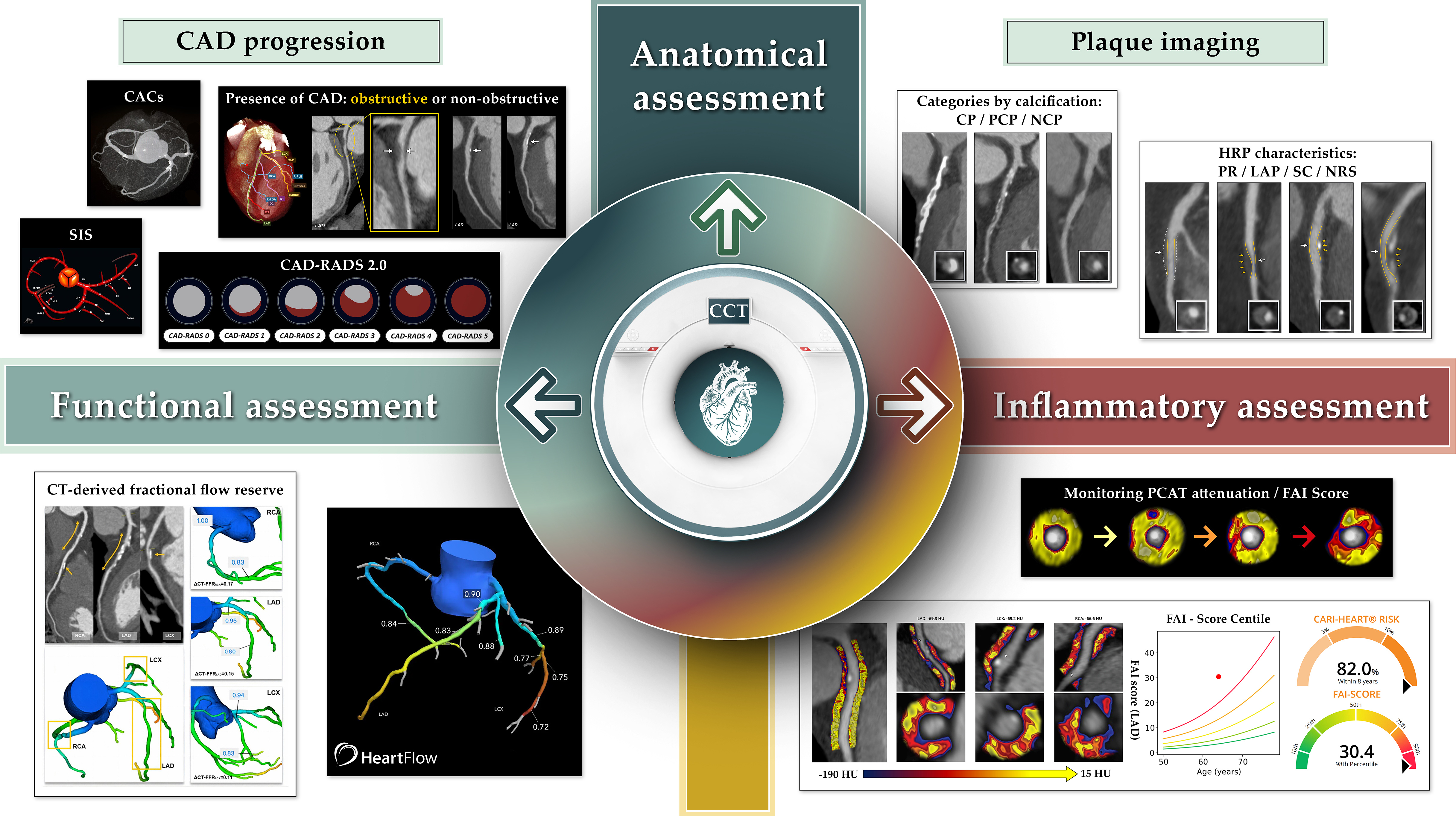
Coronary Plaque Vulnerability and Pericoronary Adipose Tissue Inflammation: Emerging Insights from Advanced CT Imaging

 ,
,  , and
, and 
Abstract
1. Introduction
2. Coronary Plaque Biology and Vulnerability
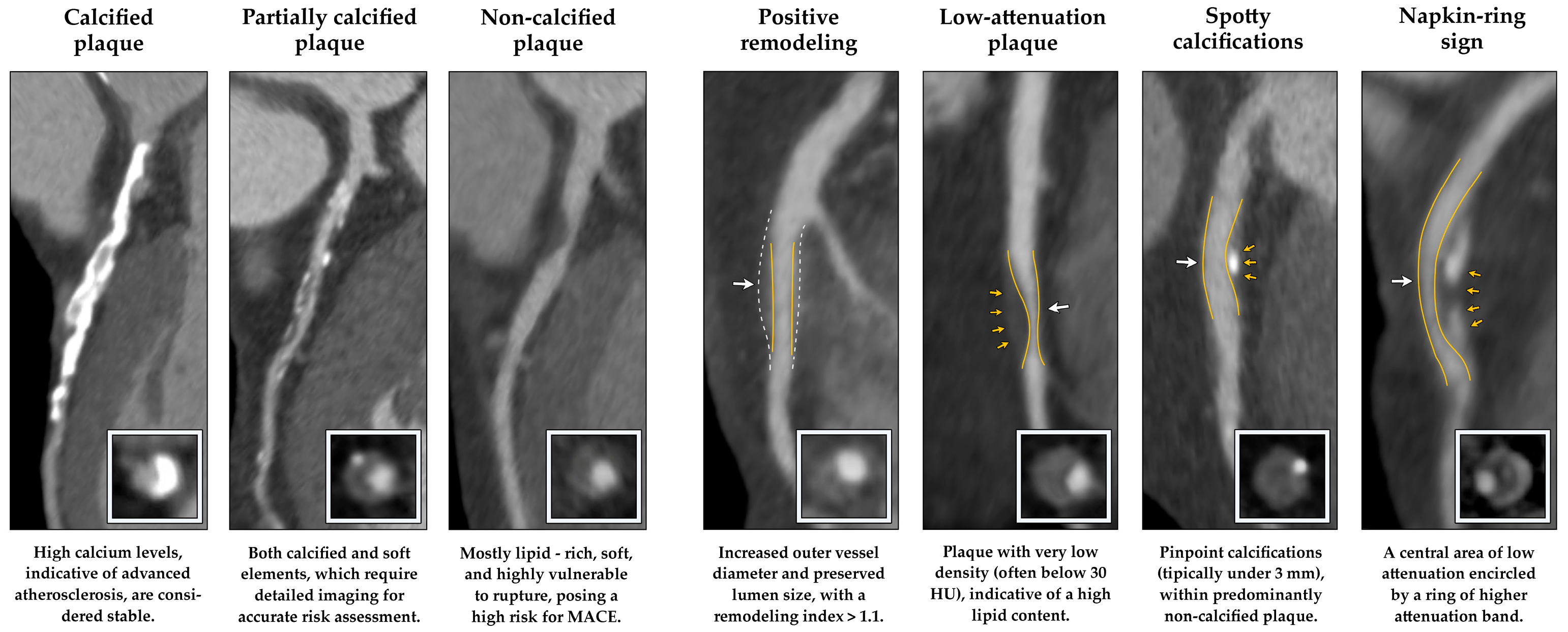
2.1. Plaque Morphology and Composition
2.2. High-Risk Plaque Imaging Markers
2.3. Non-Obstructive CAD as a Cause of Acute Events

| Study | Population | Plaque Features | Main Findings | Clinical Implication |
|---|---|---|---|---|
| Motoyama et al., 2009 [40] | 1059 patients with suspected CAD undergoing CCT | PR, LAP | Combination of PR and LAP strongly predicted future ACS events | First prospective evidence linking CCT plaque morphology to ACS risk |
| Motoyama et al., 2015 [57] | 895 patients with CCT and follow-up | PR, LAP, SC, NRS | High-risk plaque features were associated with significantly higher incidence of ACS during follow-up | Established prognostic importance of HRP features |
| Maurovich-Horvat et al., 2012 [51] | Patients undergoing CCT for suspected CAD | NRS | NRS strongly associated with advanced and vulnerable plaques | Provided imaging signature of TCFA |
| Otsuka et al., 2013 [38] | Patients evaluated by CCT with clinical follow-up | NRS | Presence of NRS significantly predicted future acute coronary syndrome | Reinforced NRS as a marker of plaque vulnerability |
| Williams et al., SCOT-HEART trial 2020 [58] | Multicenter randomized trial cohort | NCP and LAP | Non-calcified plaque burden predicted MI independent of stenosis severity | Shifted focus from stenosis to plaque biology |
| Lu et al., 2021 [39] | Patients undergoing CCT for CAD evaluation | PR, LAP, SC, NRS | HRP features significantly improved prediction of ACS events | Supports multiparametric plaque assessment |
| Bauer et al., 2009 [52] | Patients undergoing CCT and myocardial perfusion imaging | NCP burden | Non-calcified plaque burden correlated with ischemia | Early demonstration of prognostic plaque features |
| Virmani et al., 2006 [23] | Pathology-based plaque analysis | TCFA | TCFA identified as the primary substrate of plaque rupture | Histopathologic foundation for imaging markers |
| Salem et al., 2023 [37] | Patients undergoing CCT with plaque characterization | HRP features and TCFA | CCT features correlate with invasive imaging markers of vulnerability | Validates CT-based plaque characterization |
3. Imaging Inflammation: PCAT, EAT, and the Fat Attenuation Index
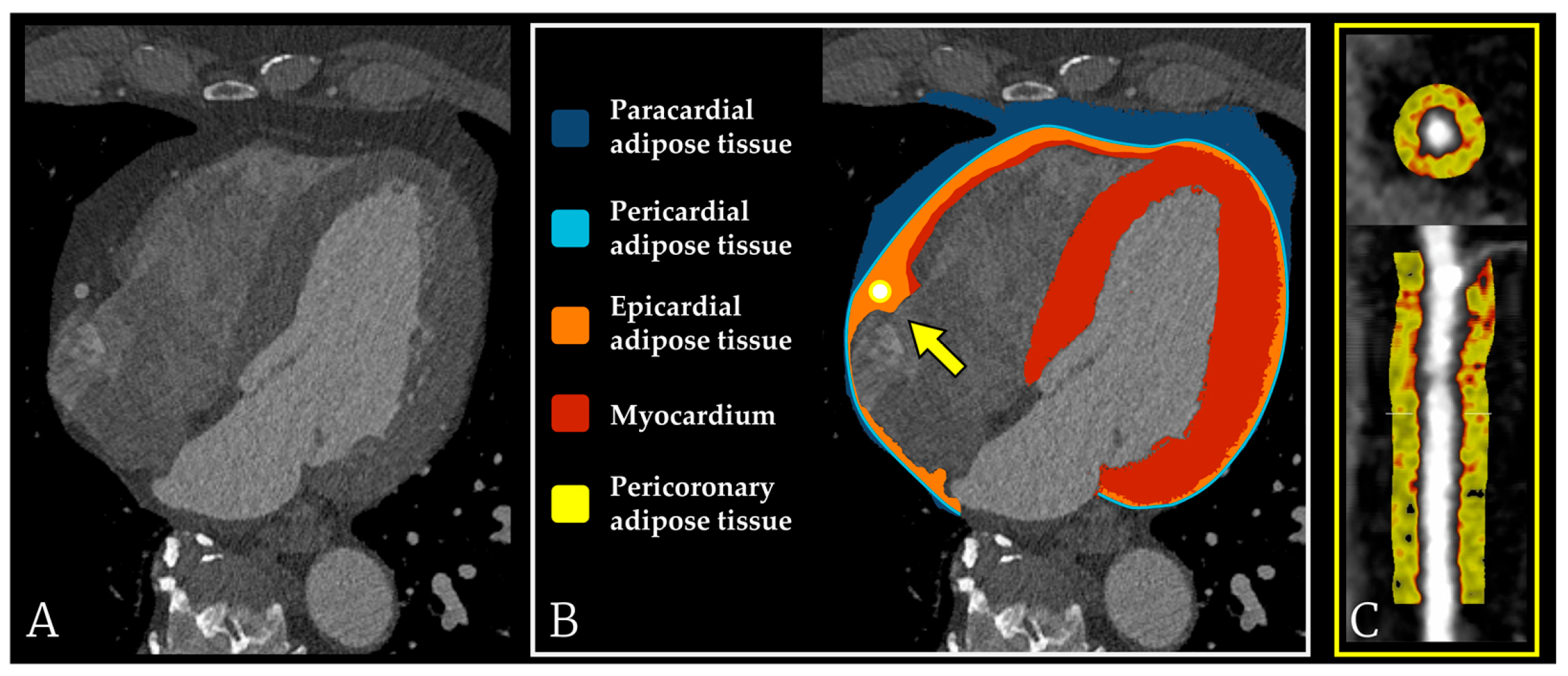
3.1. Biological Rationale
| Study | Population | PCAT/FAI Parameters | Main Findings | Clinical Implication |
|---|---|---|---|---|
| Antonopoulos et al., 2017 [12] | Experimental and translational analysis of coronary inflammation | PCAT attenuation | Demonstrated that coronary inflammation modifies PCAT attenuation detectable on CCT | Established the biological basis for FAI as a non-invasive marker of coronary inflammation |
| Oikonomou et al., CRISP-CT, 2018 [18] | Large prospective cohort undergoing CCT | PCAT attenuation | Increased FAI independently predicted cardiac mortality and major cardiovascular events | Landmark validation of FAI as a prognostic biomarker |
| Goeller et al., 2019 [33] | Patients undergoing serial CCT imaging | Longitudinal changes in PCAT attenuation | Changes in PCAT attenuation correlated with coronary plaque burden progression | Demonstrated the potential of FAI-related metrics for disease monitoring |
| Lin et al., 2021 [34] | Cross-sectional cohort of patients with varying CAD severity | PCAT attenuation | PCAT attenuation differed significantly across stages of CAD | Supported diagnostic value of PCAT-derived inflammation markers |
| Van Rosendael et al., 2024 [35] | Patients undergoing CCT with long-term follow-up | PCAT attenuation | Elevated PCAT attenuation predicted long-term cardiovascular outcomes | Confirmed the prognostic relevance of coronary inflammation imaging |
| Goeller et al., 2018 [63] | Patients with acute coronary syndrome and stable CAD | PCAT attenuation surrounding culprit lesions | Higher PCAT attenuation associated with high-risk plaques and ACS | Demonstrated the link between local vascular inflammation and plaque vulnerability |
| Dai et al., 2020 [64] | Patients undergoing serial CCT after statin therapy | Serial changes in FAI | FAI decreased following statin therapy, suggesting reduced coronary inflammation | Supports the use of FAI for monitoring therapeutic response |
| Bao et al., 2022 [65] | Patients with psoriasis and matched controls | FAI-derived coronary inflammation | Elevated FAI reflected increased coronary inflammation in systemic inflammatory disease | Expanded clinical relevance of PCAT-derived markers |
| Oikonomou et al., 2021 [66] | Translational study of coronary inflammation quantification | PCAT measurement | Proposed standardized methods for coronary inflammation imaging | Important step toward clinical implementation of FAI |
| Chan et al., ORFAN cohort, 2024 [67] | Multicenter longitudinal cohort without obstructive CAD | PCAT-derived FAI | Coronary inflammation predicted cardiovascular events even without obstructive disease | Highlighted the role of PCAT imaging in early risk stratification |
| Mátyás et al., 2023 [68] | Patients following COVID-19 infection | PCAT-derived FAI | Elevated FAI indicated persistent coronary inflammation and increased plaque vulnerability risk | Demonstrated applicability of FAI in post-viral inflammatory states |
| Gerculy et al., 2025 [69] | Patients with atrial fibrillation compared with controls | PCAT-derived FAI | Increased coronary inflammation associated with atrial fibrillation development | Suggests interaction between coronary inflammation and atrial arrhythmogenesis |
3.2. Technical Basis of PCAT Measurement

3.3. Validation Studies and Clinical Translation
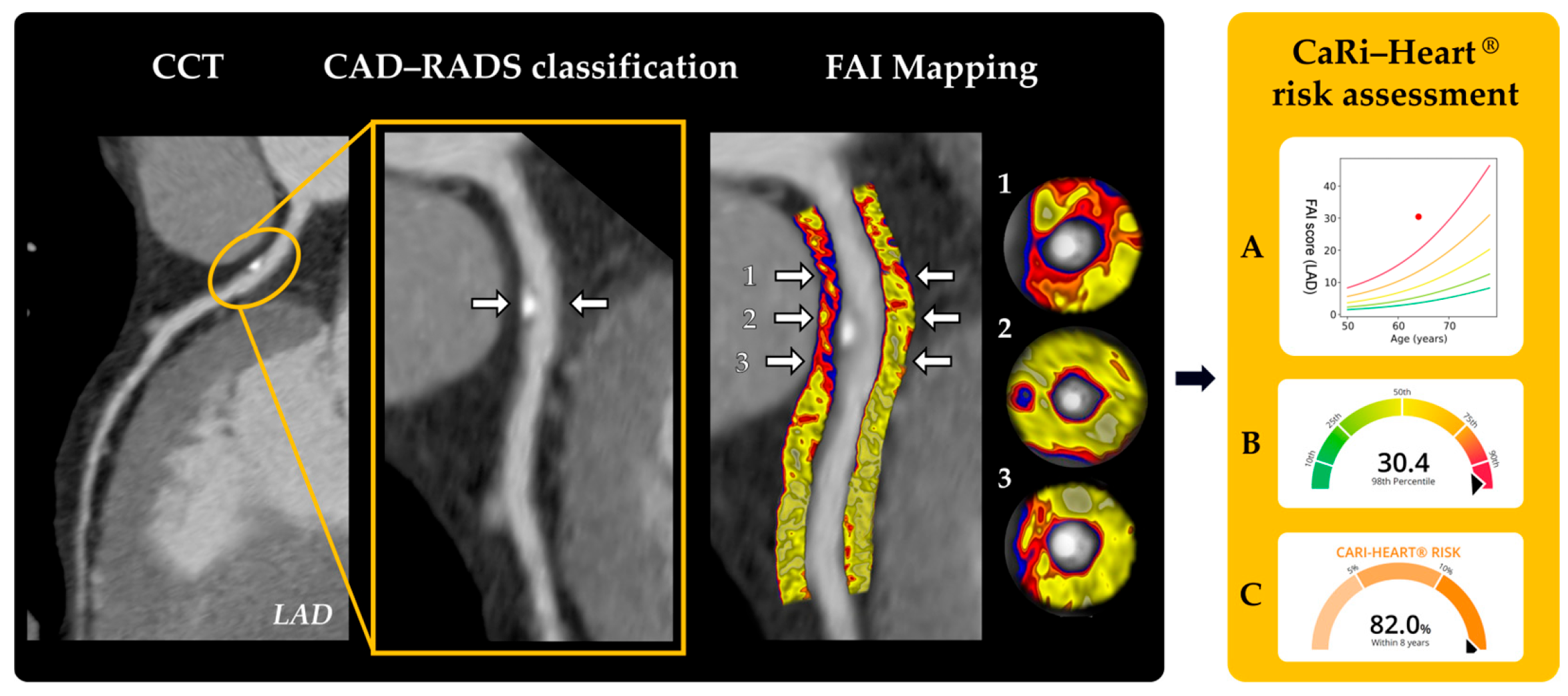
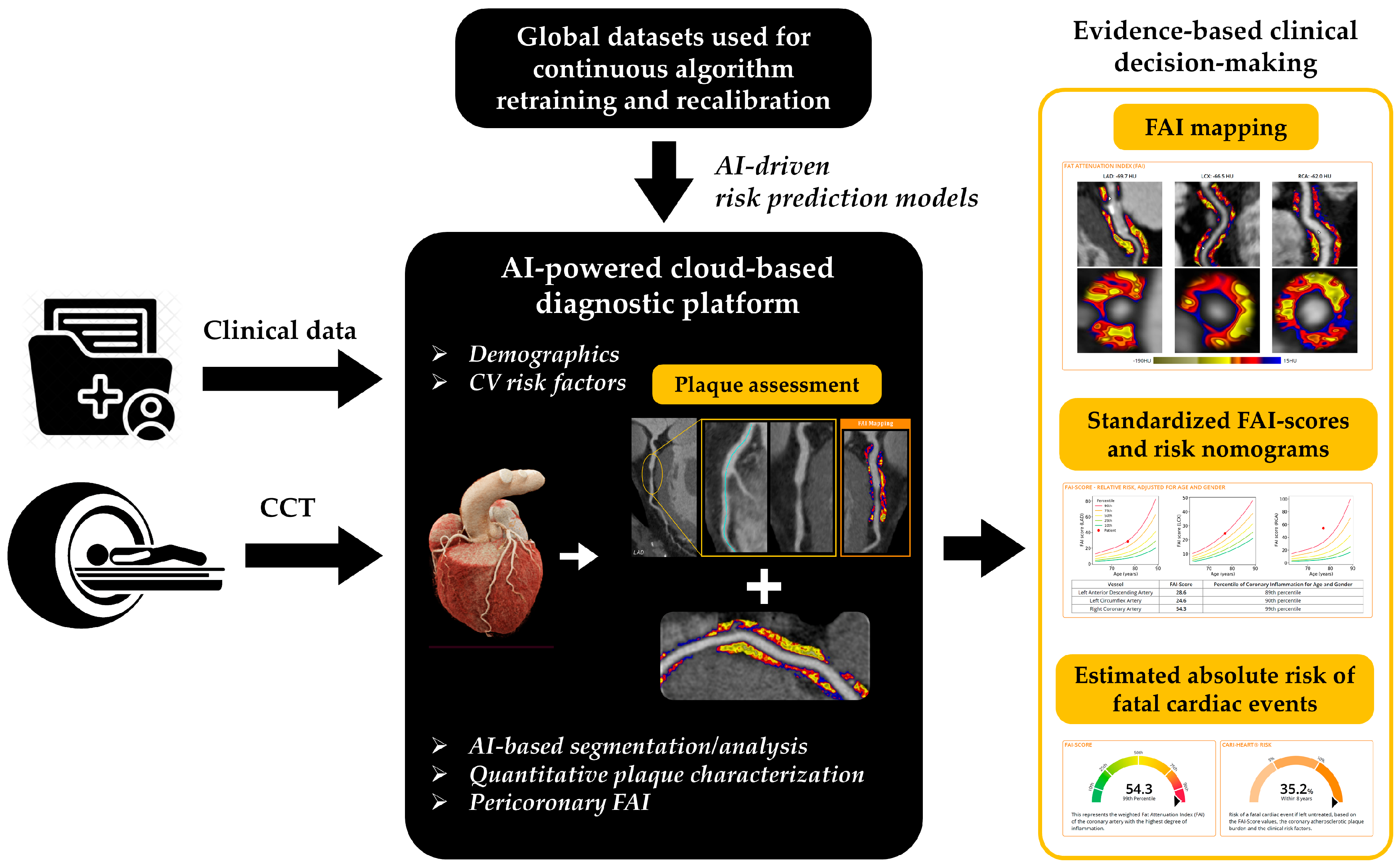
3.4. Radiomics and Artificial Intelligence (CaRi-Heart®)

4. Coronary Inflammation in Cardiovascular Emergencies
4.1. Acute Coronary Syndromes (Plaque Rupture/Erosion)
4.2. Atrial Fibrillation as an Inflammatory Emergency
4.3. Post-COVID Patients Presenting with Chest Pain or ACS-like Symptoms
5. CT-Based Preventive and Emergency Risk Stratification
5.1. Role of CAC in Emergency Pathways
5.2. CCT in Asymptomatic and Symptomatic Risk Triage

5.3. Dynamic Monitoring of Treatment Response
6. Emerging Technologies Transforming Emergency Cardiology
6.1. CT-FFR for Functional Assessment of Intermediate Lesions
6.2. Photon-Counting CT
6.3. AI-Enhanced Risk Prediction

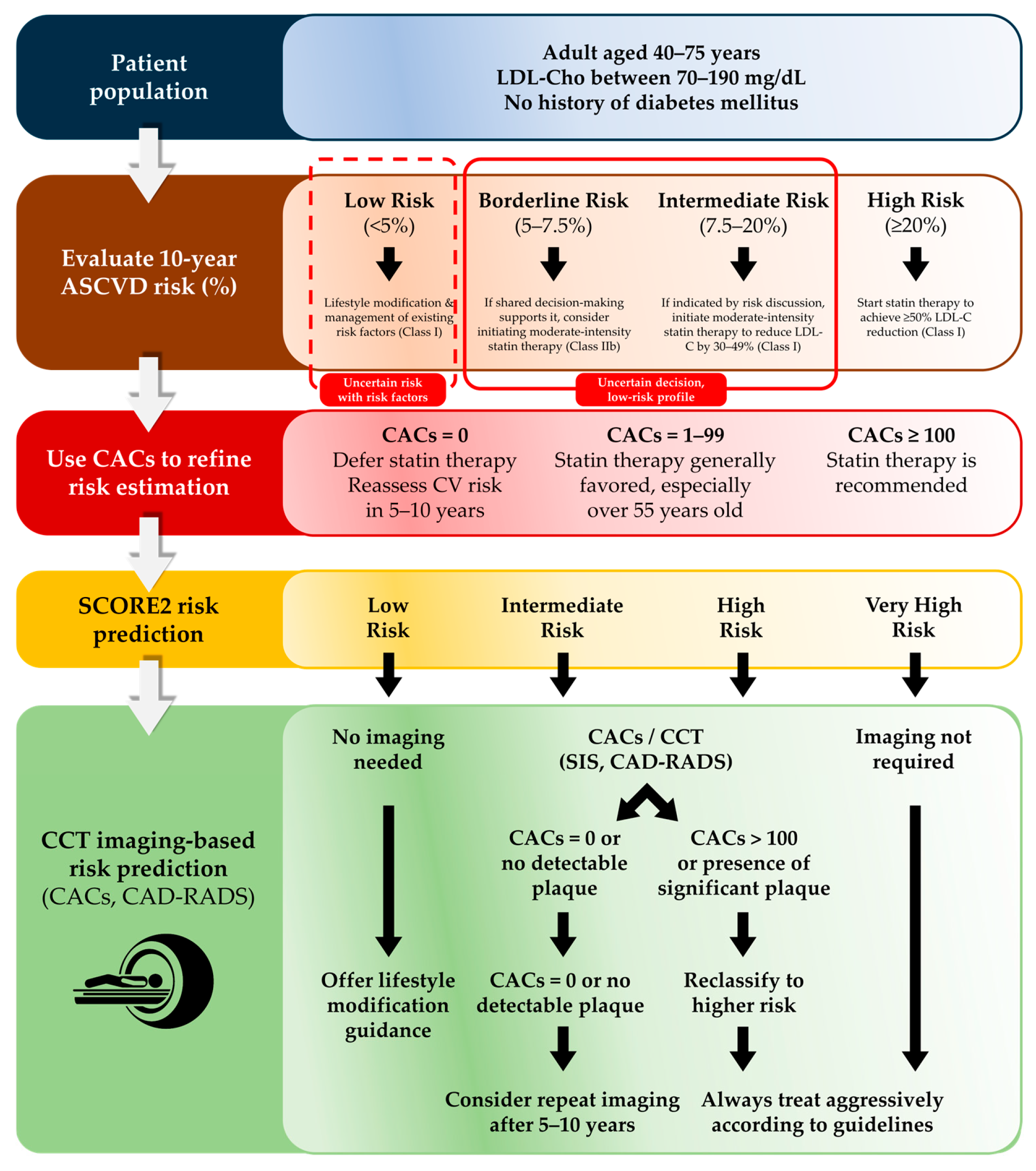
7. Clinical Implications and Proposed Diagnostic Algorithm
8. Future Directions and Research Gaps
9. Conclusions
Author Contributions
Funding
Data Availability Statement
Conflicts of Interest
References
- World Health Organization. Global Status Report on Noncommunicable Diseases 2014; World Health Organization: Geneva, Switzerland, 2014; Available online: https://iris.who.int/handle/10665/148114 (accessed on 16 July 2025).
- World Health Statistics. 2023: Monitoring Health for the SDGs, Sustainable Development Goals, 1st ed.; World Health Organization: Geneva, Switzerland, 2023. [Google Scholar]
- Vollset, S.E.; Ababneh, H.S.; Abate, Y.H.; Abbafati, C.; Abbasgholizadeh, R.; Abbasian, M.; Abbastabar, H.; Abd Al Magied, A.H.A.; Abd ElHafeez, S.; Abdelkader, A.; et al. Burden of disease scenarios for 204 countries and territories, 2022–2050: A forecasting analysis for the Global Burden of Disease Study 2021. Lancet 2024, 403, 2204–2256. [Google Scholar] [CrossRef] [PubMed]
- Health at a Glance: Europe 2024. OECD. 2024. Available online: https://www.oecd.org/en/publications/health-at-a-glance-europe-2024_b3704e14-en.html (accessed on 15 September 2025).
- Knuuti, J.; Wijns, W.; Saraste, A.; Capodanno, D.; Barbato, E.; Funck-Brentano, C.; Prescott, E.; Storey, R.F.; Deaton, C.; Cuisset, T.; et al. 2019 ESC Guidelines for the diagnosis and management of chronic coronary syndromes. Eur. Heart J. 2020, 41, 407–477. [Google Scholar] [CrossRef]
- Moss, A.J.; Williams, M.C.; Newby, D.E.; Nicol, E.D. The Updated NICE Guidelines: Cardiac CT as the First-Line Test for Coronary Artery Disease. Curr. Cardiovasc. Imaging Rep. 2017, 10, 15. [Google Scholar] [CrossRef]
- Van Der Giessen, A.G.; Toepker, M.H.; Donelly, P.M.; Bamberg, F.; Schlett, C.L.; Raffle, C.; Irlbeck, T.; Lee, H.; Van Walsum, T.; Maurovich-Horvat, P.; et al. Reproducibility, Accuracy, and Predictors of Accuracy for the Detection of Coronary Atherosclerotic Plaque Composition by Computed Tomography: An Ex Vivo Comparison to Intravascular Ultrasound. Investig. Radiol. 2010, 45, 693–701. [Google Scholar] [CrossRef]
- The SCOT-HEART Investigators Coronary CT Angiography and 5-Year Risk of Myocardial Infarction. N. Engl. J. Med. 2018, 379, 924–933. [CrossRef] [PubMed]
- Agatston, A.S.; Janowitz, W.R.; Hildner, F.J.; Zusmer, N.R.; Viamonte, M.; Detrano, R. Quantification of coronary artery calcium using ultrafast computed tomography. J. Am. Coll. Cardiol. 1990, 15, 827–832. [Google Scholar] [CrossRef]
- Hong, J.C.; Blankstein, R.; Shaw, L.J.; Padula, W.V.; Arrieta, A.; Fialkow, J.A.; Blumenthal, R.S.; Blaha, M.J.; Krumholz, H.M.; Nasir, K. Implications of Coronary Artery Calcium Testing for Treatment Decisions Among Statin Candidates According to the ACC/AHA Cholesterol Management Guidelines. JACC: Cardiovasc. Imaging 2017, 10, 938–952. [Google Scholar] [CrossRef]
- Antoniades, C.; Kotanidis, C.P.; Berman, D.S. State-of-the-art review article. Atherosclerosis affecting fat: What can we learn by imaging perivascular adipose tissue? J. Cardiovasc. Comput. Tomogr. 2019, 13, 288–296. [Google Scholar] [CrossRef]
- Antonopoulos, A.S.; Sanna, F.; Sabharwal, N.; Thomas, S.; Oikonomou, E.K.; Herdman, L.; Margaritis, M.; Shirodaria, C.; Kampoli, A.-M.; Akoumianakis, I.; et al. Detecting human coronary inflammation by imaging perivascular fat. Sci. Transl. Med. 2017, 9, eaal2658. [Google Scholar] [CrossRef]
- Oikonomou, E.K.; West, H.W.; Antoniades, C. Cardiac Computed Tomography: Assessment of Coronary Inflammation and Other Plaque Features. Arterioscler. Thromb. Vasc. Biol. 2019, 39, 2207–2219. [Google Scholar] [CrossRef] [PubMed]
- Haq, A.; Miedema, M.D. Coronary Artery Calcium for Risk Assessment in Young Adults. Curr. Atheroscler. Rep. 2022, 24, 337–342. [Google Scholar] [CrossRef]
- Rajiah, P.; Cummings, K.W.; Williamson, E.; Young, P.M. CT Fractional Flow Reserve: A Practical Guide to Application, Interpretation, and Problem Solving. RadioGraphics 2022, 42, 340–358. [Google Scholar] [CrossRef]
- Mátyás, B.B.; Benedek, I.; Raț, N.; Blîndu, E.; Parajkó, Z.; Mihăilă, T.; Benedek, T. Assessing the Impact of Long-Term High-Dose Statin Treatment on Pericoronary Inflammation and Plaque Distribution—A Comprehensive Coronary CTA Follow-Up Study. Int. J. Mol. Sci. 2024, 25, 1700. [Google Scholar] [CrossRef]
- Puntmann, V.O.; Shchendrygina, A.; Rodriguez Bolanos, C.; Ka, M.M.; Valbuena, S.; Rolf, A.; Escher, F.; Nagel, E. Cardiac Involvement Due to COVID-19: Insights from Imaging and Histopathology. Eur. Cardiol. 2023, 18, e58. [Google Scholar] [CrossRef]
- Oikonomou, E.K.; Marwan, M.; Desai, M.Y.; Mancio, J.; Alashi, A.; Hutt Centeno, E.; Thomas, S.; Herdman, L.; Kotanidis, C.P.; Thomas, K.E.; et al. Non-invasive detection of coronary inflammation using computed tomography and prediction of residual cardiovascular risk (the CRISP CT study): A post-hoc analysis of prospective outcome data. Lancet 2018, 392, 929–939. [Google Scholar] [CrossRef]
- Kolossváry, M.; Szilveszter, B.; Merkely, B.; Maurovich-Horvat, P. Plaque imaging with CT—A comprehensive review on coronary CT angiography based risk assessment. Cardiovasc. Diagn. Ther. 2017, 7, 489–506. [Google Scholar] [CrossRef] [PubMed]
- Greenland, P.; Blaha, M.J.; Budoff, M.J.; Erbel, R.; Watson, K.E. Coronary Calcium Score and Cardiovascular Risk. J. Am. Coll. Cardiol. 2018, 72, 434–447. [Google Scholar] [CrossRef]
- Gauss, S.; Achenbach, S.; Pflederer, T.; Schuhback, A.; Daniel, W.G.; Marwan, M. Assessment of coronary artery remodelling by dual-source CT: A head-to-head comparison with intravascular ultrasound. Heart 2011, 97, 991–997. [Google Scholar] [CrossRef] [PubMed]
- Alyami, B.; Santer, M.; Seetharam, K.; Velu, D.; Gadde, E.; Patel, B.; Hamirani, Y.S. Non-Calcified Coronary Artery Plaque on Coronary Computed Tomography Angiogram: Prevalence and Significance. Tomography 2023, 9, 1755–1771. [Google Scholar] [CrossRef] [PubMed]
- Virmani, R.; Burke, A.P.; Farb, A.; Kolodgie, F.D. Pathology of the Vulnerable Plaque. J. Am. Coll. Cardiol. 2006, 47, C13–C18. [Google Scholar] [CrossRef]
- Kolodgie, F.D.; Burke, A.P.; Farb, A.; Gold, H.K.; Yuan, J.; Narula, J.; Finn, A.V.; Virmani, R. The thin-cap fibroatheroma: A type of vulnerable plaque: The major precursor lesion to acute coronary syndromes. Curr. Opin. Cardiol. 2001, 16, 285–292. [Google Scholar] [CrossRef]
- Klüner, L.V.; Chan, K.; Antoniades, C. Using artificial intelligence to study atherosclerosis from computed tomography imaging: A state-of-the-art review of the current literature. Atherosclerosis 2024, 398, 117580. [Google Scholar] [CrossRef]
- Sugiyama, T.; Kanaji, Y.; Hoshino, M.; Hada, M.; Misawa, T.; Nagamine, T.; Teng, Y.; Matsuda, K.; Sayama, K.; Araki, M.; et al. Relationship Between Unrecognized Myocardial Infarction and Underlying Coronary Plaque Characteristics on Optical Coherence Tomography. JACC Cardiovasc. Imaging 2022, 15, 1830–1832. [Google Scholar] [CrossRef]
- Mortensen, M.B.; Falk, E.; Li, D.; Nasir, K.; Blaha, M.J.; Sandfort, V.; Rodriguez, C.J.; Ouyang, P.; Budoff, M. Statin Trials, Cardiovascular Events, and Coronary Artery Calcification. JACC Cardiovasc. Imaging 2018, 11, 221–230. [Google Scholar] [CrossRef]
- Dedic, A.; Kurata, A.; Lubbers, M.; Meijboom, W.B.; Van Dalen, B.; Snelder, S.; Korbee, R.; Moelker, A.; Ouhlous, M.; Van Domburg, R.; et al. Prognostic implications of non-culprit plaques in acute coronary syndrome: Non-invasive assessment with coronary CT angiography. Eur. Heart J.-Cardiovasc. Imaging 2014, 15, 1231–1237. [Google Scholar] [CrossRef]
- Blaha, M.J.; Mortensen, M.B.; Kianoush, S.; Tota-Maharaj, R.; Cainzos-Achirica, M. Coronary Artery Calcium Scoring. JACC Cardiovasc. Imaging 2017, 10, 923–937. [Google Scholar] [CrossRef]
- Hadamitzky, M.; Achenbach, S.; Al-Mallah, M.; Berman, D.; Budoff, M.; Cademartiri, F.; Callister, T.; Chang, H.-J.; Cheng, V.; Chinnaiyan, K.; et al. Optimized Prognostic Score for Coronary Computed Tomographic Angiography. J. Am. Coll. Cardiol. 2013, 62, 468–476. [Google Scholar] [CrossRef] [PubMed]
- Hadamitzky, M.; Taubert, S.; Deseive, S.; Byrne, R.A.; Martinoff, S.; Schomig, A.; Hausleiter, J. Prognostic value of coronary computed tomography angiography during 5 years of follow-up in patients with suspected coronary artery disease. Eur. Heart J. 2013, 34, 3277–3285. [Google Scholar] [CrossRef] [PubMed]
- Puri, R.; Nicholls, S.J.; Shao, M.; Kataoka, Y.; Uno, K.; Kapadia, S.R.; Tuzcu, E.M.; Nissen, S.E. Impact of Statins on Serial Coronary Calcification During Atheroma Progression and Regression. J. Am. Coll. Cardiol. 2015, 65, 1273–1282. [Google Scholar] [CrossRef] [PubMed]
- Goeller, M.; Tamarappoo, B.K.; Kwan, A.C.; Cadet, S.; Commandeur, F.; Razipour, A.; Slomka, P.J.; Gransar, H.; Chen, X.; Otaki, Y.; et al. Relationship between changes in pericoronary adipose tissue attenuation and coronary plaque burden quantified from coronary computed tomography angiography. Eur. Heart J.-Cardiovasc. Imaging 2019, 20, 636–643. [Google Scholar] [CrossRef]
- Lin, A.; Nerlekar, N.; Yuvaraj, J.; Fernandes, K.; Jiang, C.; Nicholls, S.J.; Dey, D.; Wong, D.T.L. Pericoronary adipose tissue computed tomography attenuation distinguishes different stages of coronary artery disease: A cross-sectional study. Eur. Heart J.-Cardiovasc. Imaging 2021, 22, 298–306. [Google Scholar] [CrossRef]
- Van Rosendael, S.E.; Kamperidis, V.; Maaniitty, T.; De Graaf, M.A.; Saraste, A.; McKay-Goodall, G.E.; Jukema, J.W.; Knuuti, J.; Bax, J.J. Pericoronary adipose tissue for predicting long-term outcomes. Eur. Heart J.-Cardiovasc. Imaging 2024, 25, 1351–1359. [Google Scholar] [CrossRef] [PubMed]
- Mátyás, B.B.; Benedek, I.; Rat, N.; Blîndu, E.; Rodean, I.P.; Haja, I.; Păcurar, D.; Mihăilă, T.; Benedek, T. Assessment of the Association Between Coronary Artery Calcification, Plaque Vulnerability, and Perivascular Inflammation via Coronary CT Angiography. Life 2025, 15, 1288. [Google Scholar] [CrossRef]
- Salem, A.M.; Davis, J.; Gopalan, D.; Rudd, J.H.F.; Clarke, S.C.; Schofield, P.M.; Bennett, M.R.; Brown, A.J.; Obaid, D.R. Characteristics of conventional high-risk coronary plaques and a novel CT defined thin-cap fibroatheroma in patients undergoing CCTA with stable chest pain. Clin. Imaging 2023, 101, 69–76. [Google Scholar] [CrossRef]
- Otsuka, K.; Fukuda, S.; Tanaka, A.; Nakanishi, K.; Taguchi, H.; Yoshikawa, J.; Shimada, K.; Yoshiyama, M. Napkin-Ring Sign on Coronary CT Angiography for the Prediction of Acute Coronary Syndrome. JACC Cardiovasc. Imaging 2013, 6, 448–457. [Google Scholar] [CrossRef]
- Lu, G.; Ye, W.; Ou, J.; Li, X.; Tan, Z.; Li, T.; Liu, H. Coronary Computed Tomography Angiography Assessment of High-Risk Plaques in Predicting Acute Coronary Syndrome. Front. Cardiovasc. Med. 2021, 8, 743538. [Google Scholar] [CrossRef]
- Motoyama, S.; Sarai, M.; Harigaya, H.; Anno, H.; Inoue, K.; Hara, T.; Naruse, H.; Ishii, J.; Hishida, H.; Wong, N.D.; et al. Computed Tomographic Angiography Characteristics of Atherosclerotic Plaques Subsequently Resulting in Acute Coronary Syndrome. J. Am. Coll. Cardiol. 2009, 54, 49–57. [Google Scholar] [CrossRef]
- Yamaura, H.; Otsuka, K.; Ishikawa, H.; Shirasawa, K.; Fukuda, D.; Kasayuki, N. Determinants of Non-calcified Low-Attenuation Coronary Plaque Burden in Patients Without Known Coronary Artery Disease: A Coronary CT Angiography Study. Front. Cardiovasc. Med. 2022, 9, 824470. [Google Scholar] [CrossRef] [PubMed]
- Arnold, P.G.; Russe, M.F.; Bamberg, F.; Emrich, T.; Vecsey-Nagy, M.; Ashi, A.; Kravchenko, D.; Varga-Szemes, Á.; Soschynski, M.; Rau, A.; et al. Performance of large language models for CAD-RADS 2.0 classification derived from cardiac CT reports. J. Cardiovasc. Comput. Tomogr. 2025, 19, 322–330. [Google Scholar] [CrossRef] [PubMed]
- Cury, R.C.; Leipsic, J.; Abbara, S.; Achenbach, S.; Berman, D.; Bittencourt, M.; Budoff, M.; Chinnaiyan, K.; Choi, A.D.; Ghoshhajra, B.; et al. CAD-RADSTM 2.0—2022 Coronary Artery Disease-Reporting and Data System. J. Cardiovasc. Comput. Tomogr. 2022, 16, 536–557. [Google Scholar] [CrossRef]
- Ayoub, C.; Erthal, F.; Abdelsalam, M.A.; Murad, M.H.; Wang, Z.; Erwin, P.J.; Hillis, G.S.; Kritharides, L.; Chow, B.J.W. Prognostic value of segment involvement score compared to other measures of coronary atherosclerosis by computed tomography: A systematic review and meta-analysis. J. Cardiovasc. Comput. Tomogr. 2017, 11, 258–267. [Google Scholar] [CrossRef]
- The DISCHARGE Trial Group. CT or Invasive Coronary Angiography in Stable Chest Pain. N. Engl. J. Med. 2022, 386, 1591–1602. [Google Scholar] [CrossRef]
- Budoff, M.J.; Dowe, D.; Jollis, J.G.; Gitter, M.; Sutherland, J.; Halamert, E.; Scherer, M.; Bellinger, R.; Martin, A.; Benton, R.; et al. Diagnostic Performance of 64-Multidetector Row Coronary Computed Tomographic Angiography for Evaluation of Coronary Artery Stenosis in Individuals Without Known Coronary Artery Disease. J. Am. Coll. Cardiol. 2008, 52, 1724–1732. [Google Scholar] [CrossRef]
- Bittencourt, M.S.; Hulten, E.; Polonsky, T.S.; Hoffman, U.; Nasir, K.; Abbara, S.; Di Carli, M.; Blankstein, R. European Society of Cardiology–Recommended Coronary Artery Disease Consortium Pretest Probability Scores More Accurately Predict Obstructive Coronary Disease and Cardiovascular Events Than the Diamond and Forrester Score: The Partners Registry. Circulation 2016, 134, 201–211. [Google Scholar] [CrossRef]
- Min, J.K.; Shaw, L.J.; Devereux, R.B.; Okin, P.M.; Weinsaft, J.W.; Russo, D.J.; Lippolis, N.J.; Berman, D.S.; Callister, T.Q. Prognostic Value of Multidetector Coronary Computed Tomographic Angiography for Prediction of All-Cause Mortality. J. Am. Coll. Cardiol. 2007, 50, 1161–1170. [Google Scholar] [CrossRef]
- Lee, S.-E.; Chang, H.-J.; Sung, J.M.; Park, H.-B.; Heo, R.; Rizvi, A.; Lin, F.Y.; Kumar, A.; Hadamitzky, M.; Kim, Y.J.; et al. Effects of Statins on Coronary Atherosclerotic Plaques. JACC Cardiovasc. Imaging 2018, 11, 1475–1484. [Google Scholar] [CrossRef] [PubMed]
- Villines, T.C.; Hulten, E.A.; Shaw, L.J.; Goyal, M.; Dunning, A.; Achenbach, S.; Al-Mallah, M.; Berman, D.S.; Budoff, M.J.; Cademartiri, F.; et al. Prevalence and Severity of Coronary Artery Disease and Adverse Events Among Symptomatic Patients With Coronary Artery Calcification Scores of Zero Undergoing Coronary Computed Tomography Angiography. J. Am. Coll. Cardiol. 2011, 58, 2533–2540. [Google Scholar] [CrossRef] [PubMed]
- Maurovich-Horvat, P.; Schlett, C.L.; Alkadhi, H.; Nakano, M.; Otsuka, F.; Stolzmann, P.; Scheffel, H.; Ferencik, M.; Kriegel, M.F.; Seifarth, H.; et al. The Napkin-Ring Sign Indicates Advanced Atherosclerotic Lesions in Coronary CT Angiography. JACC Cardiovasc. Imaging 2012, 5, 1243–1252. [Google Scholar] [CrossRef]
- Bauer, R.W.; Thilo, C.; Chiaramida, S.A.; Vogl, T.J.; Costello, P.; Schoepf, U.J. Noncalcified Atherosclerotic Plaque Burden at Coronary CT Angiography: A Better Predictor of Ischemia at Stress Myocardial Perfusion Imaging Than Calcium Score and Stenosis Severity. Am. J. Roentgenol. 2009, 193, 410–418. [Google Scholar] [CrossRef]
- Min, J.K.; Dunning, A.; Lin, F.Y.; Achenbach, S.; Al-Mallah, M.H.; Berman, D.S.; Budoff, M.J.; Cademartiri, F.; Callister, T.Q.; Chang, H.-J.; et al. Rationale and design of the CONFIRM (COronary CT Angiography EvaluatioN For Clinical Outcomes: An InteRnational Multicenter) Registry. J. Cardiovasc. Comput. Tomogr. 2011, 5, 84–92. [Google Scholar] [CrossRef] [PubMed]
- Kunadian, V.; Neely, R.D.G.; Sinclair, H.; Batty, J.A.; Veerasamy, M.; Ford, G.A.; Qiu, W. Study to Improve Cardiovascular Outcomes in high-risk older patieNts (ICON1) with acute coronary syndrome: Study design and protocol of a prospective observational study. BMJ Open 2016, 6, e012091. [Google Scholar] [CrossRef] [PubMed]
- Fordyce, C.B.; Douglas, P.S.; Roberts, R.S.; Hoffmann, U.; Al-Khalidi, H.R.; Patel, M.R.; Granger, C.B.; Kostis, J.; Mark, D.B.; Lee, K.L.; et al. Identification of Patients With Stable Chest Pain Deriving Minimal Value From Noninvasive Testing: The PROMISE Minimal-Risk Tool, A Secondary Analysis of a Randomized Clinical Trial. JAMA Cardiol. 2017, 2, 400. [Google Scholar] [CrossRef] [PubMed]
- Indraratna, P.; Khasanova, E.; Gulsin, G.S.; Tzimas, G.; Takagi, H.; Park, K.-H.; Lin, F.Y.; Shaw, L.J.; Lee, S.-E.; Narula, J.; et al. Plaque progression: Where, why, and how fast? A review of what we have learned from the analysis of patient data from the PARADIGM registry. J. Cardiovasc. Comput. Tomogr. 2022, 16, 294–302. [Google Scholar] [CrossRef] [PubMed]
- Motoyama, S.; Ito, H.; Sarai, M.; Kondo, T.; Kawai, H.; Nagahara, Y.; Harigaya, H.; Kan, S.; Anno, H.; Takahashi, H.; et al. Plaque Characterization by Coronary Computed Tomography Angiography and the Likelihood of Acute Coronary Events in Mid-Term Follow-Up. J. Am. Coll. Cardiol. 2015, 66, 337–346. [Google Scholar] [CrossRef]
- Williams, M.C.; Kwiecinski, J.; Doris, M.; McElhinney, P.; D’Souza, M.S.; Cadet, S.; Adamson, P.D.; Moss, A.J.; Alam, S.; Hunter, A.; et al. Low-Attenuation Noncalcified Plaque on Coronary Computed Tomography Angiography Predicts Myocardial Infarction: Results From the Multicenter SCOT-HEART Trial (Scottish Computed Tomography of the HEART). Circulation 2020, 141, 1452–1462. [Google Scholar] [CrossRef]
- Trimarchi, G.; Carerj, M.L.; Zito, C.; Bella, G.D.; Taverna, G.; Cusmà Piccione, M.; Crea, P.; Lo Giudice, S.; Buonpane, A.; Bonanni, M.; et al. Epicardial Adipose Tissue: A Multimodal Imaging Diagnostic Perspective. Medicina 2025, 61, 961. [Google Scholar] [CrossRef]
- Mazurek, T.; Zhang, L.; Zalewski, A.; Mannion, J.D.; Diehl, J.T.; Arafat, H.; Sarov-Blat, L.; O’Brien, S.; Keiper, E.A.; Johnson, A.G.; et al. Human epicardial adipose tissue is a source of inflammatory mediators. Circulation 2003, 108, 2460–2466. [Google Scholar] [CrossRef]
- Antonopoulos, A.S.; Antoniades, C. The role of epicardial adipose tissue in cardiac biology: Classic concepts and emerging roles. J. Physiol. 2017, 595, 3907–3917. [Google Scholar] [CrossRef]
- Packer, M. Epicardial Adipose Tissue May Mediate Deleterious Effects of Obesity and Inflammation on the Myocardium. J. Am. Coll. Cardiol. 2018, 71, 2360–2372. [Google Scholar] [CrossRef]
- Goeller, M.; Achenbach, S.; Cadet, S.; Kwan, A.C.; Commandeur, F.; Slomka, P.J.; Gransar, H.; Albrecht, M.H.; Tamarappoo, B.K.; Berman, D.S.; et al. Pericoronary Adipose Tissue Computed Tomography Attenuation and High-Risk Plaque Characteristics in Acute Coronary Syndrome Compared With Stable Coronary Artery Disease. JAMA Cardiol. 2018, 3, 858. [Google Scholar] [CrossRef]
- Dai, X.; Yu, L.; Lu, Z.; Shen, C.; Tao, X.; Zhang, J. Serial change of perivascular fat attenuation index after statin treatment: Insights from a coronary CT angiography follow-up study. Int. J. Cardiol. 2020, 319, 144–149. [Google Scholar] [CrossRef]
- Bao, W.; Yang, M.; Xu, Z.; Yan, F.; Yang, Q.; Li, X.; Yang, W. Coronary Inflammation Assessed by Perivascular Fat Attenuation Index in Patients with Psoriasis: A Propensity Score-Matched Study. Dermatology 2022, 238, 562–570. [Google Scholar] [CrossRef]
- Oikonomou, E.K.; Antonopoulos, A.S.; Schottlander, D.; Marwan, M.; Mathers, C.; Tomlins, P.; Siddique, M.; Klüner, L.V.; Shirodaria, C.; Mavrogiannis, M.C.; et al. Standardized measurement of coronary inflammation using cardiovascular computed tomography: Integration in clinical care as a prognostic medical device. Cardiovasc. Res. 2021, 117, 2677–2690. [Google Scholar] [CrossRef]
- Chan, K.; Wahome, E.; Tsiachristas, A.; Antonopoulos, A.S.; Patel, P.; Lyasheva, M.; Kingham, L.; West, H.; Oikonomou, E.K.; Volpe, L.; et al. Inflammatory risk and cardiovascular events in patients without obstructive coronary artery disease: The ORFAN multicentre, longitudinal cohort study. Lancet 2024, 403, 2606–2618. [Google Scholar] [CrossRef]
- Mátyás, B.B.; Benedek, I.; Blîndu, E.; Gerculy, R.; Roșca, A.; Rat, N.; Kovács, I.; Opincariu, D.; Parajkó, Z.; Szabó, E.; et al. Elevated FAI Index of Pericoronary Inflammation on Coronary CT Identifies Increased Risk of Coronary Plaque Vulnerability after COVID-19 Infection. Int. J. Mol. Sci. 2023, 24, 7398. [Google Scholar] [CrossRef] [PubMed]
- Gerculy, R.; Benedek, I.; Kovács, I.; Rat, N.; Rodean, I.-P.; Mátyás, B.B.; Blîndu, E.; Păcurar, D.; Grigoroaea, C.-G.; Benedek, T. Coronary Artery Inflammation and Epicardial Adipose Tissue Volume in Relation with Atrial Fibrillation Development. Diagnostics 2025, 15, 2003. [Google Scholar] [CrossRef] [PubMed]
- Sagris, M.; Antonopoulos, A.S.; Simantiris, S.; Oikonomou, E.; Siasos, G.; Tsioufis, K.; Tousoulis, D. Pericoronary fat attenuation index—A new imaging biomarker and its diagnostic and prognostic utility: A systematic review and meta-analysis. Eur. Heart J.-Cardiovasc. Imaging 2022, 23, e526–e536. [Google Scholar] [CrossRef]
- Razavi, A.C.; Whelton, S.P.; Al-Mallah, M.H. Pericoronary adipose tissue attenuation on coronary computed tomography angiography: Possibilities and challenges. Atherosclerosis 2025, 402, 119105. [Google Scholar] [CrossRef]
- Antoniades, C.; Tousoulis, D.; Vavlukis, M.; Fleming, I.; Duncker, D.J.; Eringa, E.; Manfrini, O.; Antonopoulos, A.S.; Oikonomou, E.; Padró, T.; et al. Perivascular adipose tissue as a source of therapeutic targets and clinical biomarkers. Eur. Heart J. 2023, 44, 3827–3844. [Google Scholar] [CrossRef]
- Verhagen, S.N.; Visseren, F.L.J. Perivascular adipose tissue as a cause of atherosclerosis. Atherosclerosis 2011, 214, 3–10. [Google Scholar] [CrossRef] [PubMed]
- Ridker, P.M.; Danielson, E.; Fonseca, F.A.H.; Genest, J.; Gotto, A.M.; Kastelein, J.J.P.; Koenig, W.; Libby, P.; Lorenzatti, A.J.; MacFadyen, J.G.; et al. Rosuvastatin to Prevent Vascular Events in Men and Women with Elevated C-Reactive Protein. N. Engl. J. Med. 2008, 359, 2195–2207. [Google Scholar] [CrossRef]
- Joshi, N.V.; Vesey, A.T.; Williams, M.C.; Shah, A.S.V.; Calvert, P.A.; Craighead, F.H.M.; Yeoh, S.E.; Wallace, W.; Salter, D.; Fletcher, A.M.; et al. 18F-fluoride positron emission tomography for identification of ruptured and high-risk coronary atherosclerotic plaques: A prospective clinical trial. Lancet 2014, 383, 705–713. [Google Scholar] [CrossRef]
- Stone, G.W.; Maehara, A.; Lansky, A.J.; De Bruyne, B.; Cristea, E.; Mintz, G.S.; Mehran, R.; McPherson, J.; Farhat, N.; Marso, S.P.; et al. A Prospective Natural-History Study of Coronary Atherosclerosis. N. Engl. J. Med. 2011, 364, 226–235. [Google Scholar] [CrossRef]
- Lacaita, P.G.; Luger, A.; Plank, F.; Barbieri, F.; Beyer, C.; Thurner, T.; Scharll, Y.; Deeg, J.; Widmann, G.; Feuchtner, G.M. Coronary Computed Tomography Angiography (CTA) Findings in COVID-19. J. Cardiovasc. Dev. Dis. 2024, 11, 325. [Google Scholar] [CrossRef]
- Takahashi, D.; Fujimoto, S.; Nozaki, Y.O.; Kudo, A.; Kawaguchi, Y.O.; Takamura, K.; Hiki, M.; Sato, H.; Tomizawa, N.; Kumamaru, K.K.; et al. Validation and clinical impact of novel pericoronary adipose tissue measurement on ECG-gated non-contrast chest CT. Atherosclerosis 2023, 370, 18–24. [Google Scholar] [CrossRef] [PubMed]
- Raț, N.; Mátyás, B.-B.; Bajka, B.; Buicu, C.-F.; Benedek, T.; Benedek, I. Highly inflamed coronary plaque detected by Angio-CT in a 28-year-old patient with STEMI and long COVID-19. Imaging 2024, 16, 113–117. [Google Scholar] [CrossRef]
- Kaiser, H.; Näslund-Koch, C.; Kvist-Hansen, A.; Skov, L. Does Systemic Anti-Psoriatic Treatment Impact the Risk of Cardiovascular Disease? A Review Over Cardiovascular Imaging Studies. Dermatol. Ther. 2024, 14, 303–321. [Google Scholar] [CrossRef] [PubMed]
- Potestio, L.; Tommasino, N.; Lauletta, G.; Martora, F.; Megna, M. Psoriasis and Molecular Target Therapies: Evidence of Efficacy in Preventing Cardiovascular Comorbidities. Dermatol. Ther. 2024, 14, 841–852. [Google Scholar] [CrossRef]
- Mátyás, B.-B.; Blîndu, E.; Rat, N.; Kovács, I.; Buicu, C.-F.; Benedek, T. A Race Against Time: Coronary Computed Tomography Angiography Discovers a Highly Inflamed Plaque in 49-Year-Old Right Before STEMI. J. Cardiovasc. Emergencies 2024, 10, 117–123. [Google Scholar] [CrossRef]
- Mátyás, B.-B.; Gerculy, R.; Rat, N.; Blîndu, E.; Stănescu, A.G.; Roșca, A.; Buicu, C.-F.; Benedek, I.; Benedek, T. Highly Inflamed Non-Calcified Coronary Plaques Sealed with Stents in Patients with Zero Calcium Score—A Case Series and Review of the Literature. J. Cardiovasc. Emergencies 2024, 10, 38–44. [Google Scholar] [CrossRef]
- Batal, O.; Schoenhagen, P.; Shao, M.; Ayyad, A.E.; Van Wagoner, D.R.; Halliburton, S.S.; Tchou, P.J.; Chung, M.K. Left Atrial Epicardial Adiposity and Atrial Fibrillation. Circ. Arrhythmia Electrophysiol. 2010, 3, 230–236. [Google Scholar] [CrossRef] [PubMed]
- Gerculy, R.; Benedek, I.; Kovács, I.; Rat, N.; Halațiu, V.B.; Rodean, I.; Bordi, L.; Blîndu, E.; Roșca, A.; Mátyás, B.-B.; et al. CT-Assessment of Epicardial Fat Identifies Increased Inflammation at the Level of the Left Coronary Circulation in Patients with Atrial Fibrillation. J. Clin. Med. 2024, 13, 1307. [Google Scholar] [CrossRef] [PubMed]
- Xie, Y.; Xu, E.; Bowe, B.; Al-Aly, Z. Long-term cardiovascular outcomes of COVID-19. Nat. Med. 2022, 28, 583–590. [Google Scholar] [CrossRef]
- Wall, C.; Huang, Y.; Le, E.P.V.; Ćorović, A.; Uy, C.P.; Gopalan, D.; Ma, C.; Manavaki, R.; Fryer, T.D.; Aloj, L.; et al. Pericoronary and periaortic adipose tissue density are associated with inflammatory disease activity in Takayasu arteritis and atherosclerosis. Eur. Heart J. Open 2021, 1, oeab019. [Google Scholar] [CrossRef] [PubMed]
- Arnett, D.K.; Blumenthal, R.S.; Albert, M.A.; Buroker, A.B.; Goldberger, Z.D.; Hahn, E.J.; Himmelfarb, C.D.; Khera, A.; Lloyd-Jones, D.; McEvoy, J.W.; et al. 2019 ACC/AHA Guideline on the Primary Prevention of Cardiovascular Disease: Executive Summary: A Report of the American College of Cardiology/American Heart Association Task Force on Clinical Practice Guidelines. Circulation 2019, 140, 11. [Google Scholar] [CrossRef]
- Blaha, M.J.; Cainzos-Achirica, M.; Greenland, P.; McEvoy, J.W.; Blankstein, R.; Budoff, M.J.; Dardari, Z.; Sibley, C.T.; Burke, G.L.; Kronmal, R.A.; et al. Role of Coronary Artery Calcium Score of Zero and Other Negative Risk Markers for Cardiovascular Disease: The Multi-Ethnic Study of Atherosclerosis (MESA). Circulation 2016, 133, 849–858. [Google Scholar] [CrossRef]
- Kavousi, M.; Leening, M.J.G.; Nanchen, D.; Greenland, P.; Graham, I.M.; Steyerberg, E.W.; Ikram, M.A.; Stricker, B.H.; Hofman, A.; Franco, O.H. Comparison of Application of the ACC/AHA Guidelines, Adult Treatment Panel III Guidelines, and European Society of Cardiology Guidelines for Cardiovascular Disease Prevention in a European Cohort. JAMA 2014, 311, 1416. [Google Scholar] [CrossRef]
- Grundy, S.M.; Stone, N.J.; Bailey, A.L.; Beam, C.; Birtcher, K.K.; Blumenthal, R.S.; Braun, L.T.; De Ferranti, S.; Faiella-Tommasino, J.; Forman, D.E.; et al. 2018 AHA/ACC/AACVPR/AAPA/ABC/ACPM/ADA/AGS/APhA/ASPC/NLA/PCNA Guideline on the Management of Blood Cholesterol: A Report of the American College of Cardiology/American Heart Association Task Force on Clinical Practice Guidelines. Circulation 2019, 139, 25. [Google Scholar] [CrossRef]
- SCORE2 working group and ESC Cardiovascular risk collaboration; Hageman, S.; Pennells, L.; Ojeda, F.; Kaptoge, S.; Kuulasmaa, K.; De Vries, T.; Xu, Z.; Kee, F.; Chung, R.; et al. SCORE2 risk prediction algorithms: New models to estimate 10-year risk of cardiovascular disease in Europe. Eur. Heart J. 2021, 42, 2439–2454. [Google Scholar] [CrossRef]
- DeFilippis, A.P.; Young, R.; McEvoy, J.W.; Michos, E.D.; Sandfort, V.; Kronmal, R.A.; McClelland, R.L.; Blaha, M.J. Risk score overestimation: The impact of individual cardiovascular risk factors and preventive therapies on the performance of the American Heart Association-American College of Cardiology-Atherosclerotic Cardiovascular Disease risk score in a modern multi-ethnic cohort. Eur. Heart J. 2016, 38, 598–608. [Google Scholar] [CrossRef]
- Chugh, S.S.; Reinier, K.; Teodorescu, C.; Evanado, A.; Kehr, E.; Al Samara, M.; Mariani, R.; Gunson, K.; Jui, J. Epidemiology of Sudden Cardiac Death: Clinical and Research Implications. Progress Cardiovasc. Dis. 2008, 51, 213–228. [Google Scholar] [CrossRef] [PubMed]
- Damen, J.A.; Pajouheshnia, R.; Heus, P.; Moons, K.G.M.; Reitsma, J.B.; Scholten, R.J.P.M.; Hooft, L.; Debray, T.P.A. Performance of the Framingham risk models and pooled cohort equations for predicting 10-year risk of cardiovascular disease: A systematic review and meta-analysis. BMC Med. 2019, 17, 109. [Google Scholar] [CrossRef] [PubMed]
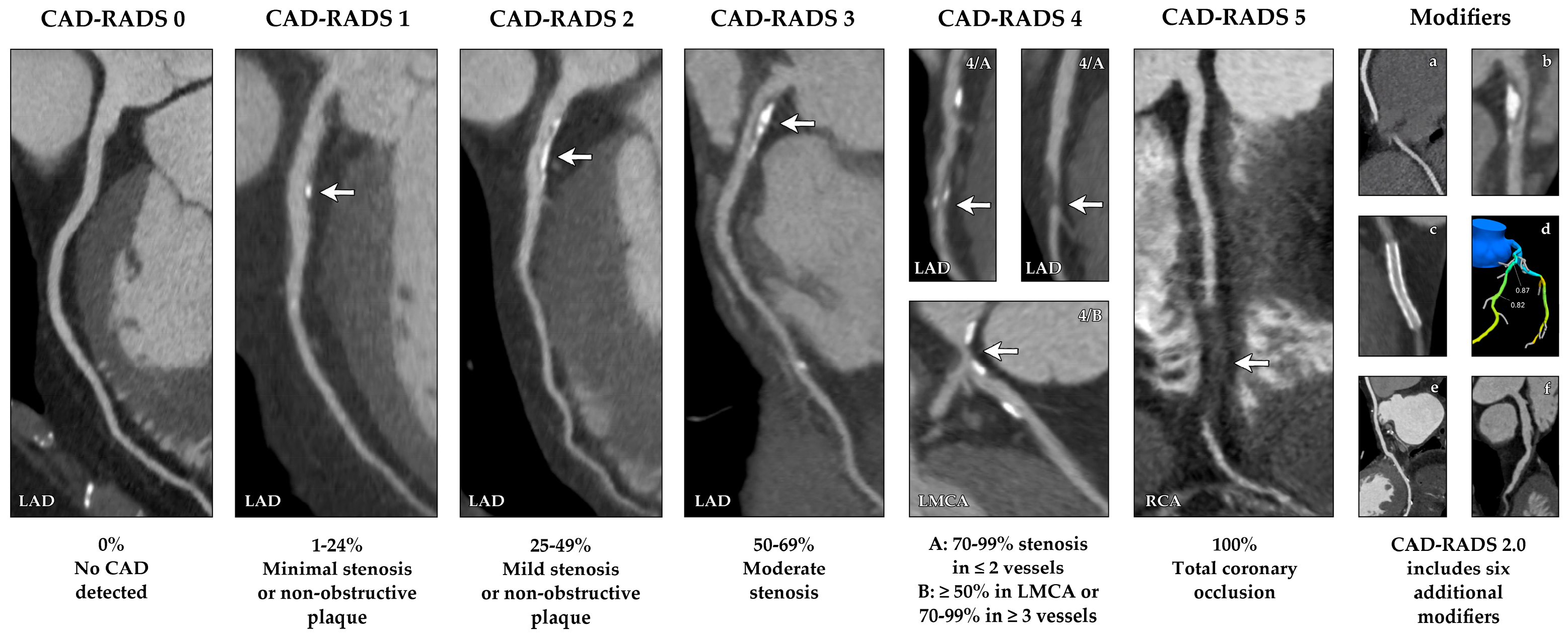
- Canan, A.; Ranganath, P.; Goerne, H.; Abbara, S.; Landeras, L.; Rajiah, P. CAD-RADS: Pushing the Limits. RadioGraphics 2020, 40, 629–652. [Google Scholar] [CrossRef] [PubMed]
- Vecsey-Nagy, M.; Tremamunno, G.; Schoepf, U.J.; Gnasso, C.; Zsarnóczay, E.; Fink, N.; Kravchenko, D.; Halfmann, M.C.; Laux, G.S.; O’Doherty, J.; et al. Intraindividual Comparison of Ultrahigh-Spatial-Resolution Photon-Counting Detector CT and Energy-Integrating Detector CT for Coronary Stenosis Measurement. Circ. Cardiovasc. Imaging 2024, 17, e017112. [Google Scholar] [CrossRef]
- Hagar, M.T.; Soschynski, M.; Saffar, R.; Molina-Fuentes, M.F.; Weiss, J.; Rau, A.; Schuppert, C.; Ruile, P.; Faby, S.; Schibilsky, D.; et al. Ultra-high-resolution photon-counting detector CT in evaluating coronary stent patency: A comparison to invasive coronary angiography. Eur. Radiol. 2024, 34, 4273–4283. [Google Scholar] [CrossRef]
- Van Rosendael, A.R.; Maliakal, G.; Kolli, K.K.; Beecy, A.; Al’Aref, S.J.; Dwivedi, A.; Singh, G.; Panday, M.; Kumar, A.; Ma, X.; et al. Maximization of the usage of coronary CTA derived plaque information using a machine learning based algorithm to improve risk stratification; insights from the CONFIRM registry. J. Cardiovasc. Comput. Tomogr. 2018, 12, 204–209. [Google Scholar] [CrossRef]
- Williams, M.C.; Moss, A.J.; Dweck, M.; Adamson, P.D.; Alam, S.; Hunter, A.; Shah, A.S.V.; Pawade, T.; Weir-McCall, J.R.; Roditi, G.; et al. Coronary Artery Plaque Characteristics Associated With Adverse Outcomes in the SCOT-HEART Study. J. Am. Coll. Cardiol. 2019, 73, 291–301. [Google Scholar] [CrossRef]
- Fuchs, A.; Kühl, J.T.; Sigvardsen, P.E.; Afzal, S.; Knudsen, A.D.; Møller, M.B.; De Knegt, M.C.; Sørgaard, M.H.; Nordestgaard, B.G.; Køber, L.V.; et al. Subclinical Coronary Atherosclerosis and Risk for Myocardial Infarction in a Danish Cohort: A Prospective Observational Cohort Study. Ann. Intern. Med. 2023, 176, 433–442. [Google Scholar] [CrossRef]
- Abazid, R.M.; Smettei, O.A.; Kattea, M.O.; Sayed, S.; Saqqah, H.; Widyan, A.M.; Opolski, M.P. Relation Between Epicardial Fat and Subclinical Atherosclerosis in Asymptomatic Individuals. J. Thorac. Imaging 2017, 32, 378–382. [Google Scholar] [CrossRef]
- Wolf, E.V.; Halfmann, M.C.; Schoepf, U.J.; Zsarnoczay, E.; Fink, N.; Griffith, J.P.; Aquino, G.J.; Willemink, M.J.; O’Doherty, J.; Hell, M.M.; et al. Intra-individual comparison of coronary calcium scoring between photon counting detector- and energy integrating detector-CT: Effects on risk reclassification. Front. Cardiovasc. Med. 2023, 9, 1053398. [Google Scholar] [CrossRef]
- Li, M.; Wu, M.; Pack, J.; Wu, P.; Yan, P.; De Man, B.; Wang, A.; Nieman, K.; Wang, G. Coronary atherosclerotic plaque characterization with silicon-based photon-counting computed tomography (CT): A simulation-based feasibility study. Med. Phys. 2024, 51, 8725–8741. [Google Scholar] [CrossRef]
- Ghoshhajra, B.B.; Hedgire, S.S.; Hurwitz Koweek, L.M.; Beache, G.M.; Brown, R.K.J.; Davis, A.M.; Hsu, J.Y.; Johnson, T.V.; Kicska, G.A.; Kligerman, S.J.; et al. ACR Appropriateness Criteria® Asymptomatic Patient at Risk for Coronary Artery Disease: 2021 Update. J. Am. Coll. Radiol. 2021, 18, S2–S12. [Google Scholar] [CrossRef]
- Antonopoulos, A.S.; Angelopoulos, A.; Tsioufis, K.; Antoniades, C.; Tousoulis, D. Cardiovascular risk stratification by coronary computed tomography angiography imaging: Current state-of-the-art. Eur. J. Prev. Cardiol. 2022, 29, 608–624. [Google Scholar] [CrossRef] [PubMed]
- Nissen, S.E.; Nicholls, S.J.; Sipahi, I.; Libby, P.; Raichlen, J.S.; Ballantyne, C.M.; Davignon, J.; Erbel, R.; Fruchart, J.C.; Tardif, J.-C.; et al. Effect of Very High-Intensity Statin Therapy on Regression of Coronary Atherosclerosis: The ASTEROID Trial. JAMA 2006, 295, 1556. [Google Scholar] [CrossRef]
- Ridker, P.M.; Everett, B.M.; Thuren, T.; MacFadyen, J.G.; Chang, W.H.; Ballantyne, C.; Fonseca, F.; Nicolau, J.; Koenig, W.; Anker, S.D.; et al. Antiinflammatory Therapy with Canakinumab for Atherosclerotic Disease. N. Engl. J. Med. 2017, 377, 1119–1131. [Google Scholar] [CrossRef]
- Lin, A.; Dey, D.; Wong, D.T.L.; Nerlekar, N. Perivascular Adipose Tissue and Coronary Atherosclerosis: From Biology to Imaging Phenotyping. Curr. Atheroscler. Rep. 2019, 21, 47. [Google Scholar] [CrossRef]
- Taylor, C.A.; Fonte, T.A.; Min, J.K. Computational fluid dynamics applied to cardiac computed tomography for noninvasive quantification of fractional flow reserve: Scientific basis. J. Am. Coll. Cardiol. 2013, 61, 2233–2241. [Google Scholar] [CrossRef]
- Nørgaard, B.L.; Leipsic, J.; Gaur, S.; Seneviratne, S.; Ko, B.S.; Ito, H.; Jensen, J.M.; Mauri, L.; De Bruyne, B.; Bezerra, H.; et al. Diagnostic Performance of Noninvasive Fractional Flow Reserve Derived From Coronary Computed Tomography Angiography in Suspected Coronary Artery Disease: The NXT Trial (Analysis of Coronary Blood Flow Using CT Angiography: Next Steps). J. Am. Coll. Cardiol. 2014, 63, 1145–1155. [Google Scholar] [CrossRef]
- Douglas, P.S.; De Bruyne, B.; Pontone, G.; Patel, M.R.; Norgaard, B.L.; Byrne, R.A.; Curzen, N.; Purcell, I.; Gutberlet, M.; Rioufol, G.; et al. 1-Year Outcomes of FFRCT-Guided Care in Patients With Suspected Coronary Disease: The PLATFORM Study. J. Am. Coll. Cardiol. 2016, 68, 435–445. [Google Scholar] [CrossRef] [PubMed]
- Patel, M.R.; Nørgaard, B.L.; Fairbairn, T.A.; Nieman, K.; Akasaka, T.; Berman, D.S.; Raff, G.L.; Hurwitz Koweek, L.M.; Pontone, G.; Kawasaki, T.; et al. 1-Year Impact on Medical Practice and Clinical Outcomes of FFRCT: The ADVANCE Registry. JACC Cardiovasc. Imaging 2020, 13, 97–105. [Google Scholar] [CrossRef] [PubMed]
- Cook, C.M.; Petraco, R.; Shun-Shin, M.J.; Ahmad, Y.; Nijjer, S.; Al-Lamee, R.; Kikuta, Y.; Shiono, Y.; Mayet, J.; Francis, D.P.; et al. Diagnostic Accuracy of Computed Tomography-Derived Fractional Flow Reserve: A Systematic Review. JAMA Cardiol. 2017, 2, 803–810. [Google Scholar] [CrossRef]
- Willemink, M.J.; Persson, M.; Pourmorteza, A.; Pelc, N.J.; Fleischmann, D. Photon-counting CT: Technical Principles and Clinical Prospects. Radiology 2018, 289, 293–312. [Google Scholar] [CrossRef]
- Flohr, T.; Schmidt, B.; Ulzheimer, S.; Alkadhi, H. Cardiac imaging with photon counting CT. Br. J. Radiol. 2023, 96, 20230407. [Google Scholar] [CrossRef]
- Pourmorteza, A.; Symons, R.; Sandfort, V.; Mallek, M.; Fuld, M.K.; Henderson, G.; Jones, E.C.; Malayeri, A.A.; Folio, L.R.; Bluemke, D.A. Abdominal Imaging with Contrast-enhanced Photon-counting CT: First Human Experience. Radiology 2016, 279, 239–245. [Google Scholar] [CrossRef]
- Szilveszter, B.; Varga-Szemes, Á.; Pourmorteza, A.; Schwartz, F.R. Editorial: Photon counting CT technology in cardiovascular imaging. Front. Cardiovasc. Med. 2025, 12, 1641175. [Google Scholar] [CrossRef]
- Schulze, K.; Stantien, A.-M.; Williams, M.C.; Vassiliou, V.S.; Giannopoulos, A.A.; Nieman, K.; Maurovich-Horvat, P.; Tarkin, J.M.; Vliegenthart, R.; Weir-McCall, J.; et al. Coronary CT angiography evaluation with artificial intelligence for individualized medical treatment of atherosclerosis: A Consensus Statement from the QCI Study Group. Nat. Rev. Cardiol. 2025, 23, 100–115. [Google Scholar] [CrossRef] [PubMed]
- Koo, B.-K.; Yang, S.; Jung, J.W.; Zhang, J.; Lee, K.; Hwang, D.; Lee, K.-S.; Doh, J.-H.; Nam, C.-W.; Kim, T.H.; et al. Artificial Intelligence-Enabled Quantitative Coronary Plaque and Hemodynamic Analysis for Predicting Acute Coronary Syndrome. JACC Cardiovasc. Imaging 2024, 17, 1062–1076. [Google Scholar] [CrossRef] [PubMed]
- Oikonomou, E.K.; Williams, M.C.; Kotanidis, C.P.; Desai, M.Y.; Marwan, M.; Antonopoulos, A.S.; Thomas, K.E.; Thomas, S.; Akoumianakis, I.; Fan, L.M.; et al. A novel machine learning-derived radiotranscriptomic signature of perivascular fat improves cardiac risk prediction using coronary CT angiography. Eur. Heart J. 2019, 40, 3529–3543. [Google Scholar] [CrossRef]
- Mochizuki, J.; Hata, Y.; Nakaura, T.; Hashimoto, K.; Uetani, H.; Nagayama, Y.; Kidoh, M.; Funama, Y.; Hirai, T. Machine Learning for Evaluating Vulnerable Plaque on Coronary Computed Tomography Using Spectral Imaging. Circ. Rep. 2024, 6, 564–572. [Google Scholar] [CrossRef]
- Akella, A.; Akella, S. Machine Learning Algorithms for Predicting Coronary Artery Disease: Efforts Toward an Open Source Solution. Future Sci. OA 2021, 7, FSO698. [Google Scholar] [CrossRef] [PubMed]


| Plaque Category | Total Amount of Plaque | CAC | SIS | Visual Estimation |
|---|---|---|---|---|
| P1 | Mild | 1–100 | ≤2 | Mild plaque in 1–2 coronary vessels |
| P2 | Moderate | 101–300 | 3–4 | Moderate plaque in 1–2 vessels or mild in 3 vessels |
| P3 | Severe | 301–999 | 5–7 | Moderate plaque in 3 vessels or severe in 1 vessel |
| P4 | Extensive | >1000 | ≥8 | Severe plaques affecting multiple vessels |
Disclaimer/Publisher’s Note: The statements, opinions and data contained in all publications are solely those of the individual author(s) and contributor(s) and not of MDPI and/or the editor(s). MDPI and/or the editor(s) disclaim responsibility for any injury to people or property resulting from any ideas, methods, instructions or products referred to in the content. |
© 2026 by the authors. Published by MDPI on behalf of the Lithuanian University of Health Sciences. Licensee MDPI, Basel, Switzerland. This article is an open access article distributed under the terms and conditions of the Creative Commons Attribution (CC BY) license.
Share and Cite
Mátyás, B.B.; Benedek, I.; Rat, N.; Gerculy, R.; Benedek, T. Coronary Plaque Vulnerability and Pericoronary Adipose Tissue Inflammation: Emerging Insights from Advanced CT Imaging. Medicina 2026, 62, 630. https://doi.org/10.3390/medicina62040630
Mátyás BB, Benedek I, Rat N, Gerculy R, Benedek T. Coronary Plaque Vulnerability and Pericoronary Adipose Tissue Inflammation: Emerging Insights from Advanced CT Imaging. Medicina. 2026; 62(4):630. https://doi.org/10.3390/medicina62040630
Chicago/Turabian StyleMátyás, Botond Barna, Imre Benedek, Nóra Rat, Renáta Gerculy, and Theodora Benedek. 2026. "Coronary Plaque Vulnerability and Pericoronary Adipose Tissue Inflammation: Emerging Insights from Advanced CT Imaging" Medicina 62, no. 4: 630. https://doi.org/10.3390/medicina62040630
APA StyleMátyás, B. B., Benedek, I., Rat, N., Gerculy, R., & Benedek, T. (2026). Coronary Plaque Vulnerability and Pericoronary Adipose Tissue Inflammation: Emerging Insights from Advanced CT Imaging. Medicina, 62(4), 630. https://doi.org/10.3390/medicina62040630