Review

Coronary Plaque Vulnerability and Pericoronary Adipose Tissue Inflammation: Emerging Insights from Advanced CT Imaging


by
Botond Barna Mátyás
1,2,3,
Imre Benedek
1,2,3,
Nóra Rat
1,2,3,*,
Renáta Gerculy
1,2,3 and
Theodora Benedek
1,2,3
1
Department of Cardiology, “George Emil Palade” University of Medicine, Pharmacy, Science and Technology of Târgu Mureș, 540139 Târgu Mureș, Romania
2
Clinic of Cardiology, Mureș County Emergency Clinical Hospital, 540136 Târgu Mureș, Romania
3
Center of Advanced Research in Multimodality Cardiac Imaging, CardioMed Medical Center, 540124 Târgu Mures, Romania
*
Author to whom correspondence should be addressed.
Medicina 2026, 62(4), 630; https://doi.org/10.3390/medicina62040630
Submission received: 11 February 2026 / Revised: 11 March 2026 / Accepted: 24 March 2026 / Published: 26 March 2026

Abstract

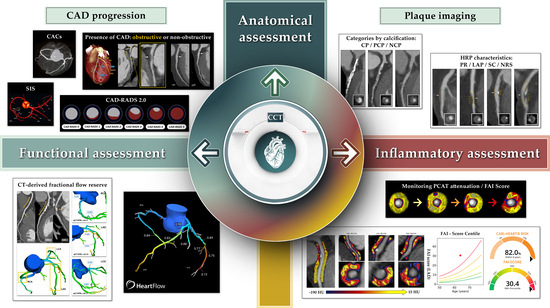
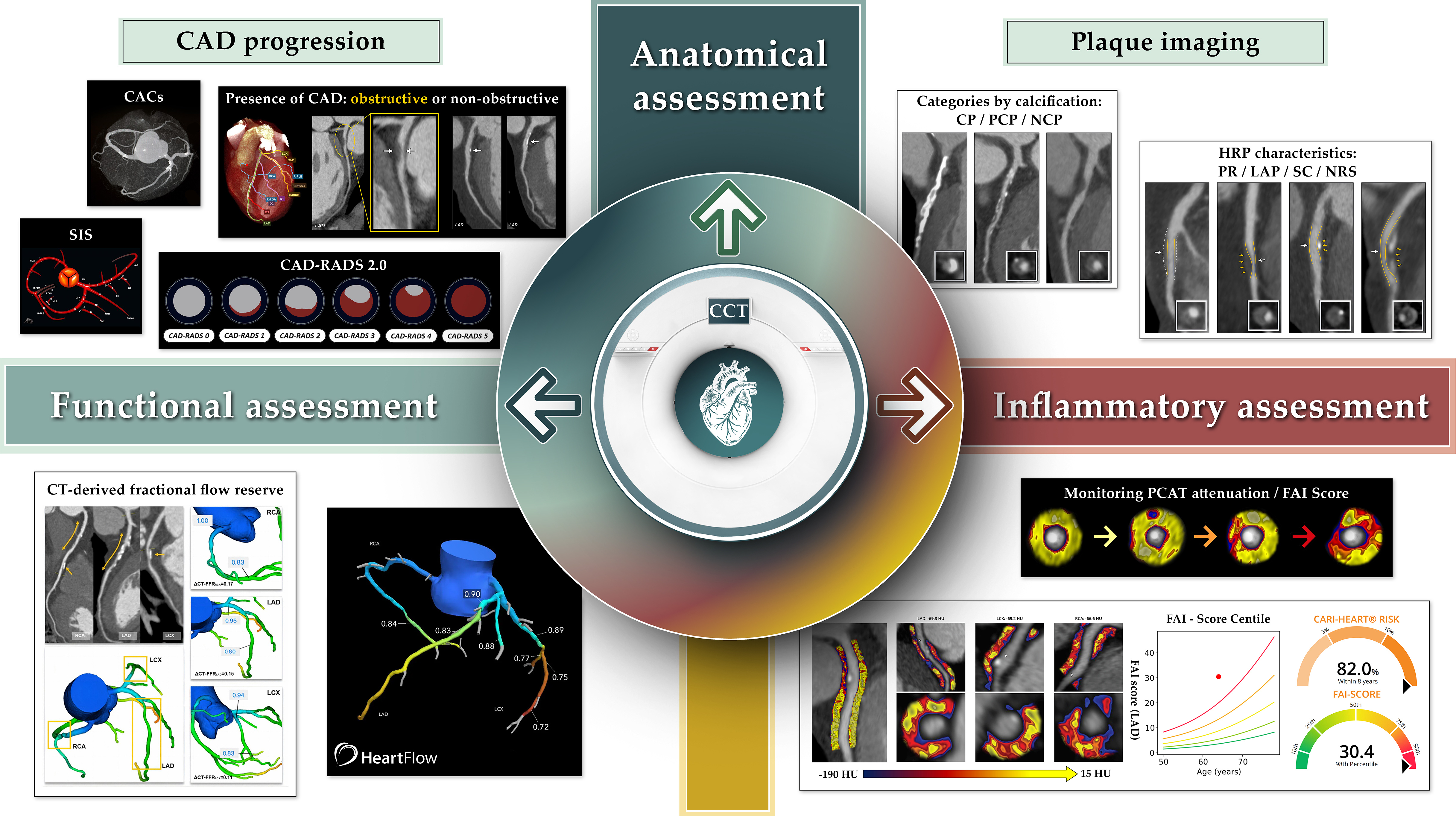
Cardiovascular emergencies most frequently arise from the sudden destabilization of atherosclerotic plaques. Conventional diagnostic strategies predominantly focus on luminal stenosis, despite the fact that most acute coronary events originate from non-obstructive lesions with high inflammatory activity. Recent advances in cardiac computed tomography (CCT) enable visualization of plaque morphology and surrounding perivascular fat, offering a unique window into coronary inflammation. The fat attenuation index (FAI), derived from pericoronary adipose tissue (PCAT) radiodensity, has emerged as a dynamic imaging biomarker capable of detecting vascular inflammation before clinical events occur. This review summarizes current evidence on the role of PCAT inflammation in plaque vulnerability, its implications for acute cardiovascular presentations, and recent technological innovations—including AI-enhanced analysis and photon-counting CT—that advance risk prediction. Inflammation-based imaging derived from CCT, including PCAT-FAI, has emerged as a promising research tool that may enhance risk stratification in patients presenting with chest pain. These developments signify a shift from purely anatomical assessment toward biological characterization of CAD, potentially transforming prevention and acute care.

Graphical Abstract

1. Introduction

Cardiovascular diseases (CVDs) remain the leading global cause of death, accounting for 17.5 million fatalities in 2012, with ischemic heart disease and stroke representing the largest share [1]. Projections indicate that annual CVD-related deaths may rise to 23.6 million by 2030, driven by aging populations and persistent exposure to modifiable risk factors such as hypertension, diabetes, obesity, and smoking [2]. Recent estimates from the 2023 Global Burden of Disease Study again identify ischemic heart disease as a dominant contributor to worldwide mortality, particularly where preventive strategies remain suboptimal [3]. This burden is reflected in Romania, where CVDs were responsible for over half of all deaths in 2022, with ischemic heart disease and stroke greatly exceeding European mortality averages and contributing to the nation’s persistently reduced life expectancy [4].
While advances in cardiac computed tomography (CCT) have strengthened non-invasive evaluation of coronary artery disease (CAD) [5,6,7], reliance on luminal stenosis alone is insufficient, as many acute coronary syndromes (ACS) originate from non-obstructive yet highly inflamed plaques [8,9,10]. Emerging evidence positions vascular inflammation as a central driver of plaque vulnerability, highlighting the need for biologically informed imaging. Radiomic assessment of pericoronary adipose tissue (PCAT), particularly through the fat attenuation index (FAI), offers a sensitive marker of local inflammatory activity that complements anatomical characterization [11,12,13]. Combined with innovations such as CT-derived fractional flow reserve (CT-FFR) and AI-enabled risk platforms, CCT is transitioning from solely an anatomical tool to a modality capable of capturing dynamic aspects of plaque biology, enabling improved risk stratification and personalized prevention strategies [14,15,16,17,18]. Although PCAT-derived biomarkers have demonstrated strong prognostic associations in observational cohorts, their integration into routine clinical pathways remains under investigation.
This article was designed as a narrative review summarizing current evidence on PCAT imaging and its role in coronary inflammation and plaque vulnerability. Relevant literature was identified through searches of major biomedical databases (e.g., PubMed and Scopus), focusing on studies evaluating PCAT attenuation, the FAI, CCT, and imaging biomarkers related to CAD. Priority was given to landmark clinical trials, observational studies, and recent consensus documents to provide an integrated overview of emerging inflammation-based imaging approaches.

2. Coronary Plaque Biology and Vulnerability

2.1. Plaque Morphology and Composition

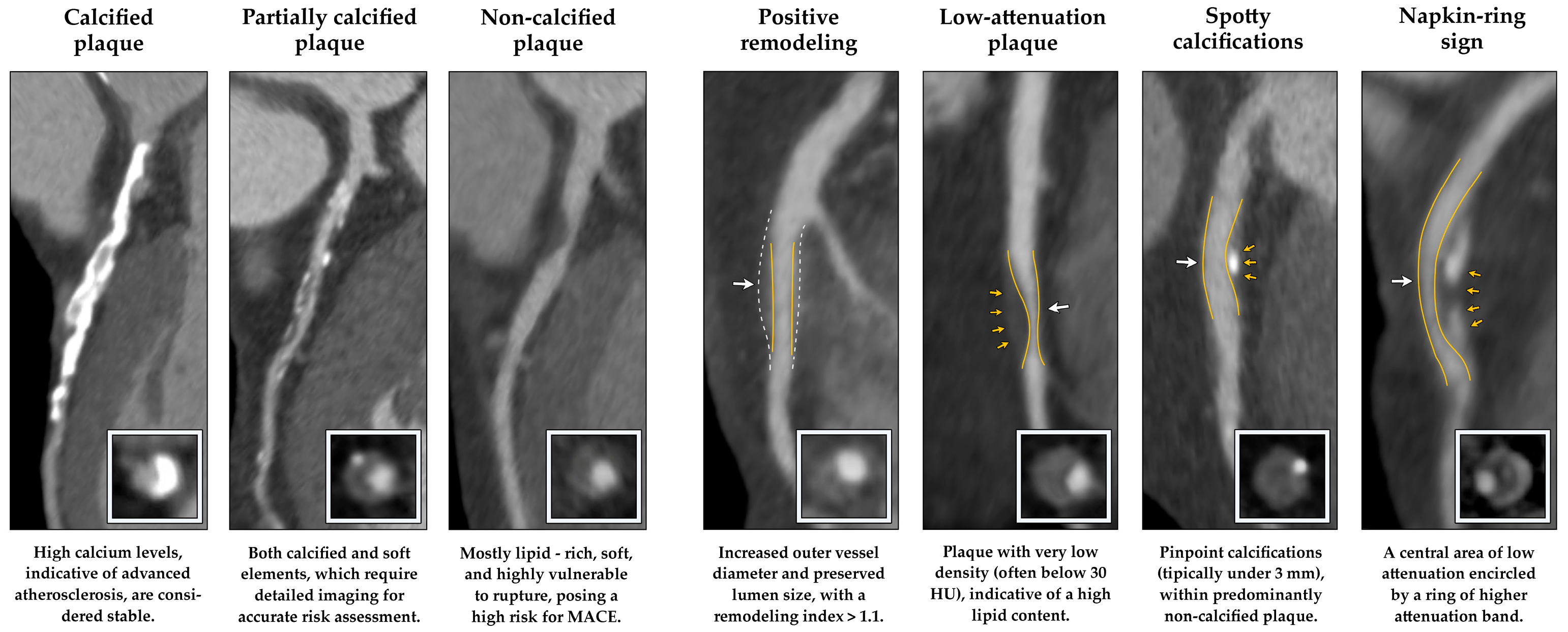
Coronary atherosclerosis encompasses a spectrum of plaque phenotypes, each with distinct structural and clinical implications. Plaques are broadly categorized according to the degree of calcification into calcified plaques (CP), partially calcified plaques (PCP), and non-calcified plaques (NCP), as shown in Figure 1. CPs are typically associated with more advanced but mechanically stable disease, reflecting a chronic reparative process that tends to limit the risk of rupture [19,20]. PCPs, by contrast, contain both calcific and lipid-rich components and often represent a transitional form of atherosclerosis whose complexity may require advanced imaging for accurate characterization [19,21].
NCPs are of particular clinical concern. These lesions are enriched in lipid material and inflammatory cells and commonly exhibit features of thin-cap fibroatheroma (TCFA), defined by a substantial necrotic core and a fragile fibrous cap. Such plaques are predisposed to fissuring or rupture even in the absence of significant luminal narrowing [22,23,24,25]. Numerous invasive and non-invasive imaging studies have shown that NCPs—not obstruction severity—account for a large share of myocardial infarctions [24,26]. Furthermore, these high-risk phenotypes frequently occur in younger individuals and in patients with zero coronary artery calcium (CAC) scores, underscoring the limitations of CAC as a standalone indicator of risk [27,28,29].
Although CAC remains an established marker of cumulative plaque burden and long-term cardiovascular risk [9,30,31], its absence does not preclude the presence of vulnerable NCPs. This limitation has become increasingly evident in symptomatic patients with CAC = 0, in whom biologically active plaques may still be present [12,28,32]. Modern data also highlight that statin therapy—while stabilizing plaques overall—can increase coronary calcification, complicating interpretation of CAC trajectories [33,34,35,36]. These nuances illustrate why understanding plaque composition, not only burden, is essential for evaluating short-term risk.

2.2. High-Risk Plaque Imaging Markers

Beyond morphologic classification, CCT enables identification of a series of imaging signatures that reflect underlying plaque biology and instability. These so-called high-risk plaque (HRP) markers include positive remodeling (PR), low-attenuation plaque (LAP), spotty calcifications (SC), and the napkin-ring sign (NRS), as shown in Figure 1. PR—defined as a remodeling index > 1.1—suggests compensatory vessel expansion in response to inflammation. LAP, characterized by attenuation < 30 HU, corresponds to lipid-laden necrotic cores, whereas SC represents small punctate calcifications (<3 mm) scattered within the plaque. The NRS, a circumferential high-attenuation rim surrounding a low-attenuation core, is particularly specific for TCFA and has consistently been associated with impending plaque rupture [37,38,39].
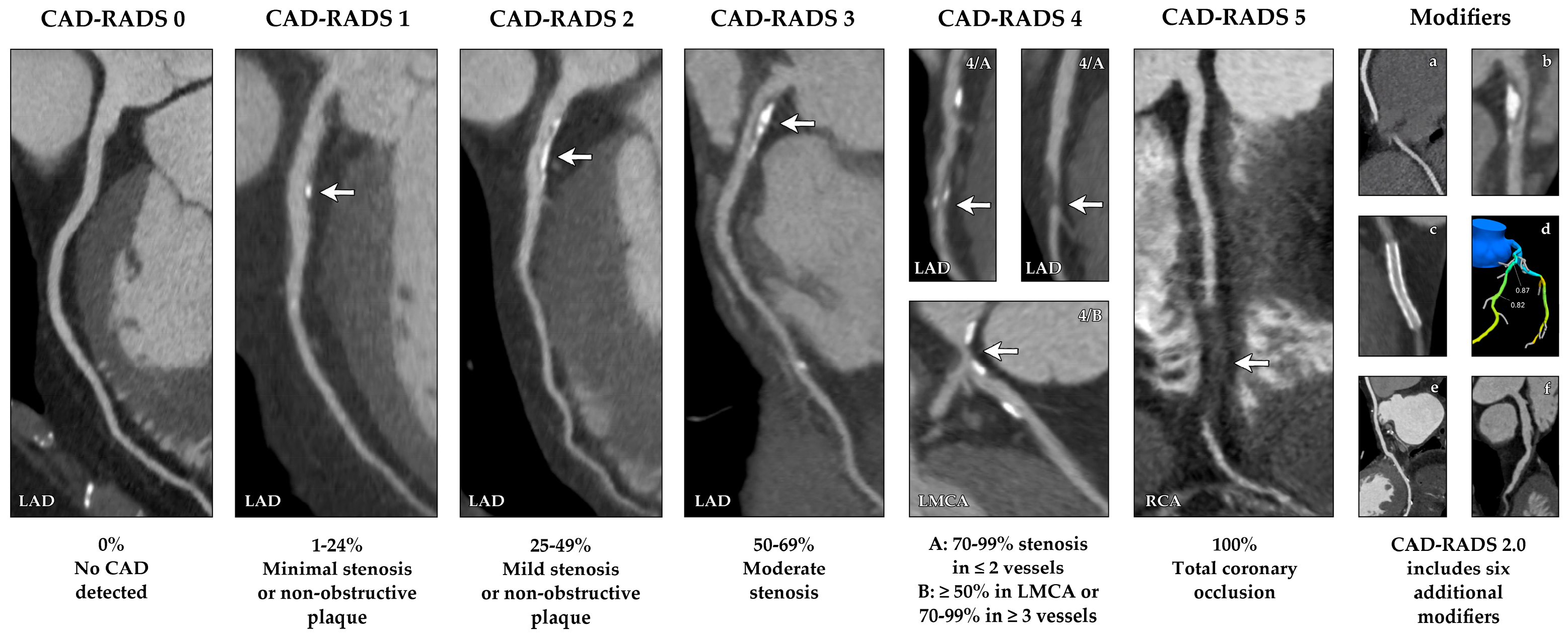
These HRP markers have strong prognostic value. Their presence predicts major adverse cardiovascular events (MACE) independently of stenosis severity [37,40,41]. Consequently, HRP detection has become a crucial component of modern CCT interpretation, prompting the development of structured frameworks such as CAD-RADS 2.0 (as shown in Figure 2 and Table 1), which integrates HRP characteristics and plaque burden alongside stenosis grading [42,43,44]. This multiparametric approach allows for a more biologically informed risk profile, facilitating earlier intervention in patients harboring vulnerable plaque features even when luminal obstruction is modest.

2.3. Non-Obstructive CAD as a Cause of Acute Events

While obstructive CAD remains an established predictor of adverse outcomes, accumulating evidence demonstrates that non-obstructive lesions with HRP features represent a major source of acute coronary events. CCT provides excellent negative predictive value for ruling out significant stenosis [45,46], and patients with entirely normal CCT findings typically exhibit excellent long-term prognosis [47,48]. However, those with non-obstructive plaque—defined as <50% luminal narrowing—experience significantly higher rates of MACE compared with individuals without any detectable atherosclerosis [49,50]. Importantly, non-obstructive plaques displaying LAP, PR, or NRS remain vulnerable to rupture despite their limited impact on luminal caliber [51,52].
Large observational registries reinforce this paradigm shift. The CONFIRM registry demonstrated a graded increase in mortality with increasing stenosis severity [53], yet studies such as ICONIC revealed that non-obstructive plaques with HRP carry a risk of future events comparable to that of obstructive plaques without vulnerability markers [51,54]. Findings from the PROMISE trial further highlight that HRP features confer independent prognostic significance, increasing event rates up to 2.7-fold in patients with <50% stenosis [51,52,55].
The PARADIGM registry advanced this concept by integrating plaque volume, composition, and progression into a longitudinal risk model, underscoring the need to identify biologically active plaques before they evolve into clinically manifest events [49,56]. Early recognition of these high-risk non-obstructive lesions enables timely preventive strategies, including intensive lipid-lowering therapy and lifestyle modification, ultimately aiming to avert ACS before mechanical obstruction occurs. Key clinical studies supporting these findings are summarized in Table 2.
Table 2. Major clinical studies evaluating coronary plaque vulnerability using CCT.
StudyPopulationPlaque
Features
Main FindingsClinical Implication
Motoyama et al., 2009 [40]1059 patients with suspected CAD undergoing CCTPR, LAPCombination of PR and LAP strongly predicted future ACS eventsFirst prospective evidence linking CCT plaque
morphology to ACS risk
Motoyama et al., 2015 [57]895 patients with CCT and follow-upPR, LAP, SC, NRSHigh-risk plaque features were associated with significantly higher incidence of ACS during follow-upEstablished prognostic importance of HRP features
Maurovich-Horvat et al., 2012 [51]Patients undergoing CCT for suspected CADNRSNRS strongly associated with advanced and vulnerable plaquesProvided imaging signature of TCFA
Otsuka et al.,
2013 [38]
Patients evaluated by CCT with clinical follow-upNRSPresence of NRS significantly predicted future acute coronary syndromeReinforced NRS as a marker of plaque vulnerability
Williams et al., SCOT-HEART
trial 2020 [58]
Multicenter randomized trial cohortNCP and LAPNon-calcified plaque burden predicted MI independent of stenosis severityShifted focus from stenosis to plaque biology
Lu et al.,
2021 [39]
Patients undergoing CCT for CAD evaluationPR, LAP, SC, NRSHRP features significantly improved prediction of ACS eventsSupports multiparametric plaque assessment
Bauer et al.,
2009 [52]
Patients undergoing CCT and myocardial perfusion imagingNCP burdenNon-calcified plaque burden correlated with ischemiaEarly demonstration of
prognostic plaque features
Virmani et al.,
2006 [23]
Pathology-based plaque analysisTCFATCFA identified as the primary substrate of plaque ruptureHistopathologic foundation for imaging markers
Salem et al.,
2023 [37]
Patients undergoing CCT with plaque characterizationHRP features and TCFACCT features correlate with invasive imaging markers of vulnerabilityValidates CT-based plaque characterization

3. Imaging Inflammation: PCAT, EAT, and the Fat Attenuation Index

3.1. Biological Rationale

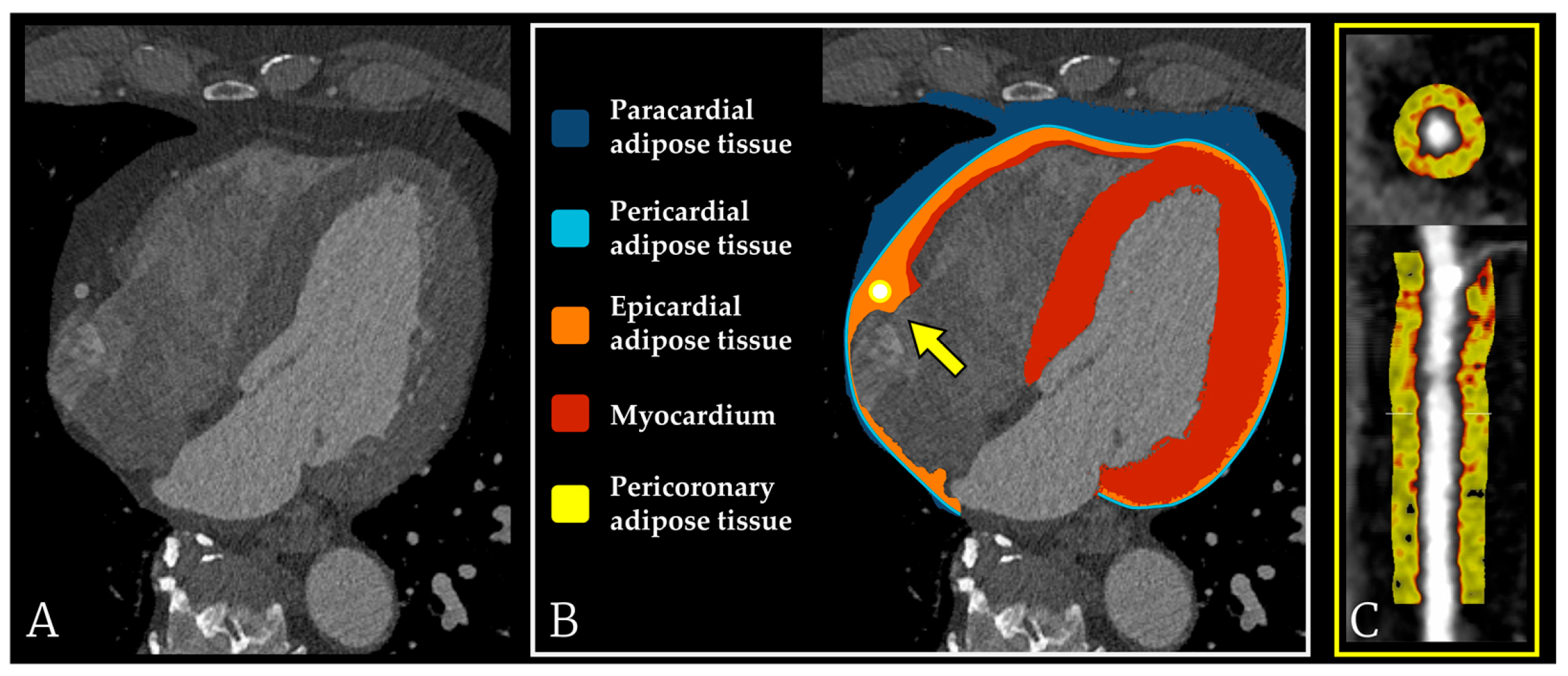
Over the past decade, a growing body of evidence has repositioned epicardial and pericoronary adipose tissue from passive fat depots to metabolically active organs with direct influence on coronary biology. Epicardial adipose tissue (EAT) can be evaluated using several imaging modalities, including echocardiography, CCT, and cardiac magnetic resonance imaging, each providing complementary information on its anatomical distribution and biological role. Early echocardiographic studies established EAT thickness as a non-invasive marker of cardiometabolic risk, while modern CCT techniques allow detailed volumetric and compositional characterization of EAT and PCAT [59]. EAT, situated beneath the visceral pericardium and in direct contact with the myocardium, is uniquely vascularized by branches of the coronary arteries, allowing an uninterrupted exchange of bioactive molecules between adipocytes and cardiac structures. In contrast, PCAT surrounds the coronary vessels themselves, forming what has been termed the “fourth layer” of the arterial wall (Figure 3). Its strategic location permits intense paracrine and vasocrine communication with the vascular endothelium, smooth muscle cells, and infiltrating immune cells [12,60].
Physiologically, these adipose layers secrete a balanced profile of adipokines and cytokines—ranging from adiponectin and other protective mediators to factors promoting vasodilation and antioxidative homeostasis. However, metabolic dysfunction shifts this equilibrium toward a pro-inflammatory, pro-atherogenic state. Obesity, diabetes, and metabolic syndrome promote adipocyte hypertrophy, oxidative stress, and macrophage infiltration, transforming both EAT and PCAT into potent sources of inflammatory mediators such as IL-6, TNF-α, MCP-1, and profibrotic signaling molecules [60,61,62]. Because PCAT lies directly adjacent to the coronary adventitia, inflammatory activation within this tissue mirrors—and amplifies—pathological processes occurring in the coronary artery wall, contributing to endothelial dysfunction and plaque fragility. An overview of key clinical studies is provided in Table 3.
Table 3. Major studies evaluating PCAT attenuation and the FAI using CCT.
StudyPopulationPCAT/FAI
Parameters
Main FindingsClinical Implication
Antonopoulos
et al., 2017 [12]
Experimental and translational analysis of coronary inflammationPCAT
attenuation
Demonstrated that coronary inflammation modifies PCAT attenuation detectable on CCTEstablished the biological basis for FAI as a non-invasive marker of coronary inflammation
Oikonomou et al., CRISP-CT,
2018 [18]
Large prospective cohort undergoing CCTPCAT
attenuation
Increased FAI independently predicted cardiac mortality and major cardiovascular eventsLandmark validation of FAI as a prognostic biomarker
Goeller et al.,
2019 [33]
Patients undergoing serial CCT imagingLongitudinal changes in PCAT attenuationChanges in PCAT attenuation correlated with coronary plaque burden progressionDemonstrated the potential of FAI-related metrics for disease monitoring
Lin et al.,
2021 [34]
Cross-sectional cohort of patients with varying CAD severityPCAT attenuation PCAT attenuation differed significantly across stages of CADSupported diagnostic value of PCAT-derived inflammation markers
Van Rosendael
et al., 2024 [35]
Patients undergoing CCT with long-term follow-upPCAT attenuationElevated PCAT attenuation predicted long-term cardiovascular outcomesConfirmed the prognostic relevance of coronary inflammation imaging
Goeller et al.,
2018 [63]
Patients with acute coronary syndrome and stable CADPCAT attenuation surrounding culprit lesionsHigher PCAT attenuation associated with high-risk plaques and ACSDemonstrated the link between local vascular inflammation and plaque vulnerability
Dai et al.,
2020 [64]
Patients undergoing serial CCT after statin therapySerial changes in FAIFAI decreased following statin therapy, suggesting reduced coronary inflammationSupports the use of FAI for monitoring therapeutic response
Bao et al.,
2022 [65]
Patients with psoriasis and matched controlsFAI-derived coronary inflammationElevated FAI reflected increased coronary inflammation in systemic inflammatory diseaseExpanded clinical relevance of PCAT-derived markers
Oikonomou
et al., 2021 [66]
Translational study of coronary inflammation quantificationPCAT
measurement
Proposed standardized methods for coronary inflammation imagingImportant step toward clinical implementation of FAI
Chan et al.,
ORFAN cohort, 2024 [67]
Multicenter longitudinal cohort without obstructive CADPCAT-derived FAICoronary inflammation predicted cardiovascular events even without obstructive diseaseHighlighted the role of PCAT imaging in early risk stratification
Mátyás et al.,
2023 [68]
Patients following COVID-19 infectionPCAT-derived FAIElevated FAI indicated persistent coronary inflammation and increased plaque vulnerability riskDemonstrated applicability of FAI in post-viral inflammatory states
Gerculy et al.,
2025 [69]
Patients with atrial fibrillation compared with controlsPCAT-derived FAIIncreased coronary inflammation associated with atrial fibrillation developmentSuggests interaction between coronary inflammation and atrial arrhythmogenesis

3.2. Technical Basis of PCAT Measurement

Advances in cardiac CT have enabled precise quantification of both EAT and PCAT, but PCAT has gained particular prominence due to its close relationship with coronary inflammation. PCAT attenuation is measured within a radiodensity range of −190 to −30 Hounsfield units (HU), allowing radiologists to assess tissue composition and inflammatory state with high reproducibility [12]. The FAI refines this assessment by capturing subtle, spatial changes in PCAT radiodensity related to shifts in adipocyte size, intracellular lipid/water content, and microvascular remodeling.
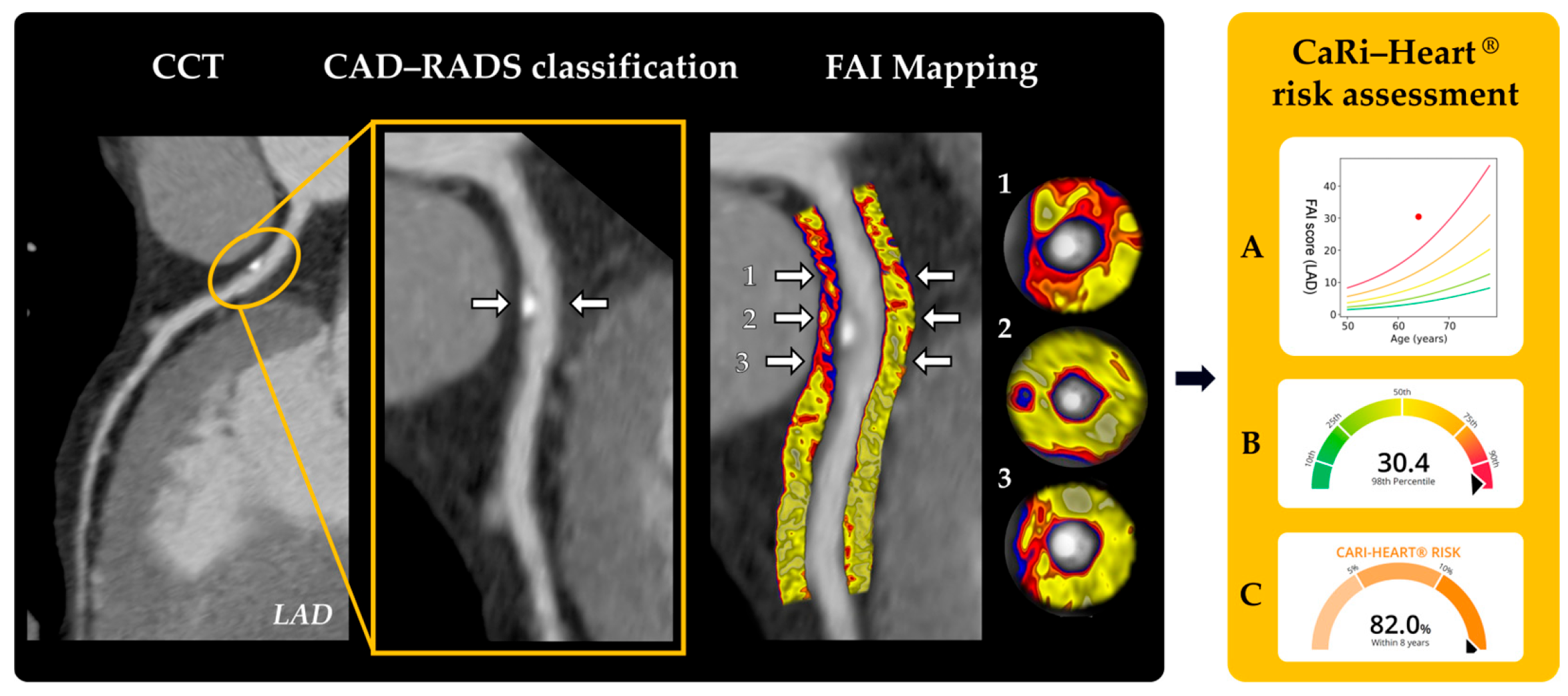
An important conceptual distinction has emerged between peri-arterial and peri-plaque PCAT. While early studies focused on PCAT surrounding proximal vessel segments—most often the RCA—newer radiomic approaches now analyze PCAT adjacent to specific plaques, where local inflammatory activity may be more pronounced [70,71]. This lesion-specific evaluation increases diagnostic sensitivity, particularly in patients with focal non-calcified or partially calcified plaques that carry high rupture risk (Figure 4). The recognition of PCAT as an imaging biosensor of coronary inflammation has been endorsed by recent expert consensus statements, though standardized protocols for routine clinical use are still under development [72].
Figure 4. Workflow for PCAT analysis and FAI quantification from CCT. In the black panel, CCT demonstrates lesion localization, with arrows indicating the site of coronary plaque. CAD-RADS-based plaque classification is followed by circumferential PCAT segmentation (−190 to −30 HU); numbered arrows (1–3) indicate segment-specific perivascular regions where FAI is sampled along the vessel. Color-coded FAI mapping illustrates the spatial heterogeneity of pericoronary inflammation, with corresponding cross-sectional views (1–3) showing local FAI distribution used for quantitative analysis. In the yellow CaRi-Heart® panel, derived FAI metrics are translated into clinical risk assessment: (A) the red dot represents the patient-specific FAI value relative to age-adjusted risk curves; (B) percentile-based inflammation score; (C) individualized cardiac risk estimate.
Medicina 62 00630 g004

3.3. Validation Studies and Clinical Translation

The clinical relevance of PCAT-derived inflammation metrics was firmly established by the landmark CRISP-CT study, which demonstrated that elevated FAI around the proximal RCA strongly predicts cardiac mortality [18]. Individuals with FAI values above −70.1 HU exhibited a nearly sevenfold increased risk of fatal cardiac events, independent of plaque burden, CAC scores, and traditional risk factors [73]. These findings confirmed that FAI captures a distinct and clinically meaningful dimension of cardiovascular risk: vascular inflammation. However, it should be noted that current evidence supporting FAI is primarily derived from observational cohorts, and randomized trials evaluating FAI-guided management strategies are not yet available.
The role of PCAT-derived biomarkers should be interpreted in the context of other inflammatory and imaging markers. Systemic biomarkers such as high-sensitivity C-reactive protein (hsCRP) reflect global inflammation and have demonstrated prognostic value but lack spatial specificity for coronary disease [74]. Molecular imaging with PET and ^18F-sodium fluoride (NaF) PET can identify metabolically active or microcalcified plaques associated with vulnerability [75], while invasive techniques such as intravascular ultrasound (IVUS) and optical coherence tomography (OCT) provide high-resolution plaque characterization and have been linked to future coronary events in studies such as PROSPECT [76]. In contrast, the FAI derived from CCT enables non-invasive assessment of local pericoronary inflammation and complements anatomical plaque evaluation [18,66,72].
Subsequent research has validated FAI in a wide range of clinical settings (Figure 5). Elevated FAI correlates with CAD severity, the presence of high-risk plaque morphology, and future ACS occurrence—even in patients with non-obstructive disease or low CAC scores [34,35,63]. Unlike calcification, which reflects cumulative disease burden, or HRP markers, which indicate structural vulnerability, FAI quantifies current, modifiable inflammatory activity. Its dynamic nature is particularly relevant for therapy monitoring. Studies show that statins and biologic anti-inflammatory treatments significantly reduce FAI values, consistent with decreases in systemic and vascular inflammation [64,65]. This responsiveness underscores the potential use of FAI in guiding treatment intensity and tracking therapeutic success.
Beyond atherosclerosis, PCAT attenuation has proven valuable in characterizing inflammation in systemic inflammatory conditions. Persistent elevation of FAI has been observed in individuals recovering from SARS-CoV-2 infection, suggesting ongoing coronary inflammation despite minimal or absent anatomical stenosis [68,77,78]. Evidence from clinical and imaging studies indicates that elevated FAI can identify inflamed, rupture-prone plaques even in young adults with post-COVID presentations, highlighting the potential role of coronary inflammation in post-viral cardiovascular risk [79]. Reductions in FAI after biologic therapy have also been demonstrated in psoriasis, further supporting its use as a real-time vascular inflammation biomarker [80,81].

3.4. Radiomics and Artificial Intelligence (CaRi-Heart®)

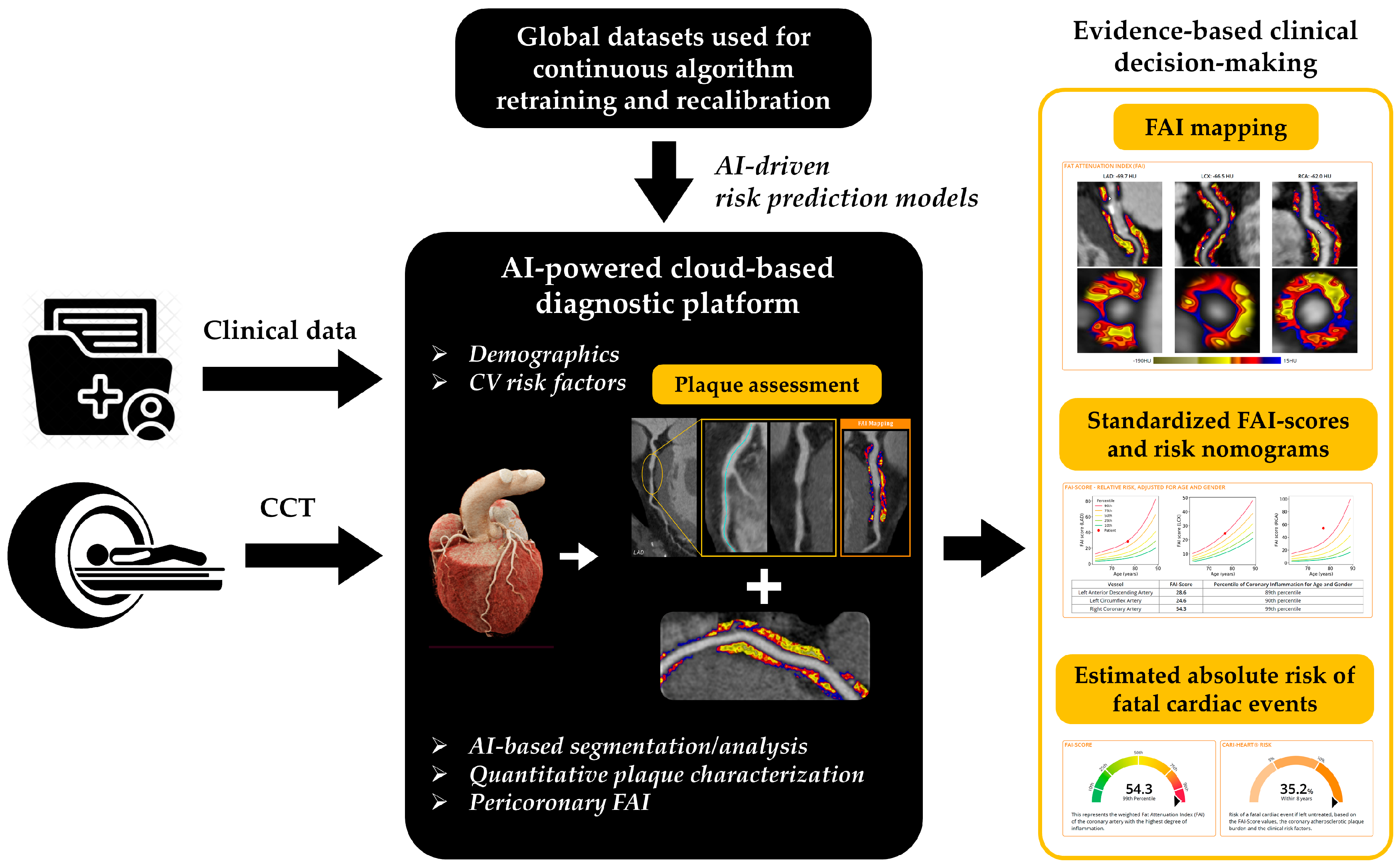
The clinical adoption of PCAT-based metrics has accelerated with the emergence of AI-powered radiomics platforms. Tools such as CaRi-Heart® automate segmentation of PCAT, extract textural and functional radiomic variables, and integrate them with plaque characteristics and clinical data to generate individualized inflammation and risk scores. These systems harmonize CCT images, apply validated algorithms calibrated on international datasets, and produce color-coded FAI maps and absolute risk estimates for adverse cardiovascular events.
Figure 5. Integrated workflow of an AI-powered cloud-based platform for cardiovascular risk prediction. Clinical data and CCT images are processed using automated segmentation and analysis tools to extract key biomarkers, including plaque characteristics and the pericoronary FAI. These parameters are combined with international datasets to recalibrate risk prediction algorithms. The system generates harmonized FAI maps and individualized risk scores, allowing estimation of absolute risk for fatal cardiac events and supporting informed clinical decision-making [11,12,73].
Medicina 62 00630 g005
By combining anatomical, biological, and computational assessments, radiomics platforms bridge the gap between plaque morphology and its inflammatory microenvironment. This capability enhances risk prediction beyond conventional CCT markers and supports personalized preventive strategies. As regulatory pathways advance and standardization improves, automated PCAT analysis is expected to become a routine component of CCT interpretation, reshaping clinical pathways for assessing coronary inflammation and plaque vulnerability.

4. Coronary Inflammation in Cardiovascular Emergencies

4.1. Acute Coronary Syndromes (Plaque Rupture/Erosion)

ACS arise predominantly from the sudden destabilization of atherosclerotic plaques rather than progressive luminal obstruction. Over the past decade, imaging studies have shown that perivascular inflammation—captured through the FAI—is closely linked to the biological processes that render plaques susceptible to rupture or erosion. Elevated FAI reflects inflammatory remodeling of pericoronary adipose tissue, which often surrounds plaques with a large necrotic core, thin fibrous cap, or positive remodeling—features typical of vulnerable lesions implicated in ACS [52,67]. This relationship has been validated across diverse populations, demonstrating that increased PCAT attenuation serves as an early warning signal of plaque instability and strongly predicts coronary events independent of stenosis severity or CAC burden [18,64,70].
Clinical imaging evidence further supports the central role of inflammation-driven plaque destabilization in ACS. In patients presenting with acute myocardial infarction—including younger individuals and those with recent systemic inflammatory conditions—CCT angiography has identified non-calcified or mixed plaques in the proximal coronary segments that exhibit high-risk plaque features despite only moderate or sub-obstructive stenosis [82,83]. In these cases, lesion-specific PCAT analysis revealed markedly elevated FAI values, indicating intense localized vascular inflammation. Subsequent ICA confirmed the culprit lesions, while intravascular imaging with optical coherence tomography frequently demonstrated plaque erosion or rupture with superimposed thrombus [79]. Across multiple cases, concordance between vulnerable plaque morphology, high perivascular inflammatory burden, and acute clinical presentation underscores the mechanistic link between inflammation and plaque failure.
Taken together, these observations reinforce that ACS frequently originates from lesions whose danger lies not in anatomical narrowing but in inflammatory activation. FAI may complement traditional plaque characterization by providing information on pericoronary inflammation associated with plaque vulnerability.

4.2. Atrial Fibrillation as an Inflammatory Emergency

Atrial fibrillation (AF) is increasingly recognized as a disorder in which inflammation contributes to both arrhythmia initiation and maintenance. EAT—a metabolically active visceral fat depot closely adherent to the myocardium—plays a central role in this process through its secretion of pro-inflammatory and profibrotic mediators such as IL-6, TNF-α, and MCP-1 [84]. These adipocytokines diffuse directly into the atrial myocardium, promoting structural remodeling, fibrosis, and electrical instability.
Advances in CCT now allow clinicians to assess not only the volume of EAT but also its inflammatory state using radiomic biomarkers such as FAI. In our work, AF patients displayed significantly higher EAT volumes compared with non-AF controls, supporting the link between epicardial fat burden and atrial susceptibility to arrhythmogenic remodeling [85]. When coronary inflammation was quantified using perivascular FAI, AF patients exhibited elevated inflammatory signals, particularly around the left coronary arteries—an observation that suggests a convergence between coronary and atrial inflammatory pathways [69].
These findings have important clinical implications. Since AF heightens the risk of stroke, heart failure, and hemodynamic compromise, early recognition of inflammation-driven arrhythmogenic substrates may refine patient selection for rhythm-control interventions and guide preventive strategies. Moreover, assessing both EAT volume and perivascular inflammation may help identify individuals at higher risk for AF recurrence after cardioversion or ablation, enabling a more personalized management approach.

4.3. Post-COVID Patients Presenting with Chest Pain or ACS-like Symptoms

COVID-19 has introduced new challenges in evaluating patients presenting with chest pain or possible ACS. Even months after infection, many individuals exhibit persistent vascular inflammation despite minimal or absent coronary stenosis. Our post-SARS-CoV-2 cohort demonstrated significantly elevated PCAT-FAI values in recovered patients compared with uninfected controls, consistent with prolonged coronary immune activation [68,77]. Similar findings have been reported in independent CT studies, including non-contrast scans showing increased peri-coronary fat density, particularly around the RCA [78,86].
This persistent inflammatory phenotype complicates emergency evaluation. COVID-related myocardial symptoms—such as chest pain, dyspnea, or biomarker elevation—may mimic ACS, yet the underlying mechanism may involve microvascular dysfunction, endothelial injury, or inflammation rather than plaque rupture. In such contexts, traditional tools like ECG, troponin, or even angiography may fail to distinguish true ACS from myocarditis-like or endothelial inflammatory presentations. FAI thus offers a unique advantage: it identifies localized vascular inflammation that may indicate heightened risk even when anatomical imaging appears unremarkable.
Case reports, including the STEMI example described earlier, highlight how COVID-related inflammation may accelerate plaque destabilization, particularly in young or low-risk individuals [79]. Beyond COVID-19, similar FAI elevations have been noted in systemic inflammatory diseases such as psoriasis, where biologic therapy resulted in significant reductions in perivascular inflammation [80,81,87]. These findings suggest that PCAT-based inflammation imaging may provide valuable insight into the cardiovascular consequences of systemic immune activation.

5. CT-Based Preventive and Emergency Risk Stratification

5.1. Role of CAC in Emergency Pathways

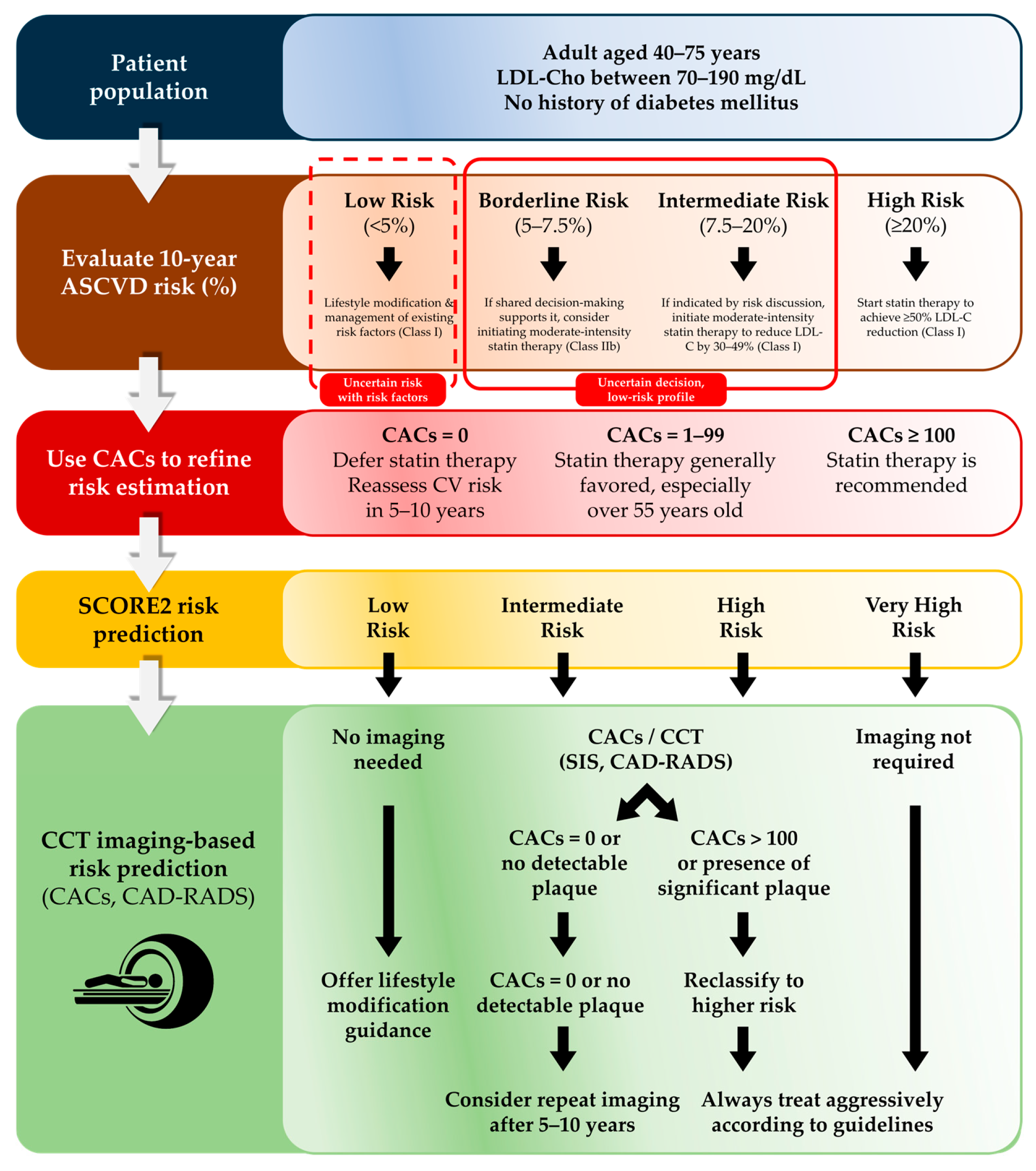
CAC remains one of the most widely used tools for initial cardiovascular risk assessment and is particularly valuable in emergency pathways where rapid stratification is essential. Derived from non-contrast CT, CAC quantifies total calcified plaque burden and provides a straightforward, reproducible metric that enhances traditional clinical risk estimators such as SCORE-2 and ASCVD models [88,89,90,91,92]. In intermediate-risk individuals or those with borderline indications for statin therapy, CAC helps refine preventive decisions: a score of zero may support deferral of pharmacologic therapy, while values ≥ 1, and especially ≥100, significantly favor treatment initiation (Figure 6).
Despite its widespread use, CAC is fundamentally a static marker reflecting cumulative plaque burden rather than current disease activity. It does not capture early non-calcified lesions, inflammatory remodeling, or dynamically evolving plaque vulnerability—particularly relevant in emergency settings where ACS often originates in plaques that contain little or no calcium. Younger patients, women, and individuals from certain ethnic backgrounds may experience significant atherosclerotic risk despite a CAC of zero, highlighting an important limitation in relying exclusively on calcification for risk exclusion [89,90,91,93,94,95].
For these reasons, CAC serves as a strong long-term prognostic indicator but must be interpreted cautiously when evaluating acute symptoms or short-term risk. Integration with anatomical CCT, plaque characterization, and inflammation imaging can therefore provide a more comprehensive emergency assessment.

5.2. CCT in Asymptomatic and Symptomatic Risk Triage

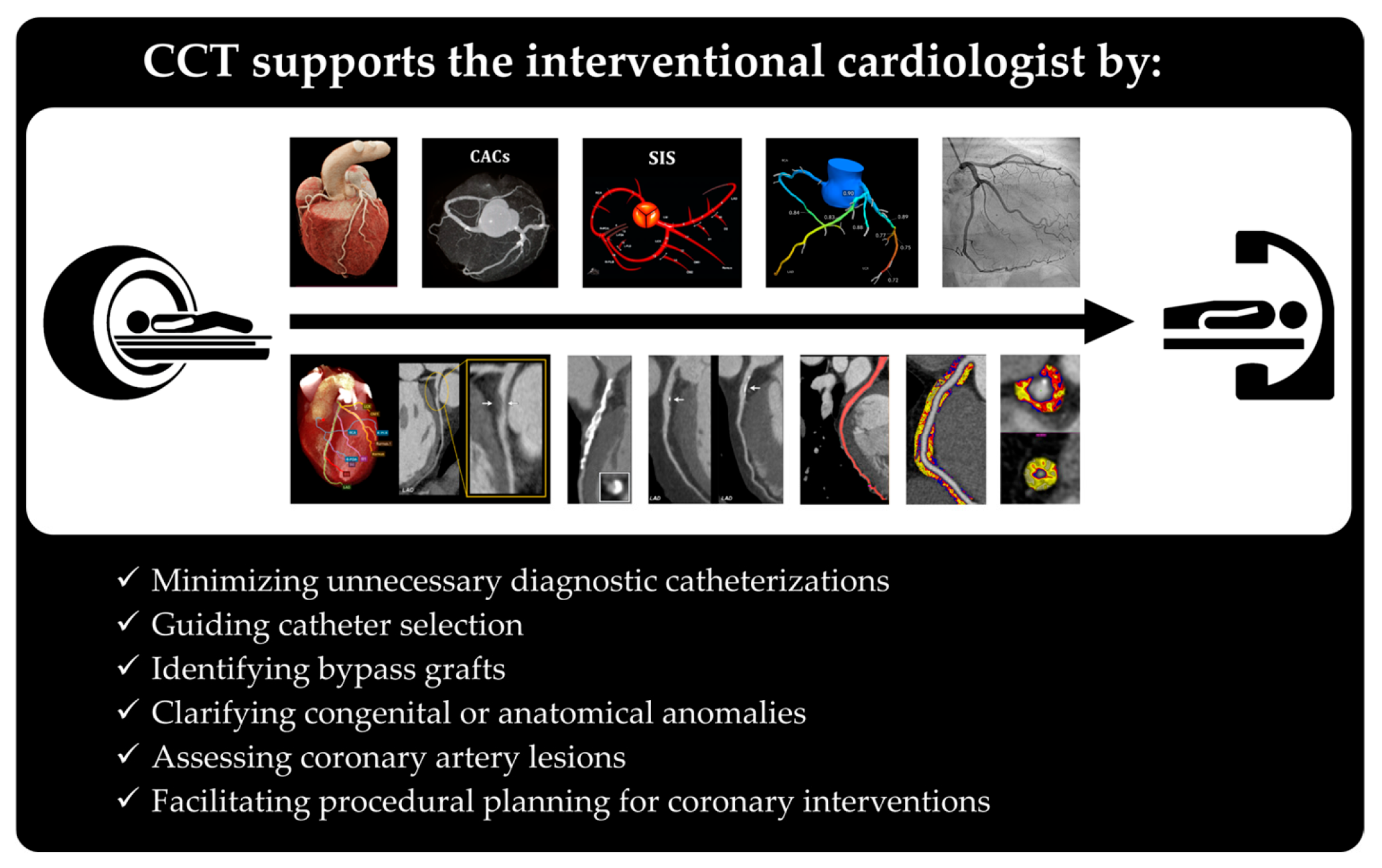
CCT offers a more detailed visualization of coronary anatomy than CAC alone, enabling identification of both obstructive and non-obstructive plaques, quantification of total plaque burden, and detection of high-risk plaque features. Its diagnostic strength was demonstrated in major trials: SCOT-HEART showed that CCT-guided evaluation improved diagnostic precision and significantly reduced subsequent myocardial infarction, while PROMISE confirmed that anatomical CT assessment outperformed conventional functional testing for predicting MACE [20,96]. Cost-effectiveness analyses further indicate that CCT reduces unnecessary invasive coronary angiography (ICA) by up to 77% (Figure 7), limiting patient exposure to procedural risks and decreasing healthcare utilization [97,98].
However, the role of CCT differs substantially between symptomatic and asymptomatic populations. While symptomatic patients clearly benefit from detailed anatomical assessment, asymptomatic individuals show more heterogeneous results. The CONFIRM registry found that adding CCT to traditional risk models did not significantly enhance prognostication in asymptomatic cohorts, reinforcing CAC as the preferred first-line imaging modality in population screening scenarios [53,99]. Ongoing investigations, including SCOT-HEART 2, aim to clarify whether CCT may still serve a role in selected high-risk individuals without symptoms [8,58,100].
Importantly, a CAC score of zero does not guarantee absence of clinically relevant disease. Up to 46% of asymptomatic adults in large cohort studies exhibited non-calcified or mixed plaques on CCT, including lesions with high-risk features [101]. This underscores the biological distinction between calcification and inflammation: vulnerable plaques often remain entirely non-calcified, and inflammatory activity—as captured by PCAT-FAI—may be elevated even when CAC is zero [57,102]. Thus, in both preventive and emergency settings, CCT combined with inflammation imaging offers a more nuanced assessment of near-term risk.
Figure 7. Role of CCT in supporting interventional cardiology. CCT aids interventional cardiologists by reducing unnecessary diagnostic catheterizations, guiding catheter selection, identifying grafts, clarifying anomalies, assessing coronary lesions, and supporting procedural planning.
Medicina 62 00630 g007
Technological progress continues to improve the utility and safety of CCT. Low-dose acquisition techniques, iterative reconstruction algorithms, and emerging photon-counting CT (PCCT) systems significantly reduce radiation exposure while enhancing image quality, expanding the feasibility of CCT in triage pathways [103,104,105].

5.3. Dynamic Monitoring of Treatment Response

The ability to monitor disease progression and therapeutic response is a major advantage of CT-based imaging beyond conventional risk estimation. While systemic inflammatory markers such as CRP provide global estimates of risk, they lack vessel-level specificity. In contrast, CCT-derived metrics—including PCAT-FAI, HRP features, and volumetric plaque quantification—offer a localized and dynamic view of atherosclerotic biology [18,106].
Lipid-lowering therapy illustrates the value of this approach. Longitudinal imaging studies, including our own work, have demonstrated that patients treated with high-intensity statins show progressive transformation of plaque composition: increases in calcified components, reductions in non-calcified plaque volume, and sustained decreases in PCAT attenuation—a pattern consistent with reduced inflammatory activity and plaque stabilization [16,107]. These imaging changes parallel improved clinical outcomes and may help identify individuals who remain at residual inflammatory risk despite adequate lipid control.
Anti-inflammatory therapies provide another avenue where dynamic imaging is particularly informative. The CANTOS trial established that targeting IL-1β pathways reduces recurrent cardiovascular events independently of LDL levels, supporting inflammation as a therapeutic target [108]. Emerging biologics—including rilonacept and ziltivekimab—are now being evaluated for similar effects, and radiomic biomarkers such as PCAT-FAI may serve as sensitive tools to track their impact on vascular inflammation [109].
In the emergency context, the ability to monitor plaque stability over time may help identify patients at imminent risk of ACS recurrence and guide the intensity of preventive therapy. As CCT technologies and AI-enabled analytics continue to advance, routine dynamic monitoring of atherosclerosis may become an integral component of personalized cardiovascular care.

6. Emerging Technologies Transforming Emergency Cardiology

6.1. CT-FFR for Functional Assessment of Intermediate Lesions

Rapid advances in cardiovascular imaging are reshaping how clinicians evaluate patients at risk of acute coronary events. Traditional diagnostic pathways relied heavily on anatomical stenosis assessment, yet a growing body of evidence demonstrates that functional ischemia, plaque inflammation, and subtle morphologic vulnerability all contribute to the development of ACS. New imaging technologies—including non-invasive CT-FFR, PCCT, and AI-driven risk prediction tools—now offer a more comprehensive assessment of coronary biology and physiology, ultimately improving triage decisions in emergency cardiology.
CT-FFR has emerged as an important complement to CCT, providing a non-invasive physiological assessment of coronary lesions. By applying computational fluid dynamics or machine-learning-based algorithms to standard CCT datasets, CT-FFR estimates the pressure gradient across a stenosis without the need for vasodilator stress or invasive catheterization [110]. Large multicenter trials—including NXT, PLATFORM, and ADVANCE—have consistently shown that CT-FFR significantly improves diagnostic accuracy for identifying hemodynamically significant stenoses, outperforming anatomical CCT alone [111,112,113].
The integration of CT-FFR into emergency diagnostic pathways has practical implications: it markedly reduces unnecessary ICA. In the PLATFORM study, CT-FFR-guided strategies resulted in a 61% reduction in invasive procedures that turned out to have no obstructive disease, while maintaining excellent safety and clinical outcomes [112]. Furthermore, meta-analyses confirm high per-vessel sensitivity (80–90%) and specificity (75–85%), solidifying CT-FFR as a robust gatekeeper to ICA in patients presenting with intermediate stenoses or equivocal symptoms [114].
As computational algorithms become faster and more automated, CT-FFR can be generated within minutes, making it increasingly suitable for real-time decision support in emergency chest pain units. Its ability to identify flow-limiting lesions early may prevent unnecessary hospital admissions and streamline care for patients at imminent risk of plaque rupture.

6.2. Photon-Counting CT

PCCT represents a major technological leap in cardiovascular imaging. Unlike conventional energy-integrating detectors, PCCT directly counts individual photons and measures their energy levels, enabling superior spatial resolution, reduced electronic noise, and enhanced tissue differentiation [115]. In coronary imaging, these improvements translate to clearer visualization of stented segments, reduced blooming artifacts from calcification, and improved detection of HRP features such as low-attenuation cores and microcalcifications [116].
PCCT also offers substantial radiation dose reductions—often exceeding 40%—without compromising diagnostic quality [117]. This is particularly valuable in emergency settings, where high throughput and repeated imaging are common. Early clinical studies demonstrate that PCCT identifies HRP characteristics with greater precision than standard CT systems, suggesting a potential role in detecting vulnerable plaques before they precipitate ACS [118].
Moreover, spectral imaging capabilities allow material-specific reconstructions, improving contrast-to-noise ratios and facilitating differentiation between iodine, calcium, and lipid components within plaques. As PCCT becomes more widely available, its enhanced spatial and spectral abilities are expected to advance emergency risk stratification by more accurately characterizing plaque biology in symptomatic patients.

6.3. AI-Enhanced Risk Prediction

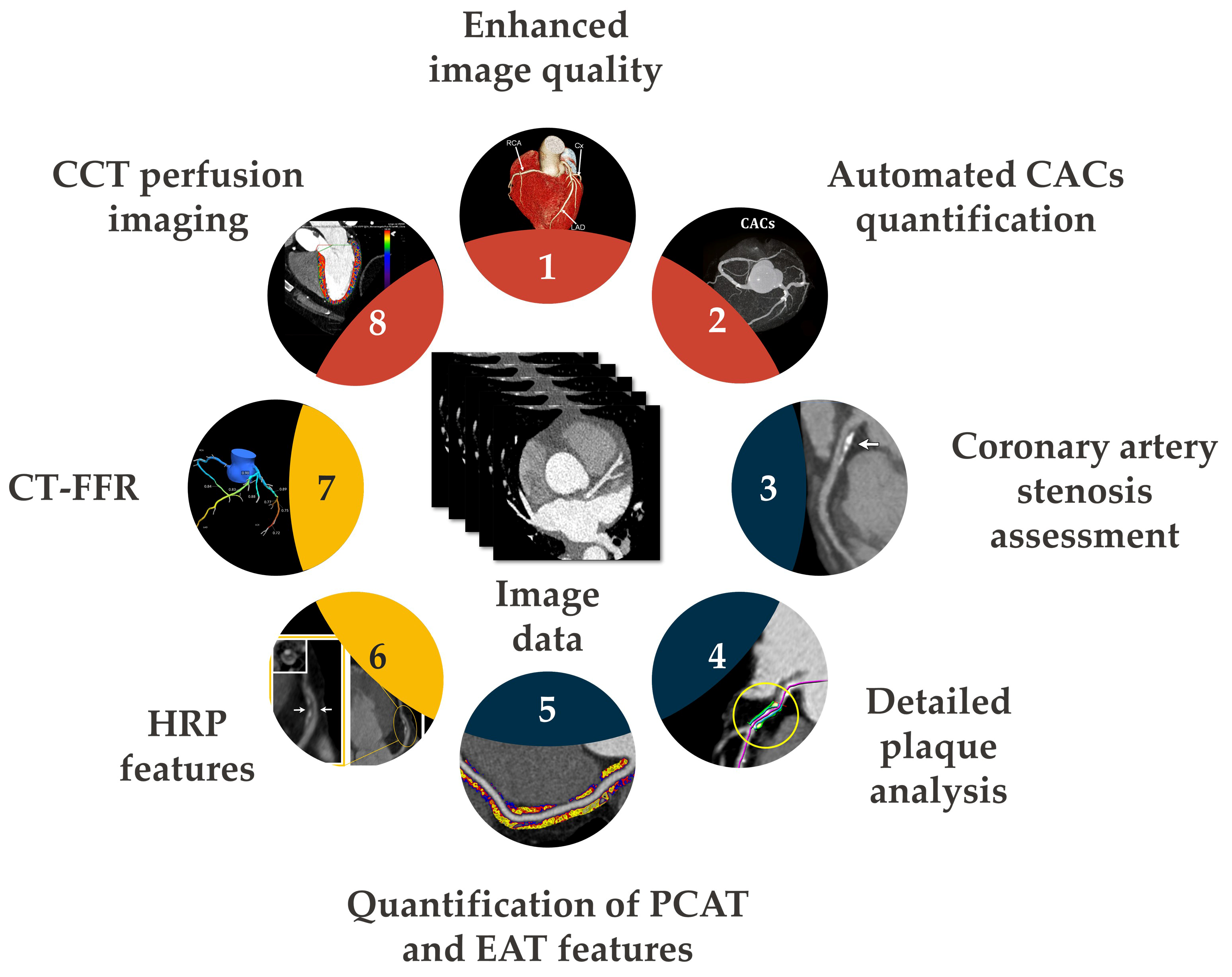
Artificial intelligence (AI) is transforming cardiovascular imaging by enabling rapid, fully automated extraction of anatomical, functional, and radiomic biomarkers (Figure 8). Machine-learning algorithms now support plaque segmentation, quantification of total plaque burden, identification of HRP features, measurement of pericoronary fat attenuation, and generation of CT-FFR values—all of which contribute essential information for emergency assessment [119,120].
A landmark advancement in this field is the ORFAN dataset, encompassing over 250,000 individuals with long-term clinical follow-up [67]. This unprecedented resource has enabled the development of AI-driven risk models that integrate plaque characteristics, PCAT radiomics, and clinical variables to predict cardiac mortality with high precision [73,106]. Emerging radiomic signatures derived from perivascular fat have demonstrated the ability to detect subclinical inflammation, differentiate plaque phenotypes, and identify patients with imaging features associated with increased risk of future ACS on conventional imaging [121].
Figure 8. AI is increasingly integrated into CCT workflows, enhancing the diagnostic process for CVDs. AI-based applications support tasks such as automated enhancement of image quality, coronary calcium quantification, stenosis grading, plaque analysis, and measurement of PCAT and EAT. They also facilitate non-invasive functional assessments, including CT-derived FFR and myocardial perfusion evaluation.
Medicina 62 00630 g008
AI-based predictive algorithms are now being tested for real-time decision support in emergency departments. These tools can rapidly flag high-risk imaging patterns, triage patients with chest pain more effectively, and potentially forecast short-term events such as plaque rupture or arrhythmic instability. Early evidence suggests that combining radiomics with deep learning models may outperform traditional risk scores and even expert interpretation in predicting acute cardiovascular events [122,123].

7. Clinical Implications and Proposed Diagnostic Algorithm

The growing recognition that acute coronary events frequently arise from biologically active, non-obstructive plaques necessitates a reassessment of current diagnostic strategies for patients presenting with chest pain. Conventional emergency pathways are primarily designed to detect flow-limiting stenoses or ongoing myocardial injury, yet these approaches often fail to identify inflammatory plaque phenotypes that predispose to sudden destabilization. Consequently, incorporating imaging biomarkers that capture both structural and biological aspects of coronary disease is essential for improving early risk stratification.
An integrated CT-based diagnostic framework combining CAC, CCT, and PCAT-FAI has been proposed as a potential strategy to enhance biological risk stratification. CAC remains a valuable first-line tool due to its rapid acquisition, reproducibility, and robust prognostic value for long-term risk assessment. However, its inability to detect non-calcified plaques or active inflammatory processes limits its utility in acute clinical settings. CCT extends risk evaluation by enabling detailed assessment of plaque burden, morphology, and high-risk features, while PCAT-FAI introduces a biological dimension by directly reflecting local vascular inflammation surrounding the coronary arteries.
In future clinical workflows, this multimodal approach may potentially be implemented in a stepwise manner. In patients with low to intermediate clinical risk and non-diagnostic initial testing, CAC can serve as an initial screening tool. If CAC is positive or clinical suspicion persists despite a score of zero, CCT should be performed to assess coronary anatomy and plaque characteristics. The addition of PCAT-FAI allows clinicians to distinguish between ischemic presentations driven by hemodynamically significant lesions and inflammatory presentations associated with vulnerable, rupture-prone plaques. This distinction is particularly relevant in populations where traditional markers underestimate risk, including younger patients, women, and individuals recovering from systemic inflammatory conditions such as COVID-19.
From a research perspective, the potential integration of PCAT-FAI into emergency diagnostic pathways has been proposed as a future strategy. It may help identify patients with increased inflammatory activity associated with vulnerable plaques, may contribute to more refined patient selection for further diagnostic testing, and may support future personalized preventive strategies pending prospective validation. Furthermore, by differentiating inflammatory from purely ischemic chest pain syndromes, this approach may help avoid repeated emergency visits and diagnostic uncertainty in patients with non-obstructive CAD, ultimately improving both patient outcomes and healthcare efficiency. However, it should be emphasized that inflammation-based CT biomarkers such as PCAT-FAI are not currently incorporated into ESC, AHA, or ACC guideline recommendations for emergency chest pain triage.

8. Future Directions and Research Gaps

Despite substantial progress, several challenges must be addressed before PCAT-FAI and inflammation-focused imaging can be fully integrated into routine emergency care. A key priority is the standardization of PCAT and FAI acquisition, analysis, and reporting. Current variability in scanner types, reconstruction algorithms, and segmentation protocols limits cross-center comparability and hampers widespread adoption. International consensus on technical standards and quality control measures will be essential to ensure reproducibility and regulatory approval.
Despite growing evidence supporting PCAT-derived biomarkers, several technical factors may influence FAI quantification. Variability in scanner vendors, tube voltage settings, reconstruction kernels, and contrast acquisition protocols may affect perivascular attenuation values and limit direct comparability across centers. Although automated post-processing platforms have improved measurement reproducibility, interobserver variability and dependence on proprietary software remain important considerations. In addition, the integration of cloud-based AI platforms into routine clinical workflows raises practical issues related to cost, data governance, and regulatory approval.
Another important research direction is the formal integration of PCAT-FAI into emergency chest pain pathways. While accumulating evidence supports its prognostic value, prospective studies evaluating FAI-guided clinical decision-making in emergency departments remain limited. Randomized trials are needed to determine whether incorporating inflammation metrics into triage algorithms improves outcomes, reduces recurrent emergency visits, or optimizes resource utilization compared with standard care.
Multicenter validation in post-viral and systemic inflammatory states represents a particularly urgent research gap. The COVID-19 pandemic has highlighted the long-lasting cardiovascular consequences of viral infections, including persistent coronary inflammation and increased vulnerability to acute events even in patients without obstructive CAD. Whether similar inflammatory signatures occur after other viral illnesses, such as influenza, and how long these changes persist remain largely unknown. Large, longitudinal, multicenter studies are required to clarify the role of PCAT-FAI in these settings and to define appropriate surveillance and treatment strategies.
Finally, the development of AI-driven prediction models capable of estimating short-term ACS risk represents one of the most promising future directions. By integrating plaque morphology, PCAT radiomics, functional metrics such as CT-FFR, and clinical variables, machine-learning algorithms may enable real-time identification of patients at imminent risk of plaque rupture or arrhythmic events. Datasets such as ORFAN provide an unprecedented foundation for training and validating such models, but careful attention to transparency, explainability, and clinical interpretability will be essential to ensure safe implementation.

9. Conclusions

Coronary inflammation has emerged as a central determinant of plaque vulnerability and acute cardiovascular events. Among available imaging biomarkers, PCAT-derived fat attenuation index stands out as the most promising non-invasive biosensor of coronary inflammatory activity, capable of capturing dynamic biological processes that precede plaque destabilization. Unlike traditional anatomical markers, FAI provides real-time insight into disease activity and responds to therapeutic interventions, making it particularly relevant for both emergency care and longitudinal monitoring.
Incorporating inflammation-focused imaging into routine CAD assessment has the potential to fundamentally transform emergency cardiovascular care. By integrating CAC, CCT, and PCAT-FAI within a unified diagnostic framework, clinicians can move beyond the binary assessment of stenosis toward a more personalized, biology-driven evaluation of risk. As standardization improves and AI-enhanced analytics mature, this approach may enable earlier intervention, more precise triage, and ultimately better

Author Contributions

Conceptualization, B.B.M., I.B. and T.B.; methodology, T.B. and I.B.; validation, B.B.M., I.B., N.R., R.G. and T.B.; formal analysis, I.B. and T.B.; investigation, B.B.M., R.G., T.B.; writing—original draft preparation, B.B.M. and T.B.; writing—review and editing, B.B.M., N.R., R.G. and T.B.; visualization, B.B.M., N.R. and R.G.; supervision, I.B. and T.B. All authors have read and agreed to the published version of the manuscript.

Funding

This research received no external funding.

Data Availability Statement

No new data were created or analyzed in this study. Data sharing is not applicable to this article.

Conflicts of Interest

The authors declare no conflicts of interest.

References

  1. World Health Organization. Global Status Report on Noncommunicable Diseases 2014; World Health Organization: Geneva, Switzerland, 2014; Available online: https://iris.who.int/handle/10665/148114 (accessed on 16 July 2025).
  2. World Health Statistics. 2023: Monitoring Health for the SDGs, Sustainable Development Goals, 1st ed.; World Health Organization: Geneva, Switzerland, 2023. [Google Scholar]
  3. Vollset, S.E.; Ababneh, H.S.; Abate, Y.H.; Abbafati, C.; Abbasgholizadeh, R.; Abbasian, M.; Abbastabar, H.; Abd Al Magied, A.H.A.; Abd ElHafeez, S.; Abdelkader, A.; et al. Burden of disease scenarios for 204 countries and territories, 2022–2050: A forecasting analysis for the Global Burden of Disease Study 2021. Lancet 2024, 403, 2204–2256. [Google Scholar] [CrossRef] [PubMed]
  4. Health at a Glance: Europe 2024. OECD. 2024. Available online: https://www.oecd.org/en/publications/health-at-a-glance-europe-2024_b3704e14-en.html (accessed on 15 September 2025).
  5. Knuuti, J.; Wijns, W.; Saraste, A.; Capodanno, D.; Barbato, E.; Funck-Brentano, C.; Prescott, E.; Storey, R.F.; Deaton, C.; Cuisset, T.; et al. 2019 ESC Guidelines for the diagnosis and management of chronic coronary syndromes. Eur. Heart J. 2020, 41, 407–477. [Google Scholar] [CrossRef]
  6. Moss, A.J.; Williams, M.C.; Newby, D.E.; Nicol, E.D. The Updated NICE Guidelines: Cardiac CT as the First-Line Test for Coronary Artery Disease. Curr. Cardiovasc. Imaging Rep. 2017, 10, 15. [Google Scholar] [CrossRef]
  7. Van Der Giessen, A.G.; Toepker, M.H.; Donelly, P.M.; Bamberg, F.; Schlett, C.L.; Raffle, C.; Irlbeck, T.; Lee, H.; Van Walsum, T.; Maurovich-Horvat, P.; et al. Reproducibility, Accuracy, and Predictors of Accuracy for the Detection of Coronary Atherosclerotic Plaque Composition by Computed Tomography: An Ex Vivo Comparison to Intravascular Ultrasound. Investig. Radiol. 2010, 45, 693–701. [Google Scholar] [CrossRef]
  8. The SCOT-HEART Investigators Coronary CT Angiography and 5-Year Risk of Myocardial Infarction. N. Engl. J. Med. 2018, 379, 924–933. [CrossRef] [PubMed]
  9. Agatston, A.S.; Janowitz, W.R.; Hildner, F.J.; Zusmer, N.R.; Viamonte, M.; Detrano, R. Quantification of coronary artery calcium using ultrafast computed tomography. J. Am. Coll. Cardiol. 1990, 15, 827–832. [Google Scholar] [CrossRef]
  10. Hong, J.C.; Blankstein, R.; Shaw, L.J.; Padula, W.V.; Arrieta, A.; Fialkow, J.A.; Blumenthal, R.S.; Blaha, M.J.; Krumholz, H.M.; Nasir, K. Implications of Coronary Artery Calcium Testing for Treatment Decisions Among Statin Candidates According to the ACC/AHA Cholesterol Management Guidelines. JACC: Cardiovasc. Imaging 2017, 10, 938–952. [Google Scholar] [CrossRef]
  11. Antoniades, C.; Kotanidis, C.P.; Berman, D.S. State-of-the-art review article. Atherosclerosis affecting fat: What can we learn by imaging perivascular adipose tissue? J. Cardiovasc. Comput. Tomogr. 2019, 13, 288–296. [Google Scholar] [CrossRef]
  12. Antonopoulos, A.S.; Sanna, F.; Sabharwal, N.; Thomas, S.; Oikonomou, E.K.; Herdman, L.; Margaritis, M.; Shirodaria, C.; Kampoli, A.-M.; Akoumianakis, I.; et al. Detecting human coronary inflammation by imaging perivascular fat. Sci. Transl. Med. 2017, 9, eaal2658. [Google Scholar] [CrossRef]
  13. Oikonomou, E.K.; West, H.W.; Antoniades, C. Cardiac Computed Tomography: Assessment of Coronary Inflammation and Other Plaque Features. Arterioscler. Thromb. Vasc. Biol. 2019, 39, 2207–2219. [Google Scholar] [CrossRef] [PubMed]
  14. Haq, A.; Miedema, M.D. Coronary Artery Calcium for Risk Assessment in Young Adults. Curr. Atheroscler. Rep. 2022, 24, 337–342. [Google Scholar] [CrossRef]
  15. Rajiah, P.; Cummings, K.W.; Williamson, E.; Young, P.M. CT Fractional Flow Reserve: A Practical Guide to Application, Interpretation, and Problem Solving. RadioGraphics 2022, 42, 340–358. [Google Scholar] [CrossRef]
  16. Mátyás, B.B.; Benedek, I.; Raț, N.; Blîndu, E.; Parajkó, Z.; Mihăilă, T.; Benedek, T. Assessing the Impact of Long-Term High-Dose Statin Treatment on Pericoronary Inflammation and Plaque Distribution—A Comprehensive Coronary CTA Follow-Up Study. Int. J. Mol. Sci. 2024, 25, 1700. [Google Scholar] [CrossRef]
  17. Puntmann, V.O.; Shchendrygina, A.; Rodriguez Bolanos, C.; Ka, M.M.; Valbuena, S.; Rolf, A.; Escher, F.; Nagel, E. Cardiac Involvement Due to COVID-19: Insights from Imaging and Histopathology. Eur. Cardiol. 2023, 18, e58. [Google Scholar] [CrossRef]
  18. Oikonomou, E.K.; Marwan, M.; Desai, M.Y.; Mancio, J.; Alashi, A.; Hutt Centeno, E.; Thomas, S.; Herdman, L.; Kotanidis, C.P.; Thomas, K.E.; et al. Non-invasive detection of coronary inflammation using computed tomography and prediction of residual cardiovascular risk (the CRISP CT study): A post-hoc analysis of prospective outcome data. Lancet 2018, 392, 929–939. [Google Scholar] [CrossRef]
  19. Kolossváry, M.; Szilveszter, B.; Merkely, B.; Maurovich-Horvat, P. Plaque imaging with CT—A comprehensive review on coronary CT angiography based risk assessment. Cardiovasc. Diagn. Ther. 2017, 7, 489–506. [Google Scholar] [CrossRef] [PubMed]
  20. Greenland, P.; Blaha, M.J.; Budoff, M.J.; Erbel, R.; Watson, K.E. Coronary Calcium Score and Cardiovascular Risk. J. Am. Coll. Cardiol. 2018, 72, 434–447. [Google Scholar] [CrossRef]
  21. Gauss, S.; Achenbach, S.; Pflederer, T.; Schuhback, A.; Daniel, W.G.; Marwan, M. Assessment of coronary artery remodelling by dual-source CT: A head-to-head comparison with intravascular ultrasound. Heart 2011, 97, 991–997. [Google Scholar] [CrossRef] [PubMed]
  22. Alyami, B.; Santer, M.; Seetharam, K.; Velu, D.; Gadde, E.; Patel, B.; Hamirani, Y.S. Non-Calcified Coronary Artery Plaque on Coronary Computed Tomography Angiogram: Prevalence and Significance. Tomography 2023, 9, 1755–1771. [Google Scholar] [CrossRef] [PubMed]
  23. Virmani, R.; Burke, A.P.; Farb, A.; Kolodgie, F.D. Pathology of the Vulnerable Plaque. J. Am. Coll. Cardiol. 2006, 47, C13–C18. [Google Scholar] [CrossRef]
  24. Kolodgie, F.D.; Burke, A.P.; Farb, A.; Gold, H.K.; Yuan, J.; Narula, J.; Finn, A.V.; Virmani, R. The thin-cap fibroatheroma: A type of vulnerable plaque: The major precursor lesion to acute coronary syndromes. Curr. Opin. Cardiol. 2001, 16, 285–292. [Google Scholar] [CrossRef]
  25. Klüner, L.V.; Chan, K.; Antoniades, C. Using artificial intelligence to study atherosclerosis from computed tomography imaging: A state-of-the-art review of the current literature. Atherosclerosis 2024, 398, 117580. [Google Scholar] [CrossRef]
  26. Sugiyama, T.; Kanaji, Y.; Hoshino, M.; Hada, M.; Misawa, T.; Nagamine, T.; Teng, Y.; Matsuda, K.; Sayama, K.; Araki, M.; et al. Relationship Between Unrecognized Myocardial Infarction and Underlying Coronary Plaque Characteristics on Optical Coherence Tomography. JACC Cardiovasc. Imaging 2022, 15, 1830–1832. [Google Scholar] [CrossRef]
  27. Mortensen, M.B.; Falk, E.; Li, D.; Nasir, K.; Blaha, M.J.; Sandfort, V.; Rodriguez, C.J.; Ouyang, P.; Budoff, M. Statin Trials, Cardiovascular Events, and Coronary Artery Calcification. JACC Cardiovasc. Imaging 2018, 11, 221–230. [Google Scholar] [CrossRef]
  28. Dedic, A.; Kurata, A.; Lubbers, M.; Meijboom, W.B.; Van Dalen, B.; Snelder, S.; Korbee, R.; Moelker, A.; Ouhlous, M.; Van Domburg, R.; et al. Prognostic implications of non-culprit plaques in acute coronary syndrome: Non-invasive assessment with coronary CT angiography. Eur. Heart J.-Cardiovasc. Imaging 2014, 15, 1231–1237. [Google Scholar] [CrossRef]
  29. Blaha, M.J.; Mortensen, M.B.; Kianoush, S.; Tota-Maharaj, R.; Cainzos-Achirica, M. Coronary Artery Calcium Scoring. JACC Cardiovasc. Imaging 2017, 10, 923–937. [Google Scholar] [CrossRef]
  30. Hadamitzky, M.; Achenbach, S.; Al-Mallah, M.; Berman, D.; Budoff, M.; Cademartiri, F.; Callister, T.; Chang, H.-J.; Cheng, V.; Chinnaiyan, K.; et al. Optimized Prognostic Score for Coronary Computed Tomographic Angiography. J. Am. Coll. Cardiol. 2013, 62, 468–476. [Google Scholar] [CrossRef] [PubMed]
  31. Hadamitzky, M.; Taubert, S.; Deseive, S.; Byrne, R.A.; Martinoff, S.; Schomig, A.; Hausleiter, J. Prognostic value of coronary computed tomography angiography during 5 years of follow-up in patients with suspected coronary artery disease. Eur. Heart J. 2013, 34, 3277–3285. [Google Scholar] [CrossRef] [PubMed]
  32. Puri, R.; Nicholls, S.J.; Shao, M.; Kataoka, Y.; Uno, K.; Kapadia, S.R.; Tuzcu, E.M.; Nissen, S.E. Impact of Statins on Serial Coronary Calcification During Atheroma Progression and Regression. J. Am. Coll. Cardiol. 2015, 65, 1273–1282. [Google Scholar] [CrossRef] [PubMed]
  33. Goeller, M.; Tamarappoo, B.K.; Kwan, A.C.; Cadet, S.; Commandeur, F.; Razipour, A.; Slomka, P.J.; Gransar, H.; Chen, X.; Otaki, Y.; et al. Relationship between changes in pericoronary adipose tissue attenuation and coronary plaque burden quantified from coronary computed tomography angiography. Eur. Heart J.-Cardiovasc. Imaging 2019, 20, 636–643. [Google Scholar] [CrossRef]
  34. Lin, A.; Nerlekar, N.; Yuvaraj, J.; Fernandes, K.; Jiang, C.; Nicholls, S.J.; Dey, D.; Wong, D.T.L. Pericoronary adipose tissue computed tomography attenuation distinguishes different stages of coronary artery disease: A cross-sectional study. Eur. Heart J.-Cardiovasc. Imaging 2021, 22, 298–306. [Google Scholar] [CrossRef]
  35. Van Rosendael, S.E.; Kamperidis, V.; Maaniitty, T.; De Graaf, M.A.; Saraste, A.; McKay-Goodall, G.E.; Jukema, J.W.; Knuuti, J.; Bax, J.J. Pericoronary adipose tissue for predicting long-term outcomes. Eur. Heart J.-Cardiovasc. Imaging 2024, 25, 1351–1359. [Google Scholar] [CrossRef] [PubMed]
  36. Mátyás, B.B.; Benedek, I.; Rat, N.; Blîndu, E.; Rodean, I.P.; Haja, I.; Păcurar, D.; Mihăilă, T.; Benedek, T. Assessment of the Association Between Coronary Artery Calcification, Plaque Vulnerability, and Perivascular Inflammation via Coronary CT Angiography. Life 2025, 15, 1288. [Google Scholar] [CrossRef]
  37. Salem, A.M.; Davis, J.; Gopalan, D.; Rudd, J.H.F.; Clarke, S.C.; Schofield, P.M.; Bennett, M.R.; Brown, A.J.; Obaid, D.R. Characteristics of conventional high-risk coronary plaques and a novel CT defined thin-cap fibroatheroma in patients undergoing CCTA with stable chest pain. Clin. Imaging 2023, 101, 69–76. [Google Scholar] [CrossRef]
  38. Otsuka, K.; Fukuda, S.; Tanaka, A.; Nakanishi, K.; Taguchi, H.; Yoshikawa, J.; Shimada, K.; Yoshiyama, M. Napkin-Ring Sign on Coronary CT Angiography for the Prediction of Acute Coronary Syndrome. JACC Cardiovasc. Imaging 2013, 6, 448–457. [Google Scholar] [CrossRef]
  39. Lu, G.; Ye, W.; Ou, J.; Li, X.; Tan, Z.; Li, T.; Liu, H. Coronary Computed Tomography Angiography Assessment of High-Risk Plaques in Predicting Acute Coronary Syndrome. Front. Cardiovasc. Med. 2021, 8, 743538. [Google Scholar] [CrossRef]
  40. Motoyama, S.; Sarai, M.; Harigaya, H.; Anno, H.; Inoue, K.; Hara, T.; Naruse, H.; Ishii, J.; Hishida, H.; Wong, N.D.; et al. Computed Tomographic Angiography Characteristics of Atherosclerotic Plaques Subsequently Resulting in Acute Coronary Syndrome. J. Am. Coll. Cardiol. 2009, 54, 49–57. [Google Scholar] [CrossRef]
  41. Yamaura, H.; Otsuka, K.; Ishikawa, H.; Shirasawa, K.; Fukuda, D.; Kasayuki, N. Determinants of Non-calcified Low-Attenuation Coronary Plaque Burden in Patients Without Known Coronary Artery Disease: A Coronary CT Angiography Study. Front. Cardiovasc. Med. 2022, 9, 824470. [Google Scholar] [CrossRef] [PubMed]
  42. Arnold, P.G.; Russe, M.F.; Bamberg, F.; Emrich, T.; Vecsey-Nagy, M.; Ashi, A.; Kravchenko, D.; Varga-Szemes, Á.; Soschynski, M.; Rau, A.; et al. Performance of large language models for CAD-RADS 2.0 classification derived from cardiac CT reports. J. Cardiovasc. Comput. Tomogr. 2025, 19, 322–330. [Google Scholar] [CrossRef] [PubMed]
  43. Cury, R.C.; Leipsic, J.; Abbara, S.; Achenbach, S.; Berman, D.; Bittencourt, M.; Budoff, M.; Chinnaiyan, K.; Choi, A.D.; Ghoshhajra, B.; et al. CAD-RADSTM 2.0—2022 Coronary Artery Disease-Reporting and Data System. J. Cardiovasc. Comput. Tomogr. 2022, 16, 536–557. [Google Scholar] [CrossRef]
  44. Ayoub, C.; Erthal, F.; Abdelsalam, M.A.; Murad, M.H.; Wang, Z.; Erwin, P.J.; Hillis, G.S.; Kritharides, L.; Chow, B.J.W. Prognostic value of segment involvement score compared to other measures of coronary atherosclerosis by computed tomography: A systematic review and meta-analysis. J. Cardiovasc. Comput. Tomogr. 2017, 11, 258–267. [Google Scholar] [CrossRef]
  45. The DISCHARGE Trial Group. CT or Invasive Coronary Angiography in Stable Chest Pain. N. Engl. J. Med. 2022, 386, 1591–1602. [Google Scholar] [CrossRef]
  46. Budoff, M.J.; Dowe, D.; Jollis, J.G.; Gitter, M.; Sutherland, J.; Halamert, E.; Scherer, M.; Bellinger, R.; Martin, A.; Benton, R.; et al. Diagnostic Performance of 64-Multidetector Row Coronary Computed Tomographic Angiography for Evaluation of Coronary Artery Stenosis in Individuals Without Known Coronary Artery Disease. J. Am. Coll. Cardiol. 2008, 52, 1724–1732. [Google Scholar] [CrossRef]
  47. Bittencourt, M.S.; Hulten, E.; Polonsky, T.S.; Hoffman, U.; Nasir, K.; Abbara, S.; Di Carli, M.; Blankstein, R. European Society of Cardiology–Recommended Coronary Artery Disease Consortium Pretest Probability Scores More Accurately Predict Obstructive Coronary Disease and Cardiovascular Events Than the Diamond and Forrester Score: The Partners Registry. Circulation 2016, 134, 201–211. [Google Scholar] [CrossRef]
  48. Min, J.K.; Shaw, L.J.; Devereux, R.B.; Okin, P.M.; Weinsaft, J.W.; Russo, D.J.; Lippolis, N.J.; Berman, D.S.; Callister, T.Q. Prognostic Value of Multidetector Coronary Computed Tomographic Angiography for Prediction of All-Cause Mortality. J. Am. Coll. Cardiol. 2007, 50, 1161–1170. [Google Scholar] [CrossRef]
  49. Lee, S.-E.; Chang, H.-J.; Sung, J.M.; Park, H.-B.; Heo, R.; Rizvi, A.; Lin, F.Y.; Kumar, A.; Hadamitzky, M.; Kim, Y.J.; et al. Effects of Statins on Coronary Atherosclerotic Plaques. JACC Cardiovasc. Imaging 2018, 11, 1475–1484. [Google Scholar] [CrossRef] [PubMed]
  50. Villines, T.C.; Hulten, E.A.; Shaw, L.J.; Goyal, M.; Dunning, A.; Achenbach, S.; Al-Mallah, M.; Berman, D.S.; Budoff, M.J.; Cademartiri, F.; et al. Prevalence and Severity of Coronary Artery Disease and Adverse Events Among Symptomatic Patients With Coronary Artery Calcification Scores of Zero Undergoing Coronary Computed Tomography Angiography. J. Am. Coll. Cardiol. 2011, 58, 2533–2540. [Google Scholar] [CrossRef] [PubMed]
  51. Maurovich-Horvat, P.; Schlett, C.L.; Alkadhi, H.; Nakano, M.; Otsuka, F.; Stolzmann, P.; Scheffel, H.; Ferencik, M.; Kriegel, M.F.; Seifarth, H.; et al. The Napkin-Ring Sign Indicates Advanced Atherosclerotic Lesions in Coronary CT Angiography. JACC Cardiovasc. Imaging 2012, 5, 1243–1252. [Google Scholar] [CrossRef]
  52. Bauer, R.W.; Thilo, C.; Chiaramida, S.A.; Vogl, T.J.; Costello, P.; Schoepf, U.J. Noncalcified Atherosclerotic Plaque Burden at Coronary CT Angiography: A Better Predictor of Ischemia at Stress Myocardial Perfusion Imaging Than Calcium Score and Stenosis Severity. Am. J. Roentgenol. 2009, 193, 410–418. [Google Scholar] [CrossRef]
  53. Min, J.K.; Dunning, A.; Lin, F.Y.; Achenbach, S.; Al-Mallah, M.H.; Berman, D.S.; Budoff, M.J.; Cademartiri, F.; Callister, T.Q.; Chang, H.-J.; et al. Rationale and design of the CONFIRM (COronary CT Angiography EvaluatioN For Clinical Outcomes: An InteRnational Multicenter) Registry. J. Cardiovasc. Comput. Tomogr. 2011, 5, 84–92. [Google Scholar] [CrossRef] [PubMed]
  54. Kunadian, V.; Neely, R.D.G.; Sinclair, H.; Batty, J.A.; Veerasamy, M.; Ford, G.A.; Qiu, W. Study to Improve Cardiovascular Outcomes in high-risk older patieNts (ICON1) with acute coronary syndrome: Study design and protocol of a prospective observational study. BMJ Open 2016, 6, e012091. [Google Scholar] [CrossRef] [PubMed]
  55. Fordyce, C.B.; Douglas, P.S.; Roberts, R.S.; Hoffmann, U.; Al-Khalidi, H.R.; Patel, M.R.; Granger, C.B.; Kostis, J.; Mark, D.B.; Lee, K.L.; et al. Identification of Patients With Stable Chest Pain Deriving Minimal Value From Noninvasive Testing: The PROMISE Minimal-Risk Tool, A Secondary Analysis of a Randomized Clinical Trial. JAMA Cardiol. 2017, 2, 400. [Google Scholar] [CrossRef] [PubMed]
  56. Indraratna, P.; Khasanova, E.; Gulsin, G.S.; Tzimas, G.; Takagi, H.; Park, K.-H.; Lin, F.Y.; Shaw, L.J.; Lee, S.-E.; Narula, J.; et al. Plaque progression: Where, why, and how fast? A review of what we have learned from the analysis of patient data from the PARADIGM registry. J. Cardiovasc. Comput. Tomogr. 2022, 16, 294–302. [Google Scholar] [CrossRef] [PubMed]
  57. Motoyama, S.; Ito, H.; Sarai, M.; Kondo, T.; Kawai, H.; Nagahara, Y.; Harigaya, H.; Kan, S.; Anno, H.; Takahashi, H.; et al. Plaque Characterization by Coronary Computed Tomography Angiography and the Likelihood of Acute Coronary Events in Mid-Term Follow-Up. J. Am. Coll. Cardiol. 2015, 66, 337–346. [Google Scholar] [CrossRef]
  58. Williams, M.C.; Kwiecinski, J.; Doris, M.; McElhinney, P.; D’Souza, M.S.; Cadet, S.; Adamson, P.D.; Moss, A.J.; Alam, S.; Hunter, A.; et al. Low-Attenuation Noncalcified Plaque on Coronary Computed Tomography Angiography Predicts Myocardial Infarction: Results From the Multicenter SCOT-HEART Trial (Scottish Computed Tomography of the HEART). Circulation 2020, 141, 1452–1462. [Google Scholar] [CrossRef]
  59. Trimarchi, G.; Carerj, M.L.; Zito, C.; Bella, G.D.; Taverna, G.; Cusmà Piccione, M.; Crea, P.; Lo Giudice, S.; Buonpane, A.; Bonanni, M.; et al. Epicardial Adipose Tissue: A Multimodal Imaging Diagnostic Perspective. Medicina 2025, 61, 961. [Google Scholar] [CrossRef]
  60. Mazurek, T.; Zhang, L.; Zalewski, A.; Mannion, J.D.; Diehl, J.T.; Arafat, H.; Sarov-Blat, L.; O’Brien, S.; Keiper, E.A.; Johnson, A.G.; et al. Human epicardial adipose tissue is a source of inflammatory mediators. Circulation 2003, 108, 2460–2466. [Google Scholar] [CrossRef]
  61. Antonopoulos, A.S.; Antoniades, C. The role of epicardial adipose tissue in cardiac biology: Classic concepts and emerging roles. J. Physiol. 2017, 595, 3907–3917. [Google Scholar] [CrossRef]
  62. Packer, M. Epicardial Adipose Tissue May Mediate Deleterious Effects of Obesity and Inflammation on the Myocardium. J. Am. Coll. Cardiol. 2018, 71, 2360–2372. [Google Scholar] [CrossRef]
  63. Goeller, M.; Achenbach, S.; Cadet, S.; Kwan, A.C.; Commandeur, F.; Slomka, P.J.; Gransar, H.; Albrecht, M.H.; Tamarappoo, B.K.; Berman, D.S.; et al. Pericoronary Adipose Tissue Computed Tomography Attenuation and High-Risk Plaque Characteristics in Acute Coronary Syndrome Compared With Stable Coronary Artery Disease. JAMA Cardiol. 2018, 3, 858. [Google Scholar] [CrossRef]
  64. Dai, X.; Yu, L.; Lu, Z.; Shen, C.; Tao, X.; Zhang, J. Serial change of perivascular fat attenuation index after statin treatment: Insights from a coronary CT angiography follow-up study. Int. J. Cardiol. 2020, 319, 144–149. [Google Scholar] [CrossRef]
  65. Bao, W.; Yang, M.; Xu, Z.; Yan, F.; Yang, Q.; Li, X.; Yang, W. Coronary Inflammation Assessed by Perivascular Fat Attenuation Index in Patients with Psoriasis: A Propensity Score-Matched Study. Dermatology 2022, 238, 562–570. [Google Scholar] [CrossRef]
  66. Oikonomou, E.K.; Antonopoulos, A.S.; Schottlander, D.; Marwan, M.; Mathers, C.; Tomlins, P.; Siddique, M.; Klüner, L.V.; Shirodaria, C.; Mavrogiannis, M.C.; et al. Standardized measurement of coronary inflammation using cardiovascular computed tomography: Integration in clinical care as a prognostic medical device. Cardiovasc. Res. 2021, 117, 2677–2690. [Google Scholar] [CrossRef]
  67. Chan, K.; Wahome, E.; Tsiachristas, A.; Antonopoulos, A.S.; Patel, P.; Lyasheva, M.; Kingham, L.; West, H.; Oikonomou, E.K.; Volpe, L.; et al. Inflammatory risk and cardiovascular events in patients without obstructive coronary artery disease: The ORFAN multicentre, longitudinal cohort study. Lancet 2024, 403, 2606–2618. [Google Scholar] [CrossRef]
  68. Mátyás, B.B.; Benedek, I.; Blîndu, E.; Gerculy, R.; Roșca, A.; Rat, N.; Kovács, I.; Opincariu, D.; Parajkó, Z.; Szabó, E.; et al. Elevated FAI Index of Pericoronary Inflammation on Coronary CT Identifies Increased Risk of Coronary Plaque Vulnerability after COVID-19 Infection. Int. J. Mol. Sci. 2023, 24, 7398. [Google Scholar] [CrossRef] [PubMed]
  69. Gerculy, R.; Benedek, I.; Kovács, I.; Rat, N.; Rodean, I.-P.; Mátyás, B.B.; Blîndu, E.; Păcurar, D.; Grigoroaea, C.-G.; Benedek, T. Coronary Artery Inflammation and Epicardial Adipose Tissue Volume in Relation with Atrial Fibrillation Development. Diagnostics 2025, 15, 2003. [Google Scholar] [CrossRef] [PubMed]
  70. Sagris, M.; Antonopoulos, A.S.; Simantiris, S.; Oikonomou, E.; Siasos, G.; Tsioufis, K.; Tousoulis, D. Pericoronary fat attenuation index—A new imaging biomarker and its diagnostic and prognostic utility: A systematic review and meta-analysis. Eur. Heart J.-Cardiovasc. Imaging 2022, 23, e526–e536. [Google Scholar] [CrossRef]
  71. Razavi, A.C.; Whelton, S.P.; Al-Mallah, M.H. Pericoronary adipose tissue attenuation on coronary computed tomography angiography: Possibilities and challenges. Atherosclerosis 2025, 402, 119105. [Google Scholar] [CrossRef]
  72. Antoniades, C.; Tousoulis, D.; Vavlukis, M.; Fleming, I.; Duncker, D.J.; Eringa, E.; Manfrini, O.; Antonopoulos, A.S.; Oikonomou, E.; Padró, T.; et al. Perivascular adipose tissue as a source of therapeutic targets and clinical biomarkers. Eur. Heart J. 2023, 44, 3827–3844. [Google Scholar] [CrossRef]
  73. Verhagen, S.N.; Visseren, F.L.J. Perivascular adipose tissue as a cause of atherosclerosis. Atherosclerosis 2011, 214, 3–10. [Google Scholar] [CrossRef] [PubMed]
  74. Ridker, P.M.; Danielson, E.; Fonseca, F.A.H.; Genest, J.; Gotto, A.M.; Kastelein, J.J.P.; Koenig, W.; Libby, P.; Lorenzatti, A.J.; MacFadyen, J.G.; et al. Rosuvastatin to Prevent Vascular Events in Men and Women with Elevated C-Reactive Protein. N. Engl. J. Med. 2008, 359, 2195–2207. [Google Scholar] [CrossRef]
  75. Joshi, N.V.; Vesey, A.T.; Williams, M.C.; Shah, A.S.V.; Calvert, P.A.; Craighead, F.H.M.; Yeoh, S.E.; Wallace, W.; Salter, D.; Fletcher, A.M.; et al. 18F-fluoride positron emission tomography for identification of ruptured and high-risk coronary atherosclerotic plaques: A prospective clinical trial. Lancet 2014, 383, 705–713. [Google Scholar] [CrossRef]
  76. Stone, G.W.; Maehara, A.; Lansky, A.J.; De Bruyne, B.; Cristea, E.; Mintz, G.S.; Mehran, R.; McPherson, J.; Farhat, N.; Marso, S.P.; et al. A Prospective Natural-History Study of Coronary Atherosclerosis. N. Engl. J. Med. 2011, 364, 226–235. [Google Scholar] [CrossRef]
  77. Lacaita, P.G.; Luger, A.; Plank, F.; Barbieri, F.; Beyer, C.; Thurner, T.; Scharll, Y.; Deeg, J.; Widmann, G.; Feuchtner, G.M. Coronary Computed Tomography Angiography (CTA) Findings in COVID-19. J. Cardiovasc. Dev. Dis. 2024, 11, 325. [Google Scholar] [CrossRef]
  78. Takahashi, D.; Fujimoto, S.; Nozaki, Y.O.; Kudo, A.; Kawaguchi, Y.O.; Takamura, K.; Hiki, M.; Sato, H.; Tomizawa, N.; Kumamaru, K.K.; et al. Validation and clinical impact of novel pericoronary adipose tissue measurement on ECG-gated non-contrast chest CT. Atherosclerosis 2023, 370, 18–24. [Google Scholar] [CrossRef] [PubMed]
  79. Raț, N.; Mátyás, B.-B.; Bajka, B.; Buicu, C.-F.; Benedek, T.; Benedek, I. Highly inflamed coronary plaque detected by Angio-CT in a 28-year-old patient with STEMI and long COVID-19. Imaging 2024, 16, 113–117. [Google Scholar] [CrossRef]
  80. Kaiser, H.; Näslund-Koch, C.; Kvist-Hansen, A.; Skov, L. Does Systemic Anti-Psoriatic Treatment Impact the Risk of Cardiovascular Disease? A Review Over Cardiovascular Imaging Studies. Dermatol. Ther. 2024, 14, 303–321. [Google Scholar] [CrossRef] [PubMed]
  81. Potestio, L.; Tommasino, N.; Lauletta, G.; Martora, F.; Megna, M. Psoriasis and Molecular Target Therapies: Evidence of Efficacy in Preventing Cardiovascular Comorbidities. Dermatol. Ther. 2024, 14, 841–852. [Google Scholar] [CrossRef]
  82. Mátyás, B.-B.; Blîndu, E.; Rat, N.; Kovács, I.; Buicu, C.-F.; Benedek, T. A Race Against Time: Coronary Computed Tomography Angiography Discovers a Highly Inflamed Plaque in 49-Year-Old Right Before STEMI. J. Cardiovasc. Emergencies 2024, 10, 117–123. [Google Scholar] [CrossRef]
  83. Mátyás, B.-B.; Gerculy, R.; Rat, N.; Blîndu, E.; Stănescu, A.G.; Roșca, A.; Buicu, C.-F.; Benedek, I.; Benedek, T. Highly Inflamed Non-Calcified Coronary Plaques Sealed with Stents in Patients with Zero Calcium Score—A Case Series and Review of the Literature. J. Cardiovasc. Emergencies 2024, 10, 38–44. [Google Scholar] [CrossRef]
  84. Batal, O.; Schoenhagen, P.; Shao, M.; Ayyad, A.E.; Van Wagoner, D.R.; Halliburton, S.S.; Tchou, P.J.; Chung, M.K. Left Atrial Epicardial Adiposity and Atrial Fibrillation. Circ. Arrhythmia Electrophysiol. 2010, 3, 230–236. [Google Scholar] [CrossRef] [PubMed]
  85. Gerculy, R.; Benedek, I.; Kovács, I.; Rat, N.; Halațiu, V.B.; Rodean, I.; Bordi, L.; Blîndu, E.; Roșca, A.; Mátyás, B.-B.; et al. CT-Assessment of Epicardial Fat Identifies Increased Inflammation at the Level of the Left Coronary Circulation in Patients with Atrial Fibrillation. J. Clin. Med. 2024, 13, 1307. [Google Scholar] [CrossRef] [PubMed]
  86. Xie, Y.; Xu, E.; Bowe, B.; Al-Aly, Z. Long-term cardiovascular outcomes of COVID-19. Nat. Med. 2022, 28, 583–590. [Google Scholar] [CrossRef]
  87. Wall, C.; Huang, Y.; Le, E.P.V.; Ćorović, A.; Uy, C.P.; Gopalan, D.; Ma, C.; Manavaki, R.; Fryer, T.D.; Aloj, L.; et al. Pericoronary and periaortic adipose tissue density are associated with inflammatory disease activity in Takayasu arteritis and atherosclerosis. Eur. Heart J. Open 2021, 1, oeab019. [Google Scholar] [CrossRef] [PubMed]
  88. Arnett, D.K.; Blumenthal, R.S.; Albert, M.A.; Buroker, A.B.; Goldberger, Z.D.; Hahn, E.J.; Himmelfarb, C.D.; Khera, A.; Lloyd-Jones, D.; McEvoy, J.W.; et al. 2019 ACC/AHA Guideline on the Primary Prevention of Cardiovascular Disease: Executive Summary: A Report of the American College of Cardiology/American Heart Association Task Force on Clinical Practice Guidelines. Circulation 2019, 140, 11. [Google Scholar] [CrossRef]
  89. Blaha, M.J.; Cainzos-Achirica, M.; Greenland, P.; McEvoy, J.W.; Blankstein, R.; Budoff, M.J.; Dardari, Z.; Sibley, C.T.; Burke, G.L.; Kronmal, R.A.; et al. Role of Coronary Artery Calcium Score of Zero and Other Negative Risk Markers for Cardiovascular Disease: The Multi-Ethnic Study of Atherosclerosis (MESA). Circulation 2016, 133, 849–858. [Google Scholar] [CrossRef]
  90. Kavousi, M.; Leening, M.J.G.; Nanchen, D.; Greenland, P.; Graham, I.M.; Steyerberg, E.W.; Ikram, M.A.; Stricker, B.H.; Hofman, A.; Franco, O.H. Comparison of Application of the ACC/AHA Guidelines, Adult Treatment Panel III Guidelines, and European Society of Cardiology Guidelines for Cardiovascular Disease Prevention in a European Cohort. JAMA 2014, 311, 1416. [Google Scholar] [CrossRef]
  91. Grundy, S.M.; Stone, N.J.; Bailey, A.L.; Beam, C.; Birtcher, K.K.; Blumenthal, R.S.; Braun, L.T.; De Ferranti, S.; Faiella-Tommasino, J.; Forman, D.E.; et al. 2018 AHA/ACC/AACVPR/AAPA/ABC/ACPM/ADA/AGS/APhA/ASPC/NLA/PCNA Guideline on the Management of Blood Cholesterol: A Report of the American College of Cardiology/American Heart Association Task Force on Clinical Practice Guidelines. Circulation 2019, 139, 25. [Google Scholar] [CrossRef]
  92. SCORE2 working group and ESC Cardiovascular risk collaboration; Hageman, S.; Pennells, L.; Ojeda, F.; Kaptoge, S.; Kuulasmaa, K.; De Vries, T.; Xu, Z.; Kee, F.; Chung, R.; et al. SCORE2 risk prediction algorithms: New models to estimate 10-year risk of cardiovascular disease in Europe. Eur. Heart J. 2021, 42, 2439–2454. [Google Scholar] [CrossRef]
  93. DeFilippis, A.P.; Young, R.; McEvoy, J.W.; Michos, E.D.; Sandfort, V.; Kronmal, R.A.; McClelland, R.L.; Blaha, M.J. Risk score overestimation: The impact of individual cardiovascular risk factors and preventive therapies on the performance of the American Heart Association-American College of Cardiology-Atherosclerotic Cardiovascular Disease risk score in a modern multi-ethnic cohort. Eur. Heart J. 2016, 38, 598–608. [Google Scholar] [CrossRef]
  94. Chugh, S.S.; Reinier, K.; Teodorescu, C.; Evanado, A.; Kehr, E.; Al Samara, M.; Mariani, R.; Gunson, K.; Jui, J. Epidemiology of Sudden Cardiac Death: Clinical and Research Implications. Progress Cardiovasc. Dis. 2008, 51, 213–228. [Google Scholar] [CrossRef] [PubMed]
  95. Damen, J.A.; Pajouheshnia, R.; Heus, P.; Moons, K.G.M.; Reitsma, J.B.; Scholten, R.J.P.M.; Hooft, L.; Debray, T.P.A. Performance of the Framingham risk models and pooled cohort equations for predicting 10-year risk of cardiovascular disease: A systematic review and meta-analysis. BMC Med. 2019, 17, 109. [Google Scholar] [CrossRef] [PubMed]
  96. Canan, A.; Ranganath, P.; Goerne, H.; Abbara, S.; Landeras, L.; Rajiah, P. CAD-RADS: Pushing the Limits. RadioGraphics 2020, 40, 629–652. [Google Scholar] [CrossRef] [PubMed]
  97. Vecsey-Nagy, M.; Tremamunno, G.; Schoepf, U.J.; Gnasso, C.; Zsarnóczay, E.; Fink, N.; Kravchenko, D.; Halfmann, M.C.; Laux, G.S.; O’Doherty, J.; et al. Intraindividual Comparison of Ultrahigh-Spatial-Resolution Photon-Counting Detector CT and Energy-Integrating Detector CT for Coronary Stenosis Measurement. Circ. Cardiovasc. Imaging 2024, 17, e017112. [Google Scholar] [CrossRef]
  98. Hagar, M.T.; Soschynski, M.; Saffar, R.; Molina-Fuentes, M.F.; Weiss, J.; Rau, A.; Schuppert, C.; Ruile, P.; Faby, S.; Schibilsky, D.; et al. Ultra-high-resolution photon-counting detector CT in evaluating coronary stent patency: A comparison to invasive coronary angiography. Eur. Radiol. 2024, 34, 4273–4283. [Google Scholar] [CrossRef]
  99. Van Rosendael, A.R.; Maliakal, G.; Kolli, K.K.; Beecy, A.; Al’Aref, S.J.; Dwivedi, A.; Singh, G.; Panday, M.; Kumar, A.; Ma, X.; et al. Maximization of the usage of coronary CTA derived plaque information using a machine learning based algorithm to improve risk stratification; insights from the CONFIRM registry. J. Cardiovasc. Comput. Tomogr. 2018, 12, 204–209. [Google Scholar] [CrossRef]
  100. Williams, M.C.; Moss, A.J.; Dweck, M.; Adamson, P.D.; Alam, S.; Hunter, A.; Shah, A.S.V.; Pawade, T.; Weir-McCall, J.R.; Roditi, G.; et al. Coronary Artery Plaque Characteristics Associated With Adverse Outcomes in the SCOT-HEART Study. J. Am. Coll. Cardiol. 2019, 73, 291–301. [Google Scholar] [CrossRef]
  101. Fuchs, A.; Kühl, J.T.; Sigvardsen, P.E.; Afzal, S.; Knudsen, A.D.; Møller, M.B.; De Knegt, M.C.; Sørgaard, M.H.; Nordestgaard, B.G.; Køber, L.V.; et al. Subclinical Coronary Atherosclerosis and Risk for Myocardial Infarction in a Danish Cohort: A Prospective Observational Cohort Study. Ann. Intern. Med. 2023, 176, 433–442. [Google Scholar] [CrossRef]
  102. Abazid, R.M.; Smettei, O.A.; Kattea, M.O.; Sayed, S.; Saqqah, H.; Widyan, A.M.; Opolski, M.P. Relation Between Epicardial Fat and Subclinical Atherosclerosis in Asymptomatic Individuals. J. Thorac. Imaging 2017, 32, 378–382. [Google Scholar] [CrossRef]
  103. Wolf, E.V.; Halfmann, M.C.; Schoepf, U.J.; Zsarnoczay, E.; Fink, N.; Griffith, J.P.; Aquino, G.J.; Willemink, M.J.; O’Doherty, J.; Hell, M.M.; et al. Intra-individual comparison of coronary calcium scoring between photon counting detector- and energy integrating detector-CT: Effects on risk reclassification. Front. Cardiovasc. Med. 2023, 9, 1053398. [Google Scholar] [CrossRef]
  104. Li, M.; Wu, M.; Pack, J.; Wu, P.; Yan, P.; De Man, B.; Wang, A.; Nieman, K.; Wang, G. Coronary atherosclerotic plaque characterization with silicon-based photon-counting computed tomography (CT): A simulation-based feasibility study. Med. Phys. 2024, 51, 8725–8741. [Google Scholar] [CrossRef]
  105. Ghoshhajra, B.B.; Hedgire, S.S.; Hurwitz Koweek, L.M.; Beache, G.M.; Brown, R.K.J.; Davis, A.M.; Hsu, J.Y.; Johnson, T.V.; Kicska, G.A.; Kligerman, S.J.; et al. ACR Appropriateness Criteria® Asymptomatic Patient at Risk for Coronary Artery Disease: 2021 Update. J. Am. Coll. Radiol. 2021, 18, S2–S12. [Google Scholar] [CrossRef]
  106. Antonopoulos, A.S.; Angelopoulos, A.; Tsioufis, K.; Antoniades, C.; Tousoulis, D. Cardiovascular risk stratification by coronary computed tomography angiography imaging: Current state-of-the-art. Eur. J. Prev. Cardiol. 2022, 29, 608–624. [Google Scholar] [CrossRef] [PubMed]
  107. Nissen, S.E.; Nicholls, S.J.; Sipahi, I.; Libby, P.; Raichlen, J.S.; Ballantyne, C.M.; Davignon, J.; Erbel, R.; Fruchart, J.C.; Tardif, J.-C.; et al. Effect of Very High-Intensity Statin Therapy on Regression of Coronary Atherosclerosis: The ASTEROID Trial. JAMA 2006, 295, 1556. [Google Scholar] [CrossRef]
  108. Ridker, P.M.; Everett, B.M.; Thuren, T.; MacFadyen, J.G.; Chang, W.H.; Ballantyne, C.; Fonseca, F.; Nicolau, J.; Koenig, W.; Anker, S.D.; et al. Antiinflammatory Therapy with Canakinumab for Atherosclerotic Disease. N. Engl. J. Med. 2017, 377, 1119–1131. [Google Scholar] [CrossRef]
  109. Lin, A.; Dey, D.; Wong, D.T.L.; Nerlekar, N. Perivascular Adipose Tissue and Coronary Atherosclerosis: From Biology to Imaging Phenotyping. Curr. Atheroscler. Rep. 2019, 21, 47. [Google Scholar] [CrossRef]
  110. Taylor, C.A.; Fonte, T.A.; Min, J.K. Computational fluid dynamics applied to cardiac computed tomography for noninvasive quantification of fractional flow reserve: Scientific basis. J. Am. Coll. Cardiol. 2013, 61, 2233–2241. [Google Scholar] [CrossRef]
  111. Nørgaard, B.L.; Leipsic, J.; Gaur, S.; Seneviratne, S.; Ko, B.S.; Ito, H.; Jensen, J.M.; Mauri, L.; De Bruyne, B.; Bezerra, H.; et al. Diagnostic Performance of Noninvasive Fractional Flow Reserve Derived From Coronary Computed Tomography Angiography in Suspected Coronary Artery Disease: The NXT Trial (Analysis of Coronary Blood Flow Using CT Angiography: Next Steps). J. Am. Coll. Cardiol. 2014, 63, 1145–1155. [Google Scholar] [CrossRef]
  112. Douglas, P.S.; De Bruyne, B.; Pontone, G.; Patel, M.R.; Norgaard, B.L.; Byrne, R.A.; Curzen, N.; Purcell, I.; Gutberlet, M.; Rioufol, G.; et al. 1-Year Outcomes of FFRCT-Guided Care in Patients With Suspected Coronary Disease: The PLATFORM Study. J. Am. Coll. Cardiol. 2016, 68, 435–445. [Google Scholar] [CrossRef] [PubMed]
  113. Patel, M.R.; Nørgaard, B.L.; Fairbairn, T.A.; Nieman, K.; Akasaka, T.; Berman, D.S.; Raff, G.L.; Hurwitz Koweek, L.M.; Pontone, G.; Kawasaki, T.; et al. 1-Year Impact on Medical Practice and Clinical Outcomes of FFRCT: The ADVANCE Registry. JACC Cardiovasc. Imaging 2020, 13, 97–105. [Google Scholar] [CrossRef] [PubMed]
  114. Cook, C.M.; Petraco, R.; Shun-Shin, M.J.; Ahmad, Y.; Nijjer, S.; Al-Lamee, R.; Kikuta, Y.; Shiono, Y.; Mayet, J.; Francis, D.P.; et al. Diagnostic Accuracy of Computed Tomography-Derived Fractional Flow Reserve: A Systematic Review. JAMA Cardiol. 2017, 2, 803–810. [Google Scholar] [CrossRef]
  115. Willemink, M.J.; Persson, M.; Pourmorteza, A.; Pelc, N.J.; Fleischmann, D. Photon-counting CT: Technical Principles and Clinical Prospects. Radiology 2018, 289, 293–312. [Google Scholar] [CrossRef]
  116. Flohr, T.; Schmidt, B.; Ulzheimer, S.; Alkadhi, H. Cardiac imaging with photon counting CT. Br. J. Radiol. 2023, 96, 20230407. [Google Scholar] [CrossRef]
  117. Pourmorteza, A.; Symons, R.; Sandfort, V.; Mallek, M.; Fuld, M.K.; Henderson, G.; Jones, E.C.; Malayeri, A.A.; Folio, L.R.; Bluemke, D.A. Abdominal Imaging with Contrast-enhanced Photon-counting CT: First Human Experience. Radiology 2016, 279, 239–245. [Google Scholar] [CrossRef]
  118. Szilveszter, B.; Varga-Szemes, Á.; Pourmorteza, A.; Schwartz, F.R. Editorial: Photon counting CT technology in cardiovascular imaging. Front. Cardiovasc. Med. 2025, 12, 1641175. [Google Scholar] [CrossRef]
  119. Schulze, K.; Stantien, A.-M.; Williams, M.C.; Vassiliou, V.S.; Giannopoulos, A.A.; Nieman, K.; Maurovich-Horvat, P.; Tarkin, J.M.; Vliegenthart, R.; Weir-McCall, J.; et al. Coronary CT angiography evaluation with artificial intelligence for individualized medical treatment of atherosclerosis: A Consensus Statement from the QCI Study Group. Nat. Rev. Cardiol. 2025, 23, 100–115. [Google Scholar] [CrossRef] [PubMed]
  120. Koo, B.-K.; Yang, S.; Jung, J.W.; Zhang, J.; Lee, K.; Hwang, D.; Lee, K.-S.; Doh, J.-H.; Nam, C.-W.; Kim, T.H.; et al. Artificial Intelligence-Enabled Quantitative Coronary Plaque and Hemodynamic Analysis for Predicting Acute Coronary Syndrome. JACC Cardiovasc. Imaging 2024, 17, 1062–1076. [Google Scholar] [CrossRef] [PubMed]
  121. Oikonomou, E.K.; Williams, M.C.; Kotanidis, C.P.; Desai, M.Y.; Marwan, M.; Antonopoulos, A.S.; Thomas, K.E.; Thomas, S.; Akoumianakis, I.; Fan, L.M.; et al. A novel machine learning-derived radiotranscriptomic signature of perivascular fat improves cardiac risk prediction using coronary CT angiography. Eur. Heart J. 2019, 40, 3529–3543. [Google Scholar] [CrossRef]
  122. Mochizuki, J.; Hata, Y.; Nakaura, T.; Hashimoto, K.; Uetani, H.; Nagayama, Y.; Kidoh, M.; Funama, Y.; Hirai, T. Machine Learning for Evaluating Vulnerable Plaque on Coronary Computed Tomography Using Spectral Imaging. Circ. Rep. 2024, 6, 564–572. [Google Scholar] [CrossRef]
  123. Akella, A.; Akella, S. Machine Learning Algorithms for Predicting Coronary Artery Disease: Efforts Toward an Open Source Solution. Future Sci. OA 2021, 7, FSO698. [Google Scholar] [CrossRef] [PubMed]
Figure 1. Representative CCT images illustrating plaque composition—CP, PCP or mixed plaques, and NCP—and HRP characteristics associated with adverse cardiac outcomes. Yellow lines outline vessel contours; arrows indicate high-risk features and remodeling; dashed lines show the reference contour.
Medicina 62 00630 g001
Figure 2. CAD-RADS 2.0 categories and modifiers. CCT examples demonstrating varying degrees of coronary artery stenosis based on the CAD-RADS classification. White arrows indicate the location and severity of coronary stenosis. Modifiers include: (a) non-diagnostic/limited evaluability; (b) HRP; (c) presence of stents; (d) ischemia assessment via FFR-CT; (e) bypass grafts; (f) exceptions such as LAD ectasia.
Medicina 62 00630 g002
Figure 3. Cardiac adipose tissue compartments on CCT. (A) CCT cross-section without adipose tissue delineation. (B) Schematic depiction of paracardial, pericardial, epicardial, myocardial, and pericoronary adipose tissue (PCAT), with the coronary artery surrounded by PCAT; the arrow indicates the PCAT region analyzed. (C) Axial and longitudinal coronary reconstructions highlighting PCAT (yellow) used for radiomic analysis and FAI quantification.
Medicina 62 00630 g003
Figure 6. Contemporary use of CAC in primary prevention and its role in stepped risk assessment. CAC is useful in intermediate-risk and selected borderline-risk adults when risk decisions are unclear and no major risk enhancers are present. It may also be considered in low-risk individuals with significant risk factors. Statin therapy can be deferred if CAC = 0, favored if CAC = 1–99, and recommended if CAC ≥ 100. Adapted from AHA/ACC guidelines [88]. In low-risk groups, CAC is not routinely recommended, though ~4% may still have significant CAC [89].
Medicina 62 00630 g006
Table 1. CAD-RADS 2.0 plaque burden classification by CAC, SIS, and visual assessment [43].
Plaque
Category
Total Amount
of Plaque
CACSISVisual Estimation
P1Mild1–100≤2Mild plaque in 1–2 coronary vessels
P2Moderate101–3003–4Moderate plaque in 1–2 vessels or
mild in 3 vessels
P3Severe301–9995–7Moderate plaque in 3 vessels or
severe in 1 vessel
P4Extensive>1000≥8Severe plaques affecting multiple vessels
Abbreviations: CAC–coronary artery calcium score; SIS–segment involvement score.
Disclaimer/Publisher’s Note: The statements, opinions and data contained in all publications are solely those of the individual author(s) and contributor(s) and not of MDPI and/or the editor(s). MDPI and/or the editor(s) disclaim responsibility for any injury to people or property resulting from any ideas, methods, instructions or products referred to in the content.