1. Introduction
Graying of hair represents a part of normal aging [
1]. Premature graying of hair (PMGH), or canities, is defined as the onset of graying and is variously labeled as onset before the age of 20 in Europeans, 25 in Asians, and 30 years in Africans [
2]. This condition represents a concern from an aesthetic point of view and could be an indicator of underlying systemic disease as well [
3,
4]. Premature graying is multifactorial in origin and is thought to involve an interplay of dietary, genetic and environmental factors [
3,
5]. Various studies have shown the prevalence of PMGH to range from 28% to almost 59% [
6,
7,
8,
9]. Hormonal changes, career choices, family history, stress, hair care, personal hygiene, serum ferritin, and Vitamin D3 have been listed as risk factors for PMGH in various studies, and these factors in turn are thought to affect the ability to regenerate hair pigment [
9,
10,
11,
12,
13,
14,
15,
16,
17]. MBBS students were noted to have a higher prevalence of PMGH (43% to 59%), and stress could probably be an underlying cause in this scenario [
9]. However, there are very limited studies of PMGH in certain geographical areas like the Middle East region. Keeping these factors in mind, the present study was conducted among MBBS students in Saudi Arabia. The objective of this study was to estimate the prevalence of premature canities among university students and to establish correlates for premature canities based on associated risk factors. The secondary objectives were to assess their habits regarding hair care and their attitudes and beliefs regarding PMGH.
2. Methodology
This study was a cross-sectional observational study, employing a convenience (non-probability) sampling technique for participant recruitment. This study was conducted at a medical college in the eastern province of Saudi Arabia during the academic year 2023–2024. The Institutional Review Board approval was sought prior to initiating the study, (Ref. No. KFU-REC-2023-DEC-ETHICS1768). Participants who were unwilling, or who had premature graying or vitiligo were excluded from this study.
Data collection was carried out through an online, self-administered questionnaire distributed via Google form, and the link was shared across social media platforms such as Facebook, WhatsApp, Telegram, Email, and Twitter. The goals of this study were clearly explained in the online form. The survey included consent, and no identifying information was sought. A validated questionnaire, derived from previous studies, was employed to ensure reliability. It included sociodemographic factors, possible risk factors for premature graying of hair (PMGH) and its effects. A small pilot study involving 239 participants was carried out.
Data was analyzed using the Statistical Package for the Social Sciences (SPSS), version 26 (Released 2019, IBM Corp., Armonk, NY, USA). All statistical tests were two-tailed, and the level of significance was set at p ≤ 0.05. Descriptive statistics were performed for categorical variables using frequencies and percentages, while numerical data were presented as means with standard deviations. Various factors including PMGH data, behavioral patterns, use of hair products, family history, and attitudes were organized into tables for analysis. For data presentation, Microsoft Excel was used to generate graphical representations. The relationships between categorical variables were examined using the Pearson chi-square test to assess statistical significance, and exact probability tests were applied when the data involved small frequency distributions.
3. Results
A total of 239 eligible students were included, with ages ranging from 18 to 30 years and a mean age of 22.9 ± 5.3 years. The study sample consisted of 130 (54.4%) females and 109 (45.6%) males (
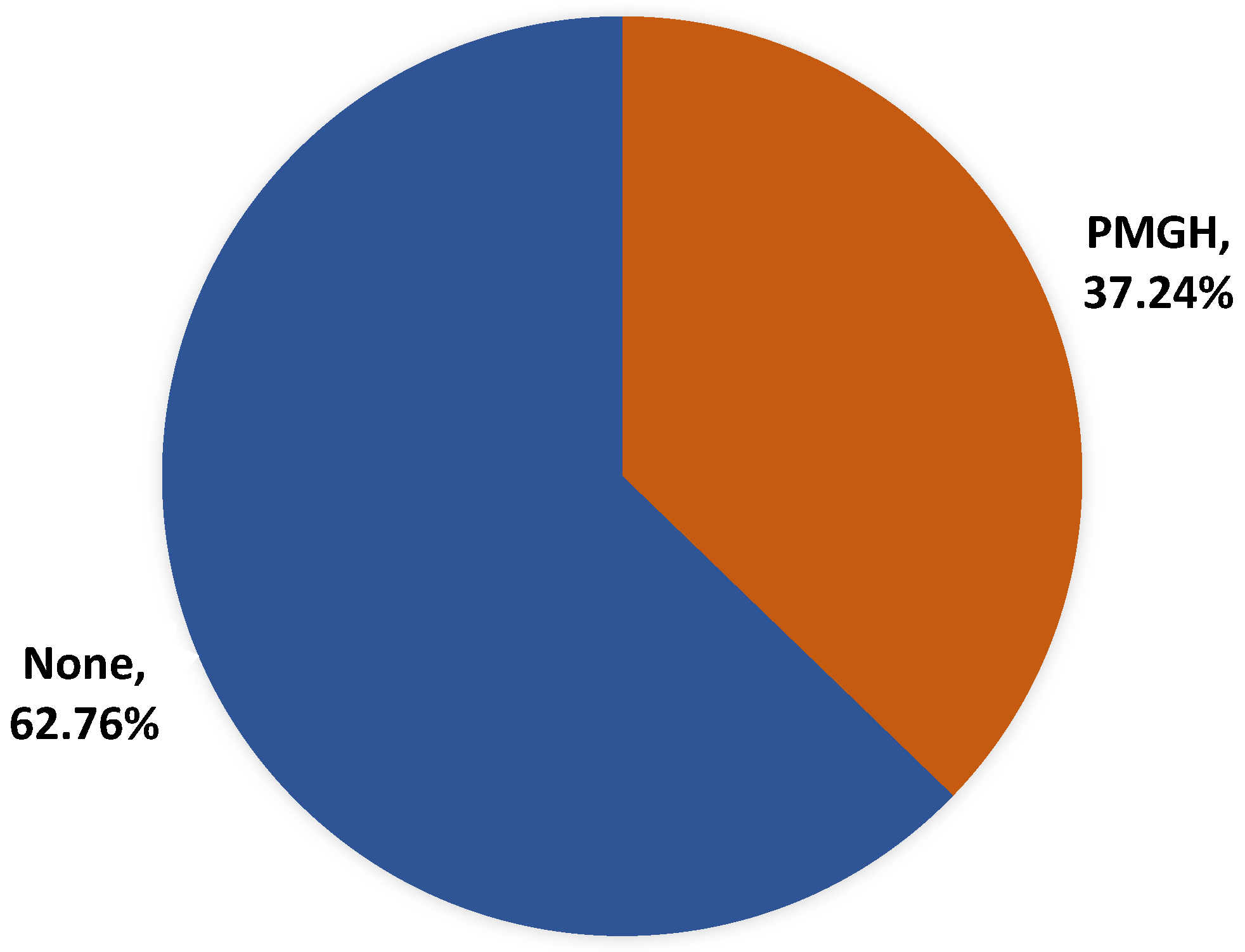
Table 1). 89 students (37.2%; 95% CI: 31.1% to 43.4%) had PMGH. Of these, 46% of patients reported onset of PMGH in the age group 19–22 years and, 2.2% of participants had an onset before 10 years. Scalp was noted to be the commonest site of PMGH (94.4%), and, in the scalp, the frontal area was most affected (33.7%) (
Table 2). Almost 55% of candidates reported mild PMGH (<10 gray hairs), and 62% reported slow progression (<3 gray hairs/month). No statistically significant association was noted between PMGH and past medical or dermatological illnesses (
Table 3). Family history of premature graying was statistically significant (
p = 0.001%) (
Table 4). No significant relationship was noted between use of supplements, hair oils or Minoxidil use (
Table 5). Regarding habits and diet, smoking, keto diet and previous history of hair dye use were found to be associated with PMGH with a significant
p-value < 0.05 (
Table 6). Regarding students’ attitude to PMGH, the majority of students felt that hair washing, oiling and moisturization have no relation to PMGH (
Table 7). Family history of PMGH was found to be a significant association (
p = 0.01) (
Table 8).
4. Discussion
In total, 239 medical students participated in an online cross-sectional study conducted at a medical college in Saudi Arabia. All the students were in the 18–30 year age group, with the majority in the 19–24 year age group. There were 109 males and 130 females. In total, 37.24% of students had premature graying
Figure 1. A study conducted at a Saudi University found a prevalence of PMGH of 42.5% [
6]. A Nepali Medical College survey found a prevalence of 40% and studies conducted among college students found prevalence ranging from 27.3% to 34.5% [
8,
11,
12,
17].
According to the results of our study on grading severity, 55.1% of students had mild early canities, 30.3% had moderate canities, and 5.6% had severe canities. The commonest area affected by PMGH was found to be the scalp and especially the frontal area, whereas a Turkish study noted it more in the parietal and temporal area [
12].
Among the subjects with PMGH, positive family history was noted to be a significant association. This was similar to studies elsewhere [
8,
10,
11,
12,
17,
18,
19]. Smoking was found to be a statistically significant association in the present study (
p value = 0.03%), as in other studies in this age group [
6,
8,
11], whereas one study found no significant relation between the two [
10]. Intake of keto diet was found to be a significant risk factor in this study [
p values 0.10, 0.04]. Other studies reported iron deficiency as a significant association [
8]. Students who had a history of previously changing hair color were found to have a significant association with PMGH (
p = 0.042). A study conducted in Saudi Arabia noted hair straightening, dryer and gel use to be associated. Students in this study felt that cleaning, oiling and moisturizing hair had no relation to premature graying.
To date, there are no studies that specifically address premature graying of hair among medical students in this area in the Kingdom of Saudi Arabia. Our study found that 37.24% of medical students had premature graying. Risk factors in our study with significant association were a combination of genetic and environmental factors like family history, smoking, keto diet, and coloring of hair. Although the genetic part is unmodifiable, risk factors like smoking could be terminated. Students and patients should be advised regarding the modifiable risk factors. The importance of a healthy lifestyle is again highlighted by the results of this study.
Premature Hair Graying (PMGH) poses both cosmetic and psychological concerns for the affected individuals. While it is difficult to prevent premature graying, a variety of treatment options aims at addressing the root cause and restoring hair color. In order to focus on potential remedies, numerous attempts have been made in the literature to comprehend the fundamental mechanism of PMGH. Nonetheless, no studies have yet described a long-term method of reversing it. Factors reducing oxidative stress and speeding up melanocyte growth are the focus of future treatment. Additional research on these modalities of treatment is required.
5. Conclusions
PMGH is a condition that affects a significant portion of the population and can have a profound impact on the physical and psychological well-being of individuals. The results of this study demonstrate that early hair graying is caused by both genetic and modifiable factors, and its incidence and psychosocial effects might be lessened with increased awareness and early lifestyle changes. The findings of this study could have a positive impact on students who are affected by this condition and provide an improved understanding of factors influencing hair loss. Health education programs emphasizing smoking cessation, balanced nutrition, and cautious use of cosmetic hair products could help reduce the risk and early onset of PMGH among young adults. Additionally, promoting awareness about the importance of adequate vitamin and mineral intake (e.g., vitamins B12, D, iron, and copper) may support preventive efforts. In order to determine the specific etiologic significance of these variables and develop a range of prevention and treatment targets for PHG, further studies with a larger sample size are needed.
Strengths and Weaknesses
This study demonstrates several notable strengths. In the first place, it fills a significant local data gap by being one of the few studies looking at early graying of hair among medical students in the eastern province of Saudi Arabia. Furthermore, this study’s sample size of 239 participants was thought to be sufficient, giving it the statistical power to identify any possible associations. The instrument’s clarity and internal validity were improved by using a previously validated questionnaire that had also undergone pilot testing. Furthermore, this study’s comprehensive inclusion of a wide range of sociological, lifestyle, medical, and family history variables allowed for the identification of multiple and diverse correlations with premature graying of hair (PMGH).
However, this study also has several weaknesses. The cross-sectional design limits the ability to establish causal relationships between PMGH and potential risk factors such as smoking or dietary habits; it only allows for the identification of associations. The use of convenience sampling through online forms and social media may have introduced selection bias, thereby restricting the generalizability of the findings. Moreover, the reliance on self-reported data regarding the onset and severity of PMGH, as well as lifestyle behaviors, increases the likelihood of recall and reporting biases. This study’s external validity is also limited because the sample was mostly medical students, which makes it hard to apply the results to other groups of students or to young adults in general. Lastly, the absence of biochemical measurements weakens this study’s capacity to confirm laboratory-based deficiencies, as key factors such as vitamin D, iron, and vitamin B12 levels were assessed solely through self-reporting.
Author Contributions
Conceptualization, H.Y.A.; Methodology H.Y.A., I.A. and F.K.; Visualization, H.Y.A. and F.K.; Supervision, I.A. and F.K., Project administration, I.A. and H.Y.A.; Data Collection, H.Y.A.; Data curation, H.Y.A., I.A. and F.K.; Formal Analysis, H.Y.A., I.A. and F.K.; Writing–original draft, H.Y.A., Writing–review and editing, H.Y.A., I.A. and F.K. All authors have read and agreed to the published version of the manuscript.
Funding
This research received no external funding.
Data Availability Statement
The data supporting the findings of this study are available from the corresponding author upon reasonable request, subject to ethical and privacy restrictions.
Acknowledgments
The authors would like to acknowledge the participants of this study.
Conflicts of Interest
The authors declare no conflict of interest.
Abbreviations
| PMGH | Premature Graying of Hair |
| MBBS | Bachelor of Medicine, Bachelor of Surgery |
References
- Kocaman, S.A.; Çetin, M.; Durakoğlugil, M.E.; Çanga, A.; Çiçek, Y.; Doğan, S.; Şahin, İ.; Şatıroğlu, Ö. The degree of premature hair graying as an independent risk marker for coronary artery disease: A predictor of biological age rather than chronological age. Anatol. J. Cardiol. 2012, 12, 457–463. [Google Scholar] [CrossRef] [PubMed]
- Anggraini, D.R.; Feriyawati, L.; Hidayat, H.; Wahyuni, A.S. Risk factors associated with premature hair greying of young adult. Open Access Maced. J. Med. Sci. 2019, 7, 3762–3764. [Google Scholar] [CrossRef] [PubMed]
- Kumar, A.B.; Shamim, H.; Nagaraju, U. Premature graying of hair: Review with updates. Int. J. Trichol. 2018, 10, 198–203. [Google Scholar] [CrossRef] [PubMed]
- Das, S.; Chander, R.; Garg, T.; Mendiratta, V.; Singh, R.; Sanke, S. Cardiovascular risk markers in premature canities. Indian J. Dermatol. Venereol. Leprol. 2023, 89, 221–225. [Google Scholar] [CrossRef] [PubMed]
- Daulatabad, D.; Singal, A.; Grover, C.; Chhillar, N. Profile of Indian patients with premature canities. Indian J. Dermatol. Venereol. Leprol. 2016, 82, 169–172. [Google Scholar] [CrossRef] [PubMed]
- Almutairi, R.T.; Al Dhafiri, M. Premature greying of hair among the population of King Faisal University in Al-Ahasa, Saudi Arabia: An epidemiological study. Int. J. Med. Dev. Ctries. 2019, 3, 542–548. [Google Scholar] [CrossRef]
- Alkahtani, A.; Alfadhli, R.; Aldakhilallah, M.; Almutlaq, M.; Alzamil, F. Relationship between premature hair graying and psychological stress: A cross-sectional study on young Saudis in Riyadh, Saudi Arabia. Int. J. Med. Dev. Ctries. 2022, 6, 574–578. [Google Scholar] [CrossRef]
- Kansal, S.; Bilimale, A.S.; Gopi, A.; Bv, S. Premature Hair Greying—Magnitude and Associated Factors: A cross-sectional study in a university in Mysuru. Indian J. Community Health 2021, 33, 462–465. [Google Scholar] [CrossRef]
- Singh, R.; Madke, B.; Bansod, S.; Yadav, N. Premature graying of hair: A concise review. Cosmoderma 2021, 1, 65. [Google Scholar] [CrossRef]
- Acer, E.; Arslantaş, D.; Emiral, G.Ö.; Ünsal, A.; Atalay, B.I.; Göktaş, S. Clinical and epidemiological characteristics and associated factors of hair graying: A population-based, cross-sectional study in Turkey. An. Bras. Dermatol. 2020, 95, 439–446. [Google Scholar] [CrossRef] [PubMed]
- Bhola, N.; Valendu, G.; Ranjeeta, K. A Community Based Study to Estimate Prevalence and Determine Correlates of Premature Graying of Hair among Young Adults in Srinagar, Uttarakhand, India. Int. J. Trichol. 2020, 12, 206–212. [Google Scholar] [CrossRef] [PubMed] [PubMed Central]
- Saad, M.; Babar, N.F.; Majeed, R.; Rehman, A.U.; Khan, O.A.; Chatha, D.E.; Aamir, U.; Nadeem, A.; Abbas, S. Impact of Premature Greying of Hair on Socio-cultural Adjustment and Self-esteem among Medical Undergraduates in Foundation University, Islamabad. Cureus 2019, 11, e5803. [Google Scholar] [CrossRef] [PubMed]
- Shin, H.; Ryu, H.H.; Yoon, J.; Jo, S.; Jang, S.; Choi, M.; Kwon, O.; Jo, S.J. Association of premature hair graying with family history, smoking, and obesity: A cross-sectional study. J. Am. Acad. Dermatol. 2015, 72, 321–327. [Google Scholar] [CrossRef] [PubMed]
- Zayed, A.A.; Shahait, A.D.; Ayoub, M.N.; Yousef, A.M. Smokers’ hair: Does smoking cause premature hair graying? Indian Dermatol. Online J. 2013, 4, 90–92. [Google Scholar] [CrossRef] [PubMed]
- Bhat, R.M.; Sharma, R.; Pinto, A.C.; Dandekeri, S.; Martis, J. Epidemiological and Investigative Study of Premature Graying of Hair in Higher Secondary and Pre-University School Children. Int. J. Trichol. 2013, 5, 17–21. [Google Scholar] [CrossRef] [PubMed]
- El-Husseiny, R.; Alrgig, N.T.; Fattah, N.S.A. Epidemiological and biochemical factors (serum ferritin and vitamin D) associated with premature hair graying in Egyptian population. J. Cosmet. Dermatol. 2021, 20, 1860–1866. [Google Scholar] [CrossRef] [PubMed]
- Chaudhary, S.; Mahotra, N.B. Early Canities among Undergraduate Medical Students of a Medical College: A Descriptive Cross-sectional Study. J. Nepal. Med. Assoc. 2023, 61, 220–223. [Google Scholar] [CrossRef] [PubMed]
- Padmavathi, P.; Sathiyapriya, V.; Jos, P.; Sudha, V. Prevalence of premature canities among college students studying in a private medical college, Chennai: A cross sectional study. Int. J. Health Sci. 2022, 6, 6576–6582. [Google Scholar] [CrossRef]
- Lubis, E.Z.S.; Jusuf, N.K. Risk Factors Analysis of Premature Canities in Medical Students of Universitas Sumatera Utara Class 2016–2018. Sumat. Med. J. 2020, 3, 48–58. [Google Scholar] [CrossRef]
| Disclaimer/Publisher’s Note: The statements, opinions and data contained in all publications are solely those of the individual author(s) and contributor(s) and not of MDPI and/or the editor(s). MDPI and/or the editor(s) disclaim responsibility for any injury to people or property resulting from any ideas, methods, instructions or products referred to in the content. |
© 2026 by the authors. Published by MDPI on behalf of the Lithuanian University of Health Sciences. Licensee MDPI, Basel, Switzerland. This article is an open access article distributed under the terms and conditions of the Creative Commons Attribution (CC BY) license.