Review

Axillary Versus Subclavian Venous Access for Permanent Pacemaker Implantation: Complications, Evolving Techniques and Practical Recommendations

1
Department of Cardiology, Venizelio General Hospital of Heraklion, 71409 Heraklion, Greece
2
School of Medicine, University of Crete, 70013 Heraklion, Greece
3
Department of Cardiology, University General Hospital of Heraklion, 71500 Heraklion, Greece
*
Author to whom correspondence should be addressed.
Medicina 2025, 61(12), 2173; https://doi.org/10.3390/medicina61122173
Submission received: 5 November 2025 / Revised: 2 December 2025 / Accepted: 4 December 2025 / Published: 6 December 2025
(This article belongs to the Section Cardiology)

Abstract

Venous access selection represents a pivotal aspect of permanent pacemaker implantation, directly influencing both procedural safety and long-term device performance. Although the subclavian vein has been traditionally favored, its use is associated with notable risks, including pneumothorax, hemothorax, and crush syndrome. In contrast, axillary access has gained prominence, supported by observational studies and a small number of randomized trials demonstrating reduced pneumothorax rates, fewer arterial punctures, and potentially fewer long-term mechanical lead failures, particularly when ultrasound guidance is used. However, these findings are derived from heterogeneous studies with variable definitions, imaging protocols and operator experience, highlighting that evidence quality remains moderate. Contemporary advances—such as routine ultrasound guidance, micropuncture techniques, and structured training—have improved procedural consistency and safety, a trend reflected in recent guidelines. This review provides a focused appraisal of complication patterns, anatomical differences and patient-specific considerations to support individualized and evidence-aligned venous access selection in modern clinical practice.

1. Introduction

Pacemaker implantation is a widely performed and generally safe procedure for managing bradyarrhythmias. The global number of permanent pacemaker implantations has steadily increased, with current estimates approaching one million devices annually. High-degree atrioventricular block (AVB) and sinus node dysfunction remain the most common indications for pacing therapy [1,2].
A key first step in pacemaker implantation is obtaining safe venous access for lead placement in the right ventricle or atrium. As patients live longer and more often need future procedures like device upgrades or lead revisions, the choice of access route carries important long-term implications [3,4]. Traditionally, the subclavian vein has been the most widely used access site due to its predictable anatomical location and operator familiarity with the Seldinger technique. However, subclavian access is associated with several well-recognized complications, including pneumothorax, hemothorax, inadvertent arterial puncture, and lead failure (crush syndrome). These limitations have prompted growing interest in alternative techniques [4,5,6,7,8].
The axillary vein, which courses more laterally and extrathoracically, has become an increasingly utilized alternative. Several comparative studies—primarily observational studies—suggest that axillary access may be associated with a lower risk of intrathoracic complications and mechanical lead failure [6,7,9,10]. However, randomized prospective data remain limited, and concerns persist regarding technical complexity and operator experience [11]. Complication risk increases with device complexity and is higher in upgrades or lead revisions compared to de novo implantations. Rates are also closely linked to operator and center experience, with significantly more complications seen in low-volume centers or emergency procedures [2,12,13].
In recent years, the focus has shifted toward safer and image-guided strategies that balance procedural efficiency with complication prevention. These developments have paralleled broader efforts to refine access techniques and improve procedural consistency through modern imaging tools and structured operator training. This review provides a critically appraised comparison of subclavian and axillary approaches and integrates evolving imaging techniques, operator training considerations, and patient-specific factors to guide contemporary clinical decision-making.

2. Literature Review Strategy

To inform this narrative review, we conducted a targeted literature search using PubMed/MEDLINE, Scopus, and Google Scholar from database inception to 15 July 2025. Search terms included combinations of “pacemaker,” “cardiac implantable electronic device (CIED)”, “venous access,” “subclavian,” “axillary,” “cephalic,” “ultrasound-guided,” “lead complications,” and “lead failure”. We restricted our search to human studies in adults, published in English and focusing on transvenous pacemaker or CIED implantation.
We prioritized:
Randomized and non-randomized comparative studies of axillary versus subclavian access;
Large observational cohorts and national registries;
Meta-analyses and systematic reviews;
Guideline and consensus documents from professional societies such as the European Society of Cardiology (ESC) and American College of Cardiology/American Heart Association/Heart Rhythm Society (ACC/AHA/HRS).
We excluded pediatric-only studies, purely surgical epicardial systems and studies without a clearly defined venous access technique. Case reports were included only when illustrating rare complications or providing mechanistic insight, but they were not used for comparative evaluation. Additional references were identified through the reference lists of key articles. Given the narrative scope of this review, no formal PRISMA flow diagram or meta-analytic pooling was performed; however, we aimed to provide transparent methodological reporting and highlight the quality, strengths and limitations of included studies.

3. Anatomical and Technical Considerations

Selecting an appropriate venous access route requires a clear understanding of the anatomical and technical nuances that differentiate subclavian and axillary entry sites. Although these veins form a continuous pathway, their relationship to surrounding structures, suitability for imaging guidance and the mechanical implications for long-term lead performance differ meaningfully. These distinctions directly affect procedural safety, complication patterns and long-term integrity. The following sections provide a practical, comparative overview to support informed decision-making in daily clinical practice.

3.1. Subclavian Vein Access

The subclavian vein has served as the standard venous access for transvenous pacemaker implantation for decades [6,14]. Its consistent anatomical course beneath the clavicle and direct trajectory toward the superior vena cava allow rapid access using the Seldinger technique under fluoroscopic guidance. In difficult cases or during multiple lead insertions contrast venography may provide further anatomical delineation. These features contribute to its long-standing popularity and high procedural success rates [15].
Despite these advantages, subclavian access is associated with several well-recognized risks due to its close proximity to the pleura, lung apex and subclavian artery. Complications include pneumothorax, hemothorax, inadvertent arterial cannulation and brachial plexus injury. A key long-term concern is lead crush syndrome, caused by compression of the lead between the clavicle and first rib, leading to insulation damage or conductor fracture—more frequently affecting younger and more active patients [2,5,11,16,17]. Although endothelial trauma during puncture has been implicated in venous stenosis, current evidence has not clearly demonstrated a major difference in long-term venous obstruction between subclavian and axillary routes [13,18,19].

3.2. Axillary Vein Access

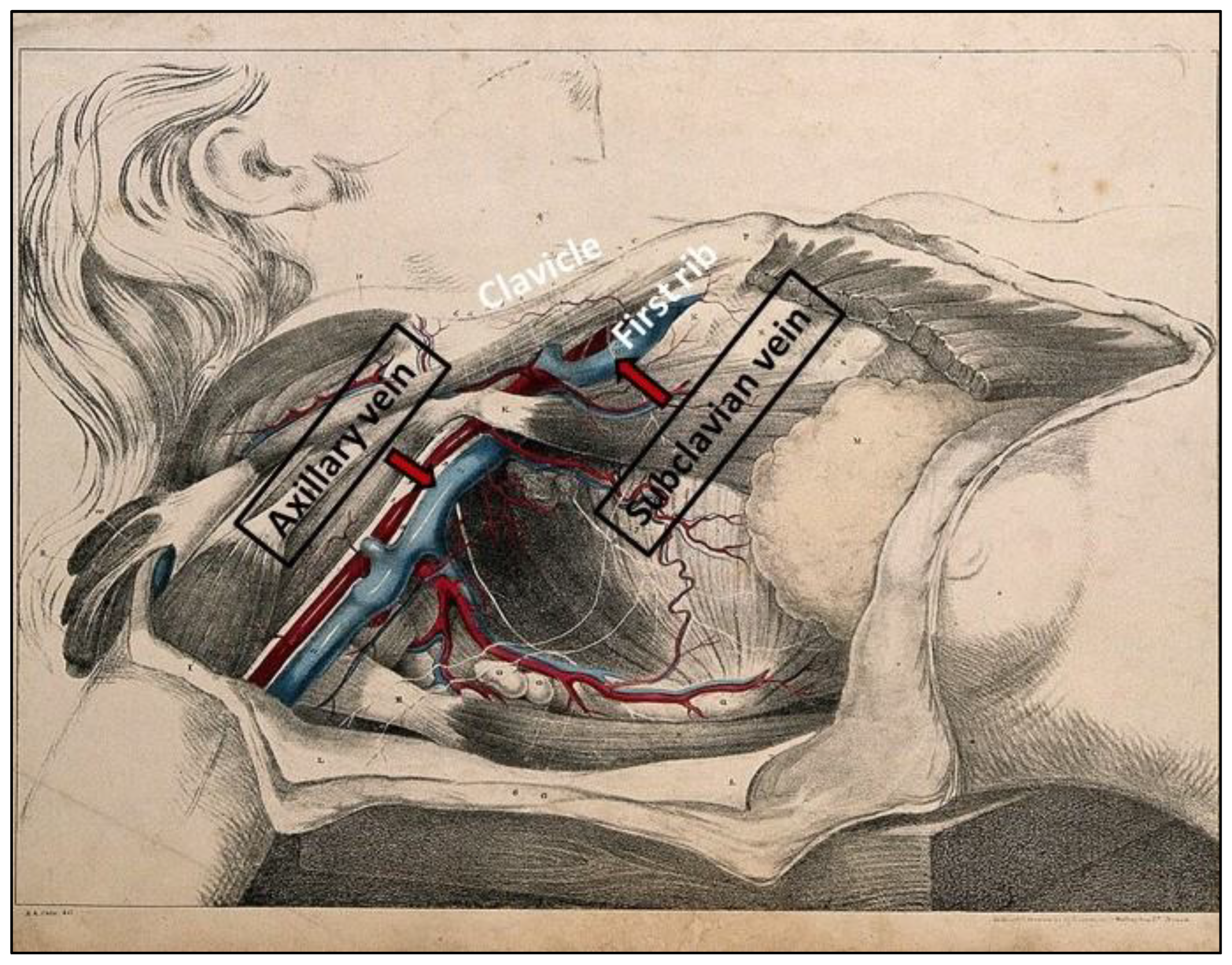
The axillary vein, a lateral continuation of the subclavian vein, provides an extrathoracic access route that avoids clavicle-first rib space (Figure 1). Its more lateral position is associated with a lower risk of intrathoracic complications [20,21]. The axillary vein can be accessed using various methods, including fluoroscopic guidance (e.g., “first rib technique”), ultrasound guidance, which allows direct visualization of the vein and surrounding structures and anatomical landmarks. Access using landmarks alone is less reliable than imaging-guided [20,22].
In recent years, ultrasound-guided axillary access has become increasingly adopted due to its ability to improve first-pass success, reduce arterial puncture, and pneumothorax, and markedly reduce reliance on fluoroscopy. The more parallel lead entry angle through the axillary vein may reduce mechanical stress on pacing leads and potentially enhance long-term lead performance (Table 1) [21,23].
Figure 1. Subclavian and axillary venous anatomy relevant to pacemaker implantation. Illustration showing the axillary vein as an extrathoracic continuation of the subclavian vein and its relationship with the clavicle and first rib. Adapted from a colored lithograph by G.E. Madeley after A.A. Cane, 1834, Wellcome Collection [24]. Licensed under CC BY 4.0 (https://creativecommons.org/licenses/by/4.0/). URL accessed on 3 November 2025. Modifications (labels added) by the authors.
Medicina 61 02173 g001

4. Procedural Success and Learning Curve

Both subclavian and axillary access achieve high success rates when performed by experienced operators; however, the performance profile of each technique differs, particularly in the modern era of routine ultrasound guidance [22,25].

4.1. Fluoroscopy-Guided Access

Fluoroscopy-guided puncture remains the most widely used technique, offering high procedural success rates, especially for experienced operators. Nevertheless, this method carries drawbacks, including radiation exposure and occasional need for contrast venography, which may be undesirable in patients with renal dysfunction [23].

4.2. Ultrasound-Guided Access

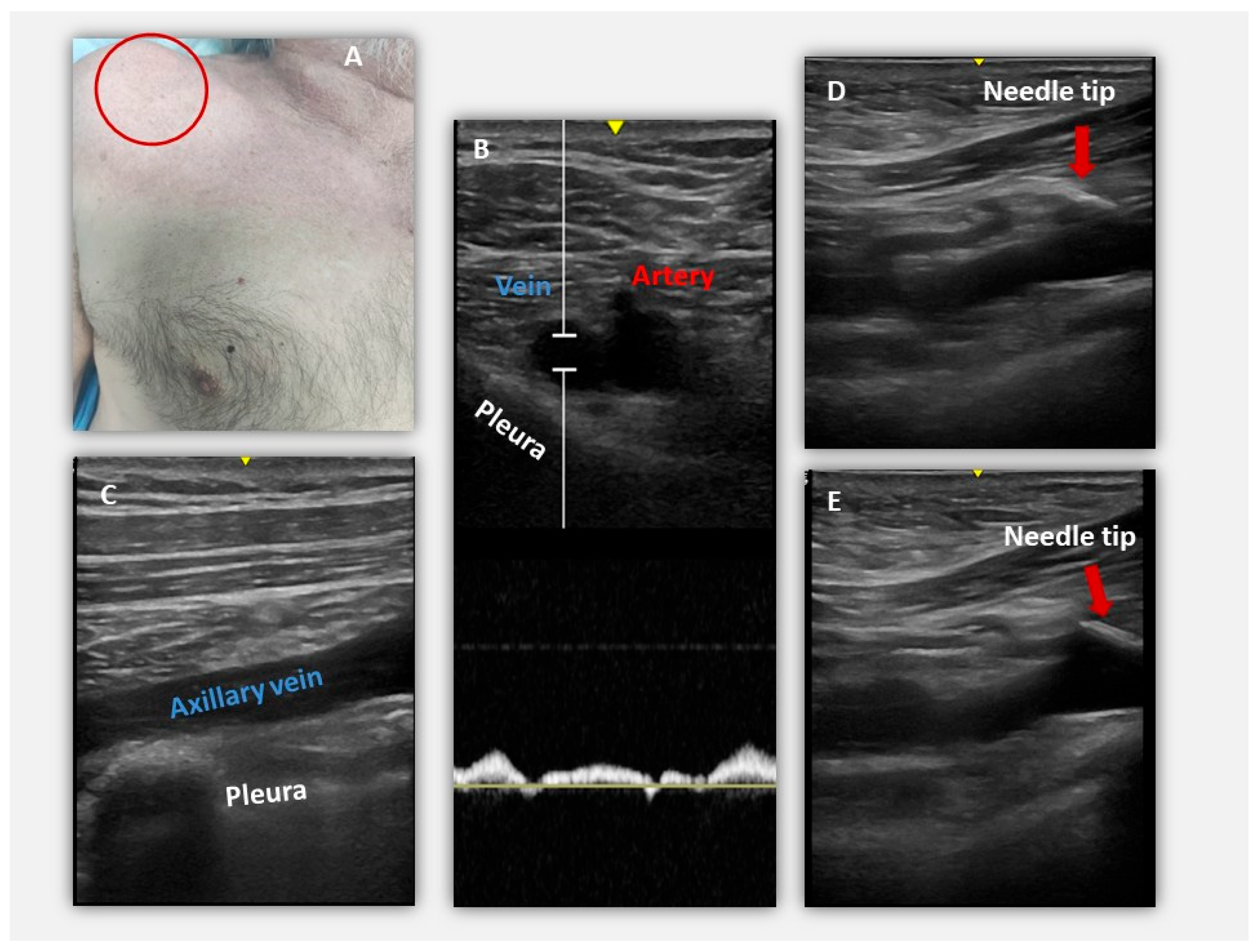
Ultrasound-guided access enables real-time visualization of target vessel, surrounding anatomy, and needle trajectory (Figure 2). Its benefits include lower incidence of arterial puncture and pneumothorax, reduced reliance on anatomical landmarks and improved first-pass success rates, as reported in multiple studies. These advantages are most pronounced in axillary access, where the vessel is more superficial and not obscured by the clavicle [21,23,25,26,27].

4.3. Operator Learning Curve

Operator familiarity is a critical factor influencing the choice of technique. The subclavian approach is more commonly taught and performed, leading to broader comfort among general cardiologists and trainees. In contrast, the axillary approach, especially when performed under ultrasound guidance, requires more time and training to achieve procedural proficiency. Anatomical variability, vessel depth, and the need for hand–eye coordination during ultrasound-guided puncture all contribute to initial challenges [28]. However, once procedural proficiency is achieved, ultrasound-guided axillary access has been reported to offer comparable—or in some cases superior—safety to subclavian access, particularly for arterial puncture and pneumothorax [25,29].

4.4. Technological and Training Advances

Modern refinements—such as the use of 21-gauge micropuncture needles, high-frequency linear probes and intra-pocket ultrasound—have improved the safety profile of axillary access, offering strict control during vessel entry and minimizing procedural time and the risk of vascular or pleural injury [27,30,31].
These considerations have important implications for training programs. As prevention of access-related complications becomes a central priority in device implantation, there is increasing recognition of the need to incorporate ultrasound-guided vascular access into cardiology and electrophysiology curricula. Structured teaching and simulation-based practice can support operators in overcoming the initial learning curve and adopting these techniques safely, potentially facilitating wider use of the axillary vein approach where appropriate [23,28].

5. Complications

Understanding the complication profile associated with each venous access route is essential for procedural planning and long-term device management. Table 2 provides a structured comparison of complication rates based on contemporary observational studies, randomized trials, and meta-analyses [6,11].

5.1. Pneumothorax and Hemothorax

Pneumothorax remains one of the most significant acute complications of transvenous pacemaker implantation, particularly with the subclavian approach. Contemporary series report pneumothorax in 1–3% of subclavian punctures and <1% with axillary access, with the lowest rates when ultrasound guidance is used. Hemothorax and inadvertent arterial puncture are less common but occur when the subclavian/axillary artery is unintentionally accessed [9,11,29,32].
Diagnosis typically relies on chest X-ray, though ultrasound or computed tomography (CT) may be used in clinically unstable patients. Management depends on severity: small, stable cases of pneumothorax may only require observation and oxygen, while larger or symptomatic ones may necessitate chest tube insertion. Hemothorax requires prompt drainage and rarely surgical intervention [15].

5.2. Lead Failure and Crush Syndrome

Mechanical lead failure is more frequently observed with subclavian access due to potential compression between the clavicle and the first rib (“crush syndrome”). This may lead to insultation damage or conductor fracture over time [33,34]. Axillary access provides a straighter and less angulated lead path, with observational studies reporting lower rates of chronic lead malfunction [11,32,35].
Diagnosis relies on device interrogation showing abnormal impedance, threshold, or sensing parameters. Radiographic evaluation may assist in identifying structural lead damage. Management typically requires lead revision or replacement [15,33].

5.3. Venous Stenosis and Occlusion

Venous stenosis or occlusion occurs in a substantial proportion of patients with transvenous cardiac implantable electronic devices (CIED) systems, especially during upgrades or in the presence of multiple implanted leads. Available studies do not demonstrate a consistent difference between subclavian and axillary access, likely due to heterogeneity in definitions, imaging protocols, and follow-up duration [15,36]. The burden of implanted leads, prior instrumentation, and endothelial trauma are stronger predictors of stenosis than the puncture site itself [36,37].
Most cases remain asymptomatic due to collateral formation, but in cases of severe obstruction—particularly involving the superior vena cava (SVC)—patients may develop edema, dyspnea or venous congestion [38,39]. Management depends on the severity of obstruction and the clinical context. In asymptomatic cases, no intervention may be required. In symptomatic patients or those undergoing reintervention, strategies may include venoplasty, lead extraction, or recanalization with stenting, although success can be variable [38,40,41,42].

5.4. Arterial Injury and Hematoma

Both subclavian and axillary venous access techniques carry a risk of arterial puncture and subsequent hematoma formation. Subclavian access traditionally exhibits higher rates when performed without imaging, largely because misplacement may go unrecognized beneath the clavicle [15].
In contrast, the axillary vein lies immediately adjacent to the axillary artery, and some observational studies reported higher arterial puncture rates with axillary access when performed using fluoroscopy alone. However, ultrasound guidance—especially when combined with a 21-gauge micropuncture needle—can reduce this risk by allowing real-time visualization of the vein, artery, needle tip, and pleural line, while minimizing the consequences of inadvertent arterial entry. Randomized and prospective studies consistently demonstrate significantly lower rates of clinically relevant arterial injury with ultrasound-guided axillary access, even in anticoagulated patients [25,27,31,43].
Management typically involves immediate manual compression; most hematomas are self-limiting. Imaging is reserved for expanding hematomas or suspected neurovascular compromise [44,45].

5.5. Infection

The risk of infection following CIED implantation is influenced more by procedural and patient-related factors than by the choice of venous access route. No consistent differences in infection rates have been shown between subclavian and axillary approaches. Instead, comorbidities such as diabetes, renal dysfunction, heart failure, and COPD, along with procedural factors like temporary pacing, early reintervention, and prolonged operative time, play a more significant role [46,47].
Diagnosis relies on clinical evaluation, blood cultures, inflammatory markers, and imaging when needed, though normal inflammation markers do not exclude infection [2,46]. Preventive strategies remain essential. A single dose of preprocedural cefazolin has been shown to reduce the risk of infection significantly, and current guidelines recommend administering antibiotics within one hour of incision, along with sterile technique and chlorhexidine–alcohol for skin preparation [2,15]. When ultrasound-guided venous access is used, the ultrasound probe must be disinfected appropriately and covered with a sterile sheath to avoid contamination of the operative field [48,49]. Management depends on the extent of infection. Localized cases, e.g., superficial incisional infections, may respond to antibiotics, but the majority of confirmed device infections require complete system extraction and targeted intravenous therapy [15,46,50].

5.6. Radiation Exposure

Radiation exposure is an important procedural consideration, particularly in centers seeking to minimize cumulative operator and patient dose. Subclavian access performed under fluoroscopic guidance typically involves modest radiation exposure. Axillary access may require longer fluoroscopy during the learning curve; however, ultrasound-guided axillary puncture substantially reduces or eliminates fluoroscopy use. Therefore, the total radiation dose is more closely related to imaging strategy than to the venous access route itself [25,29,31,43].
Table 2. Comparative overview of complication rates for subclavian versus axillary access. Approximate ranges based on pooled data from contemporary observational cohorts, registries, and selected randomized studies. Rates vary across populations, definitions, and operator experience; therefore, values should be interpreted as indicative rather than definitive.
ParameterSubclavian AccessAxillary
Access
Data Source
Pneumothorax1–3%<1%Kirkfeldt et al. [5]; Sharma et al. [10]; Liu et al. [9]; Vitali et al. [25]
Lead Fracture/Crush Syndrome2–6%<2%Chan et al. [6], Kim et al. [35]; Liu et al. [9]
Arterial Puncture/Hematoma1–4%1–17% Vitali et al. [25]; Maffè et al. [7]; Liccardo et al. [21]
Significantly reduced with ultrasound
Hemothorax<1–1.5%Rare (<0.5%)Vitali et al. [25]; Liu et al. [9]
InfectionSimilarSimilarBlomström-Lundqvist C et al. [46]; Kirkfeldt et al. [47]
Not influenced by access site
First-pass success rate40–96%60–97%Leventopoulos et al. [27]; Chan et al. [6]; Sharma et al. [10]; Liu et al. [9]; Liccardo et al. [21]
Radiation timeHigher when venography usedMarkedly reduced with ultrasoundVitali et al. [25]; Migliore et al. [22]
To further contextualize these findings and provide an evidence-based comparison across studies, Table 3 synthesizes major prospective, randomized, and large observational cohorts evaluating venous access strategies. By outlining study design, sample size, primary outcomes, and methodological limitations, this table highlights the substantial heterogeneity in the available literature. Such variability underscores the need for cautious interpretation of pooled results and reinforces the importance of high-quality multicenter trials to guide definitive clinical recommendations.

6. Special Populations

Selecting the optimal venous access site for pacemaker implantation may be influenced by specific patient characteristics and comorbidities. Certain anatomical or clinical factors may favor an extrathoracic approach, imaging-guided techniques, or non-transvenous alternatives.

6.1. Patients with Chronic Kidney Disease (CKD)

In patients with CKD —particularly those approaching end-stage renal disease (ESRD) or already on dialysis—preserving central venous patency is essential because transvenous leads can contribute to venous stenosis that later compromises arteriovenous (AV) fistula creation. While no randomized data directly compare axillary and subclavian access in this specific population, the general principle remains conservation of venous pathways, particularly in patients with existing or planned AV fistulas [51,52].
In selected patients, non-transvenous alternatives—including leadless pacemakers, epicardial systems or subcutaneous ICDs—offer meaningful advantages by bypassing the venous system entirely. These options may also reduce infection risk, which is elevated in CKD due to impaired immunity and frequent device handling. Ultimately, venous access planning in CKD should be individualized, ideally coordinated with nephrology, to balance pacing needs with long-term vascular access preservation [52,53,54,55].

6.2. Elderly/Frail and High Bleeding-Risk Patients

Older patients frequently present with multiple comorbidities and a higher pre-procedural risk profile, which increases the likelihood of complications during pacemaker implantation [56,57]. Notably, in a large Danish registry study by Kirkfeldt et al., advancing age was independently associated with a higher risk of pneumothorax following dual-chamber device implantation [5].
This vulnerability is even more pronounced in patients with coagulopathy or elevated bleeding risk, where inadvertent arterial injury during an intrathoracic puncture can lead to expanding hematoma or hemothorax. In such scenarios, the axillary vein, particularly when accessed under real-time ultrasound guidance improves control of needle advancement and it has been associated with very low rates of arterial puncture and clinically significant hematoma, even among patients receiving anticoagulation [7,25,29,58].
For elderly, frail or high-bleeding risk individuals, the combination of a compressible access site, a lower risk of intrathoracic complications and precise needle guidance makes the axillary approach an attractive option. Successful implementation nevertheless depends on operator experience, familiarity with ultrasound techniques, and institutional support. Tailoring the venous access strategy to patient-specific factors—frailty status, bleeding risk, chest anatomy, and procedural complexity—remains essential to minimizing perioperative morbidity in this high-risk group [27,31,43,59].

6.3. Patients with Prior Device Implantation or Lead Revisions

Patients undergoing device upgrades, lead revisions, or generator replacements frequently exhibit venous stenosis or occlusion, complicating vascular access. Preprocedural imaging is therefore essential [60].
Ultrasound-guided axillary vein access may offer additional flexibility by helping identify patent lateral venous segments, even when more central segments are narrowed. When venous obstruction is more advanced, non-transvenous alternatives—including leadless pacemakers and subcutaneous implantable cardioverter defibrillators (S-ICDs)—serve as effective first-line solutions for preventing further venous compromise [55,61,62]. Transvenous lead extraction may also be considered, especially in younger patients requiring multiple new leads, but should be performed only in high-volume centers with surgical backup due to procedural complexity and inherent risks. Nevertheless, contemporary series—including recent data demonstrating safe same-day discharge after uncomplicated extractions—indicate that the overall management of extraction-related complications has improved markedly in recent years [63,64].
While the current comparison between axillary and subclavian access focuses on conventional transvenous techniques, these newer technologies represent an important paradigm shift in managing complex reintervention cases and should be considered first-line when clinically appropriate [55,61].

6.4. Obese Patients or Those with Challenging Anatomy

Patients with obesity or altered anatomical landmarks present difficulties during venous access. Ultrasound-guided axillary access improves visualization of vascular structures and helps avoid inadvertent arterial or pleural injury, though excessive soft tissue may reduce image quality in individuals with high body mass index (BMI) [31,59,65]. Techniques such as intra-pocket ultrasound-guided axillary access, as demonstrated in the ACCESS trial, help overcome these limitations by allowing visualization of the axillary vein from within the device pocket. This method has been shown to improve success rates while maintaining a favorable safety profile [30].

6.5. Leadless Pacing and Implication for Venous Access

Leadless pacemakers (LPMs) have become an important alternative in patients for whom transvenous access carries elevated procedural or long-term risk. They are particularly useful in individuals needing single-chamber ventricular pacing who have high infection or bleeding risk, limited upper-extremity venous access, prior tricuspid valve surgery, or very low BMI where a pocket may be problematic. Observational data consistently show lower rates of pocket- and lead-related complications—including infection, hematoma, pneumothorax, and lead failure—compared with transvenous systems. Although not suited for patients requiring biventricular pacing, LPMs may be advantageous in those with intermittent pacing needs or when avoiding a transvenous lead is clinically desirable. Dual-chamber leadless systems remain selectively used due to higher cost and evolving evidence [55,61,66]. The femoral approach is standard, but an internal jugular route has been successfully used in cases where femoral delivery is not possible (e.g., inferior vena cava filters or unfavorable anatomy), expanding applicability in complex access scenarios [66].
Taken together, these subgroups highlight the importance of tailoring venous access selection to individual risk profiles. In patients with CKD, preserving central venous patency and considering non-transvenous options may be advantageous. In elderly, frail, or high-bleeding-risk individuals, ultrasound-guided axillary access offers a compressible extrathoracic entry site that may mitigate the consequences of vascular injury. In patients with prior devices or venous stenosis, ultrasound guidance can help identify suitable windows for axillary puncture, while leadless or subcutaneous systems should be considered when conventional access is limited. Finally, in patients with obesity or those with challenging anatomy, ultrasound-based techniques—including intra-pocket approaches—improve visualization and procedural success. Integrating these patient-specific considerations into pre-procedural planning supports more consistent, individualized, and safer access selection in contemporary practice [26,29,31,43].

7. Current Guidelines and Practice Patterns

The selection of venous access during CIED implantation is a critical procedural decision that directly influences both short- and long-term outcomes. The 2021 European Society of Cardiology (ESC) Guidelines on cardiac pacing and resynchronization therapy recommend the cephalic and axillary vein as the preferred routes over the traditional subclavian vein, primarily to reduce the risk of complications. This recommendation is graded as Class IIa, Level of Evidence C, reflecting expert consensus in the absence of large-scale randomized trials. Notably, the ESC guidelines highlight a 7.8-fold increased risk of pneumothorax with subclavian vein puncture compared to extrathoracic routes. Axillary access—particularly under ultrasound guidance—is increasingly considered for its favorable safety profile, reduced fluoroscopy requirements and high first pass-success rates in contemporary practice [2,5,21,25].
The cephalic vein cutdown remains the technique with the lowest access-related complication rate, but its feasibility can be limited by anatomical variability, smaller vessel caliber, and lower rates of successful lead advancement. These challenges may prolong procedural time and reduce its suitability in urgent or complex cases, emphasizing the need for operator training in surgical venous access techniques [3,6].
In contrast, the most recent American guidelines (ACC/AHA/HRS) do not specify a preferred venous access route. While they offer detailed recommendations for procedural safety and infection prevention, no formal preference is expressed among subclavian, axillary, or cephalic access—likely reflecting heterogeneous practice patterns and operator training across U.S. centers [67,68].
The ESC also stresses the role of pre-procedural imaging (e.g., venography or chest CT) in patients with prior leads or suspected venous obstruction. When superior venous access is not feasible, alternative options—such as transfemoral temporary pacing, surgical epicardial leads, or non-transvenous systems including leadless pacemakers and subcutaneous ICDs—are recommended, particularly in patients with central venous obstruction or elevated infection risk [2].
Overall, current ESC recommendations reflect a clear shift toward extrathoracic and imaging-guided techniques, particularly for high-risk subgroups. However, implementation remains dependent on institutional protocols and operator expertise, underscoring the need for guideline-aligned training, investment in ultrasound infrastructure, and broader adoption of modern access techniques [2,8].
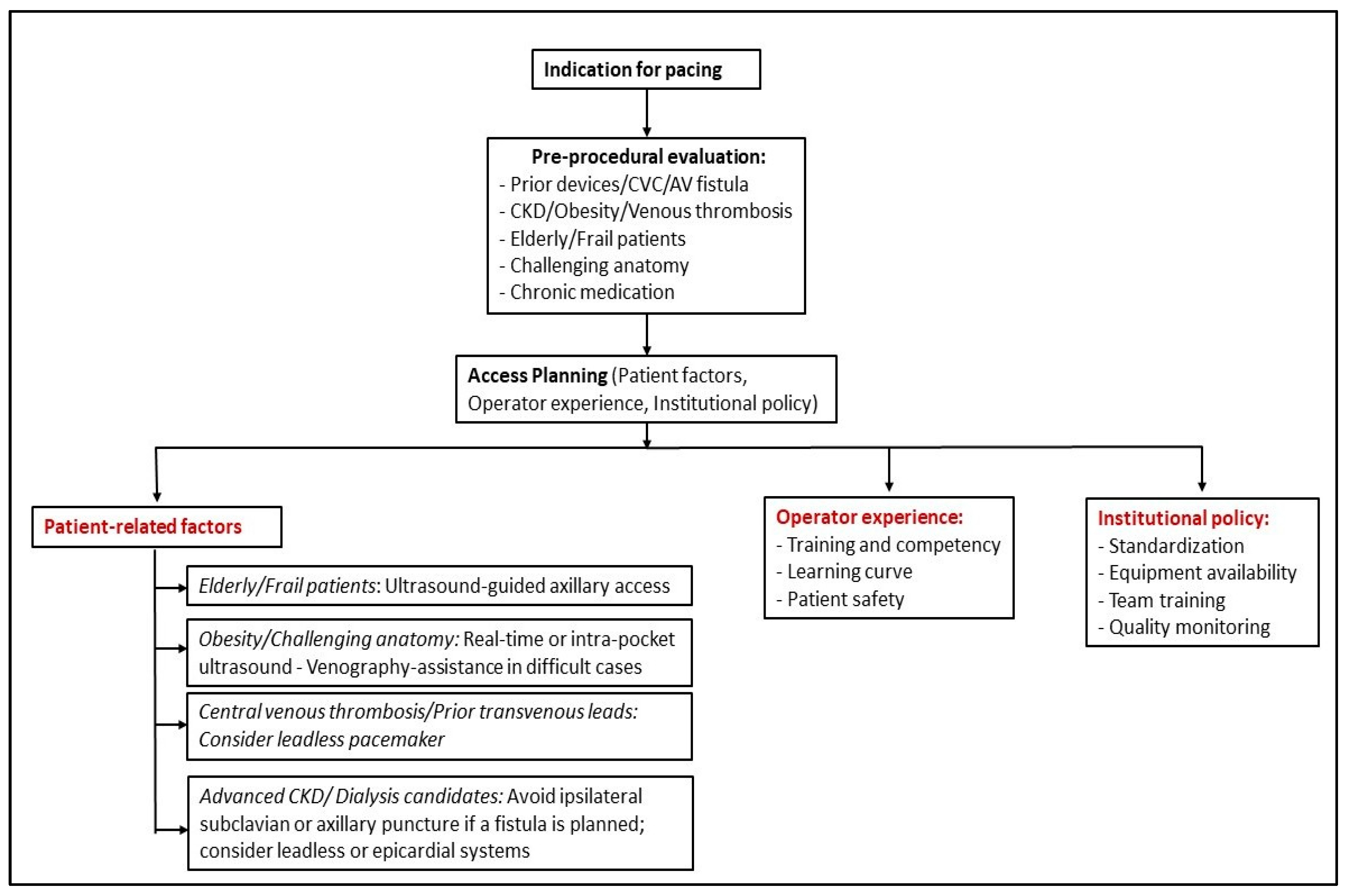
A structured, patient-centered approach is essential when selecting the optimal venous access route for pacemaker implantation. Figure 3 summarizes a proposed clinical decision pathway incorporating patient characteristics, operator experience, and institutional policies.

8. Limitations in the Literature and Future Perspectives

Despite the widespread use of both subclavian and axillary approaches for transvenous pacemaker implantation, the available literature is predominantly composed of observational studies and registry data, with a notable lack of randomized controlled trials (RCTs) directly comparing these access routes. This limits the strength of recommendations in current guidelines, as reflected by the Class IIa, Level of Evidence C rating assigned by the 2021 ESC Guidelines. Likewise, the. ACC/AHA/HRS guidelines do not endorse a specific venous access route, further highlighting the absence of consensus-driven, high-quality comparative evidence in this area [2,67].
A critical limitation across many studies is the presence of significant heterogeneity and the failure to account for key confounders such as operator experience, body habitus, and institutional volume—all of which can meaningfully influence complication rates such as pneumothorax, hematoma, or lead dislodgement. These factors complicate direct comparisons and likely explain the variability seen across observational cohorts [2,12].
Although recent studies support the safety and feasibility of ultrasound-guided axillary access, prospective multicenter validation remains scarce. Adoption in routine practice is still variable, often limited by insufficient training, lack of structured ultrasound curricula, and differences in institutional infrastructure. The learning curve associated with ultrasound-guided techniques is frequently underrecognized in the literature, despite evidence that operator proficiency markedly reduces complication rates [8,12,28].
Data from anatomically complex or clinical challenging subgroups—such as patients with morbid obesity, venous occlusion or prior device revisions—are limited. The increasing use of leadless pacemakers and subcutaneous ICDs represents an important shift in device therapy, especially in patients with central venous occlusion or high infection risk. However, these newer technologies remain largely absent from randomized controlled trials directly comparing pacing strategies and their role as first-line solutions in specific populations continues to evolve [66].
Finally, registry data—although valuable for capturing real-world outcomes—are inherently limited by reporting bias, incomplete data capture, and lack of procedural granularity. Future research should prioritize large-scale prospective studies with standardized outcome definitions, long-term follow-up, and inclusion of both conventional and leadless device technologies. Incorporating artificial intelligence (AI) for procedural planning, risk stratification, and operator training also represents a promising but underexplored avenue [12,28,69]. Looking ahead, cross-disciplinary advances in electrophysiology, critical care, and structural interventional cardiology are expected to further shape access strategies. The growing use of ultrasound-guided extrathoracic techniques, together with the expanding role of axillary arterial access in structural interventions such as transcatheter aortic valve replacement (TAVR), large-bore mechanical circulatory support, and extracorporeal membrane oxygenation (ECMO), highlights a broader shift toward axillary-based vascular approaches in selected patients. Continued innovation, standardized training, and multicenter prospective evaluation will be essential to define the optional role of these evolving access techniques in contemporary practice [70,71,72,73,74].

9. Conclusions

The choice of venous access during permanent pacemaker implantation directly influences procedural safety and long-term performance. Among available techniques, the axillary vein approach—particularly when performed under ultrasound guidance and using micropuncture equipment—has demonstrated a favorable safety profile in observational studies with lower reported rates of pneumothorax, arterial injury and mechanical lead complications compared to the traditional subclavian access. These advantages, however, are derived largely from non-randomized data and should be interpreted within the context of heterogeneous study populations
The incorporation of imaging guidance has contributed to reducing access-related complications and minimizing radiation exposure, with benefits becoming more pronounced as operator proficiency increases. At the same time, emerging technologies such as leadless pacemakers and subcutaneous ICDs have expanded the therapeutic landscape for patients at high risk of infection, venous obstruction, or complex reinterventions.
As evidence continues to evolve, venous access strategies should be individualized according to patient anatomy, comorbidities, procedural complexity, and institutional expertise. A progressive shift toward extrathoracic, ultrasound-guided approaches—supported by growing experience across electrophysiology, critical care, and structural interventional specialties—is expected to further enhance safety and procedural consistency in contemporary practice.

Author Contributions

Conceptualization, G.A., S.S., E.H. and E.F.; methodology, G.A., E.K. (Emmanuel Koutalas) and E.K. (Emmanuel Kanoupakis); software, G.A., E.R. and E.F.; validation, G.A., S.S., E.K. (Emmanuel Kanoupakis) and E.F.; writing—original draft preparation, G.A., S.S., E.H., E.K. (Emmanuel Koutalas), and E.F.; writing—review and editing, G.A., E.K. (Emmanuel Koutalas), E.K. (Emmanuel Kanoupakis), and E.F.; visualization, E.H. and E.R.; supervision, E.K.(Emmanuel Kanoupakis), and E.F.; project administration, G.A. and E.F.; funding acquisition, G.A., S.S. and E.F. All authors have read and agreed to the published version of the manuscript.

Funding

This research received no external funding.

Institutional Review Board Statement

Not applicable.

Informed Consent Statement

Not applicable.

Data Availability Statement

The original contributions presented in this study are included in the article. Further inquiries can be directed to the corresponding author.

Conflicts of Interest

The authors declare no conflicts of interest.

Abbreviations

The following abbreviations are used in this manuscript:
ACCAmerican College of Cardiology
AHAAmerican Heart Association
AIArtificial intelligence
APAxillary Puncture
AVArteriovenous
AVBAtrioventricular block
AVPAxillary Vein Puncture
BMIBody Mass Index
CIEDCardiac implantable electronic devices
CKDChronic kidney disease
CTComputed tomography
CVCephalic vein
CVCCentral venous catheter
ECMOExtracorporeal Membrane Oxygenation
ESCEuropean Society of Cardiology
ESRDEnd Stage Renal Disease
HRSHeart Rhythm Society
ICDImplantable Cardioverter-Defibrillator
IPUS-AVPIntra-Pocket Ultrasound-Guided Axillary Vein Puncture
LPMsLeadless Pacemakers
PLFPacemaker Lead Failure
PMPacemaker
RCTRandomized clinical trial
S-ICDSubcutaneous implantable cardioverter-defibrillator
SPSubclavian Puncture
SVCSuperior vena cava
USUltrasound
USAAUltrasound-Guided Axillary Access
TAVRTranscatheter aortic valve replacement
TLETransvenous lead extraction

References

  1. Bradshaw, P.J.; Stobie, P.; Knuiman, M.W.; Briffa, T.G.; Hobbs, M.S.T. Trends in the incidence and prevalence of cardiac pacemaker insertions in an ageing population. Open Heart 2014, 1, e000177. [Google Scholar] [CrossRef]
  2. Glikson, M.; Nielsen, J.C.; Kronborg, M.B.; Michowitz, Y.; Auricchio, A.; Barbash, I.M.; Barrabes, J.A.; Boriani, G.; Braunschweig, F.; Brignole, M.; et al. 2021 ESC Guidelines on cardiac pacing and cardiac resynchronization therapy: Developed by the Task Force on cardiac pacing and cardiac resynchronization therapy of the European Society of Cardiology (ESC) With the special contribution of the European Heart Rhythm Association (EHRA). Eur. Heart J. 2021, 42, 3427–3520. [Google Scholar] [CrossRef] [PubMed]
  3. Knorr, D.; Bandorski, D.; Bogossian, H.; Iliodromitis, K.; Schiedat, F.; Karosiene, Z.; Mijic, D.; Lemke, B.; Seyfarth, M.; Voß, S.; et al. Cephalic Vein Cutdown Is Superior to Subclavian Puncture as Venous Access for Patients with Cardiac Implantable Devices after Long-Term Follow-Up. J. Clin. Med. 2024, 13, 1044. [Google Scholar] [CrossRef] [PubMed]
  4. Su, J.; Kusumoto, F.M.; Zhou, X.; Elayi, C.S. How to perform extrathoracic venous access for cardiac implantable electronic device placement: Detailed description of techniques. Heart Rhythm. 2022, 19, 1184–1191. [Google Scholar] [CrossRef] [PubMed]
  5. Kirkfeldt, R.E.; Johansen, J.B.; Nohr, E.A.; Moller, M.; Arnsbo, P.; Nielsen, J.C. Pneumothorax in cardiac pacing: A population-based cohort study of 28 860 Danish patients. EP Eur. 2012, 14, 1132–1138. [Google Scholar] [CrossRef]
  6. Chan, N.-Y.; Kwong, N.-P.; Cheong, A.-P. Venous access and long-term pacemaker lead failure: Comparing contrast-guided axillary vein puncture with subclavian puncture and cephalic cutdown. EP Eur. 2017, 19, 1193–1197. [Google Scholar] [CrossRef]
  7. Maffè, S.; Paffoni, P.; Di Nardo, F.; Bergamasco, L.; Prenna, E.; Facchini, E.; Careri, G.; Pardo, N.; Paino, A.; Dellavesa, P. Ultrasound-guided Axillary Vein Puncture for Cardiac Device Implantation: A Safe and Effective Approach. J. Innov. Card. Rhythm. Manag. 2023, 14, 5410–5419. [Google Scholar] [CrossRef]
  8. Bongiorni, M.G.; Proclemer, A.; Dobreanu, D.; Marinskis, G.; Pison, L.; Blomstrom-Lundqvist, C.; Chen, J.; Dagres, N.; Estner, H.; Hernandez-Madrid, A.; et al. Preferred tools and techniques for implantation of cardiac electronic devices in Europe: Results of the European Heart Rhythm Association survey. EP Eur. 2013, 15, 1664–1668. [Google Scholar] [CrossRef]
  9. Liu, P.; Zhou, Y.-F.; Yang, P.; Gao, Y.-S.; Zhao, G.-R.; Ren, S.-Y.; Li, X.-L. Optimized Axillary Vein Technique versus Subclavian Vein Technique in Cardiovascular Implantable Electronic Device Implantation: A Randomized Controlled Study. Chin. Med. J. 2016, 129, 2647–2651. [Google Scholar] [CrossRef]
  10. Sharma, G.; Senguttuvan, N.B.; Thachil, A.; Leong, D.; Naik, N.; Naik, N.; Yadav, R.; Juneja, R.; Bahl, V.K. A comparison of lead placement through the subclavian vein technique with fluoroscopy-guided axillary vein technique for permanent pacemaker insertion. Can. J. Cardiol. 2012, 28, 542–546. [Google Scholar] [CrossRef]
  11. Atti, V.; Turagam, M.K.; Garg, J.; Koerber, S.; Angirekula, A.; Gopinathannair, R.; Natale, A.; Lakkireddy, D. Subclavian and Axillary Vein Access Versus Cephalic Vein Cutdown for Cardiac Implantable Electronic Device Implantation: A Meta-Analysis. JACC Clin. Electrophysiol. 2020, 6, 661–671. [Google Scholar] [CrossRef]
  12. Kirkfeldt, R.E.; Johansen, J.B.; Nohr, E.A.; Jørgensen, O.D.; Nielsen, J.C. Complications after cardiac implantable electronic device implantations: An analysis of a complete, nationwide cohort in Denmark. Eur. Heart J. 2014, 35, 1186–1194. [Google Scholar] [CrossRef] [PubMed]
  13. Frausing, M.H.J.P.; Kronborg, M.B.; Johansen, J.B.; Nielsen, J.C. Avoiding implant complications in cardiac implantable electronic devices: What works? EP Eur. 2021, 23, 163–173. [Google Scholar] [CrossRef] [PubMed]
  14. Littleford, P.O.; Parsonnet, V.; Spector, S.D. Method for the rapid and atraumatic insertion of permanent endocardial pacemaker electrodes through the subclavian vein. Am. J. Cardiol. 1979, 43, 980–982. [Google Scholar] [CrossRef] [PubMed]
  15. Sriramoju, A.; Iyengar, S.K.; Srivathsan, K. Navigating Complications in Cardiac Pacemakers: A Comprehensive Review and Management Strategies. Rev. Cardiovasc. Med. 2024, 25, 299. [Google Scholar] [CrossRef]
  16. Benz, A.P.; Vamos, M.; Erath, J.W.; Hohnloser, S.H. Cephalic vs. subclavian lead implantation in cardiac implantable electronic devices: A systematic review and meta-analysis. EP Eur. 2019, 21, 121–129. [Google Scholar] [CrossRef]
  17. Roelke, M.; O’Nunain, S.S.; Osswald, S.; Garan, H.; Harthorne, J.W.; Ruskin, J.N. Subclavian crush syndrome complicating transvenous cardioverter defibrillator systems. Pacing Clin. Electrophysiol. PACE 1995, 18, 973–979. [Google Scholar] [CrossRef]
  18. Abu-El-Haija, B.; Bhave, P.D.; Campbell, D.N.; Mazur, A.; Hodgson-Zingman, D.M.; Cotarlan, V.; Giudici, M.C. Venous Stenosis After Transvenous Lead Placement: A Study of Outcomes and Risk Factors in 212 Consecutive Patients. J. Am. Heart Assoc. 2015, 4, e001878. [Google Scholar] [CrossRef]
  19. Da Costa SSdo, C.; Scalabrini Neto, A.; Costa, R.; Caldas, J.G.; Martinelli Filho, M. Incidence and risk factors of upper extremity deep vein lesions after permanent transvenous pacemaker implant: A 6-month follow-up prospective study. Pacing Clin. Electrophysiol. 2002, 25, 1301–1306. [Google Scholar] [CrossRef]
  20. Belott, P. How to access the axillary vein. Heart Rhythm. 2006, 3, 366–369. [Google Scholar] [CrossRef]
  21. Liccardo, M.; Nocerino, P.; Gaia, S.; Ciardiello, C. Efficacy of ultrasound-guided axillary/subclavian venous approaches for pacemaker and defibrillator lead implantation: A randomized study. J. Interv. Card. Electrophysiol. 2018, 51, 153–160. [Google Scholar] [CrossRef]
  22. Migliore, F.; Fais, L.; Vio, R.; De Lazzari, M.; Zorzi, A.; Bertaglia, E.; Iliceto, S. Axillary vein access for permanent pacemaker and implantable cardioverter defibrillator implantation: Fluoroscopy compared to ultrasound. Pacing Clin. Electrophysiol. 2020, 43, 566–572. [Google Scholar] [CrossRef]
  23. Bhuva, A.N.; Zaw, H.; Graham, A.; Muthumala, A.; Moore, P.; Dhinoja, M. Ultrasound Guided Venous Access for Cardiac Devices: Defining Learning Curve for Safety, Efficacy, and Radiation Exposure. Pacing Clin. Electrophysiol. 2025, 48, 967–972. [Google Scholar] [CrossRef]
  24. Subclavian and Axillary Vessels: Dissection. Coloured Lithograph by G.E. Madeley After A. A. Cane, 1834. Wellcome Collect n.d. Available online: https://wellcomecollection.org/works/bhm9wrgc (accessed on 3 November 2025).
  25. Vitali, F.; Malagù, M.; Bianchi, N.; De Raffele, M.; Manfrini, M.; Gibiino, F.; Boccadoro, A.; Azzolini, G.; Balla, C.; Bertini, M. Ultrasound-Guided Venous Axillary Access Versus Standard Fluoroscopic Technique for Cardiac Lead Implantation. JACC Clin. Electrophysiol. 2024, 10, 554–565. [Google Scholar] [CrossRef]
  26. Esmaiel, A.; Hassan, J.; Blenkhorn, F.; Mardigyan, V. The Use of Ultrasound to Improve Axillary Vein Access and Minimize Complications during Pacemaker Implantation. Pacing Clin. Electrophysiol. 2016, 39, 478–482. [Google Scholar] [CrossRef]
  27. Leventopoulos, G.; Travlos, C.K.; Theofilatos, A.; Spyropoulou, P.; Papageorgiou, A.; Perperis, A.; Koros, R.; Moulias, A.; Koniari, I.; Davlouros, P. Ultrasound-Guided Axillary Access Using a Micropuncture Needle Versus Conventional Cephalic Venous Access for Implantation of Cardiac Devices: A Single-Center Randomized Trial. J. Pers. Med. 2024, 14, 1084. [Google Scholar] [CrossRef] [PubMed]
  28. Courtney, A.M.; Chandler, J.K.; Anderson, J.; Shrestha, A.; Noheria, A.; Pimentel, R.; Dendi, R.; Ramirez, R.; Reddy, Y.M.; Sheldon, S.H. UltraSound Axillary Vein Access (USAA): Learning curve and randomized comparison to traditional venous access for cardiac device implantation. Pacing Clin. Electrophysiol. 2022, 45, 1364–1371. [Google Scholar] [CrossRef] [PubMed]
  29. Oh, S.; Hwang, J.; Park, H.-S.; Chung, T.-W.; Jung, M. Feasibility of ultrasound-guided axillary vein access for implantation of cardiac implantable electronic device leads. Int. J. Arrhythmia 2024, 25, 19. [Google Scholar] [CrossRef]
  30. Charles, P.; Ditac, G.; Montoy, M.; Thenard, T.; Courand, P.-Y.; Lantelme, P.; Harbaoui, B.; Fareh, S. Intra-pocket ultrasound-guided axillary vein puncture vs. cephalic vein cutdown for cardiac electronic device implantation: The ACCESS trial. Eur. Heart J. 2023, 44, 4847–4858. [Google Scholar] [CrossRef]
  31. Perna, F.; Flore, F.; Telesca, A.; Ruscio, E.; Scacciavillani, R.; Bencardino, G.; Narducci, M.L.; Pinnacchio, G.; Pelargonio, G. Ultrasound-Guided Axillary Vein Puncture Versus Landmark-Guided Approach for Cardiac Implantable Electronic Device Placement. Pacing Clin. Electrophysiol. 2025, 48, 9–20. [Google Scholar] [CrossRef]
  32. Nash, A.; Burrell, C.J.; Ring, N.J.; Marshall, A.J. Evaluation of an ultrasonically guided venepuncture technique for the placement of permanent pacing electrodes. Pacing Clin. Electrophysiol. 1998, 21, 452–455. [Google Scholar] [CrossRef]
  33. Shah, M.M.; Lee, B.K.; Goldschlager, N. Crushing Heartbreak. Circulation 2018, 138, 838–842. [Google Scholar] [CrossRef]
  34. Rizal, A.; Ruspiono, E.; Putri, D.H. Intermittent Pacemaker Malfunction Caused by Continuous Compression of the Lead by the Clavicle (Subclavian Crush Syndrome). Eur. J. Case Rep. Intern. Med. 2020, 7, 001684. [Google Scholar] [CrossRef]
  35. Kim, K.-H.; Park, K.-M.; Nam, G.-B.; Kim, D.-K.; Oh, M.; Choi, H.; Hong, T.J.; Park, B.-M.; Seo, G.-W.; Song, P.-S.; et al. Comparison of the Axillary Venous Approach and Subclavian Venous Approach for Efficacy of Permanent Pacemaker Implantation. Circ. J. 2014, 78, 865–871. [Google Scholar] [CrossRef]
  36. Czajkowski, M.; Polewczyk, A.; Jacheć, W.; Kosior, J.; Nowosielecka, D.; Tułecki, Ł.; Stefańczyk, P.; Kutarski, A. Multilevel Venous Obstruction in Patients with Cardiac Implantable Electronic Devices. Medicina 2024, 60, 336. [Google Scholar] [CrossRef]
  37. Czajkowski, M.; Jacheć, W.; Polewczyk, A.; Kosior, J.; Nowosielecka, D.; Tułecki, Ł.; Stefańczyk, P.; Kutarski, A. Risk Factors for Lead-Related Venous Obstruction: A Study of 2909 Candidates for Lead Extraction. J. Clin. Med. 2021, 10, 5158. [Google Scholar] [CrossRef] [PubMed]
  38. Domenichini, G.; Le Bloa, M.; Carroz, P.; Graf, D.; Herrera-Siklody, C.; Teres, C.; Porretta, A.P.; Pascale, P.; Pruvot, E. New Insights in Central Venous Disorders. The Role of Transvenous Lead Extractions. Front. Cardiovasc. Med. 2022, 9, 783576. [Google Scholar] [CrossRef] [PubMed]
  39. Echefu, G.; Stowe, I.; Lukan, A.; Sharma, G.; Basu-Ray, I.; Guidry, L.; Schellack, J.; Kumbala, D. Central vein stenosis in hemodialysis vascular access: Clinical manifestations and contemporary management strategies. Front. Nephrol. 2023, 3, 1280666. [Google Scholar] [CrossRef] [PubMed]
  40. Mekary, W.; Hebbo, E.; Shah, A.; Westerman, S.; Bhatia, N.; Byku, I.; Babaliaros, V.; Greenbaum, A.; Merchant, F.M.; El-Chami, M.F. Managing superior vena cava syndrome in patients with cardiac implantable electronic device leads: Strategies and considerations. Heart Rhythm. 2025, 22, 311–317. [Google Scholar] [CrossRef]
  41. O’Leary, B.; Allaqaband, S. Subclavian Vein Stenosis/Occlusion Following Transvenous Cardiac Pacemaker and Defibrillator Implantation: Incidence, Pathophysiology and Current Management. J. Patient-Centered Res. Rev. 2015, 2, 112–117. [Google Scholar] [CrossRef]
  42. Zimetbaum, P.; Carroll, B.J.; Locke, A.H.; Secemsky, E.; Schermerhorn, M. Lead-Related Venous Obstruction in Patients with Implanted Cardiac Devices. JACC 2022, 79, 299–308. [Google Scholar] [CrossRef]
  43. Tagliari, A.P.; Kochi, A.N.; Mastella, B.; Saadi, R.P.; di Leoni Ferrari, A.; Saadi, E.K.; Polanczyk, C.A. Axillary vein puncture guided by ultrasound vs cephalic vein dissection in pacemaker and defibrillator implant: A multicenter randomized clinical trial. Heart Rhythm. 2020, 17, 1554–1560. [Google Scholar] [CrossRef] [PubMed]
  44. Nicholson, T.; Ettles, D.; Robinson, G. Managing inadvertent arterial catheterization during central venous access procedures. Cardiovasc. Interv. Radiol. 2004, 27, 21–25. [Google Scholar] [CrossRef]
  45. Alon, M.H. Inadvertent arterial puncture involving the subclavian artery and the aorta during central venous catheterization: A case report. J. Med. Case Rep. 2021, 15, 303. [Google Scholar] [CrossRef]
  46. Blomström-Lundqvist, C.; Traykov, V.; Erba, P.A.; Burri, H.; Nielsen, J.C.; Bongiorni, M.G.; Poole, J.; Boriani, G.; Costa, R.; Deharo, J.-C.; et al. European Heart Rhythm Association (EHRA) international consensus document on how to prevent, diagnose, and treat cardiac implantable electronic device infections—Endorsed by the Heart Rhythm Society (HRS), the Asia Pacific Heart Rhythm Society (APHRS), the Latin American Heart Rhythm Society (LAHRS), International Society for Cardiovascular Infectious Diseases (ISCVID) and the European Society of Clinical Microbiology and Infectious Diseases (ESCMID) in collaboration with the European Association for Cardio-Thoracic Surgery (EACTS). EP Eur. 2020, 22, 515–549. [Google Scholar] [CrossRef]
  47. Kirkfeldt, R.E.; Johansen, J.B.; Nielsen, J.C. Management of Cardiac Electronic Device Infections: Challenges and Outcomes. Arrhythmia Electrophysiol. Rev. 2016, 5, 183–187. [Google Scholar] [CrossRef] [PubMed]
  48. AIUM Official Statement: Guidelines for Cleaning and Preparing External- and Internal-Use Ultrasound Transducers and Equipment Between Patients as Well as Safe Handling and Use of Ultrasound Coupling Gel. J. Ultrasound Med. 2023, 42, E13–E22. [CrossRef]
  49. Nyhsen, C.M.; Humphreys, H.; Koerner, R.J.; Grenier, N.; Brady, A.; Sidhu, P.; Nicolau, C.; Mostbeck, G.; D’onofrio, M.; Gangi, A.; et al. Infection prevention and control in ultrasound—Best practice recommendations from the European Society of Radiology Ultrasound Working Group. Insights Imaging 2017, 8, 523–535. [Google Scholar] [CrossRef]
  50. Mulpuru, S.K.; Madhavan, M.; McLeod, C.J.; Cha, Y.-M.; Friedman, P.A. Cardiac Pacemakers: Function, Troubleshooting, and Management: Part 1 of a 2-Part Series. J. Am. Coll. Cardiol. 2017, 69, 189–210. [Google Scholar] [CrossRef]
  51. Hossain, M.A.; Ajam, F.; Mahida, H.; Alrefaee, A.; Patel, S.; Agarwal, K.; Alidoost, M.; Dahab, S.; Quinlan, A.; Orange, M.; et al. Chronic Kidney Disease in Patients Undergoing Cardiac Device Placement: Results of a Retrospective Study. J. Clin. Med. Res. 2020, 12, 180–183. [Google Scholar] [CrossRef]
  52. Nowak, K.; Kusztal, M. Cardiac Implantable Electronic Devices in Hemodialysis and Chronic Kidney Disease Patients—An Experience-Based Narrative Review. J. Clin. Med. 2021, 10, 1745. [Google Scholar] [CrossRef]
  53. Saad, T.F.; Ahmed, W.; Davis, K.; Jurkovitz, C. Cardiovascular implantable electronic devices in hemodialysis patients: Prevalence and implications for arteriovenous hemodialysis access interventions. Semin. Dial. 2015, 28, 94–100. [Google Scholar] [CrossRef]
  54. El-Chami, M.F.; Clementy, N.; Garweg, C.; Omar, R.; Duray, G.Z.; Gornick, C.C.; Leyva, F.; Sagi, V.; Piccini, J.P.; Soejima, K.; et al. Leadless Pacemaker Implantation in Hemodialysis Patients: Experience with the Micra Transcatheter Pacemaker. JACC Clin. Electrophysiol. 2019, 5, 162–170. [Google Scholar] [CrossRef]
  55. Vouliotis, A.I.; Roberts, P.R.; Dilaveris, P.; Gatzoulis, K.; Yue, A.; Tsioufis, K. Leadless Pacemakers: Current Achievements and Future Perspectives. Eur. Cardiol. Rev. 2023, 18, e49. [Google Scholar] [CrossRef] [PubMed]
  56. Bibas, L.; Levi, M.; Touchette, J.; Mardigyan, V.; Bernier, M.; Essebag, V.; Afilalo, J. Implications of Frailty in Elderly Patients with Electrophysiological Conditions. JACC Clin. Electrophysiol. 2016, 2, 288–294. [Google Scholar] [CrossRef] [PubMed]
  57. Lim, W.-Y.; Prabhu, S.; Schilling, R.J. Implantable Cardiac Electronic Devices in the Elderly Population. Arrhythmia Electrophysiol. Rev. 2019, 8, 143–146. [Google Scholar] [CrossRef]
  58. Gu, R.; Xu, S.; Jiang, S.; Lu, X.; Wang, H.; Zhao, X. Introduction of ultrasound-guided axillary vein approach for central venous catheterization in severely injured trauma patients: Characteristics and concerns. Front. Med. 2025, 12, 1603778. [Google Scholar] [CrossRef]
  59. D’Arrigo, S.; Perna, F.; Annetta, M.G.; Pittiruti, M. Ultrasound-guided access to the axillary vein for implantation of cardiac implantable electronic devices: A systematic review and meta-analysis. J. Vasc. Access 2023, 24, 854–863. [Google Scholar] [CrossRef]
  60. Lickfett, L.; Bitzen, A.; Arepally, A.; Nasir, K.; Wolpert, C.; Jeong, K.M.; Krause, U.; Schimpf, R.; Lewalter, T.; Calkins, H.; et al. Incidence of venous obstruction following insertion of an implantable cardioverter defibrillator. A study of systematic contrast venography on patients presenting for their first elective ICD generator replacement. EP Eur. 2004, 6, 25–31. [Google Scholar] [CrossRef] [PubMed]
  61. Trohman, R.G. Leadless Pacing: Current Status and Ongoing Developments. Micromachines 2025, 16, 89. [Google Scholar] [CrossRef]
  62. Della Rocca, D.G.; Gianni, C.; Di Biase, L.; Natale, A.; Al-Ahmad, A. Leadless Pacemakers: State of the Art and Future Perspectives. Card. Electrophysiol. Clin. 2018, 10, 17–29. [Google Scholar] [CrossRef] [PubMed]
  63. Bongiorni, M.G.; Burri, H.; Deharo, J.C.; Starck, C.; Kennergren, C.; Saghy, L.; Rao, A.; Tascini, C.; Lever, N.; Kutarski, A.; et al. 2018 EHRA expert consensus statement on lead extraction: Recommendations on definitions, endpoints, research trial design, and data collection requirements for clinical scientific studies and registries: Endorsed by APHRS/HRS/LAHRS. EP Eur. 2018, 20, 1217. [Google Scholar] [CrossRef] [PubMed]
  64. Gianni, C.; Elchouemi, M.; Helmy, R.; Spinetta, L.; La Fazia, V.M.; Pierucci, N.; Asfour, I.; Della Rocca, D.G.; Mohanty, S.; Bassiouny, M.A.; et al. Safety and feasibility of same-day discharge following uncomplicated transvenous lead extraction. J. Cardiovasc. Electrophysiol. 2024, 35, 278–287. [Google Scholar] [CrossRef] [PubMed]
  65. Qin, D.; Ptaszek, L.M. A Practical Guide to Ultrasound-guided Venous Access During Implantation of Pacemakers and Defibrillators. J. Innov. Card. Rhythm. Manag. 2022, 13, 4873–4877. [Google Scholar] [CrossRef]
  66. Saleem-Talib, S.; Hoevenaars, C.P.R.; Molitor, N.; van Driel, V.J.; van der Heijden, J.; Breitenstein, A.; van Wessel, H.; van Schie, M.S.; de Groot, N.M.S.; Ramanna, H. Leadless pacing: A comprehensive review. Eur. Heart J. 2025, 46, 1979–1990. [Google Scholar] [CrossRef]
  67. Kusumoto, F.M.; Schoenfeld, M.H.; Barrett, C.; Edgerton, J.R.; Ellenbogen, K.A.; Gold, M.R.; Goldschlager, N.F.; Hamilton, R.M.; Joglar, J.A.; Kim, R.J.; et al. 2018 ACC/AHA/HRS Guideline on the Evaluation and Management of Patients With Bradycardia and Cardiac Conduction Delay: Executive Summary: A Report of the American College of Cardiology/American Heart Association Task Force on Clinical Practice Guidelines, and the Heart Rhythm Society. Circulation 2019, 140, e333–e381. [Google Scholar] [CrossRef]
  68. Russo, A.M.; Desai, M.Y.; Do, M.M.; Butler, J.; Chung, M.K.; Epstein, A.E.; Guglin, M.E.; Levy, W.C.; Piccini, J.P.; Bhave, N.M.; et al. ACC/AHA/ASE/HFSA/HRS/SCAI/SCCT/SCMR 2025 Appropriate Use Criteria for Implantable Cardioverter-Defibrillators, Cardiac Resynchronization Therapy, and Pacing. JACC 2025, 85, 1213–1285. [Google Scholar] [CrossRef]
  69. Arapi, V.; Hardt-Stremayr, A.; Weiss, S.; Steinbrener, J. Bridging the simulation-to-real gap for AI-based needle and target detection in robot-assisted ultrasound-guided interventions. Eur. Radiol. Exp. 2023, 7, 30. [Google Scholar] [CrossRef]
  70. Torre, D.E.; Pirri, C. Alternative Arterial Access in Veno-Arterial ECMO: The Role of the Axillary Artery. J. Clin. Med. 2025, 14, 5413. [Google Scholar] [CrossRef]
  71. Schäfer, U.; Deuschl, F.; Schofer, N.; Frerker, C.; Schmidt, T.; Kuck, K.; Kreidel, F.; Schirmer, J.; Mizote, I.; Reichenspurner, H.; et al. Safety and efficacy of the percutaneous transaxillary access for transcatheter aortic valve implantation using various transcatheter heart valves in 100 consecutive patients. Int. J. Cardiol. 2017, 232, 247–254. [Google Scholar] [CrossRef]
  72. Farhat, K.; Pollanen, S.; Damrongwatanasuk, R.; DiChiacchio, L.; Salerno, C.; Sikand, N.; Khalife, W.I.; Hu, J.-R. The Role of Impella in Cardiogenic Shock in the Post-DanGer Shock Era. Biomedicines 2025, 13, 2198. [Google Scholar] [CrossRef] [PubMed]
  73. Truong, H.T.D.; Hunter, G.; Lotun, K.; Shetty, R.; Shanmugasundaram, M.; Kapoor, D.; Thai, H.M. Insertion of the Impella via the axillary artery for high-risk percutaneous coronary intervention. Cardiovasc. Revasc. Med. 2018, 19, 540–544. [Google Scholar] [CrossRef] [PubMed]
  74. Arnett, D.M.; Lee, J.C.; Harms, M.A.; Kearney, K.E.; Ramos, M.; Smith, B.M.; Anderson, E.C.; Tayal, R.; McCabe, J.M. Caliber and fitness of the axillary artery as a conduit for large-bore cardiovascular procedures. Catheter. Cardiovasc. Interv. 2018, 91, 150–156. [Google Scholar] [CrossRef] [PubMed]
Figure 2. Ultrasound-guided axillary venous access: key landmarks and needle trajectory. (A) Surface anatomy and probe position. (B) Transverse view showing axillary vein (blue), axillary artery (red), and pleura. (C) Clear visualization of the axillary vein with the pleura deep to the vessel. (D,E) Real-time visualization of the needle tip advancing toward the axillary vein. These images demonstrate safe needle alignment, avoidance of pleural structures, and advantages of direct ultrasound guidance. Panels obtained from anonymized ultrasound images acquired during routine pacemaker implantation; no patient-identifying information is present.
Medicina 61 02173 g002
Figure 3. Suggested clinical decision pathway for venous access selection during permanent pacemaker implantation. The algorithm integrates patient-related factors (e.g., chronic kidney disease, obesity, challenging anatomy, frailty, or prior devices), operator experience, and institutional policy to guide individualized access planning. Ultrasound-guided axillary puncture is preferred in most cases, while alternative strategies—including leadless pacemakers or epicardial systems—may be indicated in patients with central venous obstruction or advanced renal disease. Abbreviations: AV: Arteriovenous; CKD: Chronic kidney disease; CVC: Central venous catheter.
Medicina 61 02173 g003
Table 1. Comparison of Subclavian and Axillary Venous Access for Permanent Pacemaker Implantation. Key anatomical, procedural, and complication-related features of the two most commonly used venous access routes for transvenous pacemaker lead placement [6,21,23].
FeatureSubclavian AccessAxillary Access
Anatomical siteInfraclavicular,
Intrathoracic
Lateral, Extrathoracic
Guidance methodLandmarks,
Fluoroscopy
Fluoroscopy, Ultrasound, Landmarks
Risk of pneumothoraxHigherLower
Lead crush syndromeCommonLess common
Learning curveShort
(well-established)
Longer; Requires ultrasound training
Ultrasound compatibilityTechnically feasible but limited acoustic windowExcellent visualization; ideal for real time guidance
Radiation exposure
(Fluoro-only)
ModeratePotentially higher if fluoroscopy only; Markedly reduced with ultrasound
Lead orientationAngulated, potential stressStraighter—Reduced mechanical tension and improved longevity
Table 3. Key Comparative Studies of Axillary vs. Subclavian (and Cephalic) Venous Access for CIED Implantation. Abbreviations: AP: axillary puncture; AVP: axillary vein puncture; CIED: cardiac implantable electronic device; CRT: cardiac resynchronization therapy; CV/CVC: cephalic vein (cutdown); ICD: implantable cardioverter-defibrillator; IPUS-AVP: intra-pocket ultrasound-guided axillary vein puncture; PLF: pacemaker lead failure; PM: pacemaker; RCT: randomized controlled trial; SP: subclavian puncture; US: ultrasound; USAA: ultrasound-guided axillary access; USAX: ultrasound-guided axillary (vein access).
StudyDesign and NumberAccess
Compared
Main FindingsKey Methodological Notes
Kirkfeldt et.al., 2012 [5]Population based cohort;
N = 28,860
Subclavian vs. cephalic cutdownSubclavian puncture → 7.8—fold higher pneumothorax riskRegistry data; no data on US use;
Operator/center variability
Sharma et. al., 2012 [10] Prospective, single-center, nonrandomized study;
N = 478
Fluoroscopy-guided axillary vs. landmark subclavian accessComparable success; Higher first-pass success and no pneumothorax in axillary groupNonrandomized; Single center; Short follow up
Liu et.al., 2016 [9]Randomized controlled trial;
N = 247
Optimized axillary vs. subclavianHigher overall success and shorter access time with optimized axillary; fewer access complicationsSingle-center RCT;
Short follow-up;
Chan et. al., 2017 [6]Retrospective cohort;
N = 409
(681 leads)
Axillary (contrast-guided) vs. Subclavian vs. CephalicAxillary access independently associated with lower lead failure vs. subclavian;
AP and SP had similar success rates; CV markedly lower.
Retrospective, single-center; few PLF events; operator-selected access → selection bias; mechanisms of PLF not lab-confirmed; procedural time not consistently recorded.
Liccardo et.al., 2018 [21]Randomized study;
N = 174
US-guided axillary vs. SubclavianSimilar first-attempt success; Axillary succeeded when subclavian failed; Similar lead complications at 18 monthsSingle-center; Short follow-up; Limited power for rare events
Migliore et.al., 2020 [22]Prospective cohort;
N = 95
US-guided axillary vs. Fluoro-guided axillarySimilar success (~92%); US access dramatically reduced radiation; no complications in either groupSingle-center; small sample; nonrandomized
Tagliari et.al., 2020 [43]Prospective multicenter RCT;
N = 88
US-guided axillary vs. cephalic vein cutdownAxillary access had higher success (97.7% vs. 54.5%), fewer access-site changes, faster venous entry and shorter procedural time; complication rates similar.Operators had no prior axillary experience;
Small sample; Early-only outcomes.
Courtney et.al., 2022 [28]Prospective RCT; N = 100US-guided axillary vs. Conventional (mixed)USAA had high success (94%); early longer access times improved with experience; fewer venograms; similar 30-day complications.Single-center; mixed comparator; Pronounced learning curve.
Maffè et al., 2023 [7]Prospective cohort; N = 130 (CIED implantation)US-guided Axillary vs. Conventional Subclavian/CephalicUS-Ax showed high success, low complication rates, and favorable safety profileSingle-center; observational; no randomization; limited long-term follow-up.
Charles et.al., 2023 [30]RCT; N = 200IPUS-AVP vs. Cephalic cutdownIPUS-AVP had higher success (99% vs. 87%) and shorter access, procedure, and fluoroscopy times; similar complications.Single-center; Few operators; Short follow-up;
Excluded upgrades/CRT; COVID-related recruitment limits.
Vitali et. al., 2024 [25]Prospective RCT; N = 270US-guided Axillary vs. Fluoro-guided AxillaryUS-guided access reduced composite complications; markedly fewer arterial punctures; lower radiation exposure; similar first-attempt successSingle-center; high crossover rate; Mostly pacemaker patients (few ICD/CRT);
Short 30-day follow-up.
Leventopoulos et.al., 2024 [27]RCT; N = 114US-guided axillary vs. CephalicHigher success with USAX; Shorter procedure time; Less pain; Similar complicationsSingle-center, two operators; operators less experienced in USAX; CRT/upgrades excluded; only short in-hospital follow-up; secondary endpoints exploratory.
Disclaimer/Publisher’s Note: The statements, opinions and data contained in all publications are solely those of the individual author(s) and contributor(s) and not of MDPI and/or the editor(s). MDPI and/or the editor(s) disclaim responsibility for any injury to people or property resulting from any ideas, methods, instructions or products referred to in the content.