


Abstract
The rapidly advancing field of gut microbiota research has revealed its pivotal role in human health, with growing evidence implicating microbial dysbiosis in the development of metabolic diseases, particularly type 2 diabetes mellitus (T2DM). This narrative review synthesizes recent findings on the complex, bidirectional relationship between the gut microbiota–metabolic axis and T2DM, drawing upon data from human and experimental studies published in the past decade. Patients with T2DM consistently demonstrate marked gut dysbiosis, characterized by reduced microbial diversity and depletion of beneficial butyrate-producing taxa such as Faecalibacterium prausnitzii and Roseburia intestinalis. In contrast, increases in pro-inflammatory bacteria including Escherichia-Shigella and Lactobacillus are commonly observed. Such compositional changes are linked to metabolic dysfunction through altered microbial metabolites, including elevated trimethylamine N-oxide (TMAO), which has been associated with insulin resistance and increased diabetes risk. Moreover, gut microbiota imbalances correlate with systemic inflammation, as indicated by higher levels of cytokines such as IFN-γ and IL-6. These findings underscore the gut microbiota’s central role in energy metabolism and inflammation in T2DM. Understanding these mechanisms could inform novel therapeutic and preventive strategies—such as microbiota-targeted dietary, probiotic, or pharmacologic interventions—to improve metabolic outcomes and enhance clinical management of diabetes.
1. Introduction
The human body is home to trillions of microorganisms, such as bacteria, archaea, viruses, and fungi that make up the microbiota [1]. These microbial residents, particularly those within the gut, have a remarkable impact on our health, ranging from the control of digestion to immunity [2]. The story of how our gut microbiota assembles is still unfolding. It is believed by some to begin in utero, while other studies point to birth as the starting mechanism, with the infant gut becoming rapidly colonized and stabilizing sometime between the ages of 2 and 5 [3]. Wherever the beginning, the gut microbiota is a lifelong fellow traveler on our journey of health [2].
The gut is not a uniform milieu. From the small intestine, with its acidic, fast-moving conditions that limit microbial growth, to the large intestine, a seething billions of anaerobic bacteria including Firmicutes, Bacteroides, and Actinobacteria, the microbiota is transformed dramatically [4]. It is this variation, especially in the large intestine, where the microbiota and human host engage in a dynamic dialogue, influencing basic processes like nutrient breakdown, vitamin synthesis, and gut barrier protection [5]. Age, sex, diet, and geography all dictate this microbial population, while prebiotics and probiotics are interventions that can intentionally alter its composition toward health [6,7]. Interestingly, early microbial exposures can even influence the inheritance of disorders like obesity or type 2 diabetes mellitus (T2D) [8,9,10].
T2D, which is hallmarked by chronic hyperglycemia due to insulin resistance and impaired insulin secretion, has surged globally [11]. Between 1990 and 2019, the global incidence of T2D more than doubled from approximately 8.4 million to 21.7 million cases, while diabetes-related deaths increased from about 606,000 to 1.5 million [12]. During this period, the total number of people living with T2D rose from 148 million to 438 million, corresponding to an age-standardized prevalence rate of around 5283 per 100,000 population in 2019 [12]. The burden is particularly high in low- and middle-income countries, including those in the Middle East and South Asia, where rapid urbanization, sedentary lifestyles, and dietary transitions are key contributing factors [13,14].
Gut microbiota dysbiosis, a perturbation of microbial communities, is now firmly implicated as an important driver of T2D development, nurturing systemic inflammation and metabolic dysfunction deteriorating insulin resistance [15,16]. This can lead to severe complications, ranging from diabetic neuropathy to heart diseases. Diabetes mellitus (DM), which includes T2D, is a complex metabolic disorder of multifactorial origin with impaired insulin secretion or sensitivity with raised blood glucose levels [17]. T2D, accounting for 90–95% of DM, is affected by genetic, environmental, and lifestyle factors like obesity, smoking, and low-fiber diets [18,19,20]. Chronic hyperglycemia provokes microvascular disease (e.g., retinopathy, kidney disease) and macrovascular disease (e.g., heart disease), imposing a significant public health burden [21,22].
Recent research has expanded the clinical relevance of this relationship. Emerging evidence links gut microbiota alterations to the modulation of incretin hormones such as GLP-1, which influence glucose homeostasis and may have implications for the course of diabetes during COVID-19 infection [23,24]. Furthermore, incretin-based therapies, including GLP-1 receptor agonists such as semaglutide, have demonstrated not only glycemic benefits but also improvements in quality of life and weight reduction in patients with T2D [25]. Real-world studies evaluating both subcutaneous and oral formulations of semaglutide have underscored these advantages, highlighting their growing importance in clinical management [26,27]. Among the numerous functions of the gut microbiota, its association with T2D is one of the most important areas of investigation. The primary aim of this narrative review was to synthesize emerging evidence on the interplay between the gut microbiota–metabolic axis and the pathophysiology of T2D, highlighting potential mechanisms through which gut microbial alterations may contribute to disease development and progression.
2. Materials and Methods
This study was designed as a narrative review aimed at synthesizing current evidence on the relationship between the gut microbiota and the pathogenesis of type 2 diabetes mellitus (T2D) and its associated metabolic disorders. The review was conducted and reported in accordance with the Scale for the Assessment of Narrative Review Articles (SANRA) guidelines, as recommended by the EQUATOR Network for enhancing transparency and scientific rigor [28]. A completed SANRA checklist has been provided as a Supplementary File (Supplemental Table S1). A comprehensive literature search was conducted using PubMed, Scopus, and Google Scholar databases up to January 2025. The search strategy combined keywords and Medical Subject Headings (MeSH) terms relevant to the topic, including gut microbiota, gut microbiome, gut dysbiosis, type 2 diabetes mellitus, insulin resistance, glucose metabolism, metabolites, trimethylamine N-oxide (TMAO), short-chain fatty acids (SCFAs), inflammation, and obesity or cardiovascular diseases. The inclusion criteria encompassed original research articles, systematic reviews, and meta-analyses that investigated compositional and functional alterations of the gut microbiota in relation to T2D. Human studies were prioritized, but relevant animal or mechanistic studies that provided insight into the gut–metabolic axis were also considered. No restrictions were applied regarding publication year, geographic region, or study design to ensure a comprehensive overview of the field. All retrieved studies were screened for relevance by reviewing titles and abstracts, followed by full-text examination. Eligible studies were thematically analyzed, and findings were synthesized narratively, focusing on two key domains: (1) gut microbiota composition changes associated with T2D, and (2) mechanisms linking gut dysbiosis to T2D pathogenesis.
3. Summary of Findings
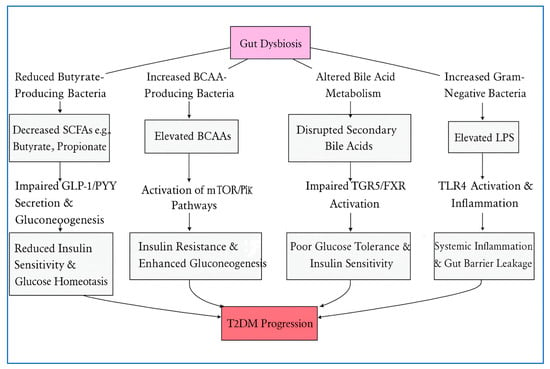
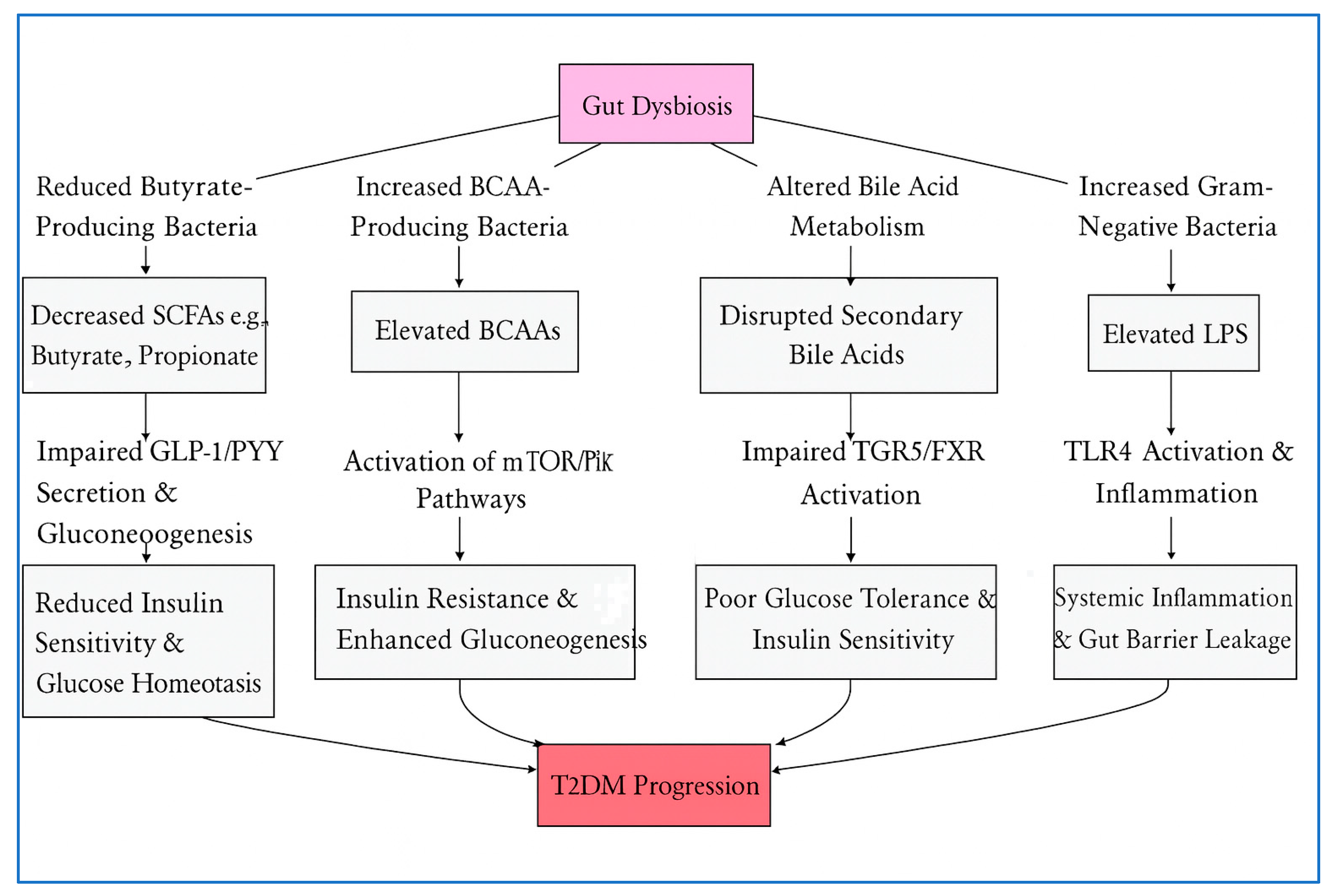
Our gut bacteria balance is far more important than we once thought, and it plays a critical part in our metabolic health. When this balance is lost, a condition known as dysbiosis can pave the way for Type 2 Diabetes (T2D). This is because a balanced gut microbiome controls our body’s glucose and lipid metabolism, insulin sensitivity, and even systemic inflammation. As shown in Figure 1, these processes are mainly controlled by some key metabolic byproducts, including short-chain fatty acids (SCFAs), branched-chain amino acids (BCAAs), bile acids, and lipopolysaccharides (LPS).
Figure 1.
Mechanisms of Gut Microbiota in T2D Pathogenesis.
3.1. Alterations in Gut Microbiota Composition Associated with Type 2 Diabetes Mellitus
Recent findings point to significant alterations in gut microbiota composition among T2D patients and non-diabetic controls (Table 1). The classic paper by Larsen et al. (2010) showed a marked reduction in the Clostridia class and Firmicutes phylum of gut microbiota in T2D patients when compared with healthy individuals [29]. There were also positive correlations between plasma glucose concentration and the ratio of Bacteroidetes to Firmicutes and Bacteroides-Prevotella to C. coccoides-E. rectale. Further, increased abundance of Betaproteobacteria was observed in T2D patients with impaired glucose tolerance [29]. As disclosed in Table 1, an MGWAS involving 345 Chinese individuals (T2D and non-T2D) by Qin et al. (2012) further disclosed microbial dysbiosis in T2D [30]. T2D patients’ gut microbiota had increased counts of opportunistic pathogens such as Bacteroides caccae, Clostridium hathewayi, Clostridium symbiosum, Eggerthella lenta, Clostridium ramosum, and Escherichia coli. Conversely, butyrate-producing bacteria including Clostridiales sp. SS3/4, Eubacterium rectale, Faecalibacterium prausnitzii, Roseburia intestinalis, and Roseburia inulinivorans were substantially lower [30]. The same study further recognized a great quantity of mucin-degrading Akkermansia muciniphila and sulfate-reducing Desulfovibrio species in T2D microbiomes [30].
Table 1.
Summary of Key Studies on Gut Microbiota Alterations Associated with Type 2 Diabetes Mellitus.
Similarly, Karlsson et al. (2013) confirmed these results in a European cohort of females diagnosed with T2D, documenting decreased quantity of Roseburia intestinalis and Faecalibacterium prausnitzii [31]. The researchers also noted higher quantities of four Lactobacillus species and reduced quantity of five Clostridium species in T2D patients than those patients with normal glucose tolerance. Particularly, Lactobacillus abundance was found to be positively associated with HbA1c and fasting glucose levels, however Clostridium abundance displayed negative associations with HbA1c, fasting glucose, C-peptide, triglycerides, and insulin levels, signifying a potential role in progression of T2D [31]. Metformin, a commonly prescribed medication for T2D may impact some microbial shifts, which is associated with increased Escherichia species and decreased butyrate-producing taxa [32].
A systematic review by Chong et al. (2024) combined evidence from 58 observational studies (2010–2024), and demonstrated similar consistent differences in the composition of gut microbiota between healthy controls and T2D patients [37]. Beta diversity was frequently different, with genera such as Lactobacillus, Escherichia-Shigella, Enterococcus, Subdoligranulum, and Fusobacteria being positively associated with T2D, and Akkermansia, Bifidobacterium, Bacteroides, Roseburia, Faecalibacterium, and Prevotella being negatively associated. Notably, Escherichia-Shigella exhibited a uniform positive association with T2D, whereas Faecalibacterium prausnitzii was potentially protective [37]. Heterogeneity in outcomes and study design of the studies was noted in the review, and emphasized the need for future studies incorporating age-, diet-, and medication-matched controls to establish causality relationships [37].
Also, Letchumanan et al. (2022) reported findings from a systematic review of 18 quantitative epidemiological studies (n = 5489), focusing on gut microbiota in prediabetes (preDM) and newly diagnosed T2D (newDM) than those with normal glucose tolerance (nonDM) [34]. The review found overall lower gut microbial diversity in preDM and newDM. While the makeup of the microbiota varied among studies, four studies found increased Firmicutes and decreased Bacteroidetes in newDM [34]. At the genus/species level, Faecalibacterium prausnitzii, Roseburia, Dialister, Flavonifractor, Alistipes, Haemophilus, and Akkermansia muciniphila were decreased, and Lactobacillus, Streptococcus, Escherichia, Veillonella, and Collinsella increased in disease groups in a minimum of two studies [34]. Lactobacillus was inversely correlated with fasting plasma glucose, HbA1c, and/or HOMA-IR in four studies, pointing to involvement in glucose dysregulation [34]. Dietary factors significantly influenced bacterial abundances and pointed towards the need for further exploration to establish strong associations and explore Lactobacillus species/strain-specific effects [34].
Slouha et al. (2024) reported findings from a systematic review to assess gut microbiota changes in T2D patients, evaluating their effect on insulin resistance and metabolic outcomes [35]. The study found Bacteroides, Proteobacteria, Firmicutes, and Actinobacteria prevalent in T2D patients and controls but with varying abundance levels [35]. Importantly, Lactobacillus spp. and Faecalibacterium prausnitzii were substantially found to be reduced in patients with T2D. Increased Akkermansia muciniphila was related to higher BMI and decreased lipid metabolism in T2D patients [35]. Metabolites such as butyrates and melatonin were implicated in progression of T2D. Lower levels of hormone testosterone levels in males with T2D correlated was associated with a rise in Gemella, Lachnospiraceae, and Massilia [35]. The review suggests future research should explore how dietary habits, physical activity, and antidiabetic therapy affect composition of microbiota and increased levels of blood glucose [35].
The systematic review by Fatin Umirah et al. took into account the differences in gut microbiota composition between the subjects with T2D and controls [33]. The results showed that the butyrate-producing bacteria were inversely correlated with the glycemic parameters. Second, Lactobacilli were also more prevalent in the gut of T2D patients compared to healthy controls, albeit the authors warned that this could be secondary to antihyperglycemic therapy [33]. The review further stated that Clostridia and the phylum Firmicutes had moderate to high positive correlations with pro-inflammatory markers, which were IFN-γ and IL-6 [33].
Another systematic review by Hamjane et al. assessed the association between gut microbiota dysbiosis, obesity, and its role in development of heart diseases and T2D [36]. The authors of the review noted that gut microbiota dysbiosis in obese patients is featured by a decrease in butyrate-producing bacteria [36]. This dysbiosis may potentially lead to production of a variety of metabolites, including branched-chain amino acids (BCAAs), lipopolysaccharide (LPS), short-chain fatty acids (SCFAs), bile acids, and imidazole propionate, all of these impact metabolism blood glucose. The review highlights that certain microbiota-derived metabolites, such as trimethylamine-N-oxide, SCFAs, and bile acids, are greatly linked with the development of CVDs [36]. The researcher summarized that gut microbiota dysbiosis is an important determinant in the development and process of these obesity-related metabolic abnormalities and signifies a critical target for dietary or pharmaceutical management [36].
A similar subsequent systematic review and meta-analysis was published by Mohammadi et al., in 2025, where authors noticed a strong relationship between circulating trimethylamine N-oxide (TMAO) levels and the likelihood of T2D [38]. The study, using 32 type 2 and gestational diabetes trials, found that diabetics have significantly greater levels of TMAO than non-diabetics [38]. It also demonstrated that elevated TMAO was associated with an increased odd of being diabetic [38]. This suggests that TMAO, a gut microbiota-derived metabolite, may play a significant role in the causation of the disease [38].
To provide a clearer understanding of the metabolic implications of microbial dysbiosis in T2D, Table 2 summarizes the major microbial taxa identified above in Section 3.1 and their associated metabolites. These metabolites, including short-chain fatty acids (SCFAs), lipopolysaccharides (LPS), bile acids, and trimethylamine N-oxide (TMAO), play pivotal roles in modulating insulin sensitivity, inflammation, and glucose homeostasis. Integrating microbial and metabolite data highlights how compositional shifts in gut microbiota contribute to the metabolic disturbances’ characteristic of T2D.
Table 2.
Key gut microbial taxa in T2D and their associated metabolites and metabolic effects.
3.2. How Gut Bacteria Contribute to Type 2 Diabetes: Potential Mechanisms
3.2.1. Bile Acids
Bile acids are another group of molecules that illustrate the influence of our gut microbes on our metabolism. When we eat, our liver produces primary bile acids, which are then modified by our gut microbiome into secondary bile acids [39,40,41]. These secondary bile acids play a role in the control of blood glucose through the stimulation of specific receptors in the gut, which in turn stimulates the secretion of GLP-1 [42,43,44]. This may explain why bariatric surgery, which alters gut anatomy and consequently reshapes the gut microbiome, often leads to improved glucose control and weight reduction, accompanied by increased bile acid levels that enhance metabolic signaling pathways involved in glucose and lipid metabolism [45]. Bile acids also function via another receptor, FXR, to reduce the glucose production in the liver, thereby improving the body’s ability to process blood sugar [46,47].
3.2.2. Branched-Chain Amino Acids (BCAAs)
While some microbial metabolites are beneficial, others are not. Raised levels of the branched-chain amino acids (BCAAs) leucine, isoleucine, and valine have been linked to increased risk for T2D [48,49,50]. They are obtained from both the gut microbiome and diet, but excessive amounts of them can lead to insulin resistance [51,52]. Elevated BCAA levels have been found to worsen insulin signaling, making cells less responsive to insulin [53,54]. They also have the ability to suppress fat metabolism and make the liver release more sugar [54]. While we know BCAAs are involved in these pathways, additional work is needed to understand precisely how they act to promote the development of T2D [55].
3.2.3. Lipopolysaccharides (LPS)
Lipopolysaccharides (LPS) are probably the most direct connection between gut dysbiosis and inflammatory process that occurs in the body. LPS is a component of the outer membrane of certain bacteria, and during gut dysbiosis, the gut barrier can become permeable, allowing LPS into the bloodstream [56]. This is frequent with high-fat diets, which promote the growth of LPS-producing bacteria [57]. Once in the blood, LPS acts as an alarm signal, triggering a vigorous inflammatory response in the body [58,59]. This chronic, low-grade inflammation is a major source of insulin resistance, resulting in impaired capacity of our cells to use insulin effectively [58,59]. Indeed, animal studies have demonstrated that providing LPS can lead to substantial rise in inflammatory markers and increased blood glucose levels, thus verifying its contribution in the development and progression of T2D [60,61].
3.2.4. Short-Chain Fatty Acids (SCFAs)
SCFAs are a perfect example of how gut bacteria can be our friends. When we eat fiber, our gut microbes ferment it to produce SCFAs, namely butyrate, propionate, and acetate. These molecules are important for maintaining stable blood sugar. For instance, a study by Sanna et al. (2019) demonstrated that people with a genetic predisposition to produce more butyrate have better insulin responses [62]. Butyrate works by stimulating our intestinal cells to release hormones like glucagon-like peptide-1 (GLP-1) and peptide YY (PYY), which not only control appetite but also enhance insulin secretion and lower the release of sugar into the bloodstream [63]. Butyrate also keeps our gut lining intact by causing the release of tight-junction proteins, a sort of security fence that prevents unwelcome substances from passing into our bloodstream [64,65]. Propionate also helps with blood sugar control by also causing the release of GLP-1 and PYY and enabling our liver to make glucose in a controlled way [64,66]. In fact, clinical trials showed that propionate supplementation can reduce food intake and prevent the loss of insulin sensitivity that normally occurs with weight gain [67].
4. Discussion
The present narrative review synthesizes the emerging evidence on the gut microbiota–metabolic axis and its role in the pathogenesis and progression of type 2 diabetes mellitus (T2D). Across diverse populations and study designs, a consistent pattern emerges: T2D is associated with gut microbial dysbiosis, characterized by reduced diversity and a decrease in beneficial, butyrate-producing bacteria such as Faecalibacterium prausnitzii, Roseburia intestinalis, and Eubacterium rectale, alongside an enrichment of opportunistic pathogens and pro-inflammatory taxa including Escherichia-Shigella, Lactobacillus, and Enterococcus. These microbial alterations are not merely associative; they are functionally linked to metabolic dysregulation through multiple mechanisms. Specifically, dysbiosis contributes to chronic low-grade inflammation, impaired glucose metabolism, and insulin resistance, which collectively form the core pathophysiological processes in T2D.
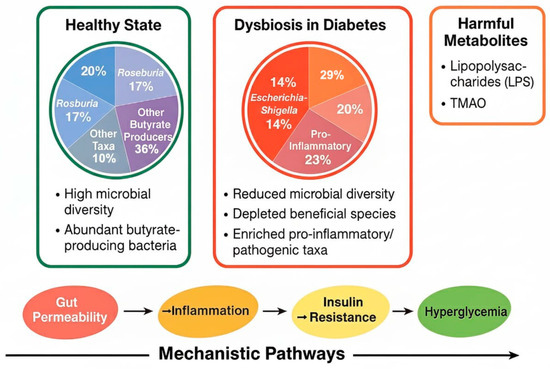
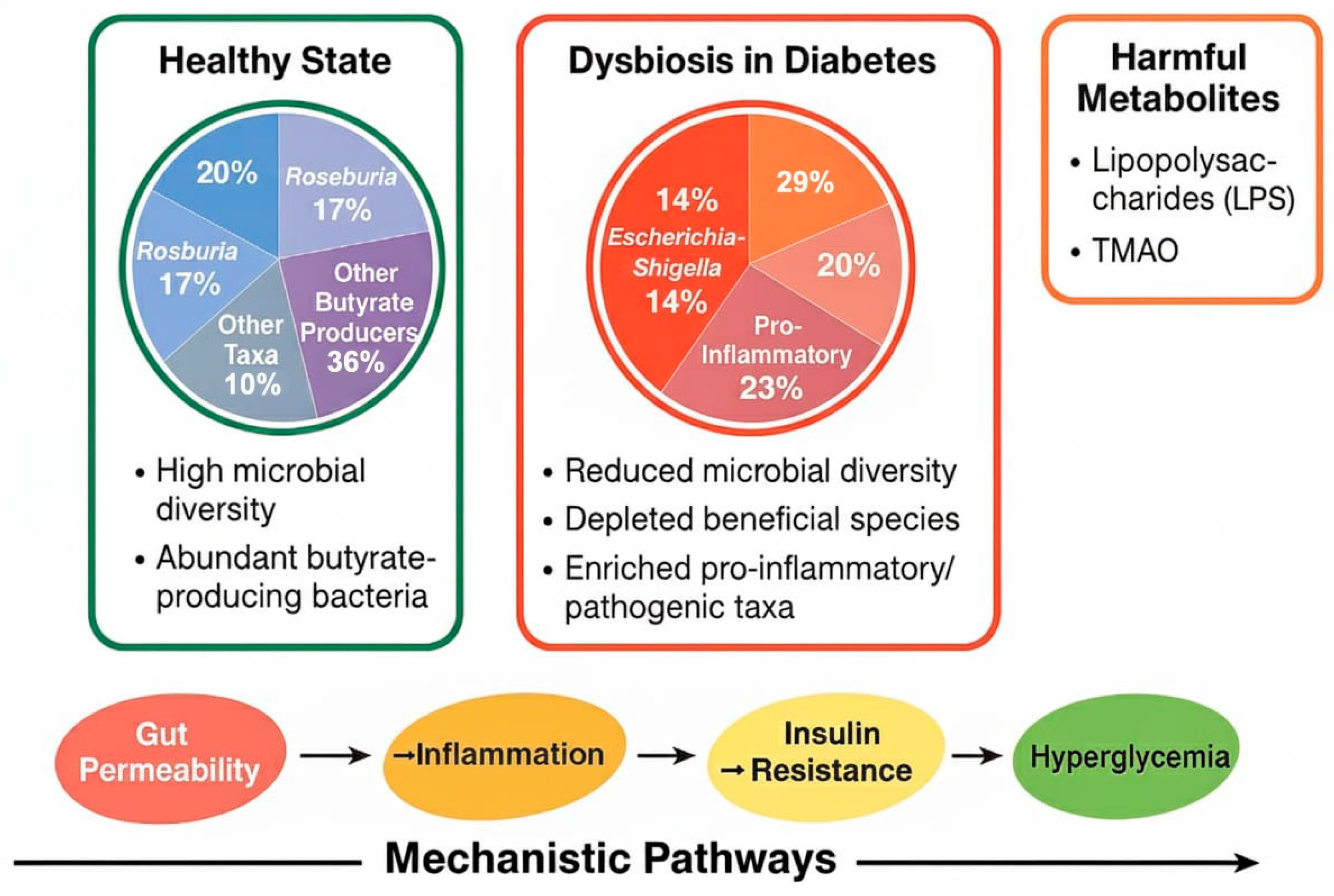
A schematic representation of gut microbiota alterations in type 2 diabetes and their mechanistic links to metabolic dysfunction is shown in Figure 2. The schematic diagram illustrates the proposed link between gut microbiota dysbiosis and the pathogenesis of type 2 diabetes mellitus (T2D). In healthy individuals, a diverse microbial community dominated by butyrate-producing taxa such as Faecalibacterium prausnitzii, Roseburia intestinalis, and Eubacterium rectale maintains intestinal barrier integrity, supports insulin sensitivity, and suppresses inflammation through the production of short-chain fatty acids (SCFAs). In contrast, patients with T2D exhibit reduced microbial diversity and an overrepresentation of pro-inflammatory and opportunistic bacteria such as Escherichia-Shigella and Enterococcus. This imbalance leads to increased intestinal permeability, elevated lipopolysaccharide (LPS) levels, and systemic low-grade inflammation, ultimately contributing to insulin resistance and glucose dysregulation. The figure aligns with our review findings, emphasizing that these microbial alterations are functionally and mechanistically linked to the metabolic abnormalities characteristic of T2D, underscoring their potential as therapeutic targets.
Figure 2.
A schematic representation of gut microbiota alterations in type 2 diabetes.
The integration of microbiome composition and metabolite profile provides further insight into whether microbial alterations may contribute causally to diabetes development. As summarized in Table 2, the reduction in butyrate-producing taxa such as Faecalibacterium prausnitzii and Roseburia intestinalis corresponds with decreased levels of short-chain fatty acids (SCFAs), impairing insulin sensitivity and intestinal barrier function. Conversely, enrichment of Escherichia-Shigella and Enterococcus is associated with increased production of pro-inflammatory metabolites, including lipopolysaccharides (LPS) and branched-chain amino acids (BCAAs), which promote systemic inflammation and insulin resistance. This parallel shift in microbial structure and metabolite output supports the hypothesis that dysbiosis may play a contributory role in the pathogenesis of T2D rather than being a mere consequence of metabolic dysfunction.
However, an important question that remains is whether these microbiota changes are a cause or a consequence of diabetes. Most existing studies are cross-sectional, which limits causal inference. Evidence from emerging longitudinal and mechanistic studies suggests a bidirectional relationship, where metabolic dysfunction and hyperglycemia can reshape microbial composition, while dysbiosis may in turn exacerbate inflammation and insulin resistance. This highlights the need for well-controlled, prospective, and interventional studies to establish temporal causality and minimize bias, as microbiota alterations are observed across many diseases without necessarily being causative.
Emerging studies also highlight the role of microbial metabolites in mediating host metabolic responses. For example, short-chain fatty acids (SCFAs) produced by commensal bacteria enhance insulin sensitivity, modulate gut hormone secretion, and maintain intestinal barrier integrity. Conversely, elevated levels of trimethylamine N-oxide (TMAO), produced by microbial metabolism of dietary choline and L-carnitine, have been linked to increased risk of both T2D and gestational diabetes. Dysregulated bile acids, branched-chain amino acids (BCAAs), and lipopolysaccharides (LPS) further exemplify the complex interplay between gut microbes and host metabolic pathways. These findings collectively underscore the gut-metabolic axis as a potential target for therapeutic interventions, emphasizing the importance of integrating microbiome research into clinical practice.
4.1. Clinical Implications
From a clinical perspective, the implications of these findings are substantial. First, they support the rationale for microbiome-targeted interventions as adjuncts to conventional T2D therapies. Probiotics, prebiotics, synbiotics, and dietary interventions that increase SCFA-producing taxa may improve insulin sensitivity, reduce systemic inflammation, and aid in glycemic control. Early clinical studies suggest that supplementation with Lactobacillus and Bifidobacterium species can favorably alter gut microbial composition and improve metabolic outcomes. Additionally, fecal microbiota transplantation (FMT) has shown promise in pilot studies for enhancing insulin sensitivity, although standardized protocols and long-term safety data are still lacking.
Dietary modulation also represents a practical and widely applicable strategy. Diets rich in fiber, whole grains, fruits, and vegetables promote microbial diversity and the proliferation of beneficial bacteria, resulting in enhanced SCFA production and improved glucose metabolism. These findings reinforce current clinical guidelines recommending lifestyle modifications as the cornerstone of T2D management, while highlighting the microbiome as a mechanistic link underlying dietary benefits. Integration of microbiome profiling into clinical practice could enable precision nutrition and individualized interventions, where therapy is tailored to a patient’s specific microbial composition and metabolic status.
Moreover, the interplay between gut microbes and pharmacotherapy warrants consideration. Drugs such as metformin not only lower glucose but also modulate gut microbiota, enriching SCFA-producing taxa and potentially contributing to their therapeutic effects. Understanding these interactions can help optimize treatment regimens and predict inter-individual variability in drug response. Future research may also explore microbiota-directed pharmacotherapies, including microbial metabolite modulators and immunomodulatory approaches, to directly target pathogenic bacterial pathways.
4.2. Strengths and Limitations
This review has several strengths. By compiling findings from multiple study designs—including observational studies, metagenome-wide association studies, and systematic reviews—we provide a comprehensive synthesis of the current knowledge on the gut microbiota–T2D axis. The inclusion of studies across diverse populations enhances the generalizability of the observations and highlights consistent microbial patterns linked with T2D, despite geographical and methodological variability. Additionally, focusing on both taxonomic and functional aspects of the microbiome allows for an integrative perspective, emphasizing not only compositional changes but also their metabolic consequences. The narrative approach further enables the discussion of clinical relevance, translating microbial findings into potential therapeutic strategies. By incorporating mechanistic insights, metabolite profiles, and host-microbe interactions, this review offers a holistic understanding of how gut dysbiosis contributes to T2D pathogenesis and informs potential interventions.
Several limitations must be acknowledged. First, as a narrative review, this study does not provide quantitative synthesis or meta-analysis, which limits the ability to assess effect sizes or statistically compare outcomes across studies. Second, included studies exhibited heterogeneity in methodologies, such as variations in sequencing techniques, taxonomic resolution, and microbial profiling platforms, which may affect comparability. Third, many studies did not adequately control for confounding factors including diet, medication use, lifestyle, and comorbidities, which are known to influence gut microbial composition. Consequently, causality cannot be definitively inferred, and findings should be interpreted with caution. Generalizability may also be limited, particularly in populations underrepresented in existing studies, including those from low- and middle-income countries with unique dietary and environmental exposures. Finally, there is a risk of publication bias, as studies reporting significant microbial alterations are more likely to be published, potentially overestimating observed associations.
5. Conclusions and Future Directions
In summary, this review highlights the gut microbiota as a critical mediator of T2D pathogenesis and a promising target for therapeutic interventions. Dysbiosis, characterized by loss of beneficial taxa and expansion of pro-inflammatory microbes, contributes to chronic inflammation, insulin resistance, and glucose dysregulation. Clinical integration of microbiome knowledge, through dietary modulation, probiotics, and precision medicine approaches, may enhance glycemic control and overall metabolic health. While challenges remain regarding safety, efficacy, and generalizability, continued rigorous research will enable the development of personalized, microbiota-targeted strategies for T2D prevention and management. Harnessing the gut-metabolic axis may ultimately transform the clinical landscape of T2D, improving outcomes and quality of life for millions of affected individuals worldwide.
Future research should prioritize longitudinal, multi-ethnic, and large-scale studies to validate observed microbial patterns and clarify causal mechanisms. Personalized microbiome profiling may guide precision interventions, including tailored diets, probiotics, or pharmacotherapies. Investigating drug-microbiome interactions, long-term safety of microbiota-modifying interventions, and potential adverse effects (e.g., bacteremia, transfer of antibiotic resistance genes) remains essential. Additionally, emerging avenues such as microbiota-directed vaccines and gene-based therapies hold potential to revolutionize T2D management by directly targeting pathogenic microbes or host-microbial metabolic pathways.
Supplementary Materials
The following supporting information can be downloaded at: https://www.mdpi.com/article/10.3390/medicina61112017/s1, Table S1: Scale for the Assessment of Narrative Review Articles-SANRA.
Funding
The author extends their appreciation to Prince Sattam bin Abdulaziz University for funding this research work through the project number (PSAU/2024/01/32069).
Institutional Review Board Statement
Not applicable.
Informed Consent Statement
Not applicable.
Data Availability Statement
No new data generated for this article. The dataset(s) supporting the conclusions of this article is included within the article.
Conflicts of Interest
The authors declare no conflicts of interest.
Abbreviations
The following abbreviations are used in this manuscript:
| T2D | Type 2 diabetes mellitus |
| T1D | Type 1 diabetes mellitus |
| GDM | Gestational diabetes mellitus |
| preDM | Pre-diabetes |
| newDM | Newly diagnosed T2D |
| nonDM | Non-diabetic |
| BMI | Body mass index |
| SCFA | Short-chain fatty acids |
| TMAO | Trimethylamine N-oxide |
| BCAAs | Branched-chain amino acids |
| LPS | Lipopolysaccharides |
| IFN-γ | Interferon-gamma |
| IL-6 | Interleukin-6 |
| HbA1c | Glycated hemoglobin |
| HOMA-IR | Homeostatic model assessment of insulin resistance |
| MGWAS | Metagenome-wide association study |
| qPCR | Quantitative polymerase chain reaction |
| rRNA | Ribosomal ribonucleic acid |
| DNA | Deoxyribonucleic acid |
| MetaHIT | Metagenomics of the Human Intestinal Tract project |
| FMT | Fecal microbiota transplantation |
References
- Kunath, B.J.; De Rudder, C.; Laczny, C.C.; Letellier, E.; Wilmes, P. The oral-gut microbiome axis in health and disease. Nat. Rev. Microbiol. 2024, 22, 791–805. [Google Scholar] [CrossRef] [Scilit] [PubMed]
- Altveş, S.; Yildiz, H.K.; Vural, H.C. Interaction of the microbiota with the human body in health and diseases. Biosci. Microbiota Food Health 2020, 39, 23–32. [Google Scholar] [CrossRef] [Scilit]
- Boulangé, C.L.; Neves, A.L.; Chilloux, J.; Nicholson, J.K.; Dumas, M.E. Impact of the gut microbiota on inflammation, obesity, and metabolic disease. Genome Med. 2016, 8, 42. [Google Scholar] [CrossRef] [Scilit]
- de Vos, W.M.; Tilg, H.; Van Hul, M.; Cani, P.D. Gut microbiome and health: Mechanistic insights. Gut 2022, 71, 1020–1032. [Google Scholar] [CrossRef] [Scilit] [PubMed]
- Ogunrinola, G.A.; Oyewale, J.O.; Oshamika, O.O.; Olasehinde, G.I. The Human Microbiome and Its Impacts on Health. Int. J. Microbiol. 2020, 2020, 8045646. [Google Scholar] [CrossRef] [Scilit]
- Vandenplas, Y.; Carnielli, V.; Ksiazyk, J.; Luna, M.S.; Migacheva, N.; Mosselmans, J.; Picaud, J.; Possner, M.; Singhal, A.; Wabitsch, M. Factors affecting early-life intestinal microbiota development. Nutrition 2020, 78, 110812. [Google Scholar] [CrossRef] [Scilit]
- Snigdha, S.; Ha, K.; Tsai, P.; Dinan, T.G.; Bartos, J.D.; Shahid, M. Probiotics: Potential novel therapeutics for microbiota-gut-brain axis dysfunction across gender and lifespan. Pharmacol. Ther. 2022, 231, 107978. [Google Scholar] [CrossRef] [Scilit]
- Van Hul, M.; Cani, P.D. The gut microbiota in obesity and weight management: Microbes as friends or foe? Nat. Rev. Endocrinol. 2023, 19, 258–271. [Google Scholar] [CrossRef] [Scilit] [PubMed]
- Tokarek, J.; Gadzinowska, J.; Młynarska, E.; Franczyk, B.; Rysz, J. What is the role of gut microbiota in obesity prevalence? A few words about gut microbiota and its association with obesity and related diseases. Microorganisms 2021, 10, 52. [Google Scholar] [CrossRef] [Scilit]
- Sittipo, P.; Choi, J.; Lee, S.; Lee, Y.K. The function of gut microbiota in immune-related neurological disorders: A review. J. Neuroinflamm. 2022, 19, 154. [Google Scholar] [CrossRef] [Scilit]
- Ye, J.; Wu, Y.; Yang, S.; Zhu, D.; Chen, F.; Chen, J.; Ji, X.; Hou, K. The global, regional and national burden of type 2 diabetes mellitus in the past, present and future: A systematic analysis of the Global Burden of Disease Study 2019. Front. Endocrinol. 2023, 14, 1192629. [Google Scholar] [CrossRef] [Scilit] [PubMed]
- Nanda, M.; Sharma, R.; Mubarik, S.; Aashima, A.; Zhang, K. Type-2 Diabetes Mellitus (T2DM): Spatial-temporal Patterns of Incidence, Mortality and Attributable Risk Factors from 1990 to 2019 among 21 World Regions. Endocrine 2022, 77, 444–454. [Google Scholar] [CrossRef] [Scilit] [PubMed]
- Gong, J.Y.; Sajjadi, S.F.; Motala, A.A.; Shaw, J.E.; Magliano, D.J. Variation in type 2 diabetes prevalence across different populations: The key drivers. Diabetologia 2025, 68, 2327–2339. [Google Scholar] [CrossRef] [Scilit] [PubMed]
- Irakoze Mukamana, S. The Impact of Urbanization on Diabetes Prevalence and Management in Sub-Saharan Africa. Res. Output J. Biol. Appl. Sci. 2024, 3, 50–53. [Google Scholar]
- Liaqat, I.; Ali, N.; Arshad, N.; Sajjad, S.; Rashid, F.; Hanif, U.; Ara, C.; Ulfat, M.; Andleeb, S.; Awan, U. Gut dysbiosis, inflammation and type 2 diabetes in mice using synthetic gut microbiota from diabetic humans. Braz. J. Biol. 2021, 83, e242818. [Google Scholar] [CrossRef] [Scilit]
- Du, Y.; Neng, Q.; Li, Y.; Kang, Y.; Guo, L.; Huang, X.; Chen, M.; Yang, F.; Hong, J.; Zhou, S. Gastrointestinal autonomic neuropathy exacerbates gut microbiota dysbiosis in adult patients with type 2 diabetes mellitus. Front. Cell. Infect. Microbiol. 2022, 11, 804733. [Google Scholar] [CrossRef] [Scilit]
- Solis-Herrera, C.; Triplitt, C.; Cersosimo, E.; DeFronzo, R.A. Pathogenesis of Type 2 Diabetes Mellitus. Endotext 2021. Available online: https://www.ncbi.nlm.nih.gov/books/NBK279115/ (accessed on 5 November 2025).
- Chandrasekaran, P.; Weiskirchen, R. The role of obesity in type 2 diabetes mellitus—An overview. Int. J. Mol. Sci. 2024, 25, 1882. [Google Scholar] [CrossRef] [Scilit]
- Reed, Z.E.; Sallis, H.M.; Richmond, R.C.; Attwood, A.S.; Lawlor, D.A.; Munafò, M.R. Investigating whether smoking and alcohol behaviours influence risk of type 2 diabetes using a Mendelian randomisation study. Sci. Rep. 2025, 15, 7985. [Google Scholar] [CrossRef] [Scilit]
- Mao, T.; Huang, F.; Zhu, X.; Wei, D.; Chen, L. Effects of dietary fiber on glycemic control and insulin sensitivity in patients with type 2 diabetes: A systematic review and meta-analysis. J. Funct. Foods 2021, 82, 104500. [Google Scholar] [CrossRef] [Scilit]
- Aikaeli, F.; Njim, T.; Gissing, S.; Moyo, F.; Alam, U.; Mfinanga, S.G.; Okebe, J.; Ramaiya, K.; Webb, E.L.; Jaffar, S. Prevalence of microvascular and macrovascular complications of diabetes in newly diagnosed type 2 diabetes in low-and-middle-income countries: A systematic review and meta-analysis. PLoS Glob. Public Health 2022, 2, e0000599. [Google Scholar] [CrossRef] [Scilit]
- An, J.; Nichols, G.A.; Qian, L.; Munis, M.A.; Harrison, T.N.; Li, Z.; Wei, R.; Weiss, T.; Rajpathak, S.; Reynolds, K. Prevalence and incidence of microvascular and macrovascular complications over 15 years among patients with incident type 2 diabetes. BMJ Open Diabetes Res. Care 2021, 9, e001847. [Google Scholar] [CrossRef] [Scilit]
- García-Mena, J.; Corona-Cervantes, K.; Cuervo-Zanatta, D.; Benitez-Guerrero, T.; Vélez-Ixta, J.M.; Zavala-Torres, N.G.; Villalobos-Flores, L.E.; Hernández-Quiroz, F.; Perez-Cruz, C.; Murugesan, S.; et al. Gut microbiota in a population highly affected by obesity and type 2 diabetes and susceptibility to COVID-19. World J. Gastroenterol. 2021, 27, 7065–7079. [Google Scholar] [CrossRef] [Scilit]
- Petakh, P.; Kamyshna, I.; Nykyforuk, A.; Yao, R.; Imbery, J.F.; Oksenych, V.; Korda, M.; Kamyshnyi, A. Immunoregulatory Intestinal Microbiota and COVID-19 in Patients with Type Two Diabetes: A Double-Edged Sword. Viruses 2022, 14, 477. [Google Scholar] [CrossRef] [Scilit]
- Li, A.; Su, X.; Hu, S.; Wang, Y. Efficacy and safety of oral semaglutide in type 2 diabetes mellitus: A systematic review and meta-analysis. Diabetes Res. Clin. Pract. 2023, 198, 110605. [Google Scholar] [CrossRef] [Scilit]
- Marassi, M.; Fadini, G.P. Real-world Evidence on Oral Semaglutide for the Management of Type 2 Diabetes. A Narrative Review for Clinical Practice. Clin. Ther. 2025, 47, 102–110. [Google Scholar] [CrossRef] [Scilit] [PubMed]
- Zhong, P.; Zeng, H.; Huang, M.; He, G.; Chen, Z. Efficacy and Safety of Subcutaneous and Oral Semaglutide Administration in Patients with Type 2 Diabetes: A Meta-Analysis. Front. Pharmacol. 2021, 12, 695182. [Google Scholar] [CrossRef] [Scilit] [PubMed]
- Baethge, C.; Goldbeck-Wood, S.; Mertens, S. SANRA-a scale for the quality assessment of narrative review articles. Res. Integr. Peer Rev. 2019, 4, 5. [Google Scholar] [CrossRef] [Scilit] [PubMed]
- Larsen, N.; Vogensen, F.K.; Van Den Berg, F.W.; Nielsen, D.S.; Andreasen, A.S.; Pedersen, B.K.; Al-Soud, W.A.; Sørensen, S.J.; Hansen, L.H.; Jakobsen, M. Gut microbiota in human adults with type 2 diabetes differs from non-diabetic adults. PLoS ONE 2010, 5, e9085. [Google Scholar] [CrossRef] [Scilit]
- Qin, J.; Li, Y.; Cai, Z.; Li, S.; Zhu, J.; Zhang, F.; Liang, S.; Zhang, W.; Guan, Y.; Shen, D. A metagenome-wide association study of gut microbiota in type 2 diabetes. Nature 2012, 490, 55–60. [Google Scholar] [CrossRef] [Scilit]
- Karlsson, F.H.; Tremaroli, V.; Nookaew, I.; Bergström, G.; Behre, C.J.; Fagerberg, B.; Nielsen, J.; Bäckhed, F. Gut metagenome in European women with normal, impaired and diabetic glucose control. Nature 2013, 498, 99–103. [Google Scholar] [CrossRef] [Scilit]
- Forslund, K.; Hildebrand, F.; Nielsen, T.; Falony, G.; Le Chatelier, E.; Sunagawa, S.; Prifti, E.; Vieira-Silva, S.; Gudmundsdottir, V.; Krogh Pedersen, H. Disentangling type 2 diabetes and metformin treatment signatures in the human gut microbiota. Nature 2015, 528, 262–266. [Google Scholar] [CrossRef] [Scilit]
- Umirah, F.; Neoh, C.F.; Ramasamy, K.; Lim, S.M. Differential gut microbiota composition between type 2 diabetes mellitus patients and healthy controls: A systematic review. Diabetes Res. Clin. Pract. 2021, 173, 108689. [Google Scholar] [CrossRef] [Scilit]
- Letchumanan, G.; Abdullah, N.; Marlini, M.; Baharom, N.; Lawley, B.; Omar, M.R.; Mohideen, F.B.S.; Addnan, F.H.; Nur Fariha, M.M.; Ismail, Z. Gut microbiota composition in prediabetes and newly diagnosed type 2 diabetes: A systematic review of observational studies. Front. Cell. Infect. Microbiol. 2022, 12, 943427. [Google Scholar] [CrossRef] [Scilit]
- Slouha, E.; Rezazadah, A.; Farahbod, K.; Gerts, A.; Clunes, L.A.; Kollias, T.F. Type-2 diabetes mellitus and the gut microbiota: Systematic review. Cureus 2023, 15, e49740. [Google Scholar] [CrossRef] [Scilit]
- Hamjane, N.; Mechita, M.B.; Nourouti, N.G.; Barakat, A. Gut microbiota dysbiosis-associated obesity and its involvement in cardiovascular diseases and type 2 diabetes. A systematic review. Microvasc. Res. 2024, 151, 104601. [Google Scholar] [CrossRef] [Scilit]
- Chong, S.; Lin, M.; Chong, D.; Jensen, S.; Lau, N.S. A systematic review on gut microbiota in type 2 diabetes mellitus. Front. Endocrinol. 2025, 15, 1486793. [Google Scholar] [CrossRef] [Scilit] [PubMed]
- Mohammadi, S.; Eslami, M.; Pourghazi, F.; Ejtahed, H.S.; Shahrestanaki, E.; Qorbani, M.; Hasani-Ranjbar, S.; Larijani, B. Gut Microbiota-Derived Trimethylamine N-Oxide and the Risk of Diabetes: An Updated Systematic Review and Meta-Analysis. Obes. Rev. 2025, 26, e13963. [Google Scholar] [CrossRef] [Scilit]
- Devlin, A.S.; Fischbach, M.A. A biosynthetic pathway for a prominent class of microbiota-derived bile acids. Nat. Chem. Biol. 2015, 11, 685–690. [Google Scholar] [CrossRef] [Scilit] [PubMed]
- Shaham, O.; Wei, R.; Wang, T.J.; Ricciardi, C.; Lewis, G.D.; Vasan, R.S.; Carr, S.A.; Thadhani, R.; Gerszten, R.E.; Mootha, V.K. Metabolic profiling of the human response to a glucose challenge reveals distinct axes of insulin sensitivity. Mol. Syst. Biol. 2008, 4, 214. [Google Scholar] [CrossRef] [Scilit] [PubMed]
- Patti, M.E.; Houten, S.M.; Bianco, A.C.; Bernier, R.; Larsen, P.R.; Holst, J.J.; Badman, M.K.; Maratos-Flier, E.; Mun, E.C.; Pihlajamaki, J. Serum bile acids are higher in humans with prior gastric bypass: Potential contribution to improved glucose and lipid metabolism. Obesity 2009, 17, 1671–1677. [Google Scholar] [CrossRef] [Scilit]
- Katsuma, S.; Hirasawa, A.; Tsujimoto, G. Bile acids promote glucagon-like peptide-1 secretion through TGR5 in a murine enteroendocrine cell line STC-1. Biochem. Biophys. Res. Commun. 2005, 329, 386–390. [Google Scholar] [CrossRef] [Scilit]
- Thomas, C.; Gioiello, A.; Noriega, L.; Strehle, A.; Oury, J.; Rizzo, G.; Macchiarulo, A.; Yamamoto, H.; Mataki, C.; Pruzanski, M. TGR5-mediated bile acid sensing controls glucose homeostasis. Cell Metab. 2009, 10, 167–177. [Google Scholar] [CrossRef] [Scilit]
- Chaudhari, S.N.; Harris, D.A.; Aliakbarian, H.; Luo, J.N.; Henke, M.T.; Subramaniam, R.; Vernon, A.H.; Tavakkoli, A.; Sheu, E.G.; Devlin, A.S. Bariatric surgery reveals a gut-restricted TGR5 agonist with anti-diabetic effects. Nat. Chem. Biol. 2021, 17, 20–29. [Google Scholar] [CrossRef] [Scilit]
- Ryan, K.K.; Tremaroli, V.; Clemmensen, C.; Kovatcheva-Datchary, P.; Myronovych, A.; Karns, R.; Wilson-Pérez, H.E.; Sandoval, D.A.; Kohli, R.; Bäckhed, F. FXR is a molecular target for the effects of vertical sleeve gastrectomy. Nature 2014, 509, 183–188. [Google Scholar] [CrossRef] [Scilit] [PubMed]
- Hylemon, P.B.; Zhou, H.; Pandak, W.M.; Ren, S.; Gil, G.; Dent, P. Bile acids as regulatory molecules. J. Lipid Res. 2009, 50, 1509–1520. [Google Scholar] [CrossRef] [Scilit] [PubMed]
- Yamagata, K.; Daitoku, H.; Shimamoto, Y.; Matsuzaki, H.; Hirota, K.; Ishida, J.; Fukamizu, A. Bile acids regulate gluconeogenic gene expression via small heterodimer partner-mediated repression of hepatocyte nuclear factor 4 and Foxo1. J. Biol. Chem. 2004, 279, 23158–23165. [Google Scholar] [CrossRef] [Scilit]
- Neinast, M.; Murashige, D.; Arany, Z. Branched chain amino acids. Annu. Rev. Physiol. 2019, 81, 139–164. [Google Scholar] [CrossRef] [Scilit]
- Wang, T.J.; Larson, M.G.; Vasan, R.S.; Cheng, S.; Rhee, E.P.; McCabe, E.; Lewis, G.D.; Fox, C.S.; Jacques, P.F.; Fernandez, C. Metabolite profiles and the risk of developing diabetes. Nat. Med. 2011, 17, 448–453. [Google Scholar] [CrossRef] [Scilit]
- Pedersen, H.K.; Gudmundsdottir, V.; Nielsen, H.B.; Hyotylainen, T.; Nielsen, T.; Jensen, B.A.; Forslund, K.; Hildebrand, F.; Prifti, E.; Falony, G. Human gut microbes impact host serum metabolome and insulin sensitivity. Nature 2016, 535, 376–381. [Google Scholar] [CrossRef] [Scilit] [PubMed]
- Zheng, Y.; Li, Y.; Qi, Q.; Hruby, A.; Manson, J.E.; Willett, W.C.; Wolpin, B.M.; Hu, F.B.; Qi, L. Cumulative consumption of branched-chain amino acids and incidence of type 2 diabetes. Int. J. Epidemiol. 2016, 45, 1482–1492. [Google Scholar] [CrossRef] [Scilit]
- Asghari, G.; Farhadnejad, H.; Teymoori, F.; Mirmiran, P.; Tohidi, M.; Azizi, F. High dietary intake of branched-chain amino acids is associated with an increased risk of insulin resistance in adults. J. Diabetes 2018, 10, 357–364. [Google Scholar] [CrossRef] [Scilit] [PubMed]
- Newgard, C.B.; An, J.; Bain, J.R.; Muehlbauer, M.J.; Stevens, R.D.; Lien, L.F.; Haqq, A.M.; Shah, S.H.; Arlotto, M.; Slentz, C.A. A branched-chain amino acid-related metabolic signature that differentiates obese and lean humans and contributes to insulin resistance. Cell Metab. 2009, 9, 311–326. [Google Scholar] [CrossRef] [Scilit]
- Zhao, H.; Zhang, F.; Sun, D.; Wang, X.; Zhang, X.; Zhang, J.; Yan, F.; Huang, C.; Xie, H.; Lin, C. Branched-chain amino acids exacerbate obesity-related hepatic glucose and lipid metabolic disorders via attenuating Akt2 signaling. Diabetes 2020, 69, 1164–1177. [Google Scholar] [CrossRef] [Scilit] [PubMed]
- Kawaguchi, T.; Izumi, N.; Charlton, M.R.; Sata, M. Branched-chain amino acids as pharmacological nutrients in chronic liver disease. Hepatology 2011, 54, 1063–1070. [Google Scholar] [CrossRef] [Scilit]
- Ghosh, S.S.; Wang, J.; Yannie, P.J.; Ghosh, S. Intestinal barrier dysfunction, LPS translocation, and disease development. J. Endocr. Soc. 2020, 4, bvz039. [Google Scholar] [CrossRef] [Scilit]
- Allin, K.H.; Nielsen, T.; Pedersen, O. Mechanisms in endocrinology: Gut microbiota in patients with type 2 diabetes mellitus. Eur. J. Endocrinol. 2015, 172, R167–R177. [Google Scholar] [CrossRef] [Scilit]
- Snelson, M.; de Pasquale, C.; Ekinci, E.I.; Coughlan, M.T. Gut microbiome, prebiotics, intestinal permeability and diabetes complications. Best Pract. Res. Clin. Endocrinol. Metab. 2021, 35, 101507. [Google Scholar] [CrossRef] [Scilit]
- Muzio, M.; Polentarutti, N.; Bosisio, D.; Kumar, P.M.; Mantovani, A. Toll-like receptor family and signalling pathway. Biochem. Soc. Trans. 2000, 28, 563–566. [Google Scholar] [CrossRef] [Scilit] [PubMed]
- Lin, K.-I.; Johnson, D.R.; Freund, G.G. LPS-dependent suppression of social exploration is augmented in type 1 diabetic mice. Brain Behav. Immun. 2007, 21, 775–782. [Google Scholar] [CrossRef] [Scilit]
- Cani, P.D.; Amar, J.; Iglesias, M.A.; Poggi, M.; Knauf, C.; Bastelica, D.; Neyrinck, A.M.; Fava, F.; Tuohy, K.M.; Chabo, C. Metabolic endotoxemia initiates obesity and insulin resistance. Diabetes 2007, 56, 1761–1772. [Google Scholar] [CrossRef] [Scilit]
- Sanna, S.; van Zuydam, N.R.; Mahajan, A.; Kurilshikov, A.; Vich Vila, A.; Võsa, U.; Mujagic, Z.; Masclee, A.A.; Jonkers, D.M.; Oosting, M. Causal relationships among the gut microbiome, short-chain fatty acids and metabolic diseases. Nat. Genet. 2019, 51, 600–605. [Google Scholar] [CrossRef] [Scilit]
- Zhang, L.; Chu, J.; Hao, W.; Zhang, J.; Li, H.; Yang, C.; Yang, J.; Chen, X.; Wang, H. Gut microbiota and type 2 diabetes mellitus: Association, mechanism, and translational applications. Mediat. Inflamm. 2021, 2021, 5110276. [Google Scholar] [CrossRef] [Scilit]
- De Vadder, F.; Kovatcheva-Datchary, P.; Goncalves, D.; Vinera, J.; Zitoun, C.; Duchampt, A.; Bäckhed, F.; Mithieux, G. Microbiota-generated metabolites promote metabolic benefits via gut-brain neural circuits. Cell 2014, 156, 84–96. [Google Scholar] [CrossRef] [Scilit]
- Wang, H.-B.; Wang, P.-Y.; Wang, X.; Wan, Y.-L.; Liu, Y.-C. Butyrate enhances intestinal epithelial barrier function via up-regulation of tight junction protein Claudin-1 transcription. Dig. Dis. Sci. 2012, 57, 3126–3135. [Google Scholar] [CrossRef] [Scilit] [PubMed]
- Psichas, A.; Sleeth, M.; Murphy, K.; Brooks, L.; Bewick, G.; Hanyaloglu, A.; Ghatei, M.; Bloom, S.; Frost, G. The short chain fatty acid propionate stimulates GLP-1 and PYY secretion via free fatty acid receptor 2 in rodents. Int. J. Obes. 2015, 39, 424–429. [Google Scholar] [CrossRef] [Scilit] [PubMed]
- Chambers, E.S.; Viardot, A.; Psichas, A.; Morrison, D.J.; Murphy, K.G.; Zac-Varghese, S.E.; MacDougall, K.; Preston, T.; Tedford, C.; Finlayson, G.S. Effects of targeted delivery of propionate to the human colon on appetite regulation, body weight maintenance and adiposity in overweight adults. Gut 2015, 64, 1744–1754. [Google Scholar] [CrossRef] [Scilit] [PubMed]

Disclaimer/Publisher’s Note: The statements, opinions and data contained in all publications are solely those of the individual author(s) and contributor(s) and not of MDPI and/or the editor(s). MDPI and/or the editor(s) disclaim responsibility for any injury to people or property resulting from any ideas, methods, instructions or products referred to in the content. |
© 2025 by the author. Published by MDPI on behalf of the Lithuanian University of Health Sciences. Licensee MDPI, Basel, Switzerland. This article is an open access article distributed under the terms and conditions of the Creative Commons Attribution (CC BY) license (https://creativecommons.org/licenses/by/4.0/).