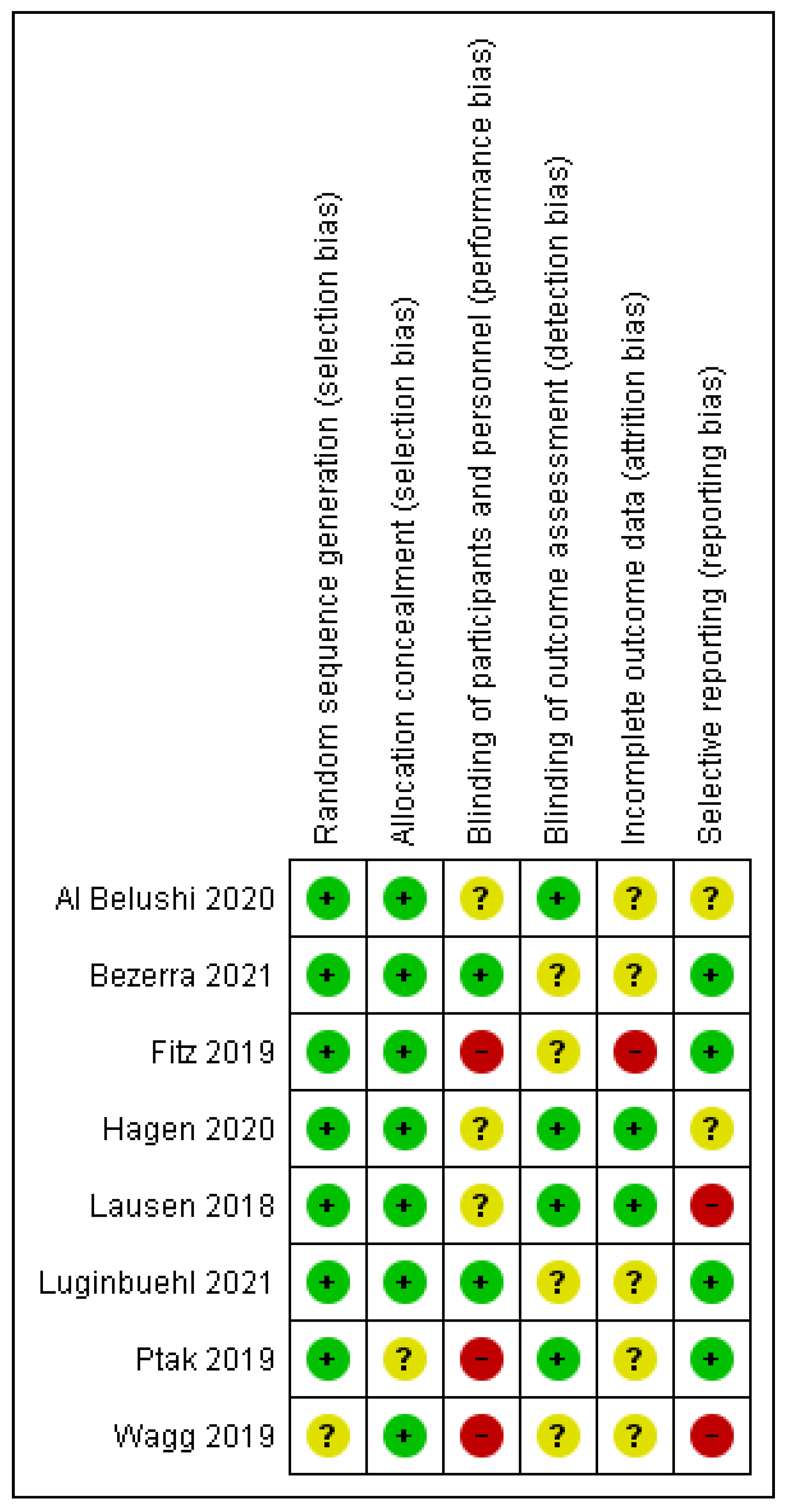
Effectiveness of Pelvic Floor Muscle Training on Quality of Life in Women with Urinary Incontinence: A Systematic Review and Meta-Analysis

Abstract
Share and Cite
Curillo-Aguirre, C.A.; Gea-Izquierdo, E. Effectiveness of Pelvic Floor Muscle Training on Quality of Life in Women with Urinary Incontinence: A Systematic Review and Meta-Analysis. Medicina 2023, 59, 1004. https://doi.org/10.3390/medicina59061004
Curillo-Aguirre CA, Gea-Izquierdo E. Effectiveness of Pelvic Floor Muscle Training on Quality of Life in Women with Urinary Incontinence: A Systematic Review and Meta-Analysis. Medicina. 2023; 59(6):1004. https://doi.org/10.3390/medicina59061004
Chicago/Turabian StyleCurillo-Aguirre, César Adrián, and Enrique Gea-Izquierdo. 2023. "Effectiveness of Pelvic Floor Muscle Training on Quality of Life in Women with Urinary Incontinence: A Systematic Review and Meta-Analysis" Medicina 59, no. 6: 1004. https://doi.org/10.3390/medicina59061004
APA StyleCurillo-Aguirre, C. A., & Gea-Izquierdo, E. (2023). Effectiveness of Pelvic Floor Muscle Training on Quality of Life in Women with Urinary Incontinence: A Systematic Review and Meta-Analysis. Medicina, 59(6), 1004. https://doi.org/10.3390/medicina59061004