


Narrative Review of the Role of Reactive Oxygen Species in Allergic Rhinitis
 , , ,
, , ,  , and
, and
Abstract
1. Introduction
1.1. Allergic Rhinitis
1.2. Reactive Oxygen Species and Oxidative Stress
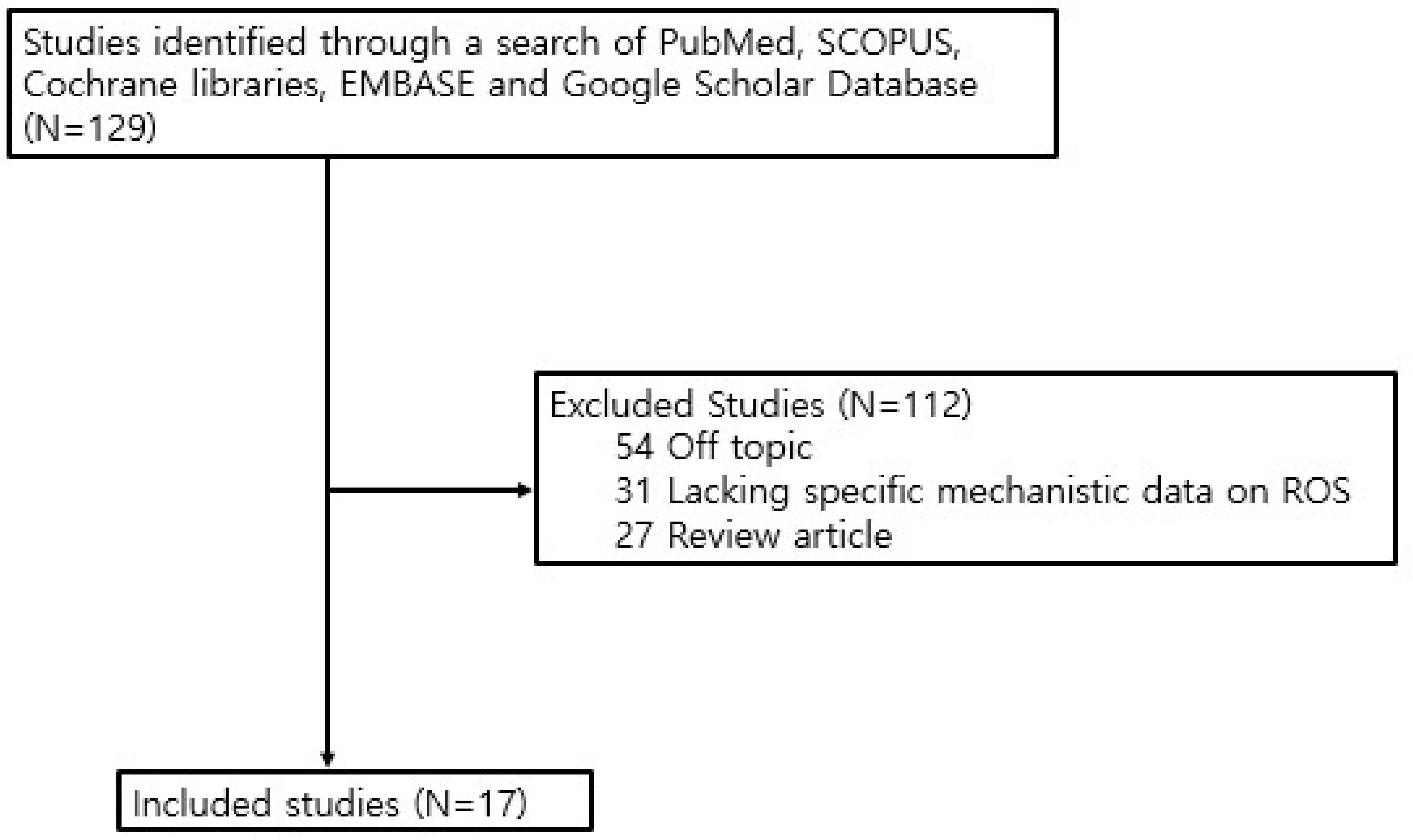
2. Methods
3. Discussion
3.1. Clinical Relevance of Oxidative Stress in AR
3.1.1. Biomarkers of Systemic Oxidative Stress
3.1.2. Environmental Exposure to ROS and Risk of Allergic Disease
3.1.3. Interpretation of Current Clinical Evidence
3.2. Production of ROS by Inflammatory Cells During the Late-Phase of Allergic Inflammation
3.2.1. Production of ROS by Eosinophils During Allergic Inflammation
3.2.2. Production of ROS by Neutrophils During the Late-Phase of the Allergic Response
3.2.3. Evidence Linking Production of ROS with Eosinophilic Inflammation
3.2.4. Pathophysiological Implications of Inflammatory Cell-Derived ROS
3.3. Role of ROS in Dysfunction of the Nasal Epithelial Barrier
3.3.1. ROS-Mediated Disruption of the Epithelial Barrier
3.3.2. ROS and Epithelial Danger Signaling
3.3.3. Mitochondrial ROS and Epithelial Dysfunction
3.3.4. Clinical Significance of ROS-Mediated Epithelial Barrier Dysfunction
3.4. ROS–Inflammasome–IL-1β/Pyroptosis Axis
3.4.1. ROS and NLRP3 Inflammasome Activation in AR
3.4.2. Environmental ROS Triggers and Epithelial Inflammasome Signaling
3.4.3. ROS-Dependent Pyroptosis and Damage of the Epithelial Barrier
3.4.4. The Role of the ROS-Inflammasome Axis in Disease Progression
3.5. Mitochondrial ROS and Antioxidant Defense Pathways
3.5.1. Mitochondrial ROS, Mitophagy, and Epithelial Homeostasis in Allergic Inflammation
3.5.2. ROS-NRF2 Antioxidant Signaling and Regulation of Epithelial Inflammation
3.5.3. Immune-Metabolic Redox Regulation via CD169+ Macrophages and the NRF2 Axis
3.5.4. Interplay Between mtROS and Antioxidant Defense Mechanisms
3.6. Therapeutic Targets and ROS-Responsive Drug Delivery Strategies
3.6.1. Intracellular ROS Scavenging and Modulation of AR Symptoms
3.6.2. ROS as a Trigger for Stimulus-Responsive Drug Delivery
3.6.3. Clinical Translation of ROS-Targeted and Responsive Therapies
3.7. Limitations and Future Directions
4. Conclusions
Author Contributions
Funding
Institutional Review Board Statement
Informed Consent Statement
Data Availability Statement
Conflicts of Interest
Abbreviations
References
- Brożek, J.L.; Bousquet, J.; Agache, I.; Agarwal, A.; Bachert, C.; Bosnic-Anticevich, S.; Brignardello-Petersen, R.; Canonica, G.W.; Casale, T.; Chavannes, N.H.; et al. Allergic rhinitis and its impact on asthma (ARIA) guidelines—2016 revision. J. Allergy Clin. Immunol. 2017, 140, 950–958. [Google Scholar] [CrossRef] [Scilit] [PubMed]
- Wise, S.K.; Damask, C.; Roland, L.T.; Ebert, C.; Levy, J.M.; Lin, S.; Luong, A.; Rodriguez, K.; Sedaghat, A.R.; Toskala, E.; et al. International consensus statement on allergy and rhinology: Allergic rhinitis–2023. Int. Forum Allergy Rhinol. 2023, 13, 293–859. [Google Scholar] [CrossRef] [Scilit] [PubMed]
- Nur Husna, S.M.; Tan, H.-T.T.; Md Shukri, N.; Mohd Ashari, N.S.; Wong, K.K. Allergic rhinitis: A clinical and pathophysiological overview. Front. Med. 2022, 9, 874114. [Google Scholar] [CrossRef] [Scilit] [PubMed]
- Bousquet, J.; Anto, J.M.; Bachert, C.; Baiardini, I.; Bosnic-Anticevich, S.; Walter Canonica, G.; Melén, E.; Palomares, O.; Scadding, G.K.; Togias, A.; et al. Allergic rhinitis. Nat. Rev. Dis. Primers 2020, 6, 95. [Google Scholar] [CrossRef] [Scilit] [PubMed]
- Han, M.; Lee, D.; Lee, S.H.; Kim, T.H. Oxidative stress and antioxidant pathway in allergic rhinitis. Antioxidants 2021, 10, 1266. [Google Scholar] [CrossRef] [Scilit] [PubMed]
- Sies, H.; Jones, D.P. Reactive oxygen species (ROS) as pleiotropic physiological signalling agents. Nat. Rev. Mol. Cell Biol. 2020, 21, 363–383. [Google Scholar] [CrossRef] [Scilit] [PubMed]
- Sies, H.; Belousov, V.V.; Chandel, N.S.; Davies, M.J.; Jones, D.P.; Mann, G.E.; Murphy, M.P.; Yamamoto, M.; Winterbourn, C. Defining roles of specific reactive oxygen species (ROS) in cell biology and physiology. Nat. Rev. Mol. Cell Biol. 2022, 23, 499–515. [Google Scholar] [CrossRef] [Scilit] [PubMed]
- Schieber, M.; Chandel, N.S. ROS function in redox signaling and oxidative stress. Curr. Biol. 2014, 24, R453–R462. [Google Scholar] [CrossRef] [Scilit] [PubMed]
- Min, H.J.; Park, J.S.; Kim, K.S.; Park, S.Y.; Choi, H.; Seo, J.H.; Kang, M.; Yoon, J.-H.; Kim, C.-H.; Kim, S.; et al. Th2 cytokines-DUOX2-ROS-HMGB1 translocation axis is important in the pathogenesis of allergic rhinitis. Clin. Sci. 2021, 135, 483–494. [Google Scholar] [CrossRef] [Scilit] [PubMed]
- Ulusoy, S.; Nurlu Ayan, N.; Dinc, M.E.; Is, A.; Bicer, C.; Erel, O. A new oxidative stress marker for thiol-disulphide homeostasis in seasonal allergic rhinitis. Am. J. Rhinol. Allergy 2016, 30, e53–e57. [Google Scholar] [CrossRef] [Scilit] [PubMed]
- Sadowska-Woda, I.; Bieszczad-Bedrejczuk, E.; Rachel, M. Influence of desloratadine on selected oxidative stress markers in patients between 3 and 10 years of age with allergic perennial rhinitis. Eur. J. Pharmacol. 2010, 640, 197–201. [Google Scholar] [CrossRef] [Scilit] [PubMed]
- To, T.; Terebessy, E.; Zhu, J.; Zhang, K.; Lakey, P.S.J.; Shiraiwa, M.; Hatzopoulou, M.; Minet, L.; Weichenthal, S.; Dell, S.; et al. Does early life exposure to exogenous sources of reactive oxygen species (ROS) increase the risk of respiratory and allergic diseases in children? A longitudinal cohort study. Environ. Health 2022, 21, 90. [Google Scholar] [CrossRef] [Scilit] [PubMed]
- Sannohe, S.; Adachi, T.; Hamada, K.; Honda, K.; Yamada, Y.; Saito, N.; Cui, C.-H.; Kayaba, H.; Ishikawa, K.; Chihara, J. Upregulated response to chemokines in oxidative metabolism of eosinophils in asthma and allergic rhinitis. Eur. Respir. J. 2003, 21, 925–931. [Google Scholar] [CrossRef] [Scilit] [PubMed]
- Lavinskiene, S.; Jeroch, J.; Malakauskas, K.; Bajoriuniene, I.; Jackute, J.; Sakalauskas, R. Peripheral blood neutrophil activity during Dermatophagoides pteronyssinus-induced late-phase airway inflammation in patients with allergic rhinitis and asthma. Inflammation 2012, 35, 1600–1609, Erratum in Inflammation 2012, 35, 1610. [Google Scholar] [CrossRef] [Scilit] [PubMed]
- Yu, S.; Zhao, C.; Che, N.; Jing, L.; Ge, R. Hydrogen-rich saline attenuates eosinophil activation in a guinea pig model of allergic rhinitis via reducing oxidative stress. J. Inflamm. 2017, 14, 1. [Google Scholar] [CrossRef] [Scilit] [PubMed]
- Shin, S.-H.; Ye, M.-K.; Lee, D.-W.; Che, M.-H. Alternaria-induced barrier dysfunction of nasal epithelial cells: Role of serine protease and reactive oxygen species. Int. Forum Allergy Rhinol. 2019, 9, 514–521. [Google Scholar] [CrossRef] [Scilit] [PubMed]
- Xu, B.; Gao, W.; Li, H.; Cao, X.; Chen, X.; Dong, N.; Wu, L.; Luo, Y. Alpha-asarone relieves nasal inflammation, epithelial barrier damage, and mitochondrial damage in allergic rhinitis by inhibiting mitochondrial ROS via the SIRT1/PGC-1α pathway. Naunyn-Schmiedeberg’s Arch. Pharmacol. 2025, 398, 17595–17607. [Google Scholar] [CrossRef] [Scilit] [PubMed]
- Shi, Q.; Lei, Z.; Cheng, G.; Li, D.; Wang, Q.; Luo, S.; Yang, H.; Jia, H. Mitochondrial ROS activate interleukin-1β expression in allergic rhinitis. Oncol. Lett. 2018, 16, 3193–3200. [Google Scholar] [CrossRef] [Scilit] [PubMed]
- Li, Y.; Ouyang, Y.; Jiao, J.; Xu, Z.; Zhang, L. Exposure to environmental black carbon exacerbates nasal epithelial inflammation via the reactive oxygen species (ROS)–nucleotide-binding, oligomerization domain–like receptor family, pyrin domain containing 3 (NLRP3)–caspase-1–interleukin 1β (IL-1β) pathway. Int. Forum Allergy Rhinol. 2021, 11, 773–783. [Google Scholar] [CrossRef] [Scilit] [PubMed]
- Yuan, J.; Liao, Z.; Zhu, X.; Zhu, Y.; Wu, S.; Guo, L.; Fu, Y.; Liu, Y. PM2.5 exacerbates nasal epithelial barrier dysfunction in allergic rhinitis by inducing NLRP3-mediated pyroptosis via the AhR/CYP1A1/ROS axis. J. Hazard. Mater. 2025, 492, 138145. [Google Scholar] [CrossRef] [Scilit] [PubMed]
- Liu, S.; Wang, C.; Zhang, Y.; Zhang, Y.; Song, Y.; Jiang, J.; Liu, R.; Jin, H.; Yan, G.; Jin, Y. Polydatin inhibits mitochondrial damage and mitochondrial ROS by promoting PINK1-Parkin-mediated mitophagy in allergic rhinitis. FASEB J. 2023, 37, e22852. [Google Scholar] [CrossRef] [Scilit] [PubMed]
- Pyun, B.-J.; Jo, K.; Lee, J.Y.; Lee, A.; Jung, M.-A.; Hwang, Y.-H.; Jung, D.H.; Ji, K.-Y.; Choi, S.; Kim, Y.H.; et al. Caesalpinia sappan Linn. ameliorates allergic nasal inflammation by upregulating the Keap1/Nrf2/HO-1 pathway in an allergic rhinitis mouse model and nasal epithelial cells. Antioxidants 2022, 11, 2256. [Google Scholar] [CrossRef] [Scilit] [PubMed]
- Qi, W.; Liu, C.; Shi, L.; Li, H.; Hou, X.; Du, H.; Chen, L.; Gao, X.; Cao, X.; Guo, N.; et al. CD169+ macrophages mediate the immune response of allergic rhinitis through the Keap1/Nrf2/HO-1 axis. Adv. Sci. 2024, 11, 2309331. [Google Scholar] [CrossRef] [Scilit] [PubMed]
- Guo, J.-K.; Xu, M.-M.; Zheng, M.-F.; Liu, S.-T.; Zhou, J.-W.; Ke, L.-J.; Chen, T.-B.; Rao, P.-F. Topical application of TAT-superoxide dismutase in acupoints LI 20 on allergic rhinitis. Evid.-Based Complement. Altern. Med. 2016, 2016, 3830273. [Google Scholar] [CrossRef] [Scilit] [PubMed]
- Zhao, Q.; Gu, M.; Ni, M.; Li, J.; Wu, T.; Zhu, S.; Zhou, Y.; Lu, Y.; Li, X.; Xu, H.; et al. ROS-responsive hydrogel for inhibition of MUC5AC against allergic rhinitis: A new delivery strategy for ipratropium bromide. Colloids Surf. B Biointerfaces 2024, 242, 114112. [Google Scholar] [CrossRef] [Scilit] [PubMed]

| Author/ Year/ Reference | Study Design | Sample | Detection Method | Target Substance(s) Associated with ROS | Results and Authors’ Conclusions |
|---|---|---|---|---|---|
| Min et al., 2021 [9] | Human tissue/fluid analysis + in vitro primary HNE cell mechanistic study + in vivo HDM-induced AR mouse model | Human samples: AR patients n = 20 and controls n = 15. In vitro: primary human nasal epithelial cells cultured at air–liquid interface and stimulated with IL-4 or IL-13. In vivo: HDM-induced AR BALB/c mouse model with or without GA pretreatment | Human nasal mucosa IHC for HMGB1; nasal lavage HMGB1 ELISA; HNE cell Western blot and ELISA for extracellular HMGB1; DCFDA staining for intracellular ROS; DUOX1/DUOX2 Western blot and shRNA knockdown; in vivo nasal ROS imaging using BioNT chemiluminescent nanoprobe; HDM-specific IgE ELISA; PAS and Sirius Red staining | Th2 cytokines IL-4/IL-13; DUOX2; ROS; HMGB1 translocation; NAC as ROS scavenger; GA as HMGB1 translocation inhibitor | AR pts had increased cytoplasmic HMGB1-positive epithelial cells and higher nasal lavage HMGB1 than controls (p < 0.05). IL-4/IL-13 increased ROS and extracellular HMGB1 release in primary HNE cells (p < 0.05); NAC decreased the ROS elevation and HMGB1 translocation (p < 0.05). Th2 cytokines increased DUOX2 expression (p < 0.05), and DUOX2 knockdown decreased cytokine-induced ROS generation and HMGB1 translocation (p < 0.05). HDM-induced AR mice had greater nasal mucosal ROS than controls (p < 0.05), and GA decreased HDM-specific IgE, nasal lavage HMGB1, PAS-positive goblet cell changes, and Sirius Red-positive eosinophilic inflammation (p < 0.05). Th2 cytokine-induced DUOX2-dependent ROS generation may promote extracellular translocation of HMGB1 and the development of AR. |
| Ulusoy et al., 2016 [10] | Human; prospective case–control study | 32 patients with seasonal allergic rhinitis (SAR) and 32 age- and sex-matched healthy controls | Blood analysis using a thiol–disulfide homeostasis assay | Native thiol (SH), total thiol (TT), disulfide (SS), SS/SH, SS/TT, and SH/TT ratios | During symptomatic exacerbation, SAR patients had decreased native SH and increased SS compared to asymptomatic periods and controls. The SS/SH and SS/TT ratios increased, while the SH/TT ratio decreased, indicating increased oxidative stress. Symptomatic exacerbation of SAR is associated with an oxidative shift in the thiol–disulfide balance, reflecting increased systemic oxidative stress. |
| Sadowska-Woda et al., 2010 [11] | Human; prospective controlled clinical study with pre/post-treatment comparison | 50 children aged 3–10 years with moderate perennial allergic rhinitis, assessed before and after 2 months of desloratadine 5 mg/day; 11 healthy children as controls | Erythrocyte SOD and catalase activities; erythrocyte MDA by thiobarbituric acid method; plasma hydroperoxides by ferrous oxidation–xylenol orange assay; plasma total antioxidant status by FRAP assay | Oxidative stress markers: MDA and plasma hydroperoxides; antioxidant defense markers: SOD, catalase, total antioxidant status | Untreated perennial AR patients had significantly decreased erythrocyte SOD and catalase activities and increased MDA compared with controls and treated pts (p ≤ 0.001). Plasma hydroperoxides were significantly higher in untreated AR pts than in controls; these hydroperoxides decreased in AR pts after desloratadine, but remained above the control level (p ≤ 0.001). Total antioxidant status was significantly lower in AR pts than in controls (p ≤ 0.001), but the increase after desloratadine was not statistically significant. Oxidative stress is implicated in perennial AR. Desloratadine may have additional in vivo antioxidant effects beyond H1-receptor blockade. |
| To et al., 2022 [12] | Population-based longitudinal birth cohort study | 1284 T-CHEQ Birth Cohort participants in Toronto, born between 1996 and 2000 and followed from birth until outcome, March 31, 2016, or loss to follow-up | Health administrative database linkage; ICD-code-based outcome ascertainment; land-use exposure modeling; KM-SUB-ELF model; Cox proportional hazards regression | Exogenous ROS generated in epithelial lining fluid; PM2.5-related iron Fe and copper Cu; modeled respiratory tract ROS exposure | Modeled ROS exposure at birth was associated with increased risk of childhood asthma (HR 1.11, 95% CI 1.02–1.21, p < 0.02), but not AR (HR 0.96, 95% CI 0.88–1.04, p = 0.35) or eczema (HR 1.03, 95% CI 0.98–1.09, p = 0.24). Fe and Cu individually had no significant association with asthma, AR, or eczema. Early-life exposure to exogenous ROS may increase the risk for childhood asthma, but not AR, in this cohort. |
| Sannohe et al., 2003 [13] | Human; ex vivo eosinophil functional study comparing allergic patients and healthy controls | 15 patients with allergic respiratory disease asthma and/or allergic rhinitis; 11 had allergic rhinitis, 7 had asthma, and 3 had both. 12 healthy nonallergic controls. Peripheral blood eosinophils were isolated for functional assays | Eosinophil isolation by CD16-negative selection; luminol-dependent chemiluminescence after calcium ionophore A23187 stimulation; eotaxin and RANTES priming assays; CCR3 antagonist experiment; flow cytometry for CCR3 expression; IL-5 co-stimulation assays | Eosinophil-derived ROS; eotaxin; RANTES; CCR3; IL-5; calcium ionophore-induced oxidative metabolism | Basal A23187-induced ROS production by eosinophils was greater in AR pts than controls (p < 0.05). Eotaxin and RANTES enhanced eosinophil production of ROS, and this priming effect was stronger in AR pts than controls (p < 0.05 to p < 0.01). A CCR3 antagonist inhibited eotaxin/RANTES-primed ROS production (p < 0.05 to p < 0.01), but CCR3 expression did not differ between groups. Eosinophils from allergic pts had greater responsiveness to chemokines in oxidative metabolism, suggesting that eotaxin/RANTES/CCR3 signaling may amplify eosinophil-derived ROS in allergic inflammation of airways. |
| Lavinskiene et al., 2012 [14] | Human; allergen challenge study with ex vivo neutrophil functional assays | 47 nonsmoking adults: allergic rhinitis, n = 18; allergic asthma, n = 14; healthy controls, n = 15. AR and asthma patients were sensitized to Dermatophagoides pteronyssinus. Peripheral blood was collected 24 h before, 7 h after, and 24 h after bronchial allergen challenge | Bronchial D. pteronyssinus challenge; peripheral neutrophil isolation; IL-8-induced chemotaxis assay; FITC-labeled Staphylococcus aureus phagocytosis assay; ROS production measured by DHR-123 flow cytometry after PMA or S. aureus stimulation; serum IL-8 by ELISA | Neutrophil-derived ROS; PMA-induced oxidative burst; S. aureus-induced ROS production; IL-8; late-phase allergen-induced airway inflammation | Peripheral neutrophils in AR pts had increased chemotaxis compared with controls at baseline and after allergen challenge (p < 0.05). Serum IL-8 increased after challenge in AR pts from 12.0 ± 1.5 pg/mL (0 h) to 16.9 ± 1.4 pg/mL (7 h), and 18.1 ± 1.5 pg/mL (24 h) (p < 0.05). Neutrophil ROS production increased mainly at 24 h after challenge with S. aureus (19.4 ± 2.1 vs. 15.5 ± 1.4-fold, p < 0.05) and PMA (175.9 ± 13.1 vs. 125.6 ± 10.8-fold, p < 0.05). D. pteronyssinus-induced late-phase inflammation activates peripheral blood neutrophils in AR and asthma. Increased neutrophil ROS production may reflect systemic inflammatory activation during allergic airway responses. |
| Yu et al., 2017 [15] | In vivo interventional study using an OVA-induced allergic rhinitis guinea pig model | 32 male guinea pigs randomized into 4 groups, n = 8 each: control, normal-HRS, AR-NS, and AR-HRS. AR was induced by OVA sensitization and challenge; HRS was administered intraperitoneally and intranasally for 14 days | Sneezing/scratching frequency; serum IgE and ECP by ELISA; blood eosinophil count; serum ROS by ELISA; nasal mucosal ROS by DCFH-DA fluorescence; serum MDA and SOD assays; nasal mucosal eotaxin by real-time RT-PCR, Western blot, and immunofluorescence | Hydrogen-rich saline HRS; ROS in serum and nasal mucosa; MDA; SOD; eosinophils; ECP; eotaxin | OVA-induced AR increased sneezing/scratching, serum IgE, ROS, MDA, blood eosinophils, ECP, and nasal mucosal eotaxin, but decreased SOD activity. HRS significantly decreased AR symptoms, IgE, ROS, MDA, eosinophil count, ECP, and eotaxin expression, and increased SOD activity (mostly p < 0.05 or p < 0.01). HRS attenuates allergic inflammation and eosinophil activation in AR, possibly by decreasing ROS-mediated oxidative stress. |
| Shin et al., 2019 [16] | Ex vivo/in vitro human nasal epithelial cell study using ALI culture | Primary nasal epithelial cells from inferior turbinate mucosa of 10 septal surgery patients without allergy, asthma, aspirin intolerance, or recent corticosteroid/antibiotic use | ALI culture; TER measurement; intracellular ROS fluorescence assay; real-time RT-PCR; Western blot; confocal immunofluorescence microscopy; protease activity assay; heat inactivation; protease inhibitor treatment; glutathione treatment | Alternaria alternata; intracellular ROS; serine protease activity; glutathione; tight junction proteins ZO-1, occludin, claudin-1; adherens junction protein E-cadherin | Alternaria increased intracellular ROS and decreased TEER in ALI-cultured nasal epithelial cells (p < 0.05). It also decreased expression of ZO-1, occludin, and claudin-1 and fluorescence intensity (p < 0.05), but did not significantly change E-cadherin. Heat inactivation, glutathione, and a serine protease inhibitor (Pefabloc) attenuated Alternaria-induced ROS, TEER decrease, and tight junction loss, but cysteine/aspartic protease inhibitors had little effect. Alternaria serine protease induces nasal epithelial barrier dysfunction, at least partly by increasing intracellular ROS production and tight junction disruption. |
| Xu et al., 2025 [17] | In vivo + in vitro mechanistic study | BALB/c mice with OVA-induced AR treated with ASA 5, 10, or 20 mg/kg; HNEpCs stimulated with IL-4/IL-13 and treated with ASA 25, 50, or 100 μM; mechanistic validation using rotenone, Mito-TEMPO, EX527, ZLN005, and SR-18292 | Nasal symptom scoring; H&E staining; NALF total/differential inflammatory cell counts; ELISA for OVA-specific IgE, histamine, TNF-α, IL-6, and IL-1β; CCK-8 assay; TEER measurement; MitoSOX staining for mtROS; Western blot for epithelial barrier and mitochondrial markers; Co-IP for PGC-1α acetylation | ASA; mitochondrial ROS mtROS; SIRT1/PGC-1α pathway; PGC-1α acetylation; epithelial barrier proteins Occludin, ZO-1, E-cadherin; mitochondrial markers TOM20, DRP1, MFN2 | In OVA-induced AR mice, ASA decreased sneezing and nose rubbing, serum OVA-specific IgE and histamine, and inflammatory cell infiltration in nasal mucosa and NALF. ASA also decreased TNF-α, IL-6, and IL-1β, restored tight junction-related proteins, and improved mitochondrial status (based on increased TOM20 and MFN2 and decreased DRP1). In IL-4/IL-13–stimulated HNECs, ASA decreased pro-inflammatory cytokines, preserved TEER and epithelial junction protein expression, and suppressed mtROS production. Rotenone decreased the protective effects of ASA, whereas Mito-TEMPO increased the protective effects. ASA increased SIRT1 and PGC-1α activity and promoted PGC-1α deacetylation; these effects were decreased by a SIRT1 inhibitor (EX527) and partly restored by a PGC-1α activator (ZLN005). ASA alleviates AR-associated nasal inflammation, epithelial barrier injury, and mitochondrial dysfunction by suppressing mtROS through SIRT1-dependent PGC-1α deacetylation, supporting the role of mtROS as a mechanistic contributor, rather than a byproduct, of AR inflammation. |
| Shi et al., 2018 [18] | Human ex vivo mechanistic study using PBMCs from AR patients and healthy controls | 45 patients with persistent moderate-to-severe AR and 23 healthy controls; mitochondrial ROS experiments were performed in PBMCs from AR (n = 11) and controls (n = 11) | PBMC isolation; LPS and ATP stimulation; RT-qPCR; flow cytometry; MitoSOX staining; Mito-TEMPO inhibition assay; ELISA; Spearman correlation analysis | Mitochondrial ROS; Mito-TEMPO; NLRP3 inflammasome; IL-1β; IL-17; CD14+ monocyte/macrophage fraction | AR pts had higher basal and LPS-induced IL-1β and NLRP3 expression in PBMCs than controls (p < 0.05). CD14+ monocytes/macrophages from AR pts also had greater IL-1β activation after LPS stimulation (p < 0.05). In LPS-primed PBMCs, ATP-induced mitochondrial ROS was higher in AR than controls, and Mito-TEMPO decreased the ATP-induced IL-1β secretion (p < 0.05). Serum IL-1β and IL-17 were increased in AR pts (p < 0.05) and positively correlated (r = 0.4073, p = 0.0006). MtROS may promote IL-1β production through NLRP3 inflammasome activation in PBMCs from AR pts, potentially linking systemic innate immune activation with IL-17-related inflammation. |
| Li et al., 2020 [19] | Ex vivo human nasal epithelial cell study using ALI culture and pollutant/allergen exposure | Inferior turbinate mucosa from 10 non-allergic patients undergoing nasal surgery; hNECs cultured at air–liquid interface and exposed to BC 25 μg/mL, pollen 200 μg/mL, or BC + pollen for 24 h | ALI-hNEC culture; CCK-8 assay; DCFDA ROS assay; MDA assay; SOD activity assay; qRT-PCR; ELISA; Western blot; immunofluorescence staining; NAC, MCC950, and YVAD inhibition assays | BC; pollen allergen; ROS; MDA; SOD; HO-1; NLRP3 inflammasome; caspase-1; IL-1β; NAC | BC increased intracellular ROS, MDA, HO-1, and IL-1β and decreased SOD activity; pollen alone had little effect, but BC + pollen amplified oxidative stress and IL-1β production. BC + pollen increased NLRP3 expression and IL-1β secretion. NAC decreased ROS, MDA, HO-1, NLRP3, and IL-1β (p < 0.01). MCC950 and YVAD decreased IL-1β (p < 0.01) without decreasing the levels of ROS or NLRP3. Exposure to BC, especially with pollen, promotes nasal epithelial inflammation through ROS-dependent NLRP3-caspase-1-IL-1β signaling. |
| Yuan et al., 2025 [20] | Human tissue analysis + in vitro HNEC mechanistic study + in vivo HDM-induced AR mouse model | Nasal mucosa from AR patients and controls; HNECs exposed to PM2.5; HDM-induced AR mouse model | LDH release assay; propidium iodide (PI) staining; NAC pretreatment; AHR knockdown; CYP1A1 overexpression | PM2.5; NLRP3 inflammasome; caspase-1; GSDMD (pyroptosis); IL-1β; IL-18; AHR/CYP1A1 axis | Nasal mucosa of AR patients had greater expression of NLRP3, caspase-1, GSDMD, IL-1β, and IL-18. In vitro, PM2.5 increased caspase-1, GSDMD cleavage, intracellular ROS, and LDH release. NAC decreased ROS, NLRP3 activation, and GSDMD cleavage. AHR knockdown decreased ROS and pyroptosis, while CYP1A1 overexpression reversed this. PM2.5 induces ROS generation through the AHR/CYP1A1 axis, which damages the epithelial barrier by activating NLRP3 inflammasomes and pyroptosis. |
| Liu et al., 2023 [21] | In vivo + in vitro mechanistic study | Female BALB/c mice with OVA-induced AR treated with polydatin PD 30 or 45 mg/kg, n = 8 per group; HNEpCs stimulated with IL-13 10 ng/mL and treated with PD 100 or 200 μM; mechanistic validation using Mdivi-1 and PINK1 siRNA | Nasal symptom scoring; H&E staining; ELISA; flow cytometry; TUNEL assay; MitoSOX for mtROS; JC-1 for mitochondrial membrane potential; immunofluorescence and Western blot | PD; mitochondrial ROS mtROS; PINK1-Parkin-mediated mitophagy; mitochondrial membrane potential; NLRP3 inflammasome; apoptosis markers Bax, Bcl-2, cleaved caspase-3, cytochrome C | In OVA-induced AR mice, PD decreased sneezing/rubbing, epithelial thickening, eosinophil infiltration, serum IgE, NALF eosinophils, IL-4, IL-5, IL-13, and partially restored the Th1/Th2 balance (mostly p < 0.01). PD increased PINK1, PARKIN, LC3B, and BECLIN and decreased P62 and apoptosis-related changes in nasal tissue. In IL-13–stimulated HNECs, PD decreased mtROS, improved mitochondrial membrane potential, increased PINK1/Parkin-related mitophagy markers, and suppressed NLRP3 inflammasome and apoptosis proteins (mostly p < 0.01). Mdivi-1 treatment or PINK1 knockdown attenuated PD-associated protection. PD may alleviate AR by promoting PINK1-Parkin-mediated mitophagy, thereby decreasing mtROS production, NLRP3 inflammasome activation, mitochondrial damage, and epithelial apoptosis. |
| Pyun et al., 2022 [22] | In vivo + in vitro mechanistic study using an OVA-induced AR mouse model and IL-4/IL-13–stimulated primary HNEpCs | Female BALB/c mice with OVA-induced AR treated orally with CSLW 30 or 100 mg/kg or dexamethasone 1 mg/kg; primary HNEpCs stimulated with IL-4/IL-13 and treated with CSLW 1, 3, or 10 μg/mL or NAC | UPLC-MS/MS profiling of CSLW; nasal symptom scoring; NALF total cell/eosinophil counts; serum OVA-specific IgE, histamine, IL-5, IL-13 by ELISA; H&E, PAS, Giemsa, IHC for periostin, MUC5AC, 4-HNE; HNEpC ELISA for eotaxin-3, periostin, MUC5AC; CellROX staining for intracellular ROS; Western blot for p-ERK, Keap1, HO-1, NQO1, SOD1, and Nrf2 | CSLW; intracellular ROS; 4-HNE; Keap1/Nrf2/HO-1 pathway; NQO1; SOD1; ERK-MAPK; eotaxin-3; periostin; MUC5AC | In OVA-induced AR mice, CSLW decreased sneezing/rubbing, NALF total cells and eosinophils, serum OVA-specific IgE, histamine, IL-5, and IL-13, and increased nasal epithelial thickening, goblet cell hyperplasia, eosinophil infiltration, periostin, and expression of MUC5AC and 4-HNE (mainly p < 0.05 to p < 0.001 vs. AR group, depending on dose and endpoint). In IL-4/IL-13–stimulated HNECs, CSLW decreased eotaxin-3, periostin, MUC5AC, and intracellular ROS, inhibited ERK phosphorylation, decreased KEAP1, and increased HO-1, NQO1, SOD1, and nuclear NRF2 (mostly p < 0.05 to p < 0.001). CSLW may attenuate allergic nasal inflammation by suppressing ROS-related epithelial inflammatory responses and regulating the ERK-MAPK and Keap1/Nrf2/HO-1 antioxidant pathway. |
| Qi et al., 2024 [23] | Human nasal mucosa analysis + OVA-induced AR mouse model using CD169-DTR macrophage depletion + in vitro CD169+ macrophage/DC co-culture + metabolomics | Human nasal mucosa/nasal lavage samples from AR and non-AR controls; OVA-induced AR mice with or without CD169+ macrophage depletion; flow-sorted mouse CD169+ macrophages; dendritic cell co-culture system | Immunofluorescence staining; flow cytometry; H&E staining; ELISA; untargeted metabolomics; UHPLC-Q-TOF MS; qPCR; Western blot; alanine assay; scratch assay; Transwell assay; co-culture assay | CD169+ macrophages; Keap1/Nrf2/HO-1 axis; MDA; 4-HNE; alanine; SLC38A2; dendritic cell maturation/migration | CD169+ macrophages were increased in AR nasal mucosa and nasal lavage fluid (p < 0.001). CD169+ macrophage depletion decreased AR-like behaviors, nasal eosinophils, IgE, IL-4, IL-17, IL-23, IFN-γ, Th2/Th17 cells, and dendritic cell maturation (mostly p < 0.05 to p < 0.001). Metabolomics suggested changes in alanine-related pathways. In isolated CD169+ macrophages, LPS altered Keap1/Nrf2/HO-1 markers and increased oxidative stress-related products (MDA and 4-HNE) and alanine (p < 0.001). CD169+ macrophages may promote immune responses in AR through alanine metabolism, dendritic cell activation, and oxidative stress-related Keap1/Nrf2/HO-1 signaling. There was no direct ROS quantification, so the ROS-related mechanism was only based on measurements of markers/pathways. |
| Guo et al., 2016 [24] | Human; randomized, double-blind, placebo-controlled pilot clinical study | 56 AR patients: TAT-SOD at LI 20 acupoints, n = 21; placebo at LI 20, n = 17; TAT-SOD directly to nasal cavity, n = 18 | Nasal symptom score; rhinoscopy; serum MDA; serum SOD, CAT, and GPx colorimetric assays | Intracellular superoxide; TAT-SOD; MDA; SOD, CAT, GPx | After 2 weeks, TAT-SOD applied to LI 20 decreased total nasal symptom score from 6.9 to 3.0 (placebo: 7.1 to 6.7; direct nasal TAT-SOD: 7.1 to 6.9). The LI 20 TAT-SOD group had an overall efficacy rate of 81.0%, with rhinoscopic improvement of nasal edema in 11 pts. Placebo and direct nasal application led to minimal or no improvement. Serum MDA decreased only in the LI 20 TAT-SOD group (10.8 to 9.0 nmol/L); it increased in the placebo and direct nasal TAT-SOD groups. Serum levels of SOD, CAT, and GPx activities were not significantly changed. Local intracellular superoxide scavenging may alleviate AR symptoms and decrease lipid peroxidation. However, the proposed acupoint-related ROS transport mechanism remains unproven because nasal mucosal ROS and direct intercellular superoxide transport were not directly measured. |
| Zhao et al., 2024 [25] | In vitro hydrogel characterization + in vivo OVA-induced AR rat treatment study | HNEpCs for cytocompatibility; male SD rats with OVA-induced AR, randomized into control, AR, IB, Gel, and IB@Gel groups, n = 6 per treatment group | Hydrogel morphology by SEM; ROS responsiveness using 1 mM H2O2; in vitro IB release by HPLC; in vivo nasal retention using Cy5 fluorescence imaging and CLSM; AR symptom scoring; nasal secretion weight; ELISA | ROS-responsive hydrogel; H2O2-triggered gel degradation; IB; MUC5AC; OVA-IgE; histamine; Th2 cytokines IL-4, IL-5, IL-13 | H2O2 degraded the hydrogel and accelerated IB release under ROS-like conditions. In OVA-induced AR rats, IB@Gel had prolonged nasal retention (up to 24 h) and led to decreases in nose scratching, sneezing, nasal secretion, OVA-IgE, histamine, IL-4, IL-5, IL-13, inflammatory cell infiltration, mucus secretion, and MUC5AC expression (mostly p < 0.05 to p < 0.0001). AR-associated high ROS can be used to trigger sustained intranasal drug release. IB@Gel improves AR symptoms mainly by decreasing allergic inflammation and MUC5AC-mediated mucus hypersecretion. |
Disclaimer/Publisher’s Note: The statements, opinions and data contained in all publications are solely those of the individual author(s) and contributor(s) and not of MDPI and/or the editor(s). MDPI and/or the editor(s) disclaim responsibility for any injury to people or property resulting from any ideas, methods, instructions or products referred to in the content. |
© 2026 by the authors. Licensee MDPI, Basel, Switzerland. This article is an open access article distributed under the terms and conditions of the Creative Commons Attribution (CC BY) license.
Share and Cite
Lee, J.; Jung, S.Y.; Kim, H.O.; Lee, J.M.; Singh, M.K.; Kim, S.S.; Doo, J.G.; Yeo, S.G. Narrative Review of the Role of Reactive Oxygen Species in Allergic Rhinitis. Curr. Issues Mol. Biol. 2026, 48, 947. https://doi.org/10.3390/cimb48090947
Lee J, Jung SY, Kim HO, Lee JM, Singh MK, Kim SS, Doo JG, Yeo SG. Narrative Review of the Role of Reactive Oxygen Species in Allergic Rhinitis. Current Issues in Molecular Biology. 2026; 48(9):947. https://doi.org/10.3390/cimb48090947
Chicago/Turabian StyleLee, Jeongmin, Su Young Jung, Hye Ok Kim, Jae Min Lee, Manish Kumar Singh, Sung Soo Kim, Jeon Gang Doo, and Seung Geun Yeo. 2026. "Narrative Review of the Role of Reactive Oxygen Species in Allergic Rhinitis" Current Issues in Molecular Biology 48, no. 9: 947. https://doi.org/10.3390/cimb48090947
APA StyleLee, J., Jung, S. Y., Kim, H. O., Lee, J. M., Singh, M. K., Kim, S. S., Doo, J. G., & Yeo, S. G. (2026). Narrative Review of the Role of Reactive Oxygen Species in Allergic Rhinitis. Current Issues in Molecular Biology, 48(9), 947. https://doi.org/10.3390/cimb48090947

