
Metabolic Signaling Meets Epigenetic Regulation: How Protein Lactylation Remodels the Tumor Immune Microenvironment in Gastric Cancer

Abstract
1. Introduction
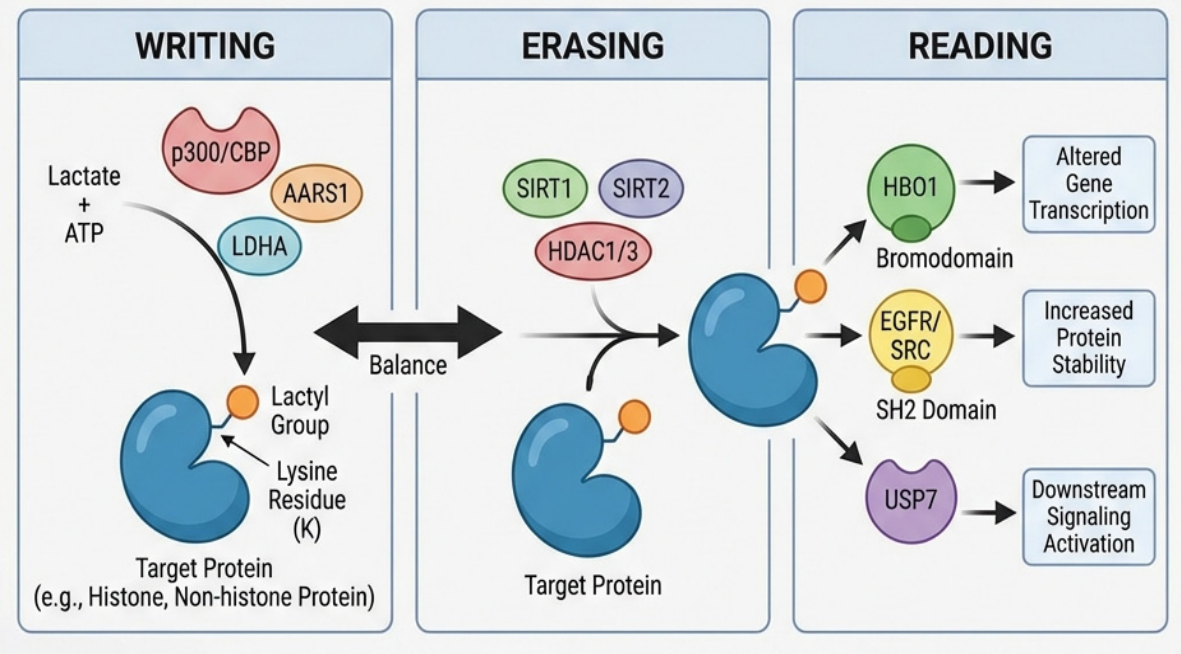
2. “Writers,” “Erasers,” and “Readers” of Protein Lactylation
2.1. “Writers”: Enzymes That Catalyze Protein Lactylation
2.2. “Erasers”: Enzymes Removing Protein Lactylation
2.3. “Readers”: Effector Proteins Recognizing and Binding to Lactylation Marks
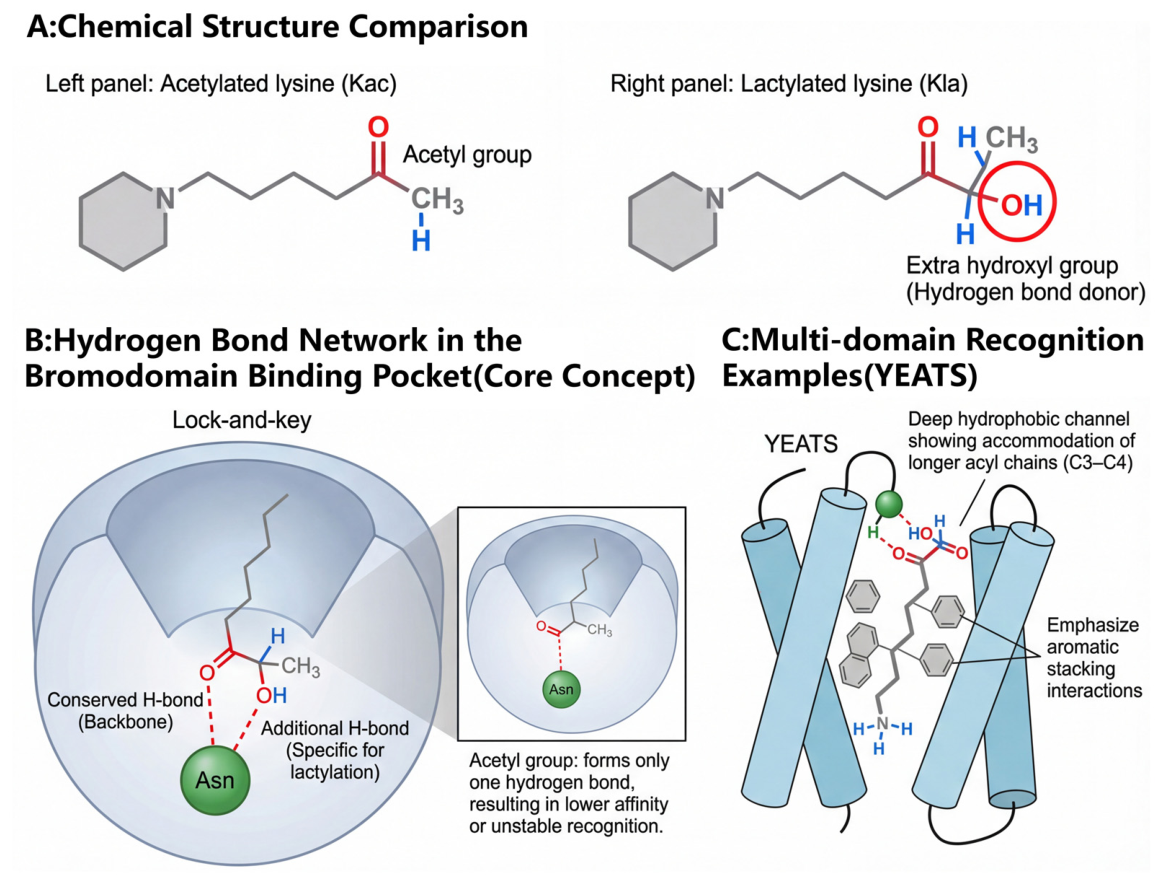
2.3.1. Recognition Domains and Molecular Basis of Lactylation “Readers”
2.3.2. Commonalities and Specificities of Lactylation Recognition
3. Mechanisms and Roles of Protein Lactylation in Gastric Cancer
3.1. Driving Malignant Phenotypes in GC Cells: Proliferation, Invasion, Metastasis, and Therapy Resistance
3.1.1. Lactylation-Mediated Activation of Transcription Factors and Oncogenes
3.1.2. Lactylation Modulates RNA Processing and Signaling Pathways
3.1.3. Metabolic Enzyme Autoregulation and the Vicious Cycle
3.1.4. Lactylation and Therapeutic Resistance

| Malignant Phenotype | Key Target/Pathway Affected | Mechanism of Action |
|---|---|---|
| Proliferation & Survival | YAP–TEAD Signaling | AARS1-mediated lactylation of YAP (K494) stabilizes YAP and promotes its nuclear translocation, activating proliferative genes (CTGF, CYR61) [26,47,90,91,92]. |
| Invasion & Metastasis | Metabolic–Epigenetic Feedback Loop | GLUT3 overexpression → upregulates LDHA → increases lactate production & H3K18la → further epigenetic & metabolic reprogramming [28,29,52]. |
| Therapy Resistance | Chemoresistance | Lactylation-related gene signatures predict differential sensitivity to agents like cisplatin and 5-fluorouracil [29]. |
3.2. The Extrinsic Arm: Lactylation Remodels the Tumor Immune Microenvironment
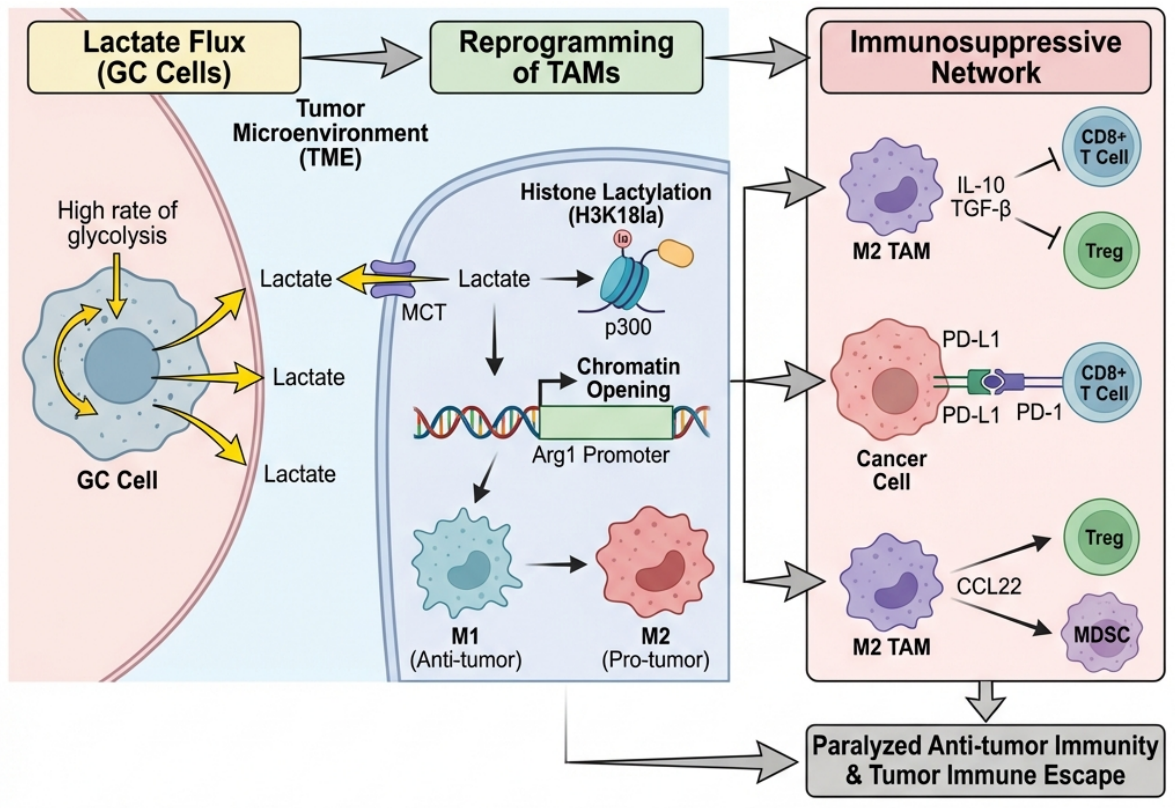
3.2.1. Key Targets: Lactylation Drives Polarization of Tumor-Associated Macrophages (TAMs) Toward the M2 Phenotype
3.2.2. Establishing an Immunosuppressive Network: Cytokines, Immune Checkpoints, and Recruitment of Suppressive Cells
| Immune Cell Target | Primary Effect of Lactylation | Key Mechanisms and Downstream Consequences |
|---|---|---|
| Tumor-Associated Macrophages (TAMs) | Drives M2 Polarization | Lactate induces histone lactylation (e.g., H3K18la), opening chromatin at M2 gene promoters (e.g., Arg1). Also may lactylate key signaling molecules. |
| Establishes Immunosuppressive Network | 1. Secretes Inhibitory Cytokines: IL-10, TGF-β to suppress CD8+ T cells and promote Tregs. 2. Upregulates Checkpoints: Induces PD-L1 expression. 3. Recruits Suppressive Cells: attracts Tregs and MDSCs via chemokines (CCL22, CXCL12). | |
| Other Immune Cells (Potential) | Modulates Function | 1. Dendritic Cells (DCs): May impair maturation and antigen presentation. 2. T Cells: May directly suppress CD8+ T cell function or stabilize Tregs. 3. Neutrophils (TANs): May drive polarization toward pro-tumor N2 phenotype. |
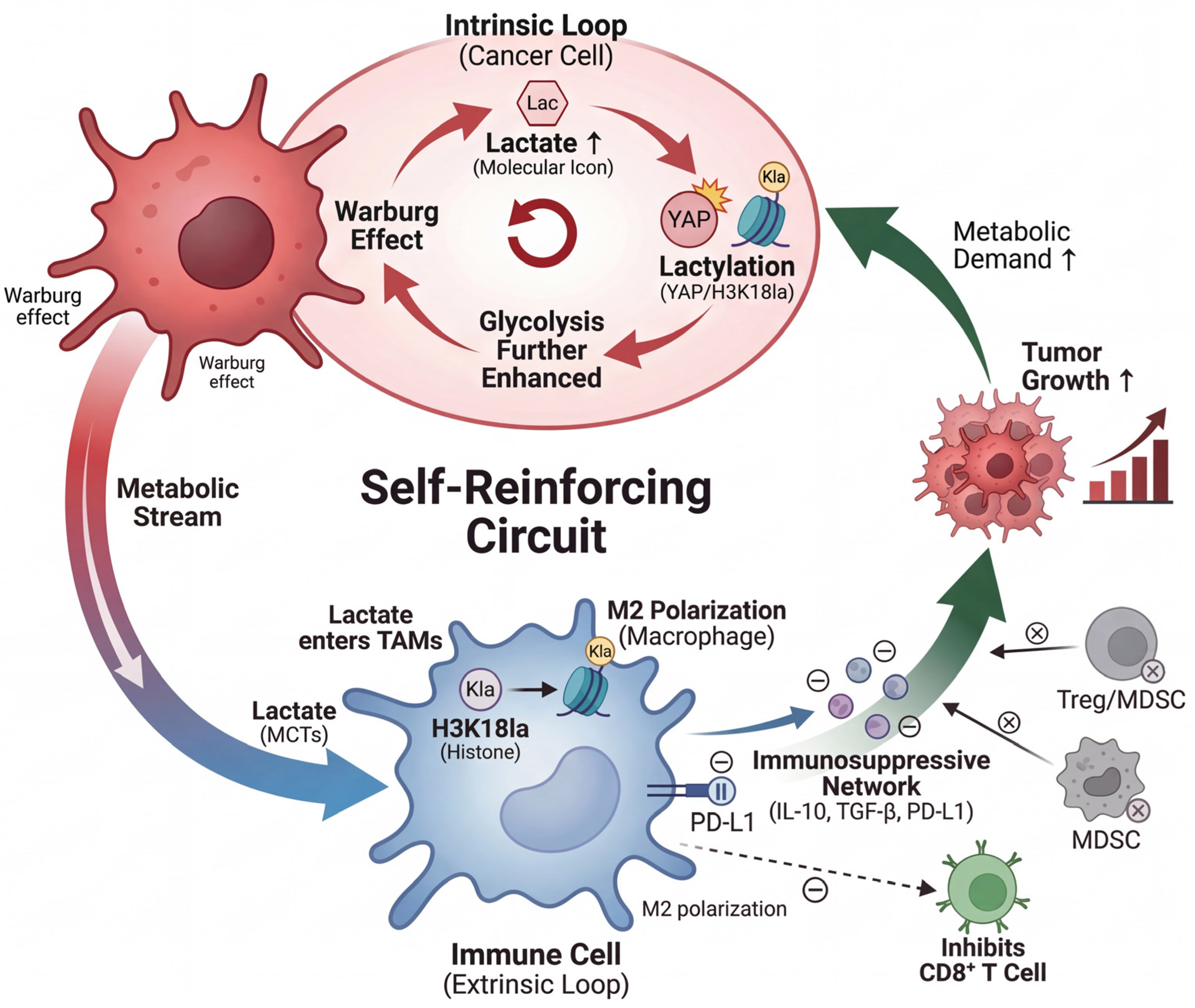
3.3. Integration: The Self-Reinforcing Metabolic–Epigenetic–Immunological Circuit
3.3.1. The Circuit Architecture
3.3.2. Functional Consequences of the Self-Reinforcing Circuit
3.4. Physiological Roles of Lactylation: Insights from Tissue Repair, Gut Infection, and Immune Surveillance
3.5. Dietary and Nutritional Modulation of Protein Lactylation: Implications for Therapy
4. Clinical Translation Potential and Challenges
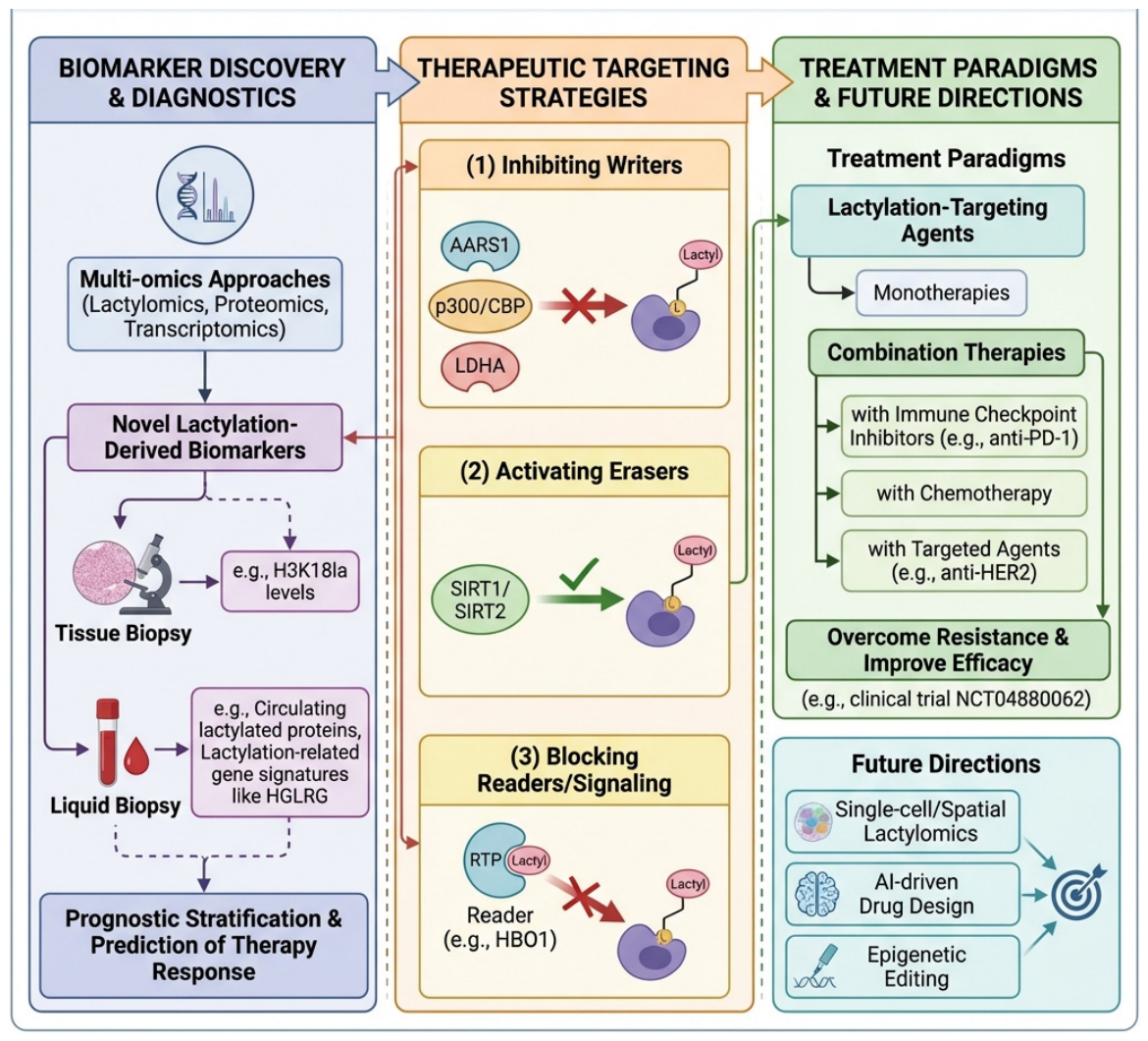
4.1. As a Novel Biomarker: Potential from Bench to Bedside Detection
| Aspect | Specific Approach/Target | Major Challenges & Future Needs |
|---|---|---|
| Biomarker Potential | Tissue-based: H3K18la levels, NCL lactylation (Lys477) [84]. | Requires validation in large-scale, prospective cohorts; invasive nature of tissue sampling. |
| Liquid Biopsy: Plasma lactylated proteins, lactylation-related gene signatures (e.g., HGLRG, IMPS). | High cost and complexity of advanced techniques (e.g., mass spectrometry); need for standardized, sensitive clinical assays. | |
| Therapeutic Strategies | Inhibit Writers: AARS1, p300/CBP inhibitors [26]. | Need for inhibitors selective for lactyltransferase over acetyltransferase activity; metabolic plasticity may lead to resistance. |
| Activate Erasers: SIRT1/SIRT2 activators. | Complexity of enzyme multifunctionality (e.g., HDAC inhibitors may block both deacetylation and delactylation). | |
| Combination Therapy: Lactylation pathway inhibitors + Immune Checkpoint Inhibitors/Chemotherapy. | Optimal combinations, sequencing, and patient selection criteria are undefined. | |
| Future Tools & Directions | Specific Reagents: High-affinity antibodies, selective chemical probes, nano-based detection platforms. | Current lack of tools that reliably distinguish lactylation from similar PTMs (e.g., acetylation). |
| Panoramic Mapping: Single-cell lactylomics, spatial lactylomics. | Technically challenging and requires sophisticated data analysis. |
4.2. Novel Therapeutic Strategies Targeting the Lactylation Pathway
4.2.1. Inhibiting the “Writers”: Blocking the Formation of Lactylation
4.2.2. Modulating the “Erasers”: Manipulating the Dynamic Balance of Lactylation
4.2.3. Combination Therapy: Synergizing with Immune Checkpoint Inhibitors to Reverse Immunosuppression
5. Future Perspectives
5.1. Mapping the Panoramic and Dynamic Landscape of Lactylation in GC
5.2. Deciphering the “Readers” and Precise Regulatory Network of Lactylation
5.3. Toward Clinical Translation: From Biomarkers to Targeted Therapies
6. Conclusions
Author Contributions
Funding
Institutional Review Board Statement
Informed Consent Statement
Data Availability Statement
Conflicts of Interest
Abbreviations
| GC | GC |
| TME | Tumor microenvironment |
| Kla | protein lactylation |
| H. pylori | Helicobacter pylori |
| LDHA | Lactate dehydrogenase A |
| PKM2 | Pyruvate kinase M2 |
| H3K18la | Histone H3 Lysine 18 Lactylation |
| AARS1 | Alanyl-tRNA Synthetase 1 |
| YAP | Yes-associated protein |
| TEAD | Transcriptional Enhanced Associate Domain |
| SIRT1/2/3/5 | Sirtuin 1/2/3/5 |
| HDAC1/3 | Histone Deacetylase 1/3 |
| METTL16 | Methyltransferase-like 16 |
| m6A | N6-methyladenosine |
| FDX1 | Ferredoxin 1 |
| EGFR | Epidermal growth factor receptor |
| SRC | SRC Proto-Oncogene, Nonreceptor Tyrosine Kinase |
| GPX4 | Glutathione Peroxidase 4 |
| USP7 | Ubiquitin-Specific Peptidase 7 |
| PFKM | Phosphofructokinase, Muscle Type |
| CNTN1 | Contactin 1 |
| GLUT3 | Glucose transporter type 3 |
| SLC16A7 | Solute Carrier Family 16 Member 7 (Monocarboxylate Transporter 2) |
| PD-L1 | Programmed death-ligand 1 |
| CAFs | Cancer-Associated Fibroblasts |
| LOX | Lysyl oxidase |
| TGF-β | Transforming growth factor beta |
| IL-10 | Interleukin 10 |
| Tregs | Regulatory T cells |
| MDSCs | Myeloid-derived suppressor cells |
| DCs | Dendritic cells |
| TAMs | Tumor-associated macrophages |
| TIME | Tumor Immune Microenvironment |
| MCTs | Monocarboxylate Transporters |
| IC50 | Half-maximal inhibitory concentration |
| LC-MS/MS | Liquid Chromatography-Tandem Mass Spectrometry |
| AUC | Area under the curve |
| HGLRGs | Hypoxia-, glycolysis-, and lactylation-related genes |
| IMPS | Immune microenvironment-related prognostic signature |
| ELISA | Enzyme-Linked Immunosorbent Assay |
| PLA | proximity ligation assay |
| scRNA-seq | Single-cell RNA sequencing |
References
- Inoue, M. Epidemiology of Gastric Cancer-Changing Trends and Global Disparities. Cancers 2024, 16, 2948. [Google Scholar] [CrossRef]
- Karimi, P.; Islami, F.; Anandasabapathy, S.; Freedman, N.D.; Kamangar, F. Gastric Cancer: Descriptive Epidemiology, Risk Factors, Screening, and Prevention. Cancer Epidemiol. Biomark. Prev. Publ. Am. Assoc. Cancer Res. Cosponsored Am. Soc. Prev. Oncol. 2014, 23, 700–713. [Google Scholar] [CrossRef] [PubMed]
- Song, Z.; Wu, Y.; Yang, J.; Yang, D.; Fang, X. Progress in the Treatment of Advanced Gastric Cancer. Tumour Biol. 2017, 39, 1010428317714626. [Google Scholar] [CrossRef]
- Mao, Y.; Xia, Z.; Xia, W.; Jiang, P. Metabolic Reprogramming, Sensing, and Cancer Therapy. Cell Rep. 2024, 43, 115064. [Google Scholar] [CrossRef] [PubMed]
- Tong, Y.; Gao, W.-Q.; Liu, Y. Metabolic Heterogeneity in Cancer: An Overview and Therapeutic Implications. Biochim. Biophys. Acta Rev. Cancer 2020, 1874, 188421. [Google Scholar] [CrossRef] [PubMed]
- Schwartz, L.; Supuran, C.T.; Alfarouk, K.O. The Warburg Effect and the Hallmarks of Cancer. Anticancer Agents Med. Chem. 2017, 17, 164–170. [Google Scholar] [CrossRef]
- Liu, Y.; Zhang, Z.; Wang, J.; Chen, C.; Tang, X.; Zhu, J.; Liu, J. Metabolic Reprogramming Results in Abnormal Glycolysis in Gastric Cancer: A Review. OncoTargets Ther. 2019, 12, 1195–1204. [Google Scholar] [CrossRef]
- Urbano, A.M. Otto Warburg: The Journey towards the Seminal Discovery of Tumor Cell Bioenergetic Reprogramming. Biochim. Biophys. Acta Mol. Basis Dis. 2021, 1867, 165965. [Google Scholar] [CrossRef]
- Song, L.; Sun, L.; Chen, S.; Lan, P. Lactate and Lactylation in Tumor Immunity. Front. Med. 2025, 19, 697–720. [Google Scholar] [CrossRef]
- Shimizu, K.; Iyoda, T.; Okada, M.; Yamasaki, S.; Fujii, S.-I. Immune Suppression and Reversal of the Suppressive Tumor Microenvironment. Int. Immunol. 2018, 30, 445–454. [Google Scholar] [CrossRef]
- Liu, X.; Zhang, Y.; Li, W.; Zhou, X. Lactylation, an Emerging Hallmark of Metabolic Reprogramming: Current Progress and Open Challenges. Front. Cell Dev. Biol. 2022, 10, 972020. [Google Scholar] [CrossRef]
- Iozzo, M.; Pardella, E.; Giannoni, E.; Chiarugi, P. The Role of Protein Lactylation: A Kaleidoscopic Post-Translational Modification in Cancer. Mol. Cell 2025, 85, 1263–1279. [Google Scholar] [CrossRef]
- Nguyen, N.T.B.; Gevers, S.; Kok, R.N.U.; Burgering, L.M.; Neikes, H.; Akkerman, N.; Betjes, M.A.; Ludikhuize, M.C.; Gulersonmez, C.; Stigter, E.C.A.; et al. Lactate Controls Cancer Stemness and Plasticity through Epigenetic Regulation. Cell Metab. 2025, 37, 903–919.e10. [Google Scholar] [CrossRef]
- Lv, X.; Lv, Y.; Dai, X. Lactate, Histone Lactylation and Cancer Hallmarks. Expert Rev. Mol. Med. 2023, 25, e7. [Google Scholar] [CrossRef] [PubMed]
- Li, H.; Sun, L.; Gao, P.; Hu, H. Lactylation in Cancer: Current Understanding and Challenges. Cancer Cell 2024, 42, 1803–1807. [Google Scholar] [CrossRef] [PubMed]
- Qu, J.; Li, P.; Sun, Z. Histone Lactylation Regulates Cancer Progression by Reshaping the Tumor Microenvironment. Front. Immunol. 2023, 14, 1284344. [Google Scholar] [CrossRef] [PubMed]
- Zhu, H.; Luo, H.; Zhu, X.; Hu, X.; Zheng, L.; Zhu, X. Pyruvate Kinase M2 (PKM2) Expression Correlates with Prognosis in Solid Cancers: A Meta-Analysis. Oncotarget 2017, 8, 1628. [Google Scholar] [CrossRef] [PubMed]
- Luo, B.; Wang, M.; Hou, N.; Hu, X.; Jia, G.; Qin, X.; Zuo, X.; Liu, Y.; Luo, K.; Song, W.; et al. ATP-Dependent Lon Protease Contributes to Helicobacter Pylori-Induced Gastric Carcinogenesis. Neoplasia 2016, 18, 242–252. [Google Scholar] [CrossRef]
- Lee, D.Y.; Jung, D.E.; Yu, S.S.; Lee, Y.S.; Choi, B.K.; Lee, Y.C. Regulation of SIRT3 Signal Related Metabolic Reprogramming in Gastric Cancer by Helicobacter Pylori Oncoprotein CagA. Oncotarget 2017, 8, 78365–78378. [Google Scholar] [CrossRef]
- Yasuda, T.; Wang, Y.A. Gastric Cancer Immunosuppressive Microenvironment Heterogeneity: Implications for Therapy Development. Trends Cancer 2024, 10, 627–642. [Google Scholar] [CrossRef]
- Mou, P.; Ge, Q.-H.; Sheng, R.; Zhu, T.-F.; Liu, Y.; Ding, K. Research Progress on the Immune Microenvironment and Immunotherapy in Gastric Cancer. Front. Immunol. 2023, 14, 1291117. [Google Scholar] [CrossRef]
- Zhang, L.; Li, S. Lactic acid promotes macrophage polarization through MCT-HIF1α signaling in gastric cancer. Exp. Cell Res. 2020, 388, 111846. [Google Scholar] [CrossRef]
- Ma, W.; Ao, S.; Zhou, J.; Li, J.; Liang, X.; Yang, X.; Zhang, H.; Liu, B.; Tang, W.; Liu, H.; et al. Methylsulfonylmethane Protects against Lethal Dose MRSA-Induced Sepsis through Promoting M2 Macrophage Polarization. Mol. Immunol. 2022, 146, 69–77. [Google Scholar] [CrossRef]
- Wang, T.; Ye, Z.; Li, Z.; Jing, D.-S.; Fan, G.-X.; Liu, M.-Q.; Zhuo, Q.-F.; Ji, S.-R.; Yu, X.-J.; Xu, X.-W.; et al. Lactate-Induced Protein Lactylation: A Bridge between Epigenetics and Metabolic Reprogramming in Cancer. Cell Prolif. 2023, 56, e13478. [Google Scholar] [CrossRef]
- Rho, H.; Hay, N. Protein lactylation in Cancer: Mechanisms and potential therapeutic implications. Exp. Mol. Med. 2025, 57, 545–553. [Google Scholar] [CrossRef]
- Ju, J.; Zhang, H.; Lin, M.; Yan, Z.; An, L.; Cao, Z.; Geng, D.; Yue, J.; Tang, Y.; Tian, L.; et al. The Alanyl-tRNA Synthetase AARS1 Moonlights as a Lactyltransferase to Promote YAP Signaling in Gastric Cancer. J. Clin. Investig. 2024, 134, e174587. [Google Scholar] [CrossRef]
- Tsukihara, S.; Akiyama, Y.; Shimada, S.; Hatano, M.; Igarashi, Y.; Taniai, T.; Tanji, Y.; Kodera, K.; Yasukawa, K.; Umeura, K.; et al. Delactylase Effects of SIRT1 on a Positive Feedback Loop Involving the H19-Glycolysis-Histone Lactylation in Gastric Cancer. Oncogene 2025, 44, 724–738. [Google Scholar] [CrossRef]
- Yan, Q.; Wu, Y.; Li, D.; Li, Y. A-Kinase Anchoring Protein 9 Promotes Gastric Cancer Progression as a Downstream Effector of Cadherin 1. J. Oncol. 2022, 2022, 2830634. [Google Scholar] [CrossRef]
- Knorr, J.; Ricci, V.; Hatakeyama, M.; Backert, S. Classification of Helicobacter Pylori Virulence Factors: Is CagA a Toxin or Not? Trends Microbiol. 2019, 27, 731–738. [Google Scholar] [CrossRef]
- Hu, Y.; He, Z.; Li, Z.; Wang, Y.; Wu, N.; Sun, H.; Zhou, Z.; Hu, Q.; Cong, X. Lactylation: The Novel Histone Modification Influence on Gene Expression, Protein Function, and Disease. Clin. Epigenet. 2024, 16, 72. [Google Scholar] [CrossRef]
- Rostami-Nejad, M.; Rezaei-Tavirani, M.; Mansouri, V.; Akbari, Z.; Abdi, S. Impact of Proteomics Investigations on Gastric Cancer Treatment and Diagnosis. Gastroenterol. Hepatol. Bed Bench 2019, 12, S1. [Google Scholar]
- Xin, J.; Zhang, X.; Liang, J.; Xia, L.; Yin, J.; Nie, Y.; Wu, K.; Tian, J. In Vivo Gastric Cancer Targeting and Imaging Using Novel Symmetric Cyanine Dye-Conjugated GX1 Peptide Probes. Bioconjug. Chem. 2013, 24, 1134–1143. [Google Scholar] [CrossRef]
- Calcagno, D.Q.; Wisnieski, F.; da Silva Mota, E.R.; Maia de Sousa, S.B.; Costa da Silva, J.M.; Leal, M.F.; Gigek, C.O.; Santos, L.C.; Rasmussen, L.T.; Assumpção, P.P.; et al. Role of Histone Acetylation in Gastric Cancer: Implications of Dietetic Compounds and Clinical Perspectives. Epigenomics 2019, 11, 349–362. [Google Scholar] [CrossRef]
- Yang, D.; Yin, J.; Shan, L.; Yi, X.; Zhang, W.; Ding, Y. Identification of Lysine-Lactylated Substrates in Gastric Cancer Cells. iScience 2022, 25, 104630. [Google Scholar] [CrossRef]
- Yang, L.; Niu, K.; Wang, J.; Shen, W.; Jiang, R.; Liu, L.; Song, W.; Wang, X.; Zhang, X.; Zhang, R.; et al. Nucleolin Lactylation Contributes to Intrahepatic Cholangiocarcinoma Pathogenesis via RNA Splicing Regulation of MADD. J. Hepatol. 2024, 81, 651–666. [Google Scholar] [CrossRef]
- Wu, L.-H.; Wang, X.-X.; Wang, Y.; Wei, J.; Liang, Z.-R.; Yan, X.; Wang, J. Construction and Validation of a Prognosis Signature Based on the Immune Microenvironment in Gastric Cancer. Front. Surg. 2023, 10, 1088292. [Google Scholar] [CrossRef]
- Zhang, X.; Li, Y.; Chen, Y. Development of a Comprehensive Gene Signature Linking Hypoxia, Glycolysis, Lactylation, and Metabolomic Insights in Gastric Cancer through the Integration of Bulk and Single-Cell RNA-Seq Data. Biomedicines 2023, 11, 2948. [Google Scholar] [CrossRef]
- Tong, Q.-H.; Tao, T.; Xie, L.-Q.; Lu, H.-J. ELISA-PLA: A Novel Hybrid Platform for the Rapid, Highly Sensitive and Specific Quantification of Proteins and Post-Translational Modifications. Biosens. Bioelectron. 2016, 80, 385–391. [Google Scholar] [CrossRef]
- Miao, L.; Zhu, C.; Jiao, L.; Li, H.; Du, D.; Lin, Y.; Wei, Q. Smart Drug Delivery System-Inspired Enzyme-Linked Immunosorbent Assay Based on Fluorescence Resonance Energy Transfer and Allochroic Effect Induced Dual-Modal Colorimetric and Fluorescent Detection. Anal. Chem. 2018, 90, 1976–1982. [Google Scholar] [CrossRef]
- Chen, L.; Huang, L.; Gu, Y.; Cang, W.; Sun, P.; Xiang, Y. Lactate-Lactylation Hands between Metabolic Reprogramming and Immunosuppression. Int. J. Mol. Sci. 2022, 23, 11943. [Google Scholar] [CrossRef]
- Yu, X.; Yang, J.; Xu, J.; Pan, H.; Wang, W.; Yu, X.; Shi, S. Histone Lactylation: From Tumor Lactate Metabolism to Epigenetic Regulation. Int. J. Biol. Sci. 2024, 20, 1833–1854. [Google Scholar] [CrossRef]
- Deng, D.; Luo, Y.; Hong, Y.; Ren, X.; Zu, X.; Feng, J. Lactylation: A New Direction for Tumor-Targeted Therapy. Biochim. Biophys. Acta Rev. Cancer 2025, 1880, 189399. [Google Scholar] [CrossRef]
- Li, C.; Liu, Z.; Kong, D.; Li, Z.; Li, L. Lactylation: A Novel Driver of Drug Resistance in the Tumor Microenvironment. Cancer Drug Resist. 2025, 8, 39. [Google Scholar] [CrossRef]
- Xiao, S.; Zhang, S.; Sun, K.; Huang, Q.; Li, Q.; Hu, C. Lactate and Lactylation: Molecular Insights into Histone and Non-Histone Lactylation in Tumor Progression, Tumor Immune Microenvironment, and Therapeutic Strategies. Biomark. Res. 2025, 13, 134. [Google Scholar] [CrossRef]
- Roman, L.D.; Lukyanchuk, R.; Sablin, O.A.; Araslanova, E.I.; Eklund, C.; Hendolin, P.; Paloheimo, L.; Syrjänen, K. Prevalence of H. Pylori Infection and Atrophic Gastritis in a Population-Based Screening with Serum Biomarker Panel (GastroPanel®) in St. Petersburg. Anticancer Res. 2016, 36, 4129–4138. [Google Scholar]
- Gonzatti, M.B.; Hintzen, J.C.; Sharma, I.; Najar, M.A.; Tsusaka, T.; Marcinkiewicz, M.M.; Crispim, C.V.D.S.; Snyder, N.W.; Burslem, G.M.; Goldberg, E.L. Class I Histone Deacetylases Catalyze Lysine Lactylation. J. Biol. Chem. 2025, 301, 110602. [Google Scholar] [CrossRef]
- Tongtawee, T.; Kaewpitoon, S.; Kaewpitoon, N.; Dechsukhum, C.; Leeanansaksiri, W.; Loyd, R.A.; Matrakool, L.; Panpimanmas, S. Characteristics and Risk Factors of Helicobacter Pylori Associated Gastritis: A Prospective Cross-Sectional Study in Northeast Thailand. Gastroenterol. Res. Pract. 2016, 2016, 9130602. [Google Scholar] [CrossRef]
- Wang, W.; Wang, H.; Wang, Q.; Yu, X.; Ouyang, L. Lactate-Induced Protein Lactylation in Cancer: Functions, Biomarkers and Immunotherapy Strategies. Front. Immunol. 2024, 15, 1513047. [Google Scholar] [CrossRef]
- Liu, Y.; Zhao, Y.; Song, H.; Li, Y.; Liu, Z.; Ye, Z.; Zhao, J.; Wu, Y.; Tang, J.; Yao, M. Metabolic Reprogramming in Tumor Immune Microenvironment: Impact on Immune Cell Function and Therapeutic Implications. Cancer Lett. 2024, 597, 217076. [Google Scholar] [CrossRef]
- Chen, M.; Cen, K.; Song, Y.; Zhang, X.; Liou, Y.-C.; Liu, P.; Huang, J.; Ruan, J.; He, J.; Ye, W.; et al. NUSAP1-LDHA-Glycolysis-Lactate Feedforward Loop Promotes Warburg Effect and Metastasis in Pancreatic Ductal Adenocarcinoma. Cancer Lett. 2023, 567, 216285. [Google Scholar] [CrossRef]
- Wang, Y.; Chen, J.; Wang, Y.; Zhao, J.; Zhang, J.; Wang, H. Pharmacologically Targeting Protein Lactylation to Overcome Cancer Drug Resistance. Eur. J. Med. Chem. 2025, 296, 117905. [Google Scholar] [CrossRef]
- Yang, H.; Yang, S.; He, J.; Li, W.; Zhang, A.; Li, N.; Zhou, G.; Sun, B. Glucose Transporter 3 (GLUT3) Promotes Lactylation Modifications by Regulating Lactate Dehydrogenase A (LDHA) in Gastric Cancer. Cancer Cell Int. 2023, 23, 303. [Google Scholar] [CrossRef]
- Gu, J.; Xu, X.; Li, X.; Yue, L.; Zhu, X.; Chen, Q.; Gao, J.; Takashi, M.; Zhao, W.; Zhao, B.; et al. Tumor-Resident Microbiota Contributes to Colorectal Cancer Liver Metastasis by Lactylation and Immune Modulation. Oncogene 2024, 43, 2389–2404, Correction in Oncogene 2025, 44, 2004–2007. [Google Scholar] [CrossRef]
- Feng, Y.; Xiong, Y.; Qiao, T.; Li, X.; Jia, L.; Han, Y. Lactate Dehydrogenase A: A Key Player in Carcinogenesis and Potential Target in Cancer Therapy. Cancer Med. 2018, 7, 6124–6136. [Google Scholar] [CrossRef]
- Jiang, P.; Ning, W.; Shi, Y.; Liu, C.; Mo, S.; Zhou, H.; Liu, K.; Guo, Y. FSL-Kla: A Few-Shot Learning-Based Multi-Feature Hybrid System for Lactylation Site Prediction. Comput. Struct. Biotechnol. J. 2021, 19, 4497–4509. [Google Scholar] [CrossRef]
- Li, X.; Zhang, H.S. Amino acid metabolism, redox balance and epigenetic regulation in cancer. FEBS J. 2024, 291, 412–429. [Google Scholar] [CrossRef]
- Gao, Y.; Zhang, S.; Zhang, X.; Du, Y.; Ni, T.; Hao, S. Crosstalk between Metabolic and Epigenetic Modifications during Cell Carcinogenesis. iScience 2024, 27, 111359. [Google Scholar] [CrossRef]
- Zhao, Y.; Mir, C.; Garcia-Mayea, Y.; Paciucci, R.; Kondoh, H.; LLeonart, M.E. RNA-Binding Proteins: Underestimated Contributors in Tumorigenesis. Semin. Cancer Biol. 2022, 86, 431–444. [Google Scholar] [CrossRef]
- Jungfleisch, J.; Gebauer, F. RNA-Binding Proteins as Therapeutic Targets in Cancer. RNA Biol. 2025, 22, 1–8. [Google Scholar] [CrossRef]
- Wu, H.; Huang, H.; Zhao, Y. Interplay between Metabolic Reprogramming and Post-Translational Modifications: From Glycolysis to Lactylation. Front. Immunol. 2023, 14, 1211221. [Google Scholar] [CrossRef]
- Xin, Q.; Wang, H.; Li, Q.; Liu, S.; Qu, K.; Liu, C.; Zhang, J. Lactylation: A Passing Fad or the Future of Posttranslational Modification. Inflammation 2022, 45, 1419–1429. [Google Scholar] [CrossRef]
- Zhao, Q.; Cao, L.; Guan, L.; Bie, L.; Wang, S.; Xie, B.; Chen, X.; Shen, X.; Cao, F. Immunotherapy for Gastric Cancer: Dilemmas and Prospect. Brief. Funct. Genom. 2019, 18, 107–112. [Google Scholar] [CrossRef]
- Hartgrink, H.H.; Jansen, E.P.M.; van Grieken, N.C.T.; van de Velde, C.J.H. Gastric Cancer. Lancet 2009, 374, 477–490. [Google Scholar] [CrossRef]
- Knight, J.R.P.; Milner, J. SIRT1, metabolism and cancer. Curr. Opin. Oncol. 2012, 24, 68–75. [Google Scholar] [CrossRef]
- Jiang, B.; Chen, J.-H.; Yuan, W.-Z.; Ji, J.-T.; Liu, Z.-Y.; Wu, L.; Tang, Q.; Shu, X.-G. Prognostic and Clinical Value of Sirt1 Expression in Gastric Cancer: A Systematic Meta-Analysis. J. Huazhong Univ. Sci. Technol. Med. Sci. Hua Zhong Ke Ji Xue Xue Bao Yi Xue Ying Wen Ban Huazhong Keji Daxue Xuebao Yixue Yingdewen Ban 2016, 36, 278–284. [Google Scholar] [CrossRef]
- Qiu, G.; Li, X.; Che, X.; Wei, C.; He, S.; Lu, J.; Jia, Z.; Pang, K.; Fan, L. SIRT1 Is a Regulator of Autophagy: Implications in Gastric Cancer Progression and Treatment. FEBS Lett. 2015, 589, 2034–2042. [Google Scholar] [CrossRef]
- Li, X.; Wang, M.; Dong, L.; Zhang, Y.; Hu, J.; Wang, F. Expression and Clinical Significance of SIRT2 in Gastric Cancer: A Retrospective Study. Ann. Med. Surg. 2025, 87, 7967–7974. [Google Scholar] [CrossRef]
- Li, Y.; Zhang, M.; Dorfman, R.G.; Pan, Y.; Tang, D.; Xu, L.; Zhao, Z.; Zhou, Q.; Zhou, L.; Wang, Y.; et al. SIRT2 Promotes the Migration and Invasion of Gastric Cancer through RAS/ERK/JNK/MMP-9 Pathway by Increasing PEPCK1-Related Metabolism. Neoplasia 2018, 20, 745–756. [Google Scholar] [CrossRef]
- Sun, L.; Zhang, Y.; Yang, B.; Sun, S.; Zhang, P.; Luo, Z.; Feng, T.; Cui, Z.; Zhu, T.; Li, Y.; et al. Lactylation of METTL16 promotes cuproptosis via m6A-modification on FDX1 mRNA in gastric cancer. Nat. Commun. 2023, 14, 6523. [Google Scholar] [CrossRef]
- Shan, D.; Song, J.; Ren, Y.; Zhang, Y.; Ba, Y.; Luo, P.; Cheng, Q.; Xu, H.; Weng, S.; Zuo, A.; et al. Copper in Cancer: Friend or Foe? Metabolism, Dysregulation, and Therapeutic Opportunities. Cancer Commun. 2025, 45, 577–607. [Google Scholar] [CrossRef]
- Wang, J.; Wu, J.; Wang, L.; Min, X.; Chen, Z. The LINC00152/miR-138 Axis Facilitates Gastric Cancer Progression by Mediating SIRT2. J. Oncol. 2021, 2021, 1173869. [Google Scholar] [CrossRef]
- Abbas, A.; Gupta, S. The Role of Histone Deacetylases in Prostate Cancer. Epigenetics 2008, 3, 300–309. [Google Scholar] [CrossRef]
- Yu, Z.; Zeng, J.U.N.; Liu, H.U.I.; Wang, T.; Yu, Z.; Chen, J. Role of HDAC1 in the Progression of Gastric Cancer and the Correlation with lncRNAs. Oncol. Lett. 2019, 17, 3296–3304. [Google Scholar] [CrossRef]
- Abo Alrob, O.; Lopaschuk, G.D. Role of CoA and Acetyl-CoA in Regulating Cardiac Fatty Acid and Glucose Oxidation. Biochem. Soc. Trans. 2014, 42, 1043–1051. [Google Scholar] [CrossRef]
- Chen, L.; Fei, Y.; Zhao, Y.; Chen, Q.; Chen, P.; Pan, L. Expression and Prognostic Analyses of HDACs in Human Gastric Cancer Based on Bioinformatic Analysis. Medicine 2021, 100, e26554. [Google Scholar] [CrossRef]
- Debsharma, S.; Pramanik, S.; Bindu, S.; Mazumder, S.; Das, T.; Pal, U.; Saha, D.; De, R.; Nag, S.; Banerjee, C.; et al. NSAID Targets SIRT3 to Trigger Mitochondrial Dysfunction and Gastric Cancer Cell Death. iScience 2024, 27, 109384. [Google Scholar] [CrossRef]
- Christodoulidis, G.; Koumarelas, K.-E.; Kouliou, M.-N.; Thodou, E.; Samara, M. Gastric Cancer in the Era of Epigenetics. Int. J. Mol. Sci. 2024, 25, 3381. [Google Scholar] [CrossRef]
- Resende, C.; Ristimäki, A.; Machado, J.C. Genetic and epigenetic alteration in gastric carcinogenesis. Helicobacter 2010, 15, 34–39. [Google Scholar] [CrossRef]
- Zhang, K.; Ni, X.; Wang, C.; Guo, J.; Fan, W.; Jiang, T.; Zhang, G. Brusatol inhibits gastric cancer by targeting P4HA2 and supressing glycolysis-driven histone lactylation. Phytomedicine 2026, 150, 157585. [Google Scholar] [CrossRef]
- Wang, Y.; Chen, S.; Tian, W.; Zhang, Q.; Jiang, C.; Qian, L.; Liu, Y. High-Expression HBO1 Predicts Poor Prognosis in Gastric Cancer. Am. J. Clin. Pathol. 2019, 152, 517–526. [Google Scholar] [CrossRef] [PubMed]
- Nuñez, R.; Sidlowski, P.F.; Steen, E.A.; Wynia-Smith, S.L.; Sprague, D.J.; Keyes, R.F.; Smith, B.C. The TRIM33 bromodomain recognizes histone lysine lactylation. ACS Chem. Biol. 2024, 19, 2418–2428. [Google Scholar] [CrossRef] [PubMed]
- Hu, H.M.; Deng, J.L.; Pan, Y.; Wang, Z.H.; Zhang, J.; Yu Gu, X.; Fan, S.X.; Zhao, J.Z. Breviscapine Targets EGFR and SRC to Abrogate Diabetes-Driven GPX4 Lactylation and Ferroptosis Resistance in Gastric Cancer. Phytomed. Int. J. Phytother. Phytopharm. 2025, 148, 157387. [Google Scholar] [CrossRef]
- Du, Y.; Karatekin, F.; Wang, W.K.; Hong, W.; Boopathy, G.T.K. Cracking the EGFR Code: Cancer Biology, Resistance Mechanisms, and Future Therapeutic Frontiers. Pharmacol. Rev. 2025, 77, 100076. [Google Scholar] [CrossRef]
- Shen, X.; Shi, H.; Liu, L.; Chong, S.; Han, J.; Gu, Y. PFKM Promotes the Progression of Gastric Cancer by Up-Regulating CNTN1 Expression Through H3K18la Modification. Appl. Biochem. Biotechnol. 2025, 197, 5885–5901. [Google Scholar] [CrossRef]
- Moreno-Yruela, C.; Zhang, D.; Wei, W.; Bæk, M.; Liu, W.; Gao, J.; Danková, D.; Nielsen, A.L.; Bolding, J.E.; Yang, L.; et al. Class I Histone Deacetylases (HDAC1-3) Are Histone Lysine Delactylases. Sci. Adv. 2022, 8, eabi6696. [Google Scholar] [CrossRef]
- Huang, B.; Jin, M.; Cui, G.; Wang, Z.; Wang, F.; Chen, M.; Zhu, L.; Li, Y.; Yang, X.; Li, R.; et al. GCN5-ERK Lactylation-Phosphorylation Loop Amplifies Lactate-Driven Cancer Progression. Nat. Chem. Biol. 2026, 22, 634–648. [Google Scholar] [CrossRef]
- Wei, Y.; Li, W.; Wu, R.; Cao, Y.; Yang, S. hnRNPA2B1 Potentiates the Immune Escape of Non-Small Cell Lung Cancer by Accelerating Tumor Microenvironment Acidification. Free Radic. Biol. Med. 2025, 237, 52–64. [Google Scholar] [CrossRef] [PubMed]
- Wang, Z.-R.; Kang, W.-T.; Yu, R.-L. Ubiquitin Specific Protease 7 Is a Potential Therapeutic Target for Gastric Cancer. Front. Oncol. 2025, 15, 1530924. [Google Scholar] [CrossRef]
- Messina, B.; Lo Sardo, F.; Scalera, S.; Memeo, L.; Colarossi, C.; Mare, M.; Blandino, G.; Ciliberto, G.; Maugeri-Saccà, M.; Bon, G. Hippo Pathway Dysregulation in Gastric Cancer: From Helicobacter Pylori Infection to Tumor Promotion and Progression. Cell Death Dis. 2023, 14, 21. [Google Scholar] [CrossRef]
- Chen, Y.; Chen, W.; Dai, X.; Zhang, C.; Zhang, Q.; Lu, J. Identification of the collagen family as prognostic biomarkers and immune-associated targets in gastric cancer. Int. Immunopharmacol. 2020, 87, 106798. [Google Scholar] [CrossRef] [PubMed]
- Huang, C.; Yuan, W.; Lai, C.; Zhong, S.; Yang, C.; Wang, R.; Mao, L.; Chen, Z.; Chen, Z. EphA2-to-YAP Pathway Drives Gastric Cancer Growth and Therapy Resistance. Int. J. Cancer 2020, 146, 1937–1949. [Google Scholar] [CrossRef]
- Yan, C.; Yang, H.; Su, P.; Li, X.; Li, Z.; Wang, D.; Zang, Y.; Wang, T.; Liu, Z.; Bao, Z.; et al. OTUB1 Suppresses Hippo Signaling via Modulating YAP Protein in Gastric Cancer. Oncogene 2022, 41, 5186–5198. [Google Scholar] [CrossRef]
- Sun, X.; Dong, H.; Su, R.; Chen, J.; Li, W.; Yin, S.; Zhang, C. Lactylation-related gene signature accurately predicts prognosis and immunotherapy response in gastric cancer. Front. Oncol. 2024, 14, 1485580. [Google Scholar] [CrossRef]
- Zhang, H.; Schaefer, A.; Wang, Y.; Hodge, R.G.; Blake, D.R.; Diehl, J.N.; Papageorge, A.G.; Stachler, M.D.; Liao, J.; Zhou, J.; et al. Gain-of-Function RHOA Mutations Promote Focal Adhesion Kinase Activation and Dependency in Diffuse Gastric Cancer. Cancer Discov. 2020, 10, 288–305. [Google Scholar] [CrossRef] [PubMed]
- Xu, Z.; Lei, Z.; Peng, S.; Li, S.; Kong, D.; Duan, H.; Zhang, M.; Su, G.; Pan, G. Prognostic and Tumor Microenvironmental Features of Gastric Cancer Revealed by Macrophage Polarization and Protein Lactylation-Related Genes. Front. Genet. 2025, 16, 1541489. [Google Scholar] [CrossRef] [PubMed]
- Li, Z.; Liang, P.; Chen, Z.; Chen, Z.; Jin, T.; He, F.; Chen, X.; Yang, K. CAF-Secreted LOX Promotes PD-L1 Expression via Histone Lactylation and Regulates Tumor EMT through TGFβ/IGF1 Signaling in Gastric Cancer. Cell. Signal. 2024, 124, 111462. [Google Scholar] [CrossRef]
- Zhou, J.; Ma, X.; Liu, X.; Liu, Y.; Fu, J.; Qi, Y.; Liu, H. The Impact of Histone Lactylation on the Tumor Microenvironment and Metabolic Pathways and Its Potential in Cancer Therapy. Genes Genom. 2024, 46, 991–1011. [Google Scholar] [CrossRef]
- Meng, K.; Song, J.; Qi, F.; Li, J.; Fang, Z.; Song, L.; Shi, S. The Mutualistic Relationship between M2c Macrophages of TGFβ1 Induction and Gastric Cancer Cells: The Correlation between Protective Mechanisms in the Tumor Microenvironment and Polarization of Subtypes of Cells. J. Cancer 2025, 16, 1598–1617. [Google Scholar] [CrossRef]
- Li, X.-M.; Yang, Y.; Jiang, F.-Q.; Hu, G.; Wan, S.; Yan, W.-Y.; He, X.-S.; Xiao, F.; Yang, X.-M.; Guo, X.; et al. Histone Lactylation Inhibits RARγ Expression in Macrophages to Promote Colorectal Tumorigenesis through Activation of TRAF6-IL-6-STAT3 Signaling. Cell Rep. 2024, 43, 113688. [Google Scholar] [CrossRef]
- Zhang, J.; Shi, L.; Lin, L.; Zhang, Y.; Zhang, M.; Wu, L.; Xia, Y.; Zhang, Y.; Han, P.; Zhuang, L.; et al. Hepatocyte BPGM Induces RET Lactylation and Macrophage Reprogramming to Promote Tumorigenesis in Hepatocellular Carcinoma. Adv. Sci. 2026, 13, e18180. [Google Scholar] [CrossRef] [PubMed]
- De Leo, A.; Ugolini, A.; Yu, X.; Scirocchi, F.; Scocozza, D.; Peixoto, B.; Pace, A.; D’Angelo, L.; Liu, J.K.C.; Etame, A.B.; et al. Glucose-Driven Histone Lactylation Promotes the Immunosuppressive Activity of Monocyte-Derived Macrophages in Glioblastoma. Immunity 2024, 57, 1105–1123.e8. [Google Scholar] [CrossRef] [PubMed]
- Guo, X.; Bu, X.; Yuan, L.; Ji, L. Collagen Type V Alpha 2 Promotes the Development of Gastric Cancer via M2 Macrophage Polarization. Chin. J. Physiol. 2023, 66, 93–102. [Google Scholar] [CrossRef]
- Wu, L.; Zhao, N.; Zhou, Z.; Chen, J.; Han, S.; Zhang, X.; Bao, H.; Yuan, W.; Shu, X. PLAGL2 Promotes the Proliferation and Migration of Gastric Cancer Cells via USP37-Mediated Deubiquitination of Snail1. Theranostics 2021, 11, 700–714. [Google Scholar] [CrossRef]
- Han, H.; Ding, G.; Wang, S.; Meng, J.; Lv, Y.; Yang, W.; Zhang, H.; Wen, X.; Zhao, W. Long Non-Coding RNA LOC339059 Attenuates IL-6/STAT3-Signaling-Mediated PDL1 Expression and Macrophage M2 Polarization by Interacting with c-Myc in Gastric Cancer. Cancers 2023, 15, 5313. [Google Scholar] [CrossRef]
- Raychaudhuri, D.; Singh, P.; Chakraborty, B.; Hennessey, M.; Tannir, A.J.; Byregowda, S.; Natarajan, S.M.; Trujillo-Ocampo, A.; Im, J.S.; Goswami, S. Histone Lactylation Drives CD8+ T Cell Metabolism and Function. Nat. Immunol. 2024, 25, 2140–2151. [Google Scholar] [CrossRef]
- Bayry, J. Regulatory T Cells as Adjuvant Target for Enhancing the Viral Disease Vaccine Efficacy. Virusdisease 2014, 25, 18–25. [Google Scholar] [CrossRef]
- Kretschmer, L.; Ruhnke, L.; Schliemann, C.; Fransecky, L.; Steffen, B.; Kaufmann, M.; Burchert, A.; Schmid, C.; Hanoun, M.; Sauer, T.; et al. VINCENT: A Randomized-Controlled Trial Evaluating Venetoclax plus Azacitidine versus Intensive Chemotherapy in Patients with Newly Diagnosed, NPM1-Mutated AML. Ann. Hematol. 2025, 104, 3647–3654. [Google Scholar] [CrossRef]
- Zhang, D.; Tang, Z.; Huang, H.; Zhou, G.; Cui, C.; Weng, Y.; Liu, W.; Kim, S.; Lee, S.; Perez-Neut, M.; et al. Metabolic Regulation of Gene Expression by Histone Lactylation. Nature 2019, 574, 575–580. [Google Scholar] [CrossRef] [PubMed]
- Yuan, Y.; Xiao, Y.; Zou, J.; Luo, L.; Li, M.; Shen, K.; Wei, L.; Zhang, Y.; Wang, P.; Chen, Y.; et al. Lactate Derived from Macrophages Drives Skin Dermal Fibroblasts Phenotypic Remodeling via MCT1-Primed Histone H3 Lysine 23 Lactylation in Hypertrophic Scar. Nat. Commun. 2026, 17, 2694. [Google Scholar] [CrossRef] [PubMed]
- Guo, H.; Luan, N.; Gao, J.; Pang, X.; Bi, J.; Zhu, L. Exploring the Mechanisms of Mutual Influence between Lactylation and Macrophage Polarization in the Context of Disease. Clin. Transl. Med. 2025, 15, e70499. [Google Scholar] [CrossRef]
- Jiang, Y.; Ma, Y.; Ning, L.; Wu, H.; Huang, H.; Shen, N.; Xie, X.; Zhu, X.; Ding, J.; Wang, Z.; et al. Microbial Phosphoketolase Promotes Histone Lactylation to Improve Anti-TNF Therapy Efficacy in Inflammatory Bowel Disease. Cell Metab. 2026, Online ahead of print. [Google Scholar] [CrossRef]
- Che, X.; Zhang, Y.; Chen, X.; Xie, G.; Li, J.; Xu, C.; Zhang, C.; Zhu, Y.; Yang, X. The Lactylation-Macrophage Interplay: Implications for Gastrointestinal Disease Therapeutics. Front. Immunol. 2025, 16, 1608115. [Google Scholar] [CrossRef]
- Chen, S.; Qin, T.; Luo, S.; Wang, F.; Chen, F.; Wei, H.; Wu, Y.; Chen, R.; Wei, W.; Lai, J.; et al. Lactylation and Viral Infections: A Novel Link between Metabolic Reprogramming and Immune Regulation. PLoS Pathog. 2025, 21, e1013366. [Google Scholar] [CrossRef]
- Li, H.; Liu, C.; Li, R.; Zhou, L.; Ran, Y.; Yang, Q.; Huang, H.; Lu, H.; Song, H.; Yang, B.; et al. AARS1 and AARS2 Sense L-Lactate to Regulate cGAS as Global Lysine Lactyltransferases. Nature 2024, 634, 1229–1237. [Google Scholar] [CrossRef]
- Chen, X.; Yuan, Y.; Zhou, F.; Li, L.; Pu, J.; Zeng, Y.; Jiang, X. Lactylation: From Homeostasis to Pathological Implications and Therapeutic Strategies. MedComm 2025, 6, e70226. [Google Scholar] [CrossRef]
- Boufaied, N.; Chetta, P.; Hallal, T.; Cacciatore, S.; Lalli, D.; Luthold, C.; Homsy, K.; Imada, E.L.; Syamala, S.; Photopoulos, C.; et al. Obesogenic High-Fat Diet and MYC Cooperate to Promote Lactate Accumulation and Tumor Microenvironment Remodeling in Prostate Cancer. Cancer Res. 2024, 84, 1834–1855. [Google Scholar] [CrossRef]
- Zheng, B.; Pan, Y.; Qian, F.; Liu, D.; Ye, D.; Yu, B.; Zhong, S.; Zheng, W.; Wang, X.; Zhou, B.; et al. High Sugar Induced RCC2 Lactylation Drives Breast Cancer Tumorigenicity Through Upregulating MAD2L1. Adv. Sci. 2025, 12, e2415530. [Google Scholar] [CrossRef] [PubMed]
- Jiang, L.; Lau, H.C.-H.; Zeng, R.; Yu, J. Diet, Gastric Microbiota, and Metabolites in Gastric Tumorigenesis. Research 2025, 8, 0693. [Google Scholar] [CrossRef]
- Huang, H.; Zhong, W.; Wang, X.; Yang, Y.; Wu, T.; Chen, R.; Liu, Y.; He, F.; Li, J. The Role of Gastric Microecological Dysbiosis in Gastric Carcinogenesis. Front. Microbiol. 2023, 14, 1218395. [Google Scholar] [CrossRef] [PubMed]
- Li, L.; Zhang, Y.; Wu, Q.; Jin, Z.; Xia, H.; Wu, H.; Li, K.; Wang, L. From Gut to Proteomics: The Impact of Roseburia Intestinalis on Post-Translational Modifications in Colorectal Cancer. Front. Oncol. 2025, 15, 1599183. [Google Scholar] [CrossRef]
- Wu, J.; Sun, X.; Luo, H.; Luo, X.; Sun, S. The Anti-Tumour Role of Ketogenic Diet Based on Energy Metabolism. Clin. Nutr. 2025, 51, 174–186. [Google Scholar] [CrossRef] [PubMed]
- Oswald, B.M.; DeCamp, L.M.; Longo, J.; Dahabieh, M.S.; Bunda, N.; Johnson, B.K.; Watson, M.J.; Ma, S.; Preston, S.E.J.; Sheldon, R.D.; et al. Dietary Restriction Reprograms CD8+ T Cell Fate to Enhance Anti-Tumour Immunity and Immunotherapy Responses. Nat. Metab. 2025, 7, 2489–2509. [Google Scholar] [CrossRef]
- Chen, Q.; Yang, B.; Liu, X.; Zhang, X.D.; Zhang, L.; Liu, T. Histone Acetyltransferases CBP/P300 in Tumorigenesis and CBP/P300 Inhibitors as Promising Novel Anticancer Agents. Theranostics 2022, 12, 4935–4948. [Google Scholar] [CrossRef]
- Zong, Z.; Xie, F.; Wang, S.; Wu, X.; Zhang, Z.; Yang, B.; Zhou, F. Alanyl-tRNA Synthetase, AARS1, Is a Lactate Sensor and Lactyltransferase That Lactylates P53 and Contributes to Tumorigenesis. Cell 2024, 187, 2375–2392.e33. [Google Scholar] [CrossRef]
- Wang, Y.-M.; Gu, M.-L.; Meng, F.-S.; Jiao, W.-R.; Zhou, X.-X.; Yao, H.-P.; Ji, F. Histone Acetyltransferase P300/CBP Inhibitor C646 Blocks the Survival and Invasion Pathways of Gastric Cancer Cell Lines. Int. J. Oncol. 2017, 51, 1860–1868. [Google Scholar] [CrossRef] [PubMed]
- Fu, C.; Yang, Y.; Li, X.; Dong, H.; Liu, K. Functional Roles and Mechanistic Insights of YEATS Domain Proteins in Digestive System Tumors. Dig. Dis. Sci. 2025, 70, 3229–3245. [Google Scholar] [CrossRef]
- Zhang, L.-H.; Zhuo, H.-Q.; Hou, J.-J.; Zhou, Y.; Cheng, J.; Cai, J.-C. Proteomic Signatures of Infiltrative Gastric Cancer by Proteomic and Bioinformatic Analysis. World J. Gastrointest. Oncol. 2022, 14, 2097–2107. [Google Scholar] [CrossRef] [PubMed]
- Tan, Y.; Lin, K.; Zhao, Y.; Wu, Q.; Chen, D.; Wang, J.; Liang, Y.; Li, J.; Hu, J.; Wang, H.; et al. Adipocytes Fuel Gastric Cancer Omental Metastasis via PITPNC1-Mediated Fatty Acid Metabolic Reprogramming. Theranostics 2018, 8, 5452–5468, Erratum in Theranostics 2024, 14, 5743–5744. [Google Scholar] [CrossRef]
- He, Z.; Li, Z.; Zhang, X.; Yin, K.; Wang, W.; Xu, Z.; Li, B.; Zhang, L.; Xu, J.; Sun, G.; et al. MiR-422a Regulates Cellular Metabolism and Malignancy by Targeting Pyruvate Dehydrogenase Kinase 2 in Gastric Cancer. Cell Death Dis. 2018, 9, 505. [Google Scholar] [CrossRef]
- Fu, L.; Bu, L.; Yasuda, T.; Koiwa, M.; Akiyama, T.; Uchihara, T.; Baba, H.; Ishimoto, T. Gastric Cancer Stem Cells: Current Insights into the Immune Microenvironment and Therapeutic Targets. Biomedicines 2020, 8, 7. [Google Scholar] [CrossRef]
- Wei, Q.; Xu, Q.; Yuan, X.; Li, J.-J.; Chen, L.; Luo, C.; Zhu, X.; Ying, J.-E. Immunological Impact of Chemotherapy on the Tumor Microenvironment in Gastric Cancer. J. Surg. Oncol. 2021, 123, 1708–1715. [Google Scholar] [CrossRef]
- Lin, J.; Liu, G.; Chen, L.; Kwok, H.F.; Lin, Y. Targeting Lactate-Related Cell Cycle Activities for Cancer Therapy. Semin. Cancer Biol. 2022, 86, 1231–1243. [Google Scholar] [CrossRef]




| Feature Dimension | Commonality | Specificity |
|---|---|---|
| Chemical Basis | Hydrogen bonding and hydrophobic interactions | Hydroxyl group of lactyl moiety can form additional hydrogen bonds |
| Domain Type | Bromodomain, SH2 domain, etc. | YEATS domains and others await validation |
| Binding Affinity | Comparable affinity for Kla and Kac (e.g., HBO1) | Specific domain mutants may selectively recognize Kla |
| Functional Output | Transcriptional activation, protein stabilization, signal transduction | Often associated with metabolic stress and immune remodeling |
| Category | Enzyme/Protein | Key Function/Description |
|---|---|---|
| Writers | p300/CBP [85] | Catalyzes histone lactylation (e.g., H3K18la) implicated in GC progression inhibitor C646 reduces GC cell proliferation. |
| AARS1 [26] | Directly lactylates YAP (e.g., K494) using lactate ATP activating YAP-TEAD signaling to promote proliferation; overexpression correlates with poor prognosis. | |
| LDHA [52] | Upregulated in GC; correlates with increased global lactylation and poor prognosis; part of a metabolic-epigenetic feedback loop. | |
| GCN5/PCAF [86] | Contribute to lactylation in inflammatory/hypoxic tumor microenvironments. | |
| HNRNPA2B1 [87] | Undergoes auto-lactylation in lactate-rich conditions, stabilizing oncogenic mRNAs in GC cells. | |
| Erasers | SIRT1 [27] | Low expression leads to H3K18la accumulation drives a pro-tumorigenic feedback loop involving lncRNA H19 and glycolysis correlates with poor prognosis |
| SIRT2 [69] | Delactylates METTL16 (K229) inhibiting its m6A activity and influencing cuproptosis in GC | |
| HDAC1/HDAC3 [85] | Likely involved in balancing the lactylation network in GC | |
| Readers | HBO1 [79] | Recruited to target gene promoters promoting transcription of cell cycle-related genes driving GC proliferation. |
| PFKM [84] | Interacts with H3K18la to promote transcriptional activation of the CNTN1 gene enhancing GC cell invasion. | |
| EGFR/SRC [82] | Bind lactylated GPX4 enhancing its stability and inhibiting ferroptosis, promoting diabetes-associated GC. | |
| USP7 [88] | Interacts with lactylated proteins; its expression positively correlates with lactylation levels in GC tissues and indicates poor prognosis. |
| Feature Dimension | AARS1 [26,124] Inhibitors | p300/CBP Inhibitors [125] | SIRT1/SIRT2 Activators [27] | HDAC Inhibitors (Nonspecific) [85] |
|---|---|---|---|---|
| Target Type | “Writer” (lactyltransferase) | “Writer” (dual acetyl/lactyltransferase) | “Eraser” (delactylase) | “Eraser” (HDAC1-3 possess delactylase activity) |
| Mechanism of Action | Directly blocks lactylation of key proteins (e.g., YAP) | Broadly inhibits histone and nonhistone lactylation | Promotes hydrolysis of lactyl groups, reversing lactylation | Inhibits dual deacetylase/delactylase functions |
| Selectivity | High (AARS1 overexpressed in GC with relative tumor specificity) | Low (simultaneously inhibits acetylation and lactylation) | Moderate (requires distinction among SIRT family members) | Very low (affects multiple HDAC substrates) |
| Primary Substrates | Nonhistone proteins such as YAP (K494) | Histone lactylation such as H3K18la | H3K18la, METTL16, etc. | Broad-spectrum histones and transcription factors |
| Advantages | High specificity; targets defined oncogenic pathway (YAP-TEAD) | Broad-spectrum antitumor effects; existing clinical trial infrastructure | Restores endogenous regulatory homeostasis; avoids complete ablation of lactylation | Some agents already approved; clear clinical translation pathway |
| Limitations | AARS1 expressed in normal tissues; long-term inhibition may affect protein synthesis | On-target toxicity (cardiac, hepatic); difficulty separating acetyl- from lactyl-transferase inhibition | Selectivity and bioavailability of activators require optimization | May paradoxically increase lactylation; complex toxicity profile |
| Applicable Stage | Early/locally advanced GC; YAP-signaling-high subtypes | Advanced GC; combination therapy settings | Early intervention; maintenance therapy; prevention of acquired resistance | Approved for hematologic malignancies; limited efficacy in solid tumors |
| Development Stage | Preclinical (small molecule screening; initial PROTAC exploration) | Phase I-II clinical (CCS1477, CPI-1612, etc.) | Preclinical to early clinical (SRT2104, etc.) | Clinically approved (exploratory in solid tumors) |
Disclaimer/Publisher’s Note: The statements, opinions and data contained in all publications are solely those of the individual author(s) and contributor(s) and not of MDPI and/or the editor(s). MDPI and/or the editor(s) disclaim responsibility for any injury to people or property resulting from any ideas, methods, instructions or products referred to in the content. |
© 2026 by the authors. Licensee MDPI, Basel, Switzerland. This article is an open access article distributed under the terms and conditions of the Creative Commons Attribution (CC BY) license.
Share and Cite
Pan, X.; Chen, X.; Zhang, C.; Ma, X.; Han, J. Metabolic Signaling Meets Epigenetic Regulation: How Protein Lactylation Remodels the Tumor Immune Microenvironment in Gastric Cancer. Curr. Issues Mol. Biol. 2026, 48, 595. https://doi.org/10.3390/cimb48060595
Pan X, Chen X, Zhang C, Ma X, Han J. Metabolic Signaling Meets Epigenetic Regulation: How Protein Lactylation Remodels the Tumor Immune Microenvironment in Gastric Cancer. Current Issues in Molecular Biology. 2026; 48(6):595. https://doi.org/10.3390/cimb48060595
Chicago/Turabian StylePan, Xiaoxuan, Xin Chen, Chunyuan Zhang, Xin Ma, and Jieru Han. 2026. "Metabolic Signaling Meets Epigenetic Regulation: How Protein Lactylation Remodels the Tumor Immune Microenvironment in Gastric Cancer" Current Issues in Molecular Biology 48, no. 6: 595. https://doi.org/10.3390/cimb48060595
APA StylePan, X., Chen, X., Zhang, C., Ma, X., & Han, J. (2026). Metabolic Signaling Meets Epigenetic Regulation: How Protein Lactylation Remodels the Tumor Immune Microenvironment in Gastric Cancer. Current Issues in Molecular Biology, 48(6), 595. https://doi.org/10.3390/cimb48060595