Article

Temperature-Dependent Binding of Forxiga to Human Serum Albumin: Fluorescence, Competitive Displacement and Thermodynamic Analysis

1
Department of Physics and Biophysics, Faculty of Pharmacy, Medical University–Varna, 84 Tsar Osvoboditel Blvd., 9004 Varna, Bulgaria
2
Medical Faculty, Medical University of Sofia, Akad. Ivan Geshov Blvd. No. 15, 1000 Sofia, Bulgaria
3
Department of Anesthesiology and Intensive Care, University Hospital “Alexandrovska”, Georgi Sofiiski Str. No. 1, 1000 Sofia, Bulgaria
4
Clinic of Endocrinology, Military Medical Academy, 3 Sveti Georgi Sofiyski Str., 1606 Sofia, Bulgaria
*
Authors to whom correspondence should be addressed.
Curr. Issues Mol. Biol. 2026, 48(6), 554; https://doi.org/10.3390/cimb48060554
Submission received: 31 March 2026 / Revised: 10 May 2026 / Accepted: 21 May 2026 / Published: 25 May 2026

Abstract

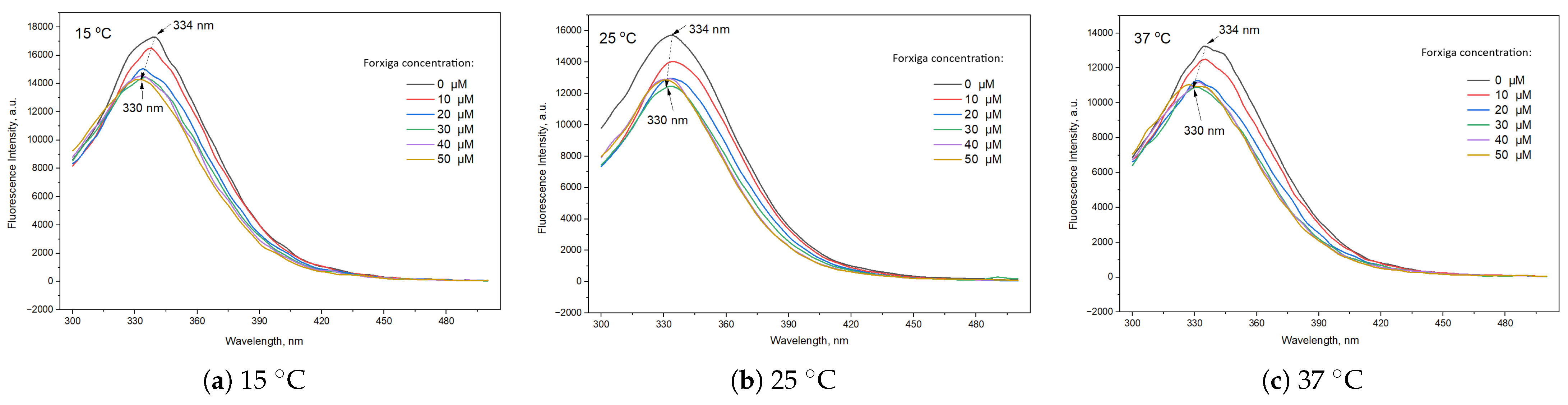
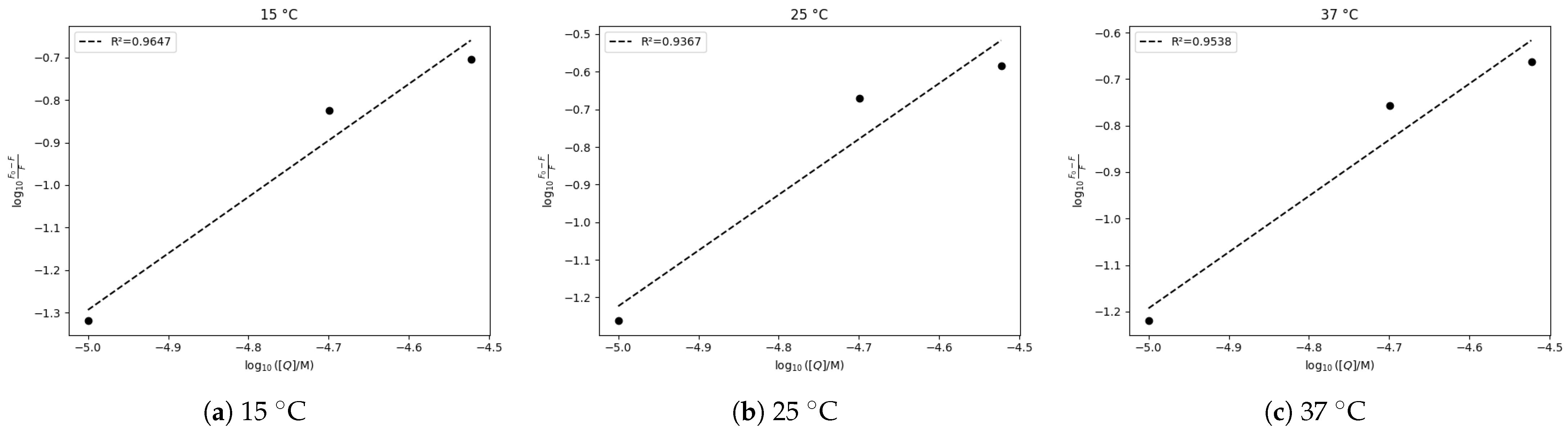
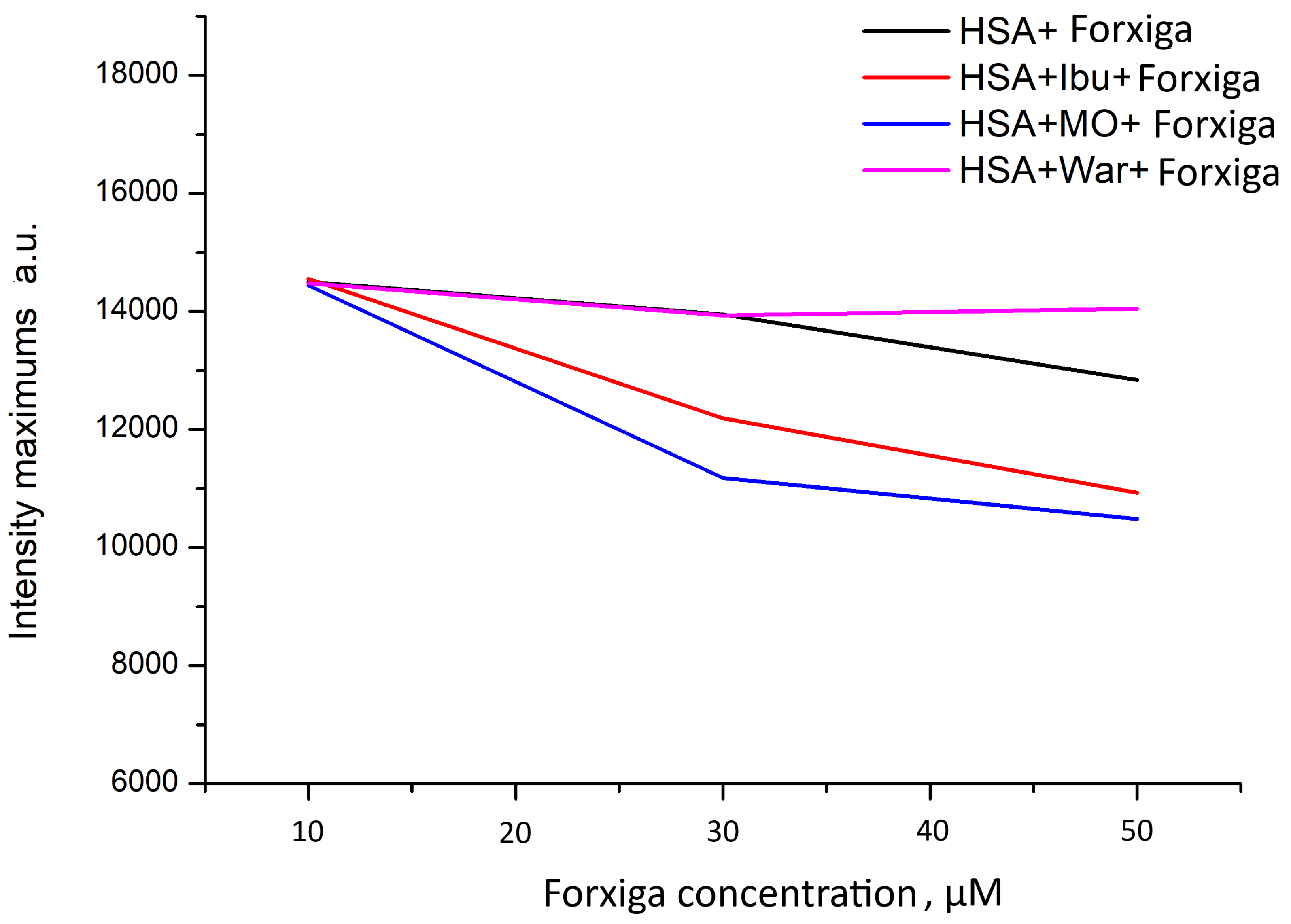
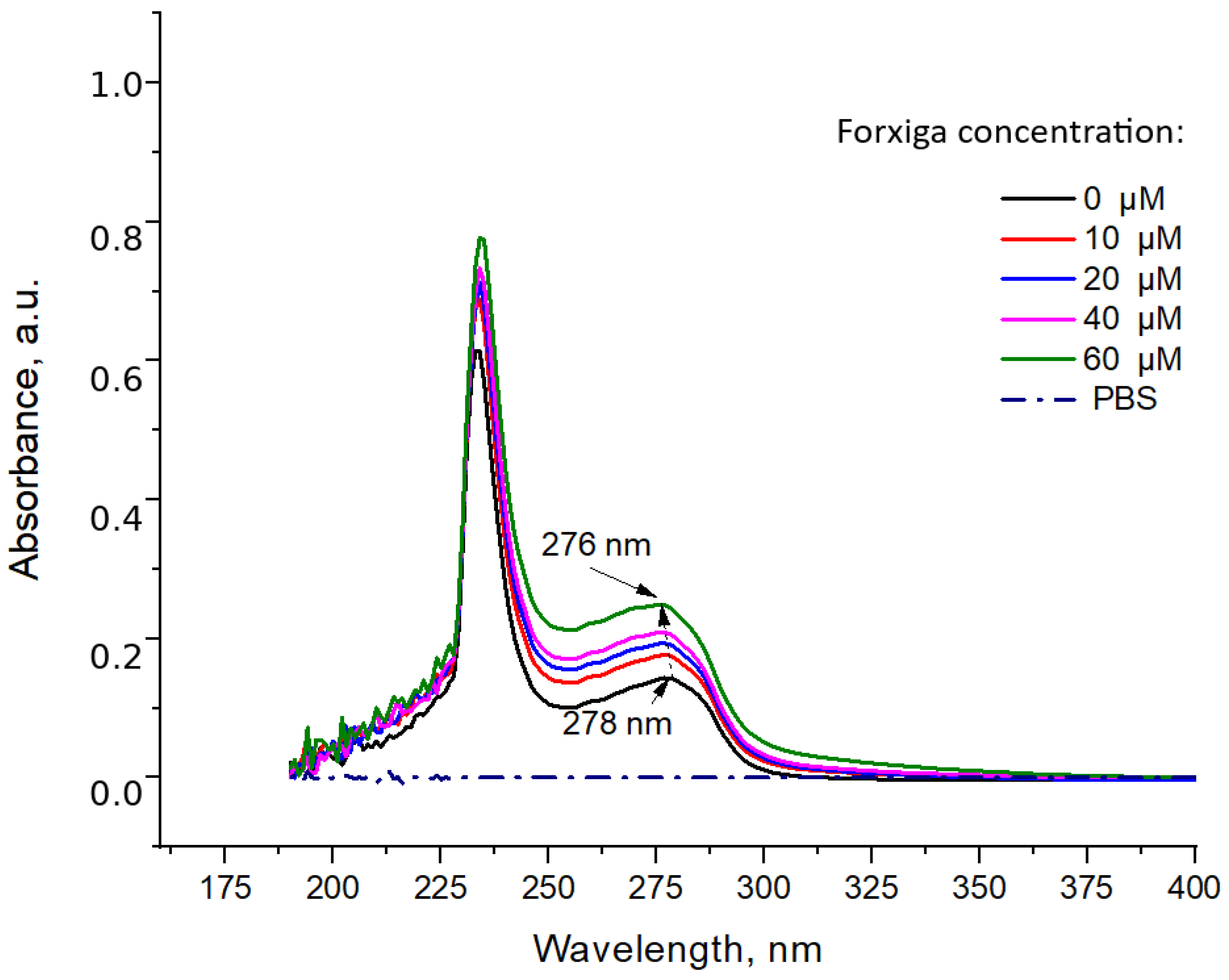
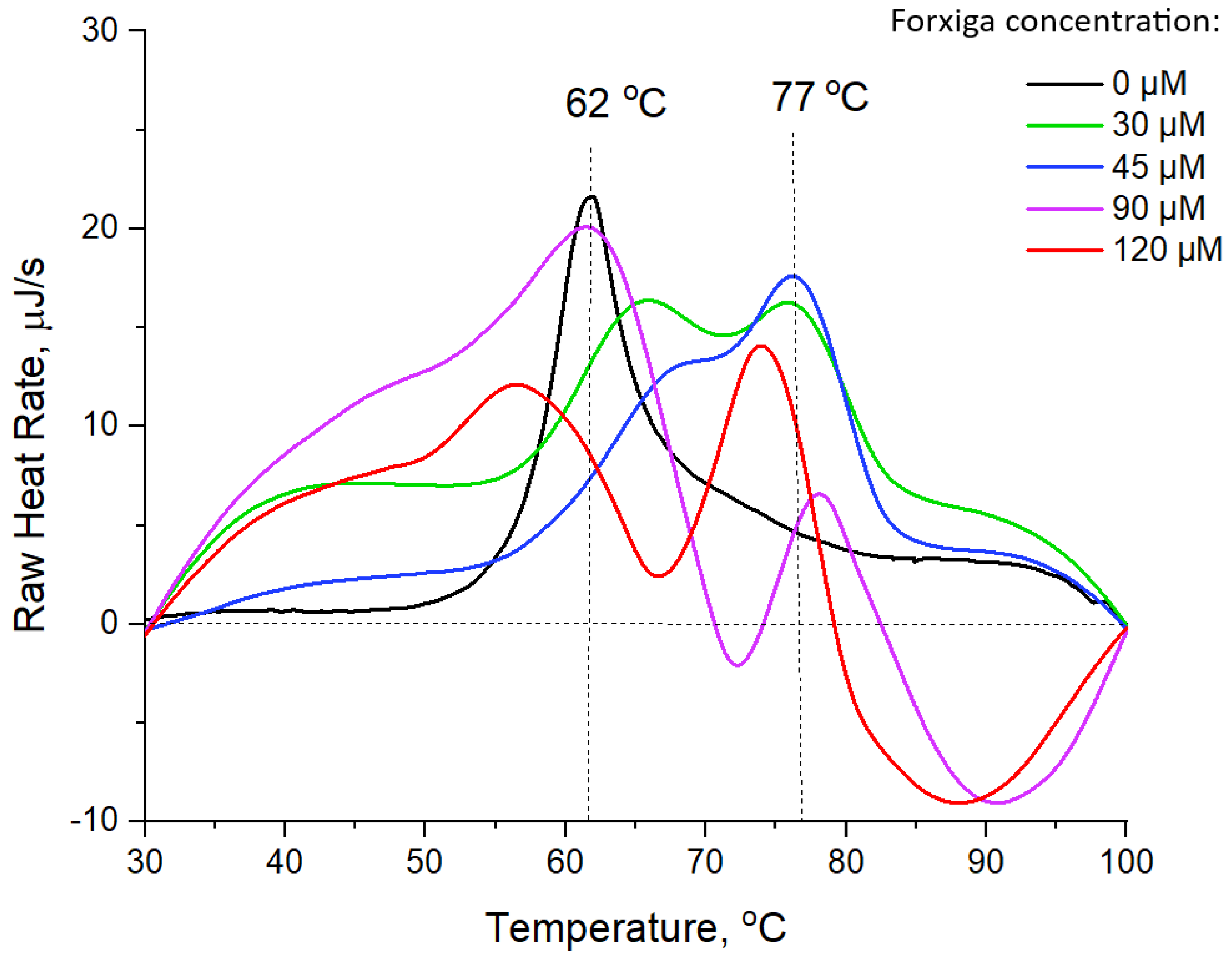
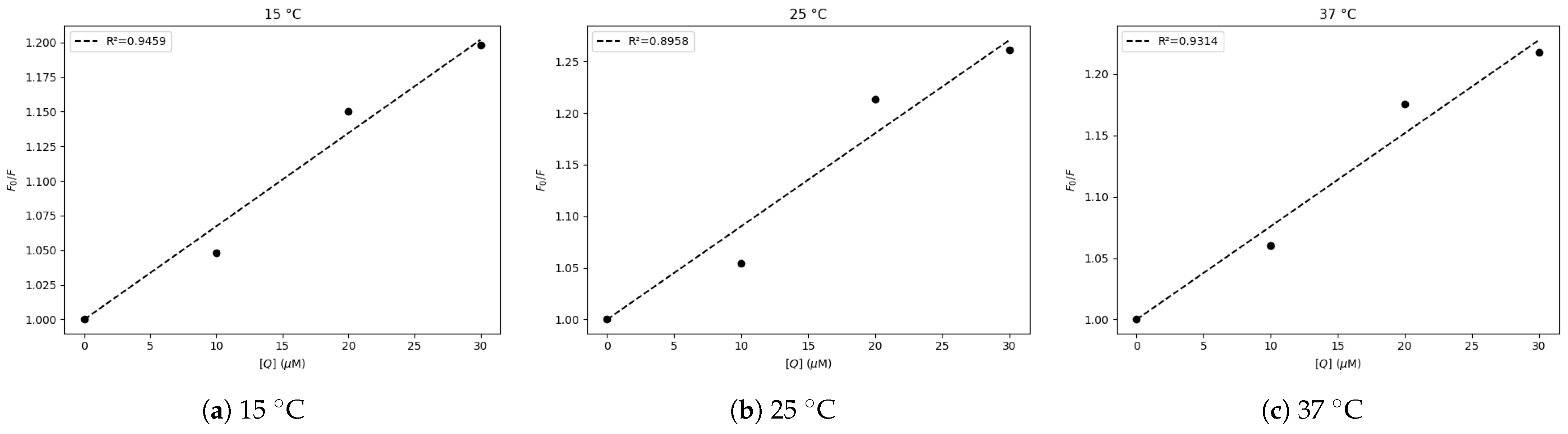
In this study, we investigated the interaction of a dapagliflozin-containing medicinal product (the commercial drug Forxiga®) with human serum albumin (HSA) at different temperatures using steady-state fluorescence spectroscopy, competitive displacement assays, UV–Vis absorption spectroscopy, and thermodynamic analysis. Increasing concentrations of Forxiga induced a gradual, concentration-dependent quenching of the intrinsic fluorescence of HSA (λex=284 nm; λemmax334–339 nm), indicating perturbation of the microenvironment surrounding Trp-214 located in subdomain IIA. Stern–Volmer analysis showed that the quenching constants were temperature-dependent. Meanwhile, the high apparent bimolecular quenching constants suggested a predominantly static quenching mechanism associated with ground-state complex formation. By performing a modified Scatchard-type double-logarithmic analysis, we identified a primary binding site, particularly at lower temperatures. Van’t Hoff analysis revealed negative enthalpy and entropy changes. This indicates that the interaction was spontaneous and exothermic, mainly driven by hydrogen bonding and van der Waals forces. The competitive displacement assays confirmed preferential binding at Sudlow’s site I, in proximity to Trp-214. Additionally, the UV–Vis spectroscopy, supported by ligand-induced perturbation of aromatic residues, confirmed the absence of significant inner-filter effects. Differential scanning calorimetry suggested partial thermal stabilization of HSA upon ligand binding. This finding is consistent with the formation of a stabilized protein–ligand complex. These results suggest that Forxiga forms a relatively stable ground-state complex with HSA, primarily at Sudlow’s site I, and that the interaction is influenced by temperature-dependent conformational changes in the protein.
Keywords: human serum albumin; Forxiga; dapagliflozin; fluorescence quenching; thermodynamic analysis; drug–protein interaction human serum albumin; Forxiga; dapagliflozin; fluorescence quenching; thermodynamic analysis; drug–protein interaction