Alpha-Fetoprotein as a Biomarker in Pregnancy: From Genetic Disorders to Obstetric Complications

Abstract
1. Introduction
2. Characteristics and Physiology of AFP
3. AFP Detection Methods: Clinical Requirements and Technological Advances
4. AFP During Pregnancy and Beyond
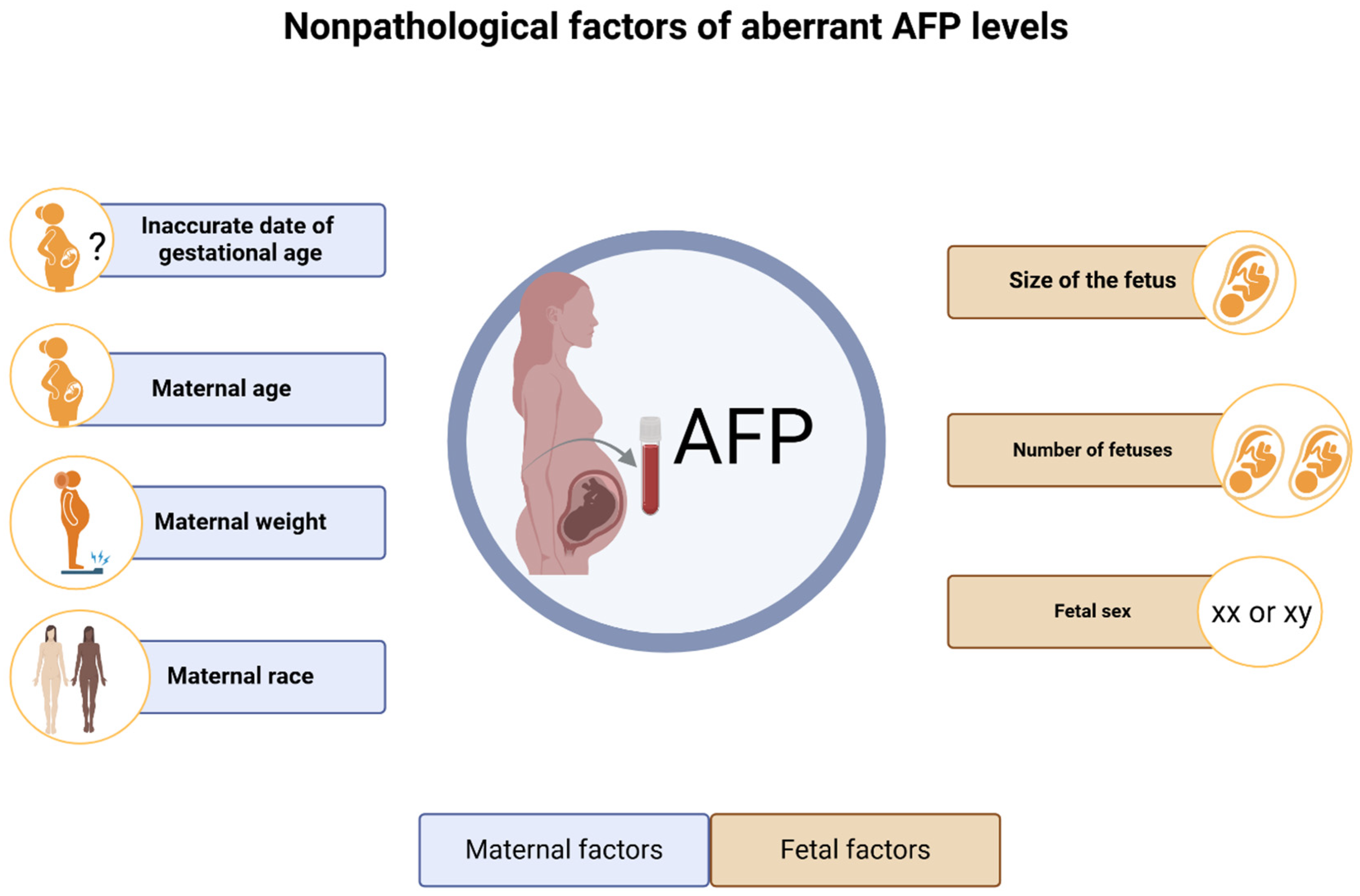
4.1. Nonpathological Factors Affecting the Levels of MS-AFP
4.2. Race, Ethnicity, and MS-AFP: Current Evidence and Controversy
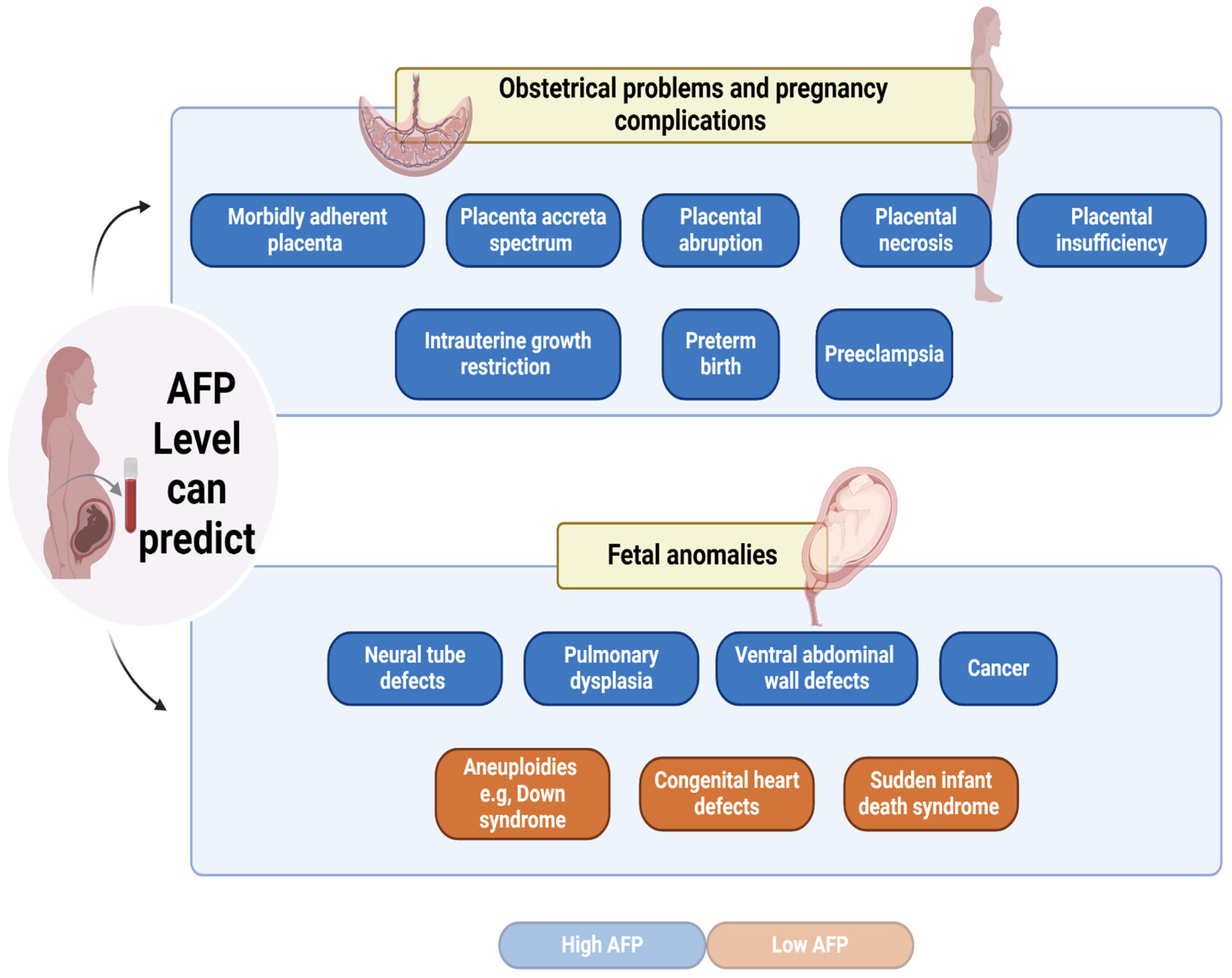
5. AFP as a Marker for Fetal Anomalies
6. AFP as a Marker for Obstetrical Problems and Pregnancy Complications
6.1. From Statistical Association to Clinical Action: When Does AFP Change Management
6.2. Elevated MS-AFP: Placental Complications and Adverse Pregnancy Outcomes
6.3. Elevated MS-AFP Levels and Preterm Birth
6.4. Elevated MS-AFP: Preeclampsia and Intrauterine Growth Restriction
6.5. AFP:PAPP-A Ratio and Placental Insufficiency

| Condition Category | Specific Condition | AFP Level/MoM Threshold | Clinical Significance and Key Notes/References |
|---|---|---|---|
| Neural Tube Defects | Anencephaly | Elevated >2.5 | High detection rate; cerebrospinal fluid (CSF) leakage from open cranial defect into amniotic fluid results in elevated MS-AFP levels [71,73] |
| Open spina bifida | Elevated >2.5 | Moderate sensitivity; CSF leakage through spinal defect [71,73] | |
| Closed spinal defects | Normal to mildly elevated | Possibly detected by AFP before visible on ultrasound [101] | |
| Chromosomal Abnormalities | Down syndrome | Decreased <0.7 | Low sensitivity alone; best used in combination with other markers [72,77,83] |
| Edwards syndrome | Decreased <0.7 | Sensitivity is lower than Down syndrome [72,77,83] | |
| Turner syndrome | Decreased <0.7 | Limited screening utility as an isolated marker [83] | |
| Congenital Heart Defects | Congenital heart defects (CHD) | Decreased <1.0 | AFP levels are significantly lower in mothers of neonates with CHD; the mechanism is unclear [85] |
| Sudden infant death syndrome (SIDS): future risk | Decreased <0.75 | Second-trimester low AFP associated with future SIDS risk [86] | |
| Structural Anomalies | Ventral abdominal wall defects (Gastroschisis/Omphalocele) | Elevated >2.5 | AFP leakage from exposed abdominal organs; ultrasound is the primary detection [72,77,102] |
| Intestinal atresias | Elevated >2.5 | Ultrasound and AFP for detection [72,77] | |
| Sacrococcygeal teratoma | Elevated >2.5 | Rare condition; AFP elevation depends on tumor characteristics [72,77] | |
| Placental Disorders | Morbidly adherent placenta (MAP) | Elevated >2.0–2.5 | Particularly in multiparous women with placenta previa [90,91] |
| Placenta previa | Elevated >2.0 | Overlapping presentation with MAP [91] | |
| Placental abruption | Elevated >2.0–2.5 | Low sensitivity but significant risk elevation [92] | |
| Placental necrosis | Elevated >5.0 | Rare condition [93] | |
| Hypertensive Disorders | Preeclampsia (all types) | Elevated >2.0 | Moderate sensitivity for overall preeclampsia [6,77] |
| Early-onset preeclampsia (<34 weeks) | Elevated >2.0 | Better prediction when combined with first-trimester markers [6,77,103] | |
| Fetal Growth | Intrauterine growth restriction (IUGR) | Elevated >2.0 | High specificity, low sensitivity; robust signal when present [99] |
| Preterm Birth | Spontaneous preterm birth | Elevated >2.0 | Especially when other markers (hCG, uE3) are also abnormal [95,96] |
| Very preterm birth (<32 weeks) | Elevated >2.5 | Potentially attributable to placental impairment or underlying problems inducing early labor [95,96] | |
| Placental Insufficiency | High AFP: PAPP-A ratio | Elevated AFP: PAPP-A ratio >10 (first trimester) | First-trimester ratio predictive of adverse placental outcomes [100] |
7. Advancements in AFP Screening and Combined Biomarker Approaches
8. Evolving Guidelines and the Current Clinical Context
9. AFP Screening in the NIPT Era
10. AFP Limitations, Future Research Directions, and Conclusion
Funding
Institutional Review Board Statement
Informed Consent Statement
Data Availability Statement
Conflicts of Interest
Abbreviations
| ACOG | American College of Obstetricians and Gynecologists |
| AFP | Alpha-fetoprotein |
| ALB | Albumin |
| cffDNA | cell-free fetal DNA |
| CHA | catalytic hairpin assembly |
| CHD | congenital heart defects |
| CLIA | chemiluminescent immunoassay |
| ELISA | enzyme-linked immunosorbent assay |
| FELISA | enhanced fluorescence enzyme-linked immunosorbent assay |
| FRET | Förster resonance energy transfer |
| GCTs | germ cell tumors |
| HB | hepatoblastoma |
| HCC | hepatocellular carcinoma |
| hCG | human chorionic gonadotrophin |
| IUGR | intrauterine growth restriction |
| MAP | morbidly adherent placenta |
| MMPs | modified magnetic microparticles |
| MoM | multiples of the median |
| MS-AFP | maternal serum alpha-fetoprotein |
| NIPT | non-invasive prenatal testing |
| NMM | N-methyl mesoporphyrin IX |
| NTDs | neural tube defects |
| PAPP-A | pregnancy-associated plasma protein A |
| PAS | pMAPlacenta accreta spectrum |
| PEC | photoelectrochemical |
| PP | placenta previa |
| QDs | quantum dots |
| SERS | surface-enhanced Raman spectroscopy |
| SIDS | sudden infant death syndrome |
| uE3 | unconjugated estriol |
References
- Bergstrand, C.G.; Czar, B. Demonstration of a new protein fraction in serum from the human fetus. Scand. J. Clin. Lab. Investig. 1956, 8, 174. [Google Scholar] [CrossRef]
- Mizejewski, G.J. Alpha-fetoprotein Structure and Function: Relevance to Isoforms, Epitopes, and Conformational Variants. Exp. Biol. Med. 2001, 226, 377–408. [Google Scholar] [CrossRef] [PubMed]
- Murray, M.J.; Nicholson, J.C. α-Fetoprotein. Arch. Dis. Child. Educ. Pract. Ed. 2011, 96, 141–147. [Google Scholar] [CrossRef] [PubMed]
- Cho, S.; Durfee, K.K.; Keel, B.A.; Parks, L.H. Perinatal outcomes in a prospective matched pair study of pregnancy and unexplained elevated or low AFP screening. J. Perinat. Med. 1997, 25, 476–483. [Google Scholar] [CrossRef] [PubMed]
- Killam, W.P.; Miller, R.C.; Seeds, J.W. Extremely high maternal serum alpha-fetoprotein levels at second-trimester screening. Obstet. Gynecol. 1991, 78, 257–261. [Google Scholar] [PubMed]
- Waller, D.K.; Lustig, L.S.; Cunningham, G.C.; Feuchtbaum, L.B.; Hook, E.B. The association between maternal serum alpha-fetoprotein and preterm birth, small for gestational age infants, preeclampsia, and placental complications. Obstet. Gynecol. 1996, 88, 816–822. [Google Scholar] [CrossRef]
- Cuckle, H. Biochemical screening for Down syndrome. Eur. J. Obstet. Gynecol. Reprod. Biol. 2000, 92, 97–101. [Google Scholar] [CrossRef]
- Rausch, D.N.; Lambert-Messerlian, G.M.; Canick, J.A. Participation in maternal serum screening for Down syndrome, neural tube defects, and trisomy 18 following screen-positive results in a previous pregnancy. West. J. Med. 2000, 173, 180–183. [Google Scholar] [CrossRef]
- Kiran, T.S.U.; Bethel, J.; Bhal, P.S. Correlation of abnormal second trimester maternal serum alpha-fetoprotein (MSAFP) levels and adverse pregnancy outcome. J. Obstet. Gynaecol. J. Inst. Obstet. Gynaecol. 2005, 25, 253–256. [Google Scholar] [CrossRef]
- Muller, F.; Dreux, S.; Sault, C.; Galland, A.; Puissant, H.; Couplet, G.; Lemay, C.; Larcher, M.-E.; Renom, G.; ABA Group. Very low alpha-fetoprotein in Down syndrome maternal serum screening. Prenat. Diagn. 2003, 23, 584–587. [Google Scholar] [CrossRef]
- Bloomer, J.R.; Waldmann, T.A.; McIntire, K.R.; Klatskin, G. Alpha-fetoprotein in noneoplastic hepatic disorders. JAMA 1975, 233, 38–41. [Google Scholar] [CrossRef]
- Schneider, D.T.; Calaminus, G.; Göbel, U. Diagnostic value of alpha 1-fetoprotein and beta-human chorionic gonadotropin in infancy and childhood. Pediatr. Hematol. Oncol. 2001, 18, 11–26. [Google Scholar] [CrossRef] [PubMed]
- Shen, W.-F.; Zhong, W.; Xu, F.; Kan, T.; Geng, L.; Xie, F.; Sui, C.-J.; Yang, J.-M. Clinicopathological and prognostic analysis of 429 patients with intrahepatic cholangiocarcinoma. World J. Gastroenterol. 2009, 15, 5976–5982. [Google Scholar] [CrossRef] [PubMed]
- Nakabayashi, H.; Hashimoto, T.; Miyao, Y.; Tjong, K.K.; Chan, J.; Tamaoki, T. A position-dependent silencer plays a major role in repressing alpha-fetoprotein expression in human hepatoma. Mol. Cell. Biol. 1991, 11, 5885–5893. [Google Scholar] [CrossRef] [PubMed]
- Mizejewski, G.J. The phylogeny of alpha-fetoprotein in vertebrates: Survey of biochemical and physiological data. Crit. Rev. Eukaryot. Gene Expr. 1995, 5, 281–316. [Google Scholar] [CrossRef]
- Long, L.; Davidson, J.N.; Spear, B.T. Striking differences between the mouse and the human α-fetoprotein enhancers. Genomics 2004, 83, 694–705. [Google Scholar] [CrossRef]
- Terentiev, A.A.; Moldogazieva, N.T. Alpha-fetoprotein: A renaissance. Tumour Biol. J. Int. Soc. Oncodev. Biol. Med. 2013, 34, 2075–2091. [Google Scholar] [CrossRef]
- Gitlin, D.; Perricelli, A.; Gitlin, G.M. Synthesis of -fetoprotein by liver, yolk sac, and gastrointestinal tract of the human conceptus. Cancer Res. 1972, 32, 979–982. [Google Scholar]
- Yachnin, S. The clinical significance of human alpha-fetoprotein. Ann. Clin. Lab. Sci. 1978, 8, 84–90. [Google Scholar]
- Luft, A.J.; Lorscheider, F.L. Structural analysis of human and bovine alpha-fetoprotein by electron microscopy, image processing, and circular dichroism. Biochemistry 1983, 22, 5978–5981. [Google Scholar] [CrossRef]
- Baker, M.E. Evolution of alpha-fetoprotein: Sequence comparisons among AFP species and with albumin species. Tumour Biol. J. Int. Soc. Oncodev. Biol. Med. 1988, 9, 123–136. [Google Scholar] [CrossRef] [PubMed]
- Debruyne, E.N.; Delanghe, J.R. Diagnosing and monitoring hepatocellular carcinoma with alpha-fetoprotein: New aspects and applications. Clin. Chim. Acta Int. J. Clin. Chem. 2008, 395, 19–26. [Google Scholar] [CrossRef]
- AlSalloom, A.A.M. An update of biochemical markers of hepatocellular carcinoma. Int. J. Health Sci. 2016, 10, 121–136. [Google Scholar] [CrossRef]
- Mizejewski, G.J. Review of the putative cell-surface receptors for alpha-fetoprotein: Identification of a candidate receptor protein family. Tumour Biol. J. Int. Soc. Oncodev. Biol. Med. 2011, 32, 241–258. [Google Scholar] [CrossRef]
- Uriel, J.; Bouillon, D.; Aussel, C.; Dupiers, M. Alpha-fetoprotein: The major high-affinity estrogen binder in rat uterine cytosols. Proc. Natl. Acad. Sci. USA 1976, 73, 1452–1456. [Google Scholar] [CrossRef]
- Permyakov, S.E.; Oberg, K.A.; Cherskaya, A.M.; Shavlovsky, M.M.; Permyakov, E.A.; Uversky, V.N. Human alpha-fetoprotein as a Zn2+-binding protein. Tight cation binding is not accompanied by global changes in protein structure and stability. Biochim. Biophys. Acta 2002, 1586, 1–10. [Google Scholar] [CrossRef]
- Munson, P.V.; Adamik, J.; Butterfield, L.H. Immunomodulatory impact of α-fetoprotein. Trends Immunol. 2022, 43, 438–448. [Google Scholar] [CrossRef] [PubMed]
- Nishizono, I.; Iida, S.; Suzuki, N.; Kawada, H.; Murakami, H.; Ashihara, Y.; Okada, M. Rapid and sensitive chemiluminescent enzyme immunoassay for measuring tumor markers. Clin. Chem. 1991, 37, 1639–1644. [Google Scholar] [CrossRef]
- Hanif, H.; Ali, M.J.; Susheela, A.T.; Khan, I.W.; Luna-Cuadros, M.A.; Khan, M.M.; Lau, D.T.-Y. Update on the applications and limitations of alpha-fetoprotein for hepatocellular carcinoma. World J. Gastroenterol. 2022, 28, 216–229. [Google Scholar] [CrossRef]
- Zhou, L.; Ji, F.; Zhang, T.; Wang, F.; Li, Y.; Yu, Z.; Jin, X.; Ruan, B. An fluorescent aptasensor for sensitive detection of tumor marker based on the FRET of a sandwich structured QDs-AFP-AuNPs. Talanta 2019, 197, 444–450. [Google Scholar] [CrossRef]
- Chen, P.; Jiang, P.; Lin, Q.; Zeng, X.; Liu, T.; Li, M.; Yuan, Y.; Song, S.; Zhang, J.; Huang, J.; et al. Simultaneous Homogeneous Fluorescence Detection of AFP and GPC3 in Hepatocellular Carcinoma Clinical Samples Assisted by Enzyme-Free Catalytic Hairpin Assembly. ACS Appl. Mater. Interfaces 2022, 14, 28697–28705. [Google Scholar] [CrossRef]
- Tian, S.; Zhang, Z.; Chen, J.; Du, M.; Li, Z.; Yang, H.; Ji, X.; He, Z. Digital analysis with droplet-based microfluidic for the ultrasensitive detection of β-gal and AFP. Talanta 2018, 186, 24–28. [Google Scholar] [CrossRef]
- Tian, S.; Yang, H.; Zhang, Z.; Du, M.; Mao, G.; Ji, X.; He, Z. A digital quantification method for the detection of biomarkers on a microfluidic array chip. Sens. Actuators B Chem. 2019, 298, 126851. [Google Scholar] [CrossRef]
- Yang, S.; Zhang, F.; Wang, Z.; Liang, Q. A graphene oxide-based label-free electrochemical aptasensor for the detection of alpha-fetoprotein. Biosens. Bioelectron. 2018, 112, 186–192. [Google Scholar] [CrossRef] [PubMed]
- Wang, Q.; Hu, Y.; Jiang, N.; Wang, J.; Yu, M.; Zhuang, X. Preparation of Aptamer Responsive DNA Functionalized Hydrogels for the Sensitive Detection of α-Fetoprotein Using SERS Method. Bioconjug. Chem. 2020, 31, 813–820. [Google Scholar] [CrossRef]
- Ma, H.; Sun, X.; Chen, L.; Cheng, W.; Han, X.X.; Zhao, B.; He, C. Multiplex Immunochips for High-Accuracy Detection of AFP-L3% Based on Surface-Enhanced Raman Scattering: Implications for Early Liver Cancer Diagnosis. Anal. Chem. 2017, 89, 8877–8883. [Google Scholar] [CrossRef]
- Li, X.; Pan, X.; Lu, J.; Zhou, Y.; Gong, J. Dual-modal visual/photoelectrochemical all-in-one bioassay for rapid detection of AFP using 3D printed microreactor device. Biosens. Bioelectron. 2020, 158, 112158. [Google Scholar] [CrossRef]
- Xu, R.; Jiang, Y.; Xia, L.; Zhang, T.; Xu, L.; Zhang, S.; Liu, D.; Song, H. A sensitive photoelectrochemical biosensor for AFP detection based on ZnO inverse opal electrodes with signal amplification of CdS-QDs. Biosens. Bioelectron. 2015, 74, 411–417. [Google Scholar] [CrossRef]
- Liu, Y.; Wang, H.; Huang, J.; Yang, J.; Liu, B.; Yang, P. Microchip-based ELISA strategy for the detection of low-level disease biomarker in serum. Anal. Chim. Acta 2009, 650, 77–82. [Google Scholar] [CrossRef] [PubMed]
- Wu, Y.; Guo, W.; Peng, W.; Zhao, Q.; Piao, J.; Zhang, B.; Wu, X.; Wang, H.; Gong, X.; Chang, J. Enhanced Fluorescence ELISA Based on HAT Triggering Fluorescence “Turn-on” with Enzyme–Antibody Dual Labeled AuNP Probes for Ultrasensitive Detection of AFP and HBsAg. ACS Appl. Mater. Interfaces 2017, 9, 9369–9377. [Google Scholar] [CrossRef] [PubMed]
- Liu, J.; Geng, Q.; Geng, Z. A Route to the Colorimetric Detection of Alpha-Fetoprotein Based on a Smartphone. Micromachines 2024, 15, 1116. [Google Scholar] [CrossRef]
- Halbrecht, I.; Klibanski, C. Identification of a new normal embryonic haemoglobin. Nature 1956, 178, 794–795. [Google Scholar] [CrossRef]
- Habib, Z.A. Maternal serum alpha-feto-protein: Its value in antenatal diagnosis of genetic disease and in obstetrical-gynaecological care. Acta Obstet. Gynecol. Scand. Suppl. 1977, 61, 1–92. [Google Scholar] [CrossRef]
- Kanai, K.; Endo, Y.; Oda, T.; Kaneko, Y. Synthesis of alpha-fetoprotein by rat ascites hepatoma cells. Ann. N. Y. Acad. Sci. 1975, 259, 29–36. [Google Scholar] [CrossRef]
- Leffert, H.L.; Sell, S. Alpha1-Fetoprotein Biosynthesis During the Growth Cycle of Differentiated Fetal Rat Hepatocytes in Primary Monolayer Culture. J. Cell Biol. 1974, 61, 823–829. [Google Scholar] [CrossRef] [PubMed]
- Tsukada, Y.; Hirai, H. Alpha-Fetoprotein and albumin synthesis during the cell cycle. Ann. N. Y. Acad. Sci. 1975, 259, 37–44. [Google Scholar] [CrossRef]
- Kim, C.K.; Yang, Y.H. Alpha-fetoprotein values in maternal serum and amniotic fluid for prenatal screening of genetic disorders. Yonsei Med. J. 1987, 28, 218–227. [Google Scholar] [CrossRef]
- Gitlin, D.; Boesman, M. Serum alpha-fetoprotein, albumin, and gamma-G-globulin in the human conceptus. J. Clin. Investig. 1966, 45, 1826–1838. [Google Scholar] [CrossRef] [PubMed]
- Masseyeff, R.; Gilli, J.; Krebs, B.; Calluaud, A.; Bonet, C. Evolution of alpha-fetoprotein serum levels throughout life in humans and rats, and during pregnancy in the rat. Ann. N. Y. Acad. Sci. 1975, 259, 17–28. [Google Scholar] [CrossRef]
- Ball, D.; Rose, E.; Alpert, E. Alpha-fetoprotein levels in normal adults. Am. J. Med. Sci. 1992, 303, 157–159. [Google Scholar] [CrossRef] [PubMed]
- Johansson, S.G.; Kjessler, B.; Sherman, M.S.; Wahlström, J. Alpha-fetoprotein (AFP) levels in maternal serum and amniotic fluid in singleton pregnant women in their 10th-25th week post last menstrual period. Acta Obstet. Gynecol. Scand. Suppl. 1977, 69, 20–24. [Google Scholar] [CrossRef]
- Mizejewski, G.J. Levels of alpha-fetoprotein during pregnancy and early infancy in normal and disease states. Obstet. Gynecol. Surv. 2003, 58, 804–826. [Google Scholar] [CrossRef] [PubMed]
- Entezami, M.; Runkel, S.; Sarioglu, N.; Hese, S.; Weitzel, H.K. Diagnostic dilemma with elevated level of α-fetoprotein in an undiagnosed twin pregnancy with a small discordant holoacardius acephalus. Am. J. Obstet. Gynecol. 1997, 177, 466–468. [Google Scholar] [CrossRef]
- Crandall, B.F.; Chua, C. Risks for fetal abnormalities after very and moderately elevated AF-AFPs. Prenat. Diagn. 1997, 17, 837–841. [Google Scholar] [CrossRef]
- Lei, U.; Wohlfahrt, J.; Christens, P.; Westergaard, T.; Lambe, M.; Nørgaard-Pedersen, B.; Melbye, M. Reproductive factors and extreme levels of maternal serum alpha-fetoprotein: A population-based study. Acta Obstet. Gynecol. Scand. 2004, 83, 1147–1151. [Google Scholar] [CrossRef]
- Szabó, M.; Veress, L.; Münnich, Á.; Papp, Z. Maternal Age-Dependent and Sex-Related Changes of Gestational Serum Alpha-Fetoprotein. Fetal Diagn. Ther. 2009, 10, 368–372. [Google Scholar] [CrossRef]
- Haddow, J.E.; Kloza, E.M.; Knight, G.J.; Smith, D.E. Relation between maternal weight and serum alpha-fetoprotein concentration during the second trimester. Clin. Chem. 1981, 27, 133–134. [Google Scholar] [CrossRef]
- Crandall, B.F.; Lebherz, T.B.; Schroth, P.C.; Matsumoto, M. Alpha-fetoprotein concentrations in maternal serum: Relation to race and body weight. Clin. Chem. 1983, 29, 531–533. [Google Scholar] [CrossRef]
- Baumgarten, A.; Robinson, J. Prospective study of an inverse relationship between maternal glycosylated hemoglobin and serum α-fetoprotein concentrations in pregnant women with diabetes. Am. J. Obstet. Gynecol. 1988, 159, 77–81. [Google Scholar] [CrossRef]
- Benn, P.A.; Clive, J.M.; Collins, R. Medians for second-trimester maternal serum alpha-fetoprotein, human chorionic gonadotropin, and unconjugated estriol; differences between races or ethnic groups. Clin. Chem. 1997, 43, 333–337. [Google Scholar] [CrossRef] [PubMed]
- Butler, W.; Von Reusner, J.; Ramesh, R.; Herman, D.S. A-321 Rethinking the Role of Race in Prenatal AFP Screening for Open Neural Tube Defects. Clin. Chem. 2024, 70, hvae106.316. [Google Scholar] [CrossRef]
- Messerlian, G.; Strickland, S.W.; Willbur, J.; Vaughan, C.; Koenig, S.; Wright, T.; Palomaki, G.E. Use of Maternal Race and Weight Provides Equitable Performance in Serum Screening for Open Neural Tube Defects. Clin. Chem. 2024, 70, 948–956. [Google Scholar] [CrossRef]
- Pierre, C.C.; Greene, D.N.; Delaney, S.; Lockwood, C.M.; Peck Palmer, O.M. Reconsidering the use of race adjustments in maternal serum screening. Am. J. Obstet. Gynecol. 2023, 229, 522–525. [Google Scholar] [CrossRef]
- Burns, R.N.; Kolarova, T.; Katz, R.; Ma, K.; Delaney, S. Reconsidering Race Adjustment in Prenatal Alpha-Fetoprotein Screening. Obstet. Gynecol. 2023, 141, 438–444, Erratum in Obstet. Gynecol. 2023, 141, 1229. [Google Scholar] [CrossRef] [PubMed]
- Cerdeña, J.P.; Plaisime, M.V.; Tsai, J. From race-based to race-conscious medicine: How anti-racist uprisings call us to act. Lancet Lond. Engl. 2020, 396, 1125–1128. [Google Scholar] [CrossRef] [PubMed]
- Camper, S.A.; Tilghman, S.M. Postnatal repression of the alpha-fetoprotein gene is enhancer independent. Genes Dev. 1989, 3, 537–546. [Google Scholar] [CrossRef] [PubMed]
- Racusin, D.A.; Villarreal, S.; Antony, K.M.; Harris, R.A.; Mastrobattista, J.; Lee, W.; Shamshirsaz, A.A.; Belfort, M.; Aagaard, K.M. Role of Maternal Serum Alpha-Fetoprotein and Ultrasonography in Contemporary Detection of Spina Bifida. Am. J. Perinatol. 2015, 32, 1287–1291. [Google Scholar] [CrossRef]
- Driscoll, D.A.; Gross, S.J. Screening for fetal aneuploidy and neural tube defects. Genet. Med. 2009, 11, 818–821. [Google Scholar] [CrossRef] [PubMed]
- Muller, F. Prenatal biochemical screening for neural tube defects. Childs Nerv. Syst. 2003, 19, 433–435. [Google Scholar] [CrossRef]
- Głowska-Ciemny, J.; Szmyt, K.; Kuszerska, A.; Rzepka, R.; von Kaisenberg, C.; Kocyłowski, R. Fetal and Placental Causes of Elevated Serum Alpha-Fetoprotein Levels in Pregnant Women. J. Clin. Med. 2024, 13, 466. [Google Scholar] [CrossRef]
- Bradley, L.A.; Palomaki, G.E.; McDowell, G.A. Technical standards and guidelines: Prenatal screening for open neural tube defects: This new section on “Prenatal Screening for Open Neural Tube Defects,” together with the new section on “Prenatal Screening for Down Syndrome,” replaces the previous Section H of the American College of Medical Genetics Standards and Guidelines for Clinical Genetics Laboratories. Genet. Med. 2005, 7, 355–369. [Google Scholar] [CrossRef]
- Glick, P.L.; Pohlson, E.C.; Resta, R.; Payne, C.; Mosbarger, H.; Luthy, D.A.; Hickok, D.E.; Schaller, R.T. Maternal serum alpha-fetoprotein is a marker for fetal anomalies in pediatric surgery. J. Pediatr. Surg. 1988, 23, 16–20. [Google Scholar] [CrossRef]
- Dong, N.; Gu, H.; Liu, D.; Wei, X.; Ma, W.; Ma, L.; Liu, Y.; Wang, Y.; Jia, S.; Huang, J.; et al. Complement factors and alpha-fetoprotein as biomarkers for noninvasive prenatal diagnosis of neural tube defects. Ann. N. Y. Acad. Sci. 2020, 1478, 75–91. [Google Scholar] [CrossRef]
- Wald, N.J.; Cuckle, H.S. Amniotic-fluid alpha-fetoprotein measurement in antenatal diagnosis of anencephaly and open spina bifida in early pregnancy. Second report of the U.K. Collaborative Study on Alpha-fetoprotein in Relation to Neural-tube Defects. Lancet 1979, 2, 651–662. [Google Scholar]
- Kjessler, B.; Johansson, S.G.; Sherman, M.; Gustavson, K.H.; Hultquist, G. Alpha-fetoprotein in antenatal diagnosis of congenital nephrosis. Lancet Lond. Engl. 1975, 1, 432–433. [Google Scholar] [CrossRef]
- Elrahim, M.M.A.; Ch, M.B.B.; Mohamed, I. Alpha-feto protein in obstetrics. Sohag Med. J. 2020, 24, 187–191. [Google Scholar] [CrossRef]
- Mizejewski, G.J. Biological roles of alpha-fetoprotein during pregnancy and perinatal development. Exp. Biol. Med. 2004, 229, 439–463. [Google Scholar] [CrossRef] [PubMed]
- Houwelingen, L.V.; Sandoval, J.A.; Houwelingen, L.V.; Sandoval, J.A. Alpha-Fetoprotein in Malignant Pediatric Conditions. In Proof and Concepts in Rapid Diagnostic Tests and Technologies; IntechOpen: London, UK, 2016. [Google Scholar] [CrossRef]
- Rebischung, C.; Pautier, P.; Morice, P.; Lhomme, C.; Duvillard, P. α-Fetoprotein Production by a Malignant Mixed Müllerian Tumor of the Ovary. Gynecol. Oncol. 2000, 77, 203–205. [Google Scholar] [CrossRef] [PubMed]
- Petit, P.; Bossens, M.; Thomas, D.; Moerman, P.; Fryns, J.P.; van den Berghe, H. Type III congenital cystic adenomatoid malformation of the lung: Another cause of elevated alpha fetoprotein? Clin. Genet. 1987, 32, 172–174. [Google Scholar] [CrossRef]
- Matonóg, A.; Drosdzol-Cop, A. Alpha-fetoprotein level in fetuses, infants, and children with ovarian masses: A literature review. Front. Endocrinol. 2024, 15, 1307619. [Google Scholar] [CrossRef]
- Crocoli, A.; Madafferi, S.; Jenkner, A.; Zaccara, A.; Inserra, A. Elevated serum alpha-fetoprotein in Wilms tumor may follow the same pattern of other fetal neoplasms after treatment: Evidence from three cases. Pediatr. Surg. Int. 2008, 24, 499–502. [Google Scholar] [CrossRef]
- Benn, P.A.; Ying, J. Preliminary estimate for the second-trimester maternal serum screening detection rate of the 45,X karyotype using alpha-fetoprotein, unconjugated estriol and human chorionic gonadotropin. J. Matern.-Fetal Neonatal Med. 2004, 15, 160–166. [Google Scholar] [CrossRef] [PubMed]
- Merkatz, I.R.; Nitowsky, H.M.; Macri, J.N.; Johnson, W.E. An association between low maternal serum alpha-fetoprotein and fetal chromosomal abnormalities. Am. J. Obstet. Gynecol. 1984, 148, 886–894. [Google Scholar] [CrossRef]
- Aghaamoo, S.; Lotfi, M.; Mirmohammadkhani, M.; Hemmatian, M.N. Evaluation of Second-Trimester Maternal Serum AFP Value in the Detection of Congenital Heart Defects. Middle East J. Rehabil. Health Stud. 2021, 8, e111917. [Google Scholar] [CrossRef]
- Smith, G.C.S.; Wood, A.M.; Pell, J.P.; White, I.R.; Crossley, J.A.; Dobbie, R. Second-trimester maternal serum levels of alpha-fetoprotein and the subsequent risk of sudden infant death syndrome. N. Engl. J. Med. 2004, 351, 978–986. [Google Scholar] [CrossRef]
- Duric, K.; Skrablin, S.; Lesin, J.; Kalafatic, D.; Kuvacic, I.; Suchanek, E. Second trimester total human chorionic gonadotropin, alpha-fetoprotein and unconjugated estriol in predicting pregnancy complications other than fetal aneuploidy. Eur. J. Obstet. Gynecol. Reprod. Biol. 2003, 110, 12–15. [Google Scholar] [CrossRef]
- Gagnon, A.; Wilson, R.D.; Audibert, F.; Allen, V.M.; Blight, C.; Brock, J.-A.; Désilets, V.A.; Gagnon, A.; Johnson, J.-A.; Langlois, S.; et al. RETIRED: Obstetrical Complications Associated with Abnormal Maternal Serum Markers Analytes. J. Obstet. Gynaecol. Can. 2008, 30, 918–932. [Google Scholar] [CrossRef]
- Pejtsik, B.; Rappai, G.; Pintér, J.; Kelemen, A. Correlation between elevated maternal serum alpha-fetoprotein, certain pregnancy complications and fetal death. Orv. Hetil. 1992, 133, 2621–2624. [Google Scholar] [PubMed]
- Lyell, D.J.; Faucett, A.M.; Baer, R.J.; Blumenfeld, Y.J.; Druzin, M.L.; El-Sayed, Y.Y.; Shaw, G.M.; Currier, R.J.; Jelliffe-Pawlowski, L.L. Maternal serum markers, characteristics and morbidly adherent placenta in women with previa. J. Perinatol. 2015, 35, 570–574. [Google Scholar] [CrossRef] [PubMed]
- Hassan, S.S.; Ghalib, A.K. Maternal Serum Alpha Feto Protein Level May Predict Morbidly Adherent Placenta in Women with Placenta Previa. Iraqi J. Med. Sci. 2022, 20, 278–285. [Google Scholar] [CrossRef]
- Ananth, C.V.; Wapner, R.J.; Ananth, S.; D’Alton, M.E.; Vintzileos, A.M. First-Trimester and Second-Trimester Maternal Serum Biomarkers as Predictors of Placental Abruption. Obstet. Gynecol. 2017, 129, 465–472. [Google Scholar] [CrossRef]
- Yu, M.-Y.; Xi, L.; Zhang, J.-X.; Zhang, S.-C. Possible connection between elevated serum α-fetoprotein and placental necrosis during pregnancy: A case report and review of literature. World J. Clin. Cases 2018, 6, 675–678. [Google Scholar] [CrossRef]
- Bartkute, K.; Balsyte, D.; Wisser, J.; Kurmanavicius, J. Pregnancy outcomes regarding maternal serum AFP value in second trimester screening. J. Perinat. Med. 2017, 45, 817–820. [Google Scholar] [CrossRef]
- Zahra, S.; Sampurna, M.T.A.; Aditiawarman. The role of maternal serum alpha-fetoprotein in preterm birth: A literature review. World J. Adv. Res. Rev. 2023, 18, 738–741. [Google Scholar] [CrossRef]
- Yuan, W.; Chen, L.; Bernal, A.L. Is elevated maternal serum alpha-fetoprotein in the second trimester of pregnancy associated with increased preterm birth risk?: A systematic review and meta-analysis. Eur. J. Obstet. Gynecol. Reprod. Biol. 2009, 145, 57–64. [Google Scholar] [CrossRef]
- Duan, H.; Zhao, G.; Xu, B.; Hu, S.; Li, J. Maternal Serum PLGF, PAPPA, β-hCG and AFP Levels in Early Second Trimester as Predictors of Preeclampsia. Clin. Lab. 2017, 63, 921–925. [Google Scholar] [CrossRef] [PubMed]
- Kesavan, K.; Devaskar, S.U. Intrauterine Growth Restriction: Postnatal Monitoring and Outcomes. Pediatr. Clin. N. Am. 2019, 66, 403–423. [Google Scholar] [CrossRef] [PubMed]
- Odibo, A.O.; Sehdev, H.M.; Stamilio, D.M.; Macones, G.A. Evaluating the Thresholds of Abnormal Second Trimester Multiple Marker Screening Tests Associated with Intra-Uterine Growth Restriction. Am. J. Perinatol. 2006, 23, 363–368. [Google Scholar] [CrossRef]
- Hughes, A.E.; Sovio, U.; Gaccioli, F.; Cook, E.; Charnock-Jones, D.S.; Smith, G.C.S. The association between first trimester AFP to PAPP-A ratio and placentally-related adverse pregnancy outcome. Placenta 2019, 81, 25–31. [Google Scholar] [CrossRef]
- Bedei, I.; Krispin, E.; Sanz Cortes, M.; Lombaard, H.; Zemet, R.; Whitehead, W.E.; Belfort, M.A.; Huisman, T.A.G.M. Prenatal diagnosis and postnatal outcome of closed spinal dysraphism. Prenat. Diagn. 2024, 44, 499–510. [Google Scholar] [CrossRef] [PubMed]
- Boyd, P.A.; Devigan, C.; Khoshnood, B.; Loane, M.; Garne, E.; Dolk, H.; EUROCAT Working Group. Survey of prenatal screening policies in Europe for structural malformations and chromosome anomalies, and their impact on detection and termination rates for neural tube defects and Down’s syndrome. BJOG Int. J. Obstet. Gynaecol. 2008, 115, 689–696. [Google Scholar] [CrossRef]
- Lu, H.; Huang, Z.; Lin, L.; Ding, X. Value Analysis of Four-Dimensional Color Ultrasound Combined with Maternal Serological Index in Prenatal Screening for Fetal Anomalies. Altern. Ther. Health Med. 2024, 30, 248–253. [Google Scholar]
- Edwards, L.; Hui, L. First and second trimester screening for fetal structural anomalies. Semin. Fetal. Neonatal Med. 2018, 23, 102–111. [Google Scholar] [CrossRef]
- Canick, J.A.; MacRae, A.R. Second Trimester Serum Markers. Semin. Perinatol. 2005, 29, 203–208. [Google Scholar] [CrossRef] [PubMed]
- Yue, C.-Y.; Zhang, C.-Y.; Ying, C.-M. Serum markers in quadruple screening associated with adverse pregnancy outcomes: A case–control study in China. Clin. Chim. Acta 2020, 511, 278–281. [Google Scholar] [CrossRef]
- Nevalainen, J.; Korpimaki, T.; Kouru, H.; Sairanen, M.; Ryynanen, M. Performance of first trimester biochemical markers and mean arterial pressure in prediction of early-onset pre-eclampsia. Metab. Clin. Exp. 2017, 75, 6–15. [Google Scholar] [CrossRef] [PubMed]
- Ozdemir, S.; Sahin, O.; Acar, Z.; Demir, G.Z.; Ermin, E.; Aydin, A. Prediction of Pregnancy Complications with Maternal Biochemical Markers Used in Down Syndrome Screening. Cureus 2022, 14, e23115. [Google Scholar] [CrossRef]
- Zhang, T.; Wang, S. Potential Serum Biomarkers in Prenatal Diagnosis of Placenta Accreta Spectrum. Front. Med. 2022, 9, 860186. [Google Scholar] [CrossRef]
- Androutsopoulos, G.; Gkogkos, P.; Decavalas, G. Mid-Trimester Maternal Serum hCG and Alpha Fetal Protein Levels: Clinical Significance and Prediction of Adverse Pregnancy Outcome. Int. J. Endocrinol. Metab. 2013, 11, 102–106. [Google Scholar] [CrossRef]
- Yaron, Y.; Cherry, M.; Kramer, R.L.; O’Brien, J.E.; Hallak, M.; Johnson, M.P.; Evans, M.I. Second-trimester maternal serum marker screening: Maternal serum α-fetoprotein, β-human chorionic gonadotropin, estriol, and their various combinations as predictors of pregnancy outcome. Am. J. Obstet. Gynecol. 1999, 181, 968–974. [Google Scholar] [CrossRef] [PubMed]
- Alizadeh-Dibazari, Z.; Alizadeh-Ghodsi, Z.; Fathnezhad-kazemi, A. Association Between Serum Markers Used in the Routine Prenatal Screening with Pregnancy Outcomes: A Cohort Study. J. Obstet. Gynaecol. India 2022, 72, 6–18. [Google Scholar] [CrossRef]
- Sriraam, N.; Chinta, B.; Suresh, S.; Sudharshan, S. Ultrasound imaging based recognition of prenatal anomalies: A systematic clinical engineering review. Prog. Biomed. Eng. 2024, 6, 023002. [Google Scholar] [CrossRef] [PubMed]
- Lo, Y.M.; Corbetta, N.; Chamberlain, P.F.; Rai, V.; Sargent, I.L.; Redman, C.W.; Wainscoat, J.S. Presence of fetal DNA in maternal plasma and serum. Lancet 1997, 350, 485–487. [Google Scholar] [CrossRef]
- Alberry, M.S.; Aziz, E.; Ahmed, S.R.; Abdel-Fattah, S. Non invasive prenatal testing (NIPT) for common aneuploidies and beyond. Eur. J. Obstet. Gynecol. Reprod. Biol. 2021, 258, 424–429. [Google Scholar] [CrossRef]
- Cheschier, N.; ACOG Committee on Practice Bulletins-Obstetrics. ACOG practice bulletin. Neural tube defects. Number 44, July 2003. (Replaces committee opinion number 252, March 2001). Int. J. Gynaecol. Obstet. Off. Organ Int. Fed. Gynaecol. Obstet. 2003, 83, 123–133. [Google Scholar] [CrossRef]
- Practice Bulletin No. 187: Neural Tube Defects. Obstet. Gynecol. 2017, 130, e279–e290. [CrossRef]
- American College of Obstetricians and Gynecologists’ Committee on Practice Bulletins—Obstetrics; Committee on Genetics; Society for Maternal-Fetal Medicine. Screening for Fetal Chromosomal Abnormalities: ACOG Practice Bulletin, Number 226. Obstet. Gynecol. 2020, 136, e48–e69. [Google Scholar] [CrossRef]
- Thagard, A.S.; Foglia, L.M.; Staat, B.C.; Lutgendorf, M.A. Variations in prenatal screening in a US federal healthcare system: Same coverage, different options. J. Genet. Couns. 2019, 28, 1148–1153. [Google Scholar] [CrossRef]
- Parobek, C.M.; Shanahan, M.A.; Burnett, B.A.; Dadoun, S.E.; Adams, A.D. Limited Role of MSAFP Screening for Prenatal Omphalocele Detection. J. Ultrasound Med. Off. J. Am. Inst. Ultrasound Med. 2024, 43, 2303–2310. [Google Scholar] [CrossRef] [PubMed]
- Aggarwal, S.; Shanmugam, R.; Knight, T.; Atkin, C.; Clare, S.; Smallwood, N.; Lasserson, D. Geographic varia-tion in point of care ultrasound provision: Results from a national audit. Ultrasound J. 2023, 15, 16. [Google Scholar] [CrossRef] [PubMed]
- Kim, G.J.; Seong, J.S.; Oh, J.A. Prenatal screening for neural tube defects: From maternal serum alpha-fetoprotein to ultrasonography. Obstet. Gynecol. Sci. 2023, 66, 1–10. [Google Scholar] [CrossRef] [PubMed]
- Lust, E.E.R.; Bronsgeest, K.; Henneman, L.; Crombag, N.; Bilardo, C.M.; Galjaard, R.-J.H.; Sikkel, E.; van der Hout, S.; Coumans, A.; Elvan-Taşpınar, A.; et al. Introduction of a nationwide first-trimester anomaly scan in the Dutch national screening program. Am. J. Obstet. Gynecol. 2025, 232, 396.e1–396.e19. [Google Scholar] [CrossRef]
- Odibo, A.O.; Stamilio, D.M.; Nelson, D.B.; Sehdev, H.M.; Macones, G.A. A cost-effectiveness analysis of prenatal screening strategies for Down syndrome. Obstet. Gynecol. 2005, 106, 562–568. [Google Scholar] [CrossRef]
- Lo, Y.M.D.; Chan, K.C.A.; Sun, H.; Chen, E.Z.; Jiang, P.; Lun, F.M.F.; Zheng, Y.W.; Leung, T.Y.; Lau, T.K.; Cantor, C.R.; et al. Maternal plasma DNA sequencing reveals the genome-wide genetic and mutational profile of the fetus. Sci. Transl. Med. 2010, 2, 61ra91. [Google Scholar] [CrossRef]
- Huang, Q.; Xu, Q.; Chen, M.; Fan, W.; Huang, H. Application of non-invasive prenatal testing for fetal chromosomal disorders in low-risk pregnancies: A follow-up study in central China. Front. Genet. 2025, 16, 1574775. [Google Scholar] [CrossRef] [PubMed]
- Zaninović, L.; Bašković, M.; Ježek, D.; Katušić Bojanac, A. Validity and Utility of Non-Invasive Prenatal Testing for Copy Number Variations and Microdeletions: A Systematic Review. J. Clin. Med. 2022, 11, 3350. [Google Scholar] [CrossRef]
- Sun, X.; Ying, Y.; Chen, C.; Shi, X. Cell-free DNA screening for trisomies 21, 18, and 13: Clinical application and accuracy evaluation. PLoS ONE 2025, 20, e0332081. [Google Scholar] [CrossRef] [PubMed]
- Chen, M.; Chen, P.; Yu, S.; Ai, L.; Yu, X.; Wang, R.; Yan, J.; Lin, S. Retrospective study on NIPT or NIPT plus combined with ultrasound in screening fetal chromosomal abnormalities. Sci. Rep. 2025, 15, 12859. [Google Scholar] [CrossRef]
- Gravel, K.; Légaré, F.; Graham, I.D. Barriers and facilitators to implementing shared decision-making in clinical practice: A systematic review of health professionals’ perceptions. Implement. Sci. IS 2006, 1, 16. [Google Scholar] [CrossRef]
- Oxenford, K.; Daley, R.; Lewis, C.; Hill, M.; Chitty, L.S. Development and evaluation of training resources to prepare health professionals for counselling pregnant women about non-invasive prenatal testing for Down syndrome: A mixed methods study. BMC Pregnancy Childbirth 2017, 17, 132. [Google Scholar] [CrossRef]
- van der Meij, K.R.M.; Kooij, C.; Bekker, M.N.; Galjaard, R.-J.H.; Henneman, L.; Dutch NIPT Consortium. Non-invasive prenatal test uptake in socioeconomically disadvantaged neighborhoods. Prenat. Diagn. 2021, 41, 1395–1400. [Google Scholar] [CrossRef]
- Carbone, L.; Cariati, F.; Sarno, L.; Conforti, A.; Bagnulo, F.; Strina, I.; Pastore, L.; Maruotti, G.M.; Alviggi, C. Non-Invasive Prenatal Testing: Current Perspectives and Future Challenges. Genes 2020, 12, 15. [Google Scholar] [CrossRef] [PubMed]
- Allyse, M.; Minear, M.A.; Berson, E.; Sridhar, S.; Rote, M.; Hung, A.; Chandrasekharan, S. Non-invasive prenatal testing: A review of international implementation and challenges. Int. J. Women’s Health 2015, 7, 113–126. [Google Scholar] [CrossRef]
- Walker, B.S.; Jackson, B.R.; LaGrave, D.; Ashwood, E.R.; Schmidt, R.L. A cost-effectiveness analysis of cell free DNA as a replacement for serum screening for Down syndrome. Prenat. Diagn. 2015, 35, 440–446. [Google Scholar] [CrossRef] [PubMed]
- Gadsbøll, K.; Petersen, O.B.; Gatinois, V.; Strange, H.; Jacobsson, B.; Wapner, R.; Vermeesch, J.R.; Group, T.N.S.; Vogel, I. Current use of noninvasive prenatal testing in Europe, Australia and the USA: A graphical presentation. Acta Obstet. Gynecol. Scand. 2020, 99, 722–730. [Google Scholar] [CrossRef]
- Gil, M.M.; Galeva, S.; Jani, J.; Konstantinidou, L.; Akolekar, R.; Plana, M.N.; Nicolaides, K.H. Screening for trisomies by cfDNA testing of maternal blood in twin pregnancy: Update of The Fetal Medicine Foundation results and meta-analysis. Ultrasound Obstet. Gynecol. 2019, 53, 734–742. [Google Scholar] [CrossRef] [PubMed]
- Dondorp, W.; de Wert, G.; Bombard, Y.; Bianchi, D.W.; Bergmann, C.; Borry, P.; Chitty, L.S.; Fellmann, F.; Forzano, F.; Hall, A.; et al. Non-invasive prenatal testing for aneuploidy and beyond: Challenges of responsible innovation in prenatal screening. Eur. J. Hum. Genet. EJHG 2015, 23, 1438–1450, Erratum in Eur. J. Hum. Genet. 2015, 23, 1592. [Google Scholar] [CrossRef]
- van Eekhout, J.C.A.; Bax, C.J.; van Prooyen Schuurman, L.; Becking, E.C.; van der Ven, A.J.E.M.; Van Opstal, D.; Boon, E.M.J.; Macville, M.V.E.; Bekker, M.N.; Galjaard, R.J.H.; et al. Performance of non-invasive prenatal testing in vanishing-twin and multiple pregnancies: Results of TRIDENT-2 study. Ultrasound Obstet. Gynecol. 2025, 66, 738–746. [Google Scholar] [CrossRef]


| AFP Detection Methods | Principal Use | Detection Limit | References |
|---|---|---|---|
| Fluorescent aptasensors | Förster resonance energy transfer (FRET) | 400 pg/mL | Zhou, L. et al., 2019 [30] |
| Simultaneous Detection Methods | Catalytic hairpin assembly (CHA) amplification with quantum dots and N-methyl mesoporphyrin IX (NMM) | 3 fg/mL | Chen, P. et al., 2022 [31] |
| Digital quantification | Microfluidic array chips incorporating modified magnetic microparticles (MMPs) and Poisson distribution analysis | 1 fg/mL | Tian, S. et al., 2018&2019 [32,33] |
| Electrochemical aptasensors | Nanocomposites graphene oxide-based | 3 pg/mL | Yang, S., Zhang, F., Wang, Z. & Liang, Q., 2018 [34] |
| Surface-enhanced Raman spectroscopy (SERS) | Combine DNA hydrogels with Raman tags | 50 pg/mL | Wang, Q. et al., 2020 [35] Ma, H. et al., 2017 [36] |
| Photoelectrochemical (PEC) biosensors | Light to generate an electrical signal | 0.01 ng/mL | Li, X., Pan, X., Lu, J., Zhou, Y. & Gong, J., 2020 [37] Xu, R. et al., 2015 [38] |
| Microchip-based enzyme-linked immunosorbent assay (ELISA) | Enzyme-linked immunosorbent assay (ELISA) | 1 pg/mL | Liu, Y. et al., 2009 [39] |
| Enhanced fluorescence ELISA (FELISA) | Human alpha-thrombin to trigger fluorescence “turn-on” signals | 10–8 ng/mL | Wu, Y. et al., 2017 [40] |
| Colorimetric | Gold nanoparticles act as colorimetric agents, then a smartphone app captures the color changes and calculates the AFP concentration in the sample | 0.083 ng/mL | Liu, J., Geng, Q. & Geng, Z., 2024 [41] |
Disclaimer/Publisher’s Note: The statements, opinions and data contained in all publications are solely those of the individual author(s) and contributor(s) and not of MDPI and/or the editor(s). MDPI and/or the editor(s) disclaim responsibility for any injury to people or property resulting from any ideas, methods, instructions or products referred to in the content. |
© 2026 by the author. Licensee MDPI, Basel, Switzerland. This article is an open access article distributed under the terms and conditions of the Creative Commons Attribution (CC BY) license.
Share and Cite
Musawi, S. Alpha-Fetoprotein as a Biomarker in Pregnancy: From Genetic Disorders to Obstetric Complications. Curr. Issues Mol. Biol. 2026, 48, 534. https://doi.org/10.3390/cimb48050534
Musawi S. Alpha-Fetoprotein as a Biomarker in Pregnancy: From Genetic Disorders to Obstetric Complications. Current Issues in Molecular Biology. 2026; 48(5):534. https://doi.org/10.3390/cimb48050534
Chicago/Turabian StyleMusawi, Shaqraa. 2026. "Alpha-Fetoprotein as a Biomarker in Pregnancy: From Genetic Disorders to Obstetric Complications" Current Issues in Molecular Biology 48, no. 5: 534. https://doi.org/10.3390/cimb48050534
APA StyleMusawi, S. (2026). Alpha-Fetoprotein as a Biomarker in Pregnancy: From Genetic Disorders to Obstetric Complications. Current Issues in Molecular Biology, 48(5), 534. https://doi.org/10.3390/cimb48050534