
The Antihistamine Astemizole Potentiates the Antitumor Efficacy of Sorafenib in Hepatocellular Carcinoma by Suppressing Proliferation, Metastasis, and Angiogenesis

 and
and
Abstract
1. Introduction
2. Materials and Methods
2.1. Reagents and Antibodies
2.2. Cell Culture
2.3. Cell Viability Assay
2.4. Drug Synergy Assay
2.5. Colony Formation Assay
2.6. Cell Cycle Analysis
2.7. EdU (5-Ethynyl-2′-Deoxyuridine) Staining
2.8. Apoptosis Assay
2.9. Western Blotting
2.10. Transwell Migration Assay
2.11. Transwell Invasion Assay
2.12. Cell Adhesion Assay
2.13. Actin Cytoskeleton Analysis
2.14. Tube Formation Assay
2.15. Enzyme-Linked Immunosorbent Assay (ELISA)
2.16. Statistical Analysis
3. Results
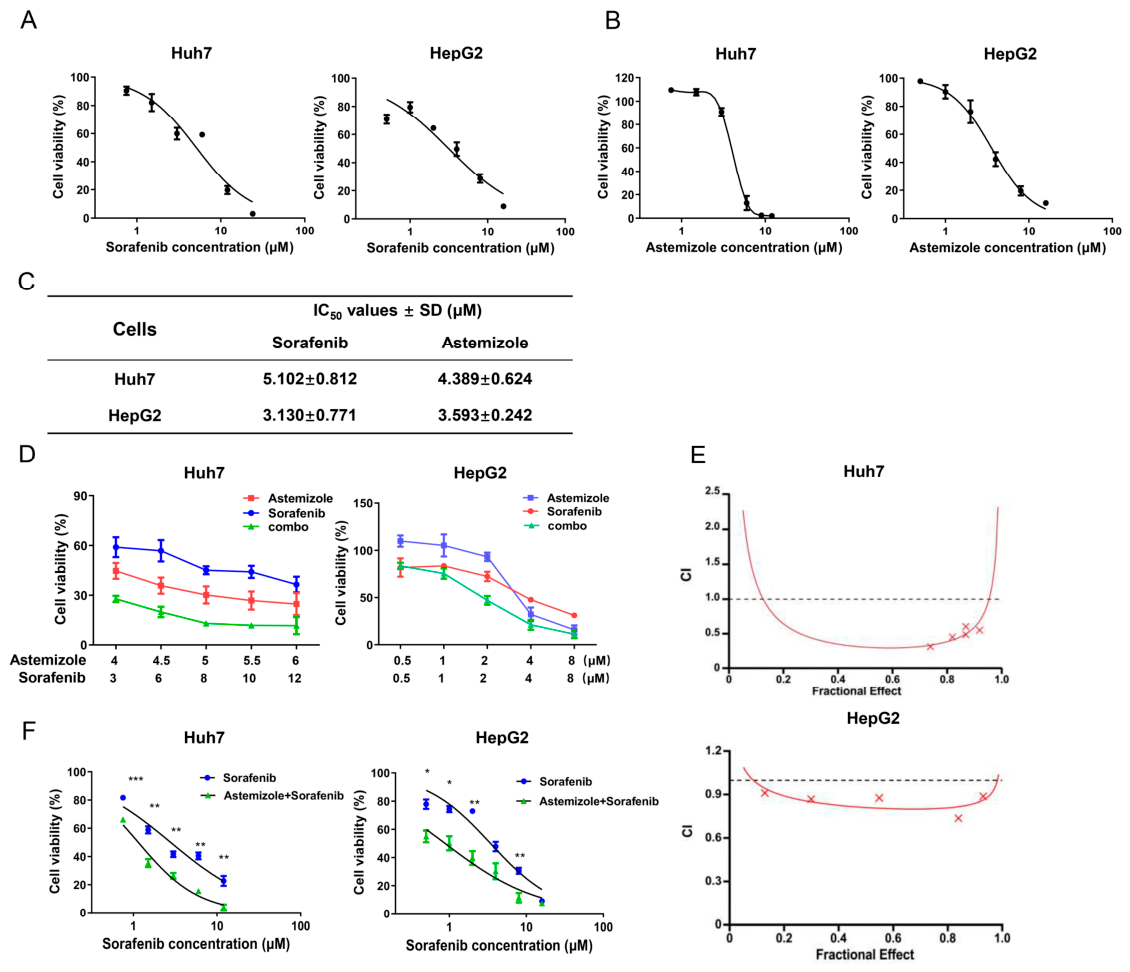
3.1. Astemizole Potentiates the Antiproliferative Effect of Sorafenib in HCC Cells
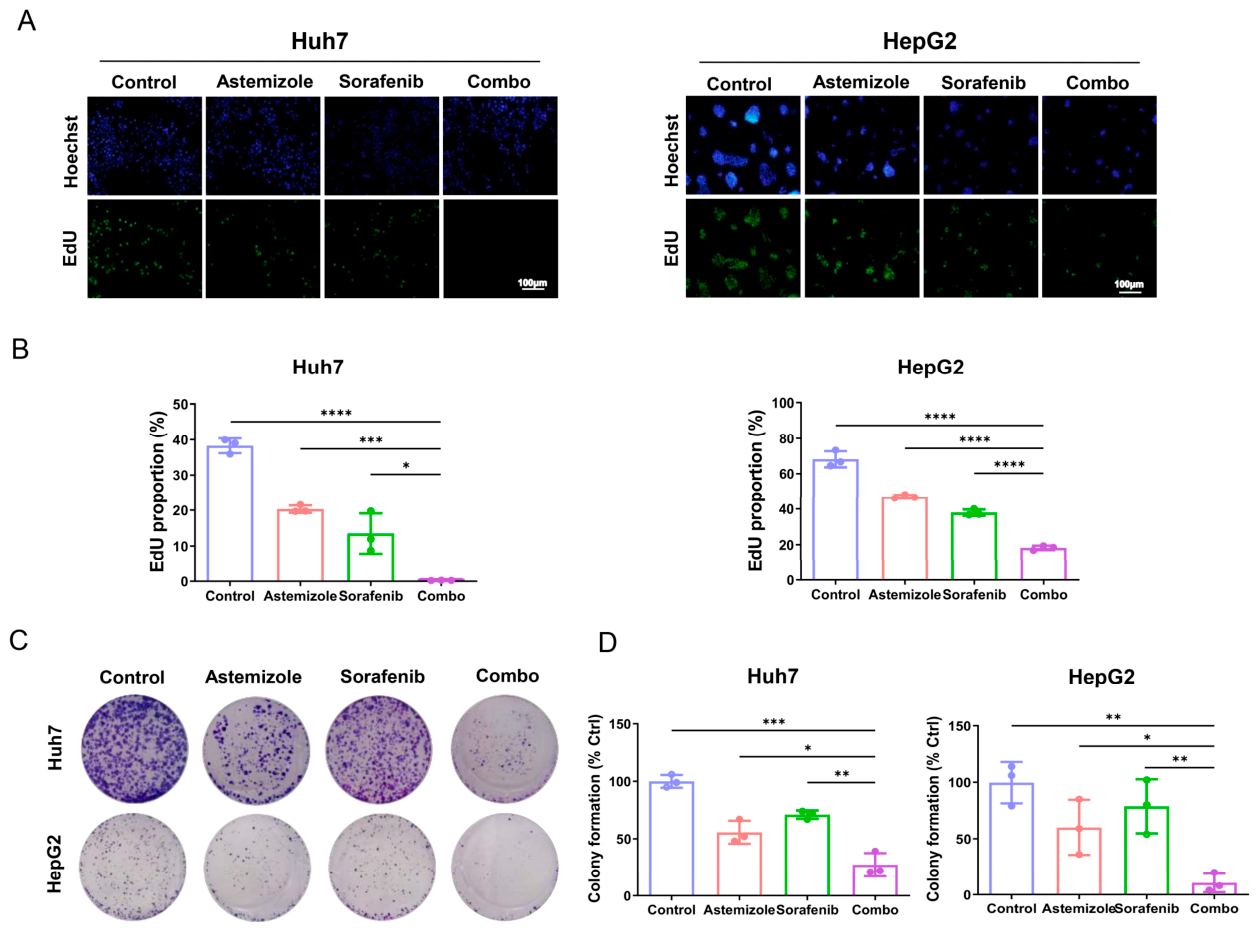
3.2. Combination Treatment with Astemizole and Sorafenib Inhibits DNA Synthesis and Colony Formation in HCC Cells
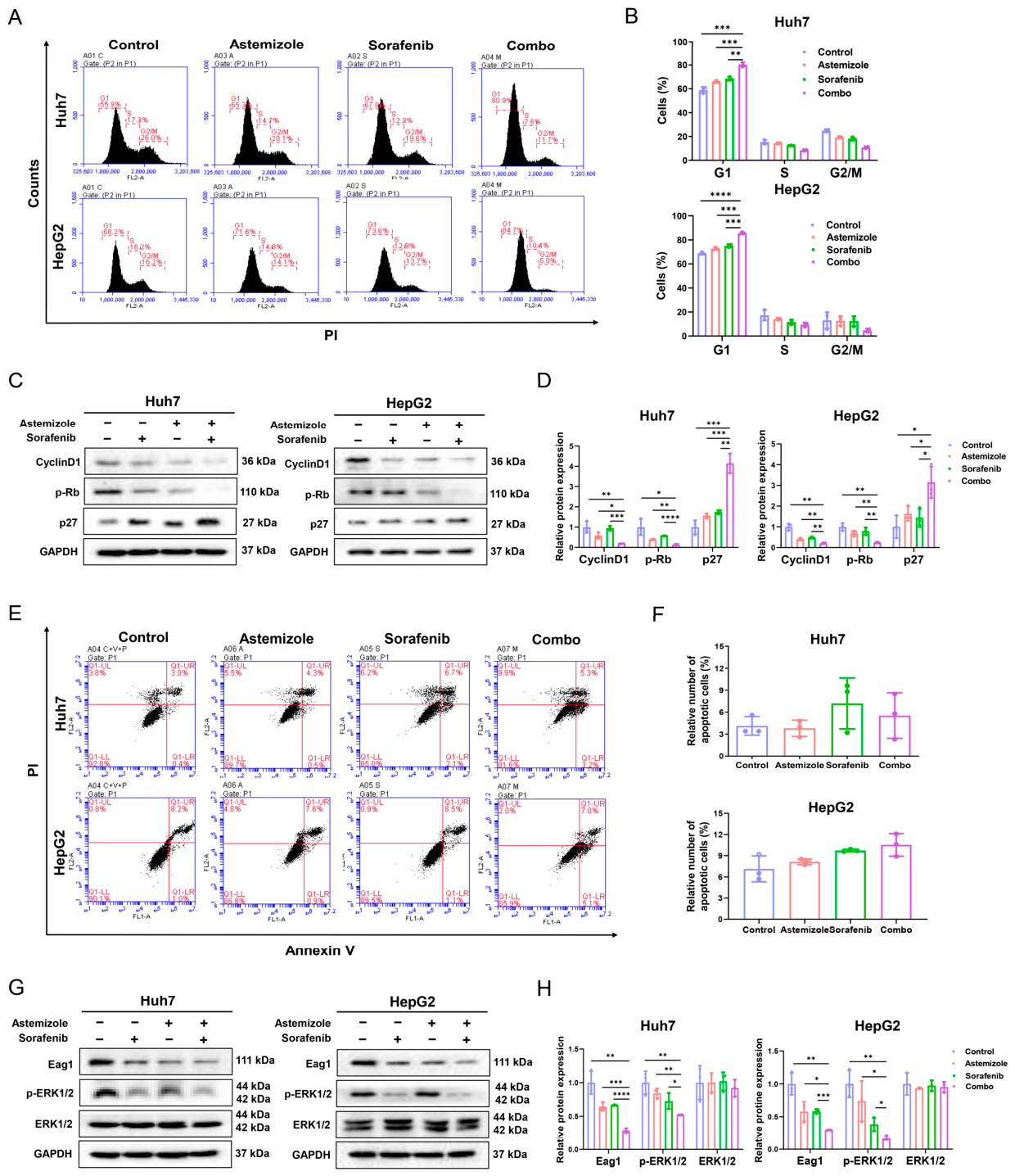
3.3. Combination of Sorafenib with Astemizole Enhances G1 Phase Arrest Without Inducing Apoptosis
3.4. Synergistic Inhibition of Eag1 and ERK/MAPK Signaling by Astemizole and Sorafenib in HCC Cells
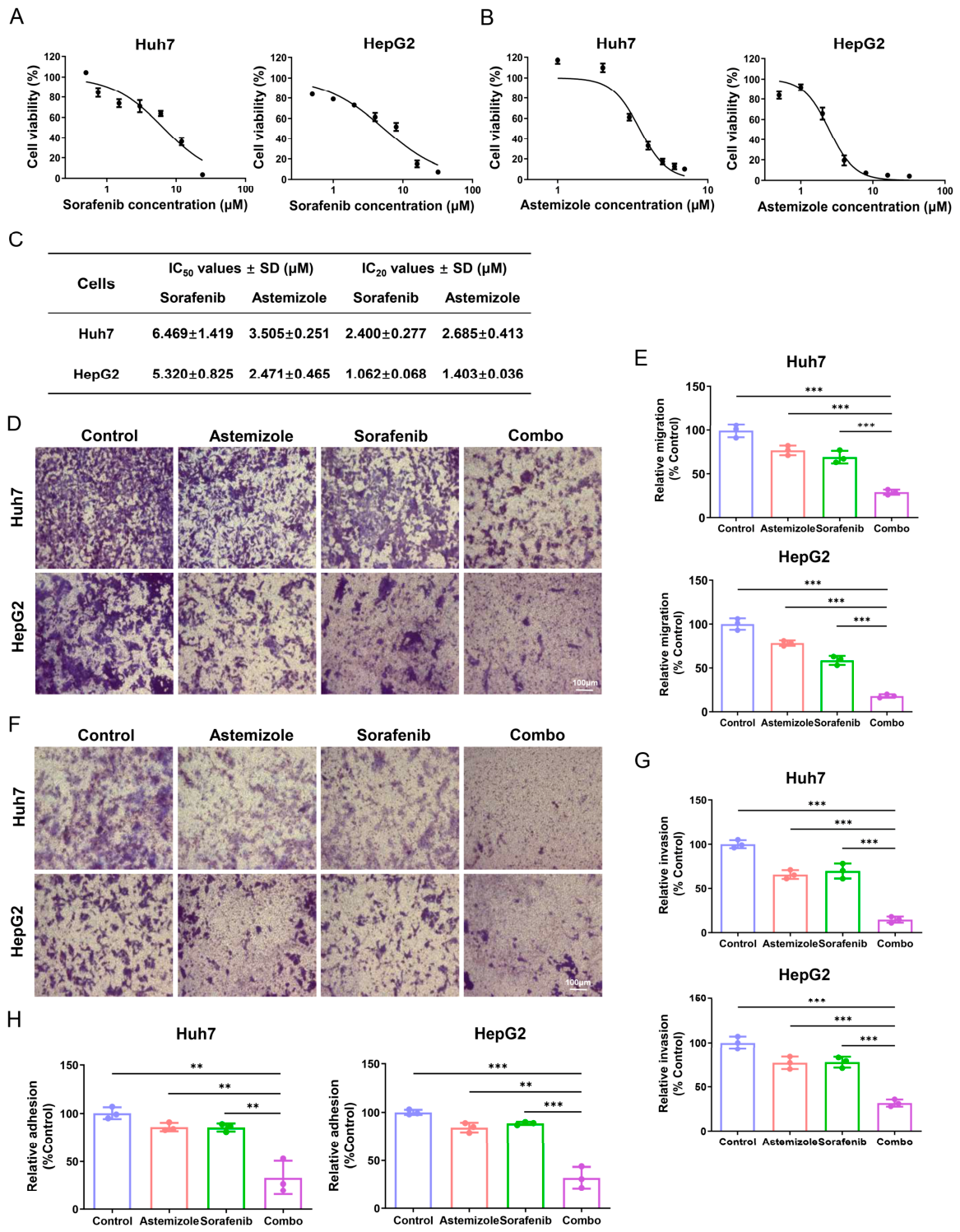
3.5. Combination Treatment with Astemizole and Sorafenib Suppresses Migration, Invasion, and Adhesion of HCC Cells
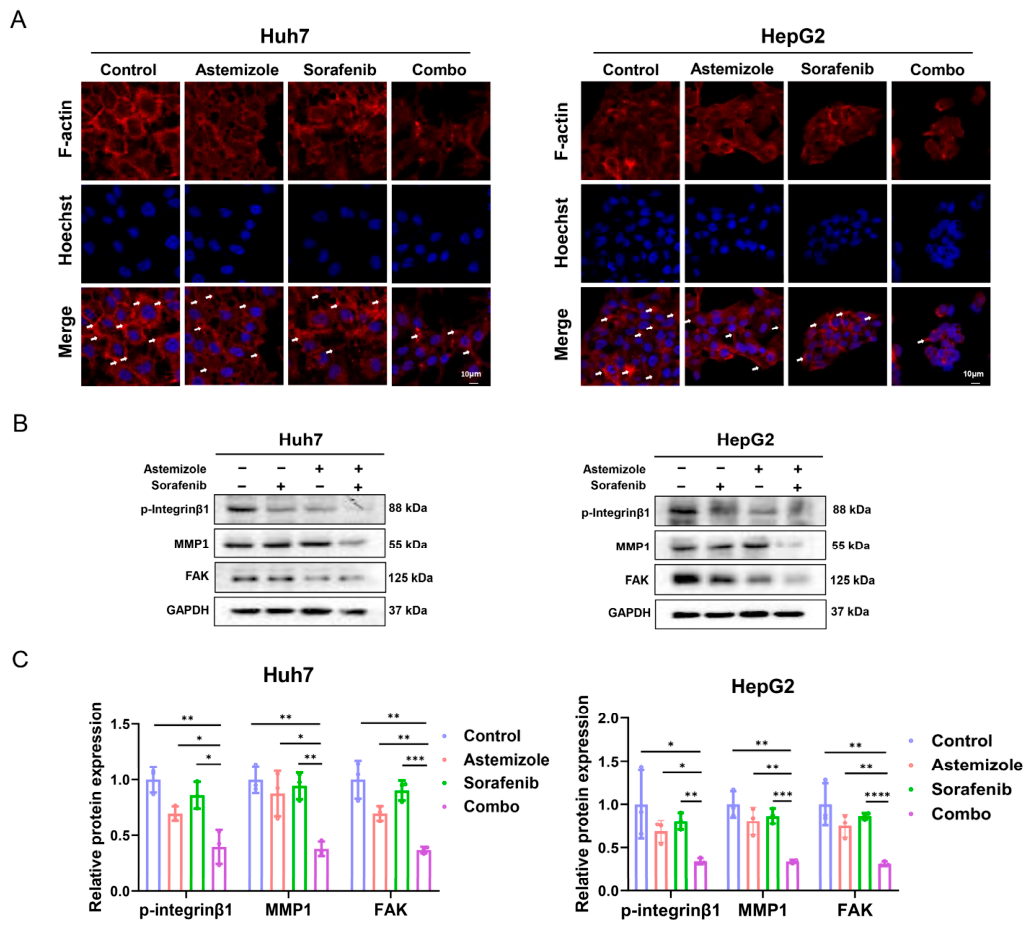
3.6. Astemizole and Sorafenib Suppress HCC Cell Migration by Disrupting F-Actin Polymerization and Downregulating Metastasis-Associated Proteins
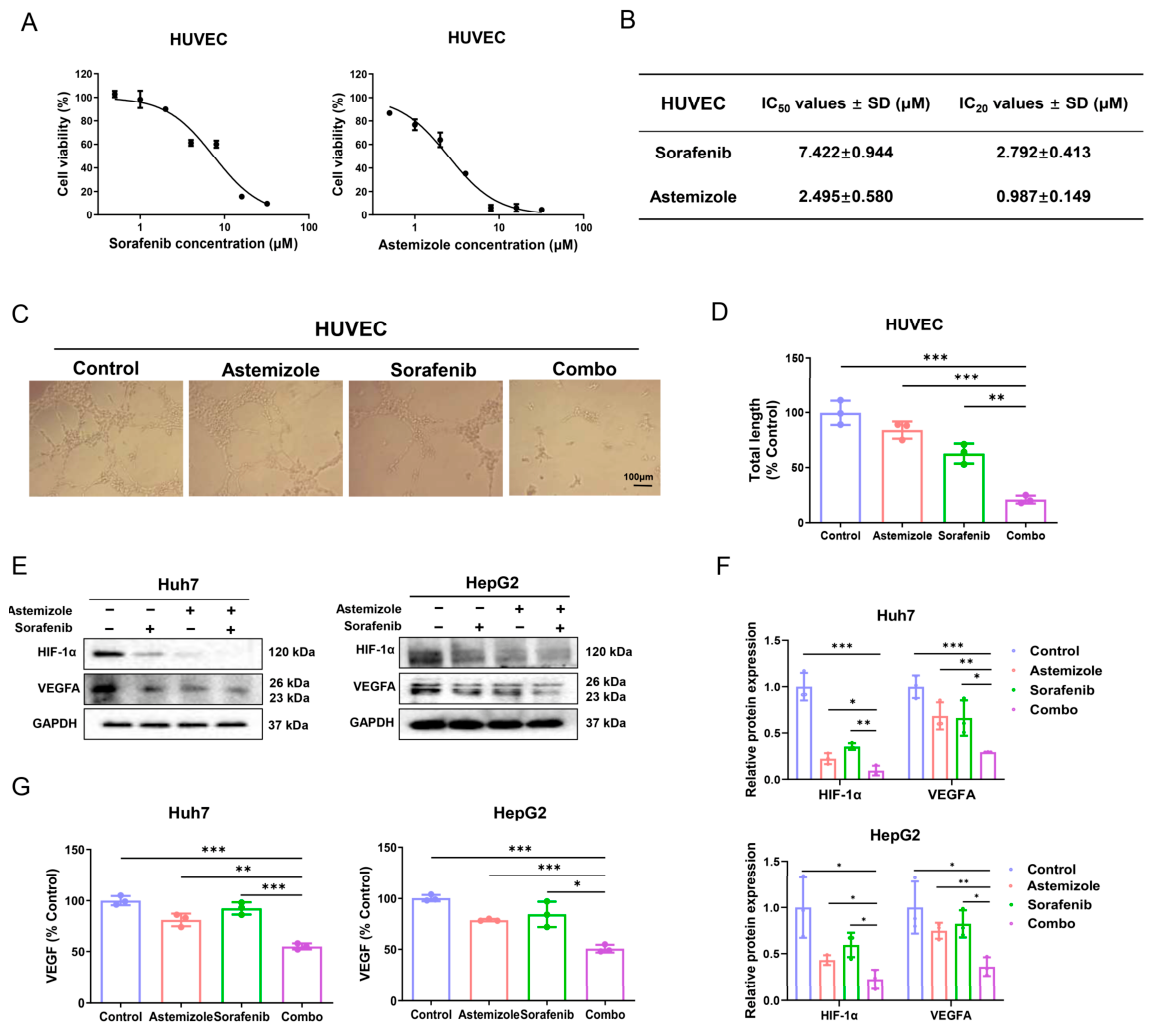
3.7. Combination of Astemizole and Sorafenib Reduces Tube Formation by HUVECs
4. Discussion
5. Conclusions
Author Contributions
Funding
Institutional Review Board Statement
Informed Consent Statement
Data Availability Statement
Conflicts of Interest
Abbreviations
| APS | ammonium persulfate |
| BSA | bovine serum albumin |
| CDK | cyclin-dependent kinases |
| DMSO | dimethyl sulfoxide |
| EDTA | ethylenediamine tetraacetic acid |
| EdU | 5-ethynyl-2-deoxyuridine |
| ELISA | enzyme-linked immunosorbent assay |
| FAK | focal adhesion kinase |
| FBS | fetal bovine serum |
| HCC | hepatocellular carcinoma |
| HIF-1α | hypoxia inducible factor-1α |
| HUVECs | human umbilical vein endothelial cells |
| IC20 | 20% inhibitory concentration |
| IC50 | 50% inhibitory concentration |
| MMP | matrix metalloprotein |
| MTT | 3-(4,5-dimethyl-2-thiazolyl)-2,5-diphenyl-2-H-tetrazolium bromide |
| PBS | phosphate-buffered saline |
| PI | propidium iodide |
| VEGF | vascular endothelial growth factor |
References
- Bray, F.; Laversanne, M.; Sung, H.; Ferlay, J.; Siegel, R.L.; Soerjomataram, I.; Jemal, A. Global cancer statistics 2022: GLOBOCAN estimates of incidence and mortality worldwide for 36 cancers in 185 countries. CA Cancer J. Clin. 2024, 74, 229–263. [Google Scholar] [CrossRef] [PubMed]
- Vogel, A.; Meyer, T.; Sapisochin, G.; Salem, R.; Saborowski, A. Hepatocellular carcinoma. Lancet 2022, 400, 1345–1362. [Google Scholar] [CrossRef]
- Anwanwan, D.; Singh, S.K.; Singh, S.; Saikam, V.; Singh, R. Challenges in liver cancer and possible treatment approaches. Biochim. Biophys. Acta (BBA) Rev. Cancer 2020, 1873, 188314. [Google Scholar] [CrossRef]
- Su, C.W. Editorial: Tumour Burden Score and Extrahepatic Progression After TACE—Refining Risk Stratification Beyond the Liver. Aliment. Pharmacol. Ther. 2026, 63, 1316–1317. [Google Scholar] [CrossRef]
- Takahashi, K.; Putchakayala, K.G.; Safwan, M.; Kim, D.Y. Extrahepatic metastasis of hepatocellular carcinoma to the paravertebral muscle: A case report. World J. Hepatol. 2017, 9, 973–978. [Google Scholar] [CrossRef]
- Yang, J.D.; Hainaut, P.; Gores, G.J.; Amadou, A.; Plymoth, A.; Roberts, L.R. A global view of hepatocellular carcinoma: Trends, risk, prevention and management. Nat. Rev. Gastroenterol. Hepatol. 2019, 16, 589–604. [Google Scholar] [CrossRef]
- Hwang, S.Y.; Danpanichkul, P.; Agopian, V.; Mehta, N.; Parikh, N.D.; Abou-Alfa, G.K.; Singal, A.G.; Yang, J.D. Hepatocellular carcinoma: Updates on epidemiology, surveillance, diagnosis and treatment. Clin. Mol. Hepatol. 2025, 31, S228–S254. [Google Scholar] [CrossRef] [PubMed]
- Eun, J.W.; Yoon, J.H.; Ahn, H.R.; Kim, S.; Kim, Y.B.; Bin Lim, S.; Park, W.; Kang, T.W.; Baek, G.O.; Yoon, M.G.; et al. Cancer-associated fibroblast-derived secreted phosphoprotein 1 contributes to resistance of hepatocellular carcinoma to sorafenib and lenvatinib. Cancer Commun. 2023, 43, 455–479. [Google Scholar] [CrossRef]
- Philippi, Z.; Reddy, K.D.; Malik, S.; Al-Khalil, Z.; Dbouk, N. Systemic Therapy for Unresectable Hepatocellular Carcinoma: Current Landscape and Future Directions. Int. J. Mol. Sci. 2025, 26, 5994. [Google Scholar] [CrossRef] [PubMed]
- Tang, W.; Chen, Z.; Zhang, W.; Cheng, Y.; Zhang, B.; Wu, F.; Wang, Q.; Wang, S.; Rong, D.; Reiter, F.P.; et al. The mechanisms of sorafenib resistance in hepatocellular carcinoma: Theoretical basis and therapeutic aspects. Signal Transduct. Target. Ther. 2020, 5, 87. [Google Scholar] [CrossRef]
- Garcia-Quiroz, J.; Camacho, J. Astemizole: An Old Anti-histamine as a New Promising Anti-cancer Drug. Anti-Cancer Agents Med. Chem. 2011, 11, 307–314. [Google Scholar] [CrossRef]
- Canella, R.; Brugnoli, F.; Gallo, M.; Keillor, J.W.; Terrazzan, A.; Ferrari, E.; Grassilli, S.; Gates, E.W.J.; Volinia, S.; Bertagnolo, V.; et al. A Multidisciplinary Approach Establishes a Link between Transglutaminase 2 and the Kv10.1 Voltage-Dependent K+ Channel in Breast Cancer. Cancers 2022, 15, 178. [Google Scholar] [CrossRef] [PubMed]
- Huang, X.; Jan, L.Y. Targeting potassium channels in cancer. J. Cell Biol. 2014, 206, 151–162. [Google Scholar] [CrossRef] [PubMed]
- Toplak, Ž.; Hendrickx, L.A.; Abdelaziz, R.; Shi, X.; Peigneur, S.; Tomašič, T.; Tytgat, J.; Peterlin-Mašič, L.; Pardo, L.A. Overcoming challenges of HERG potassium channel liability through rational design: Eag1 inhibitors for cancer treatment. Med. Res. Rev. 2021, 42, 183–226. [Google Scholar] [CrossRef]
- Zhou, S.; Song, X.; Zeng, W.; Chen, D. Targeting Ion Channels for Cancer Therapy: From Pathophysiological Mechanisms to Clinical Translation. Pharmaceuticals 2025, 18, 1521. [Google Scholar] [CrossRef]
- Javier Camacho, J.; Chávez-López, M.; Zúñiga-García, V.; Pérez-Carreón, J.I.; Avalos-Fuentes, A.; Escobar, Y. Eag1 channels as potential early-stage biomarkers of hepatocellular carcinoma. Biologics 2016, 10, 139–148. [Google Scholar] [CrossRef] [PubMed]
- Neuhaus, W.; Mandikova, J.; Pawlowitsch, R.; Linz, B.; Bennani-Baiti, B.; Lauer, R.; Lachmann, B.; Noe, C.R. Blood-brain barrier models as tools in drug discovery: Assessment of the transport ranking of antihistaminic drugs. Pharmazie 2012, 67, 432–439. [Google Scholar] [CrossRef] [PubMed]
- Wei, M.; Cao, Z.; Dong, L.; Wang, W.; Wei, M.; Ji, L.; Duan, L.; Sun, H.; Zheng, M. The advantages and challenges of sorafenib combination therapy: Drug resistance, toxicity and future directions (Review). Oncol. Lett. 2025, 30, 526. [Google Scholar] [CrossRef]
- García-Quiroz, J.; García-Becerra, R.; Santos-Martínez, N.; Barrera, D.; Ordaz-Rosado, D.; Avila, E.; Halhali, A.; Villanueva, O.; Ibarra-Sánchez, M.J.; Esparza-López, J.; et al. In vivo dual targeting of the oncogenic Ether-à-go-go-1 potassium channel by calcitriol and astemizole results in enhanced antineoplastic effects in breast tumors. BMC Cancer 2014, 14, 745. [Google Scholar] [CrossRef]
- Chávez-López, M.d.G.; Zúñiga-García, V.; Hernández-Gallegos, E.; Vera, E.; Chasiquiza-Anchatuña, C.A.; Viteri-Yánez, M.; Sanchez-Ramos, J.; Garrido, E.; Camacho, J. The combination astemizole–gefitinib as a potential therapy for human lung cancer. Onco Targets Ther. 2017, 10, 5795–5803. [Google Scholar] [CrossRef]
- Zhang, S.; Peng, X.; Li, X.; Liu, H.; Zhao, B.; Elkabets, M.; Liu, Y.; Wang, W.; Wang, R.; Zhong, Y.; et al. BKM120 sensitizes glioblastoma to the PARP inhibitor rucaparib by suppressing homologous recombination repair. Cell Death Dis. 2021, 12, 546. [Google Scholar] [CrossRef]
- Liu, Q.; Hu, J.; Li, X.; Gao, H.; Kong, D.; Jin, M. Glutamine transporter inhibitor enhances the sensitivity of NSCLC to trametinib through GSDME-dependent pyroptosis. Biochem. Pharmacol. 2025, 233, 116796. [Google Scholar] [CrossRef]
- Zhao, W.; Guo, W.; Zhou, Q.; Ma, S.-N.; Wang, R.; Qiu, Y.; Jin, M.; Duan, H.-Q.; Kong, D. In Vitro Antimetastatic Effect of Phosphatidylinositol 3-Kinase Inhibitor ZSTK474 on Prostate Cancer PC3 Cells. Int. J. Mol. Sci. 2013, 14, 13577–13591. [Google Scholar] [CrossRef] [PubMed]
- Chou, T.-C.; Talalay, P. Quantitative analysis of dose-effect relationships: The combined effects of multiple drugs or enzyme inhibitors. Adv. Enzym. Regul. 1984, 22, 27–55. [Google Scholar] [CrossRef] [PubMed]
- Zhang, T.; Huang, J.; Zhang, Z.; Lv, J.; Zhang, D.; Qing, R.; Lan, L. Flow cytometry and 5-ethynyl-2’-deoxyuridine (EdU) labeling to detect the cell cycle dynamics of Phaeodactylum tricornutum under light. J. Phycol. 2022, 58, 555–567. [Google Scholar] [CrossRef] [PubMed]
- de Guadalupe Chávez-López, M.; Pérez-Carreón, J.I.; Zuñiga-García, V.; Díaz-Chávez, J.; Herrera, L.A.; Caro-Sánchez, C.H.; Acuña-Macías, I.; Gariglio, P.; Hernández-Gallegos, E.; Chiliquinga, A.J.; et al. Astemizole-based anticancer therapy for hepatocellular carcinoma (HCC), and Eag1 channels as potential early-stage markers of HCC. Tumor Biol. 2015, 36, 6149–6158. [Google Scholar] [CrossRef]
- Bahar, M.E.; Kim, H.J.; Kim, D.R. Targeting the RAS/RAF/MAPK pathway for cancer therapy: From mechanism to clinical studies. Signal Transduct. Target. Ther. 2023, 8, 455. [Google Scholar] [CrossRef]
- Cox, T.R. The matrix in cancer. Nat. Rev. Cancer 2021, 21, 217–238. [Google Scholar] [CrossRef]
- Salbreux, G.; Charras, G.; Paluch, E. Actin cortex mechanics and cellular morphogenesis. Trends Cell Biol. 2012, 22, 536–545. [Google Scholar] [CrossRef]
- Slack, R.J.; Macdonald, S.J.F.; Roper, J.A.; Jenkins, R.G.; Hatley, R.J.D. Emerging therapeutic opportunities for integrin inhibitors. Nat. Rev. Drug Discov. 2021, 21, 60–78. [Google Scholar] [CrossRef]
- Sulzmaier, F.J.; Jean, C.; Schlaepfer, D.D. FAK in cancer: Mechanistic findings and clinical applications. Nat. Rev. Cancer 2014, 14, 598–610. [Google Scholar] [CrossRef]
- Kessenbrock, K.; Plaks, V.; Werb, Z. Matrix Metalloproteinases: Regulators of the Tumor Microenvironment. Cell 2010, 141, 52–67. [Google Scholar] [CrossRef]
- Liu, Z.-L.; Chen, H.-H.; Zheng, L.-L.; Sun, L.-P.; Shi, L. Angiogenic signaling pathways and anti-angiogenic therapy for cancer. Signal Transduct. Target. Ther. 2023, 8, 193. [Google Scholar] [CrossRef]
- Forsythe, J.A.; Jiang, B.-H.; Iyer, N.V.; Agani, F.; Leung, S.W.; Koos, R.D.; Semenza, G.L. Activation of Vascular Endothelial Growth Factor Gene Transcription by Hypoxia-Inducible Factor 1. Mol. Cell. Biol. 2023, 16, 4604–4613. [Google Scholar] [CrossRef] [PubMed]
- Villarruel-Melquiades, F.; Mendoza-Garrido, M.E.; García-Cuellar, C.M.; Sánchez-Pérez, Y.; Pérez-Carreón, J.I.; Camacho, J. Current and novel approaches in the pharmacological treatment of hepatocellular carcinoma. World J. Gastroenterol. 2023, 29, 2571–2599. [Google Scholar] [CrossRef] [PubMed]
- Borowiec, A.-S.; Hague, F.; Gouilleux-Gruart, V.; Lassoued, K.; Ouadid-Ahidouch, H. Regulation of IGF-1-dependent cyclin D1 and E expression by hEag1 channels in MCF-7 cells: The critical role of hEag1 channels in G1 phase progression. Biochim. Biophys. Acta (BBA)-Mol. Cell Res. 2011, 1813, 723–730. [Google Scholar] [CrossRef]
- Haschka, M.; Karbon, G.; Fava, L.L.; Villunger, A. Perturbing mitosis for anti-cancer therapy: Is cell death the only answer? EMBO Rep. 2018, 19, e4544. [Google Scholar] [CrossRef]
- Liu, Y.; Park, S.; Li, Y. Breaking Cancer’s Momentum: CDK4/6 Inhibitors and the Promise of Combination Therapy. Cancers 2025, 17, 1941. [Google Scholar] [CrossRef] [PubMed]
- Patel, P.; Tsiperson, V.; Gottesman, S.R.S.; Somma, J.; Blain, S.W. Dual Inhibition of CDK4 and CDK2 via Targeting p27 Tyrosine Phosphorylation Induces a Potent and Durable Response in Breast Cancer Cells. Mol. Cancer Res. 2018, 16, 361–377. [Google Scholar] [CrossRef]
- Ouadid-Ahidouch, H.; Ahidouch, A. K+ channels and cell cycle progression in tumor cells. Front. Physiol. 2013, 4, 220. [Google Scholar] [CrossRef]
- Dryer, S.E.; Lin, H.; Li, Z.; Chen, C.; Luo, X.; Xiao, J.; Dong, D.; Lu, Y.; Yang, B.; Wang, Z. Transcriptional and Post-Transcriptional Mechanisms for Oncogenic Overexpression of Ether À Go-Go K+ Channel. PLoS ONE 2011, 6, e20362, Erratum in: PLoS ONE 2011, 30, 524-532.. [Google Scholar]
- An, H.-J.; Ryu, M.; Jeong, H.J.; Kang, M.; Jeon, H.-M.; Lee, J.-O.; Kim, Y.S.; Lee, H. Higd-1a regulates the proliferation of pancreatic cancer cells through a pERK/p27KIP1/pRB pathway. Cancer Lett. 2019, 461, 78–89. [Google Scholar] [CrossRef] [PubMed]
- Wang, S.; Wang, X.; Gao, Y.; Peng, Y.; Dong, N.; Xie, Q.; Zhang, X.; Wu, Y.; Li, M.; Li, J. RN181 is a tumour suppressor in gastric cancer by regulation of the ERK/MAPK–cyclin D1/CDK4 pathway. J. Pathol. 2019, 248, 204–216. [Google Scholar] [CrossRef] [PubMed]
- Guan, X. Cancer metastases: Challenges and opportunities. Acta Pharm. Sin. B 2015, 5, 402–418. [Google Scholar] [CrossRef]
- Hamidi, H.; Ivaska, J. Every step of the way: Integrins in cancer progression and metastasis. Nat. Rev. Cancer 2018, 18, 533–548, Erratum in: Nat. Rev. Cancer 2019, 19, 179.. [Google Scholar] [CrossRef]
- Yayan, J.; Franke, K.-J.; Berger, M.; Windisch, W.; Rasche, K. Adhesion, metastasis, and inhibition of cancer cells: A comprehensive review. Mol. Biol. Rep. 2024, 51, 165. [Google Scholar] [CrossRef]
- Bisaria, A.; Hayer, A.; Garbett, D.; Cohen, D.; Meyer, T. Membrane-proximal F-actin restricts local membrane protrusions and directs cell migration. Science 2020, 368, 1205–1210. [Google Scholar] [CrossRef]
- Griffioen, A.W.; Dudley, A.C. The rising impact of angiogenesis research. Angiogenesis 2022, 25, 435–437. [Google Scholar] [CrossRef]
- Apte, R.S.; Chen, D.S.; Ferrara, N. VEGF in Signaling and Disease: Beyond Discovery and Development. Cell 2019, 176, 1248–1264. [Google Scholar] [CrossRef]
- Rashid, M.; Zadeh, L.R.; Baradaran, B.; Molavi, O.; Ghesmati, Z.; Sabzichi, M.; Ramezani, F. Up-down regulation of HIF-1α in cancer progression. Gene 2021, 798, 145796. [Google Scholar] [CrossRef]
- Wang, X.; Chen, Y.; Zhang, Y.; Guo, S.; Mo, L.; An, H.; Zhan, Y. Eag1 Voltage-Dependent Potassium Channels: Structure, Electrophysiological Characteristics, and Function in Cancer. J. Membr. Biol. 2017, 250, 123–132. [Google Scholar] [CrossRef]
- Guo, Y.J.; Pan, W.W.; Liu, S.B.; Shen, Z.F.; Xu, Y.; Hu, L.L. ERK/MAPK signalling pathway and tumorigenesis. Exp. Ther. Med. 2020, 19, 1997–2007. [Google Scholar] [CrossRef] [PubMed]
- Laîné, M.; Guénin, S.; Gutierrez, L.; Dehouck, M.-P.; Jonckheere, N.; Gosselet, F.; Toillon, R.-A.; Mysiorek, C.; Ouadid-Ahidouch, H.; Girault, A. The Kv10.1 potassium channel, driver of hypoxia-induced EMT and breast cancer cell aggressiveness. Cancer Cell Int. 2025, 25, 373. [Google Scholar] [CrossRef] [PubMed]
- Chen, C.-A.; Chang, J.-M.; Yang, Y.-L.; Chang, E.-E.; Chen, H.-C. Macrophage migration inhibitory factor regulates integrin-β1 and cyclin D1 expression via ERK pathway in podocytes. Biomed. Pharmacother. 2020, 124, 109892. [Google Scholar] [CrossRef] [PubMed]
- Sun, X.; Wei, L.; Chen, Q.; Terek, R.M. CXCR4/SDF1 mediate hypoxia induced chondrosarcoma cell invasion through ERK signaling and increased MMP1 expression. Mol. Cancer 2010, 9, 17. [Google Scholar] [CrossRef]
- Xu, Z.; Zhu, C.; Chen, C.; Zong, Y.; Feng, H.; Liu, D.; Feng, W.; Zhao, J.; Lu, A. CCL19 suppresses angiogenesis through promoting miR-206 and inhibiting Met/ERK/Elk-1/HIF-1α/VEGF-A pathway in colorectal cancer. Cell Death Dis. 2018, 9, 974. [Google Scholar] [CrossRef]



| Drug or Drug Combination | r | Dm | CI Values | |||
|---|---|---|---|---|---|---|
| ED50 | ED75 | ED90 | ||||
| Huh7 | Sorafenib | 0.85814 | 5.97636 | - | - | - |
| Astemizole | 0.97391 | 3.78462 | - | - | - | |
| Combo | 0.95977 | 1.03122 | 0.30879 | 0.34304 | 0.59109 | |
| HepG2 | Sorafenib | 0.98821 | 4.09839 | - | - | - |
| Astemizole | 0.99073 | 3.94097 | - | - | - | |
| Combo | 0.99791 | 1.62938 | 0.81101 | 0.80294 | 0.83862 | |
Disclaimer/Publisher’s Note: The statements, opinions and data contained in all publications are solely those of the individual author(s) and contributor(s) and not of MDPI and/or the editor(s). MDPI and/or the editor(s) disclaim responsibility for any injury to people or property resulting from any ideas, methods, instructions or products referred to in the content. |
© 2026 by the authors. Licensee MDPI, Basel, Switzerland. This article is an open access article distributed under the terms and conditions of the Creative Commons Attribution (CC BY) license.
Share and Cite
Zhang, Y.; Chen, X.; Yang, X.; Wang, P.; Zhang, X.; Kong, D.; Wang, R. The Antihistamine Astemizole Potentiates the Antitumor Efficacy of Sorafenib in Hepatocellular Carcinoma by Suppressing Proliferation, Metastasis, and Angiogenesis. Curr. Issues Mol. Biol. 2026, 48, 451. https://doi.org/10.3390/cimb48050451
Zhang Y, Chen X, Yang X, Wang P, Zhang X, Kong D, Wang R. The Antihistamine Astemizole Potentiates the Antitumor Efficacy of Sorafenib in Hepatocellular Carcinoma by Suppressing Proliferation, Metastasis, and Angiogenesis. Current Issues in Molecular Biology. 2026; 48(5):451. https://doi.org/10.3390/cimb48050451
Chicago/Turabian StyleZhang, Yixuan, Xin Chen, Xuting Yang, Peiyu Wang, Xiaoliang Zhang, Dexin Kong, and Ran Wang. 2026. "The Antihistamine Astemizole Potentiates the Antitumor Efficacy of Sorafenib in Hepatocellular Carcinoma by Suppressing Proliferation, Metastasis, and Angiogenesis" Current Issues in Molecular Biology 48, no. 5: 451. https://doi.org/10.3390/cimb48050451
APA StyleZhang, Y., Chen, X., Yang, X., Wang, P., Zhang, X., Kong, D., & Wang, R. (2026). The Antihistamine Astemizole Potentiates the Antitumor Efficacy of Sorafenib in Hepatocellular Carcinoma by Suppressing Proliferation, Metastasis, and Angiogenesis. Current Issues in Molecular Biology, 48(5), 451. https://doi.org/10.3390/cimb48050451