TGF-β1 Promotes the Recovery of Dorsal Root Ganglion Neurons from Cisplatin-Induced Injury Through Smad4-Dependent Mechanism


Abstract
1. Introduction
2. Methods
2.1. Animals
2.2. Isolation, Culture, and Processing of Primary Dorsal Root Ganglion Neurons
2.3. Tissue Collection and Processing
2.4. Immunofluorescence Staining, Image Acquisition, Neurite Length Measurement and Immunofluorescence Staining Intensity Analysis
2.5. Real-Time Quantitative Polymerase Chain Reaction
2.6. Gene Knockdown and Use of Transforming Growth Factor-β Blockers
2.7. Statistical Analysis
3. Results
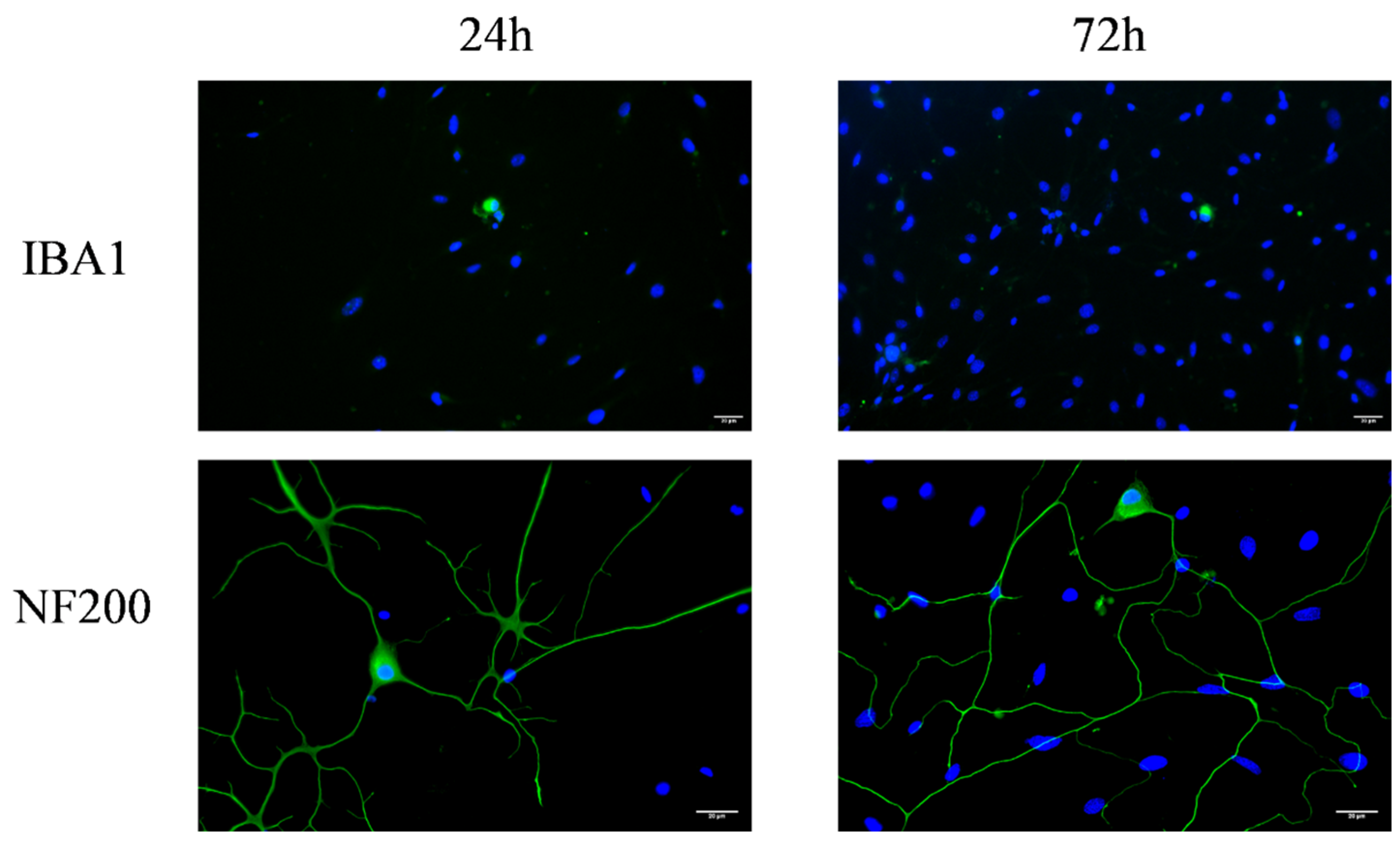
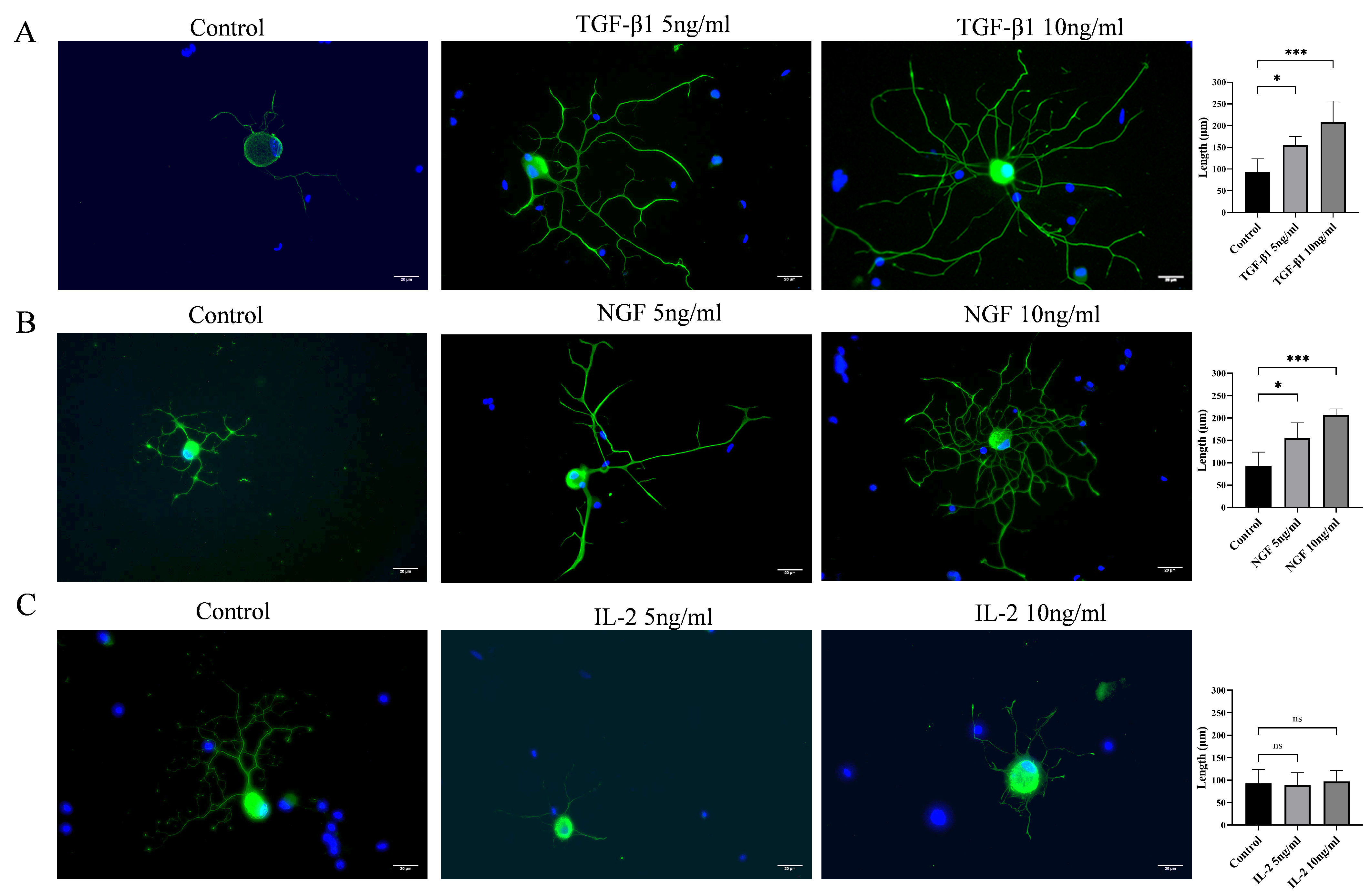
3.1. TGF-β1 Promotes the Growth of Neurite in DRG Neurons Cultured In Vitro
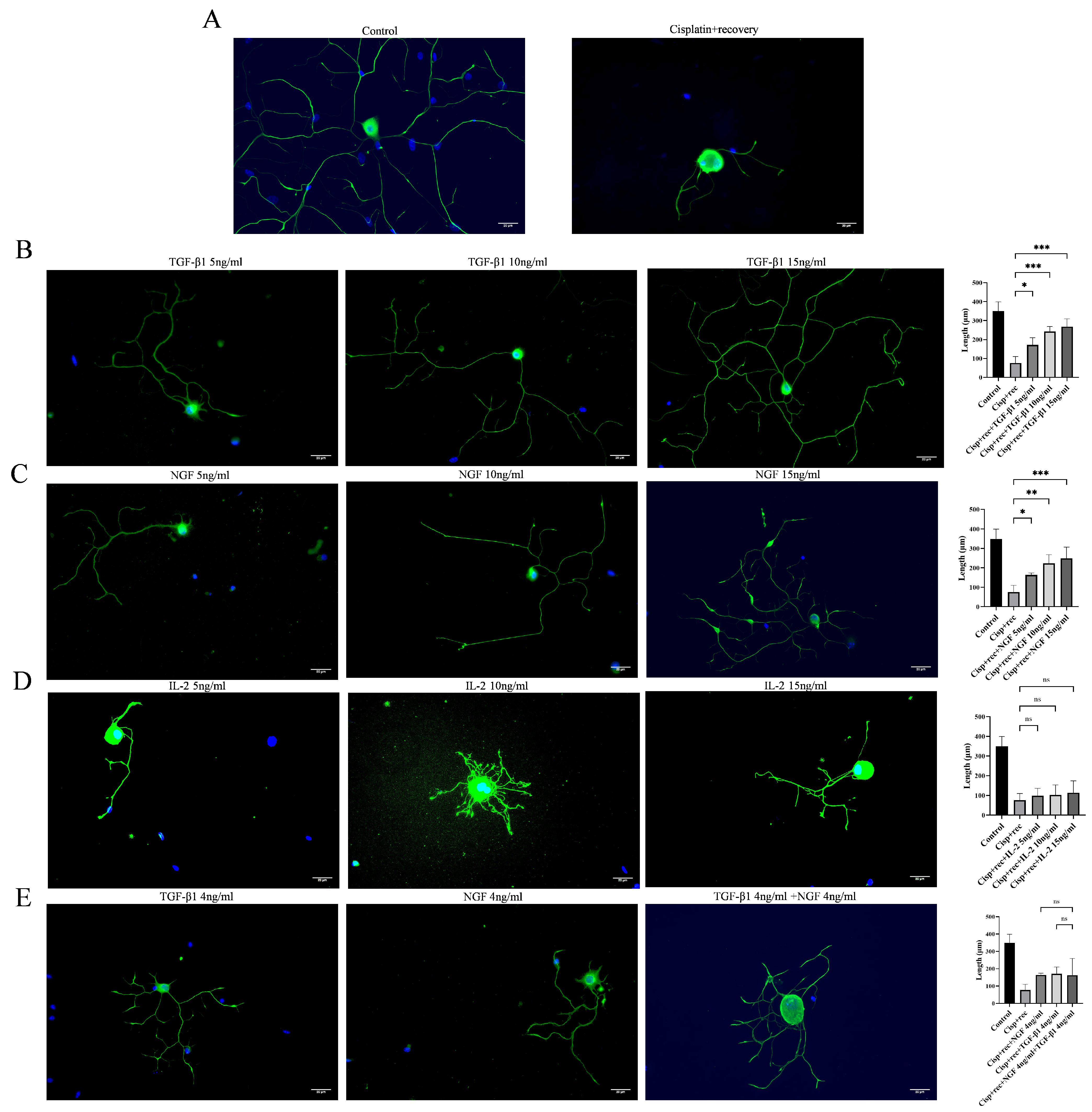
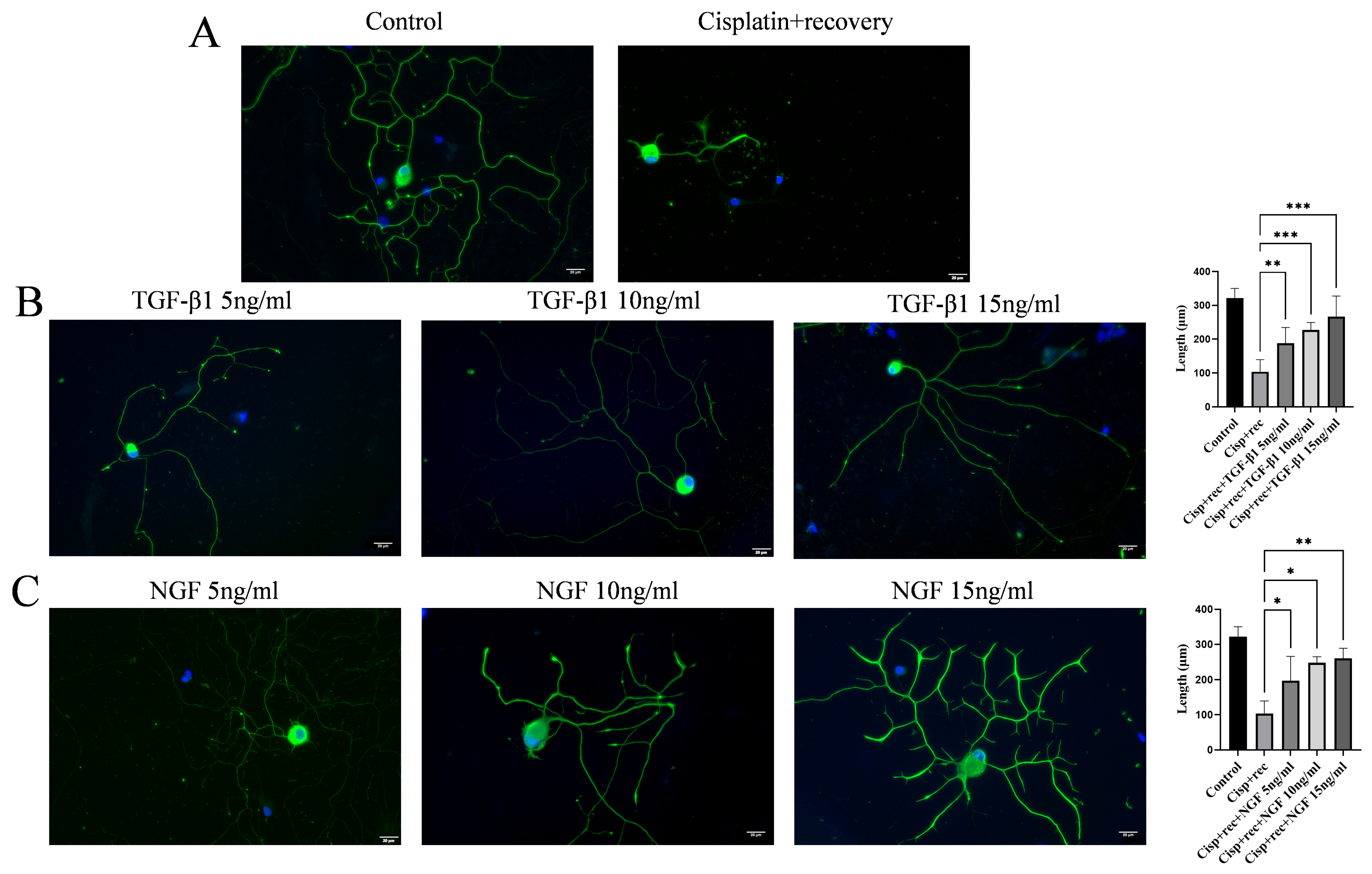
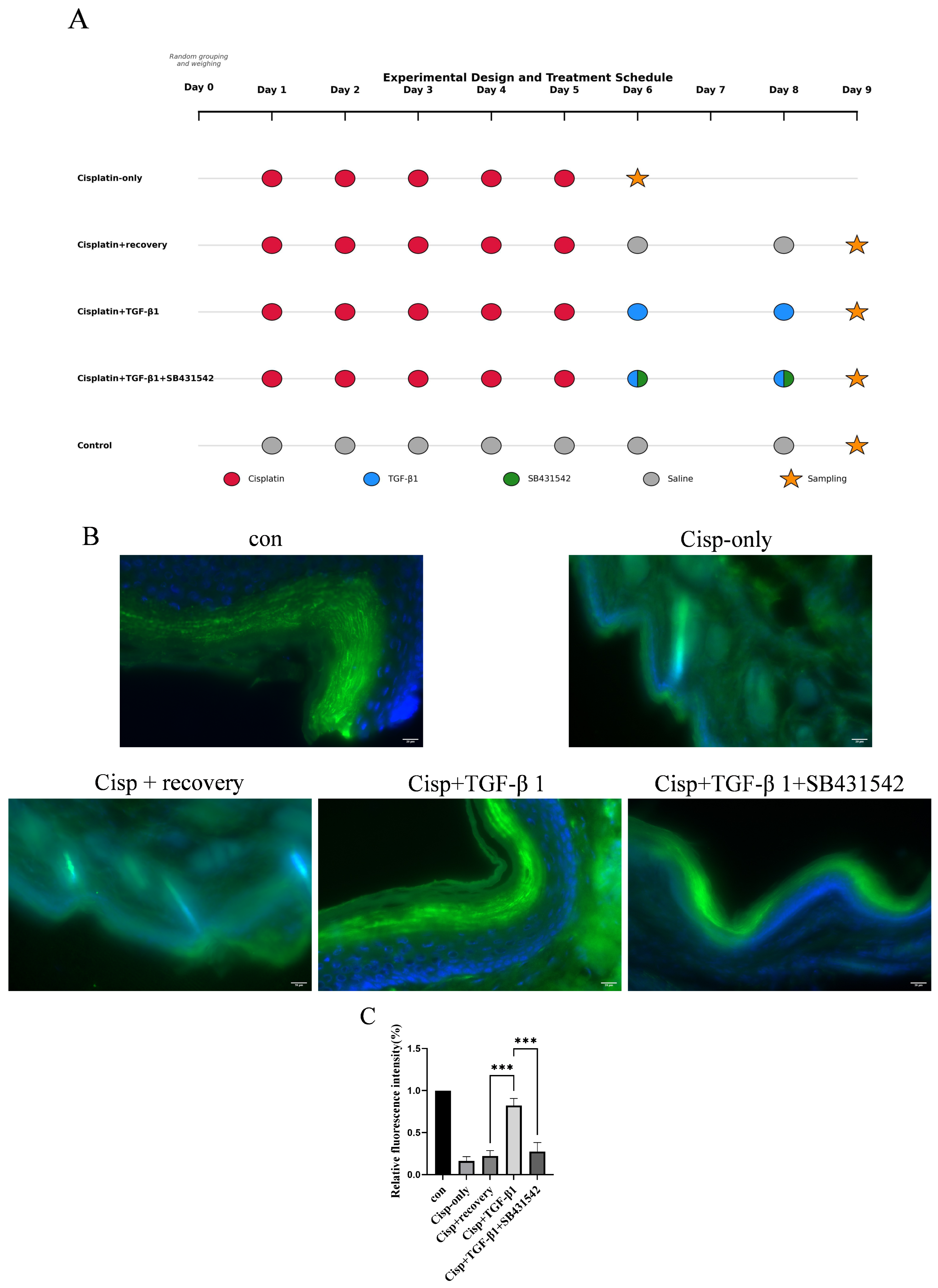
3.2. TGF-β1 Promotes Neurite Regeneration in Cisplatin-Injured DRG Neurons
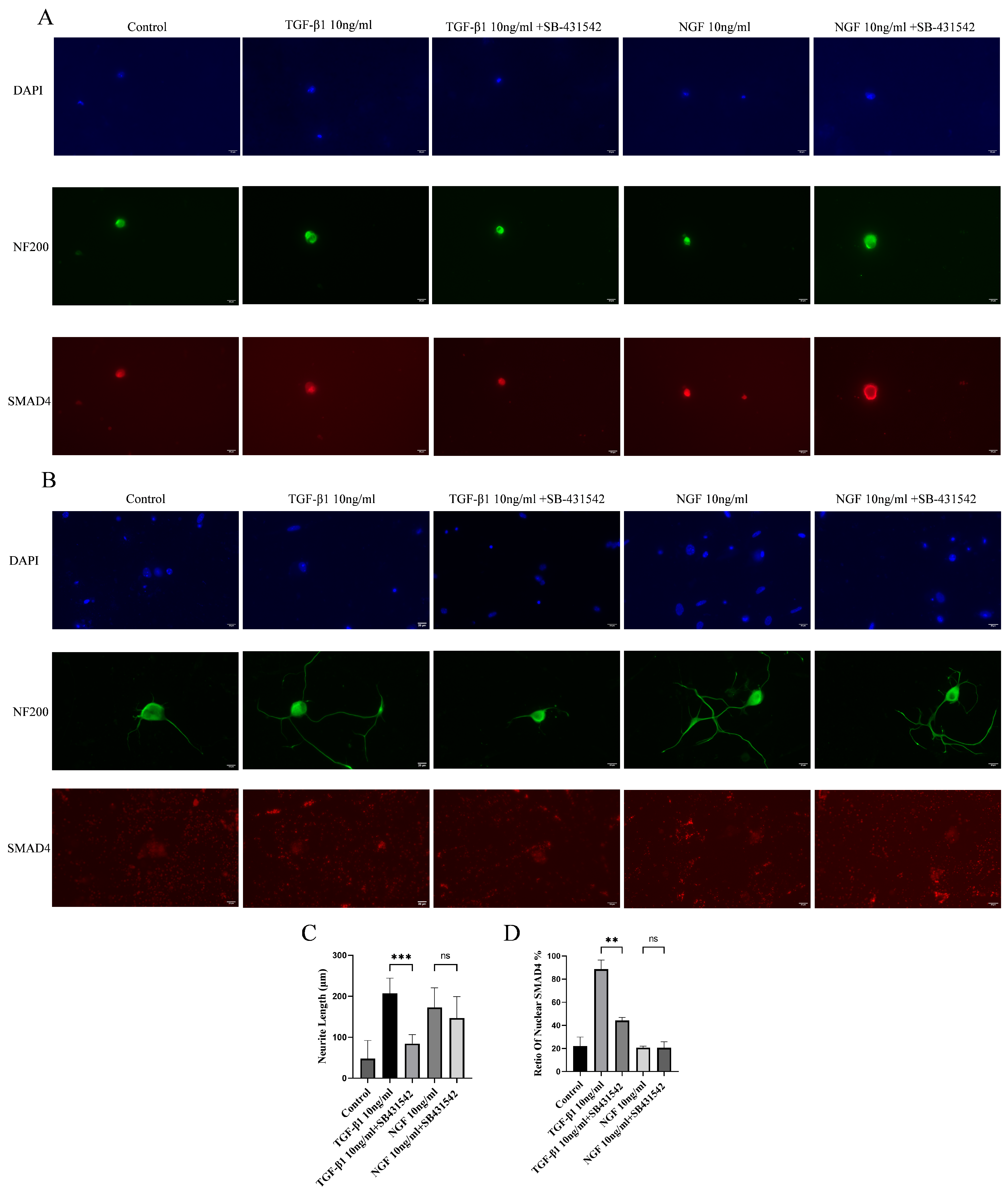
3.3. SB431542 Inhibits the TGF-β1-Induced Growth of DRG Neurites and Blocks Smad4 Nuclear Translocation
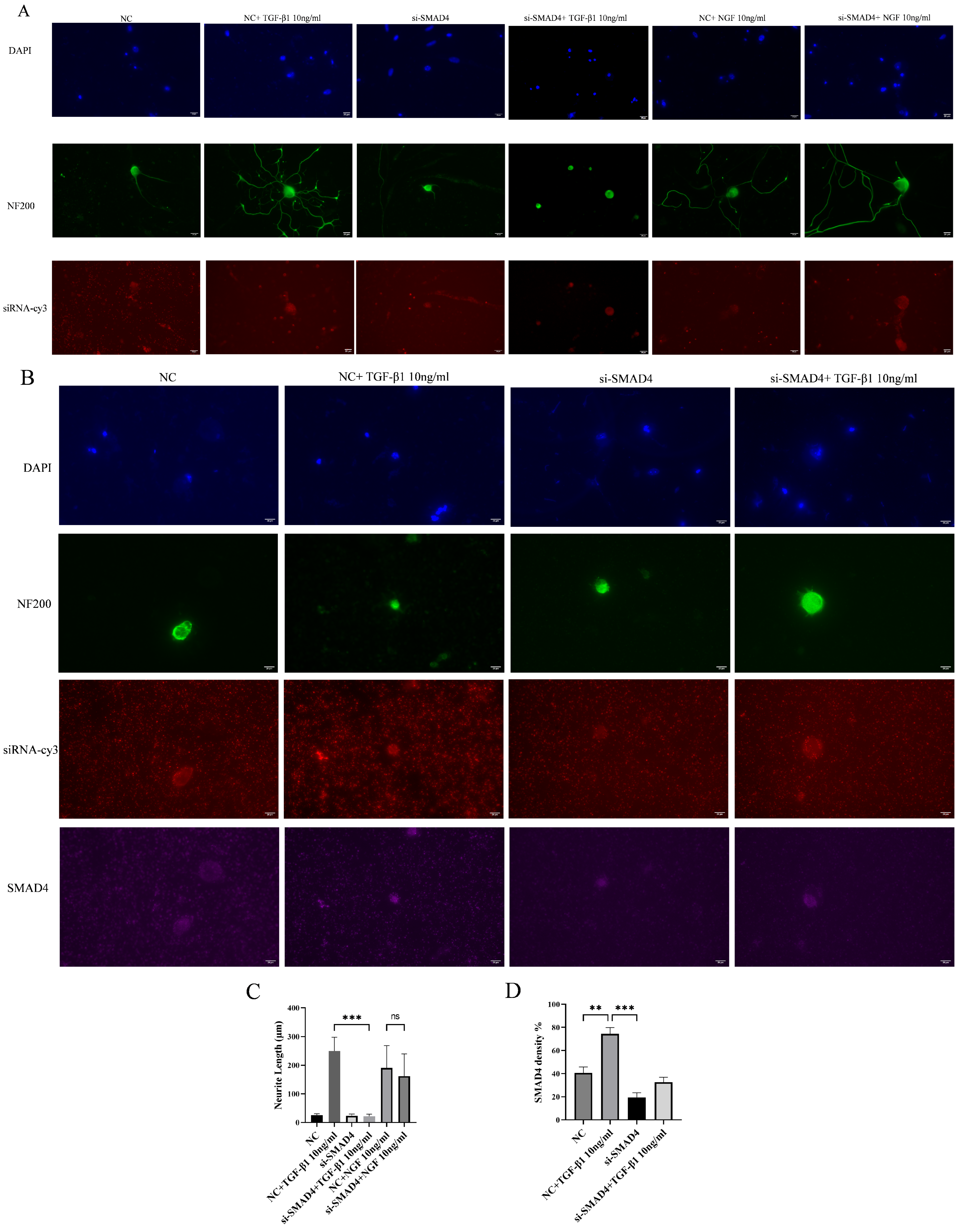
3.4. Smad4 siRNA Suppresses TGF-β1-Triggered DRG Neurite Outgrowth and Inhibits Smad4 Nuclear Translocation
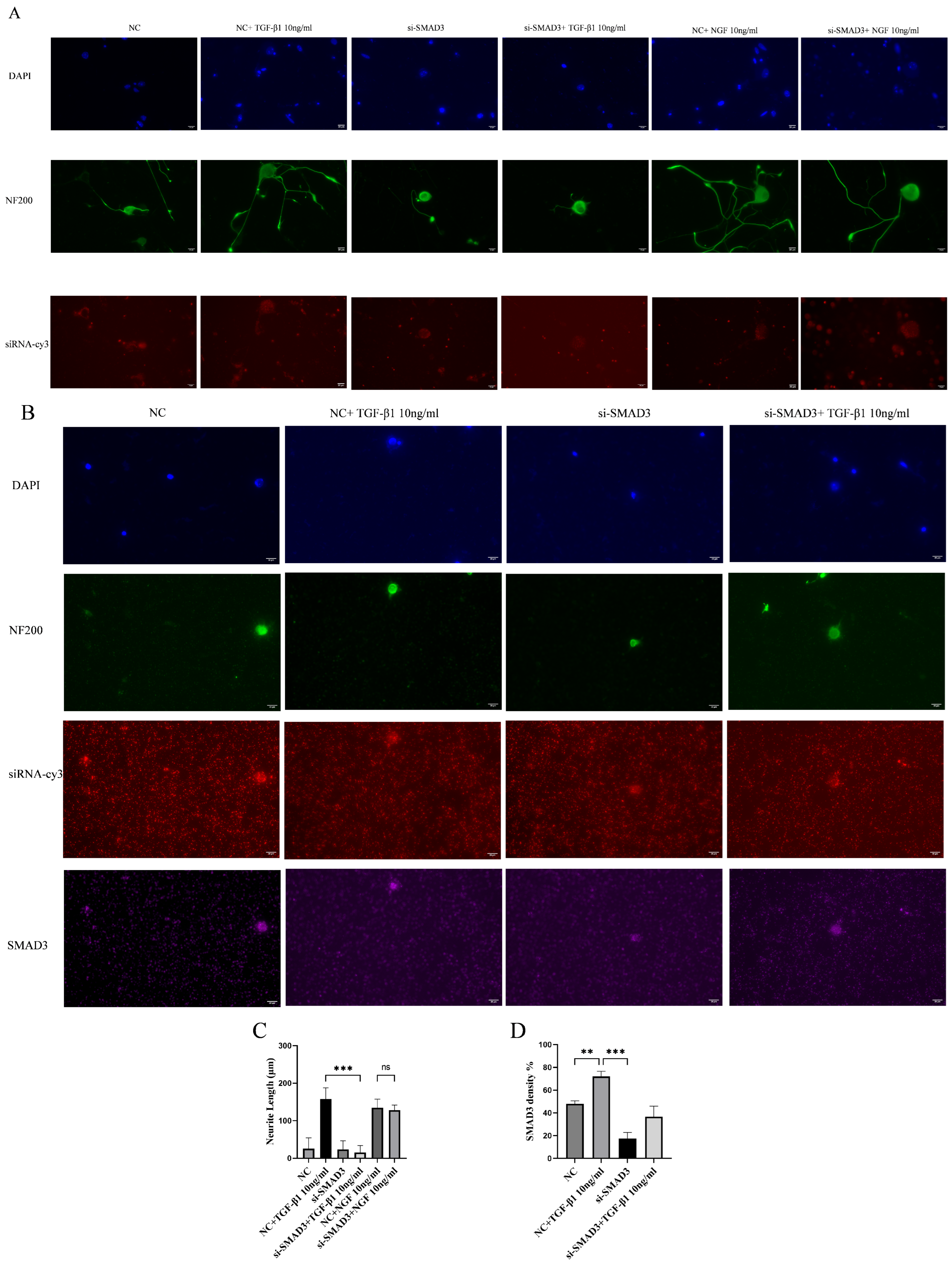
3.5. Smad3 siRNA Abrogates the TGF-β-Mediated Promotion of DRG Neurite Growth and Prevents Smad3 Nuclear Translocation
3.6. TGF-β1 Attenuates the Reduction in Nerve Fiber Density Caused by Cisplatin Injury
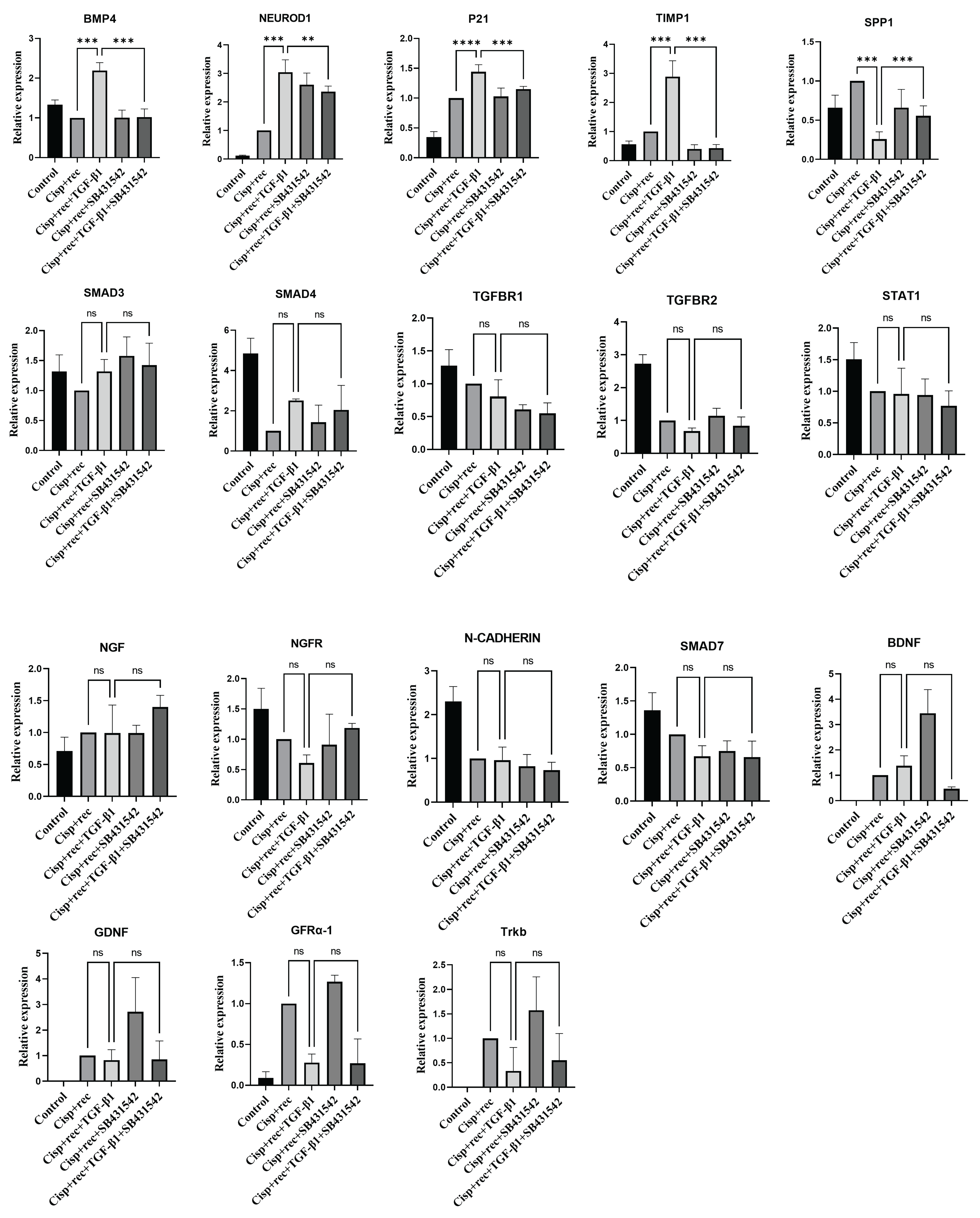
3.7. SB-431542 Acts on DRG Neurons via TGF-β-Mediated Signaling Pathway and Blocks TGF-β1-Induced Transcriptional Responses
4. Discussion
Supplementary Materials
Author Contributions
Funding
Institutional Review Board Statement
Informed Consent Statement
Data Availability Statement
Acknowledgments
Conflicts of Interest
References
- Staff, N.P.; Grisold, A.; Grisold, W.; Windebank, A.J. Chemotherapy-induced peripheral neuropathy: A current review. Ann. Neurol. 2017, 81, 772–781. [Google Scholar] [CrossRef] [PubMed] [PubMed Central]
- Starobova, H.; Vetter, I. Pathophysiology of Chemotherapy-Induced Peripheral Neuropathy. Front. Mol. Neurosci. 2017, 10, 174. [Google Scholar] [CrossRef]
- Yeh, T.-Y.; Luo, I.-W.; Hsieh, Y.-L.; Tseng, T.-J.; Chiang, H.; Hsieh, S.-T. Peripheral Neuropathic Pain: From Experimental Models to Potential Therapeutic Targets in Dorsal Root Ganglion Neurons. Cells 2020, 9, 2725. [Google Scholar] [CrossRef] [PubMed]
- Cavaletti, G. Peripheral neurotoxicity of platinum-based chemotherapy. Nat. Rev. Cancer 2008, 8, 72. [Google Scholar] [CrossRef] [PubMed]
- Acklin, S.; Xia, F. The Role of Nucleotide Excision Repair in Cisplatin-Induced Peripheral Neuropathy: Mechanism, Prevention, and Treatment. Int. J. Mol. Sci. 2021, 22, 1975. [Google Scholar] [CrossRef]
- Elmorsy, E.A.; Saber, S.; Hamad, R.S.; Abdel-Reheim, M.A.; El-kott, A.F.; AlShehri, M.A.; Morsy, K.; Salama, S.A.; Youssef, M.E. Advances in understanding cisplatin-induced toxicity: Molecular mechanisms and protective strategies. Eur. J. Pharm. Sci. 2024, 203, 106939. [Google Scholar] [CrossRef]
- Sanjabi, S.; Oh, S.A.; Li, M.O. Regulation of the Immune Response by TGF-β: From Conception to Autoimmunity and Infection. Cold Spring Harb. Perspect. Biol. 2017, 9, a022236. [Google Scholar] [CrossRef] [PubMed] [PubMed Central]
- Xia, C.; Liang, J.; Wang, K.; Guo, A.; Chen, Y.; Raza, M.A.; Wu, L.; Yan, H. Regulation of macrophages in the dorsal root ganglion through TGF-β1 inhibits painful traumatic neuroma. J. Transl. Med. 2025, 23, 1157. [Google Scholar] [CrossRef]
- Jiang, M.; Ding, Z.; Huang, Y.; Jiang, T.; Xia, Y.; Gu, D.; Gu, X.; Bai, H.; Yao, D. TGF-β1 Improves Nerve Regeneration and Functional Recovery After Sciatic Nerve Injury by Alleviating Inflammation. Biomedicines 2025, 13, 872. [Google Scholar] [CrossRef] [PubMed] [PubMed Central]
- Davison, S.P.; McCaffrey, T.V.; Porter, M.N.; Manders, E. Improved nerve regeneration with neutralization of transforming growth factor-β1. Laryngoscope 1999, 109, 631–635. [Google Scholar] [CrossRef] [PubMed]
- Sometani, A.; Kataoka, H.; Nitta, A.; Fukumitsu, H.; Nomoto, H.; Furukawa, S. Transforming growth factor-β1 enhances expression of brain-derived neurotrophic factor and its receptor, TrkB, in neurons cultured from rat cerebral cortex. J. Neurosci. Res. 2001, 66, 369–376. [Google Scholar] [CrossRef] [PubMed]
- Chalazonitis, A.; Kalberg, J.; Twardzik, D.R.; Morrison, R.S.; Kessler, J.A. Transforming growth factor β has neurotrophic actions on sensory neurons in vitro and is synergistic with nerve growth factor. Dev. Biol. 1992, 152, 121–132. [Google Scholar] [CrossRef] [PubMed]
- Rozés-Salvador, V.; Wilson, C.; Olmos, C.; Gonzalez-Billault, C.; Conde, C. Fine-Tuning the TGFβ Signaling Pathway by SARA During Neuronal Development. Front. Cell Dev. Biol. 2020, 8, 550267. [Google Scholar] [CrossRef]
- Ding, Z.; Jiang, M.; Qian, J.; Gu, D.; Bai, H.; Cai, M.; Yao, D. Role of transforming growth factor-β in peripheral nerve regeneration. Neural Regen. Res. 2024, 19, 380–386. [Google Scholar] [CrossRef] [PubMed] [PubMed Central]
- Zhao, B.; Yu, X.; Shi, J.; Ma, S.; Li, S.; Shi, H.; Xia, S.; Ye, Y.; Zhang, Y.; Du, Y.; et al. A stepwise mode of TGFβ-SMAD signaling and DNA methylation regulates naïve-to-primed pluripotency and differentiation. Nat. Commun. 2024, 15, 10123. [Google Scholar] [CrossRef]
- Lee, J.; Yon, D.K.; Choi, Y.S.; Lee, J.; Yeo, J.H.; Kim, S.S.; Lee, J.M.; Yeo, S.G. Roles of SMAD and SMAD-Associated Signaling Pathways in Nerve Regeneration Following Peripheral Nerve Injury: A Narrative Literature Review. Curr. Issues Mol. Biol. 2024, 46, 7769–7781. [Google Scholar] [CrossRef] [PubMed] [PubMed Central]
- Sleigh, J.N.; West, S.J.; Schiavo, G. A video protocol for rapid dissection of mouse dorsal root ganglia from defined spinal levels. BMC Res. Notes 2020, 13, 302. [Google Scholar] [CrossRef] [PubMed] [PubMed Central]
- Sleigh, J.N.; Weir, G.A.; Schiavo, G. A simple, step-by-step dissection protocol for the rapid isolation of mouse dorsal root ganglia. BMC Res. Notes 2016, 9, 82. [Google Scholar] [CrossRef] [PubMed] [PubMed Central]
- Yang, L.; Lindholm, K.; Konishi, Y.; Li, R.; Shen, Y. Target depletion of distinct tumor necrosis factor receptor subtypes reveals hippocampal neuron death and survival through different signal transduction pathways. J. Neurosci. 2002, 22, 3025–3032. [Google Scholar] [CrossRef] [PubMed] [PubMed Central]
- Gorgun, M.F.; Zhuo, M.; Englander, E.W. Cisplatin Toxicity in Dorsal Root Ganglion Neurons Is Relieved by Meclizine via Diminution of Mitochondrial Compromise and Improved Clearance of DNA Damage. Mol. Neurobiol. 2017, 54, 7883–7895, Erratum in Mol. Neurobiol. 2017, 54, 7896–7897. [Google Scholar] [CrossRef] [PubMed]
- Venegas, V.; Wang, J.; Dimmock, D.; Wong, L.J. Real-time quantitative PCR analysis of mitochondrial DNA content. Curr. Protoc. Hum. Genet. 2011, 68, 19.7.1–19.7.12. [Google Scholar] [CrossRef] [PubMed]
- Maj, M.A.; Ma, J.; Krukowski, K.N.; Kavelaars, A.; Heijnen, C.J. Inhibition of Mitochondrial p53 Accumulation by PFT-μ Prevents Cisplatin-Induced Peripheral Neuropathy. Front. Mol. Neurosci. 2017, 10, 108. [Google Scholar] [CrossRef] [PubMed]
- Deng, Z.; Fan, T.; Xiao, C.; Tian, H.; Zheng, Y.; Li, C.; He, J. TGF-β signaling in health, disease and therapeutics. Signal Transduct. Target. Ther. 2024, 9, 61. [Google Scholar] [CrossRef] [PubMed] [PubMed Central]
- Parikh, P.; Hao, Y.; Hosseinkhani, M.; Patil, S.B.; Huntley, G.W.; Tessier-Lavigne, M.; Zou, H. Regeneration of axons in injured spinal cord by activation of bone morphogenetic protein/Smad1 signaling pathway in adult neurons. Proc. Natl. Acad. Sci. USA 2011, 108, E99–E107. [Google Scholar] [CrossRef] [PubMed] [PubMed Central]
- Lai, M.; Pan, M.; Ge, L.; Liu, J.; Deng, J.; Wang, X.; Li, L.; Wen, J.; Tan, D.; Zhang, H.; et al. NeuroD1 overexpression in spinal neurons accelerates axonal regeneration after sciatic nerve injury. Exp. Neurol. 2020, 327, 113215. [Google Scholar] [CrossRef] [PubMed]
- Tanaka, H.; Yamashita, T.; Yachi, K.; Fujiwara, T.; Yoshikawa, H.; Tohyama, M. Cytoplasmic p21Cip1/WAF1 enhances axonal regeneration and functional recovery after spinal cord injury in rats. Neuroscience 2004, 127, 155–164. [Google Scholar] [CrossRef] [PubMed]
- Cappellano, G.; Vecchio, D.; Magistrelli, L.; Clemente, N.; Raineri, D.; Mazzucca, C.B.; Virgilio, E.; Dianzani, U.; Chiocchetti, A.; Comi, C. The Yin-Yang of osteopontin in nervous system diseases: Damage versus repair. Neural Regen. Res. 2021, 16, 1131–1137. [Google Scholar] [CrossRef]
- Marsh, B.C.; Kerr, N.C.; Isles, N.; Denhardt, D.T.; Wynick, D. Osteopontin expression and function within the dorsal root ganglion. Neuroreport 2007, 18, 153–157. [Google Scholar] [CrossRef] [PubMed] [PubMed Central]
- Ould-yahoui, A.; Tremblay, E.; Sbai, O.; Ferhat, L.; Bernard, A.; Charrat, E.; Gueye, Y.; Lim, N.H.; Brew, K.; Risso, J.J.; et al. A new role for TIMP-1 in modulating neurite outgrowth and morphology of cortical neurons. PLoS ONE 2009, 4, e8289. [Google Scholar] [CrossRef] [PubMed] [PubMed Central]
- Lomeli, N.; Pearre, D.C.; Cruz, M.; Di, K.; Ricks-Oddie, J.L.; Bota, D.A. Cisplatin induces BDNF downregulation in middle-aged female rat model while BDNF enhancement attenuates cisplatin neurotoxicity. Exp. Neurol. 2024, 375, 114717. [Google Scholar] [CrossRef] [PubMed] [PubMed Central]
- Azoulay, D.; Giryes, S.; Nasser, R.; Sharon, R.; Horowitz, N.A. Prediction of Chemotherapy-Induced Peripheral Neuropathy in Patients with Lymphoma and Myeloma: The Roles of Brain-Derived Neurotropic Factor Protein Levels and A Gene Polymorphism. J. Clin. Neurol. 2019, 15, 511–516. [Google Scholar] [CrossRef] [PubMed] [PubMed Central]
- Sharifi, M.; Kamalabadi-Farahani, M.; Salehi, M.; Ebrahimi-Brough, S.; Alizadeh, M. Recent perspectives on the synergy of mesenchymal stem cells with micro/nano strategies in peripheral nerve regeneration-a review. Front. Bioeng. Biotechnol. 2024, 12, 1401512. [Google Scholar] [CrossRef] [PubMed]
- Langert, K.A.; Brey, E.M. Strategies for Targeted Delivery to the Peripheral Nerve. Front. Neurosci. 2018, 12, 887. [Google Scholar] [CrossRef] [PubMed]
- Aloe, L.; Rocco, M.L.; Bianchi, P.; Manni, L. Nerve growth factor: From the early discoveries to the potential clinical use. J. Transl. Med. 2012, 10, 239. [Google Scholar] [CrossRef] [PubMed]






| Primer Name | Sequence (5′-3′) |
|---|---|
| 18S rRNA | Forward:5′-CTGCCATTAAGGGCGTGGG-3′ Reverse: 5′-GTGATCACTCGCTCCACCTC-3′ |
| B2M | Forward: 5′-ATCCAAATGCTGAAGAACGG-3′ Reverse: 5′-ATCAGTCTCAGTGGGGGTGA-3′ |
| BMP4 | Forward: 5′-GCCATTGTGCAGACCCTAGT-3′ Reverse: 5′-ACCCCTCTACCACCATCTCC-3′ |
| NEUROD1 | Forward: 5′-GCTGCGAGATCCCCATAGAC-3′ Reverse: 5′-ATGGCATTAAGCTGGGCACT-3′ |
| N-CADHERIN | Forward: 5′-CACTGCCATTGATGCGGATG-3′ Reverse: 5′-TGCCACAGTGATGATGTCCC-3′ |
| NGF | Forward: 5′-AAGTGCCGAGCCTCCAATCC-3′ Reverse: 5′-TTCTCATCTGTTGTCAACGCCTTG-3′ |
| NGFR | Forward: 5′-CACAGCGACAGCGGCATCTC-3′ Reverse: 5′-AGCAGCTTCTCGACCTCCTCAC-3′ |
| P21 | Forward: 5′-TTGTCGCTGTCTTGCACTCT-3′ Reverse: 5′-AATCTGTCAGGCTGGTCTGC-3′ |
| SMAD3 | Forward: 5′-AGGGGCTCCCTCACGTTATC-3′ Reverse: 5′-CATGGCCCGTAATTCATGGTG-3′ |
| SMAD4 | Forward: 5′-TCAGCCAGCTACTTACCACCA-3′ Reverse: 5′-ACACGTCCCCTTCACCTTTAC-3′ |
| SMAD7 | Forward: 5′-TGCACAAAGTGTTCCCTGGT-3′ Reverse: 5′-AGCTGATCTGCACGGTGAAA-3′ |
| SPP1 | Forward: 5′-CTGCAGTTCTCCTGGCTGAA-3′ Reverse: 5′-TCTGGGTGCAGGCTGTAAAG-3′ |
| STAT1 | Forward: 5′-TTCAGCAGCTGGACTCCAAG-3′ Reverse: 5′-CGAGACATCATAGGCAGCGT-3′ |
| TIMP1 | Forward: 5′-TGTGCACAGTGTTTCCCTGT-3′ Reverse: 5′-TCTGGTAGTCCTCAGAGCCC-3′ |
| TGFBR1 | Forward: 5′-TGCTCCAAACCACAGAGTAGGC-3′ Reverse: 5′-CCCAGAACACTAAGCCCATTGC-3′ |
| TGFBR2 | Forward: 5′-CCTACTCTGTCTGTGGATGACC-3′ Reverse: 5′-GACATCCGTCTGCTTGAACGAC-3′ |
| BDNF | Forward: 5′-TCGAAGAGCTGCTGGATGAGG-3′ Reverse: 5′-GGCTCCAAAGGCACTTGACTG-3′ |
| TRKB | Forward: 5′-GGTCTATGCCGTGGTGGTGATTG-3′ Reverse: 5′-ACCGCCCTCCGAAGAAGATGG-3′ |
| GDNF | Forward: 5′-CGCCGCCAATATGCCTGAA-3′ Reverse: 5′-TGCCGCTTGTTTATCTGGTGAC-3′ |
| GFRα1 | Forward: 5′-ACCACCACTGCCACGACTACC-3′ Reverse: 5′-GCACCAGCGAGACCATCCTTTC-3′ |
| siRNA a Name | Sequence (5′-3′) |
|---|---|
| si-NC b | Sense: 5′-UUCUCCGAACGUGUCACGUTT-3′ |
| si-SMAD3 c | Sense: 5′-UCCGGUUGACAUUGGACAGTT-3′ |
| si-SMAD4 d | Sense: 5′-UUGGAUUCUUUAAUAACAGTT-3′ |
Disclaimer/Publisher’s Note: The statements, opinions and data contained in all publications are solely those of the individual author(s) and contributor(s) and not of MDPI and/or the editor(s). MDPI and/or the editor(s) disclaim responsibility for any injury to people or property resulting from any ideas, methods, instructions or products referred to in the content. |
© 2026 by the authors. Licensee MDPI, Basel, Switzerland. This article is an open access article distributed under the terms and conditions of the Creative Commons Attribution (CC BY) license.
Share and Cite
Wu, P.; Wei, Y.; Chen, X.; Mo, Q.; Zhuo, M. TGF-β1 Promotes the Recovery of Dorsal Root Ganglion Neurons from Cisplatin-Induced Injury Through Smad4-Dependent Mechanism. Curr. Issues Mol. Biol. 2026, 48, 344. https://doi.org/10.3390/cimb48040344
Wu P, Wei Y, Chen X, Mo Q, Zhuo M. TGF-β1 Promotes the Recovery of Dorsal Root Ganglion Neurons from Cisplatin-Induced Injury Through Smad4-Dependent Mechanism. Current Issues in Molecular Biology. 2026; 48(4):344. https://doi.org/10.3390/cimb48040344
Chicago/Turabian StyleWu, Pan, Yiling Wei, Xiang Chen, Qingmei Mo, and Ming Zhuo. 2026. "TGF-β1 Promotes the Recovery of Dorsal Root Ganglion Neurons from Cisplatin-Induced Injury Through Smad4-Dependent Mechanism" Current Issues in Molecular Biology 48, no. 4: 344. https://doi.org/10.3390/cimb48040344
APA StyleWu, P., Wei, Y., Chen, X., Mo, Q., & Zhuo, M. (2026). TGF-β1 Promotes the Recovery of Dorsal Root Ganglion Neurons from Cisplatin-Induced Injury Through Smad4-Dependent Mechanism. Current Issues in Molecular Biology, 48(4), 344. https://doi.org/10.3390/cimb48040344