
Ferroptosis in Glioblastoma and Neuroblastoma: Molecular Mechanisms and Novel Therapeutic Strategies


Abstract
1. Introduction
2. Biological and Cellular Features of GBM and NB Relevant to Ferroptosis
2.1. Molecular and Metabolic Characteristics of GBM Predisposing to Ferroptosis Regulation
2.2. Developmental Origin and Ferroptosis-Related Vulnerabilities in NB
2.3. Rationale for Focusing on GBM and NB as Complementary Ferroptosis Models
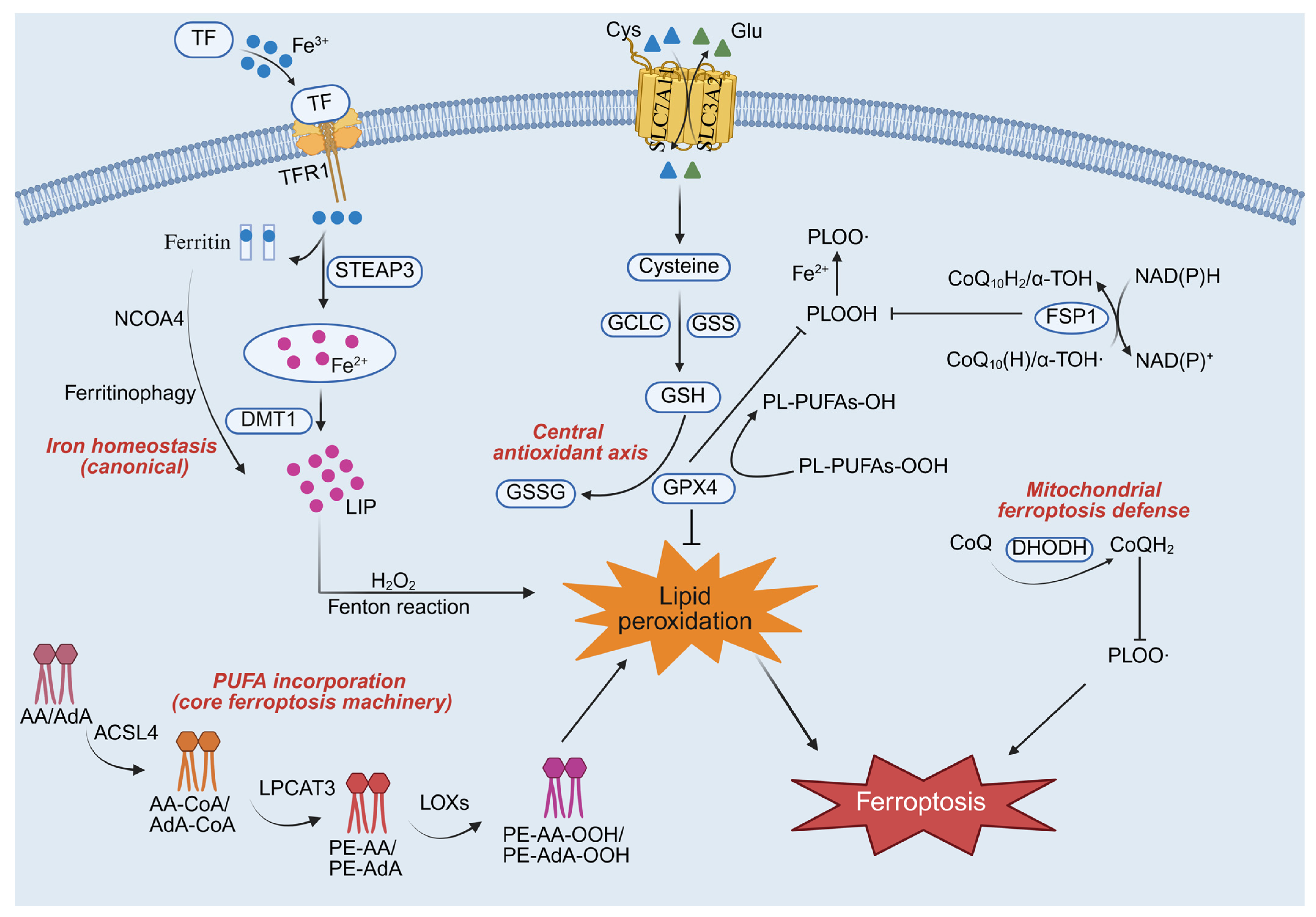
3. Core Ferroptosis Mechanisms and Their Tumor-Context Dependency
3.1. Lipid Metabolism and Membrane Vulnerability in GBM and NB
3.2. Iron Metabolism: Distinct Iron Dependencies in Adult Versus Pediatric Tumors
3.3. Antioxidant Systems and GPX4 Dependency in Nervous System Tumors
3.4. GPX4-Independent Pathways and Emerging Tumor-Specific Regulators
4. The Molecular Mechanisms of Ferroptosis in GBM and NB
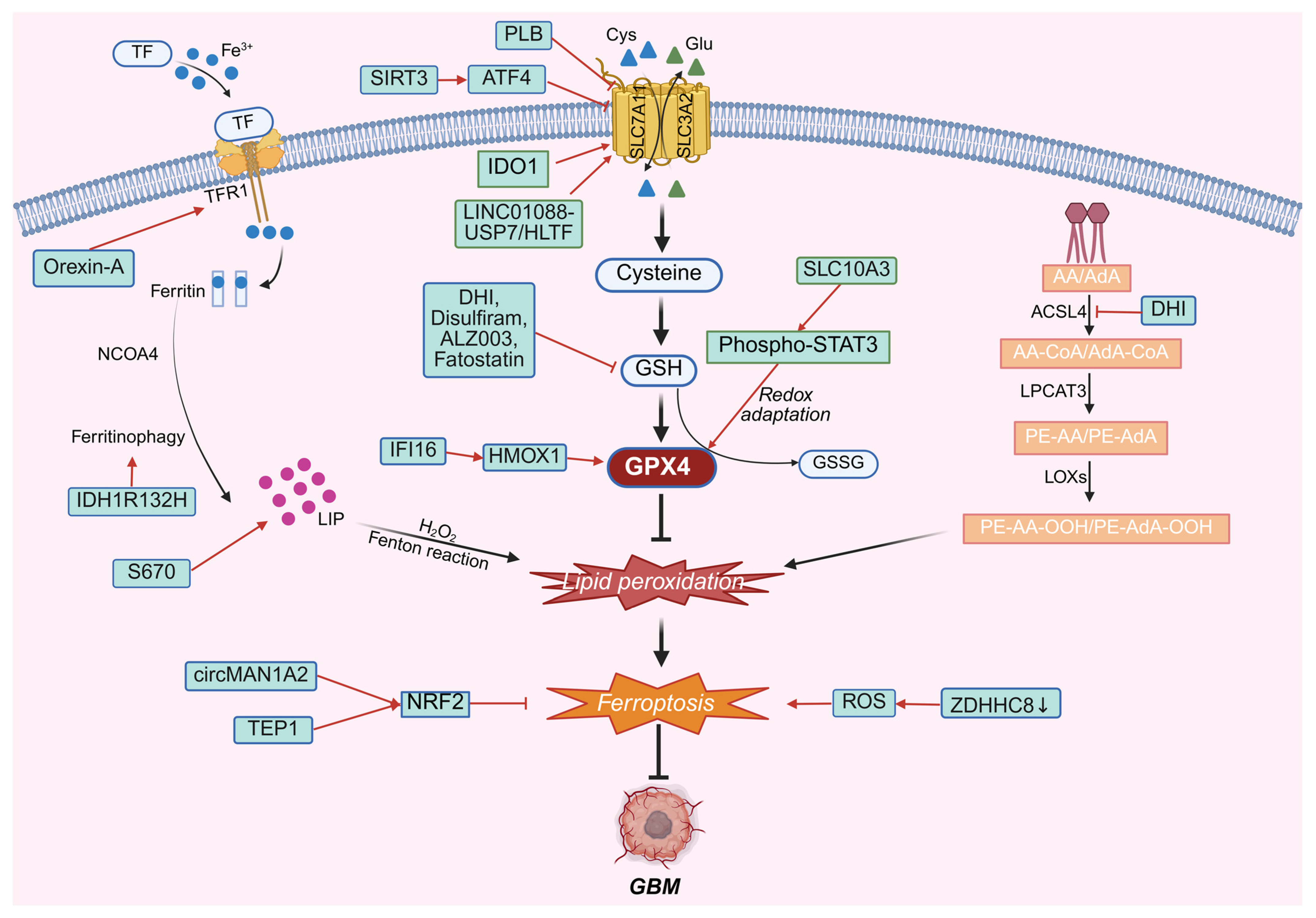
4.1. Molecular Mechanism of Ferroptosis in GBM
4.1.1. GPX4/GSH Regulatory Axis
4.1.2. Iron Metabolism
4.1.3. Lipid Metabolism
4.1.4. Mitochondrial Metabolism
4.1.5. NRF2 Signaling Pathway
4.1.6. STAT3 Signaling Pathway
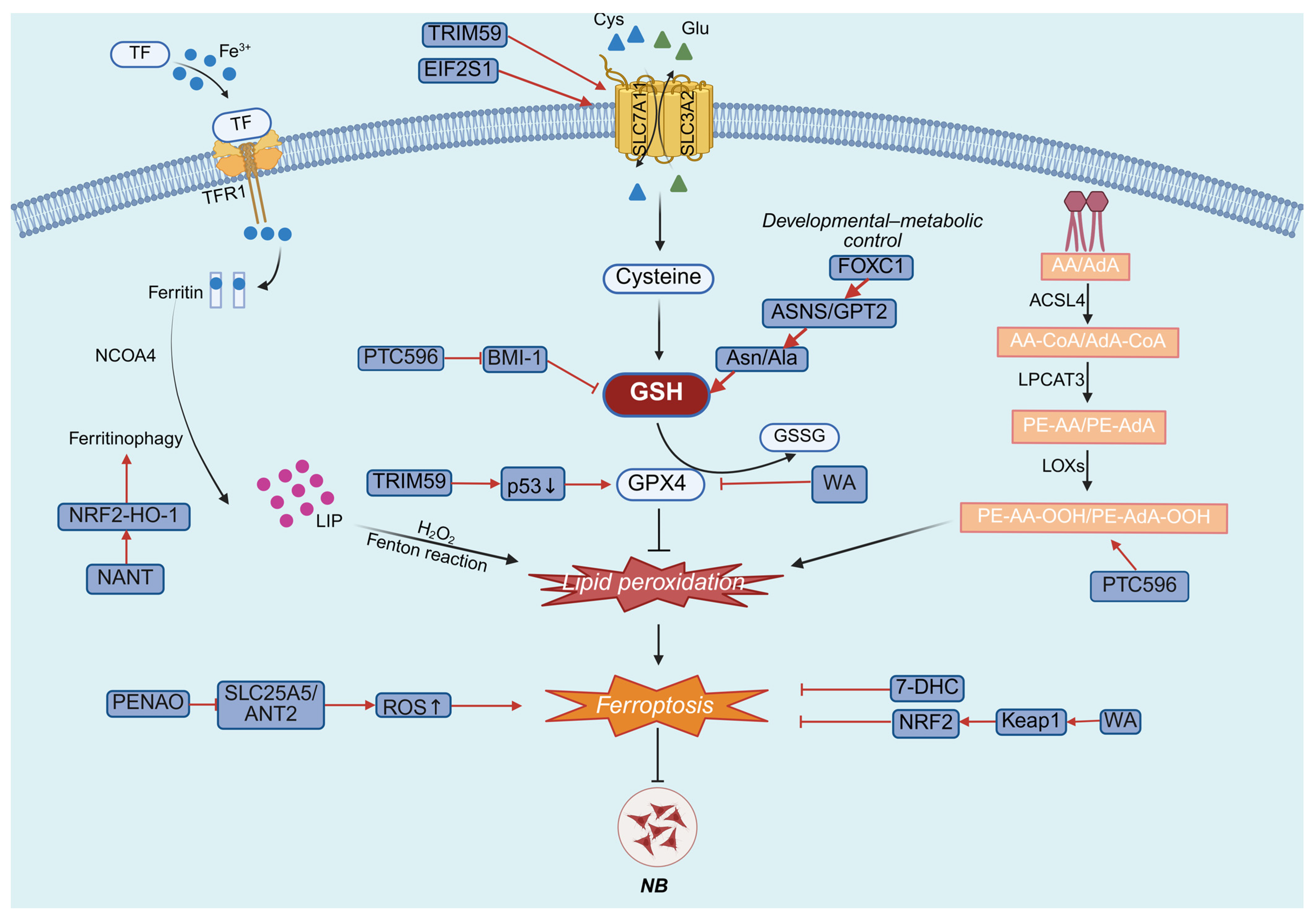
4.2. Molecular Mechanism of Ferroptosis in NB
4.2.1. GPX4/GSH Steady-State System
4.2.2. Iron Homeostasis
4.2.3. Lipid Reprogramming
4.2.4. Mitochondrial Dynamics
5. The Role of Ferroptosis in the Diagnosis of GBM and NB
5.1. The Role in the Diagnosis of GBM
5.2. The Role in the Diagnosis of NB
6. Ferroptosis as a Therapeutic Vulnerability in GBM and NB
6.1. GBM: Ferroptosis Regulation Shaped by Metabolic Plasticity and Therapy Resistance
6.2. NB: Developmental and MYCN-Driven Ferroptosis Dependencies
7. Clinical Challenges in Targeting Ferroptosis with Therapeutic Agents
8. Discussion
Author Contributions
Funding
Data Availability Statement
Conflicts of Interest
References
- Schaff, L.R.; Mellinghoff, I.K. Glioblastoma and Other Primary Brain Malignancies in Adults: A Review. JAMA 2023, 329, 574–587. [Google Scholar] [CrossRef] [PubMed]
- Rong, L.; Li, N.; Zhang, Z. Emerging therapies for glioblastoma: Current state and future directions. J. Exp. Clin. Cancer Res. 2022, 41, 142. [Google Scholar] [CrossRef]
- Singh, S.; Dey, D.; Barik, D.; Mohapatra, I.; Kim, S.; Sharma, M.; Prasad, S.; Wang, P.; Singh, A.; Singh, G. Glioblastoma at the crossroads: Current understanding and future therapeutic horizons. Signal Transduct. Target. Ther. 2025, 10, 213. [Google Scholar] [CrossRef]
- Foreman, K.J.; Marquez, N.; Dolgert, A.; Fukutaki, K.; Fullman, N.; McGaughey, M.; Pletcher, M.A.; Smith, A.E.; Tang, K.; Yuan, C.W.; et al. Forecasting life expectancy, years of life lost, and all-cause and cause-specific mortality for 250 causes of death: Reference and alternative scenarios for 2016-40 for 195 countries and territories. Lancet 2018, 392, 2052–2090. [Google Scholar] [CrossRef]
- Ostrom, Q.T.; Price, M.; Neff, C.; Cioffi, G.; Waite, K.A.; Kruchko, C.; Barnholtz-Sloan, J.S. CBTRUS Statistical Report: Primary Brain and Other Central Nervous System Tumors Diagnosed in the United States in 2016–2020. Neuro Oncol. 2023, 25, iv1–iv99. [Google Scholar] [CrossRef]
- Lan, Z.; Li, X.; Zhang, X. Glioblastoma: An Update in Pathology, Molecular Mechanisms and Biomarkers. Int. J. Mol. Sci. 2024, 25, 3040. [Google Scholar] [CrossRef] [PubMed]
- Ismailov, A.; Spallone, A.; Belogurov, A., Jr.; Herbert, A.; Poptsova, M. Molecular biology of the deadliest cancer—Glioblastoma: What do we know? Front. Immunol. 2025, 16, 1530305. [Google Scholar] [CrossRef]
- Ramachandran, M.; Yu, D.; Dyczynski, M.; Baskaran, S.; Zhang, L.; Lulla, A.; Lulla, V.; Saul, S.; Nelander, S.; Dimberg, A.; et al. Safe and Effective Treatment of Experimental Neuroblastoma and Glioblastoma Using Systemically Delivered Triple MicroRNA-Detargeted Oncolytic Semliki Forest Virus. Clin. Cancer Res. 2017, 23, 1519–1530. [Google Scholar] [CrossRef] [PubMed]
- Nakagawara, A.; Li, Y.; Izumi, H.; Muramori, K.; Inada, H.; Nishi, M. Neuroblastoma. Jpn. J. Clin. Oncol. 2018, 48, 214–241. [Google Scholar] [CrossRef]
- Zafar, A.; Wang, W.; Liu, G.; Wang, X.; Xian, W.; McKeon, F.; Foster, J.; Zhou, J.; Zhang, R. Molecular targeting therapies for neuroblastoma: Progress and challenges. Med. Res. Rev. 2021, 41, 961–1021, Erratum in Med. Res. Rev. 2022, 42, 641. [Google Scholar] [CrossRef]
- Dixon, S.J.; Olzmann, J.A. The cell biology of ferroptosis. Nat. Rev. Mol. Cell Biol. 2024, 25, 424–442. [Google Scholar] [CrossRef]
- Mou, Y.; Wang, J.; Wu, J.; He, D.; Zhang, C.; Duan, C.; Li, B. Ferroptosis, a new form of cell death: Opportunities and challenges in cancer. J. Hematol. Oncol. 2019, 12, 34. [Google Scholar] [CrossRef]
- Chen, T.; Leng, J.; Tan, J.; Zhao, Y.; Xie, S.; Zhao, S.; Yan, X.; Zhu, L.; Luo, J.; Kong, L.; et al. Discovery of Novel Potent Covalent Glutathione Peroxidase 4 Inhibitors as Highly Selective Ferroptosis Inducers for the Treatment of Triple-Negative Breast Cancer. J. Med. Chem. 2023, 66, 10036–10059. [Google Scholar] [CrossRef]
- Zhang, Y.; Guo, R.; Li, J.; Zhu, L. Research progress on the occurrence and therapeutic mechanism of ferroptosis in NSCLC. Naunyn Schmiedebergs Arch. Pharmacol. 2022, 395, 1–12. [Google Scholar] [CrossRef]
- Li, C.; Yin, X.; Liu, Z.; Wang, J. Emerging Potential Mechanism and Therapeutic Target of Ferroptosis in PDAC: A Promising Future. Int. J. Mol. Sci. 2022, 23, 15031. [Google Scholar] [CrossRef] [PubMed]
- Ajoolabady, A.; Tang, D.; Kroemer, G.; Ren, J. Ferroptosis in hepatocellular carcinoma: Mechanisms and targeted therapy. Br. J. Cancer 2023, 128, 190–205. [Google Scholar] [CrossRef] [PubMed]
- Xu, L.; Liu, Y.; Chen, X.; Zhong, H.; Wang, Y. Ferroptosis in life: To be or not to be. Biomed. Pharmacother. 2023, 159, 114241. [Google Scholar] [CrossRef]
- Wang, H.; Liu, Y.; Che, S.; Li, X.; Tang, D.; Lv, S.; Zhao, H. Deciphering the link: Ferroptosis and its role in glioma. Front. Immunol. 2024, 15, 1346585. [Google Scholar] [CrossRef]
- Mashayekhi, S.; Majedi, H.; Dehpour, A.R.; Dehghan, S.; Jafarian, M.; Hadjighassem, M.; Hosseindoost, S. Ferroptosis as a therapeutic target in glioblastoma: Mechanisms and emerging strategies. Mol. Ther. Nucleic Acids 2025, 36, 102649. [Google Scholar] [CrossRef]
- Sun, H.; Zhang, J.; Qi, H.; Jiang, D.; Hu, C.; Mao, C.; Liu, W.; Qi, H.; Zong, J. Ioning out glioblastoma: Ferroptosis mechanisms and therapeutic frontiers. Cell Death Discov. 2025, 11, 407. [Google Scholar] [CrossRef] [PubMed]
- Singh, S.; Mohapatra, I.; Barik, D.; Zheng, H.; Kim, S.; Sharma, M.; Chen, C.C.; Singh, G. Harnessing ferroptosis to transform glioblastoma therapy and surmount treatment resistance. Cell Death Discov. 2025, 11, 448. [Google Scholar] [CrossRef]
- Bo, Y.; Mu, L.; Yang, Z.; Li, W.; Jin, M. Research progress on ferroptosis in gliomas (Review). Oncol. Lett. 2024, 27, 36. [Google Scholar] [CrossRef]
- Zheng, X.; Diao, M.; Tong, S.; Yang, S.; Lin, J.; Zhuo, S.; Wang, T.; Dai, J.; Chen, S.; Wang, K. Global research landscape and hotspots for ferroptosis in glioma: A comprehensive bibliometric and visual analysis. Heliyon 2025, 11, e42242. [Google Scholar] [CrossRef]
- Sun, Q.; Lu, H.; Yuan, F.; Zhao, Q.; Wei, Y.; Wang, R.; Chen, Q.; Liu, B. SLC10A3 regulates ferroptosis of glioblastoma through the STAT3/GPX4 pathway. Sci. Rep. 2025, 15, 21259. [Google Scholar] [CrossRef]
- Alborzinia, H.; Flórez, A.F.; Kreth, S.; Brückner, L.M.; Yildiz, U.; Gartlgruber, M.; Odoni, D.I.; Poschet, G.; Garbowicz, K.; Shao, C.; et al. MYCN mediates cysteine addiction and sensitizes neuroblastoma to ferroptosis. Nat. Cancer 2022, 3, 471–485. [Google Scholar] [CrossRef] [PubMed]
- Alborzinia, H.; Chen, Z.; Yildiz, U.; Freitas, F.P.; Vogel, F.C.E.; Varga, J.P.; Batani, J.; Bartenhagen, C.; Schmitz, W.; Büchel, G.; et al. LRP8-mediated selenocysteine uptake is a targetable vulnerability in MYCN-amplified neuroblastoma. EMBO Mol. Med. 2023, 15, e18014. [Google Scholar] [CrossRef] [PubMed]
- Lu, Y.; Yang, Q.; Su, Y.; Ji, Y.; Li, G.; Yang, X.; Xu, L.; Lu, Z.; Dong, J.; Wu, Y.; et al. MYCN mediates TFRC-dependent ferroptosis and reveals vulnerabilities in neuroblastoma. Cell Death Dis. 2021, 12, 511. [Google Scholar] [CrossRef] [PubMed]
- Xue, X.; Wang, M.; Cui, J.; Yang, M.; Ma, L.; Kang, R.; Tang, D.; Wang, J. Glutathione metabolism in ferroptosis and cancer therapy. Cancer Lett. 2025, 621, 217697. [Google Scholar] [CrossRef]
- Chi, H.; Li, B.; Wang, Q.; Gao, Z.; Feng, B.; Xue, H.; Li, G. Opportunities and challenges related to ferroptosis in glioma and neuroblastoma. Front. Oncol. 2023, 13, 1065994. [Google Scholar] [CrossRef]
- Jiang, X.; Stockwell, B.R.; Conrad, M. Ferroptosis: Mechanisms, biology and role in disease. Nat. Rev. Mol. Cell Biol. 2021, 22, 266–282. [Google Scholar] [CrossRef]
- Liang, D.; Minikes, A.M.; Jiang, X. Ferroptosis at the intersection of lipid metabolism and cellular signaling. Mol. Cell 2022, 82, 2215–2227. [Google Scholar] [CrossRef]
- Sun, D.; Wang, L.; Wu, Y.; Yu, Y.; Yao, Y.; Yang, H.; Hao, C. Lipid metabolism in ferroptosis: Mechanistic insights and therapeutic potential. Front. Immunol. 2025, 16, 1545339. [Google Scholar] [CrossRef]
- Lee, J.; Roh, J.L. Lipid metabolism in ferroptosis: Unraveling key mechanisms and therapeutic potential in cancer. Biochim. Biophys. Acta Rev. Cancer 2025, 1880, 189258. [Google Scholar] [CrossRef] [PubMed]
- Pope, L.E.; Dixon, S.J. Regulation of ferroptosis by lipid metabolism. Trends Cell Biol. 2023, 33, 1077–1087. [Google Scholar] [CrossRef] [PubMed]
- Battaglia, A.M.; Chirillo, R.; Aversa, I.; Sacco, A.; Costanzo, F.; Biamonte, F. Ferroptosis and Cancer: Mitochondria Meet the “Iron Maiden” Cell Death. Cells 2020, 9, 1505. [Google Scholar] [CrossRef]
- Gao, M.; Monian, P.; Pan, Q.; Zhang, W.; Xiang, J.; Jiang, X. Ferroptosis is an autophagic cell death process. Cell Res. 2016, 26, 1021–1032. [Google Scholar] [CrossRef]
- Lin, Z.; Liu, J.; Kang, R.; Yang, M.; Tang, D. Lipid Metabolism in Ferroptosis. Adv. Biol. 2021, 5, e2100396. [Google Scholar] [CrossRef]
- Dixon, S.J.; Lemberg, K.M.; Lamprecht, M.R.; Skouta, R.; Zaitsev, E.M.; Gleason, C.E.; Patel, D.N.; Bauer, A.J.; Cantley, A.M.; Yang, W.S.; et al. Ferroptosis: An iron-dependent form of nonapoptotic cell death. Cell 2012, 149, 1060–1072. [Google Scholar] [CrossRef] [PubMed]
- Li, J.; Cao, F.; Yin, H.L.; Huang, Z.J.; Lin, Z.T.; Mao, N.; Sun, B.; Wang, G. Ferroptosis: Past, present and future. Cell Death Dis. 2020, 11, 88. [Google Scholar] [CrossRef]
- Doll, S.; Freitas, F.P.; Shah, R.; Aldrovandi, M.; da Silva, M.C.; Ingold, I.; Goya Grocin, A.; Xavier da Silva, T.N.; Panzilius, E.; Scheel, C.H.; et al. FSP1 is a glutathione-independent ferroptosis suppressor. Nature 2019, 575, 693–698. [Google Scholar] [CrossRef]
- Bersuker, K.; Hendricks, J.M.; Li, Z.; Magtanong, L.; Ford, B.; Tang, P.H.; Roberts, M.A.; Tong, B.; Maimone, T.J.; Zoncu, R.; et al. The CoQ oxidoreductase FSP1 acts parallel to GPX4 to inhibit ferroptosis. Nature 2019, 575, 688–692. [Google Scholar] [CrossRef]
- Zhou, Y.; Zeng, L.; Cai, L.; Zheng, W.; Liu, X.; Xiao, Y.; Jin, X.; Bai, Y.; Lai, M.; Li, H.; et al. Cellular senescence-associated gene IFI16 promotes HMOX1-dependent evasion of ferroptosis and radioresistance in glioblastoma. Nat. Commun. 2025, 16, 1212. [Google Scholar] [CrossRef] [PubMed]
- Qiu, C.; Zhang, X.; Huang, B.; Wang, S.; Zhou, W.; Li, C.; Li, X.; Wang, J.; Yang, N. Disulfiram, a Ferroptosis Inducer, Triggers Lysosomal Membrane Permeabilization by Up-Regulating ROS in Glioblastoma. Onco Targets Ther. 2020, 13, 10631–10640. [Google Scholar] [CrossRef] [PubMed]
- Chen, T.C.; Chuang, J.Y.; Ko, C.Y.; Kao, T.J.; Yang, P.Y.; Yu, C.H.; Liu, M.S.; Hu, S.L.; Tsai, Y.T.; Chan, H.; et al. AR ubiquitination induced by the curcumin analog suppresses growth of temozolomide-resistant glioblastoma through disrupting GPX4-Mediated redox homeostasis. Redox Biol. 2020, 30, 101413. [Google Scholar] [CrossRef]
- Li, X.; Zhang, W.; Xing, Z.; Hu, S.; Zhang, G.; Wang, T.; Wang, T.; Fan, Q.; Chen, G.; Cheng, J.; et al. Targeting SIRT3 sensitizes glioblastoma to ferroptosis by promoting mitophagy and inhibiting SLC7A11. Cell Death Dis. 2024, 15, 168. [Google Scholar] [CrossRef]
- Cai, J.; Ye, Z.; Hu, Y.; Ye, L.; Gao, L.; Wang, Y.; Sun, Q.; Tong, S.; Zhang, S.; Wu, L.; et al. Fatostatin induces ferroptosis through inhibition of the AKT/mTORC1/GPX4 signaling pathway in glioblastoma. Cell Death Dis. 2023, 14, 211. [Google Scholar] [CrossRef]
- Wang, Z.; Wang, Y.; Shen, N.; Liu, Y.; Xu, X.; Zhu, R.; Jiang, H.; Wu, X.; Wei, Y.; Tang, J. AMPKα1-mediated ZDHHC8 phosphorylation promotes the palmitoylation of SLC7A11 to facilitate ferroptosis resistance in glioblastoma. Cancer Lett. 2024, 584, 216619. [Google Scholar] [CrossRef]
- Meng, X.; Wang, Z.; Yang, Q.; Liu, Y.; Gao, Y.; Chen, H.; Li, A.; Li, R.; Wang, J.; Sun, G. Intracellular C5aR1 inhibits ferroptosis in glioblastoma through METTL3-dependent m6A methylation of GPX4. Cell Death Dis. 2024, 15, 729. [Google Scholar] [CrossRef]
- Zeng, Y.; Zhao, L.; Zeng, K.; Zhan, Z.; Zhan, Z.; Li, S.; Zhan, H.; Chai, P.; Xie, C.; Ding, S.; et al. TRAF3 loss protects glioblastoma cells from lipid peroxidation and immune elimination via dysregulated lipid metabolism. J. Clin. Investig. 2025, 135, e178550. [Google Scholar] [CrossRef]
- Li, X.; Hu, J.; Zheng, W.; Fan, Z.; Chi, H.; Li, H.; Wang, Y.; Jing, Z. CircMAN1A2 Levels Determine GBM Susceptibility to TMZ in a Pathway Involving TEP1- and KEAP1-Mediated NRF2 Degradation Leading to Ferroptosis. CNS Neurosci. Ther. 2025, 31, e70489. [Google Scholar] [CrossRef] [PubMed]
- Tian, Q.; Dan, G.; Wang, X.; Zhu, J.; Chen, C.; Tang, D.; Wang, Z.; Chen, D.; Lei, S.; Yang, C.; et al. IDO1 inhibits ferroptosis by regulating FTO-mediated m6A methylation and SLC7A11 mRNA stability during glioblastoma progression. Cell Death Discov. 2025, 11, 22. [Google Scholar] [CrossRef] [PubMed]
- Zhan, S.; Lu, L.; Pan, S.S.; Wei, X.Q.; Miao, R.R.; Liu, X.H.; Xue, M.; Lin, X.K.; Xu, H.L. Targeting NQO1/GPX4-mediated ferroptosis by plumbagin suppresses in vitro and in vivo glioma growth. Br. J. Cancer 2022, 127, 364–376. [Google Scholar] [CrossRef]
- Zhou, Y.; Zhao, Z.; Jiang, C.; Nie, C.; Xiao, D.; Wu, Z.; Yu, H.; Zheng, J.; Wang, X.; Jiang, X. LINC01088 prevents ferroptosis in glioblastoma by enhancing SLC7A11 via HLTF/USP7 axis. Clin. Transl. Med. 2025, 15, e70257. [Google Scholar] [CrossRef]
- Gao, W.; Li, Y.; Lin, X.; Deng, K.; Long, X.; Li, D.; Huang, M.; Wang, X.; Xu, Y.; She, X.; et al. Procyanidin B1 Promotes PSMC3-NRF2 Ubiquitination to Induce Ferroptosis in Glioblastoma. Phytother. Res. 2024, 38, 5583–5597. [Google Scholar] [CrossRef]
- Yang, Y.H.; Li, W.; Ren, L.W.; Yang, H.; Zhang, Y.Z.; Zhang, S.; Hao, Y.; Yu, D.K.; Tong, R.S.; Du, G.H.; et al. S670, an amide derivative of 3-O-acetyl-11-keto-β-boswellic acid, induces ferroptosis in human glioblastoma cells by generating ROS and inhibiting STX17-mediated fusion of autophagosome and lysosome. Acta Pharmacol. Sin. 2024, 45, 209–222. [Google Scholar] [CrossRef] [PubMed]
- Zhang, K.; Wu, Y.; Chen, G.; Wang, H.; Liu, Y.; Zhou, Y. Heat shock protein 27 deficiency promotes ferrous ion absorption and enhances acyl-Coenzyme A synthetase long-chain family member 4 stability to promote glioblastoma cell ferroptosis. Cancer Cell Int. 2023, 23, 5. [Google Scholar] [CrossRef] [PubMed]
- Huan, R.; Zhang, J.; Yue, J.; Yang, S.; Han, G.; Cheng, Y.; Tan, Y. Orexin-A mediates glioblastoma proliferation inhibition by increasing ferroptosis triggered by unstable iron pools and GPX4 depletion. J. Cell. Mol. Med. 2024, 28, e18318. [Google Scholar] [CrossRef]
- Liu, Y.; Jiang, N.; Chen, W.; Zhang, W.; Shen, X.; Jia, B.; Chen, G. TRIM59-mediated ferroptosis enhances neuroblastoma development and chemosensitivity through p53 ubiquitination and degradation. Heliyon 2024, 10, e26014. [Google Scholar] [CrossRef]
- Li, Q.; Cheng, Y.; Yang, C.; Tian, M.; Wang, X.; Li, D.; Li, X.; Qu, J.; Zhou, S.; Zheng, L.; et al. Targeting the Exonic Circular OGT RNA/O-GlcNAc Transferase/Forkhead Box C1 Axis Inhibits Asparagine- and Alanine-Mediated Ferroptosis Repression in Neuroblastoma Progression. Research 2025, 8, 0703. [Google Scholar] [CrossRef]
- Valenti, G.E.; Roveri, A.; Venerando, R.; Menichini, P.; Monti, P.; Tasso, B.; Traverso, N.; Domenicotti, C.; Marengo, B. PTC596-Induced BMI-1 Inhibition Fights Neuroblastoma Multidrug Resistance by Inducing Ferroptosis. Antioxidants 2023, 13, 3. [Google Scholar] [CrossRef]
- Li, Z.; Wang, Y.; Liang, S.; Yuan, T.; Liu, J. EIF2S1 Silencing Impedes Neuroblastoma Development Through GPX4 Inactivation and Ferroptosis Induction. Int. J. Genom. 2024, 2024, 6594426. [Google Scholar] [CrossRef]
- Chen, Z.; Inague, A.; Kaushal, K.; Fazeli, G.; Schilling, D.; Xavier da Silva, T.N.; Dos Santos, A.F.; Cheytan, T.; Freitas, F.P.; Yildiz, U.; et al. PRDX6 contributes to selenocysteine metabolism and ferroptosis resistance. Mol. Cell 2024, 84, 4645–4659.e9, Erratum in Mol. Cell 2025, 85, 3343–3344. [Google Scholar] [CrossRef]
- Qiu, L.; Zhou, R.; Luo, Z.; Wu, J.; Jiang, H. CDC27-ODC1 Axis Promotes Metastasis, Accelerates Ferroptosis and Predicts Poor Prognosis in Neuroblastoma. Front. Oncol. 2022, 12, 774458. [Google Scholar] [CrossRef]
- Freitas, F.P.; Alborzinia, H.; Dos Santos, A.F.; Nepachalovich, P.; Pedrera, L.; Zilka, O.; Inague, A.; Klein, C.; Aroua, N.; Kaushal, K.; et al. 7-Dehydrocholesterol is an endogenous suppressor of ferroptosis. Nature 2024, 626, 401–410. [Google Scholar] [CrossRef]
- Hassannia, B.; Wiernicki, B.; Ingold, I.; Qu, F.; Van Herck, S.; Tyurina, Y.Y.; Bayır, H.; Abhari, B.A.; Angeli, J.P.F.; Choi, S.M.; et al. Nano-targeted induction of dual ferroptotic mechanisms eradicates high-risk neuroblastoma. J. Clin. Investig. 2018, 128, 3341–3355. [Google Scholar] [CrossRef] [PubMed]
- Seneviratne, J.A.; Carter, D.R.; Mittra, R.; Gifford, A.; Kim, P.Y.; Luo, J.S.; Mayoh, C.; Salib, A.; Rahmanto, A.S.; Murray, J.; et al. Inhibition of mitochondrial translocase SLC25A5 and histone deacetylation is an effective combination therapy in neuroblastoma. Int. J. Cancer 2023, 152, 1399–1413. [Google Scholar] [CrossRef] [PubMed]
- Sun, Q.; Xu, Y.; Yuan, F.; Qi, Y.; Wang, Y.; Chen, Q.; Liu, B. Rho family GTPase 1 (RND1), a novel regulator of p53, enhances ferroptosis in glioblastoma. Cell Biosci. 2022, 12, 53. [Google Scholar] [CrossRef] [PubMed]
- Zheng, X.; Zhang, C. The Regulation of Ferroptosis by Noncoding RNAs. Int. J. Mol. Sci. 2023, 24, 13336. [Google Scholar] [CrossRef]
- Shenoy, G.; Connor, J.R. A closer look at the role of iron in glioblastoma. Neuro Oncol. 2023, 25, 2136–2149. [Google Scholar] [CrossRef]
- Lathoria, K.; Gowda, P.; Umdor, S.B.; Patrick, S.; Suri, V.; Sen, E. PRMT1 driven PTX3 regulates ferritinophagy in glioma. Autophagy 2023, 19, 1997–2014. [Google Scholar] [CrossRef]
- Mohan, M.; Mannan, A.; Kakkar, C.; Singh, T.G. Nrf2 and Ferroptosis: Exploring Translational Avenues for Therapeutic Approaches to Neurological Diseases. Curr. Drug Targets 2025, 26, 33–58. [Google Scholar] [CrossRef]
- Lv, G.; Li, X.; Deng, H.; Zhang, J.; Gao, X. Regulatory Mechanisms of STAT3 in GBM and its Impact on TMZ Resistance. Curr. Mol. Pharmacol. 2024, 17, e18761429386400. [Google Scholar] [CrossRef]
- Xue, L.; Luo, K.; Hou, K.; Huo, W.; Ruan, P.; Xue, Y.; Yao, X.; Meng, C.; Xia, D.; Tang, Y.; et al. Targeted Gold Nanoclusters for Synergistic High-Risk Neuroblastoma Therapy through Noncanonical Ferroptosis. ACS Appl. Mater. Interfaces 2024, 16, 53555–53566. [Google Scholar] [CrossRef]
- Agostini, M.; Melino, G.; Habeb, B.; Calandria, J.M.; Bazan, N.G. Targeting lipid metabolism in cancer: Neuroblastoma. Cancer Metastasis Rev. 2022, 41, 255–260. [Google Scholar] [CrossRef]
- Cioffi, G.; Waite, K.A.; Edelson, J.L.; Kruchko, C.; Ostrom, Q.T.; Barnholtz-Sloan, J.S. Changes in survival over time for primary brain and other CNS tumors in the United States, 2004-2017. J. Neurooncol. 2022, 160, 209–219. [Google Scholar] [CrossRef]
- Zhang, Q.; Yu, H.; Zhong, J.; Cheng, W.; Qi, Y. Global, regional, and national burden of brain and central nervous system cancer: A systematic analysis of incidence, deaths, and DALYS with predictions to 2040. Int. J. Surg. 2025, 111, 4033–4038. [Google Scholar] [CrossRef] [PubMed]
- Deng, S.; Zheng, Y.; Mo, Y.; Xu, X.; Li, Y.; Zhang, Y.; Liu, J.; Chen, J.; Tian, Y.; Ke, Y. Ferroptosis Suppressive Genes Correlate with Immunosuppression in Glioblastoma. World Neurosurg. 2021, 152, e436–e448. [Google Scholar] [CrossRef] [PubMed]
- Lv, Y.; Gao, Y.; Di, W.; Li, Z.; Shi, Y.; Hou, T.; Chen, Y.; Tian, J.; Xu, M.; Su, W.; et al. MFAP4 is a novel prognostic biomarker in glioma correlating with immunotherapy resistance and ferroptosis. Front. Pharmacol. 2025, 16, 1551863. [Google Scholar] [CrossRef] [PubMed]
- Wu, Y.; Liu, L.; Li, Z.; Zhang, T.; Wang, Q.; Cheng, M. A Risk Model Based on Ferroptosis-Related Genes OSMR, G0S2, IGFBP6, IGHG2, and FMOD Predicts Prognosis in Glioblastoma Multiforme. CNS Neurosci. Ther. 2025, 31, e70161. [Google Scholar] [CrossRef]
- Fu, H.; Zhang, Z.; Li, D.; Lv, Q.; Chen, S.; Zhang, Z.; Wu, M. LncRNA PELATON, a Ferroptosis Suppressor and Prognositic Signature for GBM. Front. Oncol. 2022, 12, 817737. [Google Scholar] [CrossRef]
- Wan, R.J.; Peng, W.; Xia, Q.X.; Zhou, H.H.; Mao, X.Y. Ferroptosis-related gene signature predicts prognosis and immunotherapy in glioma. CNS Neurosci. Ther. 2021, 27, 973–986. [Google Scholar] [CrossRef]
- Cheng, H.; Ling, F.; Hou, X.; Wang, J.; Zhao, Y.; Wang, Y.; Cao, Y. The Role of STEAP3 in Pathogenesis of Gliomas: An Independent Prognostic Factor and Regulator of Ferroptosis. Ann. Clin. Lab. Sci. 2024, 54, 618–632. [Google Scholar]
- Chen, Y.; Li, Z.; Cao, Q.; Guan, H.; Mao, L.; Zhao, M. Ferroptosis-related gene signatures in neuroblastoma associated with prognosis. Front. Cell Dev. Biol. 2022, 10, 871512. [Google Scholar] [CrossRef] [PubMed]
- Tan, L.; He, G.; Shen, C.; He, S.; Chen, Y.; Guo, X. Construction of a ferroptosis-based prediction model for the prognosis of MYCN-amplified neuroblastoma and screening and verification of target sites. Hereditas 2025, 162, 41. [Google Scholar] [CrossRef]
- Chu, J. Study of an N6-methyladenosine- and ferroptosis-related prognostic model and the mechanisms underlying the molecular network in neuroblastoma based on multiple datasets. Discov. Oncol. 2025, 16, 200. [Google Scholar] [CrossRef]
- Cheng, J.; Dong, X.; Yang, Y.; Qin, X.; Zhou, X.; Zhang, D. Synergistic machine learning models utilizing ferroptosis-related genes for improved neuroblastoma outcome prediction. Transl. Pediatr. 2024, 13, 2164–2182. [Google Scholar] [CrossRef]
- Sareen, H.; Ma, Y.; Becker, T.M.; Roberts, T.L.; de Souza, P.; Powter, B. Molecular Biomarkers in Glioblastoma: A Systematic Review and Meta-Analysis. Int. J. Mol. Sci. 2022, 23, 8835. [Google Scholar] [CrossRef]
- Liu, T.; Zhu, C.; Chen, X.; Guan, G.; Zou, C.; Shen, S.; Wu, J.; Wang, Y.; Lin, Z.; Chen, L.; et al. Ferroptosis, as the most enriched programmed cell death process in glioma, induces immunosuppression and immunotherapy resistance. Neuro Oncol. 2022, 24, 1113–1125. [Google Scholar] [CrossRef] [PubMed]
- Feng, W.; Liu, Y.; Zhang, Q.; Hu, S.; Xie, D.; Tan, P.; Lei, Y.; Chen, C.; Ren, C.; Du, S. GDF15 Drives Glioblastoma Radioresistance by Inhibiting Ferroptosis and Remodeling the Immune Microenvironment. Int. J. Biol. Sci. 2025, 21, 6794–6807. [Google Scholar] [CrossRef] [PubMed]
- Galli, S.; Naranjo, A.; Van Ryn, C.; Tilan, J.U.; Trinh, E.; Yang, C.; Tsuei, J.; Hong, S.H.; Wang, H.; Izycka-Swieszewska, E.; et al. Neuropeptide Y as a Biomarker and Therapeutic Target for Neuroblastoma. Am. J. Pathol. 2016, 186, 3040–3053. [Google Scholar] [CrossRef]
- Cohn, S.L.; Pearson, A.D.; London, W.B.; Monclair, T.; Ambros, P.F.; Brodeur, G.M.; Faldum, A.; Hero, B.; Iehara, T.; Machin, D.; et al. The International Neuroblastoma Risk Group (INRG) classification system: An INRG Task Force report. J. Clin. Oncol. 2009, 27, 289–297. [Google Scholar] [CrossRef] [PubMed]
- Tan, S.; Hou, X.; Mei, L. Dihydrotanshinone I inhibits human glioma cell proliferation via the activation of ferroptosis. Oncol. Lett. 2020, 20, 122. [Google Scholar] [CrossRef]
- Lu, S.; Wang, X.Z.; He, C.; Wang, L.; Liang, S.P.; Wang, C.C.; Li, C.; Luo, T.F.; Feng, C.S.; Wang, Z.C.; et al. ATF3 contributes to brucine-triggered glioma cell ferroptosis via promotion of hydrogen peroxide and iron. Acta Pharmacol. Sin. 2021, 42, 1690–1702. [Google Scholar] [CrossRef]
- Lv, D.; Zhong, C.; Dixit, D.; Yang, K.; Wu, Q.; Godugu, B.; Prager, B.C.; Zhao, G.; Wang, X.; Xie, Q.; et al. EGFR promotes ALKBH5 nuclear retention to attenuate N6-methyladenosine and protect against ferroptosis in glioblastoma. Mol. Cell 2023, 83, 4334–4351.e4337. [Google Scholar] [CrossRef]
- Kim, N.Y.; Shivanne Gowda, S.G.; Lee, S.G.; Sethi, G.; Ahn, K.S. Cannabidiol induces ERK activation and ROS production to promote autophagy and ferroptosis in glioblastoma cells. Chem. Biol. Interact. 2024, 394, 110995. [Google Scholar] [CrossRef] [PubMed]
- Zheng, X.J.; Chen, W.L.; Yi, J.; Li, W.; Liu, J.Y.; Fu, W.Q.; Ren, L.W.; Li, S.; Ge, B.B.; Yang, Y.H.; et al. Apolipoprotein C1 promotes glioblastoma tumorigenesis by reducing KEAP1/NRF2 and CBS-regulated ferroptosis. Acta Pharmacol. Sin. 2022, 43, 2977–2992. [Google Scholar] [CrossRef]
- Chen, Y.; Mi, Y.; Zhang, X.; Ma, Q.; Song, Y.; Zhang, L.; Wang, D.; Xing, J.; Hou, B.; Li, H.; et al. Dihydroartemisinin-induced unfolded protein response feedback attenuates ferroptosis via PERK/ATF4/HSPA5 pathway in glioma cells. J. Exp. Clin. Cancer Res. 2019, 38, 402. [Google Scholar] [CrossRef]
- Zhang, Y.; Kong, Y.; Ma, Y.; Ni, S.; Wikerholmen, T.; Xi, K.; Zhao, F.; Zhao, Z.; Wang, J.; Huang, B.; et al. Loss of COPZ1 induces NCOA4 mediated autophagy and ferroptosis in glioblastoma cell lines. Oncogene 2021, 40, 1425–1439. [Google Scholar] [CrossRef]
- Wang, W.; Zhang, Y.; Li, X.; E, Q.; Jiang, Z.; Shi, Q.; Huang, Y.; Wang, J.; Huang, Y. KCNA1 promotes the growth and invasion of glioblastoma cells through ferroptosis inhibition via upregulating SLC7A11. Cancer Cell Int. 2024, 24, 7. [Google Scholar] [CrossRef]
- Li, C.; Jing, J.; Wang, Y.; Jiang, H. CENPA facilitates glioma stem cell stemness and suppress ferroptosis to accelerate glioblastoma multiforme progression by promoting GBP2 transcription. Pathol. Res. Pract. 2024, 260, 155438. [Google Scholar] [CrossRef] [PubMed]
- Wang, Y.; Gao, Q.; Chen, X.; Dong, Q.; Luan, R.; Li, F.; Lu, H.; Zhou, X. TCF4 Promotes Neuroblastoma Proliferation and Inhibits Ferroptosis by Transactivating GPX4 Expression. Appl. Biochem. Biotechnol. 2025, 197, 6255–6268. [Google Scholar] [CrossRef]
- Faraji, P.; Borchert, A.; Ahmadian, S.; Kuhn, H. Butylated Hydroxytoluene (BHT) Protects SH-SY5Y Neuroblastoma Cells from Ferroptotic Cell Death: Insights from In Vitro and In Vivo Studies. Antioxidants 2024, 13, 242. [Google Scholar] [CrossRef]
- Shir, J.C.; Chen, P.Y.; Kuo, C.H.; Hsieh, C.H.; Chang, H.Y.; Lee, H.C.; Huang, C.H.; Hsu, C.H.; Hsu, W.M.; Huang, H.C.; et al. DHODH Blockade Induces Ferroptosis in Neuroblastoma by Modulating the Mevalonate Pathway. Mol. Cell. Proteom. 2025, 24, 101014. [Google Scholar] [CrossRef]
- Lu, Q.; Lu, X.; Zhang, Y.; Huang, W.; Zhou, H.; Li, T. Recent advances in ferroptosis and therapeutic strategies for glioblastoma. Front. Mol. Biosci. 2022, 9, 1068437. [Google Scholar] [CrossRef] [PubMed]
- Zhuo, S.; He, G.; Chen, T.; Li, X.; Liang, Y.; Wu, W.; Weng, L.; Feng, J.; Gao, Z.; Yang, K. Emerging role of ferroptosis in glioblastoma: Therapeutic opportunities and challenges. Front. Mol. Biosci. 2022, 9, 974156. [Google Scholar] [CrossRef]
- Yang, E.; Wang, L.; Jin, W.; Liu, X.; Wang, Q.; Wu, Y.; Tan, Y.; Wang, Y.; Cui, X.; Zhao, J.; et al. PTRF/Cavin-1 enhances chemo-resistance and promotes temozolomide efflux through extracellular vesicles in glioblastoma. Theranostics 2022, 12, 4330–4347. [Google Scholar] [CrossRef]
- Qu, S.; Qi, S.; Zhang, H.; Li, Z.; Wang, K.; Zhu, T.; Ye, R.; Zhang, W.; Huang, G.; Yi, G.Z. Albumin-bound paclitaxel augment temozolomide treatment sensitivity of glioblastoma cells by disrupting DNA damage repair and promoting ferroptosis. J. Exp. Clin. Cancer Res. 2023, 42, 285. [Google Scholar] [CrossRef]
- Li, J.; Wu, Y.; Wang, J.; Xu, X.; Zhang, A.; Li, Y.; Zhang, Z. Macrophage Membrane-Coated Nano-Gemcitabine Promotes Lymphocyte Infiltration and Synergizes AntiPD-L1 to Restore the Tumoricidal Function. ACS Nano 2023, 17, 322–336. [Google Scholar] [CrossRef]
- Cao, Z.; Liu, X.; Zhang, W.; Zhang, K.; Pan, L.; Zhu, M.; Qin, H.; Zou, C.; Wang, W.; Zhang, C.; et al. Biomimetic Macrophage Membrane-Camouflaged Nanoparticles Induce Ferroptosis by Promoting Mitochondrial Damage in Glioblastoma. ACS Nano 2023, 17, 23746–23760. [Google Scholar] [CrossRef] [PubMed]
- Liu, Y.; Fleishman, J.S.; Wang, H.; Huo, L. Pharmacologically Targeting Ferroptosis and Cuproptosis in Neuroblastoma. Mol. Neurobiol. 2025, 62, 3863–3876. [Google Scholar] [CrossRef] [PubMed]
- Pitts, M.G.; Bryant, L.T.; Buoncristiani, M.D.; Rellinger, E.J. MYCN-Driven Metabolic Networks Are a Critical Dependency of High-Risk Neuroblastomas. Cancers 2025, 17, 3256. [Google Scholar] [CrossRef]
- Dahlmanns, M.; Yakubov, E.; Dahlmanns, J.K. Genetic Profiles of Ferroptosis in Malignant Brain Tumors and Off-Target Effects of Ferroptosis Induction. Front. Oncol. 2021, 11, 783067. [Google Scholar] [CrossRef]
- Gnanamony, M.; Thomas, M.; Nguyen, T.H.; Brownstein, K.; de Alarcon, P.A. Pomiferin Induces Antiproliferative and Pro-Death Effects in High-Risk Neuroblastoma Cells by Modulating Multiple Cell Death Pathways. Int. J. Mol. Sci. 2025, 26, 3600. [Google Scholar] [CrossRef]
- Zhang, X.; Fryknäs, M.; Hernlund, E.; Fayad, W.; De Milito, A.; Olofsson, M.H.; Gogvadze, V.; Dang, L.; Påhlman, S.; Schughart, L.A.; et al. Induction of mitochondrial dysfunction as a strategy for targeting tumour cells in metabolically compromised microenvironments. Nat. Commun. 2014, 5, 3295. [Google Scholar] [CrossRef]
- Liu, R.; Shi, P.; Wang, Z.; Yuan, C.; Cui, H. Molecular Mechanisms of MYCN Dysregulation in Cancers. Front. Oncol. 2020, 10, 625332. [Google Scholar] [CrossRef]
- Jakobsson, A.W.; Kundu, S.; Guo, J.; Chowdhury, A.; Zhao, M.; Lindell, E.; Bergsten, P.; Swartling, F.J.; Sjöblom, T.; Zhang, X. Iron Chelator VLX600 Inhibits Mitochondrial Respiration and Promotes Sensitization of Neuroblastoma Cells in Nutrition-Restricted Conditions. Cancers 2022, 14, 3225. [Google Scholar] [CrossRef]
- Geng, N.; Shi, B.J.; Li, S.L.; Zhong, Z.Y.; Li, Y.C.; Xua, W.L.; Zhou, H.; Cai, J.H. Knockdown of ferroportin accelerates erastin-induced ferroptosis in neuroblastoma cells. Eur. Rev. Med. Pharmacol. Sci. 2018, 22, 3826–3836. [Google Scholar] [CrossRef] [PubMed]
- Wang, Y.Q.; Chang, S.Y.; Wu, Q.; Gou, Y.J.; Jia, L.; Cui, Y.M.; Yu, P.; Shi, Z.H.; Wu, W.S.; Gao, G.; et al. The Protective Role of Mitochondrial Ferritin on Erastin-Induced Ferroptosis. Front. Aging Neurosci. 2016, 8, 308. [Google Scholar] [CrossRef]
- Zhou, Q.; Meng, Y.; Li, D.; Yao, L.; Le, J.; Liu, Y.; Sun, Y.; Zeng, F.; Chen, X.; Deng, G. Ferroptosis in cancer: From molecular mechanisms to therapeutic strategies. Signal Transduct. Target. Ther. 2024, 9, 55. [Google Scholar] [CrossRef] [PubMed]
- Nie, Z.; Chen, M.; Gao, Y.; Huang, D.; Cao, H.; Peng, Y.; Guo, N.; Wang, F.; Zhang, S. Ferroptosis and Tumor Drug Resistance: Current Status and Major Challenges. Front. Pharmacol. 2022, 13, 879317. [Google Scholar] [CrossRef] [PubMed]
- Greaves, M.; Maley, C.C. Clonal evolution in cancer. Nature 2012, 481, 306–313. [Google Scholar] [CrossRef] [PubMed]
- Zhang, C.; Liu, X.; Jin, S.; Chen, Y.; Guo, R. Ferroptosis in cancer therapy: A novel approach to reversing drug resistance. Mol. Cancer 2022, 21, 47. [Google Scholar] [CrossRef]
- Niu, X.; You, Q.; Hou, K.; Tian, Y.; Wei, P.; Zhu, Y.; Gao, B.; Ashrafizadeh, M.; Aref, A.R.; Kalbasi, A.; et al. Autophagy in cancer development, immune evasion, and drug resistance. Drug Resist. Updat. 2025, 78, 101170. [Google Scholar] [CrossRef]
- Alatawi, A.D.; Venkatesan, K.; Asseri, K.; Paulsamy, P.; Alqifari, S.F.; Ahmed, R.; Nagoor Thangam, M.M.; Sirag, N.; Qureshi, A.A.; Elsayes, H.A.; et al. Targeting Ferroptosis in Rare Neurological Disorders Including Pediatric Conditions: Innovations and Therapeutic Challenges. Biomedicines 2025, 13, 265. [Google Scholar] [CrossRef]
- Zhang, L.; Luo, Y.L.; Xiang, Y.; Bai, X.Y.; Qiang, R.R.; Zhang, X.; Yang, Y.L.; Liu, X.L. Ferroptosis inhibitors: Past, present and future. Front. Pharmacol. 2024, 15, 1407335. [Google Scholar] [CrossRef]
- Stepanić, V.; Kučerová-Chlupáčová, M. Review and Chemoinformatic Analysis of Ferroptosis Modulators with a Focus on Natural Plant Products. Molecules 2023, 28, 475. [Google Scholar] [CrossRef]
- Yan, D.; Wu, Z.; Qi, X. Ferroptosis-related metabolic mechanism and nanoparticulate anticancer drug delivery systems based on ferroptosis. Saudi Pharm. J. 2023, 31, 554–568. [Google Scholar] [CrossRef]
- Wang, Y.; Sun, T.; Jiang, C. Nanodrug delivery systems for ferroptosis-based cancer therapy. J. Control. Release 2022, 344, 289–301. [Google Scholar] [CrossRef]
- Amreddy, N.; Babu, A.; Muralidharan, R.; Panneerselvam, J.; Srivastava, A.; Ahmed, R.; Mehta, M.; Munshi, A.; Ramesh, R. Recent Advances in Nanoparticle-Based Cancer Drug and Gene Delivery. Adv. Cancer Res. 2018, 137, 115–170. [Google Scholar] [CrossRef] [PubMed]
- Chen, S.; Shi, J.; Yu, D.; Dong, S. Advance on combination therapy strategies based on biomedical nanotechnology induced ferroptosis for cancer therapeutics. Biomed. Pharmacother. 2024, 176, 116904. [Google Scholar] [CrossRef] [PubMed]
- Chen, H.; Lyu, F.; Gao, X. Advances in ferroptosis for castration-resistant prostate cancer treatment: Novel drug targets and combination therapy strategies. Prostate Cancer Prostatic Dis. 2024, 29, 36–46. [Google Scholar] [CrossRef]
- Cui, K.; Wang, K.; Huang, Z. Ferroptosis and the tumor microenvironment. J. Exp. Clin. Cancer Res. 2024, 43, 315. [Google Scholar] [CrossRef]
- Wolf, A.; Leardini, D.; Li, L.; Masetti, R.; Lyssiotis, C.A.; Barbieri, E. Deciphering the MYCN-driven metabolic microenvironment of neuroblastoma. Trends Mol. Med. 2025, 32, 166–180. [Google Scholar] [CrossRef]
- Duan, M.; Cao, R.; Yang, Y.; Chen, X.; Liu, L.; Ren, B.; Wang, L.; Goh, B.C. Blood-Brain Barrier Conquest in Glioblastoma Nanomedicine: Strategies, Clinical Advances, and Emerging Challenges. Cancers 2024, 16, 3300. [Google Scholar] [CrossRef]
- Khan, A.; Huo, Y.; Guo, Y.; Shi, J.; Hou, Y. Ferroptosis is an effective strategy for cancer therapy. Med. Oncol. 2024, 41, 124. [Google Scholar] [CrossRef] [PubMed]
- Wei, Y.; Duan, S.; Gong, F.; Li, Q. The RNA-binding protein fragile-X mental retardation autosomal 1 (FXR1) modulates glioma cells sensitivity to temozolomide by regulating ferroptosis. Biochem. Biophys. Res. Commun. 2022, 603, 153–159. [Google Scholar] [CrossRef] [PubMed]
- Ye, L.F.; Chaudhary, K.R.; Zandkarimi, F.; Harken, A.D.; Kinslow, C.J.; Upadhyayula, P.S.; Dovas, A.; Higgins, D.M.; Tan, H.; Zhang, Y.; et al. Radiation-Induced Lipid Peroxidation Triggers Ferroptosis and Synergizes with Ferroptosis Inducers. ACS Chem. Biol. 2020, 15, 469–484. [Google Scholar] [CrossRef] [PubMed]
- Fernández-Acosta, R.; Vintea, I.; Koeken, I.; Hassannia, B.; Vanden Berghe, T. Harnessing ferroptosis for precision oncology: Challenges and prospects. BMC Biol. 2025, 23, 57. [Google Scholar] [CrossRef]
- Yang, H.; Yao, X.; Liu, Y.; Shen, X.; Li, M.; Luo, Z. Ferroptosis Nanomedicine: Clinical Challenges and Opportunities for Modulating Tumor Metabolic and Immunological Landscape. ACS Nano 2023, 17, 15328–15353. [Google Scholar] [CrossRef]



| Tumor | Drug | Target | Ferroptosis (Inducer Inhibitor) | Mechanism | Model | Reference |
|---|---|---|---|---|---|---|
| GBM | IFI16 | Inhibit | Activate HMOX1 and upregulate GPX4 | In vitro and in vivo | [42] | |
| Disulfiram | Induce | Downregulate the expression of xCT and GPX4, at the same time enhance the ROS level | In vitro | [43] | ||
| ALZ003 | Induce | Downregulate the expression of GPX4 and lead to the ROS accumulation | In vitro and in vivo | [44] | ||
| SIRT3 | Inhibit | Maintain mitochondrial homeostasis and regulate SLC7A11 | In vitro and in vivo | [45] | ||
| Fatostatin | Induce | Inhibit the AKT/mTORC1/GPX4 signaling pathway | In vitro and in vivo | [46] | ||
| ZDHHC8 | Inhibit | Mediate SLC7A11 S-palmitoylation | In vitro and in vivo | [47] | ||
| C5aR1 | Inhibit | Promote METTL3-dependent GPX4 expression through ERK1/2 | In vitro and in vivo | [48] | ||
| TRAF3 | Induce | Inhibit ECH1-mediated oxidation of PUFA | In vitro and in vivo | [49] | ||
| CircMAN1A2 | Induce | Bind TEP1, block TEP1-KEAP1 interaction, and promote NRF2 degradation | In vitro and in vivo | [50] | ||
| IDO1 | Inhibit | Regulate FTO-mediated m6A methylation and SLC7A11 mRNA stability | In vitro | [51] | ||
| PLB | Induce | Increase in MDA and ROS levels, reduce of GSH levels and downregulate of xCT and GPX4 expressions | In vitro and in vivo | [52] | ||
| lncRNA LINC01088 | Inhibit | Upregulate SLC7A11 expression by stabilizing HLTF via USP7-mediated deubiquitination | In vitro and in vivo | [53] | ||
| Procyanidin B1 | Induce | Promote NRF2 degradation via ubiquitination mediated by NRF2-PSMC3 interaction, leading to H2O2 accumulation | In vitro and in vivo | [54] | ||
| S670 | Induce | Generate ROS and inhibit STX17-mediated fusion of autophagosome and lysosome | In vitro and in vivo | [55] | ||
| SLC10A3 | Inhibit | STAT3-mediated GPX4 upregulation | In vitro and in vivo | [24] | ||
| HSP27 | Inhibit | Fe2+↓/ROS↓/Mitochondrial membrane potential↑ | In vitro and in vivo | [56] | ||
| Orexin-A | Induce | NFE2L2↓-TFRC↑/GPX4↓ axis | In vitro and in vivo | [57] | ||
| NB | TRIM59 | Inhibit | Bind to and ubiquitinate p53; upregulate GPX4 and SLC7A11 | In vitro and in vivo | [58] | |
| FOXC1 | Inhibit | Enhance GSH synthesis; activate GPX4 | In vitro and in vivo | [59] | ||
| PTC-596 | Induce | Reduce GSH; induce lipid peroxidation | In vitro | [60] | ||
| EIF2S1 | Inhibit | GPX4/SLC7A11 axis | In vitro and in vivo | [61] | ||
| PRDX6 | Inhibit | PRDX6 and SCLY act in parallel to facilitate the decomposition of Sec into HSe−, which supplies SEPHS2 for the biosynthesis of selenophosphate and sustains GPX4 activity | In vitro and in vivo | [62] | ||
| CDC-27 | Induce | Upregulate ODC1 expression | In vitro and in vivo | [63] | ||
| 7-DHC | Inhibit | Act as a preferred peroxyl radical trap, inhibit phospholipid oxidation | In vitro and in vivo | [64] | ||
| WA | Induce/ Inhibit | Activate the NRF2 pathway by targeting Kelch-like ECH-associated protein 1(Low dose); inactivate GPX4 (High dose) | In vitro and in vivo | [65] | ||
| SAHA | PENAO | Induce | Target SLC25A5 to disrupt mitochondrial ATP transport; induce ROS accumulation | In vitro and in vivo | [66] |
| Tumor | Target | Relationship with Ferroptosis | Biological Function | Reference |
|---|---|---|---|---|
| GBM | CD44, HSPB1 and SLC40A1 | Ferroptosis and immune-related differentially expressed genes | Worse OS | [77] |
| MFAP4 | Ferroptosis and immune-related differentially expressed gene | Worse OS | [78] | |
| OSMR, G0S2, IGFBP6, IGHG2, and FMOD | Ferroptosis and immune-related differentially expressed genes | Worse OS | [79] | |
| LncRNA PELATON | Ferroptosis-related lncRNA | Worse OS | [80] | |
| ACSL3, ACSL4 and ALOX5 | Ferroptosis and lipid metabolism-related genes | Better OS | [81] | |
| STEAP3 | Ferroptosis-related gene | Worse OS | [82] | |
| NB | PROM2, ULK2, STAT3 | Ferroptosis-related genes | Better OS | [83] |
| TP53, NRAS | Ferroptosis-related genes | Worse OS | [84] | |
| AKR1C1 | Ferroptosis and lipid metabolism-related gene | Worse OS | [85] | |
| RRM2 | Ferroptosis and DNA repair-related gene | Worse OS | [86] |
| Tumor | Drug | Target | Ferroptosis (Inducer Inhibitor) | Biological Function | Model | Reference |
|---|---|---|---|---|---|---|
| GBM | DHI | Induce | Suppress cell proliferation, augment cytotoxicity and cellular damage and impair mitochondrial function | In vitro | [92] | |
| ATF3 | Induce | Suppress clonogenicity, induce H2O2 accumulation and provoke iron overload | In vitro and in vivo | [93] | ||
| EGFR | Induce | Downregulate global m6A levels, mediate ALKBH5 nuclear localization and promote GSH biosynthesis | In vitro and in vivo | [94] | ||
| Cannabidiol | Induce | Trigger autophagy and reduce mitochondrial membrane potential | In vitro | [95] | ||
| APOC1 | Inhibit | Enhance migration, invasion, and 3D growth; maintain cellular redox homeostasis | In vitro and in vivo | [96] | ||
| DHA | Induce | Inhibit cell proliferation and clonogenicity, elicit endoplasmic reticulum stress and trigger lipid peroxidation | In vitro and in vivo | [97] | ||
| COPZ1 | Inhibit | Promote cell proliferation and clonogenicity and facilitate in vivo tumor growth | In vitro and in vivo | [98] | ||
| KCNA1 | Inhibit | Upregulate EMT; enhance migration and invasion | In vitro and in vivo | [99] | ||
| CENPA | Inhibit | Regulate GSCs stemness and proliferation | In vitro and in vivo | [100] | ||
| NB | TCF4 | Inhibit | Suppress ferroptosis of NB cell | In vitro and in vivo | [101] | |
| EIF2S1 | Inhibit | Promote cell proliferation, migration, and invasion; accelerate tumor growth | In vitro and in vivo | [61] | ||
| BHT | Inhibit | Reduce cellular oxidative potential and block lipid peroxidation | In vitro and in vivo | [102] | ||
| Regorafenib | DHODH | Inhibit | Maintain the mevalonate pathway | In vitro | [103] | |
| OGT-FOXC1 | Inhibit | Activate asparagine/alanine synthesis; promote NB cell proliferation, invasion, and in vivo tumor growth and metastasis | In vitro and in vivo | [59] |
Disclaimer/Publisher’s Note: The statements, opinions and data contained in all publications are solely those of the individual author(s) and contributor(s) and not of MDPI and/or the editor(s). MDPI and/or the editor(s) disclaim responsibility for any injury to people or property resulting from any ideas, methods, instructions or products referred to in the content. |
© 2026 by the authors. Licensee MDPI, Basel, Switzerland. This article is an open access article distributed under the terms and conditions of the Creative Commons Attribution (CC BY) license.
Share and Cite
Liu, Z.; Ma, Z.; Yang, K.; Fan, H. Ferroptosis in Glioblastoma and Neuroblastoma: Molecular Mechanisms and Novel Therapeutic Strategies. Curr. Issues Mol. Biol. 2026, 48, 267. https://doi.org/10.3390/cimb48030267
Liu Z, Ma Z, Yang K, Fan H. Ferroptosis in Glioblastoma and Neuroblastoma: Molecular Mechanisms and Novel Therapeutic Strategies. Current Issues in Molecular Biology. 2026; 48(3):267. https://doi.org/10.3390/cimb48030267
Chicago/Turabian StyleLiu, Zhaoyang, Zihan Ma, Kexin Yang, and Hongwei Fan. 2026. "Ferroptosis in Glioblastoma and Neuroblastoma: Molecular Mechanisms and Novel Therapeutic Strategies" Current Issues in Molecular Biology 48, no. 3: 267. https://doi.org/10.3390/cimb48030267
APA StyleLiu, Z., Ma, Z., Yang, K., & Fan, H. (2026). Ferroptosis in Glioblastoma and Neuroblastoma: Molecular Mechanisms and Novel Therapeutic Strategies. Current Issues in Molecular Biology, 48(3), 267. https://doi.org/10.3390/cimb48030267