Article

Genome-Wide Analysis Identifies ScTCP6 as a Stress Responsive Gene in Rye

1
College of Agriculture, Shihezi University, Shihezi 832003, China
2
College of Plant Protection, Northwest A&F University, Yangling 712100, China
3
Chemicals, Minerals & Metallic Materials Inspection Centre of Tianjin Customs, Tianjin 300450, China
4
Bayannur City Modern Agriculture and Animal Husbandry Development Center, Bayannur 015000, China
5
Sanya Nanfan Research Institute, School of Tropical Agriculture and Forestry, Hainan University, Haikou 570228, China
*
Authors to whom correspondence should be addressed.
Curr. Issues Mol. Biol. 2026, 48(3), 266; https://doi.org/10.3390/cimb48030266
Submission received: 8 January 2026 / Revised: 9 February 2026 / Accepted: 24 February 2026 / Published: 2 March 2026
(This article belongs to the Special Issue Plant Hormones, Development, and Stress Tolerance)

Abstract

Teosinte branched1/cycloidea/proliferating cell factor (TCP) transcription factors are key regulators of plant growth and stress adaptation. However, their evolutionary history and functional divergence in rye (Secale cereale L.) remain unclear. Here, 26 ScTCP genes were identified from the reference rye genome. Phylogenetic and collinearity analyses with six representative cereals (Secale cereale, H. vulgare, O. sativa, T. aestivum, Z. mays, and A. tauschii Coss) revealed that segmental duplication, rather than tandem repetition, drove ScTCP expansion, with ScTCP2 located in a conserved syntenic block shared across the Poaceae family. Promoter analysis identified numerous hormone- and stress-responsive cis-elements, while a predicted protein–protein interaction network indicated extensive cross-talk with ERF and MYB transcription factors. Expression profiling of 12 representative ScTCP genes using qRT-PCR across different organs, developmental stages, six abiotic stress conditions, and three hormone treatments showed that ScTCP6 plays an important role in rye development and in responses to hormonal signals and abiotic stresses. Therefore, this study provides the first genome-wide characterization of the TCP gene family in rye and contributes to a broader understanding of the evolution and functional diversification of the TCP superfamily in higher plants.

1. Introduction

Rye (Secale cereal L.), a diploid member of the Triticeae [1,2], is characterized by a large and complex 7.86 G genome [3] and a close genetic relationship with wheat (Triticum aestivum L.) and barley (Hordeum vulgare L.) [4,5]. Owing to its remarkable tolerance to of poor soils, cold, drought and salinity, rye is increasingly cultivated on marginal lands and is valued as a reservoir of stress-adaptation genes for cereal improvement [6,7]. The recent release of a high-quality rye genome assembly has accelerated gene discovery and functional studies, establishing a foundation for targeted molecular breeding [8,9].
In plants, gene-expression networks are orchestrated by transcription factors (TFs), which bind cis-regulatory elements and recruit co-activators or repressors [10,11]. Among these, the TCP Teosinte branched1, Cycloidea, and Proliferating cell factor family is defined by a conserved basic helix-loop-helix (bHLH) domain that mediates DNA binding [12]. Plant TCPs are divided into class I and class II, with the latter further separated into the CIN and ECE (CYC/TB1) clades [12,13,14]. TCP genes have been cataloged in various plant species through comparative genomics, including Arabidopsis thaliana [15], Oryza sativa L. [15], Broussonetia papyrifera L. [16], Vitis vinifera L. [17], Zea mays L. [18], Solanum lycopersicum [19], Malus domestica [20], Hordeum vulgare L. [21]. Panicum virgatum L. [22], Triticum aestivum L. [23], and Prunus mume [24]. However, research on TCP transcription factors in rye remains limited. TCP transcription factors have been demonstrated to regulate diverse plant developmental processes [25,26]. For instance, tillering in rice is modulated by OsTB1 [27,28], and drought resistance in Arabidopsis is enhanced by AtTCP20 through the mediation of stomatal closure [29]. In wheat, TaTCP21-A negatively regulates cold tolerance by repressing the expression of the cold-responsive gene TaDREB1C [30]. In barley, the TCP transcription factor HvTB2 forms a heterodimer with VRS5, thereby regulating spike architecture [31]. Furthermore, overexpressing OsTCP19 reportedly activates the IAA, JA, and ABA signaling pathways, improving abiotic stress resistance [32]. Despite this extensive characterization in other plants, systematic information on TCP genes in rye is scarce.
Based on the latest published whole genome sequence of rye, this study performs a systematic, genome-wide analysis of the ScTCP gene family, with the aim of elucidating its physiological functions and evolutionary relationships in gramineous crops and establishing a theoretical basis for crop genetic improvement. This study included (i) the identification of 26 TCP genes and determination of their chromosomal distribution, gene structures, conserved motifs, and phylogenetic relationships; (ii) the dissection of duplication patterns and cross-species synteny to infer evolutionary trajectories; (iii) the mining of promoter regions for cis-acting elements and construction of a putative protein-interaction network; and (iv) profiling of representative ScTCP expression across organs, fruit-development stages, and multiple hormone or abiotic treatments. These results provide a theoretical basis for understanding the ScTCP gene family and nominate priority candidates, such as ScTCP6, for functional validation and molecular breeding aimed at improving rye architecture and stress resilience.

2. Materials and Methods

2.1. Gene Identification

Rye (Secale cereale) data were retrieved from Ensembl (http://ensemblgenomes.org), and the three-helix structures of all TCP proteins in the Arabidopsis were obtained. The rye genome was initially screened using BLASTp 2.15.0+ with an identity cutoff of ≥100 and an e-value ≤ 1 × 10⁻¹⁰. The TCP conserved domain was then downloaded from the Pfam database (http://pfam.xfam.org, accessed on 8 June 2024) to identify all TCP genes in rye using HMMER 3.0 at 0.01 HMM model truncation; (http://plants.ensembl.org/hmmer/index.html, accessed on 8 June 2024) [33]. The 26 identified TCP proteins were verified using PFAM and SMART (http://smart.emblheidelberg.de, accessed on 7 October 2024) to ascertain the presence of the bHLH domain, and then used as initial sequences to confirm TCP proteins (https://blast.ncbi.nlm.nih.gov/Blast.cgi?PROGRAM=blastp&PAGE_TYPE=BlastSearch&LINK_LOC=blasthome, accessed on 8 November 2024) with BLASTp. to further verify the results. ExPasy (https://web.expasy.org/compute_pi/, accessed on 1 December 2024) was used to characterize their features. Cis-acting element analysis and protein interaction prediction were performed using PlantCare (http://bioinformatics.psb.ugent.be/webtools/plantcare/html, accessed on 12 December 2024) and PlantTFDB [34].

2.2. TCP Phylogenetic Analysis, and Gene Duplication Events

The A. thaliana TCP (AtTCP) protein sequences were aligned with ScTCP sequences using multiple sequence alignment (MSA) and refined manually with GeneDoc and MEGA6.0 software [35]. Exon–intron structures were analyzed using the Gene Structure Display Server (GSDS, http://gsds.cbi.pku.edu.cn), and conserved motifs were identified using the MEME (https://meme-suite.org/meme/, accessed on 1 January 2025). The Circos program was used to map all ScTCP genes onto the seven rye chromosomes, and the multicollinearity scanning toolkit (MCScanX) was applied to determine collinearity and gene duplication events. Finally, Dual Synteny Plotter (https://github.com/CJ-Chen/TBtools, accessed on 15 January 2025) was used to assess homology among different species.
ScTCP genes from T. aestivum, H. vulgare, O. sativa, A. thaliana, Z. mays, and A. tauschii Coss were obtained from UniProt (https://www.uniprot.org/) and aligned using MEGA 6.0. The neighbor-joining (NJ) tree was constructed using the Jukes–Cantor model with 1000 bootstrap replicates.

2.3. Plant Materials, Growth Conditions, and Different Abiotic Stress in Rye

We gratefully acknowledge Prof. Cheng Jianping (Guizhou University) for providing rye seeds (Weining variety) used in this experiment. The seeds were cultivated in pots containing a 1:1 mixture of soil and vermiculite under controlled growth conditions: 16 h light at 25 °C, 8 h dark at 20 °C, and 75% relative humidity. Stems, roots, leaves, fruits, anthers, and styles were collected from five healthy plants grown under identical conditions. All samples were immediately frozen in liquid nitrogen for later use. At the seedling stage (21 days after germination), plants were subjected to various abiotic stresses: salt (5% NaCl), water immersion (whole plant), drought (30% PEG 6000), ultraviolet radiation (70 W/cm2, 220 V, 30 W), high temperature (40 °C), and low temperature (4 °C). Each treatment was performed in five replicates. qRT-PCR analysis was conducted 1, 4, and 12 h after treatment to examine expression patterns of 21 additional TCP genes under different stresses. At the same growth stage (21 days after germination), plants were also treated with ABA (100 μmol/L), IAA (100 μmol/L), and GA3 (100 μmol/L). Fruits were first collected at the onset of the filling stage, followed by collections at 7, 14, 21, 28, and 35 days. Each treatment included five replicates to ensure data accuracy and reliability. Meanwhile, these samples were performed by qRT-PCR with at least three technical repeats.

2.4. Total RNA Extraction, cDNA Reverse Transcription, and qRT-PCR Analysis

Total RNA was extracted from all rye samples using the Plant RNA Extraction Kit (Tiangen Biochemical Technology Co., Ltd., Beijing China), and first-strand cDNA was synthesized from 1 µg of total RNA using HiScript III R RT SuperMix (+ gDNA wiper) for qRT-PCR (Vazyme Biotech Co., Ltd., Nanjing, China). For TCP gene expression analysis, qRT-PCR was performed using five independent biological replicates. Primers were designed with Beacon Designer 7 (Supplementary Table S6) [36], and actin (GADPH) served as the reference gene. Real-time qPCR reaction (ChamQ Universal SYBR qPCR Master Mix-Q711., Ltd., Nanjing, China) included 40 cycles with parameter settings as follows: pre-denaturation at 95 °C for 30 s, denaturation at 95 °C for 5 s, annealing at 60 °C for 20 s, and extension at 72 °C for 20 s. Relative mRNA expression levels were calculated using the 2−ΔΔCt method [37]. Genes showing ≥ 2-fold or ≤0.5-fold expression (treatment/control) were considered significantly upregulated or downregulated.

2.5. Statistical Analyses

JMP 6.0 (SAS Institute, Minato City, Japan) software was used to perform analysis of variance (ANOVA) [38]. For multiple comparison tests, significance levels of p < 0.05 and p < 0.01 were applied using the least significant difference (LSD) test. Finally, Origin 8.0 (OriginLab, Northampton, MA, USA) was used to generate the histogram [39].

3. Results

3.1. Conserved Motif and Structure Analysis of ScTCP Genes

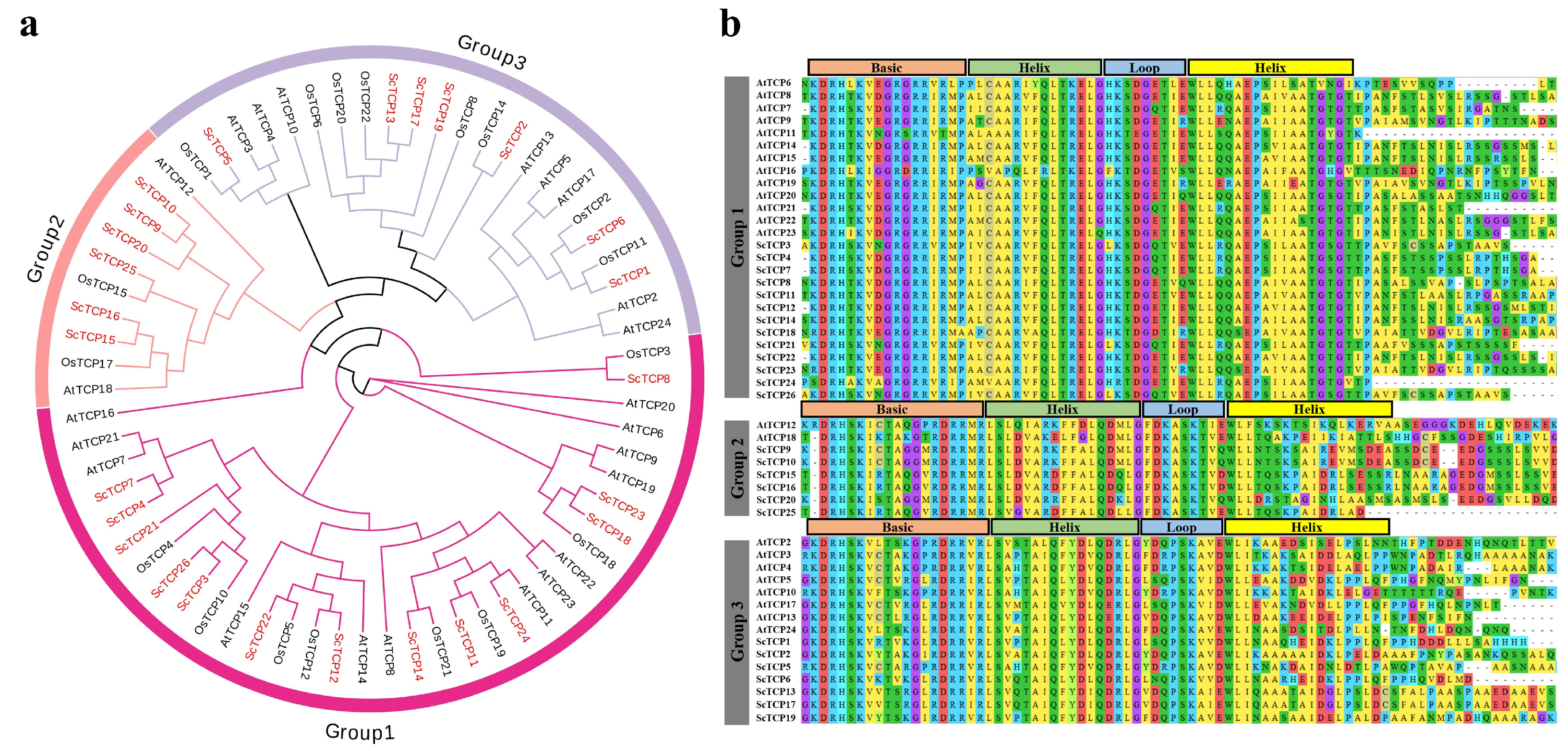
In this study, 26 TCP genes were identified and characterized from the rye genome and were designated ScTCP1 through ScTCP26. This number is comparable to the 24 AtTCP genes and 22 OsTCP genes previously identified in Arabidopsis and rice, respectively. Using the Cenci and Rouard method, the ScTCP genes were classified into three subfamilies (Figure 1a). Subfamily 1 contained the largest number of members (13 ScTCPs), whereas subfamily 2 contained the fewest members (6 ScTCPs). Phylogenetic analysis showed that ScTCPs clustered closely with OsTCPs and AtTCPs, with bootstrap support ≥ 70, suggesting that TCP proteins in rye and rice are likely homologous and may possess similar biological functions. All ScTCP genes were found to possess BHLH (basic, helix, loop, helix) conserved domains of approximately 100 amino acid residues, including 12 conserved amino acids (Figure 1b). However, structural variation was observed; the conserved domains of subfamilies 2 and 3 contain four additional amino acids compared to subfamily 1. Overall, the conserved domains of ScTCP genes demonstrate a tendency towards evolutionary conservation.
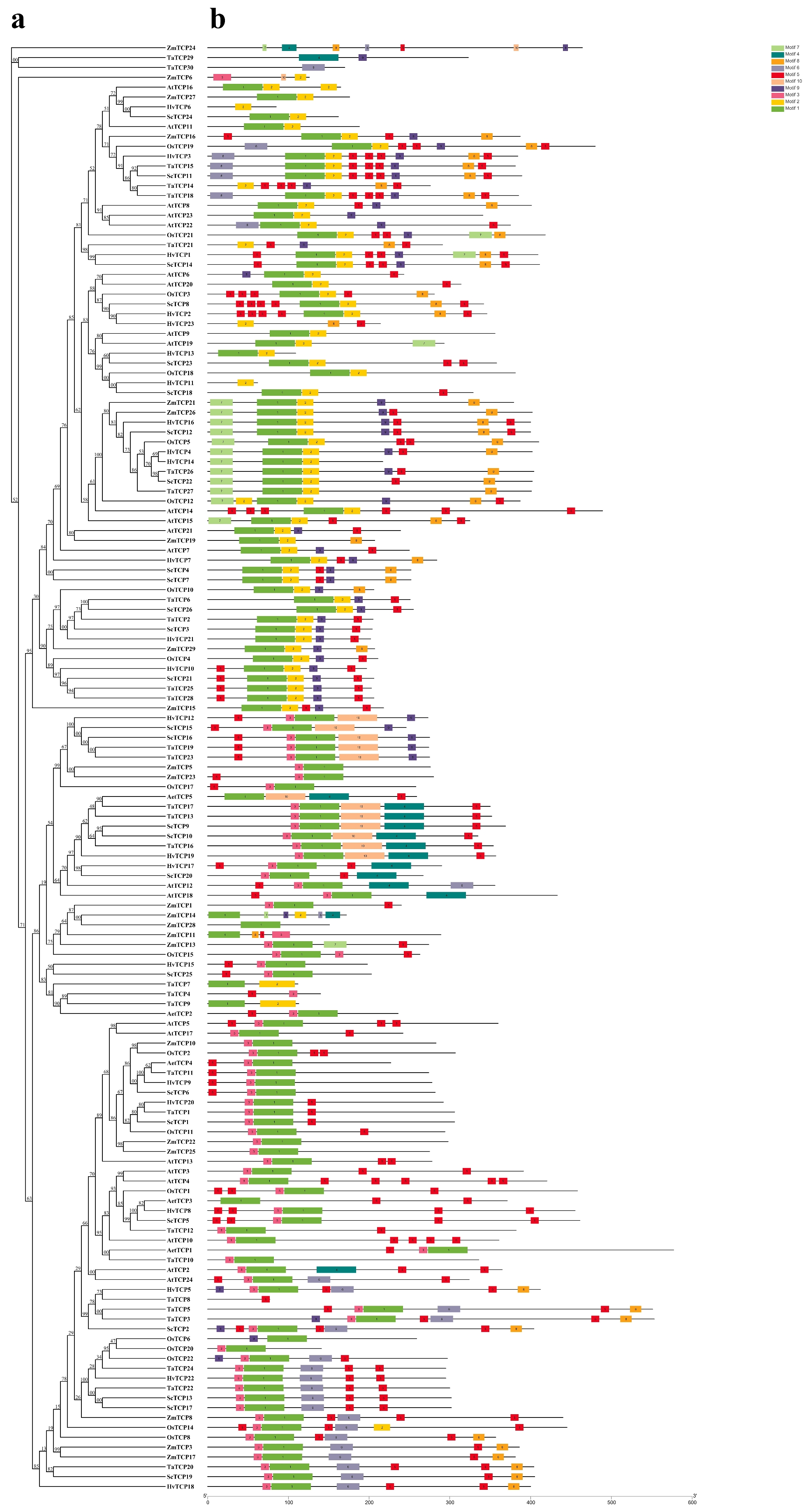
The structural diversity and intron distribution of TCP genes in rye were analyzed using DNA sequences. Genes belonging to the same subfamily were found to exhibit similar exon-intron structures, which is attributed to their functions and evolutionary relationships (Figure S2a,b). All ScTCPs contain Motif 1 and Motif 3, suggesting that these motifs play an important role in maintaining ScTCP functions.

3.2. Evolutionary Analysis of the ScTCP Genes and TCP Genes of Different Species

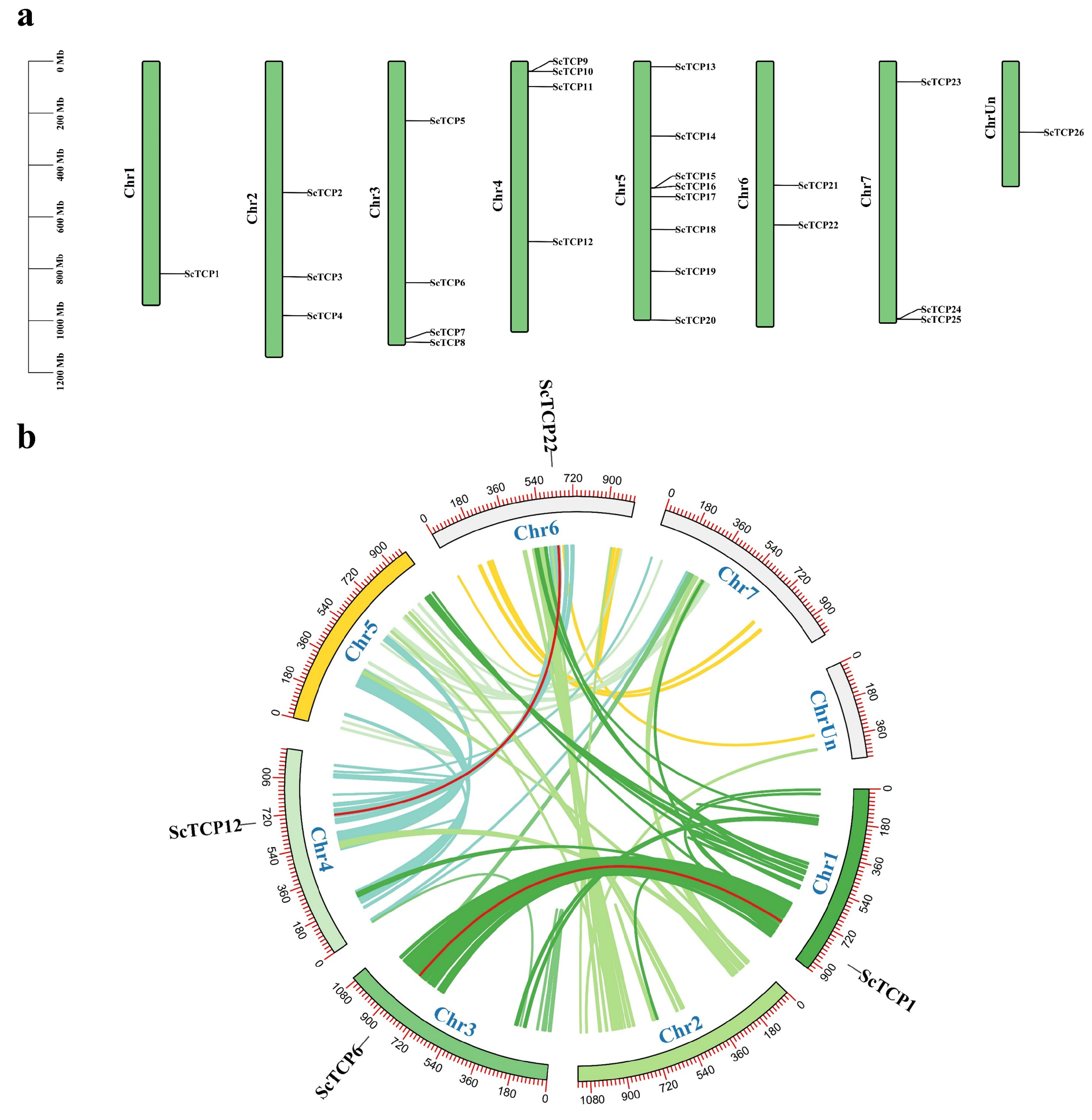
Based on the rye genome information, the chromosomal positions of the ScTCP genes were plotted. A total of 25 ScTCP genes were found to be distributed unevenly across seven chromosomes (Figure 2a, Table S1), while ScTCP26 was localized to an unknown chromosome. Chr5 contained the highest number of ScTCP genes (8, ~30.7%), followed by Chr3 and Chr4, which each harbored the same number of genes (25.8%), whereas Chr1 contained only a single gene (ScTCP1).
Gene duplication events showed the evolutionary regulation of gene families [40]. Tandem repeats and segment duplications are known to influence the evolution, structure, and function of gene families [41,42]. In this study, the ScTCP gene family was shown to lack tandem duplication events but was found to contain two pairs of segmental duplication events. These four segments form two fragment replicates located on chromosomes LG1, LG3, LG4, and LG6 (Figure 2b, Table S2).
To explore the evolutionary mechanisms of the rye TCP family, a comparative analysis was conducted with the classic plant A. thaliana and five monocotyledonous plants (O. sativa, Z. mays, T. aestivum, H. vulgare, and A. tauschii) closely related to rye. Different degrees of relatedness were observed between rye ScTCP and the TCPs of A. tauschii (5), H. vulgare (20), O. sativa (22), A. thaliana (24), Z. mays (29), and T. aestivum (66). In general, wheat TCP genes were found to be highly homologous with rye ScTCP. Ten significant motifs were identified in rye (Figure 3, Table S3). Almost all ScTCP genes contain Motif 1, while Motif 2 is exclusively present in subfamily 1. Motif 5, the most abundant, exhibits numerous repetitions and an uneven distribution. In contrast, Motif 9 is found only in subfamilies 1 and 2.
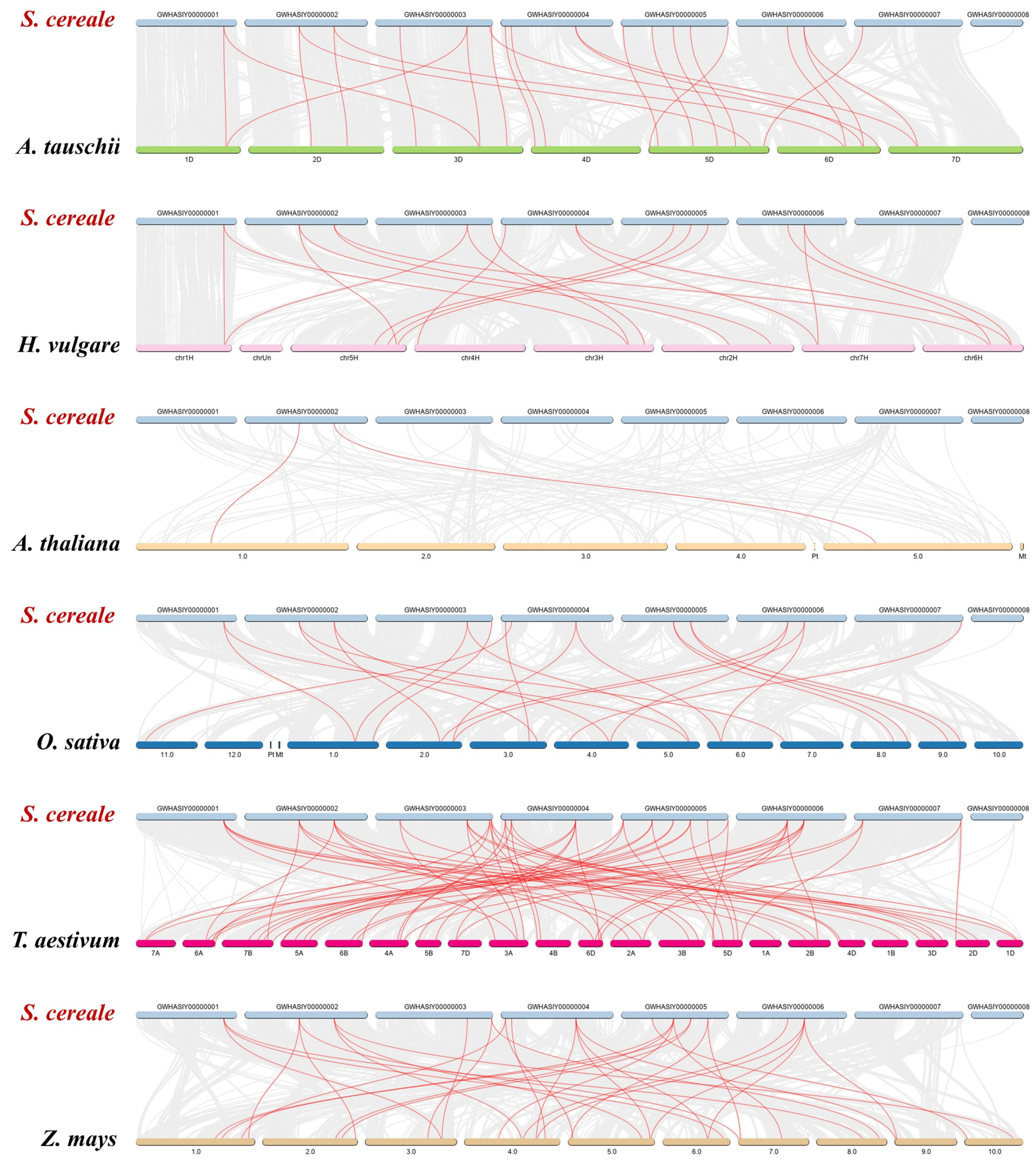
A collinearity analysis of rye TCP genes with six other species revealed varying numbers of collinear gene pairs among them. The highest collinearity was recorded with wheat (66 pairs), while the lowest was found in A. thaliana (2 pairs). Several collinear gene relationships were conserved; for instance, ScTCP2 was found to be collinear with HORVU5Hr1G103400.1/TraesARI2A01G274900.1/Os07t0152000-01/AET2Gv20566900.3/AT1G30210.1/Zm00001d007868_T001. Furthermore, seven ScTCP genes (ScTCP1, ScTCP6, ScTCP8, ScTCP12, ScTCP15, ScTCP21, and ScTCP22) were identified as collinear with genes in H. vulgare, A. tauschii, O. sativa, Z. mays, and T. aestivum, suggesting these genes are likely evolutionarily conserved (Figure 4, Table S4).

3.3. Analysis of Cis-Acting Elements in ScTCP Promoters and Protein-Protein Interaction Network

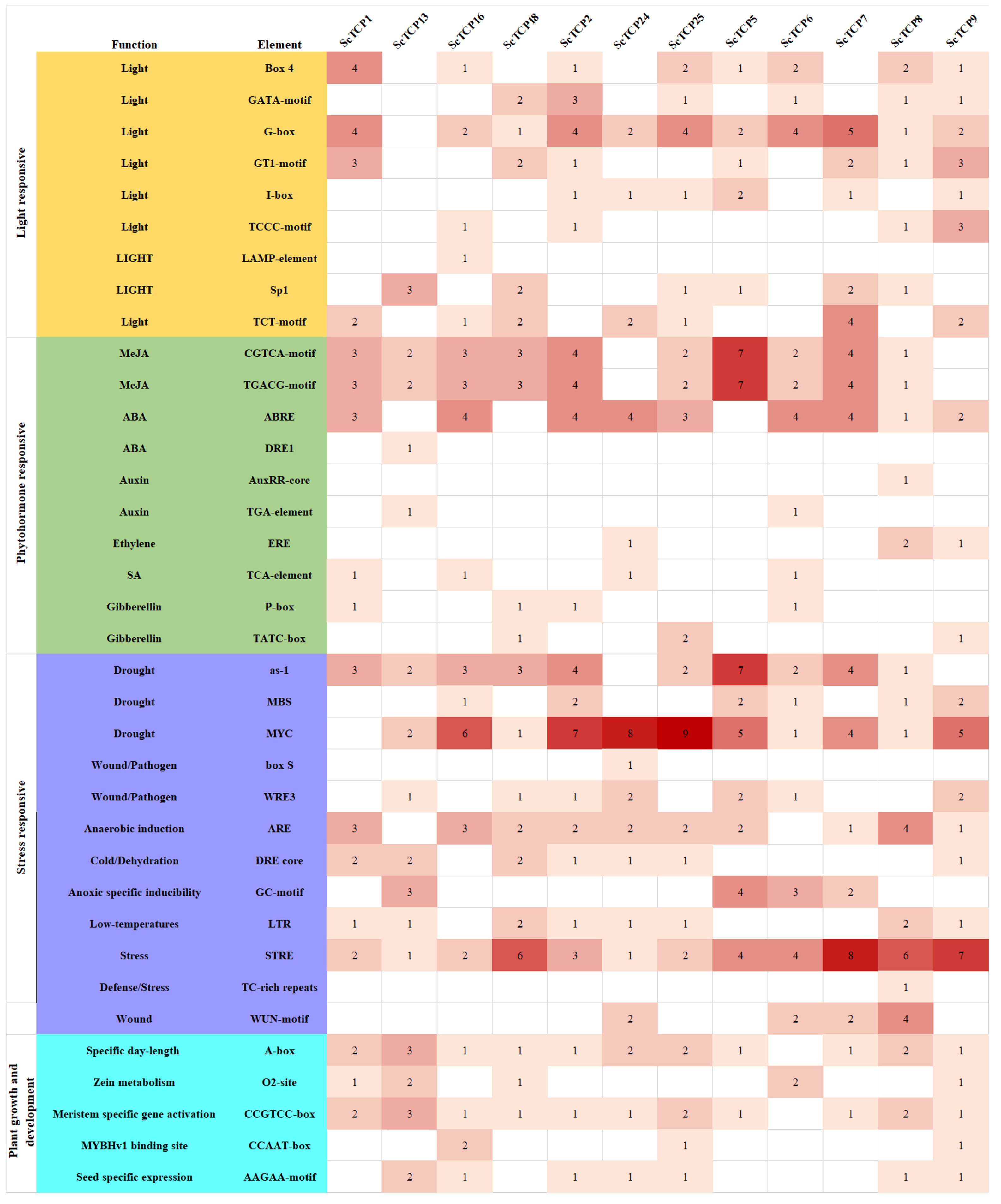
The promoter regions [43] of ScTCP genes were found to contain a rich abundance of cis-acting elements, which were categorized into four groups based on their enrichment level: hormone-responsive, light-responsive, stress-responsive, and plant growth-related elements. The most enriched elements in a single gene were associated with MeJA-response and drought stress. Stress response elements, such as those for low temperature, drought, and anaerobic conditions, were identified in nearly all ScTCP genes. Light (G-BOX), drought (MYC), MeJA, and ABA response elements were found in 91.7% of the genes. Numerous drought-related MYC elements were contained within ScTCP2, ScTCP24, and ScTCP25. All genes, except ScTCP9 and ScTCP24, were found to possess varying numbers of MeJA-responsive elements (p < 0.05) (Figure 5, Table S5).
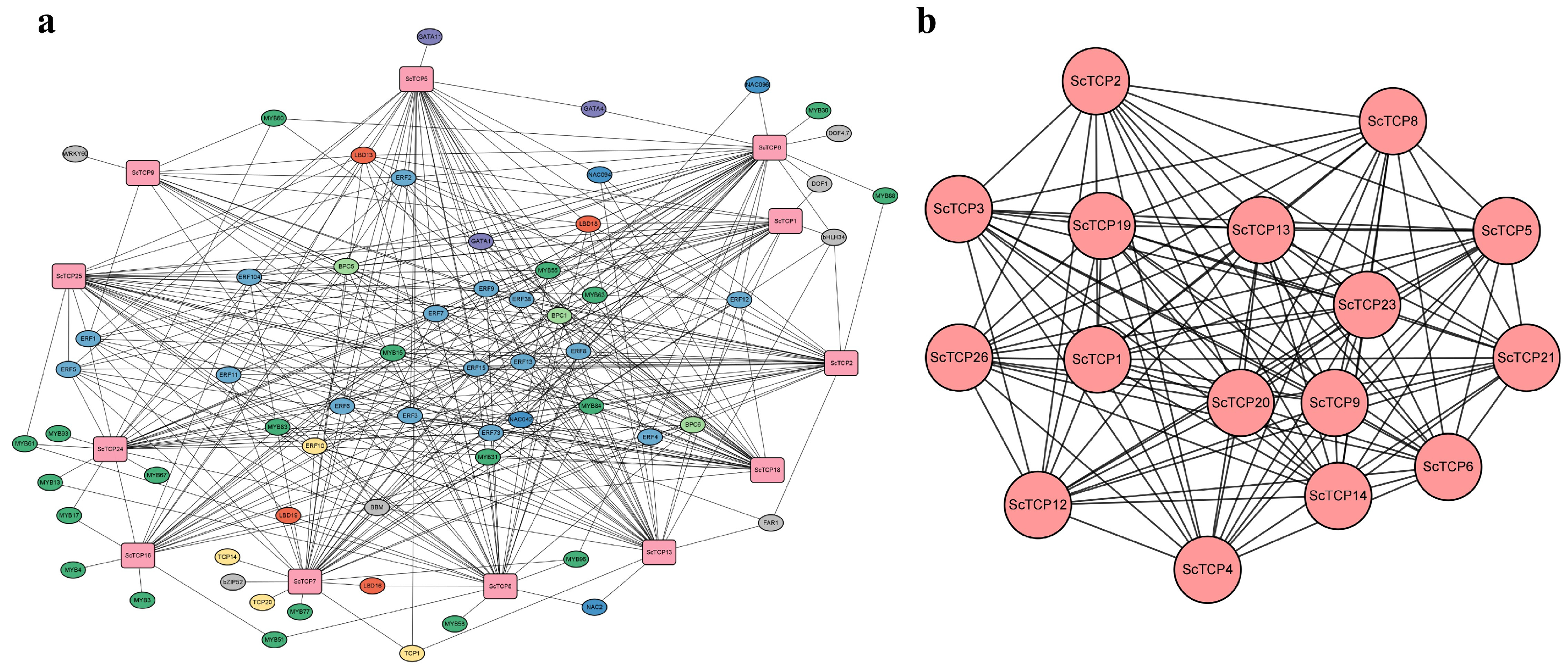
Furthermore, to explore the regulatory mechanisms of cis-acting elements on the expression of ScTCP genes, the PlantTFDB database was used to conduct a systematic analysis of cis-regulatory elements in the promoter regions of all ScTCP genes. The results showed that the most abundant transcription factor binding sites were present in ScTCP5, whereas the fewest were found in ScTCP9. All the ScTCP genes contained numerous ERF and MYB TF binding sites, indicating their importance in ScTCP regulatory processes. Concurrently, the promoters of some TCP genes (ScTCP5, ScTCP7, and ScTCP13) were found to be bound by others to regulate ScTCP1 expression (Figure 6a). The proteins of the 16 ScTCPs were predicted to interact at different levels; most interacting proteins were associated with ScTCP1 and ScTCP20, while only one interacting protein was associated with ScTCP8, ScTCP9, and ScTCP12 (p < 0.05) (Figure 6b).

3.4. Expression Patterns of ScTCP Genes

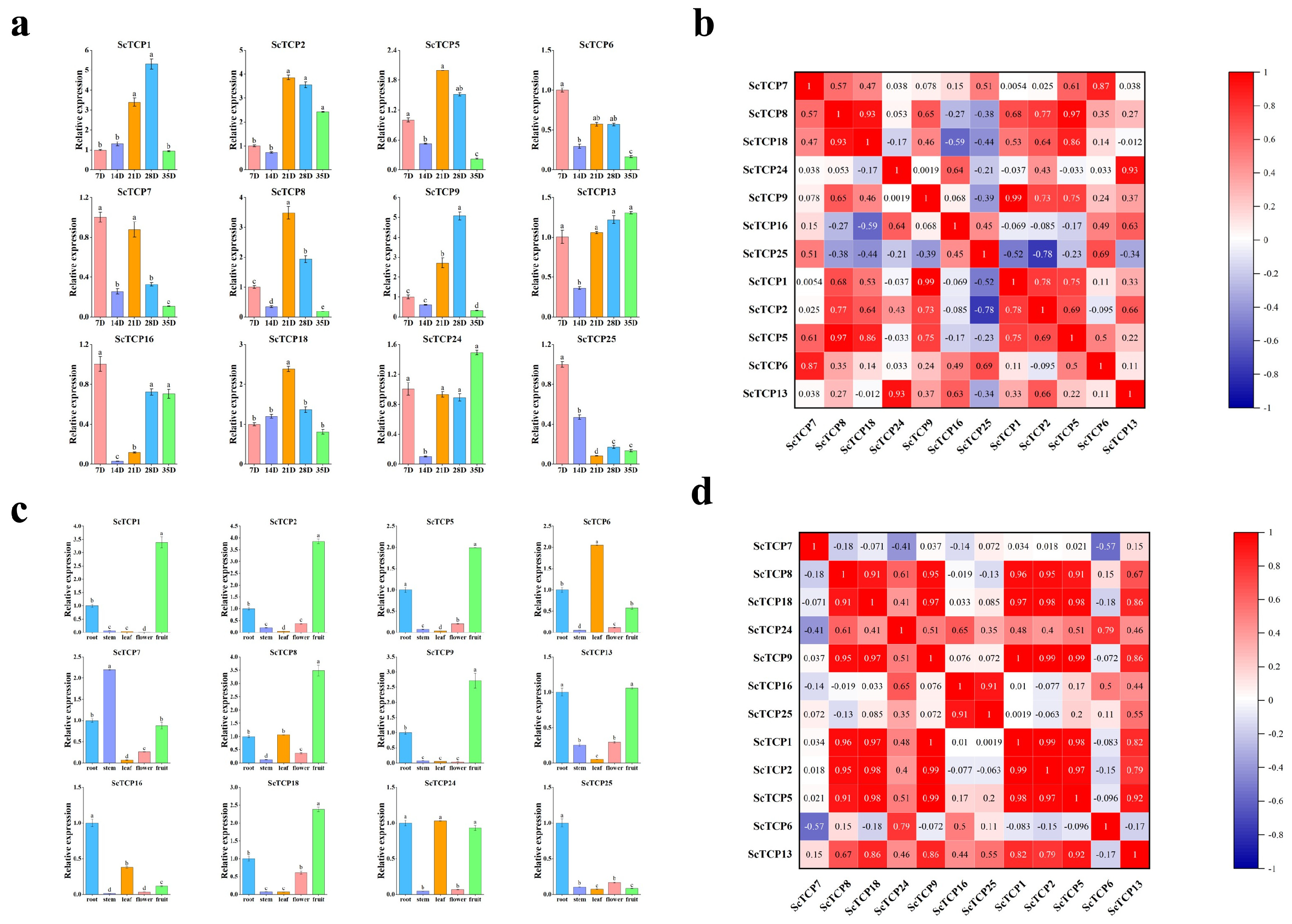
Numerous studies have increasingly highlighted the significance of TCP transcription factors in regulating plant development [44]. To further validate gene functionality, the expression of the ScTCP gene was investigated across various tissues by qRT-PCR. A select group of 12 representative genes from the three subfamilies was chosen to examine their expression patterns in roots, stems, leaves, and flowers. As depicted in Figure 7, the ScTCP gene demonstrated distinct tissue-specific expression patterns. Most genes exhibited high expression in fruits, while displaying low expression in stems and leaves. Tissue-specific expression being displayed by certain ScTCP genes, such as ScTCP1, ScTCP2, ScTCP5, ScTCP8, ScTCP9, and ScTCP18, which exhibited higher expression levels in fruits compared to other tissues. Notably, ScTCP6 showed peak expression in leaf tissue, while ScTCP16 and ScTCP25 displayed the highest expression levels in the root (Figure 7a,b). The high expression of most genes in fruits indicates that the TCP gene family may be more related to fruit development (p < 0.05).
Further, the 12 genes related to fruit development were selected to explore tissue-specific expression at five different rye post-anthesis periods (7 DPA, 14 DPA, 21 DPA, 28 DPA, and 35 DPA). Different expression patterns at different times were shown by the 12 genes (Figure 7c,d). The expression of ScTCP6, ScTCP7, ScTCP16, and ScTCP25 was observed to gradually decrease with time, while a positive correlation with time was shown by four genes (ScTCP2, ScTCP5, ScTCP8, and ScTCP18). The highest expression was observed for ScTCP13 and ScTCP24 at 21 DPA, and for at 35 DPA (p < 0.05).

3.5. Expression Patterns of ScTCP Genes Under Various Treatments

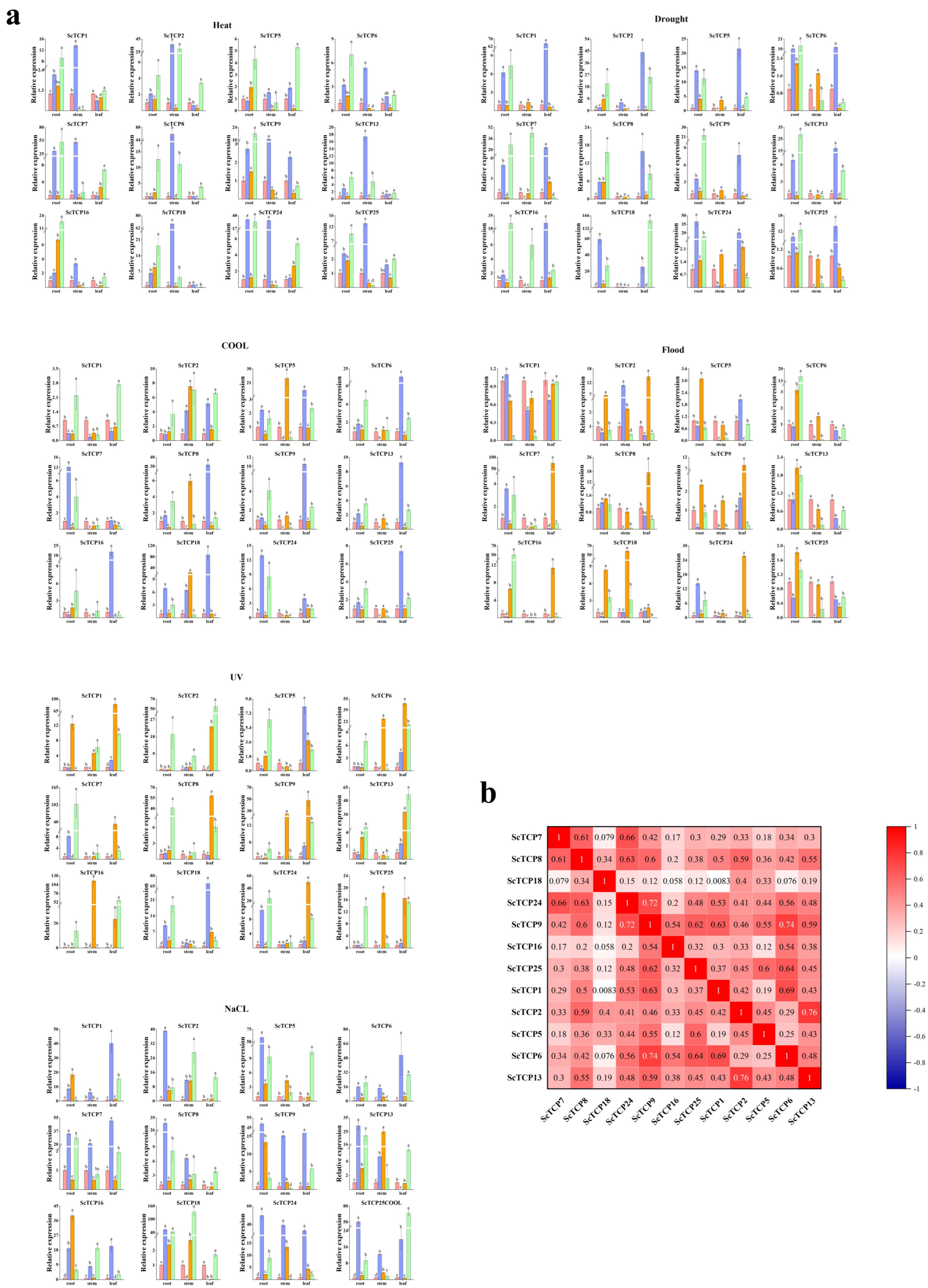
The expression of 12 ScTCP genes was examined under six abiotic stress conditions to evaluate their responses to different stresses. Several ScTCP genes were significantly upregulated or downregulated under specific stress treatments. Furthermore, the expression patterns of most ScTCP genes differed significantly among tissues under the various treatments. For example, cold stress upregulated most TCP genes in leaves, whereas heat stress predominantly upregulated TCP genes in roots and stems. Notably, the expression levels of ScTCP6, ScTCP8, ScTCP9, ScTCP13, ScTCP16, ScTCP18, and ScTCP25 differed among tissues under stress conditions. ScTCP2, ScTCP7, ScTCP8, ScTCP9, ScTCP18, and ScTCP24 were significantly upregulated in leaves under flooding stress, particularly at 4 h. ScTCP6, ScTCP9, ScTCP13, ScTCP16, ScTCP24, ScTCP26, and ScTCP28 were significantly upregulated in roots under drought stress (Figure 8a,b). Meanwhile, most genes also showed significant upregulation under UV and NaCl stresses. ScTCP6 was significantly upregulated under all six treatments and may therefore represent a potential candidate gene (p < 0.05).
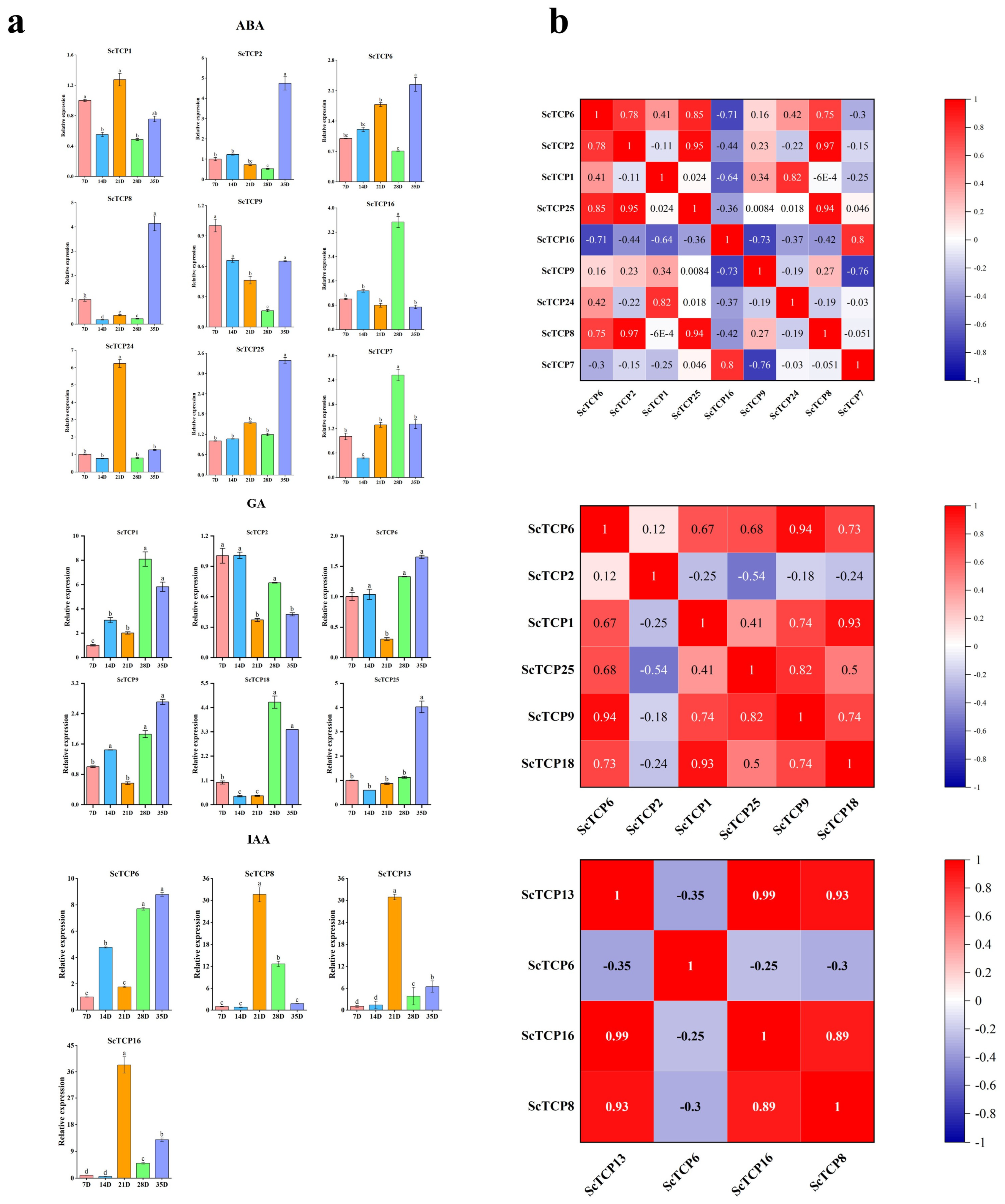
In addition, the expression patterns of ScTCP genes under ABA, IAA, and GA3 treatments were analyzed to further explore their potential functions. The genes exhibited distinct expression patterns in response to different hormone treatments. Most genes were upregulated under ABA treatment, with the exception of ScTCP9, which was downregulated. Under IAA treatment, ScTCP6, ScTCP8, ScTCP13, and ScTCP16 were significantly upregulated (p < 0.05). ScTCP2 was downregulated under GA treatment (Figure 9a,b). Notably, ScTCP6 was significantly upregulated in all tissues under both hormone and abiotic stress treatments and therefore should be further investigated.

4. Discussion

Rye is noted for its high nutritional value and robust adaptability to various abiotic stresses, including cold, drought, and salinity, underscoring its agricultural importance [45,46]. In this study, 26 TCP genes (ScTCP) were identified in the rye genome, a number similar to those in Arabidopsis (24) and rice (22), indicating a conserved evolutionary pattern. However, a notably higher number of TCP genes (66) is possessed by wheat, which is likely attributed to its complex hexaploid genome and consequent expansion events [47,48]. This divergence suggests that gene family expansion is influenced by genome duplication events.
The ScTCP genes were categorized into three distinct subfamilies by phylogenetic analysis, a classification consistent with Arabidopsis and rice, suggesting that TCP families diverged before the separation of dicotyledon and monocot plants. Structural analysis of ScTCP proteins revealed significant variations in protein lengths (ranging from 162 to 461 amino acids). Intriguingly, introns were lacked by most ScTCP genes (14); this difference may be attributed to duplication events and different subunit combinations within gene families. Motif 1 was identified as universally present across all TCP proteins by motif analysis, highlighting its potential essential role. Variations in other motifs across the subfamilies indicate functional diversification, likely enabling adaptation to diverse biological processes [49].
Tandem and fragment duplication events are considered important amplification modes in the evolution of plant functional diversity [50]. Segmental duplication events were revealed as the predominant evolutionary mechanism for TCP gene family expansion in rye by gene duplication analysis, whereas tandem duplication events were not detected. This study identified only two pairs of fragmentally duplicated genes, namely ScTCP1/ScTCP6 and ScTCP12/ScTCP22, both of which are located in subfamilies 1 and 3 of the TCP gene family. This result suggests that subfamilies 1 and 3 have played a crucial role in the expansion and evolution of the wheat TCP gene family. Such band-like duplication events can generate redundant gene copies, providing an initial molecular template for subsequent mutation accumulation and functional differentiation. This process substantially promotes functional diversification and structural complexity within the gene family and lays an important molecular foundation for wheat to resist diverse environmental stresses and adapt to heterogeneous habitats [51,52].
Furthermore, TCP genes are divided into three subfamilies across different species, consistent with the previous classification established in Arabidopsis. The highest orthology was observed between rye and wheat TCP genes, as indicated by collinearity analysis, which aligns with their close evolutionary relationship. Interestingly, collinearity with rye ScTCP genes was shared by several species (O. sativa, H. vulgare, A. tauschii Coss, and Z. mays). For example, ScTCP2 is colinear with AET2Gv20566900.3/AT1G30210.1/Os07t0152000-01/HORVU5Hr1G103400.1/TraesARI2A01G274900.1/Zm00001d007868_T001. Seven ScTCP genes (ScTCP1, ScTCP6, ScTCP8, ScTCP12, ScTCP15, ScTCP21, and ScTCP22) were found to be collinear with T. aestivum, suggesting common ancestral origins and potentially conserved biological functions. This linear characteristic provides an important target for the molecular breeding of cereal crops. It can be utilized to facilitate the directional introgression of superior TCP genes from rye into wheat, thereby broadening the genetic basis for wheat improvement. In addition, the analysis showed that TCP genes contain 10 distinct motifs, with different subfamilies exhibiting similar motif patterns. Notably, TCP genes in subfamily 3 contain almost all identified motifs. These results further indicate that TCP genes in rye and T. aestivum are more closely related and may share a common ancestor.
Promoter analysis is significant for understanding gene regulatory mechanisms, predicting expression levels, and identifying potential regulatory elements [34]. Notably, drought-responsive (AS-1) and MeJA-responsive elements were identified as prevalent, indicating a potential role for TCP genes in stress adaptation. All ScTCP promoters contain the drought-related element AS-1, which can be bound by transcription factors to regulate stress-responsive genes, thereby enhancing plant adaptability (drought, salt stress, and low temperature) [53]. Besides ScTCP9 and ScTCP24, varying numbers of MeJA-responsive elements were present in all promoters. These MeJA response elements [54] bind transcription factors to improve stress adaptability when the MeJA signaling pathway is activated by stresses. The largest number of TFS was found in ScTCP5, while the fewest were found in ScTCP9, indicating that ScTCP5 proteins are composed of multiple structural or functional domains. Therefore, ScTCP5 proteins can interact with numerous different proteins for multiple signal transduction or functional modeling. It should be noted that the conclusions of this study are based solely on bioinformatics analyses. Further experimental validation of gene functions and a more comprehensive elucidation of the related regulatory mechanisms will be required through molecular biology experiments in future studies.
Distinct tissue-specific and developmental-stage-specific expression patterns for ScTCP genes were revealed by expression profiling. Most of the 12 representative TCP genes were highly expressed in fruits, highlighting their potential roles in the regulation of this critical agronomic trait. The expressions of six genes (ScTCP1, ScTCP2, ScTCP5, ScTCP8, ScTCP9, and ScTCP18) were found to be significantly higher in fruits compared to other tissues. Previous studies showed that in Arabidopsis, overexpressing TCP15 leads to smaller fruits, whereas overexpressing TCP2 and TCP4 alters fruit morphology significantly [55]. Given that ScTCP1, ScTCP2, and ScTCP5 belong to subfamily 3 and share homology with AtTCP2, these genes are considered potentially crucial regulators of fruit development in rye [56]. The rice gene OsTCP1, which is the homolog of ScTCP5 in rye, can regulate the development process of anther through finely controlling the biosynthesis pathway of jasmonic acid (JA) [57]. Furthermore, we found that most ScTCP genes displayed significant differential expression patterns under various abiotic stress conditions. For example, most genes were significantly upregulated in stems and roots under cold stress. Under heat stress, increased gene expression was predominantly observed in root tissues, with similar expression patterns being shown by some genes under both cold and heat stress. Interestingly, opposite expression tendencies between leaf and root tissues were exhibited by ScTCP6, ScTCP8, ScTCP9, ScTCP13, ScTCP16, ScTCP18, and ScTCP25, probably because tissue-specific physiological and molecular response pathways are triggered by cold and heat stress. The barley HvTB1 (also known as VULGARE SIX-ROWED spike 5, VRS5) gene is homologous to the rye ScTCP6 gene. Its expression can inhibit the occurrence of tillers (side branches) in the plant and the development process of the grains [31]. Leaves, which are the main sites for photosynthesis and gas exchange, as well as the primary source and consumption site of nutrients and water, possess strong sensitivity and adjustment ability to environmental stress. The most obvious responses to flooding and UV stress were observed in leaves. Conversely, under salt stress, significant responses were predominantly observed in roots, as roots are directly exposed to a high salinity soil environment and assume important functions such as salt uptake, ion balance regulation, cell protection, and rhizosphere microbial interaction. Previous studies showed that WRI1 attenuates GH3.3 expression through its interaction with TCP20 in Arabidopsis, thereby regulating plant development through auxin regulation [58]. In this study, ScTCP8, ScTCP13, and ScTCP16 are most significantly upregulated after IAA treatment, suggesting they might be critical in auxin synthesis pathways in rye.

5. Conclusions

This study provides a comprehensive characterization of the TCP transcription factor family in rye, encompassing gene identification, structural and evolutionary analyses, regulatory element profiling, and expression patterns under various stress conditions and hormonal treatments. Most genes showed significant differential expression in response to these factors, confirming the involvement of the TCP gene family in rye growth and development. Particularly, different stress treatments significantly upregulated ScTCP6, highlighting its potential role in enhancing rye stress resistance through transgenic approaches or its application as a molecular marker in breeding programs. These findings provide an important theoretical basis for molecular breeding strategies based on the ScTCP gene family.

Supplementary Materials

The following supporting information can be downloaded at: https://www.mdpi.com/article/10.3390/cimb48030266/s1, Figure S1: Multiple alignment of ScTCP and selected bHLH domain amino acid sequences; Figure S2: Conserved motif and gene structure analysis of 26 ScTCP genes in the phylogenetic tree; Table S1: List of 26 ScTCP genes identified in this study; Table S2: Tandem duplication events of ScTCP genes; Table S3: Conserved motif distribution in TCP proteins across eight species; Table S4: One-to-one orthologous relationships between Secale cereale and eight other species; Table S5: Cis-regulatory elements in TCP gene promoter regions; Table S6: Primer sequences used in this study.

Author Contributions

Conceptualization, Y.R., L.L., Z.W., J.Z. and R.M.; Methodology, Q.L.; Software, Investigation, Validation, Y.R., R.M. and M.X.; Formal Analysis, Resources, Y.R.; Data Curation, R.M.; Writing—Original Draft Preparation, Writing—Review & Editing, Y.R., R.M., T.J. and J.Z.; Visualization, Supervision, Project Administration, Funding Acquisition, Q.L. All authors have read and agreed to the published version of the manuscript.

Funding

This research was supported by Guiding projects of Xinjiang (2022ZD057); the Tianchi Talents Program—Young Doctor of Xinjiang (CZ006013); the Science and Technology Project of Xinjiang Production and Construction Corps (2024DA056); and the Scientific Research Project of Shihezi University (KX6084).

Institutional Review Board Statement

Not applicable.

Informed Consent Statement

Not applicable.

Data Availability Statement

The whole genome sequence information of rye was obtained from the Ensembl genome website (http://ensemblgenomes.org/). In the experiment, the rye material used was provided and licensed by Yu Fan from Guizhou University. The datasets supporting the conclusions of this study are included in the article and its additional files.

Acknowledgments

We thank all our colleagues for providing useful discussions and technical assistance. We are very grateful to the editor and reviewers for critically evaluating the manuscript and providing constructive comments for its improvement.

Conflicts of Interest

The authors declare no conflicts of interest.

Abbreviations

The following abbreviations are used in this manuscript:
AtTCPArabidopsis thaliana TCP
DPADays post anthesis
HMMHidden Markov Model
LGLinkage group
pIIsoelectric point
qRT-PCRQuantitative real-time polymerase chain reaction
ScTCPSecale cereale L. TCP
TCPTeosinte branched1/cycloidea/proliferating cell factor

References

  1. Chan-Rodriguez, D.; Koboyi, B.W.; Werghi, S.; Till, B.J.; Maksymiuk, J.; Shoormij, F.; Hilderlith, A.; Hawliczek, A.; Królik, M.; Bolibok-Brągoszewska, H. Phosphate transporter gene families in rye (Secale cereale L.)—Genome-wide identification, characterization and sequence diversity assessment via DArTreseq. Front. Plant Sci. 2025, 16, 1529358. [Google Scholar] [CrossRef] [Scilit] [PubMed] [PubMed Central]
  2. Zadeike, D.; Copperstone, C.; Aleksandrova, O.; Ünal, D.Ö.; Šavikin, K.; Živković, J.; Güzel, M.; Kalkan Yildirim, H.; Künili, I.E.; Ivanova, T.; et al. Rye (Secale cereale L.) revisited-nutritional composition, functional benefits, and role in sustainable diets. Front. Nutr. 2025, 12, 1666455. [Google Scholar] [CrossRef] [Scilit] [PubMed] [PubMed Central]
  3. Li, G.; Wang, L.; Yang, J.; He, H.; Jin, H.; Li, X.; Ren, T.; Ren, Z.; Li, F.; Han, X.; et al. A high-quality genome assembly highlights rye genomic characteristics and agronomically important genes. Nat. Genet. 2021, 53, 574–584. [Google Scholar] [CrossRef] [Scilit]
  4. Schreiber, M.; Himmelbach, A.; Börner, A.; Mascher, M. Genetic diversity and relationship between domesticated rye and its wild relatives as revealed through genotyping-by-sequencing. Evol. Appl. 2019, 12, 66–77. [Google Scholar] [CrossRef] [Scilit] [PubMed]
  5. Bimpong, D.; Zhao, L.; Ran, M.; Zhao, X.; Wu, C.; Li, Z.; Wang, X.; Cheng, L.; Fang, Z.; Hu, Z.; et al. Transcriptomic analysis reveals the regulatory mechanisms of messenger RNA (mRNA) and long non-coding RNA (lncRNA) in response to waterlogging stress in rye (Secale cereale L.). BMC Plant Biol. 2024, 24, 534. [Google Scholar] [CrossRef] [Scilit] [PubMed] [PubMed Central]
  6. Chen, X.; Yao, C.; Liu, J.; Liu, J.; Fang, J.; Deng, H.; Yao, Q.; Kang, T.; Guo, X. Basic helix-loop-helix (bHLH) gene family in rye (Secale cereale L.): Genome-wide identification, phylogeny, evolutionary expansion and expression analyses. BMC Genom. 2024, 25, 67. [Google Scholar] [CrossRef] [Scilit] [PubMed] [PubMed Central]
  7. Kalinka, A.; Achrem, M. Reorganization of wheat and rye genomes in octoploid triticale (× Triticosecale). Planta 2018, 247, 807–829. [Google Scholar] [CrossRef] [Scilit] [PubMed]
  8. Bauer, E.; Schmutzer, T.; Barilar, I.; Mascher, M.; Gundlach, H.; Martis, M.M.; Twardziok, S.O.; Hackauf, B.; Gordillo, A.; Wilde, P.; et al. Towards a whole-genome sequence for rye (Secale cereale L.). Plant J. 2017, 89, 853–869. [Google Scholar] [CrossRef] [Scilit]
  9. Baillo, E.H.; Kimotho, R.N.; Zhang, Z.; Xu, P. Transcription factors associated with abiotic and biotic stress tolerance and their potential for crops improvement. Genes 2019, 10, 771. [Google Scholar] [CrossRef] [Scilit]
  10. Javed, T.; Gao, S.J. WRKY transcription factors in plant defense. Trends Genet. 2023, 39, 787–801. [Google Scholar] [CrossRef] [Scilit] [PubMed]
  11. Szymczyk, P. Transcription Factors in Plant Gene Expression Regulation. Int. J. Mol. Sci. 2025, 26, 9955. [Google Scholar] [CrossRef] [Scilit] [PubMed] [PubMed Central]
  12. Zou, Q.; Dong, Q.; Tian, D.; Mao, L.; Cao, X.; Zhu, K. Genome-Wide Analysis of TCP Transcription Factors and Their Expression Pattern Analysis of Rose Plants (Rosa chinensis). Curr. Issues Mol. Biol. 2023, 45, 6352–6364. [Google Scholar] [CrossRef] [Scilit] [PubMed] [PubMed Central]
  13. Hong, L.; Rusnak, B.; Ko, C.S.; Xu, S.; He, X.; Qiu, D.; Kang, S.E.; Pruneda-Paz, J.L.; Roeder, A.H.K. Enhancer activation via TCP and HD-ZIP and repression by Dof transcription factors mediate giant cell-specific expression. Plant Cell 2023, 35, 2349–2368. [Google Scholar] [CrossRef] [Scilit] [PubMed] [PubMed Central]
  14. Wu, Y.; Zhang, J.; Li, C.; Deng, X.; Wang, T.; Dong, L. Genome-wide analysis of TCP transcription factor family in sunflower and identification of HaTCP1 involved in the regulation of shoot branching. BMC Plant Biol. 2023, 23, 222. [Google Scholar] [CrossRef] [Scilit] [PubMed] [PubMed Central]
  15. Abel, S.; Savchenko, T.; Levy, M. Genome-wide comparative analysis of the IQD gene families in Arabidopsis thaliana and Oryza sativa. BMC Evol. Biol. 2005, 5, 72. [Google Scholar] [CrossRef] [Scilit] [PubMed]
  16. Zhao, M.; Peng, X.; Chen, N.; Shen, S. Genome-wide identification of the TCP gene family in Broussonetia papyrifera and functional analysis of BpTCP8, 14 and 19 in shoot branching. Plants 2020, 9, 1301. [Google Scholar] [CrossRef] [Scilit]
  17. Leng, X.; Wei, H.; Xu, X.; Ghuge, S.A.; Jia, D.; Liu, G.; Wang, Y.; Yuan, Y. Genome-wide identification and transcript analysis of TCP transcription factors in grapevine. BMC Genom. 2019, 20, 786. [Google Scholar] [CrossRef] [Scilit]
  18. Chai, W.; Jiang, P.; Huang, G.; Jiang, H.; Li, X. Identification and expression profiling analysis of TCP family genes involved in growth and development in maize. Physiol. Mol. Biol. Plants 2017, 23, 779–791. [Google Scholar] [CrossRef] [Scilit]
  19. Parapunova, V.; Busscher, M.; Busscher-Lange, J.; Lammers, M.; Karlova, R.; Bovy, A.G.; Angenent, G.C.; de Maagd, R.A. Identification, cloning and characterization of the tomato TCP transcription factor family. BMC Plant Biol. 2014, 14, 157. [Google Scholar] [CrossRef] [Scilit]
  20. Xu, R.; Sun, P.; Jia, F.; Lu, L.; Li, Y.; Zhang, S.; Huang, J. Genomewide analysis of TCP transcription factor gene family in Malus domestica. J. Genet. 2014, 93, 733–746. [Google Scholar] [CrossRef] [Scilit]
  21. Gao, G.; Kan, J.; Jiang, C.; Ahmar, S.; Zhang, J.; Yang, P. Genome-wide diversity analysis of TCP transcription factors revealed cases of selection from wild to cultivated barley. Funct. Integr. Genomics 2021, 21, 31–42. [Google Scholar] [CrossRef] [Scilit]
  22. Huo, Y.; Xiong, W.; Su, K.; Li, Y.; Yang, Y.; Fu, C.; Wu, Z.; Sun, Z. Genome-wide analysis of the TCP gene family in switchgrass (Panicum virgatum L.). Int. J. Genom. 2019, 2019, 8514928. [Google Scholar] [CrossRef] [Scilit]
  23. Zhao, J.; Zhai, Z.; Li, Y.; Geng, S.; Song, G.; Guan, J.; Jia, M.; Wang, F.; Sun, G.; Feng, N.; et al. Genome-wide identification and expression profiling of the TCP family genes in spike and grain development of wheat (Triticum aestivum L.). Front. Plant Sci. 2018, 9, 1282. [Google Scholar] [CrossRef] [Scilit] [PubMed]
  24. Zhou, Y.; Xu, Z.; Zhao, K.; Yang, W.; Cheng, T.; Wang, J.; Zhang, Q. Genome-wide identification, characterization and expression analysis of the TCP gene family in Prunus mume. Front. Plant Sci. 2016, 7, 1301. [Google Scholar] [CrossRef] [Scilit] [PubMed]
  25. Zhou, H.; Hwarari, D.; Ma, H.; Xu, H.; Yang, L.; Luo, Y. Genomic survey of TCP transcription factors in plants: Phylogenomics, evolution and their biology. Front. Genet. 2022, 13, 1060546. [Google Scholar] [CrossRef] [Scilit]
  26. Lv, W.; Yang, H.; Zheng, Q.; Liao, W.; Chen, L.; Lian, Y.; Lin, Q.; Huo, S.; Rehman, O.U.; Liu, W.; et al. Identification and Expression Analysis of TCP Transcription Factors Under Abiotic Stress in Phoebe bournei. Plants 2024, 13, 3095. [Google Scholar] [CrossRef] [Scilit] [PubMed] [PubMed Central]
  27. Lu, Z.; Yu, H.; Xiong, G.; Wang, J.; Jiao, Y.; Liu, G.; Jing, Y.; Meng, X.; Hu, X.; Qian, Q.; et al. Genome-wide binding analysis of the transcription activator ideal plant architecture1 reveals a complex network regulating rice plant architecture. Plant Cell 2013, 25, 3743–3759. [Google Scholar] [CrossRef] [Scilit]
  28. Wang, L.; Wang, B.; Yu, H.; Guo, H.; Lin, T.; Kou, L.; Wang, A.; Shao, N.; Ma, H.; Xiong, G.; et al. Transcriptional regulation of strigolactone signalling in Arabidopsis. Nature 2020, 583, 277–281. [Google Scholar] [CrossRef] [Scilit]
  29. Fan, H.M.; Sun, C.H.; Wen, L.Z.; Liu, B.W.; Ren, H.; Sun, X.; Ma, F.F.; Zheng, C.S. CmTCP20 plays a key role in nitrate and auxin signaling-regulated lateral root development in chrysanthemum. Plant Cell Physiol. 2019, 60, 1581–1594. [Google Scholar] [CrossRef] [Scilit]
  30. Peng, K.; Ren, Z.; Wang, S.; Tian, Y.; Ni, S.; Ma, X.; Bao, Y.; Yu, J.; Cang, J. TaTCP21-A negatively regulates wheat cold tolerance via repressing expression of TaDREB1C. Plant Physiol. Biochem. 2024, 219, 109353. [Google Scholar] [CrossRef] [Scilit]
  31. de Souza Moraes, T.; van Es, S.W.; Hernandez-Pinzon, I.; Kirschner, G.K.; van der Wal, F.; da Silveira, S.R.; Busscher-Lange, J.; Angenent, G.C.; Moscou, M.; Immink, R.G.H. The TCP transcription factor HvTB2 heterodimerizes with VRS5 and controls spike architecture in barley. Plant Reprod. 2022, 35, 205–220. [Google Scholar] [CrossRef] [Scilit] [PubMed] [PubMed Central]
  32. Mukhopadhyay, P.; Tyagi, A.K. OsTCP19 influences developmental and abiotic stress signaling by modulating ABI4-mediated pathways. Sci. Rep. 2015, 5, 9998. [Google Scholar] [CrossRef] [Scilit]
  33. Wang, Y.; Tang, H.; Debarry, J.D.; Tan, X.; Li, J.; Wang, X.; Lee, T.H.; Jin, H.; Marler, B.; Guo, H.; et al. MCScanX: A toolkit for detection and evolutionary analysis of gene synteny and collinearity. Nucleic Acids Res. 2012, 40, e49. [Google Scholar] [CrossRef] [Scilit]
  34. Jin, J.; Tian, F.; Yang, D.C.; Meng, Y.Q.; Kong, L.; Luo, J.; Gao, G. PlantTFDB 4.0: Toward a central hub for transcription factors and regulatory interactions in plants. Nucleic Acids Res. 2017, 45, D1040–D1045. [Google Scholar] [CrossRef] [Scilit] [PubMed]
  35. Tamura, K.; Stecher, G.; Peterson, D.; Filipski, A.; Kumar, S. MEGA6: Molecular evolutionary genetics analysis version 6.0. Mol. Biol. Evol. 2013, 30, 2725–2729. [Google Scholar] [CrossRef] [Scilit] [PubMed]
  36. Sudhakar Reddy, P.; Srinivas Reddy, D.; Sivasakthi, K.; Bhatnagar-Mathur, P.; Vadez, V.; Sharma, K.K. Evaluation of Sorghum [Sorghum bicolor (L.)] reference genes in various tissues and under abiotic stress conditions for quantitative real-time PCR data normalization. Front. Plant Sci. 2016, 7, 529. [Google Scholar] [CrossRef] [Scilit]
  37. Fan, Y.; Wan, X.; Zhang, X.; Zhang, J.; Zheng, C.; Yang, Q.; Yang, L.; Li, X.; Feng, L.; Zou, L.; et al. GRAS gene family in rye (Secale cereale L.): Genome-wide identification, phylogeny, evolutionary expansion and expression analyses. BMC Plant Biol. 2024, 24, 46. [Google Scholar] [CrossRef] [Scilit] [PubMed] [PubMed Central]
  38. Chen, C.; Liu, F.; Zhang, K.; Niu, X.; Zhao, H.; Liu, Q.; Georgiev, M.I.; Xu, X.; Zhang, X.; Zhou, M. MeJA-responsive bHLH transcription factor LjbHLH7 regulates cyanogenic glucoside biosynthesis in Lotus japonicus. J. Exp. Bot. 2022, 73, 2650–2665. [Google Scholar] [CrossRef] [Scilit] [PubMed]
  39. Mekonnen, B.; Haddis, A.; Zeine, W. Assessment of the effect of solid waste dump site on surrounding soil and river water quality in Tepi Town, Southwest Ethiopia. J. Environ. Public Health 2020, 2020, 5157046. [Google Scholar] [CrossRef] [Scilit]
  40. Tong, C.; Jia, Y.; Hu, H.; Zeng, Z.; Chapman, B.; Li, C. Pangenome and pantranscriptome as the new reference for gene-family characterization: A case study of basic helix-loop-helix (bHLH) genes in barley. Plant Commun. 2025, 6, 101190. [Google Scholar] [CrossRef] [Scilit] [PubMed] [PubMed Central]
  41. Ren, Y.; Ma, R.; Xie, M.; Fan, Y.; Feng, L.; Chen, L.; Yang, H.; Wei, X.; Wang, X.; Liu, K.; et al. Genome-wide identification, phylogenetic and expression pattern analysis of HSF family genes in the Rye (Secale cereale L.). BMC Plant Biol. 2023, 23, 441. [Google Scholar] [CrossRef] [Scilit]
  42. Chen, F.; Hu, Y.; Vannozzi, A.; Wu, K.; Cai, H.; Qin, Y.; Mullis, A.; Lin, Z.; Zhang, L. The WRKY transcription factor family in model plants and crops. Crit. Rev. Plant Sci. 2017, 36, 311–335. [Google Scholar] [CrossRef] [Scilit]
  43. Werner, T. Target gene identification from expression array data by promoter analysis. Biomol. Eng. 2001, 17, 87–94. [Google Scholar] [CrossRef] [Scilit]
  44. Viola, I.L.; Gonzalez, D.H. TCP transcription factors in plant reproductive development: Juggling multiple roles. Biomolecules 2023, 13, 750. [Google Scholar] [CrossRef] [Scilit]
  45. Wang, K.; Zhang, H.; Wei, H.; Li, S.; Zhang, N.; Si, H. Roles of TCP Transcription Factors in Plant Growth and Development. Physiol. Plant. 2025, 177, e70357. [Google Scholar] [CrossRef] [Scilit] [PubMed]
  46. Guo, B.; Yang, H.; Dai, L.; Zhao, X.; Wang, L.F. Genome-wide identification and response stress expression analysis of the BES1 family in rubber tree (Hevea brasiliensis Muell. Arg.). PeerJ 2022, 10, e13189. [Google Scholar] [CrossRef] [Scilit]
  47. Kaur, P.; Singh Sandhu, K.; Singh Purewal, S.; Kaur, M.; Kumar Singh, S. Rye: A wonder crop with industrially important macromolecules and health benefits. Food Res. Int. 2021, 150, 110769. [Google Scholar] [CrossRef] [Scilit] [PubMed]
  48. Xiao, J.; Liu, B.; Yao, Y.; Guo, Z.; Jia, H.; Kong, L.; Zhang, A.; Ma, W.; Ni, Z.; Xu, S.; et al. Wheat genomic study for genetic improvement of traits in China. Sci. China Life Sci. 2022, 65, 1718–1775. [Google Scholar] [CrossRef] [Scilit] [PubMed]
  49. Akiva, E.; Friedlander, G.; Itzhaki, Z.; Margalit, H. A dynamic view of domain-motif interactions. PLoS Comput. Biol. 2012, 8, e1002341. [Google Scholar] [CrossRef] [Scilit]
  50. Jiao, Y.; Li, M.; He, X.; Wang, Y.; Song, J.; Hu, Y.; Li, L.; Zhou, L.; Jiang, L.; Qu, J.; et al. Targeted, programmable, and precise tandem duplication in the mammalian genome. Genome Res. 2023, 33, 779–786. [Google Scholar] [CrossRef] [Scilit]
  51. Takahashi, K.K.; Innan, H. Duplication with structural modification through extrachromosomal circular and lariat DNA in the human genome. Sci. Rep. 2020, 10, 7150. [Google Scholar] [CrossRef] [Scilit]
  52. Yakushko, Y.; Hackmann, C.; Günther, T.; Rückert, J.; Henke, M.; Koste, L.; Alkharsah, K.; Bohne, J.; Grundhoff, A.; Schulz, T.F.; et al. Kaposi’s sarcoma-associated herpesvirus bacterial artificial chromosome contains a duplication of a long unique-region fragment within the terminal repeat region. J. Virol. 2011, 85, 4612–4617. [Google Scholar] [CrossRef] [Scilit]
  53. Garretón, V.; Carpinelli, J.; Jordana, X.; Holuigue, L. The as-1 promoter element is an oxidative stress-responsive element and salicylic acid activates it via oxidative species. Plant Physiol. 2002, 130, 1516–1526. [Google Scholar] [CrossRef] [Scilit]
  54. Yan, J.; He, L.; Xu, S.; Wan, Y.; Wang, H.; Wang, Y.; Yu, L.; Zhu, W. Expression analysis, functional marker development and verification of AgFNSI in celery. Sci. Rep. 2020, 10, 531. [Google Scholar] [CrossRef] [Scilit]
  55. Resentini, F.; Felipo-Benavent, A.; Colombo, L.; Blázquez, M.A.; Alabadi, D.; Masiero, S. TCP14 and TCP15 mediate the promotion of seed germination by gibberellins in Arabidopsis thaliana. Mol. Plant 2021, 14, 1771. [Google Scholar] [CrossRef] [Scilit]
  56. He, Z.; Zhao, X.; Kong, F.; Zuo, Z.; Liu, X. TCP2 positively regulates HY5/HYH and photomorphogenesis in Arabidopsis. J. Exp. Bot. 2016, 67, 775–785. [Google Scholar] [CrossRef] [Scilit] [PubMed]
  57. Fang, Y.; Guo, D.; Wang, Y.; Wang, N.; Fang, X.; Zhang, Y.; Li, X.; Chen, L.; Yu, D.; Zhang, B.; et al. Rice transcriptional repressor OsTIE1 controls anther dehiscence and male sterility by regulating JA biosynthesis. Plant Cell 2024, 36, 1697–1717. [Google Scholar] [CrossRef] [Scilit] [PubMed] [PubMed Central]
  58. Kong, Q.; Low, P.M.; Lim, A.R.Q.; Yang, Y.; Yuan, L.; Ma, W. Functional antagonism of WRI1 and TCP20 modulates GH3.3 expression to maintain auxin homeostasis in roots. Plants 2022, 11, 454. [Google Scholar] [CrossRef] [Scilit] [PubMed]
Figure 1. The evolutionary relationship and sequence alignment of the rye TCP proteins. (a) Rootless phylogenetic tree of 26 ScTCP genes from rye, Arabidopsis thaliana, and rice. Rye TCP genes are shown in red, and Arabidopsis and rice TCP genes are shown in black. (b) Multiple sequence alignment of bHLH domains among the three subfamilies.
Cimb 48 00266 g001
Figure 2. Chromosome distribution and synteny blocks of TCP genes in rye. (a) Distribution of 26 ScTCP genes across seven chromosomes. Green bars represent chromosomes with their respective numbers, and the left scale indicates chromosome length. (b) Schematic diagram illustrating the chromosome distribution and interchromosomal relationships of TCP genes in rye. Colored lines indicate all rye synteny blocks, and red lines represent duplicated TCP gene pairs.
Cimb 48 00266 g002
Figure 3. Analysis of conserved motifs and gene structures of 26 ScTCP genes based on phylogenetic relationships. (a) A phylogenetic tree was constructed using the amino acid sequences of rye TCP genes with the NJ method. (b) Ten conserved motifs predicted in TCP proteins are displayed as boxes in different colors.
Cimb 48 00266 g003
Figure 4. Homology between rye and six representative plant species (Secale cereale, A. thaliana, H. vulgare, O. sativa, T. aestivum, Z. mays, and A. tauschii Coss). Red lines denote collinear TCP gene pairs between rye and other species.
Cimb 48 00266 g004
Figure 5. Cis-acting elements in ScTCP gene promoters, functionally classified into four categories: plant growth and development, hormone response, and light and stress response.
Cimb 48 00266 g005
Figure 6. (a) Regulatory networks between ScTCPs and potential transcription factors (TFs). Red boxes represent ScTCP genes, and ovals represent different TFs. (b) Sixteen ScTCP genes showing protein–protein interactions with T. aestivum homologs.
Cimb 48 00266 g006
Figure 7. Tissue−specific expression of 12 ScTCP genes at different developmental stages. (a) qRT-PCR expression profiles of 12 ScTCP genes in flower, leaf, root, stem, and fruit tissues. Error bars represent standard errors from three replicates. Lowercase letters indicate significant differences among treatments (α = 0.05, LSD). (b) Positive values indicate positive correlations, and negative values indicate negative correlations. Red numbers denote significant correlations (p < 0.05). (c) qRT−PCR analysis of 12 ScTCP genes during fruit development (7, 14, 21, 28, and 35 DPA). Error bars represent standard errors from three replicates. Lowercase letters indicate significant differences among treatments (α = 0.05, LSD). (d) Positive values indicate positive correlations, and negative values indicate negative correlations. Red numbers denote significant correlations (p < 0.05).
Cimb 48 00266 g007
Figure 8. Expression patterns of 12 TCP genes under abiotic stresses (UV radiation, flooding, PEG, NaCl, heat, and cold) at the seedling stage. (a) qRT−PCR analysis of TCP gene expression across different tissues (root, stem, and leaf). Lowercase letters above the bars indicate significant differences among treatments (α = 0.05, LSD). (b) Positive values indicate positive correlations, and negative values indicate negative correlations. Red numbers denote significant correlations (p < 0.05).
Cimb 48 00266 g008
Figure 9. Expression changes in TCP genes under three hormone treatments (ABA, IAA, and GA3) in rye fruits. (a) Expression analysis of the ScTCP genes was performed using qRT-PCR. Error bars represent standard errors from three replicates. Lowercase letters above the bars indicate significant differences among treatments (α = 0.05, LSD). (b) Positive values indicate positive correlations, and negative values indicate negative correlations. Red numbers denote significant correlations (p < 0.05).
Cimb 48 00266 g009
Disclaimer/Publisher’s Note: The statements, opinions and data contained in all publications are solely those of the individual author(s) and contributor(s) and not of MDPI and/or the editor(s). MDPI and/or the editor(s) disclaim responsibility for any injury to people or property resulting from any ideas, methods, instructions or products referred to in the content.