Article

Genomic Insights into Unspecified Monogenic Forms of Diabetes and Their Associated Comorbidities: Implication for Treatment


1
Laboratory of Biomedical Genomics and Oncogenetics, Institut Pasteur de Tunis, Tunis 1068, Tunisia
2
University of Tunis El Manar, Tunis 1006, Tunisia
3
Laboratory of Clinical Biochemistry and Hormonology, Institut Pasteur de Tunis, Tunis 1068, Tunisia
4
Laboratory of Transmission, Control and Immunobiology of Infections (LR16IPT02), Department of Clinical Immunology, Institut Pasteur de Tunis, Tunis 1068, Tunisia
5
Research Unit UR18ES01 on “Obesity”, Tunis 1007, Tunisia
6
Department A, National Institute of Nutrition and Food Technology, Tunis 1007, Tunisia
*
Author to whom correspondence should be addressed.
Curr. Issues Mol. Biol. 2025, 47(12), 1055; https://doi.org/10.3390/cimb47121055 (registering DOI)
Submission received: 22 September 2025 / Revised: 12 October 2025 / Accepted: 13 October 2025 / Published: 17 December 2025
(This article belongs to the Special Issue Complex Molecular Mechanism of Monogenic Diseases: 3rd Edition)

Abstract

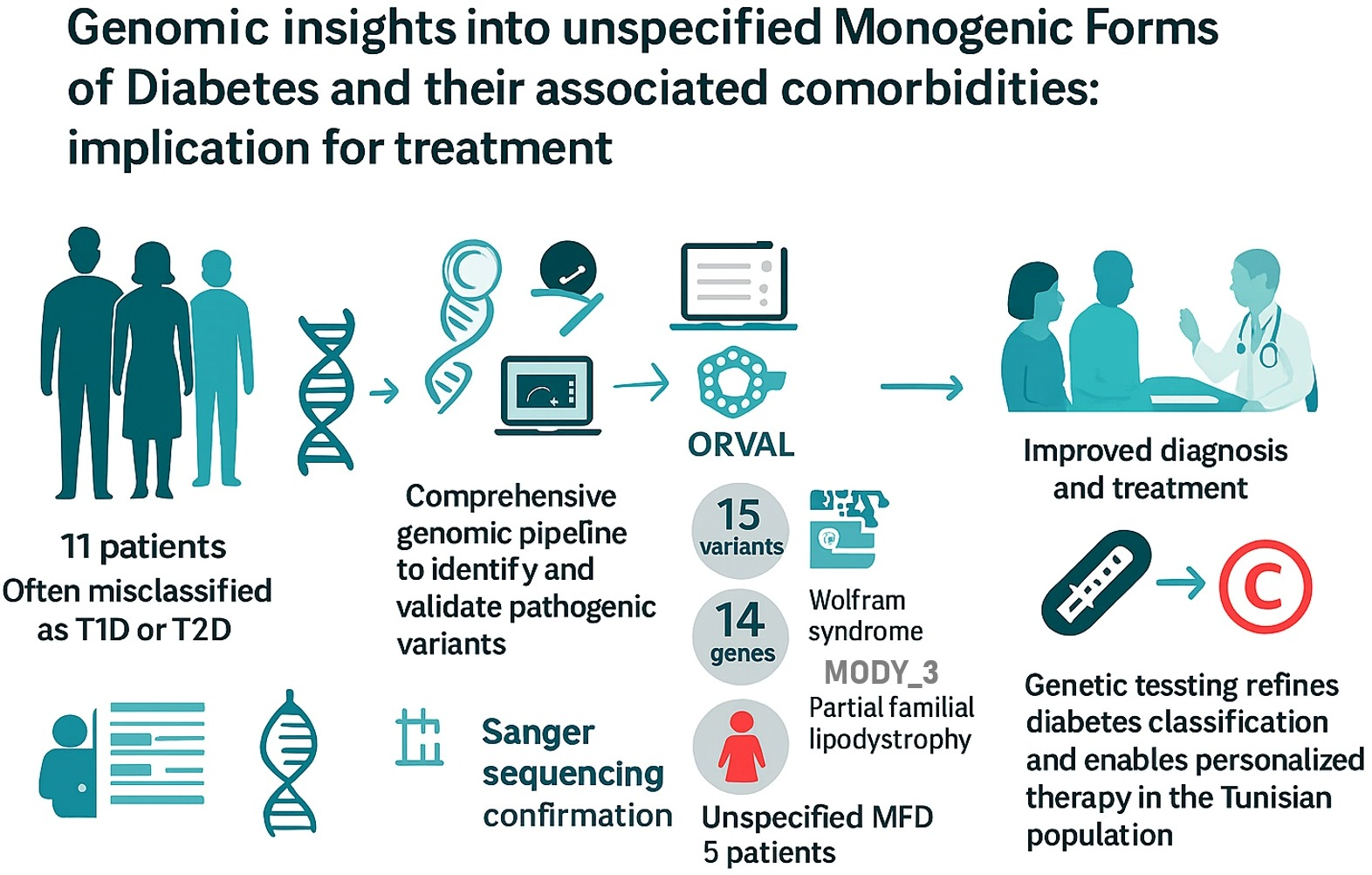
This study focuses on the genetic and clinical characterization of Monogenic Forms of Diabetes (MFD), which are frequently underdiagnosed or misclassified due to clinical similarities with type 1 and type 2 diabetes. Researchers performed Exome Sequencing on 11 Tunisian patients suspected of having MFD. The pathogenicity of genetic variants was assessed using filtering and bioinformatics prediction tools. The ORVAL online tool was used to predict the likelihood of combinations of pathogenic variants. Sanger sequencing confirmed likely pathogenic predicted variants in patients and assessed familial segregation. We identified 15 potentially pathogenic variants in 14 genes linked to MFD, including MODY-3, and isolated diabetes with low penetrance for Wolfram syndrome. Additionally, syndromic forms such as partial familial lipodystrophy types 2 and 4, and Wolfram syndrome were detected. Five patients exhibited characteristics of unspecified MFD. This study underscores the importance of genetic screening in individuals with diabetes who have a family history of the disease, particularly those with associated comorbidities. Our findings emphasize the crucial role of genetic testing in refining diabetes classification, leading to more accurate diagnoses. Therefore, integrating genetic research into clinical practice is essential to improving healthcare outcomes for patients with diabetes.

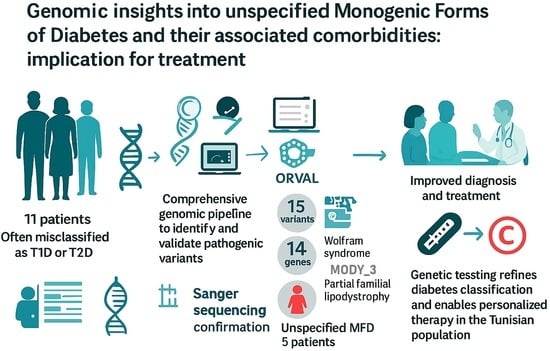
Graphical Abstract

1. Introduction

Diabetes represents a major public health problem and socio-economic burden worldwide. It is characterized by chronic hyperglycaemia due to a defect in insulin secretion or insulin action, or a combination of both. Chronic hyperglycemia leads to degenerative organ complications over time, potentially leading to disabilities and death. Both the World Health Organization (WHO) and the International Diabetes Federation (IDF) consider diabetes a pandemic, as it currently affects over 580 million people globally and causes more than 3.4 million deaths per year [1].
According to the American Diabetes Association (ADA), diabetes is classified into four categories: (1) Type 1 diabetes (T1D, also known as insulin-dependent diabetes or juvenile diabetes) accounts for 5–10% of all diabetes cases. It involves the progressive destruction of pancreatic β-cells, occurring in a genetically susceptible background and associated with autoimmune manifestations. (2) Type 2 diabetes (T2D, also known as non-insulin-dependent or mature-onset diabetes) is the most common hyperglycemic state (90–95% of diabetics), primarily occurring in adults. It results from the combination of genetic and environmental factors. (3) Gestational diabetes is a form of hyperglycemia first recognized during pregnancy that may resolve postpartum but increases the long-term risk of T2D for both mother and child. (4) Other specific types of diabetes which include a heterogeneous group of conditions such as exocrine pancreatic diseases, endocrinopathies, drug-induced diabetes, and genetic forms.
Among the genetic causes, monogenic forms of diabetes (MFD) refer to diabetes resulting from single-gene defects that affect insulin production or secretion. It accounts for up to 5% of all diabetes cases and includes various subtypes such as neonatal diabetes, MODY (Maturity-Onset Diabetes of the Young), and syndromic forms. Due to its phenotypic overlap with T1D or T2D, MFD are often misclassified, leading to suboptimal treatment. Recognizing and accurately diagnosing monogenic diabetes is crucial, as it enables tailored therapeutic approaches and informed genetic counseling [2].
There are currently more than 50 subtypes of MFD including neonatal diabetes, the 14 subclasses of MODY diabetes (Maturity Onset Diabetes of the Young), syndromic forms of diabetes and other yet unknown subtypes [3].
Despite their clinical importance, MFD remain significantly underdiagnosed worldwide, especially in low- and middle-income countries. Several factors contribute to this under recognition such as:
(1)
The phenotypic overlap between MFD, T1D, and T2D;
(2)
The limited access to genetic testing and trained personnel;
(3)
The lack of awareness among healthcare providers;
(4)
The lack of standardized, easy-to-use screening tools in routine practice.
These challenges lead to diagnostic delays or misclassification, preventing patients from receiving targeted and effective treatment. Encouragingly, recent initiatives have aimed to fill this gap. For example, Welsch et al. developed a new clinical tool to help identify pediatric patients with atypical diabetes likely to be associated with genetic variants, offering a promising strategy to improve early detection and guide testing decisions in clinical settings [4].
However, MFD remains largely unexplored and poorly characterized in Tunisia where approximately 50% of individuals with diabetes are still undiagnosed [5].
The aim of the present study is threefold: first, to identify the genetic causes of MFD in Tunisian patients; second, to improve molecular diagnosis of MFD among the Tunisian population using next-generation sequencing (NGS) technologies, specifically, Whole Exome Sequencing (WES) and third, to inform treatment strategies that contributeto precision diagnosis and the advancement of personalized healthcare outcomes.

2. Materials and Methods

2.1. Patients and Sample Collection

A total of 24 Tunisian patients suspected of having atypical forms of diabetes were recruited from the Department of Nutritional Diseases at the National Institute of Nutrition and Food Technology (INNTA) based on the following inclusion criteria:
  • Inclusion criteria
Fasting plasma glucose ≥ 1.26 g/L (7 mmol/L) [2].
Young age of diabetes onset (≤40 years).
A family history of diabetes spanning at least two generations.
To participate in this study, patients and available family members, including parents provided written informed consent. The study protocol was conducted in accordance with the Declaration of Helsinki and was ap-proved by the Ethical Committee of the Institut Pasteur of Tunis “IPT” (Registration numbers IRB00005445 and FWA00010074; ref. 2020/10/I/LR16IPT/V2).
Details regarding the medical histories of the patients and their extended family members (when available) were documented using a structured questionnaire. Additionally, clinical and metabolic data were collected from all patients, including the demographic information, anthropometric measurements, diabetes history, and treatment (oral anti-diabetic medications (OAD) and/or insulin injections). Biochemical parameters, such as fasting plasma glucose (FPG), glycated hemoglobin (HbA1c), C-peptide, lipid profile [total cholesterol (TC), triglycerides (TG), high-density lipoprotein (HDL), and low-density lipoprotein (LDL)], C-reactive protein (CRP), and creatinine were measured in collaboration with the Laboratory of Clinical Biochemistry and Hormonology in IPT.
Research on diabetes autoantibodies was carried out in collaboration with the Laboratory of Clinical Immunology in IPT. In our study, we analyzed titers of glutamic acid decarboxylase (GAD), islet antigen 2 (IA2), and islet cell antibodies (ICAs) in order to select suspected MD patients for genetic testing. In this study, we included the examination of the autoantibody titers among MD subjects selected for genetic testing as reported by Kheriji et al. [6].
Following comprehensive immunological and biochemical assessments, patients meeting any of the following exclusion criteria were excluded from the planned genetic testing:
  • Exclusion criteria
Complete insulin deficiency (very low or undetectable C-peptide);
Presence of three or more pancreatic autoantibodies at high titers;
A clinical profile strongly suggestive of autoimmune diabetes.
This approach ensured the selection of 11 patients most likely to benefit from genetic testing for monogenic diabetes.

2.2. Genomic Investigation

2.2.1. DNA Extraction

Genomic DNA was extracted from whole blood using the FlexiGene DNA Kit (QIAGEN, Germantown, MD, USA). DNA quality was then assessed using a NanoDrop spectrophotometer (Thermo Fisher Scientific, Waltham, MA, USA) and a DeNovix (Life Science Technologies, Carlsbad, CA, USA).

2.2.2. WES

Whole Exome Sequencing (WES) analysis was performed in collaboration with RAN Bio Links SARL (Carthagenomics, Macrogen, Seoul, Republic of Korea) using the Sure Select Human All Exon V6 Kit (Agilent Technologies, Santa Clara, CA, USA) and the Twist Human Core Exo-me Kit (Twist Biosciences, San Francisco, CA, USA). The captured libraries were sequenced on NovaSeq 6000 System (Illumina, San Diego, CA, USA) to generate 151 bp paired-end reads.

2.2.3. Bioinformatic Analysis

The quality of the sequencing reads in FASTQ files was evaluated using FastQC (https://www.bioinformatics.babraham.ac.uk/projects/fastqc/, accessed on 11 October 2025), which was followed by adapter trimming using BBDuk (https://jgi.doe.gov/data-and-tools/bbtools/bb-tools-user-guide/bbduk-guide/, accessed on 11 October 2025). We aligned reads to the human reference genome hg38, and we subsequently called the genetic variants in a VCF file following the GATK best practices. Variant annotation was processed using ANNOVAR (version 2019-10-24) [7]. As in our previous study, we applied the same analytical approach to prioritize potential disease-causing variants in the current investigation [6]. In fact, all identified variants were classified according to the American College of Medical Genetics and Genomics (ACMG) guidelines. To support variant interpretation, we applied a rigorous multi-criteria strategy combining in silico prediction tools, population allele frequency thresholds, genotype–phenotype correlation, and segregation analysis. This integrative framework allowed us to prioritize variants with plausible pathogenic potential, in alignment with ACMG/AMP standards. Additionally, we predicted the likelihood combinations of pathogenic variations using the machine-learning tool ORVAL (Oligogenic Resource for Variant AnaLysis: https://orval.ibsquare.be/, accessed on 11 October 2025). This platform uses a variety of variants, genes, and gene pair biological features to make predictions and create networks of potential pathogenic variant combinations in gene pairs rather than isolated variations in individual genes. ORVAL enables interactive result exploration, aiding biological interpretation and supporting deeper investigation of complex genetic diseases [8].

2.2.4. Sanger Sequencing

Sanger sequencing was performed to confirm the likely pathogenic variants identified in the patients and to assess familial segregation using the ABI PRISM BigDye Terminator v3.1 Cycle Sequencing Kit (Thermo Fisher Scientific, Waltham, MA, USA).

3. Results

3.1. Cohort Study Description

Based on biochemical and immunological results, only 11 Tunisian patients suspected of having monogenic forms of diabetes (MFD) were selected for genetic testing. The anthropometric and clinical characteristics of the participants are summarized in Table 1 while the results of biochemical measurements and immunological analyses are reported in Table 2. All patients demonstrated the absence of at least two measured pancreatic antibodies. The family history of diabetes along with additional information regarding clinical features are illustrated in Figure 1.

3.2. Genetic Findings

Our genetic investigation identified 15 potential pathogenic variants located in 14 genes associated with MFD in the 11 suspected MFD patients. A detailed summary of all genetic findings from our cohort study is presented in Table 3.
Table 3. List of the filtered genetic variants identified in the 11 suspected MFD patients.
Patient ID Gene & ExonRefseqGenetic VariantGenotype Consequence dbSNPgnomAD FrequencyPathogenicity ScoreReferences Final
Pathogenicity
Assessment
P1HNF1A exon 4NM_000545.8c.812G>AHomp.Arg271Glnrs7791841838.031 × 10−613Clin var (ID:449403)Pathogenic 
P2WFS1
exon 8
NM_001145853.1c.2335G>AHetp.Val779Metrs1413280440.001711Uniprot/Clin Var (ID: 45453)Pathogenic 
P3LMNA exon 10NM_170708.4c.1840C>THetp.Arg614Cysrs1420009630.001213The present studyLikely to be pathogenic 
LRBA
exon 20
NM_001199282.2c.2444A>GHetp.Asn815Serrs1406668480.00229ClinVar (ID: 218542)Likely to be pathogenic
P4IRS1
exon 1
NM_005544.3c.193C>AHetp.Pro65Thrrs1498304798.774 × 10−58The present studyLikely to be pathogenic
P5MKS1
exon 4
NM_001165927.1c.338G>AHetp.Arg113Glnrs2021128560.00048ClinVar (ID: 235814) ClinVar (ID:2440881)Likely to be pathogenic
DMPK exon 7NM_001288765.1c.911C>THetp.Pro304Leurs2004910280.00028Likely to be pathogenic
P6WFS1
exon 8
NM_001145853.1c.2335G>AHetp.Val779Metrs1413280440.001710Uniprot/Clin Var (ID: 45453)Pathogenic
P7WFS1
exon 8
NM_001145853.1c.2006A>GHomp.Tyr669Cysrs14029992033.987 × 10−614Uniprot/ClinVar (ID: 2576526)Pathogenic
P8PPP1R3A exon 4NM_002711.4c.2267C>THetp.Pro756Leurs1513105940.000911ClinVar (ID: 393402)Benign 
ADCY5 exon 1NM_183357.3c.29C>THetp.Pro10Leurs1439054230.001211ClinVar (ID: 1170029)Likely to be pathogenic
P9PPP1R3A exon 4NM_002711.4c.2267C>THetp.Pro756Leurs1513105940.000911ClinVar (ID: 393402)Benign 
GIPR
exon 4
NM_001308418.2c.187G>THetp.Val63Phers1425289365.171 × 10−614The present studyLikely to be pathogenic
P10TCF7L2 exon 5NM_001146283.2c.493C>AHetp.Pro165Thr--12The present studyLikely to be pathogenic
PLIN 1 exon 9NM_001145311.2c.1465C>THetp.Arg489Cysrs7807104850.00028The present studyLikely to be pathogenic
P11GRB 10 exon 4NM_001001549.3c.454C>GHetp.Pro152Alars2001758990.000810The present studyLikely to be pathogenic
NEUROG3 exon2NM_020999.4c.511T>AHetp.Ser171Thrrs2004172930.00049The present studyLikely to be pathogenic
The genetic results for patient P1 revealed a homozygous pathogenic variant c.812G>A;p.Arg271Gln in the HNF1A gene (ClinVar ID: 449403). This variant was also confirmed in the brother diagnosed with diabetes using sanger sequencing. WES analysis identified a heterozygous variant c.2335G>A;p.Val779Met in the WFS1 gene in patients P2 and P6. This variant is considered pathogenic by Uniprot and as a variant of uncertain significance (VUS) in ClinVar (ID: 45453). Our genetic investigation of patient P3 uncovered two heterozygous variants: c.1840C>T;p.Arg614Cys in the LMNA gene and c.2444A>G;p.Asn815Ser in the LRBA gene. The LMNA variant is new and classified as VUS according to the ACMG criteria. Similarly, the LRBA variant is also classified as a VUS in ClinVar (ID: 218542). Querying the ORVAL tool confirmed the potential pathogenic effect of the LMNA-LRBA combination with 99% confidence, suggesting digenic interaction between the two variants. Patient P4 was found to be heterozygous for a new mutation c.193C>A;p.Pro65Thr in the IRS1 gene. This variant is very rare (gnomAD f = 0.0000877) and classified as a VUS according to ACMG criteria. Genetic results for patient P5 showed the presence of two heterozygous variants: c.338G>A;p.Arg113Gln in the MKS1 gene and c.911C>T;p.Pro304Leu in the DMPK gene. Both variants are categorized as VUSs in ClinVar (IDs: 235814 and 2440881), with pathogenicity scores of 8 out of 14 from various pathogenicity prediction tools. The ORVAL tool revealed no potential genetic combinations associated with these variants. A homozygous variant located in the WFS1 gene was identified in P7 and confirmed in the brother, who was also diagnosed with diabetes, as well as in parents, who were heterozygous for the variant. This variant c.2006A>G;p.Tyr669Cys is classified as pathogenic according to ACMG criteria, ClinVar (ID: 2576526) and Uniprot. Patients P8 and P9 both carry a common variant c.2267C>T;p.Pro756Leu in the PPP1R3A gene, which is considered benign in ClinVar (ID: 393402) and ACMG criteria. Additionally, patient P8 has another variantc.29C>T, p.Pro10Leu in the ADCY5 gene which is considered as likely pathogenic in ClinVar (ID: 1170029). The ORVAL analysis indicates a digenic effect of the PPP1R3A-ADCY5 combination at 99% confidence. In contrast, P9 presents a new heterozygous variant c.187G>T;p.Val63Phe in the GIPR gene. Based on our genetic evaluation, this variant could potentially be pathogenic. The ORVAL tool shows a low pathogenicity score for the PPP1R3A-GIPR combination (VarCoPP score = 0.67). Two new variants c.493C>A;p. Pro165Thr and c.1465C>T;p.Arg489Cys were identified in P10, respectively, in the TCF7L2 and PLIN1 genes. According to our variant filtering and prioritization strategy, these variants are considered potentially pathogenic. The ORVAL tool indicates a dual molecular diagnosis involving the TCF7L2-PLIN1 combination (VarCoPP score = 0.78, 99%). Our WES results led to the identification of two new variantsc.454C>G;p.Pro152Ala and c.511T>A;p.Ser171Thr in P11, located, respectively, in the GRB10 and NEUROG3 genes. Both variants are deemed potentially pathogenic. The ORVAL tool indicates that the combination of GRB10-NEUROG3 genes variants results in a monogenic disease with a modifying effect (VarCoPP score = 0.80, 99%).
Summarize the results from the ORVAL tool, illustrating the potential pathogenic combinations among the variants identified in the studied patients. The results of Sanger sequencing for all index cases and any available family members are presented in Figure 1, Table 4.

3.3. Classification and Management of MFD

Table 5 summarizes all the MFD subclasses identified in the study cohort. These genetic results were communicated to the treating physicians to tailor treatment strategies for improved diabetes management. Among the 11 patients studied, genetic analysis allowed us to adjust and guide treatment decisions for four individuals.

4. Discussion

This study is among the first comprehensive WES-based investigations of MFD in the Tunisian population, integrating several pivotal elements: it provides population-specific insights, identifies both known and novel variants, and explores potential digenic or modifier effects using the ORVAL platform, refining our understanding of MFD’s complex genetic architecture. Notably, the findings had direct clinical translation, demonstrating the value of genetic diagnosis in guiding personalized care, especially in resource-limited settings. To evaluate the pathogenicity of the identified variants, we implemented a rigorous multi-step strategy combining complementary approaches: (i) In Silico prediction using 14 different tools to assess functional impact, (ii) segregation analysis within families to establish inheritance patterns, (iii) population frequency assessment using GnomAD and GME Variome databases, and (iv) genotype–phenotype correlation through integration of clinical and molecular data. This integrative approach reinforced the robustness of our findings and underscores the importance of close collaboration between clinicians and geneticists to refine variant interpretation and improve diagnostic accuracy.

4.1. MFD: MODY & Syndromic Diabetes

The MODY_3 (HNF1A) subtype was identified in the F1 family following the discovery of a homozygous mutation (c.812G>A) in the HNF1A gene in P1 and his diabetic brother. This mutation results in an amino acid substitution from arginine to glutamine at codon 271 (p. Arg271Gln). According to the literature, this mutation has been found in 19 unrelated individuals with non-autoimmune, insulin-deficient diabetes [9]. Functional studies indicate that the p.Arg271Gln protein alters DNA-binding capacity and reduces transactivation to 50–60% of the wild-type level [10]. Consequently, the p.Arg271Gln variant meets the criteria for classification as pathogenic according to the ACMG/AMP guidelines.
The absence of diabetes in both parents, supports findings from a previous study, which reported the presence of this variant in the heterozygous state in both healthy parents of the index case, indicating reduced penetrance of DM [11]. Regarding treatment, current guidelines recommend switching from insulin to sulfonylureas for patients with HNF1A mutation (HNF1A-MODY). Based to our genetic findings, the referring physicians advised patient P1 and the brother to stop insulin and instead use a combination of sulfonylureas (Glimid and Amarel) [12]. This therapeutic adjustment led to an improvement in glycated hemoglobin levels, which decreased from 9.01% to 7.7% in both Patient P1 and his brother (HbA1c from 7.12 to 6.3%).
The same variant identified in patients P2 and P6 has been previously reported in a Chinese woman with diabetes, diagnosed with Wolfram syndrome (WS) [13]. Dominant mutations in the WFS1 gene have been shown to cause less severe phenotypes compared to recessive mutations associated with classical WS. In particular, heterozygous mutations in the WFS1 gene have been linked to isolated adult-onset diabetes with low penetrance for WS features such as optic atrophy, hearing impairment, and isolated congenital nuclear cataract [14,15]. These results underscore the significant clinical heterogeneity associated with variants in the WFS1 gene. Early identification of deleterious mutations is crucial for the personalized management of patients with isolated diabetes and low penetrance for WS features, as it can improve their clinical prognosis [16]. Based on our genetic analysis, we recommend that patients P2 and P6 receive comprehensive, multidisciplinary healthcare management.
Genetic investigation in P3 revealed two heterozygous variants in the LMNA and LRBA genes. The LMNA protein plays an important role in nuclear assembly, chromatin organization, nuclear membrane integrity, and telomere dynamics. It is essential for the normal development of peripheral nervous system and skeletal muscle [17]. Our findings support previous studies that have demonstrating the impact of the LMNA variants on glucose homeostasis, particularly in individuals of African descent [18]. An independent analysis of variants in the LMNA gene via the T2D Knowledge Portal revealed that the p.G602S variant is significantly as-sociated with T2DM (p = 0.02; odds ratio = 4.58) in African-Americans (allele frequency 0.297%). Notably, a study correlated a novel variant (p.K108E) in the LMNA gene with psychiatric and metabolic diseases in Latinos [19], similar to our patient P3, who experiences psychiatric issues. According to the literature, mutations in the LMNA gene may be linked to Familial partial lipodystrophy type 2. Most individuals with this condition exhibit high triglycerides levels (hypertriglyceridemia) and insulin resistance as seen in P3 [20].
The LRBA (LPS-responsive beige-like anchorprotein) gene encodes a protein involved in immune system regulation. Mutations in this gene have been associated with a rare autoimmune disease called LRBA deficiency. According to the literature, LRBA deficiency is characterized by a wide range of clinical manifestations, including immune dysregulation, hypogammaglobulinemia (low levels of specific antibodies), recurrent infections, and autoimmune conditions, as seen in P3. T1DM is one of the autoimmune diseases that may be associated with LRBA deficiency [21]. However, the diagnosis of T1D was excluded due to the absence of pancreatic autoantibodies in P3. The ORVAL results showed a true digenic potentially pathogenic combination (VarCoPP score = 0.82) between the variants identified in LMNA and LRBA genes, suggesting that both genes contribute to the onset of diabetes in P3. Collectively, these findings point to an atypical, unspecified form of diabetes known as partial familial lipodystrophy type 2 in P3.
Patient P4, adolescent with diabetes, carrying a heterozygous mutation (c.193C>A:p.P65T) in the IRS1 gene. Insulin Receptor Substrate 1 (IRS1) encodes a protein that is phosphorylated by the insulin receptor tyrosine kinase. Mutations in this gene have been linked to T2D [22,23]. Therefore, the genetic investigation in P4 support a diagnosis of T2D at a young age.
Genetic investigation in P7 revealed a homozygous pathogenic variant (c.2006A>G;p.Tyr669Cys) in the WFS1 gene. This variant is a missense mutation that results in an amino acid substitution from a large, aromatic residue (tyrosine) to a medium-sized, polar residue (Cysteine). As previously mentioned, mutations in the WFS1 gene are associated with WS, also known as DIDMOAD syndrome (Diabetes Insipidus, Diabetes Mellitus, Optic Atrophy, and Deafness). Patient P7 exhibits clinical features consistent with this condition, including, early–onset diabetes at the age of 4, partial hearing loss (sensorineural deafness), and bilateral optic atrophy. The identified variant (p. Thy669Cys) was previously described in the heterozygous state within a family affected by WS [24]. Our findings further support the pathogenicity of this variant, as it was identified in both the index case and the younger brother, who also has diabetes. In this family, the consanguineous parents are asymptomatic carriers of the mutation, as the inheritance pattern of WS is autosomal recessive. Based on our findings, patient P7 and the brother, who have been diagnosed with WS, should receive long-term interdisciplinary clinical follow-up involving specialists such as an endocrinologist, diabetologist, ophthalmologist, audiologist and psychologist.
Patient P10 has two heterozygous variants in the PLIN1 and TCF7L2 genes. The perilipin 1 (PLIN1) gene encodes a protein that regulates lipid metabolism in adipocytes [25]. The TCF7L2 gene encodes a transcription factor 7 like 2, which plays a key role in blood glucose homeostasis [26]. Genetic mutations in this gene are associated with Familial partial lipodystrophy type 4; an autosomal dominant metabolic disorder characterized by the onset of subcutaneous adipose tissue, insulin-resistant diabetes mellitus, hypertriglyceridemia and hypertension in childhood or young adulthood [27,28]. Other features may include hepatic steatosis and polycystic ovary syndrome (PCOS) [29], as seen in our patient P10 and the sister, who was diagnosed with diabetes at a young age.
Several studies have confirmed the association between PCOS, diabetes and its complications, such as cardiovascular disease [30]. In addition, Jéru et al. have demonstrated that heterozygous variants of the PLIN1 gene are linked to familial partial lipodystrophy type 4 [31]. However, another study suggested that heterozygous variants in the PLIN1 gene do not cause familial partial lipodystrophy and should not be classified as disease-causing [32]. This discrepancy may be attributed to recent doubts about the pathogenicity of other PLIN1 variants found in patients with diabetes, stemming from the absence of lipodystrophy in these individuals and the higher prevalence of PLIN1 variants in the general population [32]. Our ORVAL analysis showed a potentially pathogenic combination (VarCoPP score = 0.78) between the PLIN1 and TCF7L2 genes. Therefore, variants in these two genes contribute to a dual molecular diagnosis: diabetes and PCOS consistent with a diagnosis of Familial partial lipodystrophy type 4 in P10.

4.2. Unspecified MFD

Genetic testing for patient P5 revealed the presence of two heterozygous variants in the MKS1 and DMPK genes. The MKS1 gene encodes a basal body protein required for primary cilia in ciliated epithelial cells. Mutations in this gene are associated with Meckel syndrome type 1 [33]. Most individuals with Meckel syndrome develop liver fibrosis, which is also present in P5. The DMPK gene encodes a serine-threonine kinase that is closely related to other kinases involved in the insulin secretion pathway [34], which helps explain the diabetes observed in P5.
The clinical presentation of patient P5 which includes diabetes, hepatic fibrosis and marked asthenia is consistent with that reported in other women aged around 35 years of age, who have mutations in the DMPK gene [35]. The ORVAL results did not reveal any significant interaction between the MKS1 and DMPK genes. Therefore, based on these findings, patient P5 is diagnosed with unspecified atypical MFD with Meckel syndrome type 1 comorbidity.
Patient P8 carries two variants in the ADCY5 (p. Pro10Leu) and PPP1R3A (p. Pro756Leu) genes. The PPP1R3A gene plays an important role in glycogen synthesis but is not essential for the insulin activation of glycogen synthase. According to the literature, variants in PPP1R3A genes are associated with T2D [36] and MFD [6]. The adenylate cyclase 5 (ADCY5) gene encodes a member of the family of membrane adenyl cyclase enzymes that mediate insulin secretion signaling pathways. Single nucleotide polymorphisms (SNPs) in this gene may also be linked to T2D [37]. Our results corroborate those of Ivette et al., who identified another variant (rs11708067) in the ADCY5 gene associated with low neonatal insulin and C-peptide concentrations [38]. Similarly, for the first time in South Asians, researchers have found evidence that SNP alleles in ADCY5 may increase the risk of T2D [39]. Our ORVAL analysis revealed a potentially true digenic pathogenic combination (VarCoPP score = 0.82, 99% causing of the disease) between the ADCY5 and PPP1R3A genes. In other terms, both genes are essential for the early onset of diabetes in P8.
The same variant found in the PPP1R3A gene in P8 was also identified in P9. In addition, genetic analysis revealed another heterozygous variant in the GIPR gene, which encodes a glucose-dependent insulinotropic polypeptide receptor. Deficiency in this gene can lead to the development of diabetes. Researchers have identified a set of SNPs in the GIPR gene as associated with T2D and gestational diabetes in a large cohort of patients from two ethnic groups [40]. Another previous study highlighted the essential role of GIPR in insulin secretion, β-cell proliferation and physiological expansion of β-cell mass [41]. According to the literature, rs10423928 located in the GIPR gene, is associated with postprandial blood glucose levels. Zhang et al. report that GIPR plays a significant role in regulating food intake and consequently body weight [42]. Considering these results, patient P9 presents unspecified atypical MFD, which require further genetic investigation of MFD in Tunisia for a more accurate diagnosis of diabetes.
We identified two variants, p. Pro152Ala and p. Ser171Thr, located in the GRB10 and NEUROG3 genes, respectively, in P11.The GRB10 (Growth Factor Receptor Bound Protein 10) gene encodes a growth factor receptor-binding protein that interacts with insulin receptors and insulin-like growth factor receptors [43]. Overexpression of certain isoforms of this protein inhibits tyrosine kinase activity leading to growth suppression, as observed in patient P11. A recent study has shown that the rs1800504 polymorphism in the GRB10 gene is associated with blood lipids levels and, subsequently, the risk of coronary heart disease in patients with T2DM [44]. Other studies have linked variants in the GRB10 gene to variation in plasma glucose levels at birth and in early adulthood [45].
The NEUROG3 gene encodes a protein Neurogenin 3, a transcription factor involved in neurogenesis. This protein likely acts as a heterodimer with another protein. Related pathways include the regulation of β-cell development and nervous system development. Consequently, the NEUROG3 gene is associated with hyperglycemia [46].
Our findings align with a recent study that identified NEUROG3 variants in three unrelated Thai patients with malabsorptive diarrhea, endocrine and renal abnormalities [47]. In addition, a study involving 31 Chinese families with diabetes revealed 32 mutations across six genes including NEUROG3, which was a novel causative gene for MODY [48]. Another study confirms that genetic variation in the NEUROG3 gene may be one of the genetic determinants involved in the pathogenesis of T2D [49]. However, Okada et al. reported no association between NEUROG3 mutations and T2DM in the Japanese population [50]. Our ORVAL analysis indicated the presence of a potential pathogenic monogenic disease with modifier effect combination (VarCoPP score = 0.80). Collectively, these results support a diagnosis of unspecified atypical MFD in P11.
This study highlights the considerable clinical and genetic heterogeneity of monogenic diabetes in the Tunisian population, driven by genetic, environmental, and behavioral factors. Our results reinforce the emerging concept that oligogenic inheritance plays a role in the phenotypic variability of monogenic diabetes such is the case of patients P3, P8 and P11, emphasizing the need to account for gene–gene interactions in metabolic disease research. So, a deeper understanding of the molecular basis of MFD is crucial for accurate diagnosis and tailored treatment, ranging from dietary changes to targeted therapies, with significant socio-economic implications.
While genetic testing is essential for confirming the diagnosis of monogenic diabetes, the primary barrier to accurate diagnosis occurs earlier in the care pathway—at the stage of clinical suspicion and patient referral. To address the underdiagnosis of monogenic forms of diabetes (MFD), it is crucial to enhance clinical awareness and promote early screening. The key challenge is not the availability of genetic testing but rather identifying which patients should undergo testing. Based on the criteria established in this study, we propose a practical screening approach tailored to the Tunisian context. Simple and accessible clinical indicators can effectively guide physicians in selecting patients most likely to benefit from genetic analysis. Additionally, tools such as the one developed by Welsch et al. (2024) [4] may serve as valuable models to support early detection and improve diagnostic efficiency in routine clinical practice.
The relatively small sample size reflects the rarity and underdiagnosis of monogenic diabetes in Tunisia, partly due to limited access to genetic testing and the strict inclusion criteria requiring detailed biochemical, immunological, and clinical assessments. Nevertheless, each case was extensively characterized, providing meaningful insights into the genetic and clinical diversity of this rare disease.

5. Conclusions

Our study emphasizes the considerable clinical and genetic heterogeneity of MFD in Tunisia which limits the effectiveness of targeted gene panels. Therefore, exome sequencing emerges as a more suitable and cost-effective diagnostic approach, especially in middle- and low-income countries. However, future work should include functional validation studies to experimentally confirm the biological impact of the identified variants.

Author Contributions

R.K., N.K. and H.D.: Conceptualization. N.K., H.D., M.G., A.K. and F.M.: Data curation, Formal analysis, Investigation, Methodology; Resources; Software; Visualization. R.K.: Funding acquisition; Project administration. R.K., A.B., M.B.A., H.J. and A.A., Supervision; Validation. N.K. and R.K.: Roles/Writing—original draft; and N.K., R.K., H.D., M.G., H.J. and F.M.: Writing—review & editing. All authors have read and agreed to the published version of the manuscript.

Funding

This work was supported by the Tunisian Ministry of Public Health, the Institut Pasteur of Tunis (PCI38) and the Ministry of Higher Education and Scientific Research (LR16IPT05).

Institutional Review Board Statement

The study protocol was conducted according to the Declaration of Helsinki. It was approved by the Ethical Committee in Pasteur Institute of Tunis “IPT” (Registration numbers IRB00005445 and FWA00010074; approval code: 2020/10/I/LR16IPT/V2; date 1 October 2020).

Informed Consent Statement

Informed consent was obtained from all subjects involved in the study.

Data Availability Statement

The original contributions presented in this study are included in the article. Further inquiries can be directed to the corresponding author.

Acknowledgments

The authors are grateful to all patients and their family members who graciously agreed to participate in the study. They thank RAN BioLinks SARL (Carthagenomics) for their collaboration to perform whole-exome sequencing.

Conflicts of Interest

The authors declare no conflict of interest.

References

  1. IDF Diabetes Atlas 2025. Available online: https://diabetesatlas.org/resources/idf-diabetes-atlas-2025/ (accessed on 11 October 2025).
  2. American Diabetes Association Professional Practice Committee. Classification and Diagnosis of Diabetes: Standards of Medical Care in Diabetes—2022. Diabetes Care 2022, 45 (Suppl. 1), 17–38. [Google Scholar] [CrossRef] [PubMed]
  3. Colclough, K.; Ellard, S.; Hattersley, A.; Patel, K. Syndromic Monogenic Diabetes Genes Should Be Tested in Patients with a Clinical Suspicion of Maturity-Onset Diabetes of the Young. Diabetes 2022, 71, 530–537. [Google Scholar] [CrossRef]
  4. Welsch, S.; Harvengta, A.; Gallo, P.; Martin, M.; Beckers, D.; Mouraux, T.; Seret, N.; Lebrethon, M.-C.; Helaers, R.; Brouillard, P.; et al. A New Tool to Identify Pediatric Patients with Atypical Diabetes Associated with Gene Polymorphisms. Diabetes Metab. J. 2024, 48, 949–959. [Google Scholar] [CrossRef]
  5. Jemaa, R.; Razgallah, R.; Rais, L.; Ben Ghorbel, I.; Feki, M.; Kallel, A. Prevalence of diabetes in the Tunisian popula-tion: Results of the ATERA-survey. Arch. Cardiovasc. Dis. Suppl. 2022, 15, 131. [Google Scholar] [CrossRef]
  6. Kheriji, N.; Dallali, H.; Gouiza, I.; Hechmi, M.; Mahjoub, F.; Mrad, M.; Krir, A.; Soltani, M.; Trabelsi, H.; Hamdi, W.; et al. Whole-exome sequencing reveals novel variants of monogenic diabetes in Tunisia: Impact on diagnosis and healthcare management. Front. Genet. 2023, 14, 1224284. [Google Scholar] [CrossRef]
  7. Wang, K.; Li, M.; Hakonarson, H. ANNOVAR: Functional annotation of genetic variants from high-throughput sequencing data. Nucleic Acids Res. 2010, 38, 1–7. [Google Scholar] [CrossRef]
  8. Renaux, A.; Papadimitriou, S.; Versbraegen, N.; Nachtegael, C.; Boutry, S.; Nowé, A.; Smits, G.; Lenaerts, T. ORVAL: A novel platform for the prediction and exploration of disease-causing oligogenic variant combinations. Nucleic Acids Res. 2019, 47, W93–W98. [Google Scholar] [CrossRef] [PubMed]
  9. Stern, E.; Strihan, C.; Potievsky, O.; Nimri, R.; Shalitin, S.; Cohen, O.; Shehadeh, N.; Weintrob, N.; Phillip, M.; Gat-Yablonski, G. Four novel mutations, including the first gross deletion in TCF1, identified in HNF-4α, GCK and TCF1 in patients with MODY in Israel. J. Pediatr. Endocrinol. Metab. 2007, 20, 909–922. [Google Scholar] [CrossRef]
  10. Çubuk, H.; Çapan, Ö.Y. A Review of Functional Characterization of Single Amino Acid Change Mutations in HNF Transcription Factors in MODY Pathogenesis. Protein J. 2021, 40, 348–360. [Google Scholar] [CrossRef]
  11. Marchand, L.; Li, M.; Leblicq, C.; Rafique, I.; Alarcon-Martinez, T.; Lange, C.; Rendon, L.; Tam, E.; Bouyonnec, A.C.-L.; Polychronakos, C. Monogenic Causes in the Type 1 Diabetes Genetics Consortium Cohort: Low Genetic Risk for Auto-immunity in Case Selection. J. Clin. Endocrinol. Metab. 2021, 106, 1804–1810. [Google Scholar] [CrossRef]
  12. Raile, K.; Schober, E.; Konrad, K.; Thon, A.; Grulich-Henn, J.; Meissner, T.; Wölfle, J.; Scheuing, N.; Holl, R.W.; DPV Initiative the German BMBF Competence Network Diabetes Mellitus. Treatment of young patients with HNF1A mutations (HNF1A-MODY). Diabet. Med. 2015, 32, 526–530. [Google Scholar] [CrossRef]
  13. Deng, H.; Zhang, J.; Zhu, F.; Deng, X.; Yuan, L. Identification of the rare variant p.Val803Met of WFS1 gene as a cause of Wolfram-like syndrome in a Chinese family. Acta Diabetol. 2020, 57, 1399–1404. [Google Scholar] [CrossRef]
  14. Maltoni, G.; Franceschi, R.; Di Natale, V.; Al-Qaisi, R.; Greco, V.; Bertorelli, R.; De Sanctis, V.; Quattrone, A.; Mantovani, V.; Cauvin, V.; et al. Next Generation Sequencing Analysis of MODY-X Patients: A Case Report Series. J. Pers. Med. 2022, 12, 1613. [Google Scholar] [CrossRef]
  15. Li, Y.; Gong, S.; Li, M.; Cai, X.; Liu, W.; Zhang, S.; Ma, Y.; Luo, Y.; Zhou, L.; Zhang, X.; et al. The genetic and clinical characteristics of WFS1 related diabetes in Chinese early onset type 2 diabetes. Sci. Rep. 2023, 13, 9127. [Google Scholar] [CrossRef]
  16. Krutish, A.; Elmore, J.; Ilse, W.; Johnston, J.L.; Hittel, D.; Kerr, M.; Khan, A.; Rockman-Greenberg, C.; Mhanni, A.A.; Canadian Prairie Metabolic Network (CPMN). A novel WFS1 variant associated with isolated congenital cataracts. Cold Spring Harb. Mol. Case Stud. 2023, 9, a006259. [Google Scholar] [CrossRef] [PubMed]
  17. Function, N. LMNA Gene. 2020; pp. 1–7. Available online: https://medlineplus.gov/genetics/ (accessed on 11 October 2025).
  18. Desgrouas, C.; Varlet, A.-A.; Dutour, A.; Galant, D.; Merono, F.; Bonello-Palot, N.; Bourgeois, P.; Lasbleiz, A.; Petitjean, C.; Ancel, P.; et al. Unraveling LMNA Mutations in Metabolic Syndrome: Cellular Phenotype and Clinical Pitfalls. Cells 2020, 9, 310. [Google Scholar] [CrossRef] [PubMed]
  19. Florwick, A.; Dharmaraj, T.; Jurgens, J.; Valle, D.; Wilson, K.L. LMNA sequences of 60,706 unrelated individuals reveal 132 novel missense variants in A-type lamins and suggest a link between variant p.G602S and type 2 diabetes. Front. Genet. 2017, 8, 79. [Google Scholar] [CrossRef]
  20. Fernandez-Pombo, A.; Diaz-Lopez, E.J.; Castro, A.I.; Sanchez-Iglesias, S.; Cobelo-Gomez, S.; Prado-Moraña, T.; Araujo-Vilar, D. Clinical Spectrum of LMNA-Associated Type 2 Familial Partial Lipodystrophy: A Systemat-ic Review. Cells 2023, 12, 725. [Google Scholar] [CrossRef]
  21. Lopez-Herrera, G.; Tampella, G.; Pan-Hammarström, Q.; Herholz, P.; Trujillo-Vargas, C.M.; Phadwal, K.; Simon, A.K.; Moutschen, M.; Etzioni, A.; Mory, A.; et al. Deleterious mutations in LRBA are associated with a syndrome of immune deficiency and au-toimmunity. Am. J. Hum. Genet. 2012, 90, 986–1001. [Google Scholar] [CrossRef] [PubMed]
  22. Pappalardo, M.A.; Russo, G.T.; Pedone, A.; Pizzo, A.; Borrielli, I.; Stabile, G.; Artenisio, A.C.; Amato, A.; Calvani, M.; Cucinotta, D.; et al. Very high frequency of the polymorphism for the insulin receptor substrate 1 (IRS-1) at codon 972 (Glycine972Arginine) in Southern Italian women with polycystic ovary syndrome. Horm. Metab. Res. 2010, 42, 575–584. [Google Scholar] [CrossRef] [PubMed]
  23. Keshavarzi, F.; Golsheh, S. IRS1- rs10498210 G/A and CCR5-59029 A/G polymorphisms in patients with type 2 diabetes in Kurdistan. Mol. Genet. Genom. Med. 2019, 7, e631. [Google Scholar] [CrossRef]
  24. Rendtorff, N.D.; Lodahl, M.; Boulahbel, H.; Johansen, I.R.; Pandya, A.; Welch, K.O.; Norris, V.W.; Arnos, K.S.; Bitner-Glindzicz, M.; Emery, S.B.; et al. Identification of p.A684V missense mutation in the WFS1 gene as a frequent cause of autosomal dominant optic atrophy and hearing impairment. Am. J. Med. Genet. Part A 2011, 155, 1298–1313. [Google Scholar] [CrossRef] [PubMed]
  25. Beller, M.; Bulankina, A.V.; Hsiao, H.-H.; Urlaub, H.; Jäckle, H.; Kühnlein, R.P. PERILIPIN-dependent control of lipid droplet structure and fat storage in Drosophila. Cell Metab. 2010, 12, 521–532. [Google Scholar] [CrossRef]
  26. del Bosque-Plata, L.; Martínez-Martínez, E.; Espinoza-Camacho, M.Á.; Gragnoli, C. The Role of TCF7L2 in Type 2 Diabetes. Diabetes 2021, 70, 1220–1228. [Google Scholar] [CrossRef]
  27. Madhu, S.V.; Mishra, B.K.; Mannar, V.; Aslam, M.; Banerjee, B.; Agrawal, V. TCF7L2 gene associated postprandial triglyceride dysmetabolism- a novel mechanism for diabetes risk among Asian Indians. Front. Endocrinol. 2022, 13, 973718. [Google Scholar] [CrossRef]
  28. Lazarte, J.; Wang, J.; McIntyre, A.D.; Hegele, R.A. Prevalence of severe hypertriglyceridemia and pancreatitis in familial partial lipodystrophy type 2. J. Clin. Lipidol. 2021, 15, 653–657. [Google Scholar] [CrossRef]
  29. Chen, R.-X.; Zhang, L.; Ye, W.; Wen, Y.-B.; Si, N.; Li, H.; Li, M.-X.; Li, X.-M.; Zheng, K. The renal manifestations of type 4 familial partial lipodystrophy: A case report and review of litera-ture. BMC Nephrol. 2018, 19, 111. [Google Scholar] [CrossRef]
  30. Zhu, T.; Cui, J.; Goodarzi, M.O. Polycystic ovary syndrome and risk of type 2 diabetes, coronary heart disease, and stroke. Diabetes 2021, 70, 627–637. [Google Scholar] [CrossRef]
  31. Jéru, I.; Vantyghem, M.-C.; Bismuth, E.; Cervera, P.; Barraud, S.; Auclair, M.; Vatier, C.; Lascols, O.; Savage, D.B.; Vigouroux, C. Diagnostic Challenge in PLIN1-Associated Familial Partial Lipodystrophy. J. Clin. Endocrinol. Metab. 2019, 104, 6025–6032. [Google Scholar] [CrossRef]
  32. Laver, T.W.; A Patel, K.; Colclough, K.; Curran, J.; Dale, J.; Davis, N.; Savage, D.B.; E Flanagan, S.; Ellard, S.; Hattersley, A.T.; et al. PLIN1 Haploinsufficiency Is Not Associated with Lipodystrophy. J. Clin. Endocrinol. Metab. 2018, 103, 3225–3230. [Google Scholar] [CrossRef]
  33. Leitch, C.C.; A Zaghloul, N.; E Davis, E.; Stoetzel, C.; Diaz-Font, A.; Rix, S.; Alfadhel, M.; Lewis, R.A.; Eyaid, W.; Banin, E.; et al. Hypomorphic mutations in syndromic encephalocele genes are associated with Bardet-Biedl syn-drome. Nat. Genet. 2008, 40, 443–448. [Google Scholar] [CrossRef]
  34. Genetics Home Reference. DMPK Gene; NIH: Bethesda, MD, USA, 2017; pp. 1–5. Available online: https://ghr.nlm.nih.gov/gene/DMPK# (accessed on 11 October 2025).
  35. Jia, Y.-X.; Dong, C.-L.; Xue, J.-W.; Duan, X.-Q.; Xu, M.-Y.; Su, X.-M.; Li, P. Myotonic dystrophy type 1 presenting with dyspnea: A case report. World J. Clin. Cases 2022, 10, 7060–7067. [Google Scholar] [CrossRef]
  36. Sánchez-Pozos, K.; Ortíz-López, M.G.; Peña-Espinoza, B.I.; Granados-Silvestre, M.d.L.Á.; Jiménez-Jacinto, V.; Verleyen, J.; Tekola-Ayele, F.; Sanchez-Flores, A.; Menjivar, M. Whole-exome sequencing in maya indigenous families: Variant in PPP1R3A is associated with type 2 diabetes. Mol. Genet. Genom. 2018, 293, 1205–1216. [Google Scholar] [CrossRef]
  37. Carapito, R.; Paul, N.; Untrau, M.; Le Gentil, M.; Ott, L.; Alsaleh, G.; Jochem, P.; Radosavljevic, M.; Le Caignec, C.; David, A.; et al. A de novo ADCY5 mutation causes early-onset autosomal dominant chorea and dystonia. Mov. Disord. 2015, 30, 423–427. [Google Scholar] [CrossRef] [PubMed]
  38. Aguilera-Venegas, I.-G.; Mora-Peña, J.-D.; Velazquez-Villafaña, M.; Gonzalez-Dominguez, M.-I.; Barbosa-Sabanero, G.; Gomez-Zapata, H.-M.; Lazo-De-La-Vega-Monroy, M.-L. Association of diabetes-related variants in ADCY5 and CDKAL1 with neonatal insulin, C-peptide, and birth weight. Endocrine 2021, 74, 318–331. [Google Scholar] [CrossRef]
  39. Ye, X.-W.; Liu, M.-N.; Wang, X.; Cheng, S.-Q.; Li, C.-S.; Bai, Y.-Y.; Yang, L.-L.; Wang, X.-X.; Wen, J.; Xu, W.-J.; et al. Exploring the common pathogenesis of Alzheimer’s disease and type 2 diabetes mellitus via microarray data analysis. Front. Aging Neurosci. 2023, 15, 1071391. [Google Scholar] [CrossRef]
  40. Ramos-Levi, A.; Barabash, A.; Valerio, J.; de la Torre, N.G.; Mendizabal, L.; Zulueta, M.; de Miguel, M.P.; Diaz, A.; Duran, A.; Familiar, C.; et al. Genetic variants for prediction of gestational diabetes mellitus and modulation of susceptibility by a nutritional intervention based on a Mediterranean diet. Front. Endocrinol. 2022, 13, 1036088. [Google Scholar] [CrossRef] [PubMed]
  41. Renner, S.; Fehlings, C.; Herbach, N.; Hofmann, A.; von Waldthausen, D.C.; Kessler, B.; Ulrichs, K.; Chodnevskaja, I.; Moskalenko, V.; Amselgruber, W.; et al. Glucose Intolerance and Reduced Proliferation of Pancreatic. Diabetes 2010, 59, 1228–1238. [Google Scholar] [CrossRef]
  42. Zhang, Q.; Delessa, C.T.; Augustin, R.; Bakhti, M.; Colldén, G.; Drucker, D.J.; Feuchtinger, A.; Caceres, C.G.; Grandl, G.; Harger, A.; et al. The glucose-dependent insulinotropic polypeptide (GIP) regulates body weight and food intake via CNS-GIPR signaling. Cell Metab. 2021, 33, 833–844.e5. [Google Scholar] [CrossRef] [PubMed]
  43. Laviola, L.; Giorgino, F.; Chow, J.C.; A Baquero, J.; Hansen, H.; Ooi, J.; Zhu, J.; Riedel, H.; Smith, R.J. The adapter protein Grb10 associates preferentially with the insulin receptor as compared with the IGF-I receptor in mouse fibroblasts. J. Clin. Investig. 1997, 99, 830–837. [Google Scholar] [CrossRef]
  44. Yang, Y.; Qiu, W.; Meng, Q.; Liu, M.; Lin, W.; Yang, H.; Wang, R.; Dong, J.; Yuan, N.; Zhou, Z.; et al. GRB10 rs1800504 Polymorphism Is Associated with the Risk of Coronary Heart Disease in Patients with Type 2 Diabetes Mellitus. Front. Cardiovasc. Med. 2021, 8, 728976. [Google Scholar] [CrossRef]
  45. Sohani, Z.N.; Anand, S.S.; Robiou-Du-Pont, S.; Morrison, K.M.; McDonald, S.D.; Atkinson, S.A.; Teo, K.K.; Meyre, D. Risk alleles in/near ADCY5, ADRA2A, CDKAL1, CDKN2A/B, GRB10, and TCF7L2 elevate Plasma glucose levels at birth and in early childhood: Results from the FAMILY study. PLoS ONE 2016, 11, e0152107. [Google Scholar] [CrossRef] [PubMed]
  46. Letourneau, L.R.; Greeley, S.A.W. Congenital forms of diabetes: The beta-cell and beyond. Curr. Opin. Genet. Dev. 2018, 50, 25–34. [Google Scholar] [CrossRef]
  47. Wejaphikul, K.; Srilanchakon, K.; Kamolvisit, W.; Jantasuwan, S.; Santawong, K.; Tongkobpetch, S.; Theerapanon, T.; Damrongmanee, A.; Hongsawong, N.; Ukarapol, N.; et al. Novel Variants and Phenotypes in NEUROG3-Associated Syndrome. J. Clin. Endocrinol. Metab. 2023, 108, 52–58. [Google Scholar] [CrossRef]
  48. Liang, H.; Zhang, Y.; Li, M.; Yan, J.; Yang, D.; Luo, S.; Zheng, X.; Yang, G.; Li, Z.; Xu, W.; et al. Recognition of maturity-onset diabetes of the young in China. J. Diabetes Investig. 2021, 12, 501–509. [Google Scholar] [CrossRef]
  49. Li, J.; Bergmann, A.; Reimann, M.; Schulze, J.; Bornstein, S.R.; Schwarz, P.E.H. Genetic variation of Neurogenin 3 is slightly associated with hyperproinsulinaemia and progression toward type 2 diabetes. Exp. Clin. Endocrinol. Diabetes 2008, 116, 178–183. [Google Scholar] [CrossRef] [PubMed]
  50. Okada, T.; Tobe, K.; Hara, K.; Yasuda, K.; Kawaguchi, Y.; Ikegami, H.; Ito, C.; Kadowaki, T. Variants of neurogenin 3 gene are not associated with Type II diabetes in Japanese subjects. Diabetologia 2001, 44, 241–244. [Google Scholar] [CrossRef] [PubMed]
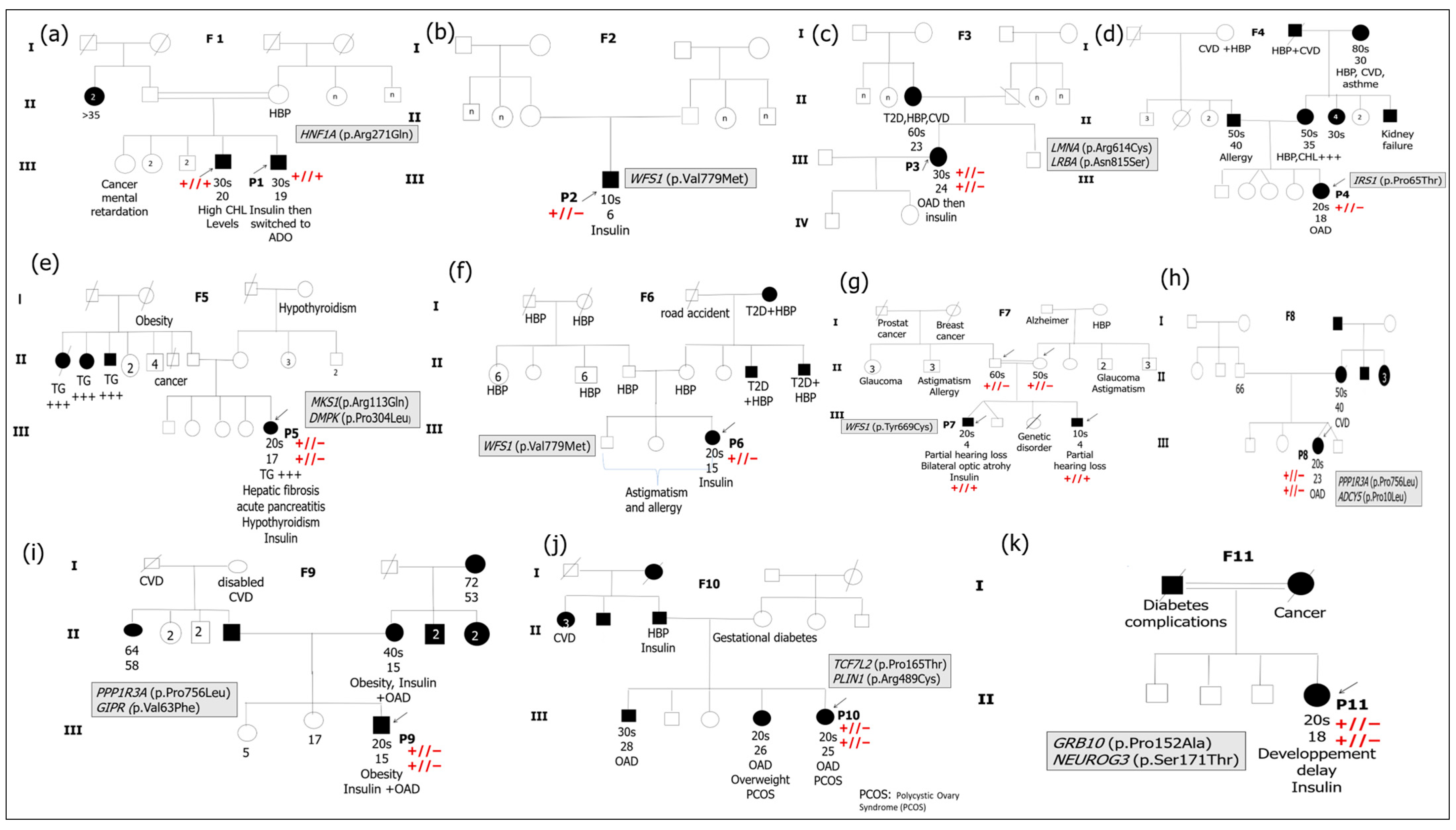
Figure 1. (ak) Pedigrees of the 11 suspected MFD patients’ families. F indicates the proband’s family. P indicates the proband. The arrows indicate family members, whose DNA samples are available in the present study. Double horizontal lines indicate inbreeding. White squares and circles indicate healthy males and females, respectively. Black squares and circles indicate males and females with diabetes, respectively. The information below family members is ordered as follows: age at examination, age at diabetes diagnosis, clinical features, and/or specific anti-hyperglycemia treatment. OAD indicates oral antidiabetics. HBP refers to high blood pressure. CVD refers to Cardiovascular disease. TG refers to triglycerides. CHL +++ indicates hypercholesterolemia. Symbols + andor − indicate Sanger segregation information. +//+ indicates the presence of the variant in the homozygous state. +//− indicates the presence of the variant in the heterozygous state. −//− indicates the absence of the variant.
Cimb 47 01055 g001
Table 1. Anthropometric and clinical characteristics of the 11 suspected MFD patients.
Patient IDCircumstance of Diabetes DiscoveryAge at Diagnosis of Diabetes (Years)Age at SurveyTreatement Family Members
with Diabetes
Comorbidities
(Other Clinical Features)
P1Polyuria, polydipsia
FPG = 27.40 mmol/L
HbA1c = 9.1%
1930 sInsulin (Actrapid 4 U + Insulatard 8 U, 3×/day) than switched to OAD1Nephropathy, High levels of T-CHL
Gastric problems
P2Polyuria, polydipsia
Weight loss
FPG = 14.20 mmol/L
HbA1c = 14.0%
610 sInsulin (Insulatard 12/4 U; Actrapid 4/2 U)0No other clinical signs
P3Polyuria, polydipsia
HbA1c = 7.0%
2430 sOAD than switched to
Insulin (Actrapid 5 U, Insulatard 10 U)
1Hypoglycemic often at night
Acute pyelonephritis, pelviperitonitis,
Hypertriglyceridemia
anxiety
P4Polyuria, polydipsia
FPG = 16.70 mmol/L
HbA1c = 10.0%
1820 sOAD2No other clinical signs
P5Pancreas inflammation1720 sInsulin (Actrapid 14/14/14 U; Insulatard 28/26 U)0Inflammation of the pancreas (Stage1)
Hepatic thrombosis, Hypothyroidism
High TG and T-CHL levels
P6Polyuria, polydipsia
FPG = 22.20 mmol/L
HbA1c = 13.0%
1520 sInsulin than switched to OAD than insulin0Allergy and astigmatism
P7Polyuria, polydipsia
FPG = 16.70 mmol/L
HbA1c = 8.9%
420 sInsulin2Partial hearing loss, Bilateral optic atrophy
Diabetic neuropathy
P8Polyuria, polydipsia
FPG = 21.10 mmol/L
HbA1c = 12.0%
2320 sOAD1No other clinical signs
P9Polyuria, polydipsia
FPG = 16.70 mmol/L
HbA1c = 9.0%
1520 sOAD + insulin2Obesity
Hypertension
P10Polyuria, polydipsia
Nausea
FPG = 11.40 mmol/L
HbA1c = 10.8%
2520 sOAD3Decreased visual acuity and migraine
PCOS, irregular menstrual cycle with intense pain
P11Polyuria, polydipsia
FPG = 13.90 mmol/L
1820 sInsulin2Delayed staturo-ponderal development, Finger infection, Glaucoma
Intellectual disability
FPG, fasting plasma glucose; HbA1c, glycated hemoglobin; TG, triglycerides; T-CHL: Total Cholesterol; OAD, oral anti-diabetes drug; PCOS: Poly-Cystic Ovary Syndrome; U, Units.
Table 2. Biochemical and immunological results of the 11 suspected MFD patients.
Patient ID FPG (mmol/L)HbA1C
(%)
T-CHL
(mmol/L)
TG
(mmol/L)
HDL
(mmol/L)
LDL
(mmol/L)
Creatinine (µmol/L)CRP (mg/L)C-Peptide Basal (ng/mL)Pancreatic Antibodies
P1 3.409.013.350.891.321.5564.000.972.20Two negative
P27.807.84.410.501.962.3229.000.190.02Two negative
P313.0013.87.151.801.295.1649.002.320.01Two negative
P49.826.75.12.351.392.6457.404.260.01Two negative
P521.0616.35.296.77NA1.5859.00NANATwo negative
P617.8010.03.790.591.392.0650.001.781.70Two negative
P711.607.33.240.831.141.7271.504.510.01Three negative
P810.709.13.391.331.291.5031.2012.101.51Two negative
P95.8210.43.001.650.721.5237.303.101.70Two negative
P1013.709.26.132.501.023.9745.70NA1.29Two negative
P1113.706.54.160.611.242.6438.40<0.60.02Two negative
T-CHL, total cholesterol; HDL, high-density lipoprotein; LDL, low-density lipoprotein; CRP, C-reactive protein; NA, not available. C-peptide: The connecting peptide is a short 31-amino-acid polypeptide that connects insulin’s A-chain to its B-chain in the proinsulin molecule. Three negative remains negative results for the three pancreatic antibodies.
Table 4. Potential pathogenic variant combinations and their effect on disease-causing among suspected MFD patients.
Patient IDVariants Combination VarCoPP Score Prediction of PathogenicityType of Digenic Effect
P3LMNA: 4:151791682:T:C
LRBA: 1:156108510:C:T
0.81Disease-causing with 99% confidence True digenic
P5No variant combination ---
P8ADCY5: 3:123167364:G:A
PPP1R3A: 7:113518880:G:A
0.82Disease-causing with 99% confidenceTrue digenic
P9PPP1R3A: 7:113518880:G:A
GIPR: 19:46176123:G:T
0.67Low pathogenicityTrue digenic
P10No variant combination---
P11GRB10: 7:50737469:G:C
NEUROG3: 10:71332289:A:T
0.80Disease-causing with 99% confidenceMonogenic + modifier
Table 5. Diabetes subtypes among the 11 Tunisian patients with diabetes.
Patient IDTypical Clinical FeaturesCausative GenesDiabetes Subtype
P1 Nephropathy
High levels of CHL
Gastric problems
HNF1AMODY_3 (HNF1A_MODY)
P2Absence of other clinical signsWFS1Isolated diabetes with low penetrance for Wolfram syndrome features
P3Hypoglycemic often at night
Acute pyelonephritis, pelviperitonitis
State of anxiety
LMNA
LRBA
Partial familial lipodystrophy type 2
P4Absence of other clinical signsIRS1Early onset T2D 
P5Inflammation of the pancreas
Liver thrombosis
Hypothyroidism
High TG and CHL levels
MKS1
DMPK
Unspecified atypical MFD with Meckel Syndrome comorbidity 
P6Astigmatism and allergiesWFS1Isolated diabetes with low penetrance for Wolfram syndrome features
P7Partial hearing loss
Bilateral optic atrophy
Diabetic neuropathy
WFS1Wolfram syndrome
P8Absence of other clinical signsPPP1R3A
ADCY5
Unspecified atypical MFD
P9Obesity
Hypertension
PPP1R3A
GIPR
Unspecified atypical MFD
P10Diminished visual acuity and migraine
PCOS
Irregular menstrual cycle with intense pain
TCF7L2
PLIN 1
Partial familial lipodystrophy type 4
P11Delayed staturo-ponderal development
Finger infection
Glaucoma
Intellectual disability
GRB 10
NEUROG3
Unspecified atypical MFD
Disclaimer/Publisher’s Note: The statements, opinions and data contained in all publications are solely those of the individual author(s) and contributor(s) and not of MDPI and/or the editor(s). MDPI and/or the editor(s) disclaim responsibility for any injury to people or property resulting from any ideas, methods, instructions or products referred to in the content.