1. Introduction
Calcium ions function as crucial signaling messengers regulating diverse physiological processes, from nutrient transport to immune and abiotic stress responses [
1,
2,
3]. While the physiological role of MCU has been characterized in model plants like
Arabidopsis thaliana, focusing on its role in metabolic regulation and stress signaling, its evolutionary history and functional diversity across the Solanum genus remain largely unexplored. Most prior studies relied on a single reference genome, overlooking the structural variations and gene copy number diversity present in wild relatives [
4]. In response to fluctuating environmental mineral conditions, plant cells detect changes and initiate specific cytosolic Ca
2+ oscillations. For example, potassium deficiency triggers root-specific Ca
2+ signals that activate potassium channels and transporters, thereby enhancing K
+ acquisition and utilization [
5]. The CBL-CIPK signaling module accurately decodes these calcium signals, phosphorylating downstream ion transporters or transcription factors to finely regulate transmembrane ion transport and gene expression, thus maintaining ion homeostasis [
6]. Given that salt stress triggers rapid cytosolic Ca
2+ elevation requiring mitochondrial buffering, we specifically aimed to investigate how MCU evolution contributes to salt tolerance variation.
Calcium signaling serves as a pivotal component within the plant immune system. It plays a crucial role in both pattern-triggered immunity (PTI) and effector-triggered immunity (ETI), as calcium ions are integral to these processes [
7]. Upon the detection of pathogen-associated molecular patterns by cell surface receptors, there is a rapid influx of Ca
2+, resulting in a transient increase in cytosolic Ca
2+ concentration and the subsequent activation of defense mechanisms [
8]. Various pathogens or their effectors can induce unique calcium signatures characterized by specific frequencies and durations, which are interpreted by intracellular calcium sensors to initiate appropriate defense responses [
9].
Additionally, in response to abiotic stresses such as drought, high salinity, and extreme temperatures, plants promptly activate calcium signaling pathways [
10]. Different abiotic stressors trigger distinct dynamic alterations in cytosolic Ca
2+. For instance, salt stress activates the SOS pathway in root cells, where the SOS3-SOS2 complex stimulates the plasma membrane Na
+/H
+ antiporter SOS1 to expel excess Na
+ from the cell, thereby maintaining ionic homeostasis [
11,
12]. Under cold or drought stress, specific calcium signals are perceived by systems such as CBL-CIPK and CDPKs, modulating downstream gene expression and physiological processes such as promoting stomatal closure to reduce water loss or accumulating osmolytes to enhance cellular stress tolerance [
13,
14,
15].
Mitochondria, recognized as the energy center of eukaryotic cells, are pivotal in the conversion of chemical energy obtained from nutrient oxidation into adenosine triphosphate (ATP) through the process of oxidative phosphorylation, thereby facilitating cellular functions [
16]. Beyond their role in energy conversion, mitochondria are crucial for the regulation of calcium homeostasis, signal transduction, cellular differentiation, and apoptosis. In response to elevated cytosolic Ca
2+ levels, mitochondria absorb Ca
2+ via the mitochondrial calcium uniporter (MCU), a specialized channel situated in the inner mitochondrial membrane. The influx of Ca
2+ into the mitochondrial matrix activates key enzymes within the tricarboxylic acid (TCA) cycle, subsequently augmenting ATP synthesis. Consequently, the MCU acts as a vital intermediary connecting cytosolic calcium signaling to mitochondrial energy metabolism [
17,
18]. The MCU, identified in 2011, is responsible for facilitating mitochondrial calcium uptake [
19]. Since its discovery, the MCU’s function has been extensively investigated in both animal and human systems. The MCU protein constitutes the central component of a multi-protein complex, with its activity intricately regulated by subunits such as MICU1 and MICU2 to ensure accurate responses to upstream calcium signals. Therefore, the functional state of MCU directly determines the ability of mitochondria to respond to cellular calcium signals, profoundly influencing cellular energy metabolism and signal transduction [
20,
21].
Research has demonstrated that
MCU genes are extensively present in plants and share a conserved domain (PF04678) with their animal counterparts [
22]. Nonetheless, investigations into plant MCU remain relatively limited. Current studies primarily focus on their roles in calcium homeostasis, signal transduction, growth and development, and responses to abiotic stress. To date, 6, 6, 7, 11, and 4
MCU genes have been identified in
Arabidopsis thaliana,
Zea mays, pear,
Nicotiana tabacum, and sorghum, respectively [
23,
24,
25,
26]. For instance, the loss of function of
AtMCU1 in
Arabidopsis thaliana results in abnormal mitochondrial structure, reduced root length, and impaired energy metabolism [
27]. Some studies also propose
MCU involvement in stress responses; for example, under cold stress, the expression of several
GsMCU genes in wild soybean (
Glycine soja) changes significantly, suggesting a potential role in cold adaptation [
28]. Among the 31
MsMCU genes identified in
Medicago sativa, most exhibited differential expression under salt, drought, and cold stresses, with the exception of
MsMCU1.3, which did not show a notable response to salt stress [
29].
Tomato (
Solanum lycopersicum) is a significant global crop, yet its production is frequently hindered by abiotic stresses such as high salinity and drought, which adversely affect both yield and quality [
30]. Consequently, the identification of stress-related genes in tomatoes is crucial for breeding applications. Wild tomato species serve as valuable genetic resources for enhancing cultivated varieties in particular. For instance,
Solanum pennellii demonstrates superior adaptive responses to salt stress in comparison to cultivated tomatoes [
31]. Additionally, resistance genes identified in
Solanum peruvianum have contributed essential genetic material for breeding nematode-resistant varieties [
32].
However, research on the MCU gene family in tomatoes is limited, especially in terms of systematic identification and evolutionary analysis utilizing pan-genomic resources. To address this research gap, the present study conducts the first genome-wide identification of MCU genes across 12 species within the tomato genus. We hypothesized that lineage-specific expansions or losses of MCU genes during Solanum evolution have driven the functional diversification of calcium handling, thereby contributing to the differential salt stress tolerance observed between cultivated and wild tomatoes. This study provides an important foundation for further elucidating the regulatory network and biological functions of MCU in tomato, thereby supporting future efforts in stress-resilient crop breeding.
3. Results
3.1. Analysis of MCU Gene Family Members in Tomato
A comprehensive genome-wide analysis encompassing 12 tomato species and the outgroup
S. lycopersicoides identified a total of 66 members of the
MCU gene family (
Table 2 and
Table S1). Within this group, the outgroup
S. lycopersicoides and the wild species
S. peruvianum each contained 4
MCU genes,
S. pennellii contained 5, and the remaining species each possessed 6
MCU genes. In the cultivated tomato Heinz 1706, the protein SolycMCU2 was identified as the smallest, comprising 176 amino acids (aa) and having a molecular weight of 20,541.07 Da, whereas SolycMCU6 was the largest (365 aa, 41,922.88 Da). The isoelectric points (pI) of the MCU proteins spanned from 6.97 (SpenMCU2) to 9.66 (ScorMCU4). Predictions of subcellular localization suggested that among the MCU proteins in the Heinz tomato, only SolycMCU2 was localized to both chloroplasts and mitochondria; all others were predicted to be mitochondrial. All MCU proteins were predicted to be hydrophilic, as indicated by negative GRAVY values. Secondary structure analysis indicated that α-helices and random coils were the predominant structural motifs. Comparative analysis within the tomato clade revealed that SlydMCU1 had the fewest amino acids (92 aa), whereas SolycMCU6 had the most (365 aa), suggesting potential functional divergence associated with sequence length variation.
3.2. Chromosomal Localization of MCU Genes in Cultivated Tomato
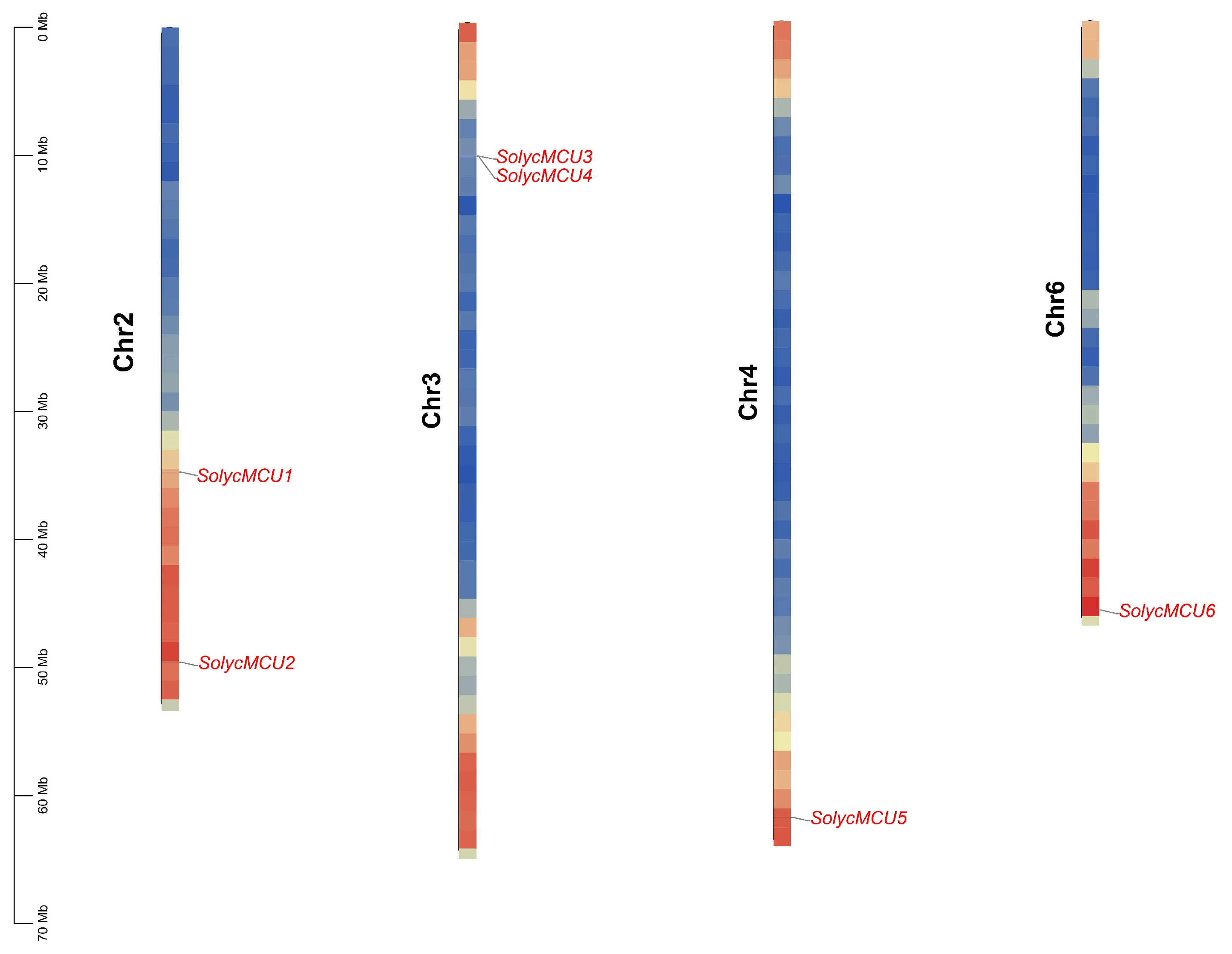
The chromosomal localization of the 6
MCU genes in the cultivated tomato Heinz 1706 (
Figure 1) demonstrates a non-uniform distribution: Chr2 and Chr3 each contained 2 genes, whereas Chr4 and Chr6 each contain one gene. Notably,
SolycMCU2,
SolycMCU5, and
SolycMCU6 are situated on the long arms of their respective chromosomal, while
SolycMCU3 and
SolycMCU4 are located on the short arms. Analysis of wild tomato species reveals a largely conserved chromosomal distribution pattern for
MCU genes (
Figure S1). However, it is significant that
Solanum peruvianum and
Solanum lycopersicoides lack MCU genes on Chr3, consistent with lineage-specific gene loss events during the evolutionary divergence of the Solanum genus.
3.3. Phylogenetic Analysis of MCU Genes in Tomato
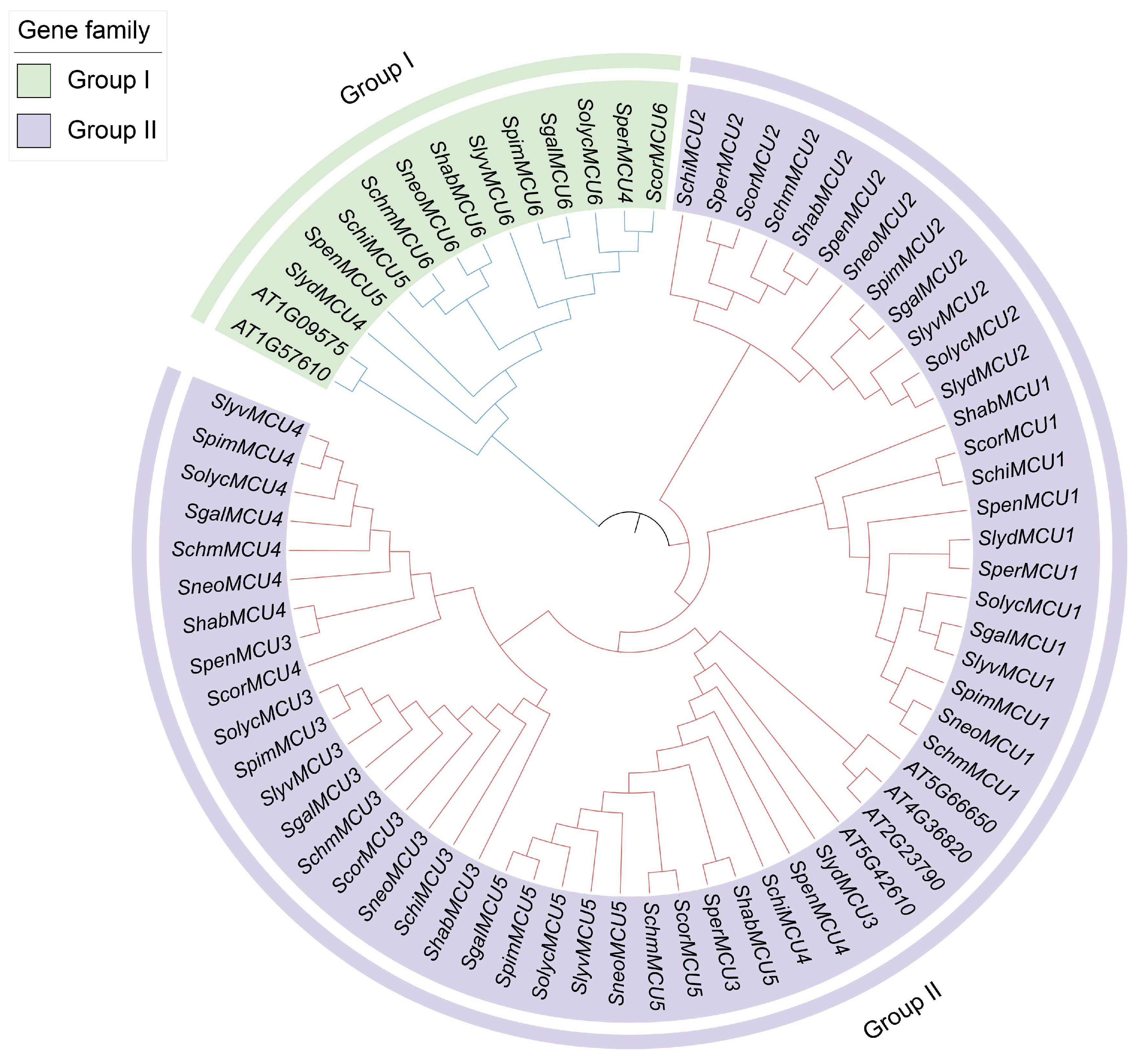
A maximum likelihood phylogenetic tree was constructed using 6
A. thaliana and 66 tomato MCU protein sequences (
Figure 2) to elucidate the evolutionary relationships within the
MCU family. Based on evolutionary distances and the established classification of
A. thaliana MCU subfamilies, coupled with domain features of tomato MCUs, all identified genes were classified into two distinct subfamilies: Group I comprised 2
AtMCU genes and 12 tomato
MCU genes, all of which were located on chromosome 6. Group II consisted of 4
AtMCU genes and 54 tomato
MCU genes, which were distributed across multiple chromosomes. Genes located on the same chromosome in both
A. thaliana and tomato tended to cluster within the same clade with high sequence homology, indicating that these are orthologous genes derived from a common ancestral gene prior to speciation, thereby underscoring the genetic conservation of
MCUs during evolution. A comparison between cultivated and wild tomatoes (
S. peruvianum,
S. lycopersicoides,
S. chilense,
S. pennellii) revealed that while cultivated tomato possesses a complete set of 6
MCU genes distributed across both subfamilies, wild species commonly lack specific
MCU genes on Chr3. The wild species exhibiting gene deletions on Chr3 are positioned on more basal branches of the phylogenetic tree, indicating a comparatively ancient evolutionary lineage. This distinct distribution pattern reflects the divergence in evolutionary history between these wild lineages and the cultivated tomato, indicating lineage-specific variation in gene retention or loss.
3.4. Gene Structure and Conserved Motif Analysis of Tomato MCU Genes
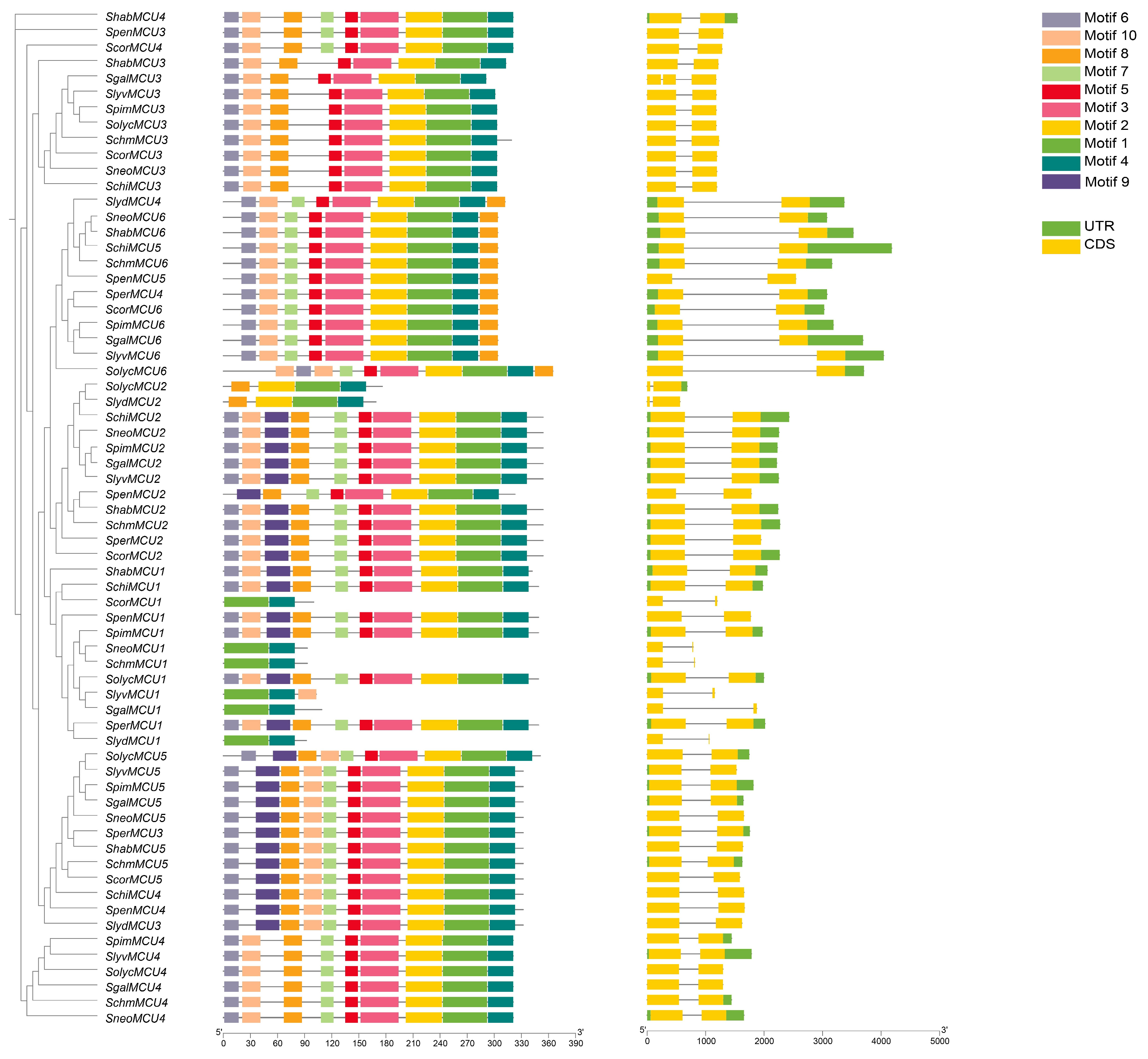
The analysis of gene structure and conserved motifs has uncovered substantial compositional differences and potential functional divergence among the tomato
MCU members (
Figure 3). Notably,
SolycMCU3 and
SolycMCU4 lacked Untranslated Regions (UTRs), a structural characteristic that may affect their post-transcriptional regulation. Further motif analysis indicated that the distinction between
SolycMCU3 and
SolycMCU4 is solely attributed to the presence of motif7 in
SolycMCU4, implying that motif7 may impart functional specificity. Conversely,
SolycMCU1 and
SolycMCU5 each possess an additional motif9 compared to
SolycMCU3/
4, although their positional difference may influence function by affecting protein structure or interactions.
SolycMCU6 displays a unique motif configuration with additional motif10 and motif8 at its 5′ and 3′ termini, respectively, potentially conferring more intricate regulatory capabilities. Importantly,
SolycMCU2 retains only motifs 8, 2, 1, and 4, a configuration markedly distinct from other members, which may represent the core motifs essential for its fundamental function.
The MCU gene family exhibits significant conservation across tomato species, yet it also presents structural variations. With the exception of SgalMCU3 from a related species, all MCU genes are characterized by the presence of two exons. Notably, MCU genes located on Chr1 (e.g., ScorMCU1 and SneoMCU1 in Solanum corneliomulleri, Solanum neorickii, respectively) had significantly fewer motifs and frequently lack untranslated regions (UTRs) compared to their counterparts in other clusters. This observation may be indicative of gene simplification or functional reduction. For instance, SolycMCU2 and SlydMCU2 contain only motifs 8, 2, 1, and 4, whereas SpenMCU2 lacked motif6 and motif10. These variations in motif composition could influence synergistic interactions with other MCU genes. Despite these variations, motifs 1 and 4 were highly conserved across all MCU genes, indicating their essential functional role, likely associated with fundamental processes such as calcium ion homeostasis. Considering the diverse ecological niches occupied by these species, the convergent structural simplification observed on specific chromosomes may represent a significant evolutionary pattern in the adaptation of the tomato clade to varying environmental conditions.
3.5. Collinearity and Evolutionary Pressure Analysis of the Tomato MCU Gene Family
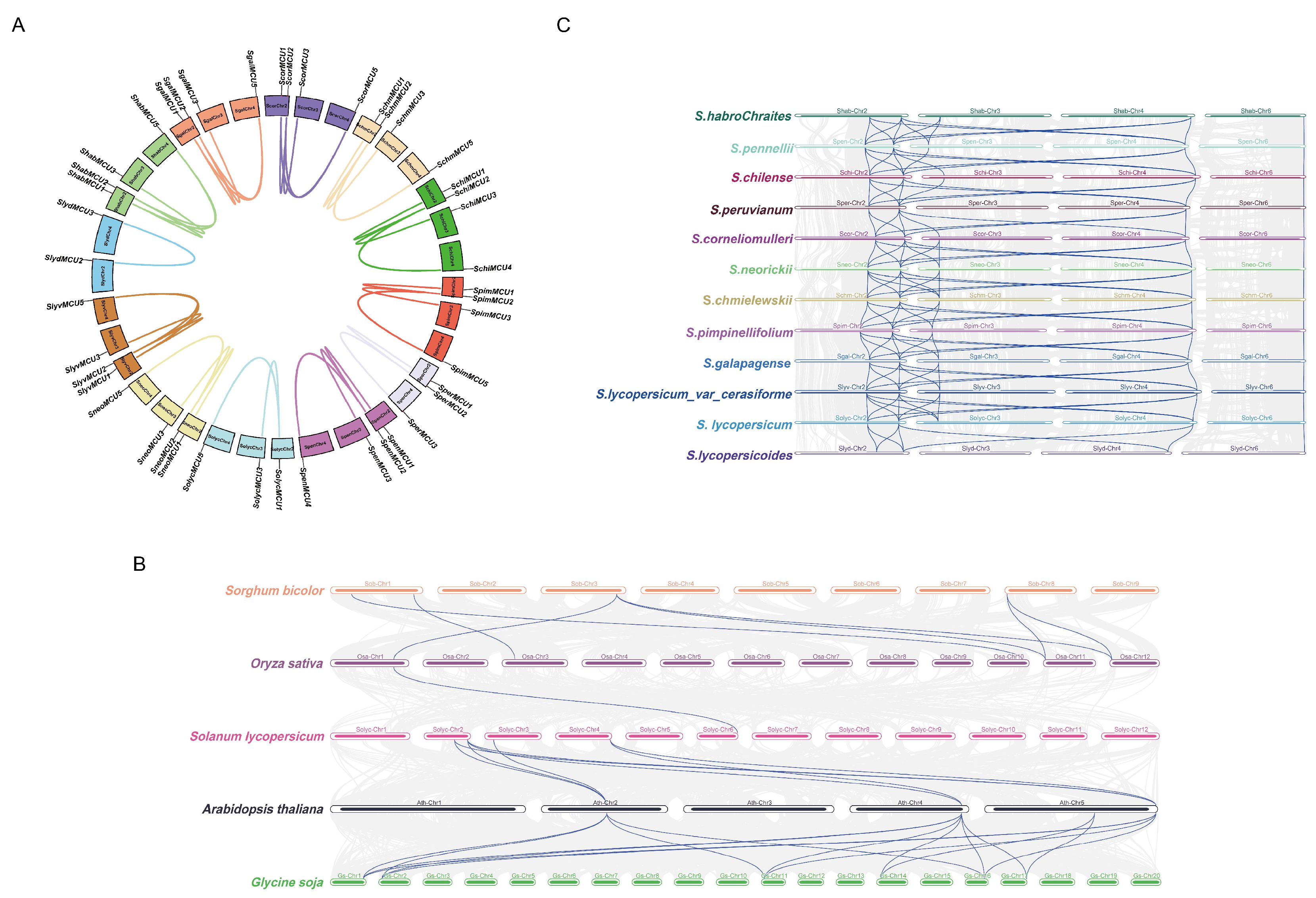
Intraspecific collinearity analysis was conducted to generate synteny maps of
MCU homologous genes within tomato species (
Figure 4A). In the cultivated tomato (
S. lycopersicum), syntenic pairs were identified between
SolycMCU1 and
SolycMCU3, as well as between
SolycMCU1 and
SolycMCU5. Conversely, the wild tomato
S. lycopersicoides displayed only a single syntenic pair (
SlydMCU2/
SlydMCU3), highlighting differences in
MCU gene duplication events among species. Notably, with the exception of
S. lycopersicoides, other tomato accessions exhibited
MCU synteny across chromosomes, suggesting that gene family expansion occurred through whole-genome or segmental duplication events.
Interspecific collinearity analysis among
Arabidopsis, tomato, wild soybean (
Glycine soja), rice (
Oryza sativa), and
Sorghum bicolor identified only one syntenic
MCU gene pair between monocots and dicots (
Figure 4B). This finding indicates substantial evolutionary divergence within the
MCU family following the separation of monocot and dicot lineages. Notably, the
SolycMCU6 gene on tomato chromosome 6 exhibits features suggesting an ancient origin relative to the monocot-dicot divergence, as supported by phylogenetic clustering and its syntenic relationship with species such as rice and
Arabidopsis. This gene is inferred to originate from a common ancestor of monocot
MCU genes and has been retained through a unique evolutionary trajectory in tomato, implying a potential specialized function.
The analysis of chromosomal distribution within the tomato clade demonstrated substantial conservation in the loci of most MCU genes. Notably, the absence of two MCU genes on chromosome 3 in
S. lycopersicoides and
S. peruvianum may be attributed to with genomic segment loss events throughout evolutionary history. Phylogenetic analysis indicated that MCU genes located on Chr6 were more conserved compared to homologous genes on other chromosomes, whereas those on Chr2, Chr3, and Chr5 displayed relatively conserved sequences (
Figure 4C).
The calculation of the non-synonymous to synonymous substitution rate (Ka/Ks) for intraspecific syntenic homologous gene pairs resulted in Ka/Ks values less than 1 for all pairs analyzed. This finding suggests that the MCU gene family in tomatoes has been subject to strong purifying selection over the course of evolution, thereby preserving functional conservation. This is likely due to the essential role of MCU proteins in mitochondrial calcium transport, where any functional impairment could potentially disrupt cellular energy metabolism.
3.6. Cis-Acting Element Analysis of Tomato MCU Genes
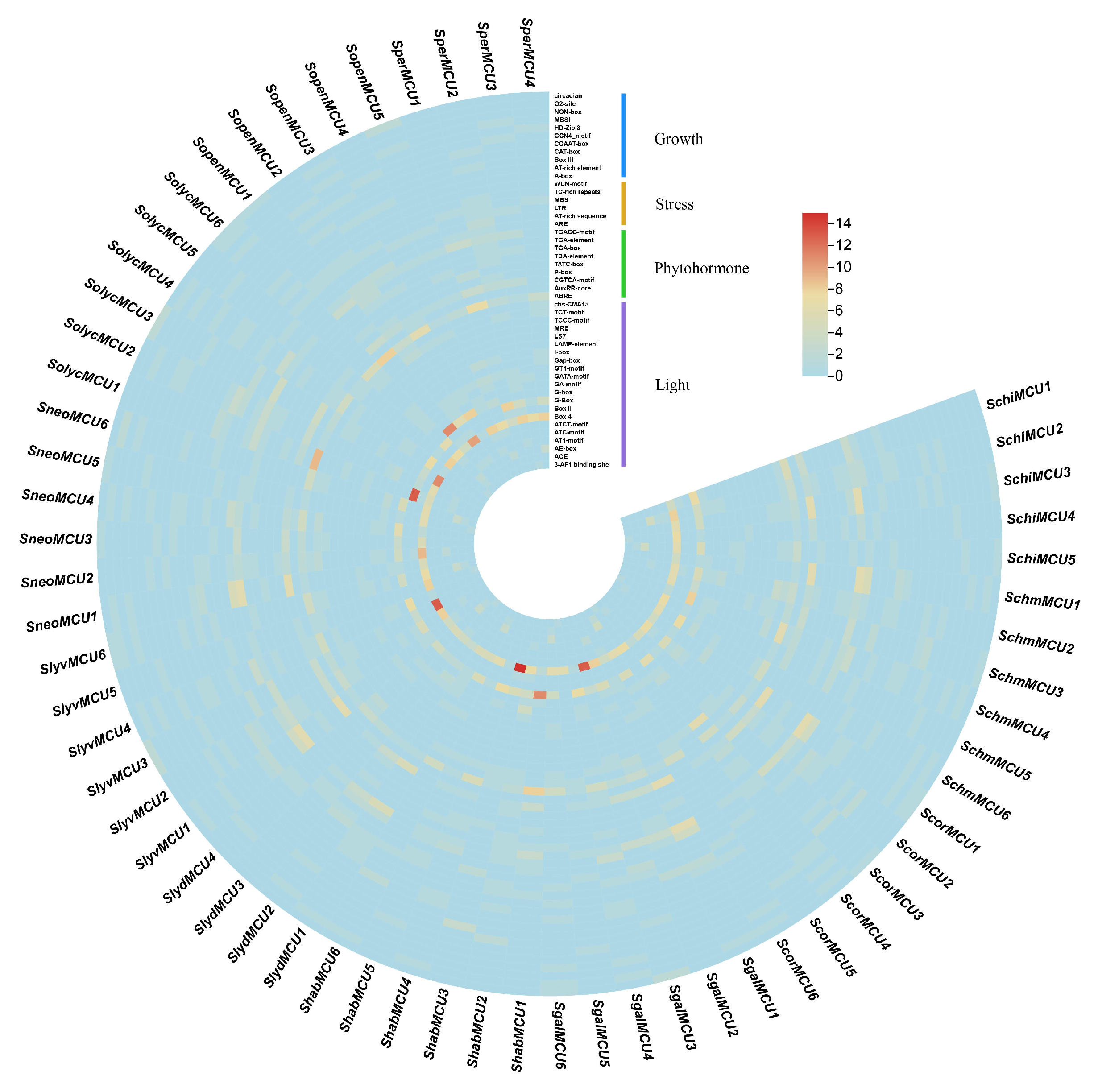
A systematic investigation of cis-acting regulatory elements (CREs) was performed within the promoter regions (approximately 2000 bp upstream of the translation initiation site) of the 66
MCU genes (
Figure 5). Using the PlantCARE database, 47 distinct CRE sites were identified. The light-responsive element Box 4 (5′-ATTAAT-3′) emerged as the most prevalent, detected in 66 promoters, which implies a potential central function in light signal transduction. Other significantly enriched elements included the G-box (5′-CACGTG-3′), ABRE (5′-ACGTG-3′; involved in abscisic acid (ABA) signaling), and the CGTCA- and TGACG-motifs (associated with methyl jasmonate (MeJA)-mediated defense responses). Functional categorization demonstrated a pronounced bias in CRE distribution, with light-responsive and hormone-responsive elements collectively constituting approximately 63.8% of the total. This finding suggests that the MCU gene family might play a key role in modulating plant growth and responses to abiotic stress by integrating light, and phytohormone signaling pathways.
3.7. Transcriptome Analysis of Cultivated Tomato M82 and Wild Tomato S. pennellii Under Salt Stress
A comparative analysis of
MCU gene expression patterns between the cultivated tomato M82 and the wild tomato
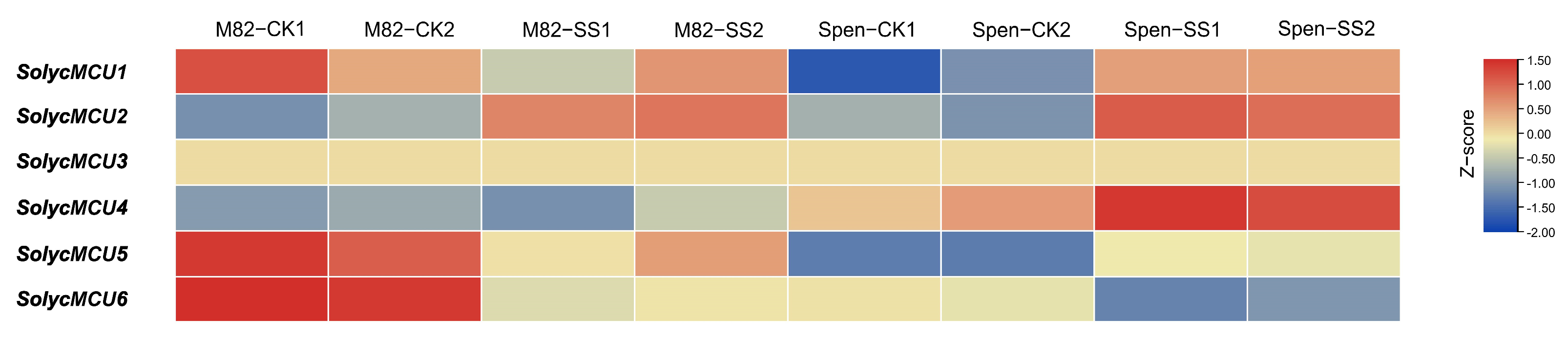
S. pennellii under salt stress conditions revealed distinct expression dynamics. Under control conditions (
Figure 6),
MCU3 exhibited low expression levels in the root tissues of both genotypes, with no significant induction observed in response to salt stress. The expression profiles of other MCU family members demonstrated marked species-specific differences. In the absence of stress,
MCU1,
MCU5, and
MCU6 were expressed at significantly higher levels in M82 compared to
S. pennellii (
p < 0.05), whereas
MCU2 expression was comparable between the two genotypes.
Upon exposure to 200 mM NaCl, S. pennellii showed a significant upregulation in the expression of MCU1, MCU2, MCU4, and MCU5 relative to control conditions (p < 0.05), with fold changes of 2.23 and 2.11 for MCU1 and MCU4, respectively. In contrast, in the cultivated M82, only MCU2 exhibited a significant response to salt stress, with a 2.13-fold change. Notably, MCU6 expression was significantly downregulated in both genotypes under stress conditions, with fold changes of 2.32 in M82 and 1.76 in S. pennellii (p < 0.05). Based on the expression profiles, the expression intensity of MCU1, MCU2, and MCU4 genes exhibited a positive correlation with salt stress treatment, suggesting their potential involvement in the salt stress response. These differential expression patterns may reflect the stronger salt tolerance of wild tomato, potentially mediated through a more robust calcium signaling response via MCU genes to maintain cellular homeostasis under stress. However, specific functional mechanisms require systematic validation using gene editing techniques coupled with physiological and biochemical assays.
3.8. Prediction of the MCU Protein Interaction Network in Cultivated Tomato
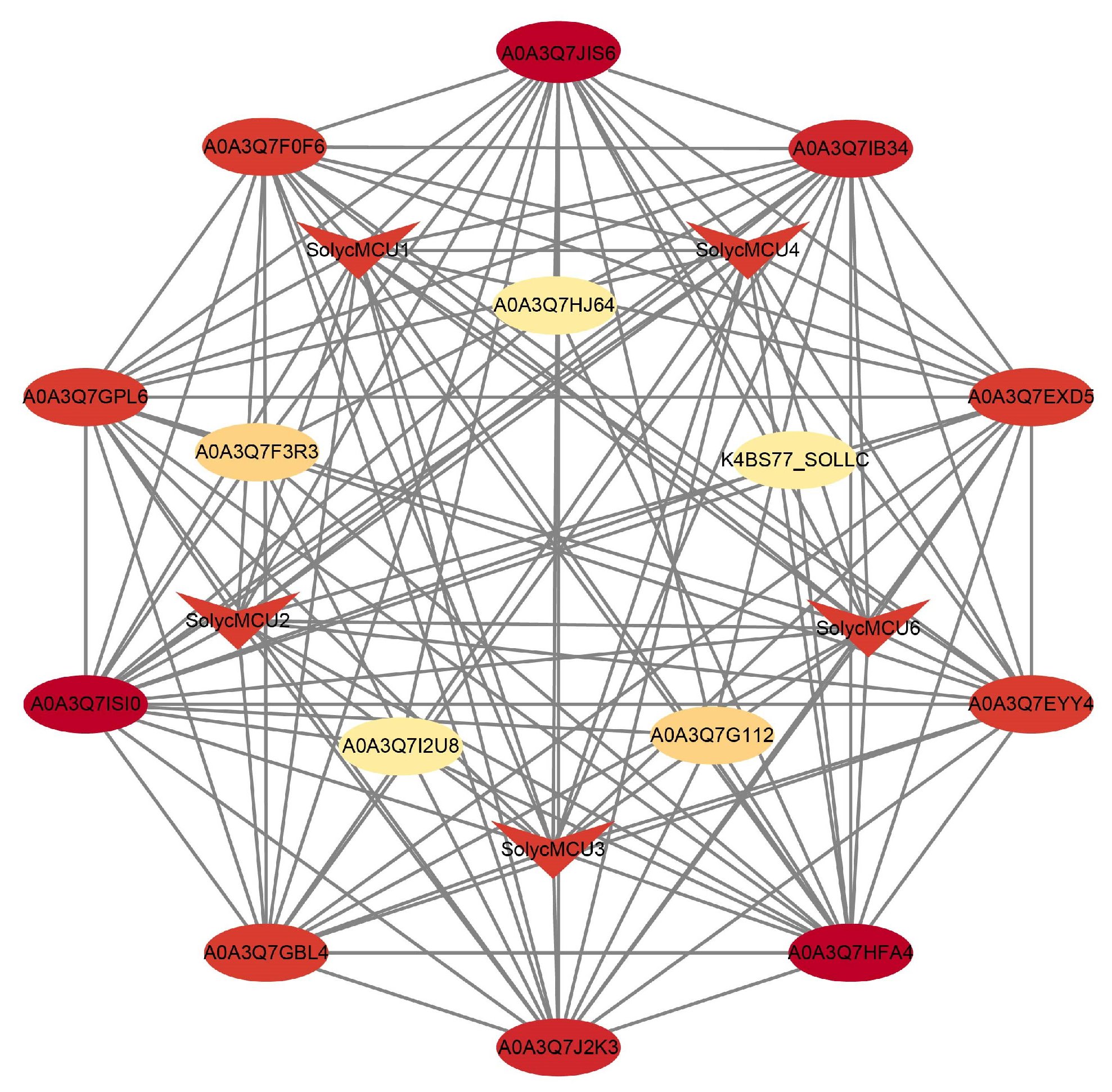
The prediction of protein-protein interaction networks utilizing the STRING database (
Figure 7) revealed that
SolycMCU5 does not have significant interactors among the
SolycMCUs. Conversely, an analysis of interaction profiles from the UniProt database suggests that other SolycMCU proteins may interact with a variety of functional proteins, including those containing EF-hand domains, FYVE-type zinc finger domains, Band-7 family transmembrane domains, and Prohibitin family proteins. The EF-hand domain is recognized as a classical calcium-binding motif, and proteins encoding this domain can be classified into two categories: those involved in calcium signal transduction (e.g., Calmodulin, Calnexin) and those serving as calcium buffers to maintain cellular calcium homeostasis (e.g., Caldesmon, Calretinin). Importantly, EF-hand domain proteins are integral to the regulation of mitochondrial Ca
2+ uptake and the maintenance of Ca
2+ homeostasis. By integrating the interaction network data from this study with the structural and functional attributes of EF-hand proteins, we hypothesize that SolycMCU proteins may form complexes with calcium-binding proteins. This cooperation could facilitate the precise regulation of the mitochondrial calcium uniport process, thereby fine-tuning the mitochondrial calcium uptake rate and contributing to the maintenance of cellular calcium homeostasis.
3.9. Quantitative Real-Time PCR (qRT-PCR) Analysis of Tomato MCU Genes
To investigate the expression patterns of the mitochondrial calcium uniporter (MCU) family members under salt stress and their potential roles in the stress response, the spatiotemporal expression profiles of
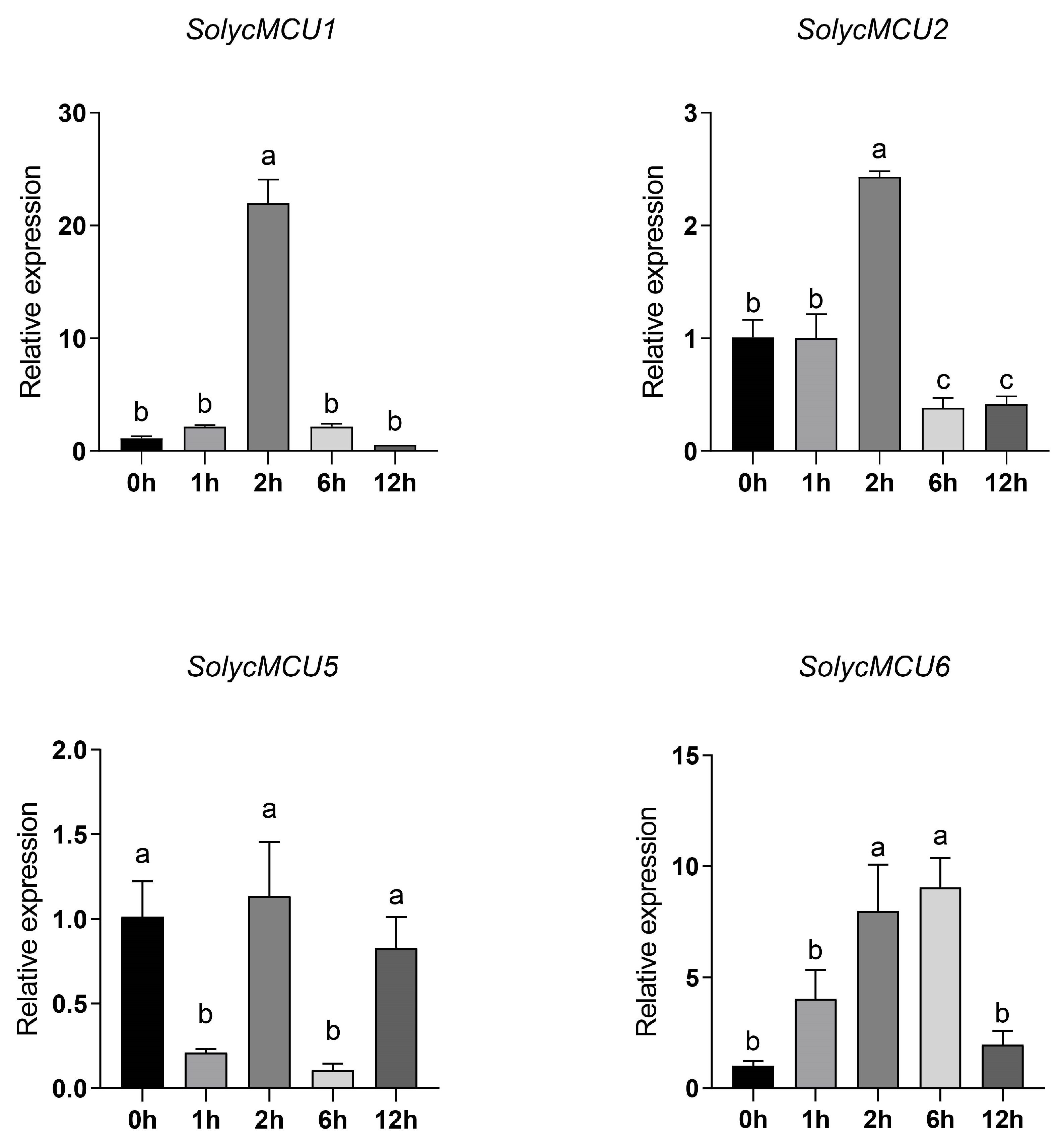
MCU genes in cultivated tomato were validated using qRT-PCR (
Figure 8). Among the six identified
MCU homologous genes, expressions of
SolycMCU3 and
SolycMCU4 were undetectable in leaf tissue, a finding corroborated by transcriptome data from the Tomato Functional Genomics Database (TFGD;
http://ted.bti.cornell.edu/cgi-bin/TFGD/digital/home.cgi, accessed on 12 September 2025). The remaining four genes exhibited distinct temporal expression patterns, suggesting roles at different stages of salt stress.
The relative expression of SolycMCU1 was significantly upregulated, peaking at 2 h of salt stress, while its expression remained low and unchanged at other time points (0 h, 1 h, 6 h, 12 h). This rapid induction during the early stage (2 h) implies that SolycMCU1 might participate in the initial tomato response to salt stress, potentially by modulating mitochondrial calcium homeostasis to facilitate rapid stress signaling or initiate metabolic adjustments. SolycMCU2 expression also increased significantly after 2 h of stress but decreased markedly at 6 h and 12 h, falling below levels observed at 0 h and 1 h. This temporal pattern suggests SolycMCU2’s involvement is confined to the early stress response phase (around 2 h), likely contributing to initial signal transduction alongside SolycMCU1. SolycMCU5 exhibits a distinctive expression pattern, with transcription levels peaking at 2 h (1.12-fold increase) and showing significant declines at both 1 and 6 h. At 12 h, expression levels were slightly below pre-treatment levels. This may indicate the gene plays a role in adaptive responses during prolonged stress processes. Notably, SolycMCU6 showed a dynamic response: expression began to increase at 1 h, reached its peak at 6 h, and then declined significantly by 12 h, falling below the 0 h level. Its mid-phase peak (6 h) suggests SolycMCU6 might function during sustained stress exposure, potentially enhancing tomato salt tolerance by optimizing mitochondrial calcium homeostasis and participating in processes like energy metabolism and reactive oxygen species (ROS) scavenging. The decline at 12 h could result from accumulated cellular damage under prolonged stress or a shift in regulatory focus to other adaptation mechanisms. The expression profiles of SolycMCU1, SolycMCU2, SolycMCU5, and SolycMCU6 indicate their potential involvement in the early response, mid-term regulation, and sustained adaptation to salt stress, respectively. This provides transcriptional evidence for further elucidating the functional division within the MCU family during the tomato salt stress response.
4. Discussion
The mitochondrial calcium uniporter (MCU) is integral to calcium ion uptake in plant mitochondria and is pivotal in cellular calcium signaling. Through analysis of the tomato pan-genome, this study identified 66
MCU genes across 12 species within the Solanum genus. Evolutionary analysis classified these genes into two conserved subfamilies, a classification that aligns closely with observations in species such as
A. thaliana, maize (
Zea mays), and pear. For instance, recent work on the pear genome similarly identified seven
PbrMCU genes classified into two subgroups, with segmental duplication identified as a primary driving force for their expansion [
24,
25]. This suggests an ancient and deeply conserved evolutionary history for
MCU function within the plant kingdom. Notably, synteny analysis revealed that only
SolycMCU6 in cultivated tomato shared a collinear relationship with
MCU genes in the monocot rice (
Oryza sativa), but not with those in
A. thaliana. This distinct collinearity pattern suggests that
SolycMCU6 may represent an ancient lineage retained in tomato, implying a potential unique functional role or evolutionary history distinct from the
A. thaliana homologs. Furthermore, Ka/Ks analysis indicated that all
MCU genes have been subjected to strong purifying selection, underscoring the essential role of their encoded proteins for tomato survival and the high evolutionary constraint on their core sequences and functions.
Gene duplication is a fundamental evolutionary mechanism driving the expansion and functional diversification of gene families. Our investigation revealed that the chromosomal locations of MCU genes are highly conserved within the Solanum genus. Moreover, most genes were positioned distally from centromeres, in genomic regions typically associated with more open chromatin structures, which may provide a favorable environment for duplication events. Intraspecific collinearity analysis in tomato further supported gene expansion via duplication. However, both intra-genus and interspecies analyses indicated that the MCU gene family overall exhibits a high degree of evolutionary conservation.
Analysis of gene structure and functional motifs unveiled the interplay between functional conservation and potential regulatory diversity among MCU genes. Gene structure analysis showed that tomato MCU genes contain only 2–3 exons, a configuration that is highly consistent with that observed in species like Arabidopsis, pear, and maize, indicating stable genomic organization across diverse plant species. Conserved motif analysis revealed that while minor gains or losses of specific motifs occurred among MCU genes from different species, the core set of motifs remained largely conserved. To enhance our understanding of their regulatory mechanisms, we predicted cis-acting regulatory elements within the 2000 bp promoter region upstream of all MCU genes. The results demonstrated that these promoters harbor a rich diversity of elements. Light-responsive elements were the most abundant in both type and number, followed by hormone-responsive elements, primarily associated with abscisic acid (ABA) and methyl jasmonate (MeJA). These predictions suggest that tomato MCU gene expression might be precisely regulated by light and hormone signals, potentially fine-tuning mitochondrial calcium transport. Significantly, both ABA and MeJA are pivotal hormones in plant responses to abiotic stress, implying that MCU genes could integrate mitochondrial calcium signaling into the broader regulatory network governing stress adaptation. This inference is further supported by protein interaction predictions, which indicated that MCUs may interact with several EF-hand domain-containing proteins (e.g., A0A3Q7EXD5, A0A3Q7GPL6), FYVE-type domain proteins (e.g., A0A3Q7GBL4, A0A3Q7EYY4), and Band 7 family proteins (A0A3Q7IB34), all of which are implicated in calcium binding or homeostasis maintenance. This suggests that MCUs may operate collaboratively with other calcium-signaling proteins to form a sophisticated regulatory module for calcium transport.
To validate the predictions from the bioinformatic analyses, we analyzed the expression patterns of SolycMCU genes in cultivated tomato under salt stress using qRT-PCR, and further investigated the expression profiles of MCU family members using root expression data from cultivated tomato M82 and wild tomato S. pennellii. Although these datasets reflect responses in distinct tissues and genetic backgrounds, which limits the ability to make direct quantitative comparisons between the leaf and root expression profiles, the RNA-seq data provides independent, qualitative confirmation that MCU genes are actively regulated under salt stress in tomato roots. Taken together with the leaf qRT-PCR results, these findings suggest that transcriptional regulation of MCU genes is a common feature of the salt stress response in tomatoes, although the specific temporal and magnitude dynamics likely vary between tissues and genotypes. SolycMCU1 and SolycMCU2, acting as early responders, are likely involved in the initial perception and transduction of the stress signal; SolycMCU5, a mid-phase respondent, may function during the transition to stress adaptation, whereas SolycMCU6, as a late responder, might contribute to the establishment and maintenance of long-term salt tolerance. Additionally, we found that SolycMCU3 and SolycMCU4 were not expressed in tomato leaves. Notably, these two genes were lost on chromosome 3 in S. pennellii and S. lycopersicoides, and one of each was lost in S. chilense and S. pennellii, while being retained in other closely related wild species. We propose that the absence of SolycMCU3 and SolycMCU4 in specific species reflects lineage-specific gene loss events during the evolutionary history of the Solanum genus. In species where these genes are retained, they may contribute to specific physiological functions, potentially including tissue-specific expression in organs such as roots or fruits, subject to further functional verification. Future research should prioritize validating the tissue-specific expression patterns of these two genes, which is crucial for a comprehensive understanding of plant MCU protein function.
In conclusion, this study integrates bioinformatics and experimental validation to systematically elucidate the evolutionary characteristics, structural conservation, and potential functional roles of the tomato MCU gene family in response to salt stress. It is noteworthy that analysis of root transcriptome data from salt-stressed cultivated tomato M82 and wild tomato S. pennellii revealed more complex expression patterns and higher expression levels of MCU genes in the wild species. Given the superior salt tolerance of S. pennellii compared to cultivated tomato, we hypothesize that differential expression patterns of MCU genes across tomato species and tissues could lead to variations in calcium recognition and transport efficiency, ultimately influencing the overall salt tolerance of the plant. A more comprehensive profiling of MCU gene expression in wild tomato species under salt stress in future studies will provide stronger support for this hypothesis and offer a critical theoretical foundation for utilizing superior MCU alleles from wild genetic resources to improve salt tolerance in cultivated tomato.




 ,
,