In Vitro and Clinical Dermatological Effects of Rubus crataegifolius Fruit Extracts on Human Fibroblasts and Keratinocytes
 , , ,
, , ,
Abstract
1. Introduction
2. Results
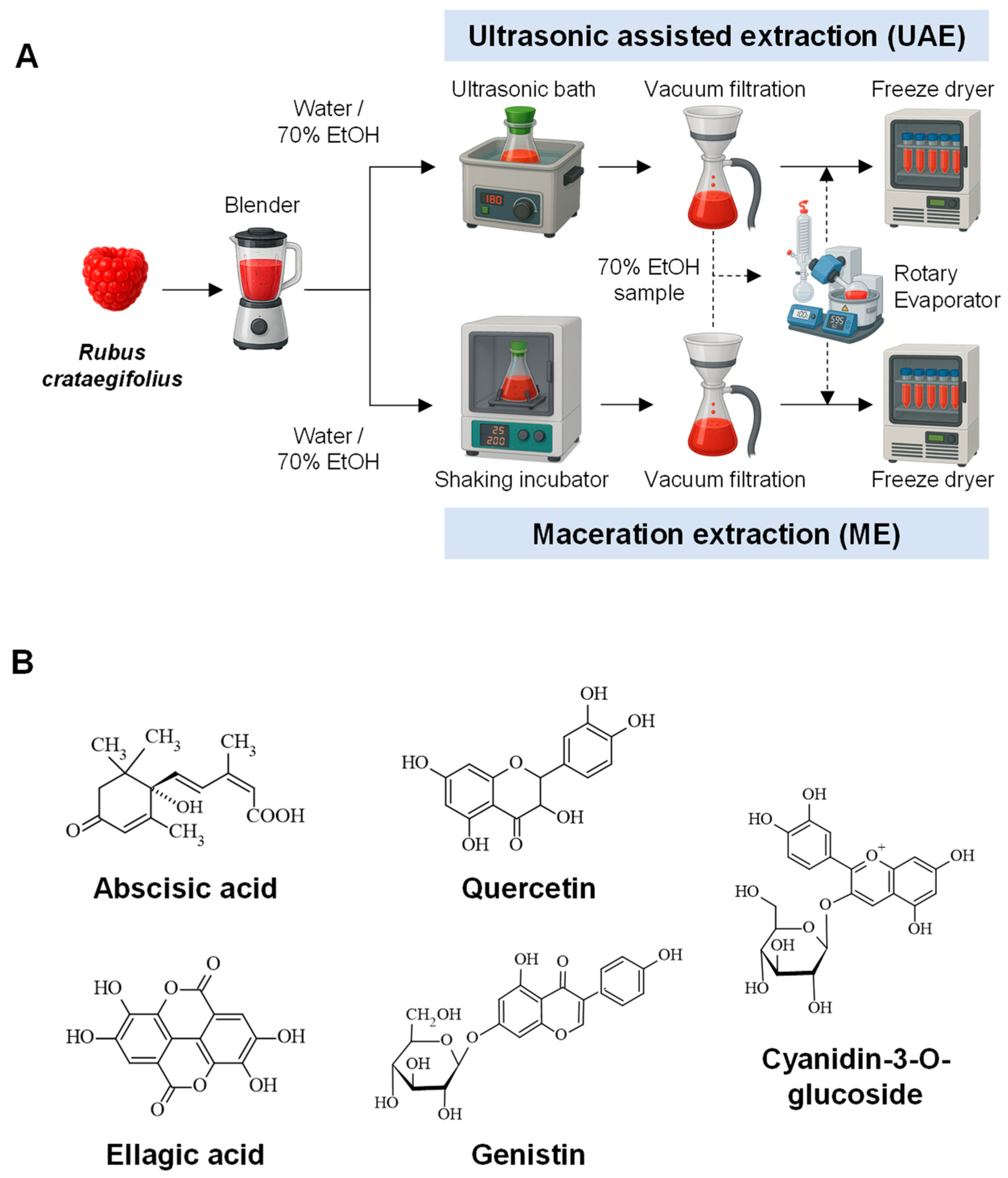
2.1. Phytochemical Profiling of the Extract by High-Resolution LC-ESI-TOF-MS
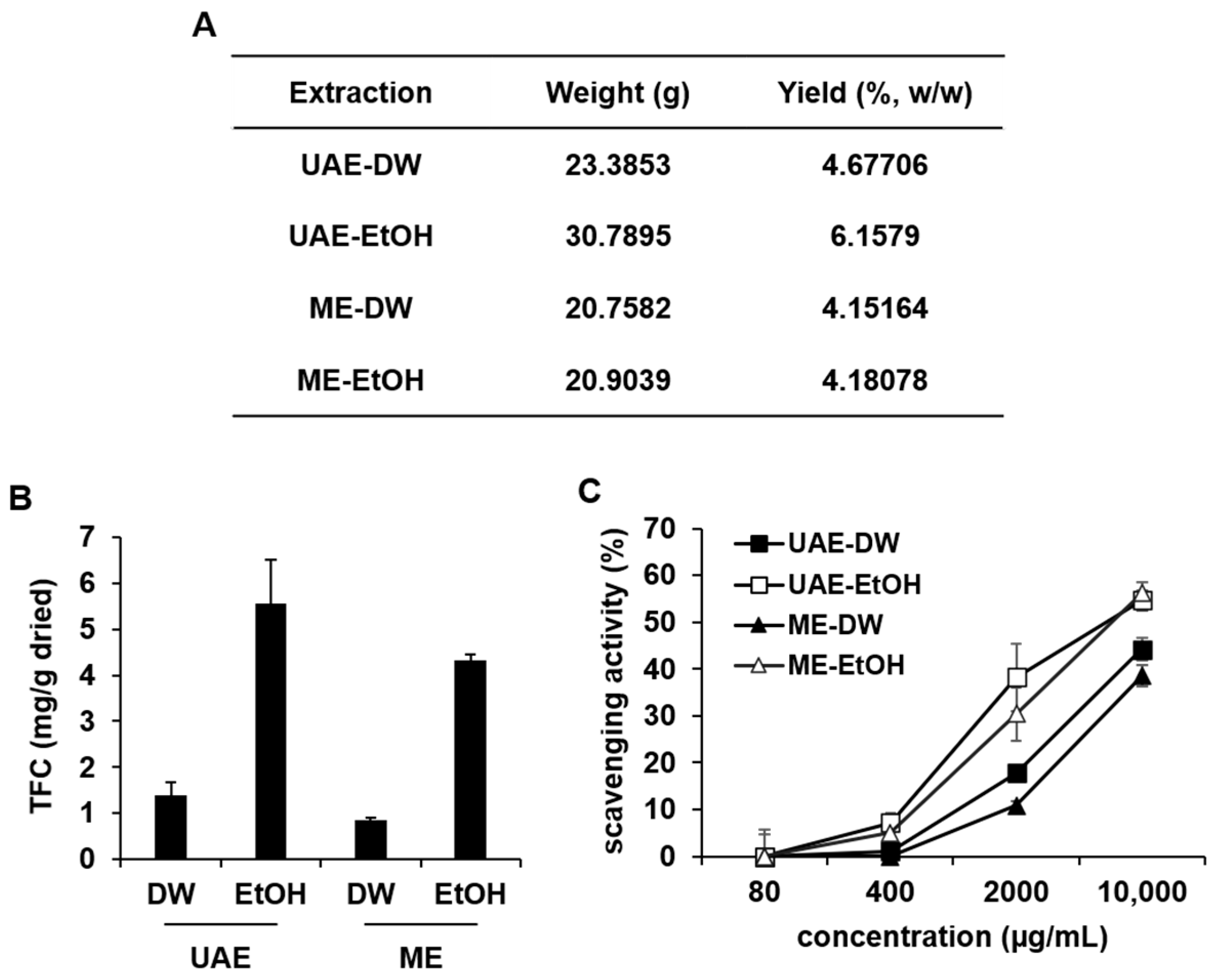
2.2. Flavonoid Content and Antioxidant Activity
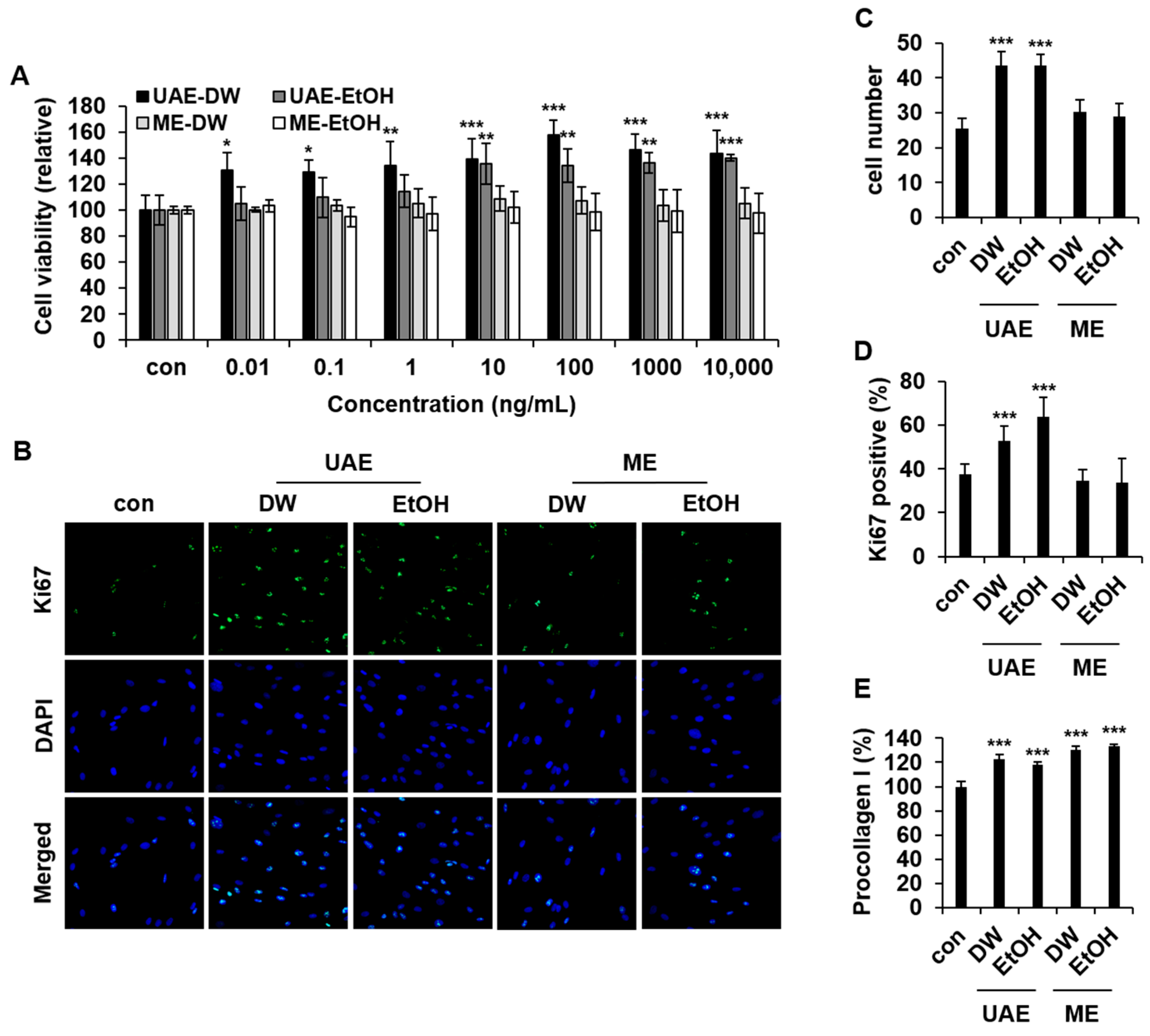
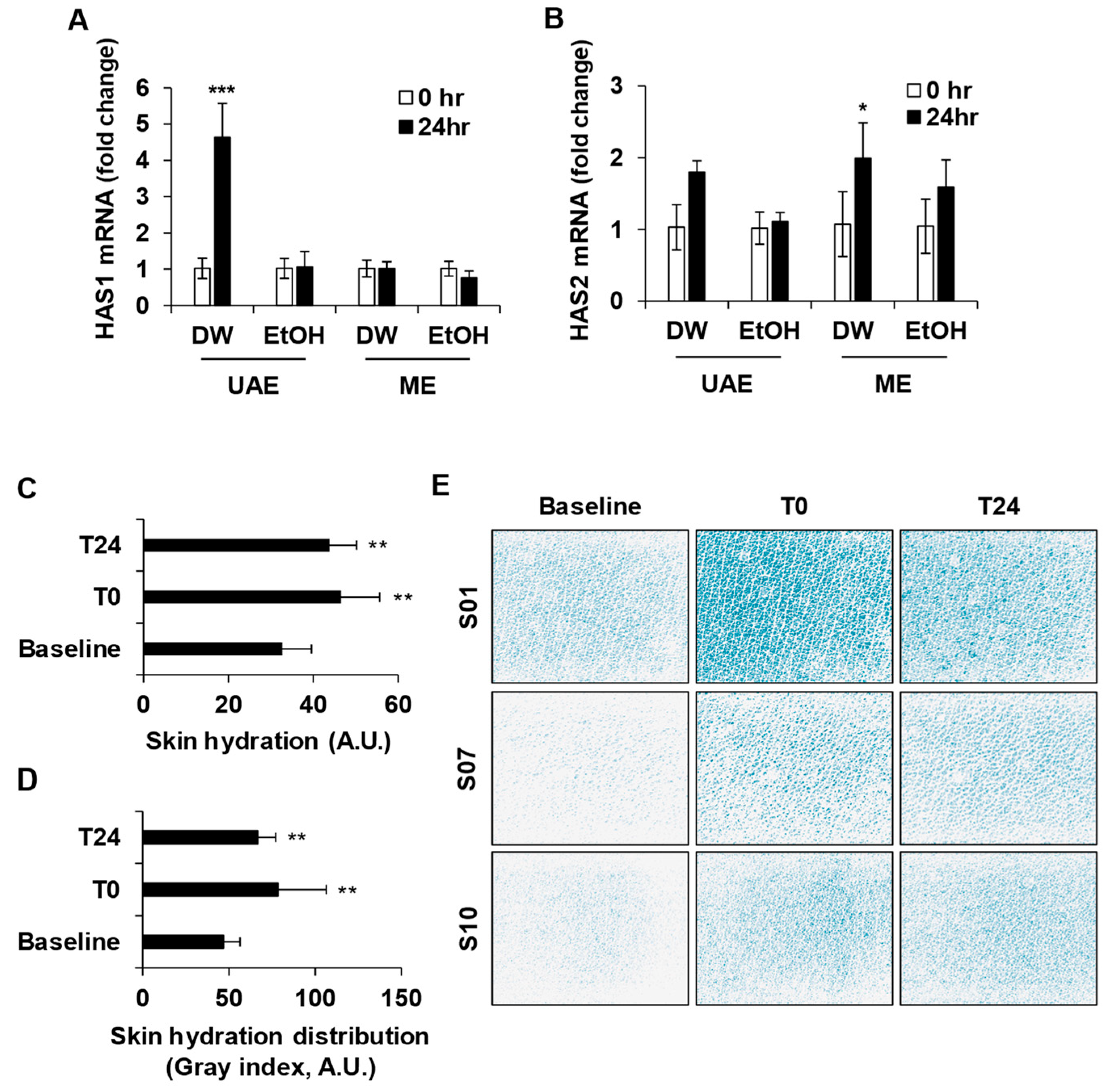
2.3. Fibroblast-Activating Effects of RC Extracts
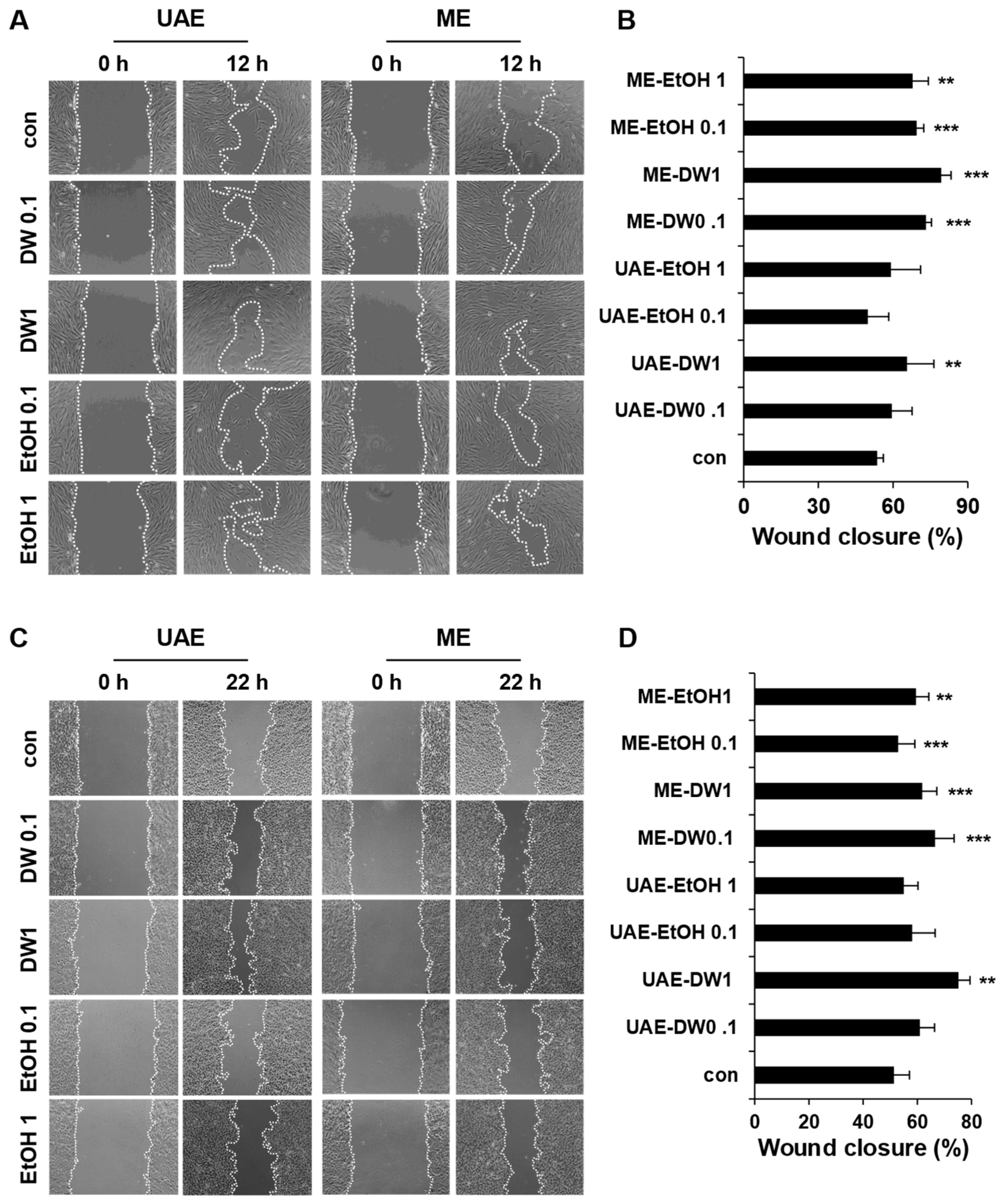
2.4. Wound-Healing Activity of RC Extracts
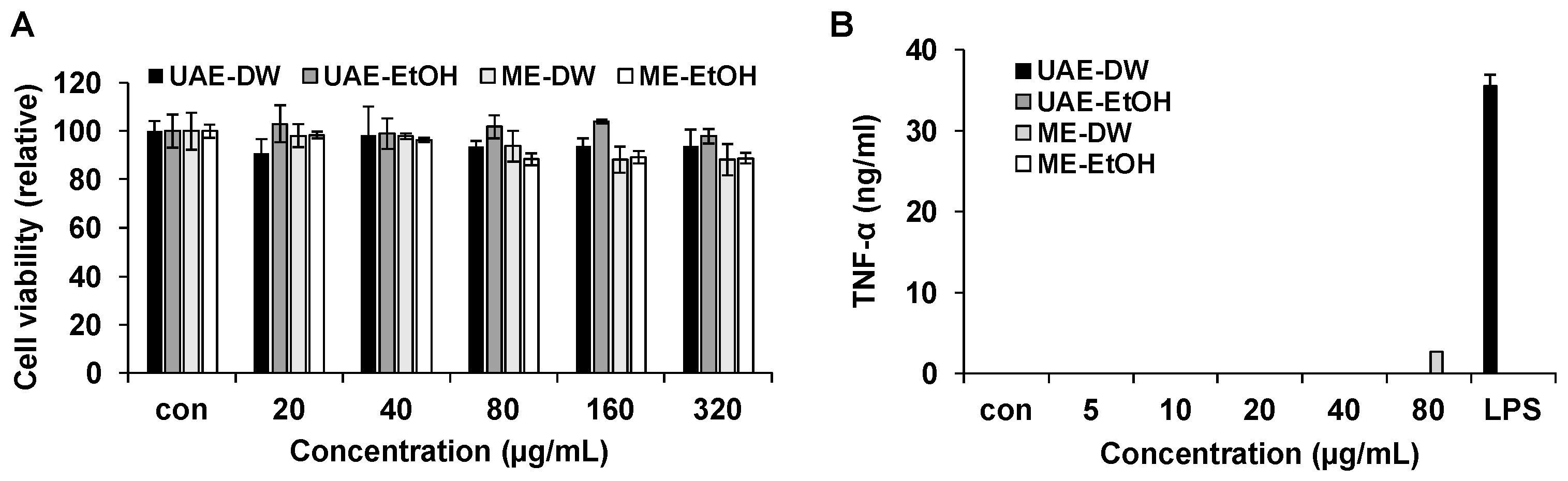
2.5. Safety of RC Extracts
2.6. Clinical Efficacy of RC Extracts on Skin Hydration
3. Discussion
4. Materials and Methods
4.1. Material Preparation
4.2. Extraction
4.3. Phytochemical Profiling of the Extract by High-Resolution LC-ESI-TOF-MS
4.4. Total Antioxidant Activity Assay Using the DPPH Method
4.5. Total Flavonoid Content (TFC) Assay
4.6. Cell Proliferation Assay
4.7. Immunofluorescence Staining
4.8. Scratch Wound Migration Assay
4.9. Enzyme-Linked Immunosorbent Assay (ELISA)
4.10. Quantitative Real-Time PCR (qRT-PCR)
4.11. Clinical Study of Hydration
4.12. Statistical Analysis
Supplementary Materials
Author Contributions
Funding
Institutional Review Board Statement
Informed Consent Statement
Data Availability Statement
Acknowledgments
Conflicts of Interest
References
- Kohl, E.; Steinbauer, J.; Landthaler, M.; Szeimies, R.M. Skin ageing. J. Eur. Acad. Dermatol. Venereol. 2011, 25, 873–884. [Google Scholar] [CrossRef] [Scilit] [PubMed]
- He, X.; Gao, X.; Xie, W. Research progress in skin aging, metabolism, and related products. Int. J. Mol. Sci. 2023, 24, 15930. [Google Scholar] [CrossRef] [Scilit] [PubMed]
- Kirkwood, T.; Austad, S. Why do we age? Nature 2000, 408, 233–238. [Google Scholar] [CrossRef] [Scilit] [PubMed]
- Wong, Q.Y.A.; Chew, F.T. Defining skin aging and its risk factors: A systematic review and meta-analysis. Sci. Rep. 2021, 11, 22075. [Google Scholar] [CrossRef] [Scilit] [PubMed]
- He, X.; Wan, F.; Su, W.; Xie, W. Research progress on skin aging and active ingredients. Molecules 2023, 28, 5556. [Google Scholar] [CrossRef] [Scilit] [PubMed]
- Secchi, G. Role of protein in cosmetics. Clin. Dermatol. 2008, 26, 321–325. [Google Scholar] [CrossRef] [Scilit] [PubMed]
- Xiong, M.; Zhang, Q.; Hu, W.; Zhao, C.; Lv, W.; Yi, Y.; Wang, Y.; Tang, H.; Wu, M.; Wu, Y. The novel mechanisms and applications of exosomes in dermatology and cutaneous medical aesthetics. Pharmacol. Res. 2021, 166, 105490. [Google Scholar] [CrossRef] [Scilit] [PubMed]
- Fernandes, A.; Rodrigues, P.M.; Pintado, M.; Tavaria, F.K. A systematic review of natural products for skin applications: Targeting inflammation, wound healing, and photo-aging. Phytomedicine 2023, 115, 154824. [Google Scholar] [CrossRef] [Scilit] [PubMed]
- Xie, M.; Jiang, Z.; Lin, X.; Wei, X. Application of plant extracts cosmetics in the field of anti-aging. J. Dermatol. Sci. Cosmet. Technol. 2024, 1, 100014. [Google Scholar] [CrossRef] [Scilit]
- Masaki, H. Role of antioxidants in the skin: Anti-aging effects. J. Dermatol. Sci. 2010, 58, 85–90. [Google Scholar] [CrossRef] [Scilit] [PubMed]
- Tomas, M.; Günal-Köroğlu, D.; Kamiloglu, S.; Ozdal, T.; Capanoglu, E. The state of the art in anti-aging: Plant-based phytochemicals for skin care. Immun. Ageing 2025, 22, 5. [Google Scholar] [CrossRef] [Scilit] [PubMed]
- Wu, F.; Bian, D.; Xia, Y.; Gong, Z.; Tan, Q.; Chen, J.; Dai, Y. Identification of major active ingredients responsible for burn wound healing of Centella asiatica herbs. Evid.-Based Complement. Altern. Med. 2012, 2012, 848093. [Google Scholar] [CrossRef] [Scilit] [PubMed]
- Turishcheva, E.P.; Vildanova, M.S.; Vishnyakova, P.A.; Matveeva, D.K.; Saidova, A.A.; Onishchenko, G.E.; Smirnova, E.A. Phytohormones affect differentiation status of human skin fibroblasts via UPR activation. Biochemistry 2023, 88, 810–822. [Google Scholar] [CrossRef] [Scilit] [PubMed]
- Szajdek, A.; Borowska, E.J. Bioactive compounds and health-promoting properties of berry fruits: A review. Plant Foods Hum. Nutr. 2008, 63, 147–156. [Google Scholar] [CrossRef] [Scilit] [PubMed]
- Monforte, M.T.; Smeriglio, A.; Germanò, M.P.; Pergolizzi, S.; Circosta, C.; Galati, E.M. Evaluation of antioxidant, anti-inflammatory, and gastroprotective properties of Rubus fruticosus L. fruit juice. Phytother. Res. 2018, 32, 1404–1414. [Google Scholar] [CrossRef] [Scilit] [PubMed]
- Bezerra, M.; Ribeiro, M.; Cosme, F.; Nunes, F.M. Overview of the distinctive characteristics of strawberry, raspberry, and blueberry in berries, berry wines, and berry spirits. Compr. Rev. Food Sci. Food Saf. 2024, 23, e13354. [Google Scholar] [CrossRef] [Scilit] [PubMed]
- Duncan, F.J.; Martin, J.R.; Wulff, B.C.; Stoner, G.D.; Tober, K.L.; Oberyszyn, T.M.; Kusewitt, D.F.; Van Buskirk, A.M. Topical treatment with black raspberry extract reduces cutaneous UVB-induced carcinogenesis and inflammation. Cancer Prev. Res. 2009, 2, 665–672. [Google Scholar] [CrossRef] [Scilit] [PubMed]
- Rattanawiwatpong, P.; Wanitphakdeedecha, R.; Bumrungpert, A.; Maiprasert, M. Anti-aging and brightening effects of a topical treatment containing vitamin C, vitamin E, and raspberry leaf cell culture extract: A split-face, randomized controlled trial. J. Cosmet. Dermatol. 2020, 19, 671–676. [Google Scholar] [CrossRef] [Scilit] [PubMed]
- Lee, J.H.; Ham, Y.A.; Choi, S.H.; Im, E.O.; Jung, J.H.; Im, K.S.; Kim, D.K.; Xu, Y.; Wang, M.W.; Kim, N.D. Activity of crude extract of Rubus crataegifolius roots as a potent apoptosis inducer and DNA topoisomerase I inhibitor. Arch. Pharm. Res. 2000, 23, 338–343. [Google Scholar] [CrossRef] [Scilit] [PubMed]
- Chen, H.; Bai, Z.; Tao, S.; Li, M.; Jian, L.; Zhang, Y.; Yang, X. Optimization of enzyme-assisted microwave extraction, structural characterization, antioxidant activity and in vitro protective effect against H2O2-induced damage in HepG2 cells of polysaccharides from roots of Rubus crataegifolius Bunge. Int. J. Biol. Macromol. 2024, 276, 133969. [Google Scholar] [CrossRef] [Scilit] [PubMed]
- Balan, N.; Măntăilă, S.; Râpeanu, G.; Stănciuc, N. Enhanced extraction of bioactive compounds from red grape pomace: Optimizing ultrasound-assisted extraction with ethanol and NaDES as solvents. Antioxidants 2025, 14, 526. [Google Scholar] [CrossRef] [Scilit] [PubMed]
- Do, Q.D.; Angkawijaya, A.E.; Tran-Nguyen, P.L.; Huynh, L.H.; Soetaredjo, F.E.; Ismadji, S.; Ju, Y.-H. Effect of extraction solvent on total phenol content, total flavonoid content, and antioxidant activity of Limnophila aromatica. J. Food Drug Anal. 2014, 22, 296–302. [Google Scholar] [CrossRef] [Scilit] [PubMed]
- Panche, A.N.; Diwan, A.D.; Chandra, S.R. Flavonoids: An overview. J. Nutr. Sci. 2016, 5, e47. [Google Scholar] [CrossRef] [Scilit] [PubMed]
- Scholzen, T.; Gerdes, J. The Ki-67 protein: From the known and the unknown. J. Cell. Physiol. 2000, 182, 311–322. [Google Scholar] [CrossRef] [Scilit]
- Whitfield, M.; George, L.; Grant, G.; Perou, C. Common markers of proliferation. Nat. Rev. Cancer 2006, 6, 99–106. [Google Scholar] [CrossRef] [Scilit] [PubMed]
- Boraldi, F.; Lofaro, F.D.; Bonacorsi, S.; Mazzilli, A.; Garcia-Fernandez, M.; Quaglino, D. The role of fibroblasts in skin homeostasis and repair. Biomedicines 2024, 12, 1586. [Google Scholar] [CrossRef] [Scilit] [PubMed]
- Al-Khayri, J.M.; Sahana, G.R.; Nagella, P.; Joseph, B.V.; Alessa, F.M.; Al-Mssallem, M.Q. Flavonoids as potential anti-inflammatory molecules: A review. Molecules 2022, 27, 2901. [Google Scholar] [CrossRef] [Scilit] [PubMed]
- Crous, C.; Pretorius, J.; Petzer, A. Overview of popular cosmeceuticals in dermatology. Skin Health Dis. 2024, 4, e340. [Google Scholar] [CrossRef] [Scilit] [PubMed]
- Lau, M.; Mineroff Gollogly, J.; Wang, J.Y.; Jagdeo, J. Cosmeceuticals for antiaging: A systematic review of safety and efficacy. Arch. Dermatol. Res. 2024, 316, 173. [Google Scholar] [CrossRef] [Scilit] [PubMed]
- Mukherjee, S.; Date, A.; Patravale, V.; Korting, H.C.; Roeder, A.; Weindl, G. Retinoids in the treatment of skin aging: An overview of clinical efficacy and safety. Clin. Interv. Aging 2006, 1, 327–348. [Google Scholar] [CrossRef] [Scilit] [PubMed]
- Gao, X.; Zhang, Z.; Wang, X.; Qian, J.; Hu, L.; Li, Z.; Li, W. Studies of value in use, chemical compositions, biological and pharmacological activities, and quality control of Rubus berries: A comprehensive review. J. Food Compos. Anal. 2023, 124, 105707. [Google Scholar] [CrossRef] [Scilit]
- Tao, Y.; Bao, J.; Zhu, F.; Pan, M.; Liu, Q.; Wang, P. Ethnopharmacology of Rubus idaeus Linnaeus: A critical review on ethnobotany, processing methods, phytochemicals, pharmacology and quality control. J. Ethnopharmacol. 2023, 302, 115870. [Google Scholar] [CrossRef] [Scilit] [PubMed]
- Bae, J.Y.; Lim, S.S.; Choi, J.S.; Kang, Y.H. Protective actions of Rubus coreanus ethanol extract on collagenous extracellular matrix in ultraviolet-B irradiation-induced human dermal fibroblasts. Nutr. Res. Pract. 2007, 1, 279–284. [Google Scholar] [CrossRef] [Scilit] [PubMed]
- Gao, W.; Wang, Y.-S.; Hwang, E.; Lin, P.; Bae, J.; Seo, S.A.; Yan, Z.; Yi, T.-H. Rubus idaeus L. (red raspberry) blocks UVB-induced MMP production and promotes type I procollagen synthesis via inhibition of MAPK/AP-1, NF-κβ and stimulation of TGF-β/Smad, Nrf2 in normal human dermal fibroblasts. J. Photochem. Photobiol. B Biol. 2018, 185, 241–253. [Google Scholar] [CrossRef] [Scilit] [PubMed]
- Pyeon, S.; Kim, O.-K.; Yoon, H.-G.; Kim, S.; Choi, K.-C.; Lee, Y.-H.; Lee, J.; Park, J.; Jun, W. Water Extract of Rubus coreanus Prevents Inflammatory Skin Diseases In Vitro Models. Plants 2021, 10, 1230. [Google Scholar] [CrossRef] [Scilit] [PubMed]
- Bruzzone, S.; Basile, G.; Mannino, E.; Sturla, L.; Magnone, M.; Grozio, A.; Salis, A.; Fresia, C.; Vigliarolo, T.; Guida, L.; et al. Autocrine abscisic acid mediates the UV-B-induced inflammatory response in human granulocytes and keratinocytes. J. Cell. Physiol. 2012, 227, 2502–2510. [Google Scholar] [CrossRef] [Scilit] [PubMed]
- Trinh, X.-T.; Long, N.-V.; Van Anh, L.T.; Nga, P.T.; Giang, N.N.; Chien, P.N.; Nam, S.-Y.; Heo, C.-Y. A comprehensive review of natural compounds for wound healing: Targeting bioactivity perspective. Int. J. Mol. Sci. 2022, 23, 9573. [Google Scholar] [CrossRef] [Scilit] [PubMed]
- Maquart, F.X.; Chastang, F.; Simeon, A.; Birembaut, P.; Gillery, P.; Wegrowski, Y. Triterpenes from Centella asiatica stimulate extracellular matrix accumulation in rat experimental wounds. Eur. J. Dermatol. 1999, 9, 289–296. [Google Scholar] [PubMed]
- Ahn, E.Y.; Shin, S.W.; Kim, K.; Park, Y. Facile green synthesis of titanium dioxide nanoparticles by upcycling mangosteen (Garcinia mangostana) pericarp extract. Nanoscale Res. Lett. 2022, 17, 40. [Google Scholar] [CrossRef] [Scilit] [PubMed]


Disclaimer/Publisher’s Note: The statements, opinions and data contained in all publications are solely those of the individual author(s) and contributor(s) and not of MDPI and/or the editor(s). MDPI and/or the editor(s) disclaim responsibility for any injury to people or property resulting from any ideas, methods, instructions or products referred to in the content. |
© 2026 by the authors. Licensee MDPI, Basel, Switzerland. This article is an open access article distributed under the terms and conditions of the Creative Commons Attribution (CC BY) license.
Share and Cite
Park, Y.E.; Kim, D.Y.; Park, J.S.; Lee, S.; Park, Y.; Kang, T.; Park, M.C. In Vitro and Clinical Dermatological Effects of Rubus crataegifolius Fruit Extracts on Human Fibroblasts and Keratinocytes. Pharmaceuticals 2026, 19, 1451. https://doi.org/10.3390/ph19091451
Park YE, Kim DY, Park JS, Lee S, Park Y, Kang T, Park MC. In Vitro and Clinical Dermatological Effects of Rubus crataegifolius Fruit Extracts on Human Fibroblasts and Keratinocytes. Pharmaceuticals. 2026; 19(9):1451. https://doi.org/10.3390/ph19091451
Chicago/Turabian StylePark, Yeong Eun, Dong Yun Kim, Je Seon Park, Seyoung Lee, Youmie Park, Taehee Kang, and Min Chul Park. 2026. "In Vitro and Clinical Dermatological Effects of Rubus crataegifolius Fruit Extracts on Human Fibroblasts and Keratinocytes" Pharmaceuticals 19, no. 9: 1451. https://doi.org/10.3390/ph19091451
APA StylePark, Y. E., Kim, D. Y., Park, J. S., Lee, S., Park, Y., Kang, T., & Park, M. C. (2026). In Vitro and Clinical Dermatological Effects of Rubus crataegifolius Fruit Extracts on Human Fibroblasts and Keratinocytes. Pharmaceuticals, 19(9), 1451. https://doi.org/10.3390/ph19091451