1. Introduction
Wound healing remains one of the most significant challenges in modern healthcare due to the high prevalence of chronic wounds, diabetic ulcers, burns, postoperative complications, and inflammatory skin diseases. According to various studies, chronic wounds affect up to 1–2% of the population in developed countries [
1,
2,
3].
In Europe, wound care accounts for approximately 2–4% of total healthcare expenditures [
4], whereas in the United States, chronic wounds affect approximately 8.5 million people and are associated with annual costs of 28–90 billion U.S. dollars [
2,
5].
Diabetic foot ulcers (DFUs) affect 19–34% of diabetic patients, with 50–60% complicated by infection and up to 20% resulting in amputation [
6,
7].
Complete healing within 12 weeks occurs in only 30–40% of cases, and recurrence reaches 65% at five years [
7]. Five-year mortality exceeds 60% [
8].
The problem of wound injuries is not limited to chronic ulcers. According to data from the World Health Organization, approximately 11 million burn injuries occur worldwide each year, resulting in about 180,000 deaths [
9]. According to the Global Burden of Disease Study 2019, the number of new burn cases was 8.38 million, the number of deaths exceeded 111,000, and the total disease burden reached 7.46 million DALYs [
10]. Surgical site infections also contribute substantially to the burden of complicated wounds, with a pooled 30-day incidence of approximately 11% reported in a large meta-analysis [
11]. Furthermore, inflammatory skin diseases remain one of the most common human pathologies: according to various estimates, chronic non-viral inflammatory dermatoses affect 20–25% of the population, and at least one dermatological condition within the past 12 months has been reported in 43.35% of the adult population in Europe [
12,
13].
Delayed wound healing is a complex, multifactorial process involving persistent inflammation, microbial contamination, biofilm formation, oxidative stress, impaired angiogenesis, and defects in tissue regeneration [
14,
15]. Chronic wounds are characterized by a prolonged inflammatory phase, overproduction of reactive oxygen species (ROS), recurrent infections, impaired re-epithelialization, and reduced tissue vascularization [
5,
15]. It has been established that excessive ROS production not only accompanies the pathological process but also directly sustains microbial virulence and the formation of bacterial biofilms [
16]. Similar mechanisms are observed in diabetic wounds, where hyperglycemia exacerbates the inflammatory response, oxidative stress, and susceptibility to recurrent infections [
17].
In this regard, semi-solid dosage forms for topical application play a special role in modern therapy. Ointments, creams, gels, hydrogels, liniments, pastes, patches, and transdermal therapeutic systems deliver active pharmaceutical ingredients directly to the site of the lesion, reduce systemic exposure to medicinal substances, and enable a prolonged therapeutic effect [
18]. Advances in pharmaceutical technology have shifted from traditional ointments to advanced platforms such as hydrogels, nanostructured carriers, and 3D-printed dressings [
17,
18,
19], while environmental factors, including air pollution and ultraviolet radiation, may further impair skin barrier function and delay tissue repair, thereby increasing the need for effective topical therapeutic strategies [
20,
21]. Current trends in wound care indicate a shift from single-component preparations to multifunctional systems that combine antibacterial, anti-inflammatory, antioxidant, and regenerative properties [
14,
22,
23]. For example, experimental studies have shown that the CPO/Mg
2+ composite hydrogel provides a bacteriostatic effect of more than 95% against Staphylococcus aureus and Pseudomonas aeruginosa and promotes the closure of more than 95% of infected wounds within 14 days [
24]. Similarly, 3D-printed dressings containing a combination of curcumin and dipotassium glycyrrhizinate reduced
S. aureus adhesion by 89.9% after 4 h and by 98.9% after 24 h [
25]. However, it should be noted that most such studies have been conducted at the preclinical level, and clinical evidence of the superiority of multifunctional systems over traditional therapy remains limited [
1,
26].
Heterocyclic compounds, particularly pyrimidine and dihydropyrimidine derivatives, are of interest due to their broad pharmacological activities, including anti-inflammatory and antimicrobial effects [
27,
28,
29].
Among heterocyclic compounds, 3,4-dihydropyrimidine and 3,4-dihydropyrimidine-2(1H)-thione derivatives have been investigated extensively in recent years. This class has demonstrated a broad spectrum of pharmacological activity, including anti-inflammatory, antioxidant, antimicrobial, and cytoprotective effects in preclinical studies [
30,
31,
32]. Several DHPM derivatives have been reported to inhibit key inflammatory mediators, including mPGES-1, 5-LOX, COX-2, TNF-α, IL-6, and other signaling pathways involved in chronic inflammation and impaired tissue repair processes.
In addition, a number of dihydropyrimidine-2(1H)-thione derivatives have demonstrated pronounced antioxidant properties, which is of particular interest for the treatment of chronic wounds characterized by excessive formation of reactive oxygen species [
33,
34].
The combination of anti-inflammatory, antioxidant, and potential antimicrobial effects makes dihydropyrimidine derivatives potential subjects for further pharmaceutical research, particularly for the development of semi-solid dosage forms intended for the treatment of inflammatory and infected skin lesions. An additional advantage of this chemical class is the ability to obtain target compounds using efficient and scalable synthetic methods, including modified versions of the Biginelli reaction and microwave-assisted synthesis, which are consistent with modern principles of resource-efficient and “green” chemistry [
35,
36,
37,
38].
In recent years, the Republic of Kazakhstan has implemented several initiatives aimed at improving the country’s drug safety, developing domestic pharmaceutical production, and reducing dependence on imported medicines. According to data from the State Register of Medicines of the Republic of Kazakhstan, as of June 2026, 6530 medicinal products were registered, including 5618 products registered under the national procedure and 912 products registered in accordance with the rules of the Eurasian Economic Union. At the same time, the structure of the market for semi-solid dosage forms, the availability of wound-healing, antimicrobial, and anti-inflammatory drugs, as well as the representation of heterocyclic compounds, have not yet been subject to a comprehensive analysis. To the best of our knowledge, the available scientific literature lacks studies devoted to a comprehensive assessment of the market for semi-solid dosage forms in the Republic of Kazakhstan, including an analysis of the pharmacotherapeutic structure, the chemical nature of active pharmaceutical ingredients, and the registration status of various chemical classes.
The aim of this study was to conduct a descriptive analysis of semi-solid dosage forms registered in the Republic of Kazakhstan, with particular attention to the pharmacotherapeutic structure, the representation of heterocyclic compounds, and the registration status of dihydropyrimidine and dihydropyrimidine-2(1H)-thione derivatives.
To the best of our knowledge, this is the first comprehensive registry-based assessment of topical semi-solid dosage forms registered in Kazakhstan that integrates multiple analytical dimensions, including dosage-form distribution, pharmacotherapeutic composition, manufacturer geography, quantitative market structure, and structural–chemical classification of active pharmaceutical ingredients.
This integrated analytical framework extends beyond a conventional market survey by providing a systematic characterization of the registered pharmaceutical portfolio from technological, therapeutic, and chemical perspectives. The analysis identified differences in the representation of major pharmacotherapeutic categories, demonstrated the distribution of heterocyclic chemical classes within registered products, and confirmed that dihydropyrimidine-2(1H)-thione derivatives are currently not represented in the national medicines registry. Although pharmacological activities of this chemical class have been described in published preclinical studies, the present work does not evaluate their pharmaceutical performance or clinical potential.
Furthermore, comparison of the registered market structure with clinical recommendations from selected CIS countries provided regional context for interpreting the distribution of therapeutic categories.
Although the study is descriptive in nature and does not assess clinical effectiveness, healthcare utilization, or market demand, it establishes a reproducible reference dataset and an analytical framework that may support future pharmaceutical market research, formulation development, and regulatory decision-making in Kazakhstan and other Central Asian countries with comparable pharmaceutical systems.
Unlike conventional registry inventories, the present study integrates technological, pharmacotherapeutic, manufacturing, and structural-chemical analyses within a single analytical framework. This multidimensional approach enables characterization of the registered pharmaceutical portfolio from complementary perspectives and provides a reproducible methodology applicable to comparative studies of pharmaceutical markets in other countries.
2. Results
2.1. General Overview of the Market for Semi-Solid Dosage Forms in the Republic of Kazakhstan
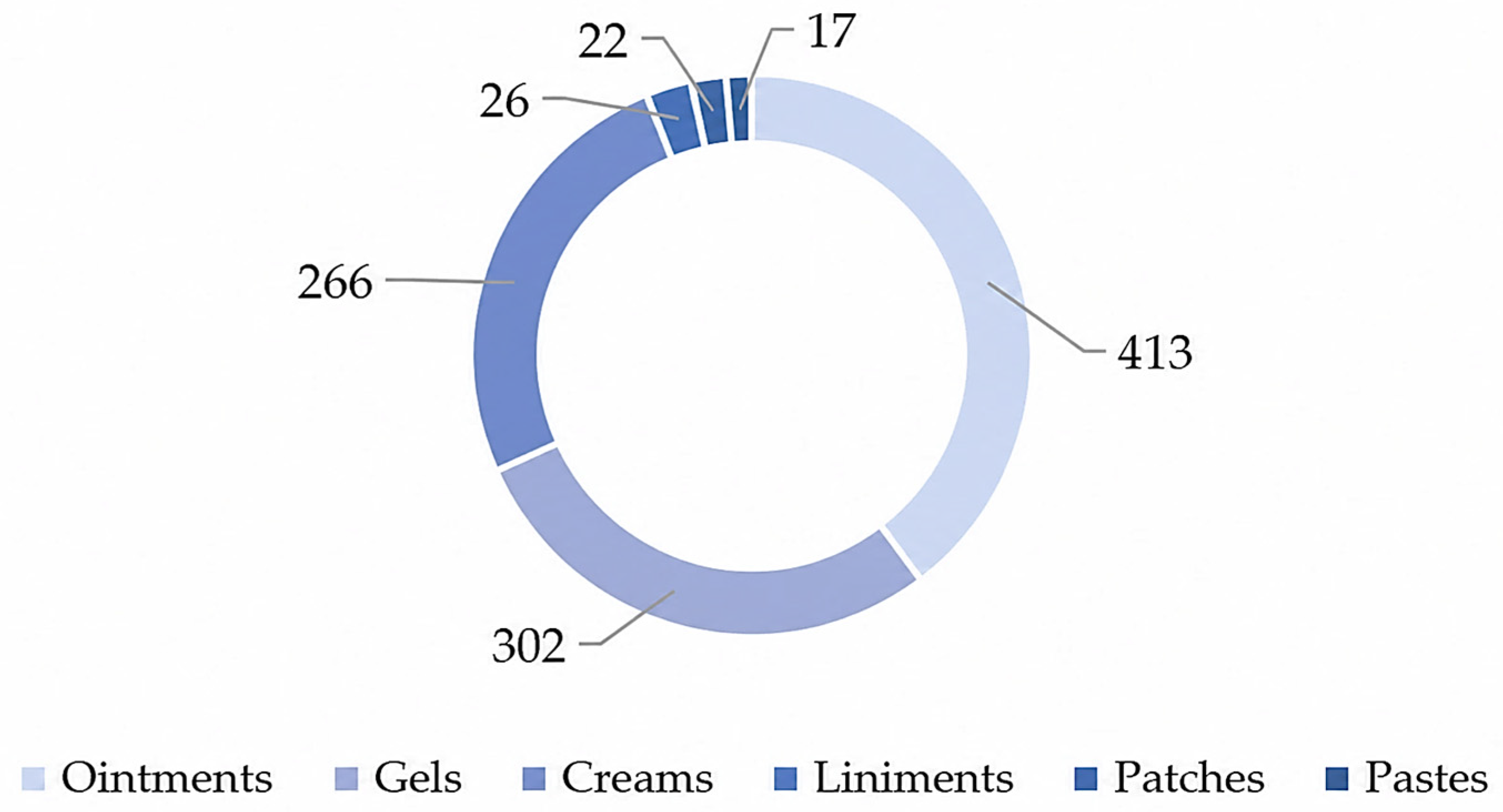
As of June 2026, the State Register of Medicines of the Republic of Kazakhstan contained 6530 valid registration certificates, including 5618 drugs registered under the national procedure and 912 drugs registered under EAEU regulations. The distribution of the included semi-solid dosage forms by dosage form is presented in
Figure 1.
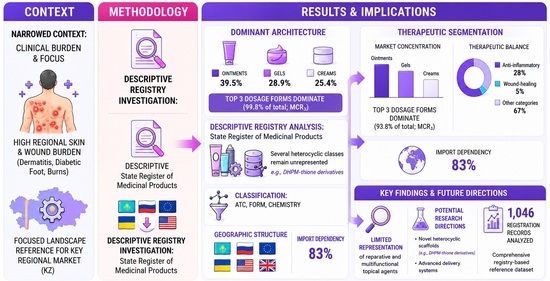
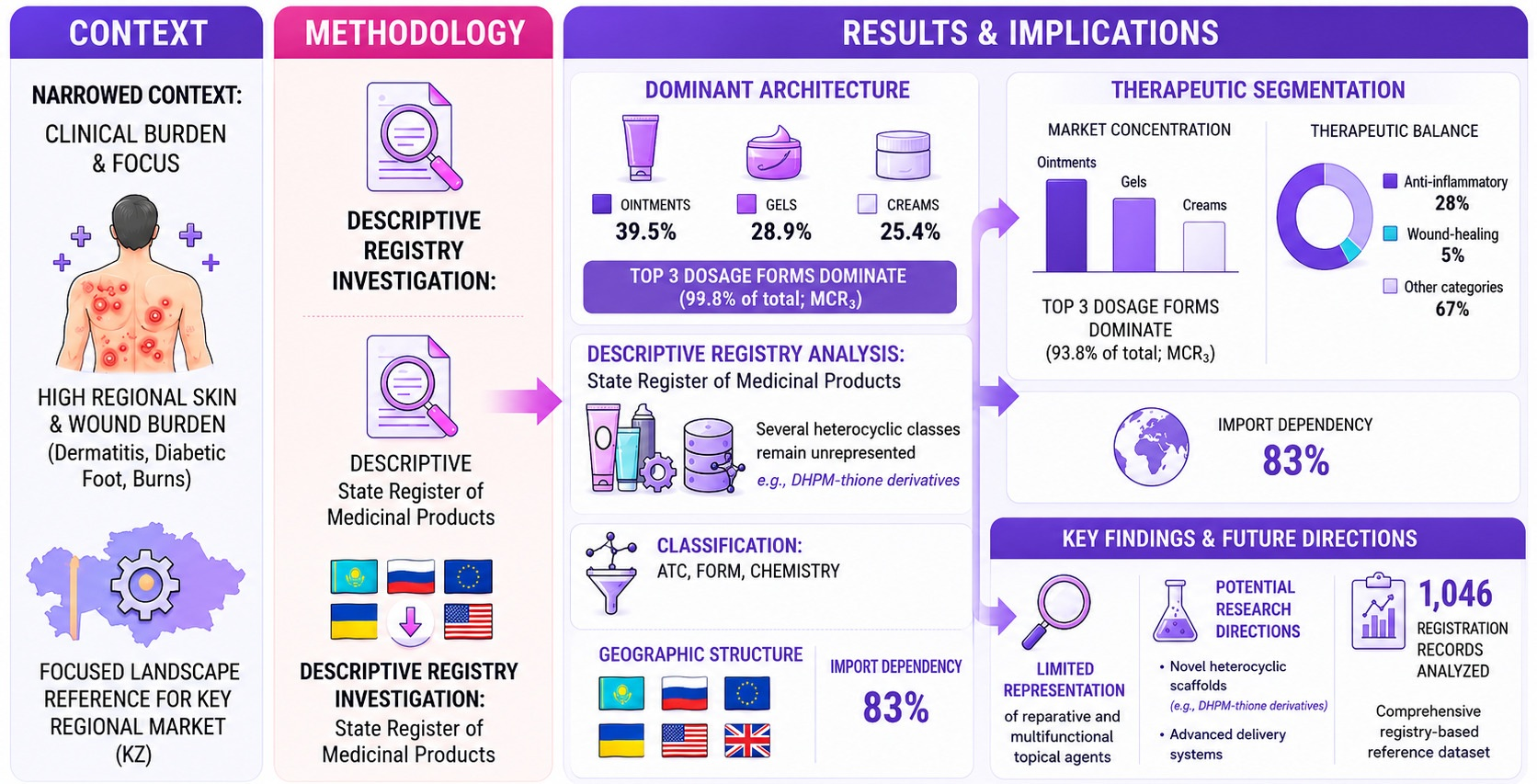
Of 6530 registered products, 1046 topical semi-solid forms met the inclusion criteria.
Table 1 shows the distribution: ointments (39.5%), gels (28.9%), creams (25.4%), with MCR
3 = 93.8%.
The market for topical dosage forms in the Republic of Kazakhstan is characterized by a pronounced concentration around three main dosage forms—ointments, gels, and creams (
Table 1)—indicating a high degree of standardization in topical therapy and limited representation of alternative drug delivery systems, including patches, transdermal therapeutic systems, specialized polymer carriers, and modern programmable plates and 3D-printed films [
39]. At the same time, an analysis of the State Register of Medicines has shown that the market is characterized by a high degree of international diversification among manufacturers, with registered products originating from Kazakhstan, Russia, India, European countries, and several other regions.
Unlike segments focused on local production, the market for semi-solid dosage forms in the Republic of Kazakhstan remains predominantly import-dependent. Drugs of Russian origin are the most common, Russian manufacturers constituted the largest group of registered products in the dataset, similar regulatory requirements, and a wide range of generic topical drugs. Manufacturers from the European Union and India also account for a significant share of the market. The geographical structure of manufacturers is summarised in
Table 2.
This approach preserves the proportional structure reported in the literature while providing a single consistent set of values, and the resulting structure is consistent with the overall import dependency of the Kazakhstani pharmaceutical market (86.9% imported products) [
40] and with regional patterns observed in comparable topical product markets [
42,
43,
44]. Among domestic manufacturers, the registry includes companies such as Khimfarm (Santo, a member of the Polpharma Group), Farmatsiya 2010, and several others; however, their registered product portfolios were predominantly composed of traditional ointments and a limited number of other topical dosage forms. Despite the diversity of manufacturers and countries of origin, further analysis showed that the registered products were based on a relatively limited range of chemical classes.
An analysis of the registry showed that approximately 83% of registered semi-solid dosage forms are supplied by foreign manufacturers. The market structure by origin of active pharmaceutical ingredients is presented in
Table 3.
Russian companies constitute the largest market segment, while the share of domestic manufacturers remains substantially lower than the share of imported products. The estimated structure of the domestic segment of the semi-solid dosage forms market is presented in
Table 4.
2.2. Assessment of Market Concentration and Technological Maturity
The market concentration ratio for the three leading dosage forms (MCR3) was:
MCR3 = 93.8%
which corresponds to a very high level of market concentration.
The share of modern dosage forms (gels, creams, patches) was 56.4%, while traditional forms (ointments, liniments, and pastes) accounted for 43.6%.
The calculated TMI was 56.4%, indicating that 56.4% of registered dosage forms belonged to the category operationally classified as modern within the descriptive framework of the present study. This result should be interpreted as a structural characteristic of the registry rather than evidence of technological innovation or pharmaceutical advancement.
The Formulation Innovation Ratio (FIR) was:
FIR = 1.29
which indicates that modern dosage forms are slightly more prevalent than traditional ones.
The key indicators of market structure and technological maturity are summarised in
Table 5.
The Shannon index value (H = 1.26) indicates moderate structural diversity in the market. Despite the presence of six dosage-form categories, the distribution was highly uneven, with ointments, gels, and creams accounting for 93.8% of all registered products.
2.3. Pharmacotherapeutic Market Structure
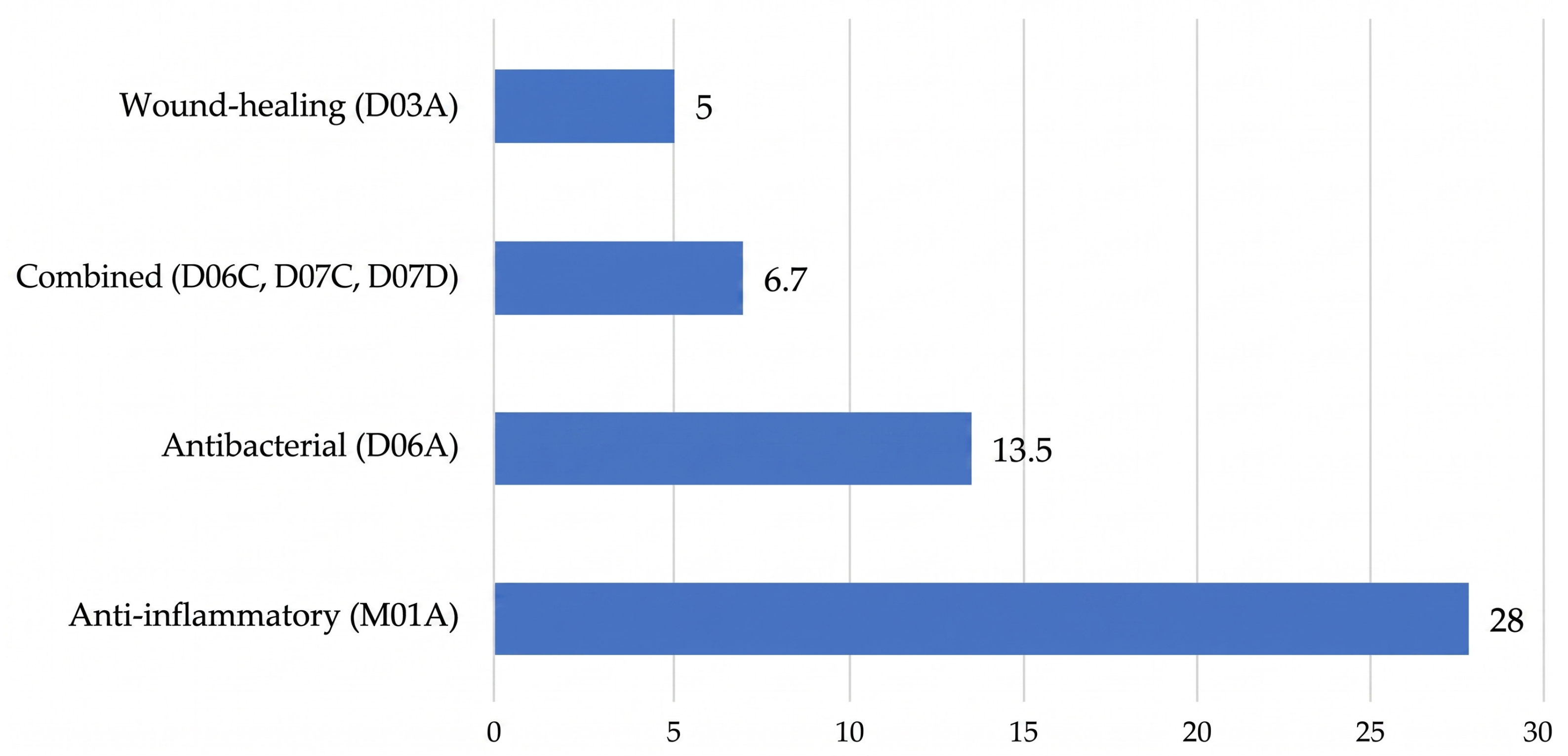
An analysis of the pharmacotherapeutic profile revealed a marked predominance of anti-inflammatory drugs over wound-healing agents, as shown in
Table 6.
The results demonstrate a marked predominance of anti-inflammatory products, with a comparatively lower representation of drugs aimed at stimulating tissue regeneration. This difference in representation was further quantified using the Therapeutic Gap Ratio (TGR), as presented in
Table 7.
Figure 2 illustrates the distribution of the principal pharmacotherapeutic categories.
2.4. Assessment of Differences in Therapeutic Representation
The difference in representation between anti-inflammatory and wound-healing drugs was:
TGR(AntiInfl → WoundHeal) = 5.6
This means that anti-inflammatory drugs were represented 5.6 times more frequently than wound-healing agents.
For antibacterial drugs relative to wound-healing agents, the corresponding figure was:
The results indicate that wound-healing products were less frequently represented than anti-inflammatory and antibacterial products in the registered portfolio.
The data indicate a difference in representation between therapeutic categories. The lowest proportional representation was observed for wound-healing products, while anti-inflammatory products were the most frequently represented category.
2.5. Structural and Chemical Profile of the Market
Among the 1046 registered topical semi-solid dosage forms, a substantial proportion contained heterocyclic active pharma-ceutical ingredients (APIs). The distribution of registered semi-solid dosage forms by chemical class is presented in
Table 8.
The structural-chemical analysis showed that heterocyclic compounds represent a substantial proportion of registered APIs. Among the identified heterocyclic classes, imidazole derivatives (12.6%), triazole derivatives (6.5%), and pyrimidine derivatives (2.0%) were the most frequently represented groups. This indicates that DHPM-thione derivatives are not represented in the national medicines registry.
2.6. Comparison with Clinical Approaches to Dermatitis Therapy in CIS Countries
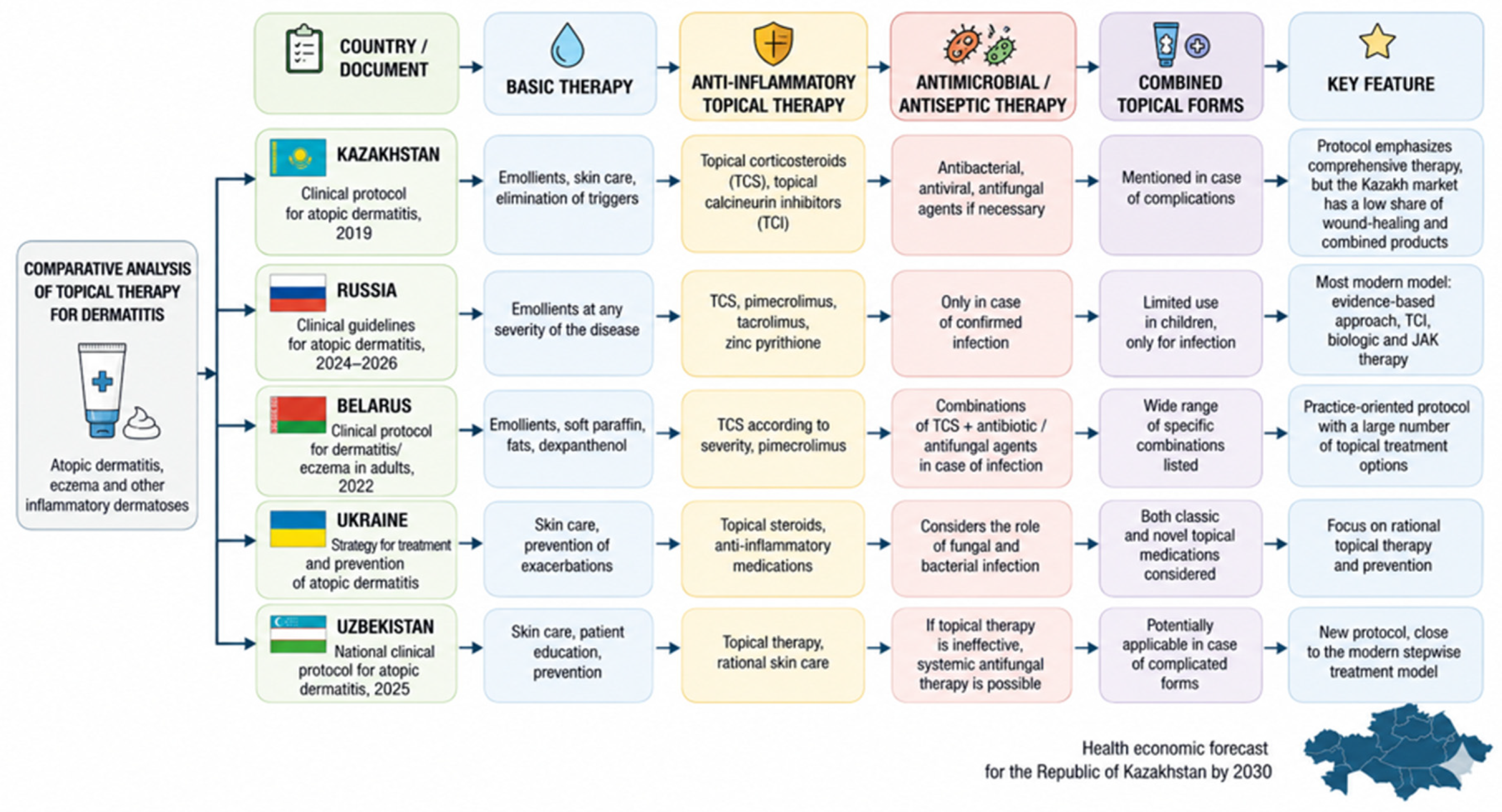
To provide context for the observed market structure, a comparative analysis was conducted of approaches to the topical treatment of dermatitis in Kazakhstan, Russia, Belarus, Ukraine, and Uzbekistan. The comparison showed that in all the clinical documents reviewed, topical therapy plays a central role in the treatment of atopic dermatitis, eczema, and other inflammatory skin conditions. The comparative clinical approaches to topical therapy of dermatitis across the selected CIS countries are summarized in
Figure 3.
The Republic of Kazakhstan’s clinical protocol for atopic dermatitis states that treatment should be comprehensive and include elimination measures, diet, a hypoallergenic regimen, topical and systemic pharmacotherapy, patient education, and rehabilitation. The goals of therapy are to reduce inflammation and itching, prevent secondary infections, moisturize and soften the skin, restore its protective properties, and improve patients’ quality of life.
The 2024–2026 Russian clinical guidelines emphasize that topical drug therapy is indicated for atopic dermatitis of any severity. The mainstay of treatment consists of emollients, topical glucocorticosteroids, and calcineurin inhibitors, while multicomponent topical preparations containing antibiotics or antifungals are recommended only when a bacterial or fungal infection is confirmed.
The Belarusian clinical protocol for dermatitis and eczema in adults covers a wide range of dermatoses (L20–L30) and identifies topical therapy as a key component of treatment. It specifically lists emollients as agents for restoring the skin barrier, topical corticosteroids, pimecrolimus, moist-to-dry dressings, and—in cases of secondary infection—combination topical preparations containing antibacterial and antifungal components.
The Ukrainian document on the strategy for the treatment and prevention of atopic dermatitis emphasizes the need for systemic and topical treatment, skin care, monitoring of infectious complications, and prevention of flare-ups.
Uzbekistan’s 2025 National Clinical Protocol for Atopic Dermatitis includes topical therapy, proper skin care, systemic pharmacotherapy, physical therapy, education, and prevention; if topical therapy is ineffective, systemic antifungal treatment is permitted.
A detailed comparison of clinical approaches to topical therapy for dermatitis across the CIS countries is presented in
Table 9.
To assess the relationship between clinical recommendations and the registered product portfolio, a Clinical–Market Gap Matrix was constructed, combining the results of the comparative analysis of clinical protocols from CIS countries with data from Kazakhstan’s state drug registry. The resulting comparison between clinical recommendations and actual market representation is summarized in
Table 10.
3. Discussion
3.1. Structural Characteristics of the Semi-Solid Dosage Forms Market in the Republic of Kazakhstan
As shown in
Table 11, the market is highly concentrated: the top three dosage forms—ointments, gels, and creams—account for 93.8% of all registered products (MCR
3 = 93.8%), with ointments alone comprising 39.5%.
This indicates limited portfolio diversification and restricted availability of alternative delivery systems such as plasters (2.1%) or transdermal therapeutic systems.
This structural characterization aligns with the findings of marketing studies on the Kazakhstani wound-healing gel market, which also highlighted the need to expand the range of domestically produced drugs and the relevance of developing new wound-healing dosage forms [
45].
Moreover, as noted in a review of the current state of chronic wound management in Kazakhstan, statistical data on patients with chronic wounds are neither monitored nor recorded in the country, which creates additional difficulties in assessing the real demand for specialized wound-care products. The authors of this review emphasize the need to establish systematic wound care monitoring and develop an electronic database, as well as the importance of designing and manufacturing new domestic wound-healing products [
46].
The absence of systematic statistics on chronic wounds may contribute to underestimation to an underestimation of the real need for wound-healing drugs and, consequently, to the perpetuation of the structural differences in representation identified in this study.
The calculated TMI (56.4%) primarily reflects the relative representation of gels and creams compared to traditional ointments. However, this structural descriptor should not be interpreted as evidence of widespread adoption of innovative delivery platforms, as more complex systems—plasters, transdermal therapeutic systems, hydrogels, bioactive coatings, nanostructured carriers and controlled-release systems—remain limited in the registered portfolio.
Although modern forms (gels, creams, and patches) account for more than half of registered products (TMI = 56.4%), the share of more complex topical systems—hydrogels, bioactive coatings, nanostructured carriers, and controlled-release systems—remains extremely limited, suggesting that the market has transitioned from the absolute dominance of ointments to a broader use of gels and creams but has not yet reached the level of markets where advanced drug delivery platforms play a significant role. The Kazakhstan market cannot yet be regarded as fully technologically advanced in terms of modern wound-care platforms, as the registered portfolio remains predominantly composed of conventional semi-solid dosage forms, unlike the markets of the United States, the European Union, and several Asian countries, where bioactive coatings, intelligent hydrogels, cellular products, and controlled-release systems are actively being introduced.
Thus, the Kazakhstani semi-solid dosage forms market appears to be at an intermediate stage of technological development. It is no longer exclusively “traditional,” since gels and creams account for more than half of the assortment, but it remains less diverse than markets where hydrogels, polymer matrices, bioactive coatings, “smart” dressings, and combination delivery systems play a significant role.
This is particularly relevant for chronic wound care, where efficacy depends not only on the API but also on the base properties—moisture maintenance, controlled release, exudate absorption, and antimicrobial and anti-inflammatory effects. While Kazakhstan has some herbal and topical wound-healing products (oils, ointments, films), modern hydrogels, bioactive dressings, and innovative systems remain underrepresented.
Consequently, the TMI value should be interpreted as a descriptive structural characteristic of the registered portfolio rather than as evidence of technological compliance with international trends. The data reflect a transition from classical ointments to gels and creams, but not yet to high-tech wound-care platforms.
3.2. Differences in Therapeutic Representation Across Registered Topical Products
The marked predominance of anti-inflammatory products over wound-healing agents (TGR = 5.6) highlights a structural imbalance in the registered portfolio relative to the multifactorial pathogenesis of chronic wounds (
Table 12).
The limited availability of combination products (6.7%) further restricts multitargeted therapy options (
Table 13).
This imbalance is relevant given that chronic wound pathogenesis involves persistent inflammation, microbial contamination, oxidative stress, and impaired angiogenesis [
14,
15]. Optimal therapy may therefore require comprehensive intervention rather than single-target approaches. The comparison of pathogenetic need with actual market structure (
Table 14) illustrates this misalignment.
According to WHO (2025), one in six bacterial infections is antibiotic-resistant, a 40% increase over five years [
47]. In wound care, antimicrobial use remains variable and often driven by “fear of infection” rather than protocols, potentially contributing to AMR [
48]. The limited representation of combination and multitargeted products (6.7%) may be relevant to the rational use of antibiotics in clinical practice, as patients with chronic wounds may require multiple separate prescriptions instead of a single multifunctional agent.
3.3. Comparison with Regional Data: Kazakhstan, Ukraine, Belarus and Russia
For a more accurate interpretation of the results, it is important to compare the Kazakhstani market with data from other countries in the region. The available literature contains individual studies on semi-solid dosage forms and wound-healing agents in Ukraine and Belarus, as well as industry reports on the Russian pharmaceutical market.
The selected countries were chosen because they represent geographically and historically related pharmaceutical markets within the CIS region, sharing broadly comparable healthcare traditions and predominantly generic pharmaceutical portfolios. At the same time, they differ in the degree of regulatory harmonization, reimbursement mechanisms, domestic manufacturing capacity, procurement policies, and the availability of registered medicinal products. These similarities enable meaningful regional comparison, whereas the regulatory and market differences provide important context for interpreting variations in the registered product portfolios. Accordingly, the following comparison is intended to provide regional context for the findings rather than to directly compare healthcare system performance or clinical practice.
The comparison with Ukraine is particularly informative because in the specialised segment of drugs for wound care, semi-solid dosage forms accounted for 50.4%, liquid forms for 48.0%, while solid forms constituted 1.6%. Moreover, about 82% of wound-healing products were represented by domestic manufacturers. This contrasts with the situation in Kazakhstan, where wound-healing drugs account for 5.0% of all semi-solid dosage forms, and the market as a whole remains highly import-dependent.
The Belarusian experience is also of interest. A study of the nomenclature of semi-solid dosage forms in the Republic of Belarus showed that soft forms account for about 5% of all registered medicinal products, with complex forms, including plasters and transdermal therapeutic systems, being entirely import-dependent.
In Kazakhstan, the share of semi-solid dosage forms among all registered products is higher—about 16.0%—but the structural pattern is similar: complex delivery systems are limited, and the market is concentrated around classical ointments, gels and creams. A broader regional comparison of semi-solid dosage forms and wound-healing products is presented in
Table 15.
The Russian market is a particularly important regional reference point, since Kazakhstan and Russia operate within the close regulatory space of the EAEU, have historically similar pharmaceutical practices and significant medicinal product trade.
According to an industry report by the company Alfarm, the volume of the Russian pharmaceutical market increased by 60.1% between 2019 and 2023, reaching 2.2 trillion roubles in 2023 [
52].
The share of Russian manufacturers in monetary terms rose from 30.8% in 2019 to 36.8% in 2023, while in volume terms it reached 62.9% in 2023 compared with 61.3% in 2019. The key comparative indicators are summarized in
Table 16.
The Russian market demonstrates a higher level of localisation and greater domestic production potential. This is particularly important in the context of import substitution: if in Kazakhstan, according to published data, only 13.1% of the 7449 registered drugs are domestic, while 86.9% are imported, then in Russia the share of domestic drugs is substantially higher. The Russian report also emphasises the growth in the share of domestic manufacturers and the expansion of the drug assortment, indicating a more developed industrial base.
Despite higher localisation, Russia has not fully solved the innovation challenge in complex segments. Nevertheless, its experience shows that state import substitution programmes can reshape the market when backed by investment, R&D, and manufacturing capacity. For Kazakhstan, this implies prioritising innovative formulations over generic reproduction to achieve meaningful therapeutic diversification.
Additional perspective for interpreting the obtained results is provided by the analysis of the topical products market in the Central Asian region. According to industry data, Kazakhstan is the largest dermatological products market in Central Asia, where topical forms such as creams and ointments predominate. However, the contract manufacturing market for topical products in Kazakhstan is characterised as “emerging” and import-dependent, with a pronounced structural gap between limited local GMP manufacturing capacity and growing regional demand for specialised dermatological and ophthalmic therapeutic products [
52].
This creates both a challenge and an opportunity for Kazakhstan: subject to the development of local manufacturing capacity, the country could become a regional hub for Central Asia and the CIS markets. However, this requires not only investment in production but also the development of proprietary molecules and advanced topical formulations may strengthen the regional pharma-ceutical sector. DHPM-thione represents one possible example of a chemical class that could be explored in future pharmaceutical research.
Thus, the registry-based findings are interpreted not only within the national pharmaceutical market but also in relation to regional therapeutic practice, providing broader context for understanding the organization of topical semi-solid dosage forms in Kazakhstan.
3.4. WHO Perspective on Antimicrobial Innovation and Its Relevance to Topical Drug Development
The results of this study can be interpreted not only within the national context of the Kazakhstani pharmaceutical market but also within the broader international context of antimicrobial resistance and the development of new antibacterial agents.
According to the WHO 2025 report, antimicrobial resistance is one of the most serious global health threats, causing more than one million deaths annually; in the absence of intensified measures, up to 39 million deaths directly related to AMR are projected by 2050. The WHO emphasises that as of 15 February 2025, there were 90 antibacterial agents or combinations in clinical development containing at least one new therapeutic entity—50 traditional antibacterial agents and 40 non-traditional agents—and notes that even taking into account drugs in development and those approved in the last seven years, the existing antibacterial pipeline remains insufficient to counter the rise in drug-resistant infections. The broader international context is summarized in
Table 17.
This is particularly important for two reasons. First, infected wounds, diabetic ulcers, burns, and chronic skin injuries are often complicated by bacterial contamination and biofilm formation. Second, topical antibacterial use should be considered within the context of antimicrobial stewardship and rational antibiotic therapy. The predominance of classical antibacterial agents in the market, without sufficient multifunctional alternatives capable of reducing inflammation and supporting regeneration, may increase dependence on traditional antibiotics.
The WHO defines antibacterial innovativeness primarily as the absence of known cross-resistance, with additional indicators being a new chemical class, new molecular target, or new mechanism of action. DHPM-thione satisfies one criterion—it belongs to a chemical class absent from the analysed registry.
According to WHO (2025), the antibacterial pipeline has declined from 97 agents in 2023 to 90 in 2025. Of these, only 15 qualify as innovative, and only 5 are effective against WHO critical-priority pathogens. Since 2017, only two new chemical classes have reached marketing authorisation. While the preclinical pipeline remains active (232 programmes), 90% of developing companies have fewer than 50 employees, highlighting R&D ecosystem fragility [
47].
Against this backdrop, the development of new chemical classes for topical application becomes particularly significant. DHPM-thione, a member of a chemical class not represented in the analysed registry, has demonstrated antioxidant and anti-inflammatory activity in preclinical studies and may therefore warrant further investigation as a candidate for topical pharmaceutical development.
In this context, the development of innovative domestic molecules, such as DHPM-thione, can become one of the elements in building a full-fledged, self-sufficient pharmaceutical ecosystem.
3.5. WHO Diagnostic Perspective and Topical Drug Development
The WHO (2025) emphasises that combating AMR requires not only new drugs but also improved diagnostics—tests for distinguishing bacterial from non-bacterial infections, pathogen identification, and antimicrobial susceptibility testing. Diagnostic systems should support rational antibiotic prescribing and reduce inappropriate use [
47].
This has direct relevance to wound care. In clinical practice, chronic and inflammatory skin lesions are often treated empirically, particularly at primary care level, without microbiological confirmation. Thus, expanding the antibacterial segment alone does not fully address the problem. A complementary approach discussed in the literature is the development of multitargeted drugs that simultaneously reduce inflammation, control microbial contamination, decrease oxidative stress, and support tissue regeneration.
Critical diagnostic gaps persist globally: limited access to biomarker tests (e.g., C-reactive protein, procalcitonin) and simple diagnostic tools at primary healthcare level, disproportionately affecting low-resource countries [
47]. These observations are relevant to the Kazakhstani registry data: even with an expanded range of antibacterial soft forms, their use without rapid and accessible diagnostics may remain empirical, risking irrational antibiotic use and resistance development. The key implications are summarized in
Table 18.
In this broader context, multitargeted compounds such as DHPM-thione may warrant further investigation as potential complements to existing therapeutic approaches.
Thus, the study results may be interpreted not as a call for a simple increase in the number of local antibiotics, but as an argument in favour of developing more comprehensive topical agents. In the context of rising AMR and the limited antibacterial pipeline, future topical formulations with multitargeted properties may have the potential to complement existing therapeutic approaches, where possible, reduce the need for systemic antibiotic therapy, maintain local inflammation control and accelerate tissue repair. It is within this logic that DHPM-thione may be considered as a potential class for further pharmaceutical research.
3.6. Representation of Heterocyclic Compounds: The Absence of DHPM-Thione from the Registry
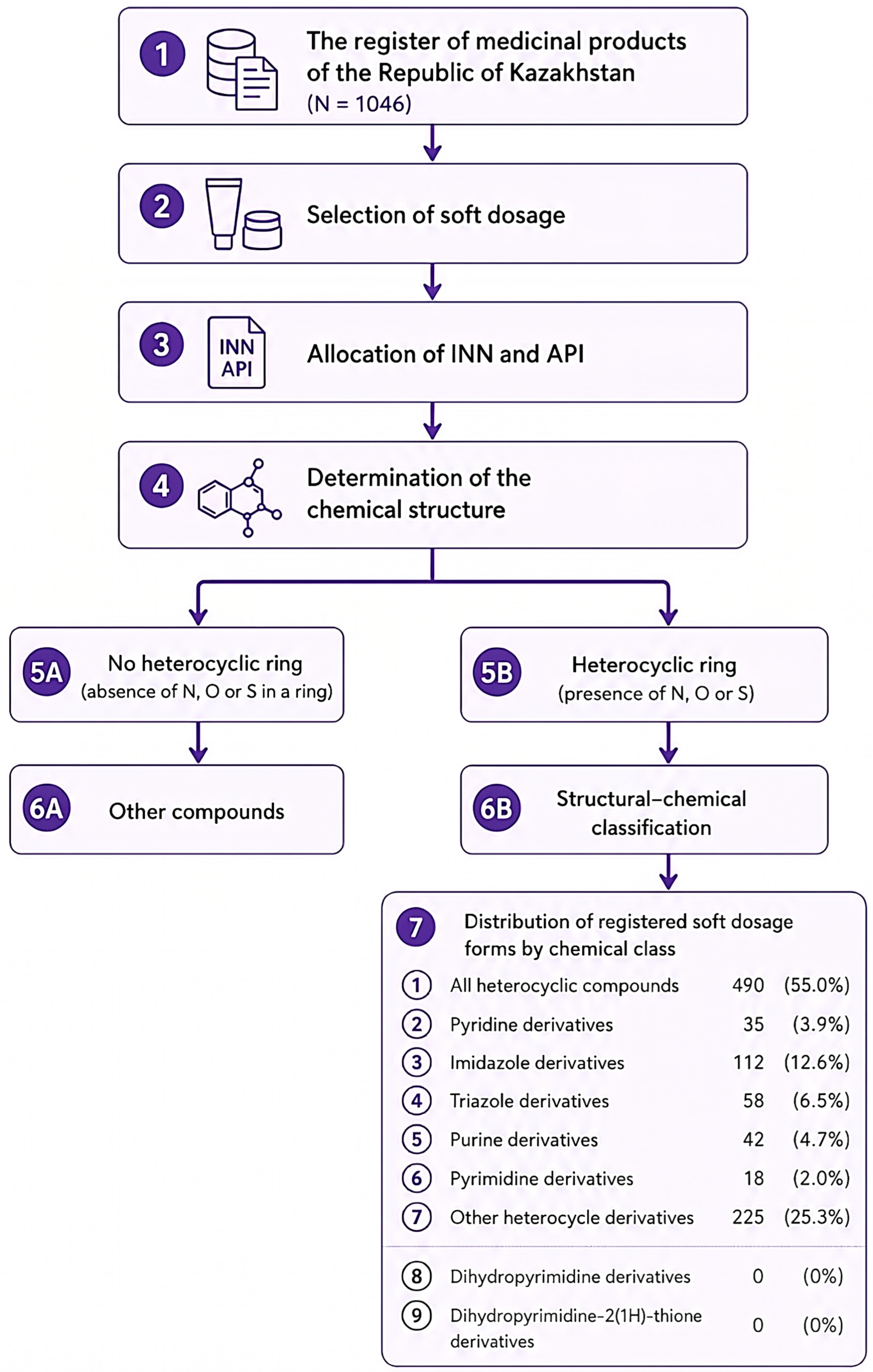
The structural-chemical analysis showed that the Kazakhstani semi-solid dosage forms market already contains a significant number of heterocyclic active pharmaceutical ingredients. A total of 490 drugs with heterocyclic structures were identified, representing 55.0% of all analysed soft forms. Among these, imidazole derivatives were represented by 112 drugs, or 12.6% of the total soft forms; triazoles by 58 drugs, or 6.5%; purines by 42 drugs, or 4.7%; pyridines by 35 drugs, or 3.9%; and pyrimidines by 18 drugs, or 2.0%.
However, dihydropyrimidine and dihydropyrimidine-2(1H)-thione derivatives were entirely absent. The corresponding distribution is summarized in
Table 19.
The key observation is that the market already contains heterocyclic compounds, particularly antifungal imidazoles and triazoles. Therefore, the absence of DHPM-thione cannot be explained by the low applicability of heterocycles in soft forms. Rather, it reflects the absence of translation of a particular chemical class into registered topical drugs.
This observation is particularly noteworthy because DHPM and DHPM-thione are described in the literature as compounds with a broad spectrum of biological activity. The literature review notes that DHPM/thiones possess anti-inflammatory, antibacterial, antioxidant and other pharmacological potential; at the same time, a systematic review of DHPM showed that most data remain in vitro, and only 12 of 115 studies included in vivo experiments. This is important for correct interpretation: DHPM-thione should not be presented as an already proven clinical drug for wounds, but it can be reasonably positioned as a promising preclinical class for further research.
Of particular interest is the contemporary direction of DHPM-containing nanoplatforms for infected diabetic wounds. The literature review indicates that a bacterium-sensitive nanoplatform with DHPM fragments promoted biofilm dispersal, ROS scavenging, inflammation reduction, wound transition to the proliferative phase, enhanced angiogenesis and granulation tissue formation. This work illustrates the potential relevance of DHPM chemistry to wound-care research, although it remains at the experimental nanoplatform stage rather than registered ointments, gels or creams.
Scientific interest in dihydropyrimidinones and their thione analogues has grown considerably in recent years. A review published in 2025 emphasises that the Biginelli reaction remains a versatile method for obtaining 3,4-dihydropyrimidin-2(1H)-ones, 3,4-dihydropyrimidin-2(1H)-thiones and related heterocycles, which attract significant attention due to their pharmacological properties and diverse biological activities. These compounds demonstrate activity against cancer, Alzheimer’s disease, microbial infections, tuberculosis, inflammation, malaria, filariasis, hypertension, and also possess antioxidant and antiviral properties [
53,
54]. Another review confirms that dihydropyrimidinones play a critical role as anticancer, antioxidant, antimicrobial, anti-inflammatory and antihypertensive agents [
55,
56,
57].
Of particular note is the study of a bacterium-sensitive nanoplatform with DHPM fragments for the treatment of infected diabetic wounds, published in Acta Biomaterialia (2025). This work showed that DHPM fragments of the nanoplatform act as reactive oxygen species (ROS) scavengers, allowing the reduction in oxidative stress and inflammatory responses, facilitating the transition of the healing process to the proliferative phase, characterised by enhanced extracellular matrix deposition, angiogenesis and granulation tissue formation [
53]. Thus, DHPM-containing systems demonstrate the ability to simultaneously address several key problems of chronic wounds: persistent inflammation, oxidative stress and impaired regeneration.
These data create a foundation for further research into semi-solid dosage forms based on DHPM-thione. The absence of this class from the State Register of Kazakhstan, together with available preclinical evidence, suggests a potential area for further research.
3.7. DHPM-Thione as a Potential Subject for Future Research
From a research perspective, the findings of the present study provide a framework for considering DHPM-thione as a candidate chemical class for future investigation in multitargeted topical dosage forms.The market structure identified in the present study provides useful context for prioritizing future pharmaceutical research. Anti-inflammatory agents constitute the largest pharmacotherapeutic category (28.0% of registered products), whereas wound-healing agents (5.0%) and combination products (6.7%) are represented less frequently within the registered portfolio.
In addition, no medicinal products containing dihydropyrimidine-2(1H)-thione (DHPM-thione) derivatives were identified in the national medicines registry. These observations describe structural characteristics of the current product portfolio rather than evidence of unmet clinical need or commercial potential. Nevertheless, when interpreted alongside the published scientific literature, they illustrate how registry-based market analysis can be integrated with structural–chemical evidence to identify research hypotheses for future pharmaceutical development.
A recent systematic review of 60 studies demonstrated that DHPM-thione derivatives have been extensively investigated in preclinical models across multiple therapeutic areas. Attempting to position DHPM-thione solely as a new anti-inflammatory agent would place it in a mature and crowded segment.
An alternative approach would be to consider DHPM-thione as a chemical class for multitargeted dosage forms, potentially addressing several identified areas of limited representation. Its comparative positioning relative to these market segments is presented in
Table 20:
- i.
wound-healing drugs—5.0% of the market;
- ii.
combination products—6.7% of the market;
- iii.
the absence of DHPM-thione—0%.
Global trends confirm increasing interest in advanced topical delivery systems incorporating nanocarriers, liposomes, and polymer systems [
56], with the advanced drug delivery market projected to reach
$2.9 trillion by 2032 [
57,
58,
59,
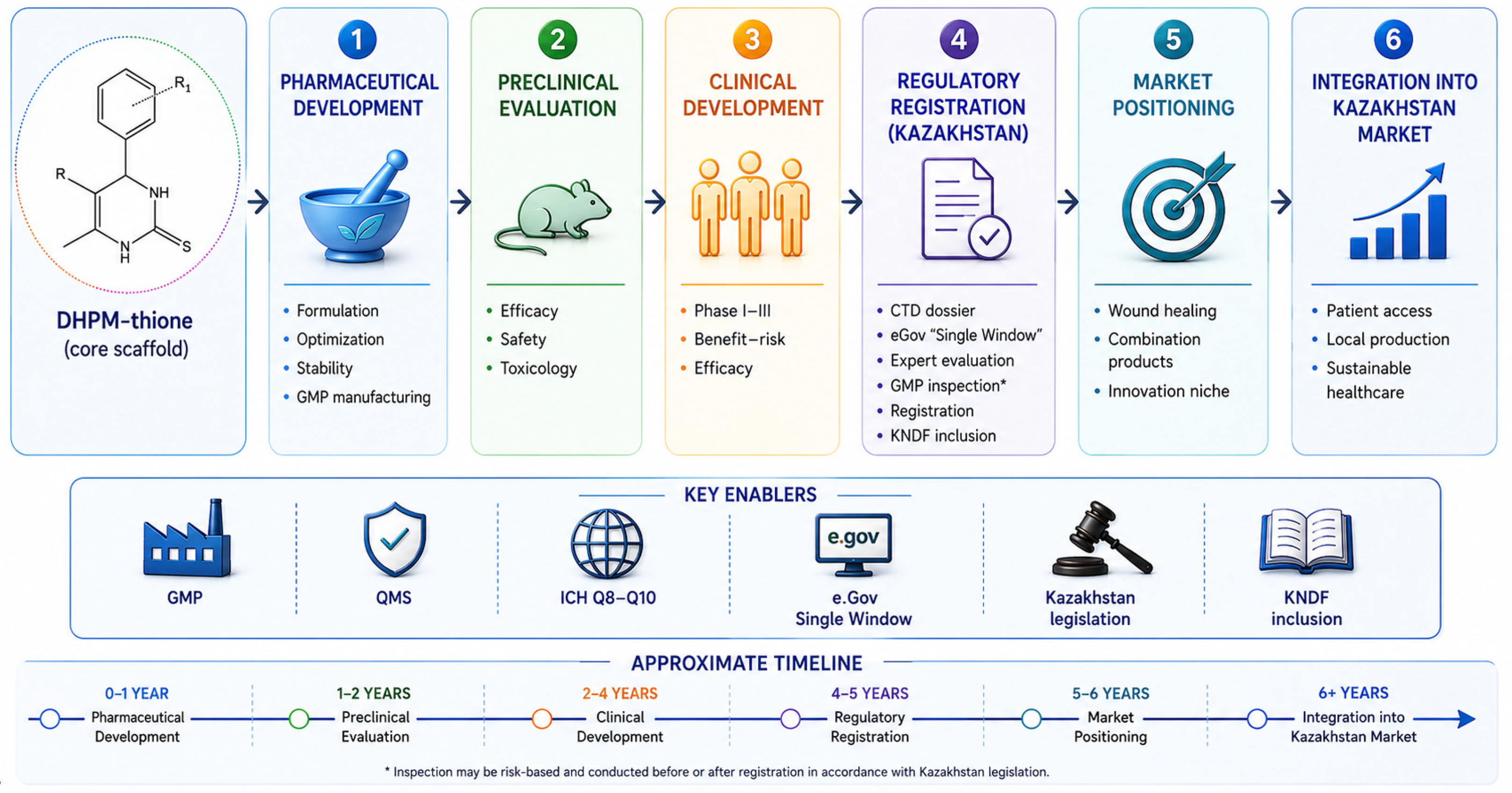
60]. The proposed development pathway is illustrated in
Figure 4.
From a regulatory perspective, the development of DHPM-thione-based topical products in Kazakhstan would operate under the evolving framework of the Eurasian Economic Union (EAEU), with a transition period ending in 2026. The primary competent authorities are the Committee for Medical and Pharmaceutical Control (CMPC), responsible for state registration, and the National Center for Expertise of Medicines and Medical Devices (NCE), which conducts safety, quality, and efficacy evaluations [
39,
40,
41]. However, unlike the FDA and EMA, Kazakhstan currently lacks specialized guidance documents for evaluating the equivalence of complex topical products—including in vitro release testing (IVRT), in vitro permeation testing (IVPT), and microstructural (Q3) equivalence. The FDA recommends IVRT with r
2 ≥ 0.97, while EMA criteria are less stringent (r
2 > 0.90), and EMA accepts tape stripping studies for local bioavailability assessment, whereas FDA does not [
60,
61,
62]. This regulatory gap is compounded by the inherent batch-to-batch variability of reference products, which may complicate equivalence demonstration even when guidelines exist [
63].
Based on the present market analysis and the current regulatory framework in the Republic of Kazakhstan, a conceptual roadmap for the development and positioning of DHPM-thione-based topical medicinal products is proposed (
Figure 4). The roadmap summarizes the sequential stages from pharmacological validation and pharmaceutical development under GMP principles to preclinical and clinical evaluation, regulatory registration through the national “Single Window” procedure, and potential market introduction. It is intended to illustrate a possible development pathway derived from the identified market structure and current regulatory requirements rather than to predict future clinical or commercial outcomes. The roadmap also highlights the need for Kazakhstan to either develop local pharmacopoeial methods or adapt EAEU rules to address the specific complexities of topical semi-solid products, ensuring that future innovations can be evaluated through robust, internationally aligned regulatory pathways.
3.8. Limitations of the Study
This study has several limitations that should be considered when interpreting the findings.
First, the analysis was based exclusively on registration data from the State Register of Medicinal Products of the Republic of Kazakhstan. Consequently, the results reflect the structure and diversity of the registered pharmaceutical market rather than actual product availability, sales volumes, prescribing patterns, or clinical utilization. Some registered products may not be actively marketed or available in pharmacies.
Second, the study does not include information on market sales, consumption patterns, or healthcare utilization, which would be necessary to evaluate the actual demand for specific therapeutic categories and their economic significance.
Third, the classification of drugs into pharmacotherapeutic categories was based on the primary therapeutic indication recorded in the national medicines register. Some products may possess additional therapeutic properties that are not reflected in the primary classification. Likewise, the structural classification of APIs was based on the predominant heterocyclic scaffold, although certain molecules contain multiple heterocyclic fragments.
Fourth, the absence of DHPM-thione-containing products in the national medicines registry should not be interpreted as evidence of an unmet clinical need, lack of therapeutic potential, or commercial feasibility. Rather, it indicates that this chemical class is currently not represented among registered medicinal products in Kazakhstan. The discussion of DHPM-thione derivatives is based on published preclinical evidence and is intended solely to illustrate their potential relevance for future pharmaceutical research.
Fifth, the present study is descriptive in nature and does not include hypothesis testing, clinical outcome assessment, pharmacoeconomic evaluation, or comparative effectiveness analyses. Therefore, no conclusions regarding clinical efficacy, safety, cost-effectiveness, or patient outcomes can be drawn from the presented data.
Sixth, the study does not include Kazakhstan-specific epidemiological data on the prevalence of chronic wounds, diabetic foot ulcers, or inflammatory skin diseases. As reported previously, systematic nationwide monitoring and registration of patients with chronic wounds are currently unavailable in Kazakhstan.
Consequently, it is not possible to directly assess the relationship between the observed market structure and the actual burden of these conditions. Therefore, the observed distribution of therapeutic categories should be interpreted as a structural characteristic of the registered medicines portfolio rather than direct evidence of unmet clinical demand.
Finally, the comparison with clinical guidelines from selected CIS countries was performed solely to provide contextual interpretation of the observed market structure and should not be regarded as an assessment of clinical practice, prescribing behaviour, or therapeutic appropriateness. The reviewed guidelines represent recommendations, whereas actual clinical practice may differ.
4. Materials and Methods
4.1. Data Source
This study was designed as a cross-sectional descriptive pharmaceutical market analysis of topical semi-solid dosage forms registered in the Republic of Kazakhstan. The study followed the principles of descriptive registry-based research and was aimed at characterizing the current structure of the national pharmaceutical market without assessing the clinical effectiveness, safety, or comparative therapeutic value of medicinal products.
The national medicines registry provides a comprehensive regulatory description of the pharmaceutical market, including the composition of registered medicinal products, dosage forms, manufacturers, countries of origin, and active pharmaceutical ingredients. Accordingly, the present analytical framework was designed to characterize the structural organization of the registered pharmaceutical portfolio. The analysis therefore focuses on structural attributes of the market, whereas dimensions such as sales volume, prescribing patterns, healthcare utilization, pricing, and pharmacoeconomic outcomes require different data sources and were beyond the objectives of the present registry-based investigation.
The primary data source was the State Register of Medicinal Products of the Republic of Kazakhstan maintained by the National Center for Expertise of Medicines and Medical Devices under the Ministry of Health of the Republic of Kazakhstan. The registry contains publicly available information on registered medicinal products, including trade names, international nonproprietary names (INNs), dosage forms, active pharmaceutical ingredients (APIs), Anatomical Therapeutic Chemical (ATC) codes, manufacturers, countries of manufacture, marketing authorization holders, and registration status.
In addition, summary statistics from the State Register of Medicines of the Republic of Kazakhstan as of 13 June 2026 were used, including the number of valid registration certificates, the number of medicines registered under the national procedure and in accordance with EAEU regulations, as well as information on domestically produced medicines [
39,
40,
41].
4.2. Inclusion and Exclusion Criteria
The analysis included medications classified as soft and topical dosage forms. The study included topical semi-solid dosage forms indicated for the treatment of wounds, inflammatory skin diseases, burns, dermatitis, fungal infections, bacterial skin infections, and related conditions, according to the approved indications provided in the State Register. The analysis included only medicinal products with active marketing authorization at the time the registry data were extracted. Expired or inactive registration records were not considered.
Products with multiple approved therapeutic indications were not excluded from the analysis. Each product was assigned to a single pharmacotherapeutic category based on its primary therapeutic indication, determined using the Anatomical Therapeutic Chemical (ATC) classification, the international nonproprietary name (INN), and the official prescribing information recorded in the State Register of Medicinal Products of the Republic of Kazakhstan. Combination products containing active ingredients from different therapeutic groups were classified separately as combination products and were not counted in other categories. This approach ensured that each registration record contributed only once to the analysis and prevented double counting. Systemic dosage forms, medical devices, veterinary drugs, as well as technical records and duplicate entries were excluded from the initial dataset, as summarised in
Table 21.
4.3. Pharmacotherapeutic Classification
To ensure the reproducibility of the study, all drugs were classified into pharmacotherapeutic groups based on the ATC classification (Anatomical Therapeutic Chemical Classification System), international nonproprietary names, prescribing information, and primary therapeutic indication [
64,
65]. The classification scheme applied is shown in
Table 22.
After classification, the absolute number of registration records, their percentage of the total dataset, and their distribution by country of manufacture were calculated for each pharmacotherapeutic group. Quantitative findings derived from this classification are reported in the
Section 2.
4.4. Structural and Chemical Classification of Active Pharmaceutical Ingredients
To characterize the chemical diversity of the market for semi-solid dosage forms, a structural-chemical classification of active pharmaceutical ingredients (APIs) was conducted. The analysis was carried out sequentially in several stages. The workflow used for the structural-chemical classification of APIs is presented in
Figure 5.
In the first stage, the International Nonproprietary Name (INN) and active pharmaceutical ingredient (API) were determined for each drug based on data from the State Register of Medicines of the Republic of Kazakhstan [
66].
In the second stage, the chemical structure of each API was determined using open-access chemical databases (PubChem, ChEBI, DrugBank, ChemSpider) and official pharmacopoeial sources [
65].
In the third stage, a structural analysis of the molecules was conducted to identify the presence of heterocyclic fragments. A compound was classified as heterocyclic if its structure contained at least one cyclic fragment containing nitrogen, oxygen, or sulfur atoms [
67,
68].
The structural-chemical classification criteria for active pharmaceutical ingredients are summarised in
Table 23. In the fourth stage, all heterocyclic compounds were classified into chemical classes based on their dominant structural core. Compounds containing multiple heterocyclic fragments were assigned to the class corresponding to their predominant structural scaffold.
4.5. Analysis of the Structure of the Semi-Solid Dosage Forms Market
To quantitatively characterize the market for semi-solid dosage forms in the Republic of Kazakhstan, an analysis of the product mix of registered drugs was conducted using descriptive statistical indicators that allow for an assessment of the distribution of dosage forms and the degree of market concentration [
66,
67,
68,
69].
In the first stage, the absolute number of registered drugs for each dosage form (
Ni) and their share in the overall structure of the market for semi-solid dosage forms were determined. The relative share of each dosage form (
si) was calculated using the formula:
where
Ni—the number of drugs in the appropriate dosage form,
Ntotal—the total number of semi-solid dosage forms included in the study.
To assess the degree of dominance of individual dosage forms, the market concentration ratio for the top three categories (Market Concentration Ratio, MCR
3) was calculated:
where
N(1),
N(2) and
N(3) correspond to the number of drugs in the three most common dosage forms.
MCR
3 values below 45% were interpreted as indicating low market concentration, 45–60% as moderate, 61–75% as high, and over 75% as very high concentration. This widely used indicator was employed to describe the degree of concentration among dosage-form categories [
70,
71].
To further characterize market diversity, the Shannon Diversity Index (
H) was calculated:
where
pi represents the share of the relevant dosage form in the overall market structure, and
k is the number of categories analyzed.
The Shannon index is a standard measure of diversity originally developed in ecology but widely applied in economics and market research to assess the uniformity of distribution across categories [
72,
73]. In this study, the Shannon index was adapted to assess the diversity of dosage form categories. This adaptation is valid because the index reflects the uniformity of distribution of objects across categories, regardless of the nature of the units being analyzed. A higher H value indicates a more balanced distribution across dosage forms, while lower values indicate concentration in fewer categories.
To assess the level of technological development in the market, all dosage forms were divided into two categories. Traditional dosage forms included ointments, pastes, and liniments, characterized by a long history of use and relatively simple manufacturing technologies. Modern dosage forms included gels, creams, hydrogels, patches, and transdermal therapeutic systems, which involve the use of modern polymeric carriers, modified-release technologies, and improved drug delivery systems.
The proportions of traditional (
TS) and modern (
MS) dosage forms were calculated using the following formulas:
where
NTrad—number of traditional dosage forms, a
NMod—number of modern dosage forms.
The Technological Maturity Index (
TMI) was used as a descriptive structural indicator reflecting the relative proportion of dosage forms that were operationally classified as modern or traditional for the purposes of market characterization. The classification was introduced solely to describe the structural composition of the registry dataset and should not be interpreted as a validated measure of technological innovation, pharmaceutical advancement, product quality, or clinical superiority. The TMI was calculated as the share of modern dosage forms in the total market volume:
Higher TMI values indicate a larger proportion of dosage forms classified as modern according to the operational classification adopted in this study. The index was selected because it allows for straightforward calculation and comparison with other markets as a descriptive indicator.
To compare the prevalence of modern and traditional dosage forms, the Form Innovation Ratio (
FIR) was calculated:
FIR values above 1 indicate a predominance of modern dosage forms; a value of 1 indicates equal representation; and values below 1 reflect the dominance of traditional technologies. This ratio complements the TMI by providing a relative measure of modern versus traditional forms.
MCR3, the Shannon index, TMI, and FIR were used to characterize market structure, portfolio diversification, and technological profile. These indices are descriptive analytical tools for summarizing registry data and should not be interpreted as validated measures of clinical need, therapeutic efficacy, or market performance.
4.6. Gap Analysis of Therapeutic Categories
To identify differences in representation among the main therapeutic categories of the market for semi-solid dosage forms, a comparative analysis was conducted. The comparison was informed by the multifactorial nature of wound management: effective treatment of chronic and infected wounds requires a comprehensive approach targeting three key pathophysiological mechanisms: suppression of inflammation, control of infection, and stimulation of tissue regeneration processes [
74,
75,
76,
77,
78].
In the first stage, for each pharmacotherapeutic category, we determined the absolute number of drugs (
Nj) and their share in the overall market structure of semi-solid dosage forms (
Sj):
where
Nj—the number of drugs in the relevant category;
Ntotal—the total number of semi-solid dosage forms included in the study.
The analysis included four main categories relevant to wound care and inflammatory skin conditions:
- i.
wound-healing and reparative agents;
- ii.
antibacterial and antimicrobial agents;
- iii.
anti-inflammatory agents;
- iv.
combination agents.
Classification was based on ATC codes, international nonproprietary names, and the primary therapeutic indication of the drug.
To quantitatively assess the difference in representation between individual categories, the Therapeutic Gap Ratio (
TGR) was calculated:
where
SA and
SB represent the shares of the categories being compared.
A
TGR value of 1 indicates equal representation of the categories. Values greater than 1 indicate a predominance of category A, while values less than 1 indicate a predominance of category B. Of particular interest were the coefficients:
and
Since they allow for an assessment of the relative representation of wound-healing agents compared to anti-inflammatory and antibacterial agents.
The TGR is a simple ratio-based measure that was selected because it provides an intuitive and transparent quantification of differences in representation between therapeutic categories. Unlike more complex indices, the TGR does not require subjective weighting or assumptions about optimal market structure; it simply expresses how many times more frequently one category is represented in the registry compared to another. The results of the analysis were presented in the form of a distribution of therapeutic categories and comparative ratios, allowing for the identification of categories with lower or higher representation in the registered product portfolio.
4.7. Statistical Data Analysis and Visualization
Statistical analysis of the data was performed after preliminary cleaning of the registry to remove empty rows, technical records, duplicate headings, and irrelevant dosage forms. The unit of analysis was an individual registration record for a drug.
Quantitative indicators were presented as absolute values and relative percentages. For categorical variables, distribution frequencies were calculated by dosage form, pharmacotherapeutic group, country of manufacture, manufacturer, and chemical class of active pharmaceutical ingredients.
The following indicators were used to analyze the market structure. The descriptive indicators used to characterize the market structure are summarized in
Table 24.
The results were visualized using tables, bar charts, and pie charts.
To provide a more comprehensive quantitative characterization of the registered pharmaceutical portfolio, the analysis combined established structural measures (MCR
3 and the Shannon diversity index) with complementary indicators describing different dimensions of the registry dataset. MCR
3 was used to quantify concentration of dosage-form categories, whereas the Shannon index characterized structural diversity. TMI and FIR summarized the technological composition of the registered dosage forms according to the predefined classification adopted in this study, while TGR quantified differences in the representation of the principal therapeutic categories. Collectively, these indicators describe complementary structural characteristics of the registered pharmaceutical market and support systematic comparison of dosage-form, technological, and therapeutic distributions within the registry. For the subsequent interpretation of the identified market structure, the analytical framework was additionally informed by literature addressing pharmaceutical innovation and R&D productivity [
77,
78,
79], established approaches to product portfolio and BCG matrix analysis [
80,
81,
82], scenario-based forecasting and pharmaceutical foresight [
83,
84], and pharmacoeconomic, cost-avoidance, and cost-effectiveness principles [
83,
84,
85]. These sources were used to provide methodological context for the subsequent strategic interpretation of the descriptive registry findings rather than to modify the underlying registry-derived indicators.
All calculations were performed using descriptive statistical methods, as the study was a cross-sectional descriptive analysis of a drug registry and statistical methods for testing clinical hypotheses were not applied. This approach is consistent with the design of cross-sectional descriptive studies based on registry data, where the primary objective is to provide a quantitative description of the market structure [
67,
68]. Accordingly, the analysis was limited to quantitative description of the registry structure and comparison of representation across dosage forms, therapeutic categories, and chemical classes.
5. Conclusions
This study provides a comprehensive descriptive analysis of the semi-solid dosage forms market in the Republic of Kazakhstan based on data from the State Register of Medicinal Products as of June 2026. The analysis establishes a reference dataset describing the current pharmaceutical landscape, including dosage forms, therapeutic categories, manufacturers, and API chemical classes.
The market for topical semi-solid dosage forms in Kazakhstan comprises 1046 registered products, representing approximately 16.0% of all registered medicinal products. The market is characterized by a high degree of concentration around three dosage forms: ointments (39.5%), gels (28.9%), and creams (25.4%), which together account for 93.8% of all registered semi-solid dosage forms (MCR3 = 93.8%). The Shannon Diversity Index of 1.26 confirms this concentration, indicating that while six dosage form categories are present, the distribution is uneven. Gels and creams accounted for 56.4% of registered products (TMI), while traditional forms (ointments, liniments, pastes) accounted for 43.6%. However, the share of more complex delivery systems—plasters, hydrogels, and transdermal systems—remains limited.
Analysis of the pharmacotherapeutic structure revealed differences in representation among therapeutic categories. Anti-inflammatory products (28.0%) and antibacterial drugs (13.5%) were more frequently represented than wound-healing agents (5.0%) and combination products (6.7%). The Therapeutic Gap Ratio of 5.6 between anti-inflammatory and wound-healing products indicates that anti-inflammatory drugs were represented 5.6 times more frequently than wound-healing agents in the registered portfolio. These observations suggest that the registered product portfolio shows higher representation of products targeting inflammation and infection control compared to products specifically indicated for tissue regeneration.
Heterocyclic compounds represent 55.0% of registered APIs, with imidazoles (12.6%), triazoles (6.5%), and pyrimidines (2.0%) being the most represented classes, while no DHPM-thione derivatives were identified. The market is predominantly supplied by foreign manufacturers, with Russian products (35–40%) and EU manufacturers (20–25%) leading, while domestic producers account for 15–20% of registrations, primarily in traditional dosage forms.
Comparison with CIS clinical guidelines showed that while topical anti-inflammatory therapy is well represented, emollients, barrier-restoring agents, and combination products are less frequently represented, suggesting a discrepancy between the registered portfolio and regional clinical recommendations. This aligns with global AMR concerns [
69]; WHO emphasizes that the antibacterial pipeline is insufficient and multitargeted approaches warrant further investigation.
The absence of DHPM-thione from the registry, combined with preclinical evidence of its biological activity, suggests a potential area for further research. However, this study is descriptive and does not provide evidence on clinical effectiveness, safety, or commercial viability. Further research—formulation development, preclinical evaluation, and clinical studies—would be required.
From a regulatory perspective, topical product registration in Kazakhstan operates under EAEU rules, with transition ending in 2026. The competent authorities are CMPC and NCE. Unlike the FDA and EMA, Kazakhstan lacks specialized guidance for evaluating complex topical products—including IVRT and Q3 equivalence. This gap, compounded by batch-to-batch variability of reference products, challenges generic development. Addressing it through EAEU adaptation or local pharmacopoeial methods could support future innovations, including potential DHPM-thione-based products.
In summary, this study provides the first comprehensive assessment of the registered topical semi-solid dosage forms market in Kazakhstan. The absence of DHPM-thione-containing products supports consideration of this chemical class for future research, though no conclusions on clinical effectiveness or commercial potential can be drawn.




 ,
,