Systematic Review

Efficacy and Safety of Cadonilimab in Digestive System Neoplasms: A Systematic Review and Single-Arm Meta-Analysis

Academy of Integrative Medicine, Fujian University of Traditional Chinese Medicine, Fuzhou 350108, China
*
Author to whom correspondence should be addressed.
Pharmaceuticals 2026, 19(9), 1348; https://doi.org/10.3390/ph19091348
Submission received: 9 May 2026 / Revised: 3 July 2026 / Accepted: 24 August 2026 / Published: 26 August 2026
(This article belongs to the Section Pharmacology)

Abstract

Objective: This study aimed to systematically evaluate the efficacy and safety of cadonilimab in the treatment of digestive system neoplasms. Methods: PubMed, Embase, Cochrane Library, Web of Science, Wiley Online Library, CNKI, Wanfang Data, CBM, and VIP databases were systematically searched to collect randomized controlled trials, non-randomized studies, and real-world studies investigating cadonilimab for the treatment of digestive system neoplasms. The initial search spanned from the inception of the databases to 4 February 2026, with an update search conducted in June 2026. Meta-analysis was performed using Stata 16.0 to systematically assess efficacy and safety outcomes. Results: A total of 10 studies, predominantly single-arm or retrospective, were included in this meta-analysis. Regarding the primary outcomes, because of the clinical heterogeneity across tumor types, pooled estimates should be interpreted as a summary across diverse diseases rather than as a single-tumor estimate. The overall pooled disease control rate (DCR) was 84% (95% CI = 76–91%), with tumor-specific DCRs of 87% in ESCC, 79% in HCC, 88% in G/GEJ adenocarcinoma, and 86% in PDAC. The pooled incidence of any-grade treatment-related adverse events (TRAEs) was 98% (95% CI = 95–100%), and the pooled incidence of any-grade immune-related adverse events (irAEs) was 32% (95% CI = 18–47%). For secondary outcomes: The partial response (PR) rate was 33% (95% CI = 21–46%), and the progressive disease (PD) rate was 11% (95% CI = 5–18%). The pooled incidence of grade ≥ 3 TRAEs was 52% (95% CI = 38–66%), and the pooled incidence of grade ≥ 3 irAEs was 11% (95% CI = 8–16%). However, incomplete reporting of low-frequency AEs across studies likely underestimates the pooled irAE rate. Conclusions: This study suggests that cadonilimab has the potential for antitumor activity in digestive system neoplasms. The observed safety profile was consistent with the known toxicities of immunotherapy, with notably high rates of TRAEs warranting vigilant monitoring. These findings should be considered hypothesis-generating and are insufficient to establish clinical benefit.

1. Introduction

Globally, digestive system neoplasms, including gastric, liver, esophageal, and pancreatic cancers, are characterized by high incidence and mortality rates and a dismal long-term prognosis [1]. These malignancies account for over a quarter of all cancer cases and a third of cancer-related deaths worldwide, imposing a substantial socioeconomic burden [2]. Patients with esophageal squamous cell carcinoma (ESCC) may be asymptomatic early, but as the disease advances locally, they typically develop progressive dysphagia: initially difficulty swallowing solids, later progressing to liquids due to tumor-induced esophageal narrowing [3]. The management of gastric/gastroesophageal junction (G/GEJ) adenocarcinoma is guided by specific biomarkers. Currently, HER2 positivity, high microsatellite instability (MSI-H), and programmed death ligand 1 (PD-L1) expression are established predictive biomarkers for certain therapies in advanced G/GEJ cancers [4,5]. Although direct head-to-head comparisons are lacking, anti-PD-1 and anti-PD-L1 agents are often regarded as clinically equivalent. CTLA-4 inhibitors have also been evaluated in gastroesophageal cancer but have not demonstrated significant efficacy in the advanced setting [4]. Hepatocellular carcinoma (HCC) usually develops through a continuous progression from chronic liver disease to cirrhosis, the most critical precancerous condition. Cirrhosis most commonly arises from chronic viral hepatitis, alcoholic steatohepatitis, or non-alcoholic steatohepatitis; persistent liver injury ultimately leads to liver cancer [6]. Pancreatic ductal adenocarcinoma (PDAC) is a highly aggressive digestive system neoplasm. Its mortality rate ranks among the highest of all solid organ cancers, and the 5-year survival rate remains below 10%, a figure that has barely improved over decades, reflecting an extremely poor prognosis [7].
The rapid advancements in cancer immunology and molecular biology have significantly reshaped the therapeutic landscape for digestive system neoplasms. According to the NCCN Clinical Practice Guidelines, immune checkpoint inhibitors have become part of the standard first-line treatment for certain digestive system neoplasms. They are recommended in combination with chemotherapy for G/GEJ cancer [8], with anti-angiogenic agents or targeted therapies for hepatocellular carcinoma [9], and, in pancreatic cancer, are primarily limited to later-line treatment for patients with specific molecular subtypes (e.g., MSI-H/dMMR) [10]. However, even within this subgroup, some patients do not respond to treatment and fail to achieve adequate tumor control. Therefore, effective and innovative therapeutic strategies for digestive system neoplasms are urgently needed.
With advances in protein engineering, bispecific antibodies have shown therapeutic potential through dual-targeting mechanisms and represent a novel direction in oncology [11]. Cadonilimab, a bispecific antibody targeting PD-1 and CTLA-4, simultaneously engages these two critical immune pathways to exert synergistic antitumor effects [12,13]. Compared with conventional PD-1 plus CTLA-4 inhibitor combinations, cadonilimab features an Fc-null design that abolishes Fcγ receptor and C1q binding, potentially reducing lymphocyte depletion and cytokine release. Its symmetric tetravalent structure further provides a unique basis for enhanced antitumor activity and safety [12,13,14]. Preliminary clinical evidence of antitumor activity has emerged from the phase Ib/II COMPASSION-03 study [15]. However, current clinical studies of cadonilimab in digestive system neoplasms are mostly small, single-arm trials with outcomes that vary considerably across settings. This fragmented evidence challenges clinical decision-making, and high-quality data remain insufficient. A systematic synthesis of all available evidence is therefore needed to comprehensively assess the efficacy and safety of this agent. Accordingly, we conducted a meta-analysis to pool the existing efficacy and safety data, aiming to provide a descriptive summary that may inform clinical practice and guide future research.

2. Methods

This study was conducted in strict accordance with the Preferred Reporting Items for Systematic Reviews and Meta-Analyses (PRISMA) guidelines. The study protocol was registered with the PROSPERO international prospective register of systematic reviews (registration ID: CRD420261300920).

2.1. Search Strategy

This study systematically searched nine electronic databases, including PubMed, Embase, Cochrane Library, Web of Science, Wiley Online Library, China National Knowledge Infrastructure (CNKI), Wanfang Data, China Biology Medicine (CBM), and VIP, supplemented by a manual search of grey literature. We aimed to collect randomized controlled trials, non-randomized studies, and real-world studies on cadonilimab for the treatment of digestive system neoplasms. The initial search spanned from the inception of the databases to 4 February 2026, with an update search conducted in June 2026. Search terms included core concepts such as “Cadonilimab”, “AK104”, and “Digestive System Neoplasms”, combined using Boolean operators “AND” and “OR”. The search strategy was flexibly adjusted according to the characteristics and requirements of each database. The complete search strategies for all databases are provided in Supplementary File S1.

2.2. Eligibility Criteria

In this review, no restrictions were imposed on language or sample size, and only complete, peer-reviewed, published studies were considered. Studies meeting the following criteria were included in this meta-analysis: (a) Patients with a confirmed diagnosis of digestive system neoplasms, regardless of disease stage, prior treatment history, geographic region, or ethnicity, were included. (b) Patients received cadonilimab as monotherapy or in combination with other regimens (e.g., chemotherapy or other active agents). (c) At least one efficacy outcome or safety outcome was reported. Studies meeting any of the following criteria were excluded: (a) Key outcome data were missing or unavailable. (b) Publication type was systematic reviews and meta-analyses, case reports, preclinical studies, editorials, or conference proceedings. (c) Full text was unavailable, or the study was a duplicate publication.

2.3. Data Extraction

Two investigators independently performed the literature screening and data extraction. First, retrieved records were imported into EndNote 21 software for duplicate removal. Subsequently, preliminary screening and full-text review were conducted based on predefined inclusion and exclusion criteria. Finally, eligible studies were selected for data extraction. The extracted data included the first author, publication year, study design, tumor type, sample size, median age, combination regimen, efficacy outcomes, and safety outcomes. For studies with a comparator arm, data from the eligible cadonilimab-containing arm were extracted and pooled with those from single-arm studies. Disagreements were resolved through discussion; when consensus could not be reached, a third senior investigator adjudicated. In cases of missing data, corresponding authors were contacted to obtain the information. The primary outcome measures were disease control rate (DCR), any-grade treatment-related adverse events (TRAEs), and any-grade immune-related adverse events (irAEs). Secondary outcome measures included partial response (PR) rate, progressive disease (PD) rate, grade ≥ 3 TRAEs, grade ≥ 3 irAEs, and specific categories of adverse events (including hematologic toxicity, gastrointestinal toxicity, and hepatic toxicity).

2.4. Quality Assessment

The Jadad scale was used to assess the quality of randomized controlled trials, evaluating random sequence generation, allocation concealment, blinding, and withdrawals and dropouts. The total possible score was 7, with scores of 1–3 considered low quality and 4–7 considered high quality. The methodological index for non-randomized studies (MINORS) was employed for quality assessment. For non-comparative single-arm studies, the first eight items were used (maximum score of 16). For comparative studies, all 12 items were applied (maximum score of 24). Each item was scored from 0 to 2, where 0 indicated not reported, 1 indicated inadequately reported, and 2 indicated adequately reported.

2.5. Statistical Analysis

Stata software (version 16.0) was used for the meta-analysis of single-arm proportions. Event rates from multiple studies were pooled and expressed as proportions with 95% confidence intervals (CIs). Heterogeneity was assessed using the Q test and the I2 statistic. Because some event rates approached 0 or 1, which would produce invalid forest plots with the conventional metan command, the metaprop command was applied with the Freeman–Tukey double arcsine transformation. Given the varying degrees of heterogeneity across subgroups, all pooled estimates were calculated using random-effects models. Sensitivity analyses were performed by omitting individual studies one by one to identify potential sources of heterogeneity. Prespecified subgroup analyses based on tumor type, study design, study scope, and combination regimen were also conducted. Publication bias was evaluated using funnel plots and further assessed with Egger’s regression test. A two-sided p-value < 0.05 was considered statistically significant.

3. Results

3.1. Study Selection

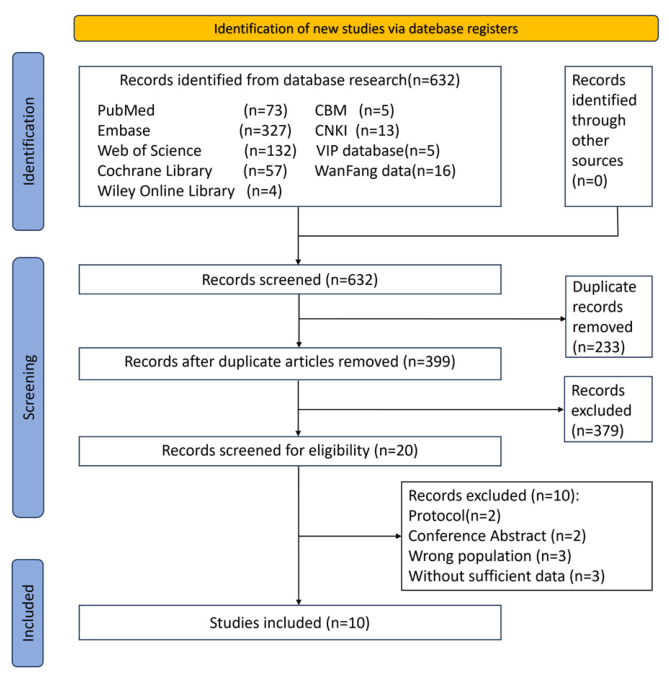
A total of 632 records were initially identified through database searches. After removing 233 duplicate studies, the remaining records were screened step by step based on the inclusion and exclusion criteria. Ultimately, 10 studies were included in the analysis [15,16,17,18,19,20,21,22,23,24], comprising 1 randomized controlled trial [20], 5 single-arm clinical trials [15,16,18,21,22], and 4 real-world retrospective studies [17,19,23,24]. The literature screening process is depicted in Figure 1.

3.2. Study Characteristics

The sample sizes of the included studies ranged from 14 to 305 patients. DCR was defined as the proportion of patients achieving a best overall response of CR, PR, or SD according to Response Evaluation Criteria in Solid Tumors (RECIST) version 1.1, which was uniformly applied for efficacy assessment across all included studies. Four studies were single-center, and six were multicenter. A total of 11 eligible arms were included in this meta-analysis (Gao et al., 2023, [15] contributed separate ESCC and HCC cohorts). Given that all included cohorts were derived from independent large-scale research institutions and clinical programs, the possibility of overlapping patient populations was considered low. All included studies were published within the last three years. The included studies were of moderate to high quality, with the main methodological deficiencies being the lack of prospective sample size calculation and inadequate reporting of loss to follow-up in some studies. The basic characteristics and quality assessment results of the included studies are presented in Table 1.

3.3. Primary Outcomes

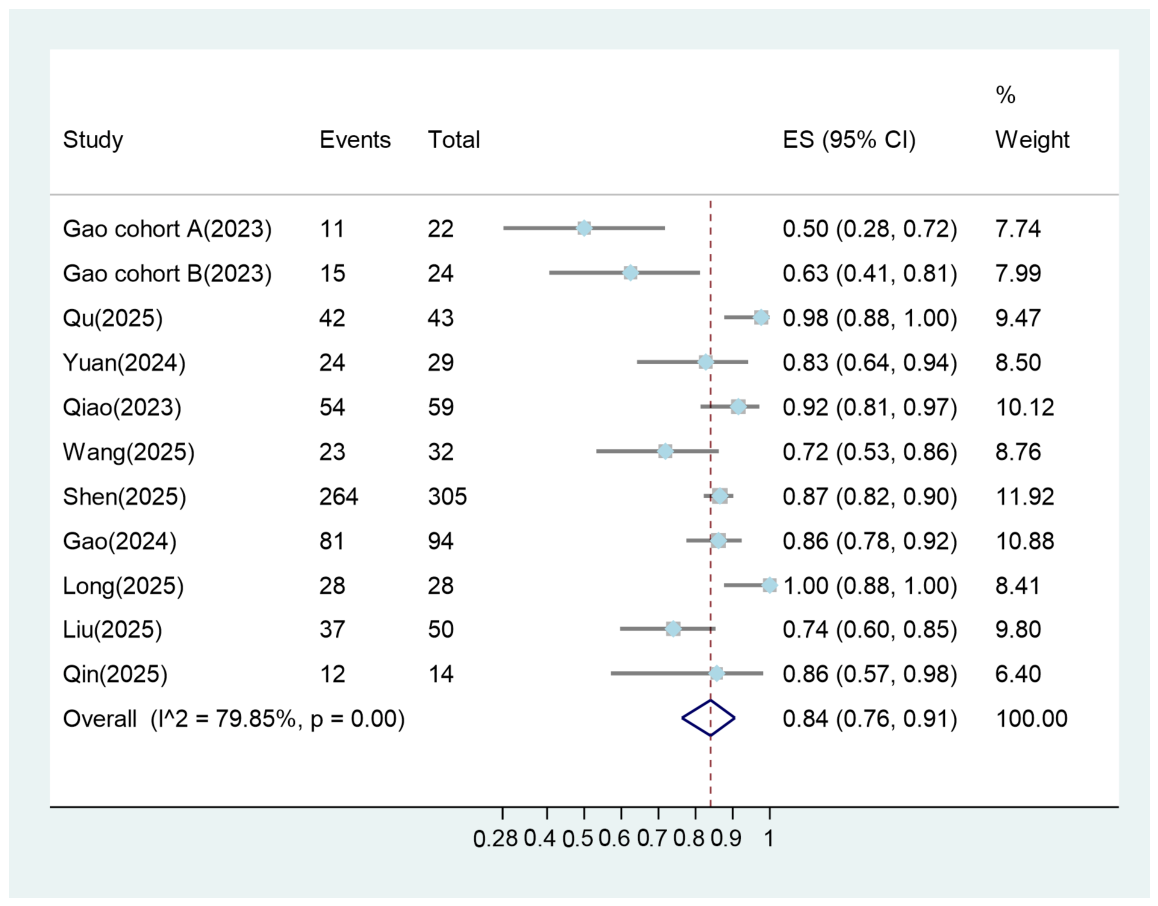
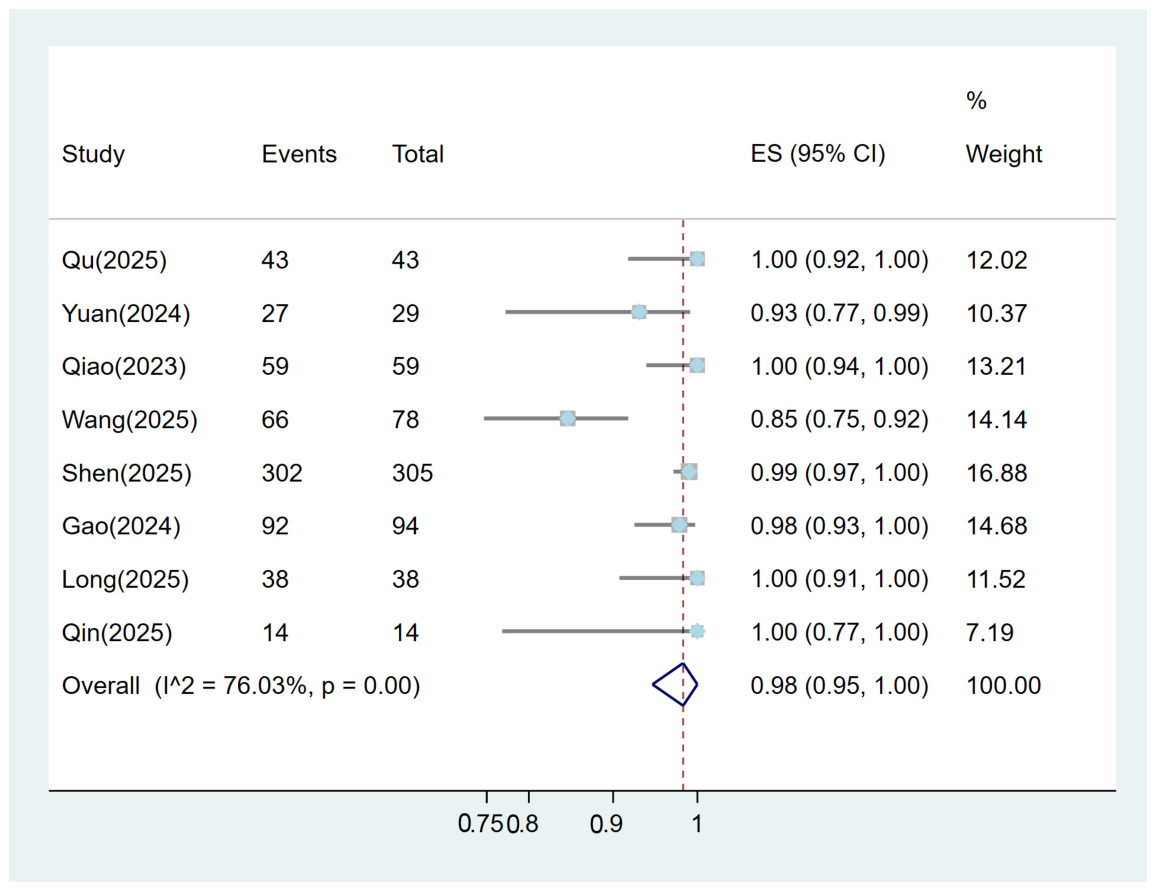
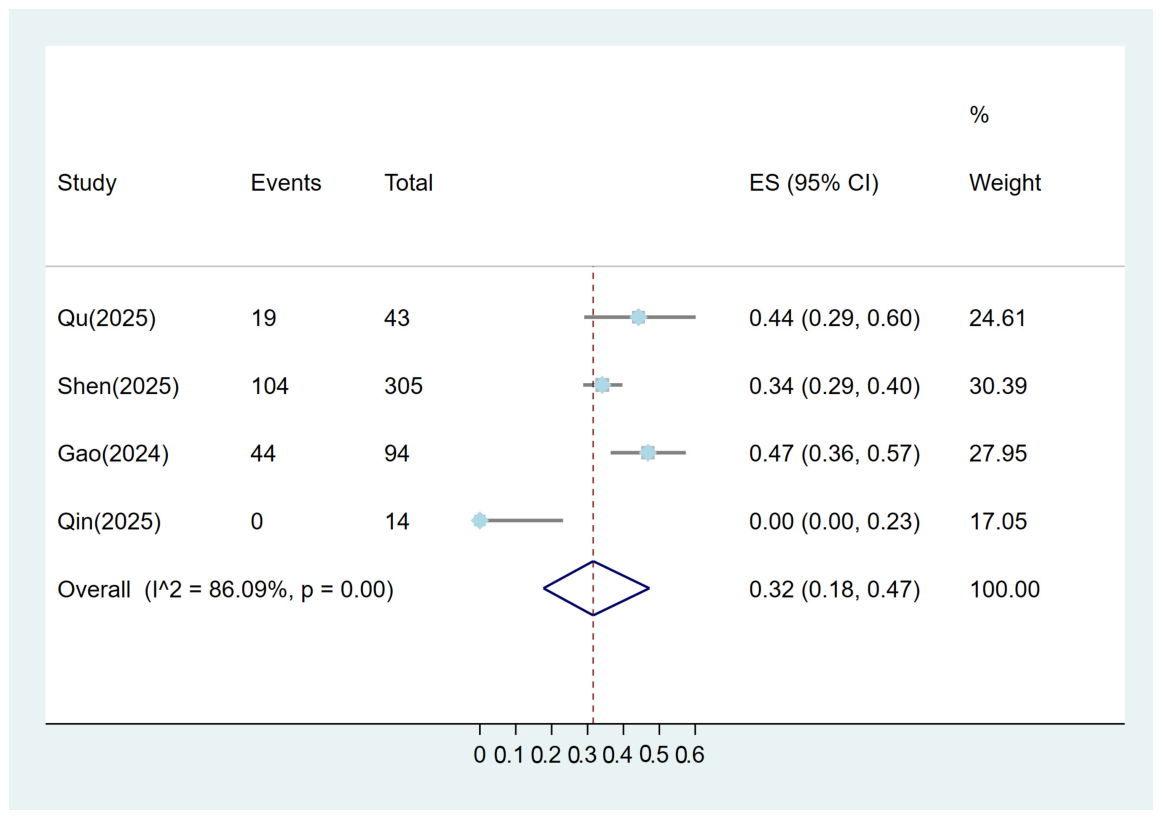
For efficacy, all included studies [15,16,17,18,19,20,21,22,23,24] reported DCR. Meta-analysis results showed that the pooled DCR for patients with digestive system neoplasms treated with cadonilimab was 84% (95% CI = 76–91%; Figure 2). Regarding safety, eight studies [16,17,18,19,20,21,22,24] reported any-grade TRAEs, and the pooled incidence was 98% (95% CI = 95–100%; Figure 3). Four studies [16,20,21,24] reported any-grade irAEs, and the pooled incidence was 32% (95% CI = 18–47%; Figure 4). The results of the heterogeneity test indicated the presence of heterogeneity across outcomes (I2 > 50%, p < 0.01).

3.4. Secondary Outcomes

For efficacy outcomes, nine studies reported PR, with a pooled rate of 33% (95% CI = 21–46%). Eight studies reported PD, with a pooled rate of 11% (95% CI = 5–18%). For safety outcomes, eight studies reported grade ≥ 3 TRAEs, with a pooled incidence of 52% (95% CI = 38–66%). Four studies reported grade ≥ 3 irAEs, with a pooled incidence of 11% (95% CI = 8–16%). Forest plots for PR and PD are presented in Figures S1 and S2; forest plots for grade ≥ 3 TRAEs and grade ≥ 3 irAEs are presented in Figures S3 and S4.
All included studies reported specific categories of adverse events, including hematologic toxicity, gastrointestinal toxicity, and hepatic toxicity. Hematologic toxicity included thrombocytopenia, neutropenia, leukopenia, and anemia. Gastrointestinal toxicity included decreased appetite, weight loss, diarrhea, and vomiting. Hepatic toxicity included elevated aspartate aminotransferase (AST), elevated alanine aminotransferase (ALT), hyperbilirubinemia, and hypoalbuminemia. The pooled results of the meta-analysis for these specific adverse events are presented in Table 2.

3.5. Subgroup Analysis

Due to the observed heterogeneity among studies, subgroup analyses were further conducted based on specific types of digestive system neoplasms, study design, study scope, and combination regimen to investigate potential sources of clinical heterogeneity. The results of the subgroup analysis for DCR are presented in Table 3, and those for any-grade TRAEs are presented in Table 4.

3.6. Sensitivity Analysis

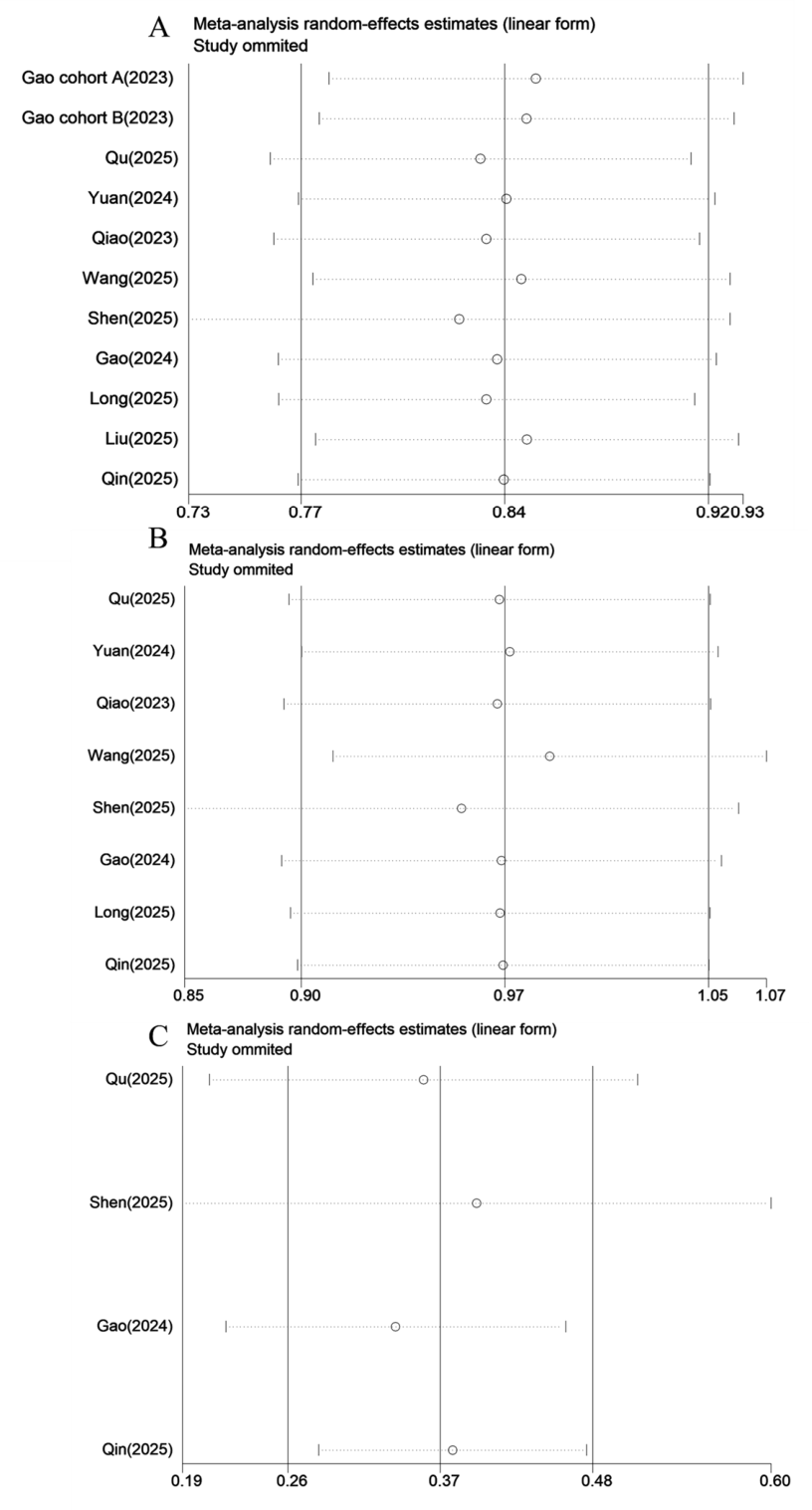
Sensitivity analysis was performed by sequentially omitting individual studies to exclude the disproportionate influence of any single study on the overall meta-analysis results, and the findings for the primary outcomes were presented. After excluding cohort A in the study by Gao (2023) [15], heterogeneity in the DCR group was reduced (I2 = 74.66%, p < 0.01), and the pooled rate increased to 86% (95% CI = 80–92%). After excluding the study by Wang (2025) [19], heterogeneity in the any-grade TRAEs group was eliminated (I2 = 0.00%, p = 0.46), and the pooled rate was 100% (95% CI = 99–100%). After excluding the study by Qin (2025) [24], heterogeneity in the any-grade irAEs group was reduced (I2 = 64.96%, p = 0.06), and the pooled rate was 40% (95% CI = 31–50%). These results are shown in Figure 5.

3.7. Bias Assessment

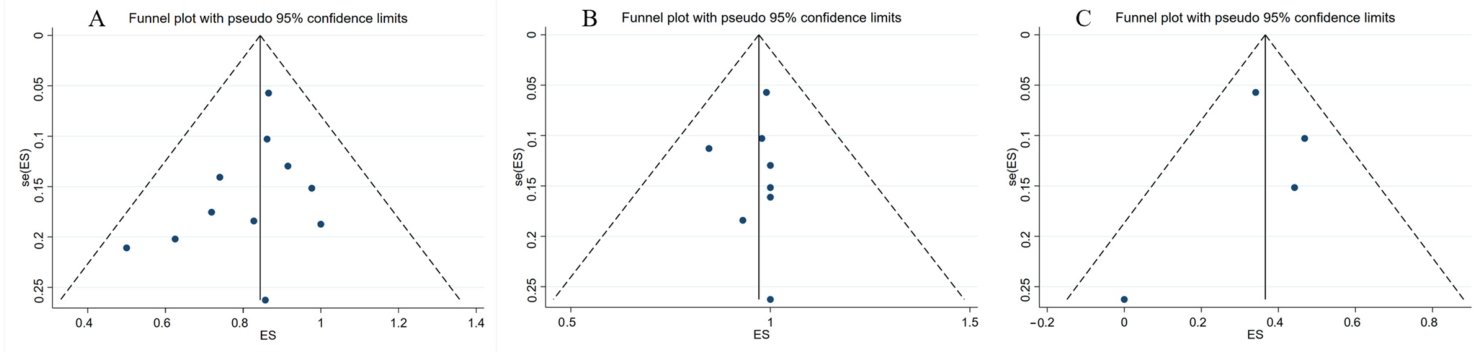
Funnel plots were constructed for the primary outcome measures to evaluate the risk of publication bias. Visual inspection revealed generally symmetrical plots. Further assessment using Egger’s regression test yielded p-values > 0.05 for all primary outcomes (DCR: p = 0.280; any-grade TRAEs: p = 0.728; any-grade irAEs: p = 0.807), as shown in Figure 6. Nevertheless, the small number of included studies limits the statistical power of these tests and precludes a reliable assessment of publication bias, necessitating cautious interpretation of these negative findings.

4. Discussion

In East Asia, the incidence and mortality of digestive system neoplasms, particularly gastric, liver, and esophageal cancers, are the highest worldwide and continue to rise. By 2040, new cases and deaths are projected to increase by 58% and 73%, respectively [2]. Bispecific antibodies have substantially advanced cancer immunotherapy by enabling novel mechanisms of action and therapeutic applications not possible with conventional IgG-based antibodies [25]. Cadonilimab (AK104) is a PD-1/CTLA-4 bispecific antibody developed by Akeso [12]. In 2022, it was approved in China for recurrent or metastatic cervical cancer whose disease progressed during or after platinum-based chemotherapy. A meta-analysis reported a pooled DCR of 81.8% in cervical cancer [26]. Cadonilimab has also attracted considerable attention for its potential use in digestive system neoplasms, but studies in this field remain predominantly small, single-arm, and exploratory. Consequently, efficacy and safety data are limited, and clinical practice faces challenges, including off-label use without evidence-based support. This study systematically evaluates the efficacy and safety of cadonilimab in esophageal cancer, gastric/gastroesophageal junction adenocarcinoma, hepatocellular carcinoma, and pancreatic ductal adenocarcinoma through a meta-analysis. By pooling all currently available data, this study aims to provide a descriptive summary to inform clinical decision-making and guide future research.
Across the 11 cohorts from 10 studies included in this review, the estimated DCR varied by tumor type: 87% in ESCC, 79% in HCC, 88% in G/GEJ adenocarcinoma, and 86% in PDAC. As an exploratory summary across these biologically distinct cancer types, the overall pooled DCR was 84%, with a PD rate of 11%. These rates indicate that a substantial proportion of patients achieved disease control or better, while disease progression occurred in a minority of cases. However, given the single-arm nature of the included studies, these findings cannot be attributed solely to the therapeutic effect of cadonilimab. These four tumor types present distinct immunotherapy challenges. In advanced ESCC, first-line PD-1 inhibitors plus chemotherapy are standard, while adding CTLA-4 inhibition is limited by safety concerns [27]. In advanced HCC, PD-1/PD-L1 inhibitors combined with anti-angiogenic agents or CTLA-4 inhibitors are now preferred, given that monotherapy achieves only a 15–20% objective response rate and 30% of patients exhibit resistance [28]. In advanced G/GEJ cancer, PD-1/PD-L1 inhibitor monotherapy provides only modest benefit [29]. Pancreatic cancer, with its highly immunosuppressive microenvironment, has responded poorly to immunotherapies, including checkpoint inhibitor monotherapy, underscoring an urgent need for novel strategies [30]. Cadonilimab, a symmetric tetravalent bispecific antibody with an Fc-null design, blocks PD-1 binding to PD-L1 and PD-L2, as well as CTLA-4 binding to B7-1 and B7-2 [12,13]. Bispecific antibodies target two distinct antigens, enabling mechanisms unattainable with monospecific antibodies [14]. Cadonilimab shows activity comparable to dual CTLA-4/PD-1 blockade and exhibits enhanced binding avidity where PD-1 and CTLA-4 are co-expressed at high density, a property absent from monospecific anti-PD-1 antibodies [13]. PD-1 and CTLA-4 drive T-cell exhaustion through non-redundant pathways, and PD-1+CTLA-4+ double-positive CD8+ T cells represent the most severely dysfunctional subset in the tumor microenvironment. Dual blockade synergistically restores their proliferation and effector function while attenuating the suppressive activity of intratumoral regulatory T cells, reshaping the immune microenvironment [31,32]. The Fc-null design abolishes FcγR and C1q binding, thereby reducing lymphocyte depletion and macrophage-driven cytokine release, which may enable more precise targeting of tumor-infiltrating lymphocytes [12].
Prior immune checkpoint inhibitor (ICI) exposure can reactivate autoreactive and tumor-specific T cells, causing irAEs in up to 70% of patients, depending on cancer type and regimen [33]. In our study, any-grade TRAEs occurred in most patients receiving cadonilimab, yet the incidence of any-grade irAEs was 32%, and that of grade ≥ 3 irAEs was only 11%. This safety profile aligns with the expected toxicity burden of dual-checkpoint blockade in advanced cancers, although the clinical significance of these findings requires further study. This safety characteristic is thought to be related to its Fc-null design, which eliminates FcγR-mediated effector functions (such as ADCC and CDC) and associated pro-inflammatory cytokine release, thereby potentially reducing the risk of irAEs. Furthermore, its bispecific structure enhances target selectivity, providing a mechanistic basis for improving safety while enhancing efficacy [34]. Specific categories of adverse events were also pooled and analyzed in this study. Pooled incidences of hematologic toxicities were 29% for thrombocytopenia, 42% for neutropenia, 43% for leukopenia, and 35% for anemia. For grade ≥ II hematologic toxicity during ICI therapy, management typically includes withholding immunotherapy and administering corticosteroids or intravenous immunoglobulin (IVIG) based on toxicity type and severity [35]. Treatment decisions should be guided by clinical bleeding symptoms rather than laboratory platelet counts alone [35]. For cadonilimab, permanent discontinuation is recommended for all grade 4 and selected grade 3 hematologic toxicities, any recurrent grade 3 toxicity, or grade 2/3 toxicity persisting beyond 12 weeks after the last dose, as well as when corticosteroids cannot be tapered to ≤10 mg/day within that period [12]. Gastrointestinal and hepatic toxicities are common during immunotherapy. Management of gastrointestinal irAEs relies on early recognition, prompt and adequate treatment, and rapid escalation of care [36]. For diarrhea (pooled incidence 14%), physicians should establish a baseline before treatment and regularly assess symptoms. New-onset or worsening diarrhea should be evaluated to exclude other causes such as infection, tumor progression, or concomitant medications [37]. Interestingly, a meta-analysis showed that irAEs are associated with clinical benefit, as patients developing irAEs had higher ORR, longer PFS, and longer OS, irrespective of ICI or irAE type [38]. These findings highlight the need for close monitoring and proactive management of irAEs, and clinicians should intervene promptly when adverse events occur. Treatment should be initiated early, even before diagnostic workup is complete, in patients with highly suggestive symptoms [33].
In subgroup analyses, the incidence of any-grade TRAEs was lower in the cadonilimab plus targeted therapy group than in the cadonilimab plus chemotherapy group, but both combination groups had high DCR (84% and 90%, respectively), both exceeding the monotherapy group’s DCR of 57%. These indirect subgroup comparisons are exploratory and require prospective confirmation. Additionally, the incidence of any-grade TRAEs was lower in retrospective studies than in single-arm trials and lower in single-center studies than in multicenter studies. These differences may be attributable to selection bias in retrospective and single-center studies, which may have enrolled patients with better baseline status. After subgroup analysis, heterogeneity was substantially reduced or eliminated in most subgroups, but moderate heterogeneity persisted in some subgroups. Residual heterogeneity may arise from several sources. First, variability across hospitals in management practices, data completeness, adverse event reporting thresholds, and follow-up may cause outcome fluctuations even within the same tumor type and regimen. Second, no uniform standards for drug exposure intensity or treatment duration exist across studies, and differences in dosing cycles, dose adjustments, and discontinuation criteria may introduce additional uncertainty. Variation in treatment lines is another potential contributor. Third, the recognition and management of irAEs improved progressively over the study period, potentially causing systematic shifts in reported data across publication years. Clinicians should therefore individualize treatment based on patient-specific factors and real-world evidence.
This study has several strengths. First, it included all available evidence from clinical trials and real-world studies published since 2023, reflecting recent advances in immunotherapy. Second, at the time of this systematic search, this represents the first meta-analysis to specifically evaluate the efficacy and safety of cadonilimab in digestive system neoplasms. Third, we analyzed a broad range of outcomes and performed extensive subgroup analyses to characterize the effects of cadonilimab from multiple perspectives. However, several limitations should be acknowledged. First, adverse event reporting was often incomplete: included studies typically reported only events exceeding a preset threshold (e.g., 10% or 15%), and rare or low-incidence events may have been omitted. This could lead to an incomplete safety assessment and affect the accuracy and clinical relevance of the conclusions. Second, as the application of cadonilimab in digestive system neoplasms is still in its infancy, current evidence is limited by small sample sizes and short follow-up periods, leaving certain critical survival data immature. This study refrained from pooling long-term endpoints (such as OS and PFS rates) and certain tumor response metrics, thereby limiting our ability to draw definitive conclusions regarding the drug’s long-term efficacy. Third, all included studies were conducted in China, which may limit the generalizability of our findings. Differences in disease etiology, biomarker prevalence, and treatment patterns between East Asian and Western populations could affect the applicability of the pooled results. Pooled efficacy metrics across biologically distinct tumors may not be directly comparable. Fourth, although sensitivity and subgroup analyses resolved heterogeneity for some outcomes, sources of heterogeneity remained unclear for others. High heterogeneity limits the reliability of pooled estimates, and readers should prioritize tumor-specific subgroup results in clinical interpretation. Fifth, this study employed the MINORS instrument for quality assessment. While suited to single-arm non-comparative designs, this assessment primarily evaluates reporting completeness rather than risk of bias directly. Sixth, because all pooled estimates derive from single-arm data and cannot be interpreted as comparative efficacy evidence, the limited quantity and quality of included studies further reinforce the need for cautious interpretation.

5. Conclusions

In conclusion, this study suggests that cadonilimab has the potential for antitumor activity in digestive system neoplasms, with a safety profile that merits close monitoring. However, conclusions drawn from the limited available studies must be interpreted with caution, and their long-term clinical efficacy requires further investigation. These results offer a descriptive summary of currently available data and should not be regarded as definitive evidence of efficacy. In clinical practice, careful management and monitoring of adverse events are essential. Additionally, the potential risks and benefits of combination regimens should be carefully assessed before treatment initiation.

Supplementary Materials

The following supporting information can be downloaded at https://www.mdpi.com/article/10.3390/ph19091348/s1, Supplementary File S1: The complete search strategies for all databases. Supplementary File S2: Quality assessment of included studies. Supplementary File S3: Figure S1: Forest plot results for PR. Figure S2: Forest plot results for PD. Figure S3: Forest plot results for ≥3 grade TRAEs. Figure S4: Forest plot results for ≥3 grade irAEs. Supplementary File S4: PRISMA-2020-checklist.

Author Contributions

Q.Z.: data curation, formal analysis, investigation, methodology, software, writing—original draft, writing—review and editing. Z.Y.: writing—original draft, writing—review and editing. Y.L.: conceptualization, data curation, funding acquisition, resources, supervision, validation, writing—review and editing. All authors have read and agreed to the published version of the manuscript.

Funding

This work was supported by the Natural Science Foundation Project of Fujian Province (Project No.: 2023J01825).

Institutional Review Board Statement

Not applicable.

Informed Consent Statement

Not applicable.

Data Availability Statement

No new data were created or analyzed in this study. Data sharing is not applicable to this article.

Conflicts of Interest

The authors declare no conflicts of interest.

Abbreviations

ESCCesophageal squamous cell carcinoma
G/GEJgastric/gastroesophageal junction
HCChepatocellular carcinoma
PDACpancreatic ductal adenocarcinoma
DCRdisease control rate
PDprogressive disease
TRAEstreatment-related adverse events
irAEsimmune-related adverse events
OSoverall survival
PFSprogression-free survival
CIconfidence interval

References

  1. Bray, F.; Laversanne, M.; Sung, H.; Ferlay, J.; Siegel, R.L.; Soerjomataram, I.; Jemal, A. Global cancer statistics 2022: GLOBOCAN estimates of incidence and mortality worldwide for 36 cancers in 185 countries. CA Cancer J. Clin. 2024, 74, 229–263. [Google Scholar] [CrossRef] [Scilit] [PubMed]
  2. Huang, J.; Lucero-Prisno, D.E., 3rd; Zhang, L.; Xu, W.; Wong, S.H.; Ng, S.C.; Wong, M.C.S. Updated epidemiology of gastrointestinal cancers in East Asia. Nat. Rev. Gastroenterol. Hepatol. 2023, 20, 271–287. [Google Scholar] [CrossRef] [Scilit]
  3. Codipilly, D.C.; Wang, K.K. Squamous Cell Carcinoma of the Esophagus. Gastroenterol. Clin. N. Am. 2022, 51, 457–484. [Google Scholar] [CrossRef] [Scilit]
  4. Terrero, G.; Lockhart, A.C. Role of Immunotherapy in Advanced Gastroesophageal Cancer. Curr. Oncol. Rep. 2020, 22, 112. [Google Scholar] [CrossRef] [Scilit]
  5. Nakamura, Y.; Kawazoe, A.; Lordick, F.; Janjigian, Y.Y.; Shitara, K. Biomarker-targeted therapies for advanced-stage gastric and gastro-oesophageal junction cancers: An emerging paradigm. Nat. Rev. Clin. Oncol. 2021, 18, 473–487. [Google Scholar] [CrossRef] [Scilit]
  6. Longerich, T. Hepatocellular carcinoma. Pathologe 2020, 41, 478–487. [Google Scholar] [CrossRef] [Scilit]
  7. Connor, A.A.; Gallinger, S. Pancreatic cancer evolution and heterogeneity: Integrating omics and clinical data. Nat. Rev. Cancer 2022, 22, 131–142. [Google Scholar] [CrossRef] [Scilit]
  8. Ajani, J.A.; D’Amico, T.A.; Bentrem, D.J.; Chakrabarti, S.; Corvera, C.U.; Das, P.; Enzinger, P.C.; Enzler, T.; Gerdes, H.; Gibson, M.K.; et al. Esophageal and Esophagogastric Junction Cancers, Version 2.2026, NCCN Clinical Practice Guidelines in Oncology. National Comprehensive Cancer Network. 2026. Available online: https://www.nccn.org/guidelines/guidelines-detail?category=1&id=1433 (accessed on 15 February 2026).
  9. Benson, A.B.; D’Angelica, M.I.; Abrams, T.; Ahmed, A.; Akce, M.; Anaya, D.A.; Anders, R.; Are, C.; Aye, L.; Bachini, M.; et al. Hepatocellular Carcinoma, Version 2.2025, NCCN Clinical Practice Guidelines in Oncology. National Comprehensive Cancer Network. 2025. Available online: https://www.nccn.org/guidelines/guidelines-detail?category=1&id=1514 (accessed on 15 February 2026).
  10. Tempero, M.A.; Malafa, M.P.; Basturk, O.; Benson, A.B., III; Cardin, D.B.; Chiorean, E.G.; Christensen, J.A.; Chung, V.; Czito, B.; Del Chiaro, M.; et al. Pancreatic Adenocarcinoma, Version 2.2025, NCCN Clinical Practice Guidelines in Oncology. National Comprehensive Cancer Network. 2025. Available online: https://www.nccn.org/guidelines/guidelines-detail?category=1&id=1455 (accessed on 15 February 2026).
  11. Goebeler, M.E.; Stuhler, G.; Bargou, R. Bispecific and multispecific antibodies in oncology: Opportunities and challenges. Nat. Rev. Clin. Oncol. 2024, 21, 539–560. [Google Scholar] [CrossRef] [Scilit] [PubMed]
  12. Keam, S.J. Cadonilimab: First Approval. Drugs 2022, 82, 1333–1339. [Google Scholar] [CrossRef] [Scilit]
  13. Pang, X.; Huang, Z.; Zhong, T.; Zhang, P.; Wang, Z.M.; Xia, M.; Li, B. Cadonilimab, a tetravalent PD-1/CTLA-4 bispecific antibody with trans-binding and enhanced target binding avidity. mAbs 2023, 15, 2180794. [Google Scholar] [CrossRef] [Scilit]
  14. Brinkmann, U.; Kontermann, R.E. Bispecific antibodies. Science 2021, 372, 916–917. [Google Scholar] [CrossRef] [Scilit]
  15. Gao, X.; Xu, N.; Li, Z.; Shen, L.; Ji, K.; Zheng, Z.; Liu, D.; Lou, H.; Bai, L.; Liu, T.; et al. Safety and antitumour activity of cadonilimab, an anti-PD-1/CTLA-4 bispecific antibody, for patients with advanced solid tumours (COMPASSION-03): A multicentre, open-label, phase 1b/2 trial. Lancet Oncol. 2023, 24, 1134–1146. [Google Scholar] [CrossRef] [Scilit]
  16. Qu, W.; Gao, J.; Zhang, B.; Yang, M.; Wang, Y.; Liu, Y.; Guo, Y.; Guo, S.; Huang, J. Cadonilimab combined with taxane and cisplatin as the first-line treatment of advanced esophageal squamous cell carcinoma: An open-label, multicenter phase II trial. J. Immunother. Cancer 2025, 13, e012869. [Google Scholar] [CrossRef] [Scilit]
  17. Yuan, G.; Chen, Y.; Zhu, P.; Deng, Q.; Su, K.; Liu, J.; Wang, Y.; Li, R.; Li, W.; Zang, M.; et al. Cadonilimab (PD-1/CTLA-4) in combination with lenvatinib in unresectable hepatocellular carcinoma (uHCC): A retrospective real-world study. Heliyon 2024, 10, e37616. [Google Scholar] [CrossRef] [Scilit]
  18. Qiao, Q.; Han, C.; Ye, S.; Li, J.; Shao, G.; Bai, Y.; Xu, A.; Sun, M.; Wang, W.; Wu, J.; et al. The efficacy and safety of cadonilimab combined with lenvatinib for first-line treatment of advanced hepatocellular carcinoma (COMPASSION-08): A phase Ib/II single-arm clinical trial. Front. Immunol. 2023, 14, 1238667. [Google Scholar] [CrossRef] [Scilit]
  19. Wang, Y.; Pan, S.; Tian, J.; Wang, J.; Yu, Y.; Wang, S.; Li, F.; Yang, L.; Liu, X.; Shen, Y.; et al. Cadonilimab, a PD-1/CTLA-4 bispecific antibody in unresectable hepatocellular carcinoma: A real-world study. Cancer Immunol. Immunother. 2025, 74, 186. [Google Scholar] [CrossRef] [Scilit]
  20. Shen, L.; Zhang, Y.; Li, Z.; Zhang, X.; Gao, X.; Liu, B.; Wang, Y.; Ba, Y.; Li, N.; Zhang, R.; et al. First-line cadonilimab plus chemotherapy in HER2-negative advanced gastric or gastroesophageal junction adenocarcinoma: A randomized, double-blind, phase 3 trial. Nat. Med. 2025, 31, 1163–1170. [Google Scholar] [CrossRef] [Scilit]
  21. Gao, X.; Ji, K.; Jia, Y.; Shan, F.; Chen, Y.; Xu, N.; Jia, Z.; Liu, T.; Yang, N.; Zhong, H.; et al. Cadonilimab with chemotherapy in HER2-negative gastric or gastroesophageal junction adenocarcinoma: The phase 1b/2 COMPASSION-04 trial. Nat. Med. 2024, 30, 1943–1951. [Google Scholar] [CrossRef] [Scilit]
  22. Long, B.; Zhou, H.; Yu, Z.; Zhu, J.; Yang, H.; Huang, Z.; Wei, D.; Chen, S.; Yang, X.; Zhao, X.; et al. Neoadjuvant cadonilimab plus FLOT chemotherapy in locally advanced gastric/gastroesophageal junction adenocarcinoma: A multicenter, phase 2 study. Med 2025, 6, 100531. [Google Scholar] [CrossRef] [Scilit]
  23. Liu, Z.; Lu, Y.; Li, M.; Xiang, J.; Sun, P.; Liu, A. Real-World Efficacy of Cadonilimab Plus Chemotherapy as Second-Line Therapy in Immunotherapy-Pretreated Advanced HER2 Negative Gastric or Gastroesophageal Junction Cancer. Drug Des. Dev. Ther. 2025, 19, 9559–9569. [Google Scholar] [CrossRef] [Scilit]
  24. Qin, W.; Du, Y.; Zhao, X.; Zhao, Y.; Zhang, Y.; Zhang, S.; Yang, Z.; Li, X.; Niu, J.; Zhao, D.; et al. Efficacy and safety of cadonilimab combined with AG chemotherapy in patients with unresectable locally advanced or metastatic pancreatic ductal adenocarcinoma: A retrospective real-world study. Front. Immunol. 2025, 16, 1654425. [Google Scholar] [CrossRef] [Scilit]
  25. Klein, C.; Brinkmann, U.; Reichert, J.M.; Kontermann, R.E. The present and future of bispecific antibodies for cancer therapy. Nat. Rev. Drug Discov. 2024, 23, 301–319. [Google Scholar] [CrossRef] [Scilit]
  26. Zhuang, Q.; Liu, Y. Efficacy and safety of Cadonilimab in the treatment of recurrent/metastatic and advanced cervical cancer: A systematic review and meta-analysis. Front. Immunol. 2026, 16, 1729380. [Google Scholar] [CrossRef] [Scilit]
  27. Puhr, H.C.; Prager, G.W.; Ilhan-Mutlu, A. How we treat esophageal squamous cell carcinoma. ESMO Open 2023, 8, 100789. [Google Scholar] [CrossRef] [Scilit]
  28. Rimassa, L.; Finn, R.S.; Sangro, B. Combination immunotherapy for hepatocellular carcinoma. J. Hepatol. 2023, 79, 506–515. [Google Scholar] [CrossRef] [Scilit]
  29. Li, K.; Zhang, A.; Li, X.; Zhang, H.; Zhao, L. Advances in clinical immunotherapy for gastric cancer. Biochim. Biophys. Acta Rev. Cancer 2021, 1876, 188615. [Google Scholar] [CrossRef] [Scilit]
  30. Farhangnia, P.; Khorramdelazad, H.; Nickho, H.; Delbandi, A.A. Current and future immunotherapeutic approaches in pancreatic cancer treatment. J. Hematol. Oncol. 2024, 17, 40. [Google Scholar] [CrossRef] [Scilit]
  31. Curran, M.A.; Montalvo, W.; Yagita, H.; Allison, J.P. PD-1 and CTLA-4 combination blockade expands infiltrating T cells and reduces regulatory T and myeloid cells within B16 melanoma tumors. Proc. Natl. Acad. Sci. USA 2010, 107, 4275–4280. [Google Scholar] [CrossRef] [Scilit]
  32. Duraiswamy, J.; Kaluza, K.M.; Freeman, G.J.; Coukos, G. Dual blockade of PD-1 and CTLA-4 combined with tumor vaccine effectively restores T-cell rejection function in tumors. Cancer Res. 2013, 73, 3591–3603. [Google Scholar] [CrossRef] [Scilit]
  33. de La Rochefoucauld, J.; Noël, N.; Lambotte, O. Management of immune-related adverse events associated with immune checkpoint inhibitors in cancer patients: A patient-centred approach. Intern. Emerg. Med. 2020, 15, 587–598. [Google Scholar] [CrossRef] [Scilit]
  34. Zhang, Z.; Yu, J.; Zhang, Z.; Liu, Q.; Pang, X.; Zhou, Y. The Safety of Cadonilimab: A Systematic Review and Single-Arm Meta-Analysis. Cancer Med. 2025, 14, e71210. [Google Scholar] [CrossRef] [Scilit]
  35. Michot, J.M.; Lazarovici, J.; Tieu, A.; Champiat, S.; Voisin, A.L.; Ebbo, M.; Godeau, B.; Michel, M.; Ribrag, V.; Lambotte, O. Haematological immune-related adverse events with immune checkpoint inhibitors, how to manage? Eur. J. Cancer 2019, 122, 72–90. [Google Scholar] [CrossRef] [Scilit]
  36. Li, Y.; Kang, X.; Wang, H.; Guo, X.; Zhou, J.; Duan, L.; Si, X.; Zhang, L.; Liu, X.; Qian, J.; et al. Clinical diagnosis and treatment of immune checkpoint inhibitor-associated adverse events in the digestive system. Thorac. Cancer 2020, 11, 829–834. [Google Scholar] [CrossRef] [Scilit]
  37. Cui, T.M.; Liu, Y.; Wang, J.B.; Liu, L.X. Adverse Effects of Immune-Checkpoint Inhibitors in Hepatocellular Carcinoma. OncoTargets Ther. 2020, 13, 11725–11740. [Google Scholar] [CrossRef] [Scilit]
  38. Hussaini, S.; Chehade, R.; Boldt, R.G.; Raphael, J.; Blanchette, P.; Maleki Vareki, S.; Fernandes, R. Association between immune-related side effects and efficacy and benefit of immune checkpoint inhibitors—A systematic review and meta-analysis. Cancer Treat. Rev. 2021, 92, 102134. [Google Scholar] [CrossRef] [Scilit] [PubMed]
Figure 1. PRISMA flow diagram of study selection.
Pharmaceuticals 19 01348 g001
Figure 2. Forest plot of results for DCR.
Pharmaceuticals 19 01348 g002
Figure 3. Forest plot of results for any-grade TRAEs.
Pharmaceuticals 19 01348 g003
Figure 4. Forest plot of results for any-grade irAEs.
Pharmaceuticals 19 01348 g004
Figure 5. Sensitivity analysis of the primary outcomes: DCR (A), any-grade TRAEs (B), and any-grade irAEs (C).
Pharmaceuticals 19 01348 g005
Figure 6. Funnel plots for the primary outcomes: DCR (A), any-grade TRAEs (B), and any-grade irAEs (C).
Pharmaceuticals 19 01348 g006
Table 1. Basic characteristics of included studies and literature quality evaluation results.
StudyTumor Type bStudy IdentifierStudy DesignSample SizeMedian AgeTreatment
Line
OS/PFS (Median)Follow-Up (Median, Mouths)PD-L1 StatusTreatment ProtocolAssessed OutcomesCTCAE
Version
Score
(Gao 2023,
[15]) a
ESCC/HCCNCT03852251Single-arm trial22/24 c63/51 dprior lines ≤ 19.4/3.5; NR/3.717.9/19.6CPS ≥ 1 (50%)/CPS ≥ 1 (21%)Cadonilimab monotherapy①②⑧v5.014
(Qu 2025, [16])ESCCNCT05522894Single-arm trial43611LNR/7.112.88CPS ≥ 1 (72.1%)Cadonilimab plus chemotherapy①④⑤⑥⑦⑧v5.014
(Yuan 2024, [17])HCCNFEC-2021-044Retrospective study2951.0 ± 11.8 f1LNR/8.1NRNRCadonilimab plus Lenvatinib①②③④⑥⑧v5.010
(Qiao 2023, [18])HCCNCT04444167Single-arm trial5956.31L26.9/9.727.4NRCadonilimab plus Lenvatinib①②③④⑥⑧v5.014
(Wang 2025, [19])HCCKY-2024-10-153-1Retrospective study78 e57.2 ± 11.1 f1L (53.8%), ≥2L (46.2%)8.8/3.6NRNRCadonilimab plus TKI①②③④⑥⑧v5.017
(Shen 2025, [20])G/GEJ adenocarcinomaNCT05008783Randomized controlled trial305 g64 g1L14.1/7.018.7CPS ≥ 5 (38.0%)Cadonilimab plus chemotherapy g①②③④⑤⑥⑦⑧v5.07
(Gao, 2024, [21])G/GEJ adenocarcinomaCTR20182027Single-arm trial9462.71L17.48/8.1829.2CPS ≥ 1 (44.7%)Cadonilimab plus chemotherapy①②③④⑤⑥⑦⑧v5.014
(Long 2025, [22])G/GEJ adenocarcinomaChiCTR2200066893Single-arm trial38571LNR/NRNot yet been reachedCPS ≥ 5 (34.2%)Cadonilimab plus chemotherapy①②③④⑥⑧v5.012
(Liu 2025, [23])G/GEJ cancer hYYYIRB-IIT [2025]014Retrospective study50 g2L10.3/4.98.7CPS ≥ 1 (56.0%)Cadonilimab plus chemotherapy g①②③⑧v4.017
(Qin 2025, [24])PDAC2025A-558Retrospective study1456.5NR11.45/7.87NRNRCadonilimab plus chemotherapy①②③④⑤⑥⑦⑧v5.010
Assessed outcomes: ① DCR; ② PR; ③ PD; ④ any-grade TRAEs; ⑤ any-grade irAEs; ⑥ ≥3 grade TRAEs; ⑦ ≥3 grade irAEs; ⑧ specific categories of adverse events. a. As the study (Gao-2023 [15]) comprised three tumor cohorts, only the digestive system tumors were evaluated in our meta-analysis, with the esophageal squamous cell cancer cohort defined as cohort A and the hepatocellular carcinoma cohort as cohort B. b. Four included malignancies: ESCC, esophageal squamous cell carcinoma; HCC, hepatocellular carcinoma; G/GEJ adenocarcinoma, gastric/gastroesophageal junction adenocarcinoma; PDAC, pancreatic ductal adenocarcinoma. c. Sample size: 22 in cohort A, 24 in cohort B. d. Median age: 63 in cohort A, 51 in cohort B. e. Only 32 of the 78 enrolled patients were evaluable for efficacy. f: x ¯   ± s. g. The arm receiving cadonilimab-based therapy. h. Given that G/GEJ cancer is predominantly adenocarcinoma, it was merged with G/GEJ adenocarcinoma for the meta-analysis.
Table 2. Summary results of specific categories of adverse events.
OutcomesNo. of Arms *Ratio (95% CI)Heterogeneity
I2 (%)p
Hematologic toxicityThrombocytopenia1129% (15–46%)94.71<0.01
Neutropenia1142% (28–56%)91.89<0.01
Leukocytopenia1043% (29–57%)91.62<0.01
Anemia935% (22–48%)91.36<0.01
Gastrointestinal toxicityDecreased appetite821% (11–33%)87.94<0.01
Weight loss821% (8–37%)92.46<0.01
Diarrhea814% (6–24%)85.31<0.01
Nausea748% (24–72%)96.56<0.01
Hepatic toxicityAST elevation933% (28–39%)37.640.12
ALT elevation922% (15–30%)73.24<0.01
Hyperbilirubinemia720% (15–25%)47.340.08
Hypoalbuminemia720% (10–32%)86.46<0.01
* Among them, the study by (Gao et al., 2023 [15]) included in this analysis analyzed two separate cohorts: an ESCC cohort (defined as cohort A) and an HCC cohort (defined as cohort B), thus resulting in a total of 11 arms.
Table 3. Summary results of subgroup analysis for DCR.
Subgroup (DCR)No. of ArmsRatio (95% CI)Heterogeneity
I2 (%)p
Tumor typeESCC287% (77–94%)0.00
HCC479% (64–91%)72.970.01
PDAC186% (57–98%)
G/GEJ adenocarcinoma488% (79–95%)79.43<0.01
Combination therapyCadonilimab monotherapy257% (42–71%)0.00
Cadonilimab plus chemotherapy690% (82–96%)76.08<0.01
Cadonilimab plus targeted therapy384% (70–94%)65.540.05
Study designSingle-arm trial686% (71–96%)87.44<0.01
Retrospective study477% (69–84%)0.000.65
Randomized controlled trial187% (82–90%)
Research scaleMulticenter787% (77–94%)84.96<0.01
Single-center477% (69–84%)0.000.65
Note: All retrospective studies were single-center.
Table 4. Summary results of subgroup analysis for any-grade TRAEs.
Subgroup (Any-Grade TRAEs)No. of ArmsRatio (95% CI)Heterogeneity
I2 (%)p
Tumor typeESCC1100% (92–100%)
HCC395% (79–100%)87.61<0.01
PDAC1100% (77–100%)
G/GEJ adenocarcinoma399% (98–100%)0.000.58
Combination therapyCadonilimab plus chemotherapy5100% (99–100%)0.000.85
Cadonilimab plus targeted therapy395% (79–100%)87.61<0.01
Study designSingle-arm trial4100% (98–100%)0.000.60
Retrospective study392% (82–99%)53.360.12
Randomized controlled trial199% (97–100%)
Research scaleMulticenter599% (98–100%)0.000.76
Single-center392% (82–99%)53.360.12
Note: All retrospective studies were single-center.
Disclaimer/Publisher’s Note: The statements, opinions and data contained in all publications are solely those of the individual author(s) and contributor(s) and not of MDPI and/or the editor(s). MDPI and/or the editor(s) disclaim responsibility for any injury to people or property resulting from any ideas, methods, instructions or products referred to in the content.