Ephedrae Herba-Associated Adverse Events: A Disproportionality Analysis Integrated with Network Pharmacology


Abstract
1. Introduction
2. Results
2.1. Study Population
2.1.1. Selection of Individual Case Safety Reports
2.1.2. Baseline Characteristics of the Reports
2.2. Disproportionality Analysis
2.2.1. Frequency of Adverse Events
2.2.2. Signal Detection Results
2.2.3. Sensitivity Analysis
2.3. Biological Protein–Protein Interaction (PPI) Network Analysis of EH-Associated Adverse Events
2.3.1. Results of Collection and Analysis of Biological Entities Related to Adverse Events
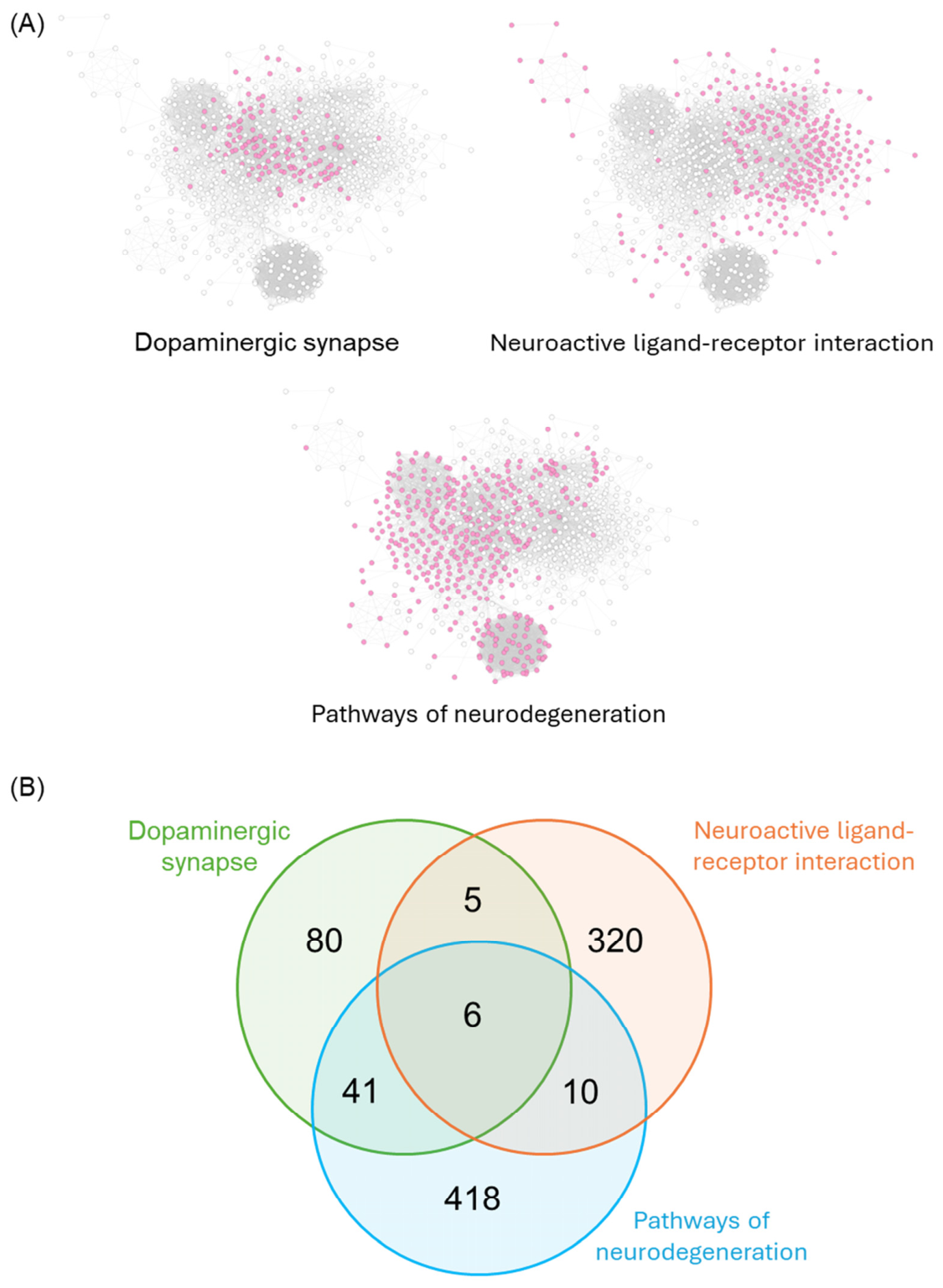
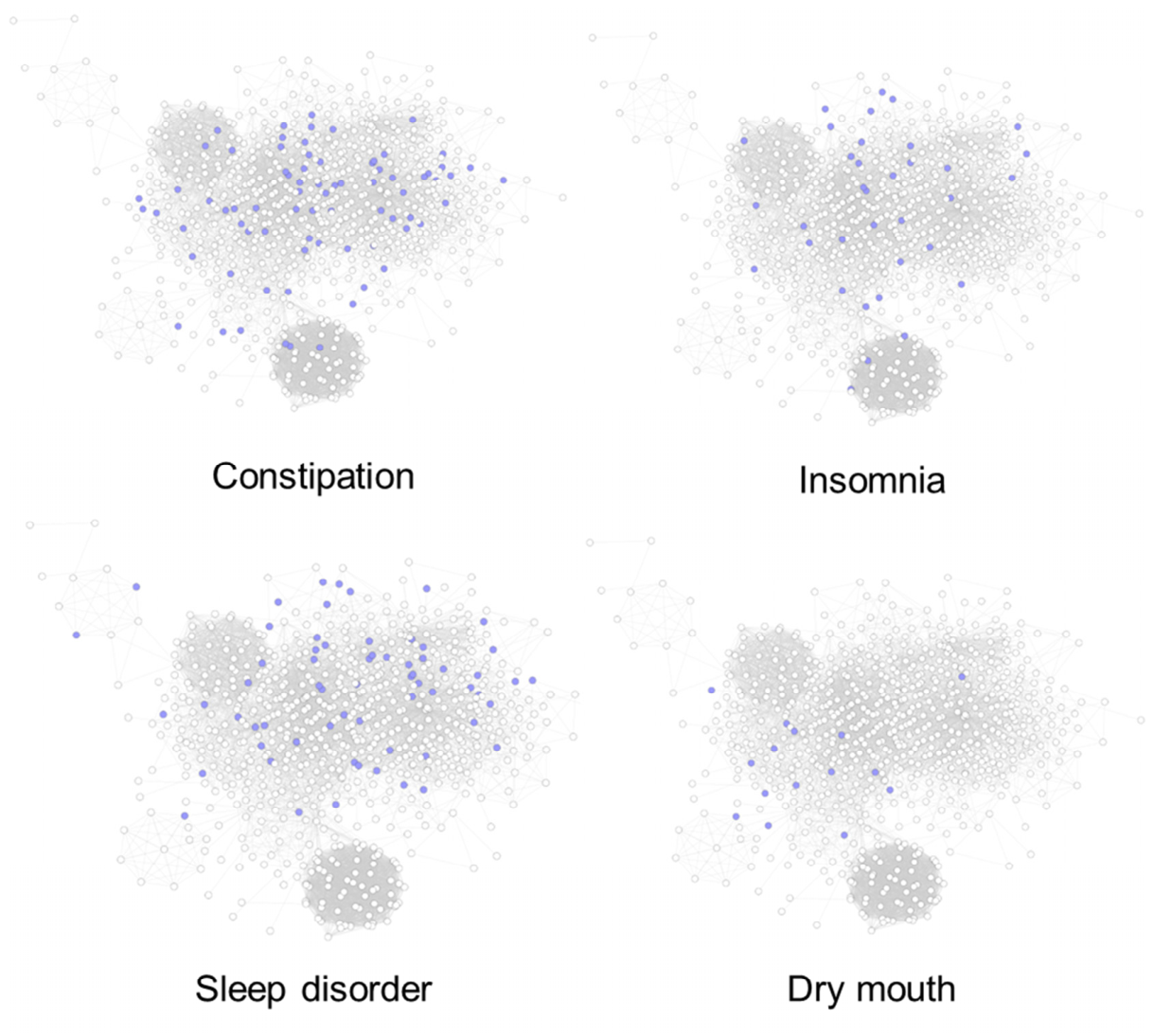
2.3.2. Results of Construction and Analysis of the Adverse Events-Related Biological PPI Network
2.4. Results of Exploratory Docking Screening and Network Analyses Using the Major Compound of EH
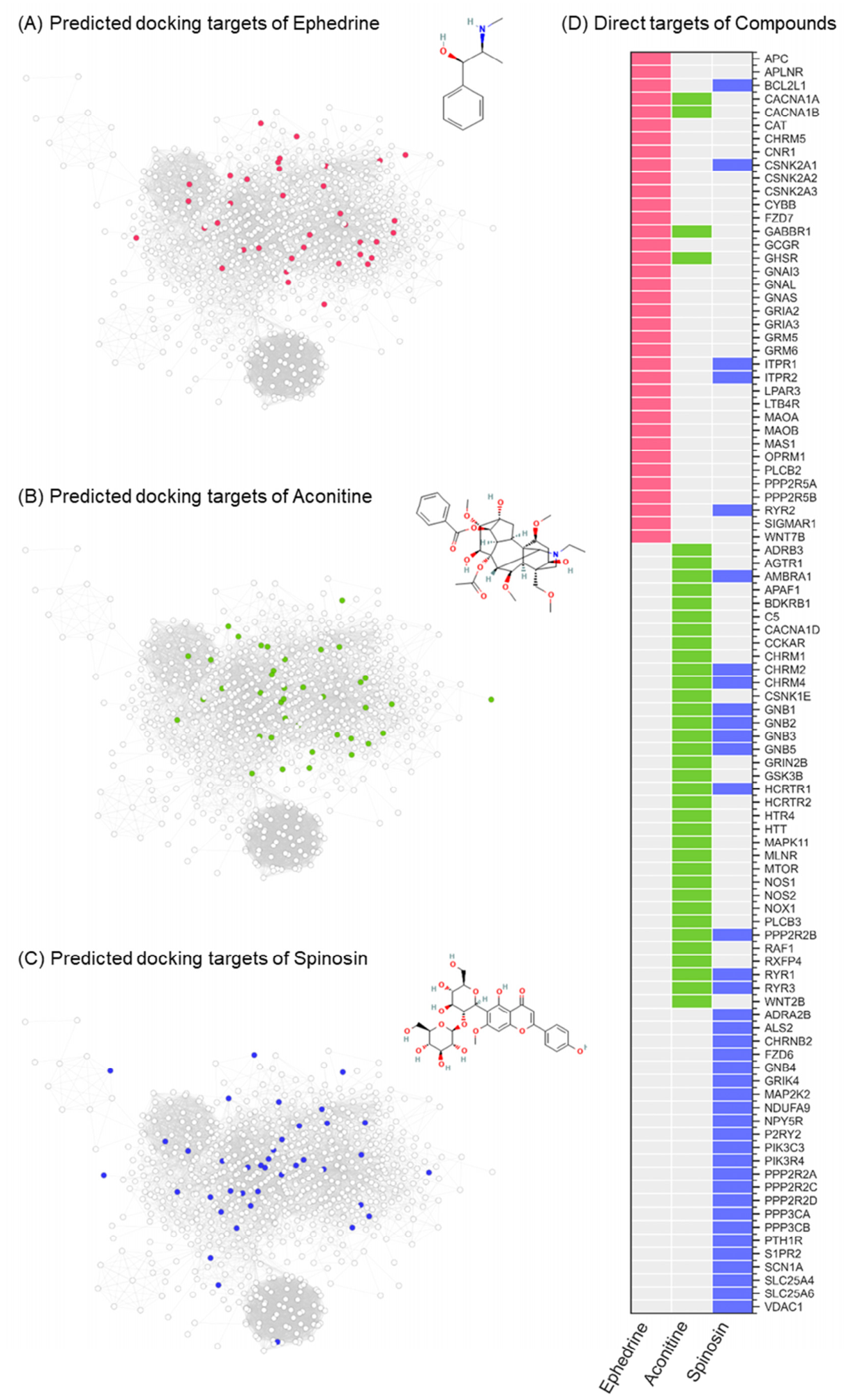
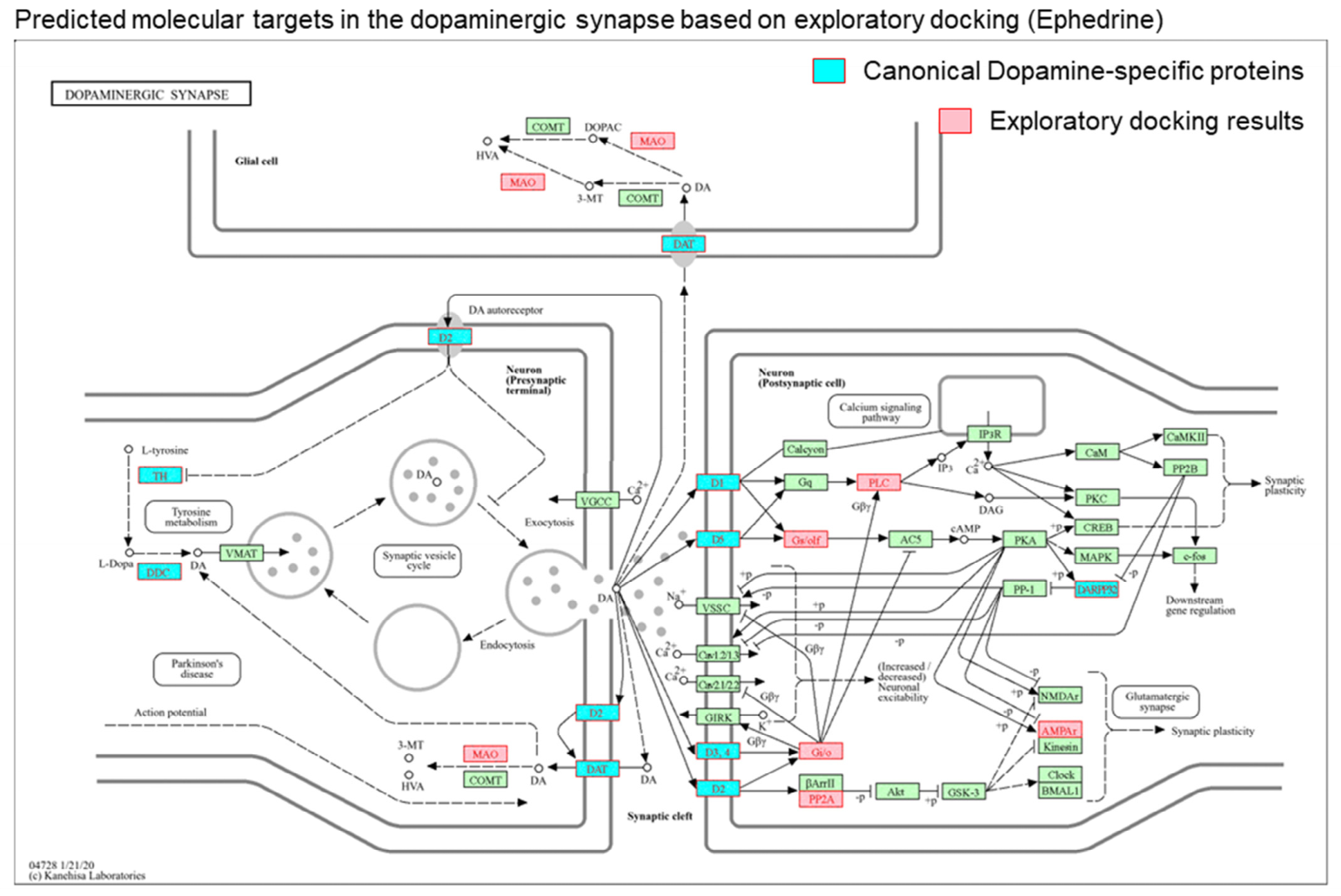
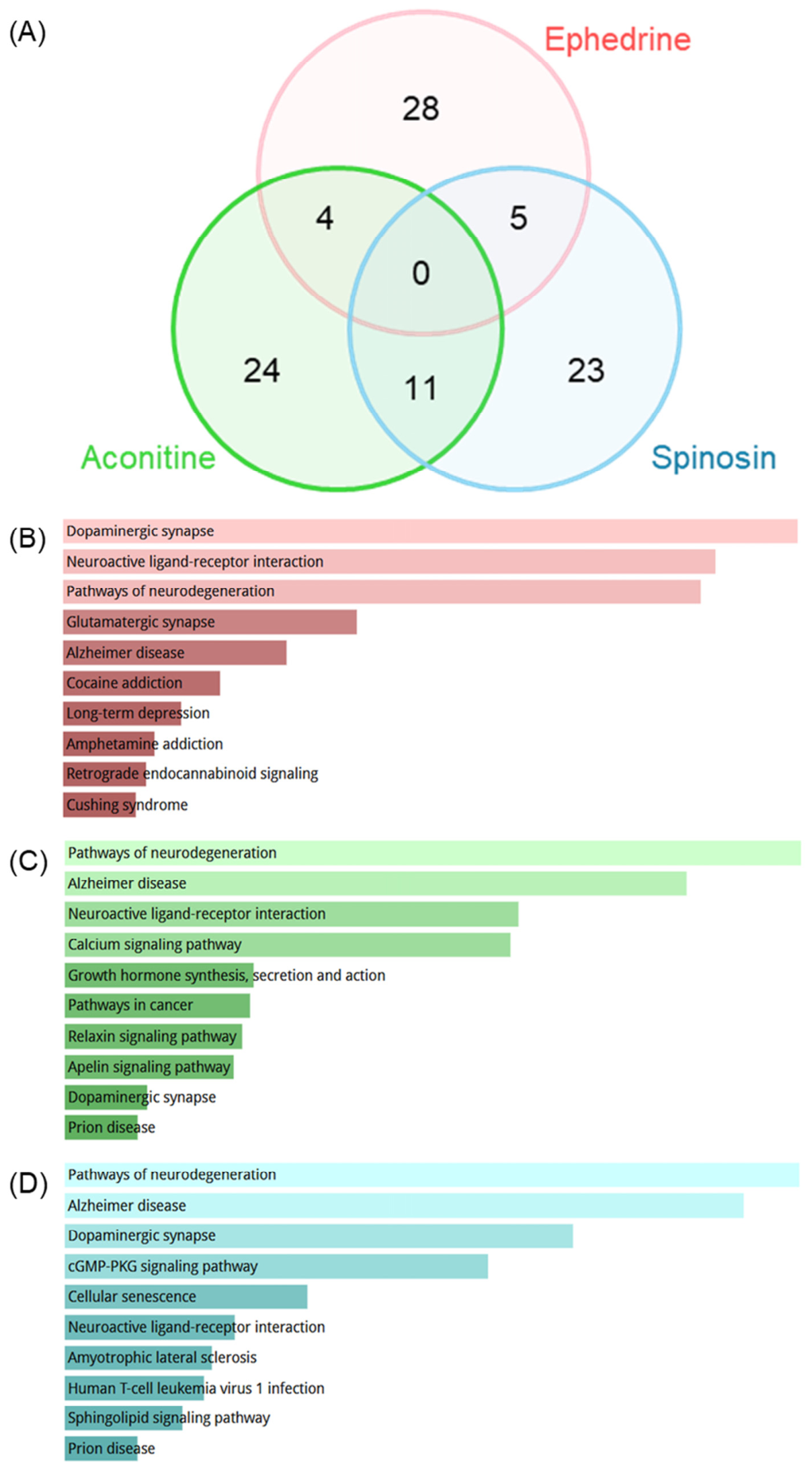
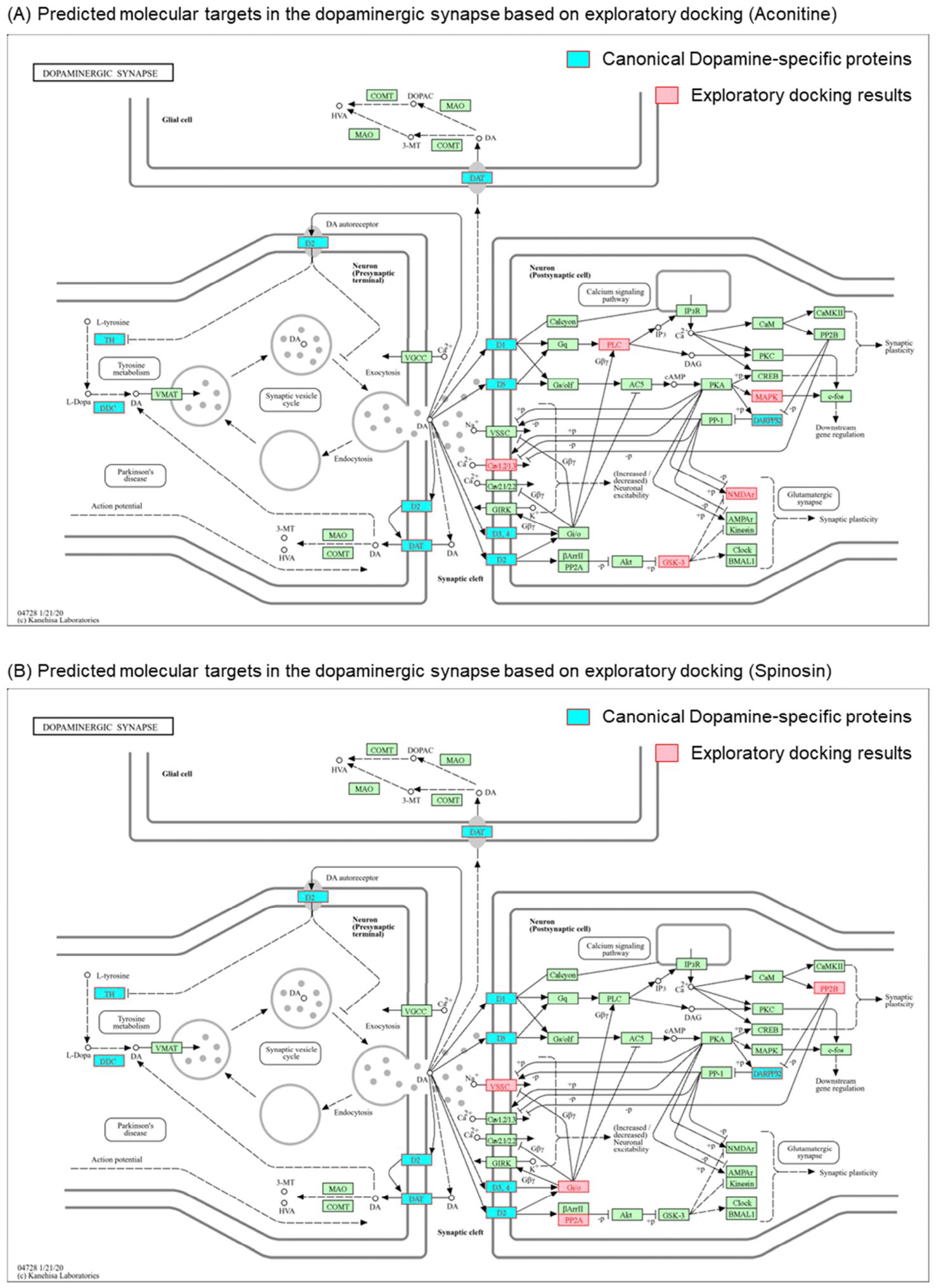
Results of Docking and Network-Based Prediction of Adverse Events-Related Targets
3. Discussion
3.1. Summary of the Findings
3.2. Disproportionality Signals and Clinical Implications
3.3. Molecular Mechanisms of EH-Associated Adverse Events
3.4. Limitations and Future Directions
4. Materials and Methods
4.1. Study Design
4.2. Disproportionality Analysis Using the KAERS Database
4.2.1. Data Source
4.2.2. Data Extraction and Preprocessing
4.2.3. Study Population and Variables
4.2.4. Statistical Analysis
4.3. Construction and Analysis of Biological Protein–Protein Interaction (PPI) Networks Related to EH-Associated Adverse Events
4.3.1. Collection of Biological Entities Related to Adverse Events
4.3.2. Construction and Analysis of an Adverse Events-Related Biological PPI Network
4.4. Exploratory Docking Screening and Identification of Targets Using the Major Compound of EH
4.4.1. Exploratory Docking Screening Method Using the Major Compound of EH and Control Compounds
4.4.2. Docking and Network Analyses of Adverse Events-Related Targets
5. Conclusions
Supplementary Materials
Author Contributions
Funding
Institutional Review Board Statement
Informed Consent Statement
Data Availability Statement
Conflicts of Interest
Abbreviations
| AL | Aconiti Lateralis Radix Preparata |
| ANS | autonomic nervous system |
| CI | confidence interval |
| CNS | central nervous system |
| EH | Ephedrae Herba |
| GPCR | G protein–coupled receptor |
| IC | information component |
| ICSRs | individual case safety reports |
| ITPR | inositol 1,4,5-trisphosphate receptor |
| KAERS | Korea Adverse Event Reporting System |
| KEGG | Kyoto Encyclopedia of Genes and Genomes |
| LLT | lowest level terms |
| MedDRA | Medical Dictionary for Regulatory Activities |
| NP | network pharmacology |
| ORA | Over-representation analysis |
| PLCB | phospholipase C beta |
| PPI | protein–protein interaction |
| PRR | proportional reporting ratio |
| PT | preferred terms |
| ROR | reporting odds ratio |
| SILE | Score-Integrated Ligand Efficiency |
| SOC | System Organ Class |
| ZS | Ziziphi Semen |
Appendix A

| Product Name (Chinese, Japanese) | Herbal Composition | Number of ICSRs (%) |
|---|---|---|
| Bangpung-tongseong-san (Fangfengtongsheng-san, Bofutsusho-san) | Talcum 1.67 g, Glycyrrhizae Radix 0.67 g, Gypsum Fibrosum 1 g, Scutellariae Radix 0.67 g, Platycodonis Radix 0.67 g, Saposhnikoviae Radix 0.4 g, Paeoniae Radix 0.4 g, Cnidii Rhizoma 0.4 g, Angelicae Gigantis Radix 0.4 g, Rhei Radix et Rhizoma 0.5 g, Ephedrae Herba 0.4 g, Menthae Herba 0.4 g, Forsythiae Fructus 0.4 g, Natrii Sulfas 0.5 g, Schizonepetae Spica 0.4 g, Atractylodis Rhizoma Alba 0.67 g, Gardeniae Fructus 0.4 g, Zingiberis Rhizoma Recens 0.4 g | 282 (74.4%) |
| Galgeun-tang (Gegen-tang, Kakkon-to) | Puerariae Radix 2.67 g, Ephedrae Herba 1.33 g, Cinnamomi Ramulus 1 g, Paeoniae Radix 1 g, Glycyrrhizae Radix 0.67 g, Zingiberis Rhizoma 0.33 g, Jujubae Fructus 1.33 g | 49 (12.9%) |
| Socheongryong-tang (Xiaoqinglong-tang, Shoseiryu-to) | Ephedrae Herba 1 g, Paeoniae Radix 1 g, Asiasari Radix et Rhizoma 1 g, Zingiberis Rhizoma 1 g, Glycyrrhizae Radix 1 g, Cinnamomi Ramulus 1 g, Pinelliae Tuber 2 g, Schisandrae Fructus 1 g | 24 (6.3%) |
| Ojeok-san (Wuji-san, Goshaku-san) | Atractylodis Rhizoma 1.33 g, Ephedrae Herba 0.67 g, Citri Unshius Pericarpium 0.67 g, Magnoliae Cortex 0.67 g, Platycodonis Radix 0.67 g, Aurantii Fructus Immaturus 0.67 g, Angelicae Gigantis Radix 0.67 g, Zingiberis Rhizoma 0.67 g, Paeoniae Radix 0.67 g, Poria Sclerotium 0.67 g, Angelicae Dahuricae Radix 0.67 g, Cnidii Rhizoma 0.67 g, Pinelliae Tuber 0.67 g, Cinnamomi Ramulus 0.67 g, Glycyrrhizae Radix 0.67 g, Jujubae Fructus 0.67 g, Cyperi Rhizoma 0.4 g | 16 (4.2%) |
| Yeongsen-jetong-eum (-, -) | Ephedrae Herba 1.25 g, Paeoniae Radix 1.25 g, Saposhnikoviae Radix 0.625 g, Schizonepetae Spica 0.625 g, Osterici Radix 0.625 g, Araliae Continentalis Radix 0.625 g, Clematidis Radix 0.625 g, Angelicae Dahuricae Radix 0.625 g, Atractylodis Rhizoma 0.625 g, Scutellariae Radix 0.625 g, Aurantii Fructus Immaturus 0.625 g, Platycodonis Radix 0.625 g, Puerariae Radix 0.625 g, Cnidii Rhizoma 0.625 g, Angelicae Gigantis Radix 0.375 g, Cimicifugae Rhizoma 0.375 g, Glycyrrhizae Radix 0.375 g | 5 (1.3%) |
| Oyaksungi-san (Wuyaoshunqi-san, Uyakujyunki-san) | Ephedrae Herba 1.88 g, Citri Unshius Pericarpium 1.88 g, Linderae Radix 1.88 g, Cnidii Rhizoma 1.25 g, Angelicae Dahuricae Radix 1.25 g, Bombycis Corpus 1.25 g, Aurantii Fructus Immaturus 1.25 g, Platycodonis Radix 1.25 g, Zingiberis Rhizoma 0.63 g, Zingiberis Rhizoma Recens 0.50 g, Jujubae Fructus 0.67 g, Glycyrrhizae Radix 0.38 g | 2 (0.5%) |
| Mahwang-tang (Mahuang-tang, Mao-to) | Ephedrae Herba 1.67 g, Cinnamomi Ramulus 1.33 g, Armeniacae Semen 1.67 g, Glycyrrhizae Radix 0.67 g | 1 (0.3%) |
| SOC | PT | Seriousness Criteria | Outcome | Causality |
|---|---|---|---|---|
| Eye disorders | Angle closure glaucoma | Other important medical event | Recovered | Not assessed |
| Eye disorders | Vision blurred | Other important medical event | Recovered | Not assessed |
| Gastrointestinal disorders | Dry mouth | Other important medical event | Unknown | Not assessed |
| Gastrointestinal disorders | Nausea | Hospitalization | Not recovered | Not assessed |
| Gastrointestinal disorders | Nausea | Life-threatening, Hospitalization | Recovering | Possible |
| Gastrointestinal disorders | Retching | Other important medical event | Unknown | Not assessed |
| General disorders and administration site conditions | Asthenia | Hospitalization | Not recovered | Not assessed |
| Hepatobiliary disorders | Hepatitis acute | Hospitalization | Not recovered | Not assessed |
| Hepatobiliary disorders | Jaundice | Hospitalization | Not recovered | Not assessed |
| Investigations | Liver function test abnormal | Hospitalization | Recovered | Unable to assess |
| Metabolism and nutrition disorders | Cachexia | Hospitalization | Not recovered | Possible |
| Nervous system disorders | Dizziness | Other important medical event | Unknown | Not assessed |
| Nervous system disorders | Headache | Other important medical event | Recovered | Not assessed |
| Psychiatric disorders | Hallucination | Other important medical event | Unknown | Not assessed |
| Psychiatric disorders | Hallucination, auditory | Other important medical event | Unknown | Not assessed |
| Respiratory, thoracic and mediastinal disorders | Dyspnoea | Life-threatening, Hospitalization | Recovered | Probable |
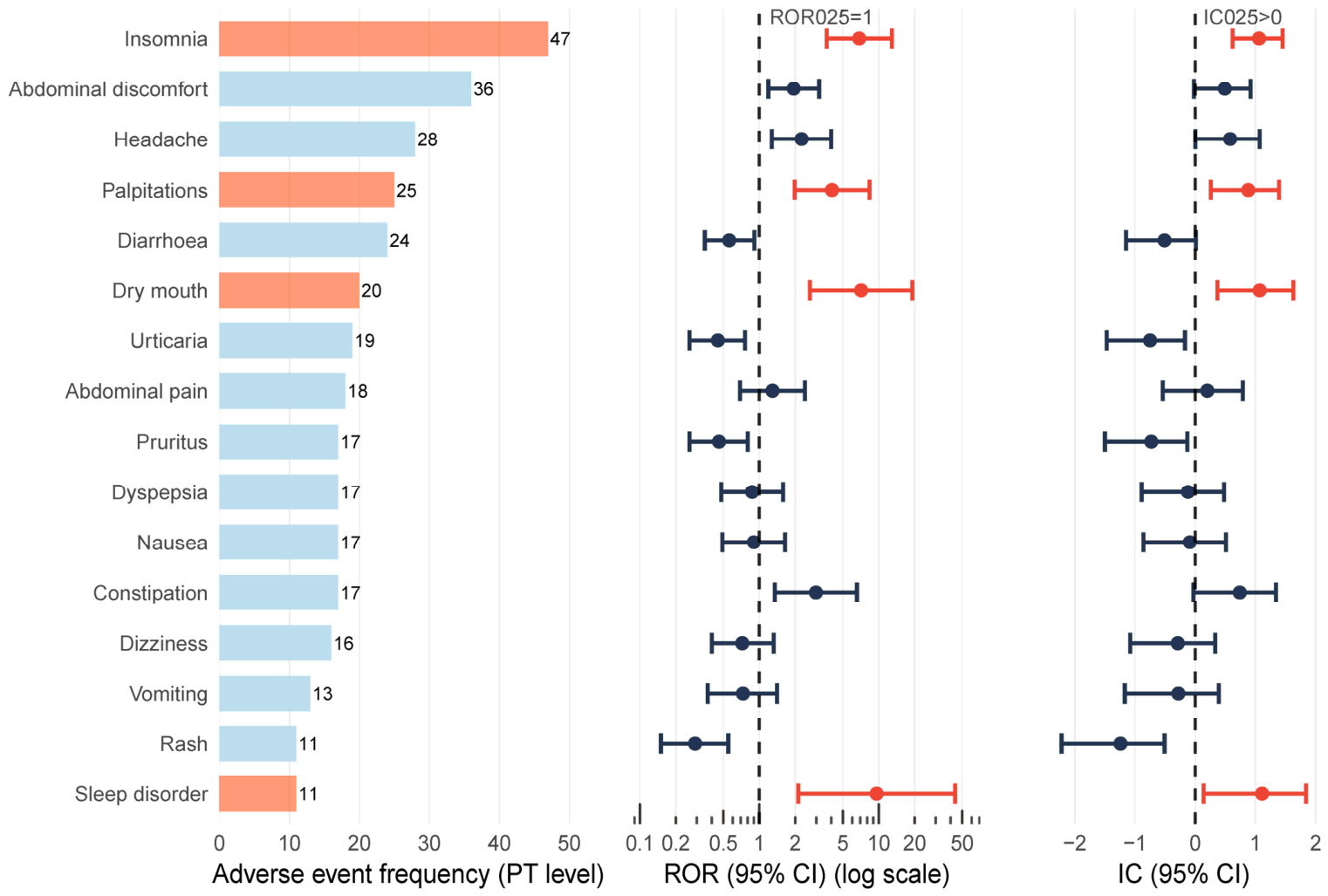
| Adverse Event (PT Level) | n | PRR | ROR (95% CI) | IC (95% CI) |
|---|---|---|---|---|
| Sleep disorder | 11 | 9.35 | 9.60 (2.12, 43.52) | 1.11 (0.14, 1.84) |
| Dry mouth | 20 | 6.8 | 7.12 (2.65, 19.13) | 1.07 (0.37, 1.63) |
| Insomnia | 47 | 6.14 | 6.87 (3.67, 12.88) | 1.06 (0.62, 1.45) |
| Palpitations | 25 | 3.86 | 4.06 (1.98, 8.36) | 0.88 (0.26, 1.39) |
| Constipation | 17 | 2.89 | 2.98 (1.35, 6.57) | 0.74 (−0.03, 1.34) |
| Headache | 28 | 2.16 | 2.26 (1.27, 4.00) | 0.58 (−0.00, 1.07) |
| Abdominal discomfort | 36 | 1.85 | 1.94 (1.19, 3.17) | 0.49 (−0.02, 0.92) |
| Abdominal pain | 18 | 1.27 | 1.29 (0.69, 2.41) | 0.20 (−0.54, 0.79) |
| Nausea | 17 | 0.9 | 0.90 (0.49, 1.64) | −0.09 (−0.86, 0.51) |
| Dyspepsia | 17 | 0.88 | 0.87 (0.48, 1.58) | −0.12 (−0.89, 0.48) |
| Vomiting | 13 | 0.74 | 0.73 (0.37, 1.41) | −0.28 (−1.17, 0.39) |
| Dizziness | 16 | 0.73 | 0.72 (0.40, 1.32) | −0.29 (−1.08, 0.33) |
| Diarrhoea | 24 | 0.59 | 0.56 (0.35, 0.91) | −0.51 (−1.15, 0.01) |
| Pruritus | 17 | 0.48 | 0.46 (0.26, 0.80) | −0.73 (−1.50, −0.13) |
| Urticaria | 19 | 0.47 | 0.45 (0.26, 0.76) | −0.75 (−1.47, −0.17) |
| Rash | 11 | 0.31 | 0.29 (0.15, 0.55) | −1.24 (−2.22, −0.51) |
| Adverse Event (PT Level) | n | PRR | ROR (95% CI) | IC (95% CI) |
|---|---|---|---|---|
| Sleep disorder | 8 | 13.18 | 13.48 (1.68, 108.26) | 1.12 (−0.04, 1.95) |
| Dry mouth | 14 | 11.53 | 11.99 (2.71, 53.11) | 1.15 (0.29, 1.80) |
| Insomnia | 40 | 7.32 | 8.18 (3.92, 17.09) | 1.09 (0.61, 1.50) |
| Palpitations | 25 | 4.58 | 4.87 (2.24, 10.56) | 0.93 (0.31, 1.44) |
| Constipation | 16 | 3.77 | 3.91 (1.59, 9.59) | 0.84 (0.05, 1.47) |
| Abdominal discomfort | 36 | 1.85 | 1.96 (1.19, 3.22) | 0.48 (−0.03, 0.91) |
| Headache | 24 | 1.8 | 1.86 (1.03, 3.37) | 0.45 (−0.18, 0.97) |
| Abdominal pain | 18 | 1.29 | 1.31 (0.69, 2.46) | 0.21 (−0.53, 0.80) |
| Nausea | 17 | 0.97 | 0.96 (0.52, 1.78) | −0.03 (−0.80, 0.57) |
| Dyspepsia | 17 | 0.93 | 0.93 (0.50, 1.71) | −0.06 (−0.83, 0.54) |
| Vomiting | 13 | 0.82 | 0.82 (0.41, 1.61) | −0.17 (−1.06, 0.50) |
| Diarrhoea | 21 | 0.53 | 0.50 (0.30, 0.84) | −0.62 (−1.30, −0.07) |
| Dizziness | 10 | 0.53 | 0.52 (0.25, 1.07) | −0.61 (−1.64, 0.15) |
| Pruritus | 17 | 0.52 | 0.49 (0.28, 0.87) | −0.64 (−1.41, −0.04) |
| Urticaria | 19 | 0.5 | 0.47 (0.27, 0.79) | −0.69 (−1.41, −0.11) |
| Rash | 11 | 0.33 | 0.31 (0.16, 0.59) | −1.14 (−2.12, −0.42) |
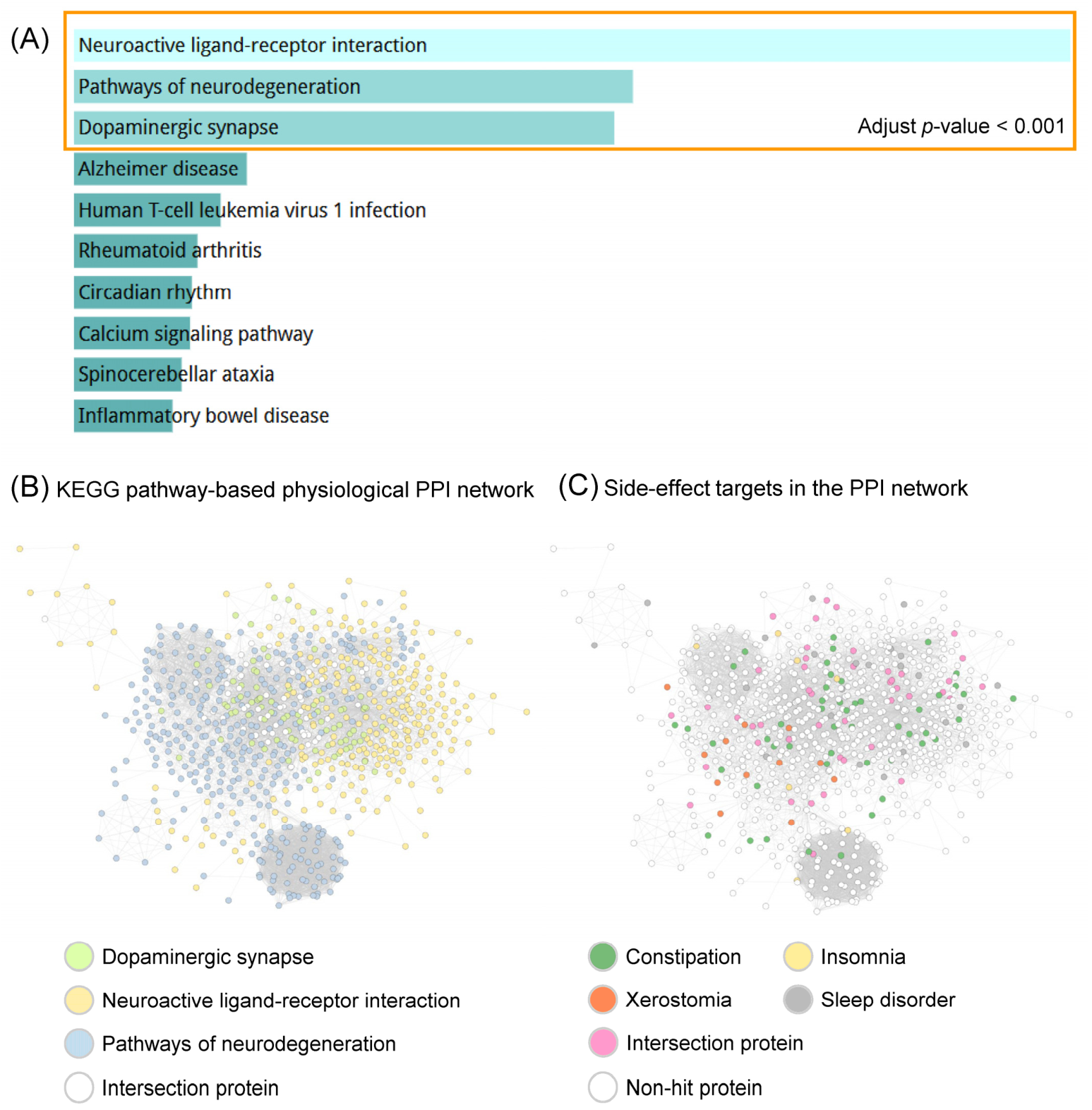
| Pathway Name | p-Value | Adjusted p-Value |
|---|---|---|
| Neuroactive ligand-receptor interaction | 1.22 × 10⁻¹³ | 2.79 × 10⁻¹¹ |
| Pathways of neurodegeneration | 3.03 × 10⁻⁹ | 3.46 × 10⁻⁷ |
| Dopaminergic synapse | 4.64 × 10⁻⁹ | 3.55 × 10⁻⁷ |
| Alzheimer disease | 0.00002289 | 0.00131 |
| Human T-cell leukemia virus 1 infection | 0.00004194 | 0.001921 |
| Rheumatoid arthritis | 0.00007174 | 0.002432 |
| Circadian rhythm | 0.00008169 | 0.002432 |
| Calcium signaling pathway | 0.00008497 | 0.002432 |
| Spinocerebellar ataxia | 0.0001035 | 0.002634 |
| Inflammatory bowel disease | 0.0001276 | 0.002922 |
| Confidence | Pathway Name | No. of Nodes | Degree Centrality | Betweenness Centrality | Closeness Centrality |
|---|---|---|---|---|---|
| Highest confidence (>900) | Neuroactive ligand-receptor interaction | 288 | 7.1076 | 0.002 | 0.2432 |
| Pathways of neurodegeneration | 410 | 22.1976 | 0.0048 | 0.2569 | |
| Dopaminergic synapse | 131 | 20.5954 | 0.0079 | 0.2912 | |
| High confidence (>700) | Neuroactive ligand-receptor interaction | 324 | 14.2808 | 0.0015 | 0.3143 |
| Pathways of neurodegeneration | 445 | 30.0225 | 0.003 | 0.3249 | |
| Dopaminergic synapse | 131 | 38.0305 | 0.0053 | 0.3659 | |
| Medium confidence (>400) | Neuroactive ligand-receptor interaction | 338 | 51.3018 | 0.0011 | 0.4257 |
| Pathways of neurodegeneration | 445 | 60.9011 | 0.0016 | 0.4371 | |
| Dopaminergic synapse | 131 | 94.4427 | 0.0035 | 0.4805 |
| Confidence | Pathway Name | Constipation | Insomnia | Sleep Disorder | Dry Mouth |
|---|---|---|---|---|---|
| Highest confidence (>900) | Neuroactive ligand-receptor interaction | 37/76 | 13/35 | 35/64 | 1/15 |
| Pathways of neurodegeneration | 35/76 | 17/35 | 21/64 | 15/15 | |
| Dopaminergic synapse | 12/76 | 10/35 | 13/64 | 0/15 | |
| High confidence (>700) | Neuroactive ligand-receptor interaction | 37/76 | 13/35 | 36/66 | 1/16 |
| Pathways of neurodegeneration | 35/76 | 17/35 | 22/66 | 16/16 | |
| Dopaminergic synapse | 12/76 | 10/35 | 13/66 | 0/16 | |
| Medium confidence (>400) | Neuroactive ligand-receptor interaction | 37/76 | 13/35 | 39/69 | 1/16 |
| Pathways of neurodegeneration | 35/76 | 17/35 | 24/69 | 16/16 | |
| Dopaminergic synapse | 12/76 | 10/35 | 13/69 | 0/16 |
| Confidence | Compound Name | Degree Centrality | Betweenness Centrality | Closeness Centrality |
|---|---|---|---|---|
| Highest confidence (>900) | Ephedrine | 14.4865 | 0.0062 | 0.2731 |
| Aconitine | 15.0000 | 0.0083 | 0.2747 | |
| Spinosin | 16.8205 | 0.0051 | 0.2672 | |
| Non-interaction nodes | 16.5427 | 0.0037 | 0.2522 | |
| High confidence (>700) | Ephedrine | 26.0541 | 0.0032 | 0.3459 |
| Aconitine | 29.8974 | 0.0055 | 0.3511 | |
| Spinosin | 30.5128 | 0.0036 | 0.3416 | |
| Non-interaction nodes | 24.3699 | 0.0024 | 0.3213 | |
| Medium confidence (>400) | Ephedrine | 70.0270 | 0.0019 | 0.4592 |
| Aconitine | 82.1282 | 0.0031 | 0.4642 | |
| Spinosin | 66.5385 | 0.0016 | 0.4506 | |
| Non-interaction nodes | 58.6157 | 0.0015 | 0.4332 |



References
- Zheng, Q.; Mu, X.; Pan, S.; Luan, R.; Zhao, P. Ephedrae herba: A comprehensive review of its traditional uses, phytochemistry, pharmacology, and toxicology. J. Ethnopharmacol. 2023, 307, 116153. [Google Scholar] [CrossRef] [Scilit]
- Tang, S.; Ren, J.; Kong, L.; Yan, G.; Liu, C.; Han, Y.; Sun, H.; Wang, X.-J. Ephedrae Herba: A Review of Its Phytochemistry, Pharmacology, Clinical Application, and Alkaloid Toxicity. Molecules 2023, 28, 663. [Google Scholar] [CrossRef] [Scilit]
- Kobayashi, S.; Endou, M.; Sakuraya, F.; Matsuda, N.; Zhang, X.-H.; Azuma, M.; Echigo, N.; Kemmotsu, O.; Hattori, Y.; Gando, S. The sympathomimetic actions of l-ephedrine and d-pseudoephedrine: Direct receptor activation or norepinephrine release? Anesth. Analg. 2003, 97, 1239–1245. [Google Scholar] [CrossRef] [Scilit] [PubMed]
- Liles, J.T.; Dabisch, P.A.; Hude, K.E.; Pradhan, L.; Varner, K.J.; Porter, J.R.; Hicks, A.R.; Corll, C.; Baber, S.R.; Kadowitz, P.J. Pressor responses to ephedrine are mediated by a direct mechanism in the rat. J. Pharmacol. Exp. Ther. 2006, 316, 95–105. [Google Scholar] [CrossRef] [Scilit] [PubMed]
- Haller, C.A.; Benowitz, N.L. Adverse Cardiovascular and Central Nervous System Events Associated with Dietary Supplements Containing Ephedra Alkaloids. N. Engl. J. Med. 2000, 343, 1833–1838. [Google Scholar] [CrossRef] [Scilit]
- Samenuk, D.; Link, M.S.; Homoud, M.K.; Contreras, R.; Theoharides, T.C.; Wang, P.J.; Estes, N.A.M. Adverse cardiovascular events temporally associated with ma huang, an herbal source of ephedrine. Mayo Clin. Proc. 2002, 77, 12–16. [Google Scholar] [CrossRef] [Scilit]
- Zell-Kanter, M.; Quigley, M.A.; Leikin, J.B. Reduction in Ephedra Poisonings after FDA Ban. N. Engl. J. Med. 2015, 372, 2172–2174. [Google Scholar] [CrossRef] [Scilit]
- Cho, H.; Oh, J.; Chu, H.; Jin, H.; Leem, J. Efficacy and safety of ephedra-containing oral medications: A systematic review, meta-analysis, and exploratory dose–response analysis for weight reduction. Front. Pharmacol. 2024, 15, 1397247. [Google Scholar] [CrossRef] [Scilit]
- Mehendale, S.R.; Bauer, B.A.; Yuan, C.-S. Ephedra-containing dietary supplements in the US versus ephedra as a Chinese medicine. Am. J. Chin. Med. 2004, 32, 1–10. [Google Scholar] [CrossRef] [Scilit] [PubMed]
- Shekelle, P.G.; Hardy, M.L.; Morton, S.C.; Maglione, M.; Mojica, W.A.; Suttorp, M.J.; Rhodes, S.L.; Jungvig, L.; Gagné, J. Efficacy and Safety of Ephedra and Ephedrine for Weight Loss and Athletic Performance: A Meta-analysis. JAMA 2003, 289, 1537–1545. [Google Scholar] [CrossRef] [Scilit] [PubMed]
- Yoo, H.-J.; Yoon, H.-Y.; Yee, J.; Gwak, H.-S. Effects of Ephedrine-Containing Products on Weight Loss and Lipid Profiles: A Systematic Review and Meta-Analysis of Randomized Controlled Trials. Pharmaceuticals 2021, 14, 1198. [Google Scholar] [CrossRef] [Scilit] [PubMed]
- Choi, Y.; Shin, H.-K. Adverse events associated with herbal medicine products reported in the Korea Adverse Event Reporting System from 2012 to 2021. Front. Pharmacol. 2024, 15, 1378208. [Google Scholar] [CrossRef] [Scilit] [PubMed]
- Wei, J.; Lu, Z.; Feng, G.; Zhu, Y. Which Is Safer, Chinese Medicine or Western Medicine? Comparative Analysis Based on Chinese Spontaneous Reporting Database. Chin. J. Integr. Med. 2022, 28, 138–144. [Google Scholar] [CrossRef] [Scilit] [PubMed]
- Lorberbaum, T.; Nasir, M.; Keiser, M.; Vilar, S.; Hripcsak, G.; Tatonetti, N. Systems Pharmacology Augments Drug Safety Surveillance. Clin. Pharmacol. Ther. 2015, 97, 151–158. [Google Scholar] [CrossRef] [Scilit] [PubMed]
- Luo, Z.-Y.; Li, X.; Chen, C.-T.; Kang, H.-H.; Zhang, Z.-J.; Wang, D.; Gong, J.-R. Ocular adverse events associated with GLP-1 receptor agonists: A real-world study based on the FAERS database and network pharmacology. Expert Opin. Drug Saf. 2025, 24, 287–296. [Google Scholar] [CrossRef] [Scilit] [PubMed]
- Berger, S.I.; Iyengar, R. Role of systems pharmacology in understanding drug adverse events. WIREs Syst. Biol. Med. 2011, 3, 129–135. [Google Scholar] [CrossRef] [Scilit] [PubMed]
- Hopkins, A.L. Network pharmacology: The next paradigm in drug discovery. Nat. Chem. Biol. 2008, 4, 682–690. [Google Scholar] [CrossRef] [Scilit] [PubMed]
- Park, M.; Seo, E.-H.; Yi, J.-M.; Cha, S. Discovery and Prediction Study of the Dominant Pharmacological Action Organ of Aconitum carmichaeli Debeaux Using Multiple Bioinformatic Analyses. Int. J. Mol. Sci. 2024, 25, 10219. [Google Scholar] [CrossRef] [Scilit] [PubMed]
- Pittler, M.H.; Schmidt, K.; Ernst, E. Adverse events of herbal food supplements for body weight reduction: Systematic review. Obes. Rev. 2005, 6, 93–111. [Google Scholar] [CrossRef] [Scilit] [PubMed]
- Hackman, R.M.; Havel, P.J.; Schwartz, H.J.; Rutledge, J.C.; Watnik, M.R.; Noceti, E.M.; Stohs, S.J.; Stern, J.S.; Keen, C.L. Multinutrient supplement containing ephedra and caffeine causes weight loss and improves metabolic risk factors in obese women: A randomized controlled trial. Int. J. Obes. 2006, 30, 1545–1556. [Google Scholar] [CrossRef] [Scilit] [PubMed]
- Chan, R.J.; Walker, A.; Vardy, J.; Chan, A.; Oppegaard, K.; Conley, Y.P.; Paul, S.M.; Kober, K.M.; Harris, C.; Shin, J.; et al. Perturbations in the neuroactive ligand-receptor interaction and renin angiotensin system pathways are associated with cancer-related cognitive impairment. Support. Care Cancer 2025, 33, 254. [Google Scholar] [CrossRef] [Scilit] [PubMed]
- Gan, L.; Cookson, M.R.; Petrucelli, L.; La Spada, A.R. Converging pathways in neurodegeneration, from genetics to mechanisms. Nat. Neurosci. 2018, 21, 1300–1309. [Google Scholar] [CrossRef] [Scilit] [PubMed]
- Beaulieu, J.-M.; Gainetdinov, R.R. The Physiology, Signaling, and Pharmacology of Dopamine Receptors. Pharmacol. Rev. 2011, 63, 182–217. [Google Scholar] [CrossRef] [Scilit] [PubMed]
- Abourashed, E.A.; El-Alfy, A.T.; Khan, I.A.; Walker, L. Ephedra in perspective—A current review. Phytother. Res. 2003, 17, 703–712. [Google Scholar] [CrossRef] [Scilit] [PubMed]
- Duan, S.; Cui, X.-Y.; Wang, X.-Y.; Shan, C.-B.; Ma, C.-M. Combination of Ephedra sinica stems and Terminalia chebula fruits produces new ephedrine derivatives in vivo that diminish the permeability to BBB while retaining airway dilation and hepatoprotective effects. J. Ethnopharmacol. 2022, 285, 114837. [Google Scholar] [CrossRef] [Scilit] [PubMed]
- Wu, D.; Chen, Q.; Chen, X.; Han, F.; Chen, Z.; Wang, Y. The blood–brain barrier: Structure, regulation and drug delivery. Signal Transduct. Target. Ther. 2023, 8, 217. [Google Scholar] [CrossRef] [Scilit] [PubMed]
- Speranza, L.; Miniaci, M.C.; Volpicelli, F. The Role of Dopamine in Neurological, Psychiatric, and Metabolic Disorders and Cancer: A Complex Web of Interactions. Biomedicines 2025, 13, 492. [Google Scholar] [CrossRef] [Scilit] [PubMed]
- Gil-Montoya, J.A.; Barrios, R.; Sánchez-Lara, I.; Carnero-Pardo, C.; Fornieles-Rubio, F.; Montes, J.; Gonzalez-Moles, M.A.; Bravo, M. Prevalence of Drug-Induced Xerostomia in Older Adults with Cognitive Impairment or Dementia: An Observational Study. Drugs Aging 2016, 33, 611–618. [Google Scholar] [CrossRef] [Scilit] [PubMed]
- Krumm, B.E.; Roth, B.L. Intracellular GPCR modulators enable precision pharmacology. npj Drug Discov. 2025, 2, 8. [Google Scholar] [CrossRef] [Scilit] [PubMed]
- Fisher, I.J.; Jenkins, M.L.; Tall, G.G.; Burke, J.E.; Smrcka, A.V. Activation of phospholipase C β by Gβγ and Gαq involves C-terminal rearrangement to release autoinhibition. Structure 2020, 28, 810–819. [Google Scholar] [CrossRef] [Scilit] [PubMed]
- Ostadkarampour, M.; Putnins, E.E. Monoamine oxidase inhibitors: A review of their anti-inflammatory therapeutic potential and mechanisms of action. Front. Pharmacol. 2021, 12, 676239. [Google Scholar] [CrossRef] [Scilit] [PubMed]
- Kruse, T.; Gnosa, S.P.; Nasa, I.; Garvanska, D.H.; Hein, J.B.; Nguyen, H.; Samsøe-Petersen, J.; Lopez-Mendez, B.; Hertz, E.P.T.; Schwarz, J.; et al. Mechanisms of site-specific dephosphorylation and kinase opposition imposed by PP2A regulatory subunits. EMBO J. 2020, 39, EMBJ2019103695. [Google Scholar] [CrossRef] [Scilit] [PubMed]
- Hazell, L.; Shakir, S.A.W. Under-reporting of adverse drug reactions: A systematic review. Drug Saf. 2006, 29, 385–396. [Google Scholar] [CrossRef] [Scilit] [PubMed]
- Pariente, A.; Gregoire, F.; Fourrier-Reglat, A.; Haramburu, F.; Moore, N. Impact of safety alerts on measures of disproportionality in spontaneous reporting databases: The notoriety bias. Drug Saf. 2007, 30, 891–898. [Google Scholar] [CrossRef] [Scilit] [PubMed]
- Caster, O.; Aoki, Y.; Gattepaille, L.M.; Grundmark, B. Disproportionality Analysis for Pharmacovigilance Signal Detection in Small Databases or Subsets: Recommendations for Limiting False-Positive Associations. Drug Saf. 2020, 43, 479–487. [Google Scholar] [CrossRef] [Scilit] [PubMed]
- Cheng, F.; Kovács, I.A.; Barabási, A.-L. Network-based prediction of drug combinations. Nat. Commun. 2019, 10, 1197. [Google Scholar] [CrossRef] [Scilit] [PubMed]
- Park, M.; Baek, S.-J.; Park, S.-M.; Yi, J.-M.; Cha, S. Comparative study of the mechanism of natural compounds with similar structures using docking and transcriptome data for improving in silico herbal medicine experimentations. Brief. Bioinform. 2023, 24, bbad344. [Google Scholar] [CrossRef] [Scilit] [PubMed]
- Głowacka, K.; Wiela-Hojeńska, A. Pseudoephedrine—Benefits and risks. Int. J. Mol. Sci. 2021, 22, 5146. [Google Scholar] [CrossRef] [Scilit] [PubMed]
- Costa, V.M.; Grando, L.G.R.; Milandri, E.; Nardi, J.; Teixeira, P.; Mladěnka, P.; Remião, F.; on behalf of the Oemonom. Natural sympathomimetic drugs: From pharmacology to toxicology. Biomolecules 2022, 12, 1793. [Google Scholar] [CrossRef] [Scilit] [PubMed]
- Fusaroli, M.; Salvo, F.; Begaud, B.; AlShammari, T.M.; Bate, A.; Battini, V.; Brueckner, A.; Candore, G.; Carnovale, C.; Crisafulli, S.; et al. The Reporting of a Disproportionality Analysis for Drug Safety Signal Detection Using Individual Case Safety Reports in PharmacoVigilance (READUS-PV): Development and Statement. Drug Saf. 2024, 47, 575–584. [Google Scholar] [CrossRef] [Scilit] [PubMed]
- Khouri, C.; Nguyen, T.; Revol, B.; Lepelley, M.; Pariente, A.; Roustit, M.; Cracowski, J.-L. Leveraging the Variability of Pharmacovigilance Disproportionality Analyses to Improve Signal Detection Performances. Front. Pharmacol. 2021, 12, 668765. [Google Scholar] [CrossRef] [Scilit] [PubMed]
- Gauffin, O. pvda: Disproportionality Functions for Pharmacovigilance. R Package Version 0.0.4. 2025. Available online: https://github.com/oskargauffin/pvda (accessed on 4 August 2026).
- Piñero, J.; Ramírez-Anguita, J.M.; Saüch-Pitarch, J.; Ronzano, F.; Centeno, E.; Sanz, F.; Furlong, L.I. The DisGeNET knowledge platform for disease genomics: 2019 update. Nucleic Acids Res. 2020, 48, D845–D855. [Google Scholar] [CrossRef] [Scilit] [PubMed]
- Maleki, F.; Ovens, K.; Hogan, D.J.; Kusalik, A.J. Gene Set Analysis: Challenges, Opportunities, and Future Research. Front. Genet. 2020, 11, 654. [Google Scholar] [CrossRef] [Scilit] [PubMed]
- Kuleshov, M.V.; Jones, M.R.; Rouillard, A.D.; Fernandez, N.F.; Duan, Q.; Wang, Z.; Koplev, S.; Jenkins, S.L.; Jagodnik, K.M.; Lachmann, A.; et al. Enrichr: A comprehensive gene set enrichment analysis web server 2016 update. Nucleic Acids Res. 2016, 44, W90–W97. [Google Scholar] [CrossRef] [Scilit] [PubMed]
- Kanehisa, M.; Furumichi, M.; Tanabe, M.; Sato, Y.; Morishima, K. KEGG: New perspectives on genomes, pathways, diseases and drugs. Nucleic Acids Res. 2017, 45, D353–D361. [Google Scholar] [CrossRef] [Scilit] [PubMed]
- Szklarczyk, D.; Kirsch, R.; Koutrouli, M.; Nastou, K.; Mehryary, F.; Hachilif, R.; Gable, A.L.; Fang, T.; Doncheva, N.T.; Pyysalo, S.; et al. The STRING database in 2023: Protein–protein association networks and functional enrichment analyses for any sequenced genome of interest. Nucleic Acids Res. 2023, 51, D638–D646. [Google Scholar] [CrossRef] [Scilit] [PubMed]
- Saxena, A.; Iyengar, S. Centrality Measures in Complex Networks: A Survey. arXiv 2020. [Google Scholar] [CrossRef] [Scilit]
- Hagberg, A.; Swart, P.J.; Schult, D.A. Exploring Network Structure, Dynamics, and Function Using NetworkX; Los Alamos National Laboratory (LANL): Los Alamos, NM, USA, 2007. Available online: https://www.osti.gov/biblio/960616 (accessed on 23 December 2025).
- Shannon, P.; Markiel, A.; Ozier, O.; Baliga, N.S.; Wang, J.T.; Ramage, D.; Amin, N.; Schwikowski, B.; Ideker, T. Cytoscape: A Software Environment for Integrated Models of Biomolecular Interaction Networks. Genome Res. 2003, 13, 2498–2504. [Google Scholar] [CrossRef] [Scilit] [PubMed]
- Chan, T.Y.K. Aconite poisoning. Clin. Toxicol. 2009, 47, 279–285. [Google Scholar] [CrossRef] [Scilit] [PubMed]
- Kuang, X.; She, G.; Ma, T.; Cai, W.; Zhao, J.; Liu, B.; Xu, F. The pharmacology, pharmacokinetics, and toxicity of spinosin: A mini review. Front. Pharmacol. 2022, 13, 938395. [Google Scholar] [CrossRef] [Scilit] [PubMed]
- Kim, S.; Chen, J.; Cheng, T.; Gindulyte, A.; He, J.; He, S.; Li, Q.; Shoemaker, B.A.; Thiessen, P.A.; Yu, B.; et al. PubChem 2023 update. Nucleic Acids Res. 2023, 51, D1373–D1380. [Google Scholar] [CrossRef] [Scilit] [PubMed]
- O’Boyle, N.M.; Banck, M.; James, C.A.; Morley, C.; Vandermeersch, T.; Hutchison, G.R. Open Babel: An open chemical toolbox. J. Cheminformatics 2011, 3, 33. [Google Scholar] [CrossRef] [Scilit] [PubMed]
- Jumper, J.; Evans, R.; Pritzel, A.; Green, T.; Figurnov, M.; Ronneberger, O.; Tunyasuvunakool, K.; Bates, R.; Žídek, A.; Potapenko, A.; et al. Highly accurate protein structure prediction with AlphaFold. Nature 2021, 596, 583–589. [Google Scholar] [CrossRef] [Scilit] [PubMed]
- Eberhardt, J.; Santos-Martins, D.; Tillack, A.F.; Forli, S. AutoDock Vina 1.2.0: New Docking Methods, Expanded Force Field, and Python Bindings. J. Chem. Inf. Model. 2021, 61, 3891–3898. [Google Scholar] [CrossRef] [Scilit] [PubMed]
- Nissink, J.W.M. Simple Size-Independent Measure of Ligand Efficiency. J. Chem. Inf. Model. 2009, 49, 1617–1622. [Google Scholar] [CrossRef] [Scilit] [PubMed]
- Hopkins, A.L.; Groom, C.R.; Alex, A. Ligand efficiency: A useful metric for lead selection. Drug Discov. Today 2004, 9, 430–431. [Google Scholar] [CrossRef] [Scilit] [PubMed]
- Waskom, M. seaborn: Statistical data visualization. J. Open Source Softw. 2021, 6, 3021. [Google Scholar] [CrossRef] [Scilit]
- Kanehisa, M.; Sato, Y. KEGG Mapper for inferring cellular functions from protein sequences. Protein Sci. 2020, 29, 28–35. [Google Scholar] [CrossRef] [Scilit] [PubMed]


| Report Information | ICSRs of Ephedra-Containing HMPs (n = 379) | ICSR of Other HMPs (n = 644) | Total (n = 1023) |
|---|---|---|---|
| Original reporter | |||
| Doctor, dentist, Korean medicine doctor | 39 (10.3) | 117 (18.2) | 156 (15.2) |
| Pharmacist, Korean medicine pharmacist | 230 (60.7) | 238 (37.0) | 468 (45.7) |
| Other medical professional | 11 (2.9) | 54 (8.3) | 65 (6.4) |
| Consumer, nonmedical professional | 72 (19.0) | 221 (34.2) | 293 (28.6) |
| Unknown | 27 (7.1) | 14 (2.2) | 41 (4.0) |
| Reporter | |||
| Pharmaceutical company | 133 (35.1) | 218 (33.9) | 351 (34.3) |
| Medical expert (e.g., hospital, pharmacy) | 30 (7.9) | 71 (11.0) | 101 (9.9) |
| Regional pharmacovigilance center | 193 (50.9) | 273 (42.4) | 466 (45.6) |
| Other (e.g., distributor) | 4 (1.1) | 38 (5.9) | 42 (4.1) |
| Patient, consumer | 19 (5.0) | 44 (6.8) | 63 (6.2) |
| Report type | |||
| Voluntary reporting | 352 (92.9) | 590 (91.6) | 942 (92.1) |
| Reporting in trial/research | 22 (5.8) | 33 (5.1) | 55 (5.4) |
| Other | 5 (1.3) | 19 (3.0) | 24 (2.3) |
| Unknown | 0 (0.0) | 2 (0.3) | 2 (0.2) |
| Patient demographics | |||
| Age at the time of occurrence | |||
| 0–27 days | 2 (0.5) | 0 (0.0) | 2 (0.2) |
| 28 days to 1 year | 2 (0.5) | 2 (0.3) | 4 (0.4) |
| 2–11 years | 2 (0.5) | 4 (0.6) | 6 (0.6) |
| 12–18 years | 3 (0.8) | 7 (1.1) | 10 (1.0) |
| 19–64 years | 232 (61.2) | 342 (53.1) | 574 (56.1) |
| 65 years or older | 28 (7.4) | 124 (19.3) | 152 (14.9) |
| (Missing) | 110 (29.0) | 165 (25.6) | 275 (26.9) |
| Sex | |||
| Male | 46 (12.1) | 218 (33.9) | 264 (25.8) |
| Female | 229 (60.4) | 373 (57.9) | 602 (58.8) |
| (Missing) | 104 (27.4) | 53 (8.2) | 157 (15.3) |
| Adverse Events Classified by System Organ Class | n (%) |
|---|---|
| Gastrointestinal disorders | 180 (32.2) |
| Nervous system disorders | 75 (13.4) |
| Skin and subcutaneous tissue disorders | 71 (12.7) |
| Psychiatric disorders | 67 (12.0) |
| General disorders and administration site conditions | 40 (7.2) |
| Investigations | 33 (5.9) |
| Cardiac disorders | 29 (5.2) |
| Metabolism and nutrition disorders | 10 (1.8) |
| Eye disorders | 8 (1.4) |
| Respiratory, thoracic, and mediastinal disorders | 8 (1.4) |
| Musculoskeletal and connective tissue disorders | 8 (1.4) |
| Injury, poisoning, and procedural complications | 6 (1.1) |
| Renal and urinary disorders | 6 (1.1) |
| Infections and infestations | 5 (0.9) |
| Reproductive system and breast disorders | 3 (0.5) |
| Ear and labyrinth disorders | 2 (0.4) |
| Hepatobiliary disorders | 2 (0.4) |
| Vascular disorders | 2 (0.4) |
| Blood and lymphatic system disorders | 2 (0.4) |
| Immune system disorders | 1 (0.2) |
| Product issues | 1 (0.2) |
| Serious adverse event | |
| SAE | 16 (2.9) |
| Non-SAE | 543 (97.1) |
| System Organ Class | Adverse Event (PT) | n (%) |
|---|---|---|
| Psychiatric disorders | Insomnia | 47 (8.4) |
| Gastrointestinal disorders | Abdominal discomfort | 36 (6.4) |
| Nervous system disorders | Headache | 28 (5) |
| Cardiac disorders | Palpitations | 25 (4.5) |
| Gastrointestinal disorders | Diarrhea | 24 (4.3) |
| Gastrointestinal disorders | Dry mouth | 20 (3.6) |
| Skin and subcutaneous tissue disorders | Urticaria | 19 (3.4) |
| Gastrointestinal disorders | Abdominal pain | 18 (3.2) |
| Gastrointestinal disorders | Constipation | 17 (3) |
| Gastrointestinal disorders | Dyspepsia | 17 (3) |
| Gastrointestinal disorders | Nausea | 17 (3) |
| Skin and subcutaneous tissue disorders | Pruritus | 17 (3) |
| Nervous system disorders | Dizziness | 16 (2.9) |
| Gastrointestinal disorders | Vomiting | 13 (2.4) |
| Psychiatric disorders | Sleep disorder | 11 (2) |
| Skin and subcutaneous tissue disorders | Rash | 11 (2) |
Disclaimer/Publisher’s Note: The statements, opinions and data contained in all publications are solely those of the individual author(s) and contributor(s) and not of MDPI and/or the editor(s). MDPI and/or the editor(s) disclaim responsibility for any injury to people or property resulting from any ideas, methods, instructions or products referred to in the content. |
© 2026 by the authors. Licensee MDPI, Basel, Switzerland. This article is an open access article distributed under the terms and conditions of the Creative Commons Attribution (CC BY) license.
Share and Cite
Park, M.; Shin, H.-K.; Choi, Y. Ephedrae Herba-Associated Adverse Events: A Disproportionality Analysis Integrated with Network Pharmacology. Pharmaceuticals 2026, 19, 1340. https://doi.org/10.3390/ph19091340
Park M, Shin H-K, Choi Y. Ephedrae Herba-Associated Adverse Events: A Disproportionality Analysis Integrated with Network Pharmacology. Pharmaceuticals. 2026; 19(9):1340. https://doi.org/10.3390/ph19091340
Chicago/Turabian StylePark, Musun, Hyeun-Kyoo Shin, and Yujin Choi. 2026. "Ephedrae Herba-Associated Adverse Events: A Disproportionality Analysis Integrated with Network Pharmacology" Pharmaceuticals 19, no. 9: 1340. https://doi.org/10.3390/ph19091340
APA StylePark, M., Shin, H.-K., & Choi, Y. (2026). Ephedrae Herba-Associated Adverse Events: A Disproportionality Analysis Integrated with Network Pharmacology. Pharmaceuticals, 19(9), 1340. https://doi.org/10.3390/ph19091340