



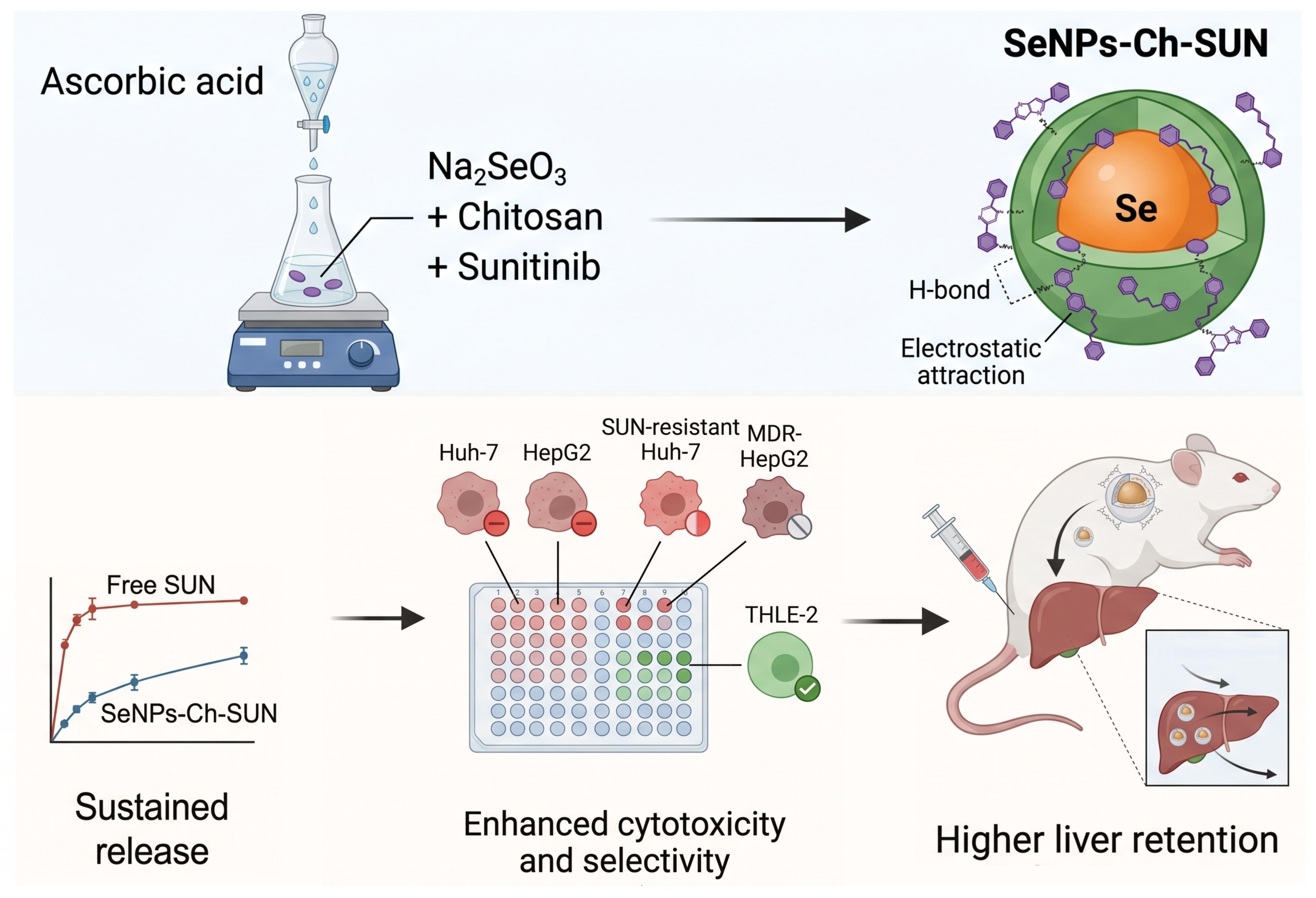
Engineering Selenium–Chitosan Nanoparticles for Enhanced Hepatic Delivery of Sunitinib and Improved In Vitro Anticancer Activity in Hepatocellular Carcinoma Models

 ,
,  ,
,  , , ,
, , , Abstract
Share and Cite
Srag El-Din, A.S.G.; Hamza, E.; Kira, A.Y.; Saber, S.; Zohny, M.H.; Alshehri, O.Y.; Al-Dhelaan, R.A.; Mohamed, E.O.; Elagamy, H.I. Engineering Selenium–Chitosan Nanoparticles for Enhanced Hepatic Delivery of Sunitinib and Improved In Vitro Anticancer Activity in Hepatocellular Carcinoma Models. Pharmaceuticals 2026, 19, 898. https://doi.org/10.3390/ph19060898
Srag El-Din ASG, Hamza E, Kira AY, Saber S, Zohny MH, Alshehri OY, Al-Dhelaan RA, Mohamed EO, Elagamy HI. Engineering Selenium–Chitosan Nanoparticles for Enhanced Hepatic Delivery of Sunitinib and Improved In Vitro Anticancer Activity in Hepatocellular Carcinoma Models. Pharmaceuticals. 2026; 19(6):898. https://doi.org/10.3390/ph19060898
Chicago/Turabian StyleSrag El-Din, Ahmed S.G., Eman Hamza, Ahmed Y. Kira, Sameh Saber, Mona H. Zohny, Ohoud Y. Alshehri, Reham A. Al-Dhelaan, Eslam Osama Mohamed, and Heba I. Elagamy. 2026. "Engineering Selenium–Chitosan Nanoparticles for Enhanced Hepatic Delivery of Sunitinib and Improved In Vitro Anticancer Activity in Hepatocellular Carcinoma Models" Pharmaceuticals 19, no. 6: 898. https://doi.org/10.3390/ph19060898
APA StyleSrag El-Din, A. S. G., Hamza, E., Kira, A. Y., Saber, S., Zohny, M. H., Alshehri, O. Y., Al-Dhelaan, R. A., Mohamed, E. O., & Elagamy, H. I. (2026). Engineering Selenium–Chitosan Nanoparticles for Enhanced Hepatic Delivery of Sunitinib and Improved In Vitro Anticancer Activity in Hepatocellular Carcinoma Models. Pharmaceuticals, 19(6), 898. https://doi.org/10.3390/ph19060898
