
Harnessing Machine Learning for Accelerated Drug Discovery: Opportunities and Unmet Challenges
 , ,
, ,
Abstract
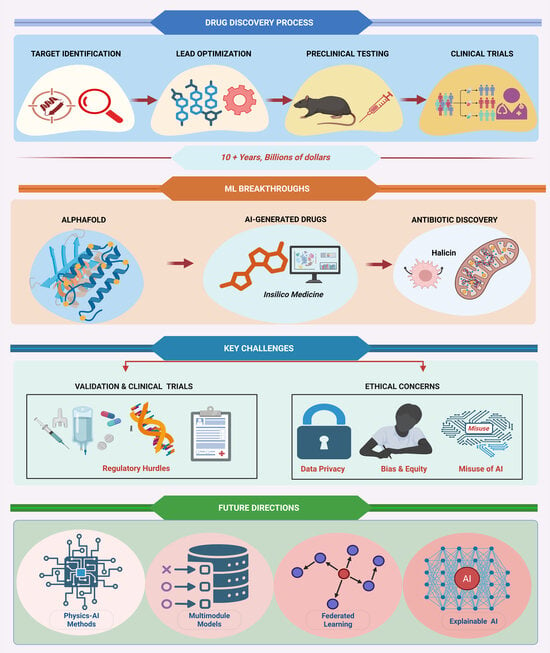
1. Introduction
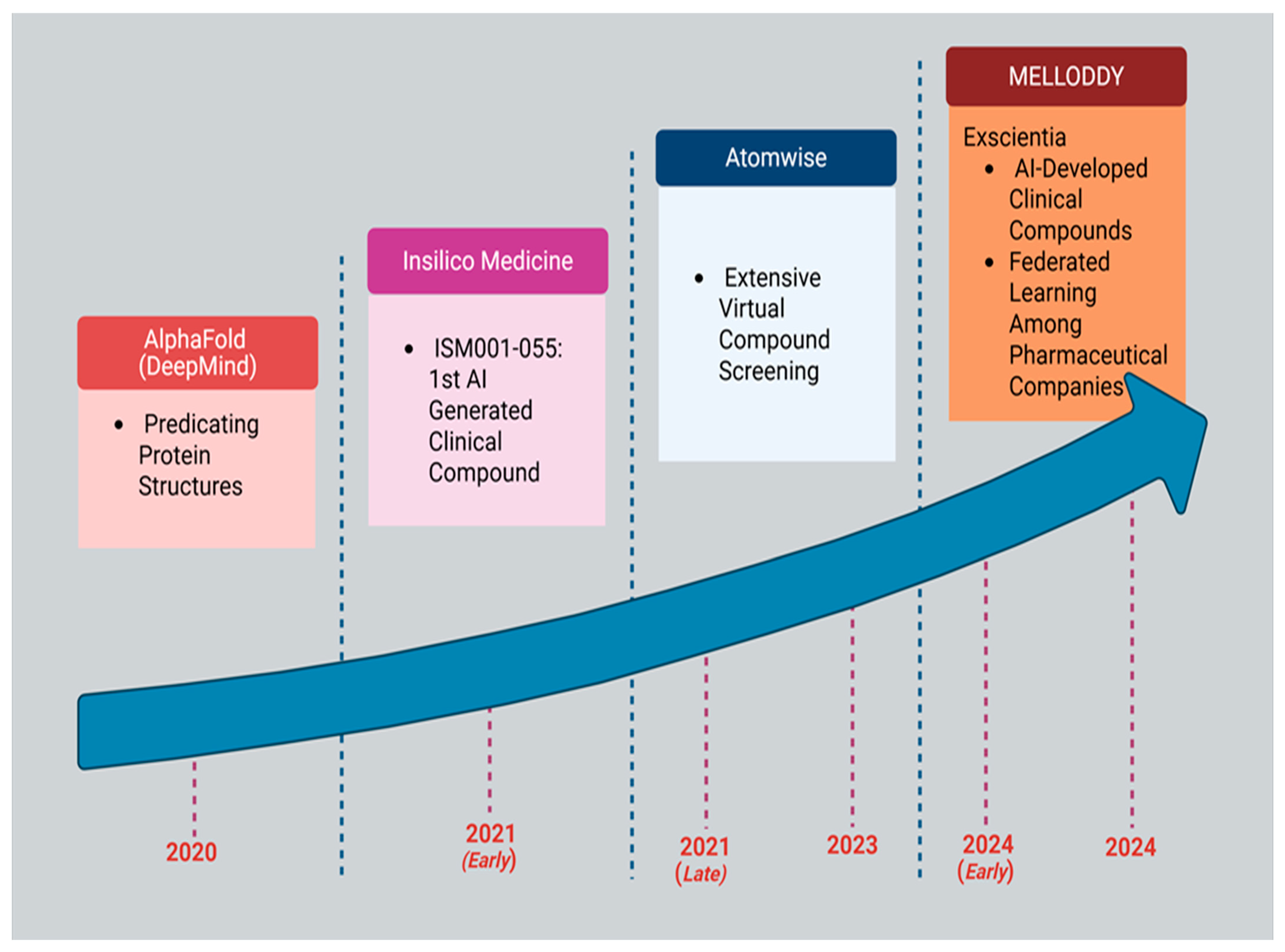
2. Overview of Machine Learning in Drug Discovery
3. Opportunities for Acceleration
3.1. Target Identification and Validation
3.2. Hit Identification
3.3. Lead Optimization
3.3.1. Medicinal Chemistry Decision Context
3.3.2. Selectivity Optimization and Counter-Screening
3.3.3. SAR Continuity, Activity Cliffs, and Transferability
3.3.4. Scaffold Hopping: Opportunity and Risk
3.3.5. Synthesizability and Route Feasibility
3.3.6. Developability Constraints and ADMET-by-Design
3.3.7. Series-Based Active Learning and Design–Make–Test–Analyze Cycles
3.3.8. Decision-Making Under Uncertainty
3.4. Preclinical and Clinical Prediction
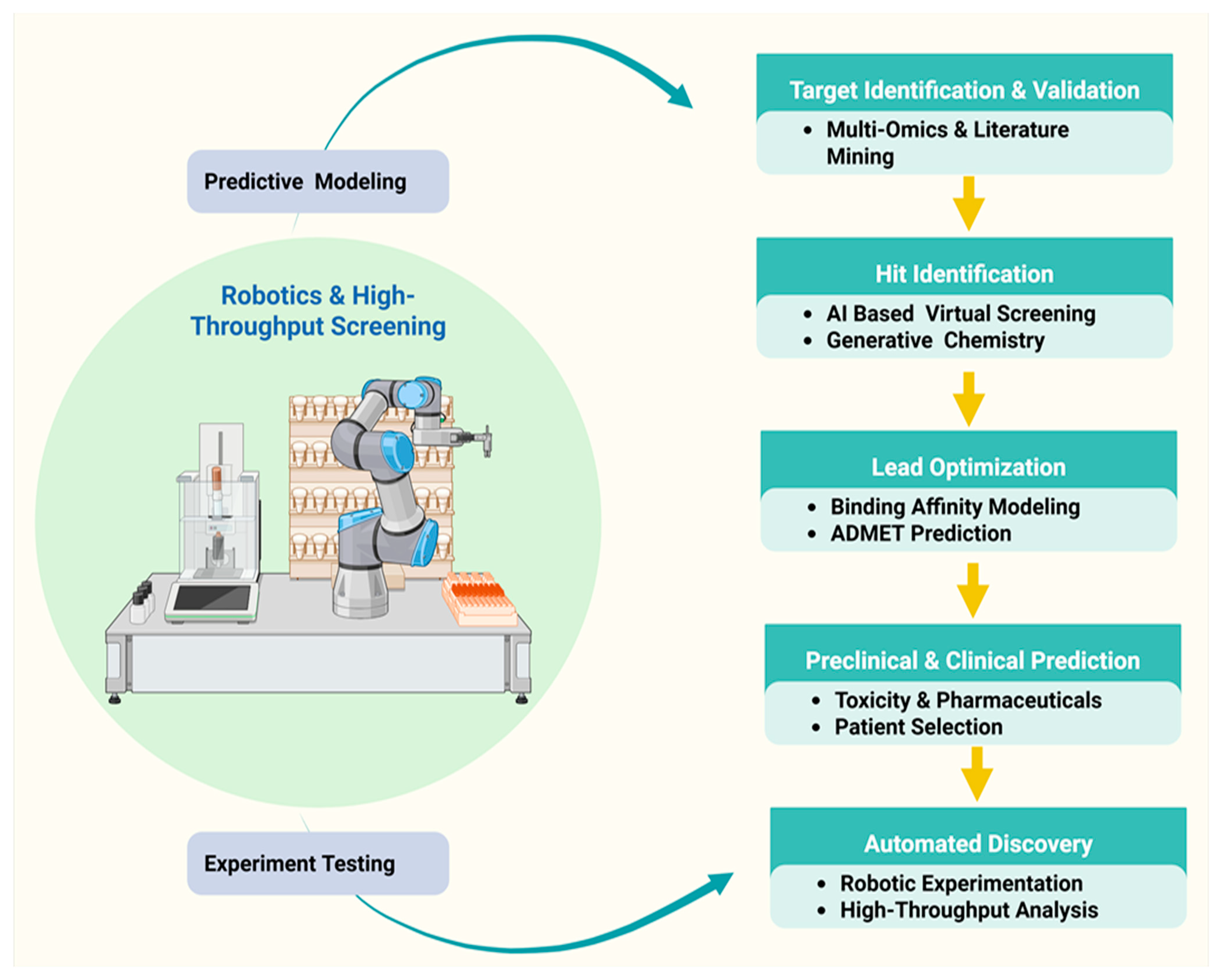
3.5. Integration with Robotics and High-Throughput Experiments
3.6. Hybrid AI Models: Integrating Mechanism with Machine Learning
3.6.1. Docking, ML Rescoring, and the Retrospective-to-Prospective Gap
3.6.2. ML-Enhanced MD: Sampling, Force Fields, and Uncertainty
3.6.3. Practical Validation Requirements for Hybrid Physics-AI Work-Flows
3.7. Integration with Quantum Mechanics
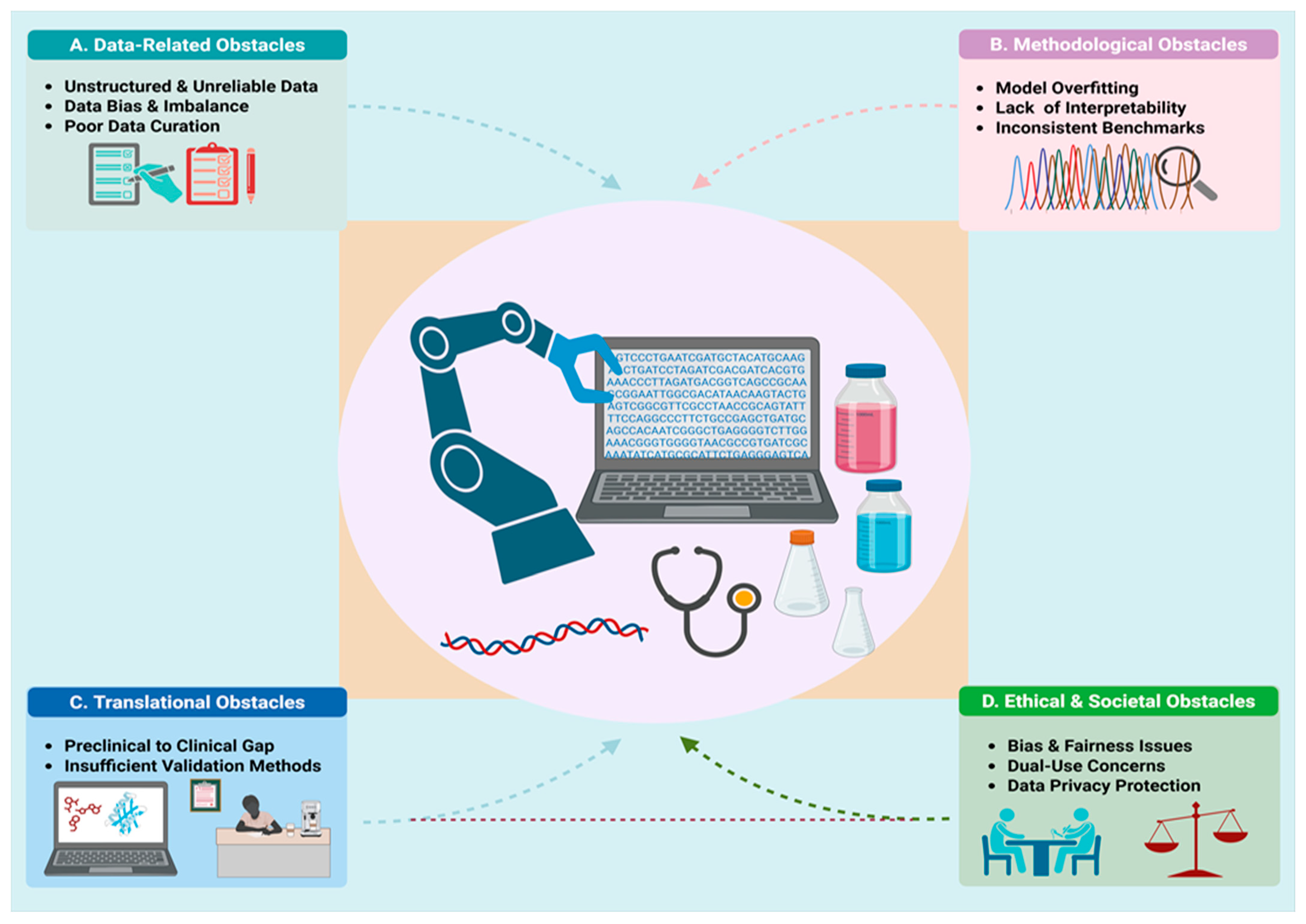
4. Challenges and Limitations
4.1. Data Quality and Bias
4.2. Interpretability and Explainability
4.3. Generalizability and Transferability
4.4. Regulatory and Validation Hurdles
4.5. Ethical, Legal, and Security Considerations
4.6. Cultural and Organizational Barriers
4.7. ML Failures in Drug Discovery
5. Future Directions and Translational Outlook
5.1. Foundation and Multimodal Models
5.2. Human–AI Collaboration
5.3. Active Learning and Autonomous Discovery
5.4. Open Science, Data Sharing, and Collaboration
5.5. Responsible and Sustainable AI
5.6. Toward Digital Twins and Precision Pharmacology
5.7. Critical Analytical Framework
6. Conclusions
Author Contributions
Funding
Institutional Review Board Statement
Informed Consent Statement
Data Availability Statement
Acknowledgments
Conflicts of Interest
References
- Husnain, A.; Rasool, S.; Saeed, A.; Hussain, H.K. Revolutionizing pharmaceutical research: Harnessing machine learning for a paradigm shift in drug discovery. Int. J. Multidiscip. Sci. Arts 2023, 2, 149–157. [Google Scholar] [CrossRef]
- Hakami, M.A. Harnessing machine learning potential for personalised drug design and overcoming drug resistance. J. Drug Target. 2024, 32, 918–930. [Google Scholar] [CrossRef]
- Thakur, Z.; Bansal, L.; Mehta, P.K. Harnessing artificial intelligence and machine learning to accelerate structure-based drug discovery for tuberculosis. Future Med. Chem. 2026, 18, 233–236. [Google Scholar] [CrossRef]
- Dangeti, A.; Bynagari, D.G.; Vydani, K. Revolutionizing drug formulation: Harnessing artificial intelligence and machine learning for enhanced stability, formulation optimization, and accelerated development. Int. J. Pharm. Sci. Med. 2023, 8, 18. [Google Scholar] [CrossRef]
- Singh, S.; Shingatgeri, V.; Srivastava, P. Revolutionizing new drug discovery: Harnessing AI and machine learning to overcome traditional challenges and accelerate targeted therapies. Artif. Intell. Health 2024, 2, 29–40. [Google Scholar] [CrossRef]
- Verma, A.; Awasthi, A. Revolutionizing drug discovery: The role of artificial intelligence and machine learning. Curr. Pharm. Des. 2024, 30, 807–810. [Google Scholar] [CrossRef] [PubMed]
- Hashemi, S.; Vosough, P.; Taghizadeh, S.; Savardashtaki, A. Therapeutic peptide development revolutionized: Harnessing the power of artificial intelligence for drug discovery. Heliyon 2024, 10, e40265. [Google Scholar] [CrossRef]
- Pradhan, T.; Gupta, O.; Chawla, G. The future of ChatGPT in medicinal chemistry: Harnessing AI for accelerated drug discovery. ChemistrySelect 2024, 9, e202304359. [Google Scholar] [CrossRef]
- Agrahari, V.; Choonara, Y.E.; Mosharraf, M.; Patel, S.K.; Zhang, F. The role of artificial intelligence and machine learning in accelerating the discovery and development of nanomedicine. Pharm. Res. 2024, 41, 2289–2297. [Google Scholar] [CrossRef]
- Ocana, A.; Pandiella, A.; Privat, C.; Bravo, I.; Luengo-Oroz, M.; Amir, E.; Gyorffy, B. Integrating artificial intelligence in drug discovery and early drug development: A transformative approach. Biomark. Res. 2025, 13, 45. [Google Scholar] [CrossRef] [PubMed]
- Terranova, N.; Renard, D.; Shahin, M.H.; Menon, S.; Cao, Y.; Hop, C.E.; Hayes, S.; Madrasi, K.; Stodtmann, S.; Tensfeldt, T.; et al. Artificial intelligence for quantitative modeling in drug discovery and development: An innovation and quality consortium perspective on use cases and best practices. Clin. Pharmacol. Ther. 2024, 115, 658–672. [Google Scholar] [CrossRef]
- Liu, W.; Pang, P.D.; Wu, C.A.; Tagle, D.; Wu, J.C. New approach methodologies for drug discovery. Cell 2026, 189, 1877–1903. [Google Scholar] [CrossRef]
- Fu, C. The future of pharmaceuticals: Artificial intelligence in drug discovery and development. Adv. Drug Deliv. Rev. 2025, 15, 101248. [Google Scholar] [CrossRef] [PubMed]
- Wan, Z.; Sun, X.; Li, Y.; Chu, T.; Hao, X.; Cao, Y.; Zhang, P. Applications of artificial intelligence in drug repurposing. Adv. Sci. 2025, 12, 2411325. [Google Scholar] [CrossRef] [PubMed]
- Hays, H.; Richardson, W.J. A Survey of LLMs in Drug Discovery and Precision Medicine. SSRN 2026. preprints. [Google Scholar]
- Wassermann, A.M.; Bajorath, J. BindingDB and ChEMBL: Online compound databases for drug discovery. Expert. Opin. Drug Discov. 2011, 6, 683–687. [Google Scholar] [CrossRef]
- Marbán-González, A.; Ramírez-Cid, V.; Cristóbal-Ramírez, A.; Medina-Franco, J.L. Exploiting PubChem and other public databases for virtual screening in 2025: What are the latest trends? Expert Opin. Drug Discov. 2025, 20, 1387–1403. [Google Scholar] [CrossRef]
- Gaulton, A.; Bellis, L.J.; Bento, A.P.; Chambers, J.; Davies, M.; Hersey, A.; Overington, J.P. ChEMBL: A large-scale bioactivity database for drug discovery. Nucleic Acids Res. 2012, 40, D1100–D1107. [Google Scholar] [CrossRef]
- Gilson, M.K.; Liu, T.; Baitaluk, M.; Nicola, G.; Hwang, L.; Chong, J. BindingDB in 2015: A public database for medicinal chemistry, computational chemistry and systems pharmacology. Nucleic Acids Res. 2016, 44, D1045–D1053. [Google Scholar] [CrossRef] [PubMed]
- Kim, S.; Bolton, E.E. PubChem: A large-scale public chemical database for drug discovery. In Open Access Databases and Datasets for Drug Discovery; Wiley: Hoboken, NJ, USA, 2024; pp. 39–66. [Google Scholar]
- Hunter, F.M.I.; Ioannidis, H.; Bento, A.P.; Bosc, N.; Corbett, S.; Felix, E.; Magarinos, M.P.; Manners, E.; Smit, I.A.; de Veij, M.; et al. Drug and Clinical Candidate Drug Data in ChEMBL. J. Med. Chem. 2025, 68, 19800–19827. [Google Scholar] [CrossRef]
- Alizadehsani, R.; Oyelere, S.S.; Hussain, S.; Jagatheesaperumal, S.K.; Calixto, R.R.; Rahouti, M.; Roshanzamir, M.; De Albu-querque, V.H.C. Explainable artificial intelligence for drug discovery and development: A comprehensive survey. IEEE Access 2024, 12, 35796–35812. [Google Scholar] [CrossRef]
- Mghwary, A.E.; Hassan, R.A.; Halim, P.A.; Abdelhameid, M.K. Advances in structural identification of some thieno [2, 3-d] pyrimidine scaffolds as antitumor molecules: Synthetic approaches and control programmed cancer cell death potential. Bioorganic Chem. 2025, 154, 107985. [Google Scholar] [CrossRef]
- Sayed, M.T.M.; Hassan, R.A.; Halim, P.A.; El-Ansary, A.K. Recent updates on thienopyrimidine derivatives as anticancer agents. Med. Chem. Res. 2023, 32, 659–681. [Google Scholar] [CrossRef]
- Ali, E.M.; Abdel-Maksoud, M.S.; Oh, C.H. Thieno [2, 3-d] pyrimidine as a promising scaffold in medicinal chemistry: Recent advances. Bioorganic Med. Chem. 2019, 27, 1159–1194. [Google Scholar] [CrossRef]
- Nag, S.; Baidya, A.T.; Mandal, A.; Mathew, A.T.; Das, B.; Devi, B.; Kumar, R. Deep learning tools for advancing drug discovery and development. 3 Biotech. 2022, 12, 110. [Google Scholar] [CrossRef]
- Jiménez-Luna, J.; Grisoni, F.; Weskamp, N.; Schneider, G. Artificial intelligence in drug discovery: Recent advances and future perspectives. Expert. Opin. Drug Discov. 2021, 16, 949–959. [Google Scholar] [CrossRef] [PubMed]
- Ali, N.; Hanif, N.; Khan, H.A.; Waseem, M.A.; Saeed, A.; Zakir, S.; Khan, A.; Aamir, M.; Ali, A.; Ali, A.; et al. Deep learning and artificial intelligence for drug discovery, application, challenge, and future perspectives. Discov. Appl. Sci. 2025, 7, 533. [Google Scholar] [CrossRef]
- Nissan, N.; Allen, M.C.; Sabatino, D.; Biggar, K.K. Future perspective: Harnessing the power of artificial intelligence in the generation of new peptide drugs. Biomolecules 2024, 14, 1303. [Google Scholar] [CrossRef] [PubMed]
- Athul, H.; Shaji, S.; Shabik, K.; Joseph, A. Harnessing the power of drug repurposing: A promising strategy for drug discovery and development. Natl. J. Pharmacol. Ther. 2024, 2, 123–128. [Google Scholar] [CrossRef]
- Hasanzad, M.; Nosrati, M.; Khatami, F.; Rahmani, P.; Sarhangi, N.; Nikfar, S.; Abdollahi, M. Drug discovery in the context of precision medicine and artificial intelligence. Expert. Rev. Precis. Med. Drug Dev. 2024, 9, 42–53. [Google Scholar] [CrossRef]
- Askr, H.; Elgeldawi, E.; Aboul Ella, H.; Elshaier, Y.A.; Gomaa, M.M.; Hassanien, A.E. Deep learning in drug discovery: An integrative review and future challenges. Artif. Intell. Rev. 2023, 56, 5975–6037. [Google Scholar] [CrossRef]
- Tunduny, T.; Shibwabo, B. Explainable AI Approaches in Federated Learning: Systematic Review. JMIR AI 2026, 5, e69985. [Google Scholar] [CrossRef]
- Qadri, Y.A.; Shaikh, S.; Ahmad, K.; Choi, I.; Kim, S.W.; Vasilakos, A.V. Explainable artificial intelligence: A perspective on drug discovery. Pharmaceutics 2025, 17, 1119. [Google Scholar] [CrossRef]
- Chandrasekaran, S.N.; Ceulemans, H.; Boyd, J.D.; Carpenter, A.E. Image-based profiling for drug discovery: Due for a machine-learning upgrade? Nat. Rev. Drug Discov. 2021, 20, 145–159. [Google Scholar] [CrossRef]
- Patel, L.; Shukla, T.; Huang, X.; Ussery, D.W.; Wang, S. Machine learning methods in drug discovery. Molecules 2020, 25, 5277. [Google Scholar] [CrossRef] [PubMed]
- Turzo, S.B.A.; Hantz, E.R.; Lindert, S. Applications of machine learning in computer-aided drug discovery. QRB Discov. 2022, 3, e14. [Google Scholar] [CrossRef]
- Hasselgren, C.; Oprea, T.I. Artificial intelligence for drug discovery: Are we there yet? Annu. Rev. Pharmacol. Toxicol. 2024, 64, 527–550. [Google Scholar] [CrossRef]
- Stephenson, N.; Shane, E.; Chase, J.; Rowland, J.; Ries, D.; Justice, N.; Cao, R. Survey of machine learning techniques in drug discovery. Curr. Drug Metab. 2019, 20, 185–193. [Google Scholar] [CrossRef]
- Naik, R.R.; Shakya, A.K.; Aladwan, S.M.; El-Tanani, M. Kinase inhibitors as potential therapeutic agents in the treatment of COVID-19. Front. Pharmacol. 2022, 13, 806568. [Google Scholar] [CrossRef] [PubMed]
- vanTilborg, D.; Brinkmann, H.; Criscuolo, E.; Rossen, L.; Özçelik, R.; Grisoni, F. Deep learning for low-data drug discovery: Hurdles and opportunities. Curr. Opin. Struct. Biol. 2024, 86, 102818. [Google Scholar] [CrossRef] [PubMed]
- Gupta, R.; Srivastava, D.; Sahu, M.; Tiwari, S.; Ambasta, R.K.; Kumar, P. Artificial intelligence to deep learning: Machine intelligence approach for drug discovery. Mol. Divers. 2021, 25, 1315–1360. [Google Scholar] [CrossRef]
- Patel, V.; Shah, M. Artificial intelligence and machine learning in drug discovery and development. Intell. Med. 2022, 2, 134–140. [Google Scholar] [CrossRef]
- Kolluri, S.; Lin, J.; Liu, R.; Zhang, Y.; Zhang, W. Machine Learning and Artificial Intelligence in Pharmaceutical Research and Development: A Review: Machine Learning and Artificial Intelligence in Pharmaceutical R&D. AAPS J. 2022, 24, 19. [Google Scholar] [PubMed]
- Hinkson, I.V.; Madej, B.; Stahlberg, E.A. Accelerating therapeutics for opportunities in medicine: A paradigm shift in drug discovery. Front. Pharmacol. 2020, 11, 770. [Google Scholar] [CrossRef]
- Santa Maria, J.P., Jr.; Wang, Y.; Camargo, L.M. Perspective on the challenges and opportunities of accelerating drug discovery with artificial intelligence. Front. Bioinform. 2023, 3, 1121591. [Google Scholar] [CrossRef] [PubMed]
- Bergström, F.; Lindmark, B. Accelerated drug discovery by rapid candidate drug identification. Drug Discov. Today 2019, 24, 1237–1241. [Google Scholar] [CrossRef]
- Lee, W.H. Open access target validation is a more efficient way to accelerate drug discovery. PLoS Biol. 2015, 13, e1002164. [Google Scholar] [CrossRef]
- Yao, R.; Shen, Z.; Xu, X.; Ling, G.; Xiang, R.; Song, T.; Zhai, F.; Zhai, Y. Knowledge mapping of graph neural networks for drug discovery: A bibliometric and visualized analysis. Front. Pharmacol. 2024, 15, 1393415. [Google Scholar] [CrossRef] [PubMed]
- Lin, X.; Quan, Z.; Wang, Z.J.; Ma, T.; Zeng, X. KGNN: Knowledge graph neural network for drug-drug interaction prediction. In IJCAI’20: Proceedings of the Twenty-Ninth International Conference on International Joint Conferences on Artificial Intelligence; ACM Digital Library: New York, NY, USA, 2020; Volume 380, pp. 2739–2745. [Google Scholar]
- Su, C.; Hou, Y.; Wang, F. GNN-based Biomedical Knowledge Graph mining in drug development. In Graph Neural Networks: Foundations, Frontiers, and Applications; Springer Nature: Singapore, 2022; pp. 517–540. [Google Scholar]
- Zhang, O.; Lin, H.; Zhang, X.; Wang, X.; Wu, Z.; Ye, Q.; Zhao, W.; Wang, J.; Ying, K.; Kang, Y.; et al. Graph neural networks in modern AI-aided drug discovery. Chem. Rev. 2025, 125, 10001–10103. [Google Scholar] [CrossRef]
- Chen, S.; Semenov, I.; Zhang, F.; Yang, Y.; Geng, J.; Feng, X.; Meng, Q.; Lei, K. An effective framework for predicting drug–drug interactions based on molecular substructures and knowledge graph neural network. Comput. Biol. Med. 2024, 169, 107900. [Google Scholar] [CrossRef]
- Martis, E.A.; Radhakrishnan, R.; Badve, R.R. High-throughput screening: The hits and leads of drug discovery-an overview. J. Appl. Pharm. Sci. 2011, 1, 2–10. [Google Scholar]
- Szymański, P.; Markowicz, M.; Mikiciuk-Olasik, E. Adaptation of high-throughput screening in drug discovery—Toxicological screening tests. Int. J. Mol. Sci. 2011, 13, 427–452. [Google Scholar] [CrossRef]
- Hajare, A.A.; Salunkhe, S.S.; Mali, S.S.; Gorde, S.S.; Nadaf, S.J.; Pishawikar, S.A. Review on: High-throughput screening is an approach to drug discovery. Am. J. Pharm. Tech. Res. 2013, 4, 112–129. [Google Scholar]
- Carnero, A. High throughput screening in drug discovery. Clin. Transl. Oncol. 2006, 8, 482–490. [Google Scholar] [CrossRef]
- Aldewachi, H.; Al-Zidan, R.N.; Conner, M.T.; Salman, M.M. High-throughput screening platforms in the discovery of novel drugs for neurodegenerative diseases. Bioengineering 2021, 8, 30. [Google Scholar] [CrossRef]
- Roy, A. High-Throughput screening (HTS) technology. In Encyclopedia of Molecular Pharmacology; Springer International Publishing: Cham, Switzerland, 2022; pp. 787–799. [Google Scholar]
- Barcelos, M.P.; Gomes, S.Q.; Federico, L.B.; Francischini, I.A.G.; Hage-Melim, L.I.D.S.; Silva, G.M.; de Paula da Silva, C.H.T. Lead optimization in drug discovery. In Research Topics in Bioactivity, Environment and Energy: Experimental and Theoretical Tools; Springer International Publishing: Cham, Switzerland, 2022; pp. 481–500. [Google Scholar]
- Showell, G.A.; Mills, J.S. Chemistry challenges in lead optimization: Silicon isosteres in drug discovery. Drug Discov. Today 2003, 8, 551–556. [Google Scholar] [CrossRef]
- Heifetz, A.; Southey, M.; Morao, I.; Townsend-Nicholson, A.; Bodkin, M.J. Computational methods used in hit-to-lead and lead optimization stages of structure-based drug discovery. In Computational Methods for GPCR Drug Discovery; Springer: New York, NY, USA, 2017; pp. 375–394. [Google Scholar]
- Zhang, J.; Li, H.; Zhang, Y.; Huang, J.; Ren, L.; Zhang, C.; Zou, Q.; Zhang, Y. Computational toxicology in drug discovery: Applications of artificial intelligence in ADMET and toxicity prediction. Brief. Bioinform. 2025, 26, bbaf533. [Google Scholar] [CrossRef]
- Swanson, K.; Walther, P.; Leitz, J.; Mukherjee, S.; Wu, J.C.; Shivnaraine, R.V.; Zou, J. ADMET-AI: A machine learning ADMET platform for evaluation of large-scale chemical libraries. Bioinformatics 2024, 40, btae416. [Google Scholar] [CrossRef]
- Biehn, S.E.; Goncalves, L.M.; Lehmann, J.; Marty, J.D.; Mueller, C.; Ramirez, S.A.; Tillier, F.; Sage, C.R. BioPrint meets the AI age: Development of artificial intelligence-based ADMET models for the drug-discovery platform SAFIRE. Future Med. Chem. 2024, 16, 587–599. [Google Scholar] [CrossRef]
- Han, R.; Yoon, H.; Kim, G.; Lee, H.; Lee, Y. Revolutionizing medicinal chemistry: The application of artificial intelligence (AI) in early drug discovery. Pharmaceuticals 2023, 16, 1259. [Google Scholar] [CrossRef]
- Staszak, M.; Staszak, K.; Wieszczycka, K.; Bajek, A.; Roszkowski, K.; Tylkowski, B. Machine learning in drug design: Use of artificial intelligence to explore the chemical structure–biological activity relationship. Wiley Interdiscip. Rev. Comput. Mol. Sci. 2022, 12, e1568. [Google Scholar] [CrossRef]
- Bhisetti, G.; Fang, C. Artificial intelligence–enabled de novo design of novel compounds that are synthesizable. In Artificial Intelligence in Drug Design; Springer: Berlin/Heidelberg, Germany, 2021; pp. 409–419. [Google Scholar]
- Walters, W.P.; Barzilay, R. Critical assessment of AI in drug discovery. Expert Opin. Drug Discov. 2021, 16, 937–947. [Google Scholar] [CrossRef] [PubMed]
- Rohith Reddy, G.K.; Ibrahim, S.A.; Ali, S.J. ADMET-X: Machine Learning Framework for Predicting Pharmacokinetic and Toxicological Drug Properties. In 2026 International Conference on AI-Driven Smart Systems and Ubiquitous Computing (ICAUC); IEEE: Piscataway, NJ, USA, 2026; pp. 1–8. [Google Scholar]
- Tanihata, S.; Iwata, H. Next-Generation Artificial Intelligence for ADME Prediction in Drug Discovery: From Small Molecules to Biologics. Yonago Acta Medica 2026, 69, 1–13. [Google Scholar] [CrossRef] [PubMed]
- Ali, S.; Tian, X.; Chen, H.; Zhou, J. A New Era of Artificial Intelligence (AI): Transforming Drug Discovery and Development. J. Med. Chem. 2025, 68, 23643–23652. [Google Scholar] [CrossRef] [PubMed]
- Swanson, K.; Mukherjee, S.; Walther, P.; Lai, C.; Yan, C.; Shivnaraine, R.; Leitz, J.; Pang, P.; Zou, J.; Wu, J. ADMET-AI enables interpretable predictions of drug-induced cardiotoxicity. Circulation 2024, 150, A4147781. [Google Scholar] [CrossRef]
- Bender, A.; Cortés-Ciriano, I. Artificial intelligence in drug discovery: What is realistic, what are illusions? Part 1: Ways to make an impact, and why we are not there yet. Drug Discov. Today 2021, 26, 511–524. [Google Scholar] [CrossRef]
- Mak, K.K.; Wong, Y.H.; Pichika, M.R. Artificial intelligence in drug discovery and development. In Drug Discovery and Evaluation: Safety and Pharmacokinetic Assays; Springer: Berlin/Heidelberg, Germany, 2024; pp. 1461–1498. [Google Scholar]
- Michael, S.; Auld, D.; Klumpp, C.; Jadhav, A.; Zheng, W.; Thorne, N.; Austin, C.P.; Inglese, J.; Simeonov, A. A robotic platform for quantitative high-throughput screening. Assay. Drug Dev. Technol. 2008, 6, 637–657. [Google Scholar] [CrossRef]
- Zhu, M. A Review on Recent Robotic and Analytic Technologies in High Throughput Screening and Synthesis for Drug Discovery. Lett. Drug Des. Discov. 2015, 12, 778–784. [Google Scholar] [CrossRef]
- Nelsen, L.L. The role of research institutions in the formation of the biotech cluster in Massachusetts: The MIT experience. J. Commer. Biotechnol. 2005, 11, 330–336. [Google Scholar] [CrossRef]
- Sarkar, C.; Das, B.; Rawat, V.S.; Wahlang, J.B.; Nongpiur, A.; Tiewsoh, I.; Lyngdoh, N.M.; Das, D.; Bidarolli, M.; Sony, H.T. Artificial intelligence and machine learning technology driven modern drug discovery and development. Int. J. Mol. Sci. 2023, 24, 2026. [Google Scholar] [CrossRef]
- Tiwari, G.; Malik, A.; Singh, B.; Shukla, K.; Sachan, P.; Tiwari, R.; Gupta, A.K.; Hema, G.; Singh, G.H.A. Artificial Intelligence and Robotics: A Step Forward Towards Drug Discovery. Neuroquantology 2022, 20, 250–284. [Google Scholar]
- Vamathevan, J.; Clark, D.; Czodrowski, P.; Dunham, I.; Ferran, E.; Lee, G.; Li, B.; Madabhushi, A.; Shah, P.; Spitzer, M.; et al. Applications of machine learning in drug discovery and development. Nat. Rev. Drug Discov. 2019, 18, 463–477. [Google Scholar] [CrossRef]
- Li, D.; Hu, J.; Zhang, L.; Li, L.; Yin, Q.; Shi, J.; Zhuang, P. Deep learning and machine intelligence: New computational modeling techniques for discovery of the combination rules and pharmacodynamic characteristics of Traditional Chinese Medicine. Eur. J. Pharmacol. 2022, 933, 175260. [Google Scholar] [CrossRef]
- Khan, S.R.; Al Rijjal, D.; Piro, A.; Wheeler, M.B. Integration of AI and traditional medicine in drug discovery. Drug Discov. Today 2021, 26, 982–992. [Google Scholar] [CrossRef] [PubMed]
- Farea, A.; Yli-Harja, O.; Emmert-Streib, F. Understanding physics-informed neural networks: Techniques, applications, trends, and challenges. AI 2024, 5, 1534–1557. [Google Scholar] [CrossRef]
- Huang, B.; Wang, J. Applications of physics-informed neural networks in power systems-a review. IEEE Trans. Power Syst. 2022, 38, 572–588. [Google Scholar] [CrossRef]
- Zhang, M.; Wu, H.; Wang, Y. Enhanced sampling of biomolecular slow conformational transitions using adaptive sampling and machine learning. J. Chem. Theory Comput. 2024, 20, 8569–8582. [Google Scholar] [CrossRef]
- Jiménez-Boi, R.; Miñán, R.; Pallara, C.; Lozoya, E.; Guallar, V.; Molina, A.; Soliva, R. How Feasible Is Docking of PROTACs to POI-E3L Complexes? Testing Physics-Based and ML-Based Docking Tools. J. Chem. Inf. Model. 2025, 65, 12551–12562. [Google Scholar] [CrossRef] [PubMed]
- Parvatikar, P.P.; Patil, S.; Khaparkhuntikar, K.; Patil, S.; Singh, P.K.; Sahana, R.; Kulkarni, R.V.; Raghu, A.V. Artificial intelligence: Machine learning approach for screening large database and drug discovery. Antivir. Res. 2023, 220, 105740. [Google Scholar] [CrossRef]
- Taha, M.O.; Daoud, S. Innovative integration of molecular docking and machine learning for drug discovery: From virtual screening to nanomolar inhibitors. Chem. Commun. 2026, 62, 7016–7025. [Google Scholar] [CrossRef]
- Thaingtamtanha, T.; Ravichandran, R.; Gentile, F. On the application of artificial intelligence in virtual screening. Expert Opin. Drug Discov. 2025, 20, 845–857. [Google Scholar] [CrossRef]
- Nasim, I.; Nasim, A. Discovering intrinsic multi-compartment pharmacometric models using Physics Informed Neural Networks. arXiv 2024, arXiv:2405.00166. [Google Scholar] [CrossRef]
- Awojoyogbe, B.O.; Dada, M.O. Physics Informed Neural Networks (PINNs). In Digital Molecular Magnetic Resonance Imaging; Springer Nature: Singapore, 2024; pp. 33–47. [Google Scholar]
- Azam, F.; Almahmoud, S.A. Open-Source Molecular Docking and AI-Augmented Structure-Based Drug Design: Current Workflows, Challenges, and Opportunities. Int. J. Mol. Sci. 2026, 27, 3302. [Google Scholar] [CrossRef]
- Khurshid, B.; Khurshid, S.; Rafique, A.M.; Javaid, M. AI for Drug Discovery: From Algorithms to Medicines. J. Pharm. Biomed. 2025, 3, 171–184. [Google Scholar]
- Renaud, J.P.; Chung, C.W.; Danielson, U.H.; Egner, U.; Hennig, M.; Hubbard, R.E.; Nar, H. Biophysics in drug discovery: Impact, challenges and opportunities. Nat. Rev. Drug Discov. 2016, 15, 679–698. [Google Scholar] [CrossRef]
- Kakraba, S.; Agyemang, E.F.; Reis, R.J.S. Accelerating Discovery of Leukemia Inhibitors Using AI-Driven Quantitative Structure-Activity Relationship: Algorithm Development and Validation. JMIR AI 2026, 5, e81552. [Google Scholar] [CrossRef] [PubMed]
- Pitt, W.R.; Bentley, J.; Boldron, C.; Colliandre, L.; Esposito, C.; Frush, E.H.; Kopec, J.; Labouille, S.; Meneyrol, J.; Pardoe, D.A.; et al. Real-World Applications and Experiences of AI/ML Deployment for Drug Discovery. J. Med. Chem. 2025, 68, 851–859. [Google Scholar] [CrossRef] [PubMed]
- Jiao, R.; Zhang, S.; Zhang, H.; Deng, B.; Zhang, T.; Tang, S.; Hu, X.; Zhang, W. Physics–Data-Integrated Hybrid Simulation for Transient Stability in New Power Systems: Status, Challenges, and Prospects. Energies 2026, 19, 1687. [Google Scholar] [CrossRef]
- Kotsis, K. Integrating Artificial Intelligence into the Higher Education of Physics: Theoretical Frameworks and Pedagogical Strategies. Gabaldon Int. J. Educ. Methodol. 2025, 1, 1–9. [Google Scholar]
- Grassano, J.S.; Pickering, I.; Roitberg, A.E.; Estrin, D.A.; Semelak, J.A. From QM/MM to ML/MM: A new era in multiscale modeling. Chem. Phys. Rev. 2025, 6, 041304. [Google Scholar] [CrossRef]
- Cui, T.; Zhou, Y.; Wang, T. Recent advances in artificial intelligence–driven biomolecular dynamics simulations based on machine learning force fields. Curr. Opin. Struct. Biol. 2025, 95, 103191. [Google Scholar] [CrossRef]
- Wang, Z.; Wu, H.; Sun, L.; He, X.; Liu, Z.; Shao, B.; Wang, T.; Liu, T.-Y. Improving machine learning force fields for molecular dynamics simulations with fine-grained force metrics. J. Chem. Phys. 2023, 159, 035101. [Google Scholar] [CrossRef] [PubMed]
- Huang, K.; Fu, T.; Gao, W.; Zhao, Y.; Roohani, Y.; Leskovec, J.; Coley, C.W.; Xiao, C.; Sun, J.; Zitnik, M. Therapeutics data commons: Machine learning datasets and tasks for drug discovery and development. arXiv 2021, arXiv:2102.09548. [Google Scholar] [CrossRef]
- Niazi, S.K. Quantum mechanics in drug discovery: A comprehensive review of methods, applications, and future directions. Int. J. Mol. Sci. 2025, 26, 6325. [Google Scholar] [CrossRef] [PubMed]
- Rowaiye, A.B.; Folarin, A.A.; Akingbade, T.; Okoli, J.C.; Rowaiye, O.I.; Folorunso, T.R.; Bur, D. Advancing predictive modeling in computational chemistry through quantum chemistry, molecular mechanics, and machine learning. Discov. Chem. 2025, 2, 281. [Google Scholar] [CrossRef]
- Catlow, C.R.A.; Buckeridge, J.; Farrow, M.R.; Logsdail, A.J.; Sokol, A.A. Quantum Mechanical/Molecular Mechanical (QM/MM) Approaches; Wiley: Hoboken, NJ, USA, 2017. [Google Scholar]
- Rothlisberger, U.; Carloni, P. Drug-target binding investigated by quantum mechanical/molecular mechanical (QM/MM) methods. In Computer Simulations in Condensed Matter Systems: From Materials to Chemical Biology Volume 2; Springer: Berlin/Heidelberg, Germany, 2006; pp. 449–479. [Google Scholar]
- Al-Dahlaki, M.H.; Mohammed, A.H. Quantum mechanics/molecular mechanics (QM/MM) methods in drug design: A comprehensive review of development and applications. Int. J. Adv. Chem. 2024, 12, 86–92. [Google Scholar] [CrossRef]
- Barbault, F.; Maurel, F. Simulation with quantum mechanics/molecular mechanics for drug discovery. Exper. Opin. Drug Discov. 2015, 10, 1047–1057. [Google Scholar] [CrossRef]
- Van Der Kamp, M.W.; Mulholland, A.J. Combined quantum mechanics/molecular mechanics (QM/MM) methods in computational enzymology. Biochemistry 2013, 52, 2708–2728. [Google Scholar] [CrossRef]
- Kim, H.; Kim, E.; Lee, I.; Bae, B.; Park, M.; Nam, H. Artificial intelligence in drug discovery: A comprehensive review of data-driven and machine learning approaches. Biotechnol. Bioprocess. Eng. 2020, 25, 895–930. [Google Scholar] [CrossRef]
- Ash, J.R.; Wognum, C.; Rodríguez-Pérez, R.; Aldeghi, M.; Cheng, A.C.; Clevert, D.A.; Walters, W.P. Practically significant method comparison protocols for machine learning in small molecule drug discovery. J. Chem. Inf. Model. 2025, 65, 9398–9411. [Google Scholar] [CrossRef]
- Udegbe, F.C.; Ebulue, O.R.; Ebulue, C.C.; Ekesiobi, C.S. Machine Learning in Drug Discovery: A critical review of applications and challenges. Comput. Sci. IT Res. J. 2024, 5, 892–902. [Google Scholar] [CrossRef]
- Zhang, L.; Tan, J.; Han, D.; Zhu, H. From machine learning to deep learning: Progress in machine intelligence for rational drug discovery. Drug Discov. Today 2017, 22, 1680–1685. [Google Scholar] [CrossRef]
- Qi, X.; Zhao, Y.; Qi, Z.; Hou, S.; Chen, J. Machine learning empowering drug discovery: Applications, opportunities and challenges. Molecules 2024, 29, 903. [Google Scholar] [CrossRef]
- Kumar, S.A.; Ananda Kumar, T.D.; Beeraka, N.M.; Pujar, G.V.; Singh, M.; NarayanaAkshatha, H.S.; Bhagyalalitha, M. Machine learning and deep learning in data-driven decision making of drug discovery and challenges in high-quality data acquisition in the pharmaceutical industry. Future Med. Chem. 2022, 14, 245–270. [Google Scholar] [CrossRef]
- Dara, S.; Dhamercherla, S.; Jadav, S.S.; Babu, C.M.; Ahsan, M.J. Machine learning in drug discovery: A review. Artif. Intell. Rev. 2022, 55, 1947–1999. [Google Scholar] [CrossRef]
- Singh, S.; Kumar, R.; Payra, S.; Singh, S.K. Artificial intelligence and machine learning in pharmacological research: Bridging the gap between data and drug discovery. Cureus 2023, 15, e44359. [Google Scholar] [CrossRef]
- Peña-Guerrero, J.; Nguewa, P.A.; García-Sosa, A.T. Machine learning, artificial intelligence, and data science breaking into drug design and neglected diseases. Wiley Interdiscip. Rev. Comput. Mol. Sci. 2021, 11, e1513. [Google Scholar] [CrossRef]
- Nayarisseri, A.; Khandelwal, R.; Tanwar, P.; Madhavi, M.; Sharma, D.; Thakur, G.; Singh, S.K. Artificial intelligence, big data and machine learning approaches in precision medicine & drug discovery. Curr. Drug Targets 2021, 22, 631–655. [Google Scholar]
- Ponce-Bobadilla, A.V.; Schmitt, V.; Maier, C.S.; Mensing, S.; Stodtmann, S. Practical guide to SHAP analysis: Explaining supervised machine learning model predictions in drug development. Clin. Transl. Sci. 2024, 17, e70056. [Google Scholar] [CrossRef] [PubMed]
- Miao, K.; Hounye, A.H.; Su, L.; Pan, Q.; Wang, J.; Hou, M.; Xiong, L. Exploring explainable machine learning and Shapley additive exPlanations (SHAP) technique to uncover key factors of HNSC cancer: An analysis of the best practices. Biomed. Signal Process. Control 2024, 89, 105752. [Google Scholar] [CrossRef]
- Sanjaya, A.; Ratnawati, H.; Mianto, N.A.; Camillo, K.V.; Tedjo, A.; Kusuma, W.A. Enhancing Quantitative Structure--Activity Relationship Predictive Power and Explainability: Meta-Modeling and Shapley Additive Explanations Feature Importance Analysis for Drug Discovery. Trop. J. Nat. Prod. Res. 2025, 9, 3784–3793. [Google Scholar]
- Lavecchia, A. Deep learning in drug discovery: Opportunities, challenges and future prospects. Drug Discov. Today 2019, 24, 2017–2032. [Google Scholar] [CrossRef] [PubMed]
- Shan, W.; Xu, J.; Assaraf, Y.G. Data-driven targetome discovery and database requirements: Insights from the therapeutic target database. Targetome 2026, 2, e003. [Google Scholar] [CrossRef]
- Mallon, A.-M.; Häring, D.A.; Dahlke, F.; Aarden, P.; Afyouni, S.; Delbarre, D.; El Emam, K.; Ganjgahi, H.; Gardiner, S.; Kwok, C.H.; et al. Advancing data science in drug development through an innovative computational framework for data sharing and statistical analysis. BMC Med. Res. Methodol. 2021, 21, 250. [Google Scholar] [CrossRef]
- Weise, A.; Buechter, R.; Pieper, D.; Mathes, T. Assessing context suitability (generalizability, external validity, applicability or transferability) of findings in evidence syntheses in healthcare—An integrative review of methodological guidance. Res. Synth. Methods 2020, 11, 760–779. [Google Scholar] [CrossRef]
- Huang, D.Z.; Baber, J.C.; Bahmanyar, S.S. The challenges of generalizability in artificial intelligence for ADME/Tox endpoint and activity prediction. Expert Opin. Drug Discov. 2021, 16, 1045–1056. [Google Scholar] [CrossRef]
- Xia, X.; Zhu, C.; Zhong, F.; Liu, L. TransCDR: A deep learning model for enhancing the generalizability of drug activity prediction through transfer learning and multimodal data fusion. BMC Biol. 2024, 22, 227. [Google Scholar] [CrossRef]
- Thakkar, S.; SlikkerJr, W.; Yiannas, F.; Silva, P.; Blais, B.; Chng, K.R.; Tong, W. Artificial intelligence and real-world data for drug and food safety–A regulatory science perspective. Regul. Toxicol. Pharmacol. 2023, 140, 105388. [Google Scholar] [CrossRef]
- Lenarczyk, G.; Minssen, T.; Price, N.; Rai, A. The future of AI regulation in drug development: A comparative analysis. J. Law Biosci. 2025, 12, lsaf028. [Google Scholar] [CrossRef]
- Teixeira, T.; Kweder, S.L.; Saint-Raymond, A. Are the European Medicines Agency, US Food and Drug Administration, and other international regulators talking to each other? Clin. Pharmacol. Ther. 2020, 107, 507–513. [Google Scholar] [CrossRef]
- Singh, V.; Cheng, S.; Kwan, A.C.; Ebinger, J. United States Food and Drug Administration regulation of clinical software in the era of artificial intelligence and machine learning. Mayo Clin. Proc. Digit. Health 2025, 3, 100231. [Google Scholar] [CrossRef] [PubMed]
- Hu, Z.; Bhutto, J.A.; Ishfaq, M.; Shah, S.W.A.; Bilawal, A.; Shah, Z.; Guan, Y. Ethical considerations in the application of machine learning and artificial intelligence in medicinal chemistry, pharmacology, and toxicology. In Computational Methods in Medicinal Chemistry, Pharmacology, and Toxicology; Academic Press: Cambridge, MA, USA, 2025; pp. 275–284. [Google Scholar]
- Anastasopoulou, C.; Efthymiou, I.P. Ethical Issues Arising from the Use of AI in Drug Discovery. J. Politics Ethics New Technol. Artif. Intell. 2024, 3, e37093. [Google Scholar]
- Al-Worafi, Y.M. Artificial intelligence and machine learning for drug safety. In Technology for Drug Safety: Current Status and Future Developments; Springer International Publishing: Cham, Switzerland, 2023; pp. 69–80. [Google Scholar]
- Arabi, A.A. Artificial intelligence in drug design: Algorithms, applications, challenges and ethics. Future Drug Discov. 2021, 3, FDD59. [Google Scholar] [CrossRef]
- Watson, J.; AHutyra, C.; Clancy, S.M.; Chandiramani, A.; Bedoya, A.; Ilangovan, K.; Nderitu, N.; Poon, E.G. Overcoming barriers to the adoption and implementation of predictive modeling and machine learning in clinical care: What can we learn from US academic medical centers? JAMIA Open 2020, 3, 167–172. [Google Scholar] [CrossRef] [PubMed]
- Chakraborty, C.; Bhattacharya, M.; Lee, S.S.; Wen, Z.H.; Lo, Y.H. The changing scenario of drug discovery using AI to deep learning: Recent advancement, success stories, collaborations, and challenges. Mol. Ther. Nucleic Acids 2024, 35, 102295. [Google Scholar] [CrossRef]
- Ferreira, F.J.; Carneiro, A.S. AI-driven drug discovery: A comprehensive review. ACS Omega 2025, 10, 23889–23903. [Google Scholar] [CrossRef]
- Pache, M.M.; Pangavhane, R.R.; Jagtap, M.N.; Darekar, A.B. The AI-driven future of drug discovery: Innovations, applications, and challenges. Asian J. Res. Pharm. Sci. 2025, 15, 61–67. [Google Scholar] [CrossRef]
- Ozaybi, M.Q.B.; Madkhali, A.N.M.; Alhazmi, M.A.M.; Faqihi, H.M.A.; Alanazi, M.M.; Siraj, W.H.Y.; Zalah, A.H.A.; Khormi, M.M.A.; al Salem, A.M.A.; Mashragi, T.Q.M.; et al. The role of artificial intelligence in drug discovery and development. Egypt. J. Chem. 2024, 67, 1541–1547. [Google Scholar] [CrossRef]
- Patel, R.; Patel, A. Revolutionizing drug development: AI-driven predictive modeling for accelerated small molecule and biologic therapeutics. Well Test. J. 2024, 33, 668–691. [Google Scholar]
- Koirala, M.; Yan, L.; Mohamed, Z.; DiPaola, M. AI-Integrated QSAR modeling for enhanced drug discovery: From classical approaches to deep learning and structural insight. Int. J. Mol. Sci. 2025, 26, 9384. [Google Scholar] [CrossRef]
- Enni, M.A.; Maraj, M.A.A. In Silico drug repurposing for inflammatory diseases: A systematic review of molecular docking and virtual screening studies. Am. J. Adv. Technol. Eng. Solut. 2022, 2, 35–64. [Google Scholar] [CrossRef]
- Gangwal, A.; Ansari, A.; Ahmad, I.; Azad, A.K.; Kumarasamy, V.; Subramaniyan, V.; Wong, L.S. Generative artificial intelligence in drug discovery: Basic framework, recent advances, challenges, and opportunities. Front. Pharmacol. 2024, 15, 1331062. [Google Scholar] [CrossRef]
- Lavecchia, A. Transform drug discovery and development with generative artificial intelligence. In Generative Artificial Intelligence for Biomedical and Smart Health Informatics; Wiley: Hoboken, NJ, USA, 2025; pp. 489–537. [Google Scholar]
- Manik, M.M.T.G.; Bhuiyan, M.M.R.; Moniruzzaman, M.; Islam, M.S.; Hossain, S.; Hossain, S. The future of drug discovery utilizing generative AI and big data analytics for accelerating pharmaceutical innovations. Nanotechnol. Percept. 2018, 14, 120–135. [Google Scholar]
- Das, U. Transforming precision medicine through generative AI: Advanced architectures and tailored therapeutic design for patient-specific drug discovery. ChemistrySelect 2025, 10, e02448. [Google Scholar] [CrossRef]
- Terranova, N.; Venkatakrishnan, K.; Benincosa, L.J. Application of machine learning in translational medicine: Current status and future opportunities. AAPS J. 2021, 23, 74. [Google Scholar] [CrossRef] [PubMed]
- Sharma, D.; Anabala, M.; Jain, V.V.; Shyam, M.; Prince, S.E.; Muniyan, R. Computational Landscape in Drug Discovery: From AI/ML Models to Translational Application. Scientifica 2025, 2025, 1688637. [Google Scholar] [CrossRef]
- Naik, K.; Goyal, R.K.; Foschini, L.; Chak, C.W.; Thielscher, C.; Zhu, H.; Lu, J.; Lehár, J.; Pacanoswki, M.A.; Terranova, N.; et al. Current status and future directions: The application of artificial intelligence/machine learning for precision medicine. Clin. Pharmacol. Ther. 2024, 115, 673–686. [Google Scholar] [CrossRef]
- Uddin, M.R.; Sovon, M.S.I.; Mondal, S.; Ahmed, S.; Al-Mizan, M.A.; Aktar, F.; Amran, M.S. Artificial intelligence and machine learning in pharmaceutical sciences: Unpacking regulatory guidance, opportunities, and challenges for safe and effective drug development. Int. J. Med. Inform. 2025. [Google Scholar] [CrossRef]
- Agarwal, B.; Gaware, S.; More, N.; Shinde, R.; Shivakumar, H.N.; Jagdale, S. A Review Exploring the Translational Perspective of Artificial Intelligence in Drug Discovery and Formulation Development. Ann. Pharm. Françaises 2026. Online ahead of print. [Google Scholar]
- Bhattacharya, M.; Pal, S.; Chatterjee, S.; Lee, S.S.; Chakraborty, C. Large language model to multimodal large language model: A journey to shape the biological macromolecules to biological sciences and medicine. Mol. Ther. Nucleic Acids 2024, 35, 102255. [Google Scholar] [CrossRef] [PubMed]
- Yan, L.; Jiang, X.; Ma, J.; Liu, Y.; Bian, T.; Wang, Q.; Basu, A.; Rong, Y.; Xu, T.; Wu, P.; et al. A Comprehensive Survey of Multimodal LLMs for Scientific Discovery. In Proceedings of the 1st Workshop on VLM4RWD@ NeurIPS 2025, Mexico City, Mexico, 30 November 2025. [Google Scholar]
- Buess, L.; Keicher, M.; Navab, N.; Maier, A.; TayebiArasteh, S. From large language models to multimodal AI: A scoping review on the potential of generative AI in medicine. Biomed. Eng. Lett. 2025, 15, 845–863. [Google Scholar] [CrossRef]
- Ma, J.; Liu, J.; Xu, D.; Song, X.; Zhang, Z. Application and Prospects of Large Language Models in Small-Molecule Drug Discovery. Anal. Chem. 2025, 97, 27453–27477. [Google Scholar] [CrossRef]
- Ye, G. De novo drug design as GPT language modeling: Large chemistry models with supervised and reinforcement learning. J. Comput.-Aided Mol. Des. 2024, 38, 20. [Google Scholar] [CrossRef]
- Gangwal, A.; Lavecchia, A. Large Language Models in Drug Discovery. In Applied Artificial Intelligence for Drug Discovery: From Data-Driven Insights to Therapeutic Innovation; Springer Nature: Cham, Switzerland, 2026; pp. 437–468. [Google Scholar]
- Rodrigues, T.; Bernardes, G.J. Machine learning for target discovery in drug development. Curr. Opin. Chem. Biol. 2020, 56, 16–22. [Google Scholar] [CrossRef] [PubMed]
- He, J.; Hua, C.; Wang, Y.; Zheng, Z. Collaborative intelligence in sequential experiments: A human-in-the-loop framework for drug discovery. Inf. Syst. Res. 2025. [Google Scholar] [CrossRef]
- Shi, C.; Ren, X.; Wang, Y.; Li, J.; Sun, Y.; Luo, Y.; Sheng, R. A Survey of Human-AI Collaboration for Scientific Discovery. Preprints.org 2026. [Google Scholar] [CrossRef]
- Wang, D.; Churchill, E.; Maes, P.; Fan, X.; Shneiderman, B.; Shi, Y.; Wang, Q. From human-human collaboration to Human-AI collaboration: Designing AI systems that can work together with people. In Extended Abstracts of the 2020 CHI Conference on Human Factors in Computing Systems; IBM: Armonk, NY, USA, 2020; pp. 1–6. [Google Scholar]
- Wang, L.; Zhou, Z.; Yang, X.; Shi, S.; Zeng, X.; Cao, D. The present state and challenges of active learning in drug discovery. Drug Discov. Today 2024, 29, 103985. [Google Scholar] [CrossRef] [PubMed]
- Avramouli, M.; Savvas, I.K.; Vasilaki, A.; Garani, G. Unlocking the potential of quantum machine learning to advance drug discovery. Electronics 2023, 12, 2402. [Google Scholar] [CrossRef]
- Arvidsson, P.I.; Sandberg, K.; Forsberg-Nilsson, K. Open for collaboration: An academic platform for drug discovery and development at SciLifeLab. Drug Discov. Today 2016, 21, 1690–1698. [Google Scholar] [CrossRef]
- Saini, J.P.S.; Thakur, A.; Yadav, D. AI-driven innovations in pharmaceuticals: Optimizing drug discovery and industry operations. RSC Pharm. 2025, 2, 437–454. [Google Scholar] [CrossRef]
- Blanco-Gonzalez, A.; Cabezon, A.; Seco-Gonzalez, A.; Conde-Torres, D.; Antelo-Riveiro, P.; Pineiro, A.; Garcia-Fandino, R. The role of AI in drug discovery: Challenges, opportunities, and strategies. Pharmaceuticals 2023, 16, 891. [Google Scholar] [CrossRef]
- Garg, S.; Arora, K.; Singh, S.; Nagarajan, K. Artificial intelligence and machine learning in drug discovery and development. In Artificial Intelligence in the Age of Nanotechnology; IGI Global Scientific Publishing: Palmdale, PA, USA, 2024; pp. 42–61. [Google Scholar]
- Visan, A.I.; Negut, I. Integrating artificial intelligence for drug discovery in the context of revolutionizing drug delivery. Life 2024, 14, 233. [Google Scholar] [CrossRef] [PubMed]
- Vora, L.K.; Gholap, A.D.; Jetha, K.; Thakur, R.R.S.; Solanki, H.K.; Chavda, V.P. Artificial intelligence in pharmaceutical technology and drug delivery design. Pharmaceutics 2023, 15, 1916. [Google Scholar] [CrossRef]
- Aundhia, C.; Parmar, G.; Talele, C.; Shah, N.; Talele, D. Impact of artificial intelligence on drug development and delivery. Curr. Top. Med. Chem. 2025, 25, 1165–1184. [Google Scholar] [CrossRef]
- Asediya, V.; Anjaria, P.; Dhial, K.; Pathak, A. Artificial Intelligence and Machine Learning in Drug Delivery Optimization. In Next-Generation Drug Delivery Systems; Springer: New York, NY, USA, 2025; pp. 499–521. [Google Scholar]
- Rabbani, S.A.; El-Tanani, M.; Sharma, S.; Rabbani, S.S.; El-Tanani, Y.; Kumar, R.; Saini, M. Generative artificial intelligence in healthcare: Applications, implementation challenges, and future directions. BioMedInformatics 2025, 5, 37. [Google Scholar] [CrossRef]
- Rabbani, S.A.; El-Tanani, M.; El-Tanani, Y.; Kumar, R.; Sharma, S.; Khan, M.A.; Parvez, S.; Aljabali, A.A.A.; Matalka, M.I.; Rizzo, M. Advances in Adoptive Cell Therapies in Cancer: From Mechanistic Breakthroughs to Clinical Frontiers and Overcoming Barriers. Med. Sci. 2025, 13, 190. [Google Scholar] [CrossRef] [PubMed]



| Medicinal Chemistry Issue | How ML Can Help | Practical Risk | Suggested Safeguards/Use in Campaigns | Ref. |
|---|---|---|---|---|
| Selectivity optimization | Multi-task target-family models, off-target panel prediction, and active learning for counter-screening. | Sparse and biased counter-screen data may hide anti-target liabilities. | Model selectivity margins, report uncertainty, and trigger focused counter-screens. | [60,61,62] |
| SAR continuity and transferability | Series-based models, matched molecular pairs, R-group encodings, scaffold and temporal validation. | Global models may miss activity cliffs and exaggerate transfer across scaffolds. | Use series-aware validation and flag compounds outside the applicability domain. | [37,41] |
| Scaffold hopping | Generative and similarity-learning models can propose alternative chemotypes. | New scaffolds may lose binding mode, selectivity, SAR interpretability, or route feasibility. | Require pharmacophore/structure checks, uncertainty estimates, and prospective analog follow-up. | [57,62] |
| Synthesizability and route feasibility | Retrosynthesis, reaction-feasibility models, building-block filters, and route-confidence scoring. | Synthetic-accessibility scores may not reflect real cycle time, stereochemistry, scale-up, or purification. | Constrain design by route feasibility and prioritize makeable analog sets. | [66,67,68] |
| Developability constraints | Multi-objective ADMET and physicochemical-property prediction. | Single composite scores may hide solubility, permeability, metabolic, or safety liabilities. | Use project-specific desirability functions and experimental ADMET confirmation. | [69,70,71,72,73] |
| Decision-making under uncertainty | Bayesian ensembles, calibrated probabilities, applicability-domain alerts, and conformal prediction. | Deterministic rankings can overstate confidence and mislead candidate selection. | Translate uncertainty into actions: make, test, counter-screen, hold, or terminate. | [74,75] |
| Approach | Physical Prior Integrated | Application | Advantage | Limitation | Ref. |
|---|---|---|---|---|---|
| Physics-Informed Neural Networks (PINNs) | PDE constraints, thermodynamics | Binding kinetics | Mechanistic interpretability | Sensitive to loss-term weighting, boundary conditions, and misspecified physical constraints | [90,91] |
| ML-Enhanced Molecular Dynamics | Force-field correction | Protein–ligand dynamics | Improved realism | Sampling convergence, force-field dependence, rare-event kinetics, and uncertainty propagation | [95,96] |
| AI-Corrected Docking | Scoring function recalibration | Virtual screening | Reduced false positives | Receptor flexibility, ligand microstates, solvent effects, decoy bias, and retrospective-to-prospective gaps | [96,97,98,99] |
| QM/MM + ML | Quantum mechanical priors | Reaction modeling | High chemical fidelity | QM-region definition, boundary artifacts, level-of-theory dependence, and limited reactive transferability | [100,101] |
| Learned Force Fields (ANI, NequIP) | Symmetry, energy conservation | Molecular simulation | High accuracy | Out-of-domain extrapolation, reactive events, metal centers, and long-timescale stability | [100,101,102] |
| Workflow | Key Limitations Requiring Explicit Treatment | Validation Expectations | Ref. |
|---|---|---|---|
| Docking/ML rescoring | Receptor flexibility; protonation, tautomer and stereochemical enumeration; water and solvent effects; metal coordination; decoy and analog bias; pose accuracy versus affinity ranking; retrospective benchmarks versus prospective enrichment. | Use careful protein and ligand preparation, ensemble or induced-fit strategies when justified, water/metal-aware protocols, target-specific external validation, enrichment metrics relevant to screening, and experimental hit confirmation. | [83,84,85,86] |
| ML-enhanced MD | Sampling insufficiency; force-field and system-preparation dependence; rare-event kinetics; limited treatment of slow conformational changes; uncertainty from water, ion, membrane, cofactor, and ligand parameters. | Use replicate trajectories, convergence diagnostics, enhanced-sampling reweighting where appropriate, uncertainty intervals, comparison with structural/biophysical data, and explicit reporting of simulation assumptions. | [91,92,93] |
| QM/MM integration | Choice of QM region; boundary and link-atom artifacts; electrostatic embedding; level-of-theory and basis-set dependence; charge, spin and protonation-state ambiguity; limited sampling of reactive configurations. | Test QM-region and method sensitivity, compare barriers and reaction energies across levels of theory where feasible, validate against structural, kinetic, spectroscopic, or mutational evidence, and report uncertainty qualitatively or quantitatively. | [95,96,97,98,99,100,101] |
| ML potentials/learned force fields | Training-domain dependence; out-of-distribution extrapolation; reactive intermediates; transition states; proton transfer; charge transfer; metal coordination; long-time stability in heterogeneous biomolecular systems. | Use active learning or model-disagreement monitoring, external quantum-mechanical test sets, high-level reference calculations for critical states, stability checks in biomolecular simulations, and restrained claims about DFT-level accuracy. | [96,103] |
| Evidence/Claim Category | Minimum Acceptable Support | Current Confidence Level | Typical Overstatement to Avoid | Ref. |
|---|---|---|---|---|
| Retrospective benchmark performance | Curated data provenance, leakage checks, scaffold/temporal splits, uncertainty and calibration reporting, and comparison with strong non-ML baselines. | Useful for method ranking but insufficient for translational claims. | Equating high AUC/RMSE improvement with discovery acceleration or clinical relevance. | [128,129] |
| Virtual screening and docking | Prospective enrichment or experimental hit confirmation; explicit treatment of receptor preparation, protonation/tautomer states, solvent, decoy bias, and pose/affinity separation. | Moderate when prospectively validated; limited when only retrospective. | Claiming “accurate binding prediction” from retrospective docking scores alone. | [89,90,91,92,93] |
| ADMET and property prediction | External validation on assay-consistent datasets, applicability-domain analysis, endpoint-specific uncertainty, and evidence that predictions guide compound prioritization. | Relatively robust for data-rich endpoints; weaker for sparse or context-dependent toxicities. | Assuming broad safety prediction from narrow endpoint performance. | [128,129] |
| Generative molecular design | Chemical validity, novelty relative to training data, synthesizability, route feasibility, experimentally confirmed activity, and attrition reporting for generated compounds. | Promising but often preliminary. | Describing generated structures as drug candidates before synthesis and biological validation. | [146,147,148,149] |
| Foundation models and AI agents | Task-specific external validation, ablation against smaller models, compute/resource reporting, uncertainty handling, and human-in-the-loop evaluation. | Emerging; strong claims require prospective demonstration. | Presenting broad language-model capability as end-to-end discovery competence. | [151,152,153,154,155,156,157,158,159,160] |
| Autonomous or closed-loop discovery | Predefined objectives, robotic/assay quality control, reproducible feedback cycles, negative-result reporting, and comparison with expert-guided workflows. | Potentially high value where experimentally demonstrated. | Claiming autonomy when human triage, synthesis choices, or assay design remain decisive. | [164,165] |
| Translational or clinical impact | Evidence of improved candidate quality, reduced cycle time, better trial selection, regulatory-grade traceability, or clinical outcome relevance. | Strong only when linked to prospective development outcomes. | Treating platform announcements or single case studies as proof of generalizable clinical impact. | [170,171,172] |
Disclaimer/Publisher’s Note: The statements, opinions and data contained in all publications are solely those of the individual author(s) and contributor(s) and not of MDPI and/or the editor(s). MDPI and/or the editor(s) disclaim responsibility for any injury to people or property resulting from any ideas, methods, instructions or products referred to in the content. |
© 2026 by the authors. Licensee MDPI, Basel, Switzerland. This article is an open access article distributed under the terms and conditions of the Creative Commons Attribution (CC BY) license.
Share and Cite
El-Tanani, M.; Rabbani, S.A.; Wali, A.F.; Muhana, F.; El-Tanani, Y.; Kumar, R. Harnessing Machine Learning for Accelerated Drug Discovery: Opportunities and Unmet Challenges. Pharmaceuticals 2026, 19, 810. https://doi.org/10.3390/ph19060810
El-Tanani M, Rabbani SA, Wali AF, Muhana F, El-Tanani Y, Kumar R. Harnessing Machine Learning for Accelerated Drug Discovery: Opportunities and Unmet Challenges. Pharmaceuticals. 2026; 19(6):810. https://doi.org/10.3390/ph19060810
Chicago/Turabian StyleEl-Tanani, Mohamed, Syed Arman Rabbani, Adil Farooq Wali, Frezah Muhana, Yahia El-Tanani, and Rakesh Kumar. 2026. "Harnessing Machine Learning for Accelerated Drug Discovery: Opportunities and Unmet Challenges" Pharmaceuticals 19, no. 6: 810. https://doi.org/10.3390/ph19060810
APA StyleEl-Tanani, M., Rabbani, S. A., Wali, A. F., Muhana, F., El-Tanani, Y., & Kumar, R. (2026). Harnessing Machine Learning for Accelerated Drug Discovery: Opportunities and Unmet Challenges. Pharmaceuticals, 19(6), 810. https://doi.org/10.3390/ph19060810