Article

A Three-Arm, Tiered Comparability Strategy Bridging Post-Approval Process Changes for an Omalizumab Biosimilar (CMAB007)


1
State Key Laboratory of Macromolecular Drugs and Large-Scale Preparation, School of Pharmaceutical Sciences, Wenzhou Medical University, Wenzhou 325035, China
2
State Key Laboratory of Macromolecular Drugs and Large-Scale Preparation, NMPA Key Laboratory for Quality Control of Therapeutic Monoclonal Antibodies, Shanghai Zhangjiang Biotechnology Co., Ltd., Shanghai 201203, China
3
State Key Laboratory of Macromolecular Drugs and Large-Scale Preparation, School of Pharmaceutical Sciences and Food Engineering, Liaocheng University, Liaocheng 252000, China
4
Taizhou Mabtech Pharmaceuticals Co., Ltd., Taizhou 225300, China
*
Authors to whom correspondence should be addressed.
These authors contributed equally to this work.
Pharmaceuticals 2026, 19(5), 724; https://doi.org/10.3390/ph19050724
Submission received: 10 March 2026 / Revised: 18 April 2026 / Accepted: 24 April 2026 / Published: 2 May 2026
(This article belongs to the Section Pharmacology)

Abstract

Background: Post-approval manufacturing changes for biologics require rigorous comparability assessments to ensure uninterrupted quality and clinical performance. CMAB007 (Aomaishu®), a China-approved (2023) omalizumab biosimilar, underwent process enhancements—including media optimization and anion-exchange chromatography substitution—yielding a 5-fold increase in production without altering the host cell line. Methods: A novel three-arm tiered strategy was adopted to compare post-change CMAB007, pre-change CMAB007, and reference (Xolair®) products. Critical quality attributes (CQAs) were classified into tiers based on risk impact, with tier-specific acceptance criteria. Comprehensive analytics assessed structure, post-translational modifications, purity/impurities, activity, and Fc-mediated functions. Forced degradation (lyophilized/reconstituted states) and accelerated stability studies were evaluated. Based on the high degree of CMC similarity and to prevent “biological drift”, the pharmacokinetic (PK) and safety comparability of the post-change CMAB007 versus the reference product (Xolair®) was confirmed in a randomized, double-blind, two-arm study in healthy males (N = 114; single 150 mg subcutaneous administration). The pre-change product was not included in this clinical PK study. Results: Post-change CMAB007 exhibited analytical similarity within tiered acceptance criteria for all CQAs. Stability studies confirmed enhanced robustness under stress conditions. PK equivalence was demonstrated for AUC0–inf (GMR: 99.82%; 90% CI: 91.46~108.94%), AUC0–t (99.54%; 91.40~108.41%), and Cmax (101.88%; 95.21~109.01%). Immunogenicity (ADA incidence: 10.5% vs. 12.5%, p = 0.742) and safety profiles were comparable. Conclusions: This study pioneers a tiered three-arm comparability strategy for post-approval changes, integrating advanced analytics, risk-based quality assessment, and clinical validation. The approach mitigates “biological drift” risks, ensuring biosimilar quality, efficacy, and safety while enabling sustainable production scalability.

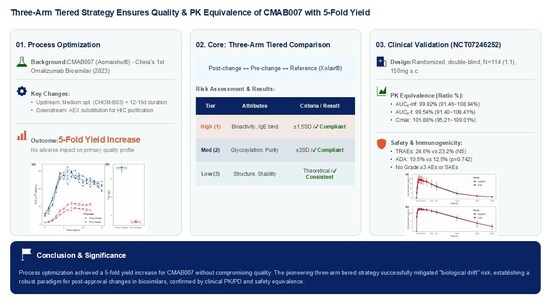
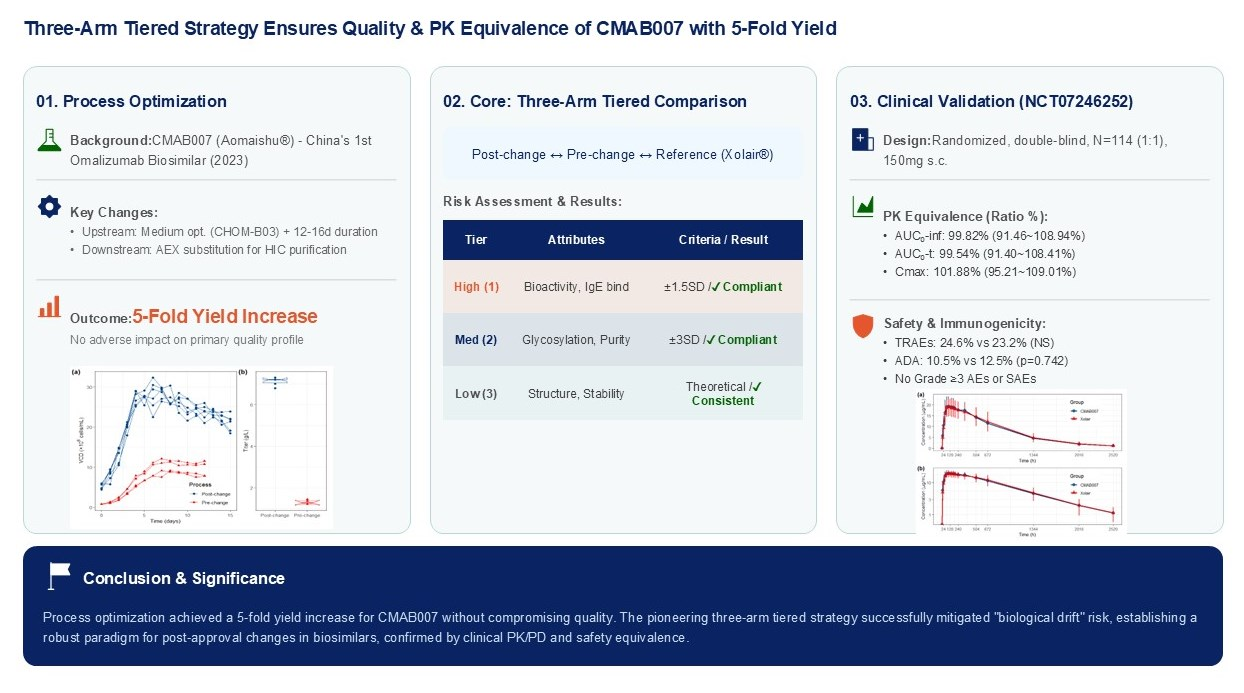
Graphical Abstract

1. Introduction

Omalizumab (Xolair®) is a humanized monoclonal antibody that specifically binds to immunoglobulin E (IgE), inhibiting its interaction with the high-affinity IgE receptor (FcεRI) on mast cells and basophils [1]. This mechanism underlies its therapeutic efficacy in allergic asthma and spontaneous urticaria, achieved by preventing the release of inflammatory mediators and downregulating FcεRI expression [2,3,4,5,6,7,8]. The inherent complexity of biologics like omalizumab—characterized by large size, intricate higher-order structures, heterogeneous post-translational modifications (PTMs) such as glycosylation, free thiol variants and the presence of multiple product-related variants—poses significant challenges for manufacturing consistency [9,10,11].
CMAB007 (Aomaishu®) is the first biosimilar of omalizumab approved in China in May 2023 [12,13,14]. To enhance production efficiency and the sustainability of post-approval, specific process optimizations were implemented. These included upstream media optimization and the replacement of hydrophobic interaction chromatography (HIC) with anion-exchange chromatography (AEX) in downstream purification. These changes achieved a 5-fold increase in production yield while retaining the original production cell line, aligning with the principles of Quality by Design (QbD) [15].
Global regulatory frameworks, established by authorities such as the International Council for Harmonization of Technical Requirements for Pharmaceuticals for Human Use (ICH), World Health Organization (WHO), the U.S. Food and Drug Administration (FDA), the European Medicines Agency (EMA) and center for drug evaluation of China (CDE) [16,17,18,19,20,21,22,23], provide structured guidance for assessing manufacturing changes for biologics, emphasizing risk-based comparability exercises. Industry practices for managing post-approval changes in biosimilars have also been documented in recent case studies [24,25,26]. However, the application of these guidelines to post-approval changes for biosimilars presents a unique challenge. Relying solely on conventional chemical drug change protocols or standard biosimilar development comparability approaches may be insufficient to mitigate the risk of “biological drift”—a subtle but consequential shift in critical quality attributes (CQAs) over time, which has been documented even for originator products [27,28,29,30,31]. This risk is amplified when a biosimilar, already demonstrated to be highly similar to the reference product, undergoes its own process changes. A strategy is needed that not only bridges pre- and post-change biosimilars but also continuously verifies alignment with the reference product’s quality profile.
To address this challenge, we pioneered a novel, integrated three-arm comparability strategy. This approach systematically compared the post-change product not only against the reference product (Xolair®) but also against its pre-change counterpart. Quality attributes were evaluated using a tiered, risk-based assessment with attribute-specific acceptance criteria. The comprehensive analytical characterization encompassed primary and higher-order structures, PTMs, purity/impurities, bioactivity, and Fc receptor-mediated functions, supplemented by forced degradation and accelerated stability studies. To clinically validate the strategy and confirm the absence of impactful drift, a pharmacokinetic (PK) comparability study comparing the post-change CMAB007 with the reference product was conducted in healthy male subjects.
This report describes the successful application of this tiered three-arm strategy, establishing a robust paradigm for managing post-approval manufacturing changes for biosimilars. The approach ensures the ongoing quality, efficacy, and safety of the biosimilar while facilitating necessary process improvements for scalable and sustainable production.

2. Results

2.1. Process Optimization Achieved a 5-Fold Yield Increase Without Altering Cell Line

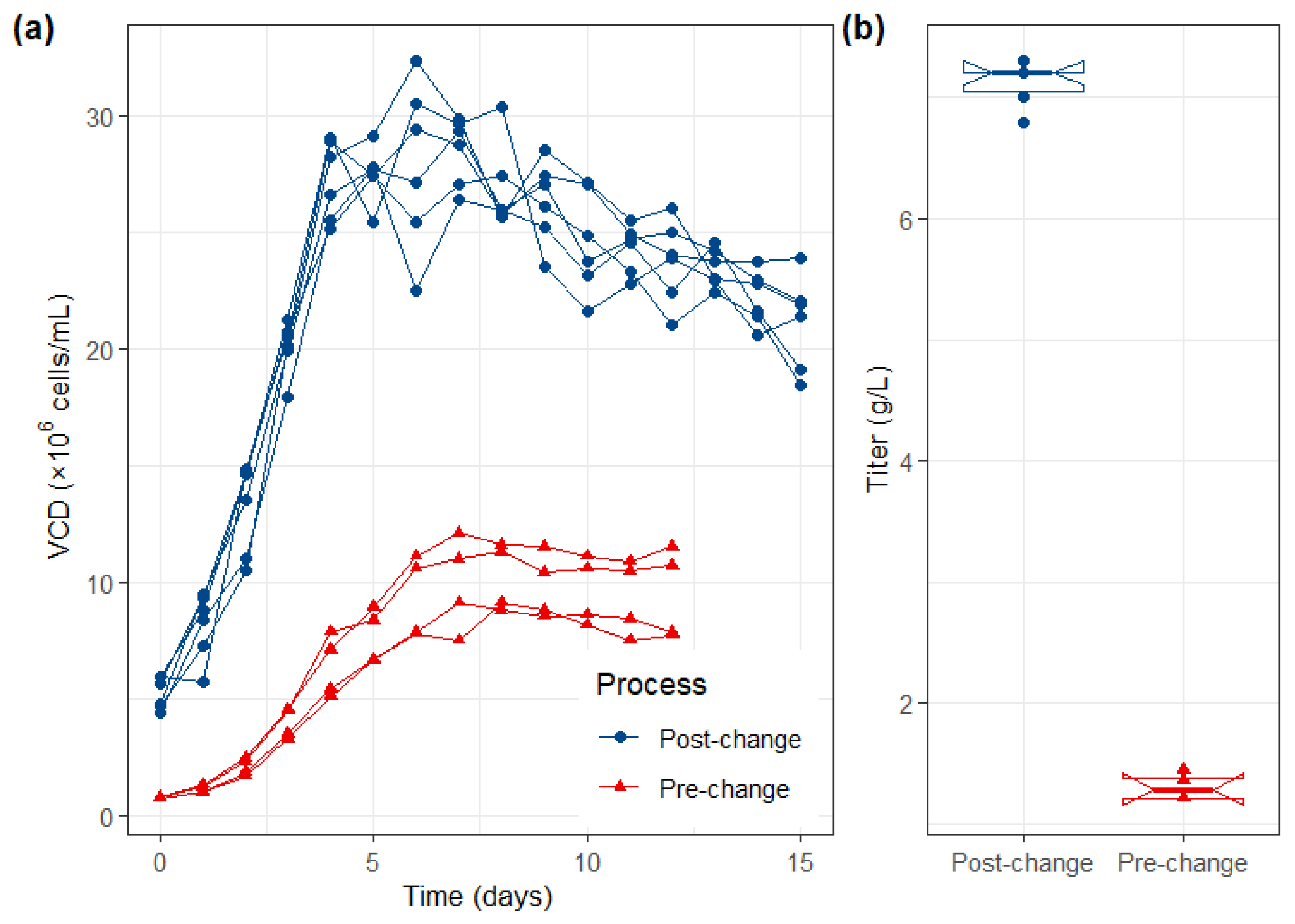
The post-approval process optimization for CMAB007 successfully enhanced production efficiency while maintaining the original host cell line (007/B4-C2WCB). Key modifications included upstream media optimization and the replacement of hydrophobic chromatography with anion chromatography in the downstream process. These changes (Table 1), coupled with an extended culture duration (from 10–14 days to 12–16 days), resulted in a consistent and robust 5-fold increase in protein yield (Figure 1). Critically, the post-change intermediates demonstrated comparable impurity clearance and quality attributes to the pre-change material, confirming that the optimization did not adversely affect the basic product profile.

2.2. Three-Arm Tiered Analytical Comparison Confirms Quality Comparability

A novel three-arm comparability strategy, comparing the post-change product against both the pre-change product and the reference product (Xolair®), was implemented. QAs were classified into a three-tier system based on risk assessment, with tier-specific acceptance criteria (Table 2). This approach ensured a rigorous, risk-based evaluation.

2.2.1. Physicochemical Properties

Comprehensive characterization confirmed that the post-change product was highly similar to both the pre-change and reference products (Table S1). The primary structure, including amino acid sequence and disulfide bond linkages, was identical. PTMs, such as glycosylation at the conserved site (EEQYNSTYR peptide), were consistent. Minor, non-critical differences were observed, such as a slightly higher level of fucosylated biantennary oligosaccharides in the post-change product compared to the reference, but this value was within the range of the pre-change product and is not considered a CQA for omalizumab due to its Fc-independent mechanism of action [32,33] (Table S1). Similarly, C-terminal lysine truncation was lower in CMAB007 (both pre- and post-change) compared to the reference, a difference with no known clinical impact [34,35,36,37,38,39]. Higher-order structure analyses (DSC, CD, DLS, and intrinsic fluorescence) confirmed conformational similarity across all three arms.

2.2.2. Bioactivity and Immunological Characteristics

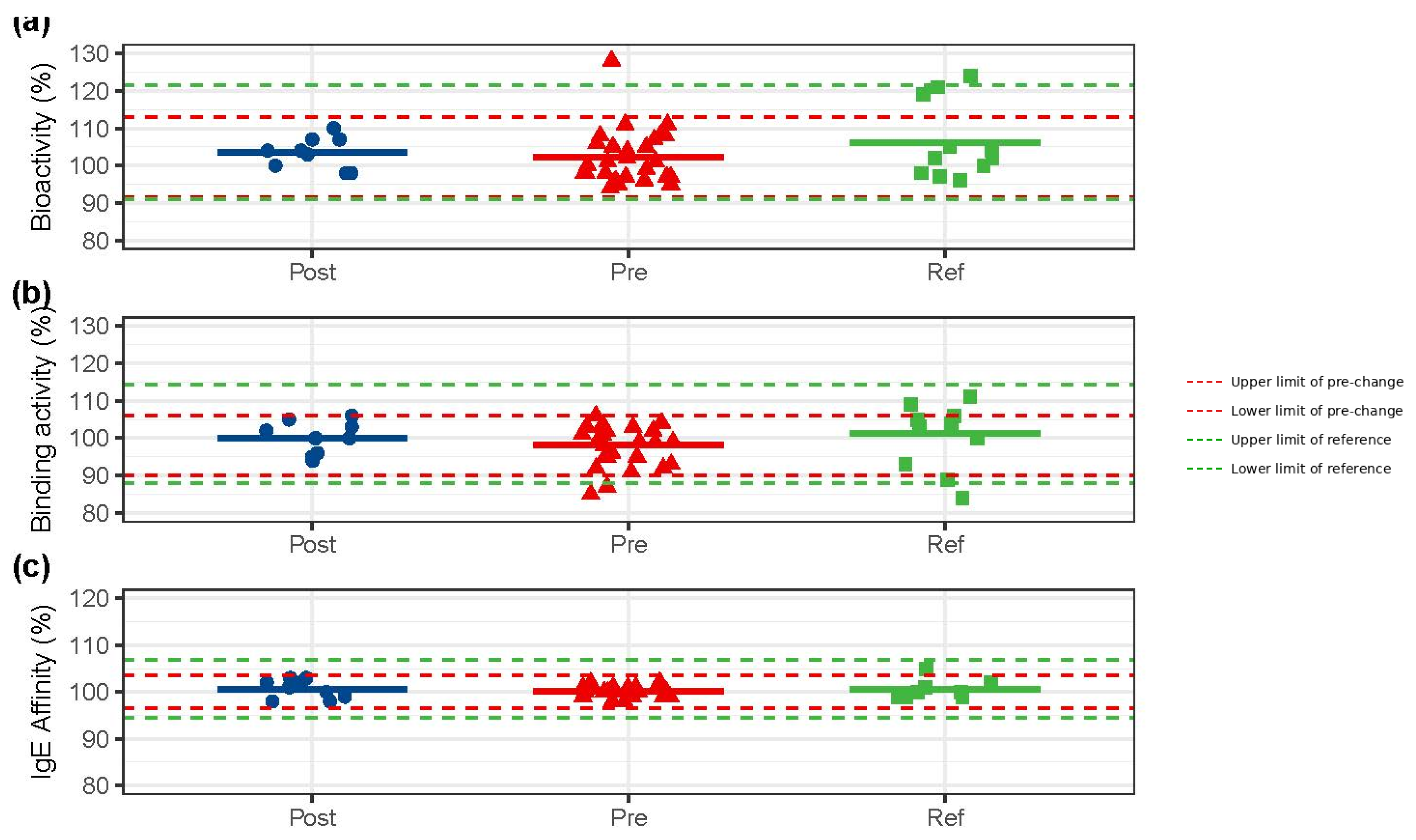
The functional integrity of the post-change product was thoroughly demonstrated. Tier 1 attributes, bioactivity and IgE binding activity, for the post-change product were within the pre-defined acceptance ranges (pre-change/reference mean ± 1.5 SD) of both the pre-change and reference products. Affinity to IgE, a Tier 2 attribute, was also equivalent. Furthermore, SPR analysis confirmed comparable affinity to a comprehensive panel of Fcγ receptors (FcγRI, FcγRIIa, FcγRIIb, FcγRIIIa, and FcγRIIIb), FcRn, and C1q, aligning the post-change product’s immunological characteristics with both the pre-change and reference profiles (Figure 2, Table S1).

2.2.3. Purity and Impurity Profiles

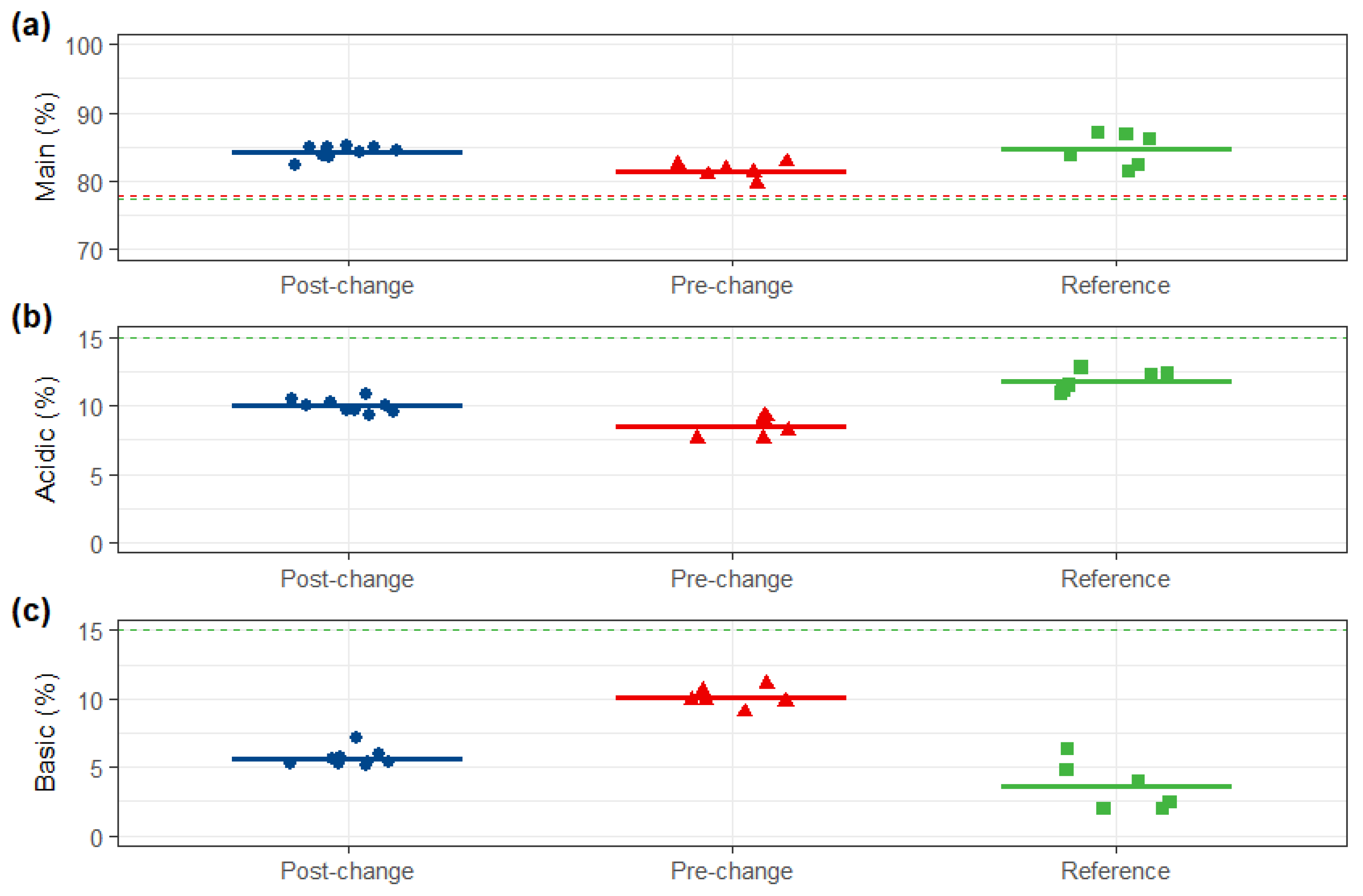
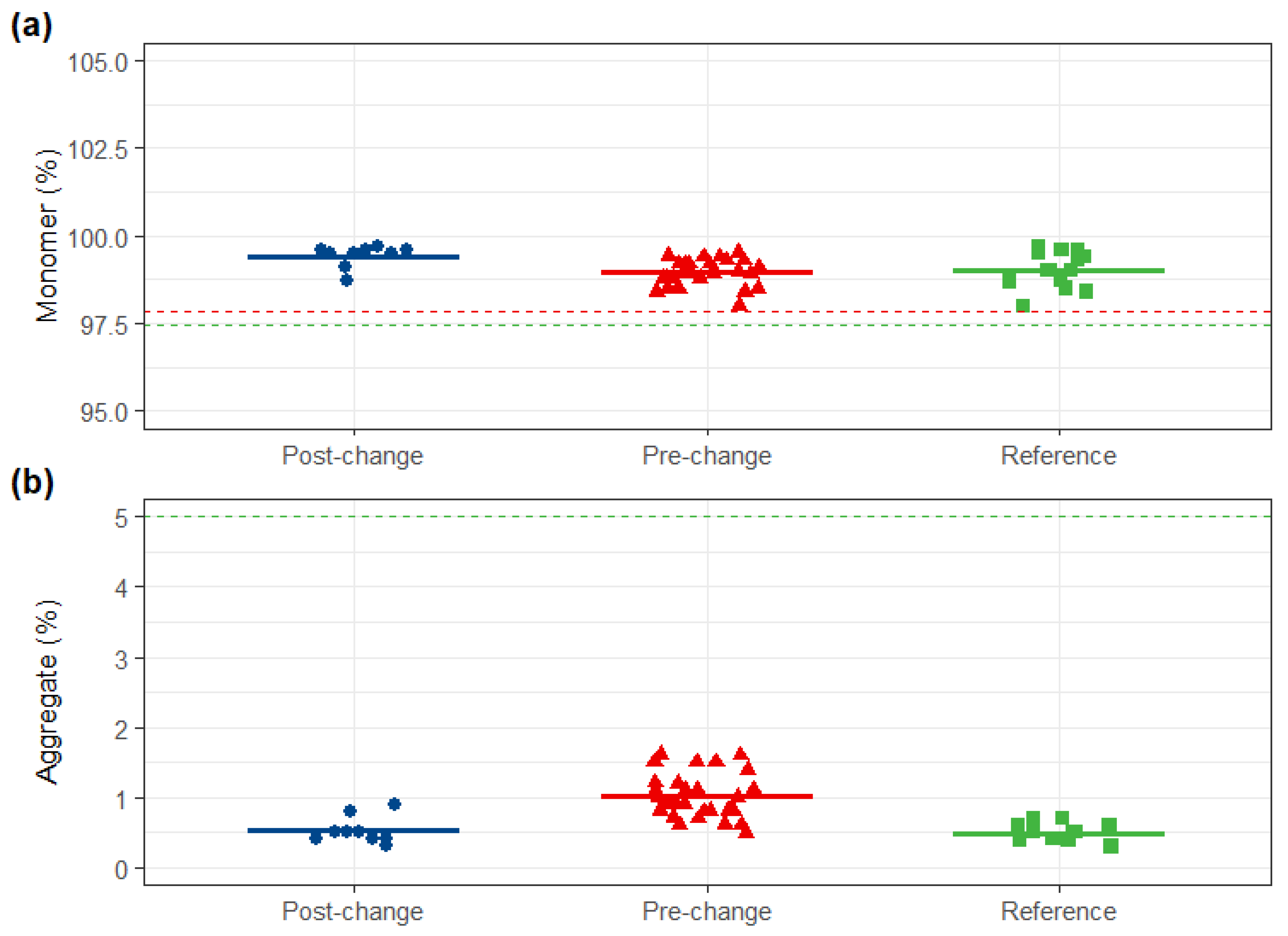
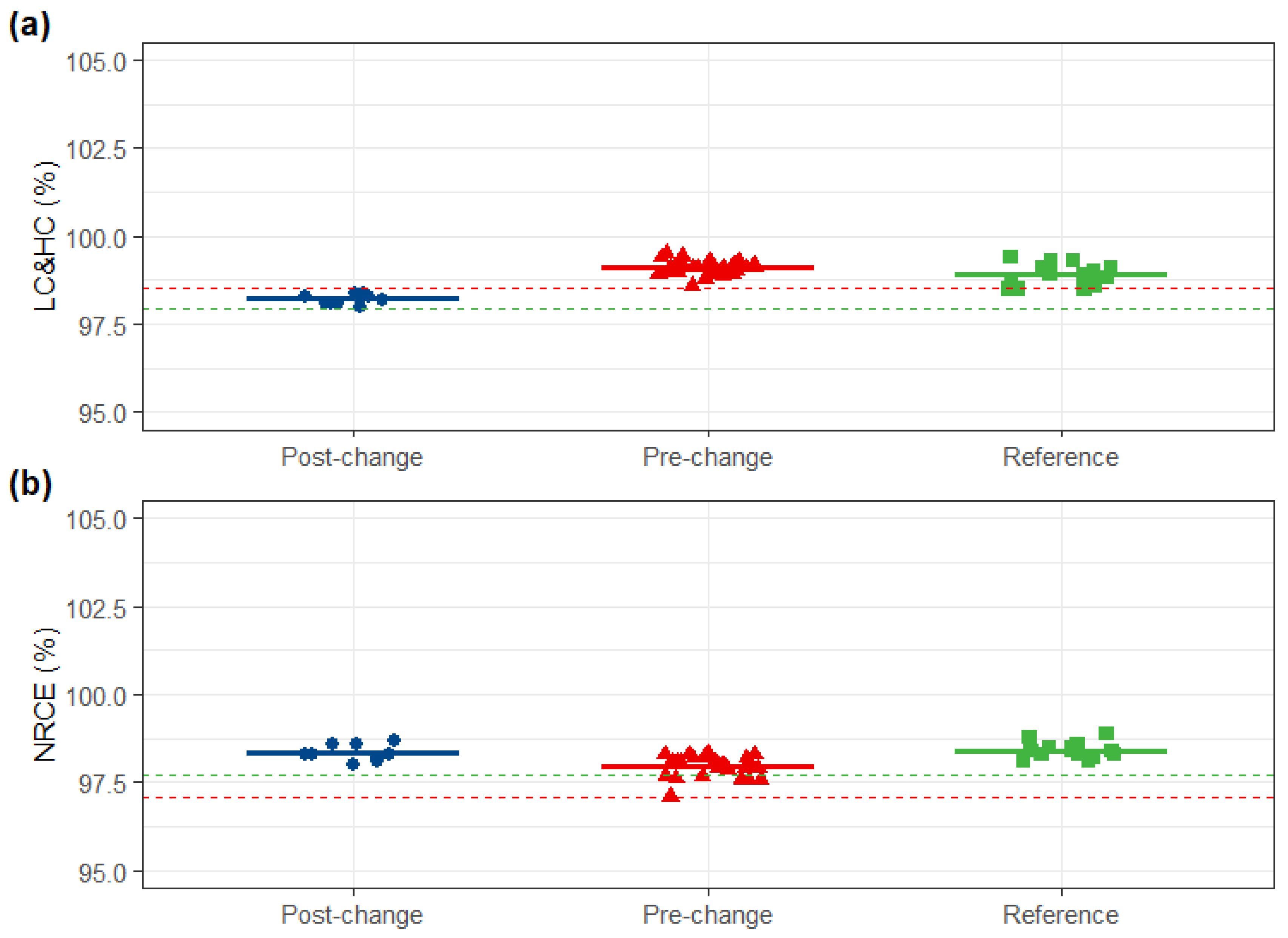
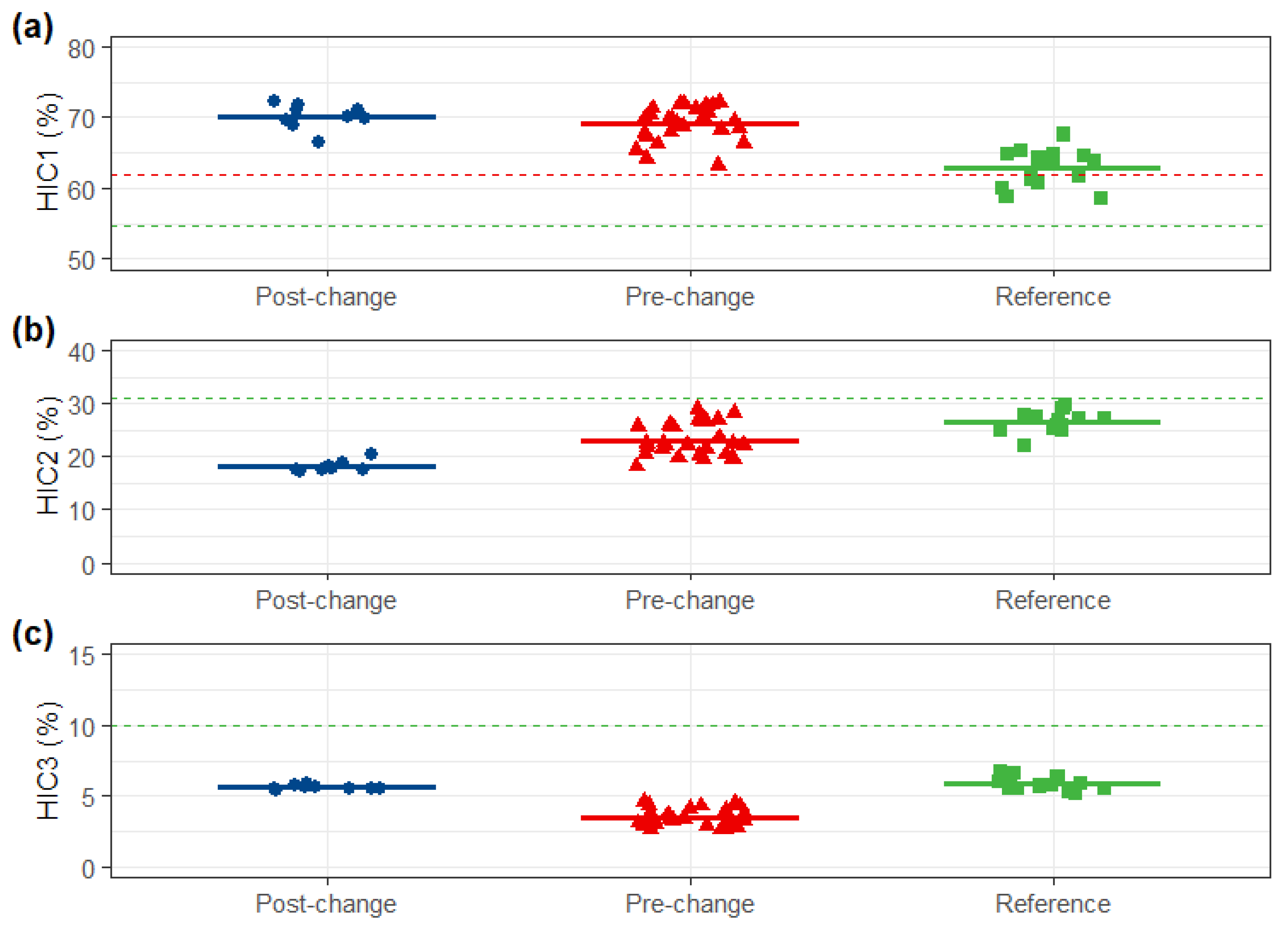
The purity and variant distribution of the post-change product were highly similar to both comparators. SEC-UPLC revealed that monomer and aggregate content met the reference and the pre-change similarity standards. Both reduced and non-reduced capillary electrophoresis (CE-SDS) were highly similar across all three groups. Furthermore, charge variant profiles (IEX-UPLC) and hydrophobic variant profiles (HIC-UPLC) of the post-change product were consistent with those of the pre-change product and within the reference variability (Figure 3, Figure 4, Figure 5 and Figure 6).
Isolation and characterization of key variants (e.g., aggregates, acidic/basic peaks, HIC peaks, and non-glycosylated heavy chains) confirmed that they were present in all three arms and exhibited comparable bioactivity and binding activity, indicating a lack of functional impact from the process change (Table 3 and Table 4) [40,41]. This functional similarity indicates that the process changes did not alter the product’s critical quality attributes.

2.3. Stability Profile

Forced degradation and accelerated stability studies demonstrated that the post-change product exhibited comparable or improved stability relative to the pre-change product, with profiles closely aligned to the reference (Tables S2–S5).
Under accelerated conditions (25 °C), the increase in aggregates for the post-change product (0.3–0.7%) was lower than that of the pre-change product and similar to the reference (Table S2). Under more strenuous stress conditions (high temperature, photolysis, and post-reconstitution oxidation), the post-change product consistently showed reduced degradation rates compared to the pre-change product, as measured by key indicators like aggregate formation (SEC) and variant shifts (IEX and HIC). Its degradation profile under these stresses was highly similar to that of the reference product (Xolair®) (Tables S3–S5). These data confirmed the robustness of the modified manufacturing process.

2.4. Clinical PK Study Establishes Equivalence Between Post-Change and Reference Products

A randomized, double-blind, parallel-controlled clinical trial (registration number: CTR20240714, n = 114 healthy males) established the pharmacokinetic (PK) equivalence of the post-change CMAB007 to the reference product.
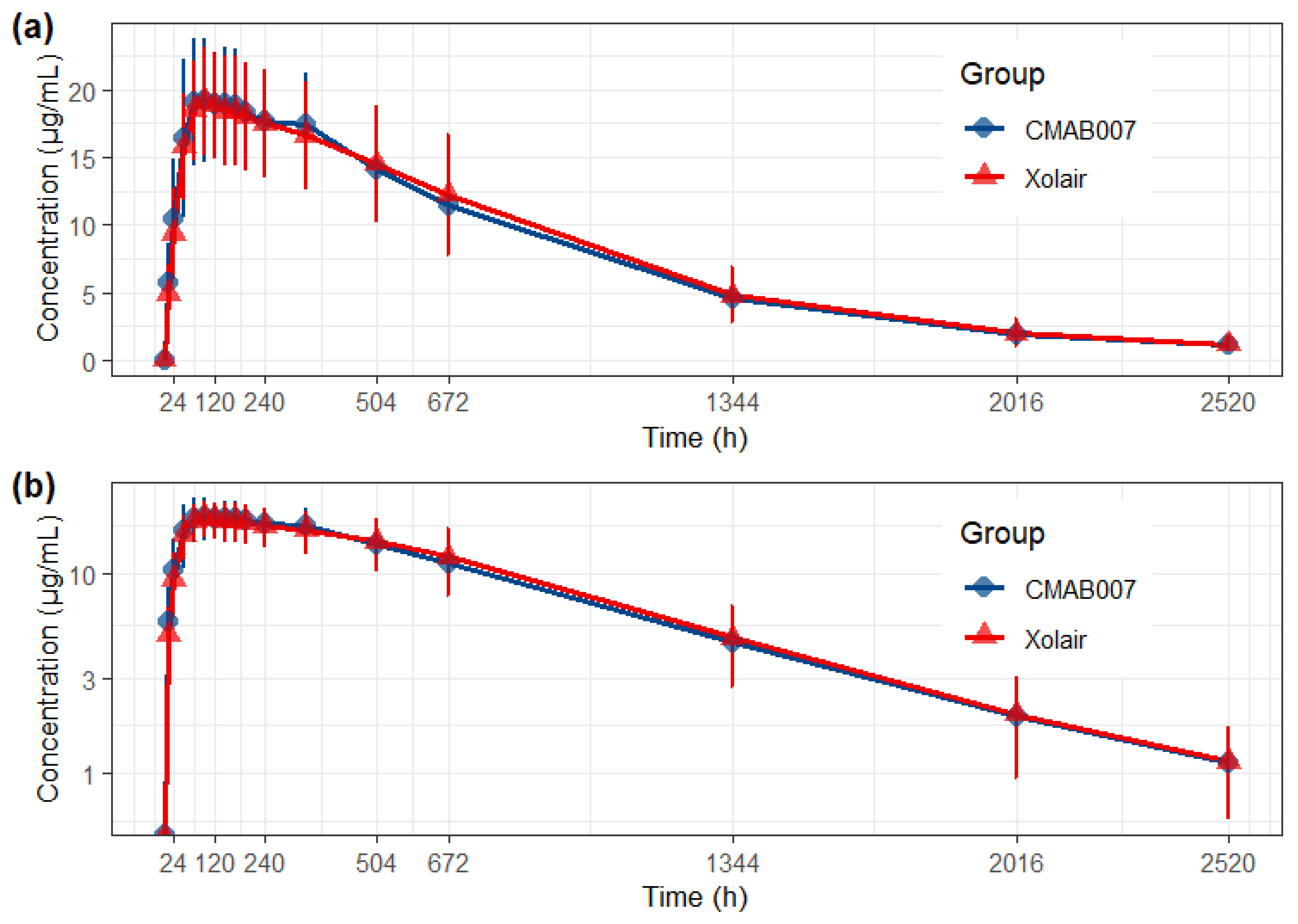
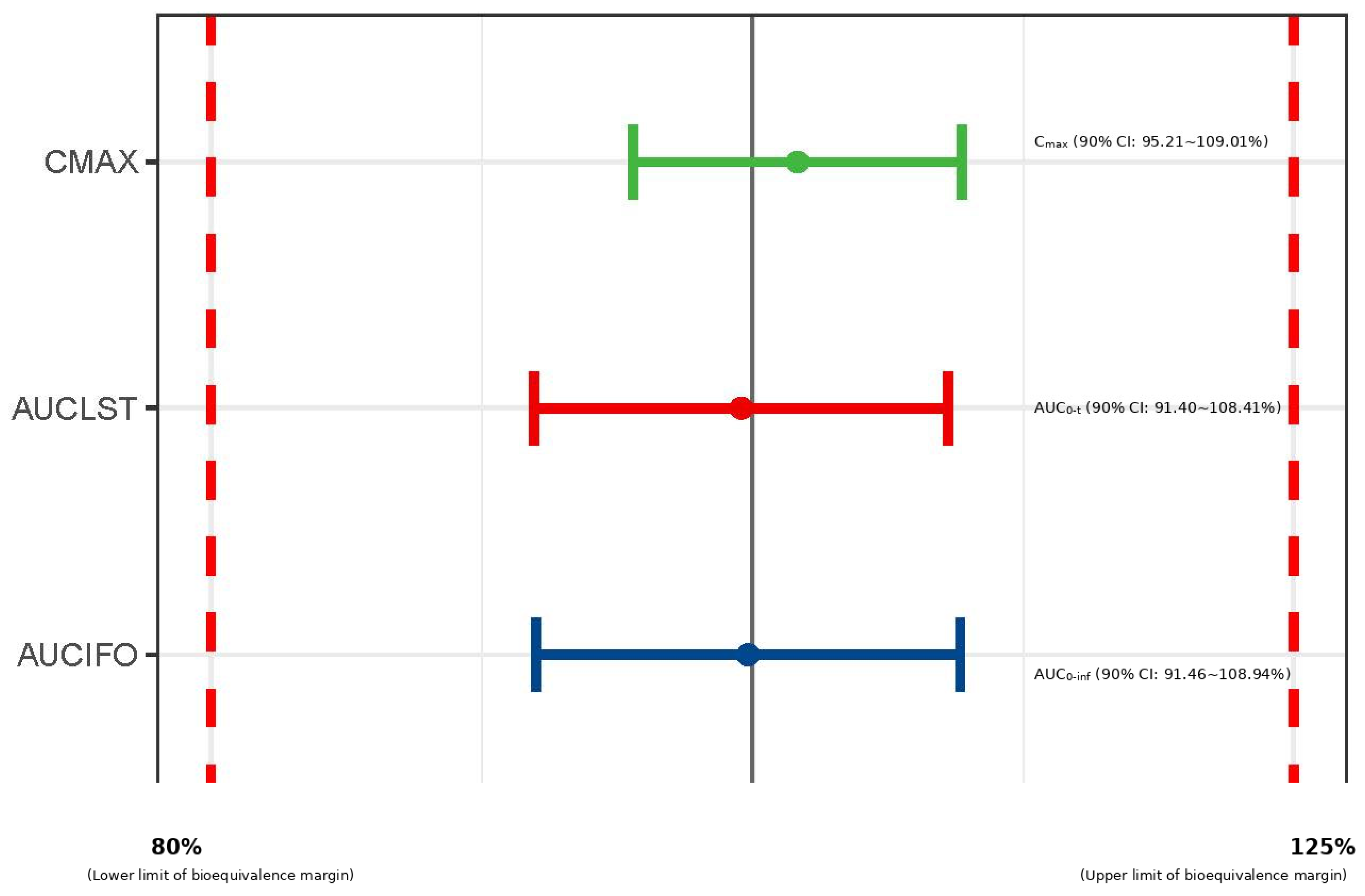
Following a single 150 mg subcutaneous dose, the serum concentration–time profiles were nearly superimposable (Figure 7). Statistical analysis confirmed PK equivalence, as the 90% CI for the geometric mean ratios (GMRs) of all primary PK endpoints were entirely within the pre-specified 80.00–125.00% bioequivalence margin:
(1)
AUC0–inf: GMR 99.82% (90% CI: 91.46~108.94%);
(2)
AUC0–t: GMR 99.54% (90% CI: 91.40~108.41%);
(3)
Cmax: GMR 101.88% (90% CI: 95.21~109.01%).
These results demonstrate that the absorption, distribution, and elimination of the post-change CMAB007 were equivalent to the originator, omalizumab (Table 5, Figure 8).

2.5. Comparable Safety and Immunogenicity Profiles

The safety and immunogenicity of the post-change product were comparable to the reference product.
The incidence of treatment-emergent adverse events (TEAEs) was 50.9% (29/57) in the CMAB007 group and 57.1% (32/56) in the Xolair® group. Treatment-related adverse events (TRAEs) occurred in 24.6% (14/57) and 23.2% (13/56) of subjects, respectively. Notably, significant TEAEs and injection-site reactions were only reported in the reference group (1.8%, 1/56). No TEAEs of CTCAE Grade ≥ 3, allergic reactions, treatment discontinuations, special-interest AEs, serious adverse events (TESAEs), or fatal events occurred in either group.
Immunogenicity incidence was low and similar between groups. The proportion of subjects with at least one positive ADA result was 10.5% (6/57) for CMAB007 and 12.5% (7/56) for Xolair® (p = 0.742). No Nabs were detected in any subject throughout the study duration.

3. Discussion

This study successfully demonstrates the application of a novel, integrated three-arm quality comparability strategy to manage post-approval process changes for an omalizumab biosimilar, CMAB007. The primary objective was to ensure that significant process enhancements—which yielded a 5-fold increase in production—did not adversely impact the critical quality, efficacy, or safety profile of the product. The strategy’s core innovation lies in its systematic, three-way comparison (post-change vs. pre-change vs. reference) coupled with a tiered, risk-based analytical assessment, providing a robust framework to proactively mitigate the risk of “biological drift” [28].
Our approach addresses a critical gap in the current paradigm for managing post-approval changes in biosimilars. While regulatory guidelines (e.g., ICH Q5E) provide a general framework for comparability exercises, and the tiered approach is well-established for initial biosimilar development [16,17,18,19,20,21,22], their combined application in a three-arm design for a post-approval scenario is pioneering. This strategy is particularly powerful for biosimilars because it simultaneously verifies two key relationships: first, that the post-change product remains comparable to its pre-change self (ensuring process control and consistency), and second, that both the pre- and post-change products remain aligned with the reference product’s quality range (safeguarding against drift from the originator’s established profile) [42]. This dual verification is a more stringent requirement than a standard two-arm comparability study and offers a higher level of assurance for long-term product quality.
The comprehensive analytical data unequivocally confirmed the high similarity of the post-change CMAB007 to both the pre-change product and Xolair® across a wide spectrum of attributes. The tiered system allowed for a scientifically rigorous and efficient assessment [43,44]. Tier 1 attributes, with the highest potential clinical impact (biological and binding activity), were controlled with the tightest criteria, and the post-change product comfortably met these standards. For Tier 2 and 3 attributes, any observed minor differences (e.g., in fucosylation levels or C-terminal Lys truncation) were not only within the pre-defined acceptance ranges but were also demonstrated to be consistent with the pre-change product’s profile and, critically, were justified as non-critical based on the known mechanism of action of omalizumab (e.g., Fc-independent) or existing scientific studies (e.g., rapid in vivo cleavage of C-terminal Lys) [33,45]. The enhanced stability profile of the post-change product under various stress conditions further underscores the robustness of the optimized process, suggesting potential improvements in product shelf-life and handling.
Given that CMAB007 is a biosimilar product, to avoid potential biological drift resulting from process changes, we selected the reference product rather than the pre-change product as the comparator in the PK comparability study. The clinical PK study served as the ultimate validation of this analytical comparability. The demonstration of PK equivalence between the post-change CMAB007 and the reference product in healthy subjects, with 90% CIs for all primary endpoints firmly within the 80–125% bioequivalence margin, provided direct evidence that the process changes did not alter the in vivo exposure profile [46]. This, combined with the comparable safety and immunogenicity results, translates the analytical similarity into clinical performance similarity, effectively closing the loop on the comparability exercise.
While the current nine-batch dataset demonstrates consistent product quality and supports the comparability conclusion, we recognize that ongoing process verification is essential for building comprehensive long-term consistent data. Continued process verification will be carried out on an ongoing basis. Additionally, as the study was conducted by the manufacturer, potential sponsor bias cannot be completely excluded; however, independent third-party analysis and regulatory oversight help mitigate this concern. In the clinical PK study, only healthy adult males (N = 114) were enrolled, excluding females, elderly adults, and patients with asthma or urticaria—the target populations for omalizumab. While this study design demonstrated the PK comparability of CMAB007 following process optimization, caution should be exercised when extrapolating these findings to broader populations. Continued monitoring of efficacy and safety in females, older adults, and the indicated patient populations is warranted in post-marketing surveillance and ongoing clinical studies.
In conclusion, the tiered three-arm strategy presented here establishes a new paradigm for managing post-approval changes for biosimilars. It moves beyond mere compliance to a more proactive, scientifically driven model that effectively de-risks manufacturing evolution. By integrating state-of-the-art analytics, a risk-proportionate assessment framework, and targeted clinical validation, this approach ensures the continuous quality, efficacy, and safety of a biosimilar throughout its lifecycle. This strategy not only supports the sustainable scalability and cost-effectiveness of biosimilar manufacturing but also provides a clear and rigorous roadmap for the biopharmaceutical industry and regulators navigating the challenges of post-approval process optimization.

4. Materials and Methods

4.1. Tested Samples

A comprehensive panel of batches was utilized for comparative analyses (Table 6):
(1)
Pre-change CMAB007: 28 commercial-scale batches manufactured prior to process optimization (Taizhou Mabtech Pharmaceutical Co., Ltd., Taizhou, China).
(2)
Post-change CMAB007: The 9 post-Change batches manufactured after process optimization (Taizhou Mabtech Pharmaceutical Co., Ltd.) were commercial-scale runs, and the acceptance criteria were based on the larger pre-change dataset (28 batches) and reference product (14 batches), in line with ICH Q5E guidance [16].
(3)
Reference Product (Xolair®): 14 batches of the originator omalizumab (Novartis Europharm Limited, Dublin, Ireland), sourced from markets in China, the USA, and Europe to account for potential regional heterogeneity.

4.2. Quality Comparability Strategy

To rigorously assess the impact of process changes and mitigate the risk of “biological drift,” a novel three-arm comparability strategy was employed, comparing the post-change product directly against both the pre-change product and the reference product.
Quality attributes (QAs) with potential impact on a drug’s structure, mechanism of action (MoA), safety, and efficacy were identified (Table S1). A risk-ranking approach was applied, evaluating each QA based on its potential impact (on PK/PD, immunogenicity, safety, and efficacy) and the associated uncertainty regarding this impact. Based on this risk assessment, QAs were classified into tiers, adapted from established biosimilar development principles [47,48].
(1)
Tier 1 (High-Risk Impact): For QAs with a known high impact on clinical outcomes (e.g., bioactivity). Acceptance criteria: Post-change values must fall within the pre-change/reference product’s mean ± 1.5 standard deviations (SDs).
(2)
Tier 2 (Medium-Risk Impact): For QAs with a potential or quantifiable impact (e.g., glycan profiles and key impurities). Acceptance criteria: Post-change values must fall within the pre-change/reference product’s mean ± 3 SDs.
(3)
Tier 3 (Low-Risk Impact): For QAs with lower risk or those assessed qualitatively (e.g., a primary structure or higher-order structure). Acceptance was based on matching theoretical values or demonstrating qualitative similarity in profiles, trends, or magnitudes.

4.3. Analytical Characterization

A comprehensive suite of state-of-the-art analytical techniques was deployed to assess a wide spectrum of quality attributes.

4.3.1. Physicochemical Properties

Intact molecular weight analysis: Intact and deglycosylated molecular weights were determined by liquid chromatography–mass spectrometry (LC-MS). After separation from buffer components, samples were analyzed on a Waters BEH300 C4 column (2.1 × 50 mm, 1.7 μm). Mass spectrometric detection was performed on a Waters Xevo G2-S system (Waters Corporation, Milford, MA, USA) operated in positive ion mode with an injection amount of 0.5 μg. The scan time was set to 0.5 s, the desolvation and source temperatures were 450 °C and 150 °C, respectively, the capillary and cone voltages were 3000 V and 110 V, the desolvation and cone gas flows were 800 and 50 L/h, respectively, and the mass range was 500–4000 m/z.
Peptide mapping: LC-MS peptide mapping was used to confirm the amino acid sequence, identify CDR-containing peptides, and characterize product-related post-translational modifications (PTMs), including glycosylation, oxidation, and deamidation [13,49]. Relative abundances of PTMs were calculated using Waters UNIFY software (version 3.12.0.548). Peak intensities in the deconvoluted spectra were normalized to the total signal, and relative percentages were derived from peak-height ratios.
Disulfide bond mapping: Disulfide bond linkages were characterized by LC-MS to verify the expected interchain and intrachain disulfide connectivity and to support the assessment of primary structural integrity [13,49].
High-order structures (HOSs): Conformational integrity was assessed by circular dichroism (CD; Chirascan Plus V100, Applied Photophysics, Leatherhead, UK), differential scanning calorimetry (DSC; Malvern VP-Capillary DSC Platform, Malvern Panalytical, Malvern, UK) for thermal transition profiles [50,51], dynamic light scattering (DLS; Malvern Zetasizer Nano ZS90, Malvern Panalytical, Malvern, UK) for particle size distribution and aggregation, and intrinsic fluorescence spectroscopy using a SpectraMax M5 microplate reader (Molecular Devices, San Jose, CA, USA) [52,53,54].

4.3.2. Bioactivity and Immunological Characteristics

Functional Assays: Bioactivity [enzyme-linked immunosorbent assay (ELISA)]—FcεR was coated onto a 96-well plate, followed by adding a mixture of CMAB007 and IgE-HRP. Binding was detected using IgE-HRP followed by the 3,3′,5,5′-tetramethylbenzidine (TMB) reagent. Binding activity (ELISA)-IgE was coated onto a 96-well plate, followed by adding CMAB007. Binding was detected using Goat Anti-Human Kappa-HRP followed by the TMB reagent. Both assays were determined using validated ELISA methods.
Binding Affinity: The binding affinity to human IgE and a panel of Fcγ receptors (FcγRI, FcγRIIa, FcγRIIb, FcγRIIIa, and FcγRIIIb) and the neonatal Fc receptor (FcRn) was quantified using surface plasmon resonance (SPR; Biacore, Cytiva, Uppsala, Sweden). Binding to C1q was assessed by an ELISA.

4.3.3. Purity and Impurities

Variant analysis: Purity and product-related variants were characterized using size-exclusion chromatography (SEC-UPLC) for aggregates and fragments, ion-exchange chromatography (IEX-UPLC) for charge variants, and HIC-UPLC for hydrophobic variants. Purity and size heterogeneity under denaturing conditions were analyzed by reduced and non-reduced capillary electrophoresis–sodium dodecyl sulfate (CE-SDS) [9,35,55].
SEC-UPLC measurements were performed on a Waters H-class UPLC system with a Waters ACQUITY UPLC® Protein BEH SEC 200 Å column (1.7 μm 4.6 × 150 mm column). The SEC-UPLC system was equipped with a TUV or PDA detector (Waters Corporation, Milford, MA, USA). Samples were diluted to 10 mg/mL and then injected into the UPLC system. Elution was performed using 200 mM sodium phosphate (pH 7.0) at a flow rate of 0.2 mL/min, monitored by UV absorbance at 280 nm. HMW species and monomers were calculated based on the ratio of its peak area to the sum of the peak areas of all components in the chromatogram.
IEX-UPLC measurements were performed on a Waters H-class UPLC system with a Pro Pac® SCX-10 analytical column, 4.0 × 150 mm column (Thermo Fisher Scientific, Waltham, MA, USA), eluted using a salt gradient and monitored by UV absorbance at 280 nm. Purity was evaluated by determining the peak area of each charged isoform group (main, acidic, and basic) that eluted separately as a percentage of the total peak area.
HIC-UPLC measurements were separated on a Waters e2695 Alliance HPLC system (Waters Corporation, Milford, MA, USA) with a TSK Phenyl-5PW 7.5 × 75 mm (TOSOH, Tokyo, Japan), eluted using a salt gradient and monitored by UV absorbance at 214 nm. Purity was evaluated by determining the peak area of each charged isoform group that eluted separately as a percentage of the total peak area.
For non-reduced CE-SDS (nrCE-SDS) and reduced CE-SDS (rCE-SDS), samples were prepared using the ProteinSimple Maurice (ProteinSimple, San Jose, CA, USA). For reduced CE-SDS (rCE-SDS), 2-mercaptoethanol (Sigma-Aldrich, St. Louis, MO, USA) was added to the protein denaturation (100 mMTris pH 9.0, 1% SDS) step to reduce the disulfide bonds. After denaturation, both non-reduced CE-SDS (nrCE-SDS) and rCE-SDS samples were injected onto a bare, fused silica capillary (AB Sciex, Framingham, MA, USA) and separated based on hydrodynamic size resulting from an applied electric field in which migration of smaller-sized proteins is inversely related to overall size. Analytes were monitored by UV absorbance at 220 nm, and purity was evaluated by determining the peak area of each species as a percentage of the total peak area.
Variant Identification: Critical variant peaks (size, charge, and hydrophobic) were isolated and collected. Their structures were identified using LC-MS, and their biological and binding activities were functionally characterized to assess potential impact.

4.4. Stability Studies

The comparative stability of the post-change, pre-change, and reference products was evaluated under stress conditions to assess structural robustness and degradation pathways.
Stability-indicating methods included SEC-UPLC (Waters UPLC H-Class, Waters Corporation, Milford, MA, USA), IEX-UPLC (Waters UPLC H-Class), HIC-UPLC (Waters e2695 Alliance HPLC, Waters Corporation, Milford, MA, USA), CE-SDS (ProteinSimple Maurice, ProteinSimple, San Jose, CA, USA), and assessments of bioactivity (SpectraMax 190, Molecular Devices, San Jose, CA, USA) and binding activity (SpectraMax 190, Molecular Devices, San Jose, CA, USA).
The selection of stability-indicating methods was based on ICH Q5C guidelines, which state that methods contributing to stability assessment include electrophoresis (SDS-PAGE, immunoelectrophoresis, Western blot, and isoelectrofocusing), high-resolution chromatography (e.g., reversed-phase chromatography, gel filtration, ion exchange, and affinity chromatography), and peptide mapping [56].
Consistent with precedent in biosimilar stability studies [24,25,26], we selected SEC-UPLC, IEX-UPLC, HIC-UPLC, and CE-SDS to monitor purity and molecular characteristics, complemented by bioactivity and binding activity assessments. Additionally, the accelerated and long-term stability studies for pre- and post-change CMAB007 included cIEF, peptide mapping, color, dissolution time for powders, visible particulates after reconstitution, pH, moisture, and sterility testing.

4.4.1. Accelerated Stability

Products were stored at 25 °C ± 2 °C for up to 6 months.

4.4.2. Forced Degradation

Studies included (Table 7):
High-temperature stress: 40 °C ± 2 °C for up to 30 days.
Photostability: Exposure to overall illumination ≥ 1.2 million lux hours and integrated near-ultraviolet energy of ≥200 watt hours/square meter.
Oxidative Stress (post-reconstitution): Exposure to 3% H2O2 at 5 °C ± 3 °C for up to 2 days.

4.5. Clinical Bridging Study

To confirm the pharmacokinetic (PK) and safety comparability of the post-change product relative to the reference product, a clinical study was conducted. The pre-change product was not included in this clinical study.

4.5.1. Study Design

A randomized, double-blind, parallel-controlled trial was performed (Clinical Trial Registry number: CTR20240714).
The PK study utilized single-dose administration rather than repeated dosing based on the following considerations: (a) single-dose PK parameters (AUC0–∞, Cmax) are most sensitive for detecting formulation-related bioavailability differences between biosimilar and reference products; (b) omalizumab’s long elimination half-life (~26 days) makes multiple-dose studies impractical for initial comparability assessment; and (c) immunogenicity evaluation in a single-dose study provides initial safety signals, with comprehensive immunogenicity data obtained from the multiple-dose Phase 3 studies of CMAB007 [57]. This approach is consistent with established biosimilar development paradigms.

4.5.2. Participants

A total of 114 healthy adult male subjects were enrolled and randomized to receive a single 150 mg subcutaneous dose of either post-change CMAB007 (n = 57) or Xolair® (n = 57).

4.5.3. PK Sampling and Endpoints

Blood sampling was conducted over 106 days (covering > 5 half-lives) to fully characterize the PK profile. Primary endpoints were the area under the concentration–time curve from zero to infinity (AUC0–inf) and maximum observed concentration (Cmax). Secondary endpoints included the AUC from zero to the last measurable concentration (AUC0-–t), time to Cmax (Tmax), elimination half-life (t1/2), apparent clearance (CL/F), and apparent volume of distribution (Vd/F).

4.5.4. Safety and Immunogenicity

Safety was assessed via adverse events (AEs), vital signs, laboratory parameters, and electrocardiograms. Immunogenicity was evaluated by measuring the incidence of anti-drug antibodies (ADAs) and neutralizing antibodies (NAbs) at multiple timepoints.

4.5.5. Statistical Analysis

PK parameters were log-transformed and analyzed using an analysis of variance (ANOVA) model. PK comparability was concluded if the 90% confidence intervals (CIs) for the geometric mean ratios (Test/Reference) of AUC0–inf, AUC0-t, and Cmax were entirely within the pre-defined equivalence margin of 80.00% to 125.00%. Statistical analyses were performed using WinNonlin® (version 8.4) and SAS® (version 9.4).

Supplementary Materials

The following supporting information can be downloaded at: https://www.mdpi.com/article/10.3390/ph19050724/s1, Figure S1: Representative chromatograms/spectra; Figure S2: Stability Data from stability studies (Accelerated testing); Figure S3: Stability Data from stability studies [High-temperature testing (40 °C)]; Figure S4: Stability Data from stability studies (Photostability testing); Figure S5: Stability Data from stability studies [Oxidative stress (post-reconstitution)]; Table S1: Quality comparison results; Table S2: Accelerated testing for pre-change, post-change and reference; Table S3: Forced degradation studies under high temperature(40 °C) for pre-change, post-change and reference; Table S4: Forced degradation studies under photostability testing for pre-change, post-change and reference; Table S5: Forced degradation studies under oxidative stress (post-reconstitution stability) for pre-change, post-change and reference.

Author Contributions

C.W.: Methodology and Writing—Original Draft Preparation. C.Z.: Methodology and Writing—Review and Editing. X.C., C.P., Y.R. and W.F.: Investigation. S.H., W.Q., H.G., Y.G. and Q.G.: Writing—Review and Editing. All authors have participated in the discussion of the results and contributed text and figures to the manuscript. All authors have read and agreed to the published version of the manuscript.

Funding

This study was funded by the Shanghai Leading Talent Program of Eastern Talent Plan (Grant No. CYQN2023031).

Institutional Review Board Statement

All procedures performed in studies involving human participants were in accordance with the ethical standards of the institutional and/or national research committee and with the 1964 Helsinki Declaration and its later amendments or comparable ethical standards. The study was approved by the Bioethics Committee of the Shanghai Xuhui Central Hospital ([(2024) linshen No.005]; 28 February 2024).

Informed Consent Statement

Informed consent was obtained from all subjects involved in the study. Written informed consent has been obtained from the subjects to publish this paper.

Data Availability Statement

The original contributions presented in the study are included in the article and Supplementary Materials, further inquiries can be directed to the corresponding authors.

Conflicts of Interest

Chenguang Wang, Chaoxin Zhou, Sheng Hou, Weizhu Qian, Yule Ren, Xiyuan Chen, Chenhong Pan and Qingcheng Guo were employed by company Taizhou Mabtech Pharmaceuticals Co., Ltd.; Chenguang Wang, Chaoxin Zhou, Sheng Hou, Weizhu Qian, Yule Ren, Qingcheng Guo, Huaizu Guo and Yajun Guo were employed by Shanghai Zhangjiang Biotechnology Co., Ltd. The remaining authors declare that the research was conducted in the absence of any commercial or financial relationships that could be construed as a potential conflict of interest.

References

  1. Casale, T.B. Omalizumab: The journey of the first anti-IgE approved for asthma and allergic disorders. J. Allergy Clin. Immunol. 2025, 155, 70–71. [Google Scholar] [CrossRef]
  2. Agache, I.; Rocha, C.; Pereira, A.; Song, Y.; Alonso-Coello, P.; Solà, I.; Beltran, J.; Posso, M.; Akdis, C.A.; Akdis, M.; et al. Efficacy and safety of treatment with omalizumab for chronic spontaneous urticaria: A systematic review for the EAACI Biologicals Guidelines. Allergy 2021, 76, 59–70. [Google Scholar] [CrossRef]
  3. FDA. XOLAIR(OMALIMAB). Available online: https://www.accessdata.fda.gov/scripts/cder/daf/index.cfm?event=overview.process&ApplNo=103976 (accessed on 10 March 2026).
  4. FDA. OMLYCLO(OMALIMAB). Available online: https://www.accessdata.fda.gov/scripts/cder/daf/index.cfm?event=overview.process&ApplNo=761399 (accessed on 10 March 2026).
  5. EMA. XOLAIR(OMALIMAB). Available online: https://www.ema.europa.eu/en/documents/scientific-discussion/xolair-epar-scientific-discussion_en.pdf (accessed on 10 March 2026).
  6. EMA OMLYCLO(OMALIMAB). Available online: https://www.ema.europa.eu/en/documents/assessment-report/omlyclo-epar-public-assessment-report_en.pdf (accessed on 10 March 2026).
  7. JAPAN Pharmaceuticals and Medical Devices Agency. XOLAIR(OMALIMAB). Available online: https://www.pmda.go.jp/files/000153931.pdf (accessed on 10 March 2026).
  8. Australian Public Assessment Report for Omalizumab. Available online: https://www.tga.gov.au/sites/default/files/auspar-omalizumab-210415.pdf (accessed on 10 March 2026).
  9. Wang, X.; Xu, J.; Guo, Q.; Li, Z.; Cao, J.; Fu, R.; Xu, M.; Zhao, X.; Wang, F.; Zhang, X.; et al. Improving product quality and productivity of an antibody-based biotherapeutic using inverted frustoconical shaking bioreactors. Front. Bioeng. Biotechnol. 2024, 12, 1352098. [Google Scholar] [CrossRef]
  10. Zhang, T.; Zhang, J.; Hewitt, D.; Tran, B.; Gao, X.; Qiu, Z.J.; Tejada, M.; Gazzano-Santoro, H.; Kao, Y.-H. Identification and characterization of buried unpaired cysteines in a recombinant monoclonal IgG1 antibody. Anal. Chem. 2012, 84, 7112–7123. [Google Scholar] [CrossRef]
  11. Rajagopal, N.; Choudhary, U.; Tsang, K.; Martin, K.P.; Karadag, M.; Chen, H.-T.; Kwon, N.-Y.; Mozdzierz, J.; Horspool, A.M.; Li, L.; et al. Deep learning-based design and experimental validation of a medicine-like human antibody library. Brief. Bioinform. 2024, 26, bbaf023. [Google Scholar] [CrossRef]
  12. Guntern, P.; Eggel, A. Past, present, and future of anti-IgE biologics. Allergy 2020, 75, 2491–2502. [Google Scholar] [CrossRef]
  13. Xu, J.; Zhang, D.; Wang, H.; Guo, H. Structural characterization and analysis of Omalizumab and its biosimilar CMAB007 by LC-MS. Sheng Wu Gong Cheng Xue Bao Chin. J. Biotechnol. 2016, 32, 497–506. [Google Scholar] [CrossRef]
  14. Zhou, B.; Lin, B.; Li, J.; Qian, W.; Hou, S.; Zhang, D.; Kou, G.; Li, B.; Wang, H.; Chen, Y.; et al. Tolerability, pharmacokinetics and pharmacodynamics of CMAB007, a humanized anti-immunoglobulin E monoclonal antibody, in healthy Chinese subjects. mAbs 2012, 4, 110–119. [Google Scholar] [CrossRef]
  15. Mohammed, J.; Sharma, V.; Ravindra, N.; Singh, V. A comprehensive review on quality by design (QbD) in pharmaceuticals. Int. J. Health Adv. Clin. Res. (tz) 2024, 2, 55–59. [Google Scholar]
  16. ICHQ5E Comparability of Biotechnological/Biological Products Subject to Changes in Their Manufacturing Process. Available online: https://database.ich.org/sites/default/files/Q5E%20Guideline.pdf (accessed on 10 March 2026).
  17. ICH Q12. Technical and Regulatory Considerations for Pharmaceutical Product Lifecycle Management. Available online: https://database.ich.org/sites/default/files/Q12_Guideline_Step4_2019_1119.pdf (accessed on 10 March 2026).
  18. WHO Guidelines on Procedures and Data Requirements for Changes to Approved Biotherapeutic Products. Available online: https://cdn.who.int/media/docs/default-source/biologicals/biotherapeutics/annex_3_extract_who_trs_1011_web.pdf?sfvrsn=de2b6a0a_5&download=true (accessed on 10 March 2026).
  19. FDA Quality Considerations in Demonstrating Biosimilarity of a Therapeutic Protein Product to a Reference Product. Available online: https://www.fda.gov/media/135612/download (accessed on 10 March 2026).
  20. FDA Chemistry, Manufacturing, and Controls Changes to an Approved Application: Certain Biological Products. Available online: https://www.fda.gov/regulatory-information/search-fda-guidance-documents/chemistry-manufacturing-and-controls-changes-approved-application-certain-biological-products (accessed on 10 March 2026).
  21. FDA Guidance Concerning Demonstration of Comparability of Human Biological Products, Including Therapeutic Biotechnology-derived Products. Available online: http://academy.gmp-compliance.org/guidemgr/files/CDER_GUIDANCE_COMPARE.PDF (accessed on 10 March 2026).
  22. CDE Pharmacological Change Research Technical Guidance Principles for Marketed Biologics. Available online: https://www.cde.org.cn/main/news/viewInfoCommon/7ef3a0d630aea8a49186f49f31a6fd3c (accessed on 10 March 2026).
  23. Webster, C.J.; George, K.L.; Woollett, G.R. Comparability of biologics: Global principles, evidentiary consistency and unrealized reliance. BioDrugs 2021, 35, 379–387. [Google Scholar] [CrossRef]
  24. Wu, Z.; Xu, G.; He, W.; Yu, C.; Huang, W.; Zheng, S.; Kang, D.; Xie, M.H.; Cao, X.; Wang, L.; et al. Comparability strategy and demonstration for post-approval production cell line change of a bevacizumab biosimilar IBI305. Antib. Ther. 2023, 6, 194–210. [Google Scholar] [CrossRef]
  25. Yu, C.; Zhang, F.; Xu, G.; Wu, G.; Wang, W.; Liu, C.; Fu, Z.; Li, M.; Guo, S.; Yu, X.; et al. Analytical similarity of aproposed biosimilar BVZ-BC to bevacizumab. Anal. Chem. 2020, 92, 3161–3170. [Google Scholar] [CrossRef]
  26. Zhang, E.; Xie, L.; Qin, P.; Lu, L.; Xu, Y.; Gao, W.; Wang, L.; Xie, M.H.; Jiang, W.; Liu, S. Quality by Design–Based Assessment for Analytical Similarity of Adalimumab Biosimilar HLX03 to Humira®. AAPS J. 2020, 22, 69. [Google Scholar] [CrossRef] [PubMed]
  27. Garai, Á.S.; Hüse, D.; Fizil, Á.; Zólyomi, Z.; Lehoczki, G.; Kis, A.; Kálmán-Szekeres, Z.; Háda, V. Comprehensive Physico-chemical and Functional Similarity Assessment Study of RGB-14-P and RGB-14-X Drug Products as Proposed Biosimilars to Denosumab Reference Products. BioDrugs 2025, 39, 697–724. [Google Scholar] [CrossRef]
  28. Kim, S.; Song, J.; Park, S.; Ham, S.; Paek, K.; Kang, M.; Chae, Y.; Seo, H.; Kim, H.-C.; Flores, M. Drifts in ADCC-related quality attributes of Herceptin®: Impact on development of a trastuzumab biosimilar. mAbs 2017, 9, 704–714. [Google Scholar] [CrossRef]
  29. Shibata, H.; Harazono, A.; Kiyoshi, M.; Saito, Y.; Ishii-Watabe, A. Characterization of Biosimilar Monoclonal Antibodies and Their Reference Products Approved in Japan to Reveal the Quality Characteristics in Post-approval Phase. BioDrugs 2025, 39, 645–667. [Google Scholar] [CrossRef]
  30. Schiestl, M.; Stangler, T.; Torella, C.; Čepeljnik, T.; Toll, H.; Grau, R. Acceptable changes in quality attributes of glycosylated biopharmaceuticals. Nat. Biotechnol. 2011, 29, 310–312. [Google Scholar] [CrossRef] [PubMed]
  31. Welch, J.; Ausin, C.; Brahme, N.; Lacana, E.; Ricci, S.; Schultz-DePalo, M. The mannose in the mirror: A reflection on the pharmacokinetic impact of high mannose glycans of monoclonal antibodies in biosimilar development. Clin. Pharmacol. Ther. 2023, 113, 1003–1010. [Google Scholar] [CrossRef] [PubMed]
  32. Szabo, M.; Filep, C.; Nagy, M.; Sarkozy, D.; Szigeti, M.; Sperling, E.; Csanky, E.; Guttman, A. N-glycosylation structure—Function characterization of omalizumab, an anti-asthma biotherapeutic product. J. Pharm. Biomed. Anal. 2022, 209, 114483. [Google Scholar] [CrossRef]
  33. Okayama, Y.; Matsumoto, H.; Odajima, H.; Takahagi, S.; Hide, M.; Okubo, K. Roles of omalizumab in various allergic diseases. Allergol. Int. 2020, 69, 167–177. [Google Scholar] [CrossRef]
  34. Antes, B.; Amon, S.; Rizzi, A.; Wiederkum, S.; Kainer, M.; Szolar, O.; Fido, M.; Kircheis, R.; Nechansky, A. Analysis of lysine clipping of a humanized Lewis-Y specific IgG antibody and its relation to Fc-mediated effector function. J. Chromatogr. B Anal. Technol. Biomed. Life Sci. 2007, 852, 250–256. [Google Scholar] [CrossRef] [PubMed]
  35. Ambrogelly, A.; Gozo, S.; Katiyar, A.; Dellatore, S.; Kune, Y.; Bhat, R.; Sun, J.; Li, N.; Wang, D.; Nowak, C.; et al. Analytical comparability study of recombinant monoclonal antibody therapeutics. mAbs 2018, 10, 513–538. [Google Scholar] [CrossRef]
  36. Cai, B.; Pan, H.; Flynn, G.C. C-terminal lysine processing of human immunoglobulin G2 heavy chain in vivo. Biotechnol. Bioeng. 2010, 108, 404–412. [Google Scholar] [CrossRef] [PubMed]
  37. Khawli, L.A.; Goswami, S.; Hutchinson, R.; Kwong, Z.W.; Yang, J.; Wang, X.; Yao, Z.; Sreedhara, A.; Cano, T.; Tesar, D.B.; et al. Charge variants in IgG1 Isolation, characterization, in vitro binding properties and pharmacokinetics in rats. mAbs 2010, 2, 613–624. [Google Scholar] [CrossRef]
  38. Brorson, K.; Jia, A.Y. Therapeutic monoclonal antibodies and consistent ends: Terminal heterogeneity, detection, and impact on quality. Curr. Opin. Biotechnol. 2014, 30, 140–146. [Google Scholar] [CrossRef]
  39. FDA. Development of Therapeutic Protein Biosimilars Comparative Analytical Assessment and Other Quality-Related Considerations Guidance for Industry. Available online: https://www.fda.gov/regulatory-information/search-fda-guidance-documents/development-therapeutic-protein-biosimilars-comparative-analytical-assessment-and-other-quality?elq=a8e95a9487f0440b96e31cb582de95cf&elqCampaignId=6642&elqTrackId=b4f5708e0621453fa7ca537aabfaab4a&elqaid=8112&elqat=1&utm_campaign=CDER%2520New%252005%252f22%252f2019 (accessed on 10 March 2026).
  40. Wakankar, A.A.; Borchardt, R.T.; Eigenbrot, C.; Shia, S.; Wang, Y.J.; Shire, S.J.; Liu, J.L. Aspartate Isomerization in the Complementarity-Determining Regions of Two Closely Related Monoclonal Antibodies. Biochemistry 2007, 46, 1534–1544. [Google Scholar] [CrossRef]
  41. Harris, R.J. Heterogeneity of recombinant antibodies: Linking structure to function. Dev. Biol. 2005, 122, 117–127. [Google Scholar]
  42. Nikitina, V.; Laurini, G.S.; Montanaro, N.; Motola, D. Comparative Safety Profiles of Biosimilars vs. Originators Used in Rheumatology: A Pharmacovigilance Analysis of the EudraVigilance Database. J. Clin. Med. 2025, 14, 1644. [Google Scholar] [CrossRef]
  43. Iskit, A.B. Biosimilars and interchangeability: Regulatory, scientific, and global perspectives. Eur. J. Pharm. Sci. 2025, 213, 107224. [Google Scholar] [CrossRef]
  44. Monga, A.; Gagan; Jamwal, P.; Sharma, S.; Kaur, A. Biosimilars: A Critical Review of Development, Regulatory Landscape, and Clinical Implications. AAPS PharmSciTech 2025, 26, 46. [Google Scholar] [CrossRef] [PubMed]
  45. Balbino, B.; Herviou, P.; Godon, O.; Stackowicz, J.; Goff, O.R.-L.; Iannascoli, B.; Sterlin, D.; Brûlé, S.; Millot, G.A.; Harris, F.M.; et al. The anti-IgE mAb omalizumab induces adverse reactions by engaging Fcγ receptors. J. Clin. Investig. 2020, 130, 1330–1335. [Google Scholar] [CrossRef]
  46. Wadhwa, M.; Knezevic, I.; Kang, H.-N.; Thorpe, R. Immunogenicity assessment of biotherapeutic products: An overview of assays and their utility. Biologicals 2015, 43, 298–306. [Google Scholar] [CrossRef]
  47. Tsong, Y.; Dong, X.; Shen, M. Development of statistical methods for analytical similarity assessment. J. Biopharm. Stat. 2017, 27, 197–205. [Google Scholar] [CrossRef]
  48. Vandekerckhove, K.; Seidl, A.; Gutka, H.; Kumar, M.; Gratzl, G.; Keire, D.; Coffey, T.; Kuehne, H. Rational Selection, Criticality Assessment, and Tiering of Quality Attributes and Test Methods for Analytical Similarity Evaluation of Biosimilars. AAPS J. 2018, 20, 68. [Google Scholar] [CrossRef] [PubMed]
  49. An, Q.; Zheng, Y.; Zhao, Y.; Liu, T.; Guo, H.; Zhang, D.; Qian, W.; Wang, H.; Guo, Y.; Hou, S.; et al. Physicochemical characterization and phase I study of CMAB008, an infliximab biosimilar produced by a different expression system. Drug Des. Dev. Ther. 2019, 13, 791–805. [Google Scholar] [CrossRef]
  50. Liu, B.; Guo, H.; Xu, J.; Qin, T.; Xu, L.; Zhang, J.; Guo, Q.; Zhang, D.; Qian, W.; Li, B.; et al. Acid-induced aggregation propensity of nivolumab is dependent on the Fc. mAbs 2016, 8, 1107–1117. [Google Scholar] [CrossRef] [PubMed]
  51. Wei, Z.; Shacter, E.; Schenerman, M.; Dougherty, J.; McLeod, L.D. The role of higher-orderstructure in defining biopharmaceutical quality. BioProcess Int. 2011, 9, 58–66. [Google Scholar]
  52. Reshetnyak, Y.K.; Burstein, E.A. Decomposition of Protein Tryptophan Fluorescence Spectra into Log-Normal Components. II. The Statistical Proof of Discreteness of Tryptophan Classes in Proteins. Biophys. J. 2001, 81, 1710–1734. [Google Scholar] [CrossRef] [PubMed]
  53. More, A.S.; Toprani, V.M.; Okbazghi, S.Z.; Kim, J.H.; Joshi, S.B.; Middaugh, C.R.; Tolbert, T.J.; Volkin, D.B. Correlating the Impact of Well-Defined Oligosaccharide Structures on Physical Stability Profiles of IgG1-Fc Glycoforms. J. Pharm. Sci. 2015, 105, 588–601. [Google Scholar] [CrossRef]
  54. Nowak, C.; Ponniah, G.; Cheng, G.; Kita, A.; Neill, A.; Kori, Y.; Liu, H. Liquid chromatography–fluorescence and liquid chromatography–mass spectrometry detection of tryptophan degradation products of a recombinant monoclonal antibody. Anal. Biochem. 2016, 496, 4–8. [Google Scholar] [CrossRef]
  55. Xu, M.; Xu, M.; Liu, T.; Mao, D.; Zheng, C.; Yu, W.; Guo, Q.; Li, Z.; Gao, T.; Ren, Y.; et al. Feasibility of Rapid Regulatory Differentiation of TNF Receptor 2-Fc Fusion Protein Products from Various Manufacturers in the Chinese Market Using a Novel Mass Spectrometry-Based Multi-attribute Method (MAM). J. Am. Soc. Mass Spectrom. 2025, 36, 2059–2071. [Google Scholar] [CrossRef] [PubMed]
  56. ICH Q5C Quality of Biotechnological Products: Stability Testing of Biotechnological/Biological Products. Available online: https://database.ich.org/sites/default/files/Q5C%20Guideline.pdf (accessed on 10 March 2026).
  57. Lai, K.; Yan, Z.; Qian, D.; Zhang, X.; Bian, T.; Dai, X.; Li, H.; Lin, L.; Wang, J.; Wang, L.; et al. Benefits of CMAB007 in Chinese Patients Having Inadequately Controlled Moderate/Severe Asthma with Increased Total IgE: A Randomized Phase 3 Trial. Allergy Asthma Immunol. Res. 2026, 18, 39–54. [Google Scholar] [CrossRef] [PubMed]
Figure 1. Enhanced production performance following process optimization. (a) Viable Cell Density (VCD) and (b) titer of pre-change and post-change product. Red line: pre-change product; blue line: post-change product.
Pharmaceuticals 19 00724 g001
Figure 2. Functional equivalence demonstrated by Tier 1 quality attributes. (a) Bioactivity, (b) binding activity and (c) IgE affinity of post-change, pre-change and reference products. Red dashed lines: upper and lower limits of pre-change QRs (bioactivity: 91–113%; binding activity: 90–106%; IgE affinity: 97–104%); green dashed lines: upper and lower limits of reference QRs (bioactivity: 91–121%; binding activity: 88–114%; IgE affinity: 94–107%).
Pharmaceuticals 19 00724 g002
Figure 3. SEC-HPLC comparison. (a) Monomer; (b) aggregate of post-change, pre-change and reference products. Red dashed lines: upper and lower limits of pre-change QRs (monomer: ≥97.8%; aggregate: ≤5.0%); green dashed lines: upper and lower limits of reference QRs (monomer: ≥97.5%; aggregate: ≤5.0%).
Pharmaceuticals 19 00724 g003
Figure 4. CE-SDS comparison. (a) LC&HC (b) NRCE of post-change, pre-change and reference products. Red dashed lines: lower limits of pre-change QRs (LC&HC: ≥98.5%; NRCE: ≤97.1%); green dashed lines: lower limits of reference QRs (LC&HC: ≥98.0%; NRCE: ≤97.7%).
Pharmaceuticals 19 00724 g004
Figure 5. IEX-HPLC comparison. (a) Main, (b) acidic, and (c) basic of post-change, pre-change and reference products. Red dashed lines: upper and lower limits of pre-change QRs (main: ≥78.0%; acid: ≤15.0%; basic: ≤15.0%); green dashed lines: upper and lower limits of reference QRs (main: ≥77.4%; acid: ≤15.0%; basic: ≤15.0%).
Pharmaceuticals 19 00724 g005
Figure 6. HIC-HPLC comparison. (a) HIC1, (b) HIC2 and (c) HIC3 of post-change, pre-change and reference products. Red dashed lines: upper and lower limits of pre-change QRs (HIC1: ≥61.9%; HIC2: ≤31.0%; HIC3: ≤10.0%); green dashed lines: upper and lower limits of reference QRs (HIC1: ≥54.7%; HIC2: ≤31.0%; HIC3: ≤10.0%).
Pharmaceuticals 19 00724 g006
Figure 7. PK equivalence of post-change CMAB007 and reference product. Mean (±SD) serum concentration–time profiles following a single 150 mg subcutaneous dose of post-change CMAB007 (test) and Xolair® (reference) in healthy male subjects. (a) Linear scale; (b) semilogarithmic scale.
Pharmaceuticals 19 00724 g007
Figure 8. Statistical demonstration of PK bioequivalence. Green line: Cmax (90% CI: 95.21~109.01%); red line: AUC0–t (90% CI: 91.40~108.41%); blue line: AUC0–inf (90% CI: 91.46~108.94%). The red dashed lines indicate the upper and lower limits of bioequivalence margin.
Pharmaceuticals 19 00724 g008
Table 1. Summary of key manufacturing process changes.
ParameterPost-ChangePre-ChangeComparison
Cell line007/B4-C2WCB007/B4-C2WCBIdentical
Bioreactor scale1500 L1500 LIdentical
MediumBasal media: CHOM-B03; CHOM-B02;
Supplement media: CHOM-S03; CHOM-S04
Basal media: CHOM-B02;
Supplement media: CHOM-S01
Chemically defined media;
Same supplier
Culture duration12–16 days10~14 daysExtended for higher yield
PurificationAffinity + cation/anionAffinity + cation/hydrophobicHydrophobic to anion
Table 2. Tier classification and acceptance criteria for critical quality attributes.
TierQuality AttributesAcceptance Criteria
Tier1Binding activity and bioactivityPre-change/reference mean ± 1.5 SD
Tier2Hexose content, glycosylation profiles (fucosylated biantennary oligosaccharides), IgE/FcγRIIIa/FcRn affinity, NR-CE, R-CE, SEC-UPLC, IEX-UPLC, HIC-UPLCPre-change/reference mean ± 3 SD *
Tier3Amino acid sequence, molecular weight, primary structure (subunit analysis),
disulfide bonds,
Matches theoretical values or identical
free thiols, glycation, PTMs, DSC, CD spectroscopy, intrinsic fluorescence, peptide mapping, cIEF, particle size distribution, FcγRI/FcγRIIa/FcγRIIb/FcγRIIIb/C1q
affinity, stability studies (forced degradation, accelerated stability)
Qualitative comparisons (profile similarity, limits, magnitude, trends)
* For impurities, similarity acceptance criteria were set as fixed specification limits.
Table 3. Structural identification of charge variants by LC-MS following carboxypeptidase B (CPB) digestion.
IEXPost-ChangePre-ChangeReference
AcidicSA, Deamidation,
Glycation, Oxidation
SA, Deamidation,
Glycation, Oxidation
SA, Deamidation,
Glycation, Oxidation
Main0 K0 K0 K
BasicPyrEPyrEPyrE
PyrE: N-terminal pyroglutamate cyclization; 0 K: complete C-terminal lysine truncation; SA: sialic acid modification.
Table 4. Bioactivity and binding activity of charge variants.
IEXBioactivityBinding Activity
Post-ChangePre-ChangeReferencePost-ChangePre-ChangeReference
Acidic93–102%120%117%83–97%99%99%
Main93–109%126%117%87–109%106%118%
Basic89–97%121%115%83–104%83%101%
Table 5. Summary of PK parameters following a single 150 mg subcutaneous dose.
ParameterPost-Change CMAB007 GroupXolair® Group
Cmax21.23 μg/mL (21.23% CV)20.83 μg/mL (21.15% CV)
Tmax120.00 h (47.99–337.27 h)120.00 h (47.99–550.90 h)
AUC0–t18,158.89 h·μg/mL (23.60% CV)18,526.98 h·μg/mL (30.68% CV)
AUC0–inf19,046.76 h·μg/mL (24.49% CV)19,380.29 h·μg/mL (31.64% CV)
t1/2528.60 h (17.46% CV)506.07 h (14.67% CV)
Vd/F6208.36 mL (18.49% CV)6015.42 mL (22.86% CV)
CL/F8.39 mL/h (26.51% CV)8.48 mL/h (30.16% CV)
Table 6. Product batches used for comparative studies.
SampleBatches for Quality ComparisonBatches for StabilityBatches for PK Study
Pre-change CMAB007283/
Post-change CMAB007931
4Reference (Xolair®)1431
Table 7. Conditions for accelerated and forced degradation stability studies.
StudyConditionsTimepointsTests
Accelerated stability25 °C ± 2 °C0, 1, 2, 3, 6 monthsNR-CE, R-CE, SEC/IEX/HIC-UPLC, bioactivity, binding activity
Forced degradationHigh temperature40 °C ± 2 °C0, 10, 30 daysNR-CE, R-CE, SEC/IEX/HIC-UPLC, bioactivity, binding activity
PhotostabilityOverall
illumination ≥ 1.2 million lux hours and an integrated near-ultraviolet
energy ≥ 200 watt hours/square meter
0, 11, 30 daysAs above
Oxidation
(post-reconstitution)
3% H2O2, 5 °C ± 3 °C0, 1, 2 daysAs above
Disclaimer/Publisher’s Note: The statements, opinions and data contained in all publications are solely those of the individual author(s) and contributor(s) and not of MDPI and/or the editor(s). MDPI and/or the editor(s) disclaim responsibility for any injury to people or property resulting from any ideas, methods, instructions or products referred to in the content.