Study on the Mechanism of Paeoniflorin, an Active Component of Paeonia lactiflora Pall., in Improving Skin Pigmentation by Inhibiting the TNF-α Signaling Pathway

 ,
,
Abstract
1. Introduction
2. Results
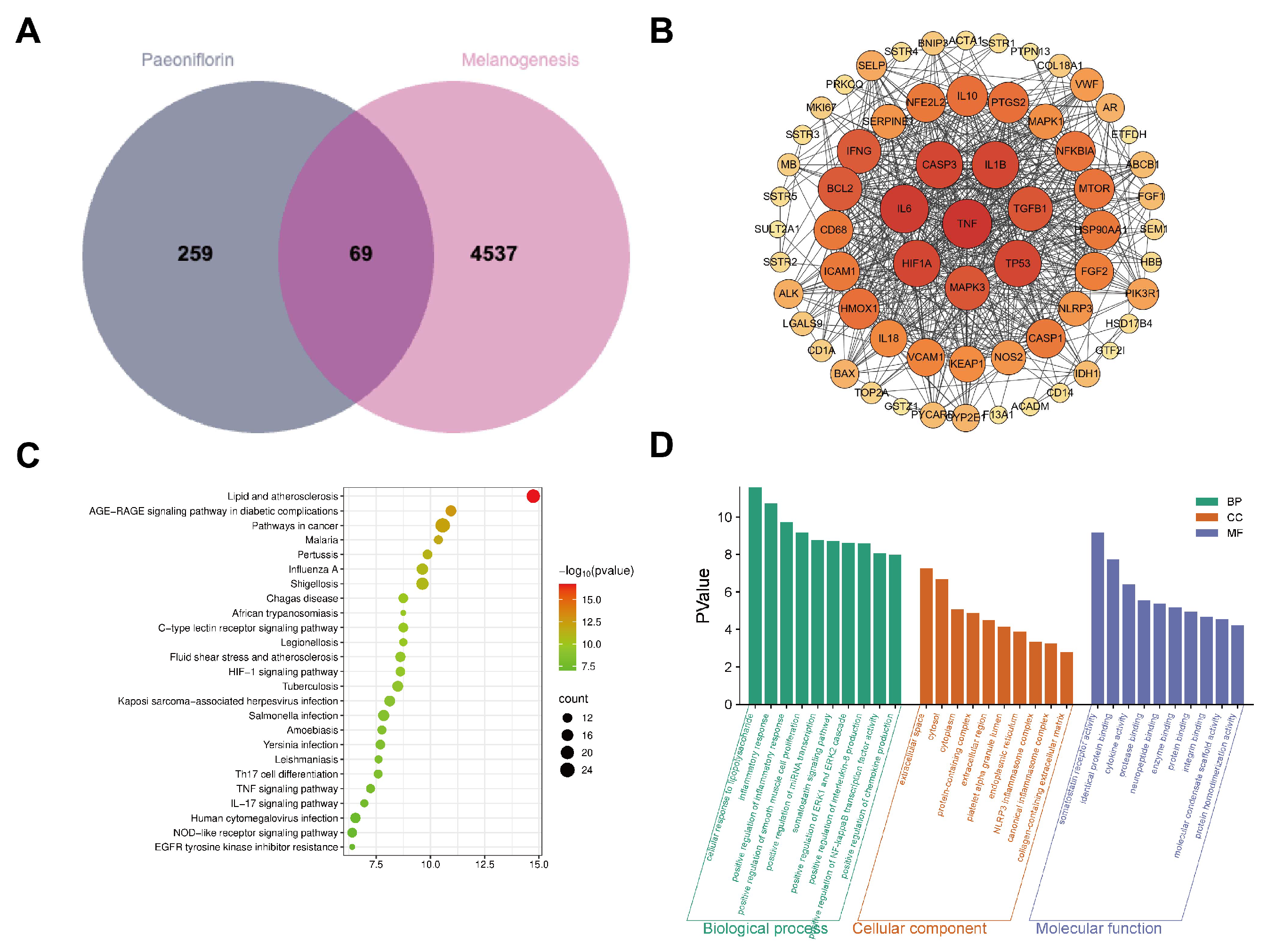
2.1. Employing Network Pharmacology to Analyze the Relationship Between PF and Melanin Synthesis
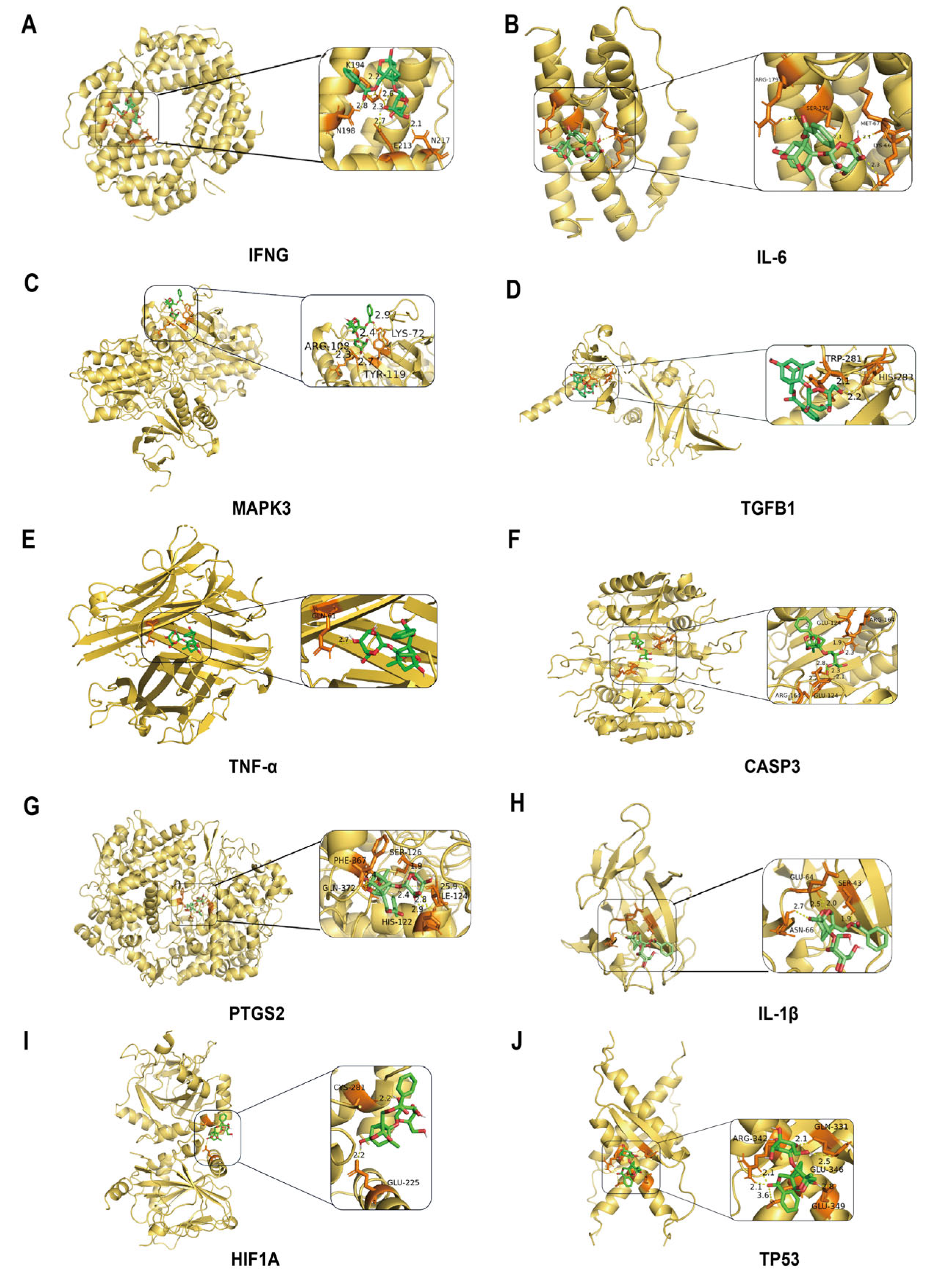
2.2. Molecular Docking Prediction of PF Inhibiting Melanin Deposition
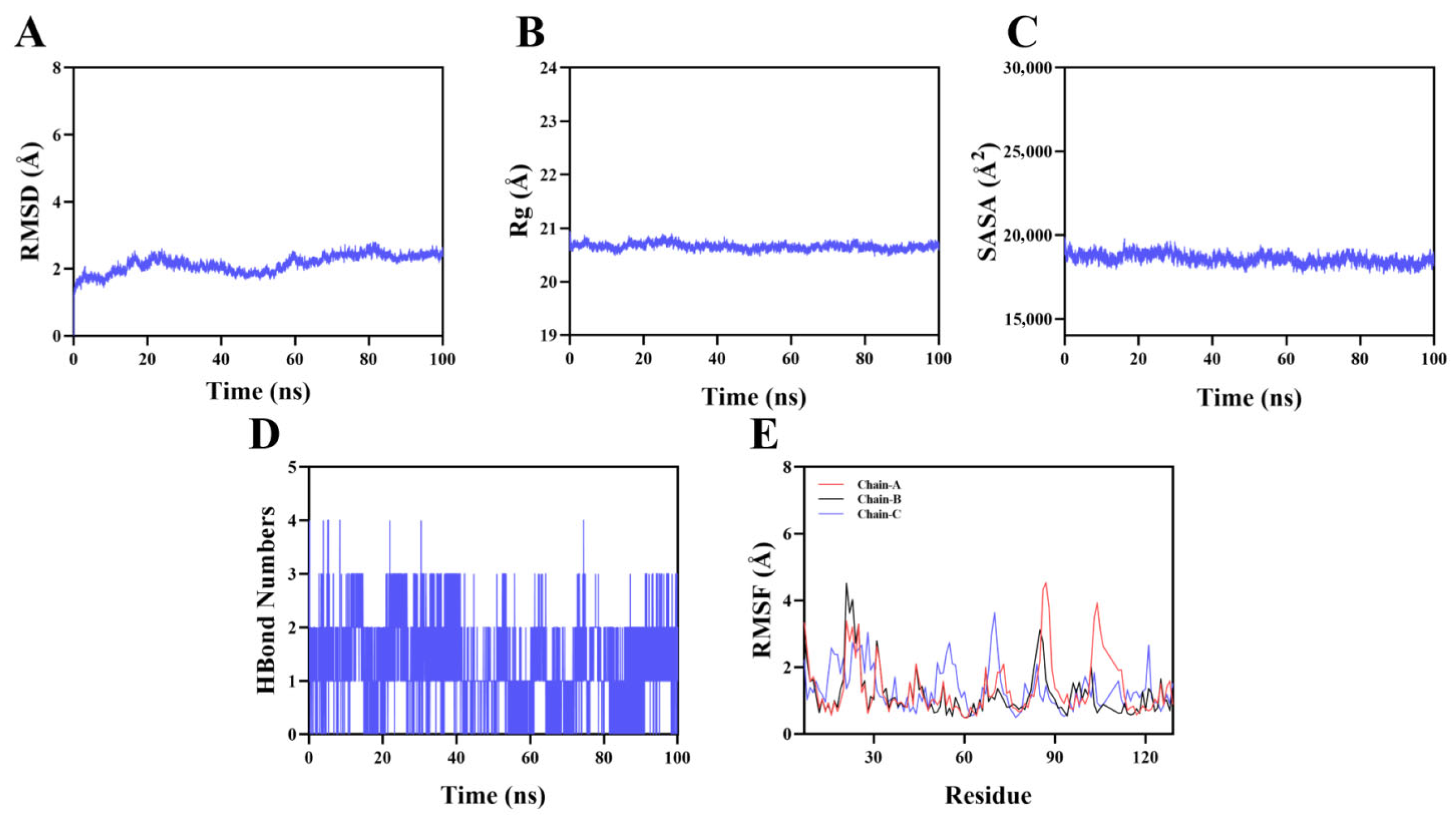
2.3. Molecular Simulation Dynamics Results
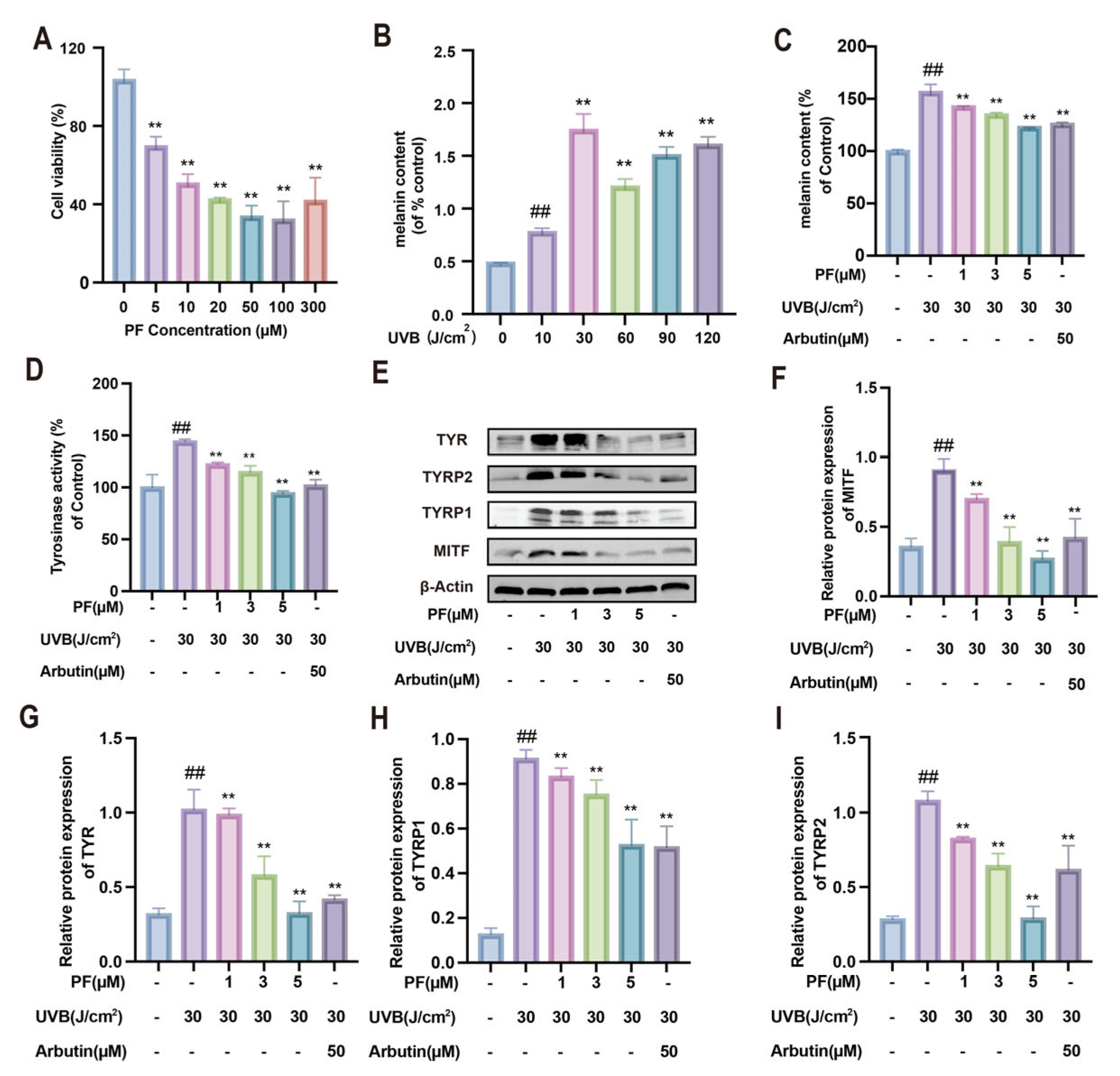
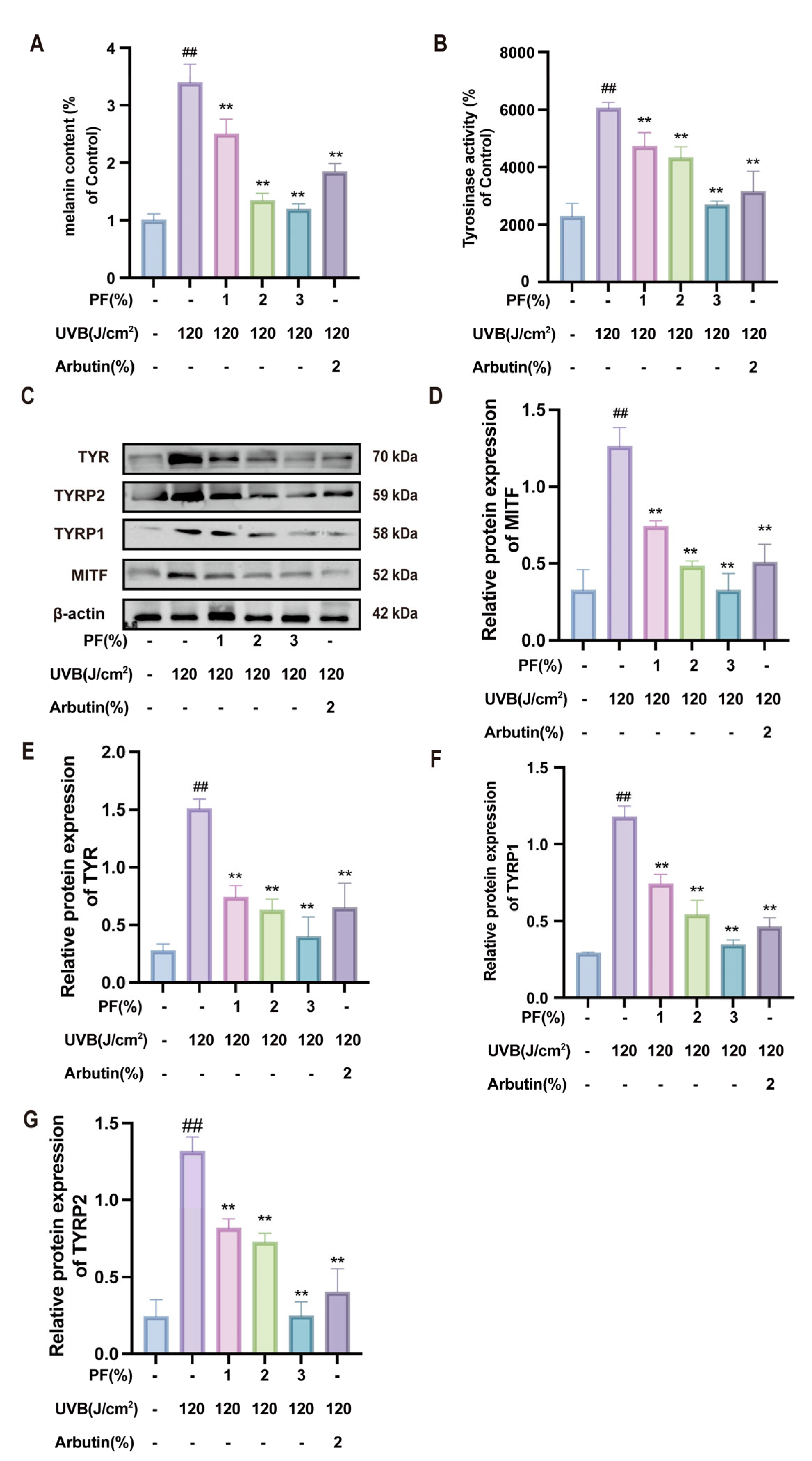
2.4. The Melanogenesis-Inhibiting Effect of PF on B16F10 Cells
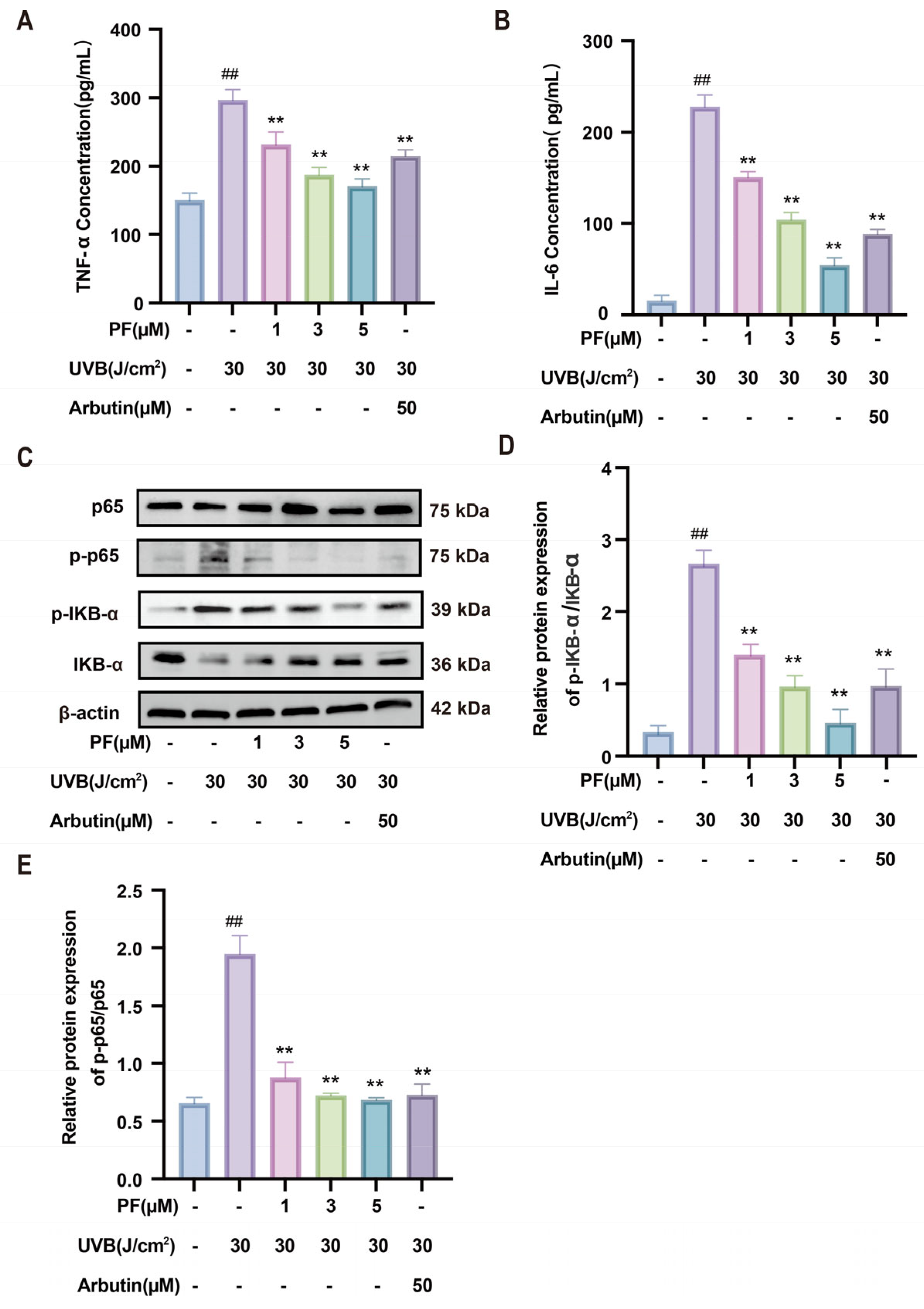
2.5. The Effect of PF on Inhibiting the Regulation of Melanin Synthesis by Targeting TNF and IL-6
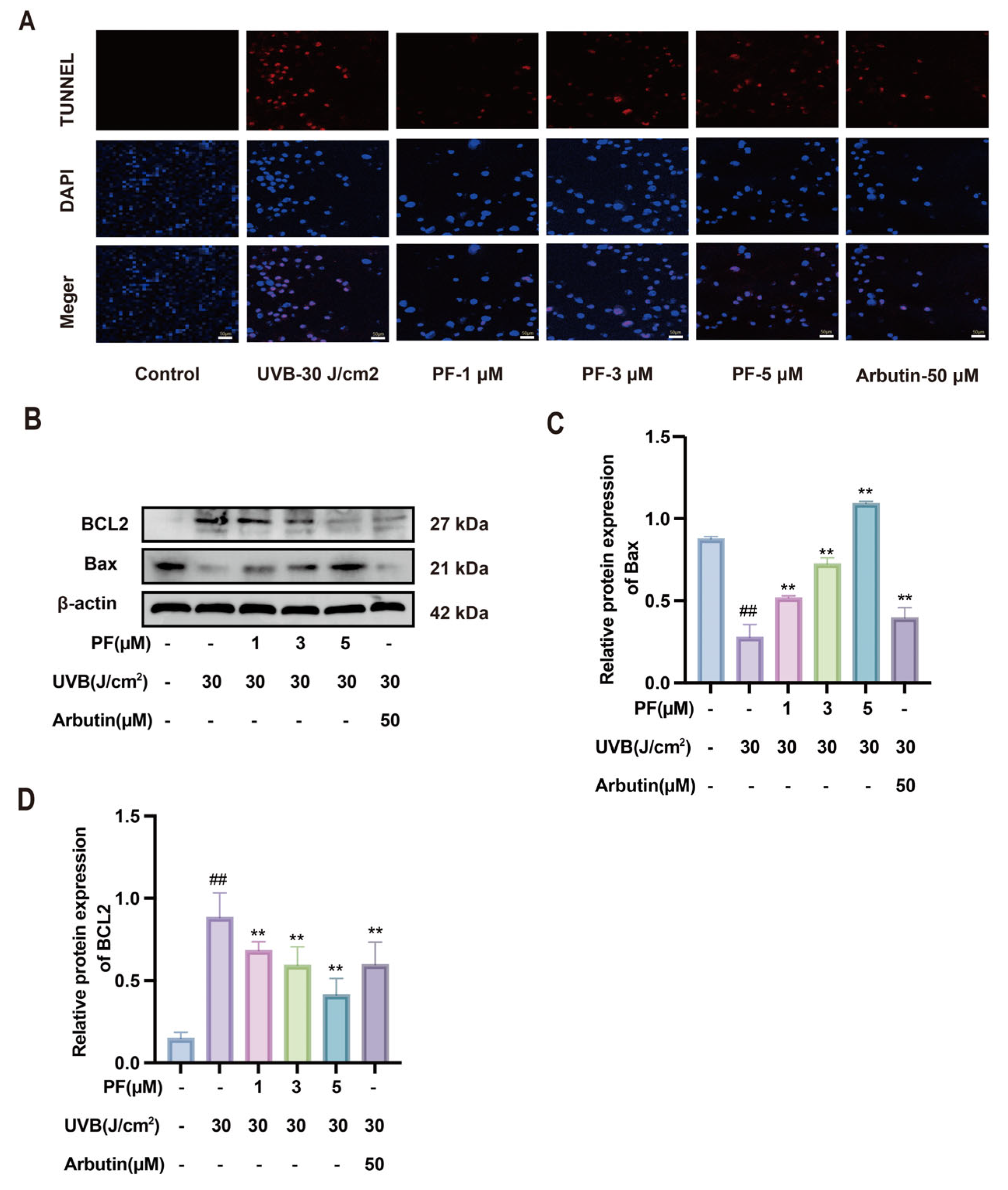
2.6. The Effect of PF on UVB-Induced Apoptosis in B16F10 Cells
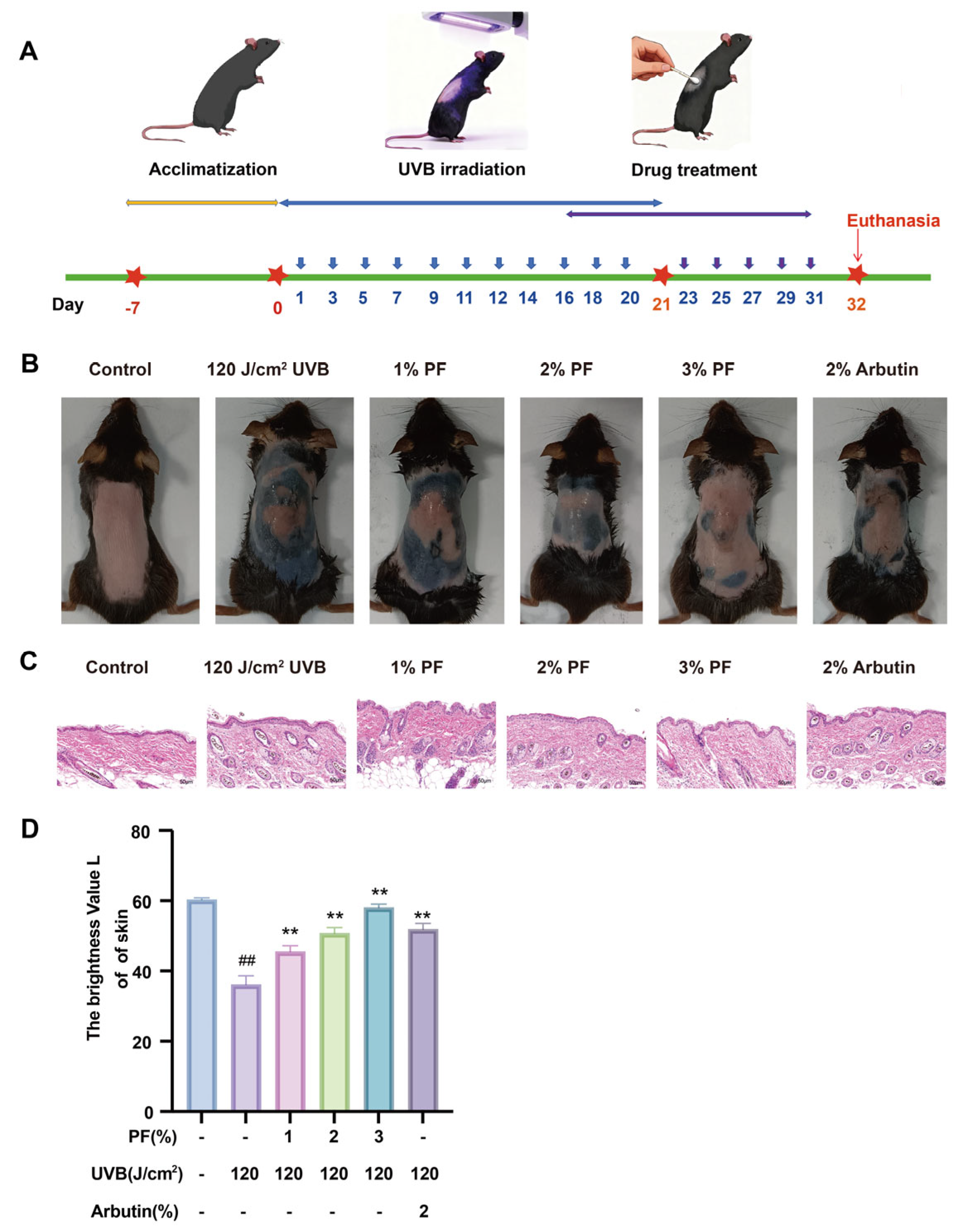
2.7. The Effect of PF on Melanin Accumulation in the Dorsum of Mice
2.8. Effects of PF on Melanin and Tyrosinase Activity in Skin Tissue
2.9. Effects of PF on Skin Inflammatory Factors in Mice
2.10. Effects of PF on BCL2 and Bax Protein Levels in UVB-Induced B16F10 Cells
3. Discussion
4. Materials and Methods
4.1. Cell and Animal Husbandry
4.2. Medicines and Reagents
4.3. Predicting PF and Melanin Deposition Targets
4.4. Protein–Protein Interaction (PPI) Network Construction
4.5. Gene Ontology (GO) and Kyoto Encyclopedia of Genes and Genomes (KEGG) Pathway Analysis
4.6. Molecular Docking
4.7. Molecular Simulation Dynamics
4.8. Cell Culture
4.9. UVB-Irradiated Cells
4.10. CCK8 Assay
4.11. Experimental Groups
4.12. Effect of PF on Melanin Content in B16F10 Cells
4.13. Effects of PF on Tyrosinase Activity in B16F10 Cells
4.14. Effects of PF on UVB-Induced Apoptosis in B16F10 Cells
4.15. Effects of PF on UVB-Induced IL-6 and TNF-α Expression in B16F10 Cells
4.16. Western Blot
4.17. Preparation of Sample Solutions
4.18. Animal Model Establishment
4.19. Mouse Skin Luminance Detection
4.20. H&E Staining
4.21. Melanin Content Detection
4.22. Tyrosinase Activity Assay
4.23. ELISA Assay for IL-6 and TNF-α Inflammatory Cytokines
4.24. Cell Apoptosis
4.25. Analysis of Data
5. Conclusions
Author Contributions
Funding
Institutional Review Board Statement
Informed Consent Statement
Data Availability Statement
Conflicts of Interest
Abbreviations
| PF | Paeoniflori |
| TNF-α | tumor necrosis factor alpha |
| IL-6 | interleukin-6z |
| GO | Gene Ontology |
| KEGG | Kyoto Encyclopedia of Genes and Genomes |
| BP | biological process |
| CC | cellular component |
| MF | molecular function |
| MIT | melanocyte inducing transcription factor |
| TYR | Tyrosinase |
| TYRP1 | Tyrosinase-Related Protein 1 |
| TYRP2 | Tyrosinase-Related Protein 2 |
| IκBα | Inhibitor of Nuclear Factor κBα |
| p-IκB -α | Phosphorylated Inhibitor of Nuclear Factor κBα |
| NF-κB-P65 | Nuclear Factor κB p65 Subunit |
| P- NF-κB-P65 | Phosphorylated Nuclear Factor κB p65 Subunit |
| β-actin | beta-actin |
| BCL2 | B-cell lymphoma 2 protein |
| Bax | BCL2-associated X protein |
| CCK-8 | Counting Kit-8 |
| PIH | Post-Inflammatory Hyperpigmentation |
References
- Boonchai, C.; Sangtanoo, P.; Boonserm, P.; Srimongkol, P.; Reamtong, O.; Karnchanatat, A. Functional peptides from the Thai medicinal plant Curcuma wanenlueanga suppress tyrosinase activity and melanin production. Ind. Crops Prod. 2025, 234, 121612. [Google Scholar] [CrossRef] [Scilit]
- Chen, Y.; Li, H.; Zhang, X.L.; Wang, W.; Rashed, M.M.A.; Duan, H.; Li, L.L.; Zhai, K.F. Exploring the anti-skin inflammation substances and mechanism of Paeonia lactiflora Pall. Flower via network pharmacology-HPLC integration. Phytomedicine 2024, 129, 155565. [Google Scholar] [CrossRef] [Scilit]
- Chu, C.; Li, J.; Yang, F.; Yang, K.; Liu, B.; Tong, S.; Yan, J.; Chen, S. A novel high-resolution monophenolase/diphenolase/radical scavenging profiling for the rapid screening of natural whitening candidates from Peaonia lactiflora root and their mechanism study with molecular docking. J. Ethnopharmacol. 2022, 282, 114607. [Google Scholar] [CrossRef] [Scilit] [PubMed]
- Costin, G.E.; Hearing, V.J. Human skin pigmentation: Melanocytes modulate skin color in response to stress. FASEB J. 2007, 21, 976–994. [Google Scholar] [CrossRef] [Scilit]
- Deng, X.; Li, Y.; Chen, Y.; Hu, Q.; Zhang, W.; Chen, L.; Lu, X.; Zeng, J.; Ma, X.; Efferth, T. Paeoniflorin protects hepatocytes from APAP-Induced damage through launching autophagy via the MAPK/mTOR signaling pathway. Cell. Mol. Biol. Lett. 2024, 29, 119. [Google Scholar] [CrossRef] [Scilit] [PubMed]
- Ding, C.; Liu, Q.; You, X.; Yuan, J.; Xia, J.; Tan, Y.; Hu, Y.; Wang, Q. Investigating the molecular mechanism of epimedium herb in treating rheumatoid arthritis through network pharmacology, molecular docking, and experimental validation. Mol. Divers. 2025, 29, 4061–4081. [Google Scholar] [CrossRef] [Scilit]
- Ding, X.-J.; Zhang, Z.-Y.; Jin, J.; Han, J.-X.; Wang, Y.; Yang, K.; Yang, Y.-Y.; Wang, H.-Q.; Dai, X.-T.; Yao, C. Salidroside can target both P4HB-mediated inflammation and melanogenesis of the skin. Theranostics 2020, 10, 11110. [Google Scholar] [CrossRef] [Scilit]
- Duo, X.; Wang, J.; Wu, C.; Deng, J.; Huang, Y.; Yu, M.; Ri, K.; Wang, G.; Wang, J. Extracts from Dark Tea with Dual Effects of Anti-Melanogenesis and Prevention of Post-Inflammatory Hyperpigmentation. Cosmetics 2025, 12, 210. [Google Scholar] [CrossRef] [Scilit]
- Fu, C.; Chen, J.; Lu, J.; Yi, L.; Tong, X.; Kang, L.; Pei, S.; Ouyang, Y.; Jiang, L.; Ding, Y. Roles of inflammation factors in melanogenesis. Mol. Med. Rep. 2020, 21, 1421–1430. [Google Scholar] [CrossRef] [Scilit] [PubMed]
- Huang, Y.; Li, Y.; Hu, Z.; Yue, X.; Proetto, M.T.; Jones, Y.; Gianneschi, N.C. Mimicking melanosomes: Polydopamine nanoparticles as artificial microparasols. ACS Cent. Sci. 2017, 3, 564–569. [Google Scholar] [CrossRef] [Scilit]
- Jiang, W.; Zhang, S.; Sun, X.; Wang, S.; Zhu, J.; Liu, Z.; Zhang, W.; Guo, H.; Li, H.; Xie, H. Glycyrrhetinic acid augments lipid catabolism via immune-neural modulation in adipose tissue. J. Adv. Res. 2025, in press. [Google Scholar] [CrossRef] [Scilit]
- Jimbow, K.; Park, J.S.; Kato, F.; Hirosaki, K.; Toyofuku, K.; Hua, C.; Yamashita, T. Assembly, target-signaling and intracellular transport of tyrosinase gene family proteins in the initial stage of melanosome biogenesis. Pigment. Cell Res. 2000, 13, 222–229. [Google Scholar] [CrossRef] [Scilit] [PubMed]
- Konstantinou, E.; Longange, E.; Kaya, G. Mechanisms of senescence and Anti-Senescence strategies in the skin. Biology 2024, 13, 647. [Google Scholar] [CrossRef] [Scilit]
- Li, A.; He, H.; Chen, Y.; Liao, F.; Tang, J.; Li, L.; Fan, Y.; Li, L.; Xiong, L. Effects of donkey milk on UVB-induced skin barrier damage and melanin pigmentation: A network pharmacology and experimental validation study. Front. Nutr. 2023, 10, 1121498. [Google Scholar] [CrossRef] [Scilit] [PubMed]
- Li, T.; Li, X.; Xiang, X.; Huang, J.; Shen, X.; Wang, M.; Jiang, J.; Shao, S.; Li, Z.; Xie, T. Regenerative Hair Pigmentation via Skin Organoids: Adaptive Patterning Mediated by Collagen VI and Semaphorin 3C. Adv. Sci. 2025, 12, e02436. [Google Scholar] [CrossRef] [Scilit]
- Lin, F.; Wang, T.; Ai, J.; Wang, J.; Huang, C.; Tian, W.; Lan, T.; Fu, L.; Chen, X. Topical application of Tea leaf-derived nanovesicles reduce melanogenesis by modulating the miR-828b/MYB4 axis: Better permeability and therapeutic efficacy than conventional tea extracts. Mater. Today Bio. 2025, 34, 102108. [Google Scholar] [CrossRef] [Scilit]
- Lin, J.Y.; Fisher, D.E. Melanocyte biology and skin pigmentation. Nature 2007, 445, 843–850. [Google Scholar] [CrossRef] [Scilit] [PubMed]
- Liu, C.; Liu, Y.; Xue, C.; Yang, C.; Weitz, D.A.; Jahnke, K. Engineering Liposomes with Cell Membrane Proteins to Disrupt Melanosome Transfer between Cells. ACS Nano 2025, 19, 22988–23000. [Google Scholar] [CrossRef] [Scilit]
- Liu, L.; Yuan, Y.; Zuo, J.; Tao, J. Composition and antioxidant activity of Paeonia lactiflora petal flavonoid extract and underlying mechanisms of the protective effect on H2O2-induced oxidative damage in BRL3A cells. Hortic. Plant J. 2023, 9, 335–344. [Google Scholar] [CrossRef] [Scilit]
- Matsui, M.; Tanaka, K.; Higashiguchi, N.; Okawa, H.; Yamada, Y.; Tanaka, K.; Taira, S.; Aoyama, T.; Takanishi, M.; Natsume, C. Protective and therapeutic effects of fucoxanthin against sunburn caused by UV irradiation. J. Pharmacol. Sci. 2016, 132, 55–64. [Google Scholar] [CrossRef] [Scilit]
- Qian, Y.; Cheng, Z.; Meng, J.; Tao, J.; Zhao, D. PlMAPK1 facilitates growth and photosynthesis of herbaceous peony (Paeonia lactiflora Pall.) under high-temperature stress. Sci. Hortic. 2023, 310, 111701. [Google Scholar] [CrossRef] [Scilit]
- Seo, J.; Hwang, Y.-H.; Lee, A.; Moon, K.m.; Van, J.Y.; Jeong, H.H.; Ryu, H.; Xi, H.P.; Lee, B. Ethanolic Extract of Bergenia purpurascens Exhibits Antimelanogenic Effects in B16F10 Cells through Multiple Mechanisms That Suppress Tyrosinase. J. Agric. Food Chem. 2024, 72, 23957–23968. [Google Scholar] [CrossRef] [Scilit]
- Serre, C.; Busuttil, V.; Botto, J.M. Intrinsic and extrinsic regulation of human skin melanogenesis and pigmentation. Int. J. Cosmet. Sci. 2018, 40, 328–347. [Google Scholar] [CrossRef] [Scilit]
- Sun, J.; Chen, T.; Wu, Y.; Tao, J. Identification and functional verification of PlFT gene associated with flowering in herbaceous peony based on transcriptome analysis. Ornam. Plant Res. 2021, 1, 7. [Google Scholar] [CrossRef] [Scilit]
- Sun, M.; Wang, Y.; Chen, L.; Chen, L.; Ji, C.; Zhu, W.; Zhao, J.; da Silva, J.A.T.; Zhang, Y.; Yu, X. Modulation of senescence-related genes by the transcription factor PlPLATZ5 prolongs the lifespan of Paeonia lactiflora petals. Plant. Physiol. Biochem. 2025, 229, 110403. [Google Scholar] [CrossRef] [Scilit]
- Tang, Y.; Lu, L.; Huang, X.; Zhao, D.; Tao, J. The herbaceous peony transcription factor WRKY41a promotes secondary cell wall thickening to enhance stem strength. Plant Physiol. 2023, 191, 428–445. [Google Scholar] [CrossRef] [Scilit] [PubMed]
- Wang, H.; Cao, Y.; Mansfield, S.D.; Zhang, P.; Lin, X.; Hou, D. Integrative transcriptome and metabolome evaluation of melanin biosynthesis in Phyllostachys nigra during low-temperature growth. For. Res. 2025, 5, e020. [Google Scholar] [CrossRef] [Scilit] [PubMed]
- Wang, Y.; Sun, M.; Zhu, W.; Chen, L.; Zhu, S.; Zhao, J.; Teixeira da Silva, J.A.; Yu, X. Advances in the study of senescence mechanisms in the genus Paeonia. Hortic. Res. 2025, 12, uhae344. [Google Scholar] [CrossRef] [Scilit]
- Wang, Y.; You, K.; You, Y.; Li, Q.; Feng, G.; Ni, J.; Cao, X.; Zhang, X.; Wang, Y.; Bao, W.; et al. Paeoniflorin prevents aberrant proliferation and differentiation of intestinal stem cells by controlling C1q release from macrophages in chronic colitis. Pharmacol. Res. 2022, 182, 106309. [Google Scholar] [CrossRef] [Scilit]
- Wen, S.Y.; Wu, Y.S.; Liu, H.; Ng, S.C.; Padma, V.V.; Huang, C.Y.; Kuo, W.W. Paeoniflorin found in Paeonia lactiflora root extract inhibits melanogenesis by regulating melanin-related signal transduction in B16F10 cells. J. Cosmet. Dermatol. 2023, 22, 2824–2830. [Google Scholar] [CrossRef] [Scilit]
- Wu, R.M.; Wang, C.Y.; Wang, J.; Xu, X.L. Promoting reverse cholesterol transport contributes to the amelioration of atherosclerosis by paeoniflorin. Eur. J. Pharmacol. 2023, 961, 176137. [Google Scholar] [CrossRef] [Scilit] [PubMed]
- Liu, X.-H.; Li, S.; Zhao, F.-Y.; Zhou, Z.-W.; Min, Y.-Q. Anti-inflammatory mechanism of paeoniflorin in treating non-alcoholic fatty liver disease based on network pharmacology, molecular docking and experimental validation. Nat. Prod. Res. 2025, 37, 337–345. [Google Scholar]
- Li, Z.; Wu, W.; Liu, R.; Niu, B.; Chen, H.; Shentu, X.; Gao, H.; Chen, H. Flavonoid profiling of Plumula nelumbinis and evaluation of their anti-inflammatory effects on lipopolysaccharide-induced RAW 264.7 macrophages. Efood 2024, 5, e150. [Google Scholar] [CrossRef] [Scilit]
- Xu, S.; Yu, Y.; Xie, Q.; Liu, X.; Zhang, A.; Tang, H.; Zhu, Z.; Bian, X.; Guo, L. Revealing the molecular mechanism of Buzhong Yiqi Decoction for tendon bone healing on the basis of network pharmacology, molecular docking and experimental validation. J. Ethnopharmacol. 2025, 347, 119726. [Google Scholar] [CrossRef] [Scilit]
- Sun, H.; Liu, L.; Liu, Y.; Wang, S.; Hua, Y.; Zhao, M.; Su, G. GLGPGVG derived from bovine elastin repairs UV-induced photoaging in human foreskin fibroblasts and its potential bioavailability. Efood 2024, 5, e128. [Google Scholar] [CrossRef] [Scilit]
- Yang, J.; Chen, Y.; Li, B.; Wu, S.; Liang, H.; Yang, X.; Li, X.; Sun, P.; Guo, G.; Li, T. Role of SLC16A10 in Psoriasis Through the Regulation of Arachidonic Acid Metabolism in Keratinocytes. Adv. Sci. 2025, 12, e17093. [Google Scholar] [CrossRef] [Scilit] [PubMed]
- Yu, E.; Oh, S.W.; Park, S.-H.; Kwon, K.; Han, S.B.; Kang, S.H.; Lee, J.H.; Ha, H.; Yoon, D.; Jung, E. The Pigmentation of Blue Light Is Mediated by Both Melanogenesis Activation and Autophagy Inhibition through OPN3–TRPV1. J. Investig. Dermatol. 2025, 145, 908–918.e906. [Google Scholar] [CrossRef] [Scilit]
- Zan, W.; Wu, Q.; Dou, S.; Wang, Y.; Zhu, Z.; Xing, S.; Yu, Y. Analysis of flower color diversity revealed the co-regulation of cyanidin and peonidin in the red petals coloration of Rosa rugosa. Plant Physiol. Biochem. 2024, 216, 109126. [Google Scholar] [CrossRef] [Scilit] [PubMed]
- Zhang, M.-y.; Ma, L.-j.; Jiang, L.; Gao, L.; Wang, X.; Huang, Y.-b.; Qi, X.-m.; Wu, Y.-g.; Liu, X.-q. Paeoniflorin protects against cisplatin-induced acute kidney injury through targeting Hsp90AA1-Akt protein-protein interaction. J. Ethnopharmacol. 2023, 310, 116422. [Google Scholar] [CrossRef] [Scilit]
- Zhao, Q.; Li, Y.; Gu, L.; Yang, Y.; He, D.; Luo, J.; Zhang, Y. The PlMYB73-PlMYB70-PlMYB108 complex regulates PlTPS1 to promote geraniol biosynthesis in Paeonia lactiflora. Hortic. Res. 2025, 12, uhaf141. [Google Scholar] [CrossRef] [Scilit]
- Zhou, Y.-X.; Gong, X.-H.; Zhang, H.; Peng, C. A review on the pharmacokinetics of paeoniflorin and its anti-inflammatory and immunomodulatory effects. Biomed. Pharmacother. 2020, 130, 110505. [Google Scholar] [CrossRef] [Scilit] [PubMed]
- Tie, S.; Chen, Y.; Tan, M. An evaluation of animal models for using bioactive compounds in the treatment of inflammatory bowel disease. Food Front. 2024, 5, 474–493. [Google Scholar] [CrossRef] [Scilit]
- Wang, L.; Li, Y.; Huang, K.; Wang, Q.; He, X. Functions of immunologically active peptides and their roles in intestinal inflammation. Food Front. 2025, 6, 124–141. [Google Scholar] [CrossRef] [Scilit]






| NO. | Name | Degree |
|---|---|---|
| 1 | TNF | 42 |
| 2 | IL-6 | 40 |
| 3 | IL-1β | 40 |
| 4 | HIF-1A | 40 |
| 5 | CASP3 | 40 |
| 6 | TP53 | 37 |
| 7 | TGFB1 | 37 |
| 8 | MAPK3 | 36 |
| 9 | IFNG | 36 |
| 10 | BCL2 | 32 |
| Protein | Bind Energy (kcal/mol) |
|---|---|
| TNF(PDB ID:6OP0) | −9.672 |
| TGFB1(PDB ID:5VQP) | −7.654 |
| TP53(PDB ID:7DVD) | −8.967 |
| MAPK3(PDB ID:2ZOQ) | −7.786 |
| IFNG(PDB ID:1EKU) | −7.224 |
| IL-6(PDB ID:1ALU) | −7.137 |
| IL-1β(PDB ID:1HIB) | −6.718 |
| HIF-1A(PDB ID:5L9V) | −7.864 |
| CASP3(PDB ID:7RNG) | −8.532 |
| BCL2(PDB ID:1G5M) | −7.893 |
Disclaimer/Publisher’s Note: The statements, opinions and data contained in all publications are solely those of the individual author(s) and contributor(s) and not of MDPI and/or the editor(s). MDPI and/or the editor(s) disclaim responsibility for any injury to people or property resulting from any ideas, methods, instructions or products referred to in the content. |
© 2026 by the authors. Licensee MDPI, Basel, Switzerland. This article is an open access article distributed under the terms and conditions of the Creative Commons Attribution (CC BY) license.
Share and Cite
Yin, K.; Wang, S.; Wang, W.; Liu, T.; Qi, D.; Wang, W.; Rashed, M.M.A.; Duan, H.; He, C.; Zhang, M.; et al. Study on the Mechanism of Paeoniflorin, an Active Component of Paeonia lactiflora Pall., in Improving Skin Pigmentation by Inhibiting the TNF-α Signaling Pathway. Pharmaceuticals 2026, 19, 443. https://doi.org/10.3390/ph19030443
Yin K, Wang S, Wang W, Liu T, Qi D, Wang W, Rashed MMA, Duan H, He C, Zhang M, et al. Study on the Mechanism of Paeoniflorin, an Active Component of Paeonia lactiflora Pall., in Improving Skin Pigmentation by Inhibiting the TNF-α Signaling Pathway. Pharmaceuticals. 2026; 19(3):443. https://doi.org/10.3390/ph19030443
Chicago/Turabian StyleYin, Kela, Song Wang, Weina Wang, Tingting Liu, Dejun Qi, Wei Wang, Marwan M. A. Rashed, Hong Duan, Chenghui He, Mengxiao Zhang, and et al. 2026. "Study on the Mechanism of Paeoniflorin, an Active Component of Paeonia lactiflora Pall., in Improving Skin Pigmentation by Inhibiting the TNF-α Signaling Pathway" Pharmaceuticals 19, no. 3: 443. https://doi.org/10.3390/ph19030443
APA StyleYin, K., Wang, S., Wang, W., Liu, T., Qi, D., Wang, W., Rashed, M. M. A., Duan, H., He, C., Zhang, M., Liu, H., & Zhai, K. (2026). Study on the Mechanism of Paeoniflorin, an Active Component of Paeonia lactiflora Pall., in Improving Skin Pigmentation by Inhibiting the TNF-α Signaling Pathway. Pharmaceuticals, 19(3), 443. https://doi.org/10.3390/ph19030443