KRDQN: An Interpretable Prediction Framework for Adverse Drug Reactions via Knowledge–Graph Reinforced Deep Q-Learning


Abstract
1. Introduction
2. Result
2.1. Experiment Settings
2.2. Baseline Model Comparisons
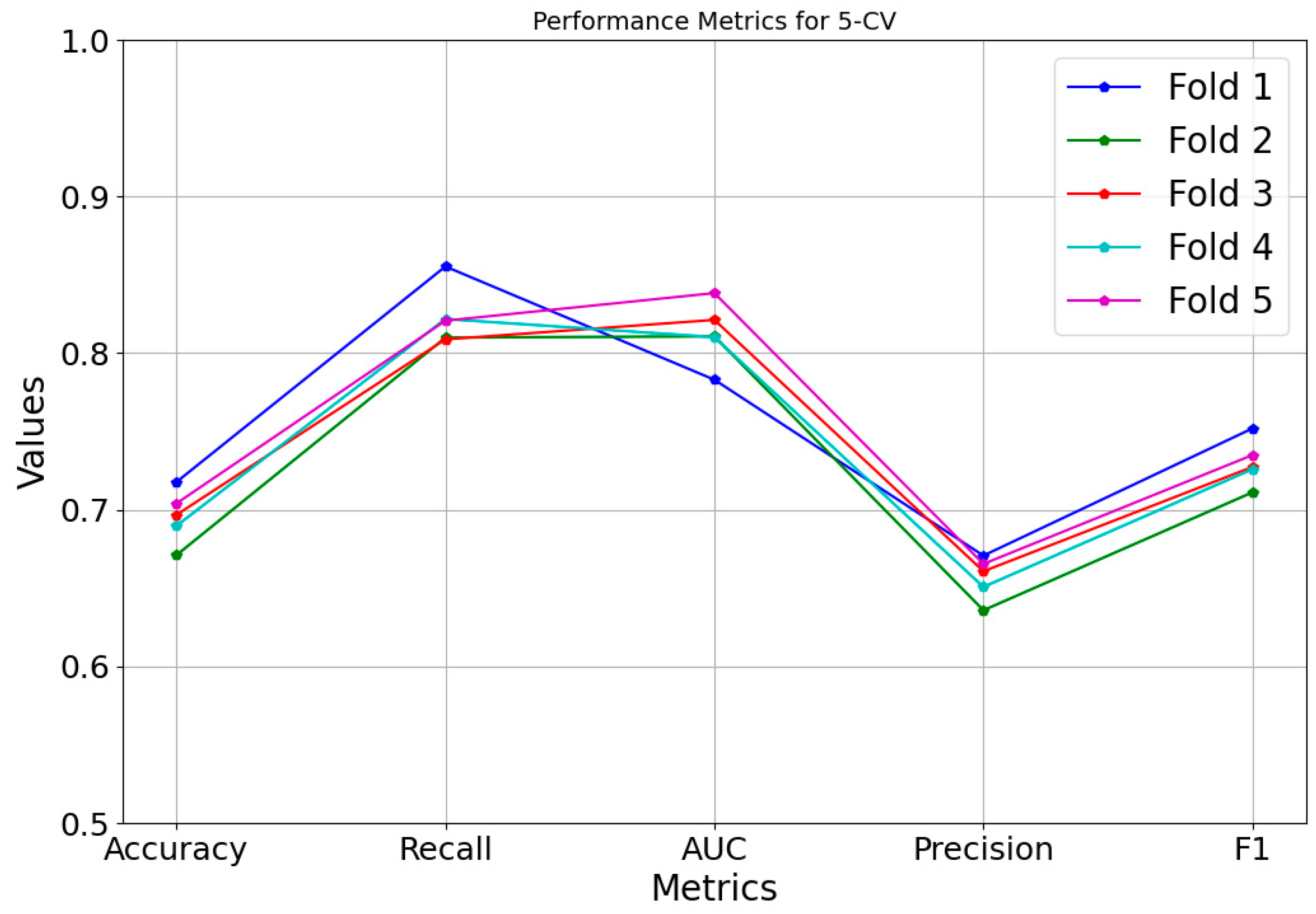
2.3. Five-Fold Cross-Validation
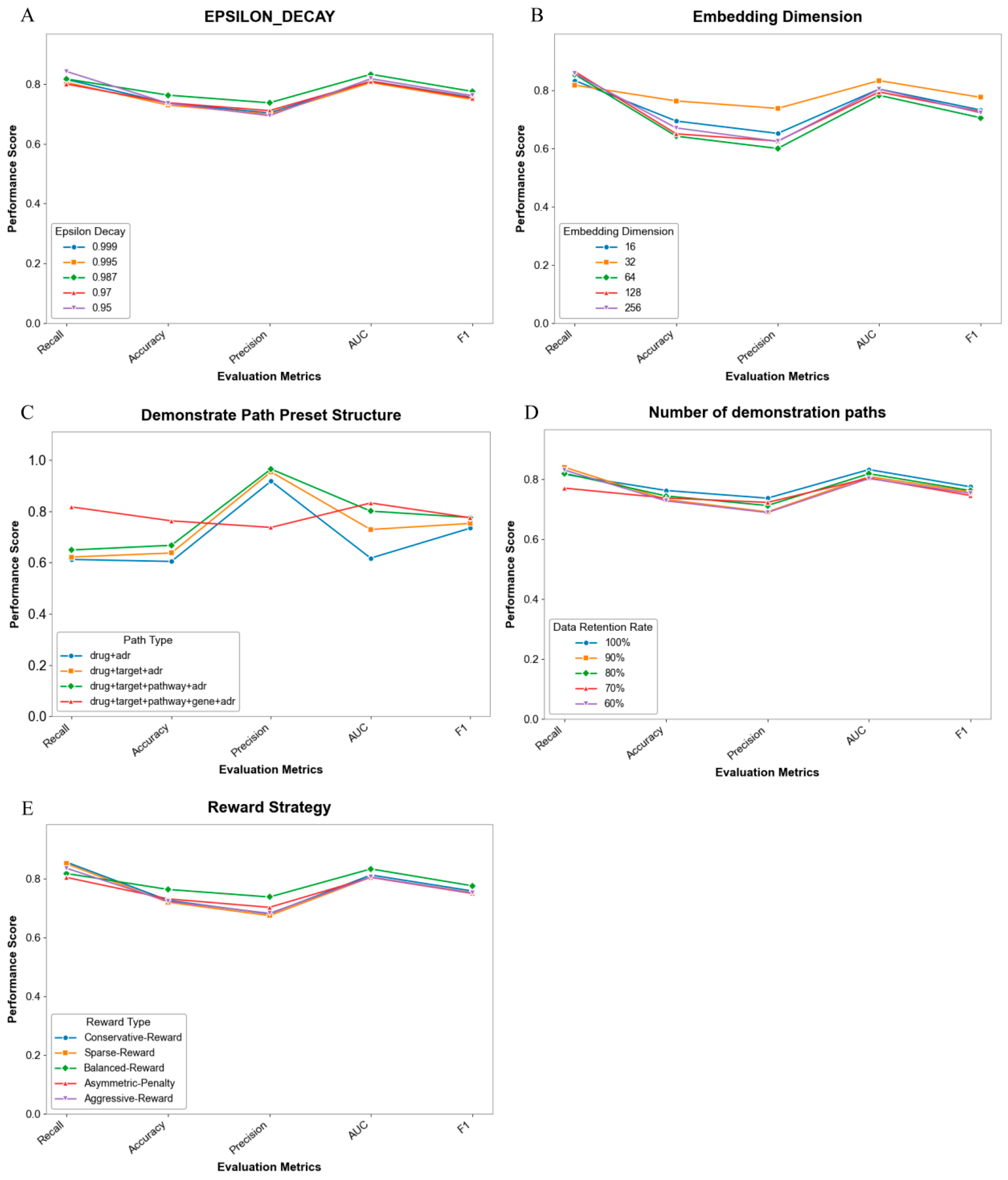
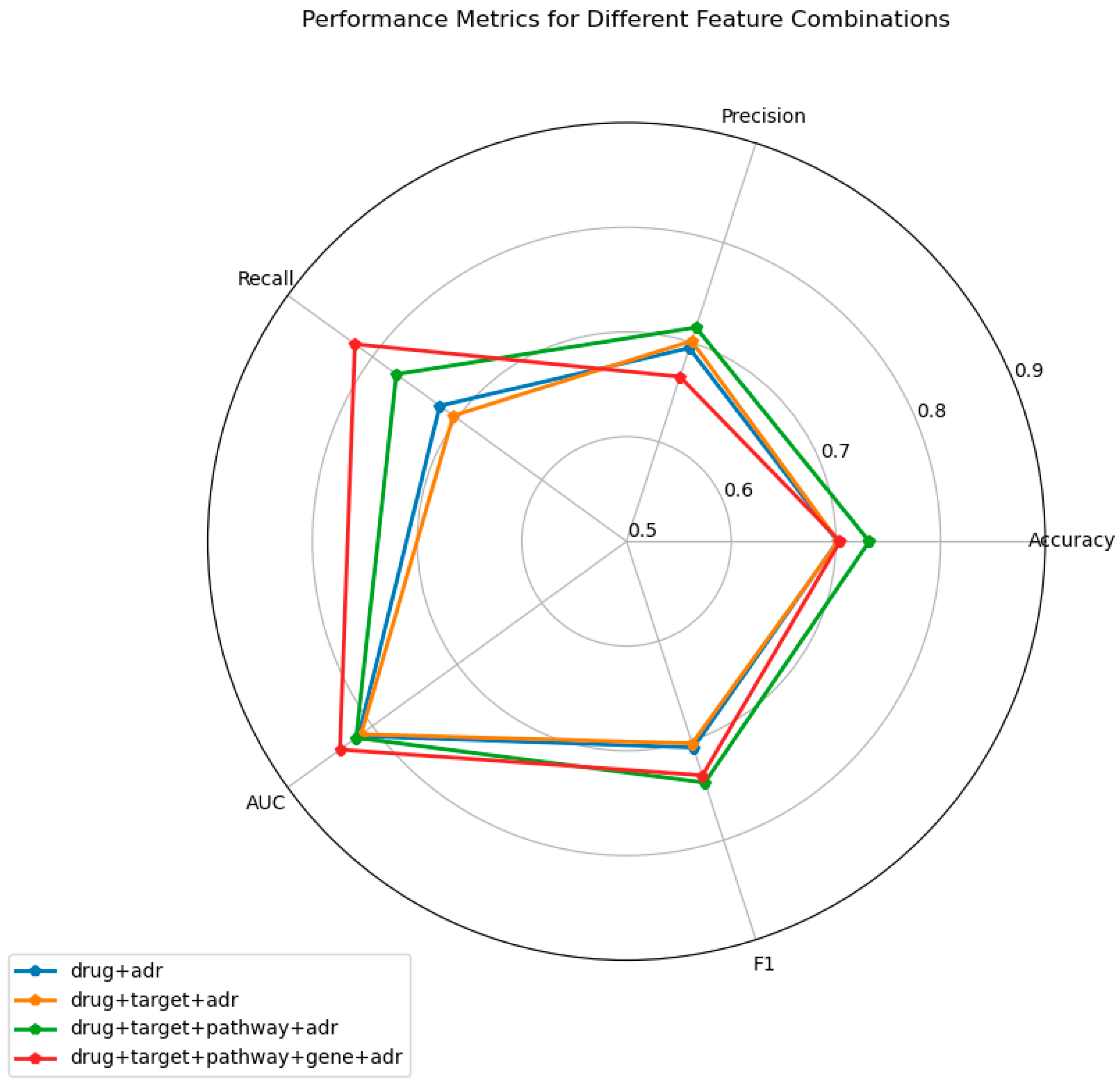
2.4. Ablation Study
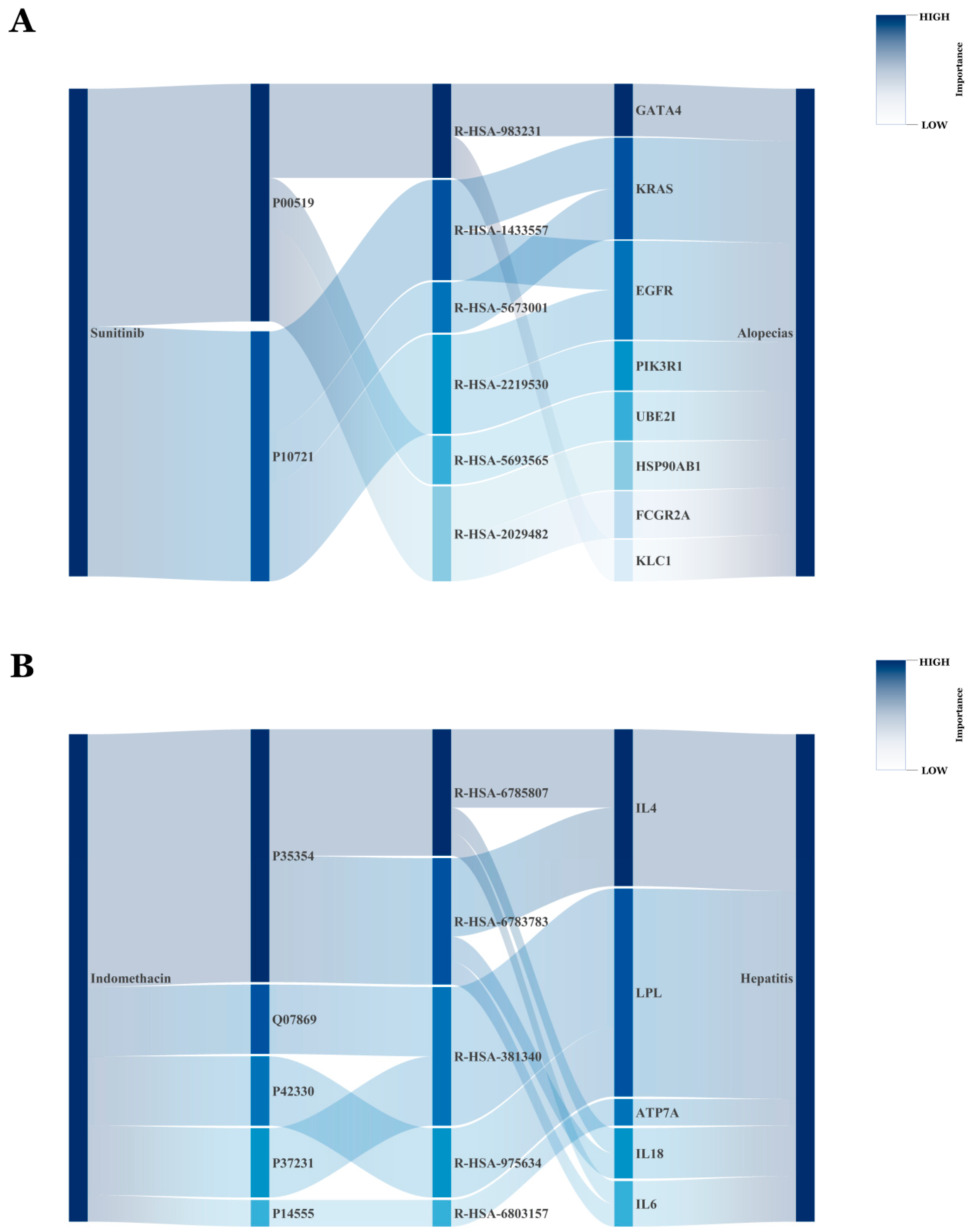
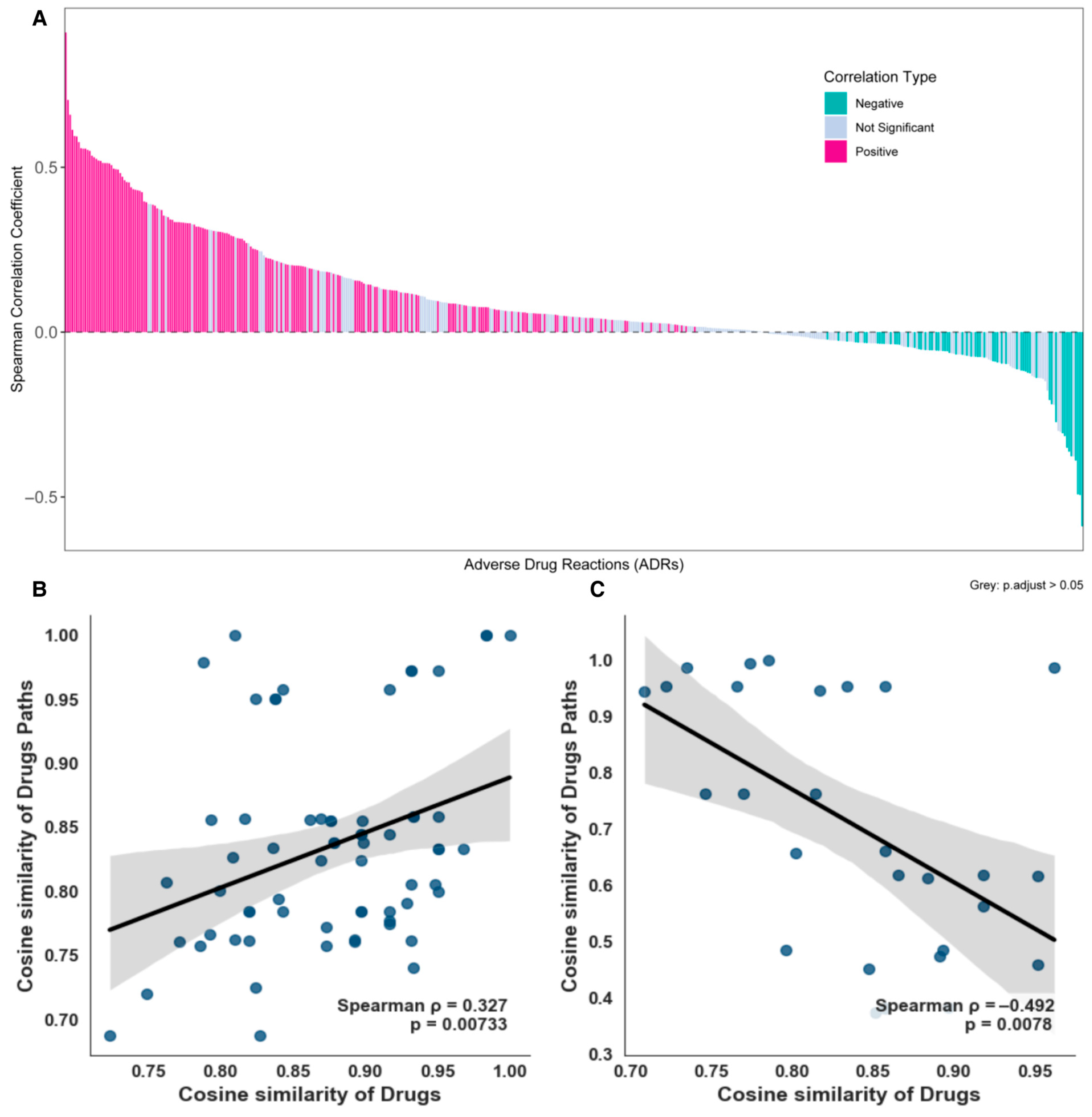
2.5. Explain Performance Evaluation
2.6. Analysis of Class Imbalance Impact on Rare ADR Prediction
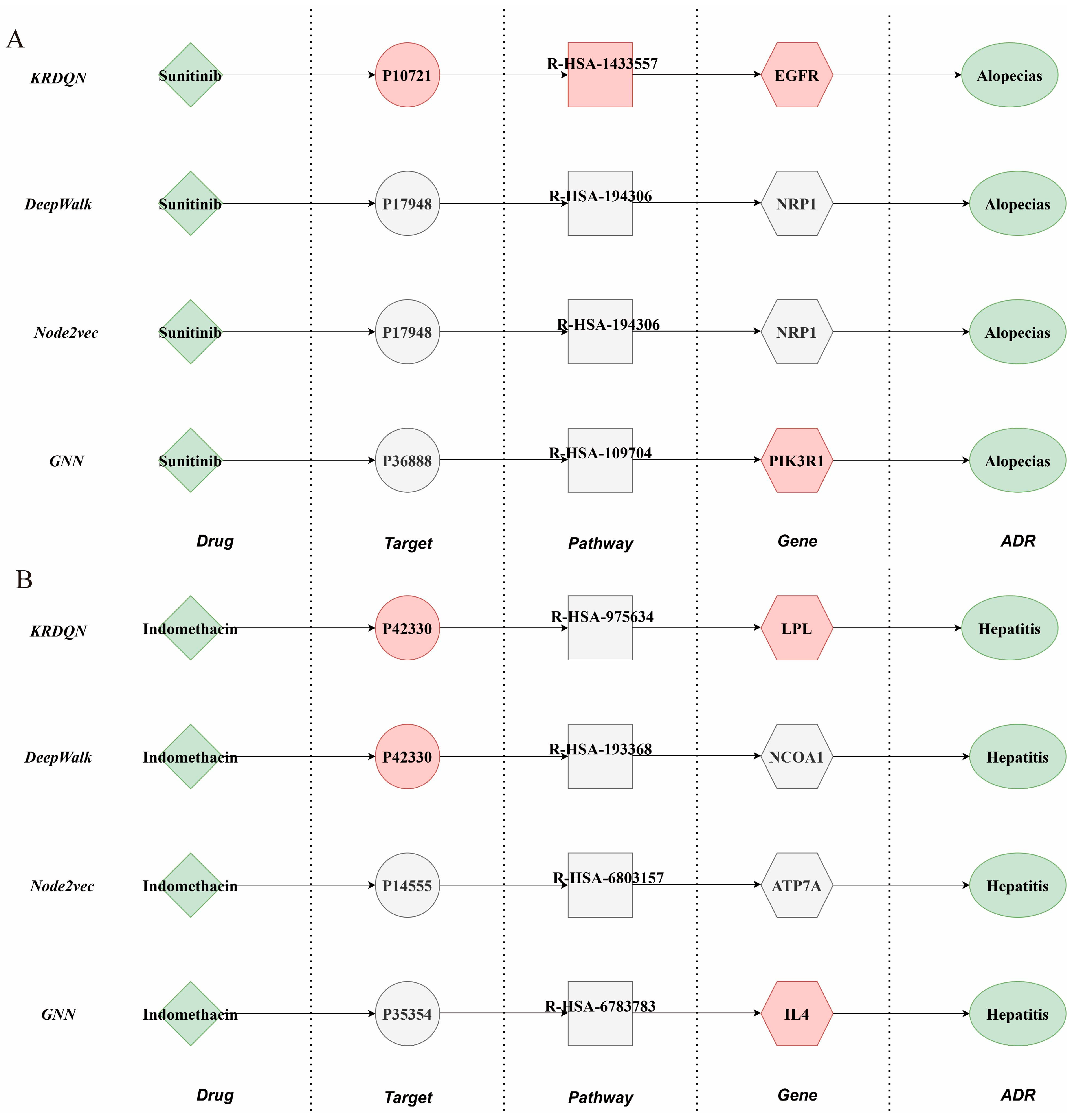
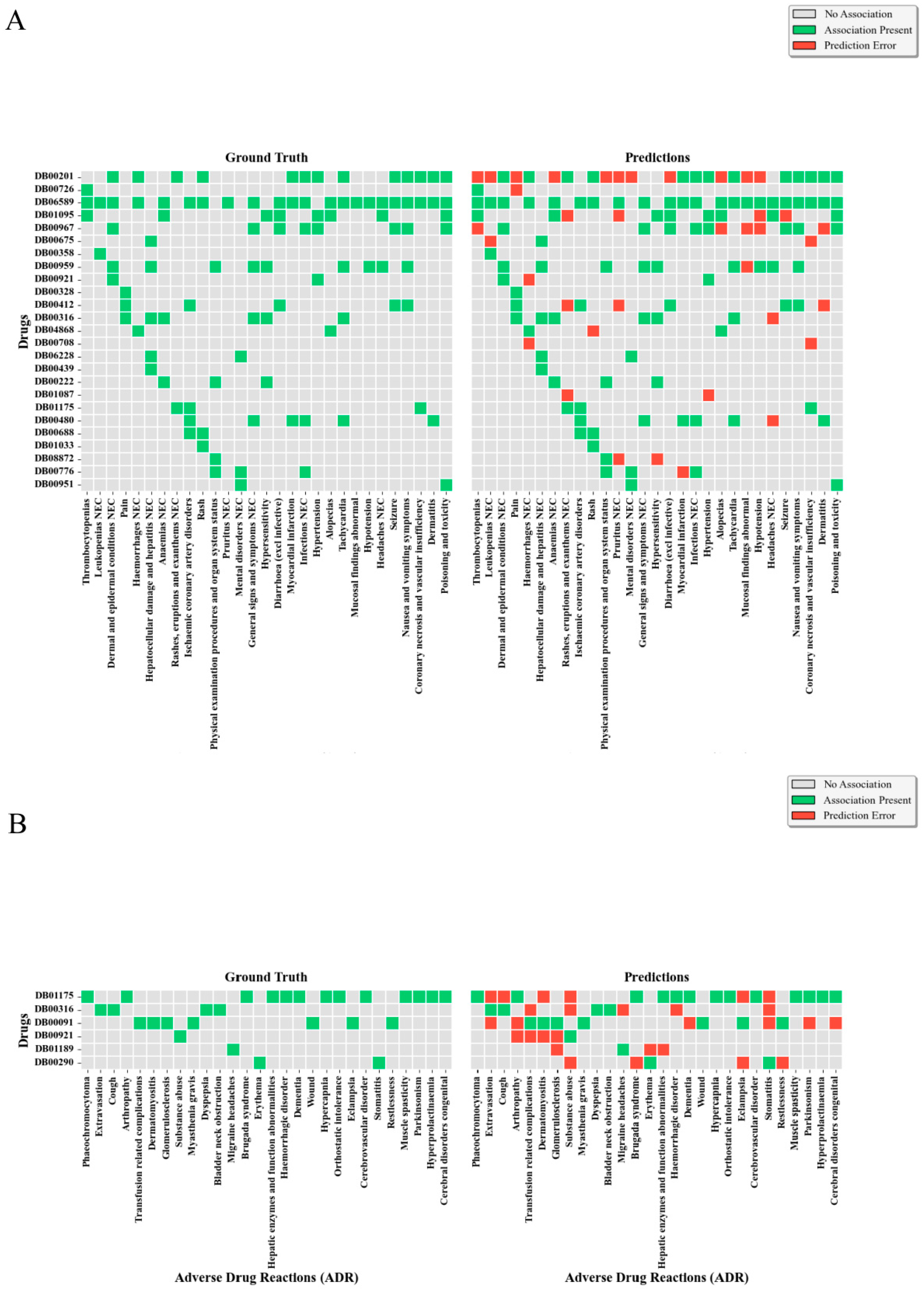
2.7. Case Study
3. Discussion
4. Materials and Methods
4.1. Data Processing
4.1.1. Data Sources
4.1.2. Data Partitioning
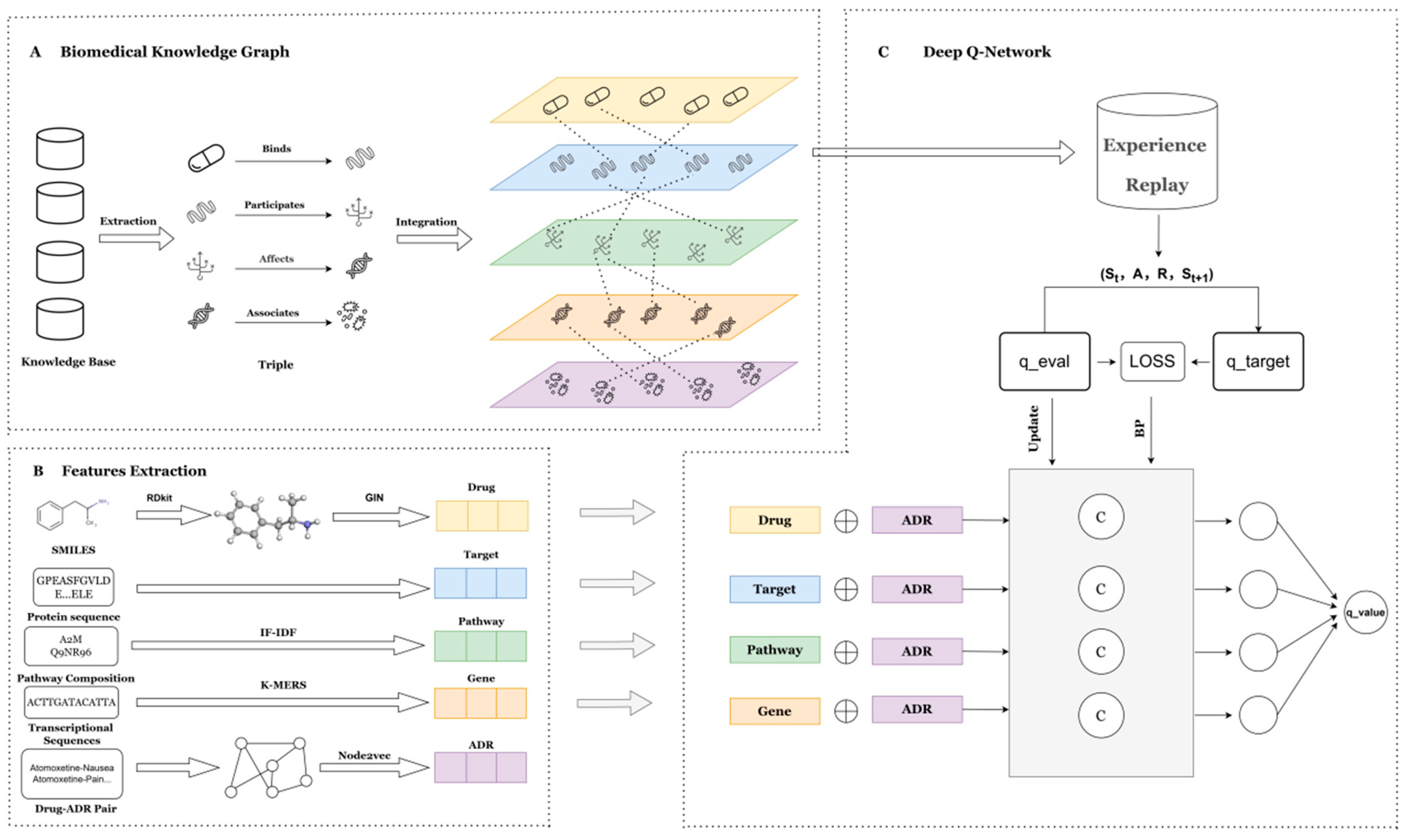
4.2. Overview of the Predictive Methodology
- (1)
- a biomedical knowledge graph that extracts candidate pathways for subsequent model training.
- (2)
- a feature extraction module that acquires biologically meaningful embeddings for every biomedical entity.
- (3)
- a DQN model that generates explanatory pathways and corresponding q-values for each drug–ADR pair in the network, thereby quantifying the statistical validity of each pathway.
4.3. Biomedical Knowledge Graph
4.3.1. Tailored Biomedical Knowledge Graph
4.3.2. Extraction of Demonstrative Pathway
4.4. Feature Extraction Module
4.4.1. Drug Feature Extraction
4.4.2. Target Feature Extraction
4.4.3. Pathway Feature Extraction
4.4.4. Gene Feature Extraction
4.4.5. ADR Feature Extraction
4.5. Deep Q-Network Model
4.5.1. Experience Replay Module
4.5.2. Deep Q-Network
- (1)
- Input layer:
- (2)
- Hidden layers:
- (3)
- Output layer:
4.6. Training Procedure
4.6.1. Problem Formulation and Experience Storage Structure
4.6.2. Target Q-Value Computation
4.6.3. Loss Function and Gradient Update
4.6.4. Exploration-Annealing Strategy
4.6.5. Learning Rate Update
4.7. Evaluation Metrics
4.8. Interpretability Assessment
5. Summary
Author Contributions
Funding
Data Availability Statement
Acknowledgments
Conflicts of Interest
References
- Edwards, I.R.; Aronson, J.K. Adverse drug reactions: Definitions, diagnosis, and management. Lancet 2000, 356, 1255–1259. [Google Scholar] [CrossRef] [Scilit] [PubMed]
- Cocos, A.; Fiks, A.G.; Masino, A.J. Deep learning for pharmacovigilance: Recurrent neural network architectures for labeling adverse drug reactions in Twitter posts. J. Am. Med. Inform. Assoc. 2017, 24, 813–821. [Google Scholar] [CrossRef] [Scilit]
- Lazarou, J.; Pomeranz, B.H.; Corey, P.N. Incidenceof adverse hospitalized patients: Drug reactions in a metaanalysis of prospective studies. JAMA 1998, 279, 1200–1205. [Google Scholar] [CrossRef] [Scilit]
- Watanabe, J.H.; McInnis, T.; Hirsch, J.D. Cost of Prescription Drug-Related Morbidity and Mortality. Ann. Pharmacother. 2018, 52, 829–837. [Google Scholar] [CrossRef] [Scilit]
- U.S. Food and Drug Administration. FDA Adverse Event Reporting System (FAERS) Public Dashboard [Internet]; FDA: Silver Spring, MD, USA, 2024. Available online: https://www.fda.gov/drugs/surveillance/fdas-adverse-event-reporting-system-faers (accessed on 28 July 2024).
- Zhu, X.; Yang, Z.; Liu, J. Adverse Drug Reaction Extraction Based on Bi-LSTM and CRF. Data Anal. Knowl. Discov. 2019, 3, 90–97. [Google Scholar]
- National Center for Adverse Drug Reaction Monitoring. Annual Report of National Adverse Drug Reaction Monitoring. Chin. J. Drug Eval. 2019, 36, 476–480. (In Chinese) [Google Scholar]
- Melmon, K.L.; Morrelli, H.F. Clinical Pharmacology: Basic Principles in Therapeutics, 4th ed.; McGraw-Hill: New York, NY, USA, 2000; pp. 1207–1223. [Google Scholar]
- Guo, K. Adverse Drug Reaction Detection Based on Deep Learning and Semantic Analysis. Master’s Thesis, Dalian University of Technology, Dalian, China, 2017. (In Chinese) [Google Scholar]
- Moore, T.J.; Weiss, S.R.; Kaplan, S.; Blaisdell, C.J. Reported adverse drug events in infants and children under 2 years of age. Pediatrics 2002, 110, e53. [Google Scholar] [CrossRef] [Scilit] [PubMed]
- Huang, J.; Zhao, Y.; Cao, Y.; Zhang, Q.; Ran, D.; Li, J.; Luo, L.; Qiu, F.; Meng, L. Anaplastic lymphoma kinase tyrosine kinase inhibitors associated gastrointestinal obstruction, perforation, and ulceration: An analysis of the FDA adverse event reporting system database (FAERS). Int. J. Clin. Pharm. 2022, 44, 993–1003. [Google Scholar] [CrossRef] [Scilit]
- Smith, T.F.; Waterman, M.S. Identification of common molecular subsequences. J. Mol. Biol. 1981, 147, 195–197. [Google Scholar] [CrossRef] [Scilit]
- Lukashina, N.; Kartysheva, E.; Spjuth, O.; Virko, E.; Shpilman, A. SimVec: Predicting polypharmacy side effects for new drugs. J. Cheminform. 2022, 14, 49. [Google Scholar] [CrossRef] [Scilit]
- Nickel, M.; Tresp, V.; Kriegel, H.-P. A three-way model for collective learning on multi-relational data. In Proceedings of the 28th International Conference on International Conference on Machine Learning, Bellevue, WA, USA, 28 June–2 July 2011; ICML’11; Omnipress: Madison, WI, USA, 2011; pp. 809–816. [Google Scholar]
- Malone, B.; García-Durán, A.; Niepert, M. Knowledge graph completion to predict polypharmacy side effects. In Data Integration in the Life Sciences, Proceedings of the 13th International Conference, DILS 2018, Hannover, Germany, 20–21 November 2018; Springer: Berlin/Heidelberg, Germany, 2018; pp. 144–149. [Google Scholar]
- Zitnik, M.; Agrawal, M.; Leskovec, J. Modeling polypharmacy side effects with graph convolutional networks. Bioinformatics 2018, 34, 457–466. [Google Scholar] [CrossRef] [Scilit] [PubMed]
- Nováček, V.; Mohamed, S.K. Predicting polypharmacy side-effects using knowledge graph embeddings. AMIA Summits Transl. Sci. Proc. 2020, 2020, 449–458. [Google Scholar]
- Muñoz, E.; Nováček, V.; Vandenbussche, P.Y. Facilitating prediction of adverse drug reactions by using knowledge graphs and multi-label learning models. Brief. Bioinform. 2019, 20, 190–202. [Google Scholar] [CrossRef] [Scilit] [PubMed]
- Wang, M.; Ma, X.; Si, J.; Tang, H.; Wang, H.; Li, T.; Ouyang, W.; Gong, L.; Tang, Y.; He, X.; et al. Adverse Drug Reaction Discovery Using a Tumor-Biomarker Knowledge Graph. Front. Genet. 2021, 11, 625659. [Google Scholar] [CrossRef] [Scilit] [PubMed]
- Hao, Z.; Sadek, I. Sunitinib: The antiangiogenic effects and beyond. Oncotargets Ther. 2016, 9, 5495–5505. [Google Scholar] [CrossRef] [Scilit]
- Robert, C.; Soria, J.C.; Spatz, A.; Le Cesne, A.; Malka, D.; Pautier, P.; Wechsler, J.; Lhomme, C.; Escudier, B.; Boige, V.; et al. Cutaneous side-effects of kinase inhibitors and blocking antibodies. Lancet Oncol. 2005, 6, 491–500. [Google Scholar] [CrossRef] [Scilit]
- Mirshafiey, A.; Ghalamfarsa, G.; Asghari, B.; Azizi, G. Receptor Tyrosine Kinase and Tyrosine Kinase Inhibitors: New Hope for Success in Multiple Sclerosis Therapy. Innov. Clin. Neurosci. 2014, 11, 23–36. [Google Scholar]
- Lacouture, M.; Boerner, S.; LoRusso, P. Non-rash skin toxicities associated with novel targeted therapies. Clin. Lung Cancer 2006, 8, S36–S42. [Google Scholar] [CrossRef] [Scilit]
- Nemunaitis, J.; Bauer, S.; Blay, J.Y.; Choucair, K.; Gelderblom, H.; George, S.; Schöffski, P.; Mehren, M.V.; Zalcberg, J.; Achour, H.; et al. Intrigue: Phase III study of ripretinib versus sunitinib in advanced gastrointestinal stromal tumor after imatinib. Future Oncol. 2020, 16, 4251–4264. [Google Scholar] [CrossRef] [Scilit]
- Lehmann, J.M.; Lenhard, J.M.; Oliver, B.B.; Ringold, G.M.; Kliewer, S.A. Peroxisome proliferator-activated receptors alpha and gamma are activated by indomethacin and other non-steroidal anti-inflammatory drugs. J. Biol. Chem. 1997, 272, 3406–3410. [Google Scholar] [CrossRef] [Scilit] [PubMed]
- Yen, N.T.H.; Oh, J.H.; Van Anh, N.T.; Le, Q.V.; Park, S.M.; Park, Y.J.; Cho, Y.S.; Moon, K.S.; Nguyen, H.T.; Shin, J.G.; et al. Systems-level multi-omics characterization provides novel molecular insights into indomethacin toxicity. Chem.-Biol. Interact. 2023, 375, 110430. [Google Scholar] [CrossRef] [Scilit]
- Niho, N.; Mutoh, M.; Komiya, M.; Ohta, T.; Sugimura, T.; Wakabayashi, K. Improvement of hyperlipidemia by indomethacin in Min mice. Int. J. Cancer 2007, 121, 1665–1669. [Google Scholar] [CrossRef] [Scilit]
- Cui, R. Protective Effect and Molecular Mechanism of S-Allylcysteine Against Indomethacin-Induced Hepatocyte Injury. Doctoral Dissertation, Kunming Medical University, Kunming, China, 2020. [Google Scholar] [CrossRef]
- LiverTox: Clinical and Research Information on Drug-Induced Liver Injury [Internet]; National Institute of Diabetes and Digestive and Kidney Diseases: Bethesda, MD, USA, 2012. [PubMed]
- Wong, T.; Yeh, P. Reliable Accuracy Estimates from k-Fold Cross Validation. IEEE Trans. Knowl. Data Eng. 2020, 32, 1586–1594. [Google Scholar] [CrossRef] [Scilit]
- Fernández-Martínez, J.; Fernández-Muñiz, Z. The curse of dimensionality in inverse problems. J. Comput. Appl. Math. 2020, 369, 112571. [Google Scholar] [CrossRef] [Scilit]
- Kaur, A.; Singh, J.; Kaur, S. Machine learning approach for optimizing usability of healthcare websites. Sci. Rep. 2025, 15, 14450. [Google Scholar] [CrossRef] [Scilit]
- Keiser, M.J.; Setola, V.; Irwin, J.J.; Laggner, C.; Abbas, A.I.; Hufeisen, S.J.; Jensen, N.H.; Kuijer, M.B.; Matos, R.C.; Tran, T.B.; et al. Predicting new molecular targets for known drugs. Nature 2009, 462, 175–181. [Google Scholar] [CrossRef] [Scilit] [PubMed]
- Lounkine, E.; Keiser, M.J.; Whitebread, S.; Mikhailov, D.; Hamon, J.; Jenkins, J.L.; Lavan, P.; Weber, E.; Doak, A.K.; Côté, S.; et al. Large-scale prediction and testing of drug activity on side-effect targets. Nature 2012, 486, 361–367. [Google Scholar] [CrossRef] [Scilit] [PubMed]
- Bento, A.P.; Gaulton, A.; Hersey, A.; Bellis, L.J.; Chambers, J.; Davies, M.; Krüger, F.A.; Light, Y.; Mak, L.; McGlinchey, S.; et al. The ChEMBL bioactivity database: An update. Nucleic Acids Res. 2014, 42, D1083–D1090. [Google Scholar] [CrossRef] [Scilit]
- Paolini, G.; Shapland, R.; van Hoorn, W.; Mason, J.; Hopkins, A. Global mapping of pharmacological space. Nat. Biotechnol. 2006, 24, 805–815. [Google Scholar] [CrossRef] [Scilit] [PubMed]
- Mestres, J.; Gregori-Puigjané, E.; Valverde, S.; Solé, R. Data completeness—The Achilles heel of drug-target networks. Nat. Biotechnol. 2008, 26, 983–984. [Google Scholar] [CrossRef] [Scilit]
- Medina-Franco, J. Activity Cliffs: Facts or Artifacts? Chem. Biol. Drug Des. 2013, 81, 553–556. [Google Scholar] [CrossRef] [Scilit] [PubMed]
- Wishart, D.S.; Knox, C.; Guo, A.C.; Cheng, D.; Shrivastava, S.; Tzur, D.; Gautam, B.; Hassanali, M. DrugBank: A knowledgebase for drugs, drug actions and drug targets. Nucleic Acids Res. 2008, 36, D901–D906. [Google Scholar] [CrossRef] [Scilit] [PubMed]
- Milacic, M.; Beavers, D.; Conley, P.; Gong, C.; Gillespie, M.; Griss, J.; Haw, R.; Jassal, B.; Matthews, L.; May, B.; et al. The Reactome Pathway Knowledgebase 2024. Nucleic Acids Res. 2024, 52, D672–D678. [Google Scholar] [CrossRef] [Scilit] [PubMed]
- Cerami, E.G.; Gross, B.E.; Demir, E.; Rodchenkov, I.; Babur, O.; Anwar, N.; Schultz, N.; Bader, G.D.; Sander, C. Pathway Commons, a web resource for biological pathway data. Nucleic Acids Res. 2011, 39, D685–D690. [Google Scholar] [CrossRef] [Scilit]
- Yue, Q.X.; Ding, R.F.; Chen, W.H.; Wu, L.Y.; Liu, K.; Ji, Z.L. Mining Real-World Big Data to Characterize Adverse Drug Reaction Quantitatively: Mixed Methods Study. J. Med. Internet Res. 2024, 26, e48572. [Google Scholar] [CrossRef] [Scilit]
- Liu, Y.; Hildebrandt, M.; Joblin, M.; Ringsquandl, M.; Raissouni, R.; Tresp, V. Neural multi-hop rea-soning with logical rules on biomedical knowledge graphs. In The Semantic Web; Verborgh, R., Hose, K., Paulheimeds, H., Eds.; Springer International Publishing: Cham, Switzerland, 2021; pp. 375–391. [Google Scholar]





| AUC | Accuracy | Precision | Recall | F1 | |
|---|---|---|---|---|---|
| GCN | 0.7590 | 0.8452 | 0.9058 | 0.5423 | 0.6784 |
| DEEPWALK | 0.7529 | 0.7759 | 0.7224 | 0.6778 | 0.6489 |
| LSTM | 0.7856 | 0.6892 | 0.7814 | 0.6321 | 0.6924 |
| KPRN | 0.8012 | 0.6935 | 0.7925 | 0.6487 | 0.6872 |
| KRDQN | 0.8327 | 0.7629 | 0.7372 | 0.8171 | 0.7751 |
| Target_Mean | Pathway_Mean | Gene_Mean | |
|---|---|---|---|
| DeepWalk | 0.6025 | 0.3156 | 0.1861 |
| Node2Vec | 0.6973 | 0.5469 | 0.3839 |
| GNN | 0.6392 | 0.4315 | 0.5094 |
| KRDQN | −1.2801 | −0.4429 | −0.6451 |
Disclaimer/Publisher’s Note: The statements, opinions and data contained in all publications are solely those of the individual author(s) and contributor(s) and not of MDPI and/or the editor(s). MDPI and/or the editor(s) disclaim responsibility for any injury to people or property resulting from any ideas, methods, instructions or products referred to in the content. |
© 2026 by the authors. Licensee MDPI, Basel, Switzerland. This article is an open access article distributed under the terms and conditions of the Creative Commons Attribution (CC BY) license.
Share and Cite
Ni, Q.; Min, X.; Chen, C.; Li, H.; He, X.; Ni, L.; Zhou, J.; Peng, B. KRDQN: An Interpretable Prediction Framework for Adverse Drug Reactions via Knowledge–Graph Reinforced Deep Q-Learning. Pharmaceuticals 2026, 19, 379. https://doi.org/10.3390/ph19030379
Ni Q, Min X, Chen C, Li H, He X, Ni L, Zhou J, Peng B. KRDQN: An Interpretable Prediction Framework for Adverse Drug Reactions via Knowledge–Graph Reinforced Deep Q-Learning. Pharmaceuticals. 2026; 19(3):379. https://doi.org/10.3390/ph19030379
Chicago/Turabian StyleNi, Qiao, Xue Min, Cui Chen, Hongmei Li, Xiaojun He, Linghao Ni, Jiawei Zhou, and Bin Peng. 2026. "KRDQN: An Interpretable Prediction Framework for Adverse Drug Reactions via Knowledge–Graph Reinforced Deep Q-Learning" Pharmaceuticals 19, no. 3: 379. https://doi.org/10.3390/ph19030379
APA StyleNi, Q., Min, X., Chen, C., Li, H., He, X., Ni, L., Zhou, J., & Peng, B. (2026). KRDQN: An Interpretable Prediction Framework for Adverse Drug Reactions via Knowledge–Graph Reinforced Deep Q-Learning. Pharmaceuticals, 19(3), 379. https://doi.org/10.3390/ph19030379