Involvement of Serotonergic and Dopaminergic Systems in Aloysia gratissima var. gratissima: Antidepressant-like Effect, UPLC-DAD-MS Chemical Characterization, and Computational Evidence

 , , , ,
Abstract
1. Introduction
2. Results
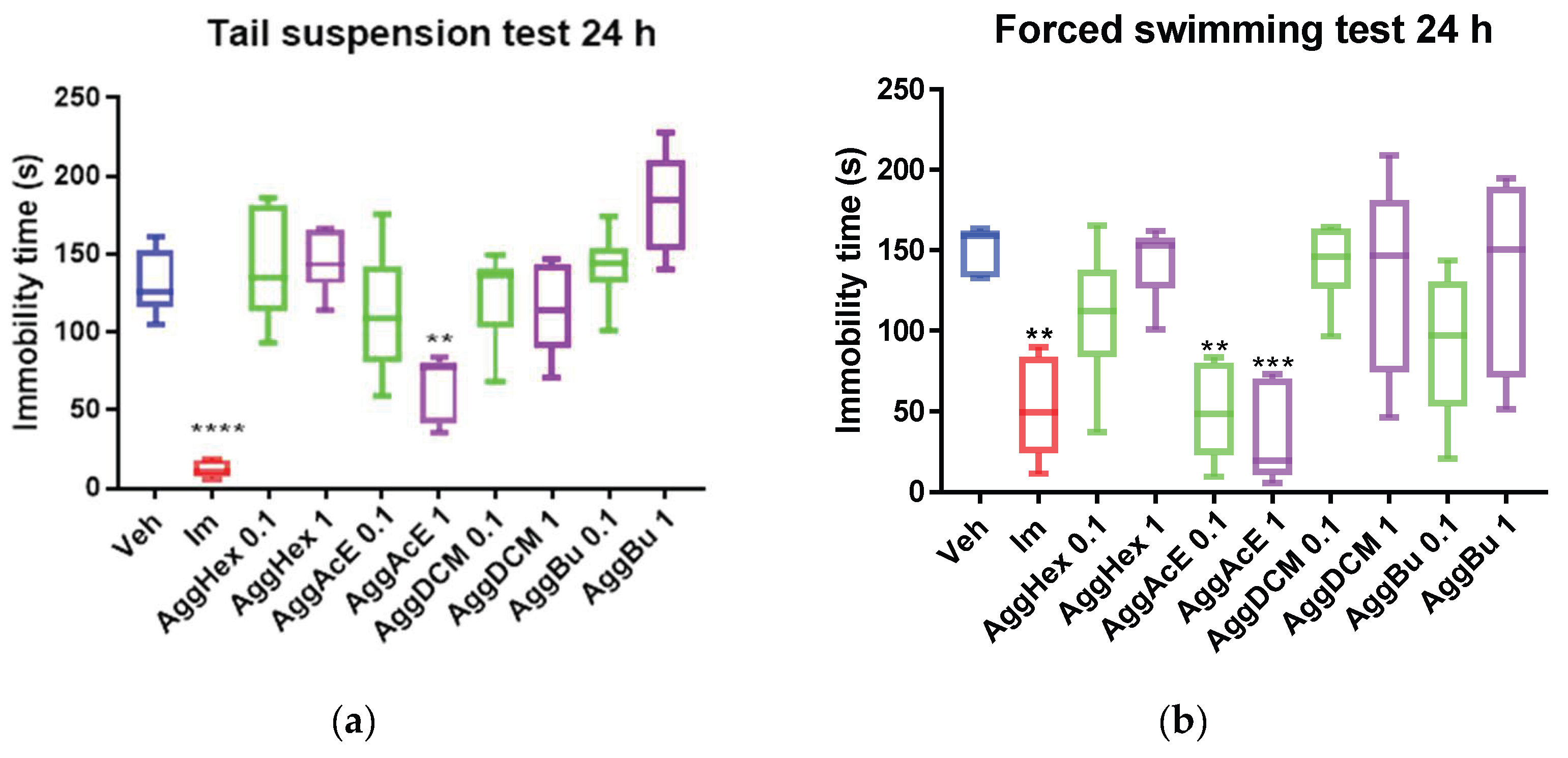
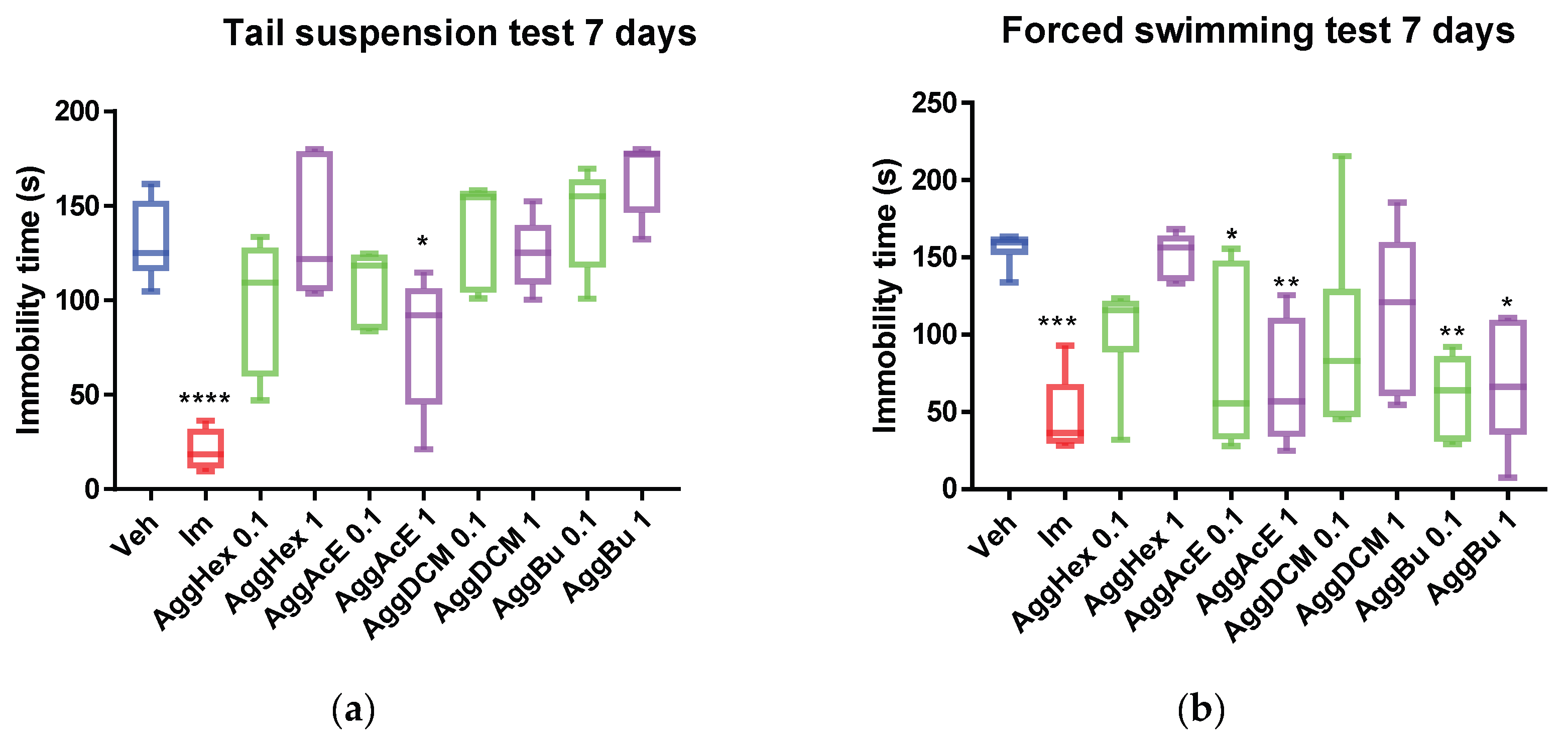
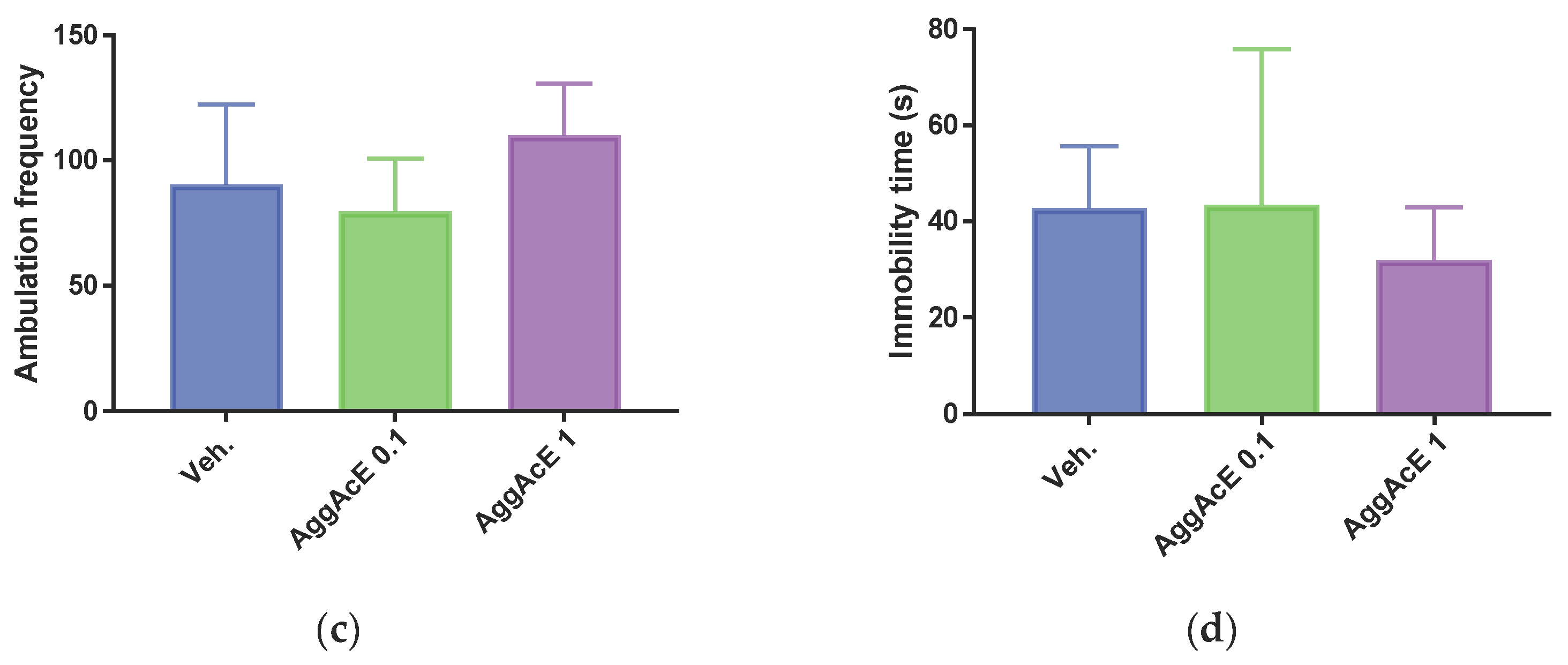
2.1. Assessment of Oral Treatment Effect of A. gratissima var. gratissima Fractions in the Tail Suspension Test and the Forced Swimming Test
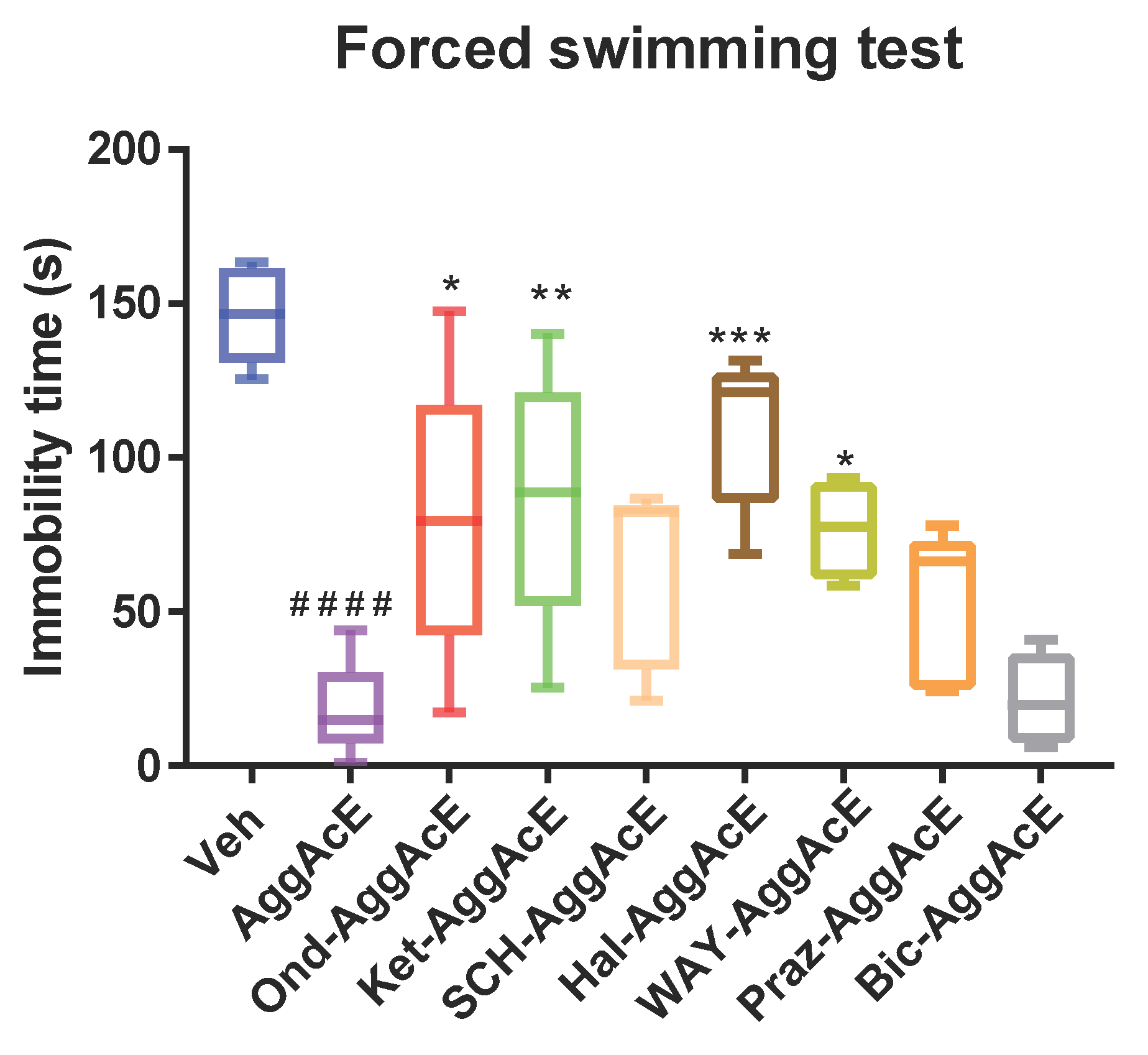
2.2. Mechanism of Antidepressant-like Effects
2.3. UPLC-ESI-MS Profiling of the Active Fraction of A. gratissima var. gratissima Extracts
2.4. ADME and Oral Bioavailability Profiles
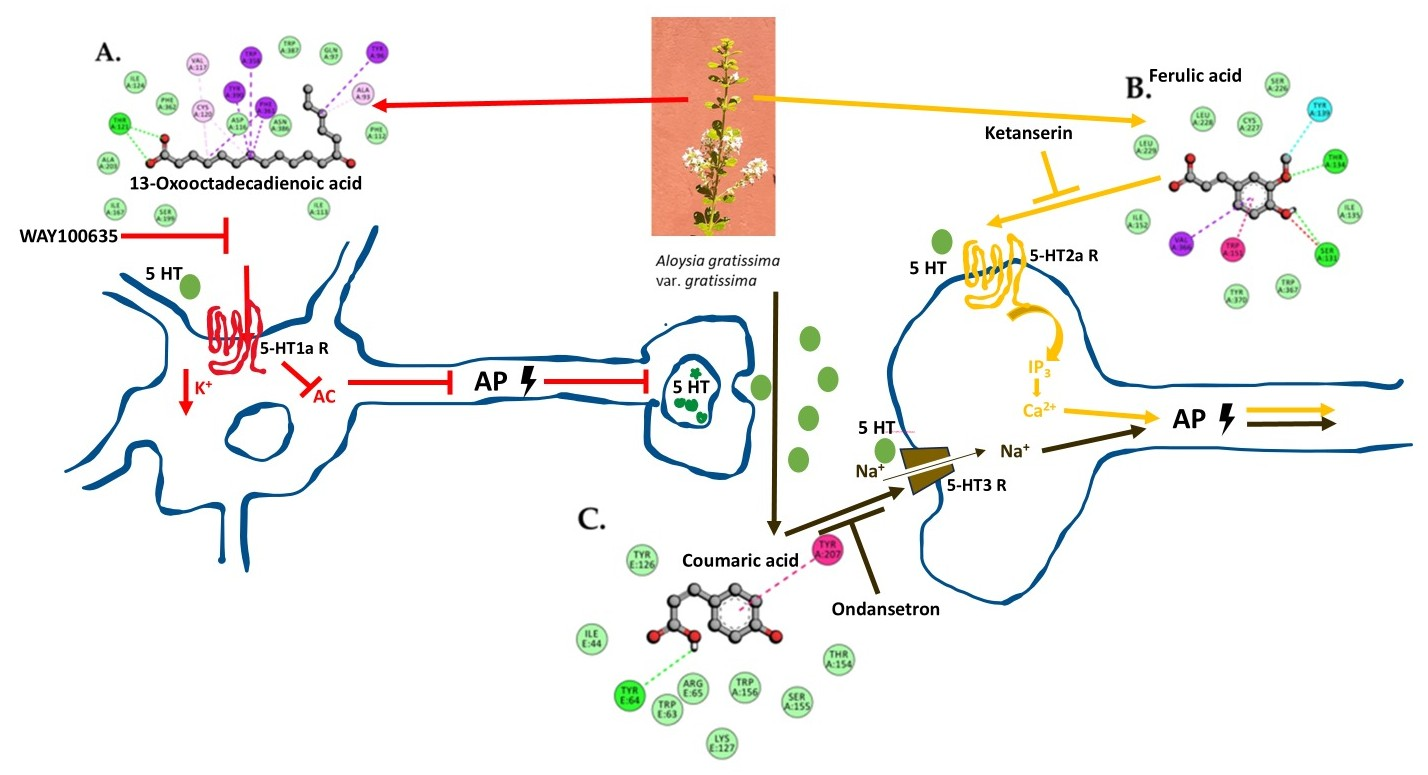
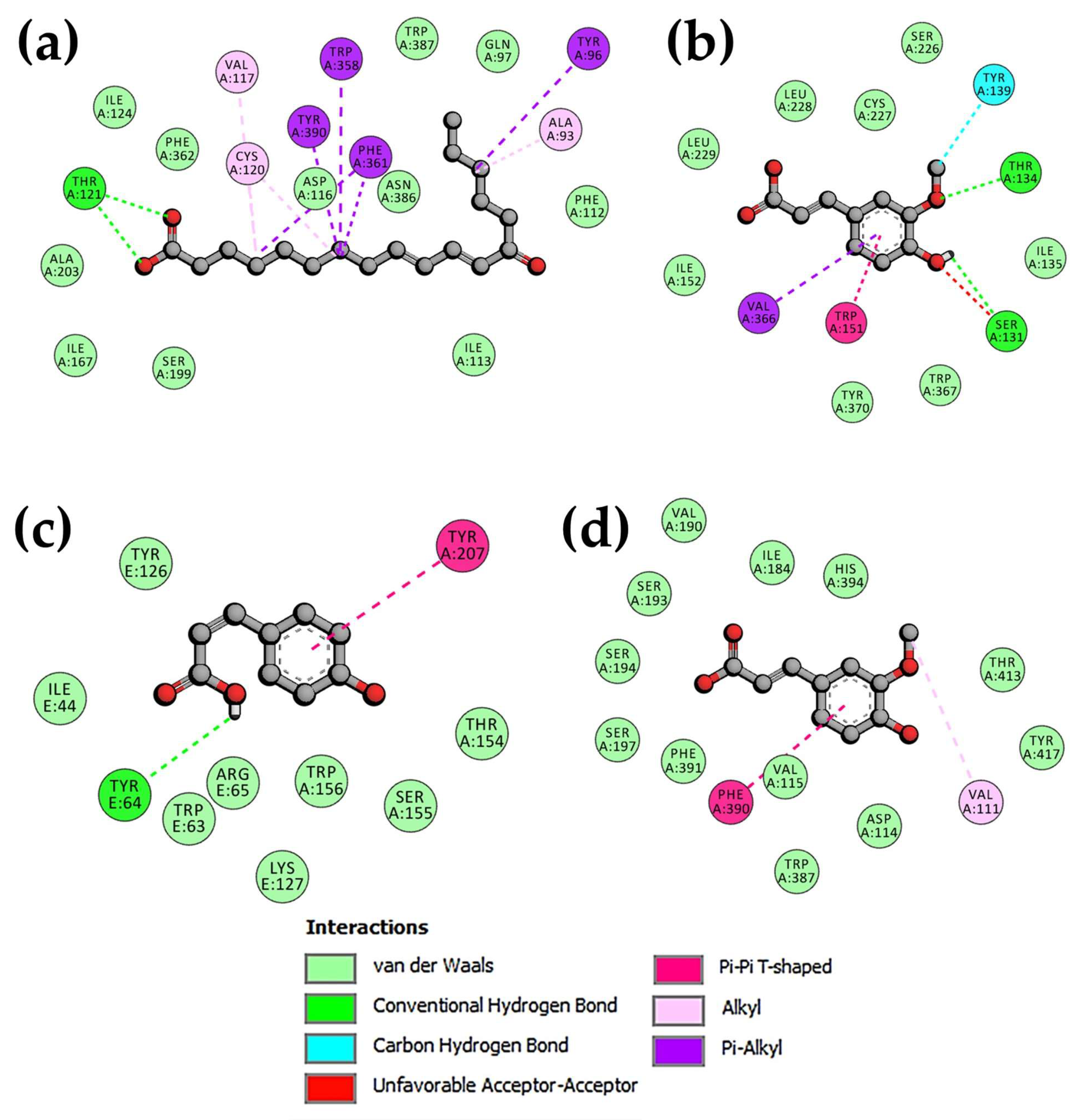
2.5. Computational Simulations
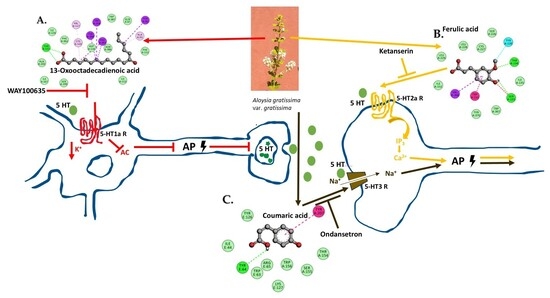
3. Discussion
4. Materials and Methods
4.1. Reagents and Chemicals
4.2. Animals
4.3. Plant Material, Extraction and Fractionation
4.4. Tail Suspension Test of Mice
4.5. Forced Swimming Test in Mice
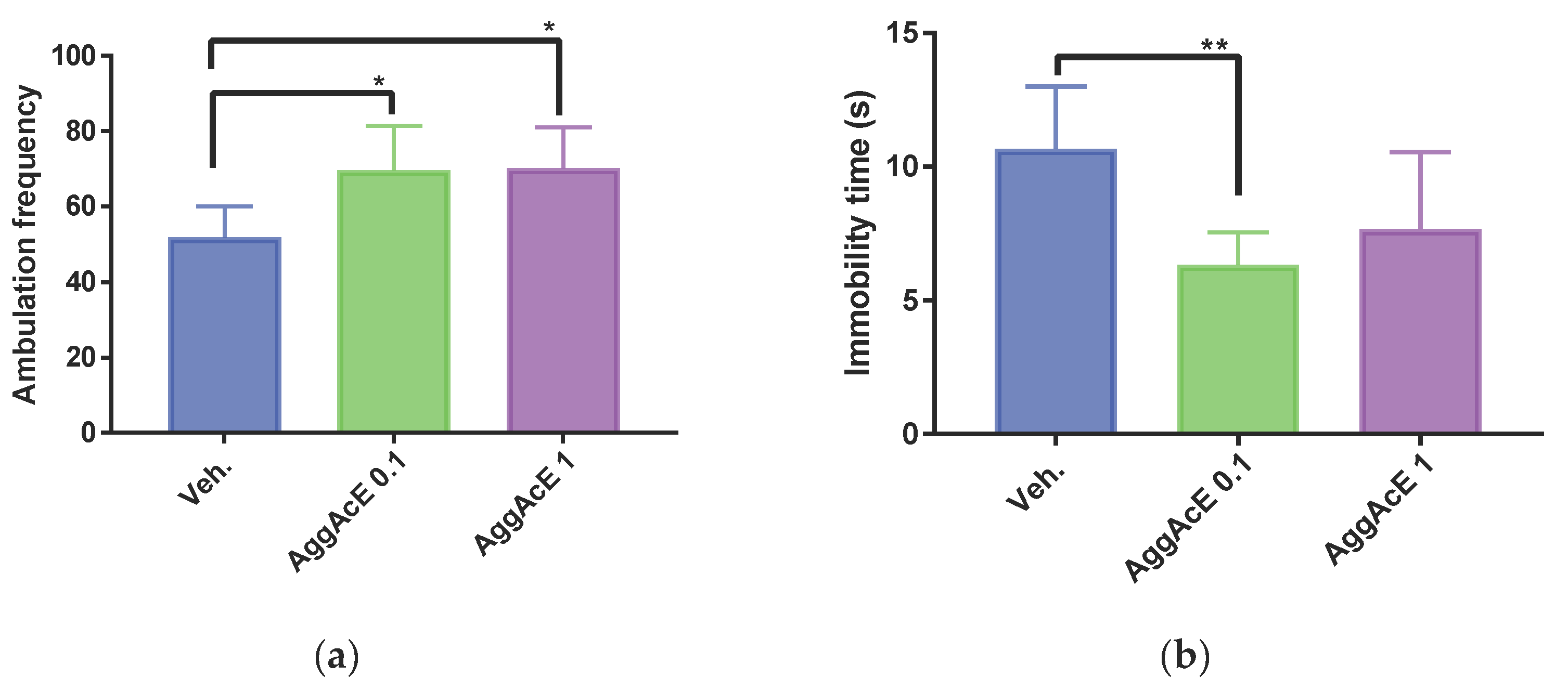
4.6. Open Field Test
4.7. Mechanism Involved in the Antidepressant-like Effects of Active Fraction of Aloysia gratissima var. gratissima
4.8. UPLC-ESI-MS Profiling of the Active Fractions of A. gratissima Extract
4.9. Pharmacokinetic and Oral Bioavailability Predictions
4.10. Selection of Molecular Targets and Druggability Analysis
4.11. Molecular Docking Simulations
4.12. Statistical Analysis
4.13. Ethical Issues
5. Conclusions
Supplementary Materials
Author Contributions
Funding
Institutional Review Board Statement
Data Availability Statement
Acknowledgments
Conflicts of Interest
Abbreviations
| Agg | Aloysia gratissima var. gratissima |
| FST | Forced Swimming Test |
| TST | Tail Suspension Test |
| UPLC | Ultra-Performance Liquid Chromatography |
| MS | Mass Spectrum |
| AggHex | Hexane Fraction |
| AggDCM | Dichloromethane Fraction |
| AggAcE | Ethyl Acetate Fraction |
| AggBu | Butanol Fraction |
| ADME | Absorption, Distribution, Metabolism, and Excretion |
| GI-A | Gastrointestinal Absorption |
| BBB-P | Blood–Brain Barrier Permeant |
| Pgp-S | P-glycoprotein Substrate |
| CYP450 | Cytochrome P450 |
References
- Depressive Disorder (Depression). Available online: https://www.who.int/news-room/fact-sheets/detail/depression (accessed on 10 October 2025).
- Evans-Lacko, S.; Aguilar-Gaxiola, S.; Al-Hamzawi, A.; Alonso, J.; Benjet, C.; Bruffaerts, R.; Chiu, W.T.; Florescu, S.; de Girolamo, G.; Gureje, O.; et al. Socio-economic variations in the mental health treatment gap for people with anxiety, mood, and substance use disorders: Results from the WHO World Mental Health (WMH) surveys. Psychol. Med. 2018, 48, 1560–1571. [Google Scholar] [CrossRef] [PubMed]
- Del Pino-Sedeño, T.; González-Pacheco, H.; González de León, B.; Serrano-Pérez, P.; Acosta Artiles, F.J.; Valcarcel-Nazco, C.; Hurtado-Navarro, I.; Rodríguez Álvarez, C.; Trujillo-Martín, M.M.; MAPDep Team. Effectiveness of interventions to improve adherence to antidepressant medication in patients with depressive disorders: A cluster randomized controlled trial. Front. Public Health 2024, 12, 1320159. [Google Scholar] [CrossRef] [PubMed] [PubMed Central]
- Serretti, A. A critical view on new and future antidepressants. Clin. Psychopharmacol. Neurosci. 2024, 22, 201–210. [Google Scholar] [CrossRef]
- Kovich, H.; Kim, W.; Quaste, A.M. Pharmacologic Treatment of Depression. Am. Fam. Physician 2023, 107, 173–181. [Google Scholar]
- Fazilat, S.; Tahmasbi, F.; Mirzaei, M.R.; Sanaie, S.; Yousefi, Z.; Asnaashari, S.; Yaqoubi, S.; Banagozar Mohammadi, A.; Araj-Khodaei, M. A systematic review on the use of phytotherapy in managing clinical depression. Bioimpacts 2024, 15, 30532. [Google Scholar] [CrossRef] [PubMed]
- Dobrek, L.; Głowacka, K. Depression and its phytopharmacotherapy—A narrative review. Int. J. Mol. Sci. 2023, 24, 4772. [Google Scholar] [CrossRef]
- Remali, J.; Aizat, W.M. Medicinal plants and plant-based traditional medicine: Alternative treatments for depression and their potential mechanisms of action. Heliyon 2024, 10, e38986. [Google Scholar] [CrossRef]
- Almohammed, O.A.; Alsalem, A.A.; Almangour, A.A.; Alotaibi, L.H.; Al Yami, M.S.; Lai, L. Antidepressants and health-related quality of life (HRQoL) for patients with depression: Analysis of the medical expenditure panel survey from the United States. PLoS ONE 2022, 17, e0265928. [Google Scholar] [CrossRef]
- Zhang, Y.; Li, L.; Zhang, J. Curcumin in antidepressant treatments: An overview of potential mechanisms, pre-clinical/clinical trials and ongoing challenges. Basic Clin. Pharmacol. Toxicol. 2020, 127, 243–253. [Google Scholar] [CrossRef]
- Lotter, J.; Möller, M.; Dean, O.; Berk, M.; Harvey, B.H. Studies on haloperidol and adjunctive α-mangostin or raw Garcinia mangostana Linn pericarp on biobehavioral markers in an immune-inflammatory model of schizophrenia in male rats. Front. Psychiatry 2020, 11, 21. [Google Scholar] [CrossRef] [PubMed]
- Zimath, P.L.; Dalmagro, A.P.; Ribeiro, T.C.M.; da Silva, R.M.L.; Lopes de Almeida, G.R.; Malheiros, A.; da Silva, L.M.; de Souza, M.M. Antidepressant-like effect of hydroalcoholic extract from barks of Rapanea ferruginea: Role of monoaminergic system and effect of its isolated compounds myrsinoic acid A and B. Behav. Brain Res. 2020, 389, 112601. [Google Scholar] [CrossRef] [PubMed]
- Taboada, T.; Alvarenga, N.L.; Galeano, A.K.; Arrúa, W.J.; Campuzano-Bublitz, M.A.; Kennedy, M.L. In Vivo antidepressant-like effect assessment of two Aloysia species in mice and LCMS chemical characterization of ethanol extract. Molecules 2022, 27, 7828. [Google Scholar] [CrossRef] [PubMed]
- Farahani, M.S.; Bahramsoltani, R.; Farzaei, M.H.; Abdollahi, M.; Rahimi, R. Plant-derived natural medicines for the management of depression: An overview of mechanisms of action. Rev. Neurosci. 2015, 26, 305–321. [Google Scholar] [CrossRef] [PubMed]
- Mouawad, M.; Nabipur, L.; Agrawal, D.K. Impact of antidepressants on weight gain: Underlying mechanisms and mitigation strategies. Arch. Clin. Biomed. Res. 2025, 9, 183–195. [Google Scholar] [CrossRef] [PubMed] [PubMed Central]
- Calvi, A.; Fischetti, I.; Verzicco, I.; Belvederi Murri, M.; Zanetidou, S.; Volpi, R.; Coghi, P.; Tedeschi, S.; Amore, M.; Cabassi, A. Antidepressant drugs effects on blood pressure. Front. Cardiovasc. Med. 2021, 8, 704281. [Google Scholar] [CrossRef]
- Njenga, C.; Ramanuj, P.P.; de Magalhães, F.J.C.; Pincus, H.A. New and emerging treatments for major depressive disorder. BMJ 2024, 386, e073823. [Google Scholar] [CrossRef]
- Costa, A.P.R.; Vieira, C.; Bohner, L.O.L.; Silva, C.F.; Santos, E.C.d.S.; De Lima, T.C.M.; Oliveira, C.L. A proposal for refining the forced swim test in Swiss mice. Prog. Neuro-Psychopharmacol. Biol. Psychiatry 2013, 45, 150–155. [Google Scholar] [CrossRef]
- Can, A.; Dao, D.T.; Terrillion, C.E.; Piantadosi, S.C.; Bhat, S.; Gould, T.D. The tail suspension test. J. Vis. Exp. 2012, 59, 3769. [Google Scholar] [CrossRef]
- Rajčević, N.; Bukvički, D.; Dodoš, T.; Marin, P.D. Interactions between Natural Products—A Review. Metabolites 2022, 12, 1256. [Google Scholar] [CrossRef]
- Kennedy, M.L.; Taboada, T.; Snead, E.; Diarte, E.M.G.; Coronel, C.M.; Arrúa, W.; Heinechen, O.; Montalbetti, Y.; Hellion-Ibarrola, M.C.; Ibarrola, D.A.; et al. Evaluation of methanol extract of Aloysia gratissima var. gratissima leaves on behavior and anxiety in mice. Int. J. Pharm. Sci. Res. 2021, 12, 3858–3865. [Google Scholar] [CrossRef]
- Perez-Caballero, L.; Torres-Sanchez, S.; Romero-López-Alberca, C.; González-Saiz, F.; Mico, J.A.; Berrocoso, E. Monoaminergic system and depression. Cell Tissue Res. 2019, 377, 107–113. [Google Scholar] [CrossRef] [PubMed]
- Luscher, B.; Shen, Q.; Sahir, N. The GABAergic deficit hypothesis of major depressive disorder. Mol. Psychiatry 2011, 16, 383–406. [Google Scholar] [CrossRef] [PubMed]
- Liwinski, T.; Lang, U.E.; Brühl, A.B.; Schneider, E. Exploring the therapeutic potential of gamma-aminobutyric acid in stress and depressive disorders through the gut–brain axis. Biomedicines 2023, 11, 3128. [Google Scholar] [CrossRef]
- Sharp, T.; Collins, H. Mechanisms of SSRI therapy and discontinuation. Curr. Top. Behav. Neurosci. 2023, 66, 21–47. [Google Scholar] [CrossRef]
- Delva, N.C.; Stanwood, G.D. Dysregulation of brain dopamine systems in major depressive disorder. Exp. Biol. Med. 2021, 246, 1084–1093. [Google Scholar] [CrossRef]
- Zeni, A.L.B.; Zomkowski, A.D.E.; Dal-Cim, T.; Maraschin, M.; Rodrigues, A.L.; Tasca, C.I. Antidepressant-like and neuro-protective effects of Aloysia gratissima: Investigation of involvement of l-arginine-nitric oxide-cyclic guanosine mono-phosphate pathway. J. Ethnopharmacol. 2011, 137, 864–874. [Google Scholar] [CrossRef]
- Zeni, A.; Zomkowski, A.; Maraschin, M.; Tasca, C.; Rodrigues, A. Evidence of the involvement of the monoaminergic systems in the antidepressant-like effect of Aloysia gratissima. J. Ethnopharmacol. 2013, 148, 914–920. [Google Scholar] [CrossRef] [PubMed]
- Moroni, P.; O’Leary, N.; Filloy, J. Species delimitation in the Aloysia gratissima complex (Verbenaceae) following the phylogenetic species concept. Bot. J. Linn. Soc. 2016, 180, 193–212. [Google Scholar] [CrossRef]
- Gruz, J.; Novák, O.; Strnad, M. Rapid analysis of phenolic acids in beverages by UPLC–MS/MS. Food Chem. 2008, 111, 789–794. [Google Scholar] [CrossRef]
- Schreiner, G.E.; Schmitt, E.G.; Brittes, G.E.; dos Santos, L.S.; Maders, L.T.; Gonçalves, I.L.; de Moura Sarmento, S.M.; Dartora, N.; Manfredini, V. Neurotransmitter availability and anti-inflammatory and antioxidant effects of subacute administration of Aloysia gratissima (Gillies & Hook) Tronc. and rutin in female Wistar rats. BioChem 2024, 4, 252–267. [Google Scholar] [CrossRef]
- Abu-Reidah, I.M.; Arráez-Román, D.; Warad, I.; Fernández-Gutiérrez, A.; Segura-Carretero, A. UHPLC/MS2-based approach for the comprehensive metabolite profiling of bean (Vicia faba L.) by-products: A promising source of bioactive constituents. Food Res. Int. 2017, 93, 87–96. [Google Scholar] [CrossRef]
- Strack, D.; Hartfeld, F.; Austenfeld, F.A.; Grotjahn, L.; Wray, V. Coumaroyl-, caffeoyl-and feruloyltartronates and their accumulation in mung bean. Phytochemistry 1985, 24, 147–150. [Google Scholar] [CrossRef]
- Abu-Reidah, I.M.; Arráez-Román, D.; Al-Nuri, M.; Warad, I.; Segura-Carretero, A. Untargeted metabolite profiling and phytochemical analysis of Micromeria fruticosa L. (Lamiaceae) leaves. Food Chem. 2019, 279, 128–143. [Google Scholar] [CrossRef]
- Desta, K.T.; Kim, G.S.; Abd El-Aty, A.M.; Raha, S.; Kim, M.B.; Jeong, J.H.; Warda, M.; Hacımüftüoğlu, A.; Shin, H.C.; Shim, J.H.; et al. Flavone polyphenols dominate in Thymus schimperi Ronniger: LC–ESI–MS/MS characterization and study of anti-proliferative effects of plant extract on AGS and HepG2 cancer cells. J. Chromatogr. B Anal. Technol. Biomed. Life Sci. 2017, 1053, 1–8. [Google Scholar] [CrossRef]
- Jaensch, M.; Jakupovic, J.; Sanchez, H.; Dominguez, X.A. Diterpenes from Hoffmannia strigillosa. Phytochemistry 1990, 29, 3587–3590. [Google Scholar] [CrossRef]
- Abdel Ghani, A.E.; Al-Saleem, M.S.M.; Abdel-Mageed, W.M.; AbouZeid, E.M.; Mahmoud, M.Y.; Abdallah, R.H. UPLC-ESI-MS/MS Profiling and cytotoxic, antioxidant, anti-inflammatory, antidiabetic, and antiobesity activities of the non-polar fractions of Salvia hispanica L. aerial parts. Plants 2023, 12, 1062. [Google Scholar] [CrossRef]
- Snook, M.; Blum, M.; Whitman, D.; Arrendale, R.; Costello, C.; Harwood, J. Caffeoyltartronic acid from catnip (Nepeta cataria): A precursor for catechol in lubber grasshopper (Romalea guttata) defensive secretions. J. Chem. Ecol. 1993, 19, 1957–1966. [Google Scholar] [CrossRef] [PubMed]
- Terencio, M.; Giner, R.; Sanz, M.; Máñez, S.; Ríos, J. On the occurrence of caffeoyltartronic acid and other phenolics in Chondrilla juncea. Z. Naturforsch. 1993, 48, 417–419. [Google Scholar] [CrossRef]
- Bahramsoltani, R.; Rostamiasrabadi, P.; Shahpiri, Z.; Marques, A.; Rahimi, R.; Farzaei, M. Aloysia citrodora Palau (Lemon verbena): A review of phytochemistry and pharmacology. J. Ethnopharmacol. 2018, 222, 34–51. [Google Scholar] [CrossRef] [PubMed]
- Schuster, M.F.; Schreiner, G.E.; Dartora, N.; Zamin, L.L. Antiglioma activity from Aloysia virgata (Ruíz & Pavón) Juss. Pharmacol. Res.-Nat. Prod. 2025, 7, 100267. [Google Scholar] [CrossRef]
- Wasowski, C.; Marder, M. Central nervous system activities of two diterpenes isolated from Aloysia virgata. Phytomedicine 2011, 18, 393–401. [Google Scholar] [CrossRef]
- Feng, J.; Yang, Q.; Chen, M.; Ning, L.; Wang, Y.; Luo, D.; Hu, D.; Lin, Q.; He, F. Study of the correlation between the anti–ischemic stroke mechanism of 4-hydroxybenzaldehyde and its response to reactive oxygen species in brain metabolism. J. Pharmacol. Exp. Ther. 2025, 392, 103395. [Google Scholar] [CrossRef]
- Xu, C.; Feng, J.; Sun, H.; Yan, M.; Yang, Q.; Zhou, X.; Yang, J.; He, F.; Lin, Q. Pharmacokinetics of 4-Hydroxybenzaldehyde in Normal and Cerebral Ischemia–Reperfusion Injury Rats Based on Microdialysis Technique. Eur. J. Drug Metab. Pharmacokinet. 2024, 49, 23–32. [Google Scholar] [CrossRef]
- Le Sayec, M.; Carregosa, D.; Khalifa, K.; de Lucia, C.; Aarsland, D.; Santos, C.N.; Rodriguez-Mateos, A. Identification and quantification of (poly) phenol and methylxanthine metabolites in human cerebrospinal fluid: Evidence of their ability to cross the BBB. Food Funct. 2023, 14, 8893–8902. [Google Scholar] [CrossRef] [PubMed]
- Ghaderi, S.; Gholipour, P.; Komaki, A.; Salehi, I.; Rashidi, K.; Khoshnam, S.E.; Rashno, M. p-Coumaric acid ameliorates cognitive and non-cognitive disturbances in a rat model of Alzheimer’s disease: The role of oxidative stress and inflammation. Int. Immunopharmacol. 2022, 112, 109295. [Google Scholar] [CrossRef] [PubMed]
- Karademir, Y.; Mackie, A.; Tuohy, K.; Dye, L. Effects of Ferulic Acid on cognitive function: A systematic review. Mol. Nutr. Food Res. 2024, 68, 2300526. [Google Scholar] [CrossRef] [PubMed]
- Botti, G.; Catenacci, L.; Dalpiaz, A.; Randi, L.; Bonferoni, M.C.; Perteghella, S.; Beggiato, S.; Ferraro, L.; Pavan, B.; Sorrenti, M. Nasal Administration of a Nanoemulsion Based on Methyl Ferulate and Eugenol Encapsulated in Chitosan Oleate: Uptake Studies in the Central Nervous System. Pharmaceutics 2025, 17, 367. [Google Scholar] [CrossRef]
- Eccles, J.A.; Baldwin, W.S. Detoxification cytochrome P450s (CYPs) in families 1–3 produce functional oxylipins from polyunsaturated fatty acids. Cells 2022, 12, 82. [Google Scholar] [CrossRef]
- Volkamer, A.; Kuhn, D.; Grombacher, T.; Rippmann, F.; Rarey, M. Combining global and local measures for structure-based druggability predictions. J. Chem. Inf. Model. 2012, 52, 360–372. [Google Scholar] [CrossRef]
- Ayipo, Y.O.; Alananzeh, W.A.; Ahmad, I.; Patel, H.; Mordi, M.N. Structural modelling and in silico pharmacology of β-carboline alkaloids as potent 5-HT1A receptor antagonists and reuptake inhibitors. J. Biomol. Struct. Dyn. 2023, 41, 6219–6235. [Google Scholar] [CrossRef]
- Gandhimathi, A.; Sowdhamini, R. Molecular modelling of human 5-hydroxytryptamine receptor (5-HT2A) and virtual screening studies towards the identification of agonist and antagonist molecules. J. Biomol. Struct. Dyn. 2015, 34, 952–970. [Google Scholar] [CrossRef]
- Bielenica, A.; Kędzierska, E.; Koliński, M.; Kmiecik, S.; Koliński, A.; Fiorino, F.; Severino, B.; Magli, E.; Corvino, A.; Rossi, I.; et al. 5-HT2 receptor affinity, docking studies and pharmacological evaluation of a series of 1,3-disubstituted thiourea derivatives. Eur. J. Med. Chem. 2016, 116, 173–186. [Google Scholar] [CrossRef]
- Basak, S.; Gicheru, Y.; Kapoor, A.; Mayer, M.L.; Filizola, M.; Chakrapani, S. Molecular mechanism of setron-mediated inhibition of full-length 5-HT3A receptor. Nat. Commun. 2019, 10, 3225. [Google Scholar] [CrossRef]
- Im, D.; Inoue, A.; Fujiwara, T.; Nakane, T.; Yamanaka, Y.; Uemura, T.; Mori, C.; Shiimura, Y.; Kimura, K.T.; Asada, H.; et al. Structure of the dopamine D2 receptor in complex with the antipsychotic drug spiperone. Nat. Commun. 2020, 11, 6442. [Google Scholar] [CrossRef]
- Portilla-Martínez, A.; Ortiz-Flores, M.; Hidalgo, I.; González-Ruiz, C.; Ceballos, G.; Nájera, N. Defining pharmacological terms based on receptor ligand interactions. Cardiovasc. Metab. Sci. 2020, 31, 66–70. [Google Scholar] [CrossRef]
- Hashem, S.; Dougha, A.; Tufféry, P. Ligand-Induced Biased Activation of GPCRs: Recent Advances and New Directions from In Silico Approaches. Molecules 2025, 30, 1047. [Google Scholar] [CrossRef]
- Kim, Y.; Kim, S. Target discovery using deep learning-based molecular docking and predicted protein structures with alphafold for novel antipsychotics. Psychiatry Investig. 2023, 20, 504. [Google Scholar] [CrossRef]
- Karim, N.; Khan, I.; Abdelhalim, A.; Khan, A.; Halim, S.A. Antidepressant potential of novel flavonoids derivatives from sweet violet (Viola odorata L): Pharmacological, biochemical and computational evidences for possible involvement of serotonergic mechanism. Fitoterapia 2018, 128, 148–161. [Google Scholar] [CrossRef] [PubMed]
- Zhao, X.; Wang, C.; Zhang, J.F.; Liu, L.; Liu, A.M.; Ma, Q.; Zhou, W.H.; Xu, Y. Chronic curcumin treatment normalizes depression-like behaviors in mice with mononeuropathy: Involvement of supraspinal serotonergic system and GABAA receptor. Psychopharmacology 2014, 231, 2171–2187. [Google Scholar] [CrossRef] [PubMed]
- Kim, S.; Thiessen, P.A.; Bolton, E.E.; Chen, J.; Fu, G.; Gindulyte, A.; Han, L.; He, J.; He, S.; Shoemaker, B.A.; et al. PubChem substance and compound databases. Nucleic Acids Res. 2016, 44, D1202–D1213. [Google Scholar] [CrossRef]
- Lipinski, C.A. Lead-and drug-like compounds: The rule-of-five revolution. Drug Discov. Today Technol. 2004, 1, 337–341. [Google Scholar] [CrossRef]
- Daina, A.; Michielin, O.; Zoete, V. Swiss ADME: A free web tool to evaluate pharmacokinetics, drug-likeness and medicinal chemistry friendliness of small molecules. Sci. Rep. 2017, 7, 42717. [Google Scholar] [CrossRef] [PubMed]
- Fryc, M.; Kluzik, D.; Czopek, A.; Jończyk, J.; Zagórska, A. Serotonin 2A (5-HT2A) receptor as evolving biological target: Function, structure, ligands and role in the therapy of neuropsychiatric diseases. Neuropharmacology 2025, 279, 110622. [Google Scholar] [CrossRef] [PubMed]
- Mesoy, S.M.; Lummis, S.C. 5-HT3 Receptors. In Textbook of Ion Channels Volume II; CRC Press: Boca Raton, FL, USA, 2023; pp. 265–278. [Google Scholar] [CrossRef]
- Volkamer, A.; Griewel, A.; Grombacher, T.; Rarey, M. Analyzing the topology of active sites: On the prediction of pockets and subpockets. J. Chem. Inf. Model. 2010, 50, 2041–2052. [Google Scholar] [CrossRef]
- Hanwell, M.D.; Curtis, D.E.; Lonie, D.C.; Vandermeersch, T.; Zurek, E.; Hutchison, G.R. Avogadro: An advanced semantic chemical editor, visualization, and analysis platform. J. Cheminformatics 2012, 4, 17. [Google Scholar] [CrossRef] [PubMed]
- Trott, O.; Olson, A.J. AutoDock Vina: Improving the speed and accuracy of docking with a new scoring function, efficient optimization, and multithreading. J. Comput. Chem. 2010, 31, 455–461. [Google Scholar] [CrossRef]
- Choudhury, A.; Das, N.C.; Patra, R.; Bhattacharya, M.; Ghosh, P.; Patra, B.C.; Mukherjee, S. Exploring the binding efficacy of ivermectin against the key proteins of SARS-CoV-2 pathogenesis: An in silico approach. Future Virol. 2021, 16, 277–291. [Google Scholar] [CrossRef]
- National Research Councill. Guide for the Care and Use of Laboratory Animals, 8th ed.; The National Academies Press: Washington, DC, USA, 2011; 220p, Available online: https://www.nap.edu/read/12910/chapter/1 (accessed on 17 September 2025).



| Peak | Rt (min) | UVmax (nm) | [M−H]− | [M+H]+ | Tentative Identification | EA | B |
|---|---|---|---|---|---|---|---|
| 1 | 1.59–1.71 | 254 | 136.58 | Hydroxybenzoic acid | X | X | |
| 2 | 2.98 | 136.58 | Hydroxybenzoic acid 2 | X | X | ||
| 3 | 3.05–3.18 | 307, 295sh | 162.87 | Coumaric acid | X | X | |
| 4 | 3.46–3.51 | 321, 296sh | 280.82 | 2-O-caffeoyl-hydroxymalonic acid (caffeoyl tartronic acid) | X | X | |
| 5 | 3.87–4.01 | 329, 296sh | 622.68 | Verbascoside | X | X | |
| 6 | 4.12–4.29 | 325, 286sh | 192.82 | Ferulic acid | X | X | |
| 7 | 4.42–4.49 | 245, 305 | 337.23 | Hydroxymethylhoffmanniaketone | X | X | |
| 8 | 4.52 | 372.52 | Methylsudachitin | X | X | ||
| 9 | 4.89–4.92 | 275 | 340.37 | Unknown | X | ||
| 10 | 4.95–5.05 | 324, 295sh | 207.01 | Methyl ferulic acid | X | X | |
| 11 | 5.39 | 453.49 | Unknown | X | X | ||
| 12 | 5.56–5.69 | 310, 295sh | 327.21 | Coumaroyl derivative | X | X | |
| 13 | 5.76–5.82 | 331, 270 | 298.98 | Methoxyapigenin | X | X | |
| 14 | 5.99 | 329.00 | Hydroxy-di-O-methylluteolin | X | X | ||
| 15 | 6.30–6.40 | 343, 275 | 312.52 | Dihydroxy-dimethoxyflavone | X | X | |
| 16 | 6.36–6.51 | 330, 281 | 342.61 | Dihydroxy-trimethoxy flavone | X | X | |
| 17 | 6.84–6.91 | 342, 270 | 282.86 | Methyl apigenin | X | X | |
| 18 | 7.74–8.03 | 267.11 | Unknown | X | X | ||
| 19 | 7.91–7.93 | 222 | 337.31 | Hydroxymethylhoffmanniaketone isomer | X | X | |
| 20 | 7.89 | 293.47 | Oxooctadeca-dienoic acid | X | X | ||
| 21 | 8.79 | 284.29 | Unknown | X | X |
| Compounds | GI-A | BBB-P | Pgp-S | Inhibition | ||||
|---|---|---|---|---|---|---|---|---|
| CYP1A2 | CYP2C19 | CYP2C9 | CYP2D6 | CYP3A4 | ||||
| 4-Hydroxybenzoic acid | High | Yes | No | No | No | No | No | No |
| 3-Hydroxybenzoic acid | High | Yes | No | No | No | No | No | No |
| Coumaric acid | High | Yes | No | No | No | No | No | No |
| 2-O-caffeoyl-hydroxymalonic acid (caffeoyl tartronic acid) | Low | No | No | No | No | No | No | No |
| Verbascoside | Low | No | Yes | No | No | No | No | No |
| Ferulic acid | High | Yes | No | No | No | No | No | No |
| Hydroxymethylhoffmanniaketone | High | No | Yes | No | No | No | No | No |
| Methylsudachitin | High | No | No | Yes | No | Yes | No | Yes |
| Methylferulic acid | High | Yes | No | No | No | No | No | No |
| 3′-Methoxyapigenin | High | No | No | Yes | No | Yes | Yes | Yes |
| 6-methoxyapigenin | High | No | No | Yes | No | No | Yes | Yes |
| 3-Methoxyapigenin | High | No | No | Yes | No | No | Yes | Yes |
| 8-Methoxyapigenin | High | No | No | Yes | No | No | Yes | Yes |
| Hydroxy-di-O-methylluteolin | High | No | No | Yes | No | Yes | Yes | Yes |
| Dihydroxy-dimethoxyflavone | High | No | No | Yes | No | Yes | Yes | Yes |
| Dihydroxy-trimethoxyflavone | High | No | No | Yes | No | Yes | Yes | Yes |
| Methylapigenin | High | No | No | Yes | No | No | Yes | Yes |
| Hydroxymethylhoffmanniaketone isomer | High | No | Yes | No | No | No | No | No |
| Oxooctadecadienoic acid | High | Yes | No | Yes | No | Yes | No | No |
| 13-Oxooctadecadienoic acid | High | Yes | No | Yes | No | Yes | Yes | No |
| (6E,8Z)-5-oxooctadecadienoic acid | High | Yes | No | Yes | No | Yes | Yes | No |
| Compounds | Molecular Weight (g/mol) | H-Bond Acceptors | H-Bond Donors | LogP | Infractions | Bioavailability Score |
|---|---|---|---|---|---|---|
| 4-Hydroxybenzoic acid | 138.12 | 3 | 2 | 1.05 | 0 | 0.85 |
| 3-Hydroxybenzoic acid | 138.12 | 3 | 2 | 1.03 | 0 | 0.85 |
| Coumaric acid | 164.16 | 3 | 2 | 1.26 | 0 | 0.85 |
| Ferulic acid | 194.18 | 4 | 2 | 1.36 | 0 | 0.85 |
| Methylferulic acid | 208.21 | 4 | 1 | 1.83 | 0 | 0.85 |
| Oxooctadecadienoic acid | 294.43 | 3 | 1 | 4.75 | 0 | 0.85 |
| 13-Oxooctadecadienoic acid | 294.43 | 3 | 1 | 4.58 | 0 | 0.85 |
| (6E,8Z)-5-oxooctadecadienoic acid | 294.43 | 3 | 1 | 4.58 | 0 | 0.85 |
| Compounds | ∆G Energy (kcal/mol) | |||
|---|---|---|---|---|
| 5-HT1A | 5-HT2A | 5-HT3 | D2R | |
| 4-Hydroxybenzoic acid | −5.6 | −5.9 | −6.3 | −5.8 |
| 3-Hydroxybenzoic acid | −5.5 | −5.8 | −6.4 | −5.5 |
| Coumaric acid | −6.4 | −6.0 | −7.1 | −6.4 |
| Ferulic acid | −6.4 | −6.3 | −7.0 | −6.5 |
| Methylferulic acid | −6.1 | −6.0 | −6.4 | −5.6 |
| Oxooctadecadienoic acid | −6.1 | −5.9 | −6.0 | −5.0 |
| 13-Oxooctadecadienoic acid | −6.7 | −5.1 | −6.4 | −4.6 |
| (6E,8Z)-5-oxooctadecadienoic acid | −6.4 | −4.8 | −6.7 | −5.3 |
| Standard inhibitors | −9.5 (a) | −8.4 (b) | −9.0 (c) | −7.6 (d) |
| Redocking RMSD values (Å) | 0.79 | 0.76 | 0.88 | 0.71 |
Disclaimer/Publisher’s Note: The statements, opinions and data contained in all publications are solely those of the individual author(s) and contributor(s) and not of MDPI and/or the editor(s). MDPI and/or the editor(s) disclaim responsibility for any injury to people or property resulting from any ideas, methods, instructions or products referred to in the content. |
© 2026 by the authors. Licensee MDPI, Basel, Switzerland. This article is an open access article distributed under the terms and conditions of the Creative Commons Attribution (CC BY) license.
Share and Cite
Campuzano-Bublitz, M.A.; Burgos-Edwards, A.; Gayozo, E.; Acosta, A.A.; Paredes, R.S.; Campuzano-Kennedy, A.D.; Galeano, A.K.; González, Y.P.; Alvarenga, N.L.; Taboada-Jara, T.; et al. Involvement of Serotonergic and Dopaminergic Systems in Aloysia gratissima var. gratissima: Antidepressant-like Effect, UPLC-DAD-MS Chemical Characterization, and Computational Evidence. Pharmaceuticals 2026, 19, 329. https://doi.org/10.3390/ph19020329
Campuzano-Bublitz MA, Burgos-Edwards A, Gayozo E, Acosta AA, Paredes RS, Campuzano-Kennedy AD, Galeano AK, González YP, Alvarenga NL, Taboada-Jara T, et al. Involvement of Serotonergic and Dopaminergic Systems in Aloysia gratissima var. gratissima: Antidepressant-like Effect, UPLC-DAD-MS Chemical Characterization, and Computational Evidence. Pharmaceuticals. 2026; 19(2):329. https://doi.org/10.3390/ph19020329
Chicago/Turabian StyleCampuzano-Bublitz, Miguel A., Alberto Burgos-Edwards, Elvio Gayozo, Adelian A. Acosta, Rodrigo S. Paredes, Alex D. Campuzano-Kennedy, Antonia K. Galeano, Yenny P. González, Nelson L. Alvarenga, Teresa Taboada-Jara, and et al. 2026. "Involvement of Serotonergic and Dopaminergic Systems in Aloysia gratissima var. gratissima: Antidepressant-like Effect, UPLC-DAD-MS Chemical Characterization, and Computational Evidence" Pharmaceuticals 19, no. 2: 329. https://doi.org/10.3390/ph19020329
APA StyleCampuzano-Bublitz, M. A., Burgos-Edwards, A., Gayozo, E., Acosta, A. A., Paredes, R. S., Campuzano-Kennedy, A. D., Galeano, A. K., González, Y. P., Alvarenga, N. L., Taboada-Jara, T., & Kennedy, M. L. (2026). Involvement of Serotonergic and Dopaminergic Systems in Aloysia gratissima var. gratissima: Antidepressant-like Effect, UPLC-DAD-MS Chemical Characterization, and Computational Evidence. Pharmaceuticals, 19(2), 329. https://doi.org/10.3390/ph19020329