Innovations in the Delivery of Bioactive Compounds for Cancer Prevention and Therapy: Advances, Challenges, and Future Perspectives

 ,
,  ,
,  , and
, and
Abstract
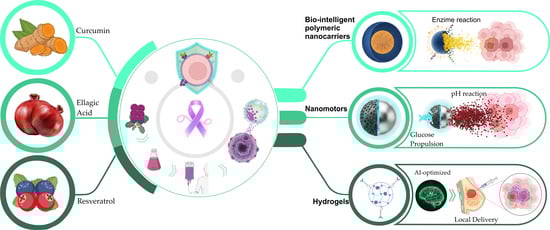
1. Introduction
- Integrate mechanistic evidence of bioactive compounds relevant to oncology.
- Analyze recent advances in delivery systems, including nano- and microstructures, liposomes, hydrogels, and stimulus-responsive platforms.
- Coordinate the transition from laboratory to clinical practice under quality and safety standards.
- Incorporate the dimension of sustainability, considering alternative sources, green extraction processes, and the valorization of by-products.
2. Review Methodology
3. Bioactive Compounds with Potential in Cancer Prevention and Therapy
4. Innovative Platforms for the Delivery of Bioactive Compounds
5. Clinical and Translational Evidence
6. Challenges and Opportunities
7. Future Perspectives
8. Conclusions
Author Contributions
Funding
Institutional Review Board Statement
Informed Consent Statement
Data Availability Statement
Acknowledgments
Conflicts of Interest
Abbreviations
| ATG5 | Autophagy-related gene 5; key regulator of autophagosome formation. |
| AuNPs | Gold nanoparticles. |
| Bad | Bcl-2 antagonist of cell death; proapoptotic protein that antagonizes Bcl-2 function. |
| Bad/Bax | Proapoptotic proteins of the Bcl-2 family that promote mitochondrial permeabilization. |
| Bax | Bcl-2 associated X protein; proapoptotic mediator of mitochondrial permeabilization. |
| BACH1 | BTB and CNC homology 1; transcription factor involved in oxidative stress response and ferroptosis regulation. |
| Bcl-2 | B-cell lymphoma 2; antiapoptotic protein that inhibits cell death. |
| BRAF/ERK | BRAF serine/threonine kinase and extracellular signal-regulated kinase; components of the MAPK pathway involved in tumor growth. |
| CB2 | Cannabinoid receptor type 2; receptor involved in immune regulation and inflammation. |
| Caspase-3 | Key protease in the execution phase of apoptosis. |
| DNA | Deoxyribonucleic acid. |
| Doxil® | Liposomal doxorubicin. |
| DoE | Design of Experiments; statistical method for experimental optimization. |
| EGCG | Epigallocatechin-3-gallate; major bioactive catechin from green tea. |
| EMT | Epithelial–Mesenchymal Transition; process associated with invasion and metastasis. |
| ERK1/2 | Extracellular signal-regulated kinases 1 and 2; regulators of proliferation, differentiation, and survival. |
| FDA | U.S. Food and Drug Administration. |
| FGFR3 | Fibroblast growth factor receptor 3. |
| GMP | Good Manufacturing Practice. |
| GPX4 | Glutathione peroxidase 4; enzyme that protects cells from lipid peroxidation and ferroptosis. |
| GSH | Reduced glutathione; major intracellular antioxidant. |
| HO-1 | Heme oxygenase 1; antioxidant and cytoprotective enzyme. |
| HSP90 | Heat shock protein 90; molecular chaperone involved in cancer cell survival. |
| IAP | Inhibitor of Apoptosis Proteins; family of apoptosis-suppressing proteins. |
| IC50 | Half-maximal inhibitory concentration. |
| IKK | IκB kinase; complex that activates NF-κB by phosphorylating IκB. |
| JAK/STAT | Janus kinase/Signal transducer and activator of transcription pathway. |
| JNK | c-Jun N-terminal kinase; kinase involved in stress response, apoptosis, and proliferation. |
| Keap1 | Kelch-like ECH-associated protein 1; negative regulator of Nrf2 signaling. |
| LC3 | Microtubule-associated protein 1A/1B-light chain 3; marker of autophagy. |
| MAPK | Mitogen-activated protein kinase; pathway regulating proliferation, differentiation, and stress responses. |
| MDR | Multidrug Resistance; resistance to multiple chemotherapeutic agents. |
| MOF | Metal–organic framework; porous coordination material used in drug delivery. |
| mTOR | Mammalian target of rapamycin; key regulator of cell growth, metabolism, and survival. |
| NF-κB | Nuclear factor kappa B; regulator of inflammation and cell survival. |
| NLC | Nanostructured lipid carriers. |
| NP | Nanoparticles; nanometer-scale carriers used for drug delivery. |
| NQO1 | NAD(P)H quinone dehydrogenase 1; enzyme involved in cellular redox balance. |
| Nrf2 | Nuclear factor erythroid 2–related factor 2; regulator of antioxidant and cytoprotective responses. |
| O/W | Oil-in-water emulsion. |
| Onivyde® | Liposomal irinotecan. |
| p-Bad | Phosphorylated Bad; proapoptotic protein inactivated by phosphorylation. |
| p-ERK1/2 | Phosphorylated ERK1/2; regulators of proliferation and differentiation. |
| pH | Potential of hydrogen; measure of acidity or basicity. |
| p-JNK | Phosphorylated c-Jun N-terminal kinase; component of the MAPK pathway involved in apoptosis and stress response. |
| p-p38 | Phosphorylated p38 kinase; MAPK member associated with stress and apoptosis. |
| p38 MAPK | p38 mitogen-activated protein kinase; regulator of inflammation and stress signaling. |
| PARP | Poly(ADP-ribose) polymerase; enzyme involved in DNA repair and cell death signaling. |
| PDI | Polydispersity index; measure of particle size distribution. |
| PI3K/Akt | Phosphatidylinositol 3-kinase/Akt signaling pathway. |
| PLGA | Poly(lactic-co-glycolic acid); biodegradable copolymer. |
| PLA | Polylactic acid; biodegradable polymer. |
| PLK1 | Polo-like kinase 1; regulator of mitosis and cell cycle progression. |
| PDOs | Patient-derived organoids. |
| REDOX | Reduction–oxidation reactions; key cellular metabolic processes. |
| ROS | Reactive oxygen species; chemically reactive molecules involved in oxidative stress. |
| SLN | Solid lipid nanoparticles. |
| SOD1 | Superoxide dismutase 1; enzyme responsible for reactive oxygen species detoxification. |
| STAT1/3 | Signal transducer and activator of transcription 1 and 3; transcription factors involved in inflammation and apoptosis. |
| Survivin | Inhibitor of apoptosis protein (IAP family) and mitosis regulator. |
| TNBC | Triple-negative breast cancer. |
| Tyk2 | Tyrosine kinase 2; JAK family member involved in immune and inflammatory signaling. |
| ZIF | Zeolitic imidazolate framework; subclass of metal–organic frameworks. |
References
- Danpanichkul, P.; Pang, Y.; Sirimangklanurak, S.; Auttapracha, T.; Pramotedham, T.; Pan, C.W.; Koh, B.; Wong, Z.Y.; Saowapa, S.; Gunalan, S.Z.; et al. Contemporary Changes in Global Trends in Early-Onset Cancer: Incidence and Mortality (2000–2021). Cancers 2025, 17, 2766. [Google Scholar] [CrossRef]
- Zottl, J.; Sebesta, C.G.; Tomosel, E.; Sebesta, M.-C.; Sebesta, C. Unraveling the Burden of Pancreatic Cancer in the 21st Century: Trends in Incidence, Mortality, Survival, and Key Contributing Factors. Cancers 2025, 17, 1607. [Google Scholar] [CrossRef]
- Tiruye, T.; Duko, B.; Mekonnen, L.; Ward, P.; Nguyen, T.H.H.D.; Byrne, S.; Roder, D.; Beckmann, K. Cancer Burden Attributable to Potentially Modifiable Risk Factors in Australia. Cancers 2025, 17, 3101. [Google Scholar] [CrossRef]
- Bovell, A.A.N.; Ncayiyana, J.; Ginindza, T.G. Analysis of the Direct Medical Costs of Colorectal Cancer in Antigua and Barbuda: A Prevalence-Based Cost-of-Illness Study. Int. J. Environ. Res. Public Health 2025, 22, 552. [Google Scholar] [CrossRef]
- Villalona, S.; Castillo, B.S.; Chavez Perez, C.; Ferreira, A.; Nivar, I.; Cisneros, J.; Guerra, C.E. Interventions to Mitigate Financial Toxicity in Adult Patients with Cancer in the United States: A Scoping Review. Curr. Oncol. 2024, 31, 918–932. [Google Scholar] [CrossRef]
- Wu, Y.; Liu, X.; Maculaitis, M.C.; Li, B.; Berk, A.; Massa, A.; Weiss, M.C.; McRoy, L. Financial Toxicity among Patients with Breast Cancer during the COVID-19 Pandemic in the United States. Cancers 2024, 16, 62. [Google Scholar] [CrossRef]
- Eslami, M.; Memarsadeghi, O.; Davarpanah, A.; Arti, A.; Nayernia, K.; Behnam, B. Overcoming Chemotherapy Resistance in Metastatic Cancer: A Comprehensive Review. Biomedicines 2024, 12, 183. [Google Scholar] [CrossRef]
- Garg, P.; Malhotra, J.; Kulkarni, P.; Horne, D.; Salgia, R.; Singhal, S.S. Emerging Therapeutic Strategies to Overcome Drug Resistance in Cancer Cells. Cancers 2024, 16, 2478. [Google Scholar] [CrossRef] [PubMed]
- Han, C.J.; Ning, X.; Burd, C.E.; Spakowicz, D.J.; Tounkara, F.; Kalady, M.F.; Noonan, A.M.; McCabe, S.; Von Ah, D. Chemotoxicity and Associated Risk Factors in Colorectal Cancer: A Systematic Review and Meta-Analysis. Cancers 2024, 16, 2597. [Google Scholar] [CrossRef]
- Vieira, I.R.; Tessaro, L.; Lima, A.K.; Velloso, I.P.; Conte-Junior, C.A. Recent Progress in Nanotechnology Improving the Therapeutic Potential of Polyphenols for Cancer. Nutrients 2023, 15, 3136. [Google Scholar] [CrossRef] [PubMed]
- Jia, W.; Zhou, L.; Li, L.; Zhou, P.; Shen, Z. Nano-Based Drug Delivery of Polyphenolic Compounds for Cancer Treatment: Progress, Opportunities, and Challenges. Pharmaceuticals 2023, 16, 101. [Google Scholar] [CrossRef]
- Wahnou, H.; Liagre, B.; Sol, V.; El Attar, H.; Attar, R.; Oudghiri, M.; Duval, R.E.; Limami, Y. Polyphenol-Based Nanoparticles: A Promising Frontier for Enhanced Colorectal Cancer Treatment. Cancers 2023, 15, 3826. [Google Scholar] [CrossRef] [PubMed]
- Talib, W.H.; Awajan, D.; Alqudah, A.; Alsawwaf, R.; Althunibat, R.; Abu AlRoos, M.; Al Safadi, A.a.; Abu Asab, S.; Hadi, R.W.; Al Kury, L.T. Targeting Cancer Hallmarks with Epigallocatechin Gallate (EGCG): Mechanistic Basis and Therapeutic Targets. Molecules 2024, 29, 1373. [Google Scholar] [CrossRef]
- Haddad, F.; Mohammed, N.; Gopalan, R.C.; Ayoub, Y.A.; Nasim, M.T.; Assi, K.H. Development and Optimisation of Inhalable EGCG Nano-Liposomes as a Potential Treatment for Pulmonary Arterial Hypertension by Implementation of the Design of Experiments Approach. Pharmaceutics 2023, 15, 539. [Google Scholar] [CrossRef]
- Andrés, C.M.; Pérez de la Lastra, J.M.; Juan, C.A.; Plou, F.J.; Pérez-Lebeña, E. Polyphenols as Antioxidant/Pro-Oxidant Compounds and Donors of Reducing Species: Relationship with Human Antioxidant Metabolism. Processes 2023, 11, 2771. [Google Scholar] [CrossRef]
- Fakhar, F.; Mohammadian, K.; Keramat, S.; Stanek, A. The Potential Role of Dietary Polyphenols in the Prevention and Treatment of Acute Leukemia. Nutrients 2024, 16, 4100. [Google Scholar] [CrossRef] [PubMed]
- Yang, M.; He, Y.; Ni, Q.; Zhou, M.; Chen, H.; Li, G.; Yu, J.; Wu, X.; Zhang, X. Polyphenolic Nanomedicine Regulating Mitochondria REDOX for Innovative Cancer Treatment. Pharmaceutics 2024, 16, 972. [Google Scholar] [CrossRef]
- Faraoni, P.; Laschi, S. Bioactive Compounds from Agrifood Byproducts: Their Use in Medicine and Biology. Int. J. Mol. Sci. 2024, 25, 5776. [Google Scholar] [CrossRef]
- Bekavac, N.; Krog, K.; Stanić, A.; Šamec, D.; Šalić, A.; Benković, M.; Jurina, T.; Gajdoš Kljusurić, J.; Valinger, D.; Jurinjak Tušek, A. Valorization of Food Waste: Extracting Bioactive Compounds for Sustainable Health and Environmental Solutions. Antioxidants 2025, 14, 714. [Google Scholar] [CrossRef]
- Ligarda-Samanez, C.A.; Huamán-Carrión, M.L.; Cabel-Moscoso, D.J.; Marlene Muñoz Sáenz, D.; Antonio Martinez Hernandez, J.; Garcia-Espinoza, A.J.; Fermín Calderón Huamaní, D.; Carrasco-Badajoz, C.; Pino Cordero, D.; Sucari-León, R.; et al. Technological Innovations in Sustainable Civil Engineering: Advanced Materials, Resilient Design, and Digital Tools. Sustainability 2025, 17, 8741. [Google Scholar] [CrossRef]
- Ligarda-Samanez, C.A.; Huamán-Carrión, M.L.; Calsina-Ponce, W.C.; Cruz, G.D.; Calderón Huamaní, D.F.; Cabel-Moscoso, D.J.; Garcia-Espinoza, A.J.; Sucari-León, R.; Aroquipa-Durán, Y.; Muñoz-Saenz, J.C.; et al. Technological Innovations and Circular Economy in the Valorization of Agri-Food By-Products: Advances, Challenges and Perspectives. Foods 2025, 14, 1950. [Google Scholar] [CrossRef]
- Brugiapaglia, S.; Spagnolo, F.; Curcio, C. Unlocking the Potential of Bioactive Compounds in Pancreatic Cancer Therapy: A Promising Frontier. Biomolecules 2025, 15, 725. [Google Scholar] [CrossRef]
- Asma, S.T.; Acaroz, U.; Imre, K.; Morar, A.; Shah, S.R.; Hussain, S.Z.; Arslan-Acaroz, D.; Demirbas, H.; Hajrulai-Musliu, Z.; Istanbullugil, F.R.; et al. Natural Products/Bioactive Compounds as a Source of Anticancer Drugs. Cancers 2022, 14, 6203. [Google Scholar] [CrossRef]
- Adeola, H.A.; Bano, A.; Vats, R.; Vashishtha, A.; Verma, D.; Kaushik, D.; Mittal, V.; Rahman, M.H.; Najda, A.; Albadrani, G.M.; et al. Bioactive compounds and their libraries: An insight into prospective phytotherapeutics approach for oral mucocutaneous cancers. Biomed. Pharmacother. 2021, 141, 111809. [Google Scholar] [CrossRef]
- Safe, S. Natural products as anticancer agents and enhancing their efficacy by a mechanism-based precision approach. Explor. Drug Sci. 2024, 2, 408–427. [Google Scholar] [CrossRef]
- Górska-Jakubowska, S.; Wu, Y.; Turło, J.; Xu, B. Critical Review on the Anti-Tumor Activity of Bioactive Compounds from Edible and Medicinal Mushrooms over the Last Five Years. Nutrients 2025, 17, 1887. [Google Scholar] [CrossRef]
- Lu, G.; Wang, X.; Cheng, M.; Wang, S.; Ma, K. The multifaceted mechanisms of ellagic acid in the treatment of tumors: State-of-the-art. Biomed. Pharmacother. 2023, 165, 115132. [Google Scholar] [CrossRef]
- Čižmáriková, M.; Michalková, R.; Mirossay, L.; Mojžišová, G.; Zigová, M.; Bardelčíková, A.; Mojžiš, J. Ellagic Acid and Cancer Hallmarks: Insights from Experimental Evidence. Biomolecules 2023, 13, 1653. [Google Scholar] [CrossRef]
- Armonavičius, D.; Maruška, A.; Jakštys, B.; Stankevičius, M.; Drevinskas, T.; Bimbiraitė-Survilienė, K.; Čaplikaitė, M.; Ihara, H.; Takafuji, M.; Skrzydlewska, E.; et al. Evaluation of the Anticancer Activity of Medicinal Plants Predominantly Accumulating Ellagic Acid Compounds. Antioxidants 2025, 14, 1339. [Google Scholar] [CrossRef] [PubMed]
- Guan, C.; Zhou, X.; Li, H.; Ma, X.; Zhuang, J. NF-κB inhibitors gifted by nature: The anticancer promise of polyphenol compounds. Biomed. Pharmacother. 2022, 156, 113951. [Google Scholar] [CrossRef]
- Tsouh Fokou, P.V.; Kamdem Pone, B.; Appiah-Oppong, R.; Ngouana, V.; Bakarnga-Via, I.; Ntieche Woutouoba, D.; Flore Donfack Donkeng, V.; Tchokouaha Yamthe, L.R.; Fekam Boyom, F.; Arslan Ateşşahin, D.; et al. An Update on Antitumor Efficacy of Catechins: From Molecular Mechanisms to Clinical Applications. Food Sci. Nutr. 2025, 13, e70169. [Google Scholar] [CrossRef]
- Cheng, Z.; Zhang, Z.; Han, Y.; Wang, J.; Wang, Y.; Chen, X.; Shao, Y.; Cheng, Y.; Zhou, W.; Lu, X.; et al. A review on anti-cancer effect of green tea catechins. J. Funct. Foods 2020, 74, 104172. [Google Scholar] [CrossRef]
- Dwivedi, R.; Bala, R.; Singh, S.; Sindhu, R.K. Catechins in cancer therapy: Integrating traditional and complementary approaches. J. Complement. Integr. Med. 2025, 22, 574–586. [Google Scholar] [CrossRef]
- Akter, K.; Gul, K.; Mumtaz, S. Revisiting Curcumin in Cancer Therapy: Recent Insights into Molecular Mechanisms, Nanoformulations, and Synergistic Combinations. Curr. Issues Mol. Biol. 2025, 47, 716. [Google Scholar] [CrossRef]
- Ameer, S.F.; Mohamed, M.Y.; Elzubair, Q.A.; Sharif, E.A.M.; Ibrahim, W.N. Curcumin as a novel therapeutic candidate for cancer: Can this natural compound revolutionize cancer treatment? Front. Oncol. 2024, 14, 1438040. [Google Scholar] [CrossRef]
- Gutsche, L.C.; Dörfler, J.; Hübner, J. Curcumin as a complementary treatment in oncological therapy: A systematic review. Eur. J. Clin. Pharmacol. 2025, 81, 1–33. [Google Scholar] [CrossRef] [PubMed]
- Ghareghomi, S.; Rahban, M.; Moosavi-Movahedi, Z.; Habibi-Rezaei, M.; Saso, L.; Moosavi-Movahedi, A.A. The Potential Role of Curcumin in Modulating the Master Antioxidant Pathway in Diabetic Hypoxia-Induced Complications. Molecules 2021, 26, 7658. [Google Scholar] [CrossRef]
- Xie, X.; Wei, Y. A review on anti-cancer properties of quercetin in gastric cancer. Front. Pharmacol. 2025, 16, 1563229. [Google Scholar] [CrossRef]
- Hasan, A.M.W.; Al Hasan, M.S.; Mizan, M.; Miah, M.S.; Uddin, M.B.; Mia, E.; Yana, N.T.; Hossain, M.A.; Islam, M.T. Quercetin promises anticancer activity through PI3K-AKT-mTOR pathway: A literature review. Pharmacol. Res.-Nat. Prod. 2025, 7, 100206. [Google Scholar] [CrossRef]
- Saadh, M.J.; Ahmed, H.H.; Chandra, M.; Al-Hussainy, A.F.; Hamid, J.A.; Mishra, A.; Taher, W.M.; Alwan, M.; Jawad, M.J.; Al-Nuaimi, A.M.A.; et al. Therapeutic effects of quercetin in oral cancer therapy: A systematic review of preclinical evidence focused on oxidative damage, apoptosis and anti-metastasis. Cancer Cell Int. 2025, 25, 66. [Google Scholar] [CrossRef] [PubMed]
- Alharbi, H.O.A.; Alshebremi, M.; Babiker, A.Y.; Rahmani, A.H. The Role of Quercetin, a Flavonoid in the Management of Pathogenesis Through Regulation of Oxidative Stress, Inflammation, and Biological Activities. Biomolecules 2025, 15, 151. [Google Scholar] [CrossRef]
- Tang, S.-M.; Deng, X.-T.; Zhou, J.; Li, Q.-P.; Ge, X.-X.; Miao, L. Pharmacological basis and new insights of quercetin action in respect to its anti-cancer effects. Biomed. Pharmacother. 2020, 121, 109604. [Google Scholar] [CrossRef] [PubMed]
- Vollmannová, A.; Bojňanská, T.; Musilová, J.; Lidiková, J.; Cifrová, M. Quercetin as one of the most abundant represented biological valuable plant components with remarkable chemoprotective effects—A review. Heliyon 2024, 10, e33342. [Google Scholar] [CrossRef]
- Ribeiro, E.; Vale, N. The Role of Resveratrol in Cancer Management: From Monotherapy to Combination Regimens. Targets 2024, 2, 307–326. [Google Scholar] [CrossRef]
- Ren, B.; Kwah, M.X.-Y.; Liu, C.; Ma, Z.; Shanmugam, M.K.; Ding, L.; Xiang, X.; Ho, P.C.-L.; Wang, L.; Ong, P.S.; et al. Resveratrol for cancer therapy: Challenges and future perspectives. Cancer Lett. 2021, 515, 63–72. [Google Scholar] [CrossRef]
- Andreato, C.C.; Kulpe, A.; Fett, W.C.R.; Fett, C.A. The use of resveratrol in the fight against Cancer in women: A review. Braz. J. Health Rev. 2024, 7, e72231. [Google Scholar] [CrossRef]
- Raviv, T.; Shteinfer-Kuzmine, A.; Moyal, M.M.; Shoshan-Barmatz, V. Resveratrol’s Pro-Apoptotic Effects in Cancer Are Mediated Through the Interaction and Oligomerization of the Mitochondrial VDAC1. Int. J. Mol. Sci. 2025, 26, 3963. [Google Scholar] [CrossRef]
- Almukainzi, M.; El-Masry, T.A.; El Zahaby, E.I.; El-Nagar, M.M.F. Chitosan/Hesperidin Nanoparticles for Sufficient, Compatible, Antioxidant, and Antitumor Drug Delivery Systems. Pharmaceuticals 2024, 17, 999. [Google Scholar] [CrossRef] [PubMed]
- Elwan, A.G.; Mohamed, T.M.; Beltagy, D.M.; El Gamal, D.M. The therapeutic role of naringenin nanoparticles on hepatocellular carcinoma. BMC Pharmacol. Toxicol. 2025, 26, 3. [Google Scholar] [CrossRef]
- Lin, Z.; Li, Y.; Wu, Z.; Liu, Q.; Li, X.; Luo, W. Eriodictyol-cisplatin coated nanomedicine synergistically promote osteosarcoma cells ferroptosis and chemosensitivity. J. Nanobiotechnol. 2025, 23, 109. [Google Scholar] [CrossRef]
- Zhang, T.; Xu, B. Didymin Inhibits Proliferation and Induces Apoptosis in Gastric Cancer Cells by Modulating the PI3K/Akt Pathway. Nutr. Cancer 2025, 77, 537–552. [Google Scholar] [CrossRef]
- Xu, J.; Liu, Q.; Pan, Q. Poncirin Inhibits Cell Viability and Induces Caspase-mediated Apoptosis in Cervical Cancer Cells. Pharmacogn. Mag. 2025, 09731296251398962. [Google Scholar] [CrossRef]
- Muchtaridi, M.; Suryani, A.I.; Wathoni, N.; Herdiana, Y.; Mohammed, A.F.; Gazzali, A.M.; Lesmana, R.; Joni, I.M. Chitosan/Alginate Polymeric Nanoparticle-Loaded α-Mangostin: Characterization, Cytotoxicity, and In Vivo Evaluation against Breast Cancer Cells. Polymers 2023, 15, 3658. [Google Scholar] [CrossRef]
- Alobaid, H.M.; Alzhrani, A.H.; Majrashi, N.A.; Alkhuriji, A.F.; Alajmi, R.A.; Yehia, H.M.; Awad, M.A.; Almurshedi, A.S.; Almnaizel, A.T.; Elkhadragy, M.F. Effect of biosynthesized silver nanoparticles by Garcinia mangostana extract against human breast cancer cell line MCF-7. Food Sci. Technol. 2022, 42, e41622. [Google Scholar] [CrossRef]
- Liu, J.; Liu, H.; Huang, S.; Peng, H.; Li, J.; Tu, K.; Tan, S.; Xie, R.; Lei, L.; Yue, Q.; et al. Multiple Treatment of Triple-Negative Breast Cancer Through Gambogic Acid-Loaded Mesoporous Polydopamine. Small 2024, 20, 2309583. [Google Scholar] [CrossRef]
- Wu, L.; Bai, L.; Dai, W.; Wu, Y.; Xi, P.; Zhang, J.; Zheng, L. Ginsenoside Rg3: A Review of its Anticancer Mechanisms and Potential Therapeutic Applications. Curr. Top. Med. Chem. 2024, 24, 869–884. [Google Scholar] [CrossRef]
- Yin, S.; Xu, X.; Li, Y.; Fang, H.; Ren, J. Lycopene as a potential anticancer agent: Current evidence on synergism, drug delivery systems and epidemiology (Review). Oncol. Lett. 2025, 30, 462. [Google Scholar] [CrossRef]
- Ozkan, G.; Günal-Köroğlu, D.; Karadag, A.; Capanoglu, E.; Cardoso, S.M.; Al-Omari, B.; Calina, D.; Sharifi-Rad, J.; Cho, W.C. A mechanistic updated overview on lycopene as potential anticancer agent. Biomed. Pharmacother. 2023, 161, 114428. [Google Scholar] [CrossRef]
- Rao, A.; Kumar, A.H.S. Computational Pharmacology Analysis of Lycopene to Identify Its Targets and Biological Effects in Humans. Appl. Sci. 2025, 15, 7815. [Google Scholar] [CrossRef]
- Sui, J.; Guo, J.; Pan, D.; Wang, Y.; Xu, Y.; Sun, G.; Xia, H. The Efficacy of Dietary Intake, Supplementation, and Blood Concentrations of Carotenoids in Cancer Prevention: Insights from an Umbrella Meta-Analysis. Foods 2024, 13, 1321. [Google Scholar] [CrossRef]
- Bates, C.A.; Vincent, M.J.; Buerger, A.N.; Santamaria, A.B.; Maier, A.; Jack, M. Investigating the relationship between β-carotene intake from diet and supplements, smoking, and lung cancer risk. Food Chem. Toxicol. 2024, 194, 115104. [Google Scholar] [CrossRef]
- Shafiq, M.A.; Gul, R.; Nazik, G. Dietary Carotenoids and their Multifaceted Roles in Cancer Prevention. J. Health Rehabil. Res. 2024, 4, 863–868. [Google Scholar] [CrossRef]
- Anand, R.; Mohan, L.; Bharadvaja, N. Disease Prevention and Treatment Using β-Carotene: The Ultimate Provitamin A. Rev. Bras. Farmacogn. 2022, 32, 491–501. [Google Scholar] [CrossRef]
- Eom, J.; Kim, H.; Lim, J.W. Lutein Induces Apoptosis of Gastric Cancer Cells by Producing Reactive Oxygen Species via NADPH Oxidase Activation. Curr. Dev. Nutr. 2022, 6, 58. [Google Scholar] [CrossRef]
- Chatwichien, J.; Semakul, N.; Yimklan, S.; Suwanwong, N.; Naksing, P.; Ruchirawat, S. Lutein derived from Xenostegia tridentata exhibits anticancer activities against A549 lung cancer cells via hyaluronidase inhibition. PLoS ONE 2024, 19, e0315570. [Google Scholar] [CrossRef]
- Gür, F.M.; Bilgiç, S.; Aktaş, İ. Lutein, a non-provitamin A carotenoid, reduces cisplatin-induced cardiotoxicity. Prostaglandins Other Lipid Mediat 2025, 177, 106965. [Google Scholar] [CrossRef]
- Prathyusha, P.; Viswanathan, G.; Tomcy, A.T.; Binitha, P.P.; Bava, S.V.; Sindhu, E.R. Lutein and inflammation: A comprehensive review of its mechanisms of action. Explor. Drug Sci. 2025, 3, 100885. [Google Scholar] [CrossRef]
- Bagrezaei, F.; Kheirouri, S.; Alizadeh, M. Association of Lutein with Cancer: A Systematic Review of the Lutein Effects on Cellular Processes Involved in Cancer Progression. Prev. Nutr. Food Sci. 2025, 30, 250–262. [Google Scholar] [CrossRef]
- Zhang, F.Q.; Li, J.; Zhang, R.; Tu, J.; Xie, Z.; Tsuji, T.; Shah, H.; Ross, M.O.; Lyu, R.; Matsuzaki, J.; et al. Zeaxanthin augments CD8+ effector T cell function and immunotherapy efficacy. Cell Rep. Med. 2025, 6, 102324. [Google Scholar] [CrossRef]
- Juin, C.; Oliveira Junior, R.G.d.; Fleury, A.; Oudinet, C.; Pytowski, L.; Bérard, J.-B.; Nicolau, E.; Thiéry, V.; Lanneluc, I.; Beaugeard, L.; et al. Zeaxanthin from Porphyridium purpureum induces apoptosis in human melanoma cells expressing the oncogenic BRAF V600E mutation and sensitizes them to the BRAF inhibitor vemurafenib. Rev. Bras. Farmacogn. 2018, 28, 457–467. [Google Scholar] [CrossRef]
- Faraone, I.; Sinisgalli, C.; Ostuni, A.; Armentano, M.F.; Carmosino, M.; Milella, L.; Russo, D.; Labanca, F.; Khan, H. Astaxanthin anticancer effects are mediated through multiple molecular mechanisms: A systematic review. Pharmacol. Res. 2020, 155, 104689. [Google Scholar] [CrossRef] [PubMed]
- Chang, J.-J.; Wang, Y.-C.; Yang, S.-H.; Wu, J.-Y.; Chang, M.-W.; Wang, H.-M.D. Pioneering Astaxanthin-Tumor Cell Membrane Nanoparticles for Innovative Targeted Drug Delivery on Melanoma. Int. J. Nanomed. 2024, 19, 2395–2407. [Google Scholar] [CrossRef]
- Hormozi, M.; Baharvand, P. Astaxanthin’s Impact on Colorectal Cancer: Examining Apoptosis, Antioxidant Enzymes, and Gene Expression. Open Biochem. J. 2024, 18. [Google Scholar] [CrossRef]
- Copat, C.; Favara, C.; Tomasello, M.F.; Sica, C.; Grasso, A.; Dominguez, H.G.; Conti, G.O.; Ferrante, M. Astaxanthin in cancer therapy and prevention (Review). Biomed. Rep. 2025, 22, 66. [Google Scholar] [CrossRef]
- Sun, S.-Q.; Zhao, Y.-X.; Li, S.-Y.; Qiang, J.-W.; Ji, Y.-Z. Anti-Tumor Effects of Astaxanthin by Inhibition of the Expression of STAT3 in Prostate Cancer. Mar. Drugs 2020, 18, 415. [Google Scholar] [CrossRef]
- Zhou, J.; Azrad, M.; Kong, L. Effect of Limonene on Cancer Development in Rodent Models: A Systematic Review. Front. Sustain. Food Syst. 2021, 5, 725077. [Google Scholar] [CrossRef]
- Rakoczy, K.; Szymańska, N.; Stecko, J.; Kisiel, M.; Maruszak, M.; Niedziela, M.; Kulbacka, J. Applications of Limonene in Neoplasms and Non-Neoplastic Diseases. Int. J. Mol. Sci. 2025, 26, 6359. [Google Scholar] [CrossRef]
- Keshari, A.K.; Singh, V.; Patni, T.; Mishra, T.; Mishra, A.; Gupta, R.K. A new frontier: Terpenes in the fight against colon cancer. ASPET Discov. 2025, 1, 100016. [Google Scholar] [CrossRef]
- Motie, F.M.; Soltani Howyzeh, M.; Ghanbariasad, A. Synergic effects of DL-limonene, R-limonene, and cisplatin on AKT, PI3K, and mTOR gene expression in MDA-MB-231 and 5637 cell lines. Int. J. Biol. Macromol. 2024, 280, 136216. [Google Scholar] [CrossRef]
- Chebet, J.J.; Ehiri, J.E.; McClelland, D.J.; Taren, D.; Hakim, I.A. Effect of d-limonene and its derivatives on breast cancer in human trials: A scoping review and narrative synthesis. BMC Cancer 2021, 21, 902. [Google Scholar] [CrossRef]
- Hordyjewska, A.; Ostapiuk, A.; Horecka, A. Betulin and betulinic acid in cancer research. J. Pre Clin. Clin. Res. 2018, 12, 72–75. [Google Scholar] [CrossRef]
- Jiang, W.; Li, X.; Dong, S.; Zhou, W. Betulinic acid in the treatment of tumour diseases: Application and research progress. Biomed. Pharmacother. 2021, 142, 111990. [Google Scholar] [CrossRef]
- Nemli, E.; Saricaoglu, B.; Kirkin, C.; Ozkan, G.; Capanoglu, E.; Habtemariam, S.; Sharifi-Rad, J.; Calina, D. Chemopreventive and Chemotherapeutic Potential of Betulin and Betulinic Acid: Mechanistic Insights From In Vitro, In Vivo and Clinical Studies. Food Sci. Nutr. 2024, 12, 10059–10069. [Google Scholar] [CrossRef]
- Farooqi, A.A.; Turgambayeva, A.; Tashenova, G.; Tulebayeva, A.; Bazarbayeva, A.; Kapanova, G.; Abzaliyeva, S. Multifunctional Roles of Betulinic Acid in Cancer Chemoprevention: Spotlight on JAK/STAT, VEGF, EGF/EGFR, TRAIL/TRAIL-R, AKT/mTOR and Non-Coding RNAs in the Inhibition of Carcinogenesis and Metastasis. Molecules 2023, 28, 67. [Google Scholar] [CrossRef]
- Morparia, S.; Metha, C.; Suvarna, V. Recent advancements of betulinic acid-based drug delivery systems for cancer therapy (2002–2023). Nat. Prod. Res. 2025, 39, 3260–3280. [Google Scholar] [CrossRef]
- Bolleddu, R.; Mangal, A.K.; Abdullah, S.; Narasimhaji, C.V.; Nagayya, S.; Srikanth, N. The role of Ursolic acid, a pharmacologically active compound from Ocimum sanctum L. as a potential chemotherapeutic agent. Curr. Pharm. Anal. 2025, 21, 77–87. [Google Scholar] [CrossRef]
- Chauhan, A.; Pathak, V.M.; Yadav, M.; Chauhan, R.; Babu, N.; Chowdhary, M.; Ranjan, A.; Mathkor, D.M.; Haque, S.; Tuli, H.S.; et al. Role of ursolic acid in preventing gastrointestinal cancer: Recent trends and future perspectives. Front. Pharmacol. 2024, 15, 1405497. [Google Scholar] [CrossRef] [PubMed]
- Kornel, A.; Tsiani, E. Effects of Ursolic Acid on Colorectal Cancer: A Review of Recent Evidence. Nutraceuticals 2024, 4, 373–394. [Google Scholar] [CrossRef]
- Guo, W.; Xu, B.; Wang, X.; Zheng, B.; Du, J.; Liu, S. The Analysis of the Anti-Tumor Mechanism of Ursolic Acid Using Connectively Map Approach in Breast Cancer Cells Line MCF-7. Cancer Manag. Res. 2020, 12, 3469–3476. [Google Scholar] [CrossRef] [PubMed]
- Limami, Y.; Pinon, A.; Wahnou, H.; Oudghiri, M.; Liagre, B.; Simon, A.; Duval, R.E. Ursolic Acid’s Alluring Journey: One Triterpenoid vs. Cancer Hallmarks. Molecules 2023, 28, 7897. [Google Scholar] [CrossRef] [PubMed]
- Dahham, S.S.; Tabana, Y.; Asif, M.; Ahmed, M.; Babu, D.; Hassan, L.E.; Ahamed, M.B.K.; Sandai, D.; Barakat, K.; Siraki, A.; et al. β-Caryophyllene Induces Apoptosis and Inhibits Angiogenesis in Colorectal Cancer Models. Int. J. Mol. Sci. 2021, 22, 10550. [Google Scholar] [CrossRef]
- Basheer, I.; Wang, H.; Li, G.; Jehan, S.; Raza, A.; Du, C.; Ullah, N.; Li, D.; Sui, G. β-caryophyllene sensitizes hepatocellular carcinoma cells to chemotherapeutics and inhibits cell malignancy through targeting MAPK signaling pathway. Front. Pharmacol. 2024, 15, 1492670. [Google Scholar] [CrossRef]
- Ahmed, E.A. The Potential Therapeutic Role of Beta-Caryophyllene as a Chemosensitizer and an Inhibitor of Angiogenesis in Cancer. Molecules 2025, 30, 1751. [Google Scholar] [CrossRef]
- Yu, H.; Ning, N.; He, F.; Xu, J.; Zhao, H.; Duan, S.; Zhao, Y. Targeted Delivery of Geraniol via Hyaluronic Acid-Conjugation Enhances Its Anti-Tumor Activity Against Prostate Cancer. Int. J. Nanomed. 2024, 19, 155–169. [Google Scholar] [CrossRef]
- Zhi, H.; Cui, J.; Yang, H.; Zhang, Y.; Zhu, M. Research progress of geraniol in tumor therapy. Proc. Anticancer. Res. 2021, 5, 26–30. [Google Scholar] [CrossRef]
- Ben Ammar, R. Potential Effects of Geraniol on Cancer and Inflammation-Related Diseases: A Review of the Recent Research Findings. Molecules 2023, 28, 3669. [Google Scholar] [CrossRef]
- Kim, H.; Li, S.; Nilkhet, S.; Baek, S.J. Anti-cancer activity of rose-geranium essential oil and its bioactive compound geraniol in colorectal cancer cells. Appl. Biol. Chem. 2025, 68, 30. [Google Scholar] [CrossRef]
- Salinas, Y.; Chauhan, S.C.; Bandyopadhyay, D. Small-Molecule Mitotic Inhibitors as Anticancer Agents: Discovery, Classification, Mechanisms of Action, and Clinical Trials. Int. J. Mol. Sci. 2025, 26, 3279. [Google Scholar] [CrossRef]
- Mir, M.A.; Banik, B.K. Sustainable healing: Natural compounds facilitating the future cancer treatment. World Dev. Sustain. 2025, 6, 100215. [Google Scholar] [CrossRef]
- Grzech, D.; Hong, B.; Caputi, L.; Sonawane, P.D.; O’Connor, S.E. Engineering the Biosynthesis of Late-Stage Vinblastine Precursors Precondylocarpine Acetate, Catharanthine, Tabersonine in Nicotiana benthamiana. ACS Synth. Biol. 2023, 12, 27–34. [Google Scholar] [CrossRef] [PubMed]
- Gahtori, R.; Tripathi, A.H.; Kumari, A.; Negi, N.; Paliwal, A.; Tripathi, P.; Joshi, P.; Rai, R.C.; Upadhyay, S.K. Anticancer plant-derivatives: Deciphering their oncopreventive and therapeutic potential in molecular terms. Future J. Pharm. Sci. 2023, 9, 14. [Google Scholar] [CrossRef]
- Li, S.; Chen, X.; Shi, H.; Yi, M.; Xiong, B.; Li, T. Tailoring traditional Chinese medicine in cancer therapy. Mol. Cancer 2025, 24, 27. [Google Scholar] [CrossRef]
- Geng, Q. Synthesis Method of Taxol And Its Application in Cancer Treatment. Highlights Sci. Eng. Technol. 2023, 74, 1261–1264. [Google Scholar] [CrossRef]
- Ebenezer Omotoso, O.; El-Saber Batiha, G.; Oluwafemi Teibo, J.; Kehinde Ayandeyi Teibo, T.; Babalghith, A.O.; Irozuru, C.E. Perspective Chapter: Appraisal of Paclitaxel (Taxol) Pros and Cons in the Management of Cancer—Prospects in Drug Repurposing. In Drug Repurposing—Advances, Scopes and Opportunities in Drug Discovery; Rudrapal, M., Ed.; IntechOpen: London, UK, 2023. [Google Scholar]
- Gallego-Jara, J.; Lozano-Terol, G.; Sola-Martínez, R.A.; Cánovas-Díaz, M.; de Diego Puente, T. A Compressive Review about Taxol®: History and Future Challenges. Molecules 2020, 25, 5986. [Google Scholar] [CrossRef]
- Sati, P.; Sharma, E.; Dhyani, P.; Attri, D.C.; Rana, R.; Kiyekbayeva, L.; Büsselberg, D.; Samuel, S.M.; Sharifi-Rad, J. Paclitaxel and its semi-synthetic derivatives: Comprehensive insights into chemical structure, mechanisms of action, and anticancer properties. Eur. J. Med. Res. 2024, 29, 90. [Google Scholar] [CrossRef]
- Yeh, J.J.; Liw, P.X.; Wong, Y.S.; Kao, H.M.; Lee, C.H.; Lin, C.L.; Kao, C.H. The effect of colchicine on cancer risk in patients with immune-mediated inflammatory diseases: A time-dependent study based on the Taiwan’s National Health Insurance Research Database. Eur. J. Med. Res. 2024, 29, 245. [Google Scholar] [CrossRef] [PubMed]
- Matza Porges, S.; Shamriz, O.; Ben-Sasson, S.Z. Colchicine as an anti-inflammatory agent improving cancer prognosis: A therapeutic repurposing perspective. Semin. Oncol. 2025, 53, 152437. [Google Scholar] [CrossRef]
- Kumar, P.; Kotra, T.; Lone, W.I.; Arfath, Y.; Tiwari, H.; Shukla, A.K.; Ahmed, Z.; Rayees, S.; Anal, J.M.H. Design, synthesis and antiproliferative activity of novel colchicine derivatives: Selective inhibition of melanoma cell proliferation. Front. Pharmacol. 2025, 16, 1528235. [Google Scholar] [CrossRef]
- Zhang, T.; Chen, W.; Jiang, X.; Liu, L.; Wei, K.; Du, H.; Wang, H.; Li, J. Anticancer effects and underlying mechanism of Colchicine on human gastric cancer cell lines in vitro and in vivo. Biosci. Rep. 2019, 39, BSR20181802. [Google Scholar] [CrossRef]
- Liu, L.; Chen, M.; Gao, Y.; Tian, L.; Zhang, W.; Wang, Z. Mechanism of action and side effects of colchicine based on biomechanical properties of cells. J. Microsc. 2023, 291, 229–236. [Google Scholar] [CrossRef] [PubMed]
- Czarnecka-Czapczyńska, M.; Przygórzewska, A.; Dynarowicz, K.; Bartusik-Aebisher, D.; Aebisher, D.; Kawczyk-Krupka, A. Glycosaminoglycans Targeted by Colchicine in MCF-7 Cells. Pharmaceutics 2025, 17, 1368. [Google Scholar] [CrossRef] [PubMed]
- Pérez-Ortega, H.U.; Córdova-Espíritu, R.R.; Cano-Serrano, S.; García-González, E.; Bravo-Sánchez, M.G.; Orozco-Mosqueda, M.D.; Jiménez-Islas, H.; Luna-Bárcenas, G.; Villaseñor-Ortega, F. Camptothecin in Cancer Therapy: Current Challenges and Emerging Strategies with Nanoemulsions. Pharmaceutics 2025, 17, 1414. [Google Scholar] [CrossRef]
- Gong, J.; Zhang, W.; Balthasar, J.P. Camptothein-Based Anti-Cancer Therapies and Strategies to Improve Their Therapeutic Index. Cancers 2025, 17, 1032. [Google Scholar] [CrossRef] [PubMed]
- Ghanbari-Movahed, M.; Kaceli, T.; Mondal, A.; Farzaei, M.H.; Bishayee, A. Recent Advances in Improved Anticancer Efficacies of Camptothecin Nano-Formulations: A Systematic Review. Biomedicines 2021, 9, 480. [Google Scholar] [CrossRef]
- Xu, X.; He, Y.; Liu, J. Berberine: A multifaceted agent for lung cancer treatment-from molecular insight to clinical applications. Gene 2025, 934, 149021. [Google Scholar] [CrossRef]
- Li, Q.; Zhao, H.; Chen, W.; Huang, P. Berberine induces apoptosis and arrests the cell cycle in multiple cancer cell lines. Arch. Med. Sci. 2023, 19, 1530–1537. [Google Scholar] [CrossRef] [PubMed]
- Xiong, R.-G.; Huang, S.-Y.; Wu, S.-X.; Zhou, D.-D.; Yang, Z.-J.; Saimaiti, A.; Zhao, C.-N.; Shang, A.; Zhang, Y.-J.; Gan, R.-Y.; et al. Anticancer Effects and Mechanisms of Berberine from Medicinal Herbs: An Update Review. Molecules 2022, 27, 4523. [Google Scholar] [CrossRef]
- Sun, L.; Lan, J.; Li, Z.; Zeng, R.; Shen, Y.; Zhang, T.; Ding, Y. Transforming Cancer Treatment with Nanotechnology: The Role of Berberine as a Star Natural Compound. Int. J. Nanomed. 2024, 19, 8621–8640. [Google Scholar] [CrossRef]
- Kim, J.H.; Ko, E.S.; Kim, D.; Park, S.H.; Kim, E.J.; Rho, J.; Seo, H.; Kim, M.J.; Yang, W.M.; Ha, I.J.; et al. Cancer cell-specific anticancer effects of Coptis chinensis on gefitinib-resistant lung cancer cells are mediated through the suppression of Mcl-1 and Bcl-2. Int. J. Oncol. 2020, 56, 1540–1550. [Google Scholar] [CrossRef]
- Prakash, O.; Kumar, A.; Tiwari, S.; Bajpai, P. The versatility of apigenin: Especially as a chemopreventive agent for cancer. J. Holist. Integr. Pharm. 2024, 5, 249–256. [Google Scholar] [CrossRef]
- Bhosale, P.B.; Jeong, S.H.; Kim, H.H.; Heo, J.D.; Hwang, K.H.; Moon, Y.G.; Ahn, M.; Seong, J.K.; Won, C.; Kim, G.S. Therapeutic Potential and Cancer Cell Death-Inducing Effects of Apigenin and Its Derivatives. Int. J. Mol. Sci. 2025, 26, 10084. [Google Scholar] [CrossRef] [PubMed]
- Oh, H.-M.; Cho, C.-K.; Lee, N.-H.; Son, C.-G. Experimental evidence for anti-metastatic actions of apigenin: A mini review. Front. Oncol. 2024, 14, 1380194. [Google Scholar] [CrossRef]
- Hosseini, S.A.; Farasati, M. Apigenin and treating bladder cancer: A mini-review of the current literature. Nat. Prod. Res. 2025, 39, 1–6. [Google Scholar] [CrossRef]
- Yao, H.; Wang, D.; Ye, J.; Cong, H.; Yu, B. Investigation on the antitumor effects of fisetin extracted from Hedyotis diffusea willd based on network pharmacology and experimental validation. J. Ethnopharmacol. 2025, 353, 120288. [Google Scholar] [CrossRef]
- Rahmani, A.H.; Almatroudi, A.; Allemailem, K.S.; Khan, A.A.; Almatroodi, S.A. The Potential Role of Fisetin, a Flavonoid in Cancer Prevention and Treatment. Molecules 2022, 27, 9009. [Google Scholar] [CrossRef]
- Imran, M.; Saeed, F.; Gilani, S.A.; Shariati, M.A.; Imran, A.; Afzaal, M.; Atif, M.; Tufail, T.; Anjum, F.M. Fisetin: An anticancer perspective. Food Sci. Nutr. 2021, 9, 3–16. [Google Scholar] [CrossRef]
- Buranrat, B.; Senggunprai, L.; Prawan, A.; Kukongviriyapan, V. Fisetin-induced cell death, apoptosis, and antimigratory effects in cholangiocarcinoma cells. J. Appl. Pharm. Sci. 2025, 15, 96–105. [Google Scholar] [CrossRef]
- Beltzig, L.E.A.; Christmann, M.; Dobreanu, M.; Kaina, B. Genotoxic and Cytotoxic Activity of Fisetin on Glioblastoma Cells. Anticancer Res. 2024, 44, 901. [Google Scholar] [CrossRef]
- Tiwari, P.; Park, K.-I. Ginseng-Based Nanotherapeutics in Cancer Treatment: State-of-the-Art Progress, Tackling Gaps, and Translational Achievements. Curr. Issues Mol. Biol. 2025, 47, 250. [Google Scholar] [CrossRef] [PubMed]
- Liu, W.; Zhang, S.-X.; Ai, B.; Pan, H.-F.; Zhang, D.; Jiang, Y.; Hu, L.-H.; Sun, L.-L.; Chen, Z.-S.; Lin, L.-Z. Ginsenoside Rg3 Promotes Cell Growth Through Activation of mTORC1. Front. Cell Dev. Biol. 2021, 9, 730309. [Google Scholar] [CrossRef] [PubMed]
- Xiong, J.; Yuan, H.; Fei, S.; Yang, S.; You, M.; Liu, L. The preventive role of the red gingeng ginsenoside Rg3 in the treatment of lung tumorigenesis induced by benzo(a)pyrene. Sci. Rep. 2023, 13, 4528. [Google Scholar] [CrossRef]
- Min, Z.; Er-Xi, C.; Lin-Juan, W.; Lin, W.; Bi-Li, L.; Qiu-Fang, C. Ginsenosides Rh2 and Rg3 exert their anti-cancer effects on non-small cell lung cancer by regulating cell autophagy and choline-phosphatidylcholine metabolism. Front. Pharmacol. 2025, 16, 1507990. [Google Scholar] [CrossRef]
- Ma, A.; Zhu, S.; Yao, X.; Chen, Y.; Yao, J.; Shen, M.; Shi, S.; Han, X.; Zhang, T. Ginsenoside Rg3 inhibits melanoma progression by inducing ferroptosis via the p53/SLC7A11/GPX4 pathway. J. Adv. Res. 2025, in press. [Google Scholar] [CrossRef]
- Rauf, A.; Wilairatana, P.; Joshi, P.B.; Ahmad, Z.; Olatunde, A.; Hafeez, N.; Hemeg, H.A.; Mubarak, M.S. Revisiting luteolin: An updated review on its anticancer potential. Heliyon 2024, 10, e26701. [Google Scholar] [CrossRef]
- Rocchetti, M.T.; Bellanti, F.; Zadorozhna, M.; Fiocco, D.; Mangieri, D. Multi-Faceted Role of Luteolin in Cancer Metastasis: EMT, Angiogenesis, ECM Degradation and Apoptosis. Int. J. Mol. Sci. 2023, 24, 8824. [Google Scholar] [CrossRef] [PubMed]
- Mahwish; Imran, M.; Naeem, H.; Hussain, M.; Alsagaby, S.A.; Al Abdulmonem, W.; Mujtaba, A.; Abdelgawad, M.A.; Ghoneim, M.M.; El-Ghorab, A.H.; et al. Antioxidative and Anticancer Potential of Luteolin: A Comprehensive Approach Against Wide Range of Human Malignancies. Food Sci. Nutr. 2025, 13, e4682. [Google Scholar] [CrossRef]
- Obaid A Alharbi, H.; Almatroudi, A.; Alrumaihi, F.; Fahad Alghafis, S.; Alwanian, W.M.; Rahmani, A.H. The potential role of luteolin, a flavonoid in cancer prevention and treatment. CyTA-J. Food 2024, 22, 2381714. [Google Scholar] [CrossRef]
- Lai, Z.; Pang, Y.; Zhou, Y.; Chen, L.; Zheng, K.; Yuan, S.; Wang, W. Luteolin as an adjuvant effectively enhanced the efficacy of adoptive tumor-specific CTLs therapy. BMC Cancer 2025, 25, 411. [Google Scholar] [CrossRef]
- Wang, C.; Bai, M.; Sun, Z.; Yao, N.; Zhang, A.; Guo, S.; Asemi, Z. Epigallocatechin-3-gallate and cancer: Focus on the role of microRNAs. Cancer Cell Int. 2023, 23, 241. [Google Scholar] [CrossRef]
- Sun, W.; Yang, Y.; Wang, C.; Liu, M.; Wang, J.; Qiao, S.; Jiang, P.; Sun, C.; Jiang, S. Epigallocatechin-3-gallate at the nanoscale: A new strategy for cancer treatment. Pharm. Biol. 2024, 62, 676–690. [Google Scholar] [CrossRef] [PubMed]
- Karaman Evren, D.; Kozgus Guldu, O.; Tut, E.; Medine, E.I. Nanoencapsulation of green tea catechin (−)-Epigallocatechin-3- Gallate (EGCG) in niosomes and assessment of its anticancer activity against lung cancer. J. Drug Deliv. Sci. Technol. 2024, 93, 105412. [Google Scholar] [CrossRef]
- Ramsridhar, S.; Veeraraghavan, V.P.; Adtani, P.N.; Francis, A.P.; Rajkumar, C.; Balasubramanian, M.; Kalaivanan, D. Therapeutic potential of green tea’s epigallocatechin-3-gallate in oral cancer: A comprehensive systematic review of cellular and molecular pathways. Discov. Oncol. 2025, 16, 2142. [Google Scholar] [CrossRef] [PubMed]
- Toden, S.; Tran, H.M.; Tovar-Camargo, O.A.; Okugawa, Y.; Goel, A. Epigallocatechin-3-gallate targets cancer stem-like cells and enhances 5-fluorouracil chemosensitivity in colorectal cancer. Oncotarget 2016, 7, 16158–16171. [Google Scholar] [CrossRef] [PubMed]
- Dominiak, K.; Gostyńska, A.; Szulc, M.; Stawny, M. The Anticancer Application of Delivery Systems for Honokiol and Magnolol. Cancers 2024, 16, 2257. [Google Scholar] [CrossRef]
- Prasher, P.; Fatima, R.; Sharma, M.; Tynybekov, B.; Alshahrani, A.M.; Ateşşahin, D.A.; Sharifi-Rad, J.; Calina, D. Honokiol and its analogues as anticancer compounds: Current mechanistic insights and structure-activity relationship. Chem.-Biol. Interact. 2023, 386, 110747. [Google Scholar] [CrossRef]
- Singh, S.K.; Singh, R. Abstract 192: Honokiol effectively induces apoptosis by targeting the hedgehog signaling pathways in breast cancer. Cancer Res. 2025, 85, 192. [Google Scholar] [CrossRef]
- Eliaz, I.; Weil, E. Intravenous Honokiol in Drug-Resistant Cancer: Two Case Reports. Integr. Cancer Ther. 2020, 19, 1534735420922615. [Google Scholar] [CrossRef]
- Arora, S.; Singh, S.; Piazza, G.A.; Contreras, C.M.; Panyam, J.; Singh, A.P. Honokiol: A novel natural agent for cancer prevention and therapy. Curr. Mol. Med. 2012, 12, 1244–1252. [Google Scholar] [CrossRef]
- Doodmani, S.M.; Rahimzadeh, P.; Farahani, N.; Mirilavasani, S.; Alimohammadi, M.; Nabavi, N.; Alaei, E.; Taheriazam, A.; Abedi, M.; Nadia, S.; et al. Sulforaphane in alternative cancer chemotherapy: From carcinogenesis suppression to drug resistance reversal. Results Chem. 2025, 13, 102059. [Google Scholar] [CrossRef]
- Pogorzelska, A.; Świtalska, M.; Wietrzyk, J.; Mazur, M.; Milczarek, M.; Medyńska, K.; Wiktorska, K. Antitumor and antimetastatic effects of dietary sulforaphane in a triple-negative breast cancer models. Sci. Rep. 2024, 14, 16016. [Google Scholar] [CrossRef]
- Zhao, Z.; Chen, Q.; Qiao, X.; Wang, J.; Ali, Z.T.A.; Li, J.; Yin, L. Sulforaphane in cancer precision medicine: From biosynthetic origins to multiscale mechanisms and clinical translation. Front. Immunol. 2025, 16, 1702860. [Google Scholar] [CrossRef] [PubMed]
- Joshi, H.; Rani, I.; Sharma, V.; Sharma, U.; Dimri, T.; Kumar, M.; Chauhan, R.; Chauhan, A.; Kaur, D.; Haque, S.; et al. Sulforaphane: A natural organosulfur having potential to modulate apoptosis and survival signalling in cancer. Discov. Oncol. 2025, 16, 2049. [Google Scholar] [CrossRef]
- Liu, P.; Zhang, B.; Li, Y.; Yuan, Q. Potential mechanisms of cancer prevention and treatment by sulforaphane, a natural small molecule compound of plant-derived. Mol. Med. 2024, 30, 94. [Google Scholar] [CrossRef]
- Abrantes, R.; Ramos, C.C.; Coscueta, E.R.; Costa, J.; Gomes, J.; Gomes, C.; Reis, C.A.; Pintado, M.M. Effects of microencapsulated phenethyl isothiocyanate on gastrointestinal cancer cells and pathogenic bacteria. Food Biosci. 2024, 61, 104950. [Google Scholar] [CrossRef]
- Wang, Q.; Cheng, N.; Wang, W.; Bao, Y. Synergistic Action of Benzyl Isothiocyanate and Sorafenib in a Nanoparticle Delivery System for Enhanced Triple-Negative Breast Cancer Treatment. Cancers 2024, 16, 1695. [Google Scholar] [CrossRef]
- AbouAitah, K.; Nassrallah, A.; Soliman, A.A.F.; Swiderska-Sroda, A.; Chudoba, T.; Smalc-Koziorowska, J.; Kim, B.S.; Łojkowski, W. Enhanced Killing of Colon Cancer Cells by Mesoporous Silica Nanoparticles Loaded with Ellagic Acid. Nanomaterials 2025, 15, 1547. [Google Scholar] [CrossRef]
- Zhang, Y.; Zhang, T.; Cui, C.; Bao, Z.; Liu, Y.; Sun, J.; Wang, W. Curcumin-loaded nanotheranostics for cancer therapy: Advances in biosensing, imaging, and multimodal therapy. Ind. Crops Prod. 2025, 235, 121518. [Google Scholar] [CrossRef]
- Shawky, S.; Makled, S.; Awaad, A.; Boraie, N. Quercetin Loaded Cationic Solid Lipid Nanoparticles in a Mucoadhesive In Situ Gel—A Novel Intravesical Therapy Tackling Bladder Cancer. Pharmaceutics 2022, 14, 2527. [Google Scholar] [CrossRef] [PubMed]
- Sarfraz, M.; Arafat, M.; Zaidi, S.H.H.; Eltaib, L.; Siddique, M.I.; Kamal, M.; Ali, A.; Asdaq, S.M.; Khan, A.; Aaghaz, S.; et al. Resveratrol-Laden Nano-Systems in the Cancer Environment: Views and Reviews. Cancers 2023, 15, 4499. [Google Scholar] [CrossRef]
- Mitri, K.; Shegokar, R.; Gohla, S.; Anselmi, C.; Müller, R.H. Lipid nanocarriers for dermal delivery of lutein: Preparation, characterization, stability and performance. Int. J. Pharm. 2011, 414, 267–275. [Google Scholar] [CrossRef]
- Gunawan, M.; Boonkanokwong, V. Current applications of solid lipid nanoparticles and nanostructured lipid carriers as vehicles in oral delivery systems for antioxidant nutraceuticals: A review. Colloids Surf. B Biointerfaces 2024, 233, 113608. [Google Scholar] [CrossRef]
- Chen, S.; Wang, J.; Feng, J.; Xuan, R. Research progress of Astaxanthin nano-based drug delivery system: Applications, prospects and challenges? Front. Pharmacol. 2023, 14, 1102888. [Google Scholar] [CrossRef]
- Shukla, R.; Singh, A.; Singh, K.K. Vincristine-based nanoformulations: A preclinical and clinical studies overview. Drug Deliv. Transl. Res. 2024, 14, 1–16. [Google Scholar] [CrossRef] [PubMed]
- Yang, L.; Wu, W.; Yang, J.; Xu, M. Nanoparticle-mediated delivery of herbal-derived natural products to modulate immunosenescence-induced drug resistance in cancer therapy: A comprehensive review. Front. Oncol. 2025, 15, 1567896. [Google Scholar] [CrossRef]
- Alfaleh, M.A.; Hashem, A.M.; Abujamel, T.S.; Alhakamy, N.A.; Kalam, M.A.; Riadi, Y.; Md, S. Apigenin Loaded Lipoid–PLGA–TPGS Nanoparticles for Colon Cancer Therapy: Characterization, Sustained Release, Cytotoxicity, and Apoptosis Pathways. Polymers 2022, 14, 3577. [Google Scholar] [CrossRef]
- Meng, K.; Tu, X.; Sun, F.; Hou, L.; Shao, Z.; Wang, J. Carbohydrate polymer-based nanoparticles in curcumin delivery for cancer therapy. Int. J. Biol. Macromol. 2025, 304, 140441. [Google Scholar] [CrossRef]
- Homayoonfal, M.; Aminianfar, A.; Asemi, Z.; Yousefi, B. Application of Nanoparticles for Efficient Delivery of Quercetin in Cancer Cells. Curr. Med. Chem. 2024, 31, 1107–1141. [Google Scholar] [CrossRef] [PubMed]
- Cavalcante de Freitas, P.G.; Rodrigues Arruda, B.; Araújo Mendes, M.G.; Barroso de Freitas, J.V.; da Silva, M.E.; Sampaio, T.L.; Petrilli, R.; Eloy, J.O. Resveratrol-Loaded Polymeric Nanoparticles: The Effects of D-α-Tocopheryl Polyethylene Glycol 1000 Succinate (TPGS) on Physicochemical and Biological Properties against Breast Cancer In Vitro and In Vivo. Cancers 2023, 15, 2802. [Google Scholar] [CrossRef] [PubMed]
- Patel, P.; Thanki, A.; Kapoor, D.U.; Prajapati, B.G. QbD decorated ellagic acid loaded polymeric nanoparticles: Factors influencing desolvation method and preliminary evaluations. Nano-Struct. Nano-Objects 2024, 40, 101378. [Google Scholar] [CrossRef]
- Khan, S.; Hussain, A.; Attar, F.; Bloukh, S.H.; Edis, Z.; Sharifi, M.; Balali, E.; Nemati, F.; Derakhshankhah, H.; Zeinabad, H.A.; et al. A review of the berberine natural polysaccharide nanostructures as potential anticancer and antibacterial agents. Biomed. Pharmacother. 2022, 146, 112531. [Google Scholar] [CrossRef]
- Yu, X.; Lu, Y.; Chen, J.; Deng, Y.; Liu, H. Unlocking ginsenosides’ therapeutic power with polymer-based delivery systems: Current applications and future perspectives. Front. Pharmacol. 2025, 16, 1629803. [Google Scholar] [CrossRef] [PubMed]
- Farabegoli, F.; Pinheiro, M. Epigallocatechin-3-Gallate Delivery in Lipid-Based Nanoparticles: Potentiality and Perspectives for Future Applications in Cancer Chemoprevention and Therapy. Front. Pharmacol. 2022, 13, 809706. [Google Scholar] [CrossRef]
- Heidarian, F.; Alavizadeh, S.H.; Kalantari, M.R.; Hoseini, S.J.; Farshchi, H.K.; Jaafari, M.R.; Doagooyan, M.; Bemidinezhad, A.; Kesharwani, P.; Sahebkar, A.; et al. Ellagic acid nanoliposomes potentiate therapeutic effects of PEGylated liposomal doxorubicin in melanoma: An in vitro and in vivo study. J. Drug Deliv. Sci. Technol. 2024, 93, 105396. [Google Scholar] [CrossRef]
- Kokkinis, S.; Paudel, K.R.; De Rubis, G.; Yeung, S.; Singh, M.; Singh, S.K.; Gupta, G.; Panth, N.; Oliver, B.; Dua, K. Liposomal encapsulated curcumin attenuates lung cancer proliferation, migration, and induces apoptosis. Heliyon 2024, 10, e38409. [Google Scholar] [CrossRef]
- Keshavarz, F.; Dorfaki, M.; Bardania, H.; Khosravani, F.; Nazari, P.; Ghalamfarsa, G. Quercetin-loaded Liposomes Effectively Induced Apoptosis and Decreased the Epidermal Growth Factor Receptor Expression in Colorectal Cancer Cells: An In Vitro Study. Iran. J. Med. Sci. 2023, 48, 321–328. [Google Scholar] [CrossRef] [PubMed]
- Chen, C.; Huang, H.; Zhang, H.; Huang, J.; Zhou, X.; Xie, X.; Liao, X.; Zhou, Y.; Cai, F.; Chen, G.; et al. In vivo mechanisms of resveratrol liposomes in targeting the TLR4/NLRP3 pathway in lung cancer. Sci. Rep. 2025, 15, 31737. [Google Scholar] [CrossRef]
- Moloudi, K.; Abrahamse, H.; George, B.P. Application of liposomal nanoparticles of berberine in photodynamic therapy of A549 lung cancer spheroids. Biochem. Biophys. Rep. 2024, 40, 101877. [Google Scholar] [CrossRef]
- Yang, X.; Li, Z.; Wang, N.; Li, L.; Song, L.; He, T.; Sun, L.; Wang, Z.; Wu, Q.; Luo, N.; et al. Curcumin-Encapsulated Polymeric Micelles Suppress the Development of Colon Cancer In Vitro and In Vivo. Sci. Rep. 2015, 5, 10322. [Google Scholar] [CrossRef]
- Yang, C.; Ma, H.; Liang, Z.; Zhuang, Y.; Hu, L.; Zhang, K.; Huang, L.; Li, M.; Zhang, S.; Zhen, Y. Cyclic RGD modified dextran-quercetin polymer micelles for targeted therapy of breast cancer. Int. J. Biol. Macromol. 2025, 308, 142272. [Google Scholar] [CrossRef]
- Gregoriou, Y.; Gregoriou, G.; Yilmaz, V.; Kapnisis, K.; Prokopi, M.; Anayiotos, A.; Strati, K.; Dietis, N.; Constantinou, A.I.; Andreou, C. Resveratrol loaded polymeric micelles for theranostic targeting of breast cancer cells. Nanotheranostics 2021, 5, 113–124. [Google Scholar] [CrossRef] [PubMed]
- Alfaifi, M.Y.; Elbehairi, S.I.; Shati, A.A.; Fahmy, U.A.; Alhakamy, N.A.; Md, S. Ellagic Acid Loaded TPGS Micelles for Enhanced Anticancer Activities in Ovarian Cancer. IJP 2020, 16, 63–71. [Google Scholar] [CrossRef]
- Ceramella, J.; Groo, A.-C.; Iacopetta, D.; Séguy, L.; Mariconda, A.; Puoci, F.; Saturnino, C.; Leroy, F.; Since, M.; Longo, P.; et al. A winning strategy to improve the anticancer properties of Cisplatin and Quercetin based on the nanoemulsions formulation. J. Drug Deliv. Sci. Technol. 2021, 66, 102907. [Google Scholar] [CrossRef]
- Kotta, S. Formulation of resveratrol nanoemulsion by phase inversion technique and evaluation of anti-cancer activity on human colon cancer cell lines. Indian J. Pharm. Educ. Res. 2021, 22, S623–S629. [Google Scholar] [CrossRef]
- Eid, A.M.; Abualhasan, M.; Khaliliya, Y.; Sinan, Z.; Khaliliya, A. An investigation into the potent anticancer, antimicrobial, and anti-inflammatory activities of a Punica granatum nanoemulgel. BioMedicine 2025, 15, 24–35. [Google Scholar] [CrossRef] [PubMed]
- Ma, Y.; You, T.; Wang, J.; Jiang, Y.; Niu, J. Research Progress on Construction of Lutein-Loaded Nano Delivery System and Their Improvements on the Bioactivity. Coatings 2022, 12, 1449. [Google Scholar] [CrossRef]
- Zafar, J.; Aqeel, A.; Shah, F.I.; Ehsan, N.; Gohar, U.F.; Moga, M.A.; Festila, D.; Ciurea, C.; Irimie, M.; Chicea, R. Biochemical and Immunological implications of Lutein and Zeaxanthin. Int. J. Mol. Sci. 2021, 22, 10910. [Google Scholar] [CrossRef]
- Smejkal, G.B.; Ting, E.Y.; Nambi Arul Nambi, K.; Schumacher, R.T.; Lazarev, A.V. Characterization of Astaxanthin Nanoemulsions Produced by Intense Fluid Shear through a Self-Throttling Nanometer Range Annular Orifice Valve-Based High-Pressure Homogenizer. Molecules 2021, 26, 2856. [Google Scholar] [CrossRef]
- Manmuan, S.; Weerapol, Y.; Chuenbarn, T.; Limmatvapirat, S.; Limmatvapirat, C.; Tubtimsri, S. Development of D-Limonene Nanoemulsions for Oral Cancer Inhibition: Investigating the Role of Ostwald Ripening Inhibitors and Cell Death Mechanisms. Int. J. Mol. Sci. 2025, 26, 5279. [Google Scholar] [CrossRef] [PubMed]
- Simón, L.; Torres, K.; Guerrero, S.; Oyarzun-Ampuero, F.; Quest, A.F.G. Curcumin-loaded nanoemulsions and phloroglucinol target hexokinase 2 to inhibit Caveolin-1-induced glycolysis and metastasis in cancer cells. Biomed. Pharmacother. 2025, 189, 118339. [Google Scholar] [CrossRef]
- Yu, C.; Naeem, A.; Liu, Y.; Guan, Y. Ellagic Acid Inclusion Complex-Loaded Hydrogels as an Efficient Controlled Release System: Design, Fabrication and In Vitro Evaluation. J. Funct. Biomater. 2023, 14, 278. [Google Scholar] [CrossRef] [PubMed]
- Sood, A.; Dev, A.; Das, S.S.; Kim, H.J.; Kumar, A.; Thakur, V.K.; Han, S.S. Curcumin-loaded alginate hydrogels for cancer therapy and wound healing applications: A review. Int. J. Biol. Macromol. 2023, 232, 123283. [Google Scholar] [CrossRef]
- Ashfaq, M.; Ali, S.; Summer, M. Quercetin-polysaccharides based hydrogels: A review of applications, molecular associations, chemical and biological modifications, toxicological implications and future perspectives. Int. J. Biol. Macromol. 2025, 318, 144845. [Google Scholar] [CrossRef]
- Shin, G.R.; Kim, H.E.; Ju, H.J.; Kim, J.H.; Choi, S.; Choi, H.S.; Kim, M.S. Injectable click-crosslinked hydrogel containing resveratrol to improve the therapeutic effect in triple negative breast cancer. Mater. Today Bio 2022, 16, 100386. [Google Scholar] [CrossRef]
- Yan, F.; Wang, Y.; Chen, L.; Cheng, W.; Oduro-Kwateng, E.; Soliman, M.E.S.; Yang, T. Nanohydrogel of Curcumin/Berberine Co-Crystals Induces Apoptosis via Dual Covalent/Noncovalent Inhibition of Caspases in Endometrial Cancer Cell Lines: The Synergy Between Pharmacokinetics and Pharmacodynamics. J. Mol. Recognit. 2025, 38, e70004. [Google Scholar] [CrossRef]
- Zhang, F.; Yan, Y.; Cao, X.; Zhang, J.; Li, Y.; Guo, C. Ginsenoside Rg3 hydrogel in gastric cancer therapy. Nano Res. 2025, 18, 94907711. [Google Scholar] [CrossRef]
- Cui, G.; Wu, J.; Lin, J.; Liu, W.; Chen, P.; Yu, M.; Zhou, D.; Yao, G. Graphene-based nanomaterials for breast cancer treatment: Promising therapeutic strategies. J. Nanobiotechnol. 2021, 19, 211. [Google Scholar] [CrossRef]
- Huang, M.; Zhai, B.T.; Fan, Y.; Sun, J.; Shi, Y.J.; Zhang, X.F.; Zou, J.B.; Wang, J.W.; Guo, D.Y. Targeted Drug Delivery Systems for Curcumin in Breast Cancer Therapy. Int. J. Nanomed. 2023, 18, 4275–4311. [Google Scholar] [CrossRef]
- Ashwani, P.V.; Gopika, G.; Arun Krishna, K.V.; Jose, J.; John, F.; George, J. Stimuli-Responsive and Multifunctional Nanogels in Drug Delivery. Chem. Biodivers. 2023, 20, e202301009. [Google Scholar] [CrossRef]
- Zandieh, M.A.; Farahani, M.H.; Daryab, M.; Motahari, A.; Gholami, S.; Salmani, F.; Karimi, F.; Samaei, S.S.; Rezaee, A.; Rahmanian, P.; et al. Stimuli-responsive (nano)architectures for phytochemical delivery in cancer therapy. Biomed. Pharmacother. 2023, 166, 115283. [Google Scholar] [CrossRef]
- Sun, L.; Li, Z.; Lan, J.; Wu, Y.; Zhang, T.; Ding, Y. Better together: Nanoscale co-delivery systems of therapeutic agents for high-performance cancer therapy. Front. Pharmacol. 2024, 15, 1389922. [Google Scholar] [CrossRef]
- Elbehairi, S.E.I.; Alfaifi, M.Y.; Shati, A.A.; Fahmy, U.A.; Gorain, B.; Md, S. Encapsulation of Ellagic Acid in Di-Block Copolymeric Micelle for Non-Small Cell Lung Cancer Therapy. Sci. Adv. Mater. 2021, 13, 66–72. [Google Scholar] [CrossRef]
- Parodi, A.; Buzaeva, P.; Nigovora, D.; Baldin, A.; Kostyushev, D.; Chulanov, V.; Savvateeva, L.V.; Zamyatnin, A.A. Nanomedicine for increasing the oral bioavailability of cancer treatments. J. Nanobiotechnol 2021, 19, 354. [Google Scholar] [CrossRef]
- Samantaray, A.; Pradhan, D.; Nayak, N.R.; Chawla, S.; Behera, B.; Mohanty, L.; Bisoyi, S.K.; Gandhi, S. Nanoquercetin based nanoformulations for triple negative breast cancer therapy and its role in overcoming drug resistance. Discov. Oncol. 2024, 15, 452. [Google Scholar] [CrossRef]
- Sharifi-Rad, J.; Quispe, C.; Mukazhanova, Z.; Knut, E.; Turgumbayeva, A.; Kipchakbayeva, A.; Seitimova, G.; Mahomoodally, M.F.; Lobine, D.; Koay, A.; et al. Resveratrol-Based Nanoformulations as an Emerging Therapeutic Strategy for Cancer. Front. Mol. Biosci. 2021, 8, 649395. [Google Scholar] [CrossRef]
- Xia, J.; Ma, S.; Zhu, X.; Chen, C.; Zhang, R.; Cao, Z.; Chen, X.; Zhang, L.; Zhu, Y.; Zhang, S.; et al. Versatile ginsenoside Rg3 liposomes inhibit tumor metastasis by capturing circulating tumor cells and destroying metastatic niches. Sci. Adv. 2022, 8, eabj1262. [Google Scholar] [CrossRef]
- Spagnolo, F.; Brugiapaglia, S.; Perin, M.; Intonti, S.; Curcio, C. Anti-Cancer Drugs: Trends and Insights from PubMed Records. Pharmaceutics 2025, 17, 610. [Google Scholar] [CrossRef]
- Liga, S.; Paul, C. Flavonoid-Based Nanogels: A Comprehensive Overview. Gels 2025, 11, 267. [Google Scholar] [CrossRef]
- Elzoghby, A.O.; El-Lakany, S.A.; Helmy, M.W.; Abu-Serie, M.M.; Elgindy, N.A. Shell-crosslinked Zein Nanocapsules for Oral Codelivery of Exemestane and Resveratrol in Breast Cancer Therapy. Nanomedicine 2017, 12, 2785–2805. [Google Scholar] [CrossRef]
- Zuccari, G.; Baldassari, S.; Ailuno, G.; Turrini, F.; Alfei, S.; Caviglioli, G. Formulation Strategies to Improve Oral Bioavailability of Ellagic Acid. Appl. Sci. 2020, 10, 3353. [Google Scholar] [CrossRef]
- Liu, M.; Wang, F.; Pu, C.; Tang, W.; Sun, Q. Nanoencapsulation of lutein within lipid-based delivery systems: Characterization and comparison of zein peptide stabilized nano-emulsion, solid lipid nanoparticle, and nano-structured lipid carrier. Food Chem. 2021, 358, 129840. [Google Scholar] [CrossRef]
- Aboudzadeh, M.A. Emulsion-Based Encapsulation of Antioxidants; Springer: Berlin/Heidelberg, Germany, 2021. [Google Scholar]
- Ponto, T.; Latter, G.; Luna, G.; Leite-Silva, V.R.; Wright, A.; Benson, H.A.E. Novel Self-Nano-Emulsifying Drug Delivery Systems Containing Astaxanthin for Topical Skin Delivery. Pharmaceutics 2021, 13, 649. [Google Scholar] [CrossRef]
- Assali, M.; Jaradat, N.; Maqboul, L. The Formation of Self-Assembled Nanoparticles Loaded with Doxorubicin and d-Limonene for Cancer Therapy. ACS Omega 2022, 7, 42096–42104. [Google Scholar] [CrossRef] [PubMed]
- Guzmán, E.; Maestro, A. Synthetic Micro/Nanomotors for Drug Delivery. Technologies 2022, 10, 96. [Google Scholar] [CrossRef]
- Lin, J.; Cong, Q.; Zhang, D. Magnetic Microrobots for In Vivo Cargo Delivery: A Review. Micromachines 2024, 15, 664. [Google Scholar] [CrossRef]
- Mu, G.; Qiao, Y.; Sui, M.; Grattan, K.T.V.; Dong, H.; Zhao, J. Acoustic-propelled micro/nanomotors and nanoparticles for biomedical research, diagnosis, and therapeutic applications. Front. Bioeng. Biotechnol. 2023, 11, 1276485. [Google Scholar] [CrossRef]
- Zhang, Z.; Gao, B.; Tian, R.; Xu, J.; Wang, T.; Yan, T.; Liu, J. Micro/Nano-Motors for Enhanced Tumor Diagnosis and Therapy. Int. J. Mol. Sci. 2025, 26, 7684. [Google Scholar] [CrossRef]
- Guo, L.; Huang, Z.; Huang, L.; Liang, J.; Wang, P.; Zhao, L.; Shi, Y. Surface-modified engineered exosomes attenuated cerebral ischemia/reperfusion injury by targeting the delivery of quercetin towards impaired neurons. J. Nanobiotechnol. 2021, 19, 141. [Google Scholar] [CrossRef]
- Parthiban, A.; Sachithanandam, V.; Sarangapany, S.; Misra, R.; Muthukrishnan, P.; Jeyakumar, T.C.; Purvaja, R.; Ramesh, R. Green synthesis of gold nanoparticles using quercetin biomolecule from mangrove plant, Ceriops tagal: Assessment of antiproliferative properties, cellular uptake and DFT studies. J. Mol. Struct. 2023, 1272, 134167. [Google Scholar] [CrossRef]
- Pourbakhsh, M.; Jabraili, M.; Akbari, M.; Jaymand, M.; Jahanban Esfahlan, R. Poloxamer-based drug delivery systems: Frontiers for treatment of solid tumors. Mater. Today Bio 2025, 32, 101727. [Google Scholar] [CrossRef]
- Minaei, S.; Kavousi, M.; Jamshidian, F. The apoptotic and anti-metastatic effects of niosome kaempferol in MCF-7 breast cancer cells. Sci. Rep. 2025, 15, 20741. [Google Scholar] [CrossRef] [PubMed]
- Yang, X.; Tang, D.; Pang, E.; Yang, Q.; Zhao, S.; Yi, J.; Lan, M.; Zeng, J. Kaempferol–Iron Assembled Nanoparticles for Synergistic Photothermal and Chemodynamic Therapy of Breast Cancer. Bioconjugate Chem. 2025, 36, 2287–2297. [Google Scholar] [CrossRef]
- Yu, M.; Xue, J.; Liu, N.; Ren, X.; Tan, L.; Fu, C.; Wu, Q.; Niu, M.; Zou, J.; Meng, X. Apigenin and doxorubicin loaded zeolitic imidazole frameworks for triple-combination therapy of breast cancer. J. Colloid Interface Sci. 2025, 697, 137979. [Google Scholar] [CrossRef]
- Bi, X.; Peng, H.; Xiong, H.; Xiao, L.; Zhang, H.; Li, J.; Sun, Y. Fabrication of the Rapid Self-Assembly Hydrogels Loaded with Luteolin: Their Structural Characteristics and Protection Effect on Ulcerative Colitis. Foods 2024, 13, 1105. [Google Scholar] [CrossRef]
- Mehta, C.H.; Velagacherla, V.; Manandhar, S.; Nayak, Y.; Pai, K.S.R.; Acharya, S.; Nayak, U.Y. Nanocubospray of Epigallocatechin Gallate for Prevention of Oral Submucous Fibrosis. AAPS PharmSciTech 2025, 26, 184. [Google Scholar] [CrossRef] [PubMed]
- Nisha; Sachan, R.S.K.; Singh, A.; Karnwal, A.; Shidiki, A.; Kumar, G. Plant-mediated gold nanoparticles in cancer therapy: Exploring anti-cancer mechanisms, drug delivery applications, and future prospects. Front. Nanotechnol. 2024, 6, 1490980. [Google Scholar] [CrossRef]
- Wei, D.; Wang, L.; Lei, S.; Zhang, H.; Dong, C.; Ke, Y.; Su, Y.; Chen, X.; Xia, L.; Kong, X.; et al. Identification of natural compound garcinone E as a novel autophagic flux inhibitor with anticancer effect in nasopharyngeal carcinoma cells. Pharm. Biol. 2023, 61, 839–857. [Google Scholar] [CrossRef] [PubMed]
- González-Sarrías, A.; Iglesias-Aguirre, C.E.; Cortés-Martín, A.; Vallejo, F.; Cattivelli, A.; del Pozo-Acebo, L.; Del Saz, A.; López de las Hazas, M.C.; Dávalos, A.; Espín, J.C. Milk-Derived Exosomes as Nanocarriers to Deliver Curcumin and Resveratrol in Breast Tissue and Enhance Their Anticancer Activity. Int. J. Mol. Sci. 2022, 23, 2860. [Google Scholar] [CrossRef]
- Saeed, M.; Alshaghdali, K.; Moholkar, D.; Kandimalla, R.; Adnan Kausar, M.; Aqil, F. Camel milk-derived exosomes as novel nanocarriers for curcumin delivery in lung cancer. Biomol. Biomed. 2024, 26, 132–143. [Google Scholar] [CrossRef]
- Song, Q.; Liu, Y.; Ding, X.; Feng, M.; Li, J.; Liu, W.; Wang, B.; Gu, Z. A drug co-delivery platform made of magnesium-based micromotors enhances combination therapy for hepatoma carcinoma cells. Nanoscale 2023, 15, 15573–15582. [Google Scholar] [CrossRef]
- Moreno-Velasco, A.; Fragoso-Serrano, M.; de Jesús Flores-Tafoya, P.; Carrillo-Rojas, S.; Bautista, E.; Leitão, S.G.; Castañeda-Gómez, J.F.; Pereda-Miranda, R. Inhibition of multidrug-resistant MCF-7 breast cancer cells with combinations of clinical drugs and resin glycosides from Operculina hamiltonii. Phytochemistry 2024, 217, 113922. [Google Scholar] [CrossRef]
- Nasirahmadi, S.; Zargan, J. Bioinformatics Analysis of Linear B-cell Viscumin Toxin Epitope with Potential Use in Molecularly Imprinted Polymer Biosensors. Int. J. Med. Toxicol. Forensic Med. 2020, 10, 26172. [Google Scholar] [CrossRef]
- Lee, J.H.; Lee, S.B.; Kim, H.; Shin, J.M.; Yoon, M.; An, H.S.; Han, J.W. Anticancer Activity of Mannose-Specific Lectin, BPL2, from Marine Green Alga Bryopsis plumosa. Mar. Drugs 2022, 20, 776. [Google Scholar] [CrossRef]
- Lu, S.; Tian, H.; Li, B.; Li, L.; Jiang, H.; Gao, Y.; Zheng, L.; Huang, C.; Zhou, Y.; Du, Z.; et al. An Ellagic Acid Coordinated Copper-Based Nanoplatform for Efficiently Overcoming Cancer Chemoresistance by Cuproptosis and Synergistic Inhibition of Cancer Cell Stemness. Small 2024, 20, 2309215. [Google Scholar] [CrossRef]
- Spigel, D.R.; Dowlati, A.; Chen, Y.; Navarro, A.; Yang, J.C.-H.; Stojanovic, G.; Jove, M.; Rich, P.; Andric, Z.G.; Wu, Y.-L.; et al. RESILIENT Part 2: A Randomized, Open-Label Phase III Study of Liposomal Irinotecan Versus Topotecan in Adults with Relapsed Small Cell Lung Cancer. J. Clin. Oncol. 2024, 42, 2317–2326. [Google Scholar] [CrossRef]
- Rothenberg, M.L. Irinotecan (CPT-11): Recent Developments and Future Directions–Colorectal Cancer and Beyond. Oncologist 2001, 6, 66–80. [Google Scholar] [CrossRef]
- Burris, H.A., III; Infante, J.R.; Jewell, R.C.; Spigel, D.R.; Greco, F.A.; Thompson, D.S.; Jones, S.F. A Phase I Study of Weekly Topotecan in Combination with Pemetrexed in Patients with Advanced Malignancies. Oncologist 2010, 15, 954–960. [Google Scholar] [CrossRef]
- Batool, S.; Ali, Z.; Alamri, A.H.; Al Fatease, A.; Lahiq, A.A.; Asiri, A.; Rehman, A.u.; Din, F.u. Development and statistical optimization of camptothecin loaded hyaluronic acid and zein polymeric nanoparticles towards the treatment of melanoma. Int. J. Biol. Macromol. 2025, 321, 146330. [Google Scholar] [CrossRef] [PubMed]
- Monika, C.-B.; Agnieszka, Ł.-S.; Artur, A.; Martin, M.; Jindrich, C., Jr.; Mateusz, P. Distinct adaptive strategies to cisplatin, vinblastine and gemcitabine in a panel of chemoresistant bladder cancer cell lines. Cancer Drug Resist. 2025, 8, 49. [Google Scholar] [CrossRef] [PubMed]
- Fawaz, W.; Hanano, A.; Murad, H.; Yousfan, A.; Alghoraibi, I.; Hasian, J. Polymeric nanoparticles loaded with vincristine and carbon dots for hepatocellular carcinoma therapy and imaging. Sci. Rep. 2024, 14, 24520. [Google Scholar] [CrossRef]
- Kapoor, D.U.; Gandhi, S.M.; Swarn, S.; Lal, B.; Prajapati, B.G.; Khondee, S.; Mangmool, S.; Singh, S.; Chittasupho, C. Polymeric Nanoparticles for Targeted Lung Cancer Treatment: Review and Perspectives. Pharmaceutics 2025, 17, 1091. [Google Scholar] [CrossRef]
- Li, J.; Ge, Z.; Toh, K.; Liu, X.; Dirisala, A.; Ke, W.; Wen, P.; Zhou, H.; Wang, Z.; Xiao, S.; et al. Enzymatically Transformable Polymersome-Based Nanotherapeutics to Eliminate Minimal Relapsable Cancer. Adv. Mater. 2021, 33, 2105254. [Google Scholar] [CrossRef]
- Zhang, H.; Li, Z.; Gao, C.; Fan, X.; Pang, Y.; Li, T.; Wu, Z.; Xie, H.; He, Q. Dual-responsive biohybrid neutrobots for active target delivery. Sci. Robot. 2021, 6, eaaz9519. [Google Scholar] [CrossRef] [PubMed]
- Lee, S.; Miyajima, T.; Sugawara-Narutaki, A.; Kato, K.; Nagata, F. Development of paclitaxel-loaded poly(lactic acid)/hydroxyapatite core–shell nanoparticles as a stimuli-responsive drug delivery system. R. Soc. Open Sci. 2021, 8, 202030. [Google Scholar] [CrossRef]
- Xu, X.; Wang, Z.; Huang, A.; Qiao, Z.; Ge, Y.; Wen, H.; Cheng, J.; Zhao, Y.; Liang, X. β-caryolane derivatives as novel anti-colorectal cancer agents: Synthesis and in vitro biological evaluation. RSC Adv. 2025, 15, 49739–49750. [Google Scholar] [CrossRef]
- Wang, P.; Sun, X.; Feng, C.; Liu, S.; Chen, Q.; Zhang, S.; Sun, J.; He, Z.; Wang, Y.; Luo, C. Functional artemisinin derivative-engineered nanohybrids boost ferroptosis stress-driven cancer therapy. Adv. Compos. Hybrid Mater. 2025, 8, 315. [Google Scholar] [CrossRef]
- Shao, J.; Fang, Y.; Zhao, R.; Chen, F.; Yang, M.; Jiang, J.; Chen, Z.; Yuan, X.; Jia, L. Evolution from small molecule to nano-drug delivery systems: An emerging approach for cancer therapy of ursolic acid. Asian J. Pharm. Sci. 2020, 15, 685–700. [Google Scholar] [CrossRef] [PubMed]
- Halder, A.; Jethwa, M.; Mukherjee, P.; Ghosh, S.; Das, S.; Helal Uddin, A.B.M.; Mukherjee, A.; Chatterji, U.; Roy, P. Lactoferrin-tethered betulinic acid nanoparticles promote rapid delivery and cell death in triple negative breast and laryngeal cancer cells. Artif. Cells Nanomed. Biotechnol. 2020, 48, 1362–1371. [Google Scholar] [CrossRef]
- Hu, C.; Nong, S.; Ke, Q.; Wu, Z.; Jiang, Y.; Wang, Y.; Chen, Y.; Wu, Z.; Zhang, Q.; Liao, C.; et al. Simultaneous co-delivery of Ginsenoside Rg3 and imiquimod from PLGA nanoparticles for effective breast cancer immunotherapy. iScience 2025, 28, 112274. [Google Scholar] [CrossRef]
- Suriyaamporn, P.; Pornpitchanarong, C.; Charoenying, T.; Dechsri, K.; Ngawhirunpat, T.; Opanasopit, P.; Pamornpathomkul, B. Artificial intelligence-driven hydrogel microneedle patches integrating 5-fluorouracil inclusion complex-loaded flexible pegylated liposomes for enhanced non-melanoma skin cancer treatment. Int. J. Pharm. 2025, 669, 125072. [Google Scholar] [CrossRef]
- Kołodziejska, R.; Tafelska-Kaczmarek, A.; Pawluk, M.; Sergot, K.; Pisarska, L.; Woźniak, A.; Pawluk, H. Ashwagandha-Induced Programmed Cell Death in the Treatment of Breast Cancer. Curr. Issues Mol. Biol. 2024, 46, 7668–7685. [Google Scholar] [CrossRef]
- Yin, D.; Chen, H.; Lin, S.; Sun, Y.; Jing, X.; Chang, R.; Feng, Y.; Dong, X.; Qu, C.; Ni, J.; et al. Recent Advances in the Application of Cucurbitacin B as an Anticancer Agent. Int. J. Mol. Sci. 2025, 26, 8003. [Google Scholar] [CrossRef] [PubMed]
- Alyasiri, F.J.; Ghobeh, M.; Tabrizi, M.H. Preparation and Characterization of Allicin-Loaded Solid Lipid Nanoparticles Surface-Functionalized with Folic Acid-Bonded Chitosan: In Vitro Anticancer and Antioxidant Activities. Front. Biosci.-Landmark 2023, 28, 135. [Google Scholar] [CrossRef] [PubMed]
- Sumalatha, K.; Theivendren, P.; Rathinasamy, G. Solid lipid nanoparticle encapsulated beta-carotene for targeted breast cancer therapy: Network pharmacology, molecular docking, and in vitro evaluation. Silico Res. Biomed. 2025, 1, 100054. [Google Scholar] [CrossRef]
- Zhao, W.; Su, L.; Yu, Z.; Li, J. Improved stability and controlled release of lycopene via self-assembled nanomicelles encapsulation. LWT 2022, 155, 112878. [Google Scholar] [CrossRef]
- Bulatao, B.P.; Nalinratana, N.; Jantaratana, P.; Vajragupta, O.; Rojsitthisak, P.; Rojsitthisak, P. Lutein-loaded chitosan/alginate-coated Fe3O4 nanoparticles as effective targeted carriers for breast cancer treatment. Int. J. Biol. Macromol. 2023, 242, 124673. [Google Scholar] [CrossRef]
- Xie, W.; Tan, S.; Ren, X.; Yu, J.; Yang, C.; Xie, H.; Ma, Z.; Liu, Y.; Yang, S. Tumor-targeted astaxanthin nanoparticles for therapeutic application in vitro. Colloid Interface Sci. Commun. 2023, 55, 100721. [Google Scholar] [CrossRef]
- Escudero, A.; Hicke, F.J.; Lucena-Sánchez, E.; Pradana-López, S.; Esteve-Moreno, J.J.; Sanz-Álvarez, V.; Garrido-Cano, I.; Torres-Ruiz, S.; Cejalvo, J.M.; García-Fernández, A.; et al. Glucose-Fueled Gated Nanomotors: Enhancing In Vivo Anticancer Efficacy via Deep Drug Penetration into Tumors. ACS Nano 2025, 19, 20932–20955. [Google Scholar] [CrossRef]
- Ashrafizadeh, M.; Hushmandi, K.; Mirzaei, S.; Bokaie, S.; Bigham, A.; Makvandi, P.; Rabiee, N.; Thakur, V.K.; Kumar, A.P.; Sharifi, E.; et al. Chitosan-based nanoscale systems for doxorubicin delivery: Exploring biomedical application in cancer therapy. Bioeng. Transl. Med. 2023, 8, e10325. [Google Scholar] [CrossRef] [PubMed]



| Group of Compounds | Representative Examples | Common Natural Sources | Molecular Mechanisms of Action | Scientific Evidence and Oncological Applications | Criticisms and Limitations | Reference |
|---|---|---|---|---|---|---|
| Polyphenols | Ellagic acid | Strawberry, Rubus idaeus L., blackberry, Fragaria vesca L., pomegranate, walnuts, almonds, hazelnuts, flaxseed, chia, loquat, Quercus spp., Eucalyptus spp., Castanea spp. | Inhibition of cell proliferation and angiogenesis through the PI3K/Akt pathway; induction of apoptosis; modulation of gene expression and cell signaling. | Colon, breast, liver, prostate, pancreas, stomach, lung, endometrial, ovarian, and skin cancers. | Low bioavailability, which may limit efficacy; no established optimal dose or treatment duration in humans. | [27,28,29] |
| Catechins | Green tea, cocoa, dark chocolate, apples, blueberries, blackberries, raspberries, strawberries, pecans, and hazelnuts. | Inhibition of cell proliferation through the PI3K/Akt pathway. Induction of apoptosis. Modulation of signal transduction pathways, including NF-κB inhibition and reduction in inflammation. Inhibition of angiogenesis. Modulation of oxidative stress. | Breast, prostate, colorectal, lung, esophageal, gastric, and liver cancers. | Low bioavailability due to rapid metabolism and elimination. Effective dose is not established in humans. Possible interaction with anticoagulants. | [30,31,32,33] | |
| Curcumin | Curcuma longa | Inhibition of angiogenesis. Inhibition of cancer cell proliferation. Induction of apoptosis. Antioxidant activity. Modulation of NF-κB and other pathways associated with inflammation and cell survival. | Breast, colorectal, gastric, pancreatic, ovarian, lung, prostate, esophageal, and endometrial cancers. | Prolonged consumption may cause hepatic alterations. May exert anticoagulant effects. May cause gastrointestinal discomfort. Low bioavailability, which limits its clinical efficacy. | [34,35,36,37] | |
| Quercetin | Onion, dark cocoa, elderberries, cranberries, capers, apples, asparagus, cabbage, broccoli, oregano, fennel, watercress, Fagopyrum esculentum, Opuntia stricta, pear, grape, and cherry. | Antioxidant activity. Anti-inflammatory effects. Induction of apoptosis. | Breast, prostate, colon, lung, liver, nasopharyngeal, kidney, pancreatic, ovarian, brain, and oral cavity cancers. | Variable bioavailability, influenced by the food matrix and metabolism. No consensus on the optimal dose required to achieve clinical effects in humans. | [38,39,40,41,42,43] | |
| Resveratrol | Grape skin, red wine, strawberries, blueberries, blackberries, walnuts, almonds, peanuts, pistachios, and chocolate. | Inhibition of cancer cell proliferation. Antioxidant activity. Modulation of gene expression. Induction of apoptosis. Regulation of inflammation. | Breast, prostate, lung, colorectal, pancreatic, liver, ovarian, and endometrial cancers. | Low bioavailability due to rapid metabolism and elimination. Limited pharmacokinetics, with low effective plasma concentrations. Possible nephrotoxicity at high doses. Drug interactions, especially with anticoagulants, which may increase the risk of bleeding. | [44,45,46,47] | |
| Hesperidin | Citrus sinensis, Citrus limon, lime, grapefruit, mint. | Inhibition of cell proliferation. Induction of apoptosis. Early cell cycle arrest. Antioxidant activity. Modulation of signaling pathways. | Breast cancer. | Low water solubility. Limited bioavailability. Rapid systemic excretion. High affinity for plasma proteins. Susceptibility to degradation caused by light, oxygen, and temperature fluctuations. A mandatory requirement for its clinical viability is the development of complex formulations that enhance its stability and bioavailability. | [48] | |
| Naringenin | Grapefruit, orange. | Inhibition of cell proliferation. Induction of apoptosis. Modulation of autophagy. Autophagy modulation through gene regulation of ATG5 and LC3. Disruption of DNA–protein interactions. Inhibition of polyamine synthesis. | Liver, breast, gastric, cervical, pancreatic, colon, and hematological cancers. | Low systemic bioavailability. Suboptimal pharmacokinetics at tumor sites. Low water solubility. Insufficient hepatic retention. A mandatory requirement for clinical viability is the development of complex formulations. | [49] | |
| Eriodictyol | Eriodictyon californicum, lemon, lime. | Induction of ferroptosis. BACH1 stabilization. GPX4 repression. GSH (reduced glutathione) depletion. | Bone cancer. | Low bioavailability and rapid metabolism. Hydrophobic nature and limited systemic distribution. Short biological half-life. Requirement for nanocarriers to enable tumor-targeted delivery. Risk of non-specific distribution. Limited clinical data on toxicity and therapeutic window. | [50] | |
| Didymin | Orange and lemon. | Modulation of the PI3K/Akt pathway. Induction of apoptosis. Inhibition of cell migration and invasion. Inhibition of cell proliferation. | Gastric cancer and neuroblastoma. | Low bioavailability and rapid metabolism. Hydrophobic nature and limited systemic distribution. Short biological half-life. Risk of non-specific distribution. Limited clinical evidence. Requirement for advanced delivery systems. | [51] | |
| Poncirin | Poncirus trifoliata. | Induction of apoptosis. Inhibition of cancer cell viability. Inhibition of cell proliferation. | Cervical and breast cancers. | Low bioavailability. Limited clinical evidence, as current findings are largely restricted to in vitro models. Short biological half-life, requiring sustained delivery systems or high doses to maintain therapeutic effects. A mandatory requirement for clinical viability is the development of complex formulations. | [52] | |
| α-mangostin | Garcinia mangostana L. | Induction of apoptosis. Modulation of autophagy. Inhibition of cell proliferation via the PI3K/Akt pathway. | Breast cancer. | Low bioavailability due to rapid metabolism and elimination. Limited pharmacokinetics, with low effective plasma concentrations. Possible nephrotoxicity at high doses. Drug interactions, especially with anticoagulants. A mandatory requirement for clinical viability is the development of complex formulations. | [53] | |
| γ-mangostin | Garcinia mangostana L. | Induction of apoptosis. Inhibition of cell proliferation. Modulation of the PI3K/Akt/mTOR pathway. Inhibition of cell migration and invasion. | Breast, colorectal, lung, liver, glioma, and hematological cancers. | Low bioavailability due to rapid metabolism and elimination. Limited pharmacokinetics. A mandatory requirement for clinical viability is the development of complex formulations. | [54] | |
| Gambogic acid | Garcinia hanburyi Hook f. | Stimuli-responsive release. Induction of apoptosis and oxidative stress. Inhibition of HSP90. | Breast cancer. | Low bioavailability due to rapid metabolism and elimination. Limited pharmacokinetics, with low effective plasma concentrations. Systemic toxicity and adverse effects. Possible nephrotoxicity at high doses. A mandatory requirement for clinical viability is the development of complex formulations. | [55] | |
| Garcinone E | Garcinia mangostana L. | Inhibition of autophagic flux. Inhibition of cancer cell proliferation. | Nasopharyngeal cancer. | Low bioavailability due to rapid metabolism and elimination. Limited pharmacokinetics and low plasma concentrations. Possible systemic toxicity and adverse effects. The development of advanced delivery systems is essential to improve its stability. | [56] | |
| Carotenoids | Lycopene | Tomato, watermelon, papaya, pink guava, plum, red bell pepper, carrot, pink grapefruit, asparagus, and red cabbage. | Antioxidant activity. Antiproliferative effect. Modulation of gene expression. Induction of apoptosis. | Prostate, breast, colon, esophageal, liver, ovarian, oral cavity, and lung cancers. | Low bioavailability, influenced by its lipophilic nature and the food matrix. Dose and treatment duration have not been established in humans. | [57,58,59] |
| β-Carotene | Carrot, papaya, mango, Cucurbita pepo, spinach, broccoli, and lettuce. | Antioxidant activity. Inhibition of cancer cell proliferation. Modulation of gene expression. | Lung, breast, colon, stomach, prostate, bladder, head and neck, ovarian, skin, and hematologic cancers. | Low bioavailability, influenced by the dietary matrix and variability in absorption. Dose and treatment duration have not been established in humans. Intake above 20 mg/day in smokers may increase the risk of adverse effects, particularly lung cancer. | [60,61,62,63] | |
| Lutein | Spinach, carrot, yellow corn, peppers, Xenostegia tridentata, eggs. | Antioxidant activity. Inhibition of cancer cell proliferation and migration. Promotion of apoptosis through inhibition of the PI3K/Akt pathway. Modulation of gene expression. | Breast, prostate, liver, stomach, lung, cervical, bladder, ovarian, testicular, head and neck, and esophageal cancers. | Low bioavailability, influenced by its lipophilic nature. Optimal treatment dose and duration are not established in humans. | [64,65,66,67,68] | |
| Zeaxanthin | Spinach, carrots, yellow corn, peppers, egg yolk, microalgae, saffron, and seaweeds. | Antioxidant activity. Inhibition of cancer cell proliferation. Modulation of gene expression. | Ocular, prostate, colon, breast, and skin cancers. | Low bioavailability, influenced by its lipophilic nature. | [69,70] | |
| Astaxanthin | Haematococcus pluvialis, shrimp, euphausiids, crabs, salmon, and trout. | Antioxidant activity. Inhibition of cancer cell proliferation at concentrations between 150 and 200 μM (in vitro). Modulation of gene expression (caspase-3, PARP, p-p38, p-JNK, and p-ERK1/2). Induction of apoptosis through the downregulation of anti-apoptotic proteins (Bcl-2, p-Bad, survivin) and the upregulation of proapoptotic proteins (Bax/Bad and PARP). | Colorectal, prostate, breast, gastric, skin, and lung cancers. | Low bioavailability, conditioned by its lipophilic nature. Optimal human dose and treatment duration are not established. More comprehensive in vivo studies are required to validate efficacy and safety in human populations. | [71,72,73,74,75] | |
| Terpenes | Limonene | Lime, lemon, grapefruit, orange, tangerine, mint, cannabis, pine needles, and turpentine. | Inhibition of cell proliferation through the PI3K/Akt pathway. Induction of apoptosis through Bcl-2 modulation. Modulation of multiple signaling pathways. Antioxidant activity. Antitumor activity. | Colon, lung, breast, skin, stomach, liver, lymphatic system, and bladder cancers. | Low bioavailability due to rapid metabolism. Possible adverse effects associated with high doses. Toxicity observed at doses above 1200–1600 mg/m2 per administration. | [76,77,78,79,80] |
| Betulin | Betula pendula, Betula pubescens, Ziziphus spp., Syzygium spp. | Induction of apoptosis. Inhibition of angiogenesis. Inhibition of cell proliferation. Modulation of multiple signaling pathways. Antioxidant activity. Inhibition of carcinogenesis and metastasis. | Liver, colorectal, lung, prostate, skin, breast, head and neck, pediatric, brain, soft-tissue, bone, hematologic, lymphatic, and cervical cancers. | Low water solubility. Optimal dose has not been established for humans. May exhibit cytotoxic effects in healthy cells at high concentrations. | [81,82,83,84,85] | |
| Ursolic Acid | Ocimum sanctum L., apple, Eriobotrya japonica, Sambucus chinensis, pear, Lavandula angustifolia, olive, rosemary, Punica granatum, Lychnis floscuculi, Calluna vulgaris. | Induction of apoptosis. Inhibition of cell proliferation. Antioxidant activity. Reduction in inflammation and downregulation of pro-inflammatory gene expression. Inhibition of angiogenesis. Inhibition of metastasis through modulation of epithelial–mesenchymal transition (EMT). Modulation of NF-κB, JAK/STAT, PI3K/Akt/mTOR, MAPK, PLK1, IKK/NF-κB, and BRAF/ERK signaling pathways. | Hematologic and bone marrow cancers, hepatic, colorectal, breast, ovarian, lung, prostate, gastrointestinal, and skin cancers. | Low water solubility, which limits absorption. Optimal human dose has not been established. May exhibit cytotoxicity in healthy cells at high concentrations. | [86,87,88,89,90] | |
| β-Caryophyllene | Syzygium aromaticum (clove), hops, rosemary, Piper nigrum, Cannabis sativa, Commiphora gileadensis, copaiba, Spondias pinnata, Pimpinella kotschyana, and Cananga odorata. | Inhibition of cell growth and proliferation. Anti-inflammatory activity. Induction of apoptosis. Inhibition of angiogenesis. Activation of the CB2 cannabinoid receptor. | Hematologic and bone marrow cancers, prostate, breast, colorectal, skin, lymphatic system, ovarian, oral cavity, liver, pancreatic, bone, head and neck, and bladder cancers. | Low bioavailability due to rapid metabolism. Optimal human dose has not been established. | [91,92,93] | |
| Geraniol | Palmarosa (Cymbopogon martinii), Pelargonium graveolens, Zingiber officinale, turmeric, lemongrass, citronella, Rosaceae species, lavender, citronella. | Induction of apoptosis. Inhibition of cell proliferation. Antioxidant activity. Modulation of the Tyk2–STAT1/3 pathway. Inhibition of cancer cell proliferation. | Hematologic and bone marrow cancers, lung, colon, breast, central nervous system, prostate, skin, liver, kidney, pancreatic, endometrial, ovarian, and gastric cancers. | Low bioavailability due to rapid metabolism. Optimal human dose has not been established. | [94,95,96,97] | |
| Alkaloids | Vinblastine | Catharanthus roseus | Induction of apoptosis. Inhibition of cell proliferation. Antioxidant activity. | Testicular, breast, lung, uterine, soft-tissue, bladder, central nervous system, gastric, and kidney cancers. | Grade III toxicity. Neurotoxicity. Multidrug resistance (MDR). May cause leukopenia, mucositis (oral ulcers), nausea, and pain as frequent adverse effects. | [98,99,100,101] |
| Vincristine | Catharanthus roseus | Induction of apoptosis. Inhibition of cell proliferation. Antioxidant activity. | Hematologic and bone marrow cancers, soft-tissue cancers, bone cancer, testicular, uterine, breast, and lung cancers. | Neurotoxicity, including peripheral neuropathy. Multidrug resistance (MDR). | [98,99,101,102] | |
| Taxol (paclitaxel) | Taxus brevifolia, Taxus wallichiana, Taxus baccata, Taxus cuspidata, Taxus × media (incl. cv. Hicksii), species of Cephalotaxus and Corylus avellana. | Induction of apoptosis. Inhibition of angiogenesis. Mitotic arrest through microtubule stabilization. Antioxidant activity. | Breast, ovarian, lung, prostate, uterine, esophageal, and head and neck cancers. | Hematological toxicity (neutropenia, anemia, thrombocytopenia). Neurotoxicity (peripheral neuropathy). Low solubility, which limits its formulation. Multidrug resistance (MDR). Common side effects: hair loss, muscle pain, and allergic reactions. | [103,104,105,106] | |
| Colchicine | Colchicum autumnale, Gloriosa superba L. | Inhibition of inflammation. Inhibition of angiogenesis. Induction of apoptosis. Inhibition of cancer cell migration, invasion, and adhesion. Antioxidant activity. | Breast, prostate, colorectal, head and neck, esophageal, gastric, liver, pancreatic, lung, skin, cervical, endometrial, ovarian, bladder, kidney, brain, and hypopharyngeal cancers. | Low bioavailability. Multiorgan toxicity. Very narrow therapeutic window, complicating clinical use. Potential for significant cytotoxicity, even in healthy cells. | [107,108,109,110,111,112] | |
| Camptothecin | Camptotheca acuminata Decne. | Inhibition of DNA topoisomerase I. Induction of DNA strand breaks during replication. Cell cycle arrest at the S phase. Genomic damage–dependent induction of apoptosis. | Colorectal, lung, ovarian, cervical, breast, liver, gastric, pancreatic cancers, and advanced solid tumors. | Low aqueous solubility. Instability of the lactone form at physiological pH. Rapid conversion to the inactive carboxylate form. High systemic toxicity and a narrow therapeutic window limit its direct clinical use. Semisynthetic derivatives (irinotecan and topotecan) have been approved for clinical use to overcome these limitations. At the same time, nanoformulation-based delivery systems (e.g., polymeric nanoparticles, liposomes, and biomimetic carriers) are actively investigated to improve stability, bioavailability, and therapeutic index. | [113,114,115] | |
| Berberine | Mahonia chinensis, Mahonia bealei (Fort.) Carr., Phellodendron chinense Schneid., Coptidis chinensis Franch. | Inhibition of cell proliferation. Inhibition of angiogenesis. Modulation of multiple signaling pathways. Inhibition of cancer cell invasion and metastasis. Antioxidant activity. | Blood and bone marrow cancers, breast, lung, gastric, liver, colorectal, prostate, cervical, and ovarian cancers. | Low bioavailability due to rapid metabolism. Optimal human dosage not yet established. Poor absorption because of its hydrophilic nature. | [116,117,118,119,120] | |
| Emerging compounds (other phytoconstituents with growing oncological relevance) | Apigenin | Oranges, onion, quinoa, basil, Anethum graveolens, Petroselinum crispum, Coriandrum sativum, Apium graveolens, Mentha spp., Salvia plebeia R.Br., Matricaria chamomilla, Thymus vulgaris, Origanum vulgare, Chrysanthemum morifolium, tea, beer, and wine. | Inhibition of cell proliferation. Induction of apoptosis. Inhibition of angiogenesis. Inhibition of cell growth and survival. Antioxidant activity. | Breast, prostate, ovarian, colon, lung, oral cavity, liver, gastric, brain, skin, and bladder cancers. | Low bioavailability due to limited metabolism and absorption. Potential interactions with other drugs, particularly anticoagulants. Hydrophobic nature, reducing systemic availability. | [121,122,123,124] |
| Fisetin | Strawberries, kiwifruit, grapes, onion, garlic, peppers, Hedyotis diffusa Willd., Nelumbo nucifera, Diospyros kaki, apple, peach, cucumber, and nuts. | Inhibition of cell proliferation. Induction of apoptosis. Inhibition of inflammation. Antioxidant activity. Inhibition of angiogenesis. | Breast, prostate, lung, colon, brain, head and neck, bladder, laryngeal, pancreatic, kidney, liver, biliary tract, gastric, skin, oral cavity, bone marrow, ovarian, cervical, endometrial, bone, lymphatic system, and thyroid cancers. | Low bioavailability due to rapid metabolism. Potential interactions with other medications, particularly anticoagulants. | [125,126,127,128,129] | |
| Ginsenoside Rg3 | Panax bipinnotifidus, Panax elegantior, Panax ginseng, Panax japonicus, Panax major, Panax notoginseng, Panax omeiensis, Panax pseudoginseng, Panax quinquefolius, Panax sikkimensis, Panax sinensis, Panax stipuleanatus, Panax trifolius, Panax vietnamensis, Panax wangianus, Panax zingiberenensis | Inhibition of cell proliferation. Induction of apoptosis. Inhibition of angiogenesis. Antioxidant activity. | Lung, gastric, skin, liver, breast, colon, and cervical cancers. | Low bioavailability due to limited absorption and metabolism. Hydrophobic compound, reducing systemic availability. Possible interactions with other medications, especially anticoagulants. May cause mild to moderate gastrointestinal effects. | [56,130,131,132,133,134] | |
| Luteolin | Chocolate, broccoli, Brussels sprouts, onion, chrysanthemum, celery, carrot, pepper, rosemary, parsley, chicory, spinach, lemon, mint, oregano, artichoke, green tea, and rooibos tea. | Inhibition of cell proliferation. Induction of apoptosis. Inhibition of inflammation. Antioxidant activity. | Breast, prostate, lung, colorectal, ovarian, skin, oral cavity, pancreatic, liver, kidney, cervical, esophageal, bladder, gastric, bone, brain, thyroid, and lymphatic system cancers. | Low bioavailability affecting absorption. Potential interactions with other medications, especially anticoagulants. Toxicity at high doses. Hydrophobic compound with limited absorption. Rapid metabolism reduces biological efficacy. | [135,136,137,138,139] | |
| Epigallocatechin-3-gallate (EGCG) | Camellia sinensis | Inhibition of cell proliferation. Induction of apoptosis. Inhibition of inflammation. Antioxidant activity. Inhibition of angiogenesis. | Colorectal, breast, lung, ovarian, endometrial, gastric, glial, and liver cancers. | Low bioavailability, limiting absorption and systemic efficacy. Possible interactions with other medications, especially anticoagulants. Preclinical toxicity reported in animal models and in vitro studies at high concentrations. | [140,141,142,143,144] | |
| Honokiol | Magnolia officinalis, Magnolia obovate | Inhibition of cell proliferation. Induction of apoptosis. Inhibition of inflammation. Inhibition of angiogenesis. Antioxidant activity. | Colon, skin, bone, nasopharyngeal, tongue, liver, breast, prostate, ovarian, lung, gastrointestinal, and brain cancers. | Limited studies on drug–drug interactions. May cause gastrointestinal effects. Hydrophobic compound with limited absorption. Optimal human dosage not yet established. | [145,146,147,148,149] | |
| Sulforaphane | Broccoli, kale, and cauliflower. | Inhibition of cell proliferation. Induction of apoptosis. Inhibition of inflammation. Antioxidant activity. | Breast, prostate, bladder, gastrointestinal, brain, gynecological, skin, lung, kidney, and pancreatic cancers. | Low bioavailability, affecting systemic absorption. Possible interactions with other medications. May cause gastrointestinal effects in some individuals. | [150,151,152,153,154] | |
| PEITC (Phenethyl isothiocyanate) | Watercress, broccoli, Brussels sprouts. | Inhibition of cell proliferation. Induction of apoptosis. Inhibition of inflammation. Antioxidant activity. | Gastric and colon cancers. | Low bioavailability. Hormetic effect. Low water solubility. Rapid metabolism. | [155] | |
| BITC (Benzyl isothiocyanate) | Broccoli and mustard. | Induction of apoptosis. Inhibition of angiogenesis. Inhibition of metastasis. Enzymatic modulation. | Breast, hematological, lung, oral, and head and neck cancers. | Uncertain pharmacokinetics in humans. Low stability and bioavailability. Rapid elimination. A mandatory requirement for clinical viability is the development of complex formulations. | [156] |
| Type of Platform | Bioactive Compounds Evaluated | Delivery Mechanism or Principle | Main Advantages | Technical Limitations and Challenges | Validation Phase/Scientific Evidence | Reference |
|---|---|---|---|---|---|---|
| Lipid nanoparticles | Ellagic acid, curcumin, quercetin, resveratrol, lutein, zeaxanthin, astaxanthin, limonene, apigenin, berberine, and vincristine. | Composed of solid or partially liquid lipids that are biocompatible and biodegradable. They can exist as solid lipid nanoparticles (SLN) or nanostructured lipid carriers (NLC), which provide high affinity for lipophilic compounds. Drug release occurs mainly through diffusion and, in some systems, through erosion of the lipid matrix. | Biocompatibility and biodegradability. High capacity to encapsulate lipophilic compounds. Improved oral bioavailability and protection against chemical/photo-oxidative degradation. | Limited physical and chemical stability (recrystallization, drug expulsion). Challenges in scaling up production. Dependence on surfactants and excipients that may cause irritation or cumulative toxicity. | Extensive preclinical evidence in in vitro and in vivo models. Phase I and II clinical trials available for several lipid nanoparticle-based formulations. Some lipid-based formulations (not necessarily pure SLN/NLC) have been approved for clinical application, supporting the safety of this approach. | [121,157,158,159,160,161,162,163,164,165,166] |
| Polymeric nanoparticles | Curcumin, quercetin, resveratrol, ellagic acid, berberine, ginsenoside Rg3, and epigallocatechin-3-gallate. | Synthesized from biodegradable polymers such as polylactic acid (PLA) or polylactic-co-glycolic acid (PLGA). They can be engineered to provide controlled drug release in response to specific stimuli. | Flexibility in synthesis and surface modification. Ability to encapsulate a wide variety of compounds. Controlled drug release. | Difficulty in precisely controlling drug release. Potential issues related to biodegradability and biocompatibility. Higher production costs compared with conventional formulations. | Preclinical studies have evaluated their potential for drug delivery. Some formulations are currently in clinical development phases. | [167,168,169,170,171,172,173] |
| Liposomes | Ellagic acid, curcumin, quercetin, resveratrol, and berberine. | Spherical vesicles composed of lipid bilayers that encapsulate hydrophilic or lipophilic drugs. Drug release occurs through diffusion across the lipid bilayer or via endocytosis. | Biocompatibility and biodegradability. Ability to encapsulate both hydrophilic and lipophilic drugs. Improved bioavailability and reduced toxicity. | Limited physical and chemical stability. Challenges in scaling up production. Potential long-term toxicity issues. | Several liposomal products have been approved for clinical use, such as Doxil® (liposomal doxorubicin) and Onivyde® (liposomal irinotecan). Other formulations are currently under in vitro and in vivo investigation. | [174,175,176,177,178] |
| Micelles | Curcumin, quercetin, resveratrol, ellagic acid, berberine, and ginsenoside Rg3. | Spherical structures composed of amphiphilic molecules that self-assemble in aqueous media. Lipophilic drugs are encapsulated within the hydrophobic core of the micelle. | High loading capacity for lipophilic drugs. Stability in aqueous environments. Easy surface modification for targeted delivery. | Limited stability in biological environments. Difficulty in controlling drug release. Potential toxicity issues due to the presence of surfactants. | In vitro and in vivo studies have demonstrated inhibition of cancer cell growth. Ongoing preclinical and clinical studies are evaluating the efficacy and safety of micelles as drug delivery platforms. | [172,179,180,181,182] |
| Nanoemulsions | Curcumin, quercetin, resveratrol, ellagic acid, lutein, zeaxanthin, astaxanthin, and limonene. | Oil-in-water dispersions stabilized by surfactants. Lipophilic drugs are dissolved in the oil droplets. | High loading capacity for lipophilic drugs. Good physical and chemical stability. Easy scaling-up and production. | Limited physical stability. Difficulty in controlling droplet size. Potential toxicity issues due to the presence of surfactants. | In vitro and in vivo studies show that they can prevent the migration of cancer cells. Ongoing preclinical and clinical studies are evaluating the efficacy and safety of nanoemulsions as drug delivery platforms, particularly for dermatological and nutritional applications. | [183,184,185,186,187,188,189,190] |
| Hydrogels | Ellagic acid, curcumin, quercetin, resveratrol, berberine, and ginsenoside Rg3. | Three-dimensional networks of hydrophilic polymers capable of absorbing and retaining large amounts of water. Drug release occurs through diffusion across the hydrogel matrix. | Biocompatibility and biodegradability. Ability to incorporate a wide variety of bioactive compounds. Controlled drug release. | Limited physical and chemical stability. Difficulty in achieving precise drug release control. Potential issues related to biocompatibility and biodegradability. | Preclinical and clinical studies have demonstrated their efficacy and safety in drug delivery. Some formulations have been approved for clinical use. | [191,192,193,194,195,196] |
| Stimuli-responsive smart systems | Ellagic acid, curcumin, quercetin, resveratrol, and berberine. | Hydrogels that respond to environmental changes such as pH, temperature, light, redox conditions, and more. Drug release occurs in response to these stimuli, which alter the structure and permeability of the hydrogel. | Targeted and controlled drug release in response to specific stimuli. Improved drug bioavailability and efficacy. Reduction in side effects. | Complexity in synthesis and design. Difficulty in achieving precise and controlled responsiveness to stimuli. Potential issues related to stability and scalability. | Preclinical studies have evaluated their potential in drug delivery. Some formulations are currently in clinical development phases. | [197,198,199,200,201] |
| Hybrid systems | Ellagic acid, curcumin, quercetin, resveratrol, berberine, and ginsenoside Rg3. | These systems combine different technologies—such as liposomes, micelles, and nanoemulsions—to create customized delivery platforms. They may incorporate external stimuli such as pH, temperature, or light to control the release of the bioactive compound. | Greater flexibility and customization in the delivery of bioactive compounds. Improved bioavailability and stability of the compounds. Ability to incorporate multiple bioactive compounds into a single system. | Complexity in formulation and scale-up. Potential issues related to stability and biodegradability. Regulatory challenges and approval requirements from health authorities. | Preclinical and clinical studies are underway to evaluate the efficacy and safety of these systems. | [178,202,203,204,205,206] |
| Emerging platforms | Curcumin, quercetin, resveratrol, ellagic acid, lutein, zeaxanthin, astaxanthin, and limonene. | Isotropic mixtures of lipids, surfactants, and cosolvents that generate fine oil-in-water (O/W) emulsions upon exposure to gastrointestinal fluids, thereby improving the solubility and bioavailability of lipophilic drugs. | Significant improvement in the oral bioavailability of poorly water-soluble drugs. Enhanced stability of drug molecules. Possibility of delivering the final product in various pharmaceutical dosage forms. | Difficulty in predicting drug precipitation within the gastrointestinal tract. Require careful formulation optimization. Potential long-term physical and chemical stability issues. | Preclinical and some clinical studies have demonstrated their potential to enhance the bioavailability of poorly soluble drugs. Several formulations are currently in clinical development phases. | [207,208,209,210,211,212,213,214] |
| Bioactive Compounds | Drug Delivery Technological Platform | Study Phase/Target Cancer | Biomedical Relevance | Reference |
|---|---|---|---|---|
| Quercetin | Plasma-derived exosomes (biomimetic). | Derived exosomes (biomimetic) In vitro and in vivo (murine glioma model). | The Que/mAb GAP43-Exo system significantly reduced ROS production and upregulated the expression of four key antioxidant enzymes (NQO1, HO-1, SOD1, and GPx1) through activation of the Nrf2 signaling pathway. | [219] |
| Gold nanoparticles (AuNPs). | In vitro (A549 and HeLa cancer cell lines). | The formulation exhibited a half-maximal inhibitory concentration (IC50) of 45.23 µg/mL in A549 cells and 38.42 µg/mL in HeLa cells. | [220] | |
| Fisetin | Senolytic nanomicelles/polymeric nanomicelles. | In vivo (MCF-7 breast cancer model). | The formulation achieved a drug loading efficiency of 82.50 ± 1.78%, with an average nanoparticle diameter of 103.2 ± 6.1 nm, resulting in a six-fold increase in bioavailability compared with free fisetin. | [221] |
| Kaempferol | Niosomal nanoparticles. | In vitro (MCF-7 breast cancer cells). | The formulation achieved an IC50 value of 0.0873 µM in MCF-7 cells, inducing 64% apoptosis, with no significant toxicity observed in healthy cells. | [222] |
| Metal–organic frameworks (Kae–Fe photothermal nanoparticle platform). | In vitro and in vivo (4T1 TNBC model). | The photothermal Kae–Fe nanoparticle platform achieved 87% cell death in 4T1 cells, with a photothermal conversion efficiency of 91.0%. | [223] | |
| Apigenin | Bio-responsive Metal–Organic Framework Nanoplatform. | In vitro and in vivo (4T1 TNBC model). | The ZDAP system (ZIF-90/AP/DOX) enabled an effective triple therapy combining chemotherapy, photothermal therapy, and metabolic lactate/ATP depletion. | [224] |
| Luteolin | Self-assembling supramolecular hydrogel. | In vivo (pre-colorectal cancer model). | The hydrogel protected luteolin from gastric degradation, enabling the delivery of an effective therapeutic dose to the site of inflammation in the colon. | [225] |
| Epigallocatechin gallate (EGCG) | NanoCubeSpray delivery system. | Ex vivo and in vivo (oral submucous fibrosis model). | The formulation reduced type I collagen deposition and TGF-β1 expression, thereby preventing fibrosis and restoring antioxidant levels. | [226] |
| Catechin | Gold–catechin nanohybrids. | In vitro (breast cancer model). | The nanohybrid system enabled a combined therapeutic strategy involving photothermal therapy (laser-induced heating) and natural chemotherapy. | [227] |
| Hesperidin | Mucoadhesive biopolymeric nanoparticles. | In vitro (MDA-MB-231 breast cancer cells). | The formulation exhibited superior qualitative efficacy in terms of antioxidant activity, apoptosis induction, and cell cycle arrest compared with the free compound. | [48] |
| Naringenin | Biomimetic red blood cell membrane–coated nanoparticles. | In vitro (HepG2 hepatocellular carcinoma cells). | The NARNPs reduced the IC50 to 1.6 µg/mL compared with 22.32 µg/mL for free naringenin and induced late apoptosis in 56.1% of cancer cells. | [49] |
| Eriodictyol | Mesoporous nanocubes. | In vitro and in vivo (osteosarcoma model). | The nanocube formulation markedly enhanced ferroptosis and cisplatin sensitivity without evident systemic toxicity. | [50] |
| Didymin | Direct administration of the compound. | In vitro and in vivo (AGS and HGC-27 gastric cancer models). | Didymin significantly reduced cell viability and tumor volume in vivo (p < 0.01) and increased apoptosis through downregulation of p-PI3K and p-Akt. | [51] |
| Poncirin | Direct administration of the compound. | In vitro (HeLa cervical cancer cells). | The compound was evaluated over a concentration range of 5–160 µM, resulting in a substantial reduction in cell growth and a significant increase in caspase activity and apoptosis induction. | [52] |
| α-mangostin | Polymeric nanoparticles. | In vitro and in vivo (MCF-7 breast cancer model). | The nanoformulation achieved a 17.43% reduction in tumor volume by day 14, exhibiting a threefold higher efficacy compared with free α-mangostin. | [53] |
| γ-mangostin | Biosynthesized silver nanoparticles. | In vitro (MCF-7 breast cancer cells). | Effective cytotoxicity, morphological degeneration, and significant antiproliferative activity were observed over a concentration range of 5–70 µg/mL. | [54] |
| Gambogic acid | Mesoporous polydopamine nanoparticles. | In vitro and in vivo (TNBC model). | The nanoparticles achieved a drug loading capacity of 75.96%, enabling significant inhibition of tumor growth through combination with photothermal therapy. | [55] |
| Garcinone E | Subcutaneous injection. | In vitro and in vivo (HK1, HONE1, and S18 nasopharyngeal carcinoma models). | IC50 values ranging from 4.65 to 8.83 µmol/L (72 h) were observed, along with significant inhibition of tumor growth in vivo at a dose of 35 mg/kg administered every three days. | [228] |
| Resveratrol | Milk-derived exosomes. | In vitro and in vivo (MCF-7 and MDA-MB-231 breast cancer cells and mammary tissue). | Peak concentrations of 41 ± 15 nM (curcumin, CUR) and 300 ± 80 nM (resveratrol, RSV) were achieved in mammary tissue within 6 min, resulting in potent antiproliferative activity at nanomolar concentrations ineffective for the free compounds. | [229] |
| Curcumin | Camel milk–derived exosomes. | In vitro (A549 and A549TR lung cancer cells). | The formulation exhibited a drug loading efficiency of 20%, resulting in significantly enhanced cytotoxicity in both drug-sensitive and drug-resistant cells compared with free curcumin. | [230] |
| Biocompatible Mg/PLGA/CHI micromotors. | In vitro (HepG2 hepatocellular carcinoma cells). | Cellular uptake was enhanced 1.5-fold, leading to a 30% reduction in cell proliferation at a concentration of 1 mg/mL compared with the passive group. | [231] | |
| Podophyllotoxin | Macrocyclic resin glycosides. | In vitro (MCF-7 breast cancer cells); clinically approved derivatives: etoposide (lung and testicular cancer) and teniposide (FDA-approved). | The combination of resin glycosides (1–50 µM) with sublethal doses of vinblastine and podophyllotoxin (0.003 µM) enhanced cytotoxicity, while the glycosides alone showed no toxicity (IC50 > 25 µM). | [232] |
| Viscumin | Surface-imprinted polymer-based nanobiosensor. | In silico. | A 9-mer epitope (QQTTGEEYF) was identified, with a molecular weight of 1102.1 Da, an isoelectric point of 3.79, and a prediction accuracy greater than 50%. | [233] |
| Lectin | Glycan-targeted biotherapeutic agent. | In vitro (A549, H460, and H1299 lung cancer cell lines); clinically used formulation: Iscador (Swissmedic-approved) for breast, colorectal, lung, gastric, and melanoma cancers. | The combined treatment reduced cell viability to 40% (compared with 70–90% for monotherapies) and inhibited invasion and migration to levels below 20%. | [234] |
| Ellagic acid | Metal–organic framework nanoplatform (CS/NP). | In vitro and in vivo (MCF-7/Adr, MCF-7, and 4T1 breast cancer models). | The nanoplatform significantly reversed chemoresistance by inducing cuproptosis and effectively eliminating tumors of approximately 250 mm3. | [235] |
| Camptothecin | Nanoliposomal formulation of irinotecan. | Phase III (lung cancer); FDA-approved derivatives: irinotecan (colorectal cancer) and topotecan (ovarian and lung cancer). | The liposomal formulation doubled the objective response rate (44.1% vs. 21.6%) and significantly reduced grade ≥3 treatment-related adverse events (42.0% vs. 83.4%) compared with topotecan. | [236,237,238] |
| pH-responsive polymeric nanoparticles with sustained release. | In vitro and in vivo (A431 epidermoid carcinoma model). | The nanoformulation achieved a five-fold increase in bioavailability, an IC50 value of 3 µg/mL, and an 80% survival rate in animal models. | [239] | |
| Vinblastine | Panel of isogenic chemoresistant cancer cell models. | In vitro (bladder cancer models). | The study identified specific resistance mechanisms, including mutations in PIK3CA, KRAS, and FGFR3, as well as alterations in ABCB1 and SLC3A1 genes, enabling the development of personalized therapeutic strategies. | [240] |
| Vincristine | PCL/C-dots–based double emulsion nanotheranostic system. | In vitro (hepatoblastoma and hepatocellular carcinoma models). | The PCL-based nanotheranostic platform (≈200 nm) demonstrated superior antitumor efficacy compared with the free drug, achieving enhanced cell growth inhibition and optimal colloidal stability (PDI < 0.5). | [241] |
| Berberine | Targeted polymeric nanocarriers. | In vitro and in vivo (lung cancer models). | The targeted nanocarriers demonstrated improved bioavailability and reduced systemic toxicity. | [242] |
| Colchicine | Enzyme-transformable polymeric polymersomes. | In vitro and in vivo (231/LM2, 4T1, and HT1080 cancer models). | The transformable polymersomes exhibited a 35-fold higher tumor retention than the non-transformable counterpart at 48 h, with 60–80% of mice remaining recurrence-free after surgery. | [243] |
| Paclitaxel | Biohybrid neutrobots. | In vitro and in vivo (GL261 glioma model). | Paclitaxel-loaded neutrobots doubled the median survival of mice (from 18 to 41 days) and achieved a four-fold increase in brain drug accumulation compared with conventional delivery methods. | [244] |
| Core–shell nanoparticles. | In vitro (4T1 TNBC model). | The nanocapsules (≈80 nm) exhibited an exceptionally high drug loading capacity (750%) and enabled pH-responsive release of paclitaxel, effectively inhibiting 4T1 cells for up to 48 h. | [245] | |
| β-Caryophyllene | Small-molecule drug design. | In vitro (HT-29, HCT-116, and HCT-15 colorectal cancer cell lines). | The compound exhibited an IC50 value of 2.49 µM, demonstrating markedly higher potency compared with natural β-caryophyllene. | [246] |
| Artemisinin | Ferroptosis-inducing nanoreactors. | In vitro and in vivo (TNBC models: 4T1 and E0771). | The 1:1 nanoassemblies induced massive ferroptosis and significant tumor regression through iron overload and glutathione (GSH) depletion in TNBC models. | [247] |
| Ursolic acid | Photosensitive nanoparticles. | In vitro and in vivo (MCF-7 and HepG2 cancer models); Phase I (advanced solid tumors). | Superior antitumor efficacy was achieved by combining ursolic acid with phototherapy. | [248] |
| Betulin | Lactoferrin-based bionanocarriers. | In vitro (MDA-MB-231 and HEp-2 cancer cell lines). | The nanoparticles enabled rapid cellular uptake within 30 min and induced potent cytotoxicity and apoptosis, significantly outperforming free betulinic acid after 24 h. | [249] |
| Ginsenoside Rg3 | Polymeric nanoparticles. | In vitro and in vivo (4T1 TNBC model). | The nanoformulation achieved a tumor growth inhibition rate exceeding 80%, significantly enhancing survival and promoting the infiltration of cytotoxic T lymphocytes within the tumor microenvironment. | [250] |
| Limonene | AI-optimized hydrogel microarrays | In vitro and in vivo (PC-3 prostate cancer model). | Liposomes with a mean diameter of 36.23 nm achieved a penetration depth of 467.87 µm and a permeation rate of 41.78%, significantly inhibiting cancer cell growth and safely promoting apoptosis in vitro. | [251] |
| Geraniol | Targeted polymeric nano-conjugate. | In vitro, In vivo/PC-3. | The nano-conjugate significantly inhibited tumor growth in vivo with high biocompatibility and reduced cell viability through mitochondria-mediated apoptosis. | [94] |
| Withaferin A | Bio-targeted gold nanoparticles. | In vitro and in vivo (MDA-MB-231 and MCF-7 breast cancer models). | The nanoformulation significantly reduced tumor growth through the induction of oxidative stress and selective apoptosis. | [252] |
| Cucurbitacin B | Biomimetic nanoplatform based on synthetic vesicles (exosome-like). | In vitro and in vivo (gastric, colorectal, pancreatic, breast, lung, and hepatocellular carcinoma models); clinically used formulation: cucurbitacin tablets approved by the MNPA (China). | Cucurbitacin B exhibited potent inhibition of tumor growth and metastasis and has been used as a clinical adjuvant since the 1970–1980s. | [253] |
| Sulforaphane | Controlled-release nanoparticles. | Phase II (prostate and breast cancer); Phase I (colon cancer); in vivo (ovarian and lung cancer models); in vitro (pancreatic cancer cells). | The nanoformulation induced selective apoptosis, reduced cell viability by up to 70%, and significantly inhibited tumor volume in vivo through effective modulation of the Nrf2/Keap1 signaling pathway. | [153] |
| Phenethyl isothiocyanate (PEITC) | Biopolymeric microcapsules obtained by complex coacervation. | In vitro (SW48 and MKN45 colorectal cancer cell lines). | The microcapsules achieved an encapsulation efficiency of 94.2%, reduced colon cancer cell viability by 65%, and maintained stability under gastric pH conditions. | [155] |
| Benzyl isothiocyanate (BITC) | Stable nanoemulsions. | In vitro (MDA-MB-231 and MCF-7 breast cancer cell lines). | The nanoemulsion achieved an IC50 value of 7.8 µM in MDA-MB-231 cells, outperforming the free compound and reducing angiogenic branching points by 50%. | [156] |
| Allicin | Active-targeted precision nanovehicular platform. | In vitro (MCF-7 breast cancer cells). | The nanoplatform achieved an encapsulation efficiency of 86.3% and exhibited an IC50 value of approximately 20 µg/mL. | [254] |
| β-Carotene | Solid lipid nanovehicular platform. | In silico and in vitro (MCF-7 breast cancer cells). | The nanovehicular system achieved an encapsulation efficiency of 84%, exhibited sustained release (40.21% at pH 5.2), and showed an IC50 value of 22.82 µg/mL. | [255] |
| Lycopene | Self-assembled nanomicellar platform. | In vitro (MCF-7 and HepG2 cancer cell models). | The nanomicellar platform overcame gastric degradation with an efficiency of 92.6% and achieved an IC50 value of 14.58 µg/mL, supporting its potential as a targeted oral therapy with high bioavailability. | [256] |
| Lutein | Magnetically responsive biopolymeric core–shell nanovehicular platform. | In vitro (MCF-7 breast cancer cells). | Magnetic nanoparticles increased cytotoxicity four-fold in MCF-7 cells through magnetic targeting, demonstrating translational feasibility for site-specific and biocompatible lutein delivery. | [257] |
| Astaxanthin | Active-targeted precision nanovehicular platform. | In vitro (MCF-7 and MDA-MB-231 breast cancer cell lines). | The nanovehicular system achieved an IC50 value of 11.23 µg/mL in MCF-7 cells, demonstrating CD44 receptor–mediated cellular uptake and significantly enhanced therapeutic efficacy compared with free astaxanthin. | [258] |
| Zeaxanthin | Zein nanoparticles. | In vitro (CD8+ T cells, B16F10-luc2, B16F10, B16-OVA, and MC38 models); in vivo (B16F10 and MC38 tumor models, CD8+ T cells). | The nanoformulation markedly reduced tumor volume and potentiated anti-PD-1 immunotherapy by stabilizing the TCR complex and enhancing effector cytokine secretion in CD8+ T cells. | [69] |
| Glucose oxidase | Bioautonomous Janus nanomotors. | In vitro (HeLa, SK-Mel-103, 4T1 cancer cell lines, and patient-derived organoids, PDOs); in vivo (4T1 tumor model). | The nanomotors achieved a significant reduction in tumor volume and superior deep penetration in organoids and tumors in vivo, outperforming conventional passive nanoparticles. | [259] |
| Doxorubicin | Bio-intelligent polymeric nanocarriers. | In vitro and in vivo (MCF-7, HepG2, HeLa, A549, and MCF-7/ADR cancer models). | The nanocarriers achieved encapsulation efficiencies exceeding 90%, enabled pH-responsive drug release, and significantly reduced IC50 values, effectively reversing P-glycoprotein–mediated chemoresistance. | [260] |
Disclaimer/Publisher’s Note: The statements, opinions and data contained in all publications are solely those of the individual author(s) and contributor(s) and not of MDPI and/or the editor(s). MDPI and/or the editor(s) disclaim responsibility for any injury to people or property resulting from any ideas, methods, instructions or products referred to in the content. |
© 2025 by the authors. Licensee MDPI, Basel, Switzerland. This article is an open access article distributed under the terms and conditions of the Creative Commons Attribution (CC BY) license.
Share and Cite
Ligarda-Samanez, C.A.; Huamán-Carrión, M.L.; Romero Plasencia, J.M.; Calderón Huamaní, D.F.; Vivanco Garfias, B.; Muñoz-Saenz, J.C.; Bautista Gómez, M.M.; Martinez-Hernandez, J.A.; Calsina-Ponce, W.C. Innovations in the Delivery of Bioactive Compounds for Cancer Prevention and Therapy: Advances, Challenges, and Future Perspectives. Pharmaceuticals 2026, 19, 60. https://doi.org/10.3390/ph19010060
Ligarda-Samanez CA, Huamán-Carrión ML, Romero Plasencia JM, Calderón Huamaní DF, Vivanco Garfias B, Muñoz-Saenz JC, Bautista Gómez MM, Martinez-Hernandez JA, Calsina-Ponce WC. Innovations in the Delivery of Bioactive Compounds for Cancer Prevention and Therapy: Advances, Challenges, and Future Perspectives. Pharmaceuticals. 2026; 19(1):60. https://doi.org/10.3390/ph19010060
Chicago/Turabian StyleLigarda-Samanez, Carlos A., Mary L. Huamán-Carrión, Jackson M’coy Romero Plasencia, Dante Fermín Calderón Huamaní, Bacilia Vivanco Garfias, Jenny C. Muñoz-Saenz, Maria Magdalena Bautista Gómez, Jaime A. Martinez-Hernandez, and Wilber Cesar Calsina-Ponce. 2026. "Innovations in the Delivery of Bioactive Compounds for Cancer Prevention and Therapy: Advances, Challenges, and Future Perspectives" Pharmaceuticals 19, no. 1: 60. https://doi.org/10.3390/ph19010060
APA StyleLigarda-Samanez, C. A., Huamán-Carrión, M. L., Romero Plasencia, J. M., Calderón Huamaní, D. F., Vivanco Garfias, B., Muñoz-Saenz, J. C., Bautista Gómez, M. M., Martinez-Hernandez, J. A., & Calsina-Ponce, W. C. (2026). Innovations in the Delivery of Bioactive Compounds for Cancer Prevention and Therapy: Advances, Challenges, and Future Perspectives. Pharmaceuticals, 19(1), 60. https://doi.org/10.3390/ph19010060