1. Introduction
Rapid cell division in tumours causes a disruption of the surface and flow in the microcirculation, ultimately leading to tissue hypoxia [
1]. This occurs in the activation of the cellular response, hypoxia-inducible activator of transcription factor-1α (HIF-1α). The accumulation of HIF-1α leads to the transcription of downstream factors including vascular endothelial growth factor, erythropoietin, glycolytic enzymes, and carbonic anhydrase IX (CAIX) [
2]. Carbonic anhydrase is a family of metalloenzymes that play a role in the regulation of intracellular hormones and cytokines as well as in numerous tumours. Sixteen isoforms have been identified which show different subcellular localisation, catalytic activity and tissue distribution [
3]. CAIX has been shown to be overexpressed in many cancers. Since the identification of CAIX (later known as the G250 antigen) in 1986, many studies have appeared in the scientific literature regarding its value as a diagnostic tool, biomarker, and therapeutic target [
4].
CAIX, a member of the α-carbonic anhydrase family, is well known to be associated with tumours, as it is induced in response to hypoxia. CAIX is a zinc metalloenzyme which catalyses carbon dioxide to bicarbonate ions and protons, thereby leading to the survival of cancer cells in hypoxic conditions [
5]. It is commonly recognised that CAIX is essential for lung tumours in both A549 cells and non-small cell lung cancers (NSCLCs), and multiple research studies suggest this fact [
6,
7]. Rapidly multiplying cancer cells have more energy requirements than normal cells of the same cell type. Therefore, excessive glucose usage builds up as lactate, which causes intracellular acidosis sufficient enough to damage the growing cells. Thus, CAIX is important in driving acid-producing species out of the cells, thereby reducing intracellular acidosis. It is a known fact that hypoxia induces the overexpression of CAIXs, in particular, lung [
8] and cervical and pancreatic cancer morphotypes [
9]. In this regard, newer CAIX inhibitors are constantly explored because existing CAIX inhibitors lack specificities owing to homologies in carbonic anhydrase (CA) isoforms.
Numerous results support the notion that CAIX plays a crucial role in lung malignancies, including NSCLCs and A549 cells [
6,
7,
10]. Furthermore, it was demonstrated that hypoxia causes CAIXs to be overexpressed compared to normoxic settings, specifically in lung malignancies over cervical, pancreatic, and other morphotypes [
9].
Intending to target CAIX in aggressively growing A549 cancers, the present study explores the anticancer potential of an organic compound [IUPAC name: 3-(E-3, 4-dihydroxycinnamaoyloxyl)-2-hydroxypropyl 9Z, 12Z-octadeca-9, 12-dienoate]. This compound (called C1, henceforth) is isolated from the seagrass
Cymodocea serrulata. Prior research in our lab revealed that C1 had an IC
50 value of 5.8 µM for killing human ovarian cancer cells, PA1 [
11]. Incidentally, the compound also had an inhibitory effect in A549 alveolar epithelial cell lines at an IC
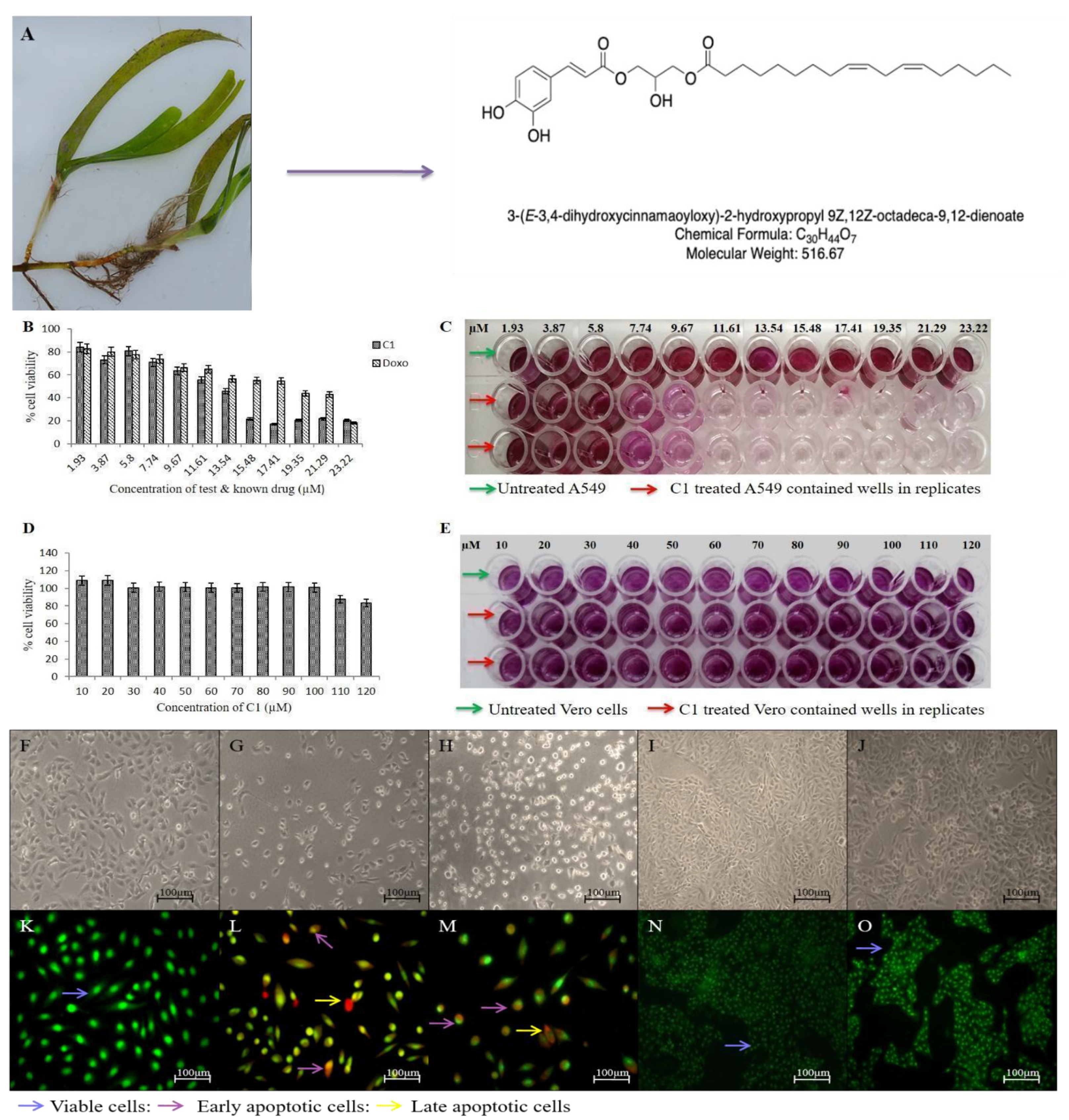
50: 11.61 µM, possibly by inhibiting the enzyme CAIX, which was predicted as a potent target in silico. It was found that the compound caused DNA fragmentation, cell cycle arrest and dysregulated mitochondrial membrane potential (MMP) in the human lung cancer cell line A549. A quantitative determination of
CAIX mRNA and the genes responsible for cell survival and apoptosis was made using real-time PCR. It was discovered that the compound induced apoptotic mRNA transcripts and inhibited and downregulated
CAIX to cause cell death. Additionally, the compound-treated cells expressed less CAIX, according to Western blotting. Extracellular pH (pHe) and lactate levels were determined in the spent medium of the treated and untreated cells in order to establish a connection with CAIX protein expression. Molecular modeling indicates that C1 interacts with the Zn-binding region of CAIX differently with the widely used sulphonamide/coumarin inhibitors. Therefore, this study identifies distinct binding sites at CAIX, demonstrating the usefulness of naturally occurring marine compounds as CAIX inhibitors to address the present lack of selectivity of pharmacological inhibitors to CA isoforms.
3. Discussion
One could argue that the esterase capabilities of many alpha CAs naturally could break down the compound C1, which is an ester of cinnamic and linoleic acids [
15]. Fortunately, glycerol shields the ester activity of C1 and in fact, glycerol esters are protected from CAs’ esterase action. The current molecule does not display esterase activity, unlike glycerol esters with shorter acyl chain lengths, such as those with less than ten carbon atoms. Glycerol esters are essentially shielded from esterases by enzyme specificity. As a result, C1 is less vulnerable to inherent esterase activity of the alpha CAs like CAIX.
The results of the current study make it abundantly evident that C1 was safe for non-cancerous cells and effective against epithelial A549 lung cancer cells without harming non-cancerous Vero cells. In our earlier study, it not only inhibited A549 but also human ovarian tumor cell lines, such as PA1 [IC
50: 5.8 µM] [
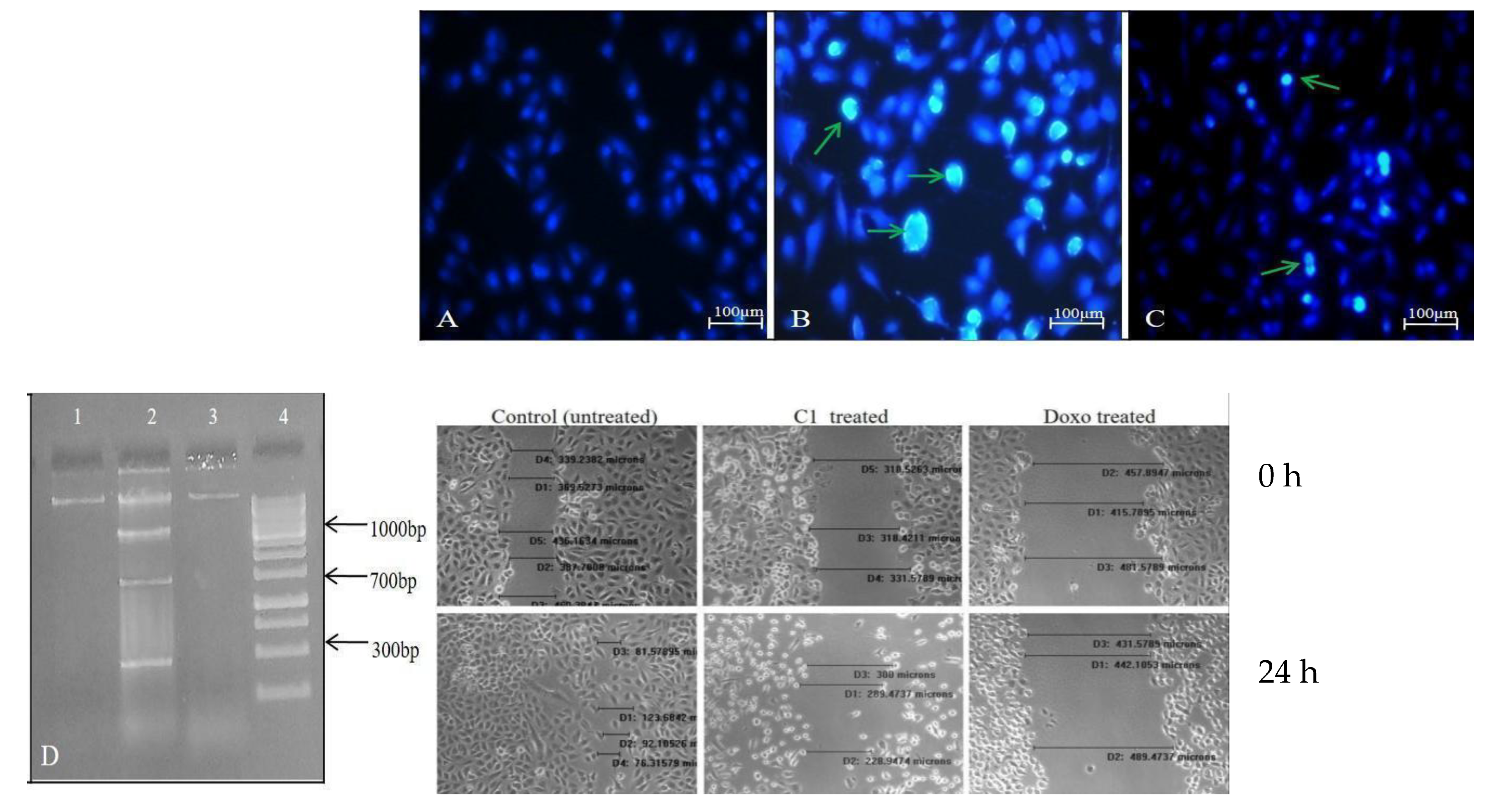
11]. Specifically, C1 caused DNA condensation and fragmentation to kill A549 cells with an IC
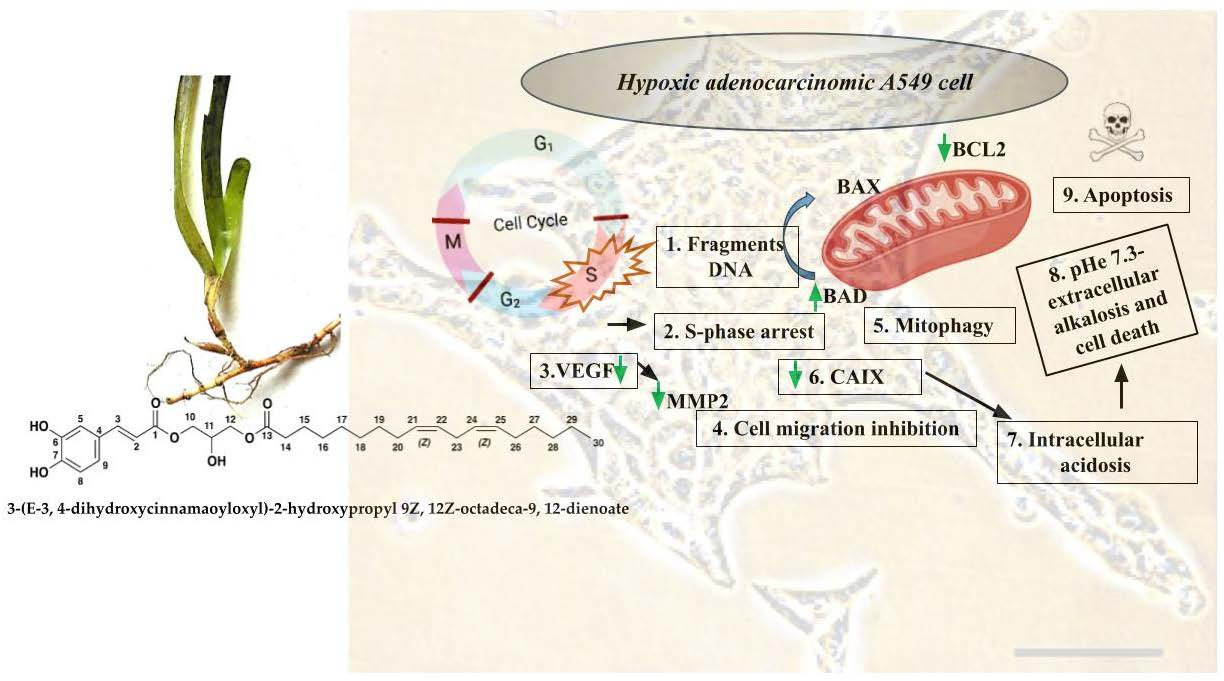
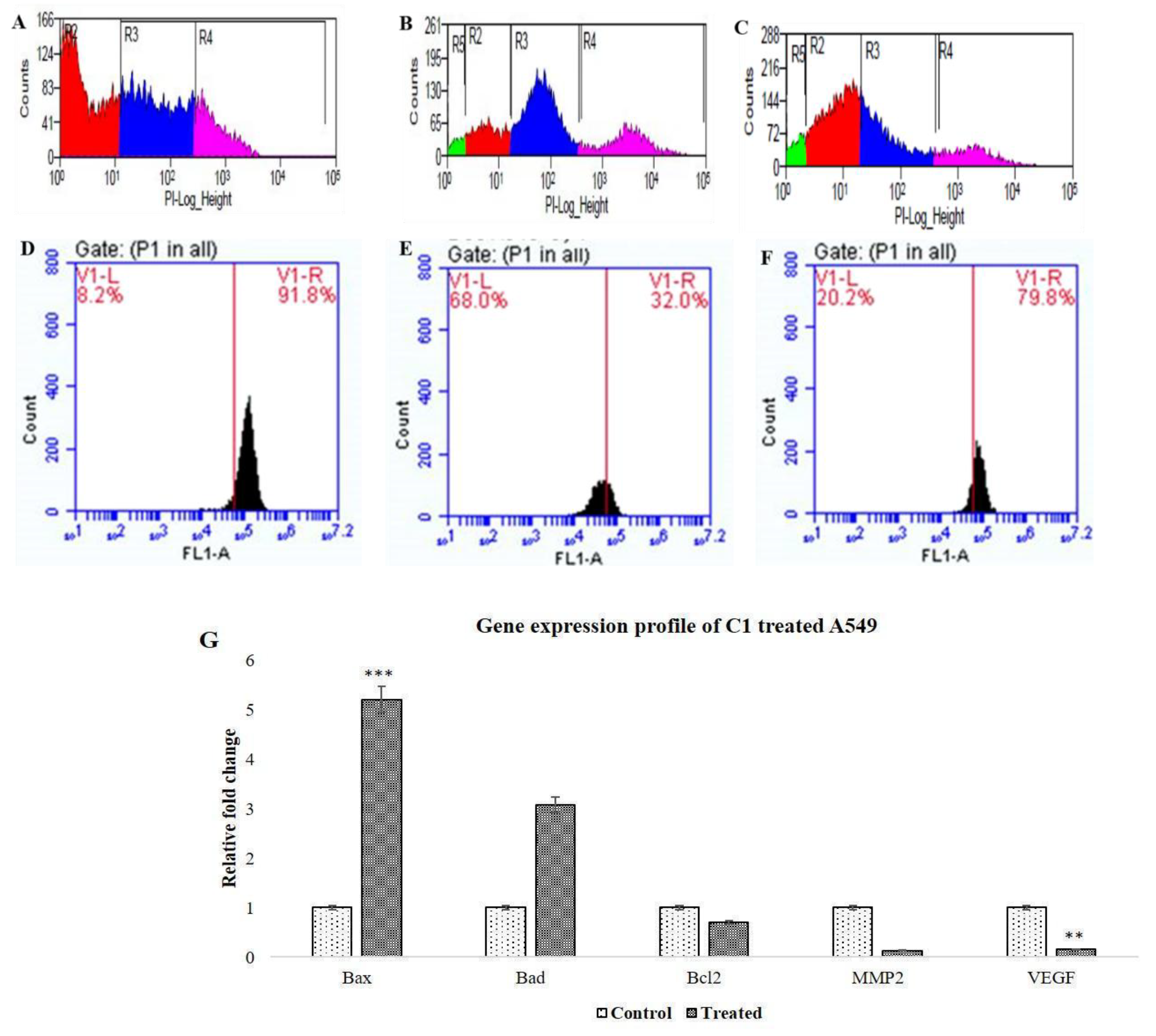
50 of 11.61 µM. Additionally, cell migration was inhibited; in the flow cytometry plot, 68% of the cells were moved to the MMP-compromised region, demonstrating the function of the natural compound as an intrinsic apoptosis-inducing agent. Within 24 h of therapy, the pro-apoptotic genes
BAX and
BAD markedly went up by three and five orders of magnitude, respectively, whereas the cell survival genes
BCL2,
MMP2, and
VEGF decreased. Real-time apoptotic effector expression of
BAX and
BAD mRNA transcripts was frequently accompanied by DNA condensation, fragmentation, and damaged mitochondrial membranes. The disturbed cells experienced an induction of S phase accumulation.
One of the top ten possible targets for C1 was identified in silico as the enzyme CAIX. Zinc metalloenzymes called CAs efficiently contribute to the reversible hydration of carbon dioxide, hence controlling intracellular pH. The role of CAs is well established for malignant cells over normal cells, since maintaining a more likely alkaline pH appears to be favorable in the growth and migration of cancer cells. This explains why CAIX expression is rather high, out of the 15 CAs that have been found so far. CAIX is a transmembrane glycoprotein that is part of the alpha class of CAs. It has a catalytic site that points extracellularly and is known to have the largest proton transfer from the cell to the outside of all CAs, creating an acidic milieu. Tumour development, extracellular matrix degradation, chromosomal rearrangements and growth factors are all strengthened by the continuous extracellular acidification to sustain a robust tumour microenvironment. According to reports, malignant cells of the same kind have consistently higher levels of CAIX mRNA and protein expression than normal cells [
16,
17]. Therefore, it is commonly accepted that CAIX inhibition causes an alkaline extracellular pH and a significant reduction in intracellular pH, which encourages tumour cells to engage in autophagy [
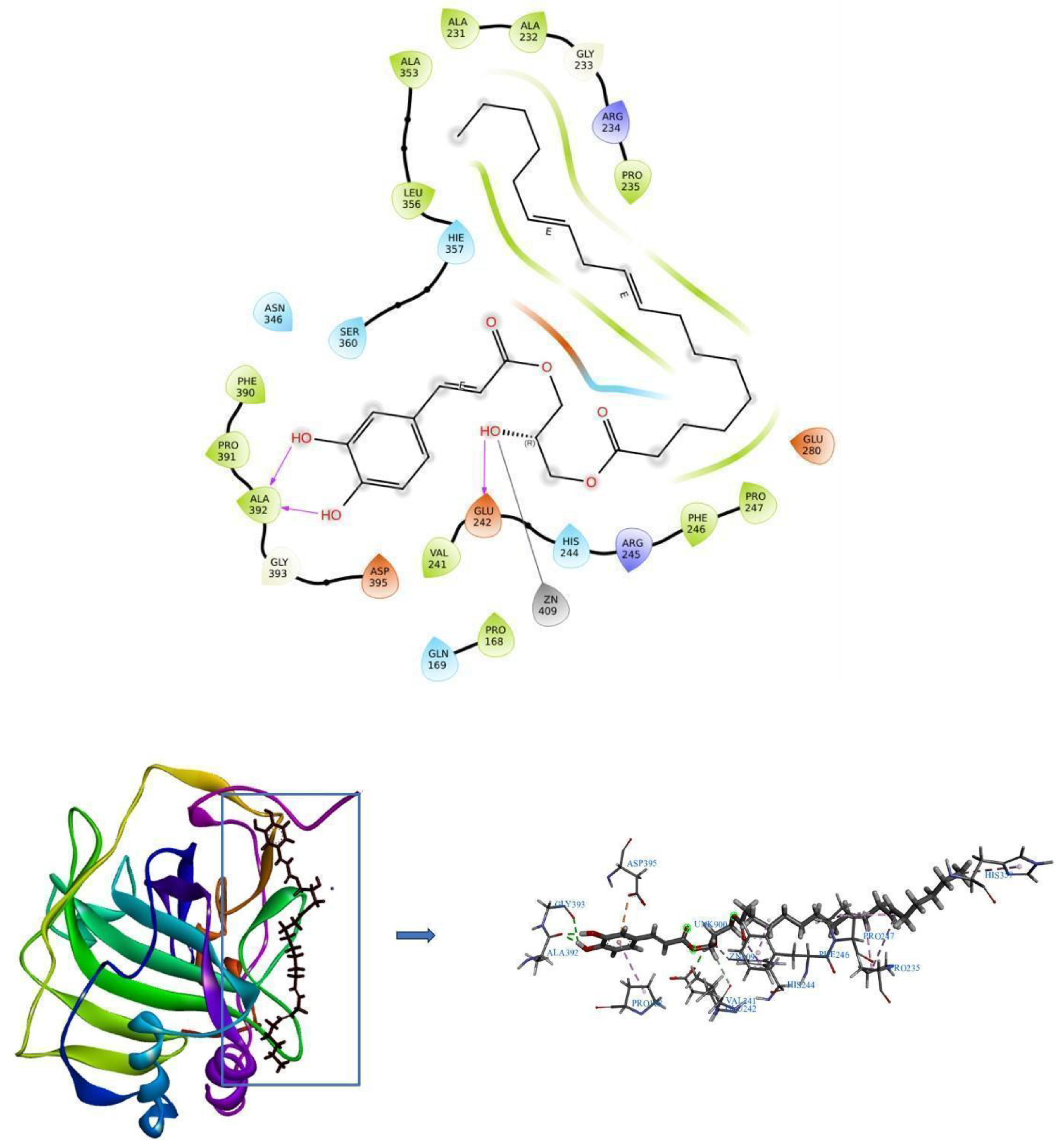
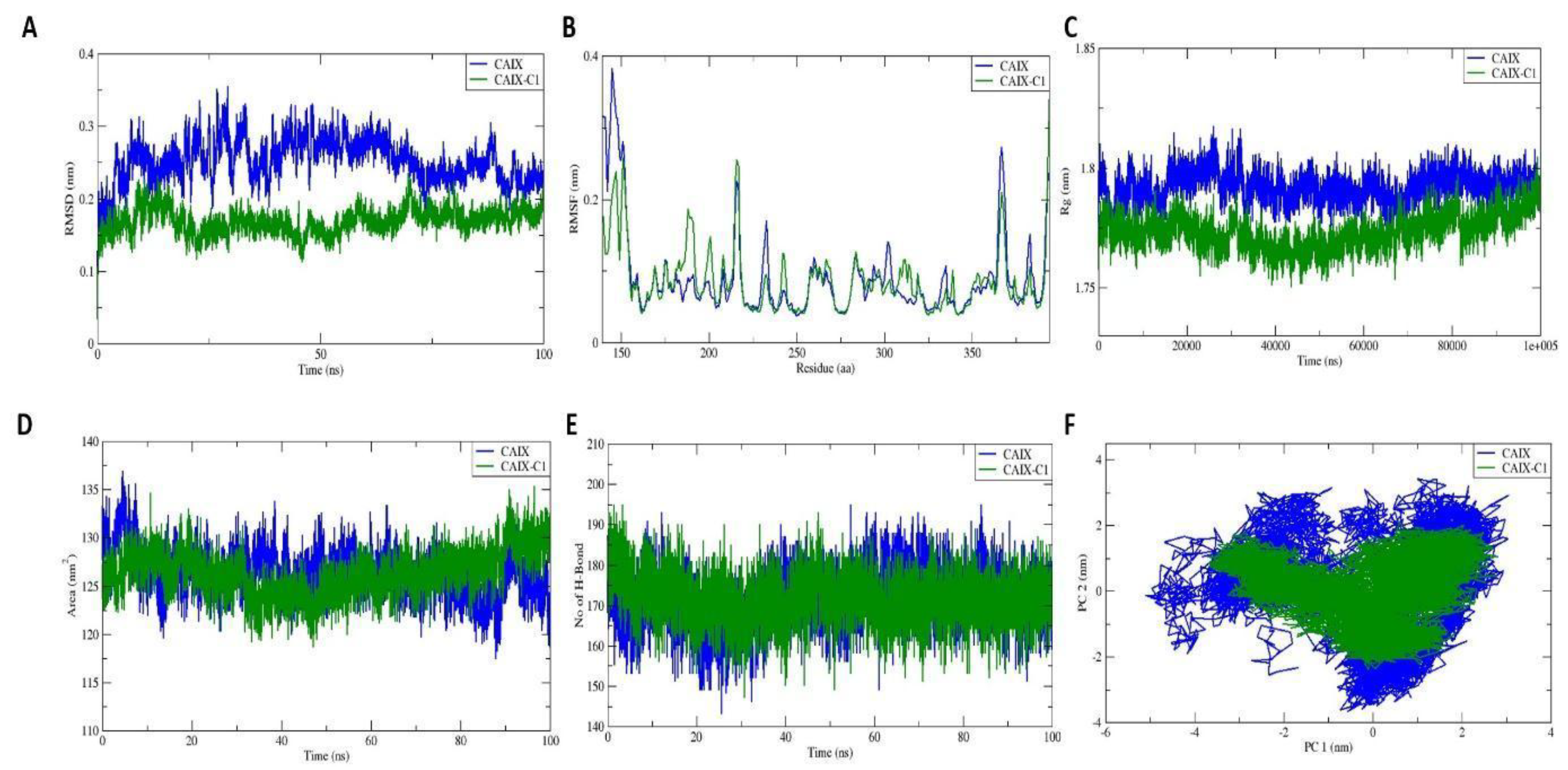
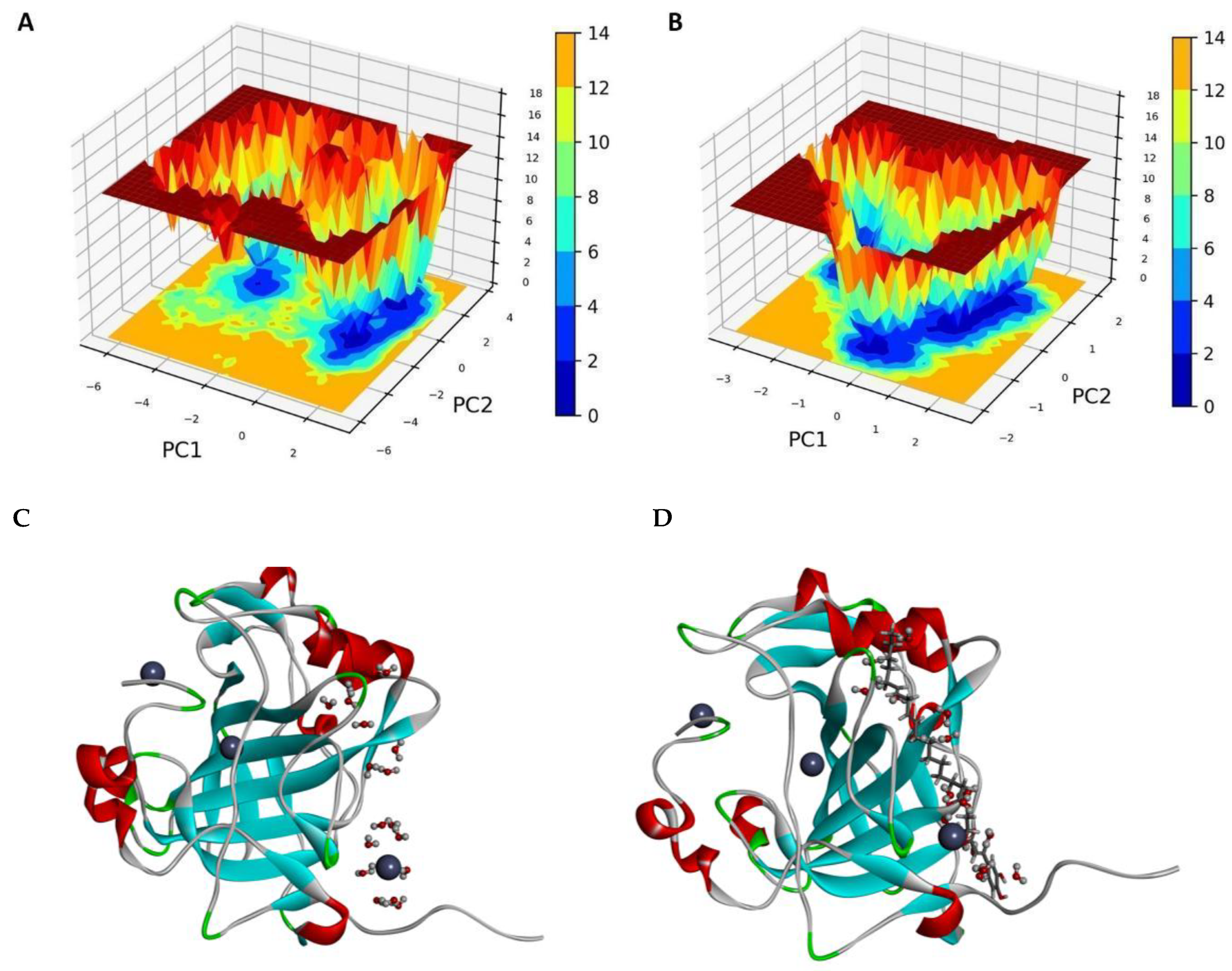
18,
19]. The target was predicted in silico using the docking score (−7.55 kcal/mol) that developed between the CAIX–C1 complexes. The molecular dynamics investigations provided strong evidence for this when an apoprotein and the C1-protein complex bound steadily for 100 ns. Together with understanding the conformity of the docked complex over time, fluctuations in the individual amino acids were also monitored using root mean square fluctuations (RMSFs), and there was an average fluctuation of 0.10 ± 0.09 nm for the apoprotein and 0.08 ± 0.04 nm for the ligand complexes [
20,
21]. It was seen from the type of interaction that C1 formed more frequent ionic bonds with glutamine and alanine amino acids at positions 242 and 392, respectively, when bound to Zn metal. Compound C1, an ester of 3,4-dihydroxycinnamic acid, piles up cells at the S phase, indicating that G0/S transition was permitted, whereas some sulphonamide-based CAIX inhibitors, such as S1 [
22], indisulam [
23], ureido-substituted benzene sulphonamides (USBs) [
24], and the naturally occurring coumarin [
25] inhibit transition at the G0/S phase. Since all of the aforementioned compounds bind universally at the zinc-attached conserved histidine residues, 94, 96, and 119, interestingly, C1 binding to the zinc ion at the base of the active site cleft in CAIX is coordinated by GLU242 and ALA392 [Crystal structure: PDB ID: 3IAI].
Zinc ions can attach to aliphatic secondary hydroxyl (–OH) groups, and this interaction is crucial for numerous chemical and biological processes. Electrostatic forces caused zinc, a positively charged metal ion, to bind with the negatively charged oxygen in the hydroxyl group of C1. In living systems, this kind of interaction is essential for zinc transport and enzyme catalysis. Alcohol groups’ oxygen atoms are among the several ligands that zinc ions can pair with. The stability and reactivity of the hydroxyl group and the zinc ion are both impacted by this coordination. In conclusion, biological processes can be significantly impacted by their interaction with the aliphatic secondary –OH group, as in C1, especially the catalytic activity of the central coordinate, Zn-CAIX [
26]. Consequently, these amino acids are essential for preserving the integrity of CIAX’s active site. Therefore, C1 may provide opportunities to investigate novel binding locations and, consequently, differences in enzyme inhibitory activity when bound to these essential amino acids.
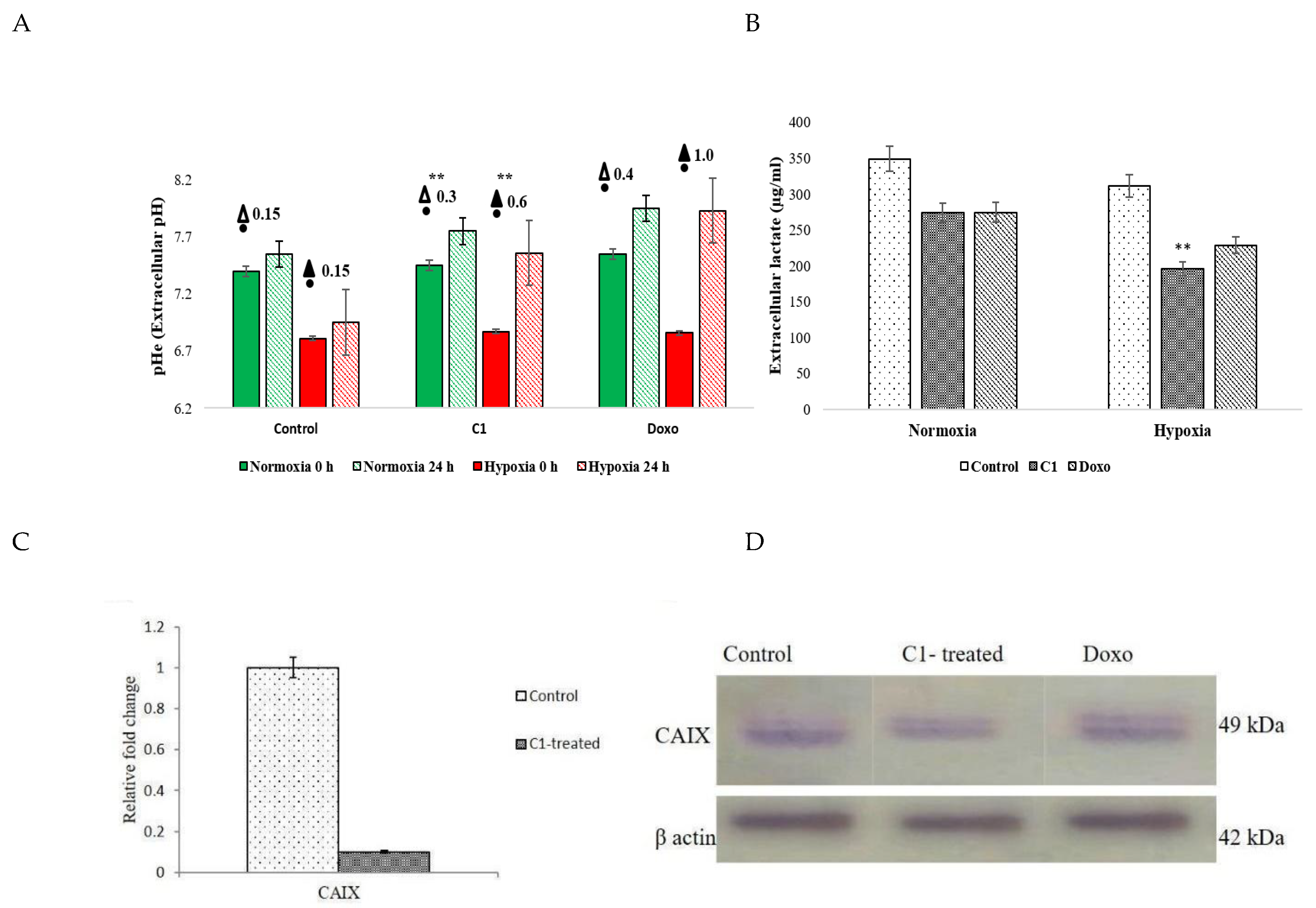
Real-time mRNA expression and the subsequent protein expression of CAIX were particularly carried out in order to validate the anticipated targets in silico. mRNAs for
CAIX were found to be 0.8 times lower than those of the control cell population; the amount of protein expression was also somewhat lower. It is well established that CAIX inhibitors lower CAIX expression at both the mRNA and protein levels [
27]. The selective expression of CAIX across cell types can account for the findings of the current investigation, which indicate decreased CAIX at mRNA but not at statistically significant levels for protein expression. For instance, whereas an NSCLC, which has a more aggressive phenotype, can conceal the effects of chemical treatment, some cell cancer types may not have oncogenic characteristics high enough to cause increased CAIX expression [
12]. Additionally, it has been demonstrated that CAIX diffuses from the tumour cells into the culture media and is thus identified in both the cell’s intracellular and extracellular compartments, resulting in unclear CAIX signals on the blots [
28,
29].
Extracellular pH and LDH levels for cells stimulated with both C1 and Doxo were monitored as separate groups to determine whether or not C1 can inhibit CAIX. Numerous CAIX-targeting compounds have been shown to increase pHe and decrease LDHe levels in a concentration-dependent manner. These compounds include nitro-imidazoles [
30,
31], sulphonamides [
32], and fluorinated sulphonamide-based [
9] inhibitors. Aggressive tumours are known to produce Hypoxia Inducible Factor 1α (HIF-1α), which improves the ability of CAIX to remove acid-producing components from the cell [
33]. The hypoxia-driven overexpression of CAIX influences the conversion of carbon dioxide (CO
2) to protons (H
+) and bicarbonates (HCO
3−) to maintain an alkaline intracellular pH (pHi) and an acidic extracellular pH (pHe). The results of the current studies show that hypoxia intervention for C1/Doxo therapies both raised extracellular pH (pHe) and concurrently decreased LDHe, especially under hypoxic settings. In hypoxic settings, the difference in extracellular alkalinity between 0 and 24 h was 0.6 for C1-induced and 0.15 for untreated. In contrast, the difference in extracellular alkalinity (ΔpHe) between 0 and 24 h under normoxic circumstances was only 0.3 in the C1-induced group and 0.15 in the untreated group. This highlights the involvement of C1 in providing less protection when the cells were especially challenged with O2, yet it is impossible to ignore the lower risks of normoxia per se. Similar to the earlier findings, C1 significantly reduced LDHe levels when hypoxia was induced (78.59%) compared to when the cells were not challenged (62.7%) with O
2. These findings unequivocally show that under normal circumstances, C1 raised extracellular pH and decreased LDHe. It can be used to specifically inhibit CAIX in lung cancer genotypes that develop more aggressively in oxygen-free environments since the effects were more noticeable in hypoxic circumstances.
4. Conclusions
An integrative set of A549 cell-inhibitory effects of 3-(E-3, 4-dihydroxycinnamaoyloxyl)-2-hydroxypropyl 9Z, 12Z-octadeca-9, 12-dienoate isolated from a seagrass, Cymodocea serrulata, is presented in this paper. The effects included hindrance to cell movements, DNA fragmentation, S phase arrest, reduction in ΔΨm, changes in genetic profiles and the real-time expression of pro- and anti-apoptotic genes. The gene and protein expression of CAIX cells treated with C1 reveals a downregulation, which was well correlated with increased pHe and reduced LDHe levels. The effect was more pronounced for the hypoxic A549 cells. The molecular docking score for the CAIX–C1 complex was favourable (−7.55 kcal/mol), and the binding was maintained for over 100 ns without any observable loss in the conformity for the bound protein when compared with apoprotein. C1 formed most frequently ionic bonds with glutamine and alanine amino acids at positions 242 and 392, respectively, attached to Zn metal, as seen from the type of interactions, which was unlike the binding sites (at positions 94, 96, and 116) with which known CAIX inhibitors usually interact. Therefore, more specificities for CAIX, especially for better inhibition, may be possible with the discovery of new binding sites for the Zn-interacting CAIX inhibitor. This work presents a broad opportunity to investigate C1 for CAIX inhibition (which binds to more recent locations in CAIX than the current CA inhibitors) for a variety of malignancies that thrive in oxygen-free environments.
5. Materials and Methods
5.1. Materials
Culture media, stains, buffers and media supplements which are routinely used for in vitro studies [Dulbecco’s Modified Eagle Medium (DMEM), Trypsin-EDTA, antibiotics-antimycotics, 3-(4, 5-dimethylthiazol-2yl)-2, 5 diphenyl tetrazolium bromide (MTT), acridine orange (AO), propidium iodide (PI), 4, 6-diamidino-2-phenylindole (DAPI)] and cobalt chloride were purchased from HiMedia (Mumbai, India). Fetal Bovine Serum (FBS) from Gibco (New York, USA), dimethyl sulfoxide (DMSO) from HiMedia (Mumbai, India), fine grade agarose from Lonza (Basel, Switzerland) and Rhodamine 123 and RIPA buffer were acquired from Sigma Aldrich (St. Louis, MO, USA). Nitrocellulose (NC) membrane was procured from BioRad (Chennai, India), while TMB liquid substrate for HRP and a RevertAid First Strand cDNA synthesis kit was used from Thermo Fisher Scientific (Waltham, MA, USA). Primers for carbonic anhydrase IX (CAIX), BAX, BAD, BCL2, VEGF, and MMP2 were purchased from Integrated DNA Technologies (Coralville, IA, USA), RNAisoPlus (Trizol) and qPCR SYBR green master mix both were from TaKaRa (Shiga, Japan), and the bicinchoninic acid (BCA) reagent was purchased from Thermo Fisher Scientific (USA). Antibodies against CAIX (A1658) and β actin (E-AB-20034) were acquired from ABclonal (Woburn, MA, USA), and their respective rabbit HRP-conjugated secondary antibodies were from Santa Cruz Biotechnology (Dallas, TX, USA). The chemicals lithium lactate, sodium pyruvate, and nicotinamide adenine dinucleotide (NAD) were purchased from SRL (Mumbai, India). The reference drug, Doxorubicin, used throughout the study, was purchased from Selleck Chemicals (Houston, TX, USA), and all of the in silico analyses were carried out using the Maestro, Schrödinger suite with the following specifications: Schrödinger Release 2022-3: Protein Preparation Wizard; Epik, Sitemap, Induced Fit Docking protocol; GLIDE module, Schrödinger, LLC, New York, NY, 2019, and GROMACS 2023 version.
5.2. General Procedures for the Preparation of C1 Isolated from the Seagrass Cymodocea serrulata, Source of Cell Lines and Routine Maintenance for Biological Assays
The
Cymodocea serrulata collection, sample quantity, and appropriate permissions for sample collection as well as authentication, extraction and purification of the active compound can be found in our previous work in our laboratory [
11], and no modifications have been made to the current study. Appropriate permission for sample collection has been obtained from the Central Salt and Marine Chemicals Research Institute (CSMCRI)-CSIR, Ramanathanpuram, Tamil Nadu, India-623519. The samples were sent to Dr. V. Veeragurunathan, and this information is accessible to the public for referencing purposes. IUCN lists
Cymodoceae serrulata in the “Least Concern” category for Indian coastal waters. Column purification of the chloroform extract using hexane and ethyl acetate (90:10) as eluting solvents was performed to isolate C1, and the entire methodology, including column conditions, purification and spectral information, is detailed in the reference cited above. A yellowish–green semi-solid viscous compound (90 hexane: 10 ethyl acetate fraction Rf: 0.6; obtained as one among the 46 fractions eluted; yielded 140 mg of C1/500 g of dried seagrass biomass; compound yield: 0.028%) was shown to possess anticancer property. The compound was analysed using Fourier transform–infrared (FT-IR) spectroscopy, gas chromatography–mass spectrometry (GC-MS), electrospray ionization–mass spectroscopy (ESI-MS),
1H (proton) and
13C (carbon) nuclear magnetic spectroscopies (NMR). An exhaustive spectral analysis revealed that C1 is an ester of 3, 4-dihydroxy cinnamic acid and linoleic acid with glycerol with the IUPAC name [3-(E-3, 4-dihydroxycinnamaoyloxyl)-2-hydroxypropyl 9Z, 12Z-octadeca-9, 12-dienoate] and a molecular weight 516.67 Da. All the spectroscopic and spectrometric data are available at
https://static-content.springer.com/esm/art%3A10.1038%2Fs41598-021-90845-9/MediaObjects/41598_2021_90845_MOESM1_ESM.pdf (accessed on 24 August 2025) [
kindly copy and paste the link on your browser].
A stock solution of C1 was prepared using tissue culture grade dimethyl sulfoxide (DMSO) and stored at −20 °C until further use. A working solution of (1 mg/mL) was prepared from the stock and used for in vitro assays using lung adenocarcinoma cell line (A549) and the Vero cell line, a non-cancerous kidney cell line from African green monkey, which were acquired from the National Centre for Cell Sciences (NCCS), DBT, Pune, India. Both cell types (5 passages) were grown in a 25 cm2 cell culture-grade flask containing DMEM (Dulbecco’s Modified Eagle Medium) with an optimal pH of 7 and complemented with 10% FBS (fetal bovine serum). A combination of antibiotic and antimycotic solution [penicillin (10,000 units); streptomycin (10 mg); and amphotericin B (25 µg) in 0.9% saline] was added to the medium to avoid any microbial growth. Cell growth was achieved by maintaining the cells at 37 °C and 5% CO2 in an incubator, and Trypsin (10 X) was used for regular passaging.
The cytotoxic property of C1 was investigated by MTT (3-(4, 5-dimethylthiazol-2yl)-2, 5 diphenyl tetrazolium bromide) dye. To carry out this assay, approximately 1 × 10³ cells per well was planted in 96-well culture plates and allowed to grow until 80% confluence was attained. Affluent cells were induced with C1 (concentration 1–25 µM) for 24 h. At the end of the 24 h timeframe, the spent media was drained out, and 100 μL (5 mg/10 mL) of MTT dye solution was added and incubated at 37 °C for 4 h. MTT dye is taken up only by the live cells, and blue colored formazan crystals are formed by the action of active mitochondrial dehydrogenases, which can be solubilised using DMSO (100 µL). The colored solution was spectroscopically measured at 570 nm (EnSpire Multimode Plate reader, Model: 2300 [PerkinElmer, Shelton, CT, USA]). The cytotoxicity of the compound is directly proportional to cell mortality, which was calculated with the following formula: [OD of treated cells/OD of untreated cells] × 100. Doxorubicin (Doxo) was used as positive control throughout the investigation, and untreated controls were also maintained for comparison. Inhibitory Concentration50 (IC50) values were obtained for the compound and positive controls, which were used to plan for further assays.
5.3. Protocols for Cell Staining, DNA Fragmentation and Scratch Assay
The experiment was initiated by plating 1 × 10⁵ cells of A549 and Vero in a 6-well plate and incubating them at 37 °C with 5% CO2, and upon confluence to 80%, they were treated with 11.61 µM concentration of C1 for 24 h. Phosphate-buffered saline (PBS pH 6.8)-rinsed control and C1 and Doxo-treated cells were stained with 10 µL of AO/PI (from the stock: 10 µg of AO/PI in 1 mL PBS), and fluorescent images were captured using suitable filters (AO: Ex500/Em526 nm; PI: Ex493/Em636 nm). C1-infused cells were also treated with DAPI (0.5 µg/mL) and immobilised (fixed) using 4% paraformaldehyde for 10 min. After this, the cells were permeabilised for 10 min with 0.2% Triton-X100, and the images were captured (filters used: Ex359/Em461 nm). In both the cases, phenotypic and nuclear modifications were viewed under 10x objectives in an Eclipse-inverted fluorescent microscope (Nikon Ti E series, Japan). To understand the DNA-fragmenting properties of C1, confluent A549 cells were treated, and at the end of 24 h, cell pellets were lysed using the cell lysis buffer [(25 mM) EDTA and (200 mM) NaCl in Milli-Q water], 10 mg/mL proteinase K (Genei, Bengaluru) and 10% sodium dodecyl sulphate (SDS). For efficient lysis, the cells were incubated overnight at 37 °C. Chromosomal DNA was extracted using phenol/chloroform/isoamyl alcohol (25:24:1) and ice-cold absolute alcohol, and the extracted DNA was dissolved in TE buffer [1M Tris-HCl—500 mM EDTA, pH 8] and stored at −20 °C until further use. DNA samples were run in 1.5% agarose gel stained with (1 mg/mL) ethidium bromide. DNA fragmentation, if any, was viewed in a UV transilluminator (UVP Bioimaging Systems, Upland, CA), and the images were captured. Cell migration (scratch assay) was performed on 80% grown A549 cells by creating a scratch on the six-well plate on which it was grown, using 10 µL sterile micropipette tips and then treating with C1/Doxo for 24 h. The migration of cells was observed, and images were captured using an inverted microscope at 0 and 24 h and compared with untreated controls by measuring the migrated distance using the following formula: (Width of the gap at 0 h—Width of the gap at 24 h/Width of the gap at 0 h) × 100 using Image-Pro Plus software (version 6.3, Media Cybernetics, Rockville, MD, USA).
5.4. Flow Cytometry Experiments for Cell Cycle and Mitochondrial Membrane Potential (MMP) Analysis and RT-PCR Determinations of Certain mRNAs
Approximately 3 × 10⁴ cells were cultured in a 6-well plate and allowed to grow as mentioned previously. Upon confluence, they were treated with C1 in serum-free media for 24 h, and an untreated control was maintained for comparison. Both the cell groups were pelleted using ice-cold PBS (2000 rpm for 10 min) and stained with (50 µg/mL) propidium iodide suspended in a hypotonic solution [(0.3 µg/mL) Triton-X-100 in 0.1% sodium citrate and RNase (40 µg/mL)]. Cell sorting was completed using a MoFlo XDP Cell Sorter (Beckman Coulter Model: ML99030, CA) at 488 nm to observe the distribution of cells across different mitotic phases, and the results were inferred using the built-in software (Summit, version 4.3.02,) A portion of the cells were stained with a cationic fluorescent dye, Rhodamine 123, to study the disruption of MMP, if any. For this, the control and treated cell groups were incubated with Rhodamine 123 for 30 min in the dark at 37 °C and harvested with ice-cold PBS using the above-mentioned procedure. Stained cells were excited at 540 nm in a BD Accuri TM C6 Plus (BD Biosciences, New Jersey) flow cytometer, and the loss of Δψmit was calculated based on the fluorescent reduction between the control and treated cells population.
Relative changes in the mRNA expression levels of the pro- (
BAX and
BAD) and anti-(
BCL2) apoptotic/cell survival [angiogenesis (
VEGF), metastasis (
MMP2) and carbonic anhydrase IX (
CAIX)] genes in C1-treated and untreated cell types were quantified in real time. For this, RNAisoPlus reagent was used to extract the total RNA, and the purity was checked at 260/280 nm using a NanoDrop spectrophotometer (Nanodrop 1000, Thermo Scientific, USA). The complementary DNA was obtained by reverse transcribing 2 µg of the extracted RNA using the RevertAid First Strand cDNA synthesis kit. Primers for
MMP2 and
VEGF were designed using Primer3 software (v. 0.4.0, 2017), and other gene-specific primers were used from the available literature. The master mix for qPCR was set up using 2 x SYBR green, 5 pmol of primers and cDNA to a final volume of 20 µl. The PCR scheme is as follows: 50 °C for 2 min followed by 40 cycles of 95 °C for 10 min, 95 °C for 15 s and 60 °C for 1 min. In a 7500 Fast RT PCR machine (ABI, Carlsbad, CA), fluorescence for SYBR green was measured using the following filter: Ex
497/Em
520.
GAPDH was employed as a housekeeping gene for normalisation for all these experiments. A comparative threshold graph is supplied as shown in
Figure S1 for reference. The relative quantification of gene expression was performed from the threshold value (Ct) obtained using Relative Manager Software (QM, version 1.2) and from the raw data; 2
−ΔΔCT was used to calculate the fold change as outlined by Schmittgen and Livak (2008) [
34].
5.5. Molecular Docking
The 3D conformation of the human CAIX (PDB ID: 5DVX) with a resolution of 1.6 Å was acquired and processed utilising the Schrödinger Protein Preparation Wizard module (Schrödinger Release 2022-23: Protein Preparation Wizard), according to established protocols. They attributed precise charges, bond orders, and atom types to the protein structure. Moreover, water molecules more than 5 Å away from the heteroatom group were eliminated. Furthermore, it required the completion of missing side chains and loops using the Schrödinger Prime Module (Schrödinger Release 2022-23: Prime). The Glide Receptor, Grid Generation module, constructed a grid box surrounding the ligand, which was intricately linked to the protein’s active site. TRS, GOL, and CL components, excluding the Zn
2+ ion, were removed from the protein. A gelatinase A-PEX inhibitor ligand molecule was retrieved from the PubChem database (Substance SID:404333222) [Kindly check the url:
https://pubchem.ncbi.nlm.nih.gov/substance/404333222 (accessed on 24 August 2025) for compound submission at the NIH maintained PubChem database] for energy minimisation using the OPLS4 force field. This optimisation process uses the MacroModel tool in Maestro, utilising the Polac–Ribiere conjugate gradient (PRCG) technique. The ligand structure with the lowest energy structure was chosen for subsequent studies. LigPrep was utilised to prepare the ligand molecules (Schrödinger Release 2022-23: LigPrep), and the docking process involved standard precision (SP) docking mode and extreme precision (XP) docking mode employing glide docking (Schrödinger Release 2022-23: Glide) to bind the ligands with the protein [
35], respectively.
5.6. Molecular Dynamic Simulation
Molecular dynamics (MD) simulations were employed to confirm the interactions, stability, and functionality of identified ligand structures within the crystal structure of the catalytic domain of human CAIX at a resolution of 1.6 Å (PDB ID: 5DVX). The GROMACS 2023 software package [
36] and the CHARMM36 all-atom force field were employed to execute 100 ns MD simulations of specific docked complexes [
37]. The topology and parameter files for the ligands were generated utilising the CHARMM General Force Field (CGenFF) tool [
38]. Subsequently, the docked complexes were positioned within an orthorhombic container and hydrated using the four-point TIP4P water model [
39], ensuring a minimum distance of 1 nm between the docked ligand and protein system. Additionally, to replicate physiological conditions accurately, a 0.15 M NaCl solution was introduced to maintain the ionic strength of the solvent in the system. Periodic boundary conditions (PBCs) were consistently applied throughout the MD simulation. The energy minimisation procedure employed the steepest descent algorithm, featuring a maximum step of 0.01 nm and a 1000 KJ/mol/nm tolerance. The Linear Constraint Solver (LINCS) approach was utilised to maintain bond length constraints, and electrostatic estimation was carried out employing the particle mesh Ewald (PME) approach. The system underwent equilibration using canonical ensembles NVT and was subsequently exposed to an isothermal–isobaric ensemble (NPT) for 100 ps after energy minimisation. The simulations were conducted under identical conditions of temperature and pressure (300 K, 1 atm). During the production run, trajectories were generated at a frequency of 2 fs and saved every 2 ps. The complete simulation persisted for a duration of 100 ns. The initial assessments involved various parameters, including root mean square deviation (RMSD), radius of gyration (Rg), root mean square fluctuations (RMSFs), potential binding energy, solvent-accessible surface area (SASA), hydrogen bond (H-bond), principal component analysis (PCA), and free energy landscape, which were measured using GROMACS analysis programs.
5.7. Correlation of CAIX Protein Expression with Extracellular pH (pHe) and Lactate Dehydrogenase (LDHe) Levels for the Compound-Treated Cells for Revalidation
An A549 cell population of 1 × 10⁶ was seeded in a T25 cm2 flask and allowed to grow overnight. Confluent cells were induced with C1 and Doxo and cells without treatment serve as controls. The total protein from all the groups was extracted by lysing the cells using RIPA buffer [with 1% protease inhibitor], incubating them in ice for 10 min, and then centrifuging them. Appropriate protein quantifications were made using BCA reagent, and after that, approximately 20 µg of protein was resolved in a 10% SDS-PAGE and transferred to NC membranes. The transferred membrane was incubated overnight at 4 °C with primary antibodies for CAIX (1:1000) and β actin [endogenous control] (1:500). After overnight incubation, the membranes were washed and incubated with anti-rabbit HRP-conjugated secondary antibodies for 1 h at room temperature. TMB liquid substrates were used to develop the membrane post-secondary anti-antibody incubation to visualise the protein bands.
Extracellular pH and LDHe measurements were also made. A549 cells were seeded at a density of 3 × 10⁴ cells in 6-well cell-culture grade plates to reach 80% confluence. Confluent cells were divided into six groups: (1) Normoxic control, (1a) Cells treated with C1 (11.61 µM), (1b) Cells treated with Doxo (13.7 µM), (2) Hypoxia induction by adding 200 µM of cobalt chloride for 72 h (kept as hypoxic control), and (2a) Cells treated with C1 and 2b. The cells were treated with Doxo, and the treatment period was 24 h. Spent media were collected from plates of all the groups and immediately checked for pHe using an electrode-based pH meter (Systronics). The relative difference in the extracellular pHe (ΔpHe) was measured at 0 and 24 h of treatment in both groups. Simultaneously, the determination of LDHe levels was completed by mixing 0.1 mL volume of the media with 1 mL of buffered substrate (lithium lactate dissolved in glycine buffer) along with 0.2 mL of nicotine adenine diphosphate (NAD) and incubating at 37 °C for 15 min. To this, 1 mL of dinitro phenyl hydrazine (DNPH) was added, after which it was incubated for 15 min. After this, 1 mL NaOH (0.4 N) was added and the color (yellow) was read at 440 nm using sodium pyruvate as a reference standard. The LDHe concentration (µg) in 1 mL of the media was calculated using the standard formula: [OD of test/OD of reference standard] × the reference concentration corresponding to that exact OD.
5.8. Statistical Analysis
Biological assays were performed as triplicates throughout the study, and individual data points were expressed as the arithmetic mean ± standard error from three independent experimental outputs. The data were statistically quantified using Student’s test, and any probability values (p-value) less than 0.05 were considered significant. Software built-in instruments were up to date for the calculations made automatically (scratch assay, for cell cycle and MMP shifts [Summit, version 4.3.02]. The data were processed and analysed in FCS format, which is the standard file format for flow cytometry data. Approximately 15,000 events were acquired to infer the results, and all the FACS results are depicted as density plots. Based on the DNA content histogram, gates were drawn around the G1, S, and G2/M peaks to quantify cells in each phase. For qPCR analyses, Primer3 software v. 0.4.0, 2017 was used to customize parameters such as the desired primer length, optimal melting temperature, and GC content to avoid primer dimers and hairpins. We used the software in batch mode to design primers for multiple targets simultaneously.




 ,
,