Review

Exploring Calcium Channels as Potential Therapeutic Targets in Blast Traumatic Brain Injury

1
School of Medicine and Health, Technical University of Munich, 81675 Munich, Germany
2
Department of Pharmacology, Yale School of Medicine, New Haven, CT 06510, USA
3
Department of Neurology, Yale School of Medicine, New Haven, CT 06510, USA
4
Department of Pathology, Yale School of Medicine, New Haven, CT 06510, USA
*
Authors to whom correspondence should be addressed.
Pharmaceuticals 2025, 18(2), 223; https://doi.org/10.3390/ph18020223
Submission received: 11 January 2025 / Revised: 31 January 2025 / Accepted: 4 February 2025 / Published: 6 February 2025
(This article belongs to the Special Issue Calcium Channels as Therapeutic Targets)

Abstract

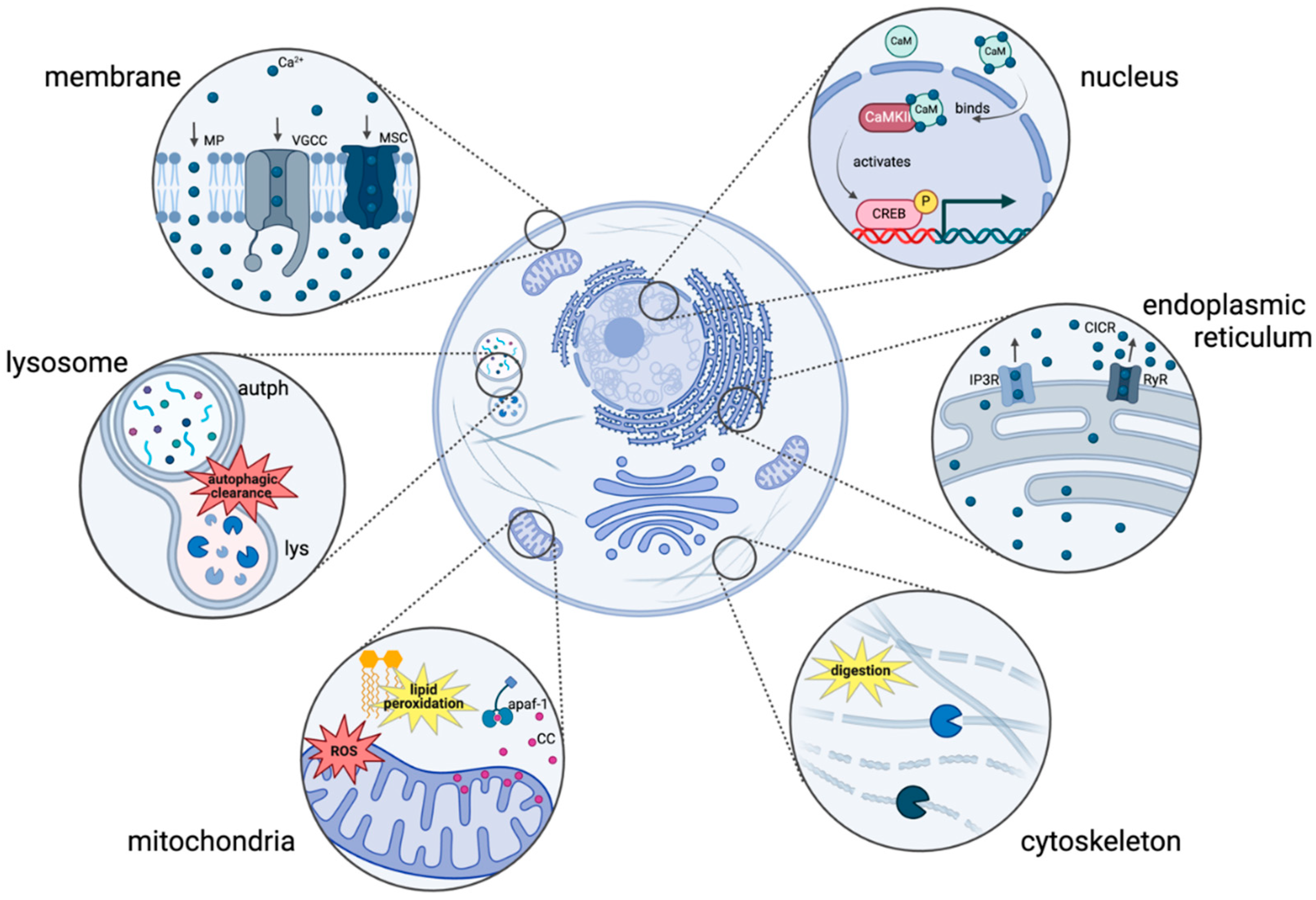
Background/Objectives: Repeat low-level blast exposure has emerged as a significant concern for military populations exposed to explosive events. Blast-Related Traumatic Brain Injury (bTBI) is a unique form of brain trauma with poorly understood molecular mechanisms. Loss of calcium homeostasis has emerged as a mediator of early neuronal dysfunction after blast injury. This review aims to examine the role of calcium signaling in bTBI, focusing on the dual function of calcium channels as mediators and modulators of injury, and to explore therapeutic strategies targeting calcium homeostasis. Methods: We conducted a review of peer-reviewed articles published between 2000 and 2024, using the databases PubMed, Scopus, and EBSCO. Search terms included “blast traumatic brain injury”, “calcium channels”, and “calcium”. Studies investigating intracellular calcium dynamics after bTBI were included. Exclusion criteria included studies lacking evaluation of calcium signaling, biomarker studies, and studies on extracellular calcium. Results: We identified 13 relevant studies, primarily using preclinical models. Dysregulated calcium signaling was consistently linked to cellular dysfunction, including plasma membrane abnormalities, cytoskeletal destabilization, mitochondrial dysfunction, and proteolytic enzyme activation. Studies highlighted spatially compartmentalized vulnerabilities across neurons and astrocytes, suggesting that targeting specific cellular regions, such as the neuronal soma or axons, could enhance the therapeutic outcome. Therapeutic strategies included pharmacological inhibitors, plasma membrane stabilizers, and modulators of secondary injury. Conclusions: Calcium signaling is implicated in the pathophysiology of bTBI. Standardized experimental approaches would reduce variability in findings and improve the understanding of the relationship between calcium channel dynamics and bTBI and help guide the development of neuroprotective interventions that mitigate injury and promote recovery.
Keywords: traumatic brain injury; calcium signaling; excitotoxicity; mitochondrial dysfunction; neurodegeneration; calcium channel inhibitors; blast injury; mechanoporation traumatic brain injury; calcium signaling; excitotoxicity; mitochondrial dysfunction; neurodegeneration; calcium channel inhibitors; blast injury; mechanoporation