1. Introduction
The intracellular delivery of high-molecular-weight proteins is used to analyze cell function and advance drug discovery. However, because the cell membrane presents a barrier to the permeation of macromolecules, developing safe and efficient delivery methods is challenging. Cell-penetrating peptides (CPPs) have emerged as a promising approach to address this limitation [
1,
2]. CPPs can cross cellular membranes and facilitate the intracellular delivery of various cargos, including proteins, nucleic acids, and small molecules [
3]. Despite these advantages, improving the specificity and efficiency of CPP-mediated delivery has been challenging.
A primary limitation of CPP-mediated delivery is that most cargos are internalized through endocytosis [
4]. Although endocytosis enables initial entry, the subsequent release of cargo from the endosomes into the cytosol is frequently inefficient. Therefore, endosomal entrapment and degradation represent major obstacles that restrict macromolecule delivery and limit the effectiveness of CPP-based intracellular delivery strategies. To address these challenges, numerous strategies have been used, including incorporating pH-responsive endosomal escape motifs, such as HA2, GALA, and histidine-rich sequences; introducing chemical modifications that enhance membrane disruption or promote proton sponge effects; and engineering CPP structures that favor direct translocation or reduce endocytic uptake [
5,
6,
7]. However, despite these advances, the upstream mechanisms governing CPP-mediated signaling and endocytic entry are poorly defined, particularly with respect to receptor-mediated processes.
We had identified an optimized CPP, Pas2r12, which complexes with enhanced green fluorescent protein (EGFP; 27 kDa) or immunoglobulin G (IgG; 150 kDa) to facilitate their intracellular delivery [
8]. Pas2r12 was designed based on the Pas motif (FFLIPKG) [
9] and PasΔPK [
10]. It contains two tandem FFLIG sequences (FFLIGFFLIG), followed by a stretch of 12
d-arginine residues, yielding a full peptide sequence of FFLIGFFLIGrrrrrrrrrrrr. Pas2r12 mediates the cytosolic delivery of cargo proteins through caveolae-dependent endocytosis. Caveolae are flask-shaped invaginations of the plasma membrane, approximately 80 nm in diameter, that contribute to cellular uptake, stress responses, and signal transduction [
11,
12,
13]. This pathway is typically triggered by specific interactions between ligands and cell surface receptors, as seen when Simian virus 40 binds to GM1 ganglioside [
14] and albumin to gp60 [
15]. However, the molecular basis of Pas2r12-mediated intracellular delivery, including its cell surface receptor(s), is unclear.
Phosphoproteomic analyses have revealed that Pas2r12 treatment induces both early and sustained phosphorylation of extracellular signal–regulated kinase 1/2 (ERK1/2)—a key component of the mitogen-activated protein kinase (MAPK) pathway [
16]. Phosphorylation occurred following stimulation with Pas2r12 and with Pas2r12–EGFP complexes, indicating that Pas2r12–EGFP activates intracellular signaling cascades, particularly through the MAPK pathway. These findings indicate that ERK1/2 plays a central role in the cellular response triggered by Pas2r12–EGFP. ERK1/2 is a representative MAPK that regulates cell proliferation, differentiation, and stress responses; its sustained activation by Pas2r12–EGFP may reflect a signaling event associated with protein delivery and receptor stimulation.
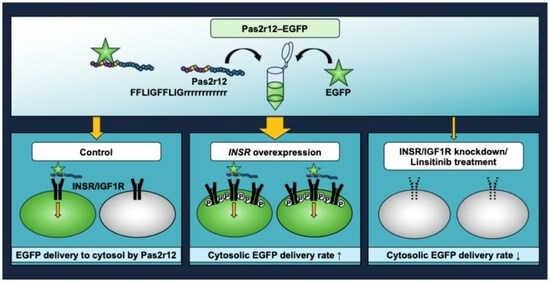
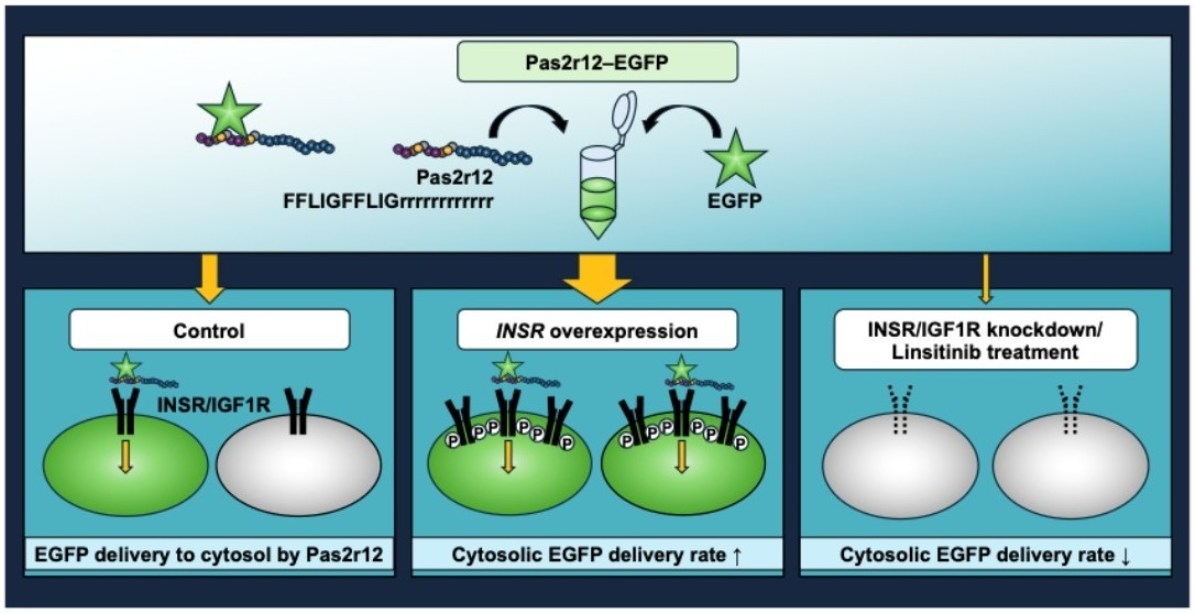
In this study, we aimed to clarify the receptor(s) that mediate Pas2r12–EGFP–induced ERK1/2 activation and caveolae-dependent endocytosis. Identifying the receptor(s) is essential for understanding the basis of Pas2r12-mediated protein delivery. We hypothesize that Pas2r12–EGFP interacts with one or more membrane receptors that function upstream of ERK1/2 activation and caveolae-dependent endocytosis. Because insulin receptor (INSR) and insulin-like growth factor 1 receptor (IGF1R) regulate both ERK1/2 signaling and caveolae-dependent endocytosis, they represent receptor candidates for Pas2r12–EGFP.
Among receptor tyrosine kinases, INSR and IGF1R are strong candidates for involvement in Pas2r12–EGFP uptake because both are upstream activators of MAPK/ERK signaling [
17,
18]. Both INSR and IGF1R participate in caveolae-dependent endocytosis [
19,
20] and are among the few receptor tyrosine kinases that regulate both ERK1/2 signaling and caveolae-mediated internalization, making them potential receptor candidates for Pas2r12–EGFP.
INSR and IGF1R are heterotetrameric receptors that comprise two extracellular α-subunits and two transmembrane β-subunits [
21,
22]. The α-subunits mediate ligand binding at the cell surface; the β-subunits contain intracellular kinase domains that undergo autophosphorylation upon ligand engagement, initiating downstream signaling cascades. INSR and IGF1R preferentially bind insulin and IGF-1, respectively; however, ligand cross-reactivity can occur depending on the cellular context [
23,
24]. Both receptors localize to caveolae-rich membrane domains, positioning them to coordinate signal transduction with membrane trafficking events [
19,
20].
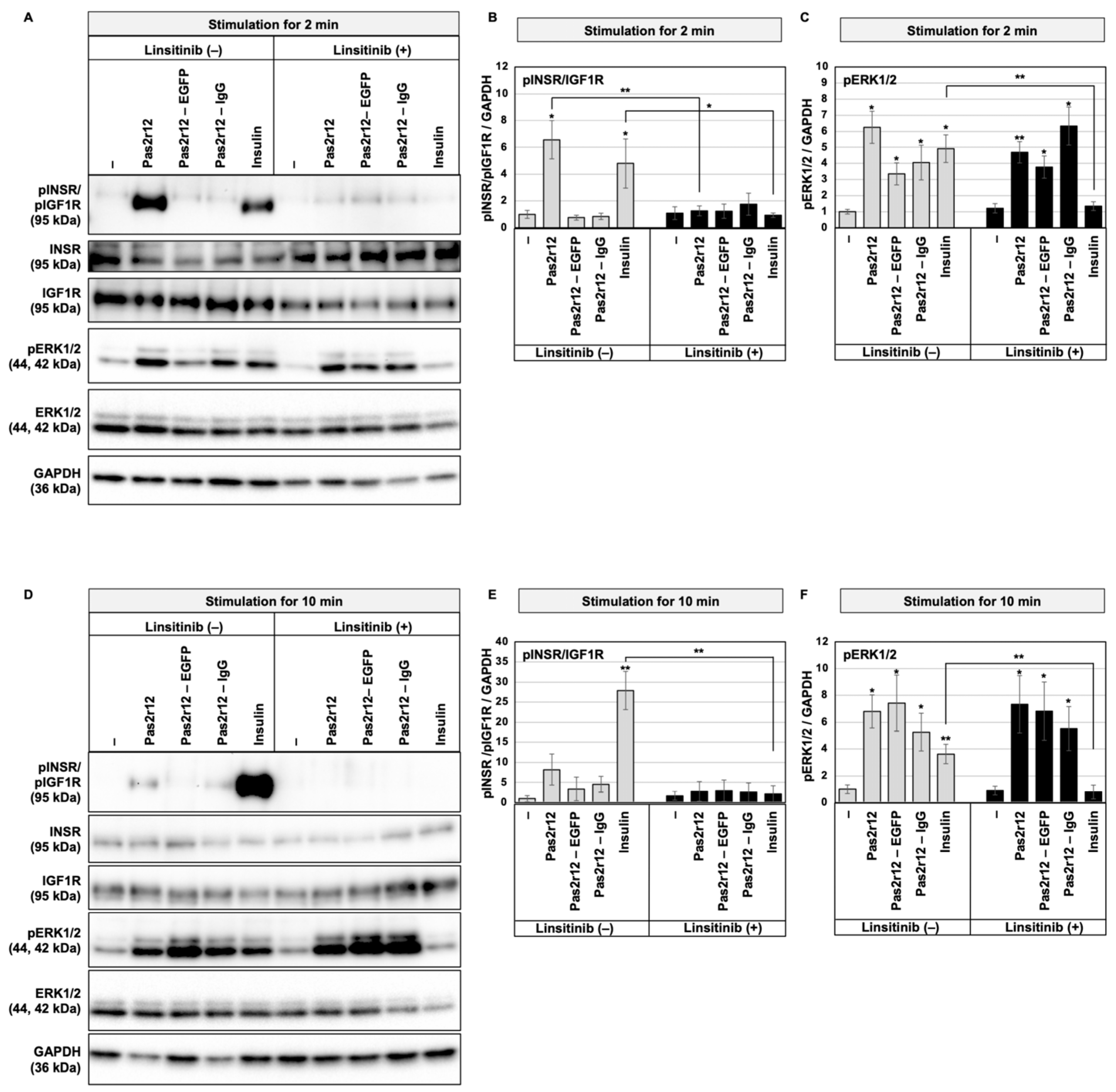
Because INSR and IGF1R regulate both ERK1/2 signaling and caveolae-dependent endocytosis, they represent receptor candidates for Pas2r12–EGFP. Although phosphoproteomic analyses did not detect phosphorylation of INSR or IGF1R following Pas2r12–EGFP stimulation [
16], this absence may reflect transient or low-abundance phosphorylation events that were undetected under other experimental conditions. Therefore, we employed modified detection conditions and performed Western blot to capture transient or low-abundance phosphorylation events missed earlier.
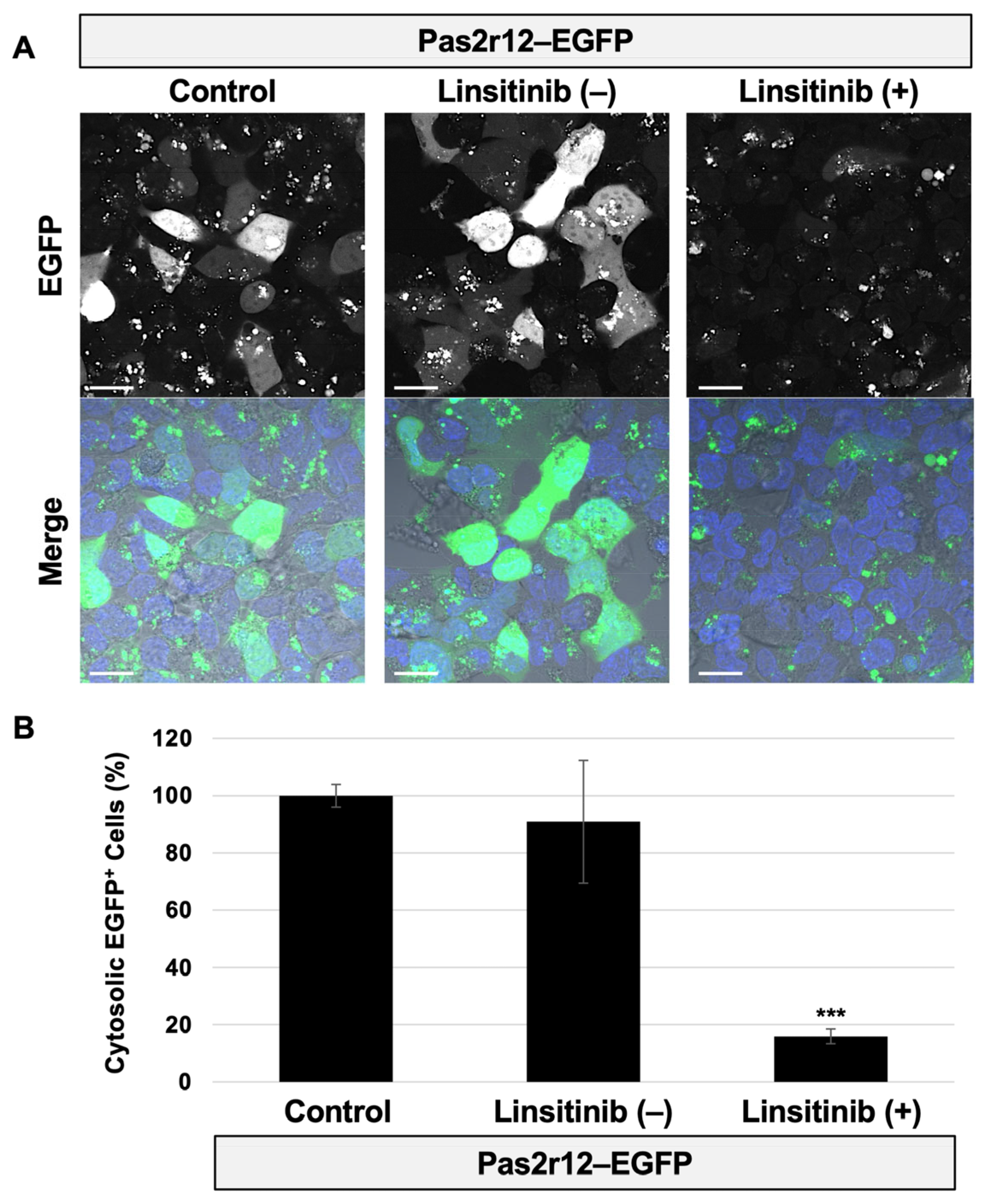
To evaluate the potential roles of INSR and IGF1R in Pas2r12-mediated intracellular delivery, we performed pharmacological inhibition using linsitinib [
25], knockdown, and receptor overexpression. The results indicate that the expression and activation of INSR contribute substantially to delivery efficiency. These findings provide insights into the receptor-associated mechanisms of novel Pas2r12-mediated protein transport and may support the refinement of protein delivery technologies.
3. Discussion
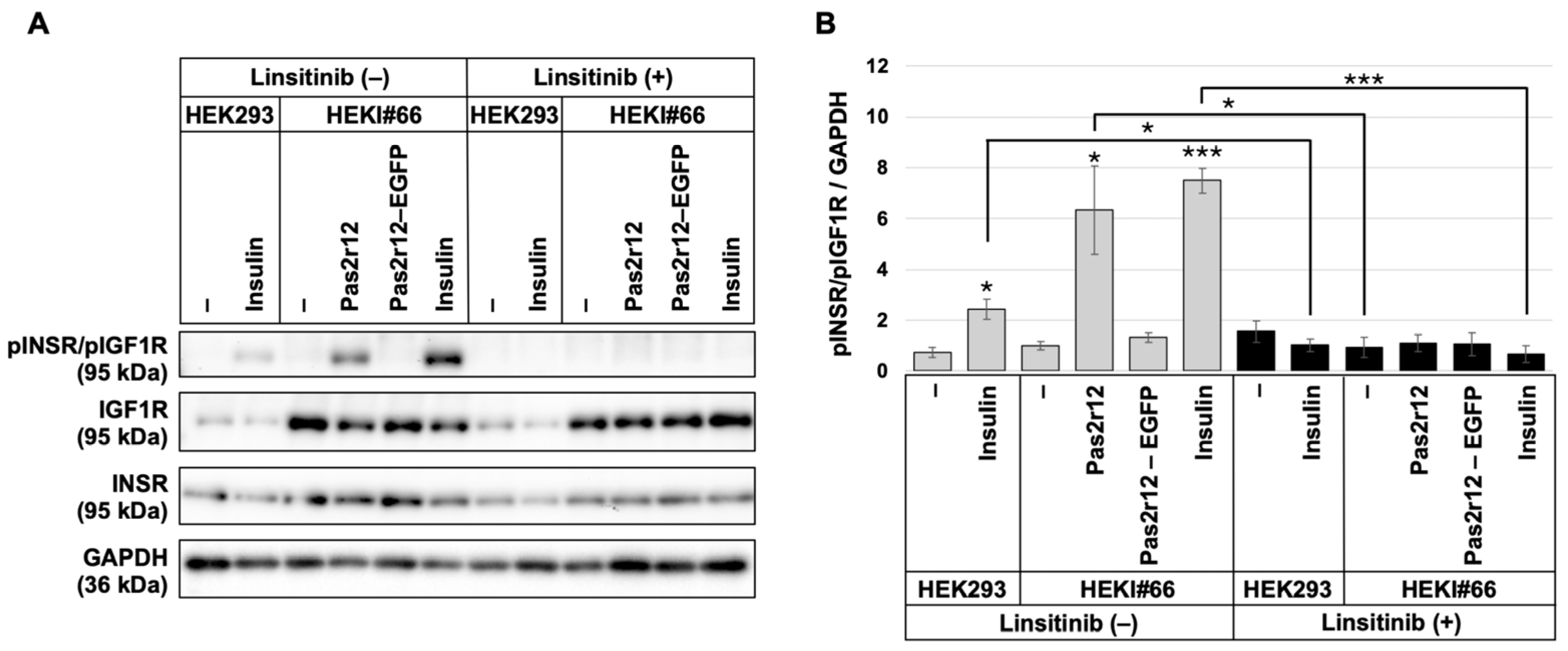
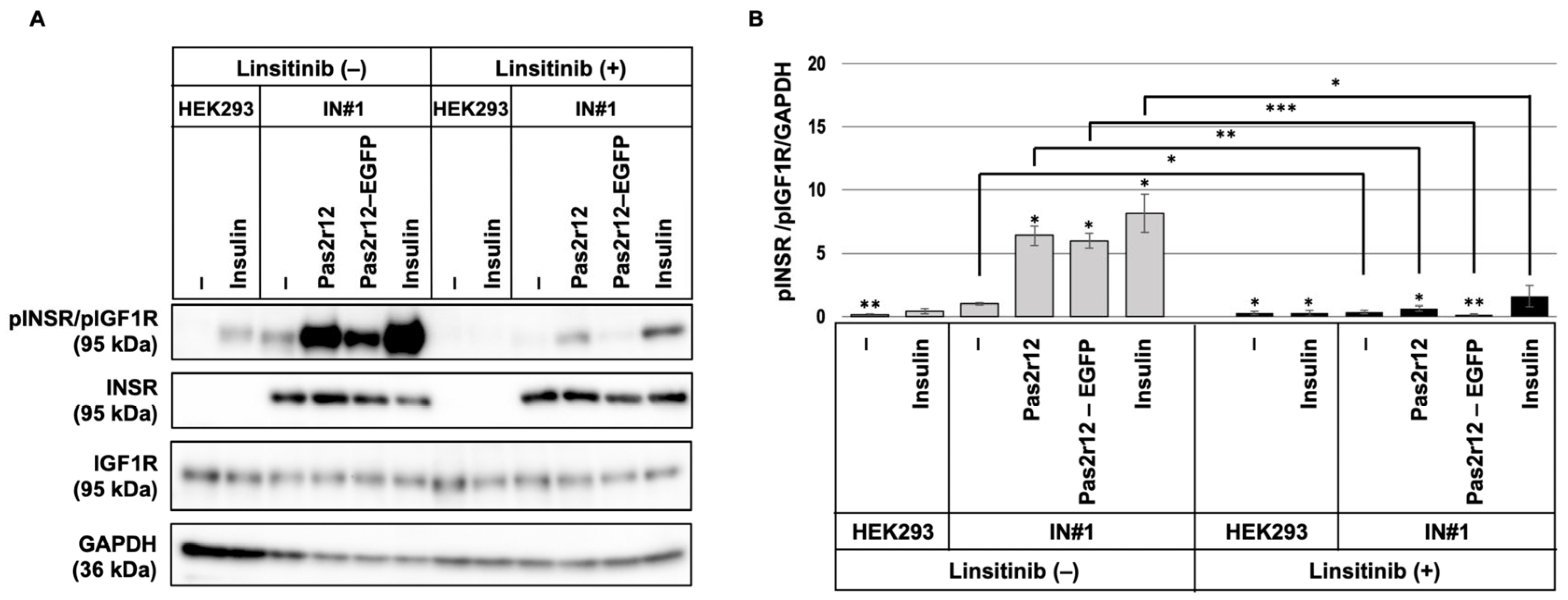
In this study, we examined the roles of the receptor tyrosine kinases INSR and IGF1R in the Pas2r12-mediated cytosolic delivery of EGFP. In HEK293 cells, stimulation with Pas2r12 transiently increased in INSR/IGF1R phosphorylation; the Pas2r12–EGFP complex did not induce a comparable phosphorylation response. Conversely, in INSR-overexpressing cells, stimulation with Pas2r12–EGFP induced pronounced INSR/IGF1R phosphorylation, suggesting that increased receptor expression enhances ligand–receptor interactions with Pas2r12 and promotes receptor activation. Notably, basal phosphorylation level in parental HEK293 cells was markedly lower (~0.1 compared with IN#1 cells), indicating that INSR overexpression substantially elevates the potential of basal receptor activation. This increase in basal phosphorylation likely reflects enhanced receptor density at the plasma membrane, which can facilitate spontaneous dimerization or increase sensitivity to low levels of endogenous ligands. Alternatively, INSR overexpression may have increased sensitivity to trace levels of endogenous insulin or IGF in the FBS-containing culture medium, resulting in sustained low-level activation. This elevated basal activity likely primes INSR-overexpressing cells for a more robust phosphorylation response upon Pas2r12–EGFP stimulation. Thus, differences in basal receptor activation between cell lines may partially explain why Pas2r12–EGFP-induced phosphorylation was detectable only under INSR-overexpressing conditions. Although phosphorylation was difficult to detect in HEK293 cells, the results from pharmacological inhibition, siRNA-mediated knockdown, and receptor overexpression consistently supported a critical role for INSR in promoting cytosolic delivery.
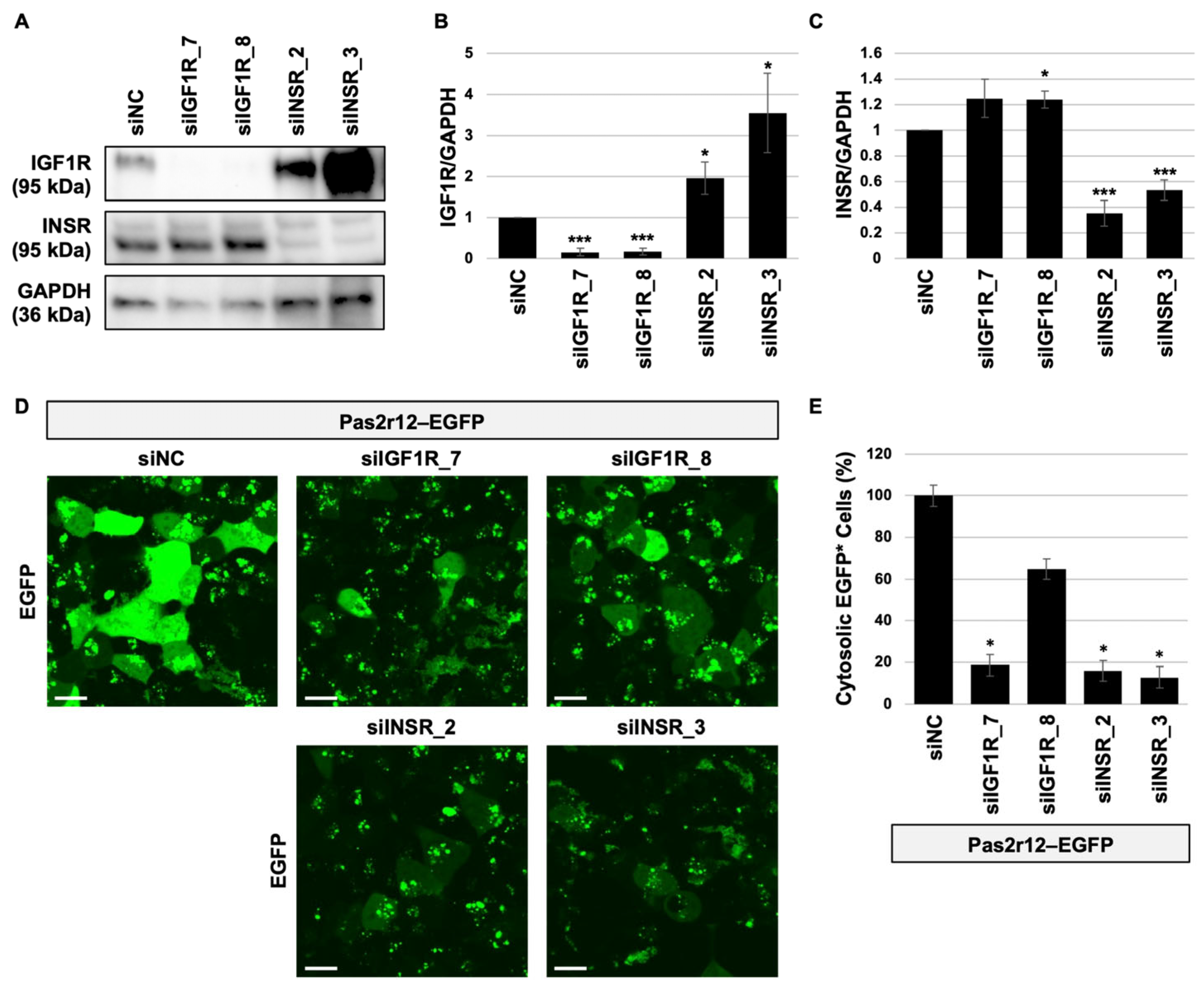
Interestingly, siRNA-mediated knockdown of INSR or IGF1R led to a reciprocal increase in the protein level of the other receptor. INSR knockdown tended to increase IGF1R expression, whereas IGF1R knockdown enhanced INSR expression. This reciprocal regulation may buffer the effects of single-receptor knockdown on downstream processes, including Pas2r12-dependent cytosolic delivery. Moreover, the markedly different delivery efficiencies observed between siIGF1R_7 (19%) and siIGF1R_8 (65%) may reflect this compensatory mechanism: siIGF1R_8 induced a pronounced increase in INSR expression, which could partially rescue Pas2r12-mediated delivery despite IGF1R knockdown. These findings indicate that compensatory mechanisms should be considered when interpreting our knockdown experiments. Nevertheless, the significant reduction in cytosolic delivery following knockdown of IGF1R or INSR demonstrates that both receptors contribute to, but are not solely responsible for, Pas2r12-mediated protein delivery. Given the potential for heteromeric complex formation between INSR and IGF1R [
21,
22], it is plausible that INSR–IGF1R heterodimers—or dynamic competition between the two receptors—modulate the internalization efficiency of Pas2r12. In this study, knockdown efficiency was evaluated at the protein level, because the functional consequences of INSR and IGF1R depletion are primarily manifested through changes in receptor protein abundance rather than mRNA levels. Although mRNA levels were not assessed in this study, measuring INSR and IGF1R transcripts in future experiments could provide additional insight into whether the compensatory regulation occurs at the transcriptional level, thereby deepening our understanding of how these receptors coordinate their expression in response to knockdown.
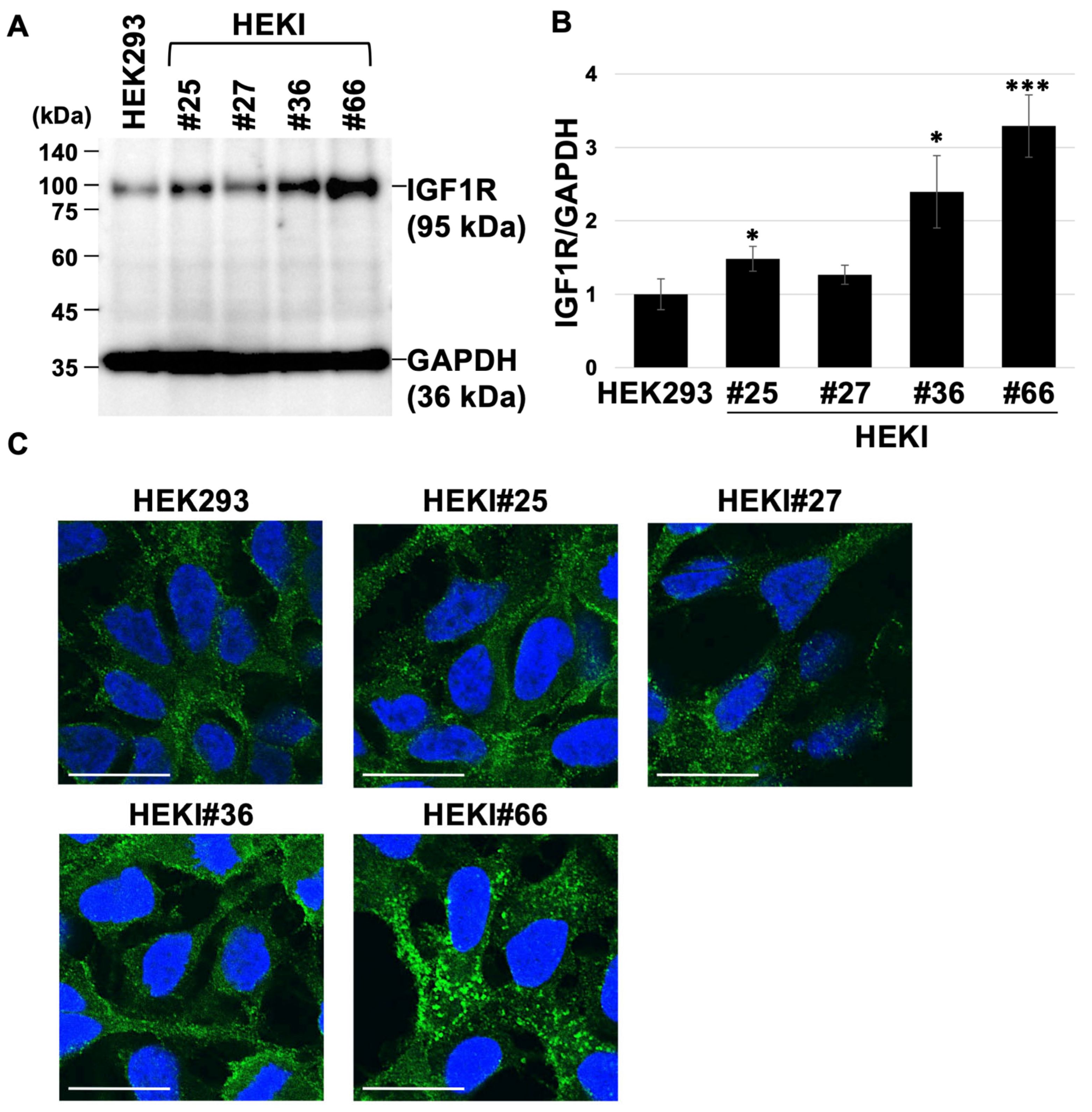
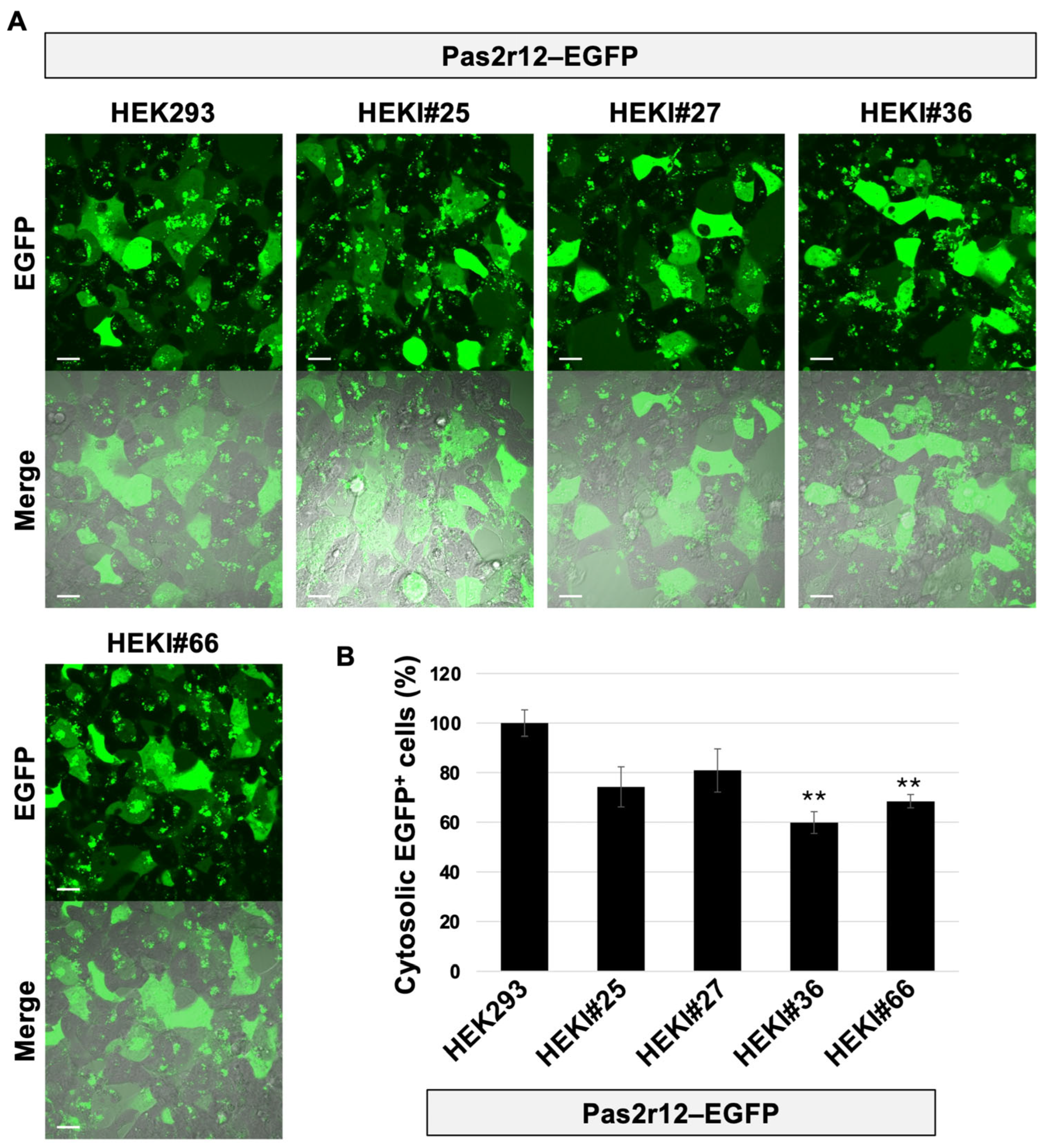
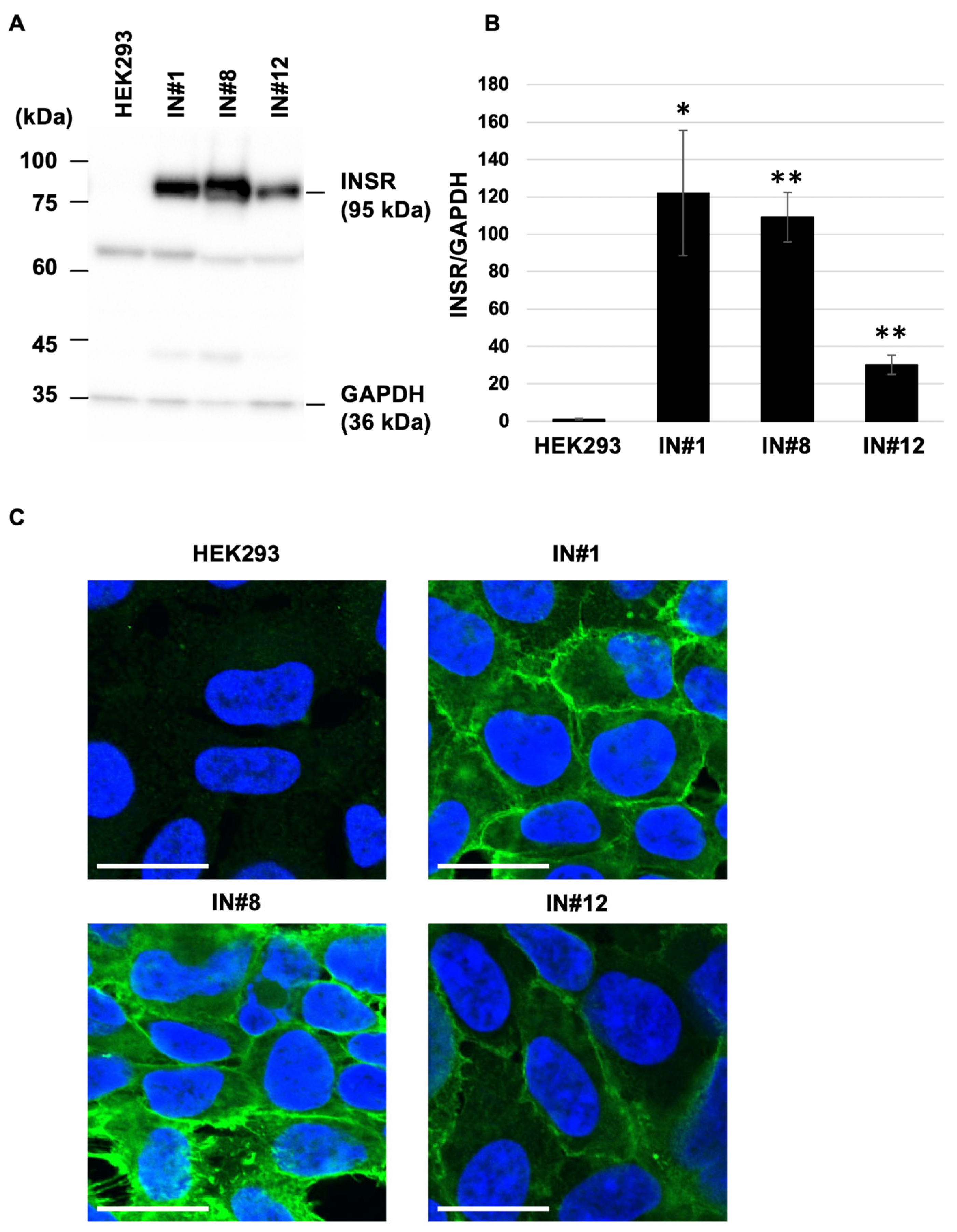
Receptor spatial distribution may influence delivery efficiency. In INSR-overexpressing cells, INSR was predominantly localized at the cell periphery, whereas IGF1R was distributed both at the cell periphery and in the cytoplasm. This difference in localization could contribute to the reduced delivery efficiency observed with IGF1R overexpression. Although increased IGF1R expression was observed in HEKI clones (#25, #36, and #66), it is important to determine whether this increase corresponds to functional activity by assessing IGF1R phosphorylation under the same stimulation conditions. Even with increased IGF1R expression, the receptor may be sequestered within intracellular vesicles, highlighting the value of combining immunocytochemical localization with functional assays using ligands, such as insulin or IGF1.
Notably, the IGF1R-overexpressing lines were generated using a CRISPR-activation system to upregulate endogenous IGF1R, whereas the INSR-overexpressing lines were established through random genomic integration of exogenous INSR. These distinct strategies were adopted because our initial goal was to generate a double-overexpression cell line, and using different systems allowed independent manipulation of each receptor. However, the use of two different overexpression systems may lead to differences in receptor expression patterns, maturation states, or membrane trafficking, potentially influencing Pas2r12 uptake independently of total receptor abundance. Moreover, matched overexpression controls were not included for either receptor system, limiting our ability to interpret the functional consequences of IGF1R or INSR overexpression and to directly compare their contributions. For rigorous comparison, it would be preferable to employ the same overexpression strategy for both receptors and include appropriate system-matched controls. Future studies incorporating these controls and unified expression methods will help more clearly delineate the specific roles of INSR and IGF1R in Pas2r12-mediated cytosolic delivery.
Importantly, ERK1/2 phosphorylation was observed following both Pas2r12 and Pas2r12–EGFP stimulation, independent of INSR/IGF1R inhibition, suggesting that additional receptors or alternative signaling pathways contribute to MAPK activation. Our previous phosphoproteomic analysis showed that Pas2r12 and Pas2r12–EGFP induced the phosphorylation of ephrin-B1 (EFNB1) and lysophosphatidic acid receptor 1 (LPAR1) [
16]. EFNB1 is a membrane-anchored ligand that interacts with Eph receptor tyrosine kinases to regulate cell adhesion and cytoskeletal dynamics [
29]; LPAR1 is a G protein-coupled receptor involved in various signaling processes, including cell migration and survival [
30]. LPAR1 and EFNB1 may therefore mediate ERK1/2 phosphorylation in response to Pas2r12 stimulation.
Beyond INSR and IGF1R, other receptor tyrosine kinases or membrane-associated proteins may independently or cooperatively contribute to Pas2r12–EGFP internalization. Evaluating the phosphorylation status of EGFR and FGFR, which undergo caveolae-dependent internalization, could provide clearer insights into the upstream origin of ERK activation [
31,
32]. Although EGFR and FGFR phosphorylation was not detected in our previous phosphoproteomic dataset, future analyses using the same approach will be important to determine whether these receptors cooperate with, or function independently of, INSR/IGF1R during Pas2r12–EGFP internalization.
A limitation of this study is the technical challenge of detecting transient and spatially localized phosphorylation events, which may lead to the underestimation of receptor contribution to cytosolic delivery. Phosphorylation of INSR/IGF1R was undetectable in parental HEK293 cells upon Pas2r12–EGFP stimulation, despite functional evidence that INSR and IGF1R contribute to the cytosolic delivery of EGFP. This apparent discrepancy may reflect the highly localized and transient nature of receptor activation, which could occur within specific membrane microdomains, such as caveolae or lipid rafts, and be rapidly reversed during cell lysis or sample handling. Therefore, biochemical detection limits should be considered when correlating receptor phosphorylation with functional uptake. Future studies employing high-sensitivity phosphoproteomics, proximity labeling, or advanced live-cell imaging techniques will be essential to capture transient events and delineate the full receptor network involved in Pas2r12-mediated cytosolic delivery.
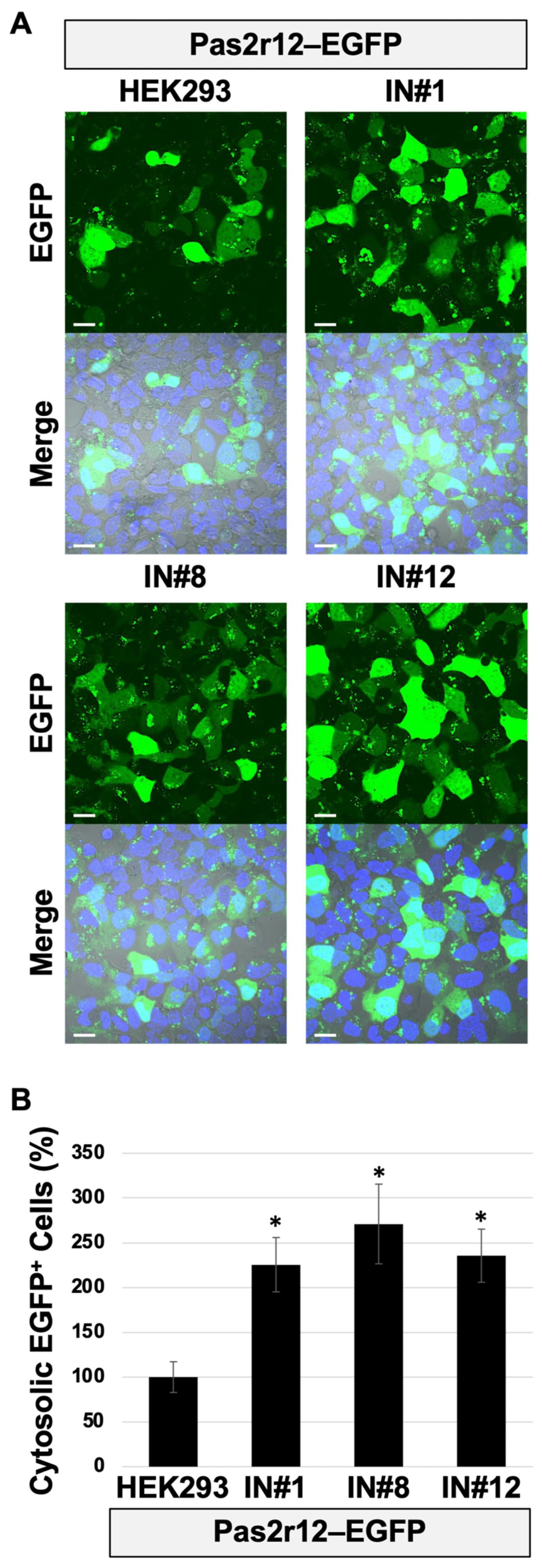
Overall, our findings reveal an INSR-dependent mechanism of Pas2r12 uptake and highlight receptor-mediated endocytosis as a key determinant of cytosolic delivery. Although INSR appears to function as a primary mediator, the contribution of IGF1R cannot be excluded, suggesting that heteromeric interactions or cooperative signaling between INSR and IGF1R modulate Pas2r12-mediated uptake. Furthermore, it is necessary to investigate which domain of Pas2r12—Pas2 or r12—is responsible for activating INSR/IGF1R. Additionally, examining other CPPs, such as TAT [
33] will be important to determine whether this effect is specific to Pas2r12 or a general property of CPPs. These insights provide a conceptual framework for the rational design of next-generation CPPs with enhanced receptor specificity and optimized intracellular delivery. In particular, strategies that enhance INSR engagement, modulate receptor density, or promote favorable receptor microdomain localization may improve cytosolic delivery performance.
4. Materials and Methods
4.1. Cell Culture
HEK293 cells (JCRB9068) were obtained from the JCRB Cell Bank. Cells were cultured in Dulbecco’s Modified Eagle Medium (DMEM) supplemented with 10% fetal bovine serum (FBS) at 37 °C in a humidified incubator with 5% CO2. Cells were routinely passaged every 5–7 d to maintain optimal growth and viability.
4.2. Pas2r12 and EGFP
Pas2r12 (sequence: FFLIGFFLIGrrrrrrrrrrrr-amide; molecular weight: 3046.6), where uppercase letters denote l-amino acids and lowercase letters indicate d-amino acids, was synthesized and purified using Scrum (Tokyo, Japan). The peptide was dissolved in ultrapure water to a final concentration of 1 mM.
His-tagged EGFP was overexpressed in
Escherichia coli BL21 (DE3) and purified using Ni–NTA agarose chromatography (Qiagen, Hilden, Germany) [
34]. Purified EGFP was prepared in phosphate-buffered saline at a final concentration of 0.5 mM.
4.3. Reagents
Insulin (Fujifilm Wako, Osaka, Japan) was dissolved in ultrapure water to a final concentration of 50 μM. Linsitinib (Axon Medchem B.V., Groningen, The Netherlands) was dissolved in DMSO to a final concentration of 10 mM.
4.4. SDS–PAGE and Western Blotting
HEK293 cells (2 × 10
4 cells/well) were seeded in 96-well microplates and cultured in 100 μL of DMEM supplemented with 10% FBS until ~80% confluence. The medium was replaced with DMEM containing 2.5% FBS, and the cells were cultured overnight. Based on our previous observations, reducing serum concentration to 2.5% FBS enhanced the cytosolic delivery of cargo proteins by Pas2r12 [
8]; therefore, cells precultured under these conditions were used for all experiments.
To prepare the Pas2r12–EGFP complex, Pas2r12 (80 μM) and EGFP (60 μM) were mixed in 25 μL DMEM and incubated for 1 h at 24 °C. The mixture was diluted 1:1 with DMEM to obtain final concentrations of 40 μM Pas2r12 and 30 μM EGFP. Pas2r12 was prepared similarly at 40 μM. The Pas2r12–IgG complex was prepared by mixing Alexa Fluor 488-labeled goat antimouse IgG (H+L) (Abcam, Cambridge, UK; 280 nM) with Pas2r12 (80 μM) in 25 μL DMEM, incubated for 1 h at 24 °C, and diluted 1:1 to final concentrations of 40 μM Pas2r12 and 140 nM IgG. Insulin was diluted in DMEM to a final concentration of 5 μM.
For inhibitor studies, cells were incubated with 1 μM linsitinib in DMEM (2 mL) for 10 min at 37 °C. After pretreatment was complete, the medium was replaced with 50 μL of Pas2r12–EGFP or Pas2r12–IgG complexes diluted 1:1 in DMEM containing 1 μM linsitinib. Vehicle control cells were pretreated with 0.01% (v/v) DMSO under the same conditions, with complexes diluted in DMEM containing 0.01% DMSO, resulting in a final volume of 50 μL.
Cells were treated for either 2 or 10 min at 37 °C under the following conditions: DMEM (control), Pas2r12, Pas2r12–EGFP, Pas2r12–IgG, or insulin. After treatment was complete, 200 μL of SDS-PAGE sample buffer supplemented with protease inhibitor cocktail (Nacalai Tesque, Kyoto, Japan) and phosphatase inhibitor cocktails II and III (EZBlock; BioVision, Milpitas, CA, USA) was added to each well. Cells were lysed by heating at 95 °C for 10 min.
Lysates were analyzed using 12% SDS–PAGE. Proteins were transferred to polyvinylidene difluoride membranes (GVS, Zola Predosa, Italy) and blocked for 1 h at room temperature using Blocking One or Blocking One P (Nacalai Tesque, Kyoto, Japan). Blocking One P was used to detect phosphorylated proteins. Membranes were incubated with primary monoclonal antibodies against phospho-insulin receptor β (p-IRβ; clone 10C3, sc-81500; Santa Cruz Biotechnology, Dallas, TX, USA), INSR (MAA895Hu21; Cloud-Clone Corp., Houston, TX, USA), phospho-ERK1/2 (sc-7383; Santa Cruz Biotechnology), ERK1/2 (sc-514302; Santa Cruz Biotechnology), and IGF-1 receptor (MAB659Hu22; Cloud-Clone Corp). The antibodies were diluted 1:10,000 in Immuno Shot 1 buffer (Cosmo Bio, Tokyo, Japan). The p-IRβ antibody detects phosphorylation of both IRβ and IGF1R. Anti-GAPDH (clone 3E12; Bioss, Woburn, MA, USA) was used as a loading control at 1:20,000 dilution in antigen–antibody reaction enhancement buffer (Cosmo Bio, Tokyo, Japan).
After incubation with primary antibodies was complete, the membranes were probed with a horseradish peroxidase-conjugated antimouse IgG secondary antibody (Cell Signaling Technology, Danvers, MA, USA) at 1:2500 in Immuno Shot 2 buffer (Cosmo Bio, Tokyo, Japan). Chemiluminescence was developed using ImmunoStar LD detection reagent (Fujifilm Wako, Osaka, Japan) and visualized with a ChemiDoc XRS+ imaging system (Bio-Rad, Hercules, CA, USA). Band intensities were analyzed using Image Lab software (Bio-Rad, Version 6.0.1).
4.5. Cytosolic Delivery Assay by Confocal Laser Microscopy
HEK293 cells (4 × 10
5) suspended in 2 mL of DMEM (Nacalai Tesque, Kyoto, Japan) supplemented with 10% FBS were seeded onto 35-mm glass-bottom culture dishes containing 12-mm glass wells (Iwaki, Tokyo, Japan) precoated with 0.2% gelatin. Cells were incubated at 37 °C in a humidified atmosphere of 5% CO
2 for 5 d. Then the medium was replaced with DMEM containing 2.5% FBS (2 mL), and the cells were cultured for an 24 h under the same conditions [
8].
To evaluate the Pas2r12-mediated cytosolic delivery efficiency of EGFP, cells were subjected to three pretreatment conditions before applying the EGFP–Pas2r12 complex.
In the linsitinib pretreatment condition, the cells were incubated with 1 μM linsitinib in serum-free DMEM (2 mL) for 10 min at 37 °C. Following pretreatment, the medium was removed and replaced with 100 μL of the EGFP–Pas2r12 complex, diluted 1:1 with DMEM containing 1 μM linsitinib. Cells were incubated with the complex for 45 min at 37 °C and washed with 2 mL of DMEM supplemented with 10% FBS.
For the vehicle control condition, cells were pretreated with 0.01% (v/v) DMSO in serum-free DMEM (2 mL) for 10 min at 37 °C. The EGFP–Pas2r12 complex was diluted 1:1 with DMEM containing 0.01% DMSO (15 μM EGFP and 20 μM Pas2r12: 100 μL) and applied to the cells. Incubation and washing procedures were identical to those used for the linsitinib-treated group.
In the no pretreatment condition (2.5% FBS-DMEM only), cells received no chemical pretreatment before applying the complex. This condition was employed in experiments involving genetic manipulations, such as siRNA-mediated knockdown or IGF1R or INSR overexpression, and served as baseline control for comparison with chemical pretreatment groups.
The EGFP–Pas2r12 complex was prepared by mixing EGFP and Pas2r12 in DMEM at twice the final working concentrations (30 μM EGFP and 40 μM Pas2r12; total volume: 50 μL) and incubating at 24 °C for 1 h to allow complex formation. The resulting complex was diluted 1:1 with plain DMEM (15 μM EGFP and 20 μM Pas2r12: 100 μL) and immediately applied to the cells. Following 45 min of incubation at 37 °C, cells were washed with 2 mL of DMEM containing 10% FBS. For nuclear staining, the cells were incubated for an additional 30 min at 37 °C in DMEM containing 10% FBS supplemented with Hoechst 33342 (500 ng/mL; Thermo Fisher Scientific, Bozeman, MT, USA). The medium was replaced with fresh DMEM (10% FBS) before confocal imaging.
Live-cell imaging was performed using a FluoView FV1200 confocal laser scanning microscope (Olympus, Tokyo, Japan) equipped with a UPlanSApo 60× oil immersion objective lens. Images were acquired at 405 nm (5% laser power) for nuclear staining and 473 nm (5% laser power) for EGFP. For EGFP, the PMT high voltage was fixed at 510 V, with a gain of 1% and offset of 0%. For nuclear staining, the PMT settings were adjusted according to fluorescence intensity, typically with a high voltage of ~680 V, gain of 1%, and offset of 0%. Fluorescence and differential interference contrast images were acquired and overlaid.
Cells exhibiting cytosolic EGFP fluorescence were identified by visual inspection. The proportion of EGFP-positive cells was calculated as a percentage of the total cell population, determined by counting nuclei when Hoechst 33342 was used or by differential interference contrast images when nuclear staining was not used. For each experimental condition, 3–5 fields per sample were analyzed. Experiments were independently repeated at least three times, and the results are presented as mean ± standard error of the mean.
4.6. siRNA Transfection
HEK293 cells were seeded in 35 mm glass-bottom dishes at 2 mL in DMEM supplemented with 10% FBS and incubated for 72 h until ~70% confluence. siRNAs targeting IGF1R (Hs_IGF1R_7: TCGAAGAATCGCATCATCATA, Hs_IGF1R_8: CTGGACTCAGTACGCCGTTTA), INSR (Hs_INSR_2: TCGAACGATGTTGGACTCATA, Hs_INSR_3: CAACGGGAGTCTGATCATCAA), and a negative control siRNA (siNC: AATTCTCCGAACGTGTCACGT) were obtained from QIAGEN (Venlo, The Netherlands).
Transfection was performed using Lipofectamine RNAiMAX (Thermo Fisher Scientific), following the manufacturer’s protocols. Briefly, 25 pmol of siRNA was diluted in 125 µL Opti-MEM, and 7.5 µL of RNAiMAX was diluted in 125 µL Opti-MEM. The two solutions were combined, incubated at room temperature for 5 min, and added dropwise to the cells. After 48 h, the medium was replaced with DMEM containing 2.5% FBS (2 mL), and cells were incubated for an 24 h before downstream analyses.
4.7. Establishment of an IGF1R-Overexpressing Stable Cell Line
HEK293 cells (4 × 10⁵) were seeded into 6-well plates containing 2 mL of DMEM supplemented with 10% FBS and cultured until 70–90% confluence. Transfection was performed using Lipofectamine 3000 with 5 µg of the IGF1R CRISPR Activation Plasmid (sc-400084-ACT; Santa Cruz Biotechnology). After 48 h, the medium was replaced with DMEM containing 10% FBS and a combination of puromycin (0.8 µg/mL), blasticidin (20 µg/mL), and hygromycin B (300 µg/mL). After 2 d of selection, cells were trypsinized and plated at appropriate dilutions onto 60-mm dishes to facilitate colony formation. After 10 d of incubation at 37 °C, individual antibiotic-resistant colonies were manually picked and transferred to fresh selection medium. Clones that maintained antibiotic resistance after three passages were evaluated for IGF1R expression using Western blot.
4.8. Generation of an INSR-Expressing Stable Cell Line
To generate INSR-overexpressing HEK293 cells, the plasmid pRP[Exp]-Neo-CAG > hINSR (VectorBuilder, Chicago, IL, USA; 20 µg) was linearized using Sca I. HEK293 cells (2 × 10⁵ cells/mL, 2 mL per well) were seeded into 6-well plates and cultured until 70–90% confluence. Transfection was performed using Lipofectamine 3000. Briefly, 5 µL of Lipofectamine 3000 was mixed with 125 µL of Opti-MEM. Separately, 2.5 µg of linearized plasmid DNA was combined with 10 µL of P3000 reagent in 125 µL of Opti-MEM. The two solutions were mixed, incubated at room temperature for 10 min, and applied to the cells. After 48 h, the culture medium was replaced with DMEM supplemented with 10% FBS and 100 µg/mL G418 for selection. Cells were diluted 1:80, cultured for 48 h, plated on 60-mm dishes, and incubated for 10 d to allow colony formation. Individual G418-resistant colonies were manually picked and transferred to 96-well plates containing selection medium. Cells were passaged four times under continuous G418 selection. INSR overexpression was confirmed using Western blot.
4.9. Immunohistochemical Staining
HEK293 cells (2 × 10⁵ cells) were seeded onto Millicell EZ 8-well glass slides and cultured in 0.5 mL of DMEM supplemented with 10% FBS until they were 80% confluent. The medium was replaced with DMEM containing 2.5% FBS. The cells were incubated for 24 h; fixed with 4% paraformaldehyde; permeabilized with phosphate-buffered saline containing 0.2% Triton X-100; blocked with Blocking One at room temperature; incubated overnight at 4 °C with primary antibodies against IGF1R (3B7, sc-462; Santa Cruz Biotechnology) or INSR (CT3, sc-57342; Santa Cruz Biotechnology) diluted 1:200 in Immuno Shot 1 solution; washed; and incubated at room temperature for 45 min with secondary antibody Alexa Fluor 488-labeled goat antimouse IgG and Hoechst 33342 diluted 1:500 in Immuno Shot 2 solution. Cells were mounted using Dako Fluorescence Mounting Medium (Agilent, Santa Clara, CA, USA) and imaged using a confocal laser scanning microscope.
4.10. Statistical Analysis
Statistical significance was assessed using Student’s t-test, with results considered significant at * p < 0.05, ** p < 0.01, and *** p < 0.001.