Article

Polymeric Nanocapsules Loaded with Lidocaine: A Promising Formulation for Topical Dental Anesthesia


by
Camila Batista da Silva
1,†,
Cleiton Pita dos Santos
1,†,
Luciano Serpe
1,
Jonny Burga Sanchez
1,
Luiz Eduardo Nunes Ferreira
1,2,
Nathalie Ferreira Silva de Melo
3,
Francisco Carlos Groppo
1,
Leonardo Fernandes Fraceto
3,
Maria Cristina Volpato
1 and
Michelle Franz-Montan
1,*
1
Department of Biosciences, Piracicaba Dental School, Universidade Estadual de Campinas, Av. Limeira, 901, Piracicaba, SP 13414-903, Brazil
2
Laboratory of Inflammation and Immunology, Guarulhos University, Guarulhos, SP 07023-070, Brazil
3
Department of Environmental Engineering, São Paulo State University, Sorocaba, SP 18087-180, Brazil
*
Author to whom correspondence should be addressed.
These authors contributed equally to this work.
Pharmaceuticals 2024, 17(4), 485; https://doi.org/10.3390/ph17040485
Submission received: 1 March 2024 / Revised: 2 April 2024 / Accepted: 8 April 2024 / Published: 10 April 2024
(This article belongs to the Special Issue Drug Delivery Systems for Local Anesthetics)

Abstract

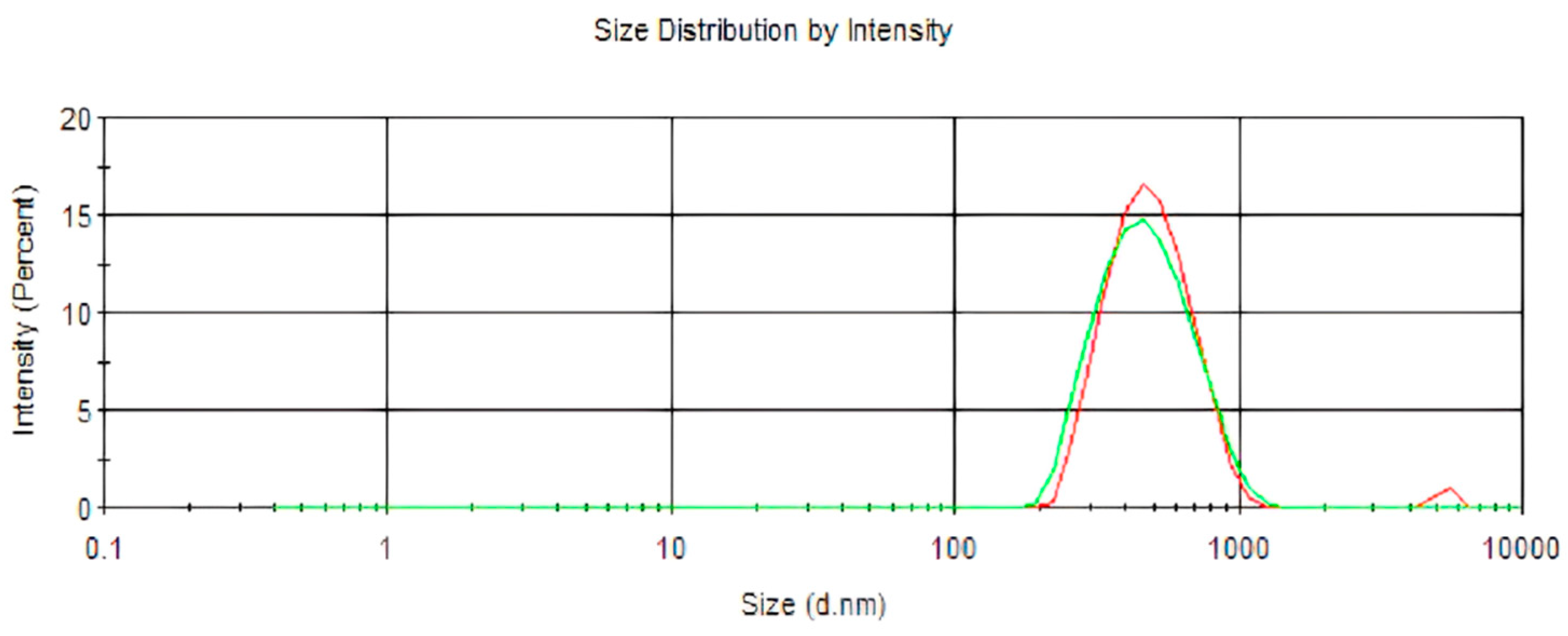
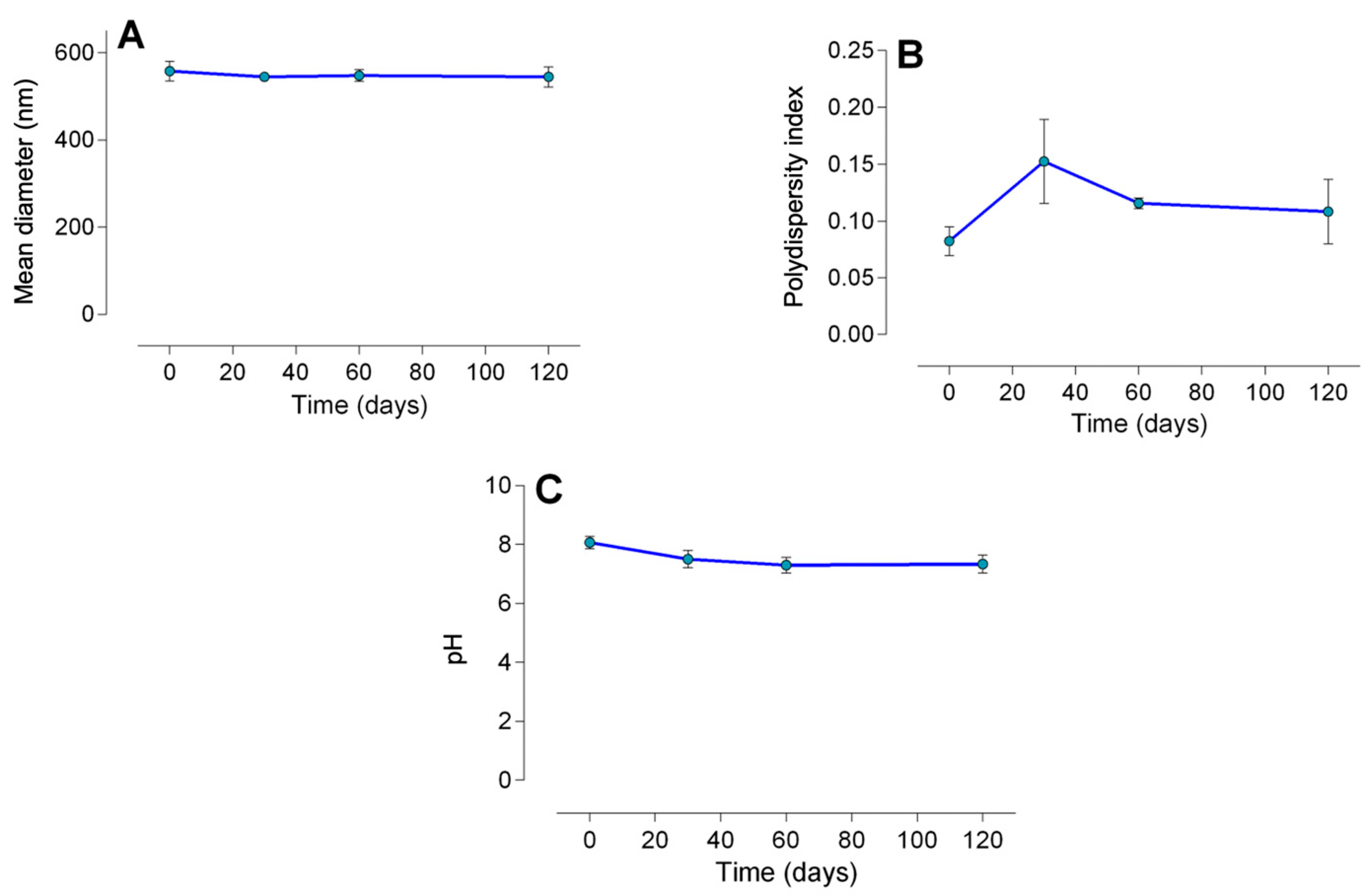
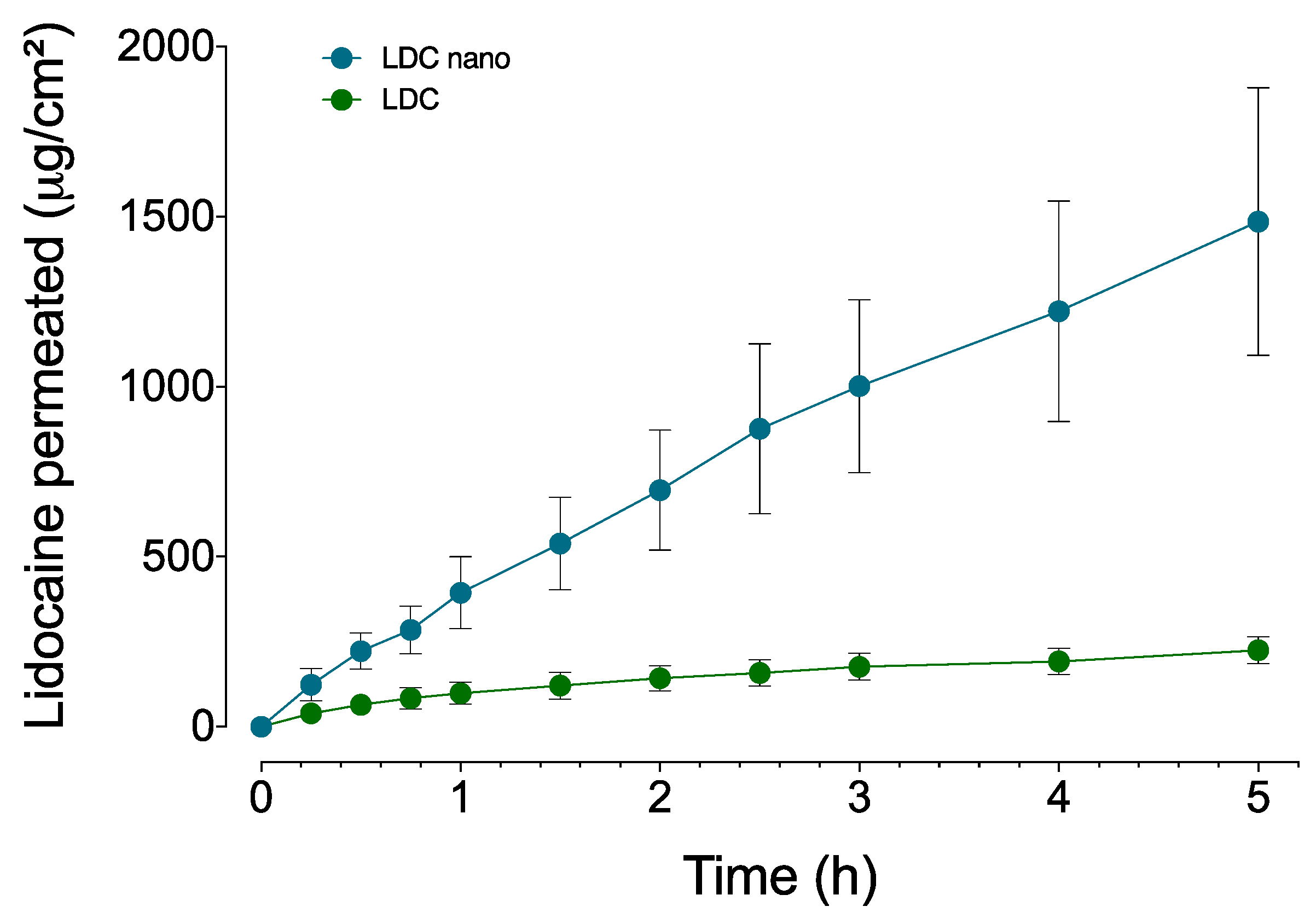
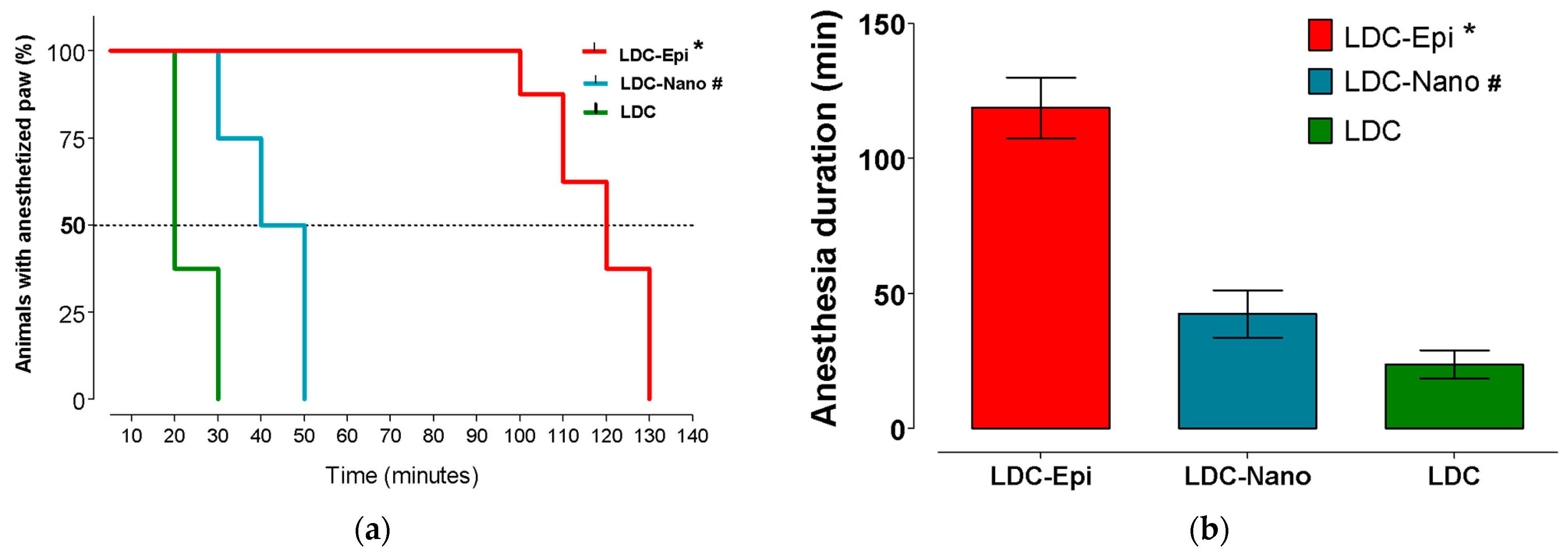
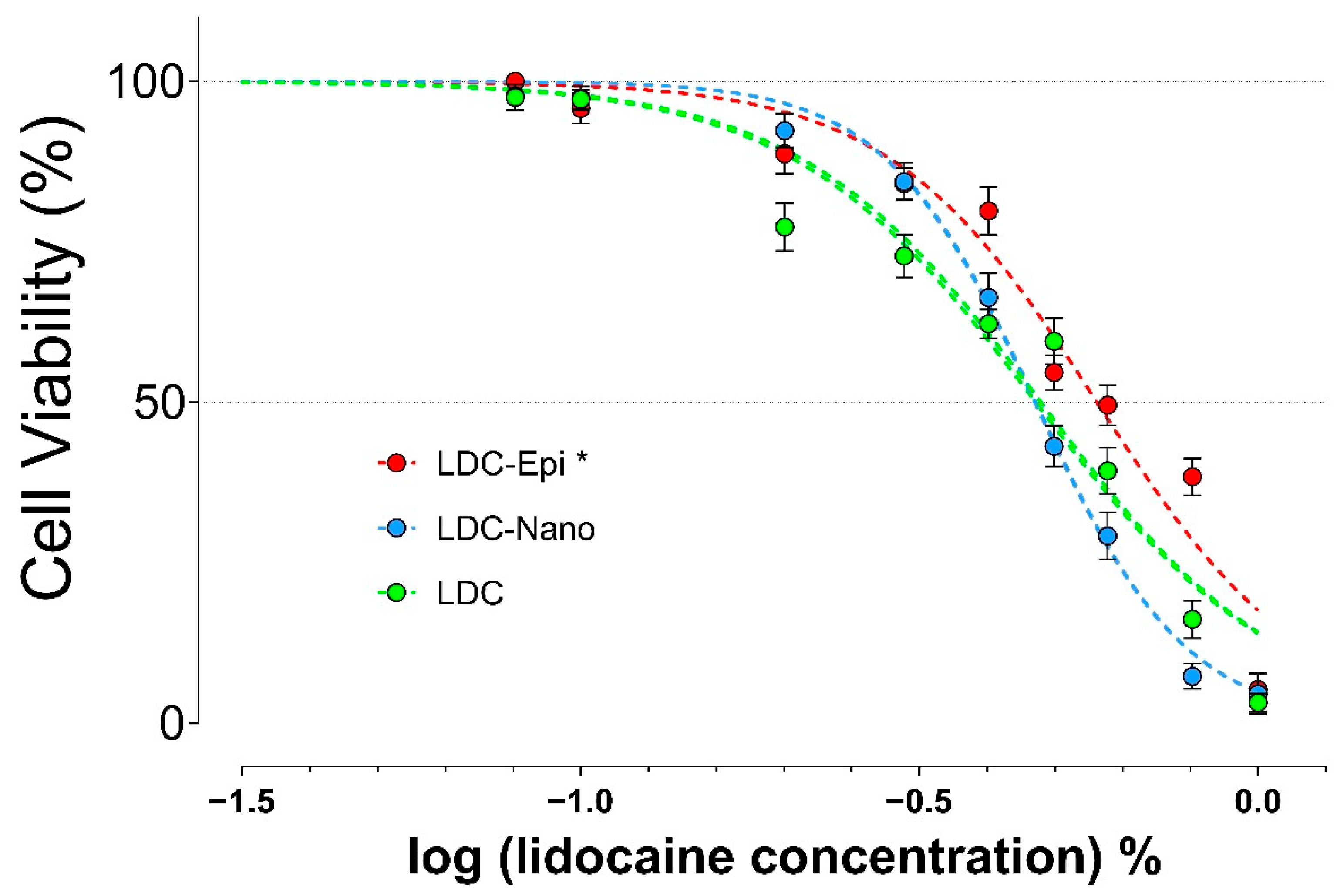
Lidocaine is the most commonly used local anesthetic worldwide, known for its rapid onset and moderate duration of anesthesia. However, it is short-lived and does not effectively promote effective topical anesthesia in the oral cavity when used alone. Our aim was to investigate whether an approximate 50% encapsulation of lidocaine in poly(ε-caprolactone) nanocapsules (LDC-Nano) would be able to increase its permeation and analgesic efficacy and reduce cytotoxicity. In this study, we characterized LDC-Nano and conducted MTT tests with HaCaT cells to assess their in vitro cytotoxicity. Additionally, in vitro permeation assays across the pig esophageal epithelium and the anesthetic efficacy of the hind paw incision model in rats were performed. Plain lidocaine (LDC) was compared with LDC-Nano and lidocaine hydrochloride plus epinephrine (LDC-Epi). The physicochemical characteristics of LDC-Nano were satisfactory (pH: 8.1 ± 0.21; polydispersity index: 0.08 ± 0.01; mean diameter (nm): 557.8 ± 22.7; and encapsulation efficiency (%): 51.8 ± 1.87) and remained stable for up to 4 months. LDC-Nano presented similar in vitro cytotoxicity to LDC but was higher than LDC-Epi (LD50: LDC = 0.48%; LDC-Nano = 0.47%; and LDC-Epi = 0.58%; p < 0.0001). Encapsulation increased the permeability coefficient about 6.6 times and about 7.5 the steady-state flux of lidocaine across the mucosal epithelium. Both encapsulation and epinephrine improved anesthesia duration, with epinephrine demonstrating superior efficacy (100% of animals were anesthetized up to 100, 30, and 20 min when LDC-Epi, LDC-nano, and LDC were used, respectively). Although LDC-Epi demonstrated superior in vivo anesthetic efficacy, the in vitro permeation and cytotoxicity of LDC-Nano indicate promising avenues for future research, particularly in exploring its potential application as a topical anesthetic in the oral cavity.
Keywords: dentistry; anesthetic efficacy; topical anesthesia; lidocaine; poly(epsilon-caprolactone) nanocapsules; cytotoxicity; permeation dentistry; anesthetic efficacy; topical anesthesia; lidocaine; poly(epsilon-caprolactone) nanocapsules; cytotoxicity; permeation