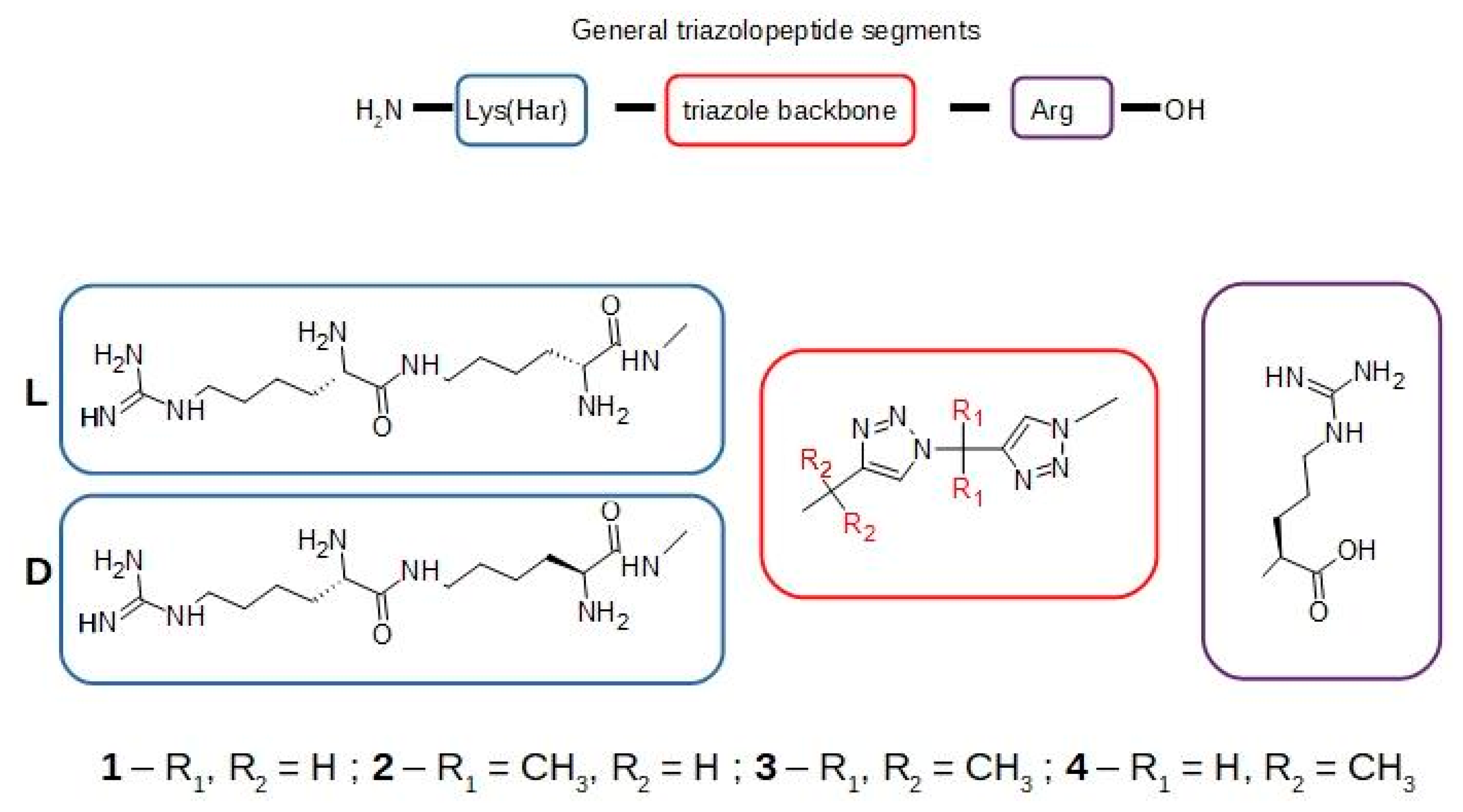
Chirality and Rigidity in Triazole-Modified Peptidomimetics Interacting with Neuropilin-1

 , , , ,
 Abstract
Share and Cite
Fedorczyk, B.; Redkiewicz, P.; Matalińska, J.; Piast, R.; Kosson, P.; Wieczorek, R. Chirality and Rigidity in Triazole-Modified Peptidomimetics Interacting with Neuropilin-1. Pharmaceuticals 2024, 17, 190. https://doi.org/10.3390/ph17020190
Fedorczyk B, Redkiewicz P, Matalińska J, Piast R, Kosson P, Wieczorek R. Chirality and Rigidity in Triazole-Modified Peptidomimetics Interacting with Neuropilin-1. Pharmaceuticals. 2024; 17(2):190. https://doi.org/10.3390/ph17020190
Chicago/Turabian StyleFedorczyk, Bartłomiej, Patrycja Redkiewicz, Joanna Matalińska, Radosław Piast, Piotr Kosson, and Rafał Wieczorek. 2024. "Chirality and Rigidity in Triazole-Modified Peptidomimetics Interacting with Neuropilin-1" Pharmaceuticals 17, no. 2: 190. https://doi.org/10.3390/ph17020190
APA StyleFedorczyk, B., Redkiewicz, P., Matalińska, J., Piast, R., Kosson, P., & Wieczorek, R. (2024). Chirality and Rigidity in Triazole-Modified Peptidomimetics Interacting with Neuropilin-1. Pharmaceuticals, 17(2), 190. https://doi.org/10.3390/ph17020190