Abstract
Previous functional MRI and brain electrophysiology studies have studied the left-right differences during the tapping tasks and found that the activation of left hemisphere was more significant than that of right hemisphere. In this study, we wanted to delineate this lateralization phenomenon not only in the execution phase but also in other processing phases, such as early visual, pre-executive and post-executive phases. We have designed a finger-tapping task to delineate the left-right differences of event related potentials (ERPs) to right finger movement in sixteen right handed college students. The mean amplitudes of ERPs were analyzed to examine the left-right dominance of cortical activity in the phase of early visual process (75-120ms), pre-execution (175-260ms), execution (310-420ms) and post-execution (420-620ms). In the execution phase, ERPs at the left electrodes were significantly more pronounced than those at the right electrodes (F3 > F4, C3 > C4, P3 > P4, O1 > O2) under the situation without comparing the central electrodes (Fz, Cz, Pz, and Oz). No difference was found between left and right electrodes in other three phases except the C3 electrode still showed more dominant than C4 in the pre- and post-execution phase. In conclusion, the phenomenon of brain lateralization occur major in the execution phase. The central area also showed the lateralization in the pre- and post-execution to demonstrate its unique lateralized contributions to unilateral simple finger movements.
1. Introduction
Previous fMRI brain studies [1-4] and electrophysiological brain research [5-9] have reported the lateralization (left-right difference) during the tapping task and found that the left central electrode activated more significant in the tapping task conducted by the right finger.
Babiloni et al. (2003) [1] and Gut et al. (2007) [2] surveyed the lateralization of brain during finger movement. In their studies, the voluntary right and left finger movements and complex movements in successive finger-thumb opposition from little finger to index finger were used. The fMRI findings suggested that the dominant (right) hand is controlled mainly by the contralateral (left) hemisphere. The results of Babiloni et al. and Gut et al. also supported the findings from Mattay et al. in 1998 [3] and Solodkin et al. in 2001 [4]. Both Mattay et al. and Solodkin et al. found the finger movements with the right hand activated predominantly in the left (contralateral) motor areas for the right handers [3,4].
Moreover, Babiloni et al. also used EEG to survey the lateralization of unilateral finger movement in 2003 [5] and found the preponderance of post-movement beta event related synchronization was stronger over left central area than that over right central area. Besides the studies of Babiloni et al., many brain electrophysiological results also have been reported [6-9]. Stancak and Pfurtscheller published their two studies in 1996 [6,7]. They assessed cortical dynamics by means of mu-rhythm desynchronization and beta–ERD respectively. A significant contralateral (left) preponderance of mu- rhythm desynchronization or beta–ERD was found during right finger movements. Urbano et al. (1996) investigated the dynamic functional topography of human cortical activity related to simple unilateral finger movements using a high resolution EEG technique [8]. They found the left sensorimotor and supplementary motor area were predominant than the same areas in the right hemisphere during the preparation and execution of these movements. Serrien (2008) assessed cortical dynamics by means of EEG coherence in the beta frequency band [9]. Serrien's results showed that the intrahemispheric connectivity was correlated with left hemisphere dominance for right finger movements.
The findings that right hand is controlled mainly by the left hemisphere in the movement phase for right handed persons are consistent. However, the right-left differences of the brain activity in the pre- movement phase have not been fully addressed. Hammond and Fox (2005) conducted an event related potentials study to concern the lateralization during the finger tasks in the pre-motor phase [10]. They compared the contingent negative variation between the informative and uninformative condition. In the informative condition, the response signal specified a key press with either the middle or the ring finger of the left or the right hand while the signal did not show in the uninformative condition. Hammond and Fox found that preparatory motor processes were lateralized to the dominant hemisphere, in both informative and uninformative conditions. Bai et al. (2005) calculated EEG power measurements in the beta band during complex sequential finger movements in the period of pre-motor phase. [11] Their results showed the left dominance of event-related desynchronization during right hand finger movements, whereas ERD during left hand finger movements was bilateral. Zhu et al. (2005) used fMRI combined with right hand sequential finger movement task to investigate brain activation pattern and laterality in [12]. They found that left lateralization activation in primary motor area, supplementary motor area and posterior parietal cortex was related to the preparation of sequential finger movement. Binkofski et al. (2000) conducted a fMRI study and asked participants to imagine movement trajectories following different instructions [13]. A left-hemispheric dominance was found for egocentric movements not related to extrapersonal environment. It was also found that the activation areas were in the opercular portion of the inferior frontal cortex where are localized to Broca's region [13].
In this study we focused on the issue of unilateral and simple finger movement. All the participants conducted one-step and unilateral tapping task without bimanual and sequential characteristics. Based on the aforementioned findings, we hypothesized that the event related potentials are lateralized toward left during right finger tapping movements in the pre-movement and movement phase on the central area.
2. Methods
2.1. Participants
Sixteen right handed college students (2 males and 14 females) aged 19 to 24 (mean= 20.19, SD=1.38) without any neuromuscular or cerebral disease voluntarily participated in the present study. The averaged handedness quotient of self reported Edinburgh handedness inventory was 95.56 (±8.19). The averaged eyedness quotient of five tasks was 76.25%. The tasks included (1) to look through a small opening formed by crossed index fingers and thumbs of both hands (Miles test); (2) to look through a kaleidoscope; (3) to look through a hole in a card (Dolman method); (4) to cover one eye with one hand; and (5) to close one eye. Item 4 and 5 were decided by us and item 1, 2 and 3 were cited from related articles [14-16].
2.2. Variables
The independent variables in this study are the location of left-right electrodes (F3 vs. F4, C3 vs. C4, P3 vs. P4, and O1 vs. O2) and the processing phase (early visual, pre-execution, execution, and post- execution phases). The mean amplitude at those electrodes in different processing phases is the major dependent variable. The reaction time and error rate (the period between seeing the number and the action of pressing the corresponding key were also recorded as the behavioral data.
2.3. Experimental Design
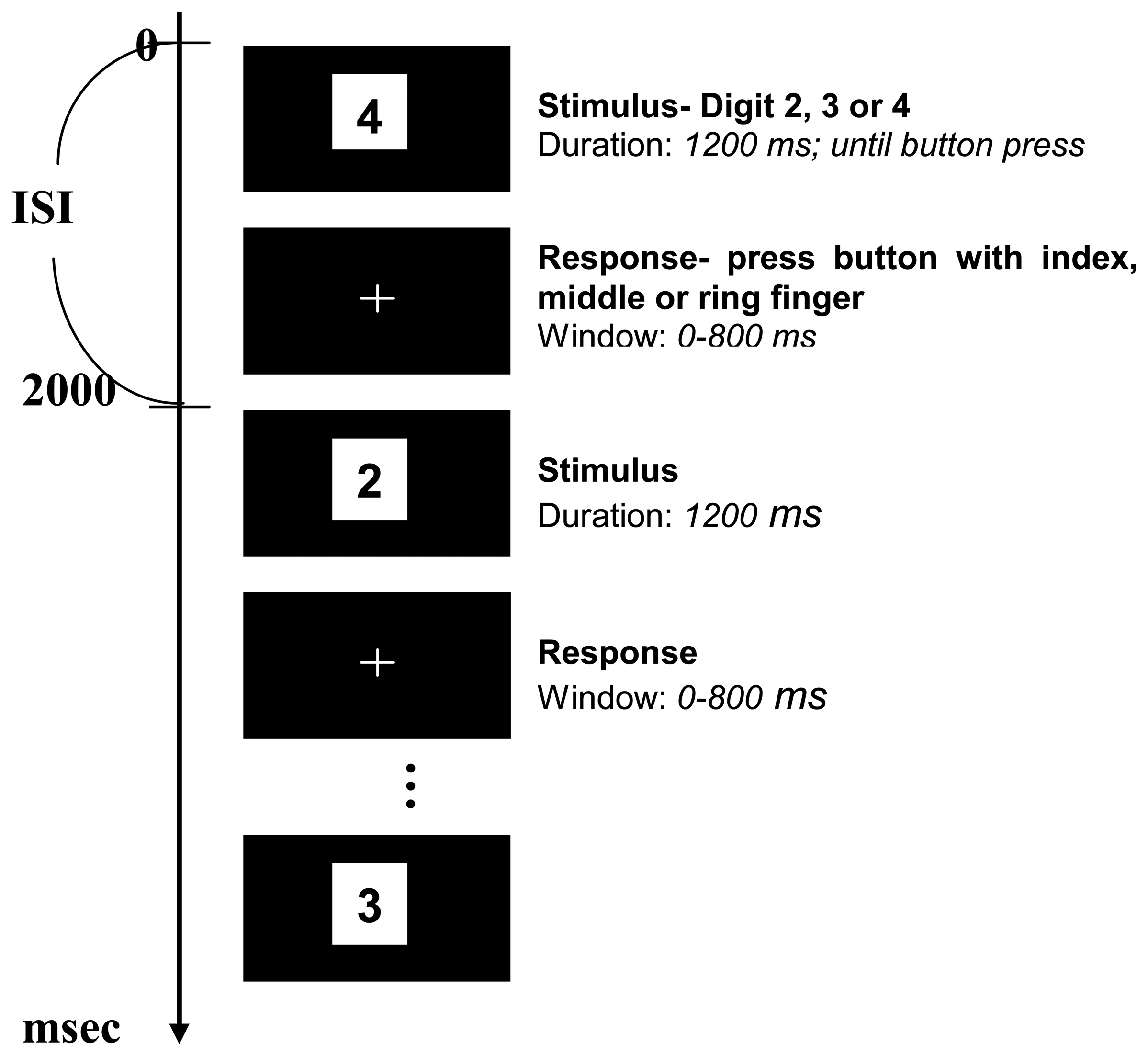
Participants were presented with the three Arabic numerals 2, 3, and 4. Their responsibility was to look at the center of the screen and respond to these stimuli by pressing the corresponding keys on the keyboard with their index, middle and 4th finger respectively. There were 600 attempts in total, and the inter-stimulus interval was set as 2000 ms. Therefore, it took 20 minutes to complete the task (please see Figure 1). Their EEGs and reaction times were recorded during the process for later analyses.
Figure 1.
Experimental procedure. Digits 2, 3 or 4 were presented on the center of screen until a button press or automatically disappeared after 1200 ms. Subjects were required to respond by pressing a key with their right-hand index finger when “2” appears, the middle finger when “3” appears, and the ring finger when “4” appears. 2000 ms from the last stimulus, a new stimulus comes up. The order of 600 attempts was totally randomized.
2.4. Stimulus presentation and key pressing performance
The timing of the stimulus presentation was controlled and subject responses (accuracy and reaction time) were recorded using Stim II Software (Neuroscan, Inc. Sterling, VA, USA). The stimuli included the Arabic numerals 2, 3, and 4.
2.5. Experimental Procedure
The experimental paradigm was designed by the first and second author of this present paper and has been reported in some articles [14-16]. Each participant was required to respond by pressing the specified keys on the keyboard with their right-hand fingers. When the number 2 appeared on the screen, the participants pressed the corresponding key with their index finger as soon as possible. Likewise, participants pressed the corresponding keys using their middle or 4th fingers if they saw the numbers 3 or 4, respectively. There were 200 attempts each of these three conditions, and the order of these 600 attempts was totally randomized (Figure 1).
2.6. Electroencephalogram (EEG) acquisition and ERP recording
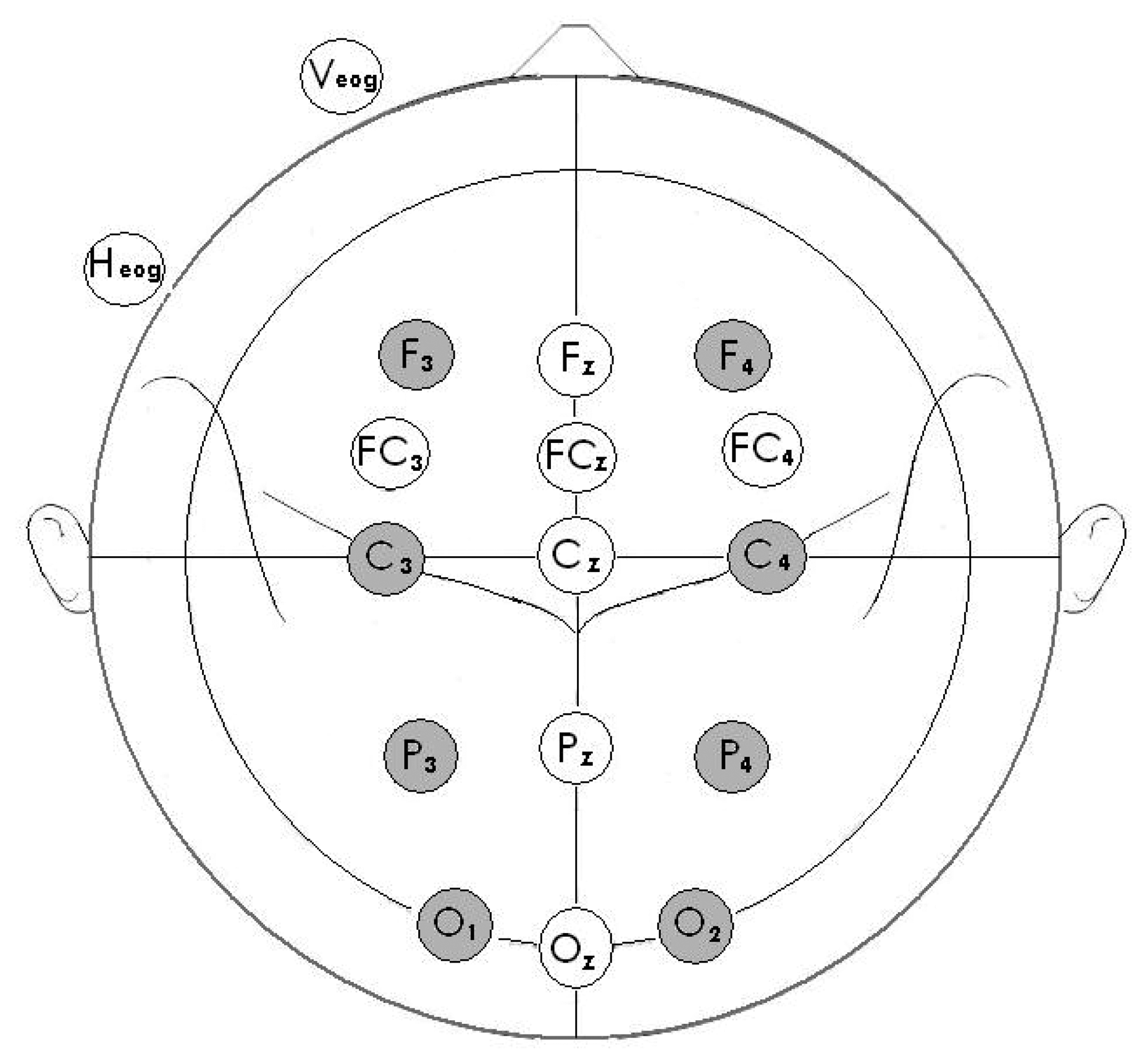
EEG signals were recorded from 17 Sintered electrodes (Fz, FCz, Cz, Pz, Oz, F4, FC4, C4, P4, O2, F3, FC3, C3, P3, O1, Heog, and Veog) as shown in Figure 2. Eight of them were of interest in this study (F3, F4, C3, C4, P3, P4, O1, O2). All the electrodes were attached according to the standard 10- 20 system, using a Brain-Amp-MR amplifier (Brain Products GmbH) and the software Brain Vision Recorder Version 1.01 (Brain Products GmbH). All electrode impedances were brought to below 10 kΩ. The EEG was band pass filtered (1-30 Hz) and digitized at a sampling rate of 1000 samples/s. The baseline for ERP measurements was the mean voltage of a 100ms pre-stimulus interval. Attempts exceeding ± 100μV at horizontal and vertical electro-oculogram (EOG) were excluded immediately. Furthermore, attempts with eye blinks, eye movement deflections, and over ± 60μV at any electrode were also excluded from ERP averages.
Figure 2.
Eight electrode positions of interested were filled with gray color.
2.8. Statistics
We used one-way repeated measure ANOVAs to compare the differences of event related potentials between left, middle and right electrodes in four different phases (early visual, pre-execution, execution, and post-execution). The Greenhouse-Geisser correction was applied to correct for violations of sphericity. After the difference reaching the significant level (p < .05), the least significant difference (LSD) post hoc test was used to compare between electrodes. LSD is an adjustment equivalent to no adjustment for post hoc multiple comparisons after the result of repeated ANOVA reaching the significant level. Only the differences of left and right electrodes were discussed in the post hoc multiple comparisons. Therefore, the differences of electrodes on the midline (Fz, Cz, Pz, and Oz) and other right or left electrodes were not discussed in the multiple comparison.
3. Results
3.1. Behavioral results
The mean accuracy of all 16 subjects was 97.03%. The mean reaction time of correct responses ranged from 412.27 ms to 599.69 ms (mean=476.91, SD=48.69).
4. Discussion and Conclusion
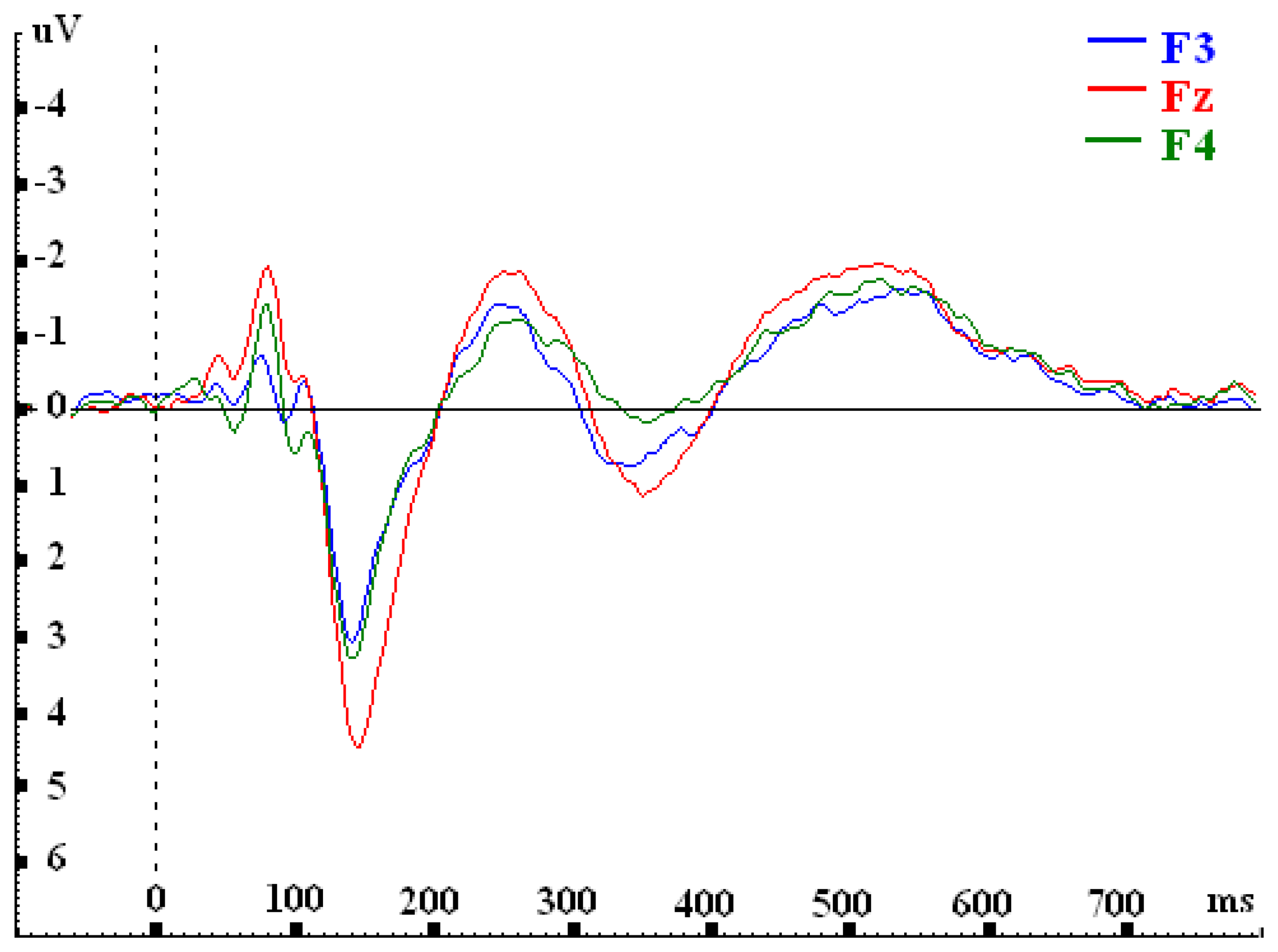
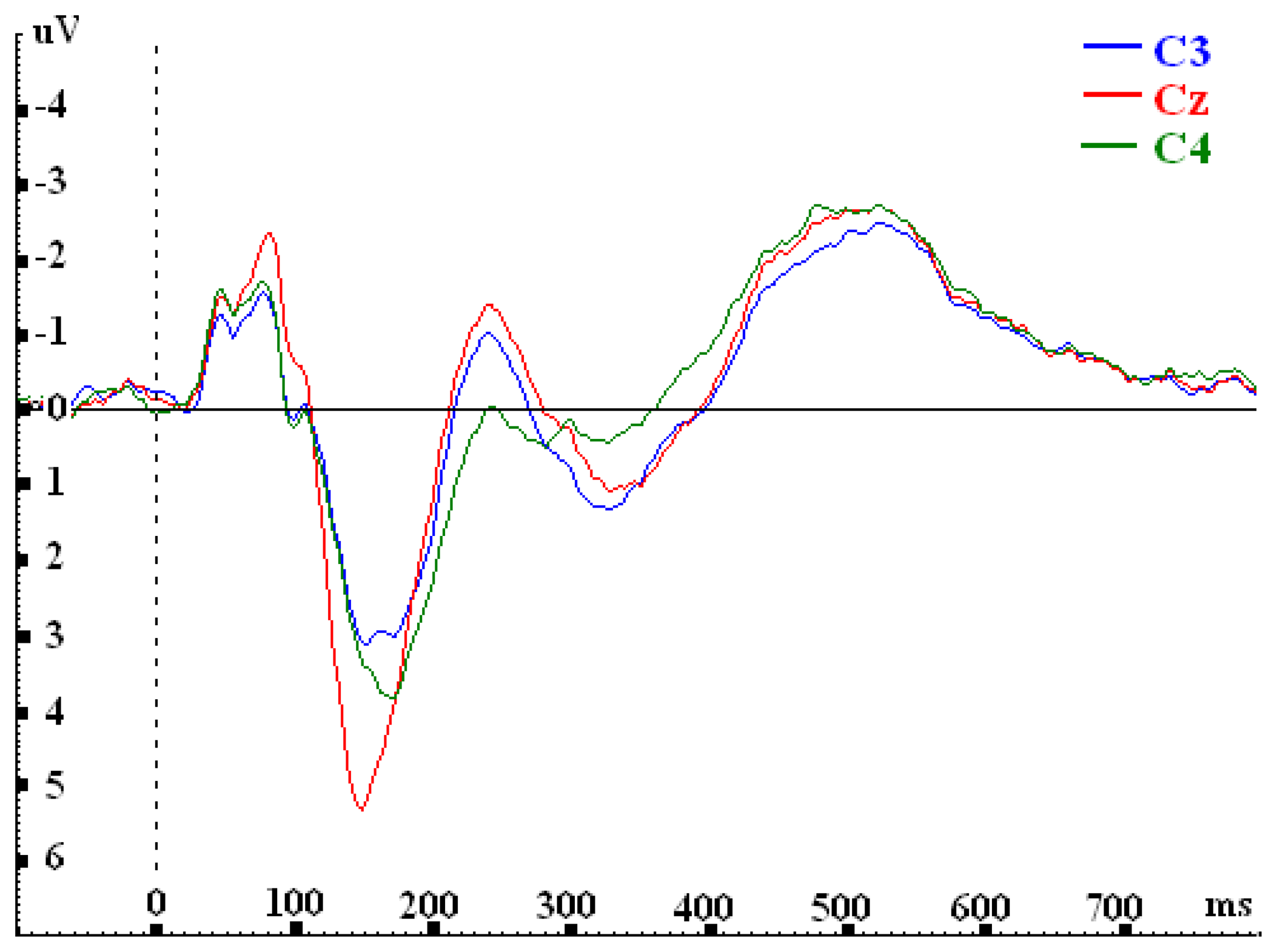
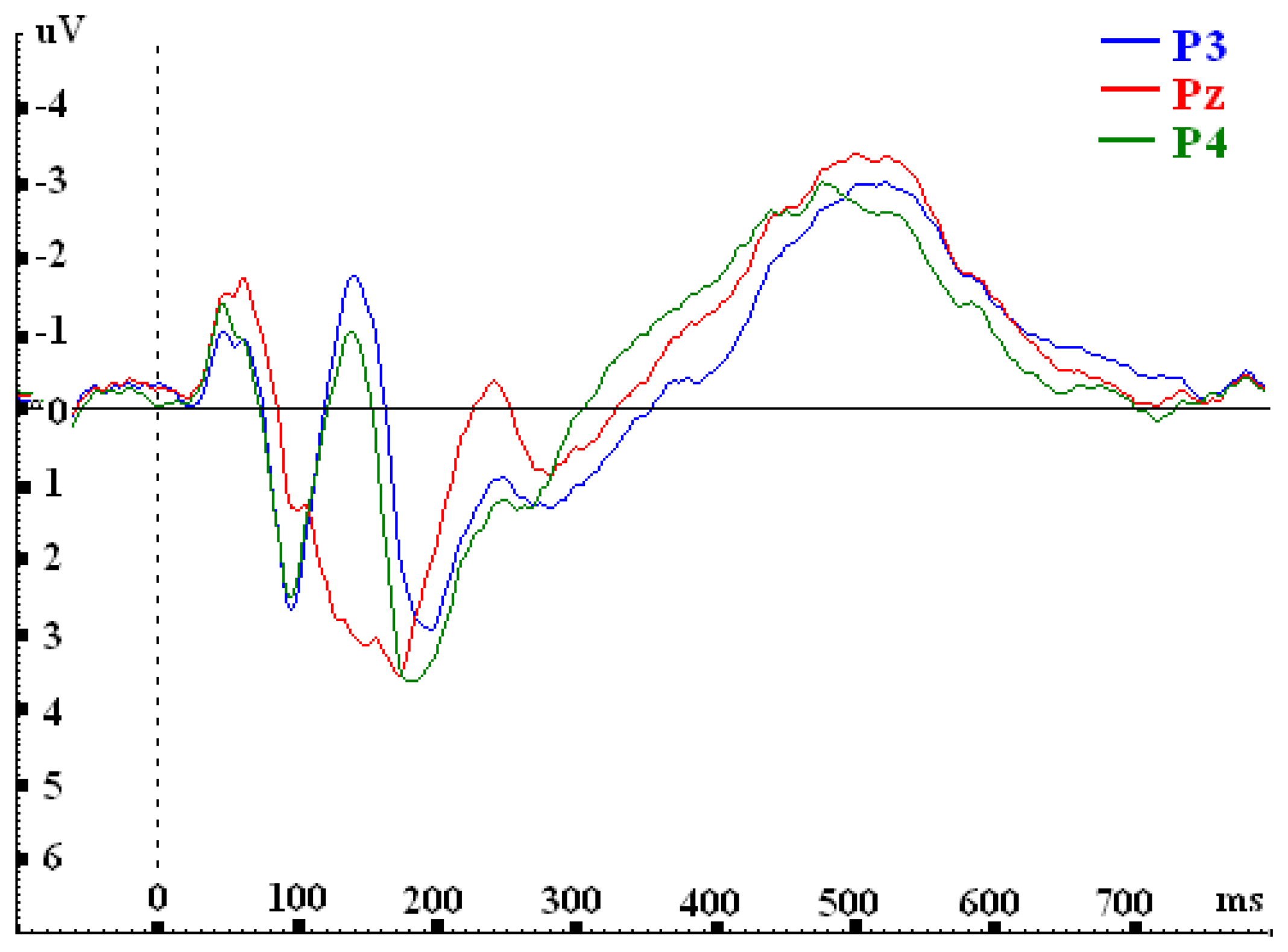
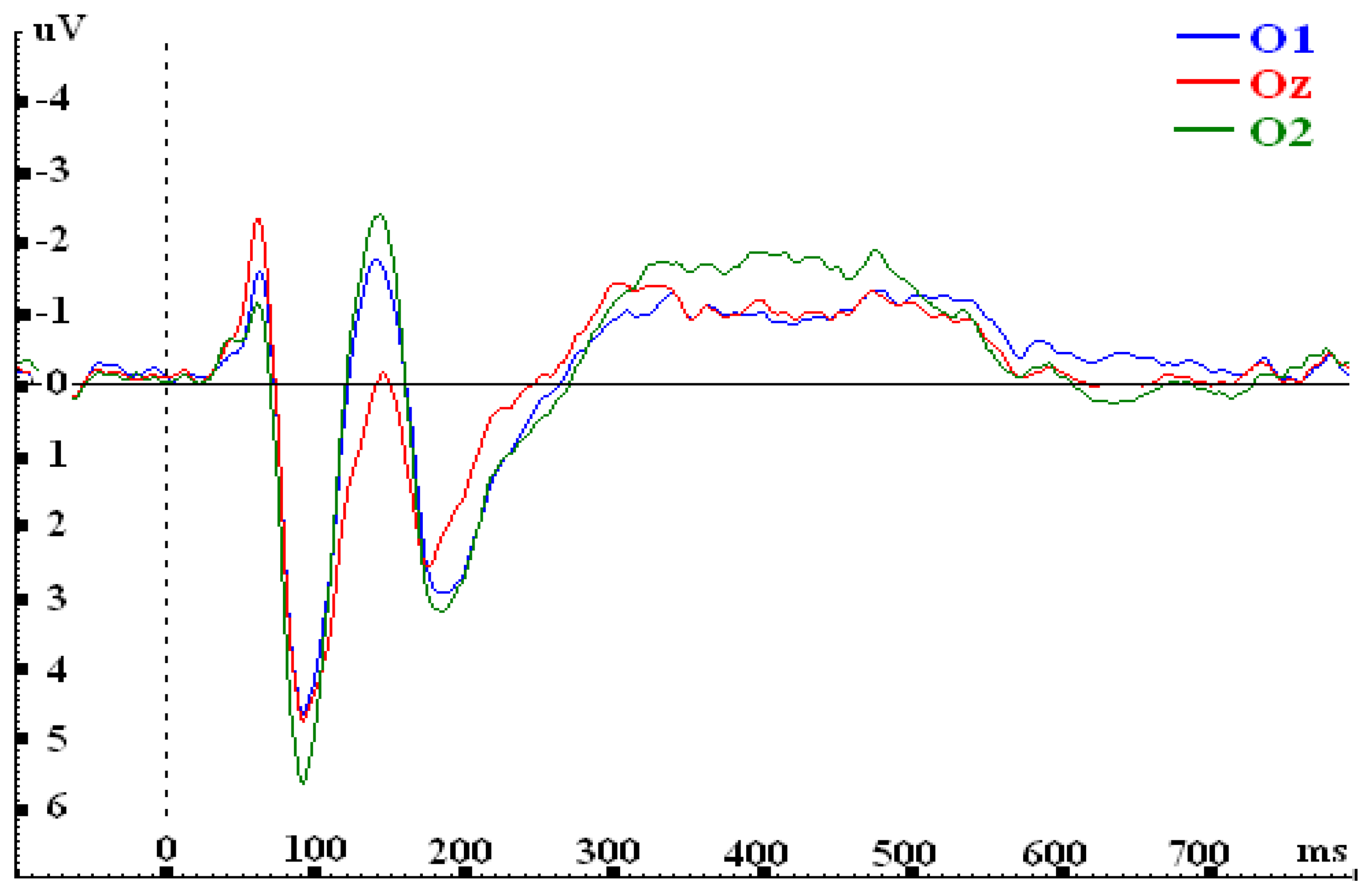
The findings of this present study, as the previous fMRI [1-4, 12-13] and electrophysiological brain research [5-11], support the left hemisphere is more dominant then the right hemisphere during simple movements with right fingers for the right handed persons (Tables 1, 2 and 3). This lateralized phenomenon occurred basically at the central area while comparing with other areas. The central area showed the lateralization (C3 > C4) in three of all four processing phases (pre-executive, executive and post-executive) except the early visual phase (Figure 4). However, at frontal, parietal and occipital area, the aforementioned lateralized tendency happened only in the executive phase (Figures 3,5-6 and Tables 2- 3). From the aforementioned information, therefore, we also can infer that the hemispheric lateralization of event-related brain potentials occurred basically in the executive phase.
Table 3.
Summarized major lateralized features of the brain potential signals.
The finding that the execution phase is more obvious than other phases on the lateralization is compatible with the previous fMRI and electrophysiology brain findings [1-4, 5-9]. As mentioned in the literature review of this present study, the fMRI studies published by Mattay et al., Solodkin et al., Babiloni et al., and Gut et al. in 1998, 2001, 2003 and 2007 respectively [1-4] all substantiated the execution phase during finger movements and found that the right hand activated predominantly in the left areas for the right handers. Furthermore, the brain electrophysiology studies published by Stancak et al., Urbano et al., Babiloni et al. and Serrien in 1996, 2003 and 2008 also proved that the role of execution phase on the lateralization [5-9]. While concerning the relationship between location and lateralization, as our findings, the aforementioned studies also support that the central area is the key location to demonstrate the lateralization phenomenon.
The finding in the pre-execution phase of this present study is also compatible with the fMRI results of Zhu et al. and Binkofski et al. in 2000 and 2005 [12-13], and similar to the results of brain electrophysiology conducted by Hammond et al. and Bai et al. in 2005 [10-11]. Those studies found left hemisphere dominance in the pre-motor phase (pre-execution) during right hand finger movements. This might imply that the lateralization before the motor (execution) phase can make the neural circuit of dominant hemisphere prepare earlier to efficiently operate dominant finger later.
The electrophysiological studies used synchronization, desynchronization and coherence and not used event related potentials (ERPs) as the dependent variables to address this lateralization issue. This is the first time to use the ERPs to substantiate the effect of finger movement on brain activation [14- 16] and the result is similar to those of the previous brain electrophysiological studies. Therefore, the ERPs also can be treated as a reliable and valid indicator to address the brain characteristics of movements. Lindín et al. (2004) reported the hemispheric lateralization in ERD amplitude might reflect a progressive automation of the context-operations updating [17]. In the present study, we did not consider the effect of the processes of automation at repeated presentation of stimulus. In the future, this issue should be concerned.
References
- Babiloni, C.; Carducci, F.; Del Gratta, C.; Demartin, M.; Romani, G.L.; Babiloni, F.; Rossini, P.M. Hemispherical asymmetry in human SMA during voluntary simple unilateral movements: An fMRI study. Cortex 2003, 39(2), 293–305. [Google Scholar]
- Gut, M.; Urbanik, A.; Forsberg, L.; Binder, M.; Rymarczyk, K.; Sobiecka, B.; Kozub, J.; Grabowska, A. Brain correlates of right-handedness. Acta Neurobiol. Exp. 2007, 67(1), 43–51. [Google Scholar]
- Mattay, V.S.; Callicott, J.H.; Bertolino, A.; Santha, A.K.S.; Van Horn, J.D.; Tallent, K.A.; Frank, J.A.; Weinberger, D.R. Hemispheric control of motor function: A whole brain echo planar fMRI study. Psychiatry Res. 1998, 83(1), 7–22. [Google Scholar]
- Solodkin, A.; Hlustik, P.; Noll, D.C.; Small, S.L. Lateralization of motor circuits and handedness during finger movements. Eur. J. Neurol. 2001, 8(5), 425–434. [Google Scholar]
- Babiloni, C.; Babiloni, F.; Carducci, F.; Cincotti, F.; Del Percio, C.; Hallett, M.; Kelso, A.J.S.; Moretti, D.V.; Liepert, J.; Rossini, P.M. Shall I Move My Right or My Left Hand? An EEG Study in Frequency and Time Domains. Journal of Psychophysiology 2003, 17(2), 69–86. [Google Scholar]
- Stancak, A.J.; Pfurtscheller, G. The effects of handedness and type of movement on the contralateral preponderance of mu -rhythm desynchronisation. Electroencephalogr. Clin. Neurophysiol. 1996, 99(2), 174–182. [Google Scholar]
- Stancak, A.; Pfurtscheller, G. Event-related desynchronisation of central beta-rhythms during brisk and slow self-paced finger movements of dominant and nondominant hand. Brain Res. Cogn. Brain Res. 1996, 4(3), 171–183. [Google Scholar]
- Urbano, A.; Babiloni, C.; Onorati, P.; Babiloni, F. Human cortical activity related to unilateral movements. A high resolution EEG study. Neuroreport 1996, 8(1), 203–206. [Google Scholar]
- Serrien, D.J. Coordination constraints during bimanual versus unimanual performance conditions. Neuropsychologia 2008, 46(2), 419–425. [Google Scholar]
- Hammond, G.R.; Fox, A.M. Electrophysiological evidence for lateralization of preparatory motor processes. Neuroreport 2005, 16(6), 559–562. [Google Scholar]
- Bai, O.; Mari, Z.; Vorbach, S.; Hallett, M. Asymmetric spatiotemporal patterns of event-related desynchronization preceding voluntary sequential finger movements: A high-resolution EEG study. Clin. Neurophysiol. 2005, 116(5), 1213–1221. [Google Scholar]
- Zhu, Y.H.; Di, H.B.; Wang, M.H.; Li, J.C.; Weng, X.C.; Chen, Y.Z. Lateralized distribution of motor areas involved in voluntary movement. Journal of Zhejiang University Medical Sciences 2005, 34(6), 518–522. [Google Scholar]
- Binkofski, F.; Amunts, K.; Stephan, K.M.; Posse, S.; Schormann, T.; Freund, H.-J.; Zilles, K.; Seitz, R.J. Broca's region subserves imagery of motion: A combined cytoarchitectonic and fMRI study. Hum. Brain Mapp. 2000, 11(4), 273–285. [Google Scholar]
- Meng, L.F.; Lu, C.P.; Chan, H.L. Time-varying brain potentials and interhemispheric coherences of anterior and posterior regions during unilateral finger movements. Sensors 2007, 7, 960–978. [Google Scholar]
- Meng, L.F.; Lu, C.P.; Chen, B.W.; Chen, C.H. Fatigue induced reversed hemispheric plasticity: A brain electrophysiological study. Lect. Notes Comput. Sci. 2006, 4232, 65–71. [Google Scholar]
- Meng, L.F.; Lu, C.P.; Chen, C.H. Unskilled finger key pressing and brain coherence. Lect. Notes Comput. Sci. 2006, 4061, 437–441. [Google Scholar]
- Lindín, M.; Zurrón, M.; Díaz, F. Changes in P300 amplitude during an active standard auditory oddball task. Biol Psychol. 2004, 66(2), 153–167. [Google Scholar]
© 2008 by MDPI (http://www.mdpi.org). Reproduction is permitted for noncommercial purposes.