Article

Applying Monte Carlo Method for Straight-Line Model Sensor Calibration

by
Pedro M. Ramos
1,* and
Fernando M. Janeiro
2,*
1
Instituto de Telecomunicações, Instituto Superior Técnico, Universidade de Lisboa, Av. Rovisco Pais 1, 1049-001 Lisboa, Portugal
2
Instituto de Telecomunicações, Escola de Ciências e Tecnologia, Universidade de Évora, Largo dos Colegiais 2, 7004-516 Évora, Portugal
*
Authors to whom correspondence should be addressed.
Sensors 2026, 26(9), 2907; https://doi.org/10.3390/s26092907
Submission received: 23 March 2026 / Revised: 22 April 2026 / Accepted: 24 April 2026 / Published: 6 May 2026
(This article belongs to the Special Issue Intelligent Sensing Systems: From Design to IoT Integration)

Abstract

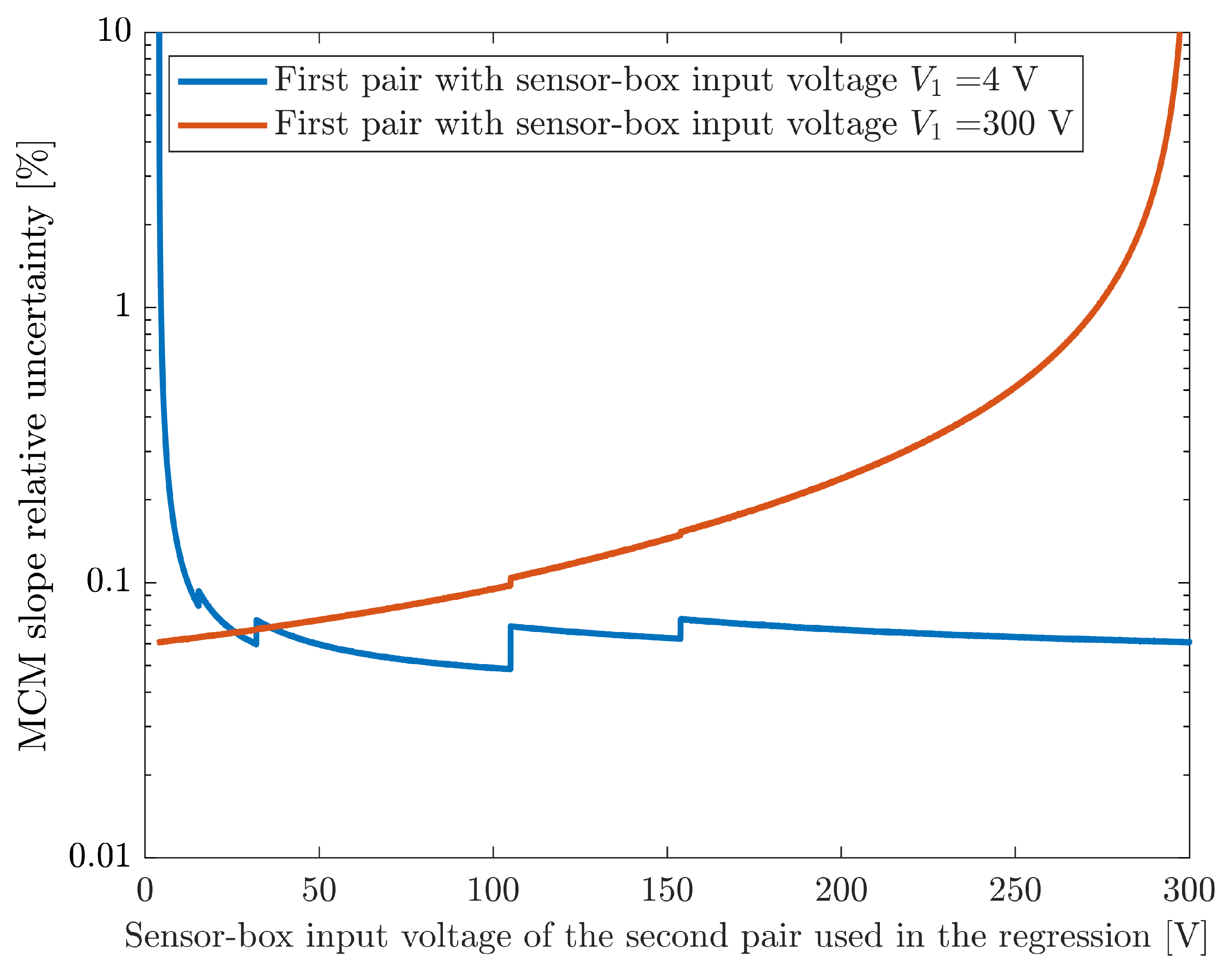
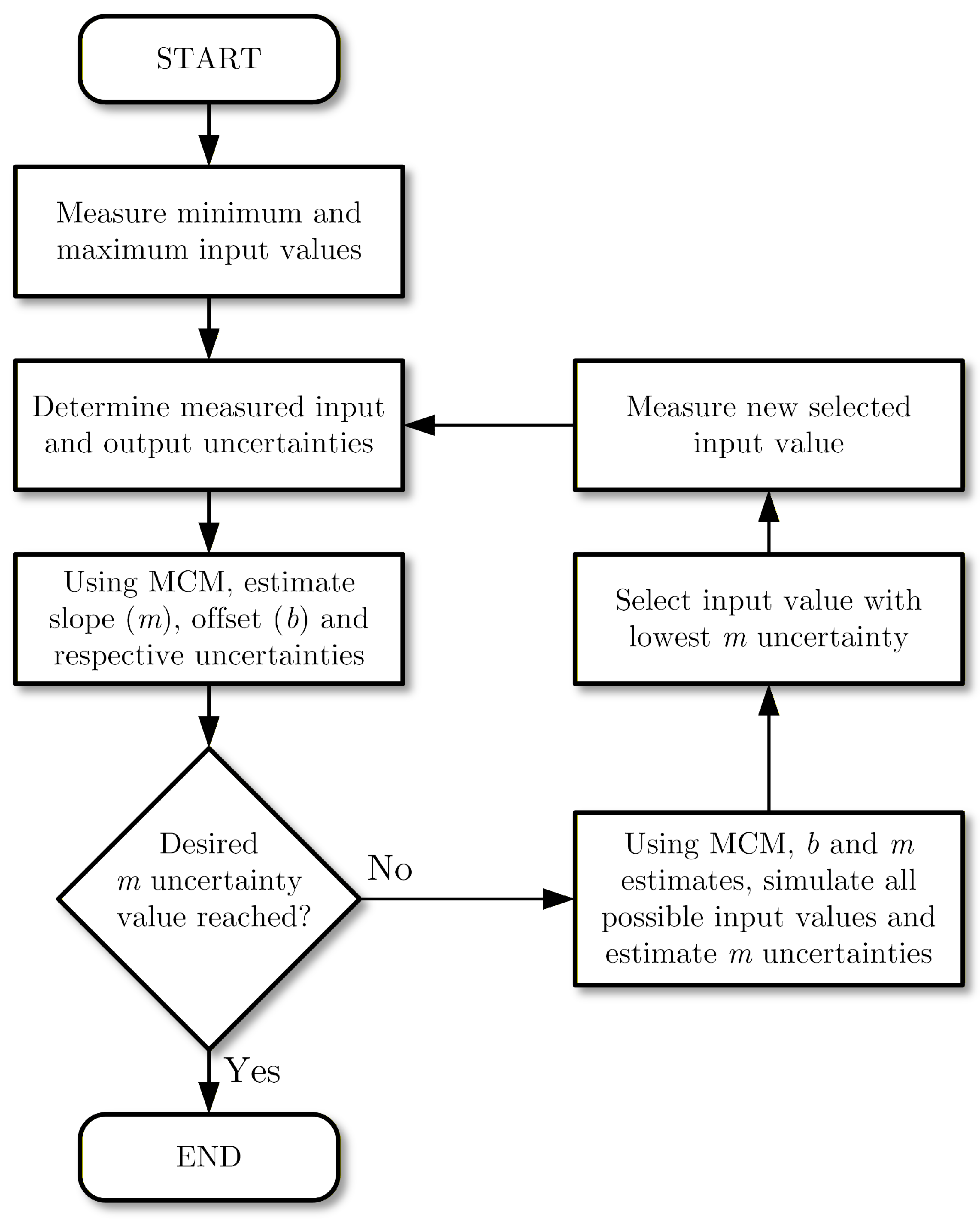
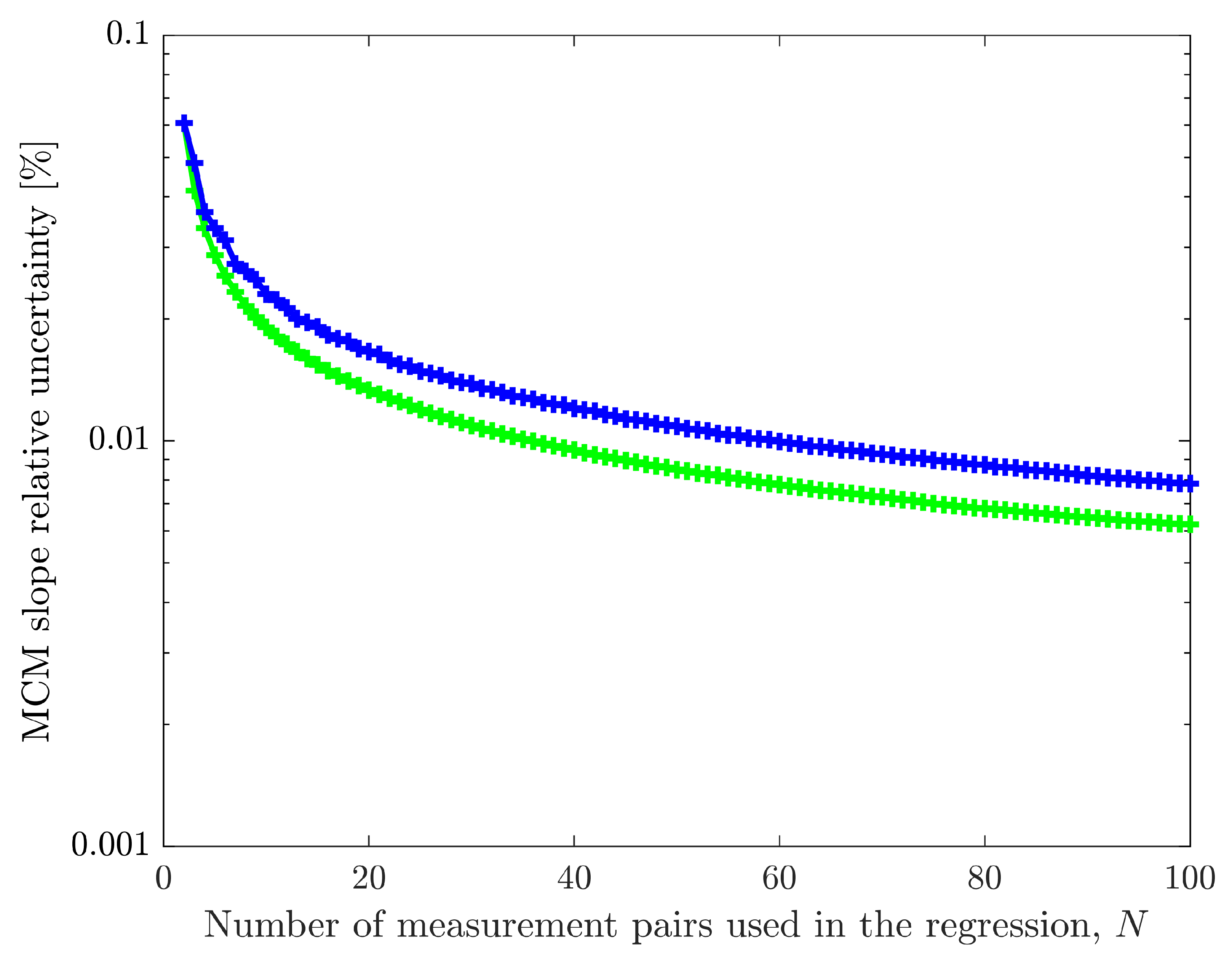
Sensors are used in measurement systems to enable estimation of physical parameters. Their calibration is an essential requirement and to perform the overall system/sensor calibration, its input is changed while the output is measured. Parameters from an appropriate sensor model are then determined from these measurements. If the model is a straight-line, a first-order least squares linear regression is commonly used to estimate the slope and offset—this is often called simple linear regression. However, this method is unable to consider uncertainty in the sensor/system input measurements. This paper reviews the possible methods to estimate the optimal straight-line parameters considering uncertainties in both input and output measurements. The Monte Carlo Method can deal with all types of uncertainties in each of the measurements, whether sensor inputs or outputs, and also take into account possible covariances of these measurements. A key aspect of this work is the application to the heteroscedastic case, where measurement uncertainties vary across observations. An MCM-based strategy is proposed to optimize the selection of new measurement input values to minimize the estimated slope uncertainty. This strategy is shown to significantly reduce, in the presented case, the number of required measurement values.
Keywords: calibration; sensor straight-line model; measurement uncertainty; weighted total least squares regression; Monte Carlo method; uncertainty evaluation calibration; sensor straight-line model; measurement uncertainty; weighted total least squares regression; Monte Carlo method; uncertainty evaluation