1. Introduction
Robustness to weather and lighting conditions as well as an ability to provide actual measurements of target parameters have made a radar a compulsory sensor to enable high levels of automation. However, for full autonomy, radar sensors should be capable of providing high-fidelity imagery of the scene within the radar field of view, which enables segmentation, classification and, therefore, path planning. The industrial requirement of the sensor to be of a compact size and low cost led to wide adoption of wide bandwidth Frequency Modulated Continuous Wave (FMCW) mm-wave waveforms and Multiple-Input Multiple-Output (MIMO) beamforming principle [
1], which allows sensor dimensions to be compact enough to fit into a densely packed vehicle infrastructure. While widely available bandwidth is already suitable for radar imagery, cross-range resolution needs improvement beyond that provided by MIMO sensors. Moreover, the ability to image the whole scene within the radar field of view requires beamforming with no or little degradation in the lateral (off-boresight) directions. MIMO arrays form a virtual aperture with significantly fewer physical antenna elements, compared to a uniform phased array for the same resolution. However, similar to electronical scanning of phased arrays, the length of the effective MIMO aperture decreases at lateral directions, widening the MIMO beam and, accordingly, coarsening the resolution.
To enhance cross-range resolution using radar platform motion, the Synthetic Aperture Radar (SAR) and Doppler Beam Sharpening (DBS) techniques have been adopted for automotive radars. The DBS, originally proposed for airborne radar and often referred as an “unfocussed SAR” [
2,
3,
4], has been shown to deliver high-resolution automotive imagery at sub-THz frequencies [
5,
6].
The technique uses different Doppler shifts of the same scatterer when it moves through the radar beam during the platform motion. The wider the beam, the larger the Doppler spread and, therefore, based on the Doppler resolution, the position of the scatterer can be mapped in azimuth at refined angular directions, with the refinement factor proportional to the frequency and the speed of the platform [
5]. Specificity of automotive domain is a radar mostly looking in the forward direction. The DBS, when applied to such data, will suffer from an ambiguity related to the side-agnostic Doppler shifts on either the right or the left sides from the boresight. This ambiguity, however, can be readily removed by a combination of DBS with MIMO beamforming (MIMO-DBS), as shown in [
7,
8,
9,
10], so that the true angular position of targets is determined. Importantly, in addition to resolution of side ambiguity, a notable enhancement in cross-range resolution at lateral directions compared to that of pure MIMO is achieved with the further benefits of a significant reduction in the sidelobe levels inherent to the pure MIMO beamforming.
Side-looking SAR has also been used to obtain high-resolution images of road infrastructure, such as parking slots and curbs [
11,
12,
13,
14,
15]. Subsequently, a forward-looking MIMO-SAR was proposed and its performance was studied in [
16,
17,
18,
19]. In [
16], an autofocus algorithm was used to estimate and compensate for motion errors that occur during the MIMO-SAR integration time, and in [
17], deep learning and back-projection (BP) techniques to form a 2-D radar image with enhanced angular resolution have been proposed. However, even in advanced MIMO-SAR, the cross-range resolution in the boresight (straight ahead) direction is still defined by the achievable boresight MIMO resolution, limiting the ability of radar to differentiate closely positioned objects at the front.
In this paper, we propose the use of the Burg algorithm (BA) to both interpolate and extrapolate the data gathered during the motion of a MIMO radar in two dimensions: the Doppler dimension, along the synthetic aperture, and spatial dimension, along the MIMO virtual array aperture, so that angular resolution can be enhanced beyond that of MIMO radar in both the forward-looking and the lateral directions. The BA, widely used and well presented in the literature, is selected for this study due to its computational efficiency, speed, ease of implementation, and ability to enhance resolution by up to a factor of three [
20,
21,
22,
23]. In [
24], the BA was employed to predict missing data in SAR imagery, resulting in a notable improvement in the image quality. In [
25,
26], the BA was combined with DBS to enhance cross-range resolution, while in [
27,
28,
29], it was combined with 1-D and 2-D MIMO to both reconstruct missing data by the interpolation and enhance the resolution by extrapolation of the virtual array elements.
In this paper we present a comprehensive study of combined MIMO-SAR and MIMO-DBS with BA, with a main focus on the quantitative evaluation and comparison of the performance versus the operational and computational complexity of each technique. We believe this work, stemming from the authors’ previous works [
19,
26,
28,
29,
30], will be useful in advancing automotive radar imagery without hardware modification or use of greedy resource-consuming algorithms.
The proposed methods require no prior knowledge of the target area whilst ensuring resolution enhancement. The main contributions of this article are as follows:
- (1)
For the first time, the Burg algorithm is applied to the data in three domains—range, Doppler, and angle—and the processing steps are presented within a common framework.
- (2)
The proposed method is investigated through the image formation techniques of MIMO-DBS and back-projection MIMO-SAR, which are processed in the frequency and time domains, respectively. The performance and computational complexity of each approach is comparatively analyzed to demonstrate its respective advantages and disadvantages.
- (3)
The validation and analysis are conducted through simulations, lab-based and real-world experiments, using an off-the-shelf 1-D MIMO radar operating at 77 GHz.
The rest of the paper is organized as follows:
Section 2 gives a detailed description of MIMO radar, DBS, MIMO-DBS, and BP for forward-looking MIMO-SAR radar, as well as the Burg algorithm.
Section 3 then presents the proposed combined methods and evaluates their computational complexity. The simulation and experimental results are discussed in
Section 4 and
Section 5, respectively. Conclusions are outlined in
Section 6.
2. Background
For the integrity and benchmarking analysis within a common notation and theoretical framework, a brief description of MIMO, DBS, MIMO-DBS, BP for MIMO-SAR, and the Burg algorithm is presented in this section. Without loss of generality on the whole concept, here we use a FMCW waveform due to its widespread use in radar systems and our experiments.
The up-chirp transmitted FMCW signal is expressed as [
31]
where
is the initial phase,
is the carrier frequency, and
is the chirp rate, defined as
, where
and
are the bandwidth and the sweep time, respectively.
The received echo from a target at the range of
is
where
is the delay time,
is the speed of light and
is an additional phase due to a Doppler frequency shift,
.
The Fourier transform of the intermediate frequency (IF) signal,
, yields the range compressed signal:
where
are the range-frequency samples.
2.1. MIMO Radar
We will assume here that the conventional MIMO array consists of
physical transmit elements (Tx) and
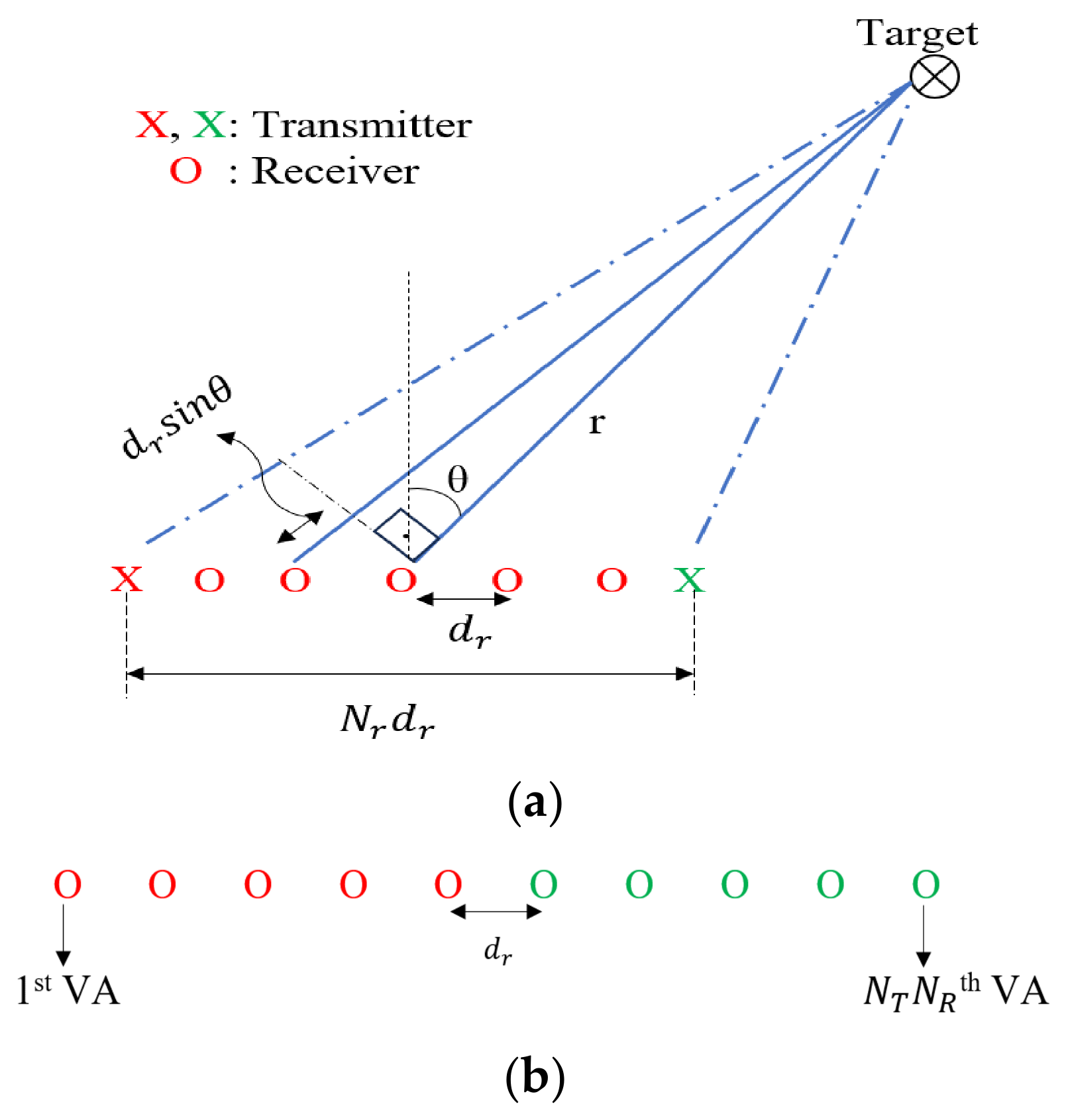
physical receive elements (Rx), and each pair of Tx and Rx form a virtual element of a virtual MIMO array of the size
, as shown in
Figure 1, where
is the spacing between elements. The received signal from a target, positioned at the far-field region of the array at an azimuth angle
from the boresight, after the range compression at each virtual element, is defined as
where
is wavelength,
is the number of the virtual element,
, and
is related to the sampled range bin. The angular resolution is determined by the length of the virtual array,
, and the cosine of the target’s angular position [
31]:
showing widening of the beam away from the boresight.
2.2. Doppler Beam Sharpening
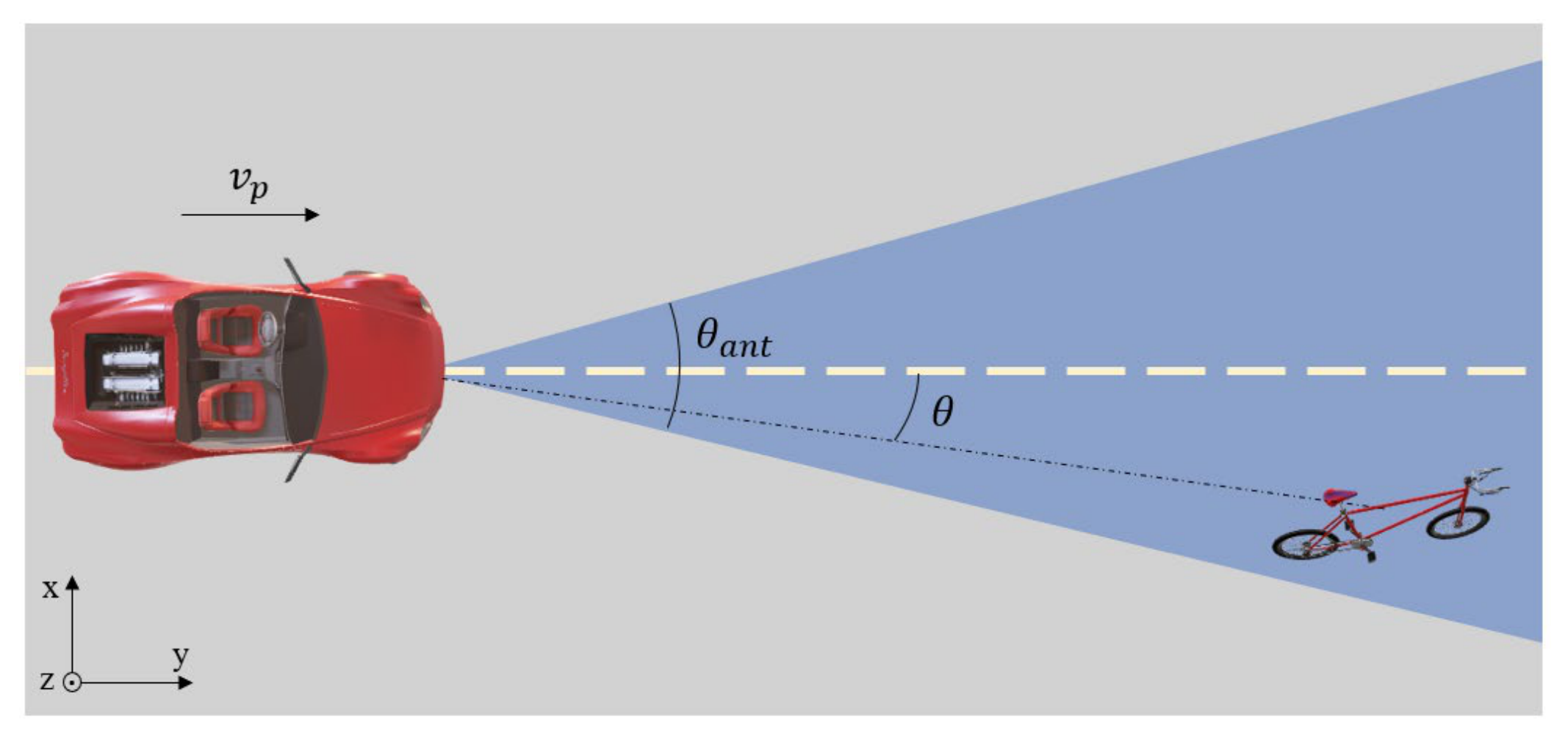
When a radar system is in motion, the Doppler frequency of the scattering point on the target, shown in
Figure 2, changes with the change of angle
between the platform velocity vector and line of sight to the scatterer [
5]:
where
is the platform velocity and
is radial velocity.
The relationship between the angular resolution and the target’s angle in the DBS technique is given by [
7]
where
is the total coherent processing interval (CPI), showing improvement in the resolution with an increase of
, in contrast to the MIMO trend expressed by (5).
The 2-D received signal after range compression at each Doppler sample point is
where
is the pulse repetition interval,
for a forward-looking geometry.
is the initial distance between the radar and the target and
is the frame number, where the frame is defined as a compressed signal after
integration.
The use of DBS does not allow for distinguishing between right and left side within the field of view (FoV), so that the angular direction with respect to the boresight becomes ambiguous. Also, when the radar platform velocity is higher than
, where
([
7,
32]), the ambiguities in angle occur. The unambiguously resolvable maximum angle,
, to the stationary target is
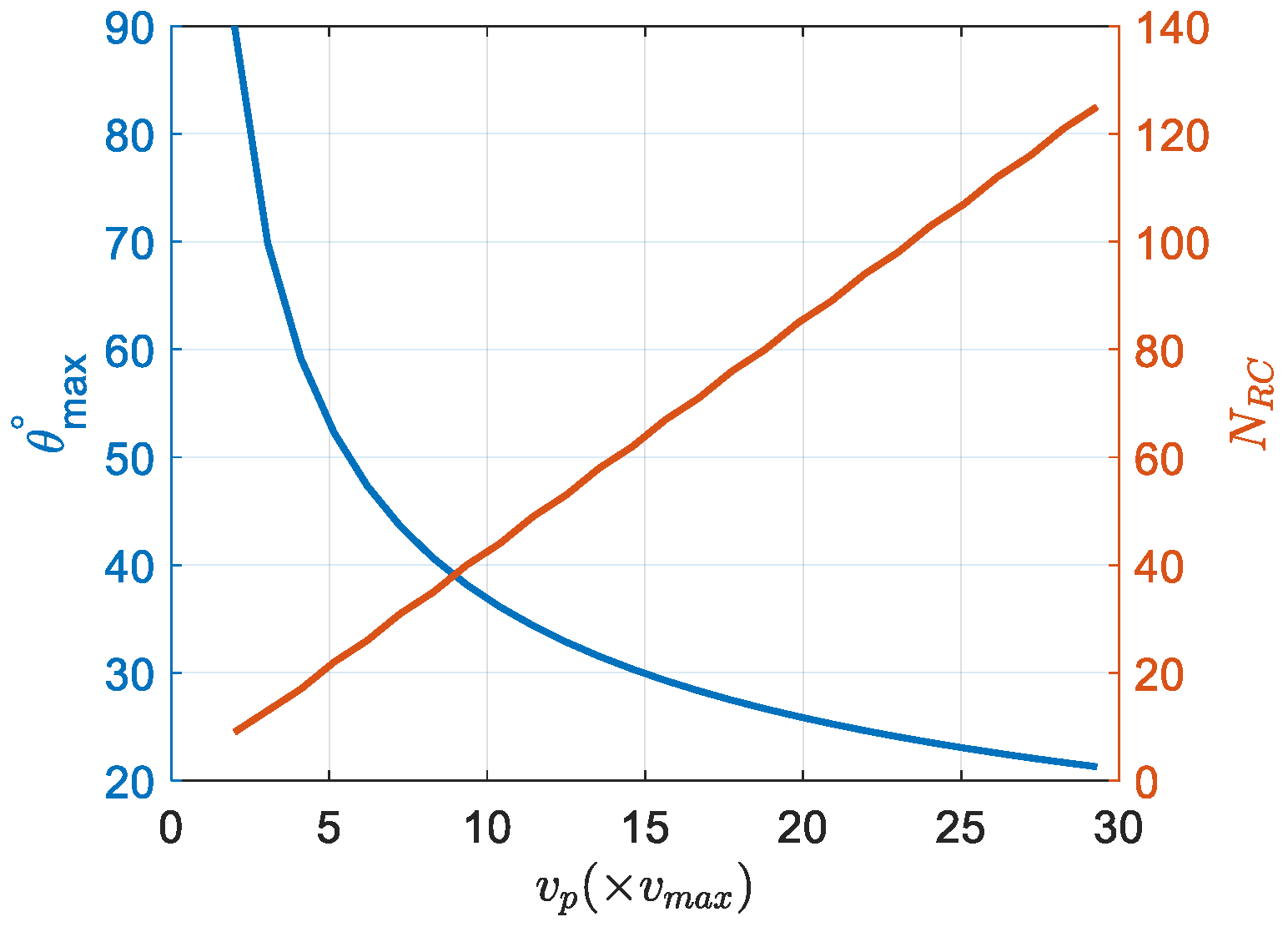
Figure 3 (left axis) shows the decrease in the unambiguous field of view
as the platform velocity increases. In order to increase the maximum unambiguous angle, in [
33], the authors proposed an approach to use reconstructed data with the multiple replicas of the actual radar data.
During DBS integration, the scatterers in the scene may appear in different range bins due to motion-related range cell migration (RCM), which can be simply estimated as a ratio of distance travelled by the radar to the range resolution (
):
where
is the number of range cells and
is the signal bandwidth.
Figure 3 (right axis) shows the relationship between the number of range cells and the platform velocity for a scatterer at the boresight, calculated for
= 128 ms and
= 30 cm.
To mitigate the RCM, when the collected energy is spread across multiple range bins, causing a smearing and defocusing of the radar image, either range cell migration correction (RCMC), as in [
34], or a reduction in the effective bandwidth by use of weighting coefficients, can be used. The latter case would inevitably lead to a coarsening of the resolution, though it would still be a suitable measure for cases of relatively small RCM and when the range resolution is much finer than the angular resolution, so that a slight sacrifice in resolution would be tolerable.
The DBS is based on the Fast Fourier transform (FFT) to process received signals after range compression, making DBS processing much faster than back-projection in SAR, as will be shown in
Section 3. To apply the FFT, the phase of the signal must change linearly; however, as the aperture length becomes large, the phase variation can become non-linear. According to [
35], the maximum allowable phase variation for effective FFT is π/2, after which it results in defocused images, so that further processing may be needed to correct the phase non-linearity.
2.3. MIMO-DBS Technique
The combination of MIMO and DBS for forward-looking directions overcomes the shortcomings of each individual MIMO and DBS by the enhancement of angular resolution in the lateral directions, compared to MIMO, significant reduction in MIMO sidelobe levels, and removal of the right and left side spatial ambiguity inherent to DBS and SAR [
7,
9].
The 3-D range compressed signal can be written by combining (4) and (8) as
where
is the MIMO frame interval.
After range compression, FFTs along the Doppler sampling points and along the virtual array sampling points result in the formation of image domain data cube,
:
where
represents Doppler sample indices whereas
represents MIMO angular samples.
Then, in order to form the sharpened image, the 3-D radar data cube is reduced to 2-D data by selecting the intersecting samples along both MIMO and DBS dimensions [
7], and the combined MIMO-DBS has an approximate −3 dB beamwidth of
It is noteworthy that for a stationary case, the resolution in (13) converges to that of MIMO, whereas when , the equation gives the angular resolution of the DBS when the platform moves.
An improvement in angular resolution is achieved for targets located at angles greater than
:
and further improves with the increase in the off-the-boresight angle. The resolution would also improve with the increase in the total coherent processing interval,
, but in parallel it may lead to the RCM and therefore
should be traded off in an adaptive manner per each scenario and radar parameters.
In the case of time-division multiplexing (TDM) MIMO, platform motion induces phase errors which should be compensated prior to beamforming. Assuming a constant velocity, the phase error for the
th transmitter is
2.4. Back-Projection
The equation of BP to process MIMO-SAR data can be written as
where
is the range-compressed data, is the total number of virtual array elements, is the number of sampling points along the Doppler dimension, and are pixel numbers of the 2D image along the and dimensions, respectively, is the range between the pixel at () and the radar’s virtual element at the radar position, and is the range cell number.
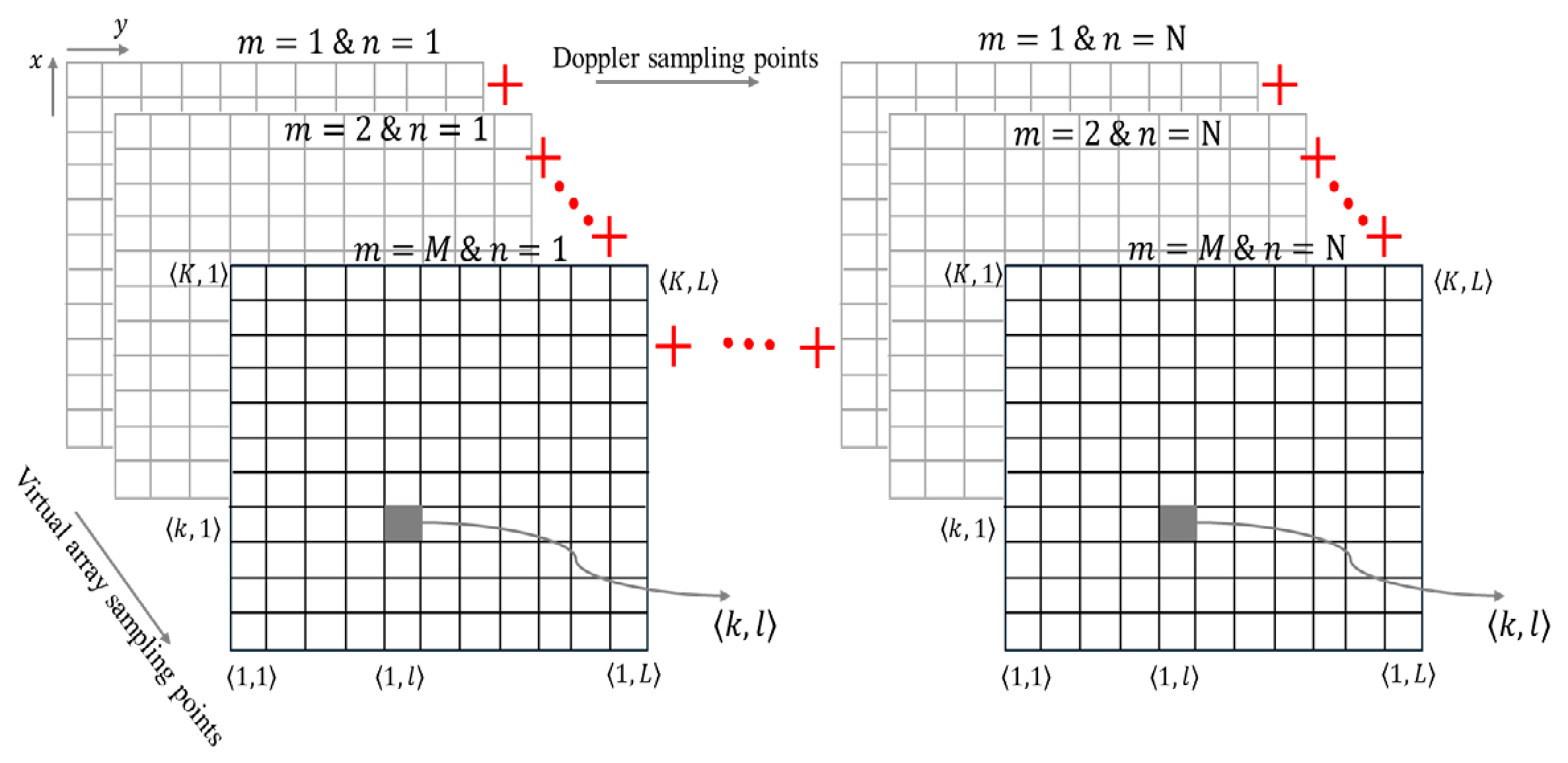
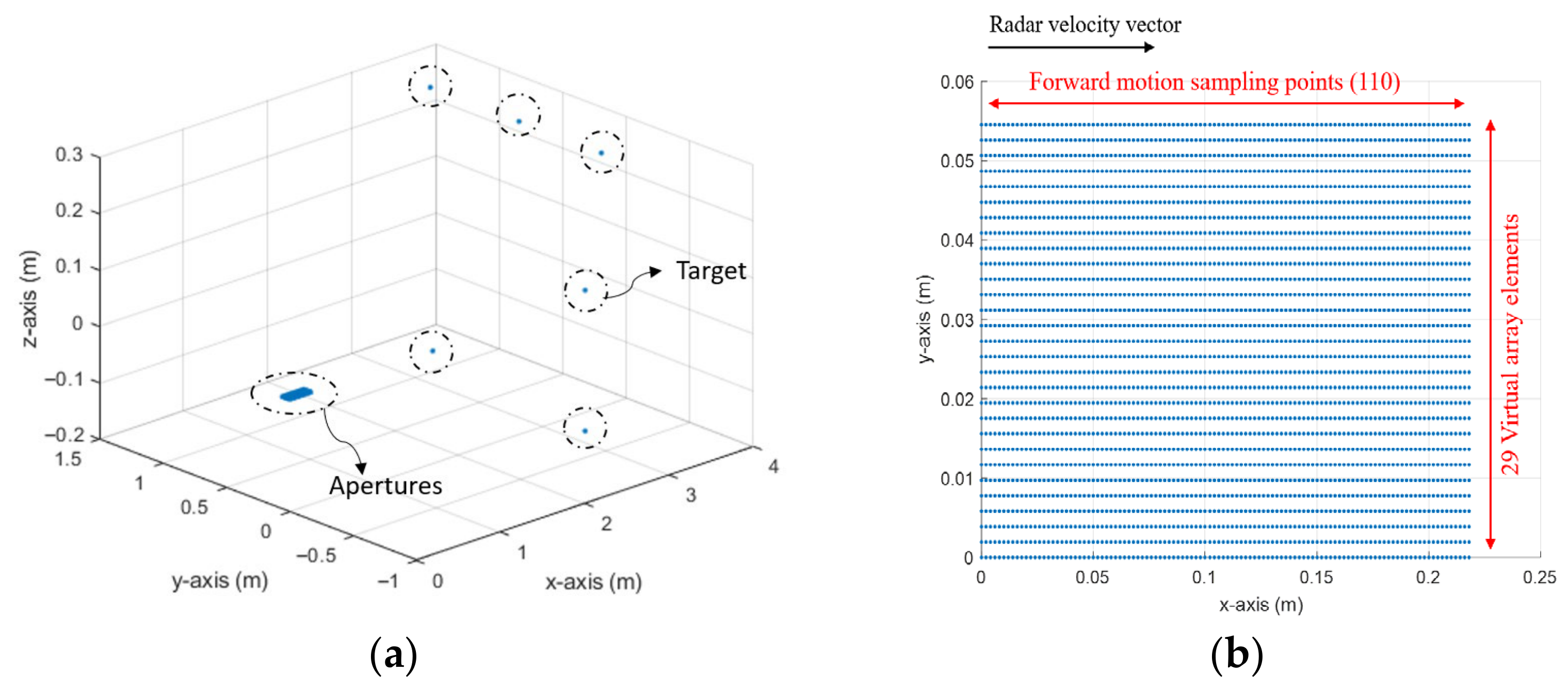
The data formation of MIMO-SAR is illustrated in
Figure 4. It should be noted that the achievable angular resolution is the same as the theoretical resolution given by (13). This will be verified through simulations and experiments in the following sections.
Unlike the DBS and MIMO-DBS techniques, back-projection does automatically account for RCM during image formation; hence, migrations do not lead to defocusing. Furthermore, BP does not encounter the limitations associated with the FFT in DBS-based techniques, such as the phase variation of radar data described in
Section 2.2. Another limitation related to the uniform sampling requirement to perform FFT in the DBS approach is also overcome if the accurate Inertial Measurement Unit (IMU) data is available: the BP algorithm can handle non-linear motion by directly incorporating the precise position and orientation information.
For clarity, the advantages and disadvantages of both techniques are summarized in
Table 1. It is worth stressing that while MIMO-SAR would be superior for high-accuracy image formation, the main advantage of MIMO-DBS remains its computational efficiency, allowing near real-time image formation, due to very significant gains in the computational time and required resources, as will be detailed in
Section 3.3.
2.5. Burg Algorithm
In phase arrays or MIMO, the aperture can be synthetically increased by extrapolation, resulting in higher angular resolution. This would be possible as the phases of signals for extrapolated (or interpolated) additional virtual receive elements can be calculated based on the evolution of phases of the actual signals into the receiver elements, using autoregressive methods.
In general formulation the autoregressive methods are able to predict, or extrapolate, future values of a sequence of {
} by analyzing its past values [
36]:
where
is the AR model order,
is the
model coefficient,
, and
is the total number of elements in the sequence after extrapolation is done.
The Burg algorithm can be used to estimate the values of coefficients,
, for either interpolation, when, for instance, some data are missing due to failure of array elements, or extrapolation, as in our case. The principle of the iterative-based BA operation is based on the minimization of the combined estimation error,
, through forward and backward predictions:
where
i is the iteration number,
is the conjugate transpose, and
and
are forward and backward prediction error vectors, respectively.
The algorithm to produce the FIR filter coefficients, in other words, model coefficients, in (18), can be written as follows [
26,
27,
28,
29,
37]:
Input:
The input signal vector: where is the number of input samples.
AR model order: .
Desired total data length after extrapolation: .
Output:
AR coefficient vector: .
The choice of the model order, has a significant impact on the image quality. Using a low model order (e.g., ) may cause the Burg algorithm to inadequately represent the data; consequently, closely located targets may not be properly resolved, which limits the expected resolution enhancement. In contrast, using a high model order (e.g., ) may produce spurious peaks between closely positioned targets and thus degrade image quality. Therefore, the model order must be carefully selected to preserve the image quality whilst achieving the resolution improvement. In this work, a model order of is used in all simulations and experimental validations.
3. Proposed Methods
As has already been mentioned, the combination of MIMO and DBS/SAR allows both the improvement in MIMO resolution in the lateral direction and suppression of MIMO sidelobes. To improve the resolution in the boresight direction, we will apply BA to both MIMO-DBS and MIMO-SAR and investigate its overall performance.
3.1. Burg-Aided MIMO-DBS
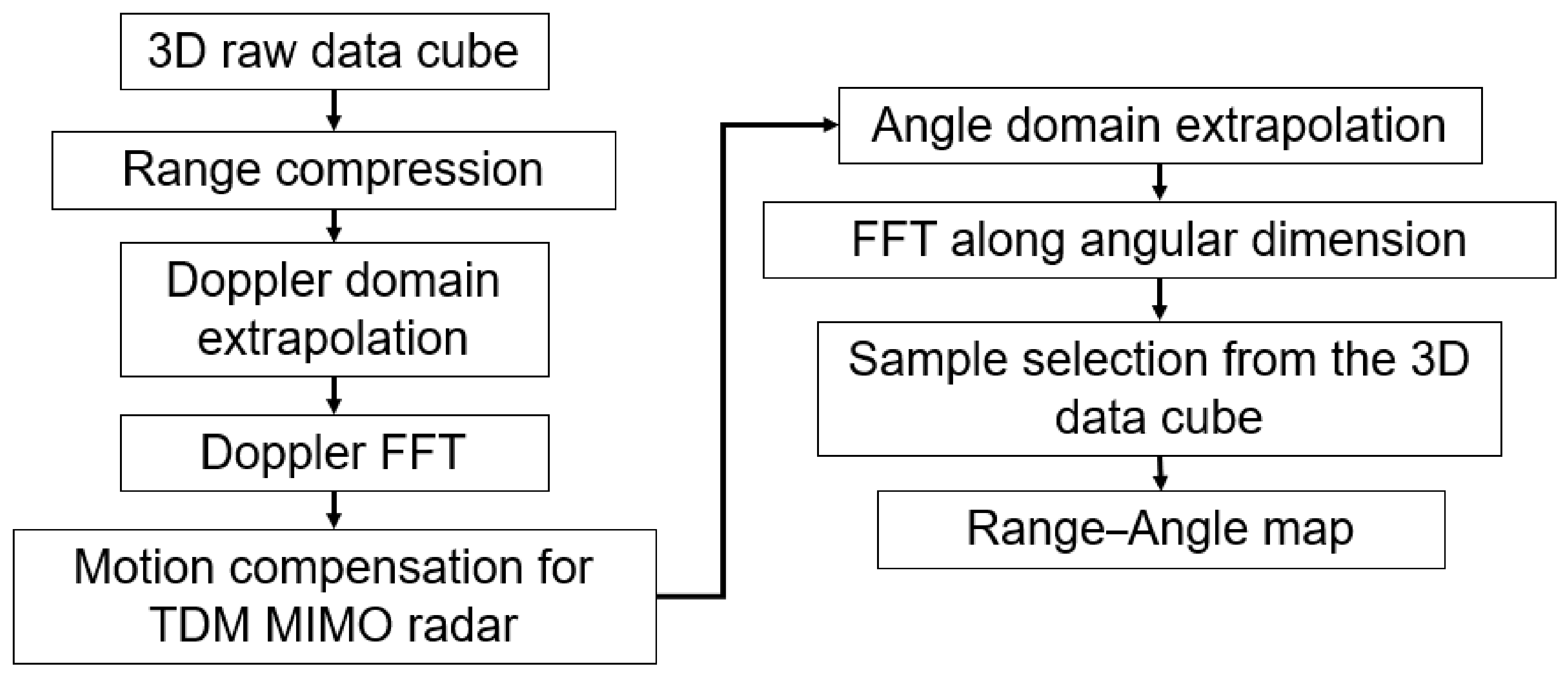
In this approach, at first, the range compression is done as in (11); then, the BA is applied to extrapolate data in the Doppler dimension. Then, a Doppler FFT is taken and phase shifts in MIMO arising from the motion of the radar platform in the case of TDM (15) are compensated as below:
where
is the extrapolated data along the Doppler dimension,
is the extrapolation factor used along the Doppler dimension, and
is the phase shift of the
virtual element in TDM.
Then the BA is used again to extrapolate the data in angular dimension. An FFT along the angular dimension is taken to obtain image domain 3-D data cube,
, as
where
is the extrapolation factor along the angular dimension.
Finally, to form a range–angle map, samples are selected from the 3-D data cube at points where MIMO and DBS angles intersect, as described in
Section 2.3. The flowchart of the BA MIMO-DBS data processing is shown in
Figure 5. With two extrapolations by factors
and
, an angular resolution as in (13) will change to
It is important to note that each extrapolation is done independently for each range bin. Since there is no interdependence between the range bins, this makes it possible to execute the extrapolation operations in parallel, so that Burg-aided processing can be significantly accelerated.
3.2. Burg-Aided MIMO-SAR
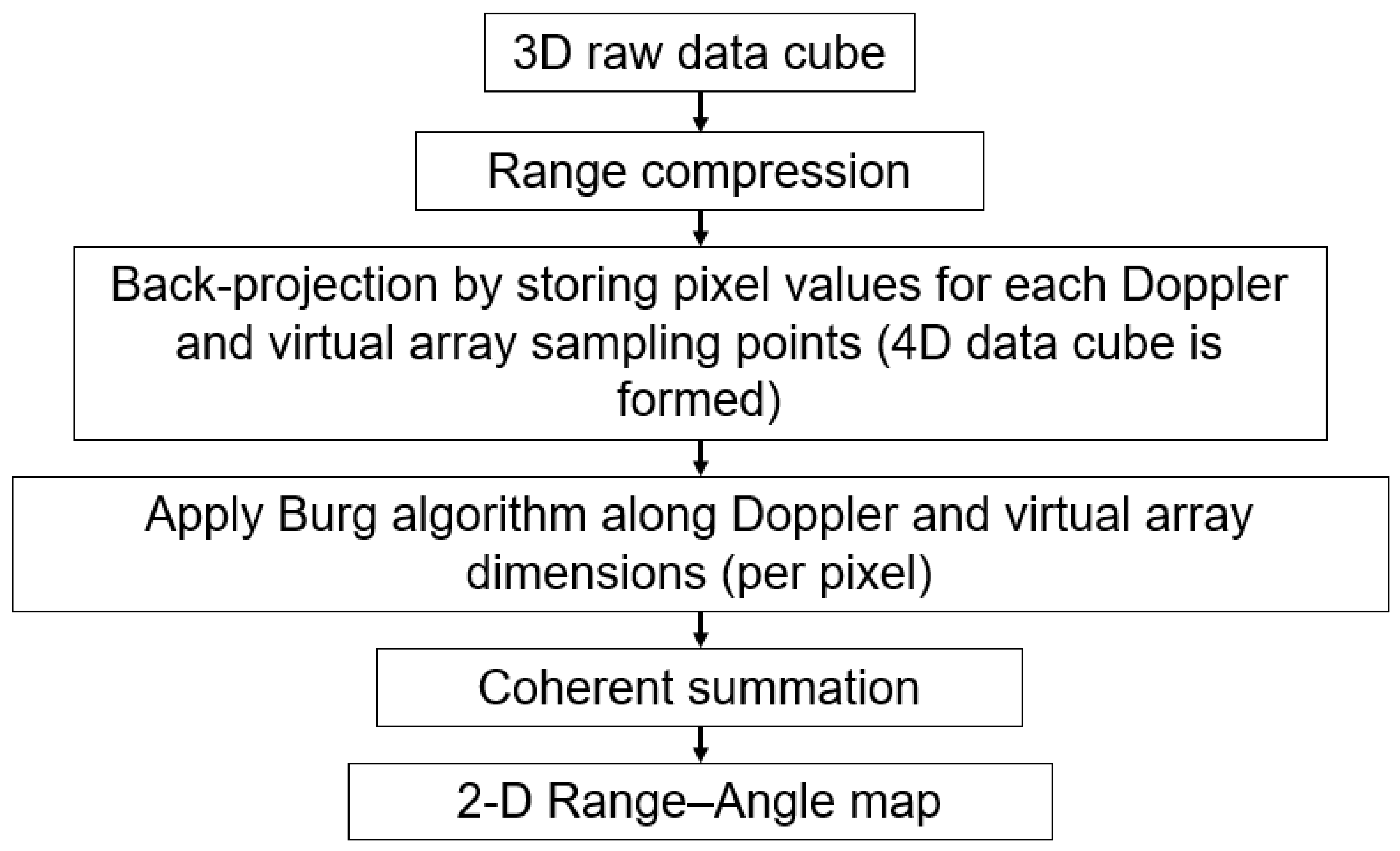
Here, the back-projection algorithm is applied, following the range compression of 3-D raw data, consisting of range bins, virtual elements and MIMO frames. However, instead of directly summing the contributions of each sample point as described in
Section 2.4, each value of an internal expression in (16) for each (
) of Doppler and virtual array dimensions is calculated and stored. Therefore, at this point, the data becomes 4-dimensional, and the order of such an array is defined by the number of range bins, number of cross-range bins, number of virtual elements, and number of MIMO frames. The data can be represented as
Here, each
pixel contains
complex values for all Doppler and virtual array sampling points. The number of pixels in the image is
M ×
N:
The Burg algorithm is subsequently used to extrapolate the data along both Doppler and virtual array dimensions at each pixel of the image. Hence, after extrapolation, (30) increases to
Then, a 2-D range–cross-range image is generated by coherently summing the values at each pixel as
The achievable angular resolution in the BA MIMO-SAR is the same as the theoretical resolution given by (28).
The flowchart of this method is shown in
Figure 6.
Table 2 contrasts BA MIMO-DBS and BA MIMO-SAR. The performances of both approaches under the RCM, phase variation and non-linear platform motion are the same as in the cases of MIMO-DBS and MIMO-SAR. However, applying BA to the MIMO-SAR requires significantly higher random-access memory (RAM) since 4-dimensional data is to be stored. Therefore, as the imaged area expands or images are formed with higher resolutions, the increase in the number of pixels leads to a substantial increase in RAM. Consequently, the imaged area often needs to be divided into smaller sub-images that are processed separately and then combined to form a larger image. Conversely, the BA MIMO-DBS technique does not require as much memory due to the inherent characteristics of the DBS algorithm.
Therefore, the time to form the resolution-enhanced image with BA MIMO-SAR takes much longer than that of BA MIMO-DBS due to the application of BA to each pixel of the imaged area, as will be shown in the next sub-section.
3.3. Computational Complexity
In this section, the computational complexity (CC) of each method, starting from the DBS technique and extending to the proposed methods, will be presented and analyzed to demonstrate notable differences in CC across the various methods.
For the DBS technique, the primary computational load arises from the FFT operations. Assuming range samples and Doppler pulses, the CC is as follows:
Consequently, the required CC for the DBS technique is .
In the case of the MIMO-DBS technique, an additional azimuth processing step is included, along with the range compression and Doppler processing steps, which are the same as in the DBS technique. Therefore, the computational complexity of the MIMO-DBS technique can be estimated as follows:
for range compression;
for Doppler processing;
for azimuth processing.
Hence, in total, the CC for the MIMO-DBS technique is . For simplification, assuming Q, the total CC is estimated as .
For the back-projection approach in MIMO-SAR, the number of operations can be estimated as , where , and where is the number of range pixels and is the number of cross-range pixels. With similar assumptions as before ( Q), the CC of BP can be simply expressed as and, considering that the value of is very high compared to other parameters, the CC of MIMO-SAR becomes significantly higher than that of MIMO-DBS. For clarity, this relationship can be expressed as .
Regarding the computational complexity of the Burg-aided MIMO-DBS technique, assuming and are the orders of the filter in (18) for extrapolating the data along the Doppler and angular dimensions, the number of operations are:
for the range compression;
for extrapolation along the Doppler and the Doppler processing;
for extrapolation along azimuth and the azimuth FFT.
Hence, the total computation time of BA MIMO-DBS is .
For ease of comparison, by assuming that and , the total CC is estimated as .
Finally, for the BA MIMO-SAR, the number of operations are:
for back-projection;
for extrapolation along the Doppler dimension;
for extrapolation along azimuth dimension.
As the result, the total computational complexity of Burg-aided MIMO-SAR is and its simplified version is , which is significantly higher than that of BA MIMO-DBS.
4. Simulation Results
In this section, we examine and compare the performance of MIMO, DBS, MIMO-DBS, MIMO-SAR, BA MIMO-DBS and BA MIMO-SAR techniques using simulation.
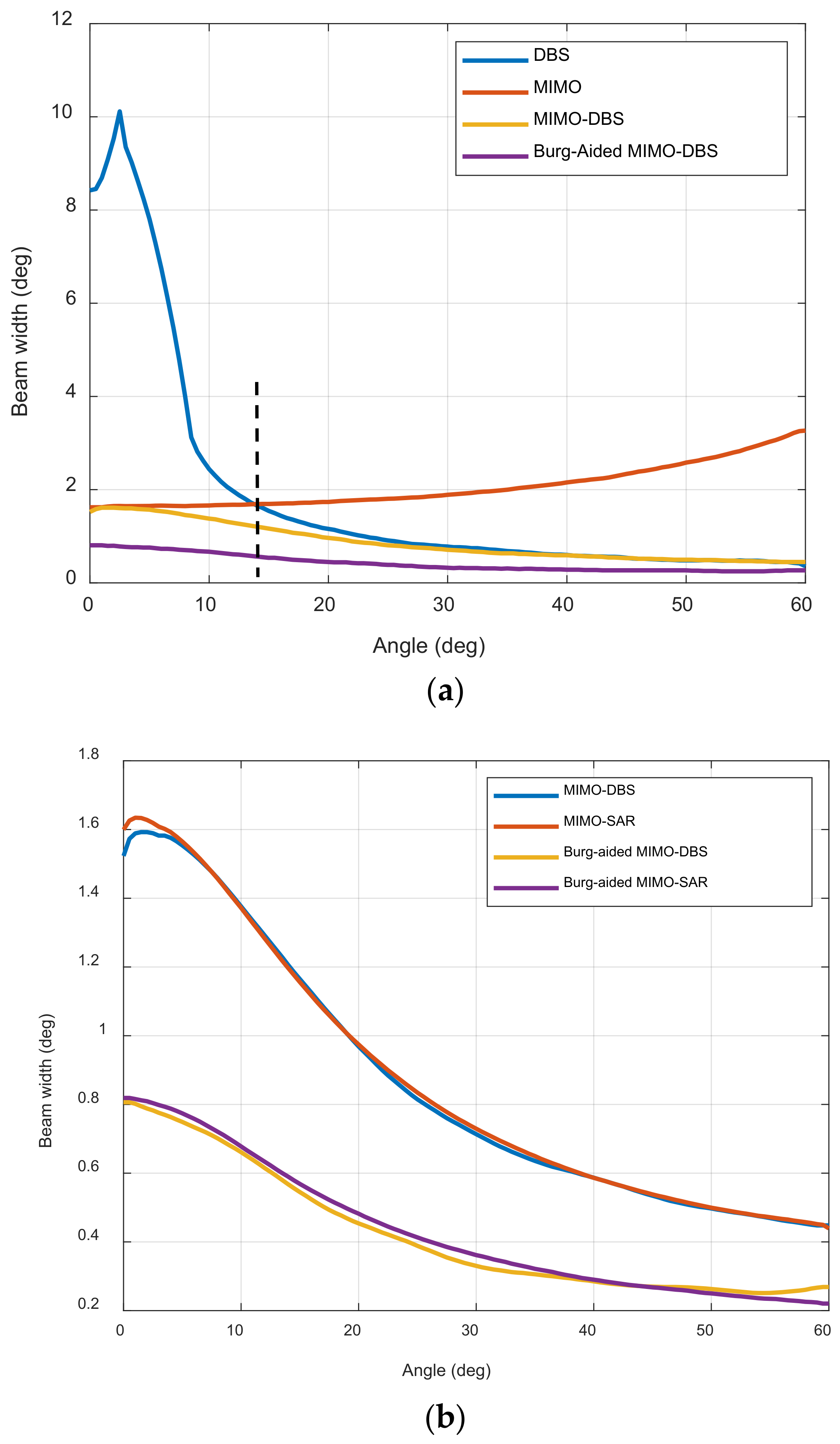
First, the achievable −3 dB angular resolutions as a function of azimuth look-angle, obtained by each of the considered methods, are shown in
Figure 7 using the radar parameters listed in
Table 3. In this illustrative example, the velocity of the radar platform is 2 m/s, and the total coherent integration time is chosen to be 128 ms. A bandwidth of 500 MHz is used to avoid RCM, as in (10).
Figure 7a shows that with the increase of the angle to the target, the angular resolution in the case of MIMO beamforming coarsens, but improves in the case of DBS. For the given speed of the platform, from (14), the transition point
of the MIMO-DBS technique is calculated as 13.3
0, indicated by a dashed vertical line, after which the use of the combined MIMO-DBS technique improves the angular resolution, compared to MIMO. In the case of BA MIMO-DBS with a Burg extrapolation factor equal to 2 for both dimensions, there is a further two-times refinement of both on- and off-boresight resolution.
Figure 7b shows that very similar resolutions are obtained for MIMO-SAR and MIMO-DBS and their BA versions, as was previously explained in
Section 3.1 and
Section 3.2.
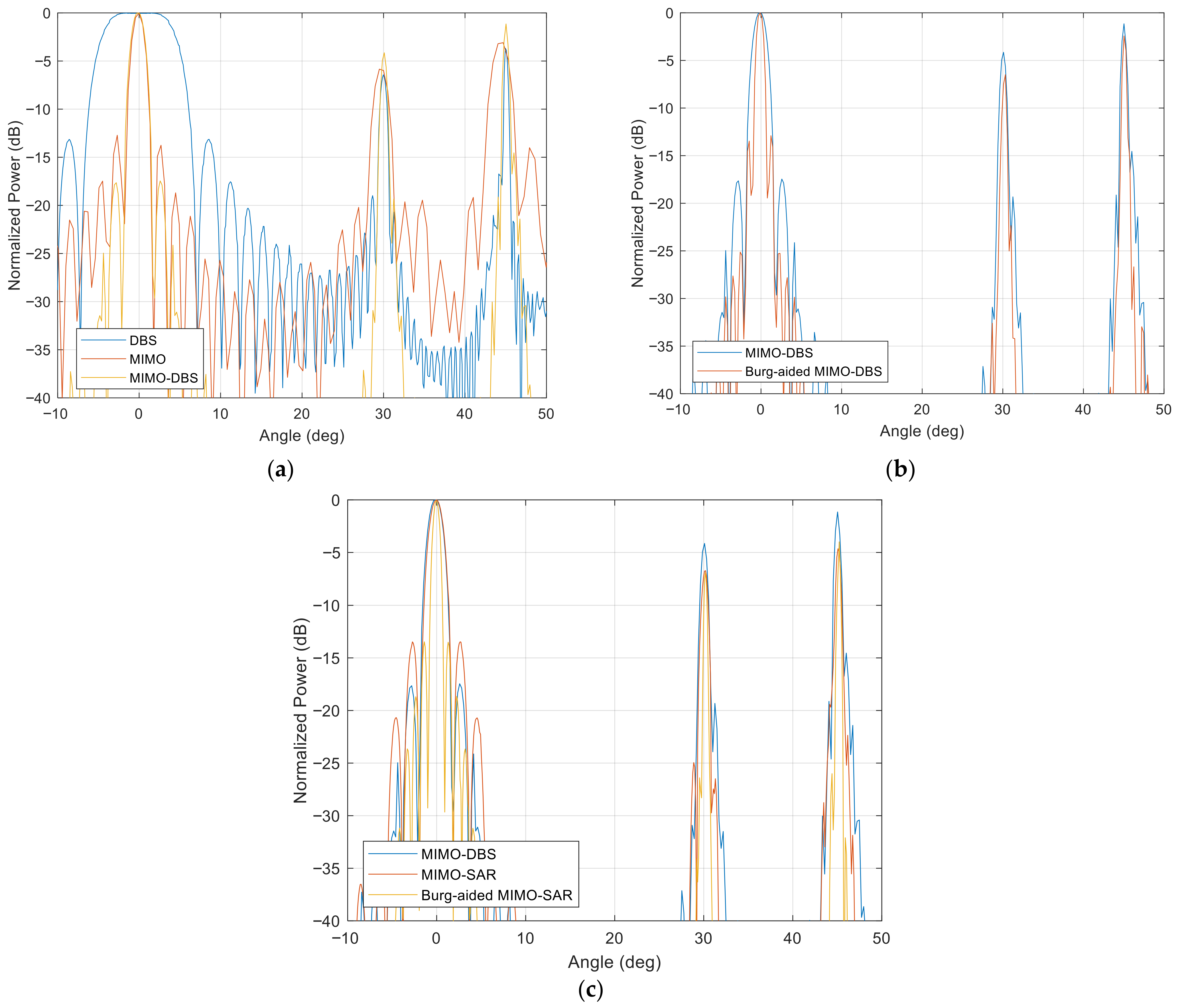
Figure 8 shows the improvement in the resolutions and decreased level of the MIMO sidelobes for MIMO and DBS in
Figure 8a, and MIMO-DBS and MIMO-SAR, as well as their BA extrapolation in
Figure 8b,c. Here, three targets are located at 0
0, 30
0, and 45
0 azimuth angles at the same range and zero elevation angle in the far-field region of the radar with the parameters as described before. The off-boresight targets have 6 dB and 3 dB less RCS than the boresight targets, respectively. The angular response of MIMO-DBS and MIMO-SAR is equal to MIMO’s resolution at 0
0, while a twice-higher resolution is attained by implementing the BA in both the Doppler and angle dimensions. Furthermore, the angular resolution improvement in off-the-boresight targets is seen in both BA MIMO-DBS and BA MIMO-SAR, compared to MIMO-DBS/MIMO-SAR.
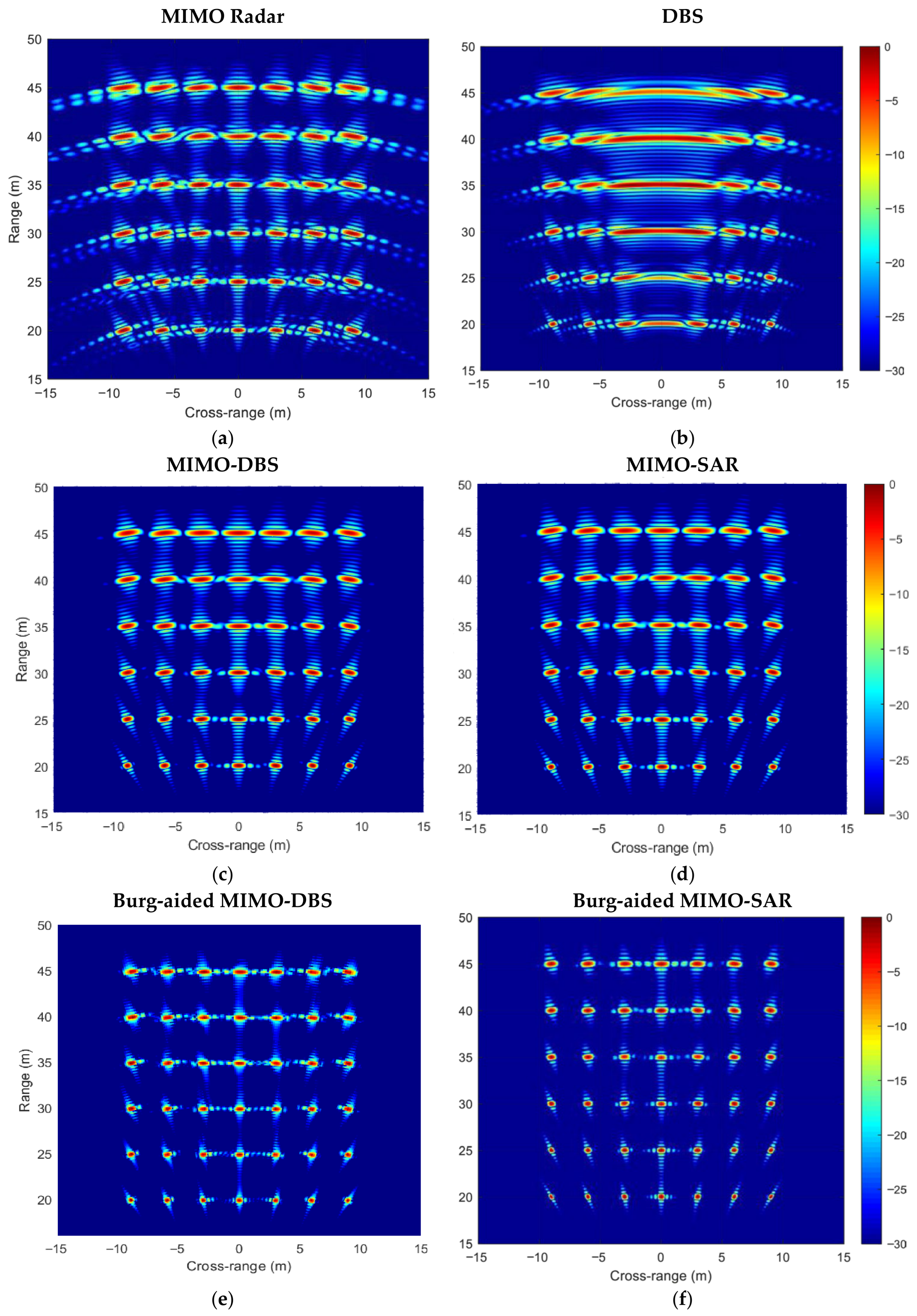
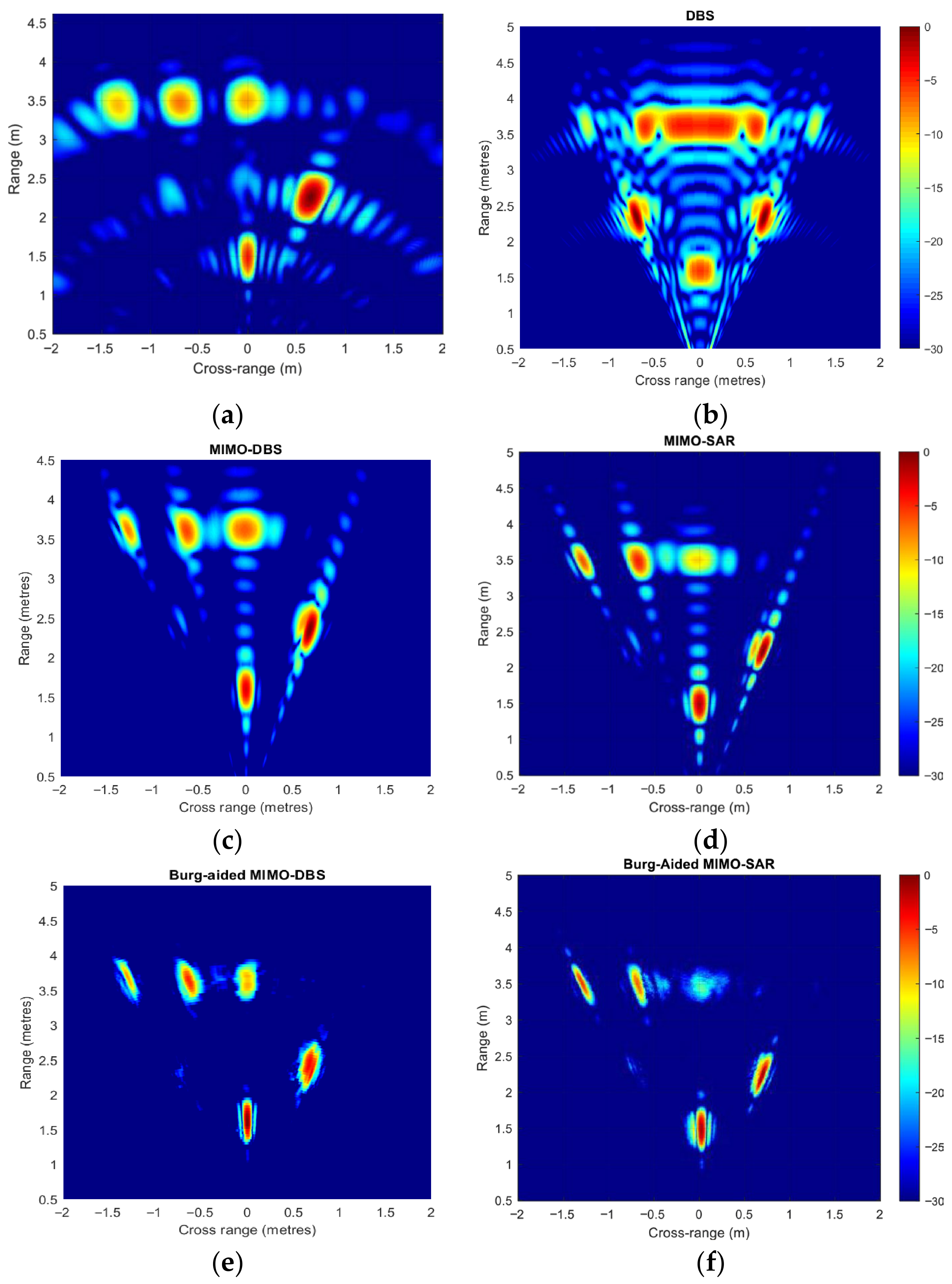
The performance of all the techniques is further illustrated in 2-D range–cross-range maps in
Figure 9. Here, 42 point-like targets at zero elevation with respect to radar are placed with a separation of 3 m from −9 m to 9 m in cross-range and with a separation of 5 m in range in the region from 20 m to 45 m. The radar parameters and platform velocity are the same as in the previous scenarios. For easy visual comparison of the resolution, the power decrease related to the path loss is compensated. A significant reduction in sidelobe levels and improvement in the resolution compared to MIMO and DBS in
Figure 9a,b are seen in
Figure 9c after the compensation for the phase error in TDM MIMO caused by the motion of the platform. The phase error,
, in (15) is compensated by multiplying the range compressed data by
.
The MIMO-SAR image is shown in
Figure 9d by applying BP to the range-compressed data with the use of the positional information of the radar to form the phase-error-free image.
Twice-improved angular resolution in both the forward and lateral directions can be seen in both BA MIMO-DBS and BA MIMO-SAR maps in
Figure 9e and
Figure 9f, respectively.
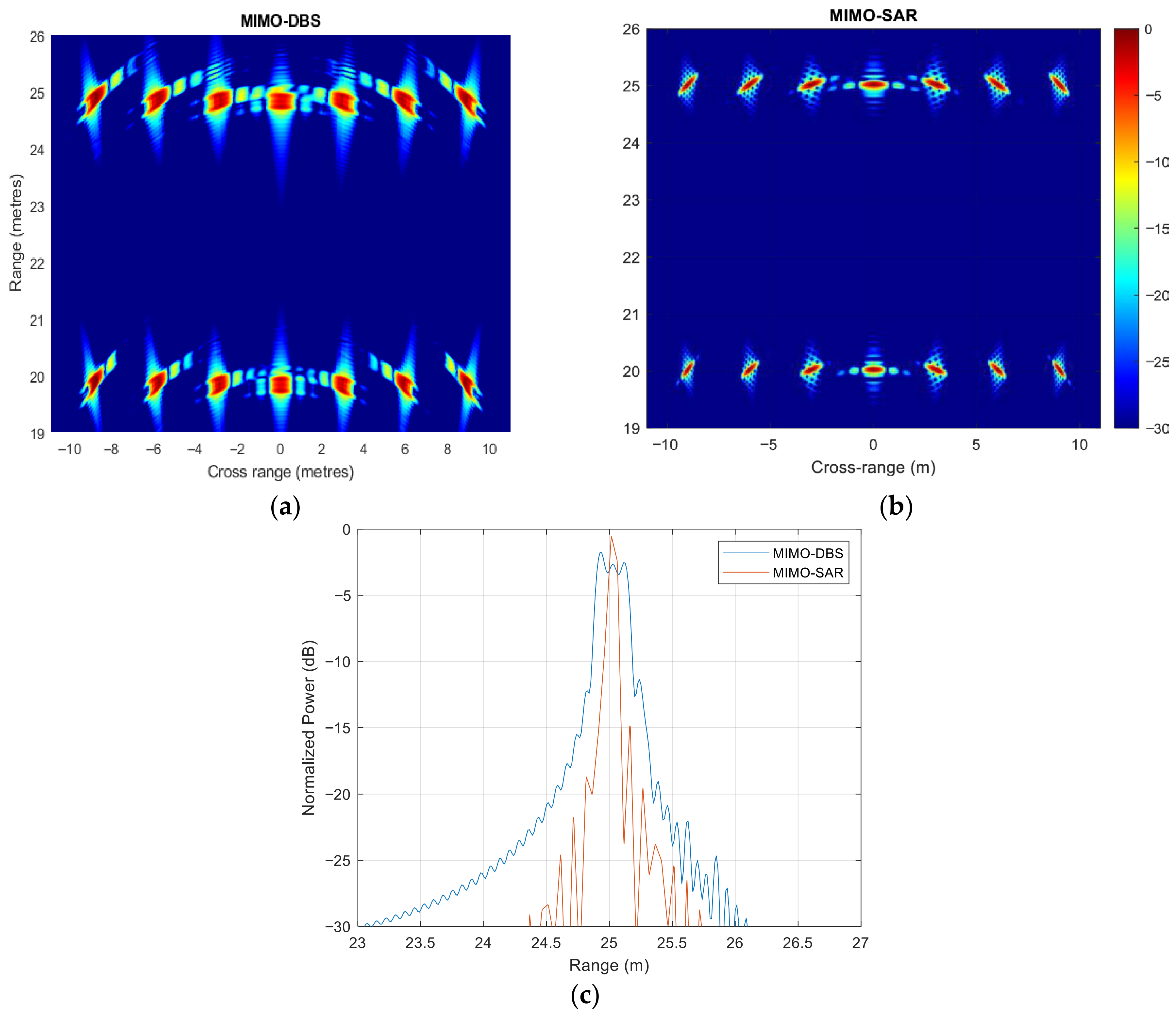
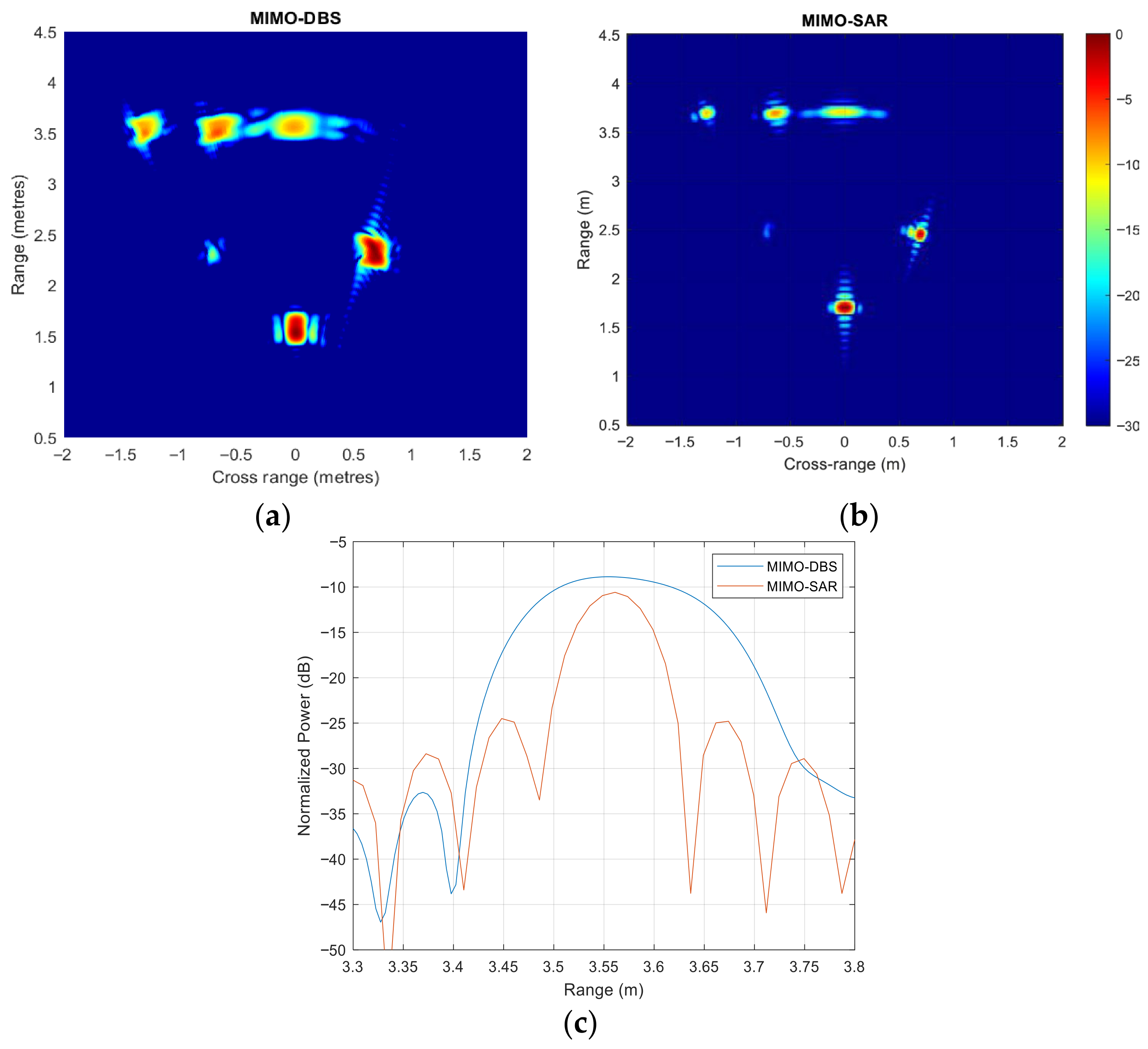
In all previous simulations, the synthetically created aperture length is less than the range resolution of 30 cm, so that there is no RCM. However, enhancement of resolution in all domains, including range, is the main goal of the mm-wave radar designed for mobile platforms, specifically for vehicles. Therefore, the effect of RCM on MIMO-DBS was assessed by increasing the bandwidth to 2 GHz, while maintaining the other radar parameters constant. For the MIMO radar, looking in a forward direction, when data is collected at a constant velocity of 2 m/s, the synthetic aperture traverses four range cells for boresight targets, according to (10). The simulation results for MIMO-DBS and MIMO-SAR are then shown in
Figure 10a,b, respectively, for two lines of targets at the ranges of 20 m and 25 m. Due to the higher bandwidth, the range resolution is improved by a factor of four and the MIMO-SAR does not suffer a degradation in performance. However, this increased bandwidth in MIMO-DBS leads to an energy spread across traversed range cells, resulting in an unfocused radar image, as demonstrated in
Figure 10c. To overcome RCM, as stated in
Section 2, either a specialized RCMC algorithm or weightings can be used.
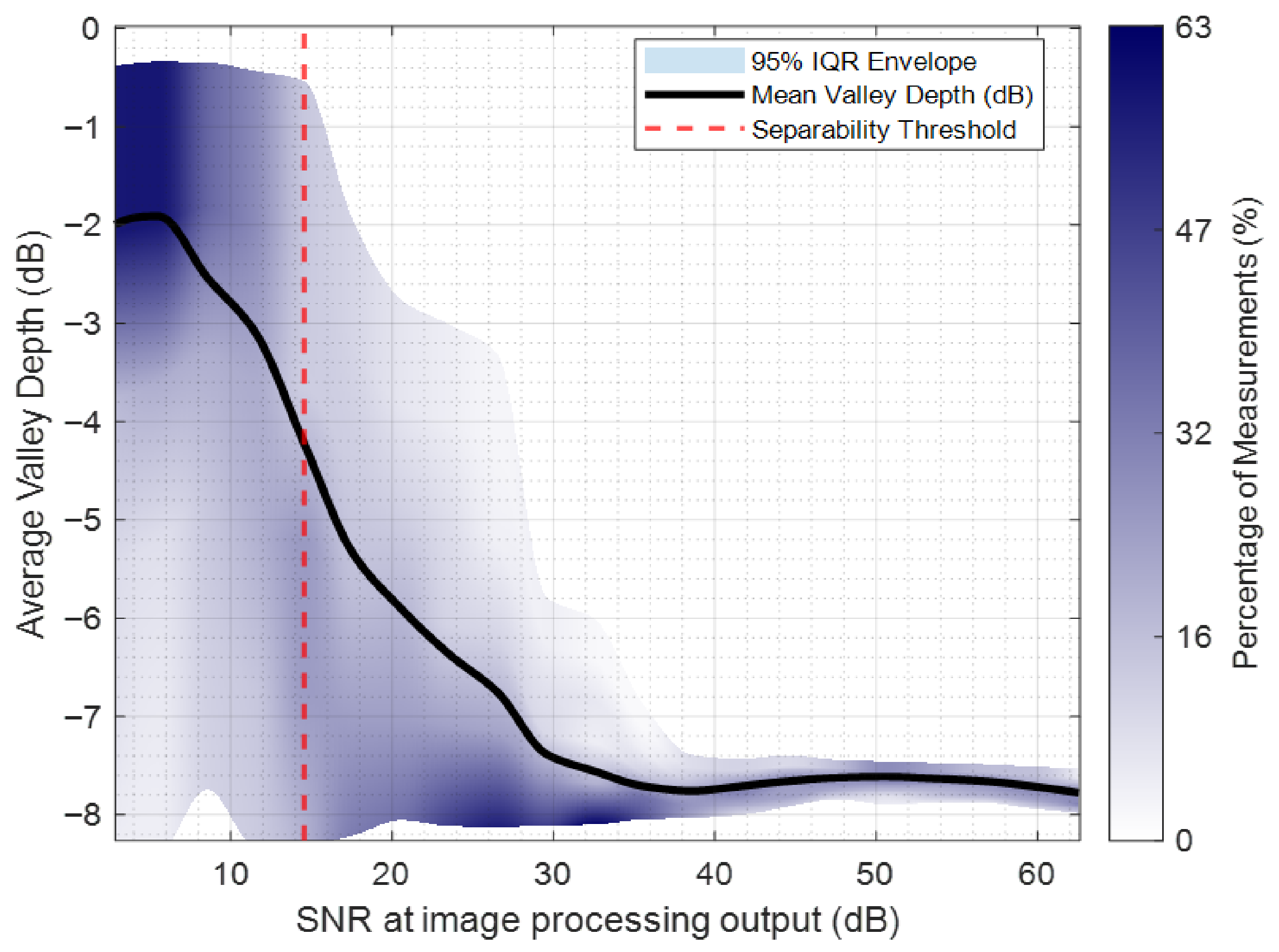
Another important parameter is the signal-to-noise ratio (SNR). Therefore, in the following analysis, the performance of the Burg algorithm is evaluated using Monte Carlo simulations with 250 trials per SNR level. The analysis examines the valley depth between two closely spaced targets that are unresolved before extrapolation, as well as how their separability improves with increasing SNR.
Figure 11 shows the average valley depth across trials as a function of the SNR of the formed images after adding the processing gains. The valley region is defined using the 3 dB points of each target in the noise-free case, and this fixed interval is used to compute the average power (valley depth) for each trial.
Images formed are normalized with respect to the noise-free realization. The shaded area shows the 95% interquartile range (IQR), indicating the variability over trials. The density of estimations is shown by a dark-to-light blue gradient. As the SNR increases, the uncertainty in the average valley depth decreases, and the probability of observing lower valley depths increases. Beyond 32 dB SNR, values cluster around −8 dB, closely matching the noise-free case. The solid black curve represents the mean valley depth, which declines from −2 dB to approximately −8 dB as SNR increases from 10 to 35 dB.
Regarding the vertical red dashed line in
Figure 11, it indicates the empirical separability threshold at roughly 15 dB SNR. Beyond this SNR value, the two targets become resolvable. Independently derived from an estimator-based analysis, this threshold corresponds to the SNR where the 95% confidence intervals of the estimated positions no longer overlap, therefore demonstrating consistent separation based on target location estimates.
The Monte Carlo simulations illustrate that the Burg algorithm offers significantly better resolution in expectation, compared to conventional FFT based methods. The Burg algorithm slightly improves peak-to-sidelobe ratio (PSLR) and integrated sidelobe ratio (ISLR) in expectation when SNR is low to moderate. However, at high SNR (e.g., 35 dB), the two methods—Burg algorithm-based and FFT-based methods—show similar sidelobe measures.