1. Introduction
Accurate liquid level measurement constitutes a core technology in modern industrial process control, safety monitoring, and resource management, with extensive applications across the chemical, petroleum, pharmaceutical, and water treatment sectors. Particularly within sealed containers or complex structures containing multiphase mixed media—such as slurries, emulsions, or stratified fluids—the real-time and precise acquisition of liquid-level interface information is of paramount importance for preventing leaks, avoiding overflows, optimizing reaction processes, and ensuring personnel and environmental safety. However, multiphase mixed media are typically characterized by complex composition, inhomogeneous acoustic properties, opacity, and strong acoustic attenuation, which pose significant challenges to conventional liquid level measurement techniques.
To meet measurement requirements across diverse application scenarios, a wide variety of liquid level sensing technologies have been developed in academia and industry. These technologies can be broadly categorized into contact and non-contact types based on their operating principles. Traditional contact methods, such as float-type, hydrostatic pressure, and capacitive sensors, although simple in structure, suffer from issues like susceptibility to contamination, difficult maintenance, or significant measurement inaccuracy due to medium properties when dealing with corrosive, highly viscous, or scaling-prone media [
1,
2]. Non-contact methods are favored for their avoidance of direct contact with the medium, with ultrasound, optical, and microwave technologies being prominent representatives.
Ultrasonic technology has become one of the most widely researched and applied non-contact liquid level measurement methods due to its strong adaptability, high reliability, and relatively low cost. Conventional pulse-echo methods calculate liquid level by measuring the time-of-flight of an ultrasonic wave reflected from the liquid surface. However, they often fail in scenarios involving low liquid levels, highly attenuating media, or containers with complex internal structures due to weak signals and multiple reflection interference [
3]. Numerous improvements have been proposed to enhance performance. For instance, the use of guided wave modes (e.g., longitudinal, torsional, and flexural modes) propagating in waveguides leverages the differential sensitivity of various modes to fluid immersion for measurement, improving remote monitoring capabilities in harsh environments [
4,
5,
6,
7]. Miniaturized sensors based on Capacitive Micromachined Ultrasonic Transducers (CMUT) offer high sensitivity, enabling detection of minute liquid level changes and even leak detection in small-volume reservoirs [
8]. For the automatic detection of liquid–liquid interfaces, self-calibrating ultrasonic sensors combined with advanced signal processing algorithms enable robust measurement even without prior knowledge of the media’s acoustic characteristics [
9]. Furthermore, other innovative acoustic methods continue to emerge, such as the transverse pulse train technique propagating in a vertical hollow wire, which achieves high-precision measurement by simultaneously detecting two echo signals from the liquid surface and the wire end, with the interface echo method demonstrating exceptionally low error [
10]. Other research avenues include techniques based on Lamb waves [
11,
12], resonance [
3], synthetic aperture focusing [
13], or the integration of machine learning for signal processing [
14,
15], all aimed at enhancing detection accuracy and robustness for low fill levels, dynamic levels, or liquid levels within pipes. Magnetostrictive sensors utilize the Wiedemann effect and time-frequency analysis techniques like wavelet transform for high-precision measurement [
16]. Nevertheless, for the high-density, highly attenuating multiphase slurry of interest in this study, ultrasonic energy attenuates rapidly, and traditional top-incidence vertical echo methods often fail to obtain effective liquid surface reflection signals, limiting the direct application of these approaches.
Optical sensing technology represents another significant research direction. Fiber Bragg Grating (FBG) sensors measure liquid level indirectly by sensing hydrostatic pressure changes or temperature distribution, with designs incorporating multiple sensors or reference gratings to compensate for temperature cross-sensitivity [
17,
18]. Polymer Optical Fiber (POF) sensors demonstrate potential in special environments due to their inherent safety, immunity to electromagnetic interference, chemical corrosion resistance, and flexibility, operating primarily on intensity or wavelength modulation principles [
19]. Fiber-optic sensors based on a Michelson interferometer structure achieve millimeter or even sub-millimeter resolution by demodulating the amplitude of the spectral Fast Fourier Transform within a specific wavelength range [
20]. Additionally, some novel optical methods, such as using reciprocally offset LEDs and phototransistors to determine level changes by detecting optical axis shifts, claim insensitivity to the optical properties of the liquid itself [
21]. However, optical methods still commonly face the challenge of signal failure due to obstructed light paths or fouled probes in multiphase, opaque, or contaminating media.
Microwave and radio frequency technologies measure liquid level based on the influence of the medium on electromagnetic wave properties. Frequency Domain Reflectometry (FDR) and microwave interferometry enable highly sensitive detection of minute liquid level changes and can identify stratified liquid interfaces [
22,
23]. Sensors based on microstrip transmission lines [
24] or hollow coaxial cable resonators [
22] also exhibit excellent performance. Moreover, the design of wireless, passive sensors based on LC resonant circuits offers a novel approach for level measurement in harsh environments (e.g., corrosive, cryogenic fluids) [
25]. Although microwave technology performs well with non-conductive media, its penetration depth and measurement accuracy significantly degrade in conductive slurries or media with high dielectric loss.
Beyond sensors based on a single physical principle, multi-sensor data fusion and intelligent processing have become key trends for enhancing system adaptability, accuracy, and functionality. By fusing information from various sensors such as capacitive, ultrasonic, and pressure sensors, and combining it with machine learning algorithms like Support Vector Machine (SVM), simultaneous accurate prediction of liquid level and medium concentration (e.g., sugar content) can be achieved, overcoming the limitations of single sensors being affected by medium type [
26,
27]. Machine learning is also directly applied to process temperature data from FBG arrays or acoustic signals in oil wells for level estimation via classification and regression [
15,
18]. Some innovative designs, such as cost-effective, high-resolution water level monitoring systems combining load cells with floating bodies, also demonstrate the effectiveness of simple physical principles in specific applications [
28].
In summary, although existing liquid level measurement technologies have made significant progress and demonstrate excellent performance under specific conditions, they exhibit clear limitations when applied to the specific scenario addressed in this study: sealed containers with complex internal structures filled with highly attenuating and opaque multiphase mixed slurries. Top-incidence vertical ultrasonic echo methods suffer from weak or non-existent signals; optical methods are easily obstructed by the medium; and microwave technology underperforms in conductive slurries. Therefore, developing a non-invasive measurement method capable of penetrating thick walls, adapting to highly attenuating media, and accurately capturing liquid level interface changes holds significant theoretical value and engineering importance.
To address the aforementioned challenges, this paper proposes a liquid level interface measurement method for multiphase mixed media based on side-incidence ultrasonic transmission energy analysis. The core concept of this method is as follows: Ultrasonic probes are fixed on the external sidewall of the container. The position of the liquid level relative to the probe’s acoustic radiation zone is detected by analyzing the energy variation in the echo signals resulting from multiple reflections of the ultrasonic wave within the multilayer structure formed by the container wall and the internal medium. As the slurry level gradually immerses the probe’s detection zone, the improved acoustic impedance match between the slurry and the container wall (compared to the gas–wall interface) causes more ultrasonic energy to transmit into the slurry, leading to a significant decrease in the received echo sound pressure energy. By establishing a system mathematical model, optimizing probe parameters, and constructing an echo sound pressure calculation model based on the detection energy zone, the liquid level height can be derived, enabling non-invasive and precise interface localization.
In contrast to medical ultrasound or sonar applications where the propagation medium typically exhibits low acoustic attenuation, the slurry in this study has a high attenuation coefficient and is opaque, rendering optical methods infeasible and conventional top-incidence ultrasonic echo methods ineffective. Furthermore, the container walls are thick (8–20 mm) and have complex internal structures, which further complicates signal interpretation. Direct quantitative comparison with other techniques (e.g., fiber-optic sensors, CMUTs, or microwave methods) is not meaningful under these conditions: fiber-optic sensors are blocked by opacity, CMUTs require thin acoustic windows, and microwave methods suffer from severe signal loss in conductive slurries. In contrast, the proposed side-incidence transmission method, which relies on echo energy changes from multiple reflections within the container wall, is specifically tailored to overcome these challenges.
The main contributions of this work are as follows: (1) establishment of a comprehensive mathematical model for the entire ultrasonic measurement system, encompassing the excitation, propagation, and reception chain; (2) determination of the optimal probe frequency (1 MHz) and diameter (20 mm) for the specified slurry medium through acoustic field simulation and optimization; (3) proposal of a liquid level interface detection algorithm based on side-incidence multiple reflection superposition and derivation of the liquid level height calculation formula; and (4) development of an experimental platform, measurement of key ultrasonic propagation parameters in the slurry (sound velocity ~2372 m/s, attenuation coefficient ~15.1 dB/m, acoustic impedance ~4.1 × 10⁵ g/(cm2·s)), and experimental verification of a measurement accuracy within ±2 mm for the liquid level interface under different wall thickness conditions (8 mm and 20 mm). These characteristics make the method particularly suitable for industrial applications involving sealed containers with multiphase mixed media.
The remainder of this paper is organized as follows:
Section 2 details the system modeling and transducer parameter optimization via simulation.
Section 3 elaborates on the interface detection algorithm based on side-incidence echo energy analysis.
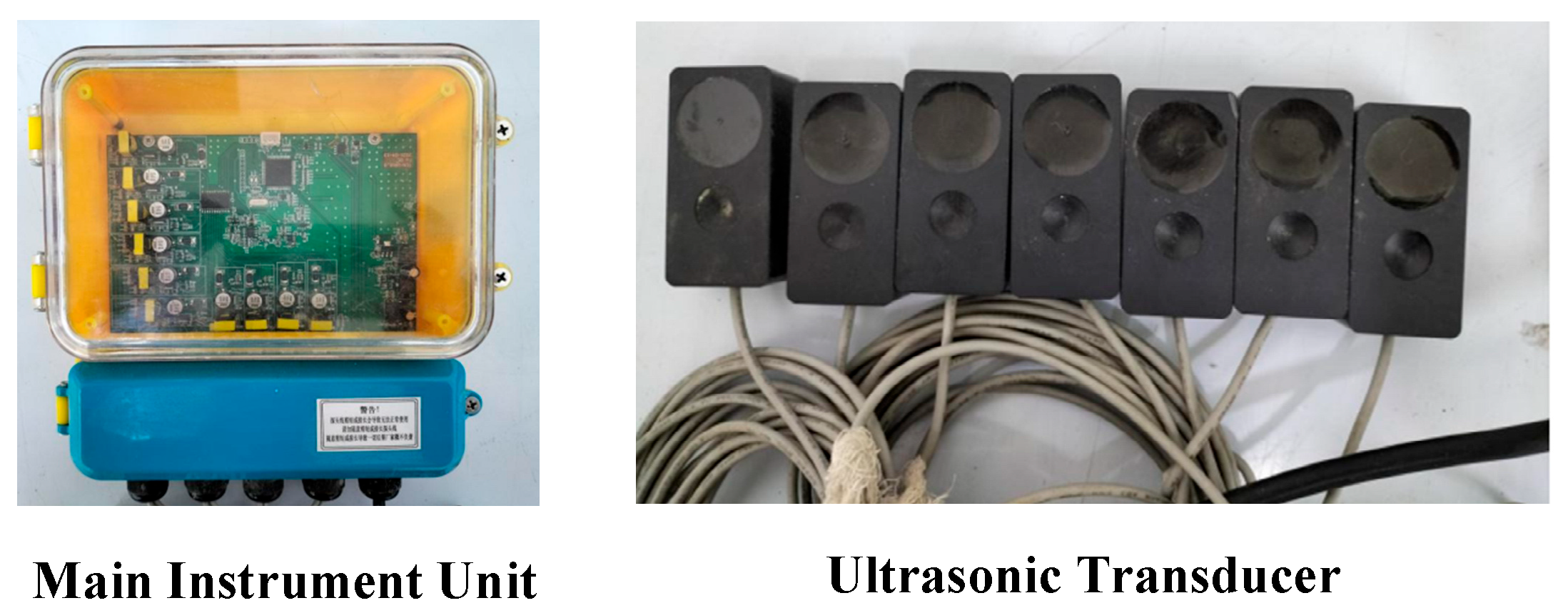
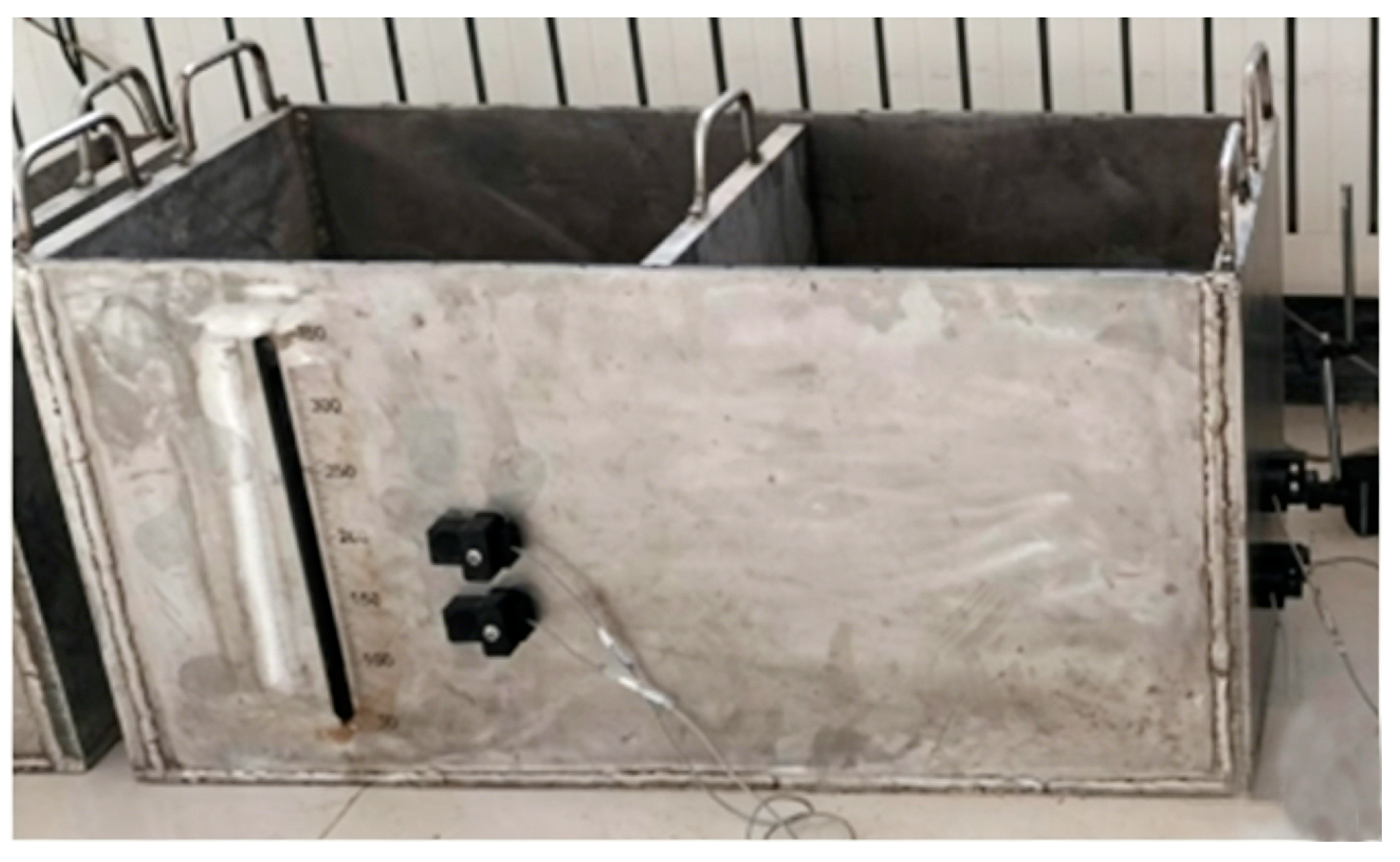
Section 4 presents the experimental platform setup, key parameter measurements, and validation results for liquid level interface detection. Finally,
Section 5 concludes the paper and suggests directions for future work.
2. Overall System Architecture and Mathematical Modeling
This section establishes a mathematical model of the ultrasonic liquid-level interface measurement system, which primarily consists of key components such as the transmitter/receiver circuit, connecting cables, ultrasonic transducers, and the measured medium. Based on this, a comprehensive overall model of the measurement system was constructed.
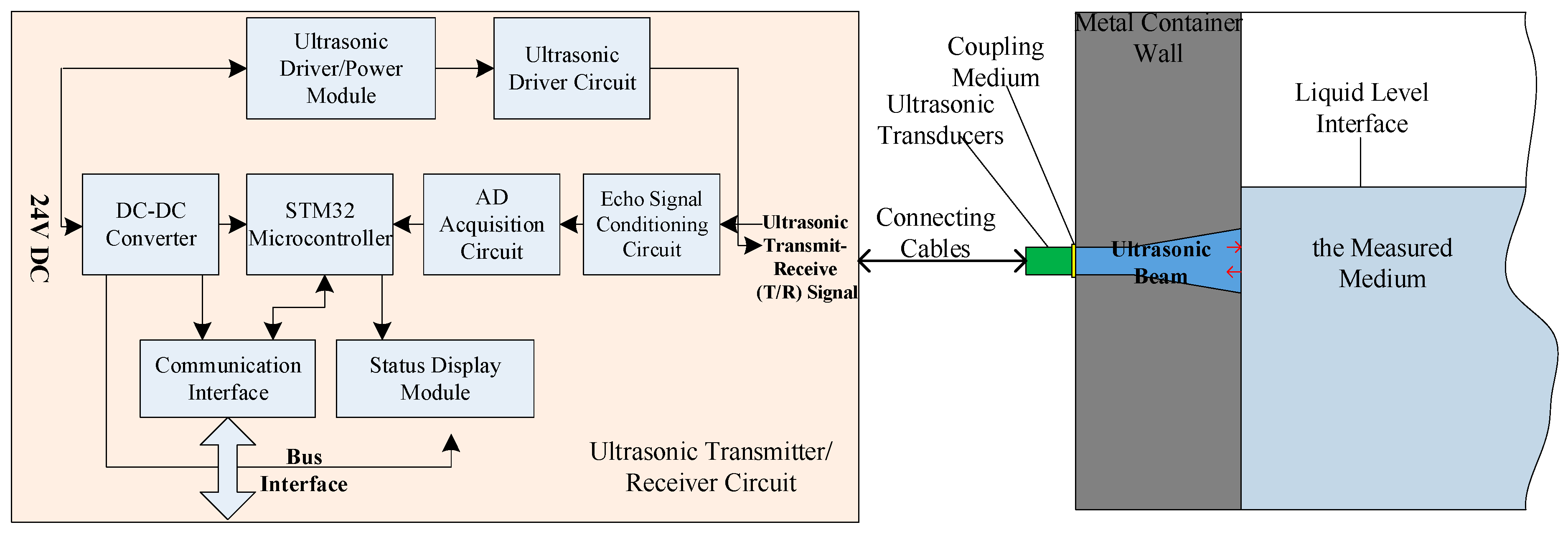
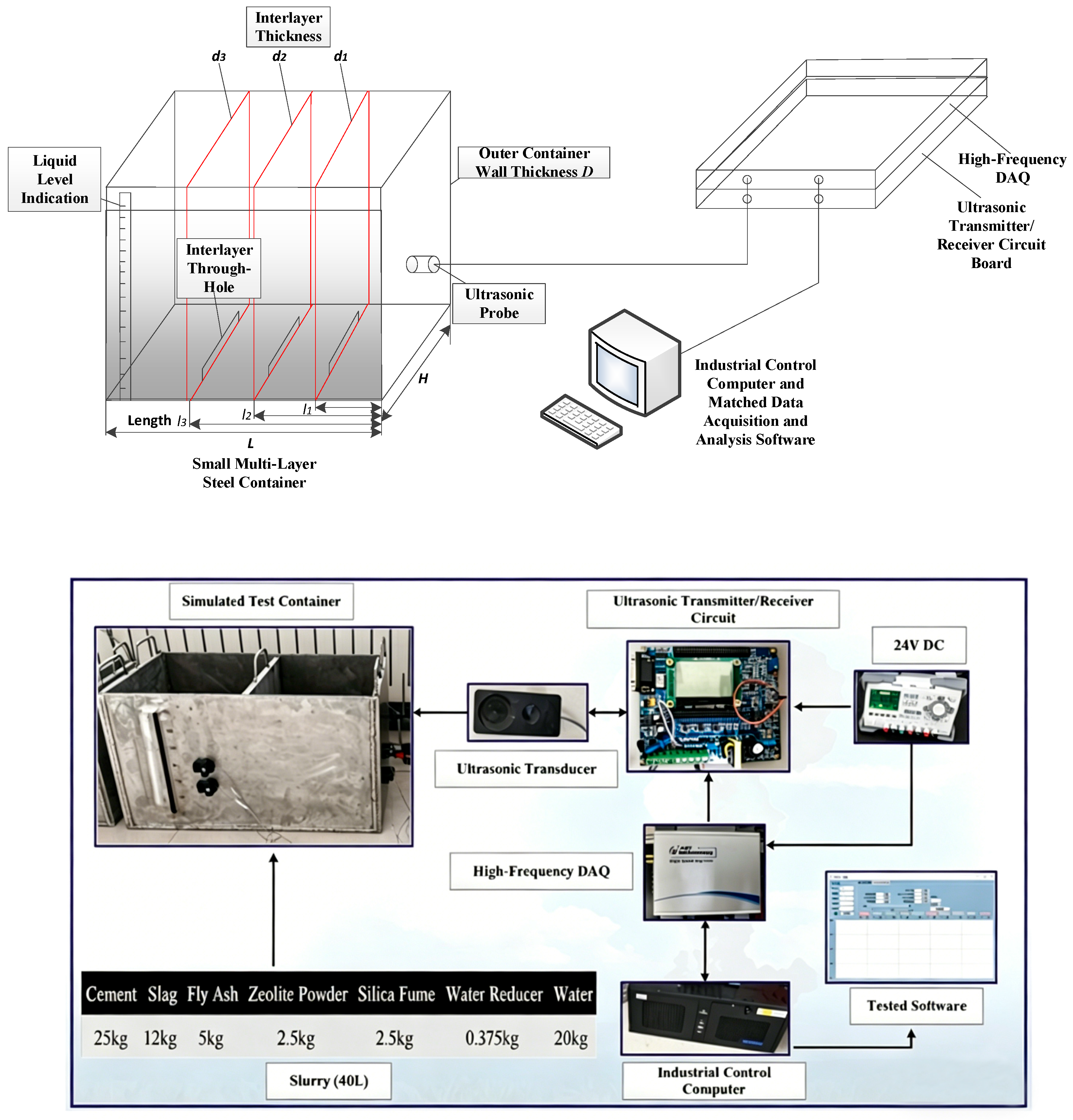
The structure of the ultrasonic liquid-level interface measurement system is illustrated in
Figure 1. It primarily consists of an ultrasonic transmitter/receiver circuit, connecting cables, ultrasonic transducers, a coupling medium, a metal container wall, and the measured medium. The establishment of the overall system model is based on mathematical representations of the ultrasonic transmitter/receiver circuit, the transducers, and the measured medium, with the input and output physical signals of each stage serving as the linkages, thereby enabling the integrated construction of the complete measurement system model.
Based on the aforementioned system composition, the model can be divided into three main modules: the ultrasonic transmission system, the ultrasonic reception system, and the measured medium. The integrated overall system model was constructed on the basis of the mathematical models of these subsystems.
2.1. Ultrasonic Transmission System Model
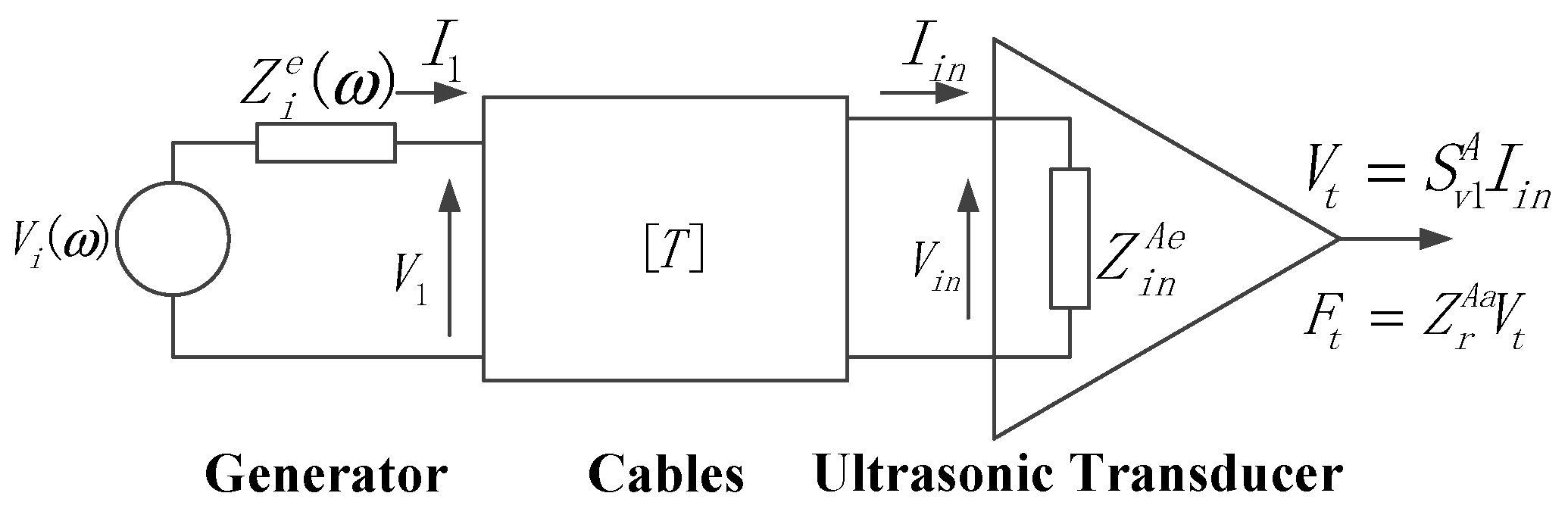
The model of the ultrasonic transmission system is shown in
Figure 2. It consists of three main components: an ultrasonic generator, connecting cables, and a transmission transducer. The entire transmission system is modeled as a single-input single-output (SISO) time-invariant system, with its transfer function denoted as
TG(
ω). In the following equations, all frequency-dependent parameters (such as electrical impedance
Z, sensitivity
S, radiation impedance
Zrad, and wave number
k) are understood to be functions of
ω, even when not explicitly written for brevity. The symbol
ω on the left-hand side of transfer functions indicates that these are frequency-domain representations.
The transfer function
TG(
ω) can be expressed as:
where
,
,
, and
represent the transmission matrix parameters of the connecting cable at the transmitter side;
denotes the input electrical impedance of the transmitting ultrasonic transducer;
represents the sensitivity of the transmitting transducer;
indicates the acoustic radiation impedance of the transmitting transducer; and
corresponds to the output electrical impedance of the ultrasonic generator.
2.2. Ultrasonic Reception System Model
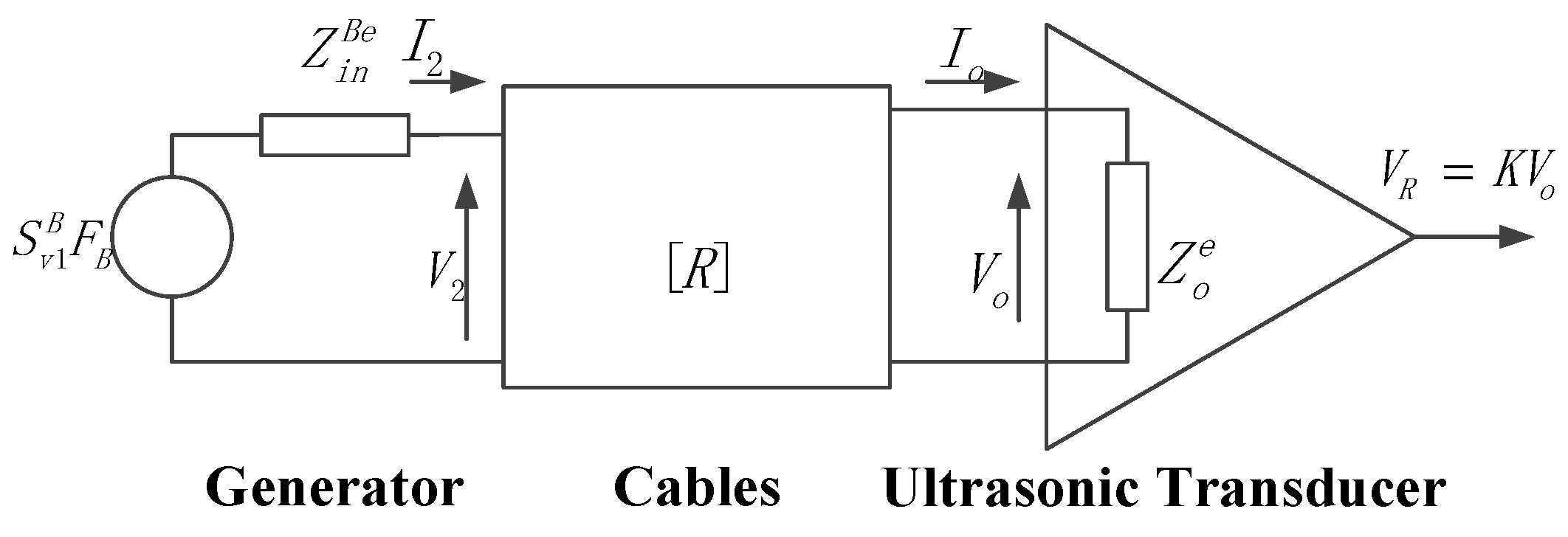
The model of the ultrasonic reception system is illustrated in
Figure 3. In the reception system, the incident acoustic pressure is converted into an electrical signal by the receiving transducer. This signal is then transmitted via connecting cables to the receiver circuit, where it undergoes amplification processing to produce a final output voltage.
The transfer function of the ultrasonic reception system, denoted as
R(
ω), is given by:
where
,
,
,
represent the transmission matrix parameters of the connecting cable at the receiver side;
denotes the input electrical impedance of the receiving ultrasonic transducer;
represents the sensitivity of the receiving transducer; and
corresponds to the input electrical impedance of the ultrasonic receiver.
2.3. Wave Propagation Model in the Measured Medium
In a complete ultrasonic measurement system, the acoustic transfer function
for wave propagation through the elastic medium is defined as:
where
is the plane wave reflection coefficient at the interface;
D represents the distance between the centers of the transmitting and receiving transducers;
J0 and
J1 denote the zero-order and first-order Bessel functions, respectively;
r corresponds to the effective radius of the transducer; and
Kp1 indicates the acoustic attenuation coefficient of the medium.
Based on the above analysis, the complete mathematical model of the ultrasonic measurement system can be expressed as follows:
2.4. Simulation Analysis and Optimization of Transducer Parameters
The initial values of the model parameters for the ultrasonic liquid-level interface measurement system are listed in
Table 1. With the transducer diameter held constant, the acoustic field characteristics of ultrasound in the slurry were analyzed at excitation frequencies of 500 kHz, 1 MHz, and 2 MHz. With the excitation frequency held constant, the acoustic field characteristics were analyzed for transducer diameters of 10 mm and 20 mm.
When only the transducer frequency was varied while keeping other system parameters unchanged, the following trend was observed. As the transducer frequency increased, the propagation attenuation of ultrasound in the slurry became larger, while the energy in the longitudinal near-field region became more concentrated. Although low-frequency transducers offer a longer propagation distance in the slurry, their energy is relatively more dispersed compared to high-frequency ones, making them less than optimal for a liquid-level detection method that relies on evaluating the near-field energy magnitude. Furthermore, increasing the frequency not only enhances the near-field energy but also imposes higher demands on the transmitting/receiving and signal processing circuits. Therefore, from the perspective of implementation cost, ultra-high frequency ultrasonic transducers were not considered. Based on the above analysis, the 1 MHz ultrasonic transducer represents a relatively optimal choice.
When only the transducer diameter was varied while keeping other system parameters unchanged, a larger transducer diameter resulted in higher emitted energy and consequently higher reflected energy at the inner container wall, which is beneficial for the liquid-level detection method based on near-field energy evaluation. However, the transducer diameter should not be excessively large, as an oversized diameter would compromise the positioning accuracy of the liquid-level interface within the transducer’s diameter range. Based on the above analysis, the transducer diameter was determined to be 20 mm.
3. Interface Detection Algorithm Based on Side-Incidence Echo Energy
This section analyzes the key characteristics of the echo signals from the liquid-level interface under the side-incidence configuration. A computational model for the echo sound pressure, based on the probe’s detection energy zone, is established. Furthermore, the formula for calculating the liquid-level height is derived accordingly.
3.1. Principle of Side-Incidence Interface Detection
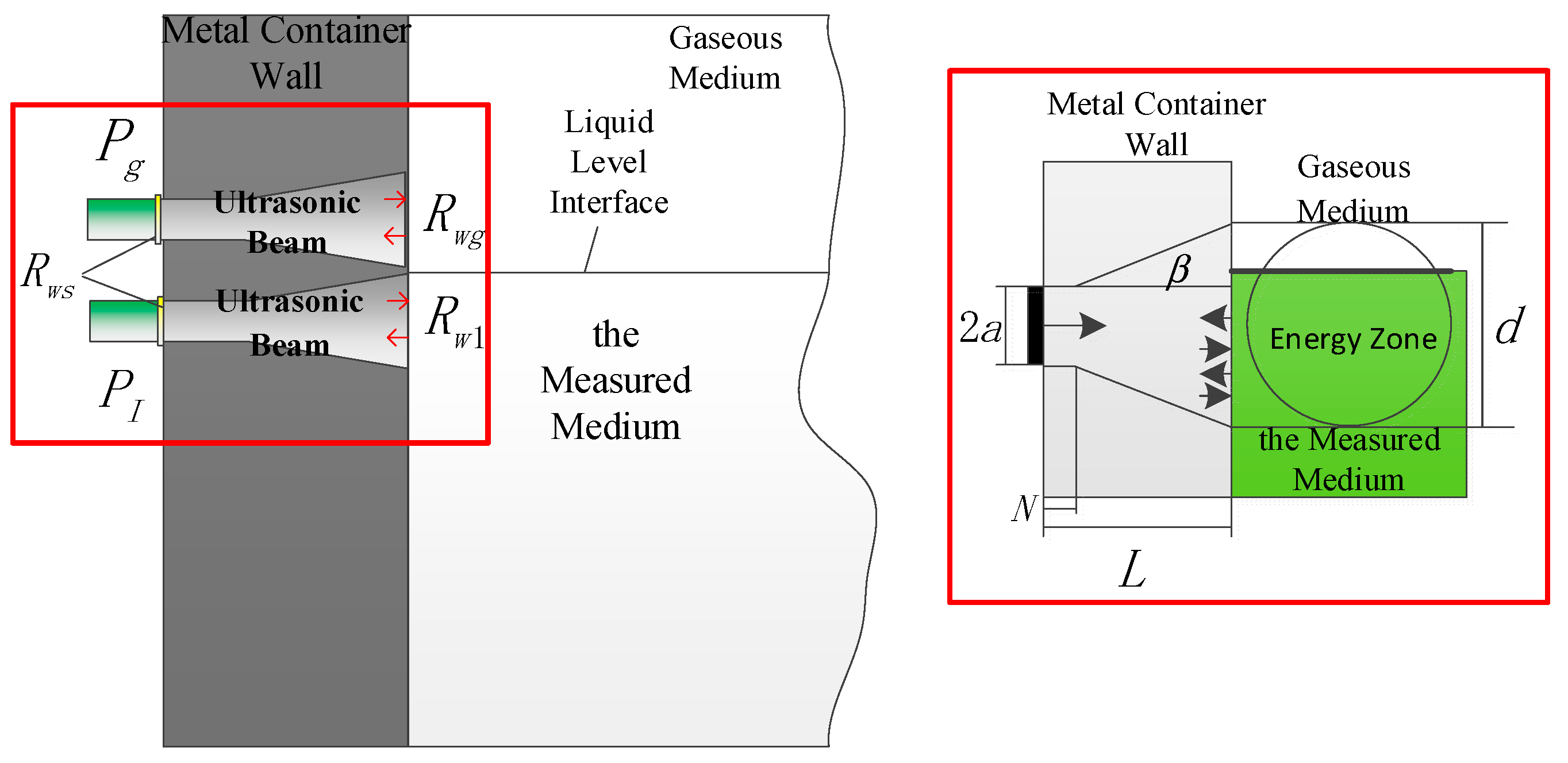
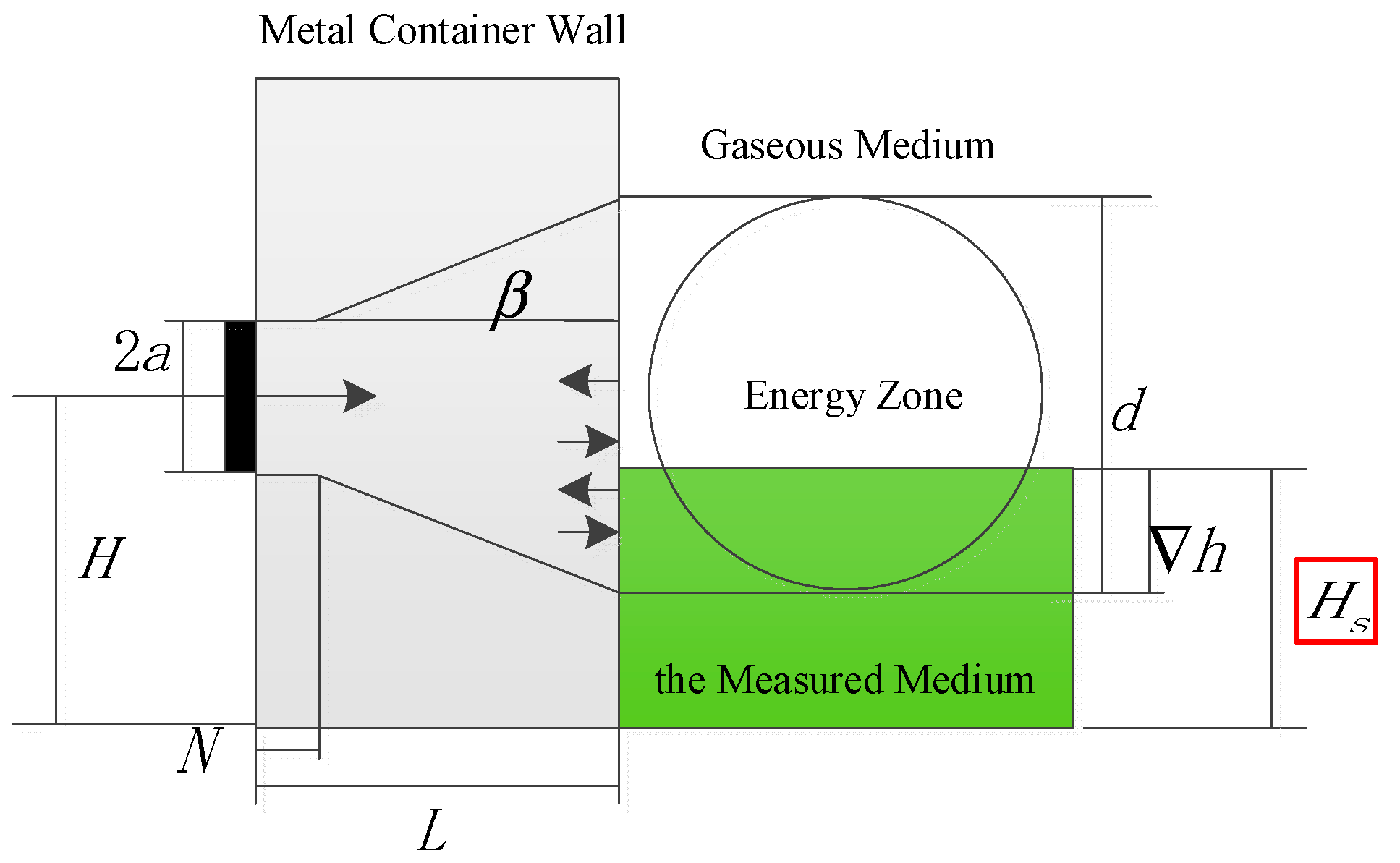
Owing to the complex internal structure of the container under test, measuring the liquid-level interface using ultrasonic echo signals from the top or bottom is not feasible. Consequently, this study employs a method wherein ultrasonic probes are installed at fixed positions on the sidewall of the container. The interface position is determined by detecting the energy difference in the echo signals caused by the presence or absence of the liquid. As illustrated in
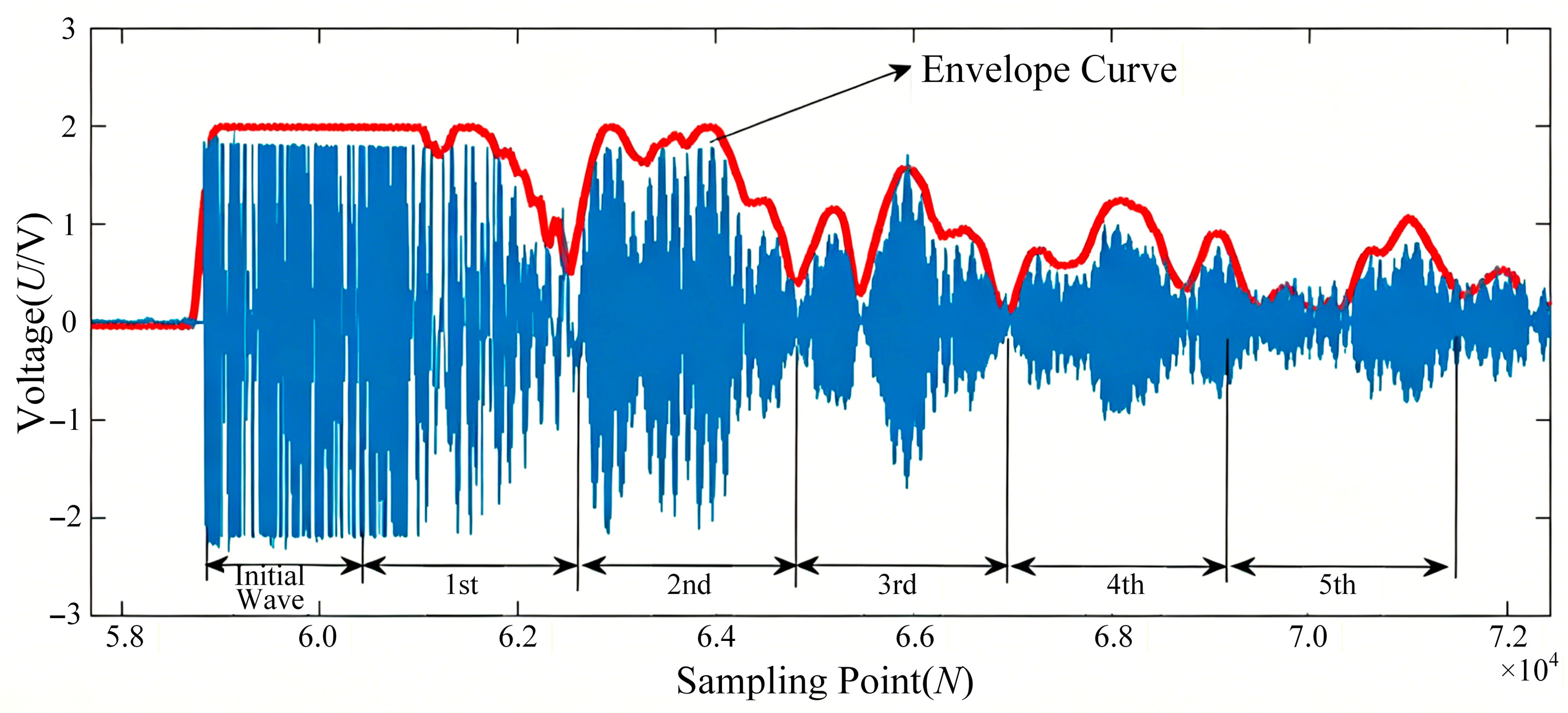
Figure 4, the transmission and reflection behaviors of the ultrasonic beam differ significantly between the areas above and below the liquid-level interface at the container’s inner wall. As the slurry gradually rises from the bottom, starting to enter the transducer’s detection zone until it is completely covered, the echo sound pressure energy received by the receiving transducer undergoes a distinct variation. The precise location of the liquid-level interface can be determined by calculating this energy difference.
3.2. Calculation Model in the Detection Energy Zone
Based on the aforementioned liquid-level interface detection principle, the echo sound pressure was modeled and calculated using Kirchhoff’s approximation theory. The distribution of the echo sound pressure within the container wall after multiple reflections is illustrated in
Figure 5.
Given the container wall thickness
L, the transducer radius
a, the diameter of the detection energy zone
d, and the initial incident sound pressure
P0, the average sound pressure of the first reflection echo at the inner container wall, denoted as
, can be expressed as:
where
Rw represents the ultrasonic reflection coefficient at the inner container wall, which is calculated by:
where
ρ1 and
ρ2 are the densities of the two media, respectively,
c1 and
c1 represent the ultrasonic propagation velocities in the corresponding media,
θi denotes the angle of incidence, and
θb is the angle of reflection.
When the acoustic beam is reflected by the outer container wall and arrives at the inner wall for the second time, the sound pressure, denoted as
PL2, can be expressed as:
After being reflected at the inner wall, the sound pressure upon reaching the outer container wall for the second time, denoted as
, is given by:
where
rs represents the ratio of the area exceeding the liquid level to the total area of the detection energy zone. By analogy, the sound pressure of the ultrasonic wave upon reaching the outer container wall and being received by the transducer for the
n-th time, denoted as
Pn, can be expressed as:
In summary, the total echo sound pressure received by the ultrasonic transducer at the outer container wall is the superposition of the sound pressures from multiple echoes generated by the acoustic beam undergoing successive reflections within the wall structure. Based on this multiple-reflection superposition model, the precise position of the liquid-level interface relative to the transducer’s detection energy zone can be calculated. The underlying calculation principle is illustrated in
Figure 6.
The diameter of the detection energy zone
d depends on the near-field length
N, and it can be calculated by the following formula:
Once the diameter of the detection energy zone
d is known, the liquid-level interface height
Hs is calculated using the following formula:
where
H represents the installation height of the ultrasonic probe, and ∇
h denotes the relative height of the liquid-level interface within the probe’s detection energy zone. Where the relative height ∇
h is calculated by:
where
denotes the total sound pressure value of the echo signal when the liquid level is at the highest position within the detection energy zone,
represents the total sound pressure value when the liquid level is at the lowest position within the detection energy zone, and
corresponds to the total sound pressure value at the current liquid level within the detection energy zone.
3.3. Theoretical Analysis of Echo Signal Variation
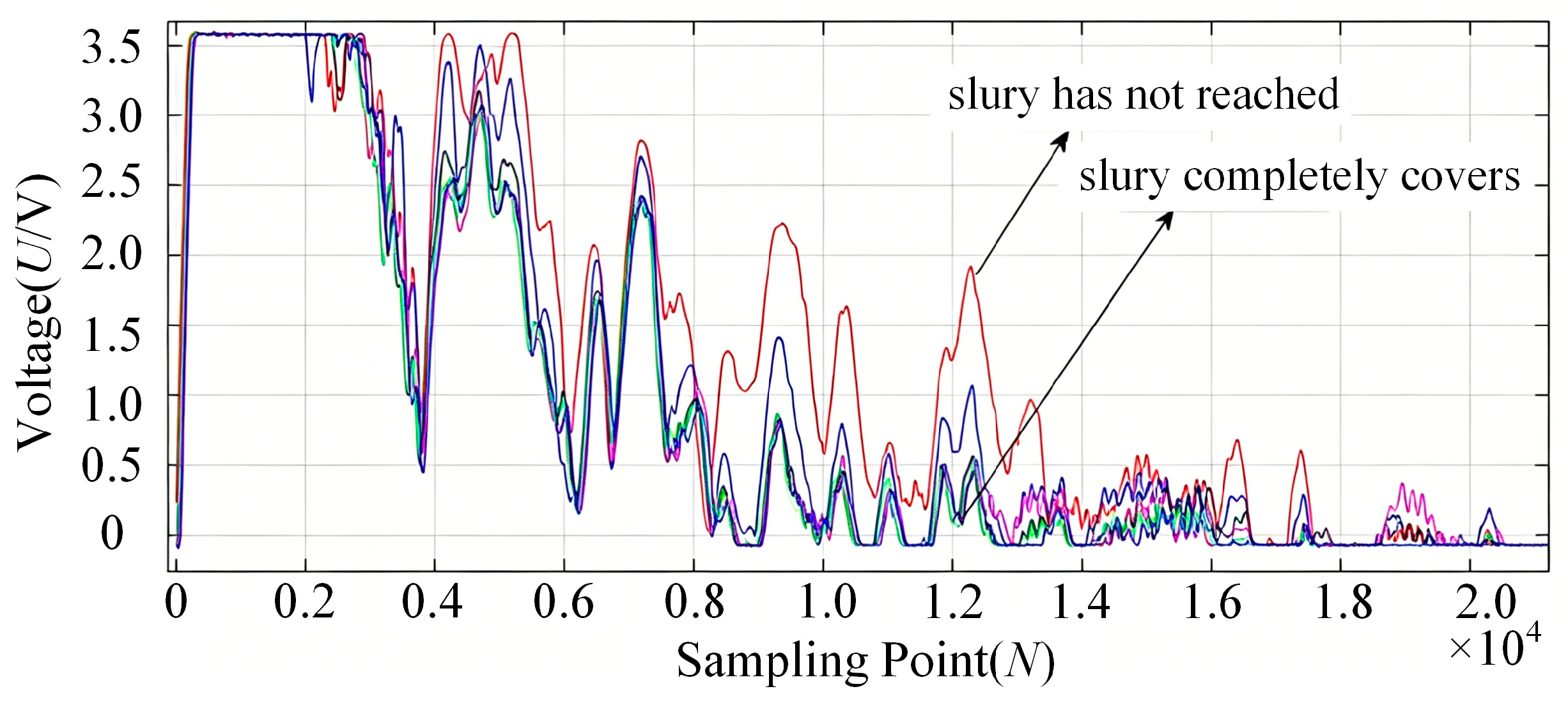
The variation in echo sound pressure during the slurry injection process is shown in
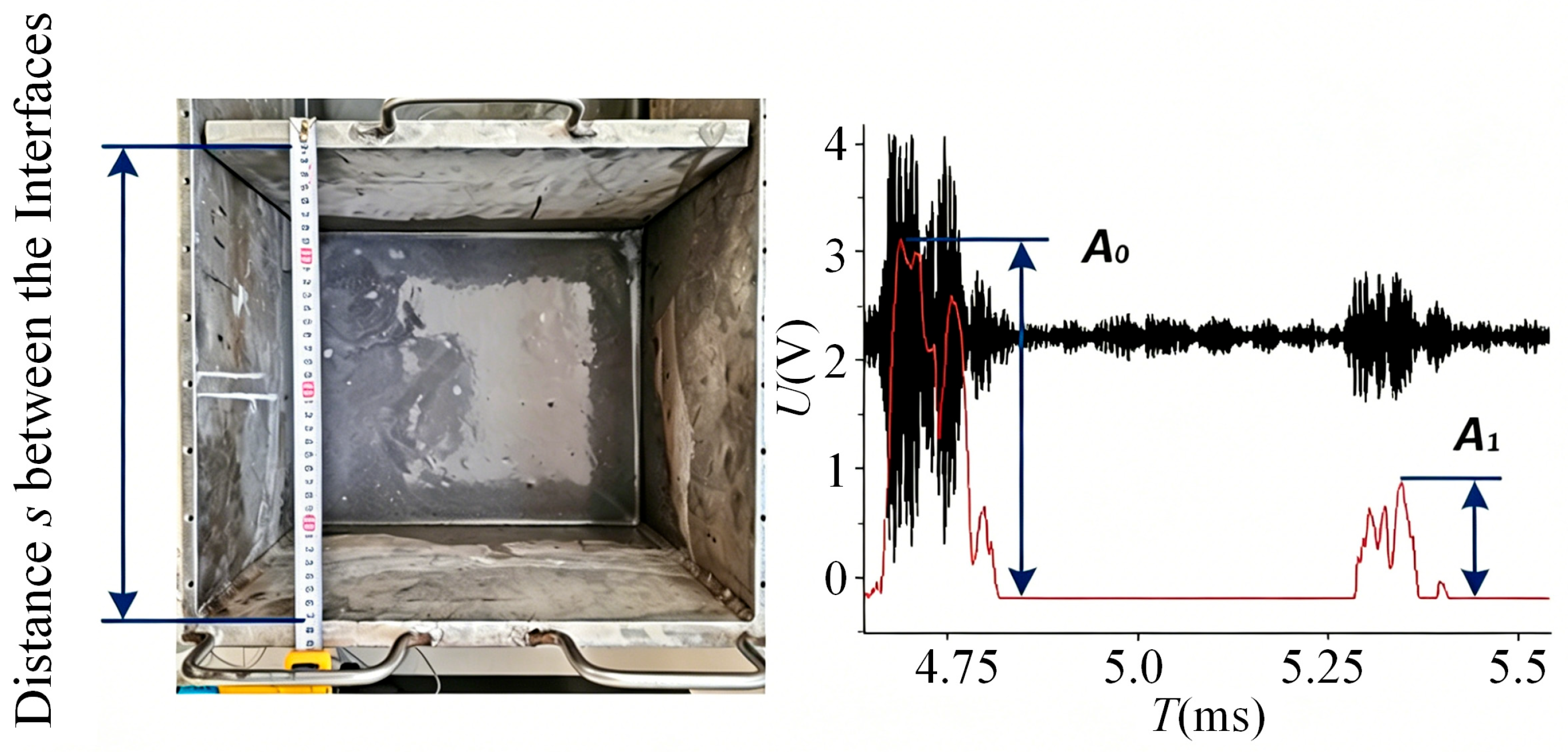
Figure 7. In the initial stage of injection, when the slurry has not yet reached the probe’s detection zone, the inner wall of the container is in contact with the gaseous medium. The acoustic reflection coefficient under this gas–wall interface condition is relatively high, resulting in high echo signal energy. As the slurry front rises and enters the detection zone, the inner wall comes into contact with the slurry. The acoustic reflection coefficient at this slurry–wall interface is significantly lower than that of the gas–wall interface due to the substantial difference in acoustic impedance between the slurry and the gas, leading to a noticeable decrease in echo signal energy. This reduction occurs because a portion of the acoustic energy is transmitted through the container wall into the slurry.
It should be noted that the experimental validation in this study was conducted primarily during the slurry filling (rising liquid level) process. In practical applications where the liquid level may also descend, residual slurry may adhere to the inner wall of the container, forming a thin film that alters the acoustic boundary condition. This adhered layer can maintain a degree of acoustic impedance matching even after the bulk liquid level has fallen below the detection zone, potentially leading to a hysteresis effect in the echo energy response. Consequently, the detection accuracy during the draining process may differ from that during filling. For applications requiring precise measurement in both filling and draining cycles, future work should focus on developing adaptive threshold algorithms or integrating cleaning mechanisms to mitigate the influence of wall adhesion. This aspect represents an important direction for further enhancing the robustness and practical applicability of the proposed method.
The proposed side-incidence interface detection method fundamentally relies on the difference in acoustic reflection characteristics at the container inner wall when the adjacent medium changes from gas to slurry. When the inner wall is in contact with gas, the large acoustic impedance mismatch between the gas and the container wall results in a high reflection coefficient, meaning that most of the acoustic energy is reflected back and received by the transducer. In contrast, when the slurry contacts the inner wall, the acoustic impedance mismatch is considerably smaller, leading to a lower reflection coefficient and a corresponding reduction in the received echo energy.
In practical applications, the concentration or composition of the slurry may vary, which in turn affects its acoustic properties. However, the detection principle does not depend on the exact value of the slurry’s acoustic impedance, but rather on the presence of a sufficient impedance contrast between the slurry and the gas. For typical multiphase slurries, their acoustic impedance remains several orders of magnitude higher than that of gas, regardless of moderate variations in concentration or composition. Consequently, the reflection coefficient at the slurry–wall interface remains significantly lower than that at the gas–wall interface, ensuring that the echo energy drop upon liquid level entry is consistently distinguishable.
Therefore, the proposed method is expected to remain effective across a reasonable range of slurry formulations. It should be noted, however, that extreme variations in slurry properties—such as a drastic reduction in acoustic impedance or the introduction of highly attenuating components—may affect the absolute echo energy amplitude and potentially influence detection sensitivity. In such cases, system recalibration or adaptive threshold adjustment may be required, which is identified as a direction for future research.
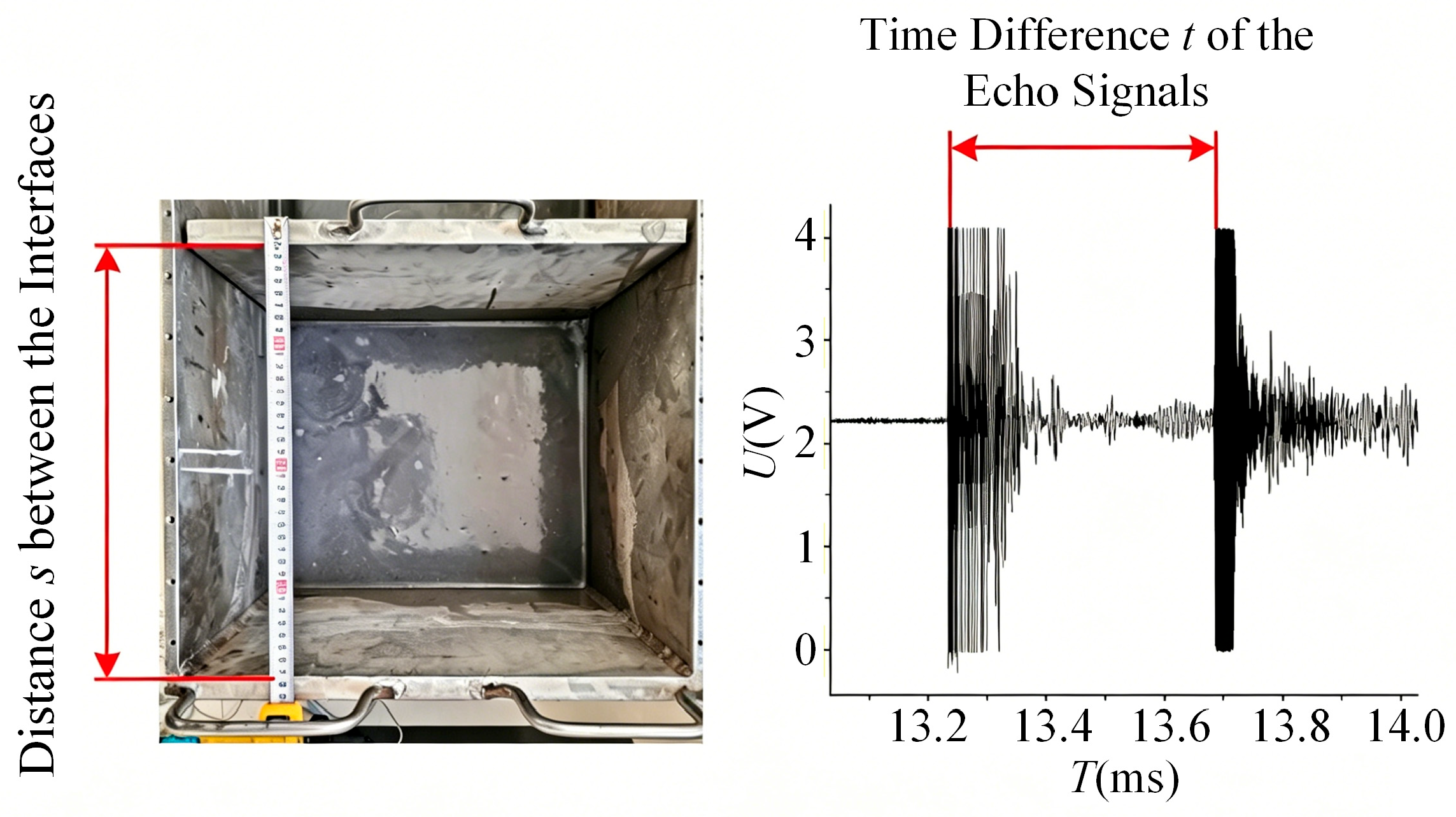
The echo signals were processed according to the aforementioned sound pressure calculation formulas. The received ultrasonic signal is sampled at 2 MHz with 14-bit resolution. The integration time window from 0.05 ms to 1.75 ms was selected based on the geometric parameters of the experimental setup and the propagation characteristics of ultrasound. The lower bound of 0.05 ms is set to exclude the high-amplitude initial excitation pulse and the near-field interference that occurs immediately after transmission, ensuring that the integrated signal primarily reflects the energy from the first and subsequent echoes generated by multiple reflections within the container wall and the slurry. The upper bound of 1.75 ms is determined to encompass the major multiple reflection events. Given the container wall thickness (8–20 mm), the sound velocities in steel (approximately 2540 m/s) and in the slurry (approximately 2372 m/s), and the transducer installation positions, the time required for the ultrasonic wave to propagate through the structure and undergo multiple reflections is estimated to be within this range. This window thus captures the critical portion of the echo signal that carries information about the liquid-level interface while minimizing noise and irrelevant interference.
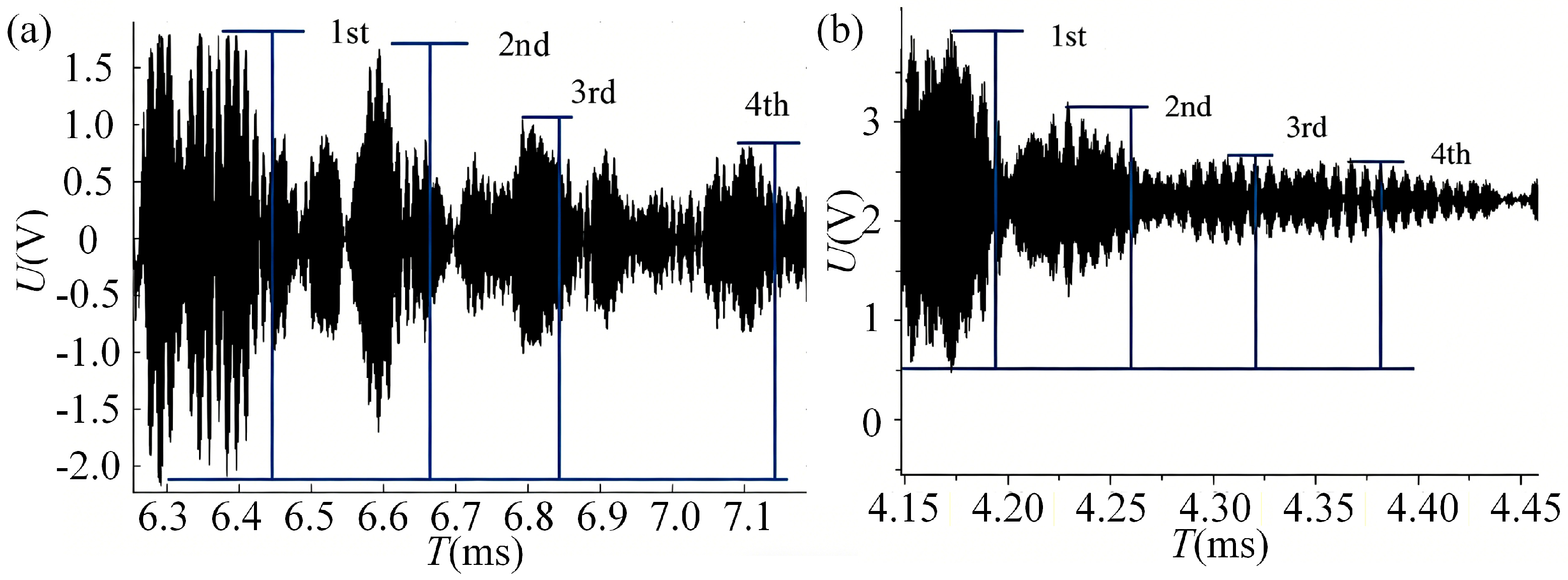
The received ultrasonic signal is sampled at 2 MHz with 14-bit resolution. A time window from 0.05 ms to 1.75 ms is applied to exclude the initial excitation pulse and capture the main multiple reflections (up to the 10th echo, beyond which the amplitude falls below the noise floor). The signal is then full-wave rectified and integrated over the window to obtain a scalar value representing the total echo energy. This integration is performed for each measurement cycle. To compute the total sound pressure Ptotal, the infinite series is truncated to n = 10 terms, as higher-order contributions are negligible (attenuation reduces them to <1% of the first echo). The reflection coefficients Rwg, Rw1 and Rws are pre-calibrated using the measured acoustic impedances. The liquid-level height is then derived using Equations (10)–(12) with the integrated echo energy as input.
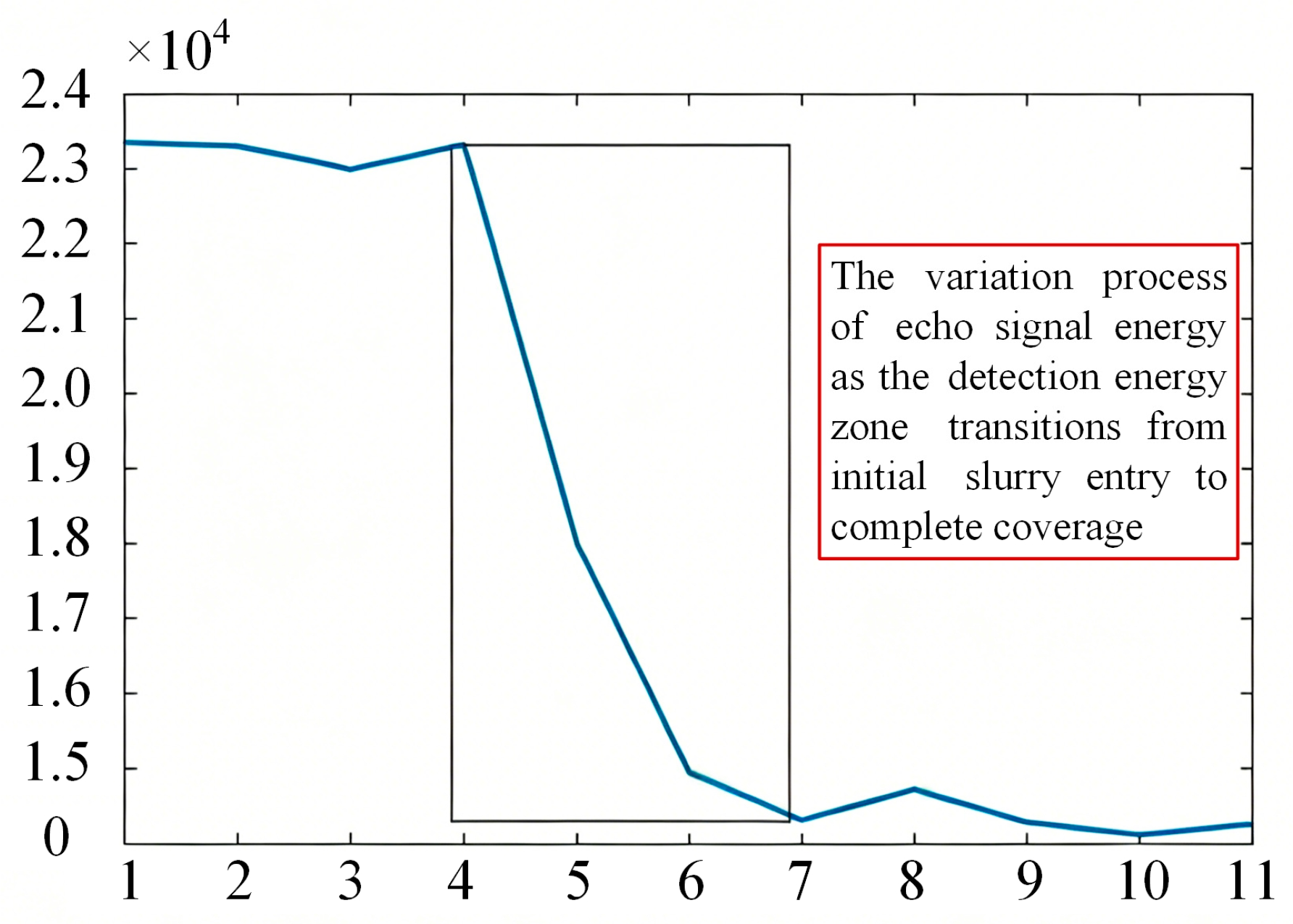
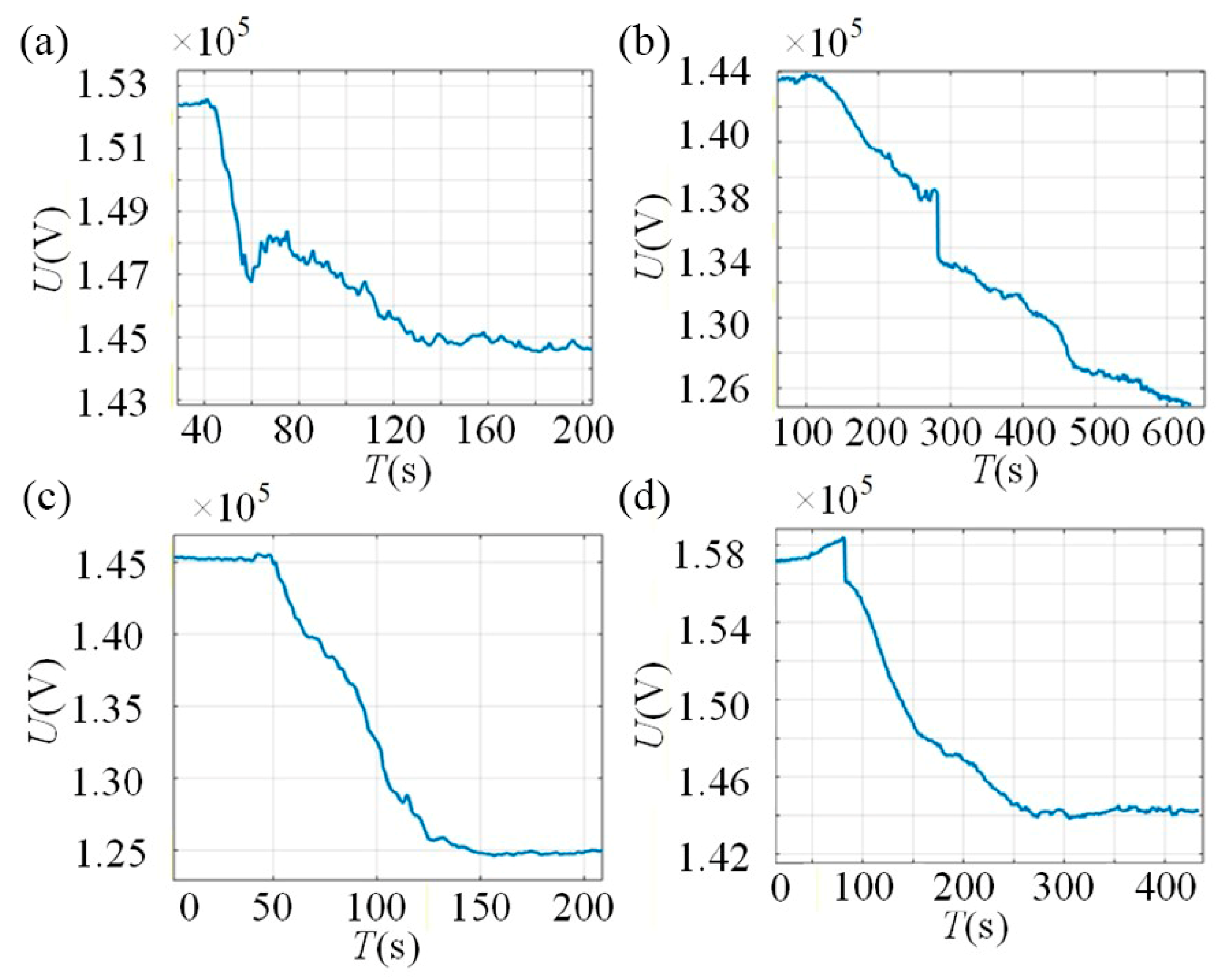
The integral values from each measurement were plotted as a curve, as shown in
Figure 8. Analysis reveals that when the slurry has not reached the probe’s detection zone, the integral values of the multiple echoes exhibit minimal variation. As the slurry progresses from initially entering to completely covering the detection zone, the integral values of the multiple echoes decrease significantly and eventually stabilize. Consequently, by analyzing the variation trend of the integral values of the multiple echoes, the position of the slurry relative to the probe’s detection zone can be effectively determined.
5. Conclusions
This study has successfully developed and validated a novel method for liquid-level interface detection in multiphase mixed media based on ultrasonic transmission with a side-incidence configuration. The research systematically addressed the challenge through mathematical modeling, simulation, algorithmic development, and experimental verification. The principal findings and contributions are summarized as follows:
1. A comprehensive mathematical model of the entire ultrasonic measurement system was established. This model integrates the ultrasonic transmitter/receiver circuits, the wave propagation and multiple reflections within the multi-layer structure (container wall and medium), and the signal reception process. This model provides a theoretical foundation for system analysis and parameter optimization.
2. A dedicated detection algorithm was proposed. Based on the side-incidence approach, an echo sound pressure calculation model was constructed by analyzing the multiple reflections within the container wall. This led to the derivation of a formula for calculating the liquid-level height, forming the core algorithm for non-invasive interface localization.
3. The feasibility and accuracy of the proposed method were experimentally verified. The designed experimental platform enabled the successful measurement of key ultrasonic propagation parameters in the slurry: a sound velocity of approximately 2372 m/s, an attenuation coefficient of 15.1 dB/m, and an acoustic impedance of 4.1 × 10⁵ g/(cm2·s). Furthermore, liquid-level interface measurement tests under different wall thicknesses (8 mm and 20 mm) confirmed a measurement accuracy of ±2 mm, meeting the project requirements.
In conclusion, this research establishes that the side-incidence ultrasonic transmission method is a viable and accurate solution for non-invasive liquid-level interface detection in multiphase media within complex container structures. The integrated approach of modeling, simulation, and experimentation provides a solid foundation for practical application. However, the experimental validation was conducted under specific conditions: a steel container wall (8 mm and 20 mm thickness), a fixed slurry formulation (density 1.8 g/cm3), quiescent flow, and room temperature (22 ± 1 °C). The effects of other wall materials, larger thicknesses, elevated temperatures, turbulence, and composition variations have not been systematically evaluated and warrant further investigation. For continuous level monitoring, arranging multiple sensors in a vertical array along the sidewall would enable real-time tracking. Additionally, incorporating phase information could further enhance robustness and resolution. Future work will focus on algorithm robustness in high-noise environments, adaptive calibration for varying conditions, and extension to a wider range of media and industrial scenarios.



 ,
,