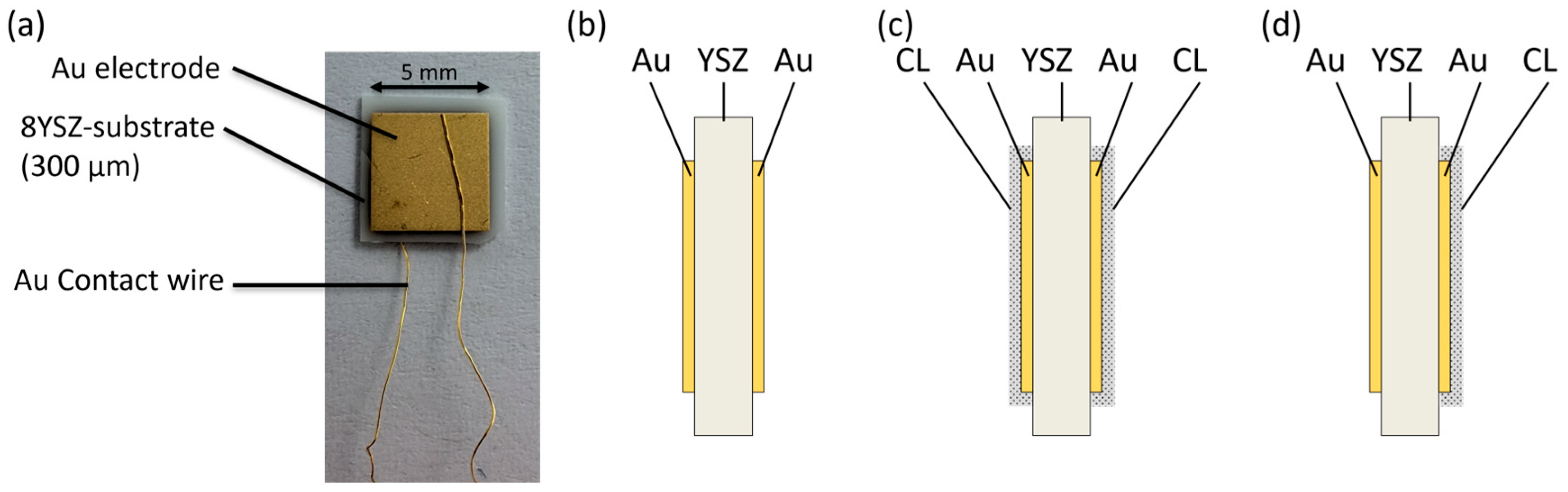
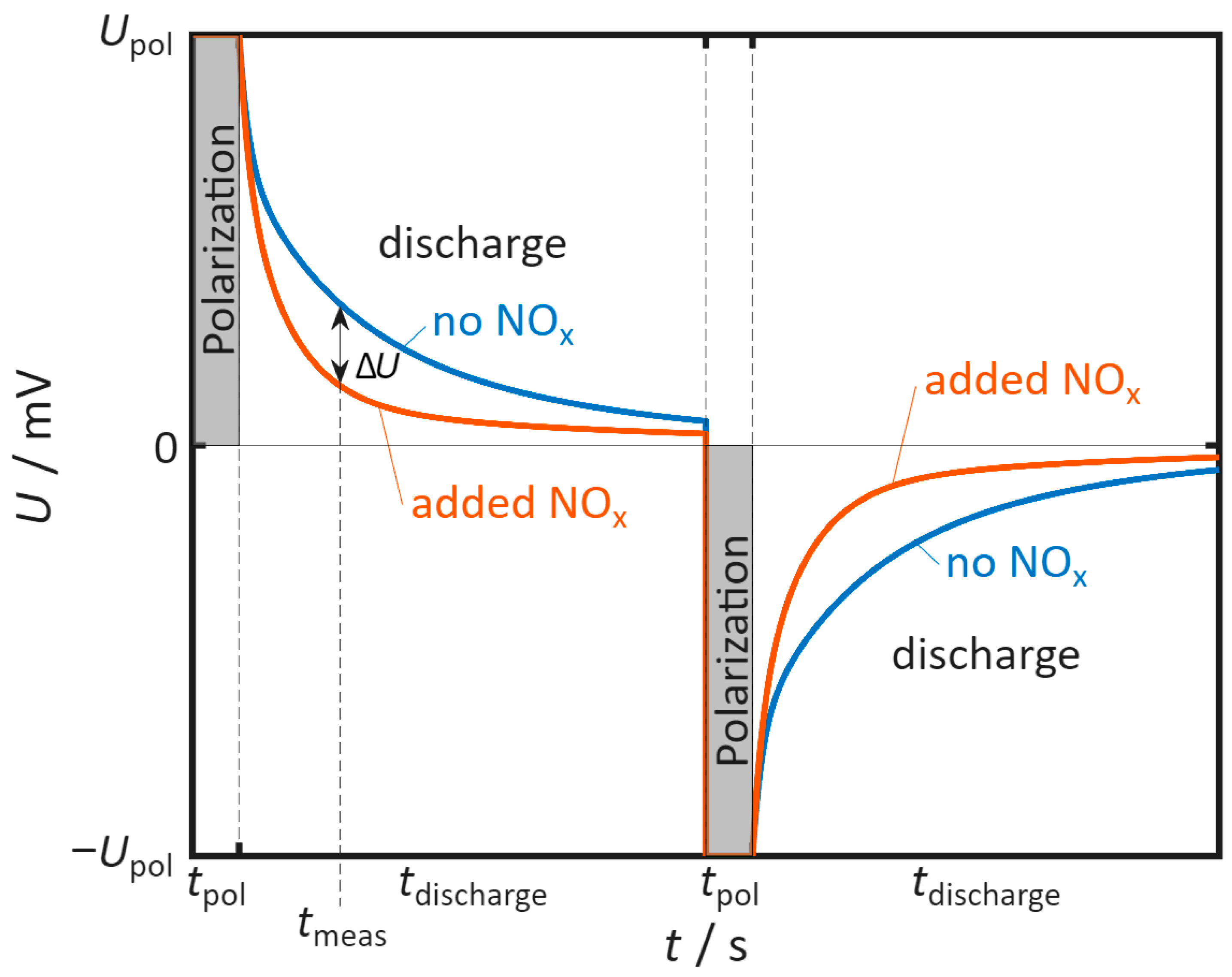
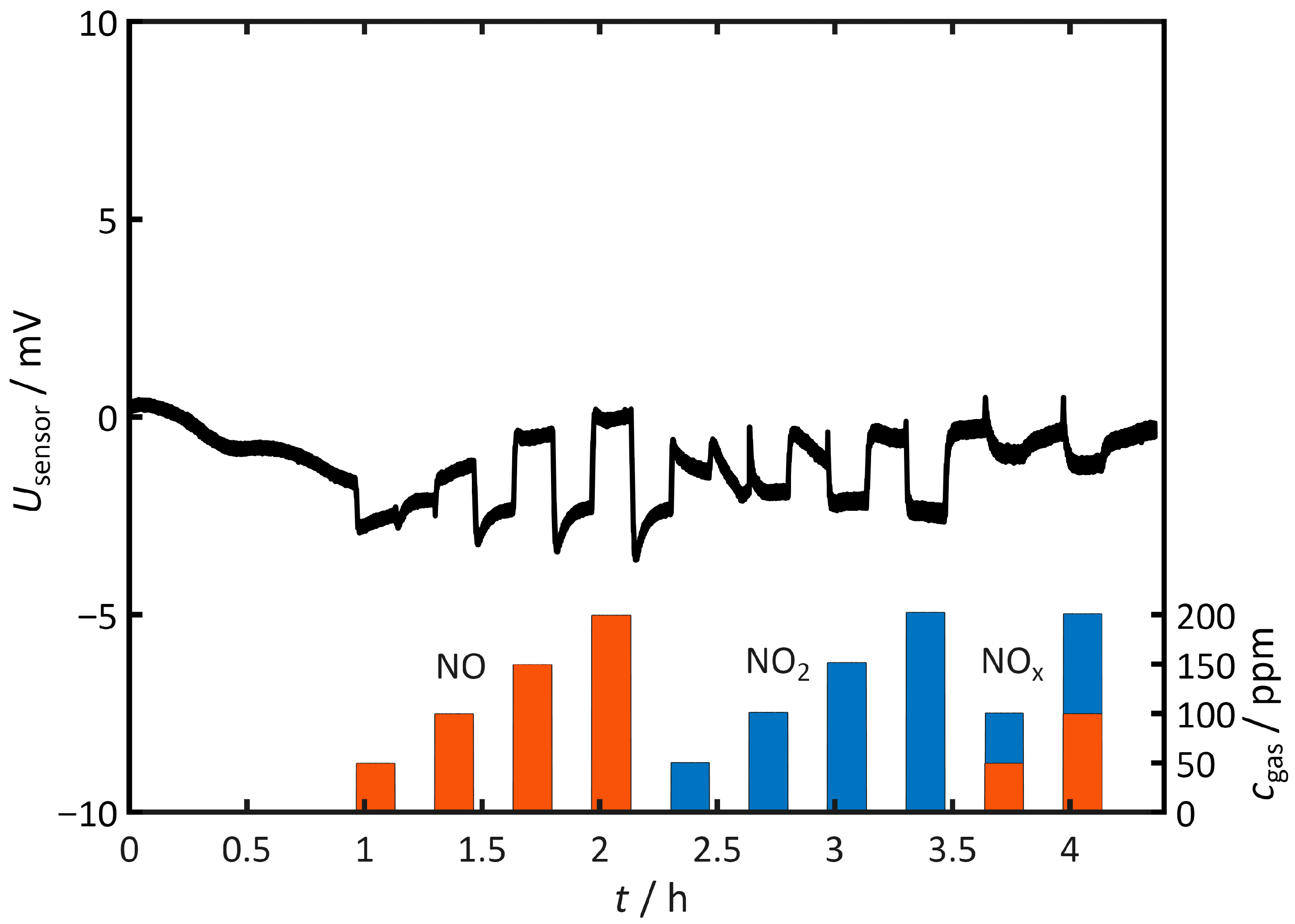
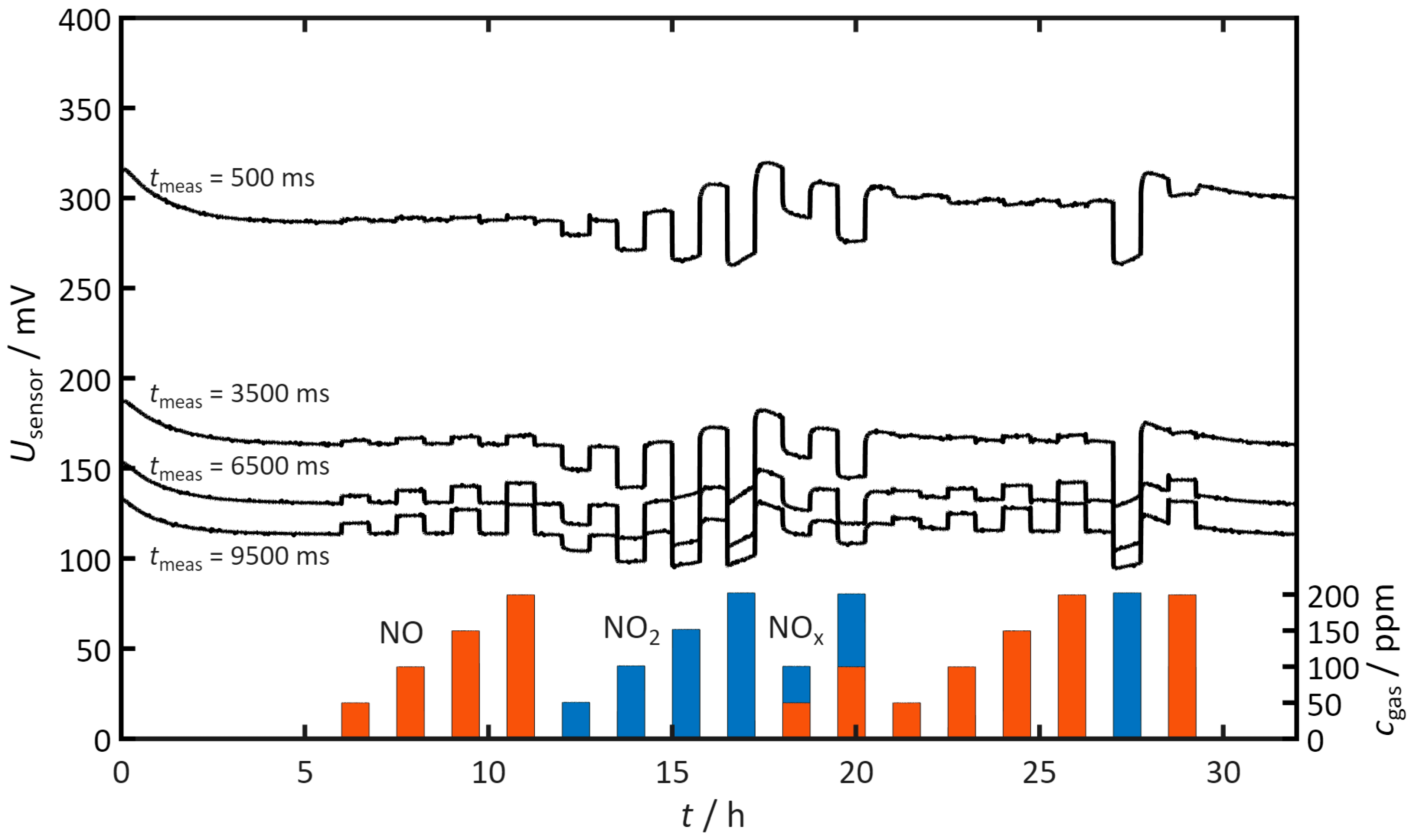
Periodically Pulsed Polarization Gas Sensors Based on Au|YSZ: Mechanism of NOx Detection


Highlights
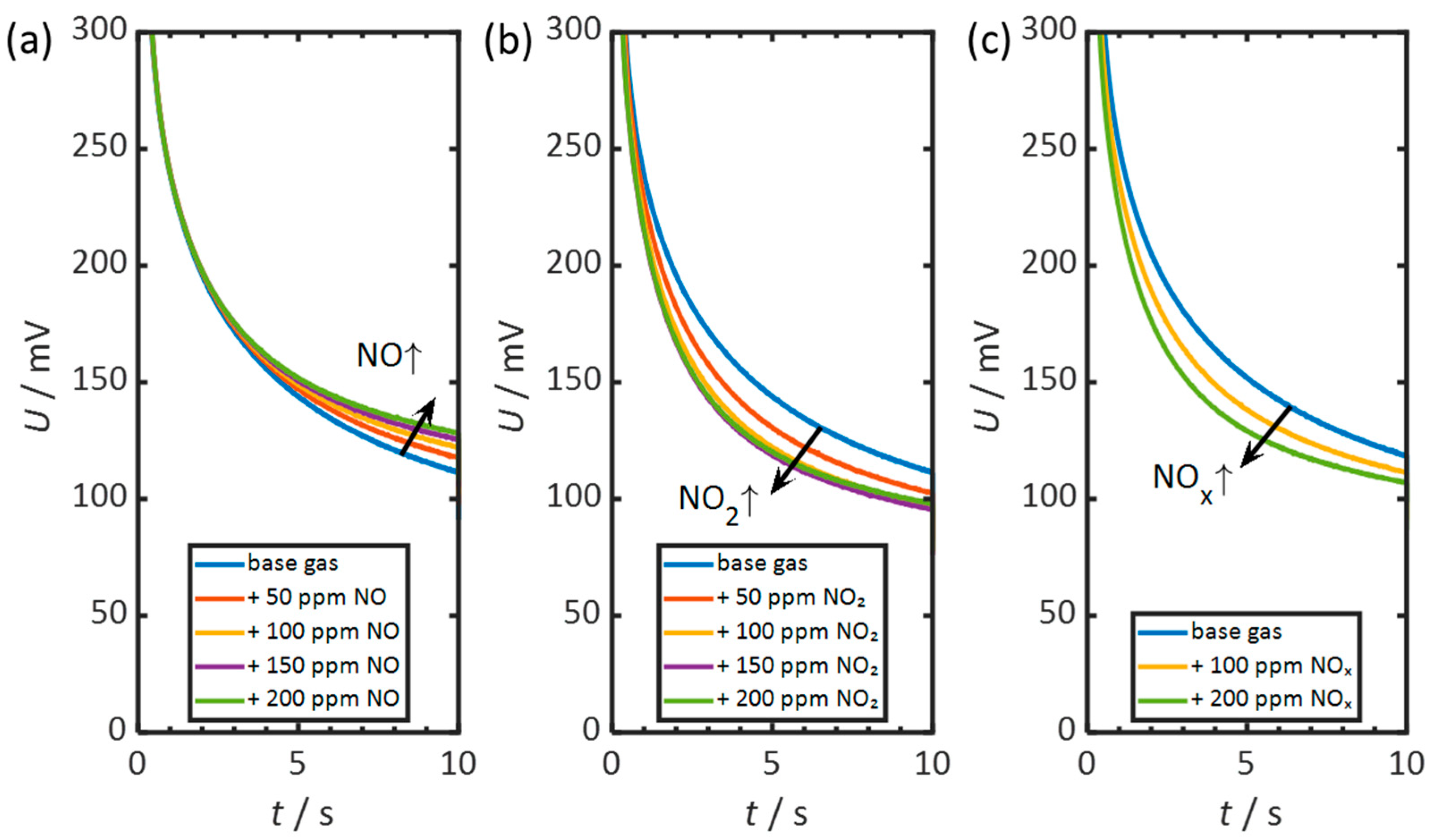
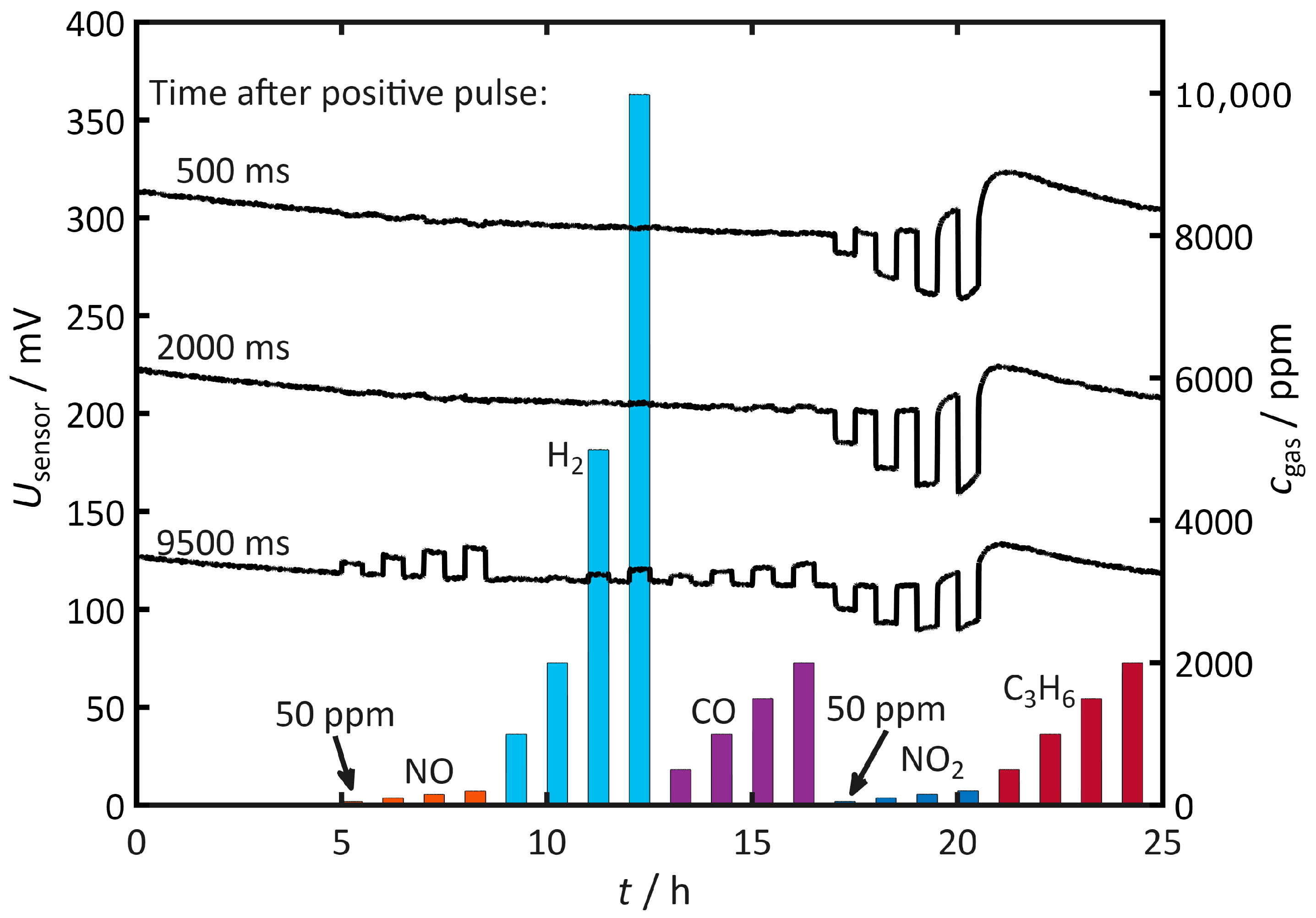
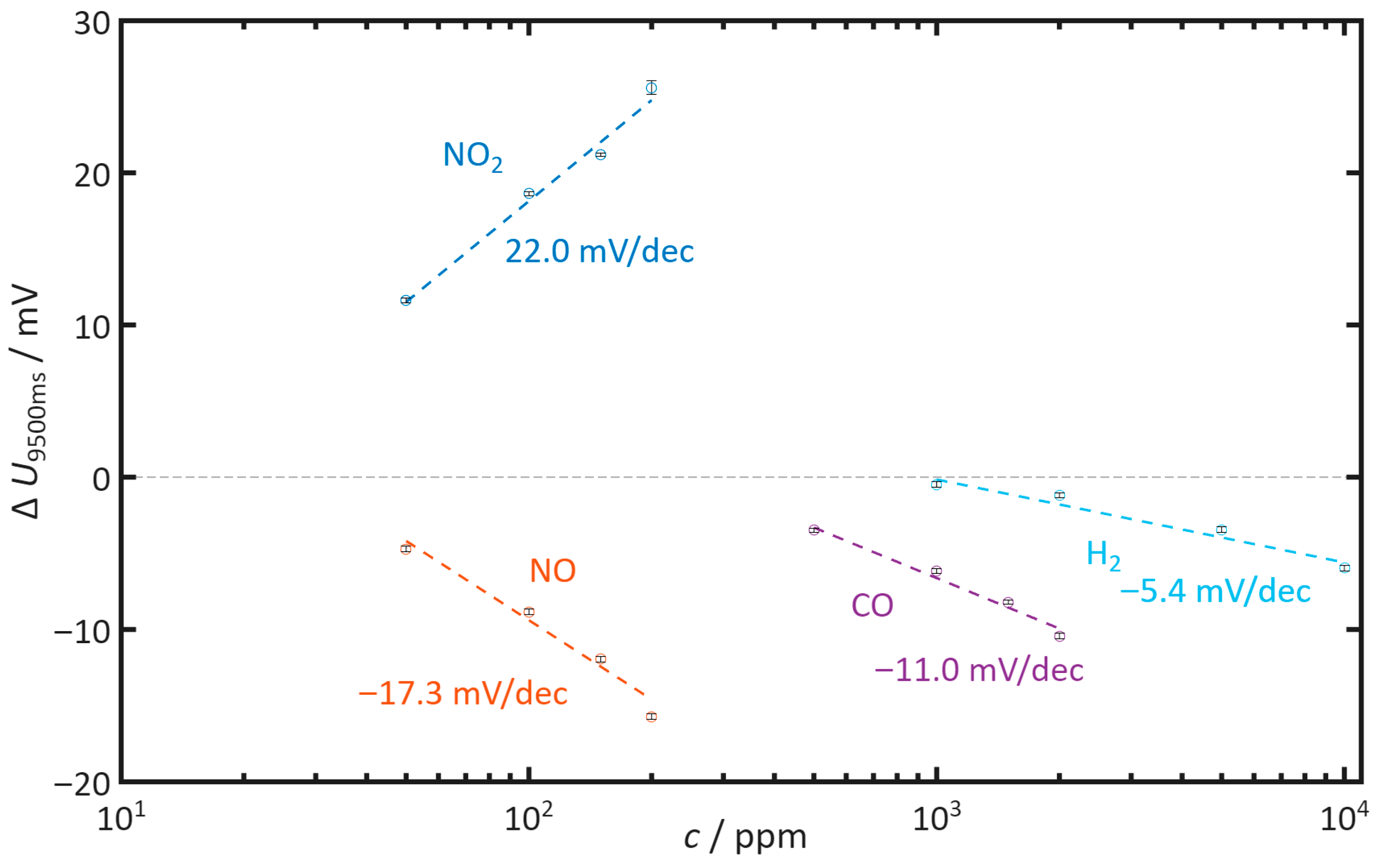
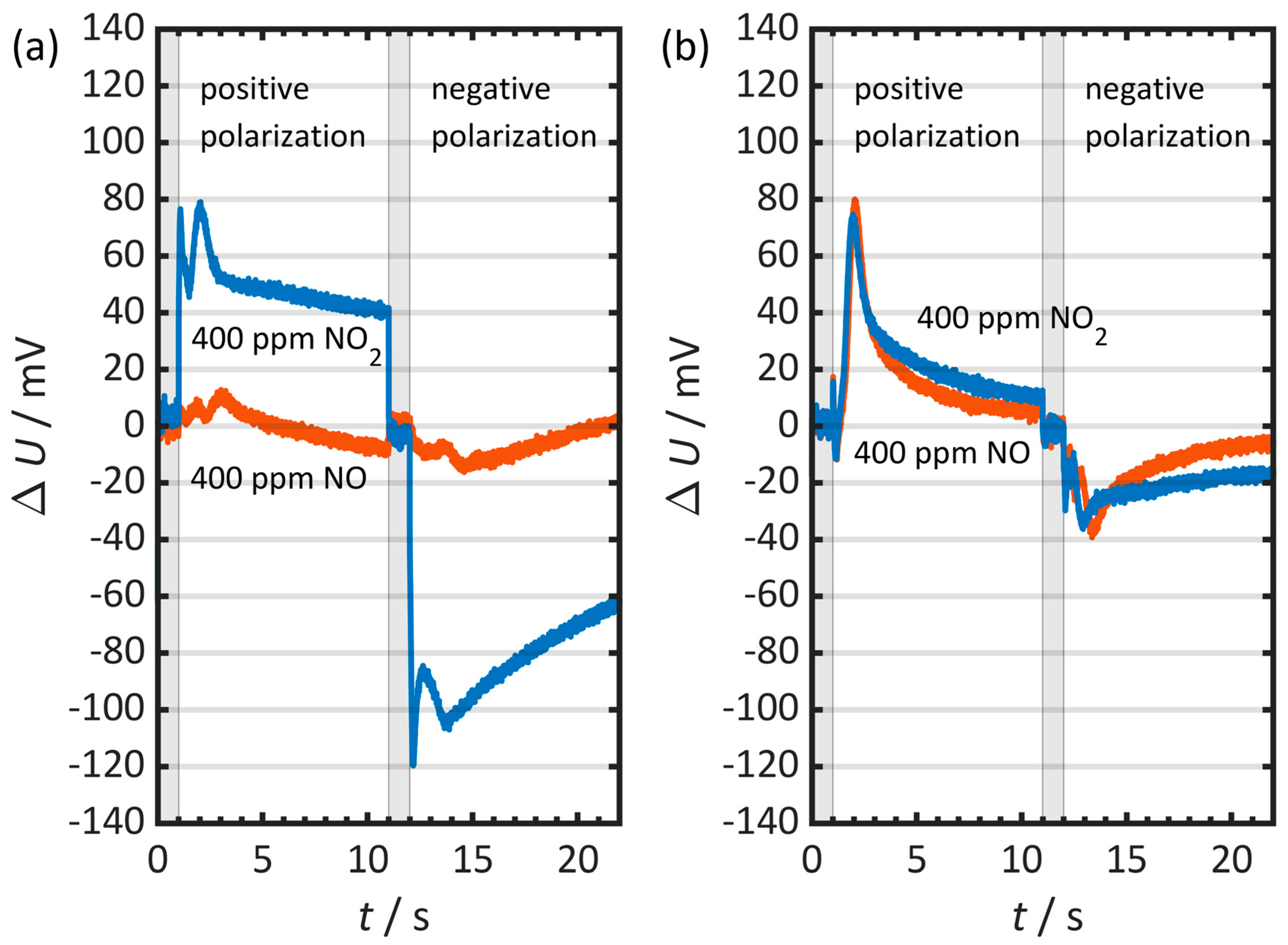
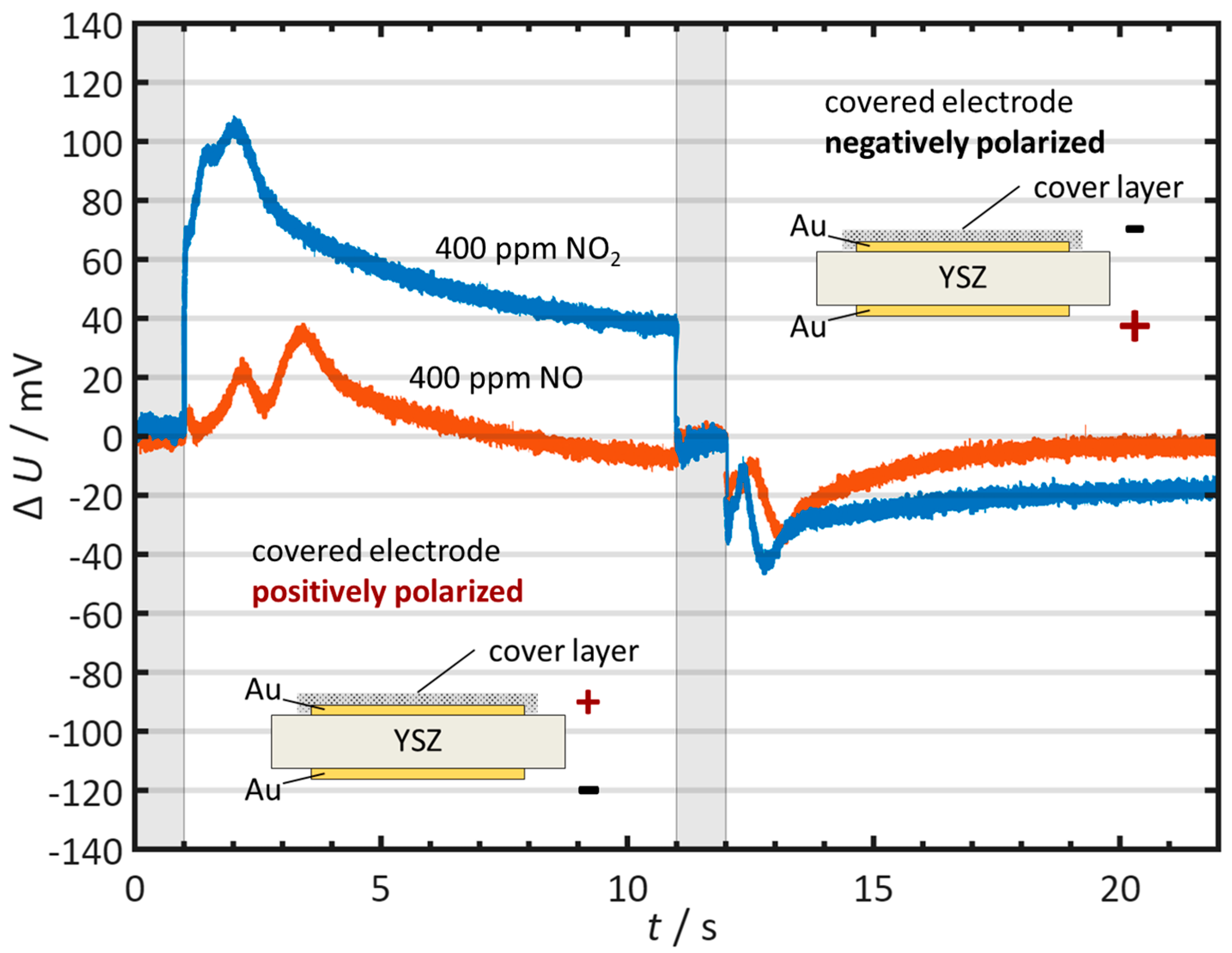
- Pulsed polarization with Au electrodes on YSZ shows that NO2 accelerates self-discharge from the beginning, while NO, CO, and H2 slow down discharge in the late stage. C3H6 does not affect the discharging behavior.
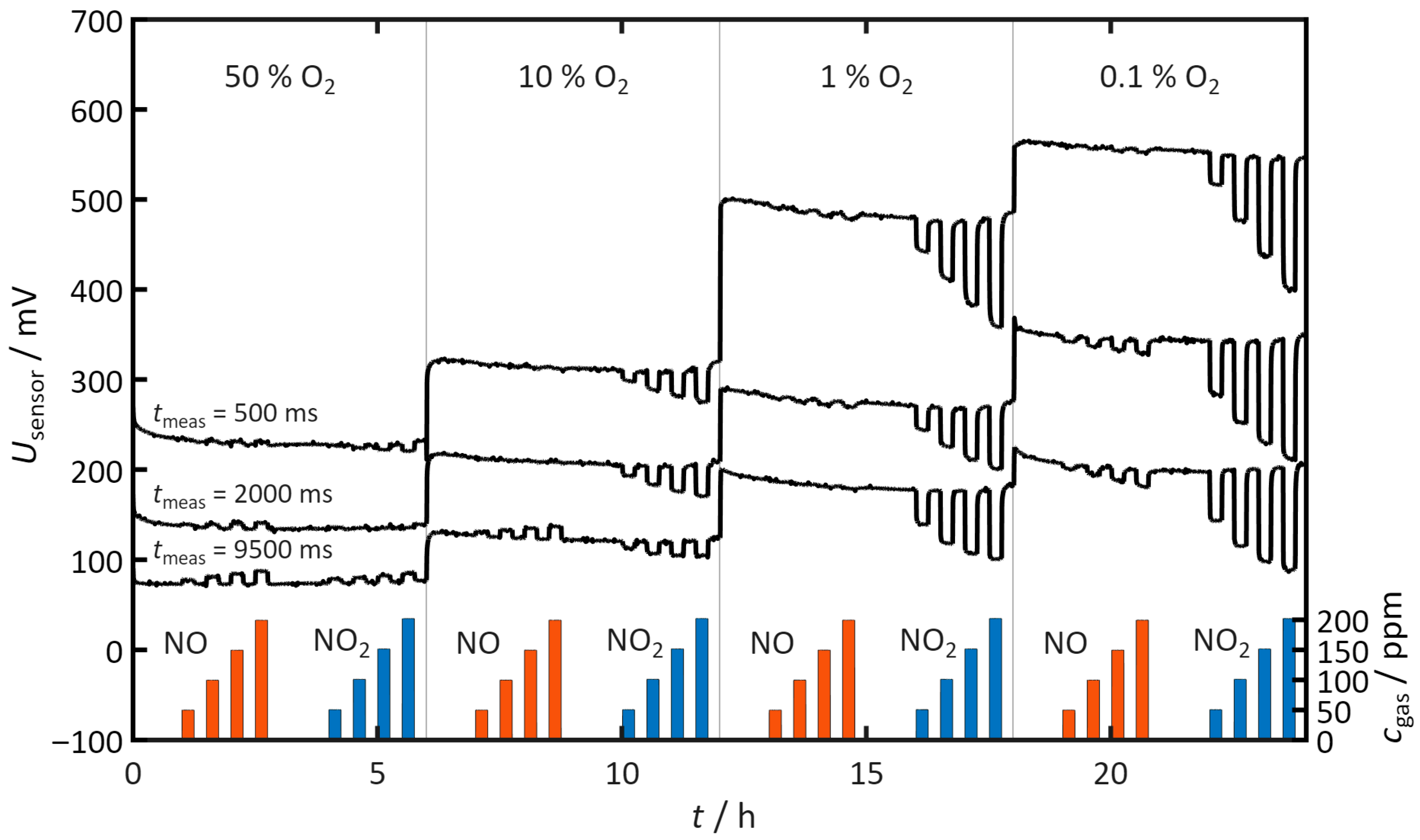
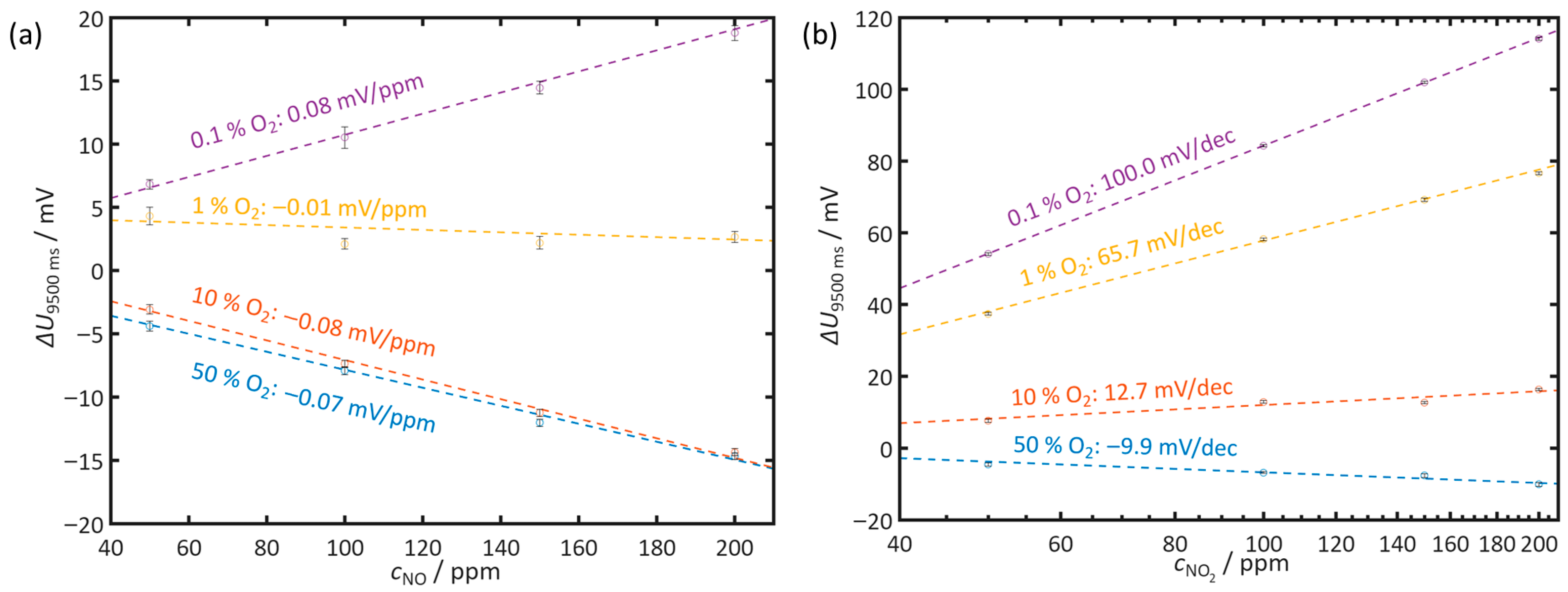
- A lower O2 content slows down discharge and intensifies the NO2 effect.
- Oxygen supply and surface exchange at the triple-phase boundary are rate-determining during pulsed polarization.
- NO and NO2 might be selectively distinguished from each other by choosing appropriate electrode materials.
Abstract
1. Introduction
2. Materials and Methods
2.1. Sensor Fabrication
2.2. Pulsed Polarization
2.3. Gas Measurements
3. Results
3.1. OCV Measurements
3.2. NOx-Dependency During Pulsed Polarization
3.3. O2 Dependency
3.4. Response to Other Gases
3.5. Catalytical Active Layer
4. Discussion
5. Conclusions
Author Contributions
Funding
Institutional Review Board Statement
Informed Consent Statement
Data Availability Statement
Acknowledgments
Conflicts of Interest
Abbreviations
| 8YSZ | 8 mol-% yttria-stabilized zirconia |
| CL | Catalytic layer |
| OCV | Open-Circuit Voltage |
| ppm | parts per million |
References
- Boningari, T.; Smirniotis, P.G. Impact of nitrogen oxides on the environment and human health: Mn-based materials for the NOx abatement. Curr. Opin. Chem. Eng. 2016, 13, 133–141. [Google Scholar] [CrossRef] [Scilit]
- Selleri, T.; Melas, A.D.; Joshi, A.; Manara, D.; Perujo, A.; Suarez-Bertoa, R. An Overview of Lean Exhaust deNOx Aftertreatment Technologies and NOx Emission Regulations in the European Union. Catalysts 2021, 11, 404. [Google Scholar] [CrossRef] [Scilit]
- Taha, S.S.; Idoudi, S.; Alhamdan, N.; Ibrahim, R.H.; Surkatti, R.; Amhamed, A.; Alrebei, O.F. Comprehensive review of health impacts of the exposure to nitrogen oxides (NOx), carbon dioxide (CO2), and particulate matter (PM). J. Hazard. Mater. Adv. 2025, 19, 100771. [Google Scholar] [CrossRef] [Scilit]
- Afzal, A.; Cioffi, N.; Sabbatini, L.; Torsi, L. NOx sensors based on semiconducting metal oxide nanostructures: Progress and perspectives. Sens. Actuators B 2012, 171–172, 25–42. [Google Scholar] [CrossRef] [Scilit]
- Guth, U.; Zosel, J. Electrochemical solid electrolyte gas sensors—Hydrocarbon and NOx analysis in exhaust gases. Ionics 2004, 10, 366–377. [Google Scholar] [CrossRef] [Scilit]
- Liu, T.; Wang, X.; Li, L.; Yu, J. Review—Electrochemical NOx Gas Sensors Based on Stabilized Zirconia. J. Electrochem. Soc. 2017, 164, B610–B619. [Google Scholar] [CrossRef] [Scilit]
- Riegel, J.; Neumann, H.; Wiedenmann, H.-M. Exhaust gas sensors for automotive emission control. Solid State Ion. 2002, 152–153, 783–800. [Google Scholar] [CrossRef] [Scilit]
- Regitz, S.; Collings, N. Fast response air-to-fuel ratio measurements using a novel device based on a wide band lambda sensor. Meas. Sci. Technol. 2008, 19, 75201. [Google Scholar] [CrossRef] [Scilit]
- Coillard, V.; Juste, L.; Lucat, C.; Ménil, F. Nitrogen-monoxide sensing with a commercial zirconia lambda gauge biased in amperometric mode. Meas. Sci. Technol. 2000, 11, 212–220. [Google Scholar] [CrossRef] [Scilit]
- Fischer, S.; Pohle, R.; Farber, B.; Proch, R.; Kaniuk, J.; Fleischer, M.; Moos, R. Method for detection of NOx in exhaust gases by pulsed discharge measurements using standard zirconia-based lambda sensors. Sens. Actuators B 2010, 147, 780–785. [Google Scholar] [CrossRef] [Scilit]
- Hibino, T.; Kuwahara, Y.; Otsuka, T.; Ishida, N.; Oshima, T. NOx detection using the electrolysis of water vapour in a YSZ cell Part I. NOx detection. Solid State Ion. 1998, 107, 213–216. [Google Scholar] [CrossRef] [Scilit]
- Ménil, F.; Coillard, V.; Lucat, C. Critical review of nitrogen monoxide sensors for exhaust gases of lean burn engines. Sens. Actuators B 2000, 67, 1–23. [Google Scholar] [CrossRef] [Scilit]
- Schmidt-Zhang, P.; Sandow, K.-P.; Adolf, F.; Göpel, W.; Guth, U. A novel thick film sensor for simultaneous O2 and NO monitoring in exhaust gases. Sens. Actuators B 2000, 70, 25–29. [Google Scholar] [CrossRef] [Scilit]
- Wang, L.; Han, B.; Wang, Z.; Dai, L.; Zhou, H.; Li, Y.; Wang, H. Effective improvement of sensing performance of amperometric NO2 sensor by Ag-modified nano-structured CuO sensing electrode. Sens. Actuators B 2015, 207, 791–800. [Google Scholar] [CrossRef] [Scilit]
- Nakamura, T.; Sakamoto, Y.; Saji, K.; Sakata, J. NOx decomposition mechanism on the electrodes of a zirconia-based am-perometric NOx sensor. Sens. Actuators B 2003, 93, 214–220. [Google Scholar] [CrossRef] [Scilit]
- Zhuiykov, S.; Miura, N. Development of zirconia-based potentiometric NOx sensors for automotive and energy industries in the early 21st century: What are the prospects for sensors? Sens. Actuators B 2007, 121, 639–651. [Google Scholar] [CrossRef] [Scilit]
- Aliramezani, M.; Koch, C.R.; Secanell, M.; Hayes, R.E.; Patrick, R. An electrochemical model of an amperometric NOx sensor. Sens. Actuators B 2019, 290, 302–311. [Google Scholar] [CrossRef] [Scilit]
- Do, J.-S.; Chen, P.-J. Amperometric sensor array for NOx, CO, O2 and SO2 detection. Sens. Actuators B 2007, 122, 165–173. [Google Scholar] [CrossRef] [Scilit]
- Knake, R.; Jacquinot, P.; Hodgson, A.W.; Hauser, P.C. Amperometric sensing in the gas-phase. Anal. Chim. Acta 2005, 549, 1–9. [Google Scholar] [CrossRef] [Scilit]
- Miura, N.; Lu, G.; Yamazoe, N. High-temperature potentiometric/amperometric NOx sensors combining stabilized zirconia with mixed-metal oxide electrode. Sens. Actuators B 1998, 52, 169–178. [Google Scholar]
- Liu, F.; Guan, Y.; Sun, H.; Xu, X.; Sun, R.; Liang, X.; Sun, P.; Gao, Y.; Lu, G. YSZ-based NO2 sensor utilizing hierarchical In2O3 electrode. Sens. Actuators B 2016, 222, 698–706. [Google Scholar] [CrossRef] [Scilit]
- Sun, R.; Guan, Y.; Cheng, X.; Guan, Y.; Liang, X.; Ma, J.; Sun, P.; Sun, Y.; Lu, G. High performance three-phase boundary obtained by sand blasting technology for mixed-potential-type zirconia-based NO2 sensors. Sens. Actuators B 2015, 210, 91–95. [Google Scholar] [CrossRef] [Scilit]
- Romanytsia, I.; Viricelle, J.-P.; Vernoux, P.; Pijolat, C. Application of advanced morphology Au–X (X=YSZ, ZrO2) composites as sensing electrode for solid state mixed-potential exhaust NOx sensor. Sens. Actuators B 2015, 207, 391–397. [Google Scholar] [CrossRef] [Scilit]
- Liu, F.; Guan, Y.; Dai, M.; Zhang, H.; Guan, Y.; Sun, R.; Liang, X.; Sun, P.; Liu, F.; Lu, G. High performance mixed-potential type NO2 sensors based on three-dimensional TPB and Co3V2O8 sensing electrode. Sens. Actuators B 2015, 216, 121–127. [Google Scholar] [CrossRef] [Scilit]
- Lu, G.; Diao, Q.; Yin, C.; Yang, S.; Guan, Y.; Cheng, X.; Liang, X. High Performance Mixed-Potential Type NOx Sensor Based on Stabilized Zirconia and Oxide Electrode. Solid State Ion. 2014, 262, 292–297. [Google Scholar] [CrossRef] [Scilit]
- Yin, C.; Guan, Y.; Zhu, Z.; Liang, X.; Wang, B.; Diao, Q.; Zhang, H.; Ma, J.; Liu, F.; Sun, Y.; et al. Highly sensitive mixed-potential-type NO2 sensor using porous double-layer YSZ substrate. Sens. Actuators B 2013, 183, 474–477. [Google Scholar] [CrossRef] [Scilit]
- Mahendraprabhu, K.; Miura, N.; Elumalai, P. Temperature dependence of NO2 sensitivity of YSZ-based mixed potential type sensor attached with NiO sensing electrode. Ionics 2013, 19, 1681–1686. [Google Scholar] [CrossRef] [Scilit]
- Giang, H.T.; Duy, H.T.; Ngan, P.Q.; Thai, G.H.; Thu, D.T.A.; Thu, D.T.; Toan, N.N. High sensitivity and selectivity of mixed potential sensor based on Pt/YSZ/SmFeO3 to NO2 gas. Sens. Actuators B 2013, 183, 550–555. [Google Scholar] [CrossRef] [Scilit]
- Ramaiyan, K.P.; Mukundan, R. Editors’ Choice—Review—Recent Advances in Mixed Potential Sensors. J. Electrochem. Soc. 2020, 167, 037547. [Google Scholar] [CrossRef] [Scilit]
- Park, C.O.; Akbar, S.A.; Weppner, W. Ceramic electrolytes and electrochemical sensors. J. Mater. Sci. 2003, 38, 4639–4660. [Google Scholar] [CrossRef] [Scilit]
- Park, C.O.; Fergus, J.W.; Miura, N.; Park, J.; Choi, A. Solid-state electrochemical gas sensors. Ionics 2009, 15, 261–284. [Google Scholar] [CrossRef] [Scilit]
- Guillet, N.; Lalauze, R.; Viricelle, J.-P.; Pijolat, C. The influence of the electrode size on the electrical response of a potentiometric gas sensor to the action of oxygen. IEEE Sens. J. 2002, 2, 349–353. [Google Scholar] [CrossRef]
- Szabo, N.F.; Dutta, P.K. Strategies for total NOx measurement with minimal CO interference utilizing a microporous zeolitic catalytic filter. Sens. Actuators B 2003, 88, 168–177. [Google Scholar] [CrossRef] [Scilit]
- Diao, Q.; Yin, C.; Liu, Y.; Li, J.; Gong, X.; Liang, X.; Yang, S.; Chen, H.; Lu, G. Mixed-potential-type NO2 sensor using stabilized zirconia and Cr2O3–WO3 nanocomposites. Sens. Actuators B 2013, 180, 90–95. [Google Scholar] [CrossRef] [Scilit]
- Liang, X.; Yang, S.; Li, J.; Zhang, H.; Diao, Q.; Zhao, W.; Lu, G. Mixed-potential-type zirconia-based NO2 sensor with high-performance three-phase boundary. Sens. Actuators B 2011, 158, 1–8. [Google Scholar] [CrossRef] [Scilit]
- Miura, N.; Akisada, K.; Wang, J.; Zhuiykov, S.; Ono, T. Mixed-potential-type NOx sensor based on YSZ and zinc oxide sensing electrode. Ionics 2004, 10, 1–9. [Google Scholar] [CrossRef] [Scilit]
- Fergus, J.W. Materials for high temperature electrochemical NOx gas sensors. Sens. Actuators B 2007, 121, 652–663. [Google Scholar] [CrossRef] [Scilit]
- Halley, S.; Ramaiyan, K.P.; Tsui, L.; Garzon, F. A review of zirconia oxygen, NOx, and mixed potential gas sensors—History and current trends. Sens. Actuators B 2022, 370, 132363. [Google Scholar] [CrossRef] [Scilit]
- Ritter, T.; Zosel, J.; Guth, U. Solid electrolyte gas sensors based on mixed potential principle—A review. Sens. Actuators B 2023, 382, 133508. [Google Scholar] [CrossRef] [Scilit]
- Miura, N.; Sato, T.; Anggraini, S.A.; Ikeda, H.; Zhuiykov, S. A review of mixed-potential type zirconia-based gas sensors. Ionics 2014, 20, 901–925. [Google Scholar] [CrossRef] [Scilit]
- Zhang, X.; Kohler, H.; Schwotzer, M.; Wu, Y.H.; Guth, U. Layered Au, Pt-YSZ mixed potential gas sensing electrode: Corre-lation among sensing response, dynamic electrochemical behavior and structural properties. Sens. Actuators B 2019, 278, 117–125. [Google Scholar] [CrossRef] [Scilit]
- Zhang, X.; Kohler, H.; Schwotzer, M.; Guth, U. Mixed-potential gas sensor with PtAu-8YSZ sensing electrode: Electric potential difference measurements at isothermal and thermo-cyclic operation. Sens. Actuators B 2015, 217, 107–112. [Google Scholar] [CrossRef] [Scilit]
- Schütze, A.; Sauerwald, T. Dynamic operation of semiconductor sensors. In Semiconductor Gas Sensors, 2nd ed.; Jaaniso, R., Tan, O.K., Eds.; Woodhead Publishing: Duxford, UK, 2020; pp. 385–412. ISBN 9780081025598. [Google Scholar]
- Baur, T.; Amann, J.; Schultealbert, C.; Schütze, A. Field Study of Metal Oxide Semiconductor Gas Sensors in Temperature Cycled Operation for Selective VOC Monitoring in Indoor Air. Atmosphere 2021, 12, 647. [Google Scholar] [CrossRef] [Scilit]
- Meng, F.; Shi, X.; Yuan, Z.; Ji, H.; Qin, W.; Shen, Y.; Xing, C. Detection of four alcohol homologue gases by ZnO gas sensor in dynamic interval temperature modulation mode. Sens. Actuators B 2022, 350, 130867. [Google Scholar] [CrossRef] [Scilit]
- Ojha, B.; Wilke, A.; Brämer, R.; Franzreb, M.; Kohler, H. Thermo-cyclically operated metal oxide gas sensor arrays for analysis of dissolved volatile organic compounds in fermentation processes: Part II—Quasi online monitoring in biogas fermentation. Sens. Bio-Sens. Res. 2024, 43, 100606. [Google Scholar] [CrossRef] [Scilit]
- Zhang, S.; Yuan, Z.; Zhang, W.; Ji, H.; Cheng, Z.; Meng, F. Strategy to expedite gas sensor calibration based on cyclic tem-perature operation and data augmentation. Sens. Actuators B 2024, 416, 136060. [Google Scholar] [CrossRef] [Scilit]
- Roh, S.-W.; Stetter, J.R. Amperometric Sensing of NOx with Cyclic Voltammetry. J. Electrochem. Soc. 2003, 150, H266. [Google Scholar] [CrossRef] [Scilit]
- Gross, P.-A.; Jaramillo, T.; Pruitt, B. Cyclic-Voltammetry-Based Solid-State Gas Sensor for Methane and Other VOC Detection. Anal. Chem. 2018, 90, 6102–6108. [Google Scholar] [CrossRef] [Scilit] [PubMed]
- Ruchets, A.; Donker, N.; Schönauer-Kamin, D.; Moos, R.; Zosel, J.; Guth, U.; Mertig, M. Selectivity improvement towards hydrogen and oxygen of solid electrolyte sensors by dynamic electrochemical methods. Sens. Actuators B 2019, 290, 53–58. [Google Scholar] [CrossRef] [Scilit]
- Ruchets, A.; Donker, N.; Zosel, J.; Schönauer-Kamin, D.; Moos, R.; Guth, U.; Mertig, M. Cyclic and square-wave voltammetry for selective simultaneous NO and O2 gas detection by means of solid electrolyte sensors. J. Sens. Sens. Syst. 2020, 9, 355–362. [Google Scholar] [CrossRef] [Scilit]
- Rheaume, J.M.; Pisano, A.P. A review of recent progress in sensing of gas concentration by impedance change. Ionics 2011, 17, 99–108. [Google Scholar] [CrossRef] [Scilit]
- Rheaume, J.M.; Pisano, A.P. Investigation of an impedancemetric NOx sensor with gold wire working electrodes. J. Solid State Electrochem. 2012, 16, 3603–3610. [Google Scholar] [CrossRef] [Scilit]
- Joo, B.-S.; Choi, N.-J.; Lee, Y.-S.; Lim, J.-W.; Kang, B.-H.; Lee, D.-D. Pattern recognition of gas sensor array using characteristics of impedance. Sens. Actuators B 2001, 77, 209–214. [Google Scholar] [CrossRef] [Scilit]
- Balasubramani, V.; Chandraleka, S.; Rao, T.S.; Sasikumar, R.; Kuppusamy, M.R.; Sridhar, T.M. Review—Recent Advances in Electrochemical Impedance Spectroscopy Based Toxic Gas Sensors Using Semiconducting Metal Oxides. J. Electrochem. Soc. 2020, 167, 037572. [Google Scholar] [CrossRef] [Scilit]
- Potyrailo, R.A.; Go, S.; Sexton, D.; Li, X.; Alkadi, N.; Kolmakov, A.; Amm, B.; St-Pierre, R.; Scherer, B.; Nayeri, M.; et al. Ex-traordinary performance of semiconducting metal oxide gas sensors using dielectric excitation. Nat. Electron. 2020, 3, 280–289. [Google Scholar] [CrossRef] [Scilit]
- Fischer, S.; Pohle, R.; Magori, E.; Schönauer-Kamin, D.; Fleischer, M.; Moos, R. Pulsed polarization of platinum electrodes on YSZ. Solid State Ion. 2012, 225, 371–375. [Google Scholar] [CrossRef] [Scilit]
- Fischer, S.; Pohle, R.; Magori, E.; Fleischer, M.; Moos, R. Detection of NO by pulsed polarization of Pt I YSZ. Solid State Ion. 2014, 262, 288–291. [Google Scholar] [CrossRef] [Scilit]
- Fischer, S.; Schönauer-Kamin, D.; Pohle, R.; Fleischer, M.; Moos, R. Influence of operation temperature variations on NO measurements in low concentrations when applying the pulsed polarization technique to thimble-type lambda probes. J. Sens. Sens. Syst. 2015, 4, 321–329. [Google Scholar] [CrossRef] [Scilit]
- Exner, J.; Albrecht, G.; Schönauer-Kamin, D.; Kita, J.; Moos, R. Pulsed Polarization-Based NOx Sensors of YSZ Films Produced by the Aerosol Deposition Method and by Screen-Printing. Sensors 2017, 17, 1715. [Google Scholar] [CrossRef] [Scilit]
- Farber, B. Method of Sensor Conditioning for Improving Signal Output Stability for Mixed Gas Measurements. U.S. Patent US7585402B2, 15 June 2005. [Google Scholar]
- Bhatia, D.; McCabe, R.W.; Harold, M.P.; Balakotaiah, V. Experimental and kinetic study of NO oxidation on model Pt catalysts. J. Catal. 2009, 266, 106–119. [Google Scholar] [CrossRef] [Scilit]
- Olsson, L. The Influence of Pt Oxide Formation and Pt Dispersion on the Reactions NO2⇔NO+1/2 O2 over Pt/Al2O3 and Pt/BaO/Al2O3. J. Catal. 2002, 210, 340–353. [Google Scholar] [CrossRef] [Scilit]
- Hammer, B.; Norskov, J.K. Why gold is the noblest of all the metals. Nature 1995, 376, 238–240. [Google Scholar] [CrossRef] [Scilit]
- Wiegärtner, S.; Hagen, G.; Kita, J.; Reitmeier, W.; Hien, M.; Grass, P.; Moos, R. Thermoelectric hydrocarbon sensor in thick-film technology for on-board-diagnostics of a diesel oxidation catalyst. Sens. Actuators B 2015, 214, 234–240. [Google Scholar] [CrossRef] [Scilit]
- Donker, N.; Ruchets, A.; Schönauer-Kamin, D.; Zosel, J.; Guth, U.; Moos, R. Influence of polarization time and polarization current of Pt|YSZ-based NO sensors utilizing the pulsed polarization when applying constant charge. Sens. Actuators B 2019, 290, 28–33. [Google Scholar] [CrossRef] [Scilit]
- Käding, S.; Jakobs, S.; Guth, U. YSZ-cells for potentiometric nitric oxide sensors. Ionics 2003, 9, 151–154. [Google Scholar] [CrossRef] [Scilit]
- Wang, C.; Li, X.; Yuan, Y.; Wang, B.; Huang, J.; Xia, F.; Zhang, H.; Xiao, J. Effects of sintering temperature on sensing properties of V2O5-WO3-TiO2 electrode for potentiometric ammonia sensor. Sens. Actuators B 2017, 241, 268–275. [Google Scholar] [CrossRef] [Scilit]
- Jaccoud, A.; Fóti, G.; Wüthrich, R.; Jotterand, H.; Comninellis, C. Effect of microstructure on the electrochemical behavior of Pt/YSZ electrodes. Top. Catal. 2007, 44, 409–417. [Google Scholar] [CrossRef] [Scilit]
- Wang, D.Y.; Nowick, A.S. Cathodic and Anodic Polarization Phenomena at Platinum Electrodes with Doped CeO2 as Elec-trolyte: I. Steady-State Overpotential. J. Electrochem. Soc. 1979, 126, 1155–1165. [Google Scholar] [CrossRef] [Scilit]
- Robertson, N.L.; Michaels, J.N. Oxygen Exchange on Platinum Electrodes in Zirconia Cells: Location of Electrochemical Reaction Sites. J. Electrochem. Soc. 1990, 137, 129. [Google Scholar] [CrossRef] [Scilit]
- Janek, J.; Korte, C. Electrochemical blackening of yttria-stabilized zirconia—Morphological instability of the moving reaction front. Solid State Ion. 1999, 116, 181–195. [Google Scholar] [CrossRef] [Scilit]
- Göpel, W.; Reinhardt, G.; Rösch, M. Trends in the development of solid state amperometric and potentiometric high tem-perature sensors. Solid State Ion. 2000, 136–137, 519–531. [Google Scholar]
- Skelton, D.C.; Wang, H.; Tobin, R.G.; Lambert, D.K.; DiMaggio, C.L.; Fisher, G.B. Suppression of Nitrogen Oxide Dissociation by Gold on Pt(335). J. Phys. Chem. B 2001, 105, 204–209. [Google Scholar] [CrossRef] [Scilit]
- Li, Y.; Hu, H.; Zhang, W.; Tian, Z.; Jiang, X.; Wang, Y.; Zhang, S.; Zhang, Q.; Jian, J.; Zou, J. Theoretical Study on the Electro-chemical Catalytic Activity of Au-Doped Pt Electrode for Nitrogen Monoxide. Chemosensors 2022, 10, 178. [Google Scholar] [CrossRef] [Scilit]
- Breedon, M.; Spencer, M.J.S.; Miura, N. Adsorption of NO2 on YSZ(111) and Oxygen-Enriched YSZ(111) Surfaces. J. Phys. Chem. C 2013, 117, 12472–12482. [Google Scholar] [CrossRef] [Scilit]
- Zhang, W.-F.; Schmidt-Zhang, P.; Guth, U. Electrochemical studies on cells M/YSZ/Pt (M=Pt, Pt-Ga2O3) in NO, O2, N2 gas mixtures. Solid State Ion. 2004, 169, 121–128. [Google Scholar] [CrossRef] [Scilit]
- Schmidt-Zhang, P.; Zhang, W.; Gerlach, F.; Ahlborn, K.; Guth, U. Electrochemical investigations on multi-metallic electrodes for amperometric NO gas sensors. Sens. Actuators B 2005, 108, 797–802. [Google Scholar] [CrossRef] [Scilit]
- Coillard, V.; Debéda, H.; Lucat, C.; Ménil, F. Nitrogen monoxide detection with a planar spinel coated amperometric sensor. Sens. Actuators B 2001, 78, 113–118. [Google Scholar] [CrossRef] [Scilit]


Disclaimer/Publisher’s Note: The statements, opinions and data contained in all publications are solely those of the individual author(s) and contributor(s) and not of MDPI and/or the editor(s). MDPI and/or the editor(s) disclaim responsibility for any injury to people or property resulting from any ideas, methods, instructions or products referred to in the content. |
© 2026 by the authors. Licensee MDPI, Basel, Switzerland. This article is an open access article distributed under the terms and conditions of the Creative Commons Attribution (CC BY) license.
Share and Cite
Donker, N.; Zosel, J.; Moos, R.; Schönauer-Kamin, D. Periodically Pulsed Polarization Gas Sensors Based on Au|YSZ: Mechanism of NOx Detection. Sensors 2026, 26, 2280. https://doi.org/10.3390/s26072280
Donker N, Zosel J, Moos R, Schönauer-Kamin D. Periodically Pulsed Polarization Gas Sensors Based on Au|YSZ: Mechanism of NOx Detection. Sensors. 2026; 26(7):2280. https://doi.org/10.3390/s26072280
Chicago/Turabian StyleDonker, Nils, Jens Zosel, Ralf Moos, and Daniela Schönauer-Kamin. 2026. "Periodically Pulsed Polarization Gas Sensors Based on Au|YSZ: Mechanism of NOx Detection" Sensors 26, no. 7: 2280. https://doi.org/10.3390/s26072280
APA StyleDonker, N., Zosel, J., Moos, R., & Schönauer-Kamin, D. (2026). Periodically Pulsed Polarization Gas Sensors Based on Au|YSZ: Mechanism of NOx Detection. Sensors, 26(7), 2280. https://doi.org/10.3390/s26072280