Highly Selective and Sensitive Fluorescent Probe for Copper (II) Ions Based on Coumarin Derivative with Aggregation-Induced Emission


Abstract
1. Introduction
2. Materials and Methods
2.1. Reagents and Apparatus
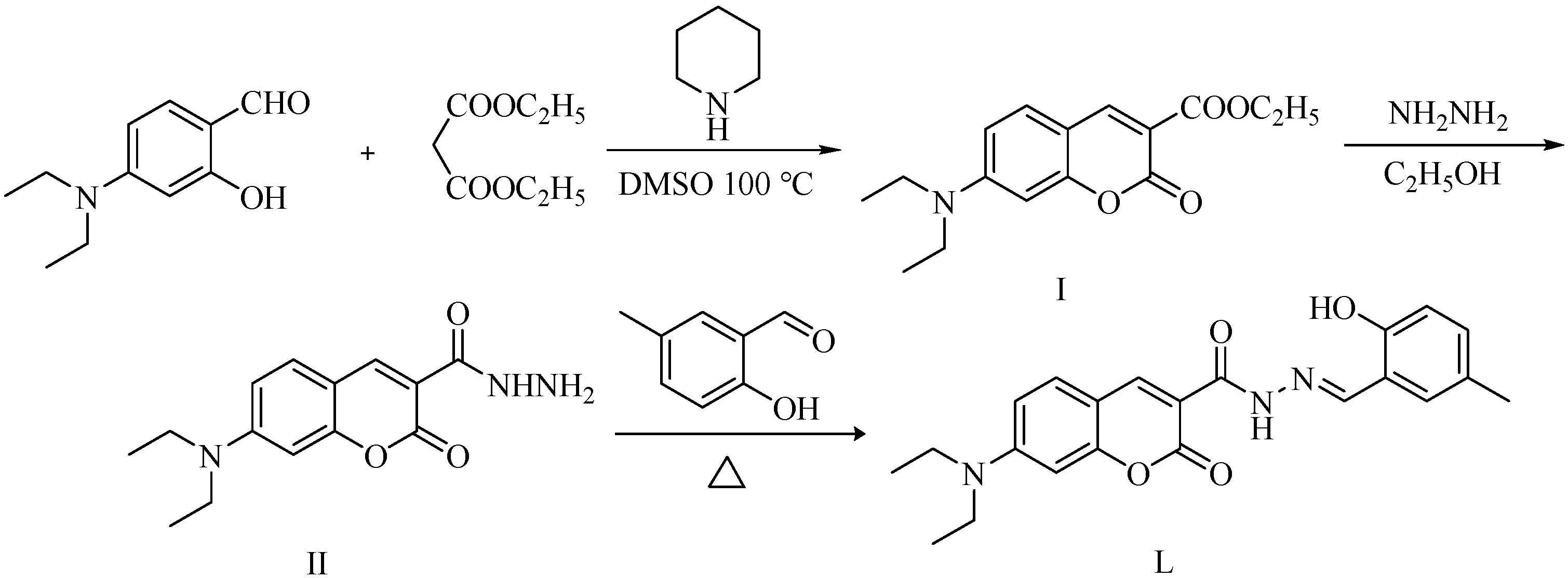
2.2. Synthesis of Intermediates I and II and Probe L
2.2.1. Synthesis of Intermediate I (Ethyl 7-Diethylaminocoumarin-3-carboxylate)
2.2.2. Synthesis of Intermediate II (7-Diethylaminocoumarin-3-formylhydrazine)
2.2.3. Synthesis of Probe L [5-Methyl-2-hydroxybenzaldehyde-(7-diethylaminocoumarin-3-formyl) hydrazone]
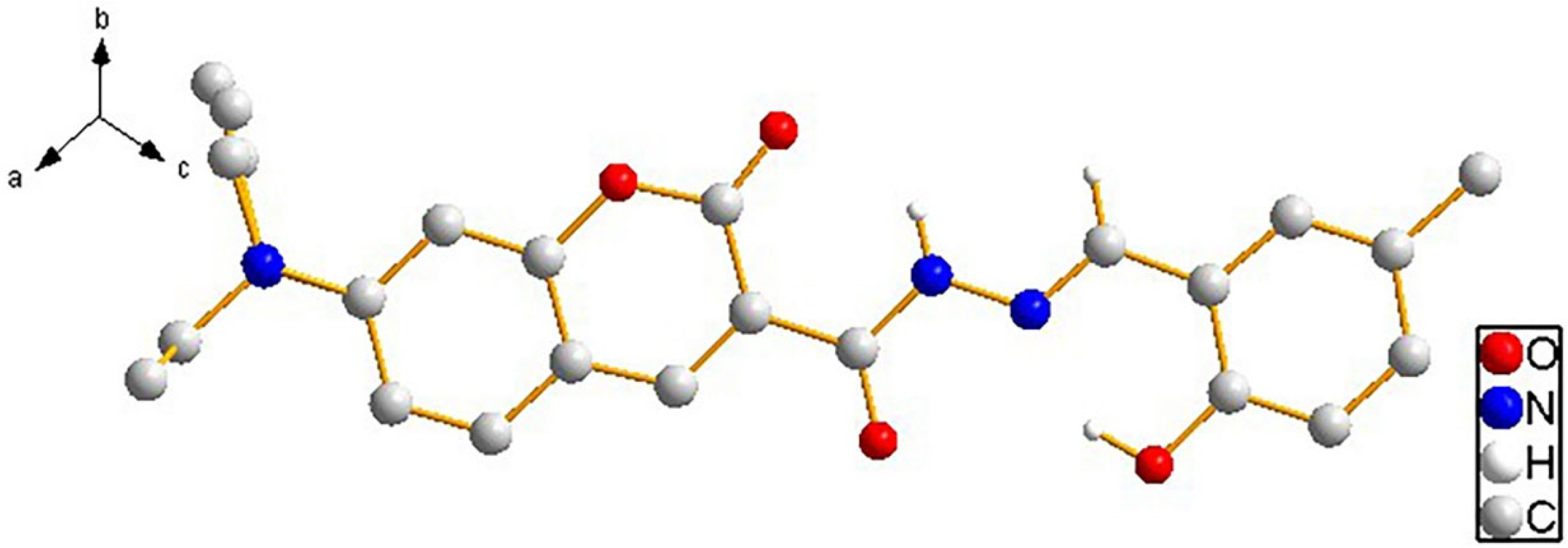
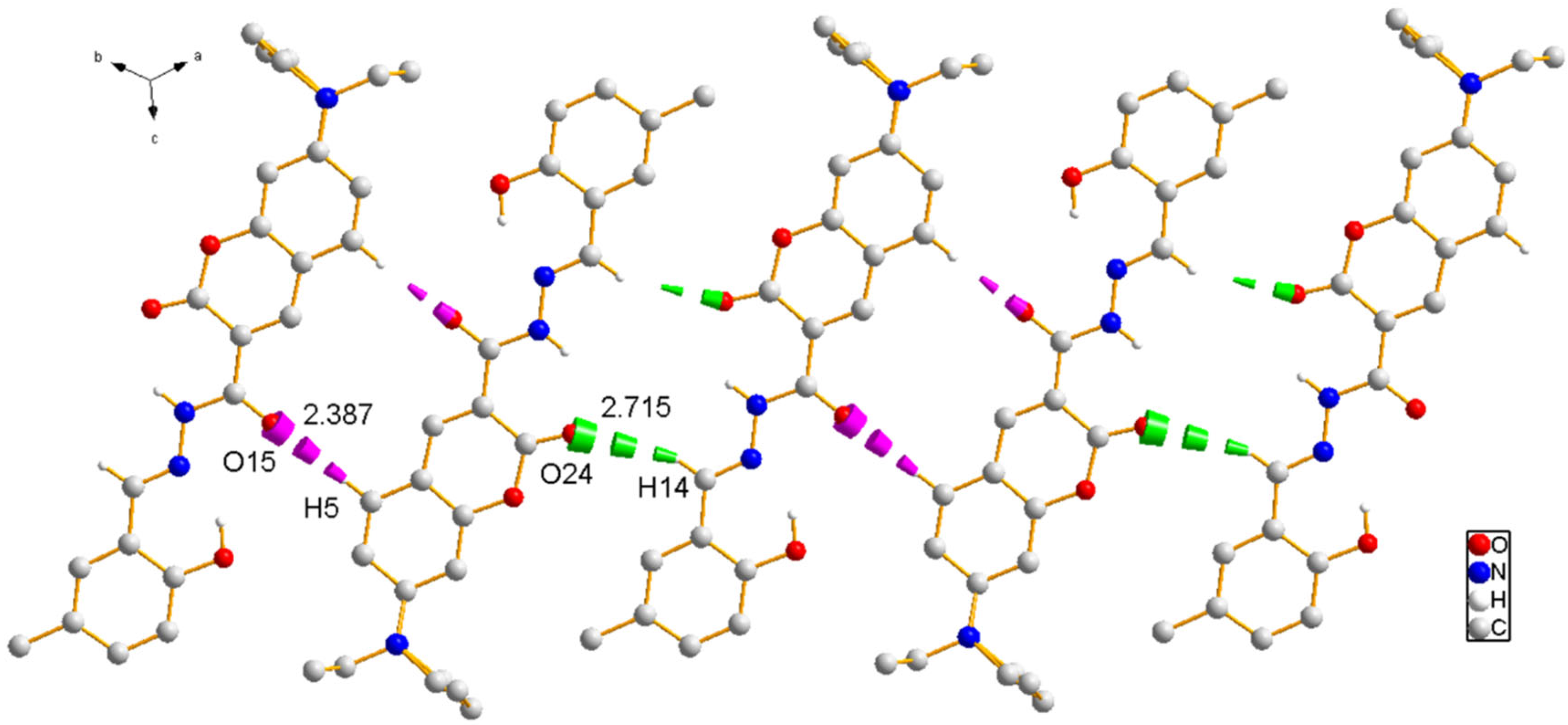
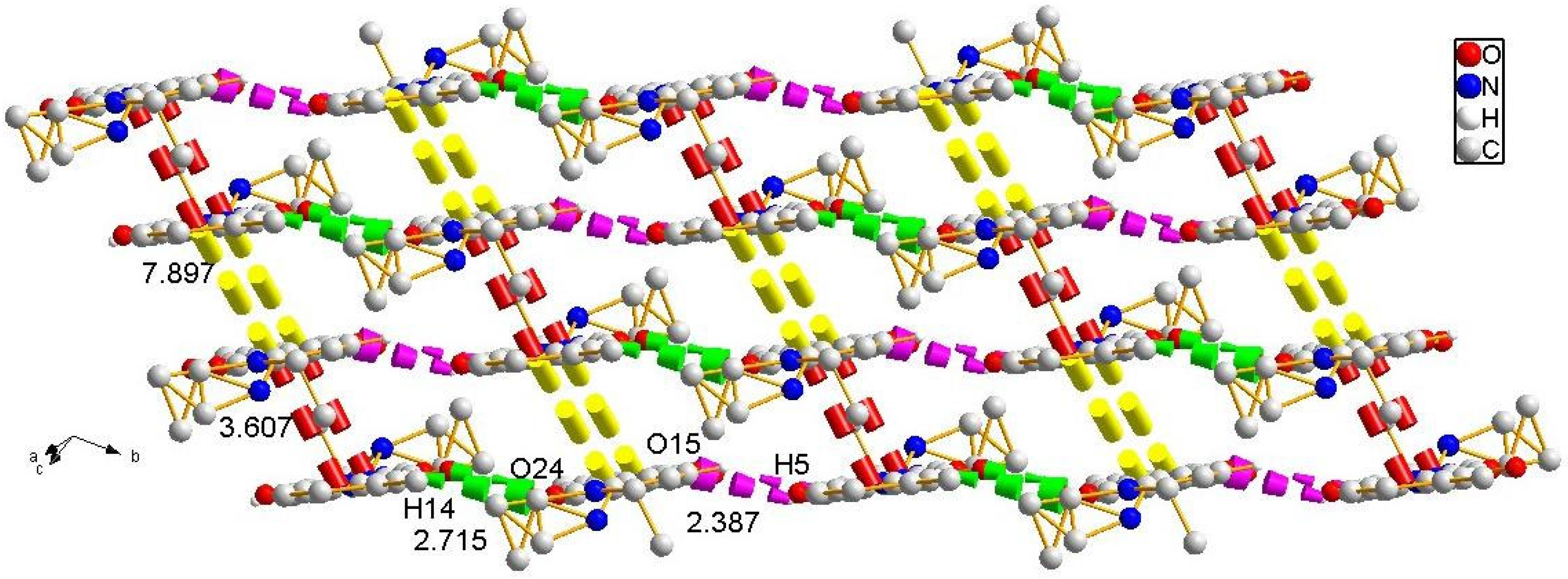
2.3. X-Ray Crystallography
2.4. Optical Property Testing of Fluorescent Probe L
2.5. Cu2+ Recognition Ability of Fluorescent Probe L
2.5.1. Selectivity Experiment
2.5.2. Fluorescence Titration Experiment
2.5.3. Anti-Interference Experiment
2.5.4. Complexation Ratio Experiment
3. Results and Discussion
3.1. Synthesis
3.2. Optical Properties of Fluorescent Probe L
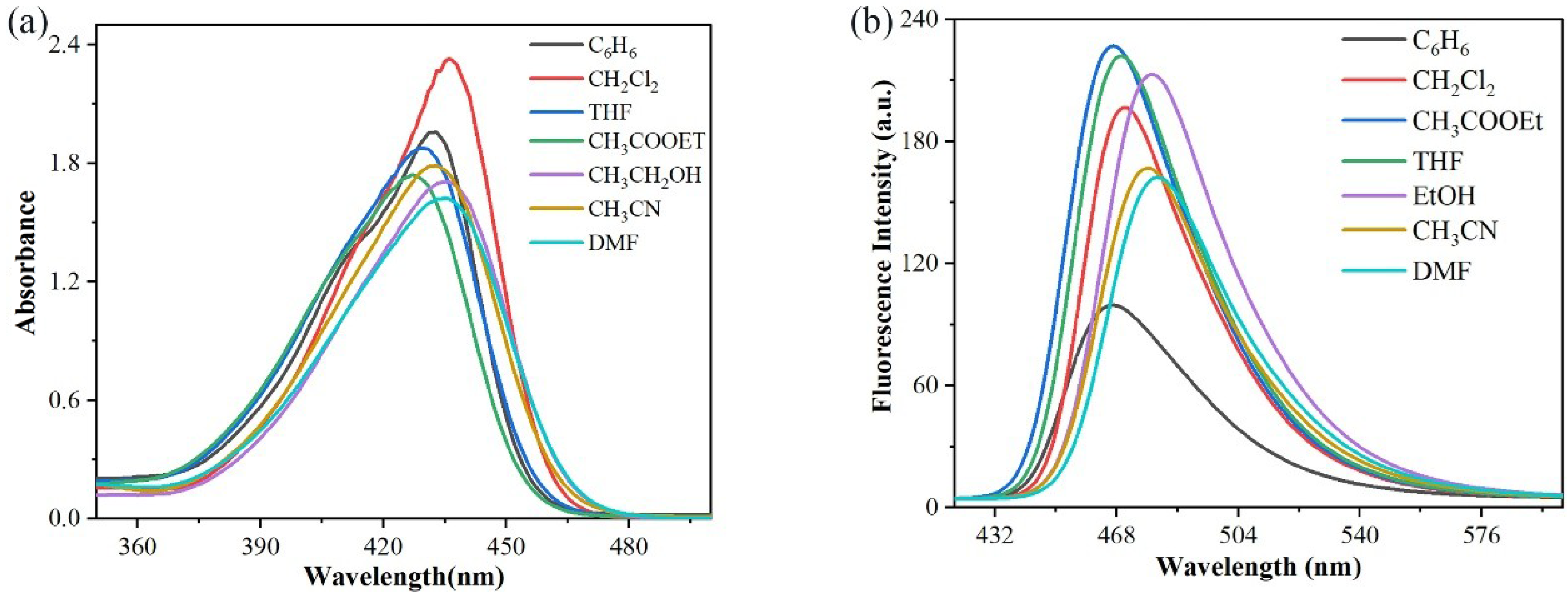
3.2.1. Solvatochromism
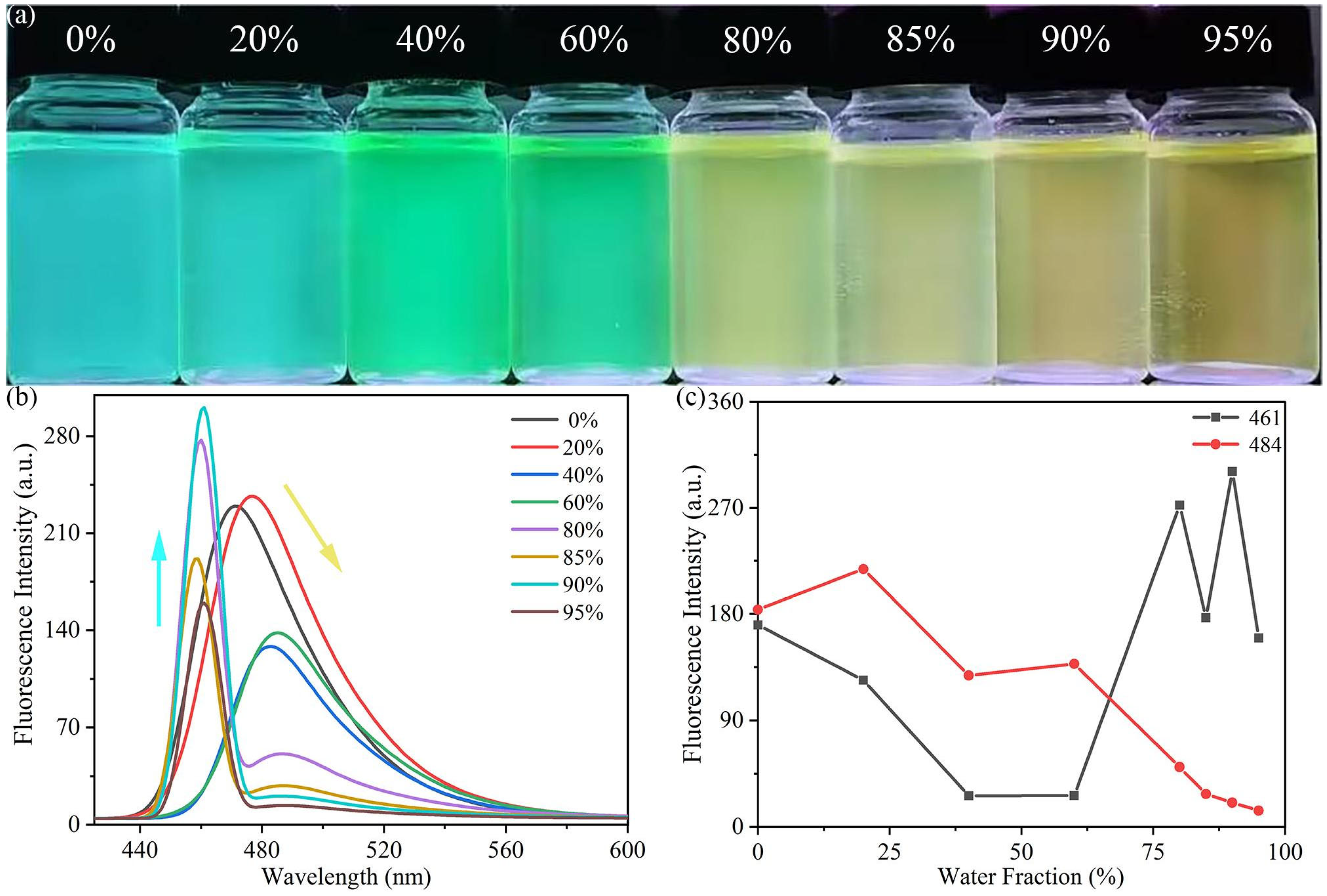
3.2.2. AIE Fluorescence Spectroscopy
3.3. Recognition of Cu2+ by Fluorescent Probe L
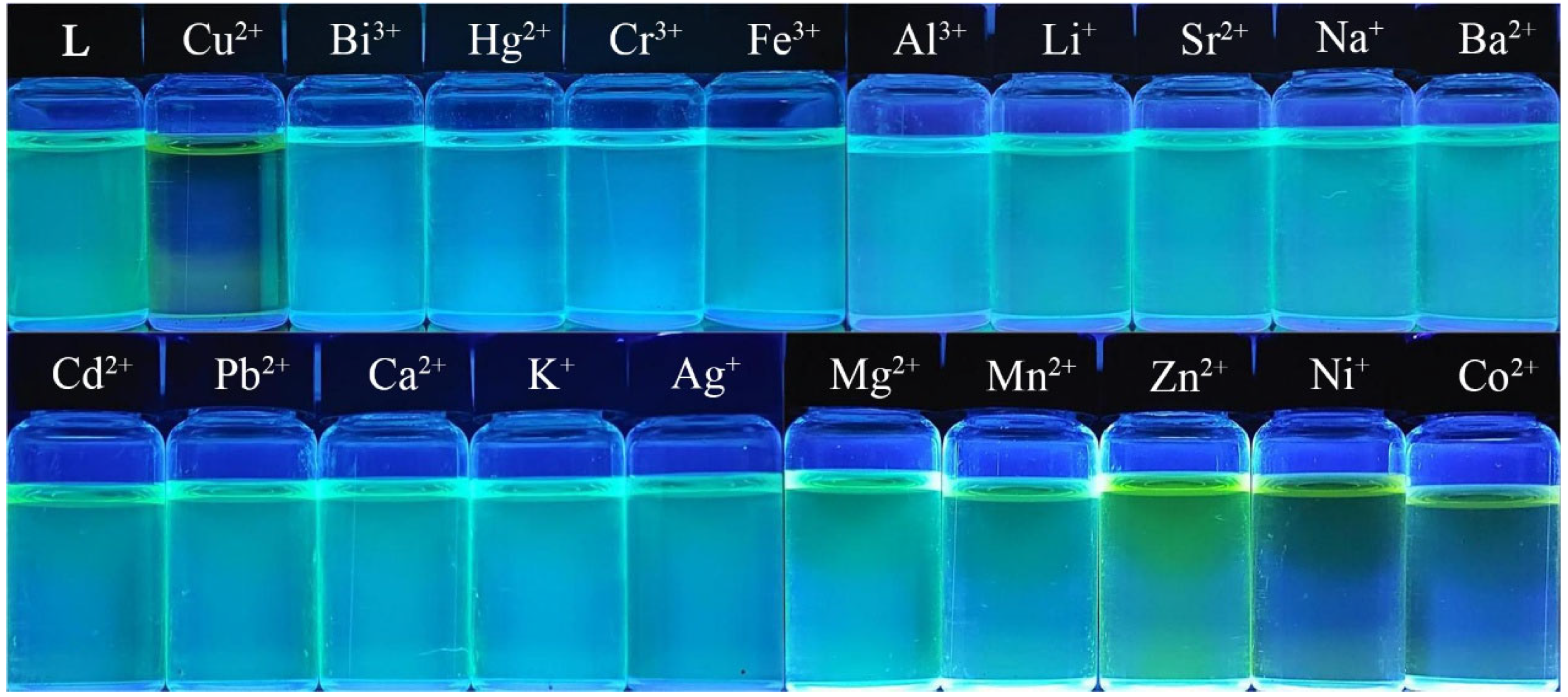
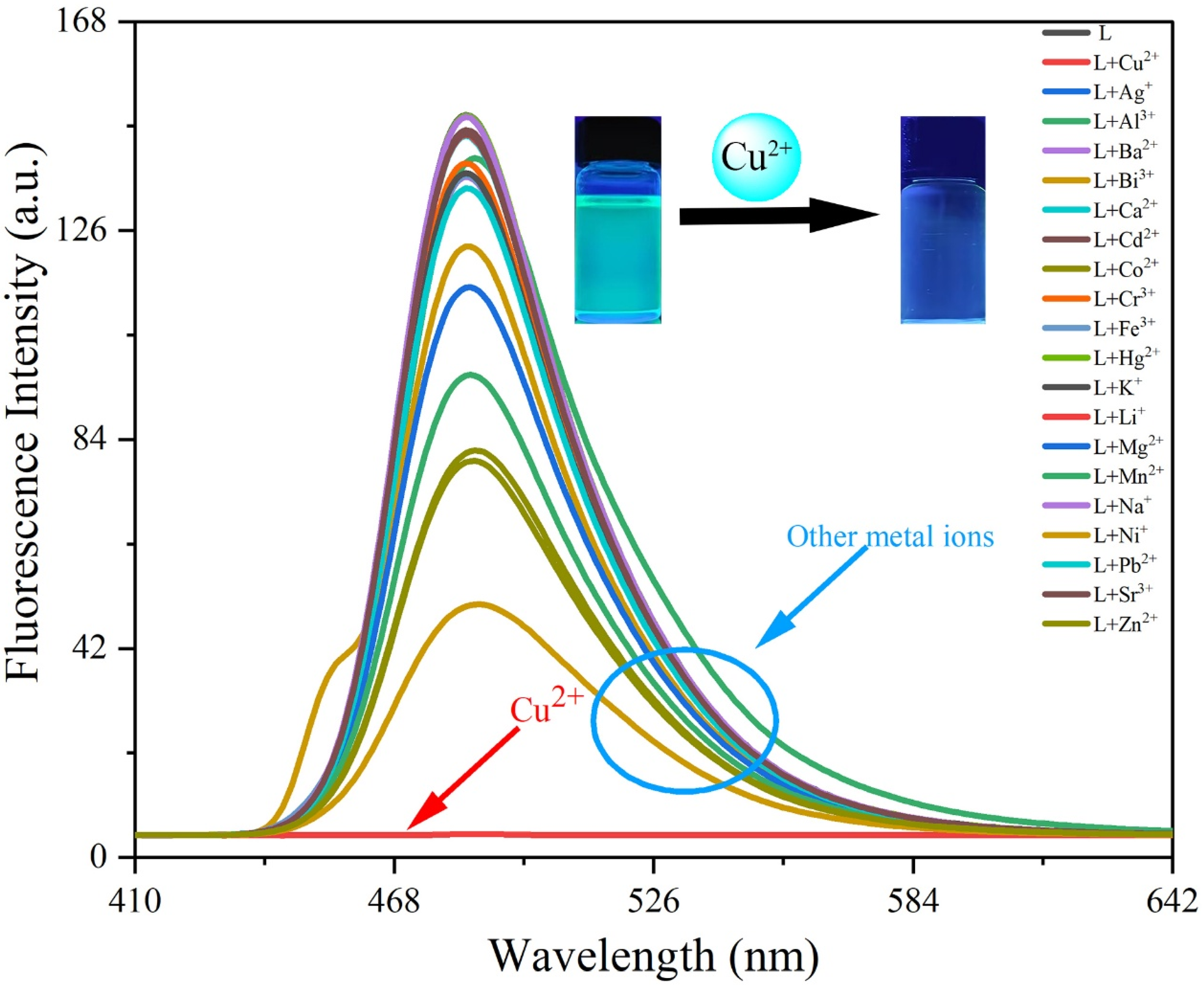
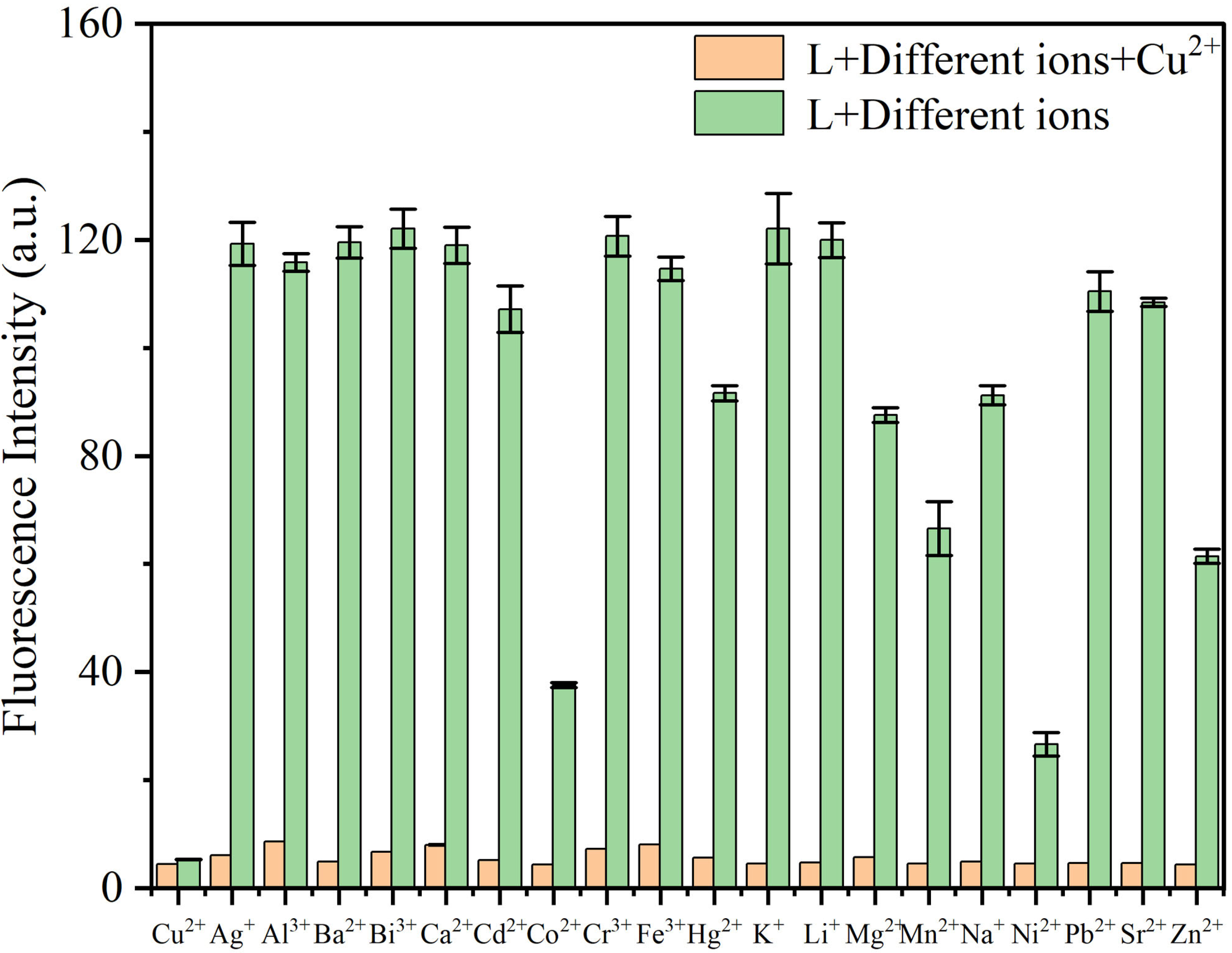
3.3.1. Selectivity
3.3.2. Anti-Interference Testing
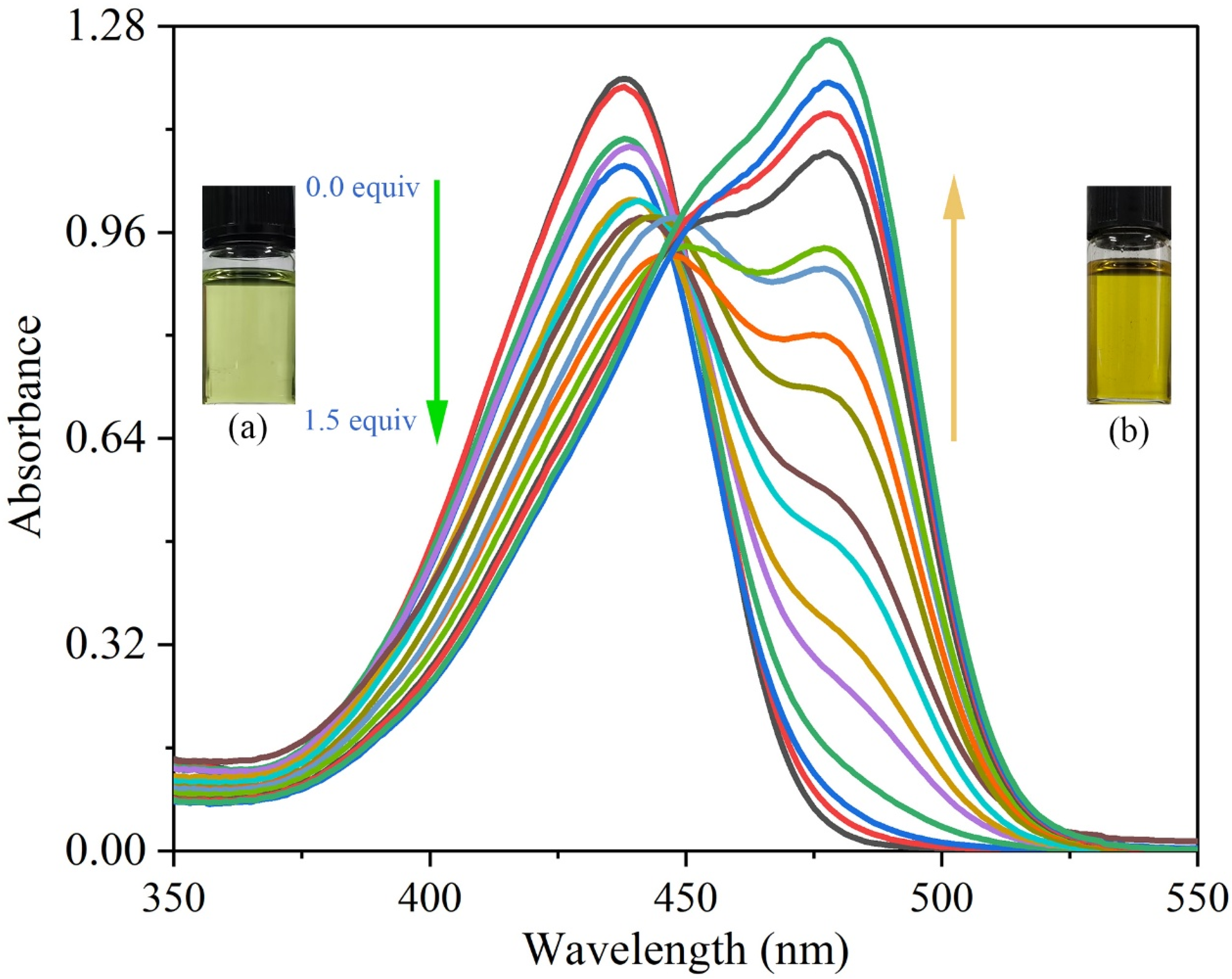
3.3.3. Ultraviolet Titration Experiments
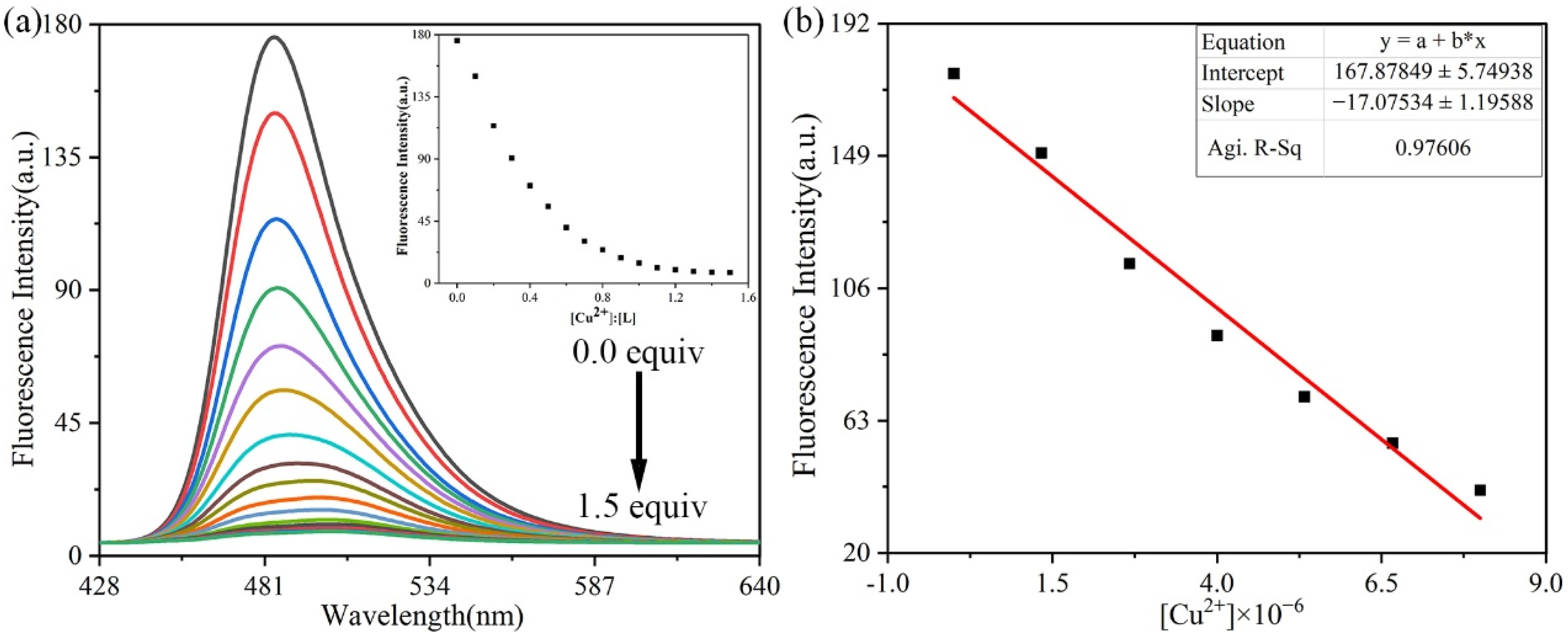
3.3.4. Fluorescence Titration Experiments and Detection Limit
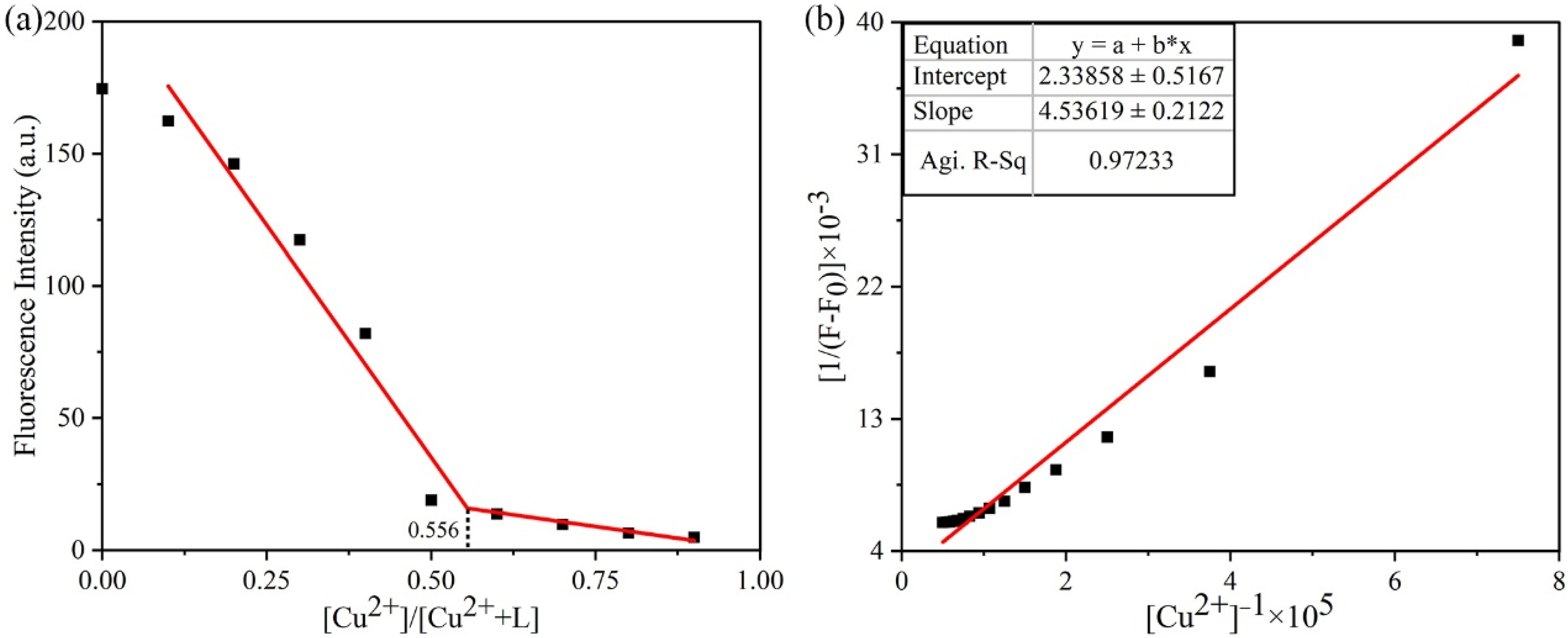
3.3.5. Complexation Ratio and Binding Constant
3.3.6. Binding Behavior of Cu2+ with Probe L
4. Conclusions
Supplementary Materials
Author Contributions
Funding
Data Availability Statement
Conflicts of Interest
References
- Briffa, J.; Sinagra, E.; Blundell, R. Heavy metal pollution in the environment and their toxicological effects on humans. Heliyon. 2020, 6, e04691. [Google Scholar] [CrossRef] [PubMed]
- Zhu, Z.; Song, M.; Ren, J.; Liang, L.; Mao, G.; Chen, M. Copper homeostasis and cuproptosis in central nervous system diseases. Cell Death Dis. 2024, 15, 850. [Google Scholar] [CrossRef] [PubMed]
- Jukkrit, N.; Rathawat, D.; Chanchai, S.; Worawat, W.; Suttipong, W.; Paitoon, R.; Kantapat, C. The synergy of CHEF and ICT toward fluorescence ‘turn-on’ probes based on push-pull benzothiazoles for selective detection of Cu2+ in acetonitrile/water mixture. J. Photochem. Photobiol. A. 2021, 415, 113318. [Google Scholar]
- Zhang, Y.; Lu, P.; Peng, P.; Wei, J.; Shi, W.; Lu, L.; Zhou, Q.; Pu, Y.; Yin, L. Acute Cu exposure induces neurotoxicity via DAF-16/FoxO and SKN-1/Nrf2 pathway. J. Environ. Sci. 2025, 157, 489–500. [Google Scholar] [CrossRef]
- Oe, S.; Miyagawa, K.; Honma, Y.; Harada, M. Copper induces hepatocyte injury due to the endoplasmic reticulum stress in cultured cells and patients with Wilson disease. Exp. Cell Res. 2016, 347, 192–200. [Google Scholar] [CrossRef]
- Yao, Y.; Long, B.; Zhu, M.; Zhang, S.; Liu, H.; Tian, L. Effects of BDE3 and the Co-Existence Copper on Photosynthesis and Antioxidative Enzymes in Salvinia natans (L.). Water. 2025, 17, 1712. [Google Scholar] [CrossRef]
- Karakebap, K.; Serbest, H.; Turak, F.; Bakırdere, S. Trace copper determination in mate tea and tap water using FAAS and spray-assisted liquid phase microextraction. J. Food Compos. Anal. 2025, 140, 107281. [Google Scholar] [CrossRef]
- Gosavi, P.M.; Gawali, S.S.; Lande, D.N.; Gejji, S.P.; Butcher, R.J. Ethylaminoanthraquinone-based optical sensor for Cu2+. J. Mol. Struct. 2025, 1339, 142356. [Google Scholar] [CrossRef]
- Ören, S.; Özbek, O.; Isildak, Ö. The use of thiazole derivative molecules as sensor materials: Potentiometric determination of Cu(II) ions. Vietnam J. Chem. 2024, 62, 486–492. [Google Scholar] [CrossRef]
- Kizil, N.; Uzcan, F.; Beydagi, B.B.; Sahin, M.; Tokum, B.A.; Yola, M.L.; Soylak, M. Determination of copper (II) in seafood and water samples by ICP-OES using magnetic titanium aluminum carbide nanocomposite for solid phase microextraction. J. Food Compos. Anal. 2025, 143, 107541. [Google Scholar] [CrossRef]
- Hou, J.; Xu, X.; Wang, Z.; Yang, X.; Rao, X.; Zhao, P.; Jiang, Q. Dicyanoisophorone-based fluorescence probe for detection of Cu2+ and its applications in living cells and mice. Spectrochim. Acta A. 2025, 343, 126477. [Google Scholar] [CrossRef] [PubMed]
- Musikavanhu, B.; Huang, X.; Ma, Q.; Xue, Z.; Feng, L.; Zhao, L. Rhodamine-benzothiazole-thiophene: A triangular molecular tool for simultaneous detection of Hg2+ and Cu2+. Microchem. J. 2024, 206, 111549. [Google Scholar] [CrossRef]
- Sushil, K.; Siddhant, S.; Arun, K.; Pramod, K. Recognition, mechanistic investigation and applications for the detection of biorelevant Cu2+/Fe2+/Fe3+ ions by ruthenium(II)-polypyridyl based fluorescent sensors. Dalton Trans. 2021, 50, 2705–2721. [Google Scholar]
- Jiang, H.; Li, Z.; Kang, Y.; Ding, L.; Qiao, S.; Jia, S.; Luo, W.; Liu, W. A two-photon fluorescent probe for Cu2+ based on dansyl moiety and its application in bioimaging. Sens. Actuators B 2017, 242, 112–117. [Google Scholar] [CrossRef]
- Yu, C.; Huang, J.; Yang, M.; Zhang, J. Construction of Chitosan-Modified Naphthalimide Fluorescence Probe for Selective Detection of Cu2+. Sensors. 2024, 24, 3425. [Google Scholar] [CrossRef]
- Mayurachayakul, P.; Chantarasriwong, O.; Kamkaew, A.; Sukwattanasinitt, M.; Niamnont, N. A novel triphenylamine-furan hydrazone-based sensing of Cu2+ ions and imaging in cancer cells. J. Mol. Struct. 2024, 1310, 138298. [Google Scholar] [CrossRef]
- Zavalishin, M.N.; Gamov, G.A.; Kiselev, A.N.; Nikitin, G.A. A fluorescein conjugate as colorimetric and red-emissive fluorescence chemosensor for selective recognition Cu2+ ions. Opt. Mater. 2024, 153, 115580. [Google Scholar] [CrossRef]
- Pichayanan, S.; Anirut, S.; Wutthinan, T.; Teerapong, J.; Varomyalin, T.; Nararak, L.; Dhassida, S. Highly sensitive and selective coumarin-based fluorescent chemosensor for Cu2+ detection. J. Photochem. Photobiol. A. 2022, 427, 113841. [Google Scholar]
- Mani, K.S.; Rajamanikandan, R.; Murugesapandian, B.; Shankar, R.; Sivaraman, G.; Ilanchelian, M.; Rajendran, S.P. Coumarin based hydrazone as an ICT-based fluorescence chemosensor for the detection of Cu2+ ions and the application in HeLa cells. Spectrochim. Acta Part A. 2019, 214, 170–176. [Google Scholar] [CrossRef]
- Niranjan, R.; Prasad, G.D.; Arockiaraj, M.; Rajeshkumar, V.; Sundramoorthy, A.K.; Mahadevegowda, S.H. A Coumarin-Julolidine conjugated novel Schiff base: Synthesis, DFT insights, and evaluation of selective and sensitive dual-responsive fluorescence sensing capabilities with Cu+ and Cu2+ ions. Chem. Phys. 2025, 598, 112822. [Google Scholar] [CrossRef]
- Ma, Q.; Yang, X.; Zhao, Y. Development of a Coumarin-Based Schiff Base Fluorescent Probe and its Application in Detection of Cu2+. J. Fluoresc. 2025, 35, 7573–7584. [Google Scholar] [CrossRef] [PubMed]
- Liu, J.; Chen, Q.; Li, C.; Yu, Q.; Li, Z.; Wang, L.; Wu, X.; Zhang, Z. Synthesis of aggregation-induced emission fluorescent probe and the application in recognition of Al3+. Chin. J. Anal. Lab. 2024, 43, 1721–1727. [Google Scholar]
- Liu, J.; Li, C.; Chen, Q.; Li, Q.; Li, C.; Li, S.; Zhang, Z.; Xu, L. A Novel AIE Fluorescent Probe for Cu2+ Recognition Based on Salicylaldehyde-azine System. ChemistrySelect 2022, 7, e202203313. [Google Scholar] [CrossRef]
- Yang, X.; Zhang, W.; Yang, Z.; Xu, H.; Wu, J.; He, L. Highly sensitive and selective fluorescent sensor for copper(ii) based on salicylaldehyde Schiff-base derivatives with aggregation induced emission and mechanoluminescence. New J. Chem. 2017, 41, 11079–11088. [Google Scholar] [CrossRef]
- Katritzky, A.R.; Fara, D.C.; Yang, H.; Tämm, K.; Tamm, T.; Karelson, M. Quantitative measures of solvent polarity. Chem. Rev. 2004, 104, 175–198. [Google Scholar] [CrossRef]
- Wang, Y.; Wang, J.; Liu, R.; Chen, J.; Shu, Y.; Wang, J.; Qiu, H. Highly selective near-infrared fluorescent turn-on probe with a large Stokes shift for the detection of hydrogen sulfide and imaging in live cells. Microchem. J. 2024, 199, 109950. [Google Scholar] [CrossRef]
- Hong, D.; Feng, Y.; Wan, J.; Yang, W.; Gao, L.; Zhao, J.; Ya, H.; Liu, G.; Li, Z. Reinforced donor-acceptor type dithienylethene with aggregation-induced emission for visible light-triggered photoswitching behavior in aqueous media. J. Mol. Struct. 2025, 1345, 143067. [Google Scholar] [CrossRef]
- Rauf, A.; Shah, A.; Munawar, K.S.; Ali, S.; Tahir, M.N.; Javed, M.; Khan, A.M. Synthesis, physicochemical elucidation, biological screening and molecular docking studies of a Schiff base and its metal(II) complexes. Arab. J. Chem. 2020, 13, 1130–1141. [Google Scholar] [CrossRef]
- Harathi, J.; Thenmozhi, K. AIE-active Schiff base compounds as fluorescent probes for the highly sensitive and selective detection of Fe3+ ions. Mater. Chem. Front. 2020, 4, 1471–1482. [Google Scholar] [CrossRef]
- Wang, X.; Shi, W.; Feng, L.; Ma, J.; Li, Y.; Kong, X.; Chen, Y.; Hui, Y.; Xie, Z. A highly selective and sensitive Schiff-base based turn-on optical sensor for Cu2+ in aqueous medium and acetonitrile. Inorg. Chem. Commun. 2017, 79, 50–54. [Google Scholar] [CrossRef]
- Liu, L.; Shen, B.; Yang, H.; Zhu, H.; Feng, X.; Zhang, R.; Hong, S.; Gao, H. Acylhydrazone-functionalized triphenylamine V-shaped liquid crystals: Synthesis, columnar self-assembly, gel property and application for the detection of Cu2+. J. Mol. Liq. 2024, 399, 124367. [Google Scholar] [CrossRef]
- Hong, M.C.; Sangkyun, N.; Eun, S.J.; Kyun, K.J.; Geun, J.T.; Cheal, K. A new Schiff-based chemosensor for chromogenic sensing of Cu2+, Co2+ and S2− in aqueous solution: Experimental and theoretical studies. New J. Chem. 2017, 41, 3991–3999. [Google Scholar]
- Zhang, S.; Niu, Q.; Lan, L.; Li, T. Novel oligothiophene-phenylamine based Schiff base as a fluorescent chemosensor for the dual-channel detection of Hg2+ and Cu2+ with high sensitivity and selectivity. Sens. Actuators B Chem. 2017, 240, 793–800. [Google Scholar] [CrossRef]
- Hu, H.; Li, J.; Shi, W.; Jing, T.; Zhang, C.; Gao, C.; Sun, C.; Du, Y.; Hu, B. A series of novel 1H-indole-7-carbohydrazide derivatives with photoswitching and AIE properties: “On-off” fluorescence sensors for Cu2+. J. Mol. Struct. 2023, 1294, 136433. [Google Scholar] [CrossRef]
- Cao, X.; You, J.; Liu, Q.; Liu, B.; Yu, Y.; Wu, W. A dual-functional fluorescent sensor based on dihydropyrazole derivative for successive detection of Cu2+ and glyphosate and its applications. Mater. Today Commun. 2024, 38, 107975. [Google Scholar] [CrossRef]
- Olaciregui, J.P.; Sesto, E.V.; Taton, D.; Pomposo, J.A. Lanthanide-based Single-Chain Nanoparticles as “Visual” Pass/Fail Sensors of Maximum Permissible Concentration of Cu2+ Ions in Drinking Water. Macromol. Rapid Commun. 2024, 45, e2400116. [Google Scholar] [CrossRef]
- Li, C.H.; Zhao, S.S.; Liu, X.X.; Zheng, Y.H.; Liu, H.Y.; Li, H.Y. Phosphorescent iridium(III) complexes featuring Ir-S-C-S structures as chemosensors for selective recognition of Cu2+ ions. J. Lumin. 2025, 280, 121066. [Google Scholar] [CrossRef]
- Aarjane, M.; Slassi, S.; Amine, A. Novel highly selective and sensitive fluorescent sensor for copper detection based on N -acylhydrazone acridone derivative. J. Mol. Struct. 2020, 1199, 126990. [Google Scholar] [CrossRef]
- Guo, X.; Guo, C.; Xing, Y.; Liu, Y.; Wei, K.; Kang, M.; Yang, X.; Pei, M.; Zhang, G. A novel Schiff base sensor through “off-on-off” fluorescence behavior for sequentially monitoring Al3+ and Cu2+. J. Photochem. Photobiol. A. 2022, 430, 113990. [Google Scholar] [CrossRef]
- Wei, C.P.; Piew, H.M.; Mat, S.H.; Shin, S.K.; Wai, T.K. Specific detection of Cu2+ by a pH-independent colorimetric rhodamine based chemosensor. Opt. Mater. 2021, 114, 110990. [Google Scholar]
- Vyas, S.; Barot, Y.B.; Mishra, R. Novel Anthracene and Carbazole Based Aggregation Induced Enhanced Emission Active Schiff Base as a Selective Sensor for Cu2+ ions. J. Fluoresc. 2024, 35, 2903–2915. [Google Scholar] [CrossRef] [PubMed]
- Lu, L.; Hanshu, Z.; Yun, G.; He, Z.; Hanyan, Y.; Ruilin, Z.; Yu, Y.; Hongfei, G. Pyrene-acylhydrazone-based Turn-on Fluorescent Probe for Highly Sensitive Detection Cu2+ and application in Bioimaging. J. Fluoresc. 2023, 34, 2593–2600. [Google Scholar] [CrossRef] [PubMed]
- Kumar, A.; Mohan, B.; Solovev, A.A.; Saini, M.; Sharma, H.K. Development of 2-hydroxy-naphthaldehyde functionalized Schiff base chemosensor for spectroscopic and colorimetric detection of Cu2+ and Pd2+ ions. Microchem. J. 2022, 180, 107561. [Google Scholar] [CrossRef]
- Chen, M.; Cao, F.; Huang, S.; Li, Y.; Zhong, M.; Zhu, M. The schiff base probe with j-aggregation induced emission for selective detection of Cu2+. J. Fluoresc. 2022, 32, 1457–1469. [Google Scholar] [CrossRef]
- Hamzi, I. Colorimetric and Fluorometric N-Acylhydrazone-based Chemosensors for Detection of Single to Multiple Metal Ions: Design Strategies and Analytical Applications. J. Fluoresc. 2024, 35, 2569–2621. [Google Scholar] [CrossRef]
- Fu, S.; Zhang, G.; Wang, N.; Yang, J.; Li, J.; Tian, S.; Wu, S.; Yin, F.; Chen, C.; Yang, Q. A novel long-alkyl-chained Schiff bases supramolecular Self assembled material for ultrasensitive detection of Fe3+ and Cu2+. J. Mol. Struct. 2025, 1321, 140248. [Google Scholar] [CrossRef]
- Pang, S.; Yu, Y.; Yan, X.; Wu, M.; Liu, Q.; Zu, P.; Wu, C. Synthesis of Coumarinylhydrazone Fluorescent Probe and its Relay Recognition of Cu2+ and HPO42−. J. Fluoresc. 2024, 35, 1–9. [Google Scholar] [CrossRef]
- Tang, Y.; Li, Y.; Han, J.; Mao, Y.; Ni, L.; Wang, Y. A coumarin based fluorescent probe for rapidly distinguishing of hypochlorite and copper (II) ion in organisms. Spectrochim. Acta A 2018, 208, 299–308. [Google Scholar] [CrossRef]
- Wang, Y.; Hao, X.; Liang, L.; Gao, L.; Ren, X.; Wu, Y.; Zhao, H. A coumarin-containing Schiff base fluorescent probe with AIE effect for the copper(II) ion. RSC Adv. 2020, 10, 6109–6113. [Google Scholar] [CrossRef]
- Tahir, S.; Abdurrahman, K.; Nihan, K.E.Ş.; Duygu, A.; Furkan, Ö.; Kenan, K.; Nur, A.F.; Orhan, G.A.; İbrahim, Y. Fluorescent sensing platform for low-cost detection of Cu2+ by coumarin derivative: DFT calculation and practical application in herbal and black tea samples. Turk. J. Chem. 2020, 44, 1148–1163. [Google Scholar]
- Abbas, W.R.; Kadhim, M.A. Design and synthesis of new coumarin-based fluorescent chemosensors for the dual detection of Hg2+ and Cu2+ in aqueous and biological samples. RSC Adv. 2025, 15, 44611–44622. [Google Scholar] [CrossRef]
- García-Beltrán, O.; Cassels, B.; Pérez, C.; Mena, N.; Núñez, M.; Martínez, N.; Pavez, P.; Aliaga, M. Coumarin-Based Fluorescent Probes for Dual Recognition of Copper(II) and Iron(III) Ions and Their Application in Bio-Imaging. Sensors 2014, 14, 1358–1371. [Google Scholar] [CrossRef]
- Li, K.; Huang, Y.; Sun, Y.; Zhang, Y.; Zhang, Y.; Ren, B.; Cao, D. A hydroxyl coumarin-chalcone-based fluorescent probe for sensing copper ions in plant and living cells. J. Photoch. Photobio.B. 2025, 270, 113218. [Google Scholar] [CrossRef]



| Compounds | L * | CuLClO4 ** |
|---|---|---|
| Molecular formula | C22H23N3O4 | C44H52Cl2Cu2N6O20 |
| Molecular weight | 393.43 | 1182.89 |
| Crystal system | triclinic | triclinic |
| Space group | ||
| a [Å] | 8.6975(3) | 10.3929(4) |
| b [Å] | 8.7140(3) | 11.0883(5) |
| c [Å] | 14.8110(4) | 12.2930(3) |
| α[°] | 102.576(3) | 106.301(3) |
| β[°] | 93.554(2) | 92.083(3) |
| γ[°] | 112.329(3) | 113.075(4) |
| V [Å3] | 1000.34(6) | 1233.60(9) |
| Z | 2 | 1 |
| Dcalcd [g cm−3] | 1.306 | 1.592 |
| μ [mm−1] | 0.091 | 0.760 |
| no. params refined | 3704 | 7271 |
| R1, wR2(I ≥ 2σ (I)) | 0.049, 0.1380 | 0.0439, 0.1128 |
| R1, wR2(all data) | 0.0901, 0.1606 | 0.0564, 0.1206 |
| GOF | 0.995 | 1.068 |
| Solvent | λmax a (εmax b) | λmax c (Imax d) | Δν e |
|---|---|---|---|
| C6H6 | 433(1.97) | 467(99.54) | 1470 |
| CH2Cl2 | 436(2.33) | 470(196.7) | 1659 |
| CH3COOEt | 429(1.72) | 467(227.0) | 1897 |
| THF | 427(1.86) | 469(221.9) | 2097 |
| EtOH | 436(1.71) | 478(213.0) | 2015 |
| CH3CN | 433(1.79) | 477(166.9) | 2130 |
| DMF | 435(1.62) | 480(164.5) | 2155 |
Disclaimer/Publisher’s Note: The statements, opinions and data contained in all publications are solely those of the individual author(s) and contributor(s) and not of MDPI and/or the editor(s). MDPI and/or the editor(s) disclaim responsibility for any injury to people or property resulting from any ideas, methods, instructions or products referred to in the content. |
© 2026 by the authors. Licensee MDPI, Basel, Switzerland. This article is an open access article distributed under the terms and conditions of the Creative Commons Attribution (CC BY) license.
Share and Cite
Liu, J.; Chen, P.; Guo, G.; Gao, X.; Xie, Y.; Li, Z.; Zhang, Z.; Chen, S. Highly Selective and Sensitive Fluorescent Probe for Copper (II) Ions Based on Coumarin Derivative with Aggregation-Induced Emission. Sensors 2026, 26, 2087. https://doi.org/10.3390/s26072087
Liu J, Chen P, Guo G, Gao X, Xie Y, Li Z, Zhang Z, Chen S. Highly Selective and Sensitive Fluorescent Probe for Copper (II) Ions Based on Coumarin Derivative with Aggregation-Induced Emission. Sensors. 2026; 26(7):2087. https://doi.org/10.3390/s26072087
Chicago/Turabian StyleLiu, Jie, Peng Chen, Guoyu Guo, Xinbo Gao, Yaozu Xie, Zikang Li, Zhen Zhang, and Shuisheng Chen. 2026. "Highly Selective and Sensitive Fluorescent Probe for Copper (II) Ions Based on Coumarin Derivative with Aggregation-Induced Emission" Sensors 26, no. 7: 2087. https://doi.org/10.3390/s26072087
APA StyleLiu, J., Chen, P., Guo, G., Gao, X., Xie, Y., Li, Z., Zhang, Z., & Chen, S. (2026). Highly Selective and Sensitive Fluorescent Probe for Copper (II) Ions Based on Coumarin Derivative with Aggregation-Induced Emission. Sensors, 26(7), 2087. https://doi.org/10.3390/s26072087